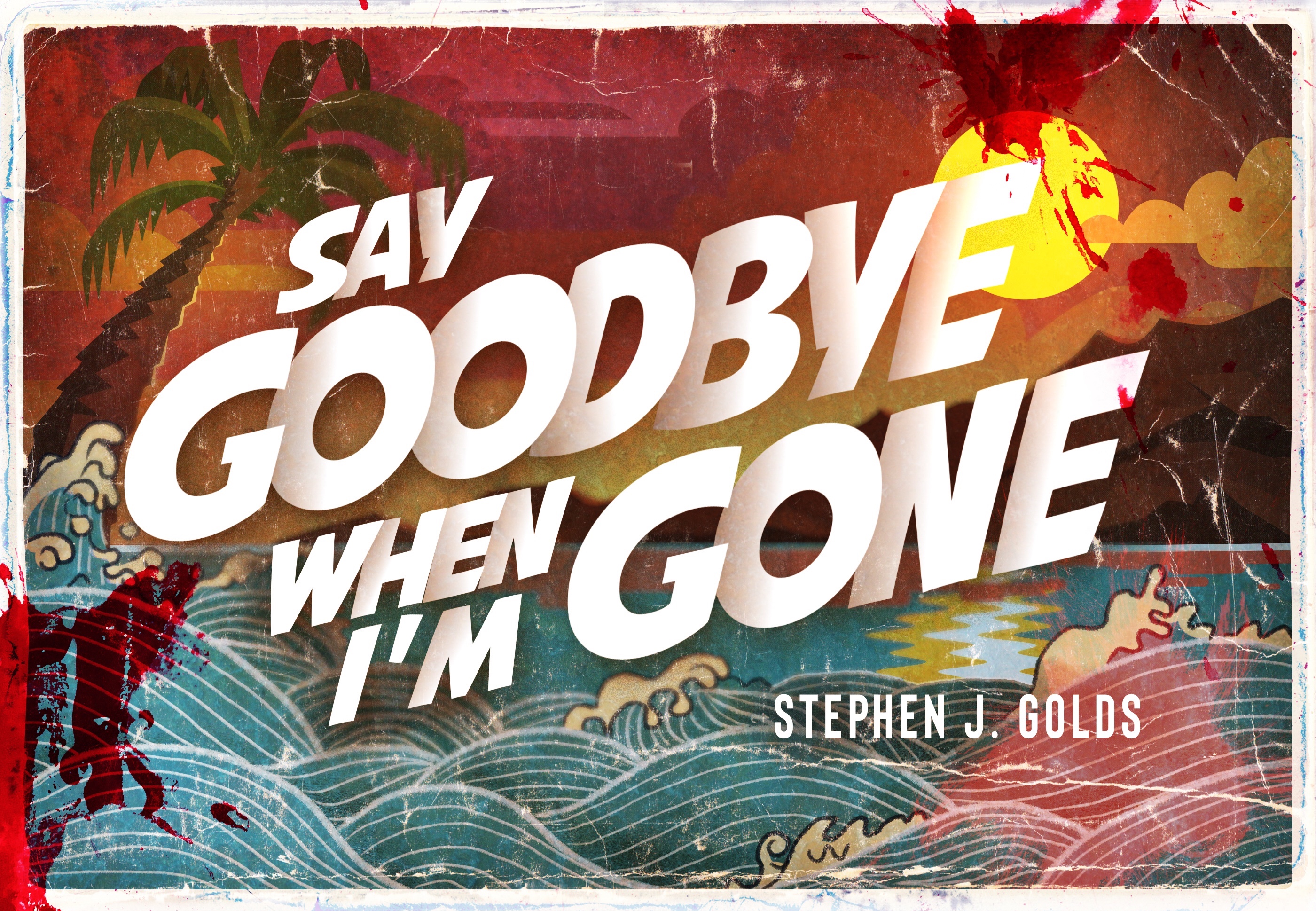
Synopsis| 1949: Rudy, A Jewish New Yorker snatches a briefcase of cash from a dead man in Los Angeles and runs away from his old life, into the arms of the Boston mob.
1966: Hinako, a young Japanese girl runs away from what she thought was the suffocating conformity of a life in Japan. Aiming to make a fresh start in America, she falls into the grip of an Hawaiian gang dubbed ‘The Company’.
1967: Rudy and Hinako’s lives collide in the city of Honolulu, where there is nowhere left for either of them to run, and only blood to redeem them.
Published by Red Dog Press.
Author biography: Stephen J. Golds was born in London, U.K, but has lived in Japan for most of his adult life. He enjoys spending time with his daughters, reading books, traveling, boxing and listening to old Soul LPs. His novel Say Goodbye When I’m Gone will be released by Red Dog Press in October 2020 and another novel Always the Dead will be released by Close to The Bone Press January 2021.
25 FEBRUARY 2021 Demy Hardback, £12.99 HB 9780857304544 | eBook 9780857304551. Author: Michael Farris Smith | Publisher: No Exit Press
Synopsis: This rich and imaginative novel from critically acclaimed author Michael Farris Smith breathes new life into a character that many know only from the periphery. Before Nick Carraway moved to West Egg and into Gatsby’s world, he was at the centre of a very different story – one taking place along the trenches and deep within the tunnels of World War I. Floundering in the wake of the destruction he witnessed first-hand, Nick embarks on a redemptive journey that takes him from a whirlwind Paris romance – doomed from the very beginning – to the dizzying frenzy of New Orleans, rife with its own flavour of debauchery and violence. NICK is an inspired concept realised with delicate, rhythmic prose, profound characterisation and deep emotion. Charged with enough alcohol, heartbreak, and yearning to transfix even the heartiest of golden age scribes, NICK reveals the man behind the narrator who has captivated readers for decades.
I am so excited about this book and happy to be sharing it with you on my blog as one of my anticipated reads for next year. 2021 is the 125th anniversary of The Great Gatsby and what better time to explore its narrator more closely. I have always felt conflicted about Nick Carraway. We simply don’t know enough about him. He is the ultimate voyeur – on the edges of things, looking in but rarely participating. He’s a person in-between: not rich enough to be in the society circles of his cousin Daisy; not overtly masculine like Tom; not in love, just dating. He’s so neutral he’s accepted by all parties and in everyone’s confidence. He accompanies Tom on his adulterous activities, despite the fact he’s married to Nick’s cousin Daisy. He lets Gatsby meet Daisy at his home, even though she’s married. There’s a moral ambiguity to his behaviour and despite taking Jordan on a date, he does seem more comfortable in the company of men. I have so many questions about him so I’m excited to see how the author fits his life to these later events. Will we learn why he’s so easily drawn into this doomed situation?
Alongside the novel there will be a new edition of The Great Gatsby too.
ALSO AVAILABLE a new edition of The Great Gatsby with an introduction from Michael Farris Smith PB 9780857304568 eBook 9780857304612
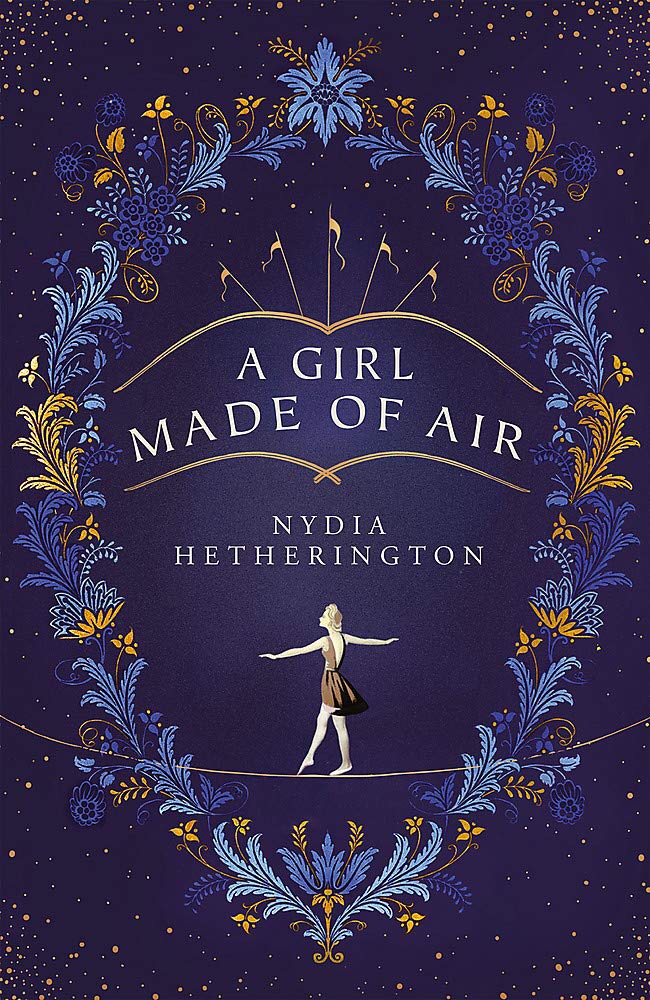
Sometimes all you can say when you finish a book is ‘Wow’. When that happens I close the book and have a moment of reverence. I need a few moments, in silence, to take in what I’ve read. I often need overnight before I can start a new book. I suppose you could describe it as being haunted – the thought of a scene or a letter in a book that invades your thoughts when you least expect it. It stays there, sometimes forever, to become a part of you. In the same way a particular aria or love song might forever float through your head. Some books lie on the surface, they pass the time, they amuse, and I do enjoy them but they don’t stay. Others get into your brain, like a complex puzzle you have to keep fiddling with, this way and that, until you find a solution. Some books enter your soul, they make you feel real physical emotions, they make you wonder in the same way you did as a child when a book took you away on a marvellous adventure. They touch you soul deep. This is one of those books.
Nydia Hetherington is a sorceress. She has conjured up this box of terrors and delights from the depths of her imagination and it is incredible. We follow Mouse as she crawls, peeps, stumbles and walks around the incredible show that is a circus. Billed as a tale about the Greatest Funambulist Who Ever Lived I was expecting glitz and glamour, the front of house show. However, the author cleverly goes deeper than that, far behind the curtain. Incredible descriptive passages draw us in to Mouse’s world from the smell near the big cats enclosure, the feel of a llama’s fur against your skin, the cramped but colourful quarters of the circus folk and the volatile relationship between her mother Marina and father Manu. So focussed on each other, her parents seem barely aware of her existence as she watches the drab and grubby circus folk become stars of the ring with their make-up, sequins and feathers. Her freedom gives us access to every part of this wondrous world, but freedom has its dark side and for Mouse this is really a tale of parental neglect. She is brought up by the circus, by the mother of the company Big Gen and her husband Fausto and eventually by Serendipity Wilson, the flame haired high wire artists who takes Mouse under her wing. Under her tuition Mouse becomes an incredible tightrope walker, able to take her place under the spotlight like her parents.
Serendipity with her flaming hair that glows like amber is from the Isle of Man and brings with her all the mythology of the islands. She weaves incredible stories for Mouse, who now sleeps in her wigwam, in much the same way as mystical fog weaves around her according to her mood. She thinks that Manu and Marina barely notice she’s gone, but Manu enlists her help to get Marina performing again. They coax her into the tank to perform as a mermaid for the crowd. Even so, there is no discernible warmth between Mouse and her mother, Marina’s focus is always inward to her own problems. It is after her mother’s death that Mouse is handed a letter from her mother, in which she admits to never feeling love for her child and explains why. For me this was the most powerful part of the book, and brought me to tears. The author has cleverly placed this moment of stark reality within the magic and it gives the letter huge emotional impact. It hits home the idea that all freedom has a price. Mouse has never had a mother, except the warmth and care she’s had from Serendipity and never questions whether that will change.
Bookending these stories is an elderly Mouse, recounting her life to a journalist. Living in New York, she recalls her arrival in the city and her expectations of Coney Island. She is older and recounts her past from a distance, but what comes across is terrible regret and sorrow around the disappearance of a child from the circus family. She is haunted by a flame haired Serendipity Wilson who, like all mothers, lives on as a voice in Mouse’s head; her inner critic commenting on all she does, only silent when Mouse truly lives in the moment. It’s in these sections that we see what the book is truly about. I expected a book about the spectacle of the circus, the showmanship and all that glitters. Instead this is a meditation on what it is to be human. The journalist asks the questions that go beneath Mouse’s surface and see the gritty truth; we are all flawed and we all make mistakes. This is a beguiling mix of myth, magic and human frailty. Truly brilliant.
You may also enjoy:
The Museum of Extraordinary Things by Alice Hoffman
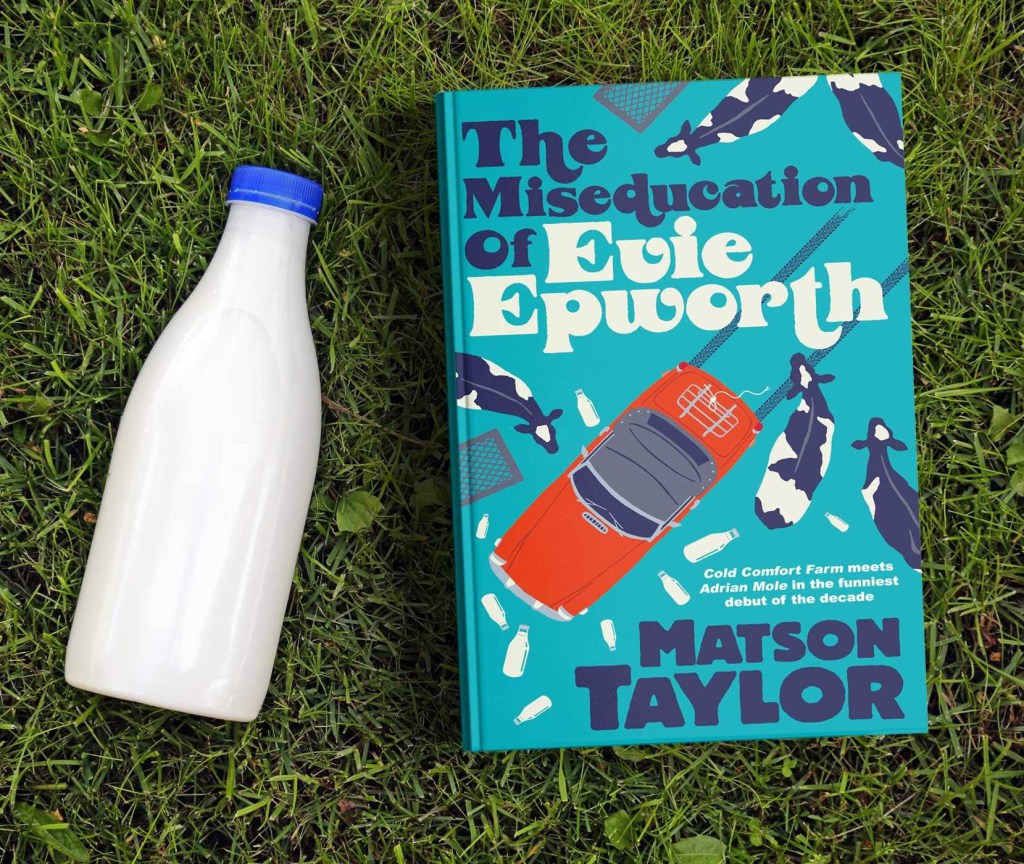
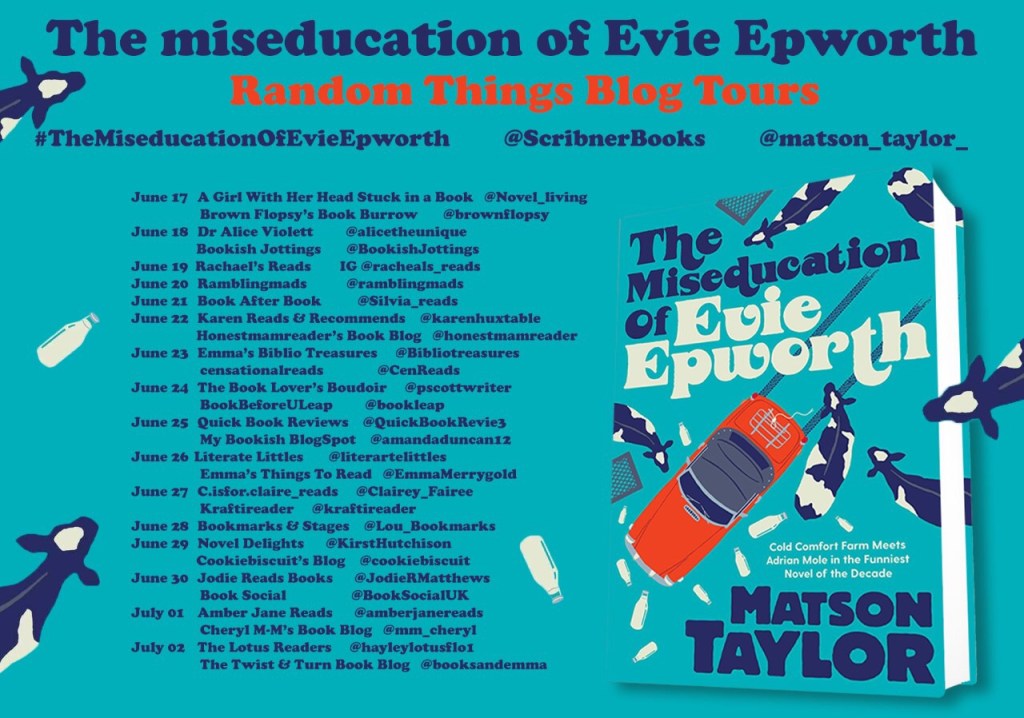
I was only three pages in to this book and I knew that Evie was going to be one of my favourite literary characters. Favourite as in – on my list next to Jo March, Cassandra Mortmain and Adrian Mole, characters I’ve also experienced growing up and setting out into the world. The book was off to a good start anyway, then as we followed Evie jumping into her father’s MG to do the milk round there was a scene so funny I laughed out loud at 2am waking both the dog and my other half. I devoured this book in 24 hours, knowing part of me would be sorry when it ended, but not able to slow down either.
We meet Evie when she’s at a crossroads in life. She’s in that limbo summer between GCSE and deciding what to do next. Evie’s plan, if she gets the right results, is to do her A Levels. Till then she plans to spend the summer delivering milk from the family farm, baking with Mrs Scott-Pym next door, and reading all the books she can get her hands on. There is only one thing in her way; her Dad Arthur’s girlfriend, Christine. Chrissie has moved into the farmhouse and is setting about making changes. This is 1962 and she’s all for embracing the new. She wants to get rid of the old unhygienic wood in the kitchen, because what they need is some nice modern Formica. She’s already replaced the Range with an electric cooker, because she couldn’t work it. As Evie says, it takes quite an intellect to be outwitted by a kitchen appliance. Worst of all she’s replaced Evie’s Adam Faith clock with a chicken! It has always just been Evie and her Dad, Arthur, as far back as she can remember. Her mum died when Evie was little and she has no memories of her. Chrissie needs to be dealt with, but how? Arthur is a disappointment. Mrs Scott-Pym says he’s like all men, weak and easily confused by a pair of boobs.
I have lived in villages and on farms for my whole life so I can honestly say that the author’s depiction of the characters and events of country life are not exaggerated – no, not even that cow scene. There are still characters like this in rural villages. The comedy comes from the brilliantly blunt Yorkshire dialogue, the gap between what we as adults understand and Evie doesn’t yet, but mainly the amazing characters created by the author. Mrs Swithenbank is a comedy gem, always at the mercy of her explosive bowels. The long suffering Vera, Chrissie’s mother, who is never far behind her daughter like a human ‘buy one-get one free’ offer. Then, Mrs Scott-Pym’s daughter Caroline, comes into the village like a whirlwind and along with Evie shows that constant dilemma young people in villages face – do they stay put or go out into the wider world, perhaps needing to try the anonymity of the city? It can be hard to develop into your true self in a village where everyone knows who you are and any attempt to change is the object of ridicule. I remember a perm I had at 15, thinking I looked like Baby from Dirty Dancing, only to hear ‘ugh what have you done to your hair’ at every house on the pools round. I loved the depiction of the petty rivalries around the village show and what a surprise it is that Chrissie, who struggles with making toast, wins the best fruit cake. On top of everything else she does, the fact that she possibly cheated at the village show is viewed as the worst crime and given the last reveal.
Chrissie though is the best comic creation of the lot, but isn’t left to be one dimensional either. Though she is truly awful in a lot of ways, it’s clear that she’s from a poorer family in the village and her upbringing hasn’t been easy. There’s class war over the Range cooker for sure. She lets slip in an exchange with Evie that she’d done every job going, from waitressing to wiping arses. While that might excuse her yearning for an easier life, it doesn’t excuse her way of getting it. There are times when it’s all out war at the tea table and Arthur stays behind his paper hoping it will blow over. I loved her ever present ‘pinkness’ and a crimplene wardrobe that Evie observes doesn’t end in Narnia, but at a bingo hall in Scunthorpe (I love seeing my birthplace in print). Poor Vera is always struggling a few paces behind, usually sweating and doing all the fetching and carrying. Chrissie is always exhausted – I need to put my feet up, Mum put the kettle on – and always rushing towards getting another grasping finger on Arthur, preferably a finger with a ring on it. This should have been a mild flirtation or dalliance at most, everyone can see they are not suited.
There are interludes between Evie’s chapters where we see the meeting of her parents, Arthur and Diana. They are serene, even romantic chapters where we see them meet at a dance, get married in a rush during the war and settle at the farm. We see Diana form a friendship with Mrs Scott-Pym and rush round to tell her friend when Evie is on the way. There’s so much of this interesting woman left, hidden in plain sight such as a particular teaspoon in the drawer and the recipe book Mrs Scott-Pym has kept for Evie. It’s so sad that Evie and her Dad don’t talk about her more openly and honestly. If wishes and spells aren’t going to change this, there needs to be a catalyst. When Mrs Scott-Pyle falls down the stairs and her daughter Caroline arrives we see a force of nature equal to Chrissie. She wears elegant clothes, big black sunglasses and scarves tied round her neck like the French do. Evie is very impressed with her sophistication, but also her nerve. She cooks up a great scheme to get Evie out of working in the village salon, takes her to Leeds to shop in an Italian deli and has the means by which Chrissie’s true nature can be revealed. She is also the only lesbian Evie has ever met, leading to her asking visiting friends of Caroline’s whether they are a lesbian too as a conversation starter! Evie is trying on different futures, and may be adding Caroline as an extra role model alongside The Queen, Charlotte Bronte and Shirley MacLaine.
This novel is an absolute joy. A great read to cheer you up and honestly, make you laugh out loud. Every character is beautifully drawn and the comic timing is perfect. I couldn’t believe it was a debut, because it has all the confidence and timing of Sue Townsend and also made me think back further to the blunt Yorkshire characters of James Herriot. On a personal level I needed a lift, after being very strict with lockdown rules due to my MS, and this was just the lift I needed. Thank you Matson, for such a great set of characters and for providing exactly the book I needed at exactly the right time.
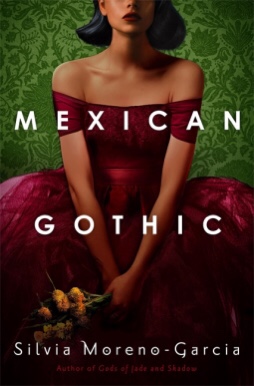
Wuthering Heights and Jane Eyre, those were Catalina’s sort of books. Moors and spiderwebs. Castles too, and wicked stepmothers who force princesses to eat poisoned apples, dark fairies cursing maidens and wizards who turn handsome lords into beasts.
When I first started this novel I was a little bit unsure, but I read the above paragraph and trusted it was the book for me. I have a smidgen of Catalina’s gothic, romantic sensibility about me and this book had all the elements I usually enjoy: a plucky heroine, a suitably wealthy but eccentric family, the possibly hysteric friend/family member who needs rescuing, a crumbling gothic mansion. So far, so usual. Then the first dream sequence happened and I sat straight up in bed, wondering what sort of dark, twisted fairytale I’d let myself in for. From that point on I found it curiously addictive – the sort of ‘still reading at 2am addictive’. By the end, I was awake because I was too scared to sleep!
Noemi Tabouda is dispatched by her uncle to High Place, the estate of the wealthy Doyle family. Virgil Doyle is the new husband of Noemi’s cousin and it is Catalina who has written an alarming letter begging to be rescued from a strange supernatural fate. The letter mentions fantastical happenings, such as people in the walls and a spectral voice speaking to her. Noemi wonders if her cousin needs to see a psychiatrist, because even though Catalina has a flair for the dramatic, she has never sounded so scared. The family know very little about the Doyle’s because Catalina and Virgil’s romance was a bit of a whirlwind. In Noemi’s limited time with him, he seemed very charming and had the dark brooding looks of a Byronic hero. This is a good chance to help Catalina get well, but also get to know the Doyle family a little better.
The author has created a brilliant setting in the Doyle family mansion High Place. It has a strange dual effect on Noemi of being luxurious and comfortable, but almost suffocating and overpowering. The past wealth of the family can be seen in every piece of silver, swish of velvet curtain and the eyes of past Doyle’s following her around the room. Noemi’s room is luxurious but shabby, as if the wealth has started to run out. The wallpaper has a curious pattern, but is also decorated with patches of damp. The bath is deep enough for a good soak but the fixtures and fittings are a little rusty. There are servants, but they are strangely silent and don’t even catch Noemi’s eye. The whole regime of the house seems very regimented to Noemi who is an informal, modern woman. Virgil’s father is definitely head of the house, but his sister Florence is the gatekeeper who makes sure his wishes are carried out. Noemi expected to breeze in and immediately pop in on her cousin, but finds she is barred. Apparently, the family doctor has decided she needs rest and a very quiet atmosphere. Noemi is told her cousin has TB, which has never been mentioned before, and doesn’t really account for the strange things Catalina mentioned in her letter.
Noemi is a great central character to follow through the story. She is sassy, intelligent and very determined to bring a little 20th Century thinking into High Place. I love that she isn’t afraid to ask questions, especially of the men who aren’t used to being held to account by women. This is how the author starts to subvert the gothic /fairytale genre – Catalina is the more ‘traditional’ heroine. Noemi brings in the local doctor to give her a second opinion, befriends the younger cousin Francis and enlists his help in understanding the family. She recognises that’s a lot of women have struggled to live with the Doyle’s regime. Howard had two wives, who were sisters and both died at High Place. A cousin, Ruth, took a shotgun to the family leaving Uncle Howard alive but horribly disfigured. From the village Noemi unearths stories of hundreds of silver miners going missing in the Doyle mines. It seems the family consume people, encapsulated by their horrible emblem of a snake eating its own tail.
The incredible nightmare sequences are vivid and visceral. At first I wasn’t sure which was real: was the regimented, almost Puritan, daily order of High Place the reality, or was it a thin veil of decency obscuring something more deadly and decadent. Just as mould was starting to be visible on the wallpaper, Noemi’s nightmares signal something breaking through, threatening to take over. This underlying force seems to understand the very soul of the person it tries to corrupt. In Noemi’s case her modern attitude to dating and female sexuality is used to draw her in against her will. She is a serial dater, choosing short dalliances where no one can get too close. So her nightmares have a strong sexual element, where Virgil Doyle lulls and seduces her, in her bath or in the middle of the night. She questions herself. Virgil repulses her, but does she desire him? Are these dreams conjured from her own subconscious or is something able to infiltrate her sleep and lure her down the corridors in her nightdress?
The truth of High Place and what happens there, when it is revealed, is truly horrific. There was a scene that literally made me gag! This may be one of those occasions when I truly hope they don’t make the book into a film – I wouldn’t be able to watch it! I felt that the author was playing with the reader and our own push and pull between fascination and revulsion. I found this very reminiscent of Dracula. There was an equally interesting tension around social change. The local miners exploited by the Doyle’s are part of the past, along with the family’s rules and position in society and their adherence to the ‘family doctor’. The new is represented by characters like Noemi and the mentions of her wardrobe full of the new styles and the young local doctor who tries to help Catalina. In the town the Doyle family are seen as weird eccentrics, possibly sinister, but no longer able to command respect as they would have a generation before. Their time is waning and these horrific acts are a fight, both for the family and the entity that lives alongside them. The author subverts the fairy tales Catalina loved in her youth and the original Gothic trope of a damsel in distress, rescued by a man. I truly enjoyed this novel, despite the fact it kept me awake at night worried that mushrooms were coming out of the wallpaper. Now, finally, I’d like to go and get some dreamless sleep.
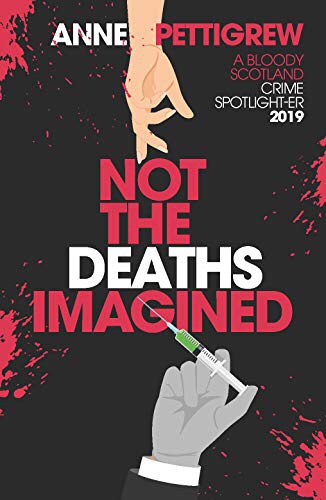
Fancy some tartan noir? Today I have the cover reveal and pre-order link for Anne Pettigrew’s new novel Not The Deaths Imagined.
In 1990s Glasgow, Dr Beth Semple is juggling motherhood and a busy NHS practice. She informs the authorities when she notices an odd pattern of deaths in her area, but they remain unconvinced. Beth believes she’s got it right and her professional reputation is on the line. A stream of targeted harassment follows and Beth finds herself and her family at risk. Could a well-liked local GP be a killer? Beth is rushing to put all the pattern pieces together before any more deaths occur. Will the authorities realise their mistake in time?
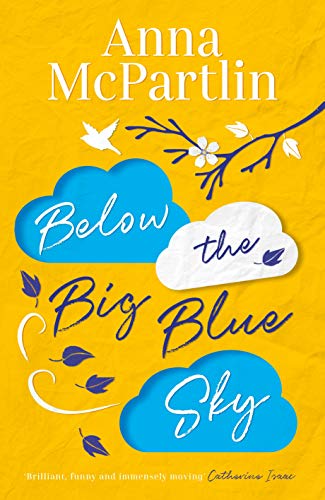
I read Anna McPartlin’s last novel The Last Days of Rabbit Hayes just last year and remember being profoundly moved by the story of Mia ‘Rabbit’ Hayes and her love for Johnny Faye. Johnny was the singer in her older brother’s band and Rabbit went from lurking around to catch sight of Johnny to becoming the band’s sound engineer. Sadly they didn’t have much time together as Johnny was diagnosed with MS in it’s most aggressive form and he died. They had a short but glorious time in love, but then Rabbit was diagnosed with cancer and also died young leaving behind her daughter Juliet. This sounds like a really heavy, issue led, novel but somehow the author managed to keep it light by bringing in the exploits of the band and the Hayes family. The Hayes family are a boisterous Irish clan who are as funny and fierce as they are loving and supportive. I really enjoyed the novel, so when I had the chance to read this sequel I couldn’t wait to get started.
This novel follows the aftermath of Rabbit’s death, from organising her funeral it covers a time period of two years. The entire Hayes family is in shock and everyone reacts in different ways. Her father Jack retreats to his attic and tries his best to get his daughter’s diaries published. Her mother, the formidable Molly Hayes, struggles with some of Rabbits final decisions. There’s the question of who Juliet will now live with, whether any of her other children have the ‘gene’ and firstly what on earth they will Rabbit wear for her funeral? All of which is told in well researched detail and with a hefty dose of black humour.
The author explores how people grieve differently. Some people shut themselves away and wallow in nostalgia. Others might put in a brave face to support others but feel like they are dying inside. Some get lost in distractions to avoid the pain. The author is very skilled at presenting family dynamics and how each person, although seemingly very different, fits into their place.. As a family the Hayes often argue, storm out and have to take time away to see things more clearly. It shows how grief is as individual as the relationship every character has had with Rabbit. Each character is trying to find a way to keep Rabbit close, relevant and present in their day to day lives. This could be through their faith, by talking to her still or by publishing a book so that every one of them can spend time with Rabbit between those pages.
Finally, the author shows that life truly does go on despite most of the characters not being ready for it yet. Grief can make us feel like our life is on pause, but around us things are changing and we can’t stay still forever. So we see Rabbit’s best friend Marjorie struggling to build a relationship with her mother, who hasn’t always been there for her. Now she needs help and Marjorie needs to decide whether she can do it and whether she will always be in love with Rabbit’s brother Davey. Juliet has to start a whole new life with her guardian and starts to feel the stirrings of first love. Grace, the eldest sister, has a huge secret she knows will further devastate the Hayes family and can’t bring herself to tell. Molly’s exploits, including protesting the introduction of water charging in Ireland, are loud, comical and unexpected. She is an absolute powerhouse, supporting and feeding everyone, taking on waifs and strays and constantly pulling the family together. Yet she seems dogged by guilt and struggles with her faith, wondering whether Rabbit was right and there really is nothing after death. These are big subjects but I found myself laughing more than feeling sad. I loved the black humour that’s common where people are facing dark times and the warmth of the Hayes family. I could imagine each family member vividly thanks to the author’s skill in creating these characters. Once the novel was finished I knew I would miss them all.
Publication 23rd July 2020. #BonnierBooks
Thanks to #NetGalley for the ARC of this novel in exchange for my review.
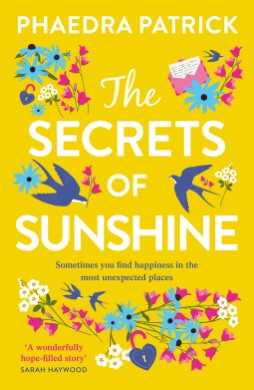
This is a moving and ultimately uplifting story based around the padlocks left on bridges as love tokens. I remember visiting Venice and seeing locks like this on the Rialto Bridge and thinking they were romantic. It had never occurred to me before what might happen if the bridge railings were filled with them. It hadn’t occurred to me that there might prove too many or they might cause structural damage to the bridge, due to their weight. In Upchester there are several bridges, immortalised in a famous boyband’s music video which showed them leaving padlocks on the bridge. Now their fans like to take pictures on the bridge and leave locks of their own in tribute to their favourites.
Mitchell is the man employed to deal with the padlocks if there are too many. He has his trusty bolt cutters to hand and clears the bridge of its love tokens. However, this hasn’t always been his job and there’s a reason the bridges are close to his heart. Mitchell is trained as an architect and had input in designing Upchester’s latest bridge. When he lost his wife Anita, he decided to leave for a job that would fit round his daughter Poppy’s school times. Poppy is 9 years and was used to living in the family’s country cottage with her Mum. Now she’s without Mum and living in her Dad’s city flat, the one he used to use when stuck in town for work. Poppy likes to be able to stand on her bed and peer at the stars through her skylight.
One particular day as Mitchell is nearing the bridge, he sees a young woman in a yellow dress. She stands out because she is so still when everyone else is bustling to and fro. In the next second she is gone and it takes a moment for Mitchell to realise she is in the water. He immediately dives in to rescue her, and when they reach the bank he’s exhausted. In the moments that follow he doesn’t get to speak to her or understand whether she jumped or fell. His main concern is Poppy who he’s now late for, so he makes his excuses and rushes to collect her from her music lesson. When he arrives at the music teacher’s house Poppy is calmly having some tea and while she finishes he makes uncomfortable small talk with Lisa, her teacher. Then he spots a photograph of three women and seems to recognise one of them. It’s a picture of Lisa with her two sisters. When Mitchell says that one of them was the girl in the yellow dress, Lisa is shocked. Her sister Yvette has been missing for a long time, yet Mitchell has seen her that afternoon. From that moment Mitchell is drawn into searching for Yvette alongside Lisa and against his better judgement. He soon learns that this is a family with a lot of secrets.
It might seem like Mitchell gives a lot to Lisa in helping her, but actually the help runs both ways. We realise that Mitchell is quite structured, even regimented, with Poppy. He schedules their days on paper stuck to the wall and Lisa softly makes fun of this part of his personality. Mitchell says it’s better for Poppy to have structure, but these plans are more for him than her. If you’re constantly busy there’s never time to think. Slowly, we realise that Mitchell has PTSD, but also feels enormous guilt about the last months of his relationship with his late wife. Lisa challenges this structure by not following a plan and going with the flow. When they visit her aunt there’s an impromptu sleep out next to a campfire. Mitchell is trying desperately not to freak out and once he has relaxed he starts to enjoy the experience. He needs easing out of his comfort zone, for Poppy’s sake as well as his own.
Letters are also a big theme in the novel. Mitchell spends a few moments in bed at night writing to his late wife. He tells her about his day, about Poppy but also about how sorry he feels for the way he was when they were together. When Mitchell was an architect he had an integral role designing a new bridge for the city. He’s a traditionalist and his favourite existing bridge is a simple red brick archway. There’s a new girl on the team though and she is a modernist, with a rival design for the bridge. Mitchell becomes threatened by her and starts to work longer hours, staying more at his city flat and missing out on family moments, such as Poppy taking part in a performance. He makes promises and doesn’t keep them. He takes his wife for granted and when she’s gone the guilt he feels is overwhelming. Lisa is trying to get Mitchell back into loving life and forgiving himself for the past.
Mitchell also starts to receive letters, thanks to his heroics on the bridge. A local journalist features the story in the paper and people start to write to this hero who has captured their imagination. Some simply congratulate him. Others are more personal, from people who are struggling with life and now have a outlet for their painful secrets. They tell him their secrets and he replies where he can. He finds the letters intrusive and asks the reporter to stop bringing them, but the change is actually positive. Slowly the letters make Mitchell open up more, he starts to move away from the list filled with hope and possibilities for the future.
This is a lovely, feel-good novel where the characters have such a beneficial effect on each other. I loved the themes of locks and letters. They give that sense of unlocking parts of ourself we’ve kept hidden, and possibly allowing others in. Grief can bring with it a fierce need to keep everything safe, so we lock emotions away, and regulate activities, removing any element of chance from our lives. This is what Mitchell has done, but not just for himself, but for Poppy too. He wants to keep her safe, but he’s actually stopping her from enjoying life to the full. Encountering Yvette was something Mitchell couldn’t control and like a key, she opens his life back up. This is such a hopeful book and such a cheerful lockdown read.
This is a thriller that’s bound to put you off letting your kids spend a gap year summer island-hopping in Greece! Dark at heart and so twisty you never know who to trust. Alistair Halston has a broken heart. His university girlfriend Ellie has broken up with him before the summer and has gone to spend her holiday in Greece. Planning to follow her and win her back, Alistair has a very different summer break from the one he expected.
Everything starts to go wrong when he encounters outgoing Aussie, Ricky after losing his wallet. With no money or passport, Alistair decides to work and earn some cash before presenting himself at the British Embassy for help. However, help comes in the form of Ricky who offers him work at a luxury villa owned by Heinrich, a German painter. It soon becomes clear that the work is a little unusual. Heinrich likes to paint beautiful people so Alistair’s job is to recruit both men and women as artist’s models. But he must also make sure their morals are fluid enough to be open to further work – sleeping with Heinrich for money. He’s surprised by how many are open to the offer, but that’s not the end of the enterprise. Ricky carries a video camera everywhere recording parties and sexual exploits, even those of Alistair himself when he gets lucky at a villa party. After several weeks, and having a few thousand stored under his pillow, Alistair thinks about making his move and going off to find Ellie. Ricky and Heinrich are putting together plans for a huge party, so maybe he’ll leave afterwards. What he sees over the next few days terrifies him and makes him realise he is complicit in a series of horrific crimes. Not only that, but the organisers have carefully made sure he’s on film. Can he ever leave now that he knows everything? Will they ever let him? Worst of all, is Ellie safe here on the Greek Islands?
This is a fast moving plot, full of complex twists and turns that I didn’t see coming. One in particular made me literally jump in my deckchair! The backdrop of the islands is beautiful but also bleak and difficult terrain. Alistair is also at the mercy of a small population who all know each other – tourists stand out and it would be unlikely one would be trusted above a local. In order to complete his quest safely, Alistair has to think like a criminal and commit petty crimes, don multiple disguises and pit himself against a local, and potentially corrupt, police force. Arguably, he becomes as criminal as those he’s trying to escape. The pace meant it was hard to find a good place to stop, so there was a tendency to keep reading. Each discovery Alistair makes brings about even more questions, about how long Ricky had been targeting Alistair, who on the police force is working with them and how they’ve evaded capture for so long. I didn’t feel I got to know all the characters very well but it’s not that sort of novel. It’s all about the action, the twists and blistering pace. This is a great summer read but be warned; next time you’re abroad it could put you off making friends at the bar.
Ellen sees the world differently from everyone else, but living in a tiny town in the north-east of England, in a world on the cusp of war, no one has time for an orphaned girl who seems a little strange. When she is taken in to look after an rich, elderly widow all seems to be going better, despite the musty curtains and her aging employer completely out of touch with the world. But pregnancy out of wedlock spoils all this, and Ellen is unable to cope. How will Jack, her son, survive – alone in the world as his mother was? Can they eventually find their way back to each other?
Juliet Bates
Juliet Bates studied art and art history in Bristol, Birmingham and Strasbourg, and has since lectured at graduate and post graduate levels. She moved to France in 2000 to a post as professeur at the Ecole régionale des beaux-arts Caen la mer. She has published a number of short stories in British and Canadian literary journals.
*GIVEAWAY*
Today I am lucky enough to have one free copy of this beautiful book to give away. Simply comment on this blog post by Friday 19th June at 12pm. A winner will be picked at random to receive a hardback copy. UK only.
Keep following the blog tour dates below for more information on The Colours and blogger reviews of the book.