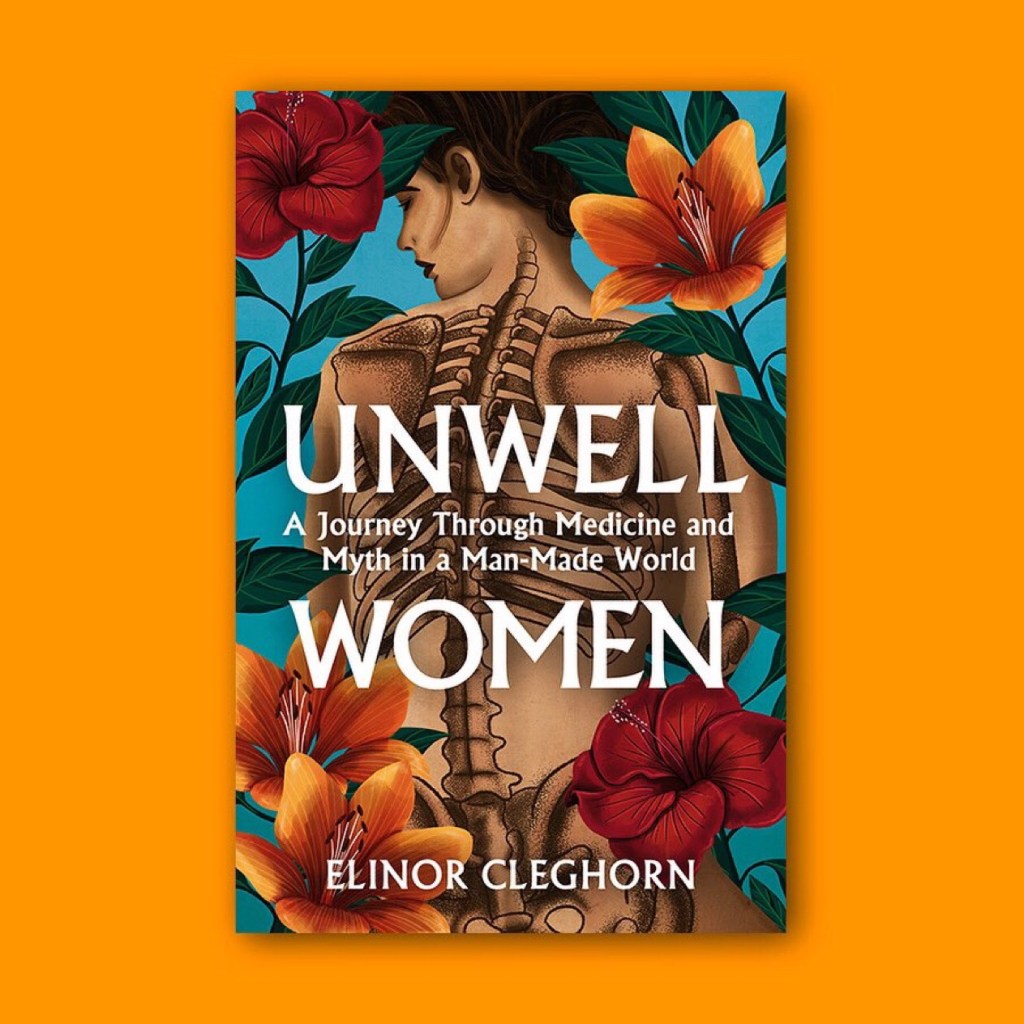
My interest in this book is twofold: first the cover made me stop and look because it reminded me of the art of Frida Kahlo, and secondly, I am an unwell woman. I have been diagnosed with relapsing remitting Multiple Sclerosis for the past 25 years – ooh my silver anniversary, what do I get for that? Since then my health has deteriorated, mainly due to a back injury I sustained when I was 11. I did a somersault and landed awkwardly, causing two fractures to my spine. I was very lucky to be upright and walking, but scar tissue, muscle damage and deteriorating discs have caused so much stiffness and instability. This is managed with injections in my spine for pain and a regular procedure my compressed nerves are severed to stop nerve pain radiating into my pelvis and legs. It’s a lot to deal with, and I truly don’t know how I’m going to wake up every morning. I just wake up, take the medication and see what I can manage that day. I’ve just had a week where even looking at this screen would be impossible because of optic neuritis.
In my many years in the ‘kingdom of the sick’ and working as a counsellor for people with chronic ill health, I’ve noticed a major difference in how men and women, with exactly the same ailments, are treated. This book traces a history of women’s ill health and the treatment of it, for many years solely by a male medical profession. To quote the blurb:
‘In Unwell Women Elinor Cleghorn unpacks the roots of the perpetual misunderstanding, mystification and misdiagnosis of women’s bodies, and traces the journey from the ‘wandering womb’ of ancient Greece, the rise of witch trials in Medieval Europe, through the dawn of Hysteria, to modern day understandings of autoimmune diseases, the menopause and conditions like endometriosis. Packed with character studies of women who have suffered, challenged and rewritten medical orthodoxy – and drawing on her own experience of un-diagnosed Lupus disease – this is a ground-breaking and timely exposé of the medical world and woman’s place within it.’
‘We are taught that medicine is the art of solving our body’s mysteries. And as a science, we expect medicine to uphold the principles of evidence and impartiality. We want our doctors to listen to us and care for us as people, but we also need their assessments of our pain and fevers, aches and exhaustion to be free of any prejudice about who we are, our gender, or the colour of our skin. But medicine carries the burden of its own troubling history. The history of medicine, of illness, is a history of people, of their bodies and their lives, not just physicians, surgeons, clinicians and researchers. And medical progress has always reflected the realities of a changing world, and the meanings of being human.‘
In my own experience, I have found the world of neurology, clinical, abrupt and sexist. My diagnosis is old now and I have had new neurologists interrogate me on who diagnosed me, why and where – almost as if I’ve made it up out of thin air. I’ve been patronisingly asked whether I might ‘weep’ a lot, or have fatigue and pain due to being depressed. I asked if they’d send me to psychiatry if they felt it was all in my head – I didn’t care whether it was a mental illness, I just wanted to be treated and helped to get better. Once I asked for a referral the consultant backed down and said it’s definitely physical, because we have clinical evidence. I remember thinking that this was a complete ‘mindfuck.’ I started to question my own sanity, if I had a symptom I would wonder if it was real or in my head. Was I making myself ill and for what reason? A change of neurologist and several years of therapy helped me to see that the previous team had been quite abusive and manipulative. My rehabilitation consultant admitted that there was an old trend in neurology of not telling people with early MS about their diagnosis – the thought being that if you didn’t know you had an illness, you wouldn’t act as if you have an illness. Apparently, according to my old team ‘some women give up if they’re told they have a disability’.
I trained over many years in mental health work, and have worked as an advice worker, advocate and now a counsellor for people with disabilities. I have heard the same story told by so many women: being told they need to get a hobby or go out more; that they need anti-depressants when they don’t feel depressed; that maybe they need to have children (?); or that maybe, like the Victorian hysterics, this is all in their heads. My own favourite is being told to get rid of my cats so I could have children, when I have a diagnosis of Hughes Syndrome which causes recurrent miscarriage. My main area of work is reprogramming women who have all eventually been diagnosed with serious health conditions like Lupus, MS, Lyme Disease, Degenerative Disc Disease. All of them once told they were hypochondriacs and hysterical about their normal everyday aches and pains.
One of the ladies from my ‘Authentic Self’ workshop, was so scared of making a fuss about her pain that when she injured her leg on holiday she carried on. She walked on a fracture for four weeks because she’d been made to feel she made too much fuss about the pain she suffered from fibromyalgia and degenerative discs. Women should not be made to feel this way by the medical profession. Not once has a male come to me with the same story. Not one. In a BBC article ( link below) the same stories come up in relation to heart and gynaecological conditions. Women who reported to emergency rooms in acute pain were less likely to be prescribed pain relief, and where it was prescribed it took much longer to reach the patient.
‘This can have lethal consequences. In May 2018 in France, a 22-year old woman called emergency services saying her abdominal pain was so acute she felt she was “going to die.” “You’ll definitely die one day, like everyone else,” the operator replied. When the woman was taken to hospital after a five-hour wait, she had a stroke and died of multiple organ failure.’
I’m looking forward to reading about where these ideas about women’s health come from. I’d hoped once to write this book, but sadly my health meant PhD work on disability being put to one side. I feel this will demystify why women are treated this way and I hope to buy several copies to give to my friends and clients in the future. This book is not just anticipated, it is needed.
Havi Carel. Illness. Routledge; 1st edition (20 Aug. 2008) – this a brilliant look at the ‘lived experience’ of chronic illness, the philosophical background to how we view illness, and the author’s own experiences as a woman and a patient. Utterly brilliant.
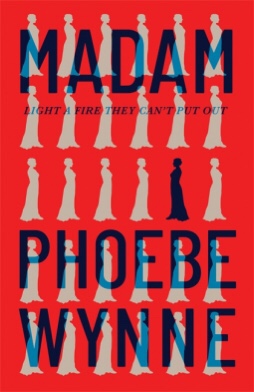
Why is it always so hard to write a review when the book is so good? It’s as if I have to wrestle with it for ages, in the hope of doing it justice! All I can do is try and put across all of the reasons I liked it. In fact, I loved everything about this feminist gothic novel from start to finish. First the setting – the eerie, almost otherworldly atmosphere around Caldonbrae School, the strange weather conditions suggesting it’s own micro-climate, and the school’s position as an English outpost (or invader) in Scotland. It’s appearance is like a hulking beast on the coastline, something that shouldn’t be disturbed lest it swallow you up. Secondly, there’s our main character Rose, addressed at all times as ‘Madam’ and finally the dark secret her predecessor tried to uncover at the heart of Caldonbrae, before it was Rose’s turn to fight it’s terrible tradition.
For 150 years, Caldonbrae Hall has sat as a beacon of excellence in the ancestral castle of Lord William Hope. A boarding school for girls, it promises a future where its pupils will emerge ‘resilient and ready to serve society’. Rose Christie, a 26-year-old Classics teacher, is the first new hire for the school in over a decade. At first, Rose feels overwhelmed in the face of this elite establishment, but soon after her arrival she begins to understand that she may have more to fear than her own imposter syndrome. When Rose stumbles across the secret circumstances surrounding the abrupt departure of her predecessor – a woman whose ghost lingers over everything and who no one will discuss – she realises that there is much more to this institution than she has been led to believe. As she uncovers the darkness that beats at the heart of Caldonbrae, Rose becomes embroiled in a battle that will threaten her sanity as well as her safety.
This novel was incredible from start to finish. I loved it. Straight away I noticed echoes of two of my favourite books; Jane Eyre by Charlotte Bronte and Rebecca by Daphne Du Maurier. The younger girls school uniforms reminded me of the aprons of Lowood School. The constant references to the previous classics teacher, and the mystery surrounding what happened to her had definite echoes of Rochester’s wife – hidden from view in the attic for being other than the perfect, meek and gentle wife he wanted. What exactly does this school expect of the teachers and how did Madam fall from grace so spectacularly? The training at the school starts to feel more sinister as time goes on. It begins to feel as if they’re trying to shape young women in a very old fashioned image; teaching them how to stay it in their place and be the 19th Century ideal of the ‘Angel in the House’. Although there’s something a lot more knowing about these girls, they put on this ideal as if its a disguise, designed to please but very aware it’s a conceit sure to reap the rewards of wealth and privilege. The previous ‘Madam’, whose name is Jane, is like the ghostly presence of Rebecca, still holding sway over the girls – especially Bethany who seems to have developed an obsession with her teacher. Jane seems to be everywhere Rose turns, but tantalisingly just out of reach. The author creates an edgy and eerie atmosphere where you feel she might be just ahead of Rose, her gown swishing round the corner.
Rose tries to understand the place she’s come to teach. There is a sense in which this school is a complete culture shock – like a child affected by poverty or a tough inner city environment being expected to thrive at Oxford or Cambridge where there’s an etiquette and language that’s alien to most outsiders. She has to muddle through this aspect of life at Caldonbrae and it makes sense to her if the purpose is to educate and prepare the girls for further education and professions like the law and politics. Yet, alongside this traditional, classical education there are hints of the old ‘finishing school’ where attributes like poise, social etiquette and deportment are deemed equally important. What exactly is she preparing these girls for?
As the secret starts to come to the surface so the tension of the novel rises. Is Rose being trained too? An outsider brought in to see if new teachers can be moulded to the school’s purpose. As Bethany’s attachment to Madam becomes clearer she seems to stalk Rose. and the reader isn’t sure whether she resents Rose being in the place of her former favourite or whether she has simply transferred her affections. When she makes allegations about Rose she threatens her whole future at the school, but is Bethany trying to harm her or warn her? A strange hierarchy operates amongst the girls who know themselves to be the elite performers and those who don’t make the grade are offered inducements to improve, but these inducements can be threats as well as rewards. The horror of a young woman having her head shaved for performing badly is enshrined in patriarchal systems and is designed both to shame the woman and act as a warning to others. Rose guesses what might be happening, before the secret is fully revealed but it’s such an alien and deviant concept in modern society that she can’t believe it could be true. Could she ever be complicit in such a scheme? I found myself wondering how far the girls are ‘groomed’ into accepting this future or how many are knowingly acquiescing to it for the rewards of wealth, status and family honour. Rose is backed into a corner, by fear of what may have happened to her predecessor certainly, but also the knowledge that the school can reward her far beyond what she’s imagined. Her mother, severely disabled by multiple sclerosis, is placed within a state of the art care facility. Can Rose be bought, or will she try and walk away? However, does anyone walk away from Caldonbrae unscathed? Could Rose, as quiet as she seems, finds a way to walk away, but also bring down the whole system in her wake. This was an incredible, unputdownable, novel full of gothic atmosphere, and dark, patriarchal, purpose. However, there is also a feminist heroine ready to shine a light on long held secrets, even at the risk of that light becoming a burning flame.
Publisher: Dark Heart Publishing 15th December 2020
ASIN: B086MK51JF
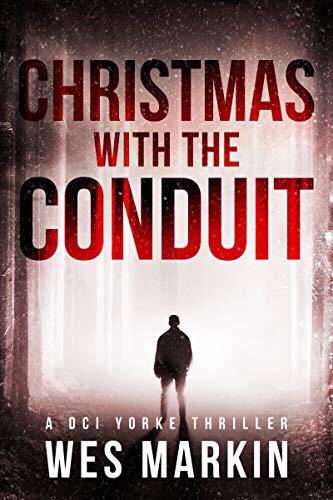
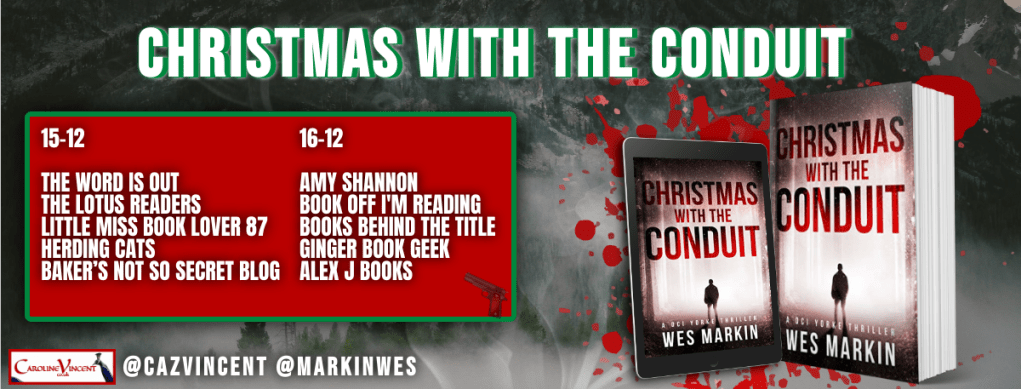
I’ve never read Wes Markin before and what a way to start. This is book 6 in the DCI Michael Yorke series and what an introduction! This author is certainly not for the faint hearted and this isn’t a cosy Christmas murder mystery. For this final instalment an old foe reappears at Christmas, tearing Yorke away from his family and bringing him closer to finding a lost friend and colleague.
If you fail to stop a killer, then they will only grow stronger.
DCI Michael Yorke and Emma Gardner are still plagued by guilt over their failure to catch the murderous psychiatrist known as the Conduit, and the loss of their former colleague to insanity. On Christmas Day, following a brutal massacre in Leeds, Yorke and Gardner find themselves once again chasing the ruthless puppeteer, believing that they have the initiative. But as the two investigators draw closer to the Conduit, they quickly discover that they were never truly in control, and completely vulnerable to what comes next. A rising tide of psychological warfare and the horrendous truth behind the fate of their former colleague.
I wonder, considering I’m a therapist, whether I should worry about the amount of books I’ve read recently featuring murderous psychologists/psychiatrists! I choose to think it’s a literary representation of the fear people often have about therapists – what we might magically discern about someone and how terrified they are about facing their fears. This particular sociopath is terrifying, but hides behind the tweedy and beardy disguise of a psychology lecturer. However, behind the new identity, lies the same twisted philosophy. The Conduit believes he can ‘heal’ psychological trauma by using hypnotherapy to take the patient back to the moment of trauma and changing the narrative. Yet the narrative is changed to something destructive and violent, shattering the psyche and planting the darkest rage, paranoia and thoughts of revenge.
The opening is Christmas Day at a nursing home for elderly people in Leeds, where Bernard is looking forward to spending the day with the new lady in his life. He’s been incredibly lonely since his wife died and he is grateful to find love again so late in life. Bernard struggles with PTSD following active service in the Falklands War, where both his friends were shot and killed in front of him. Every so often, loud noises or voices can take him straight back to the battlefield and the chaos of war. On this day, as his fellow residents start gathering for lunch, he receives a text message. From there it’s as if a switch has been thrown in his brain and his fellow residents and nursing staff become the Argentinian soldiers he faced that day back in the 1980s. He collects and gun from his room, makes his way back to the dining room and starts to gun down the soldiers who killed his friends and have come back for him. It’s only after multiple fatalities that Bernard returns and sees the full horror of what he’s done. He doesn’t link it to the genial man with the beard he’s been running into on his daily walk in the park. The man who offered to help with his trauma, if Bernard would trust him and open his mind to him. With no other choice, Bernard turns the gun on himself.
This terrible act drags DCI Yorke away from his family; his patient wife is understanding but he worries about how long this might last. He’s already had one shock this morning, his adopted teenage son has announced his engagement and Yorke isn’t sure he was supportive enough. He also has his previous colleague, Emma Gardener, on his coat tails. She believes Leeds is where her partner Mark Topham is, on the run since his violent reaction to the murder of his partner. Can Yorke really take her with him, when she’s no longer a police officer? Will they be able to unmask The Conduit before he takes over another mind and shatters even more lives? There is also the subplot – a female prisoner, victim and conspirator of The Conduit, having sessions with a prison psychiatrist. A game of cat and mouse seems to ensue between them, that becomes very dark and twisted.
The writing has an addictive energy within it, that means you can’t put it down, even when the horror you’re witnessing is too much. I would definitely suggest trigger warnings for violence and sexual violence. Sometimes, it’s not easy to read. Yet you can’t look away. The author is incredibly skilled at building up tension and it becomes unbearable towards the end. There are so many twists – I thought he’d be caught any minute, then he would elude them again. The way The Conduit burrows into people’s minds and unearths their greatest trauma is very disturbing. These people really have endured terrible experiences and watching this man re-traumatise them made me so angry. I was also horrified by the treatment and horrifying truth of his loyal dog. Yet I did find myself enjoying it. If you have met DCI Yorke before, I’m sure you’ll have been waiting for this novel. If not, this novel stands alone well, but why not look out for the whole series. But be prepared to read them all in one go because you won’t be able to stop once you’ve started! If you like your thrillers darker than dark, and your heroes and heroines battle scarred but steadfast and determined, then this is the perfect book for you.
This book is for those who communicate thunder, rain, sunlight, hope, and pain with their hands.
When I was a baby my Dad used to help make ends meet by bare knuckle fighting at horse fairs. He would travel with local gypsies to fairs like Appleby and fight for them against other travellers. Then he would bring home wads of cash and the odd cut to his lip or round his eyes. Before I was born Dad was in the army and they saw the potential to train him as a boxer. He was the ABA champion at his weight and would have gone to the 1968 Olympics, except for a terrible incident where other soldiers attacked him in the night and threw him from a first floor window onto concrete. He suffered a head and neck injury, and never boxed again. I’m not sure I could ever have watched him box. To me, my Dad is my big cuddly and protective bear of a man. I couldn’t imagine him being aggressive or ruthless, even though he always tells me it’s a controlled aggression. This book of poetry lets us inside the mind of a boxer before and during a match.
Each short stanza cleverly gives the sense that the poem is split into rounds and there is sometimes even a bell punctuating the last line. These are short lines, and short punchy words suggesting the rhythm of a fight – dancing feet, short sharp jabs and staccato movement. This is a debut fight, so there’s no experience for him to fall back on. He’s never felt the bright lights of a proper ring with an audience. We hear his self talk: the talking up of the ‘golden road paved to a win’ but underneath there’s doubt and fear. Then he pulls it back and sounds like his own coach – this isn’t how I do things, I trained, I know what I’m doing, I didn’t come here to lose.
There are beautiful little insights into how it feels physically to take take a punch. I loved the image of the boxer back in his corner, the yelling of the coach and how the ‘water feels like gold, red bee stings.’ I also like his description of taking blows to the head, and the ringing in his ears. He needs the corner again and shake them off, reassess his game plan. He talks himself up, he can beat him because the opponent ‘wants’ to fall. He’s wobbly. It won’t take much. He needs to ‘try to turn his face to a puddle on the canvas’. It’s as much a mental battle as a physical one as the boxer reminds himself that he has a game plan, he just needs to follow it. His opponent is undisciplined: ‘Comes out with loose cannons on fire / Swiping air, wild with no game plan.’ Winning is about being sure of your own game and preparation, but finding chinks of weakness to exploit.
This was an interesting poem, full of insight into how a sportsman thinks and formulates a game plan. The rollercoaster of emotion from self-doubt to almost reckless confidence was fascinating. I could imagine my Dad when he started at 16, trying to keep his fear in check and follow his training. One line that resonated with me more than any of the others when I think of my Dad.
‘The bulbs from bright lights smack me/ as sweat shines like brand new money.’
He once told me that he was fighting in a club, the ring surrounded by tables where men and women in evening dress were shouting and almost baying for blood. It made him uncomfortable that his sweat and brute force were a currency, no more than a paid entertainment to them. That they might bet more than he was being paid to feel sick, to feel pain, to shed blood. This boxer’s thought that his sweat is money reminded me of that story and made me think this is a thought common to many fighters. I was amazed that in this relatively short poem, I could find so many connections between this young fighter and my father.
Kwansabas
The Kwansaba is a genuinely African-American poetry form. Created during the peak of the Black Arts Movement, in coordination with the creation of Kwanzaa itself, a kwansaba is praise poem that is seven lines long with seven words in each line with no word longer than seven letters. Given the significance of the number seven to Kwanzaa, the celebration’s meaning is literally built into the poem.
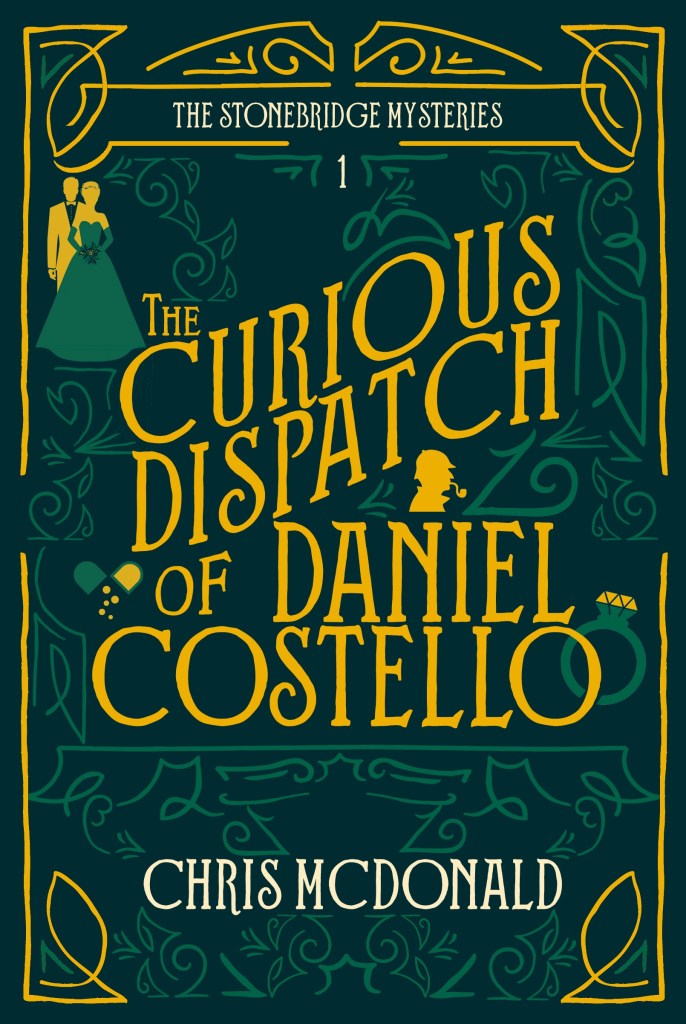
Today I’m taking part in the Red Dog Press Cover Reveal for Chris McDonald’s book The Curious Dispatch of Daniel Costello.
Wedding bells are chiming in the idyllic, coastal town of Stonebridge. For Sam and Emily, it should be the happiest day of their lives. But on the morning of the ceremony, the best man is found dead. The police quickly write his death off as a tragic accident, but something doesn’t seem right to wedding guest and groomsman, Adam Whyte.
Armed with an encyclopaedic, but ultimately ridiculous knowledge of television detective shows and an unwarranted confidence in his own abilities, Adam and his best friend (and willing Watson) Colin, set out to uncover what actually happened to Daniel Costello.
Originally hailing from the north coast of Northern Ireland and now residing in South Manchester, Chris McDonald has always been a reader. At primary school, The Hardy Boys inspired his love of adventure before his reading world was opened up by Chuck Palahniuk and the gritty world of crime. A Wash of Black is his first attempt at writing a book. He came up with the initial idea whilst feeding his baby in the middle of the night, which may not be the best thing to admit, considering the content. He is a fan of 5-a-side football, heavy metal and dogs. Whispers in the Dark is the second installment in the DI Erika Piper series, and Chris is currently working on his latest series, The Stonebridge Mysteries, to be published by Red Dog Press in 2021.
Publication: 3rd February 2021. Publisher: Red Dog Press.
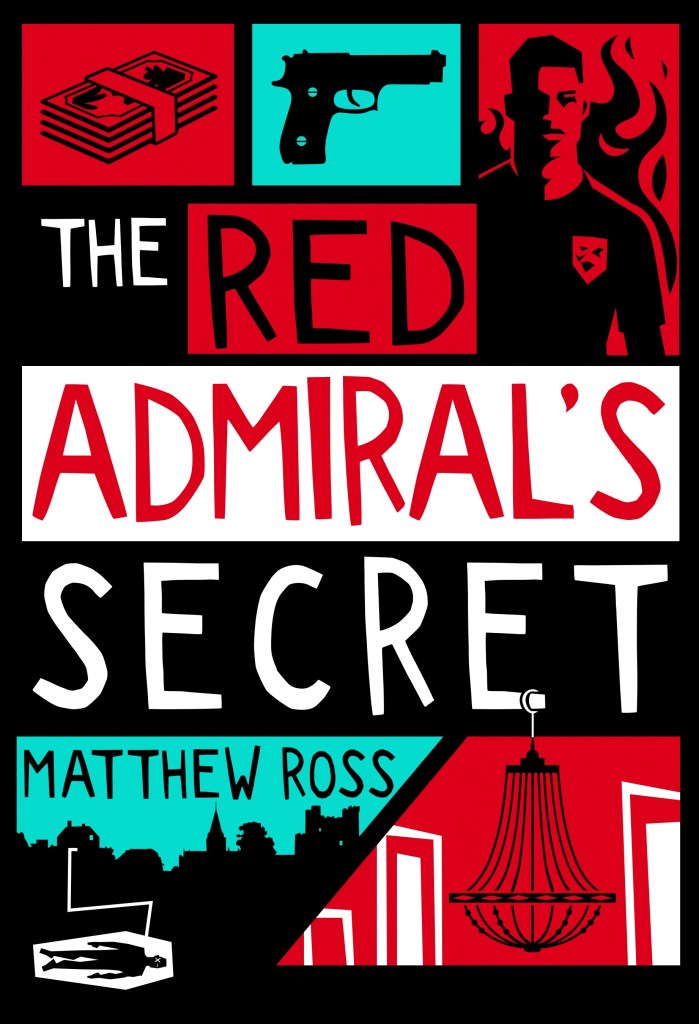
A Premier League bad-boy murdered at his newly refurbished home; a teenage runaway’s corpse uncovered on a construction site; a gunman shoots up the premises of the local gangland boss – all of them projects run by beleaguered builder Mark Poynter. Can he fix it?
Things seem to be on the up for builder, Mark Poynter. Mark’s got himself a nice little earner taking care of the sizeable property portfolio built up from the career earnings of former Premier League bad-boy and local celebrity, Danny Kidd. But when Danny Kidd puts an interested party’s nose out of joint by using his star status to gazump them on a development site – the derelict Admiral Guthrie pub – things turn ugly and incendiary, leaving Mark to deal with the consequences.
Meanwhile local villain, Hamlet, uses his subtle persuasion to dupe Mark into unwittingly help him launder vast sums of dirty cash but when it drags the area to the brink of gang warfare, Mark’s help is needed to try and broker a truce.
At the Admiral Guthrie secrets from the past meet conflicts of the present – will the rising flames reduce Mark’s future to ashes?
“The Red Admiral’s Secret” is the second in the series of darkly comic crime fiction novels featuring the beleaguered builder Mark Poynter, aided and hindered in equal measure by his trusted crew of slackers, idlers and gossips, and the lengths they go to just to earn a living.
Meet The Author
Matthew Ross was born and raised in the Medway Towns, England. He still lives in Kent with his Kiwi wife, his children and a very old cat.He was immersed in the building industry from a very early age helping out on his father’s sites during school holidays before launching into his own career at 17. He’s worked on projects ranging from the smallest domestic repair to £billion+ infrastructure, and probably everything in between.A lifelong comedy nerd, he ticked off a bucket-list ambition and tried his hand at stand-up comedy. Whilst being an experience probably best forgotten (for both him and audiences alike) it ignited a love for writing, leading to various commissions including for material broadcast on BBC Radio 4 comedy shows.
Matthew moved into the longer format of novel writing after graduating from the Faber Academy in London in 2017. ‘Death Of A Painter’ was his first novel and the first in a planned series of stories featuring Mark Poynter and his associates. Matthew enjoys reading all manner of books – especially crime and mystery; 80s music; and travelling and can’t wait for the next trip to New Zealand to spend time with family and friends.
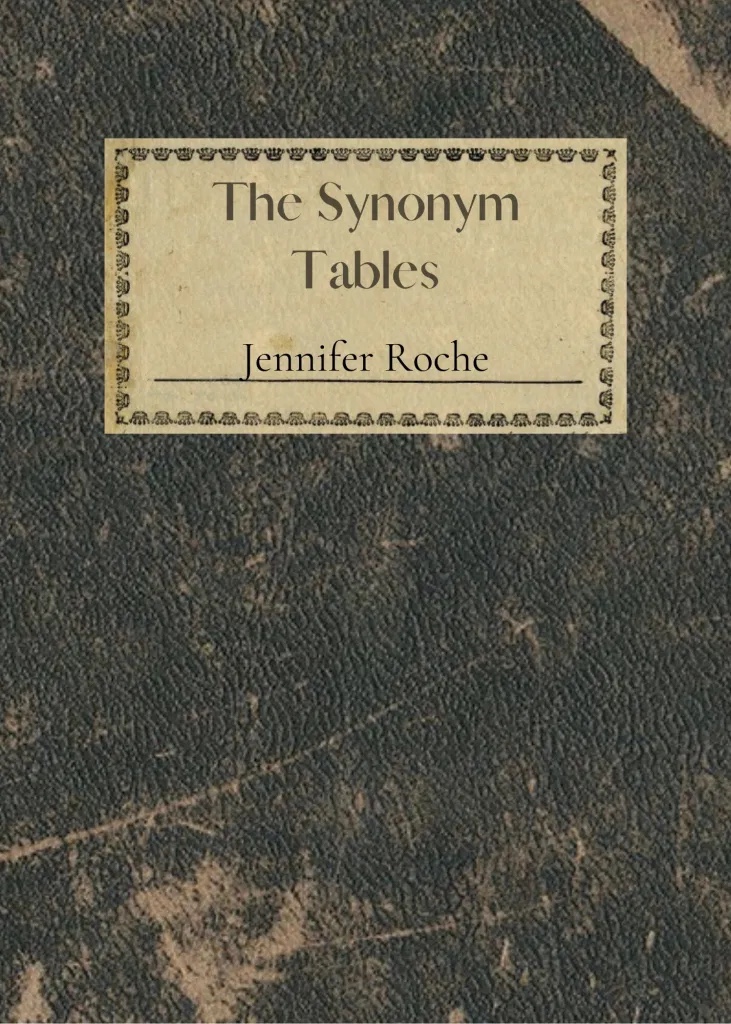
The Synonym Tables invite the reader to examine language closely and investigate how it shifts over time. By extracting synonyms that are deemed “most relevant” by Thesaurus.com for common words used today and comparing them to synonyms for the same terms from a 1947 textbook via the scientific format of a table, the reader is asked to consider how the tool of language evolves, shrinks, expands, and fails.
I agreed to read this new volume of poetry because I am fascinated with how language changes and how it’s used. I rarely get political on the blog, but where we see changes in language everyday is the media and in politics. I have a disability and if we think about the language around people with illnesses and disabilities, there has been a shift. In fact activists think it has changed significantly in the last fifteen years. There was a move away from using neutral terms towards words that insinuated blame. Here Roche closely examines words surrounding certain subjects – health, employment, status – in order for the reader to see if: there’s a difference; whether tone or agenda has changed; to look for patterns. The main aim is to give the reader food for thought.
There were a few differences the stood out to me. The first table/poem tackles synonyms for poverty and I was interested to see how words had become ‘sanitised’. Instead of ‘destitution’, in 2020 we used the word ‘debt’. It had me thinking about what those words mean. Destitution conjures up images of extreme poverty, having absolutely no resources to draw on. Debt doesn’t quite conjure up the same image, possibly because it has become the norm to live with a certain amount of debt. When I think about destitution I imagine people in rags, no food and possibly no shelter. It conjured images of Victorian orphans. Destitution is something that happens to people, whereas debt carries an amount of blame – it’s something we get ourselves into. Destitution can only be rectified by others helping and giving. Debt is something that carries individual responsibility; only the debtor can rectify the situation. We give to the destitute, but look down on the debtor. We make programmes about bailiffs and watch as they chase down the debtors and take away people’s belongings, There’s a lack of compassion in the word ‘debt’.
In another table the author compares words for ‘opulence’ and there are far fewer words in 2020 than there were in 1947. I always think of opulence in terms of interiors – velvet and silk cushions, a richness in colour from jewel like tones, and chandeliers casting a warm glow over everything. It makes me think of stately homes. To see that our 2020 synonym is ‘worth’ made me feel a bit cross. I didn’t like the idea that riches were comparable to worth. I’ve always been taught that everyone is of the same worth, no matter what they have. I know we live in a world where money equals status, but it shouldn’t equal worth. The synonyms associated with femininity and masculinity were also interesting. On Strictly Come Dancing recently, there was a bit of uproar among feminists when Shirley Ballas kept describing Maisie has powerful. She also commented that about her being ‘feminine but strong’ as if the two things didn’t usually fit together. I saw many women on Twitter change the but for and, being feminine is not one set of traits. So it was interesting to note that in 2020 our thesaurus synonym for feminine is ‘soft’. Equally a word that has crept into our synonyms for masculine is ‘muscular’. This shows that men are now equally judged on appearance to women. There is now an ideal body and appearance for both sexes, written into the language.
From my own disability perspective there were two things I found disturbing in the comparison table. Of course there are many more synonyms for illness in 2020 – for good reason where it’s referring to whether someone’s illness is a virus or an infection. The word ‘syndrome’ also makes an appearance – referring to a bundle of symptoms that have unknown cause, but significant effect on the body. However, when I came across the word ‘defect’ it made me feel very uncomfortable. It signifies a fault with that person instead of a difference or variety. When things are defective we either have them fixed or throw them away. Then I saw the table for synonyms of healthy, and there were some instances where the words didn’t differ at all. Words like ‘robust’, ‘vigorous’ and ‘hearty’ were present both times. However, it was one of the extra words in 2020 that shocked me. In a time where I see use of this word being pulled up all the time when referring to sexuality or gender, one of the synonyms for healthy was ‘normal’. In a medical environment I can understand doctors having to use a word for when someone is functioning at peak condition. Medicine is very much about classification – another reason for the word ‘syndrome’ making an appearance, where someone does not fit an existing or traditionally detectable illness pattern. So, doctors must have a word for the body, that functions within acceptable levels of fluctuation. There’s never just ‘normal’ in the medical world because we all vary so much, so someone’s blood pressure might be ‘within the parameters of normal’. I love it when doctors use that phrase because it tells me that they allow for variations even within a healthy body. However, when we say normal without that caveat, it says that anything different from this narrow field of human functioning, is abnormal.
This very unconventional book of poetry shows us that far from being ‘just words’, the synonyms we choose are very important. Words are very powerful and the ones we choose are fraught with meaning and betray a political, social and economic outlook. It changes the whole meaning of what we say. Someone out of work and struggling financially can be seen as needing help or alternatively as ‘workshy’ or someone to look down on. Someone with a disability can be seen as a hero in context of being injured in military service or a Paralympian. However, when written about in the context of claiming disability benefits, I’ve seen the media use derogatory and offensive language. So, language matters and in the synonyms that we see in a Thesaurus we have to remember the context around their inclusion. We must think about the point in history and the socioeconomic factors in play at that time. It’s worth further study to look at where these synonyms are used most and what effect they have on the piece of writing and the reader. I found these unconventional pieces of poetry interesting and it left me wondering why the author had included certain words and how she’d chosen to place them. Perhaps the particular words I’ve chosen, jumped out at me due to how they’re placed. Maybe the poet wanted to create a certain effect in the reader. It reminds us we should always be aware of the intention behind language when reading. For me this was a fascinating look at the words we use and why.
Meet the Author
Jennifer Roche is a poet, writer, and text artist who lives in Chicago, IL. She is the author of “20,” a chapbook of erasure poems from Jules Verne’s 20,000 Leagues Under the Sea (Alternating Current Press). Her work has also appeared in Storm Cellar; Tule Review; Footnote: A Literary Journal of History (#2); Oyez Review; Rain, Party & Disaster Society; and Ghost Ocean. The Chicago Guild Literary Complex named her a “Writer to Watch in 2019 & Beyond,” and she was a 2016 Charter Oak Award Semifinalist for Best Historical writing
Publisher: Red Dog Press (29 Nov. 2020). ISBN: 978-1913331962
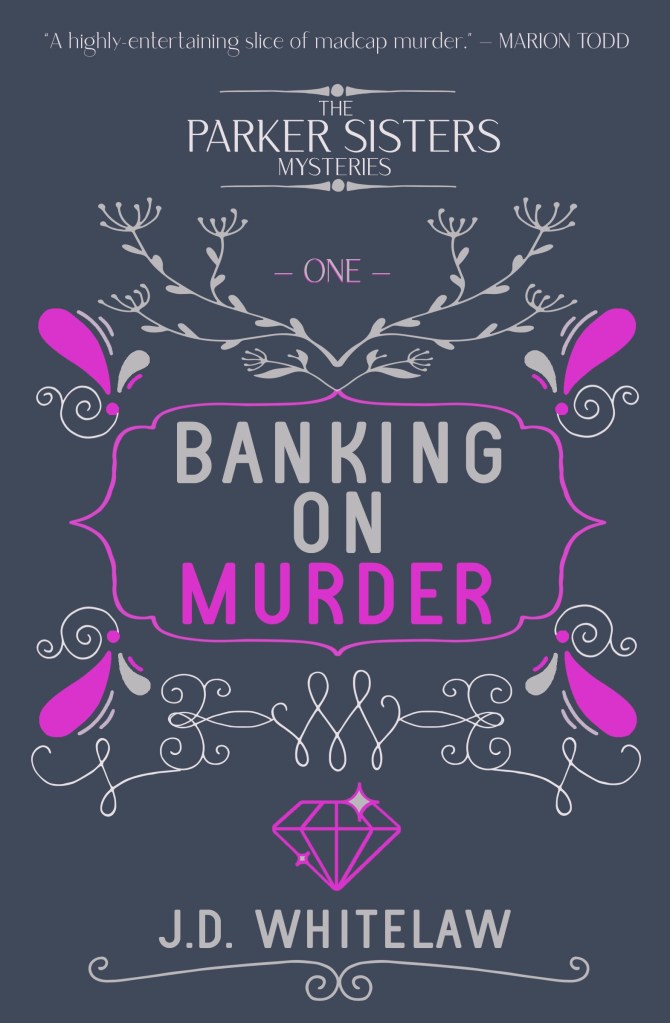
Well this book was a great surprise. I absolutely loved it. Three quirky sisters, a detective agency, a troublesome client and the backdrop of Glasgow just to finish it off. What’s not to love? I read it in two days, because it was just so much fun I couldn’t put it down. Now all I need is for someone to turn it into a Sunday evening series starring Kelly McDonald, Laura Fraser and Jessie Buckley and I’ll be content.
Martha is the eldest sister, slightly frumpy and very much a mother figure for her two younger sisters, Helen and Geri. She is dependable and the real business-like sister who keeps the agency ticking over. Helen is more of a mystery, but certainly has brains as the academic of the outfit. It turns out she’s also a very able dancer when she’s had enough to drink. Geri brings youth knowledge to the team as she’s the student of the trio. She may lurch in like she’s had no sleep, but she’s very sharp and knows how to use social media to the agency’s advantage. They’ve been requested at the home of Tracey Coulthard, who lives in a very smart home in a wealthy suburb of Glasgow. They arrive to find a maid, May, who is very worried about her employer who seems to be overwrought. They can hear screams and smashes coming from the bedroom. Mrs Coulthard is in bed crying, naked from the waist up and the fact that people are in her bedroom doesn’t seem to faze her at all. She offers the sisters £20,000 to find out the truth about her husband Gordon and his ‘extracurricular’ activities. This is the Parker sister’s meat and drink, most of their work is detecting whether partners are being unfaithful. However, the level of distress from this particular client is worrying Martha particularly. What might she do if they find out something she doesn’t want to hear? Martha senses a whole lot of trouble packaged alongside that cold hard cash.
The sisters manage to get themselves invited to a party for Gordon Coulthard’s company. Helen throws herself into the fray and Geri starts getting to know Gordon’s right hand man. As usual though, the sister’s don’t investigate quietly. Helen proceeds to get blind drunk and get a little over familiar with guests. In trying to find out more about Gordon, Martha ends up in a brawl with a statuesque blonde called Estelle who seems to be claiming that Gordon is her fiancé. She does indeed have a huge diamond on her finger and Martha is horrified, especially when Estelle starts dragging her round by her hair. As she fends her off, Martha tries to fathom why he would get engaged when he’s still married and be so open about it? This will mean the girls having to break the news to Tracey, setting in motion a chain of events that will end in murder.
I loved how the sisters worked in conflict, but somehow in unison. As Martha feels responsible for Tracey and what’s happened, Helen and Geri point out that they’ve done what they were paid for and can withdraw from what is becoming a media circus. Martha struggles a bit with the physical aspects of the job, leading to some amusingly clumsy moments. When chasing a suspect she falls through the fence they’ve just jumped over and when listening at a skylight she manages to fall straight through! More seriously, she runs up several flights of stairs to Coulthard’s penthouse and ends up in hospital with chest pain. I loved how Martha berates Geri for being ‘friends’ with Gordon’s colleague, but has to take it back when she realises how thoroughly she’s been stalking him on social media. I also enjoyed the introduction of Detective Pope, a stern Glasgow cop whose wheezing can be heard from the next room. Despite the asthma, she’s a tough customer and seems to be the sensible figure, there as a counterpoint to the sister’s madcap romp through this case. Yet, I could see an affinity growing between them, particularly Pope and Martha whose scenes are filled with sarcasm and wit. I’ll be interested to see how this develops.
Despite a few twists and turns, I did solve the case before the end, but I’m not sure it was meant to be a complex puzzle. This was an introduction to the sisters and their dynamic, and I will certainly be looking forward to their next adventure. This was was a wild ride that didn’t let up as the sisters were pulled from one side of Glasgow to the other. There’s no time to breathe, with the wheezing Pope almost collapsing in their wake. There’s just enough of a sprinkle of Christmas in the background too. I think there’s much more to come from Helen, and so much more about the Parker’s lives outside the agency. I thought this was a thoroughly enjoyable read, with incredibly engaging characters and so much promise for the series to come.
Meet The Author
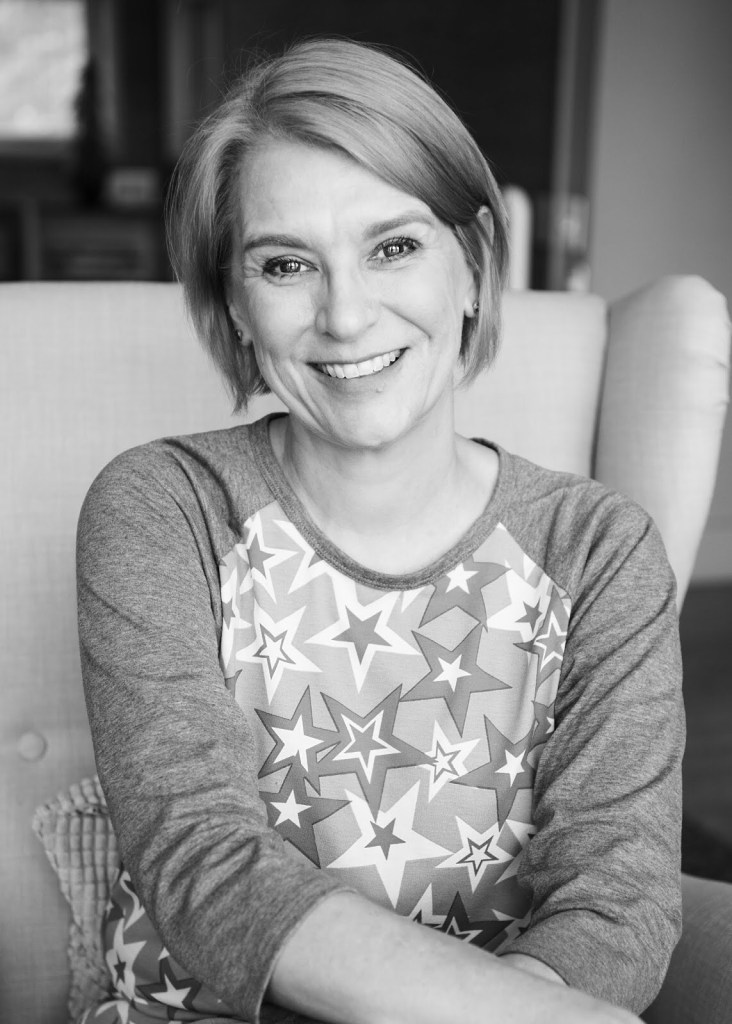
J.D. Whitelaw is an author, journalist and broadcaster. After working on the frontline of Scottish politics, he moved into journalism. Subjects he has covered have varied from breaking news, the arts, culture and sport to fashion, music and even radioactive waste – with everything in between. He’s also a regular reviewer and talking head on shows for the BBC. Banking on Murder is the first of three Parker sister novels. They follow his hugely successful HellCorp series. His debut in 2015 was the critically acclaimed Morbid Relations.
I really enjoyed the warmth and humour of this lovely tale about a country boy, finding that the 1960s isn’t the oasis of free love and hedonism promised in the media. Sam Ashby is finding that youth culture isn’t quite reaching the depths of Sussex. In order to find some excitement he takes the job of Assistant Manager at Meads Theatre in Eastbourne. This hormonally charged 19 year old is about to find his world changing in ways he never imagined. Breezing into Eastbourne is star of stage and screen Abigail Compton who is about to sweep Sam off his feet and out of his Levi 501s (shrink to fit). This is the final book in Masefield’s quintet of Sussex novels, but easily stands alone without the reader feeling they’ve missed half the story.
Sam is one of those hapless and inexperienced characters that it’s impossible not to fall in love with. There were anecdotes that made me laugh out loud – much to the annoyance of my other half who had dressed dropped off to sleep! Wanting to give off the more moody and sophisticated aura of James Dean, Sam buys a pair of shrink to fit Levi’s 501 jeans. Using his landlady’s bathroom he wedges himself into the jeans and awkwardly lowers himself into the lukewarm water. What follows in one of the funniest scenes I’ve read this year. Having grown up in the middle of rural Lincolnshire, I could identify with Sam’s frustration with his small town teenage years. There’s never enough access to fashion, the latest music or films, and it’s a case of grabbing excitement where you can. For Sam that means taking a job in his local theatre where he might have access to the bright lights and celebrities passing through. The author beautifully captures that yearning to experience something more than boring day to day family life – even when that family is much loved. We just get itchy feet at Sam’s age, to find out who we are and have our own adventures. He certainly meets some interesting characters who tread the boards; lovies and divas!
I liked the sense of place that the author creates. Even though Sam would like to be wandering beyond Eastbourne, there is a definite fondness for the area. The author writes so warmly about the beautiful countryside, it made me want to visit the area. He treads a fine line between depicting a town on the edge of decline, but the countryside being s picturesque. There’s also a great sense of the period, seen through the fashion and the actors Sam wants to emulate. The theatre itself is a wonderful backdrop to Sam’s first experiences of management. It turns out that ‘assistant manager’ is more of a ‘dogsbody’ role and as props go missing and the lighting malfunctions, Sam is simply fire-fighting all day long. Is this normal or is someone trying to sabotage the show? Given the clashing egos on the production, it wouldn’t be a surprise! Sam juggles all of this with varying degrees of success and many laughs along the way, but will the show go on and will the beautiful Miss Compton be able to grace Eastbourne with her dramatic skills? This is a lively, funny, and good-natured romp of a book. At the heart of it, Sam is a great character. Sometimes I found myself rolling my eyes at his stupidity, but I couldn’t help but like him. He’s naive, but charming, and the backdrop of old thespians sharing their ‘war stories’ only adds to this charm.
Meet The Author
Richard Masefield comes from a family of writers – John Masefield was his cousin – and with a love of animals and the outdoors he decided at a young age that he would farm and write, if necessary both at once. It took years of hard work before Richard could realise his dream, and in fact his first published novel was written while milking a herd of Friesian cows. He still lives on his farm in Sussex with his wife Lee and together they spend as much time as possible with their large family of children and grandchildren. Three Seasons of Sadie is part of a Sussex quintet including The White Cross, Brimstone, The Painted Lady and Chalkhill Blue. Each one is meant to be read as a stand-alone novel, they simply share a backdrop of the author’s beloved Sussex.
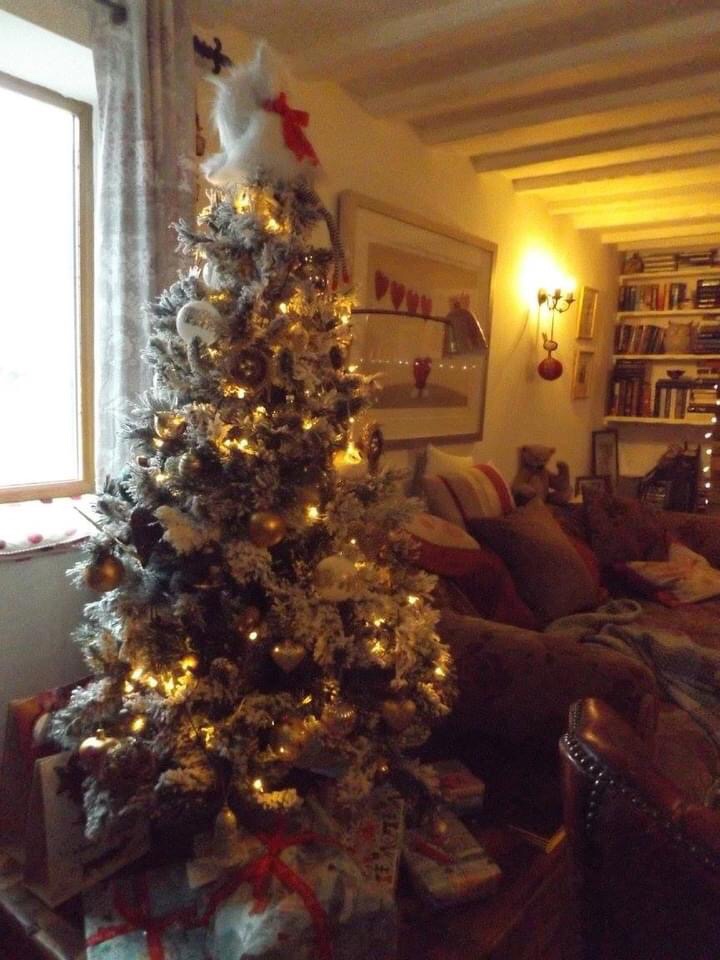
I haven’t put the Christmas Tree up yet this year, but when I do there’s always a wonderfully quiet moment when I feel a sense of calm and well-being settle over me. Somehow, no matter how I’ve felt beforehand, that time when the tree lights are lit, the candles are on and I’ve got a glass of Bailey’s in hand is the moment when I settle into the Christmas season. There’s something about a cosy living room with a lit Christmas tree that brings a little bit of magic into the home. Our spirits lift and even the barest room looks that little bit more welcoming. My tree has so many different decorations on it and each one represents somewhere or someone that’s important to me. My woodland decorations represent my growing up in the country. My Liverpool skyline baubles represent my Mum’s home town. I have beautiful Polish glass baubles inherited from my Polish in-laws or bought for me by my late husband. Last year my stepdaughters each added a bit of their own personality to the tree, so we now have glamorous cheetahs wearing crowns and some very quirky llamas.
Of course you’ll want to know about my bookish baubles: they are white rabbits with playing cards, silver Moomin houses, and glass baubles with lines from Jane Eyre and Wuthering Heights inside, and finally clocks to represent The Night Circus. I know most of us bookish people like to give and receive bookish gifts and I know a lot of book bloggers do their Christmas round-ups or best books lists around now. I wanted to do something a little different and with my therapist head on I thought I’d create a list of books to support and promote wellbeing at this time of year. It’s been a hard year and we’re not quite out of the woods yet. For my part, due to my MS and other health difficulties, I have been mostly shielding at home and I haven’t really adjusted to the changes very well. We’ve had to cancel our wedding. Twice. Cancelled two holidays. Got through my Dad’s very scary Triple ‘A’ surgery. Now we’re going through a stressful house move that’s going to carry over into 2021, but needs to be complete before the stamp duty holiday ends! So how do we look after ourselves through this time? Especially bearing in mind that most of our time will be spent at home. I’ve put together a list of gift books that you might want to buy yourself, or someone special this Christmas.
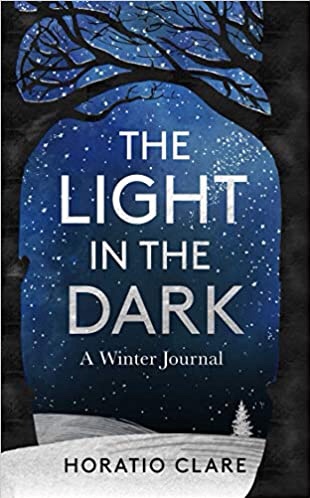
1. The Light in the Dark by Horatio Clare
Publisher: Elliot and Thompson ISBN: 978-1783964048
As November stubs out the glow of autumn and the days tighten into shorter hours, winter’s occupation begins. Preparing for winter has its own rhythms, as old as our exchanges with the land. Of all the seasons, it draws us together. But winter can be tough.
It is a time of introspection, of looking inwards. Seasonal sadness; winter blues; depression – such feelings are widespread in the darker months. But by looking outwards, by being in and observing nature, we can appreciate its rhythms and finds consolation. In this moving and lyrical evocation of a British winter and the feelings it inspires, Horatio Clare raises a torch against the darkness, illuminating the blackest corners of the season, and delving into memory and myth to explore the powerful hold that winter has on us. By learning to see, we can find the magic, the light that burns bright at the heart of winter: spring will come again.
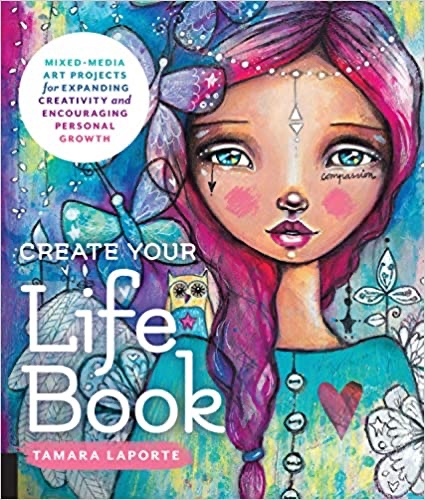
2. Create Your Life Book by Tamara Laporte
Publisher: Quarry Books ISBN: 978-1631593536
This is a gorgeous book for any teenage girl or artist in your life.
Inspired by Tamara Laporte’s art classes, Create Your Life Bookpresents 18 step-by-step projects that help you explore and work through issues surrounding creative fulfillment. Based on much-loved mixed-media artist Tamara Laporte’s popular, multi-year series of online classes, Create Your Life Book offers mixed-media drawing and painting projects that can raise your awareness of and help youwork through personal challenges and other obstacles to creating art and achieving self-fulfillment. There are themed chapters that target issues hampering creativity, then an art project that helps you work through it. With a year like this I know a lot of people have struggled to create. I use a lot of mixed media projects when I’m doing mental health workshops and it’s amazing how much they unlock feelings and lift the spirits.
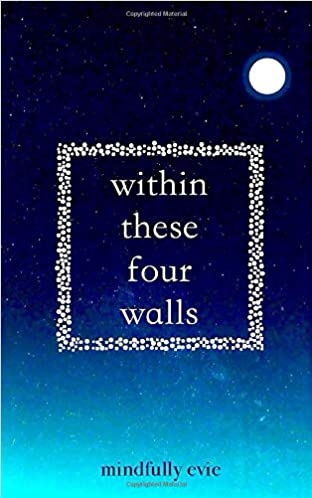
Mindfully Evie started as a blog, that grew from Evie’s experience with chronic illness (Lyme Disease and M.E). I work a lot with people who have chronic illness and disability, and this year has been especially difficult. Many are having to shelter due to being immune-compromised, and it can be really boring and lonely. I didn’t leave the house for four months earlier this year. People like me have a lot of skills and wisdom to share about how to cope with being at home, how to create happiness within imposed limitations and finding the joy in everyday life. Every word written in this book was written from within the confines of Evie’s home. Spanning over nearly three years this book is proof that despite being housebound, there is always happiness to be created, peace to be unearthed, and a life to be lived. Written within sections starting with the ‘The Storm’ this follows Evie’s journey when adjusting to her new circumstances. This is a great gift for anyone who has been struggling to be at home, or for the ‘spoonie’ in your life who is finding the pandemic harder than most.
4. The Christmas We Spent Apart by Toni McAree and Stephanie Hope.
This is a lovely gift for those you’re apart from this Christmas, perhaps instead of a Christmas card for those special friends and family. This is a pretty illustrated poem in scrapbook form, it allows you and your family to add personal details like photographs and handprints. It’s a great way to explain the differences this Christmas to your children as they do the activities, and leave as a gift basket or post out to loved ones.
I’ll still set up and reserve your normal space and imagine I’m sitting there seeing your face. Whenever it’s making me feel really sad, if it’s keeping you safe then I’ll choose to be glad. It’s made me realise that Christmas is not about things, but the joy of being around the ones you love brings. The biggest present would be holding you close, it can’t happen this year but it’s what I look forward to most.
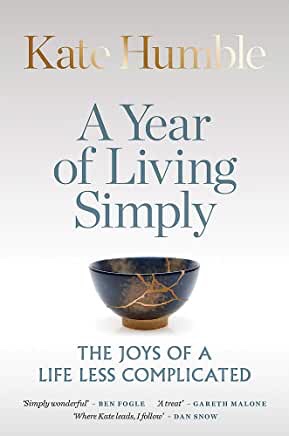
5. A Year of Living Simply by Kate Humble.
Publisher: Aster ISBN: 978-1783253425
From my chats with people over the last few months I realise that people are re-evaluating their lives. We’ve done it ourselves. After a year of living in the city with my partner and his daughters, most of it indoors, I realised how much I missed living in the country. My little barn wasn’t big enough for all of us, so I made the move, but I found the city too impersonal. I went days in lockdown not seeing anyone from 7am – 4pm. So we put the house on the market and in the new year we’ll be moving to a cottage in a small village with a shop, post office and pub. We have realised we’d like to live more within a community, to live more simply and do without things we don’t truly need.
If there is one thing that most of us aspire to, it is, simply, to be happy. But happiness has become anything but simple. Having stuff – The Latest, The Newest, The Best Yet – is peddled as the sure fire route to happiness. So why then, in our consumer-driven society, is depression, stress and anxiety ever more common, affecting every strata of society and every age, even, worryingly, the very young? Why is it, when we have so much, that many of us still feel we are missing something and the rush of pleasure when we buy something new turns so quickly into a feeling of emptiness, or purposelessness, or guilt? So what is the route to real, deep, long lasting happiness? Could it be that our lives have just become overly crowded, that we’ve lost sight of the things – the simple things – that give a sense of achievement, a feeling of joy or excitement? That make us happy. Kate Humble’s exploration of a stripped-back approach to life is uplifting, engaging and inspiring – and will help us all find balance and happiness every day.
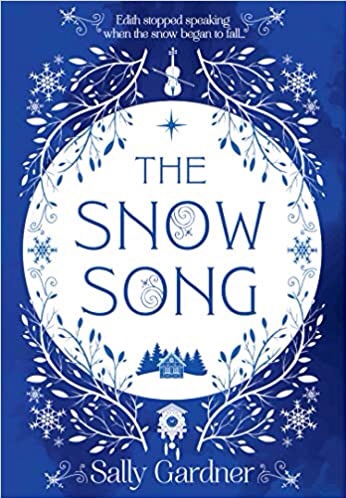
6. The Snow Song by Sally Gardner.
Publisher: HQ. ISBN: 978-0008217402
Sally Gardner’s beautiful book is the perfect gift this Christmas because, not only does it look gorgeous, but it is a story filled with love and magic. This Christmas, maybe more than most, we need to escape and this will take the reader into a spellbinding world. Gardner has imagined a world perched on a mountain, covered in ancient forests. Within this is a village, rife with secrets and cut off from the outside world. This village is run by the elders, men to whom tradition is all. Edith lives alone with her alcoholic father who is forcing her to marry the village butcher. But she is in love with a shepherd who promised to return to her. When the shepherd left the village, Edith’s father makes her promise that if he doesn’t return before the first snow, she will marry the butcher. When he doesn’t return, Edith’s hair turns white as snow and she loses her speech. Soon the village becomes isolated in a sea of snow and this enchantment that will have far-reaching consequences, not only for Edith but for the whole village. One by one the women of the village try to overcome their oppression and help Edith in her plight. Despite the terrible treatment from her father and her lack of voice, Edith has a silent strength which is inspiring to the other women and to me. Even though we see the worst of human greed and abuses of power, this book is beautiful and always has an underlying hope. Buy it for anyone who loves a fairytale, stunning artwork and needs to know there is always a light in the darkness.
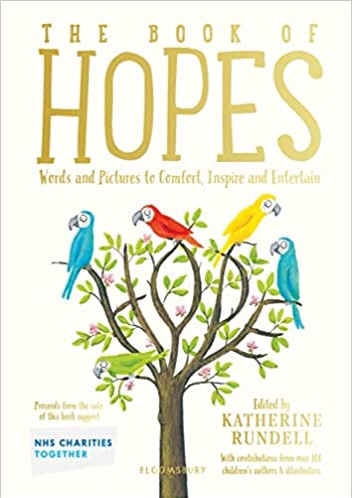
When life is hard what we need more than anything is hope: that things will be okay; that we will cope; that there is a way through to the other side of this slump. Children need this just as much as we do. This is a lovely gift book for the children in your life and every sale raises money for the NHS Charities Together. Editor and author Katherine Rundell emailed children’s authors and artists she liked best and asked them to contribute a short piece for the book, something that would raise curiosity, a sense of possibility or simply a snigger or smile. Within its pages you’ll find animal friends from insects to elephants, high-flying grandmas, a homesick sprite, the tooth fairy, and even extra-terrestrial life.
There are 133 contributions from authors and illustrators, including Anthony Horowitz, Axel Scheffler, Catherine Johnson, Jacqueline Wilson, Katherine Rundell, Lauren Child, Michael Morpurgo and Onjali Q. Raúf. Between them they have created a wonderful anthology that’s great to dip into when low, or just to pass the time on long days at home. It might even provide inspiration for your own family creations.
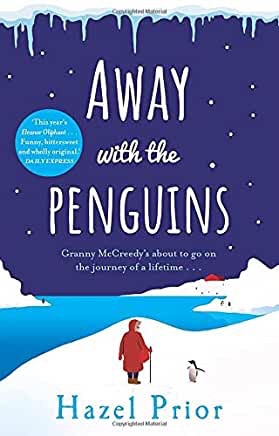
8. Away With The Penguins by Hazel Prior.
Publisher: Black Swan. ISBN: 978-1784164249
When I read my fellow bloggers reviews of this book, the word I kept seeing more than any other was ‘uplifting’. Veronica McCreedy lives in a mansion by the sea. She loves a nice cup of Darjeeling tea whilst watching a good wildlife documentary. And she’s never seen without her ruby-red lipstick.Although these days Veronica is rarely seen by anyone because, at 85, her days are spent mostly at home, alone. She can be found either collecting litter from the beach (‘people who litter the countryside should be shot’), trying to locate her glasses (‘someone must have moved them’) or shouting instructions to her assistant, Eileen (‘Eileen, door!’). Veronica doesn’t have family or friends nearby. Not that she knows about, anyway . . . And she has no idea where she’s going to leave her considerable wealth when she dies. Then a grandson is unearthed, but Veronica is underwhelmed by Patrick, whose life has fallen apart somewhat.
Inspired by her love of wildlife documentaries, she decides she wants to visit Locket Island and help out with the research team helping the Adelie Penguins. The team try to dissuade her but she won’t take no for an answer and offers them funding, but wants three weeks accommodation at the research station. Here she starts a blog on her adventures, making connections with new people and rescues a baby penguin, Pip. The experiences start to open her up and we start to learn about her wartime past. A diary she wrote about her experiences brings her and Patrick closer too, as he learns that she was once full of youth, vitality and dreams for her future. Then the death of her parents, the loss of a baby and finally marriage to a man who is forever unfaithful have gradually dulled her sparkle and trust in others. We start to see cracks in her harsh facade and learn that even people who seem set in their ways can change. Veronica will always be a force of nature, but in this quirky and uplifting book we realise she can learn to soften, and form new relationships. Simply gorgeous and unashamedly sentimental.
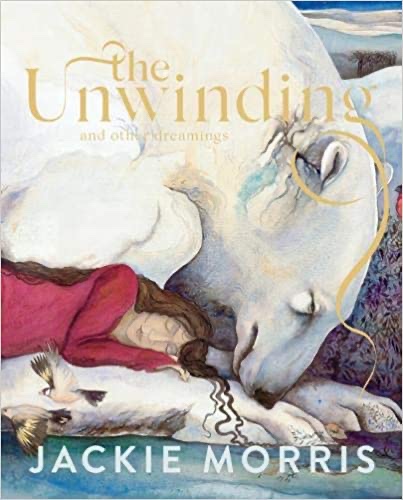
9. The Unwinding by Jackie Morris.
Publisher: Unbound. ISBN: 978-1784164249
I absolutely love Jackie Morris’s artwork and her book The Lost Spells is one of this year’s Christmas picks with most booksellers. This is an earlier book, but I’ve chosen it because I think the illustrations are magical and it fulfils that need for quiet contemplation. When we are assailed by so much information, change and constant news updates our brain becomes completely overloaded. If we are introverted it can be very hard to cope with the sheer amount of noise the world produces. I’m sure I’m not the only one who has reduced their intake of news over the year, but I’ve also removed news alerts from our tablets and phones, kept my social media politics free where possible and turned off alarms and alerts for all my accounts. This may seem extreme, but it leaves me in control of when I dip my toe into reality and gives me space to be quiet, separate, happy and creative. I believe constant media alerts make us anxious and ramp up our sense that everything in the world is a disaster. However, if we keep updated here and there, but then focus on our own lives, families, friends and homes there is so much to be grateful for and happy about. Between its illustrations there are brief but lyrical words intended to make us curious, inspire us and create a space for our minds to wonder and unwind. Kept as a companion by the bedside, it’s a beautiful book to settle with at night, to flick through and quiet the mind. There is a companion book The Silent Unwinding that provides space for your own thoughts and feelings.
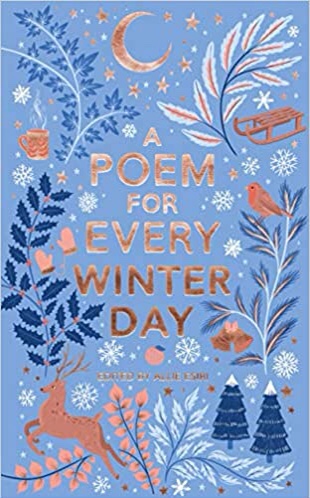
10. A Poem For Every Winter Day Edited by Allie Asiri
Sometimes, the only thing that will settle and relax me is poetry. There are times due to my MS and chronic pain that I find concentration difficult, so following a narrative or tackling a weighty novel just won’t work. I can always find consolation in a poem and their meaning unfurls beautifully when they’re read slowly. This volume of poetry takes us into winter, through Christmas and New Year all the way through to Valentine’s Day. It includes poems by Edgar Allen Poe, Thomas Hardy, Jackie Kay, Mary Oliver and Benjamin Zephaniah. Winter can feel endless, especially if you struggle with the lack of light and feel low at this time of year. This book highlights the parts of winter we can look forward to: the magic of frosty weather, the build-up to Christmas, the promise of a new year and the cosy warmth of our homes and families. It shows there are things to be grateful for and look forward to in this darker season. It’s great to dip in and out of and with its range of writers it should have someone for everyone.
I hope that’s given you some ideas to lift your own spirits this winter and gift inspiration for the people you love, especially this year when Christmas is going to be very different and we all need some support. There will be something here to fit anyone and I hope the suggestions help you support yourself and your loved ones this Christmas. 🎄🎉❄️