Posted in Throwback Thursday

Throwback Thursday! Blue Diary by Alice Hoffman.

When Ethan Ford fails to show up for work on a brilliant summer morning, none of his neighbors would guess that for more than thirteen years, he has been running from his past. His true nature has been locked away, as hidden as his real identity. But sometimes locks spring open, and the devastating truths of Ethan Ford’s history shatter the small-town peace of Monroe, affecting family and friends alike.

As regular readers know, Alice Hoffman is one of my favourite authors and while Blue Diary isn’t the first of her books I read, it’s definitely one of the best. Ethan and Jorie are one of those golden couples that probably annoy the hell out of everyone around them. They are a beautiful pair, with a lovely son, Collie. Jorie is the girl next door, the girl you’d ring if you needed advice or a shoulder to cry on, and the parent to ring if you need muffins baking for the school’s Christmas fair. Ethan is the neighbour you ring if you need help putting up a shelf, or if you wake up in the night and think someone is prowling in your garden. They are the cornerstone of this community.

Now, the police are at the door. Ethan Ford’s life as an irreproachable family man and heroic volunteer fireman has come to an end—and Jorie Ford’s life is coming apart. Some of the residents of Monroe are rallying behind Ethan. But others, including his wife and son, are wondering what remains true when so much is shown to be false—and how capable we really are of change.

Hoffman writes small towns and the dynamics of the people in them, so well. If Jorie and Ethan were in the Instagram age every photo would have #relationshipgoals in the replies underneath. Jorie’s world falls apart when Ethan is arrested and she is sure it must be a mistake. She knows this man, down to his bones. Surely she would know if he was hiding a dark secret? The novel invites us to ask the question: how well can we really know the person who’s head is on the pillow next to ours at night? Another thing that occurred to me as I was re-reading the novel, was how much the internet has changed our daily lives, into something we use like a daily diary. Originally published in 2001, when many people I knew didn’t have an internet connection in their home, my re-read of the book made me think about cancel culture and how much of people’s lives are now documented for all to see. Now, a long forgotten tasteless joke, inappropriate comment, or photographed drunken escapade, can be found years after the fact and be commented upon and criticised by millions. Applying the standards of today’s society, no matter how important and hard won they may be, to yesterday’s behaviour can be devastating for the individual involved. Even if their own views have now changed for the better, an individual can lose their livelihood, relationships, and potentially their whole life over one incident. It is an incredible power we hold in our hands when joining an internet ‘pile-on’.

Jorie only experiences this on a small town scale, but it’s effect is no less devastating. As it becomes known that Ethan has been arrested, to be interviewed on charges of the rape and murder of a young girl, neighbours and friends are shocked, but have to consider their response. Obviously the first question on everyone’s lips is whether Ethan is guilty or not, but beyond that: did Jorie know about this? Is she guilty by association? Is this his only crime? Can they still be friends with Jorie? Jorie has so many questions for Ethan, but other issues are swirling around in her mind. How will they cope financially? Will she lose her support network? Most importantly she wonders how to protect Collie from knowing about the accusations. This doesn’t just affect her and Ethan, this could blight Collie’s whole life too. With all this in mind, as well as needing to hear the truth, Jorie is wondering whether her marriage can survive this? Should it? When Ethan confesses to the crime, her world and her trust in her husband is shattered.

Ethan’s only defence is that he had no intention to rape or kill the young girl. His claim is that during consensual sex, he accidentally choked her and then decided to run, worrying that no one would believe his innocence. I wasn’t sure I did. He packed up and set up a new life for himself in Massachusetts where he met Jorie. Even if we believe his story, the injustice that he could choose to rebuild his life while his victim couldn’t really stayed with me. He had covered his tracks very well, until Collie’s 13 year old friend Kat, sees an e-fit of a suspect on television and rings the hotline to turn Ethan in. On one hand she feels it’s the right thing to do, but is sad about the effect this will have on Collie. I found it very surprising how many townsfolk were still willing to support and help Ethan, even after his confession. Jorie becomes more and more conflicted, then makes a decision to gain more information in an attempt to make peace with what has happened. She asks the victim’s brother if she can visit with him in Maryland. She needs to hear the context of the crime and the impact it had on the family involved.

There, Jorie gets a feel for the town and how this terrible act of violence was felt by all the residents. The victim’s name is Rachael and James takes Jorie up to Rachael’s room which has never been changed since her death. With Jorie the reader takes in the cuddly toys, the posters, and the framed photos of Rachael riding and with friends. This is a little girl’s room and when James talks about trying to scrub the bloodstain from the wall behind the bed, Ethan’s crime really comes home to the reader and to Jorie. The break also gives her some much needed breathing space, away from the pressure of the court case and the well-meaning supporters of Ethan, but also from Ethan himself. When she’s near him the love she has felt for him this past 13 years threatens to overwhelm her and the reality of Ethan’s crime. Here she has time to think clearly about what it is she has to forgive, before deciding whether she can. It isn’t just the crime itself, but the years of lies, as well as committing his life to her and starting a family knowing this was lurking in his past. He chose to have Collie with her, knowing that, if exposed, his crime would alter Collie’s life irreparably and leave him without a father. I found myself seeing a selfishness in these acts, but also in accepting help from the town seeking his acquittal and expecting Jorie to stand by him. Could the same selfishness, the wanting something and simply taking it, signal the real motive for his crime?

This is not a book about Ethan, nor is it a crime novel in the sense that we’re waiting for a murderer to be unmasked. This is more about the aftermath of violent crime for the family of the victim and the perpetrator. I think Hoffman does this very well. Her use of the victim’s diary as our way into her character is clever. We feel, alongside Jorie, for this sensitive girl falling in love for the first time. Her innocence in how she thinks of a relationship with Ethan is heartbreaking since we know the outcome. I loved the way Hoffman aligns her innocence with nature and gives us layers of description using flowers, trees, seasons and food to help us understand these characters and embed them within a place. We root for these people, drawn into a web of lies that is still being spun to protect Ethan. When we finally reach the section where the rape and murder takes place, it has a huge impact and made me cry on first reading, for all the victims of this crime. Ultimately, our ending hinges on Jorie’s ability to forgive and even if does, does forgiving mean we have to forget?

Meet The Author


Alice Hoffman is the author of thirty works of fiction, including Practical Magic, The Red Garden, The Dovekeepers and, most recently,The Museum of Extraordinary Things. She lives in Boston. Her latest novel The Book of Magic will be the fourth in the Practical Magic series abs will be released on 5th October 2021. Visit her website: http://www.alicehoffman.com

Posted in Personal Purchase

Books I’m Looking Forward To In 2021 Part 2

The Paris Library by Janet Skeslion Charles. John Murray Press 9th Feb 2021.

IN THE DARKNESS OF WAR, THE LIGHT OF BOOKS

I’ve had a particular interest in WW2 fiction more recently, because it’s a subject I’m using for my MA portfolio in Writing and Well-being. PARIS, 1939
Odile Souchet is obsessed with books, and her new job at the American Library in Paris – with its thriving community of students, writers and book lovers – is a dream come true. When war is declared, the Library is determined to remain open. But then the Nazis invade Paris, and everything changes. In Occupied Paris, choices as black and white as the words on a page become a murky shade of grey – choices that will put many on the wrong side of history, and the consequences of which will echo for decades to come.

MONTANA, 1983
Lily is a lonely teenage desperate to escape small-town Montana. She grows close to her neighbour Odile, discovering they share the same love of language, the same longings. But as Lily uncovers more about Odile’s mysterious past, she discovers a dark secret, closely guarded and long hidden. Based on the true Second World War story of the heroic librarians at the American Library in Paris, this is an unforgettable novel of romance, friendship, family, and of heroism found in the quietest of places. I have my pre-order in already! Watch out for my review in February.

Daughters of Night by Laura Shepherd-Robinson. Pan Macmillan. 18th February 2021.

Murder awaits in the illuminated night of Vauxhall Pleasure Gardens …

I love reading about the seedy underbelly of society, or different groups in society that aren’t usually represented in historical fiction. I love the work of Sarah Waters and one of my favourite books ever is Michael Faber’s The Crimson Petal and the White, where we follow the prostitute Sugar into an underclass of women trying to survive in a man’s world. These books change our one dimensional perceptions of a particular society or historical period. From an award-winning new star of historical fiction, Daughters of Night reveals the dangerous underbelly of Georgian London – giving a voice to the female victims history so often forgets, and the women who remembered them. Set in London, 1782. Caro Corsham finds a woman mortally wounded in the bowers of Vauxhall Pleasure Gardens. When the constables discover that the deceased woman was a high-society lady of the night, they stop searching for her killer – and it’s up to Caro to seek justice. But the hidden corners of Georgian society are filled with artifice, deception and secrets, and finding the killer will be harder, and more treacherous, than she can know … I’ve been lucky enough to have an ARC of this one and you won’t be disappointed.

Greenwich Park by Katherine Faulkner. Bloomsbury Publishing. 15th April 2021.

This novel is coming in early spring and I’m so looking forward to getting lost in the psyche of these two characters, Rachel and Helen. It fascinates me to see how the author has constructed these difficult selves and how they interact with each other. The overuse of the word ‘perfect’ in the blurb tells me that all in Helen’s world is maybe not as good as it appears.

Helen has it all… Daniel is the perfect husband. Rory is the perfect brother. Serena is the perfect sister-in-law. And Rachel? Rachel is the perfect nightmare. When Helen, finally pregnant after years of tragedy, attends her first antenatal class, she is expecting her loving architect husband to arrive soon after, along with her confident, charming brother Rory and his pregnant wife, the effortlessly beautiful Serena. What she is not expecting is Rachel. Extroverted, brash, unsettling single mother-to-be Rachel, who just wants to be Helen’s friend. Who just wants to get know Helen and her friends and her family. Who just wants to know everything about them. Every little secret… I can tell already that this is the book I won’t be able to put me down.

The Silk House by Katye Nunn. Orion. 21st January 2021.

This is a book I’m going to find myself completely immersed in. It has that combination of an old house filled with a weight of secrets, and a present day resident feeling the weight of that past, sucked into the mystery. An enchanting mystery kept hidden for hundreds of years…

1700s Rowan Caswell leaves her village to work at the home of an English silk merchant. Very soon, she finds herself thrust into a dangerous world, where her talent for herbs and healing starts to attract unwanted attention. Mary-LouiseStephenson dreams of becoming a silk designer, a path that has remained largely forbidden to women. A length of fabric she weaves with a pattern of deadly flowers will have shocking consequences for all who dwell at the Silk House. In the Present Day, Thea Rust arrives at an exclusive boarding school in the British countryside to look after the first intake of girls in its history. She is to stay with them in the Silk House, a converted silk factory from the 18th century, where the shadows hide secrets waiting to be discovered… I can’t wait to discover them with her.

The Summer Job by Lizzy Dent. Viking. 15th April 2021

Have you ever imagined running away from your life?

Well Birdy Finch didn’t just imagine it. She did it. Which might’ve been an error. And the life she’s run into? Her best friend, Heather’s. The only problem is, she hasn’t told Heather. Actually there are a few other problems… Can Birdy carry off a summer at a luxury Scottish hotel pretending to be her best friend (who incidentally is a world-class wine expert)? And can she stop herself from falling for the first man she’s ever actually liked (but who thinks she’s someone else)?

WANT TO ESCAPE REAL LIFE FOR A WHILE? RUN AWAY WITH BIRDY FINCH, A MESSY HEROINE WITH A HEART OF GOLD. THE SUMMER JOB IS THE HOTTEST DEBUT TO LOSE YOURSELF IN THIS YEAR.

‘Fresh, funny and oh so relatable – the perfect tonic’ — ABBIE GREAVES

‘Fun with a capital F . . . If you’ve ever felt you’re getting left behind in life, or don’t have everything worked out quite yet, this is the book for you’ — SOPHIE COUSENS

‘I fell for Birdy on the very first page and inhaled the rest of her story . . . A brilliantly original plot paired with fabulously funny writing – a pure joy to read!’ — HELLY ACTON

I’ve been lucky enough to receive a proof of this, with my very own lobster bookmark! When I watched a documentary on Helen Fielding and the phenomenon of Bridget Jones’s Diary I was thinking about how ready we are for a new heroine to fall in love with. This is going to be an indulgent weekend read for me, and I’m sure I will fall in love with Birdy too.

The World at my Feet by Catherine Isaac. Simon and Schuster U.K. Publication Date TBC

The dazzling new novel from Richard & Judy book club author Catherine Isaac, The World at my Feet is a story about the transforming power of love, as one woman journeys to uncover the past and reshape her future.

1990. Harriet is a journalist. Her job takes her to dangerous places, where she asks questions and tries to make a difference. But when she is sent to Romania, to the state orphanages the world is only just learning about, she is forced to rethink her most important rule. 2018. Ellie is a gardener. Her garden is her sanctuary, her pride and joy. But, though she spends long days outdoors, she hasn’t set foot beyond her gate for far too long. Now someone enters her life who could finally be the reason she needs to overcome her fears. From post-revolution Romania to the idyllic English countryside, The World at My Feet is the story of two women, two worlds, and a journey of self-discovery that spans a lifetime. I wanted to read this because I was a teenager when the news of the Romanian orphanages first came to light. I was deeply affected by the pictures of babies and toddlers, in rows of cots, rocking to comfort themselves. It was the silence that scared me most, the fact that they knew it was pointless to cry because no one would come. It was my first sense of wanting to do something, to get involved in some way and help. I am looking forward to reading about someone who was there on the ground and did just that.

The Last One At The Party by Bethany Clift. Hodder and Stoughton. 4th Feb 2021

THE END OF EVERYTHING WAS HER BEGINNING

It’s December 2023 and the world as we know it has ended. I’m not sure how I feel about reading this book at this height of this second wave, but I know that I’m intrigued by the premise. The human race has been wiped out by a virus called 6DM (‘Six Days Maximum’ – the longest you’ve got before your body destroys itself). But somehow, in London, one woman is still alive. A woman who has spent her whole life compromising what she wants, hiding how she feels and desperately trying to fit in. A woman who is entirely unprepared to face a future on her own. Now, with only an abandoned golden retriever for company, she must travel through burning cities, avoiding rotting corpses and ravenous rats on a final journey to discover if she really is the last surviving person on earth. And with no one else to live for, who will she become now that she’s completely alone? I’m prepared for a few nightmares when I delve into this next week.

Tall Bones by Anna Bailey. Random House U.K. 1st April 2021.

I know that when I start this book, it’s going to be one of those I can’t put down! When I’m like that I tell my other half to clear the weekend. I’ve been known to be still awake at 3am because I can’t stop. The blurb is so enticing. When seventeen-year-old Emma leaves her best friend Abi at a party in the woods, she believes, like most girls her age, that their lives are just beginning. Many things will happen that night, but Emma will never see her friend again. Abi’s disappearance cracks open the façade of the small town of Whistling Ridge, its intimate history of long-held grudges and resentment. Even within Abi’s family, there are questions to be asked – of Noah, the older brother whom Abi betrayed, of Jude, the shining younger sibling who hides his battle scars, of Dolly, her mother and Samuel, her father – both in thrall to the fire and brimstone preacher who holds the entire town in his grasp. Then there is Rat, the outsider, whose presence in the town both unsettles and excites those around him. Anything could happen in Whistling Ridge, this tinder box of small-town rage, and all it will take is just one spark – the truth of what really happened that night out at the Tall Bones….

The Shape of Darkness by Laura Purcell. Raven Books. 21st Jan 2021

Wicked deeds require the cover of darkness…

Victorian Gothic novels are like cat nip to me and Laura Purcell has become one of my go-to authors. That means she’s one of the privileged few writers whose books I will buy without reading a single review, Silhouette artist Agnes is struggling to keep her business afloat. Still recovering from a serious illness herself, making enough money to support her elderly mother and her orphaned nephew Cedric has never been easy, but then one of her clients is murdered shortly after sitting for Agnes, and then another, and another… Desperately seeking an answer, Agnes approaches Pearl, a child spirit medium lodging in Bath with her older half-sister and her ailing father, hoping that if Pearl can make contact with those who died, they might reveal who killed them. But Agnes and Pearl quickly discover that instead they may have opened the door to something that they can never put back…

What secrets lie hidden in the darkness? I can’t wait to find out.

Posted in Personal Purchase

Books I’m Looking Forward To In 2021 Part 1

The Lamplighters by Emma Stonex. Pan Macmillan. 4th March 2021

They say we’ll never know what happened to those men. They say the sea keeps its secrets . . .

Cornwall, 1972. Three keepers vanish from a remote lighthouse, miles from the shore. The entrance door is locked from the inside. The clocks have stopped. The Principal Keeper’s weather log describes a mighty storm, but the skies have been clear all week. What happened to those three men, out on the tower? The heavy sea whispers their names. The tide shifts beneath the swell, drowning ghosts. Can their secrets ever be recovered from the waves? Twenty years later, the women they left behind are still struggling to move on. Helen, Jenny and Michelle should have been united by the tragedy, but instead it drove them apart. And then a writer approaches them. He wants to give them a chance to tell their side of the story. But only in confronting their darkest fears can the truth begin to surface. Inspired by real events, The Lamplighters is an intoxicating and suspenseful mystery, an unforgettable story of love and grief that explores the way our fears blur the line between the real and the imagined.

See my full review of The Lamplighters here:

https://lotuswritingtherapy.com/2021/01/03/the-lamplighters-by-emma-stonex/

Madam by Phoebe Wynne. Quercus. 18th Feb 2021.

For 150 years, Caldonbrae Hall has loomed high above the Scottish cliffs as a beacon of excellence in the ancestral castle of Lord William Hope. A boarding school for girls, it promises that its pupils will emerge ‘resilient and ready to serve society’.
Into its illustrious midst steps Rose Christie, a 26-year-old Classics teacher and new head of department. Rose is overwhelmed by the institution: its arcane traditions, unrivalled prestige, and terrifyingly cool, vindictive students. Her classroom becomes her haven, where the stories of fearless women from ancient Greek and Roman history ignite the curiosity of the girls she teaches and, unknowingly, the suspicions of the powers that be.
But as Rose uncovers the darkness that beats at the very heart of Caldonbrae, the lines between myth and reality grow ever more blurred. It will be up to Rose – and the fierce young women she has come to love – to find a way to escape the fate the school has in store for them, before it is too late.

See my full review of Madam here:

https://lotuswritingtherapy.com/2020/12/19/madam-by-phoebe-wynne/

The Split by Laura Kaye. Quercus. 18th March 2021.

Brutally dumped by her girlfriend, Ally is homeless, friendless and jobless… but at least she has Malcolm. Wounded and betrayed, Ally has made off with the one thing she thinks might soothe the pain: Emily’s cat. 

After a long train journey she arrives home to her dad in Sheffield, ready to fold herself up in her duvet and remain on the sofa for the foreseeable. Her dad has other ideas. A phone call later, and Ally is reunited with her first ever beard and friend of old, Jeremy. He too is broken-hearted and living at home again. In an inspired effort to hold each other up, the pair decide to sign up for the local half marathon in a bid to impress their exes with their commitment and athleticism. Given neither of them can run, they enlist the support of athletic, not to mention beautiful, Jo. But will she have them running for the hills… or will their ridiculous plan pay off…? I’ve seen this described as ‘humour, kindness, cake and a cat’ – sounds like the perfect day to me. My full review will be out soon.

Everything Happens For A Reason by Katie Allen. Orenda Books. 10th June 2021.

Mum-to-be Rachel did everything right, but it all went wrong. Her son, Luke, was stillborn and she finds herself on maternity leave without a baby, trying to make sense of her loss. When a misguided well-wisher tells her that ‘everything happens for a reason’, she becomes obsessed with finding that reason, driven by grief and convinced that she is somehow to blame. She remembers that on the day she discovered her pregnancy, she’d stopped a man from jumping in front of a train, and she s now certain that saving his life cost her the life of her son. Desperate to find him, she enlists an unlikely ally in Lola, an Underground worker, and Lola’s seven-year-old daughter, Josephine, and eventually tracks him down, with completely unexpected results… Both a heart-wrenchingly poignant portrait of grief and a gloriously uplifting and disarmingly funny story of a young woman’s determination, Everything Happens for a Reasonis a bittersweet, life- affirming read and, quite simply, unforgettable.

While Paris Slept by Ruth Druart. Headline. 4th March 2021.

On a platform in occupied Paris, a mother whispers goodbye.
It is the end.
But also the beginning.

Paris 1944
A young woman’s future is torn away in a heartbeat. Herded on to a train bound for Auschwitz, in an act of desperation she entrusts her most precious possession to a stranger. All she has left now is hope.

Santa Cruz 1953
Jean-Luc thought he had left it all behind. The scar on his face a small price to pay for surviving the horrors of Nazi Occupation. Now, he has a new life in California, a family. He never expected the past to come knocking on his door. On a darkened platform, two destinies become entangled. Their choice will change the future in ways neither could have imagined.

Unwell Women by Elinor Cleghorn. Weidenfeld and Nicholson. 10th June 2021.

See my very personal preview of this exciting book here:

https://lotuswritingtherapy.com/2020/12/31/most-anticipated-2021-unwell-women-by-elinor-cleghorn/

The Last House on Needless Street by Catriona Ward. Serpent’s Tail/Viper. 18th March 2021.

I have been excited about this book for months now and was so excited to receive an ARC on NetGalley! It’s now at the top of my TBR pile and I’m looking forward to getting started this week. Why so excited? When I read that Stephen King had said ‘I haven’t read anything this exciting since Gone Girl’ I started to take notice. Another favourite author of mine, Joanne Harris, agreed that ‘Books like this don’t come around too often’ . This is the story of a murderer. A stolen child. Revenge. This is the story of Ted, who lives with his daughter Lauren and his cat Olivia in an ordinary house at the end of an ordinary street. All these things are true. And yet some of them are lies. You think you know what’s inside the last house on Needless Street. You think you’ve read this story before. In the dark forest at the end of Needless Street, something lies buried. But it’s not what you think… Based on the reviews I’ve read, I would pre- order now ( I’ve already got my hardback on order because this is one of those ARC’s I need a real copy of). Review coming soon.

The One Hundred Years of Lenni and Margot by Marianne Cronin. Doubleday/ Random House UK. 18th Feb 2021.

Everything I’ve read about this novel tells me it’s made for me. I’ve had a pending request for it on NetGalley for a while, but not long to wait until I can pop to the local bookshop for it. We all need something to keep our hopes alive, especially at the moment and this book seems to uplift people. It’s about an extraordinary friendship. A lifetime of stories. Their last one begins here. Life is short – no one knows that better than seventeen year-old Lenni Petterssen. On the Terminal Ward, the nurses are offering their condolences already, but Lenni still has plenty of living to do. When she meets 83-year-old Margot Macrae, a fellow patient offering new friendship and enviable artistic skills, Lenni’s life begins to soar in ways she’d never imagined. As their bond deepens, a world of stories opens up: of wartime love and loss, of misunderstanding and reconciliation, of courage, kindness and joy. Stories that have led Lenni and Margot to the end of their days.

The One Hundred Years is a celebration of life, hope and kindness. The perfect read to shine a light on dark days.

The Kingdoms by Natasha Pulley. Bloomsbury. 27th May 2021.

Such are the problems of a book bloggers world – I’ve had this proof for a couple of months but have such a pile of proofs I need to wait till we’re a bit closer to publication. It’s calling to me though, because I became a die-hard fan of Natasha Pulley’s writing in 2016 when I fell in love with a clockwork octopus and a lonely Japanese watchmaker. This promises to be another imaginative mash-up of history and fantasy.

Come home, if you remember.

The postcard has been held at the sorting office for ninety-one years, waiting to be delivered to Joe Tournier. On the front is a lighthouse – Eilean Mor, in the Outer Hebrides. Joe has never left England, never even left London. He is a British slave, one of thousands throughout the French Empire. He has a job, a wife, a baby daughter. But he also has flashes of a life he cannot remember and of a world that never existed – a world where English is spoken in England, and not French. And now he has a postcard of a lighthouse built just six months ago, that was first written nearly one hundred years ago, by a stranger who seems to know him very well. Joe’s journey to unravel the truth will take him from French-occupied London to a remote Scottish island, and back through time itself as he battles for his life – and for a very different future.

These are just a few of the releases I’m looking forward to in the first part of this year. Look out for part 2 later in the week, but be prepared for your wish list to grow even longer. Happy Reading!

Posted in Personal Purchase

Books That Give Me The Christmassy Feeling,

I went up to the bathroom and found my mother crying and running the turkey under the hot tap. She said, ‘The bloody thing won’t thaw out, Adrian. What am I going to do?’ I said, ‘Just bung it in the oven.’ So she did.”

Everybody’s favourite misunderstood, totally intellectual, teenage diarist, Adrian Mole, has perhaps experienced some of the most realistic Christmases in literature. His entry on one particular day sees him recall the hectic and hilarious events of the previous 24 hours, after his mum serves dinner to unexpected guests four hours late while his dad ends up drunk. We all know that feeling – of a parent acting manically and those annoying guests that just won’t leave – all too well. Also, I’m amused and touched that he gets Pandora a can of deodorant as her present. Other favourite details of the Mole family Christmases are the one where his prison warden Aunty Susan, brings a ‘friend’ in a disturbingly low cut top and the seasonal Fancy Dress Party at the Braithwaites where Pandora dresses as a belly dancer, much to Adrian’s disgust. Oh and the dog, who always manages to eat something he shouldn’t or has bizarre accidents like getting a model pirate stuck in his paws. His many Christmases, even into adulthood, are always disastrous and still make me laugh out loud.

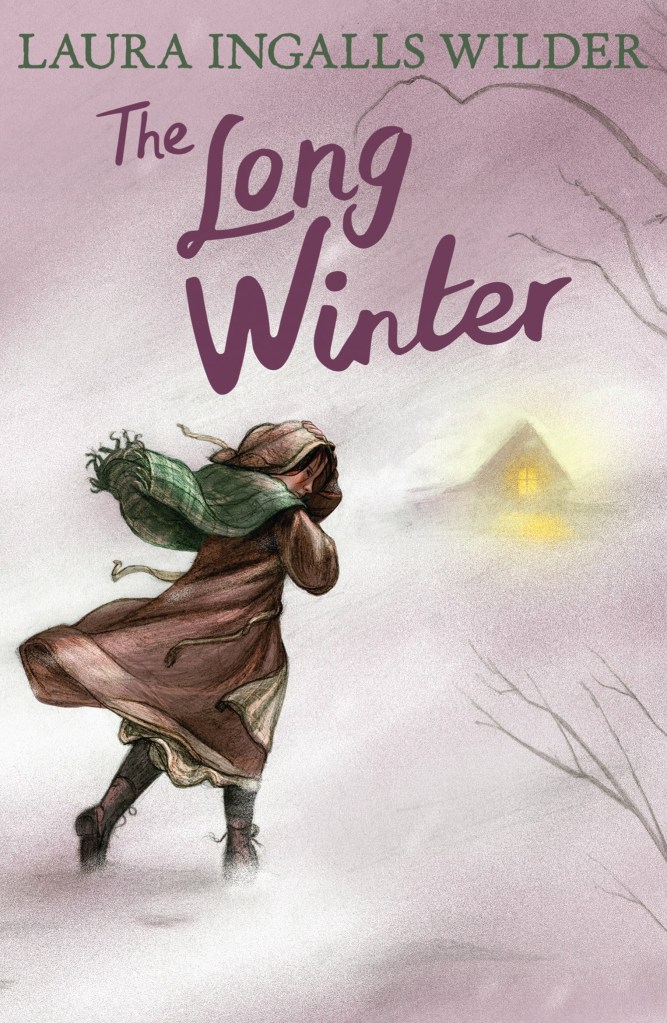
The Long Winter is just one of Laura Ingalls Wilder’s books with wintry scenes that make me feel Christmassy. There’s the party in Little House in the Big Woods where the girls stay with extended family so they can help with collecting maple sugar. There are such wonderful descriptions of making candy by freezing the maple sugar in the snow, beautiful descriptions of all the women’s best dresses as they get ready for the party and an incredible table groaning with food! Later, in her novel The Long Winter, Laura is a teenager and the family are living in North Dakota. As winter nears, the family move to their house in town from their ‘claim’ out on the open plains. Winters are harsh and this one is the worst, as blizzards rage for months. The Ingalls family have a very lean Christmas. They make presents for each other and sit down to a dinner of watery soup. It takes till May for the tracks to clear and the trains to run, but when they do a Christmas ‘barrel’ turns up with presents and food to allow them a second chance and they enjoy their first ‘Christmas in May’. A final favourite is Pa’s friend Mr Edwards arriving unexpectedly through a blizzard to ensure the Ingalls girls get a Christmas present. This scene can bring tears to my eyes:

“oh thank you, Mr. Edwards! Thank you!” they said, and they meant it with all their hearts. Pa shook Mr. Edwards’ hand, too, and shook it again. Pa and Ma and Mr. Edwards acted as if they were almost crying. Laura didn’t know why. So she gazed again at her beautiful presents.”

“It struck me as pretty ridiculous to be called Mr. Darcy and to stand on your own looking snooty at a party. It’s like being called Heathcliff and insisting on spending the entire evening in the garden, shouting “Cathy” and banging your head against a tree.

This is a modern classic and nothing can beat those excruciating moments when Bridget’s parents take her to their friend’s Turkey Curry Buffet. Bridget in her antlers enduring endless insinuations about her love life, or lack of it. Mark Darcy in his ridiculous Christmas jumper. Oh dear, says a friend of her parent’s, have you lost another man Bridget. It’s always the same, off they go, wweeeeee…. It really is mortifying. It’s the perfect update of Pride and Prejudice, the modern equivalent of the ballroom arena. Bridget is simply herself, it’s those around her who are irritating and embarrassing, but we see the stiffness in Darcy and the way he makes judgement. It’s all so real. Fielding pitches the comedy and emotion perfectly. She completely represents the awkwardness of being an adult but returning home for Christmas and reverting to childhood. The childhood bedroom and the dreaded single bed! I think it’s wonderfully written.

‘Nobody spoke for a minute; then Meg said in an altered tone, “You know the reason Mother proposed not having any presents this Christmas was because it is going to be a hard winter for everyone; and she thinks we ought not to spend money for pleasure, when our men are suffering so in the army. We can’t do much, but we can make our little sacrifices, and ought to do it gladly. But I am afraid I don’t,” and Meg shook her head, as she thought regretfully of all the pretty things she wanted.”

Of course no Christmas round up is complete without Little Women. ‘Christmas won’t be Christmas without any presents’ is the first line, but the March girls are going to learn the true meaning of Christmas. Christmas Day might be very lean on the present front, but the girls are excited about the breakfast Hannah has made for them. They’re just about to start when Marmee comes home to tell them that a poor German family nearby have no fire, no presents and are hungry. Their Mum has given birth the night before. With only the odd grumble from Amy they pack up their breakfast and take some firewood round to the Hummel’s shack. Witnessing the family on their errand, Theodore Lawrence is inspired to make a Christmas gesture of his own. He has watched the family, from his lonely position in the mansion next door with his Grandfather. To repay their kindness to the Hummel’s the Lawrence’s send an incredibly luxurious breakfast over to the Marches. Even Amy is inspired not to be selfish with her one dollar Christmas gift from Aunt March. Everyone else has used their dollar for a gift for Marmee, but Amy chose to gift a small bottle of cologne so she still had money for drawing pencils. But she goes back and buys a bigger bottle and returns her them. The girls Christmas gift is a letter from the their father who is a chaplain with the army, fighting in the Civil War. Even though this isn’t strictly a Christmas film, just watching any adaptation of Little Women with its opening of the festive season makes me feel that Christmas spirit.

Allow me to introduce myself. My name is Tumnus.”
“I am very pleased to meet you, Mr. Tumnus,” said Lucy.
“And may I ask, O Lucy, Daughter of Eve,” said Mr. Tumnus, “how you have come into Narnia?”
“Narnia?” What’s that?” said Lucy.
“This is the land of Narnia,” said the Faun, “where we are now; all that lies between the lamppost and the great castle of Cair Paravel on the Eastern Sea. And you–you have come from the wild woods of the west?”
“I–I got in through the wardrobe in the spare room,” said Lucy.
“Ah,” said Mr. Tumnus in a rather melancholy voice, “if only I had worked harder at geography when I was a little faun, I should no doubt know all about those strange countries. It is too late now.”
“But they aren’t countries at all,” said Lucy, almost laughing. “It’s only just back there–at least–I’m not sure. It is summer there.”
“Meanwhile,” said Mr. Tumnus, “it is winter in Narnia, and has been for ever so long, and we shall both catch cold if we stand here talking in the snow. Daughter of Eve from the far land of Spare Oom where eternal summer reigns around the bright city of War Drobe, how would it be if you came and had tea with me?”

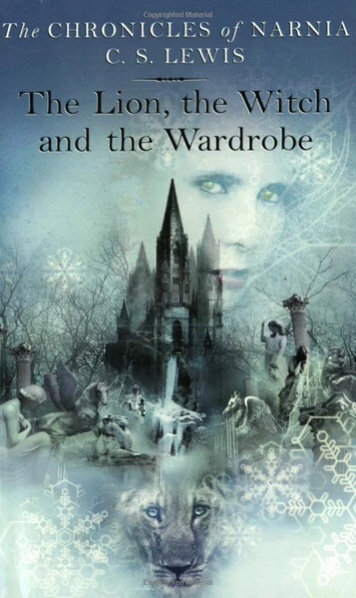
Of course the worst thing about the country of Narnia is that it’s always winter, but never Christmas. In fact it takes Aslan’s amazing return from death for Christmas to finally be celebrated in Narnia, and Father Christmas brings the children the gifts they will need as they become Kings and Queens of Narnia. Yet for me, I get a Christmas feeling from the very first time Lucy finds her way through the wardrobe. She feels her way through the furs and can smell a pine forest and feel the cold. She finds a snowy forest landscape and slowly makes her way towards the light of a lamppost. It’s here she meets one of my favourite creatures in all literature – Mr Tumnus. I have a beautiful painting in my hallway of the way I imagine him, with his furry haunches, velvet coat, long striped scarf and carrying a pile of books and an umbrella. If I could be taken to any point in a book it would be tea in Mr Tumnus’s little house, next to a warm fire. There would be lots of books, a ticking clock and a wonderful tea tray of crumpets and cake. In this warm haven with snow falling outside I would feel completely relaxed and immersed in this magical world.

“Christmas ought to be brought up to date,” Maria said. “It ought to have gangsters, and aeroplanes and a lot of automatic pistols.

Maybe the reason I associate this book with Christmas is that when I was primary school age this book was serialised on the BBC and shown on Sunday teatimes. It is set as a young boy called Kay travels home on the train for Christmas, and is waylaid by a travelling Punch and Judy man called Cole Hawlings. Hawlings is being pursued by a band of criminals dressed as clergymen. They are seeking the ‘box of delights’ – a magical box that can take the bearer on a world of adventures. My middle-aged brain remembers tiny mice appearing through the floorboards, meeting the King and Queen of the fairy folk inside a tree, a wonderful Christmas celebration and a plane that can take off vertically. I love the nostalgic feel of the book too, with Kay using terrible school slang – I haven’t a tosser to my kick – and the very lively heroine Maria who is toting guns she took from the villains! She had a very Agatha Christie view of Christmas thinking it should be filled with guns and gangsters!


‘In my old age, I see that life itself is often more fantastic and terrible than the stories we believed as children, and that perhaps there is no harm in finding magic among the trees.’

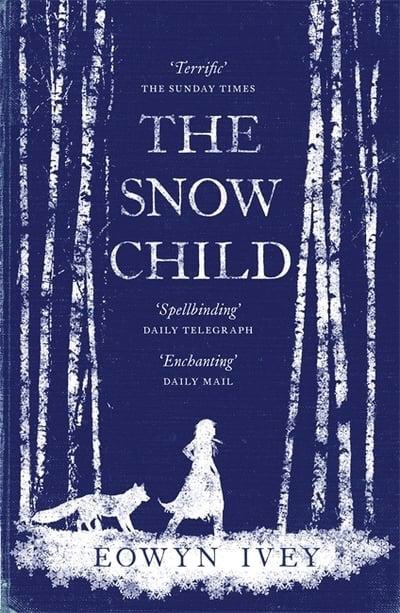
The Snow Child is such a beautiful book and although it’s not specifically set at Christmas, it has such a snow filled setting and a fairy tale quality that makes me feel that Christmassy magic. Jack and Mabel are married, but don’t have any children after a traumatic miscarriage. They long for a child and one winter, at their homestead in Alaska, they build a snow child – complete with mittens. The next morning their snow child is gone and tiny footprints lead away into the forest. From time to time the couple see a little girl in the woods accompanied by a fox. We’re not sure whether she is a magical manifestation of their wish or exists just in their mind, but what is so stunning is the background. The Alaskan wilderness is not easy to survive in, but the author makes it so beautiful:

‘The sun was setting down the river, casting a cold pink hue along the white-capped mountains that framed both sides of the valley. Upriver, the willow shrubs and gravel bars, the spruce forests and low-lying poplar stands, swelled to the mountains in a steely blue. No fields or fences, homes or roads; not a single living soul as far as she could see in any direction. Only wilderness. It was beautiful, Mabel knew, but it was a beauty that ripped you open and scoured you clean so that you were left helpless and exposed, if you lived at all.

This is an absolutely stunning book, full of magic and the realisation that life is short and we need to grab our happiness, wherever we can.

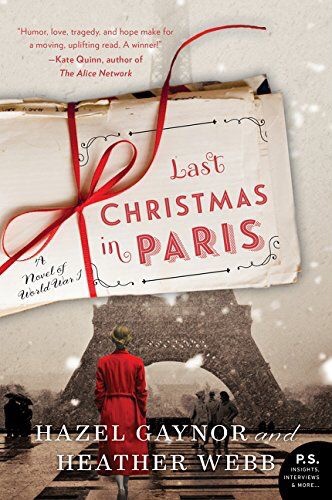
And finally these two little gems above and below are this year’s Christmas reads. Christmas is a time for romance and both of these novels are unashamedly romantic. In Last Christmas in Paris it’s 1914 and Evie Elliott watches her brother, Will, and his best friend, Thomas Harding, depart for the front, she believes—as everyone does—that it will be over by Christmas, when the trio plan to celebrate the holiday among the romantic cafes of Paris. But of course it all happened so differently. Evie and Thomas experience a very different war. Frustrated by life as a privileged young lady, Evie longs to play a greater part in the conflict—but how?—and as Thomas struggles with the unimaginable realities of war he also faces personal battles back home where War Office regulations on press reporting cause trouble at his father’s newspaper business. Through their letters, Evie and Thomas share their greatest hopes and fears—and grow ever fonder from afar. Can love flourish amid the horror of the First World War, or will fate intervene? In Christmas 1968, with failing health, Thomas returns to Paris—a cherished packet of letters in hand—determined to lay to rest the ghosts of his past. But one final letter is waiting for him…

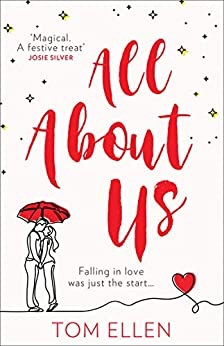
In Tom Ellen’s All About Us we meet Ben, tasked by his wife Daphne to put up the Christmas tree he decides to meet his friend Harvey for a drink instead. Daphne is at a work party, alone. Ben is at a crossroads in his marriage, he barely recognises his wife these days because she seems so angry and tense. His mind has been wandering to his old uni friend Alice, who he always imagined he’d get together with some day. There is one pivotal moment, at a university play, where he felt it was an unspoken agreement that he and Alice would take things further. Then in walked Daphne and he was instantly smitten. What if he made the wrong choice. In a format based on A Christmas Carol, Ben meets a watch seller who gives him a magical watch set at a few minutes to midnight and he’s astonished to wake up the next morning on 5th December 2005: the day he first kissed Daphne, leaving Alice behind. This is just the first of his stops into the past, and the possible future, to make the biggest decision of his life, all over again. But this time around, will he finally find the courage to follow his heart?

I’m so looking forward to curling up by the Christmas tree with some chocolate and both of these novels.

Posted in Personal Purchase

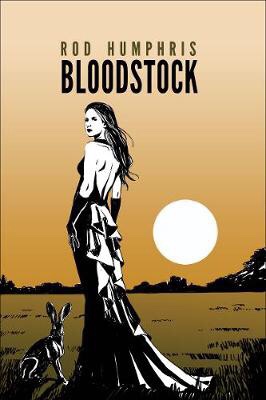
Bloodstock by Rod Humphris

Publication: Rat Tales Ltd

Published: 2nd November 2020

ISBN: 978-1999651725

When I was first offered this book by the publisher I didn’t know what to expect. I hadn’t read the earlier books in the series and had never come across Rod Humphris or his hero Simon Ellice before. Having been assured I could enjoy this as a stand-alone novel I decided to have a go and read something out of my comfort zone. Simon retires from life in the city back to the Hampshire village he lived in when he was a child. He finds solace and comfort in the change of pace, and starts to work on a local farm where he finds some peace and tranquility. However, he seems to be the sort of character that trouble follows and it’s not long before he uncovers a mystery with its roots back in the London underworld he left behind. When old friends go missing he has to use his skills to investigate, finding murder, poison and pagan rituals threatening those closest to him. In what is billed as Ellice’s most challenging case, this is a fast paced novel with themes of sacrifice and objectification, that go to the very heart of our society.

This really was a novel of contrasts in settings, pace and structure. Simon, or Si to his friends, has been living mainly on his yacht – Polly, moored at a London dockside. In this novel we see quite a contrast between his previous life based in London and the new life he is trying to create in Hampshire. London is dark, murky and noisy in contrast to the peaceful pastoral scenes of the countryside. It pits something wholesome and gentle against a more aggressive and dangerous city where Si liked to party in nightclubs with beautiful women hanging on his arm and his every word. These two settings are in a way linked to Si’s character, especially as he is getting older. He has a darker, more cynical side that is used to dealing with the criminal underworld, but there is also a softer, more restful side that wants to calm down and this gentler side comes out more as he works on his friend’s farm. The London chapters are more punchy and fast moving, whereas the countryside sections have more flow and a much slower pace. The plot revolves around missing aristocratic women, who have developed drug habits before disappearing, then turning up dead. I don’t want to ruin the story with spoilers so that’s all I will divulge. but it is an exciting plot that really held my attention throughout.

There were elements of Si’s character and his adventures that reminded me of Bond, but Bond in a darker story with a dash of black humour thrown in too. I wasn’t sure if I liked him or not in parts, but there’s no arguing with how brilliant he is at his job. I love characters like this who are flawed, perhaps even difficult, but ruthlessly good at what they do. I wasn’t sure if I wanted him as a friend, but I would want him on my side if I was in trouble. I found it interesting that unlike other high octane thrillers, the women were just as strong as the men. In some cases they were just as crazy too. I also enjoyed the fact that Si now works for Whitehall, so could be seen as part of the establishment, but some of his more questionable methods could raise a few eyebrows. The author kept drip feeding just enough information to keep the reader interested, but never enough to work out what would happen. The ending left me thinking about it and still making connections in my mind. This was more of an action story than I would normally have chosen, but I did enjoy it enough to look for the author’s earlier novels. It was intelligent, exciting and at times darkly humorous. Definitely worth seeking out for those who enjoy crime thrillers and for those who want to try some thrilling action and escapism.

Meet The Author

In his office you will find Rod typing, flanked by two enormous dogs, and surrounded by the ephemera he has collected on his travels. “I always read. Since I can remember. First Asterix, then Willard Price, then Conan Doyle, then everything else. I’ve had a paperback jammed into my back pocket most days of my life. I remember wanting to write a book when I was about 12 and wanting to put everything into it” “I’ve read every kind of book, but the ones I love most are stories of adventure, so that’s what I write. I’ve put thousands of hours into learning to do it well. It’s taken me a long time, but I’ve developed my own voice and my own style. I spend so much time with Si, my main character, that he seems as real to me as anyone I know. In some cases, more so. I’m happiest and most productive when travelling about in my battered old truck with a canoe on top and a dog in the back.” Rod Humphris is the winner of N. N. Light Best Fiction Award 2016 @Rod_Humphris

Posted in Personal Purchase

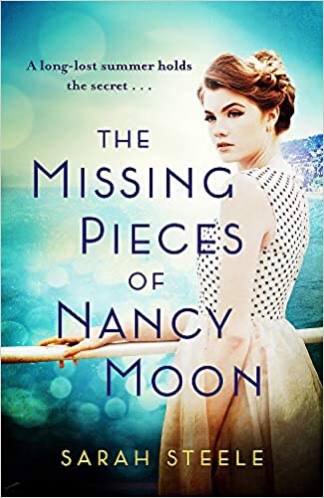
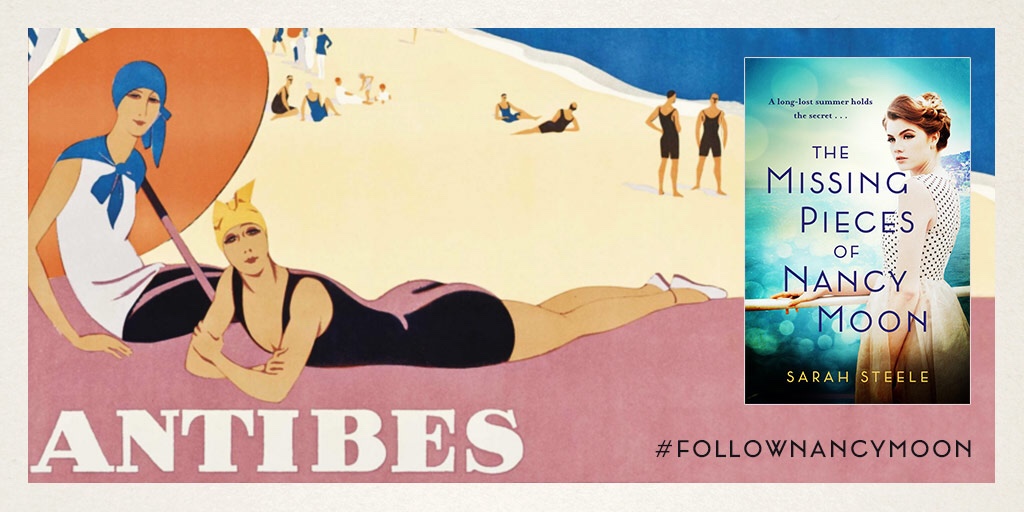
The Missing Pieces of Nancy Moon by Sarah Steele

I was lucky enough to be sent an ARC copy of this a little while ago, but have found it difficult to get enough time to read it. Within a few pages it was clear I’ve been missing a treat. I absolutely loved this novel about family secrets, growing up and dress-making. We follow our narrator Flo, as she conducts a funeral for her grandmother. Her mother has been a life long traveller with wanderlust in her bones, so her grandmother’s home in Wandsworth is the only real home she has known. Flo is struggling under the weight of a grief she shares with her husband Seamus, so much so that their marriage has fallen apart at the seams. She is sinking into a depression when she decides to look for her grandmother’s old sewing machine. Instead she finds a box of 1960s dressmaking patterns and as she searches through she finds each packet has a photo or a postcard, often depicting the same woman beautifully dressed in the dress from the pattern. One photo shows this woman at the train station with Flo’s grandmother and close knit set of friends. Flo is intrigued by Nancy, this beautiful woman, who clearly knew her grandmother so well, but is never spoken of in the family. What is this big secret and why was this woman travelling through Europe? Inspired by one of the dresses Flo finds some fabric and spends all night putting together the full skirted day dress. For the first time in months Flo can feel a cloud lifting. What if she were to follow Nancy’s journey -wearing her wardrobe- to find out more about her and why she never came home?

This book lured me in immediately with its honesty and charm. I truly enjoyed the two narratives and different destinations on Flo and Nancy’s journeys, taken 50 years apart. Flo finds that Nancy was travelling as companion to a young lady, the daughter of a wealthy couple called Pamela. Pam is too old for a governess but too young to be left to her own devices. She is resentful of Nancy’s presence at first and doesn’t see why she needs babysitting. However, they start to bond. Nancy watches the criticism Pam receives from her stepmother. It covers everything from her attitude, to her weight and how she carries herself. Nancy can see that really she just needs a friend, someone who’s on her side and gives her some positivity and praise. This relationship becomes vital later in the novel, when Nancy discovers the truth of the dynamic in this family. Everything is going to change for Pam, and perhaps Nancy can be the constant in her life. Realising at the end of the book how this character fits into the present was so very satisfying.

The settings and fashion are beautifully described that I could picture every place and every outfit in my mind’s eye. I do a little bit of sewing, nothing as advanced as Nancy or Flo, so I had a great deal of respect for their work. I love fashion so this was an absolute gift for me, seeing how fashion transforms someone makes me smile. I love that it helps people express their individuality and to be more confident. The fact that for Flo it’s vintage fashion is even better. We dressed up more in the 1950s/60s and I felt the author truly expressed that era in Nancy’s clothes. I enjoy nothing more than vintage shopping with my stepdaughters and often wear 1950s styles myself so I understood how Flo felt putting on clothing she had made. It’s almost as if the clothing change, as well as the different surroundings made Flo question her life and explore who she was a little more. We are all different on holiday and when working with women who have low confidence, I often ask what they enjoy on holiday and tell them to take a little of that holiday spirit into everyday life. For Flo. while she’s travelling she gets to think about what’s gone wrong in her relationship. We are privy to her innermost thoughts and feelings and can slowly piece together what has happened between her and her partner Seamus. The break gives her space, and a bit of perspective in the shape of a friend she was told to look up when she gets to Paris. Will this, slightly more sophisticated, man make Nancy rethink her relationship and move on or will it help her realise that Seamus is still the one for her?

This is a great second lockdown read because it made me feel like I’d been on holiday myself! It also let me spend a little bit of time in Venice, which was a bonus considering I’d had to cancel my honeymoon there in the spring. It deals with the issue of losing a child and how heart wrenching that is. The author deals well with this difficult topic, showing the stigma of being an unmarried mother in the 1950s while still being able to keep the story light, which is an extremely difficult tightrope to walk. Different ways of grieving are also explored, and how hard it can be if a couple grieve in different ways or at different rates. The key to everything in this book is good honest communication and not keeping secrets within families. I think the difference between the 1950s and our more open, confessional society is well handled. I enjoyed this one so much I bought a finished copy for my bookshelves and I’m sure it’s one I’ll dip back into from time to time. This is a lovely story, full of likeable characters, stunning locations and beautiful fashion. I heartily recommend it.

Posted in Throwback Thursday

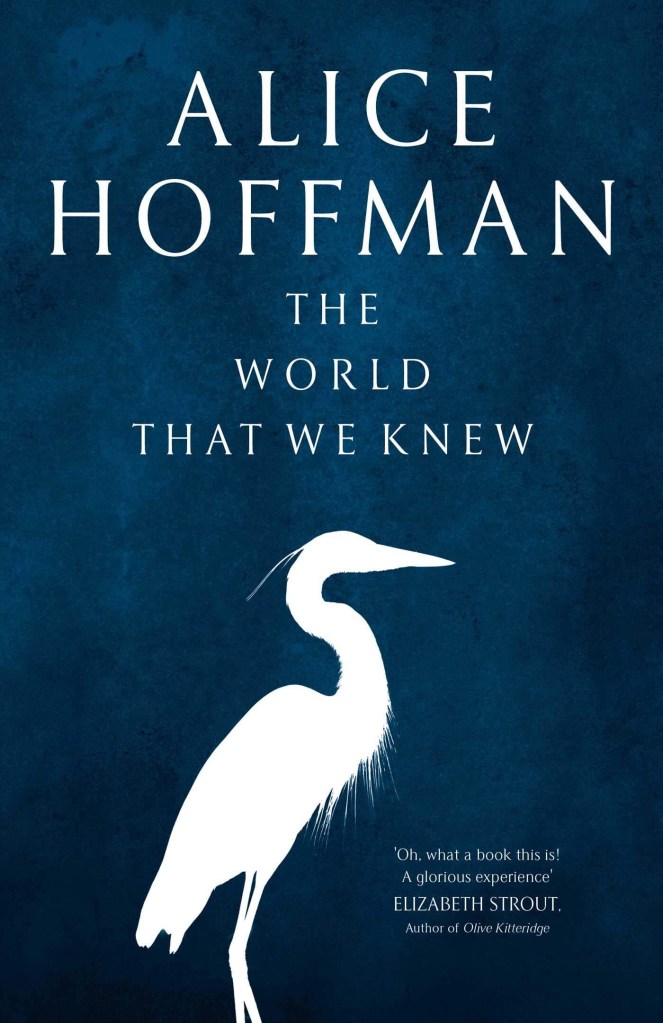
The World That We Knew by Alice Hoffman

This was a much anticipated read for me as Alice Hoffman is probably my favourite writer. Most people know her for Practical Magic, but I think her more recent novels have been remarkable. The World That We Knew stands with them. It was sad, unflinchingly honest and strangely magical.


We join Hanni Kohn and her daughter Lea in Berlin at the beginning of WWII.The verbal propaganda against German Jews is now turning into action and after Lea is attacked by a soldier on her way home, Hanni intervenes with terrible consequences. Now Hanni knows she must get Lea out of Berlin, but how can they both leave when Hanni is looking after her elderly mother. Desperately looking for some way of protecting Lea, Hanni falls on the idea of a Golem – a mythical Jewish creature animated from clay. First she approaches the rabbi, who turns her down, but the rabbi’s daughter Ettie is listening and spies a chance to escape home. She assures Hanni she has the necessary power and learning to create such a creature, programmed to protect Lea, but only on the basis that Ettie and her sister can travel with them. They gather river clay, water and blood to create Ava, a strong woman with dark eyes and hair, who will travel as Lea’s cousin. However, all Golems must be destroyed once their purpose is done, so Hanni leaves instructions in Lea’s locket to ensure she can carry this out. Hoffman’s story blends historical fact, outlining the fate of Jews in Berlin and France while the world claimed ignorance, with the fictional story of the four girls. One is lost before they leave the country leaving behind a loved one intent on getting their revenge.

There are other characters in the novel bringing their own story and perspective to the story. Despite having their own narrative Hoffman cleverly weaves their stories together so that they encounter each other at some time during the war. On Lea and Ava’s travels in France we meet Julien, his brother Victor and their parents. As a Jewish family resident in Paris their parents imagine themselves safe from the fate of Jewish refugees like Lea and Ava. At huge personal risk they let Lea and Ava join the household, because their servant Marianne has left that morning. Ava takes to kitchen work while Lea forms a friendship with Juliet. Victor has been mourning for Marianne as we follow her home to her father’s farm in the mountains bordering Switzerland. Victor decides to leave soon after, but his travels take him into the Resistance first where he meets a certain young woman hellbent on revenge. Julien is left behind, when Ava and Lea leave, and he watches as his parent’s assumptions are all proved wrong and they are lead to a stadium in burning heat. They are stripped of their jewellery and other valuables and kept without sanitation or food until they can be transported to the death camps, bewildered and broken. Julien hatches a last minute plan and manages to slip out of the stadium and into the labyrinth of streets until a special messenger gives him an idea of where Lea might be.

We follow these various characters through Germany, to Paris, to a convent where silver roses bloom, and a farm in the mountains where over three thousand Jews are walked to the mountains and freedom. In between the many horrors of war sits the beauty of nature, strangely incongruous and almost mystical in that it carries on without or even in spite of us. I love the audacity of Hoffman’s magic realism in juxtaposing the Holocaust with a mysterious heron who dances in the moonlight, at the river’s edge, with a very unusual woman.
This beautiful novel weaves together the realities of a terrible war, with an element of ancient magic. Hoffman creates a story about the lengths people will go to in order to survive, protect those they love and fight for what they believe in. We also see the amazing healing power of love and forgiveness. Most of all, against a backdrop of the most evil and inhumane act of the 20th century, Hoffman uses the character of Ava to make us truly think about what qualities make us human.

Meet The Author.

Alice Hoffman is the author of thirty works of fiction, including Practical Magic, The Dovekeepers, Magic Lessons, and, most recently, The Book of Magic. She lives in Boston. Visit her website: http://www.alicehoffman.com
The Bookstore Sisters

I usually expect a new Alice Hoffman novel in the autumn as she’s so prolific, but this year it’s a short story to keep us ticking over until her new novel arrives.

Isabel Gibson has all but perfected the art of forgetting. She’s a New Yorker now, with nothing left to tie her to Brinkley’s Island, Maine. Her parents are gone, the family bookstore is all but bankrupt, and her sister, Sophie, will probably never speak to her again. But when a mysterious letter arrives in her mailbox, Isabel feels herself drawn to the past. After years of fighting for her independence, she dreads the thought of going back to the island. What she finds there may forever alter her path—and change everything she thought she knew about her family, her home, and herself. I’m a lover of books about books, and since the words I keep hearing are ‘relationships, charm and magic’ I’m really looking forward to a long bath with this story.

Published by Amazon Original Stories on 1st Nov 2022.

Posted in Personal Purchase

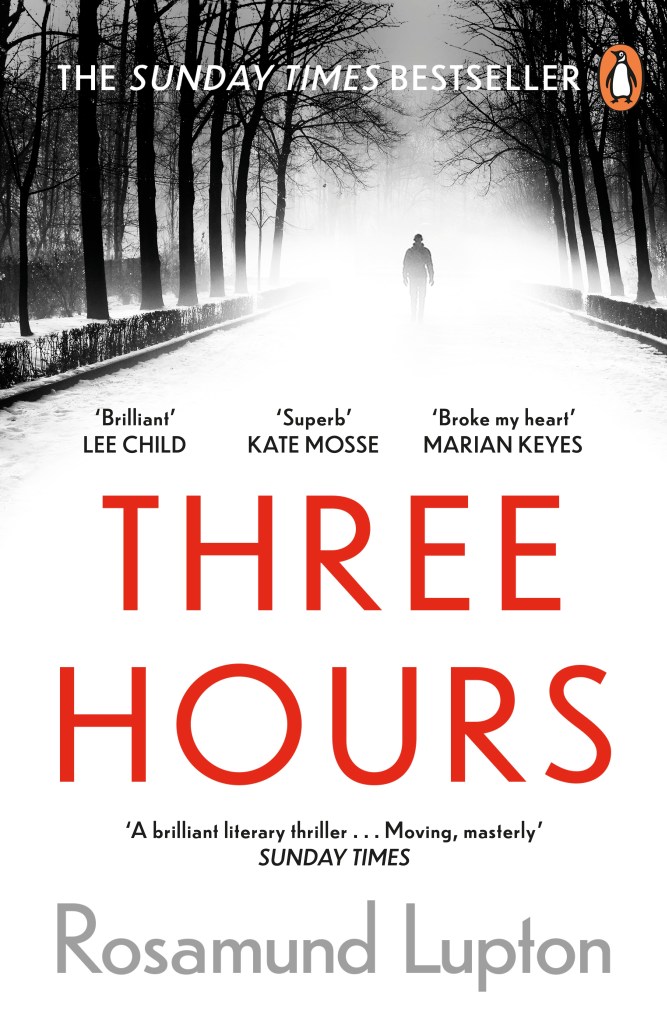
Three Hours by Rosamund Lupton

Publisher: Penguin

Date: 29th October 2020 Paperback

ISBN: 0241374510

Wow! I sat and read this book in two days straight because I had to know what happened to everyone. The book is so relevant to today’s world in terms of politics and is just so gripping. Lupton manages to combine contemporary use of the internet, geographical shifts and the refugee crisis, the phenomenon of High School massacres like Columbine all together in an incredibly humane, but terrifying novel. It poses the question of how we combat terrorism when today’s terrorist looks just like us? In fact, how do we combat terror when we know the terrorist?

In the space of three hours a remote school is thrown into panic and terror. A homemade lunchbox bomb is found in the woods by one of the pupils. It might have been dismissed as a prank by most kids, but Rafi Bukhari escaped Syria with his little brother Basi, and he takes it very seriously. In a matter of half an hour the first police officer on scene is shot at and the site is under siege. In the Old School, Rafi’s girlfriend Hannah is with a group in the library caring for their wounded headmaster. Pottery teacher Camille is stranded in the studio with only a few rows of clay tiles and some glass between a class of seven year olds and an automatic weapon. Further back, a group are rehearsing Macbeth in the woodland theatre and the junior school is being evacuated down to the beach. Rafi settles his brother with the teacher, they both have PTSD and he vowed not to leave him, but at least he knows Basi is safe. Now he needs to get to Hannah. However, Basi has ideas of his own.

I really enjoyed the varied perspectives of this novel from the kids, teachers, police, and even the parents of the shooters. Beth Alton’s train of thought is brilliant, from assurances that her Jamie could not possibly be responsible to the thought that he’s already dead to her, from the minute he picked up the gun. The investigation and drip feed of new information is very well done and it’s obvious the author has researched well. The flashbacks of the Syrian boys are equally well placed and effective. I found the allusions to the kid’s performance of Macbeth great at first – the idea of using Syria as a backdrop and the witches as balaclava clad terrorists is clever. I must admit to being surprised with this aspect of the ending, which I won’t spoil, but suffice to say it had a very fantastical feel. This was an atmospheric, timely and intelligent book, that asked some of the big questions about how the world is now, especially pertinent in a week of terror attacks in France. It is also a great thriller that keeps the reader hooked and doesn’t let go till the final seconds.

Meet The Author

Rosamund Lupton’s debut novel ‘Sister’, was a BBC Radio 4 “Book at Bedtime”, a Sunday Times and New York Times bestseller, winner of the Strand Magazine critics award and the Richard and Judy Bookclub Readers’ Choice Award. Her next two books ‘Afterwards’ and ‘The Quality of Silence’ were Sunday Times bestsellers. Her books have been published in over thirty languages.

Posted in Personal Purchase

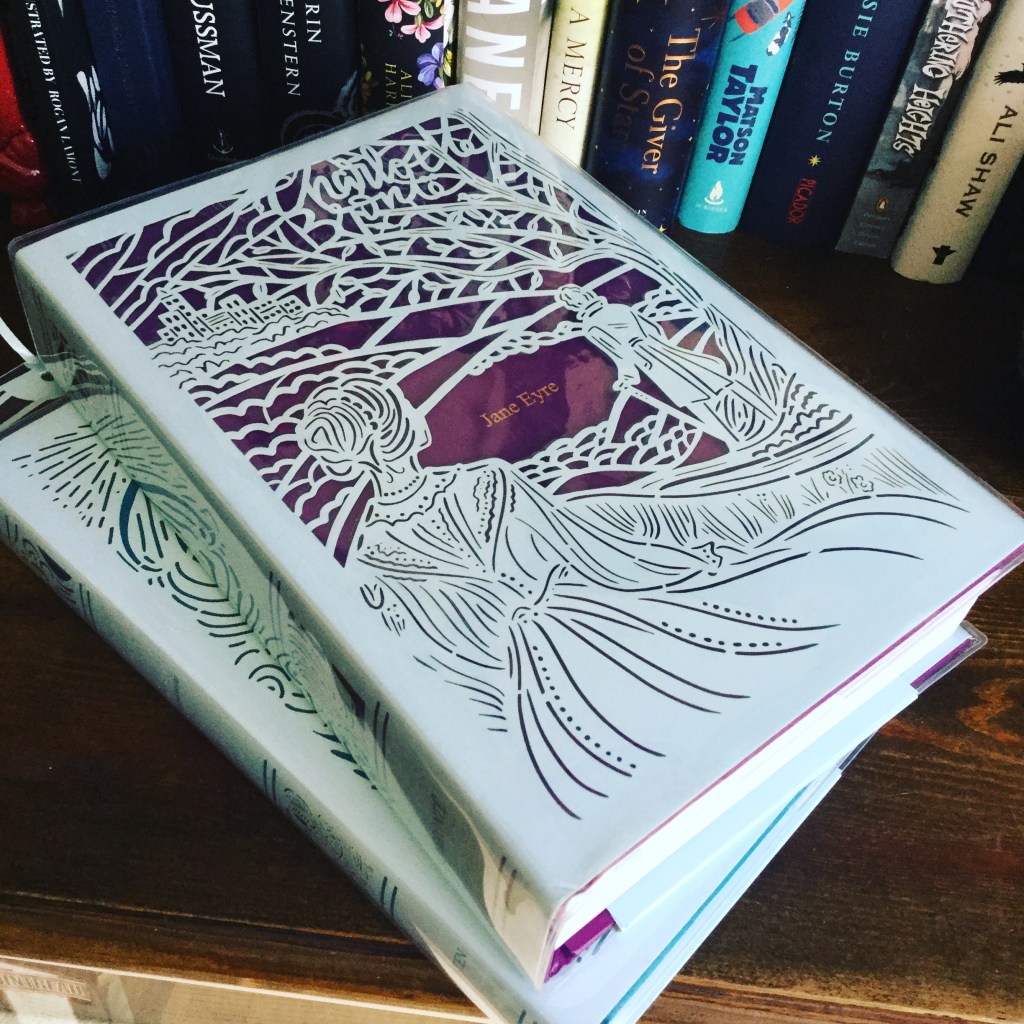
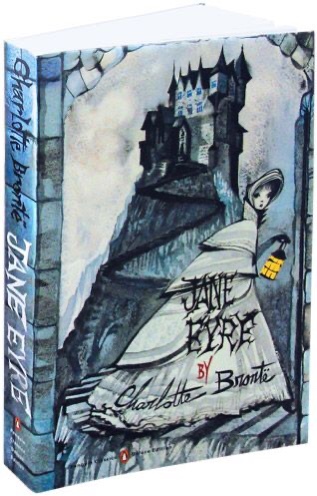
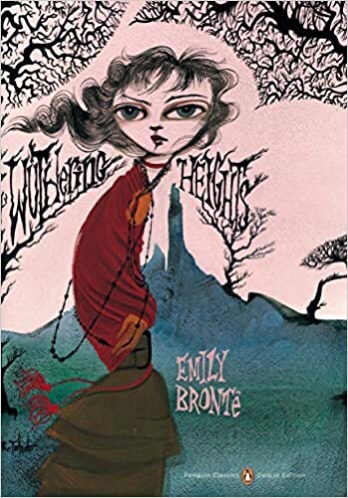
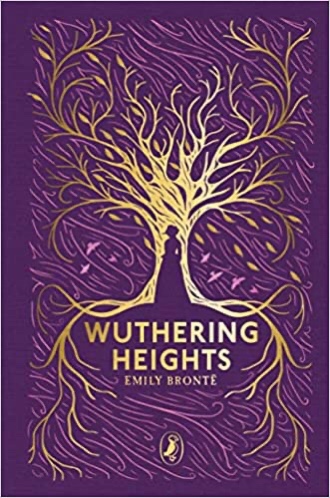
Halloween Reads: The Gothic Romances of the Brontes and Du Maurier

When we talk about classic Halloween reads we tend to think of M.R. James, Dracula or Frankenstein and they’re all brilliant. Most people don’t automatically reach for the Brontes, but for me they were my first scary reads. I was ten when I first read an abridged version of Jane Eyre, closely followed by watching the BBC series with Timothy Dalton as Mr Rochester. In my ten year old mind this wasn’t a love story, or a feminist manifesto but a really spooky ghost story. My abridged version included the supernatural experience Jane has when her guardian Mrs Reed has her locked in the Red Room. Aware of stories about orbs of light fitting around the graveyard at night, Jane bangs on the door desperate to escape. In her state of fear and passion Jane sees a light and feels the presence of her dead Uncle Reed. She tries to beat down the door before falling into a faint.

Thornfield Hall is remote, dark and brooding rather like its owner. Every hint leans towards something spooky going on. Rochester’s first appearance is preceded by a huge black dog appearing from the fog, and Jane thinks it is a supernatural being. Rochester appears on a black horse and soon on his return things start to go bump in the night. Jane hears strange laughter in the night, banging from the door to the attic and one night, smoke is billowing from Rochester’s room. The blame for this attempt to burn Rochester in his bed is laid at the door of Grace Poole, a strange servant who seems to have no purpose in the house. I remember my ten year old self being scared but thrilled by this mystery of who or what exactly occupies upstairs. The scene of the night before Jane and Rochester’s wedding really spooked me. Jane wakes to see a tall, dark haired, woman wearing her wedding veil. She’s looking at her own reflection which is ghastly white. She then slowly moves round to look at Jane in the bed and my heart is speeding up at this moment. I was scared stiff but couldn’t stop reading. Jane recalls a ghastly visage, darkened circles round the eyes, reddened lips. There is definitely something vampiric about her, rather than ghostly. Rochester tries to gaslight Jane into thinking it’s a dream, but she has proof it was something more human than spectre. Her wedding veil is rent in two. Now Rochester says it must have been Grace, but Jane is unsure. This looked like someone completely different and why would Grace tear her wedding veil?

At ten I only thought about the ghostly aspects of this and when the truth was revealed I saw a monster and not a person. Bertha Mason was simply a madwoman foisted upon Rochester, because my focus was on Jane and her love story. Of course with re-readings and a feminist awakening in my teens I could see that this was an awful tragedy for Bertha too. I also loved The Wide Sargasso Sea and understood that in another reading of the story Bertha was born Antoinette and sent into a marriage with Rochester. Due to being passionate and wild natured she is rejected by Rochester who expected a more measured, obedient bride, sexually shy and generally calm and quiet. For being herself she has her name taken away, is removed from the Jamaica she loves and is imprisoned in an attic with only a servant for company. No wonder she’s angry!

Charlotte’s sister Emily is also adept at creating a gothic atmosphere and there are parts of her novel Wuthering Heights that are downright terrifying. Of course Cathy and Heathcliff’s relationship is dark, dangerous and obsessional. The atmosphere is brilliantly creepy with the bleak moors, driving winds and lowering skies. The house is old and remote, containing many years of unhappiness by the time our first narrator happens upon it in a storm. He desperately needs shelter and although the people of the house seem odd and the master unnecessarily brusque and harsh towards the younger residents, he is grateful of a room for the night. The room he is given contains books with the name Catherine Earnshaw inscribed inside the cover and he wonders idly who she might have been. The wind is wild outside the window and he settles into his bed grateful he has found the place. He is woken by what sounds like tapping at the window and he thinks it must be branches. He opens the sash to grasp the branch and snap it off but the window breaks and he finds himself holding a freezing cold child’s hand. I remember being so scared by the thought of this ghostly child, floating at the window, desperate to be let in. She pleads with Lockwood to let her in. She is so cold. Yet when he tries to let to go, she grasps on tightly. In fear, Lockwood forces the wrist down into the jagged edge of glass left in the window frame. He then pulls it back and forth until blood runs from the white cold wrist. This is pure horror. If we imagine this scene being filmed as it’s written, it really would be scary.

Most adaptations tend to focus on the love story, but this could be a really tense story of ghostly horror. There are ghosts aplenty in this house. Hindley drinks himself to death haunted by the loss of his wife. Heathcliff is so haunted by Cathy he pushes Lockwood aside and tries to call her back from the moors. When she dies he dashes his head violently against a tree till he’s bleeding. He then goes to her grave and tries to dig her up with his bare hands. I watched an enjoyable adaptation, again with Timothy Dalton, where Cathy’s ghost lures him back to Wuthering Heights. Her ghost floats across the moor calling to him and he follows all the way back to the farm where he is shot as an intruder. Then he and Cathy flit out onto the moors together as wandering spirits, reliving their childhood wild days exploring and hiding from the adults. It’s not true to the book, but I loved that it embodies those gothic origins to the tale.

I love that these quiet sisters, living together in a Yorkshire vicarage, came up with these dark obsessional characters and horrific scenes of gothic horror. I believe my early reading choices are what shaped my love of writers like Laura Purcell, Diane Setterfield’s The Thirteenth Tale and last year’s The Lost Ones by Anita Frank. As soon as I start a book like this I smile to myself and I feel something of that magical excitement I used to get when reading a chapter of Wuthering Heights before bed or settling down at Saturday teatime to watch an adaptation of Jane Eyre. Both these Victorian tales create a similar feeling in the reader. It’s the confusing mix of excitement and terror that every good horror story needs, it’s what keeps us reading – as well as being too scared to turn the light off.

Another writer strongly influenced by Jane Eyre in particular is Daphne Du Maurier. Most readers have come across her short stories thanks to the film versions of The Birds and the brilliantly creepy Don’t Look Now. However, the book in my list of all time favourite reads is a Rebecca. This book is up there with the best psychological thrillers of all time and takes that theme of ‘madwoman in the attic’ and brings it into the 20th Century. It also has one of the scariest gothic creations in housekeeper Mrs Danvers – still hopelessly devoted to her dead mistress, the first Mrs de Winter. In a great first line – ‘ last night I dreamt I went to Manderley again’ – we are introduced to the gothic mansion, the ancestral seat of the de Winter family. Large, foreboding, and clinging to the edge of a cliff in Cornwall. When master of the house, Maxim de Winter brings a young bride home from Europe they are both assailed by memories of his beautiful and brilliant late wife Rebecca, who drowned while out sailing. This haunting is a psychological one and the attic is the mind. The unnamed second wife is plain, young, inexperienced and gauche. She has no idea how to run a house like Manderley and everywhere are signs of her predecessor: the west wing, the embroidered R de W everywhere, her correspondence in the morning room. The staff continue to run the house as before and instead of taking charge she tries to fit in. She lives under the impression that she’s second best and will never measure up.

Many of her qualities echo those of Jane Eyre and there’s a lot to be said about older men wanting more acquiescence and a chance to mould a younger, second wife. While this young woman tortures herself about how much her husband must have loved this brilliant woman, Mrs Danvers starts to turn the screw. Cadaverous in appearance and very severe when communicating, she does everything she can to intimidate her new mistress. She even shows her Rebecca’s lingerie, totally sheer and embroidered with R they conjure up an image of sexual experience, something else this woman doesn’t have. Worst of all, she suggests that copying a portrait of Maxim’s ancestor Lady Caroline de Winter might be a good costume for the ball they’re holding. On the night she appears at the top of the stairs to gasps from the guests and unchecked anger from her husband. Totally bewildered and distraught, her sister in law informs her that Rebecca had done the same thing for the last ball. It was like a ghost appearing at the top of the stairs. Mrs Danvers lures her to the west wing and almost talks her into jumping from the window in a scene of heart-stopping tension. When the truth about Rebecca emerges what will it mean for everyone at Manderley? This book is a romance, but with strong gothic overtones in its setting and although Rebecca does not physically appear as a ghost, she is often more present in this house than anyone else. It is most definitely within the Bronte’s genre of gothic romances and delivers good, old-fashioned, creepiness. Look out for a new adaptation of Rebecca coming soon to Netflix.

Posted in Personal Purchase

Misery by Stephen King.

Each summer, when I was in my teens and early twenties, my friend Cindy and I would pack a case and go up to stay with her Dad in North Yorkshire for a week or two. His wife was a huge horror fan and although I struggle to watch horror films I was quite happy to scare myself silly by reading them. In one of their houses there was a mischievous spirit who would knock on the front door when you least expected it, but every time you answered there was no one there. Sometimes it would even knock when you were stood with the door wide open looking for it! I remember staying up late one night to watch a film and there was a sudden loud knocking sound causing us to levitate off the couch. I often borrowed books to read while on holiday with them, everything from Dean Koontz and James Herbert, but my favourite had to be Stephen King. Misery was a fairly new book and I remember borrowing it from a boy I’d met who worked the bar at the local pub. Sadly for him he never got it back and 27 years later it still sits on my bookshelves, and still has the power to scare the hell out of me.

Writer, Paul Sheldon ventures out in his truck despite a huge snowfall to post the manuscript of his latest book to his publisher. Sadly he doesn’t make it as the icy conditions cause a massive accident. Isolated and severely injured it seems very likely that Paul will die. When he wakes he finds himself in a bed, with his legs splinted. Who has saved him and how? Paul can see he isn’t in a hospital, so who would have the skill to do this? Then the thought drops into his head. Why haven’t they taken him to hospital and what does this person want with him?

He soon gets his answer when Annie Wilkes comes into the room. A strange mix of motherly and medic, she feeds and treats Paul with very strong painkillers, trying to heal his shattered legs. At first Paul is just a bundle of basic needs – sleep, food, pain relief. However, when Paul improves he starts to ask those questions that have been muffled by painkillers and sleep. Annie seeks to reassure Paul, she has set his legs as best she can and she will continue to nurse him. She’s been a nurse, so she knows what she’s doing. Besides which, she’s got to look after him. She’s his number one fan. Annie asks Paul if she can read his manuscript, the latest in his series about Misery Chastain. This series has paid the bills for a long time, but Paul has often wanted to branch out and write something different. This latest manuscript will be his last Misery novel because he has killed off his popular heroine. However, Annie doesn’t know this. What will she do when she reads the manuscript and finds out there will be no more misery.

This novel is truly horrific. There is nothing supernatural to the story, this is about the worst things one human being can do to another. The horror comes from Paul’s powerlessness, the visceral detail of his injuries and Annie’s punishments, but also just how unhinged Annie Wilkes is. We don’t need ghosts and witches when characters as crazy as Annie Wilkes exist. She truly is one of King’s best creations. She always gives off a smell of food or is wearing it down her clothing. She is overweight, almost shuffling in and out. Paul feels real disgust when she’s close to him. She is manipulative, quick to anger and even Paul doesn’t realise the extent of her temper until she retaliates against him with fierce strength and savagery. As Paul starts to recover and become bolder with his plans to escape Annie, the tension escalates. Every time Paul creeps out of the room to gather information on his captor, my heart is in my throat. I swear my heart is beating faster as I realise Annie is coming home and he may not get back into the room in time. When she detects he’s sweating, I’m sure she’s going to guess he’s been moving around. Then there’s the scene – readers will know the one I’m talking about – that will stay with me forever. Even the film version isn’t as bad as reading this scene in the book. The visceral way King writes about the destruction of the human body is sickening and made me physically shiver when I first read it in the 1990s. Now I sort of glance over it. It still sickens me twenty years later. There’s also a lawnmower incident that’s fairly grim and still makes me wince. After multiple reads that’s a powerful reaction!

For me, this is one of King’s best novels. The characterisation is excellent. The constant rollercoaster of tension and relief is deftly handled. There is no supernatural element to the horror, simply the horror of a man trapped by his injuries and an unhinged captor. The claustrophobic feelings this conjures up in the reader are incredible. Weirdly, approximately ten years after the publication of Misery, King was walking by the side of the road in Maine when he was hit by a minivan and flung four metres from the pavement. The van was reportedly driving erratically with one witness worrying the van might hit the pedestrian she’d seen. King suffered cuts to his scalp, a collapsed lung, multiple leg fractures and a broken hip. His right leg was so badly damaged it was feared it would have to be amputated, but doctors managed to save it. It left King in a very similar condition to Paul Sheldon, though he didn’t have to recuperate with Annie Wilkes! He spent his recovery on his non-fiction book On Writing, where we talks about the accident, his writing process and other parts of his life. At first he could only sit and type for forty minutes at a time, something that inspired me with my own writing experiences and disability. The fact that this happened after he visited a similar fate to one of his characters is perhaps the spookiest part.