Posted in Throwback Thursday

Throwback Thursday! The New Woman by Charity Norman.

I’ve been reading Charity Norman for several years and I never tire of the way she builds her characters, full of depth and complexity. She excels at revealing characters slowly, one layer at a time, and putting them in complicated emotional situations. This is one such example and despite being published in 2017 it seems very timely as debate rages about transgender rights on social media and in the news. This is a family drama, where we are brought into the seemingly idyllic life of Luke Livingstone. As we meet Luke, he’s seen as the perfect family man with a beautiful home in rural Oxfordshire and a solid career as a solicitor. He is respected as a pillar of the local community with a long standing marriage, as well as being a good father and grandfather. However, Luke has spent his whole life hiding a secret about who he is and he’s not sure he can keep it under wraps much longer. He has been hiding a truth about his identity and it’s such a fundamental truth that he knows disclosure will rock his business, his standing in the local community and will shock his family. He might become an outcast. Yet, he might have to destroy his image and the way others see him, if he’s to stop the slow destruction of his inner self. He has to become the person, the woman, he knows he truly is, whatever the cost. Luke is focusing on his eventual rise from the ashes and the rebuilding of his life, but first he must face the flames.

As the novel opens, Luke is so desperately unhappy he is considering suicide. Luckily, someone intervenes and sends him on a different path – the possibility of becoming the woman he is inside. He has always kept this feeling under wraps because of his parents and has now followed a very conventional path with his marriage to Eilish, fatherhood and now a grandparent to Nico. Now his parents are gone, he feels more free to pursue his own happiness, but that’s made harder when you know your own happiness will impact on your family. My heart went out to him, but also to Eilish who has loved and lived with this man for most of her life. Luke is a wonderfully sympathetic character and I can’t agree with some reviewers who have referred to him as ‘selfish’ for pursuing his own happiness. Luke was born in a different time, with more pressure to conform to society’s norms and values, as well as parents who were more traditional. As a young teenager, his feelings about his gender were only just growing and without transgender role models, either locally or on television, there’s no template for where to go and who to confide in. It would seem that he genuinely fell in love with his wife, rather than chose her specifically to conceal his true identity, and he still loves her, despite wanting to change gender.

The central dilemma is that in order to successfully birth his female identity, his male identity – the husband and father his family know and love – has to die. This is a slow bereavement process as they hear the news, then see their family member begin to dress as a woman, to take that identity into the world to be seen by work colleagues, family friends and his children’s friends. Just as this process is hard for Luke, it’s equally hard for the family – I loved the inclusion of a politically aware daughter, full of support for causes like equal rights for the LGBTQ+ community, but finding it a very different prospect when the person involved is her own father. She acknowledges her father’s rights in principle, but that doesn’t stop the feelings of hurt and loss she’s suffering. Similarly, I felt deeply for Eilish who is losing the man she loves, but has to ask herself the question of whether she has to lose the person she loves too. I’m not sure about the conclusion to their relationship, and I’d be interested in knowing how common it is in real life.

I thought this book was a fascinating read and really started me thinking about how it must feel to be in the wrong body, in a society that still expects us to conform to the established norm. It really did show what transgender people go through, just to be who they are. For me, Norman’s book avoided all the controversy and cancel culture we see going on in society today, by focusing in on Luke and his family. This is one character’s experience and doesn’t make assumptions or create a stereotypical experience. It isn’t negative about Luke’s experience either, the viewpoints belong to him or his family members and while they may be upset or shocked by his news as individuals, the overall narrative remains positive and non-judgemental which I loved. I know some will ask whether a fictionalised account is appropriate, because such controversial and complex stories are often best told by ‘own voice’ writers. However, I felt that the author had insight, whether that’s through personal experience or research. It is a book that started many conversations at home about the distinction between gender and sexuality, how it would feel to be Luke and the overwhelming fear that has kept him in his male identity in so long, and how it would feel if it was our Mum or Dad. Luke deserves to be who he truly is and in order to keep his family, he must continue to be a parent and grandparent as Lucia. It’s a book that challenges the reader’s own preconceptions and I love it when a book makes me think like this, plus it makes it a great book club choice. This was informative, absorbing, deeply moving and is a story that has stayed with me over the last four years.

Meet The Author.
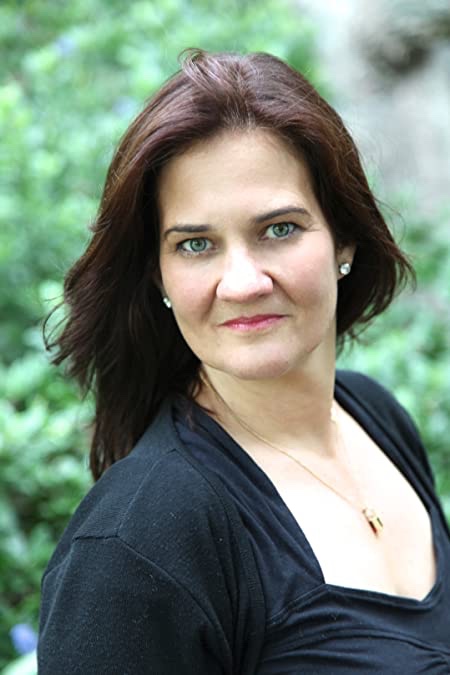
Charity is the author of six novels. She was born in Uganda, brought up in draughty vicarages in the North of England and met her husband under a truck in the Sahara desert. She worked for some years as a family and criminal barrister in York Chambers, until, realising that her three children barely knew her, she moved with her family to New Zealand where she began to write.

After the Fall was a Richard & Judy and World Book Night title, The New Woman a BBC Radio 2 Book Club choice. See You in September (2017) was shortlisted for best crime novel in the Ngaio Marsh Awards. Her sixth, The Secrets of Strangers, was released on 7th May 2020 and is also a Radio 2 Book Club choice. 

Charity loves hearing from readers. Please visit her on facebook.com/charitynormanauthor or Twitter: @charitynorman1

Posted in Throwback Thursday

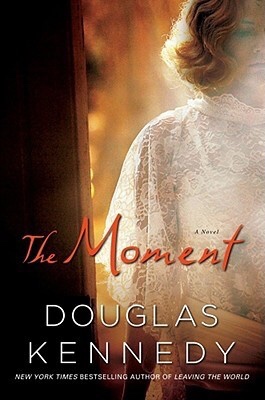
Throwback Thursday! The Moment by Douglas Kennedy.

A secret from the past can change your life for ever. The Moment is a heart-breaking love story set in Cold War Berlin by the author of The Pursuit of Happiness and Five Days.

Thomas Nesbitt is a divorced American writer living a very private life in Maine. Until, one wintry morning, his solitude is disrupted by the arrival of a package postmarked Berlin.

But what is more unsettling is the name accompanying the return address on the package: Petra Dussmann. For she is the woman with whom Thomas had an intense love affair twenty-five years before in a divided Berlin, where people lived fearfully under the shadows of the Cold War.

And so Thomas is forced to grapple with a past he has always kept hidden. For Petra Dussman was a refugee from the police state of East Germany. And her tragic secrets were to re-write both their destinies.

I found myself strangely captivated by this tale of lost love in a divided Germany. I worked my way through all of Douglas Kennedy’s books around five years ago after enjoying A Special Relationship and while they’re all great reads something about this one stayed with me. Perhaps because I’ve lost someone I loved. Or because I once had a short, intense love affair that, given different timing, could have blossomed into a something beautiful. We have probably all had similar experiences, where the timing was just wrong. However, when added to this restrictive Cold War environment, love becomes so precious by contrast. Like a flower blooming through the cracks in a pavement.

This story unfolds like a set of Russian dolls. When the package arrives with Petra’s return address it sends Thomas back to the account he wrote of his time in West Germany. We read his narrative and are drawn into this impossible love story that left him with so many unanswered questions. When he opens the package, he finds Petra’s account of that time and we are lost in the same story, but from a different viewpoint. What he discovers is shocking and illuminating, but will it answer his questions? More importantly, will it confirm and deepen the love he felt for Petra and how will that change his life moving forward? There are so many things I love about Kennedy’s writing and this book showcases them beautifully. The historical research and detail feel genuine. He takes a period of history beyond the facts, to show how this world affected the people who lived through it’s events – not just physically, but emotionally too. The stark, grey, concrete world of East Germany and it’s citizen’s fear of the Stasi, become real through Petra’s story. There is so little to look forward to and an absence of joy here. I remembered back to my younger years and the pictures on the news as the Berlin Wall came down. Now I understood their euphoria and their need to physically take hold of this symbol of oppression and dash it to the ground with their bare hands.

Kennedy also has the uncanny ability to write convincingly from the viewpoint of both men and women. This was a skill first seen in his novel A Special Relationship, where he wrote from the viewpoint of a new mother whose husband thought she was suffering from post-natal depression. Here again he writes from the viewpoint of a woman and mother, torn between romantic and motherly love. Even, as we wonder which of these loves will win out in the end, we realise neither choice can ever truly fulfil Petra without the other. There are no winners, whichever choice is made. The only outcome here is betrayal.

As we come back to Thomas’s current circumstances, further enlightened by the stories we have experienced, we see how the psychological damage of childhood and our youth can colour the rest of our lives. It seems we spend the latter part of our adult lives trying to untangle, then heal these wounds, as we recognise how much damage these traumatic experiences have had on our choices – in Thomas’s case, during his failed relationship with his wife. I also think Kennedy is telling us something very important about stories. Thomas’s story would have made a novel all on it’s own, but by adding Petra’s version we start to see something of the ‘whole’ story. Our version of events, even factual ones, are just that; our version. It’s just one piece of a patchwork quilt of perspectives. Even our own version can change as we get older, gain experience and develop new ways of understanding. This novel is unusual, because it’s a love story for people who don’t read love stories. Or a novel about Cold War Germany, for people who understand the importance of love. For me, it’s that unusual, niche, mixture that made it stay with me.

Meet The Author

Douglas Kennedy is the author of ten novels, including the international bestseller Leaving the World and The Moment. His work has been translated into 22 languages, and in 2007 he received the French decoration of Chevalier de l’Ordre des Arts et des Lettres. Born in Manhattan, he now has homes in London, Paris, and Maine, and has two children.

Posted in Throwback Thursday

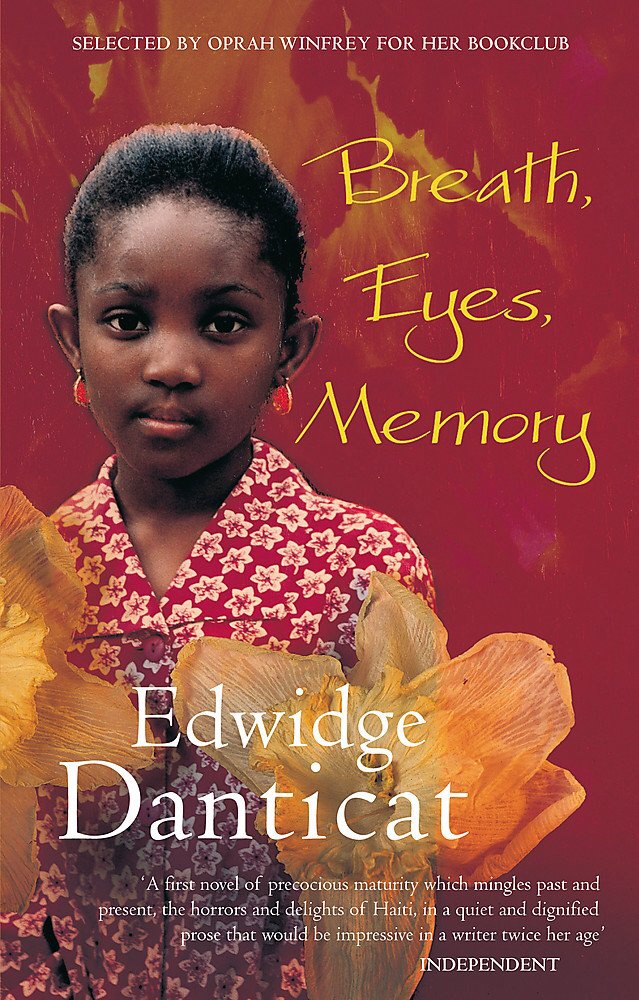
Throwback Thursday! Breath, Eyes, Memory by Edwidge Danticat.

I come from a place where breath, eyes and memory are one, a place from which you carry your past like the hair on your head.

I was first introduced to Danticat’s writing by the tutor of my American Literature module at university. This was her debut novel and it sparked a fascination with Haiti, somewhere that always seemed tragic, but also strangely magical. This book took those childhood impressions and put flesh on their bones. It showed the human cost of such a chequered history, particularly for women and it’s characters have stayed with me for a long time. I think it’s also a wonderful depiction of generational trauma, emotional healing and counselling’s place in that difficult process.

We follow a young woman called Sophie Caco, who lives in Haiti as a child with her Tante Attie. Then at the age of twelve is relocated to New York to live with her mother, with whom she needs to forge a relationship. Sophie doesn’t want to go, but has no choice. Up till this point Tante Attie has been the only mother she knows. Her mother left Haiti long ago with the ghosts of the past at her heels. Sophie doesn’t know what life will be like when she gets there, but she is anxious about the journey, immigration and what it will be like going to school with children who speak a different language. Sophie will need to think on her feet and adapt to the new way of life quickly. What she finds though, is that it’s hard to escape Haiti. It does not let go of its daughters and her mother suffers mood swings and nightmares linked to her past there. Generational pain and trauma are played out in this relationship until Sophie realises they must face Haiti together -aunts, mothers and daughters – if they are ever to break the cycle .

I loved Danticat’s way of comparing these two very different places and their contrast with what’s going on deep inside these characters. Haiti is a place of deep sadness, particularly for Sophie’s mum. For those who don’t know it’s political and social history, Haiti covers half of the island it shares with the Dominican Republic. For many years both countries were colonised by the Spanish, but in 1697 after disputing territory the Western side of the island was ceded to the French. However, unlike the Dominican, Haiti was stripped of all it’s natural resources, even down to the island’s trees which were cut down for logging and to make way for planting sugar cane, leaving the island prone to landslides and unprotected against tropical storms. All this left a rather bare country, peopled by slaves, harvesting the cane that would ship to Britain as the final part of the ‘slave triangle’. During the French Revolution, the slaves revolted under the leadership of Toussaint Louverture, and freed themselves. They were the first of the colonies to successfully liberate themselves and become a state on 1st January 1804. Whilst it was always politically turbulent, Haiti entered a reign of terror in 1956 under the autocratic government of Papa ‘Doc’ Duvalier and then his son until 1986; the period was characterized by state-sanctioned violence against the opposition and civilians, corruption, and economic stagnation. After 1986, Haiti began attempting to establish a more democratic political system. Yet the violence of the past thirty years left a legacy of pain in the people of Haiti, especially it’s women, for whom a history of sexual violence carried out by Papa Doc’s henchmen the ‘tonton macoutes’ had left them controlled and terrified.

Such a history leaves a legacy of rage and deep, deep sadness in the people. Yet Danticat depicts a vibrant culture filled colour, music, and incredible food. Tante Attie is an absolute rock of a woman. She’s a storyteller, passing down women’s stories and history to other woman. When we are without power, education and means we have to find other ways of recording our history – in the clothes we wear, the food we cook and the songs we sing. Attie is the keeper of her family’s history, but there are secrets she has kept, only because it is not her story to tell. It takes a departure from all that she knows for Sophie to truly know her family history and a practice past down through the generations which is horrifying to read. When women are mere commodities, to be owned by men, there are certain things that affect their value. Controlling the ways women behave is always set out by men, but often policed by other women.

True healing can only begin when we stop running from our past, instead we must confront it and begin to process any trauma we have experienced. Sophie’s mum must return to Haiti to do this. Meanwhile Sophie’s demons come calling when she gives birth to her daughter and actively chooses change. She must confide in her husband and seeks therapy to come to terms with her trauma. Only then can mother and daughter truly get to know one another. Despite it’s difficult subject matter I always feel that it’s a hopeful book. It seems to explore a psychological outlook I have held for a long time; anyone can create change in their life. Think how powerful and freeing that statement is. It’s up to us. This is a powerful look at a country that’s often seen as unlucky. Here we can see why and how that history has been constructed, largely by men and colonisers. Through this family of women we see a different Haiti. The violence and pain are real, but so is the beauty, the healing and the love.

There is always a place where, if you listen closely in the night, you will hear a mother telling a story and at the end of the tale she will ask you this question: “Ou libéré? Are you free my daughter?” My grandmother quickly pressed her fingers over my lips, “Now” she said “you will know how to answer.”

Meet The Author.

Edwidge Danticat is the author of several books, including Breath, Eyes, Memory, an Oprah Book Club selection, Krik? Krak!, a National Book Award finalist, The Farming of Bones, The Dew Breaker, Create Dangerously, Claire of the Sea Light, and Everything Inside. She is also the editor of The Butterfly’s Way: Voices from the Haitian Dyaspora in the United States, Best American Essays 2011, Haiti Noir and Haiti Noir 2. She has written seven books for children and young adults, Anacaona, Behind the Mountains, Eight Days, The Last Mapou, Mama’s Nightingale, Untwine, My Mommy Medicine, as well as a travel narrative, After the Dance. Her memoir, Brother, I’m Dying, was a 2007 finalist for the National Book Award and a 2008 winner of the National Book Critics Circle Award for autobiography. She is a 2009 MacArthur fellow, a 2018 Ford Foundation “The Art of Change” fellow, and the winner of the 2018 Neustadt International Prize and the 2019 St. Louis Literary Award.

Posted in Throwback Thursday

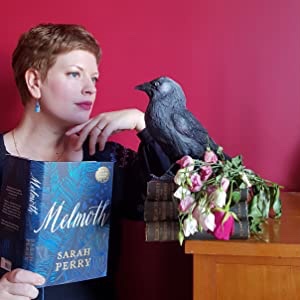
Throwback Thursday! Melmoth by Sarah Perry.

‘Oh my friend, won’t you take my hand – I’ve been so lonely!’

This week for Throwback Thursday – which has rolled onto Friday since I’m in a remote part of Wales with poor internet access – I’m going to take a spooky turn and tell you about one of the most terrifying and gloriously gothic novels I have ever read. Melmoth the Witness is a figure from mythology, or is she? Known as one of the woman who witnessed the tomb on the morning that Christ resurrected, she is now an eternal traveller. Wandering the centuries she lures people into following her, whereupon they too become damned to an eternity of itinerant, solitary wandering.

Set in the beautifully, atmospheric city of Prague we meet a woman called Helen who finds a manuscript. It tells of a winter in Prague, with all the darkly gothic details of cobbled streets, shadowy corners, and jackdaws patrolling the city walls. One winter night in Prague, Helen Franklin meets her friend Karel on the street. Agitated and enthralled, he tells her he has come into possession of a mysterious old manuscript, filled with personal testimonies that take them from 17th-century England to wartime Czechoslovakia, the tropical streets of Manila, and 1920s Turkey. All of them tell of being followed by a tall, silent woman in black, bearing an unforgettable message. Helen reads its contents with intrigue and some scepticism, but everything in her life is about to change. We follow Helen’s story, but within it are all the other stories and lives, creating a Russian doll style tale, but where each incarnation has the same sense of menace and impending doom.

This is based on an 1820 novel by Charles Robert Maturin called Melmoth the Wanderer, that very few people will have read. I studied a wonderful module at university entitled The Gothic, Grotesque and the Monstrous and I know from experience that early gothic novels can be long winded and difficult to read. What was found terrifying in 1820 does not necessarily translate today. In the original novel, Melmoth is a man who makes an almost Faustian pact, in this version she is one of the women who visits Christ’s tomb. She could have borne witness to the resurrection, but lied and is now damned to wander the world forever. She’s like a Sybil, heralding evil and disastrous events, but never listened to and doomed to witness the worst humans can do to each other over and over. I love the ambiguity of her pleas to ‘take her hand and follow her’ because she’s lonely, is she friend or foe? Her pleas are all the more tempting because she’s a woman and we associate that with gentleness, nurturing and perhaps even needing protection. There’s also the element of seduction and persuasion that might make a gentleman take her lonely hand. I think Sarah Perry made this choice because of those qualities. How much more effective could a woman be in gathering souls?

I love how Prague is turned into a haunted city and it’s history certainly might have drawn the wanderer to it’s cobbles. The city is the book’s second biggest character, dark and mysterious with magical landmarks like the astronomical clock. Perry’s descriptions of night in the city are haunting, and if I ever visit the capital I might well look over my shoulder when out in the evening in the same way I do in Venice. It is the perfect backdrop for the modern section of the novel, with every inch of the city steeped in history and the endless pull between light and darkness. Perry brings to life fears we have all had, as Helen draws the curtains at night, because she fears looking up at the window and seeing that lonely, beseeching face. The most terrifying thought is that Melmoth bears witness to anything we have ever done, including those awful things we hope no one witnessed or found out about.

I think an important aspect of the novel for me is something any sort of ‘listener’ has to think about. It’s the toll witnessing takes on a person. This book is brief compared to the original novel, but still takes in the breadth of the horrors experienced in Prague throughout the 20th Century. It made me imagine being present to witness the trenches of WW1, the Holocaust, and so many other atrocities and personal tragedies. I’ve worked in mental health for twenty years and I’m taking a break at the moment to study. I know the emotional toll that listening to people’s stories can take on the listener or observer. For Melmoth, this would be so much worse because she has to sit back and witness all of humanity’s horrors. Even worse, she has no power to change anything, but is doomed merely to witness. No wonder she wants other souls to witness with her, she must feel the weight of the horrors yet to come.

Posted in Throwback Thursday

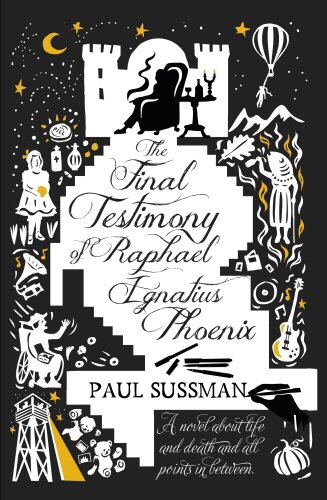
Throwback Thursday! The Final Testimony of Raphael Ignatius Phoenix by Paul Sussman.

Something very strange happened while I was reading Paul Sussman’s book. I was up at night feeling unwell and made it half way without even taking a break. I had never read any of his books so as far as I knew this could have been a debut novel or one of hundreds. I launch straight into books without reading introductions, forewords or acknowledgements because I don’t like to be swayed by them. I don’t want someone else to tell me how to read a book, or in what context; I like to make up my own mind and read them later. I must admit on this occasion I was drawn in by the cover, but beyond that and the back cover blurb I knew nothing.


I realised half way through that I was reading with a smile on my face, despite feeling physically grotty! It made me smile because of the dark subject matter, the humour and sheer ingenuity of Raphael. I put it to one side and thought ‘I really wish my husband Jez had been around so I could read this to him’. He died 7 years before I found this novel and prior to his death he couldn’t read himself. He couldn’t hold a book and couldn’t see to read for himself. He could get listening books but there were certain, funny, books that we liked to share so we could fall about laughing together. They would usually be ingenious, darkly comic and just a little bit bad – rather like this. This was definitely one of those books. I then turned to the foreword and noticed it was written by Paul Sussman’s wife Alicky. I was so sad to read that she had been through the same loss I had, but amazed by the parallel. I contacted her and she was lovely, sharing about her loss and listening to mine.

The character of Raphael Phoenix is irresistible. A cantankerous old pensioner, living alone in a castle, he decides that 100 years of living is enough. He has a plan and he also has a pill. He has had the pill his whole life since his birthday party with his childhood friend Emily. Emily’s father is a chemist and in his poison cupboard, among the ribbed glass bottles, is an innocuous white pill with a simple nick in one side. It has very particular ingredients that ensure an almost instant and painless death and it is the only thing he wants for his birthday so the pair replace the pill with mint of the very same size, with a nick from the edge to match. Raphael keeps the pill with him through his incredible life either in his pocket, in a gold ring or in more difficult circumstances, sellotaped under his armpit. He trusts his pill and knows that it will deliver the death he wants as he sits in his observatory, with an expensive glass of red wine (over £30 a bottle) watching the millennium fireworks. However, before then he has a story to tell us, several stories in fact, which take us through some of the most important periods of the 20th Century and he has a very peculiar way of splitting these stories into sections. Raphael has had some very singular life experiences, and has a talent for getting into scrapes and challenges. Even more surprising are his ways of getting out of them.

I had no idea what to expect and so I was surprised and charmed by this magical piece of work. It manages to be both, earthy and funny, but also incredibly poignant. The only two things he can depend on through his life are the pill and his friend Emily. Emily isn’t always by his side, but just manages to be there at the right times and seems to set his various destinies in motion. Raphael works backwards with his tales until the reader is desperate to know how all of these incredible twists and turns are set in motion and also whether his trusty pill will work so he gets the end he has been working so hard towards. I would read this if you enjoy dark humour and tall tales and like your narrators to be, ever so slightly, morally ambiguous. It is darkly enchanting and I fell in love with it.

Published by Doubleday 22nd March 2014.

Posted in Throwback Thursday

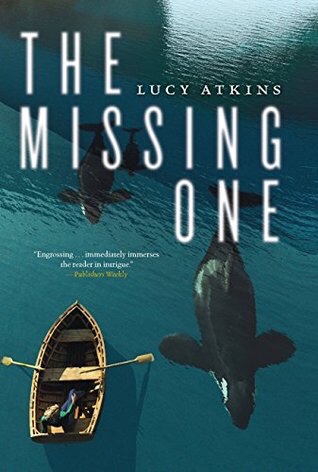
Throwback Thursday! The Missing One by Lucy Atkins.

This was the book that first started my love affair with Lucy Atkins’s writing. I remember when I first read this novel for my book club, I was so impatient to find out what happened back in the 1970s to Elena and Susannah. A terrifying and traumatic event has linked these two women for over 30 years and it can’t stay a secret for ever. In the present is Elena’s daughter Kali, who has just lost her mother to breast cancer, a mother she could never make sense of or bond with as she wanted. In the aftermath of Elena’s death, Kali is trying to make sense of that difficult relationship when she finds a hidden pile of postcards from a woman called Susannah in her mother’s things. Thinking she has found the clue to her mother’s past she pursues this woman to find out about events leading up to her birth and a family history that has resolutely stayed hidden.

Driven forward by grief, and the constant worry that her husband is having an affair, Kali takes her son Finn on an odyssey to unearth her mother’s secrets and to find herself. She has many theories about what she might find: maybe her father had an affair; could Susannah have been his lover or her mother’s? Yet, what she finds is something she never suspected. Set against the backdrop of wild North America and Canada we learn about a woman’s quest to understand the Orca. Distressed by witnessing the killer whales at Seaworld in California while doing her PhD, a young Elena leaves everything to record killer whale pods in the, ocean. The Seaworld orca gave birth to a calf that was so disorientated by his tiny tank he kept banging himself against the glass trying to navigate through echolocation. His desperate mother keeps pushing him away from the sides to protect him from damage, but in her efforts to protect she forgets to nurture and the calf dies because she has forgotten to feed him. Kali was similarly starved of nurturing by her mother because she was so intent instead on protecting her from this awful secret.


The novel is an incredible insight into relations between mothers and daughters. Kali’s sister Alice has a great relationship with her mother that seems easy, whereas Kali and Elena clash over everything. Kali sees that her mother finds her hard to nurture and believes it is her fault. It takes putting herself in danger to find out why and in finding out she also discovers that essential piece of the jigsaw that tells her who she is and grounds her in a history. The novel shows how when you become a mother it becomes more importantu cc than ever to know where you are from and how you belong. It also shows how the secrets of one generation have a huge impact on the next, even if the secret is kept with the best of intentions. The book cleverly shows the difference between generations since we have now moved into a world where we put our own lives on show for fun. In a world where counselling and therapy are becoming the norm it is no longer seen as acceptable to keep such huge secrets and we know as post-Freudians what effect those early years of parenting have on the adult we become.


Aside from the complex human relationships are the family ties within the Orca families. We see how there are resident pods and transient pods with different feeding habits and rules to abide by. It is also clear that parallels can be drawn between the whale relationships and the human ones. Elena is so moved by their mothering instincts and the possibilities to map their language and understand their emotions. She gives up everything to spend as much time with them as she possibly can even going to sleep on her floathouse with the sounds of whales drifting up from a microphone in the water. I learned so much about these incredible creatures without losing the majesty of them and the awe a human being feels when a huge tail rises up out of the water next to their boat.


The book reads as a dissection of family relationships, a thriller, a study of whales and a study of grief. Grief causes Elena to suffer with depression throughout her life, grief traumatises Susannah to the extent that she is unbalanced by the things she has witnessed and it is grief that compels Kali to jump on a plane to Vancouver with nothing but a few postcards and the internet to go on. I struggled to put the novel down because of the thriller element. Like a good crime novel, you desperately want to know the truth of who- dunnit. Yet it is those final chapters I like best, after everything is resolved and each character is living in the aftermath of exposed secrets and recovery from physical and mental injury. The novel could have ended there and I am glad that it went further, back into Elena’s past so that we can see her happy on her floathouse making coffee and then hearing those whales come to greet her.


She would go back to that throughout her life, right to the very end. But the last time, when the world had shrunken to the contours of her skin and she leaned over the railings, it wasn’t the whales that she saw in the water. And so she jumped.

Meet The Author

Lucy Atkins is an award-winning British author and journalist. Her most recent novel, Magpie Lane, is a literary thriller set in an Oxford college. Her other novels are The Night Visitor (which has been optioned for TV), The Missing One, and The Other Child. 

Lucy is a book critic for The Sunday Times and has written features for UK newspapers including The Guardian, The Telegraph, The Times, and many magazines. She was a Costa Novel Award judge in 2017, and teaches creative writing to Masters students at Oxford University. 

She is mother of three and has also written several non-fiction books including the Amazon #1 parenting guide, First Time Parent (Collins). She has lived in Philadelphia, Boston and Seattle and now lives in Oxford, UK. 

For news, events and offers see http://www.lucyatkins.com

Follow Lucy on Twitter @lucyatkins

Posted in Personal Purchase

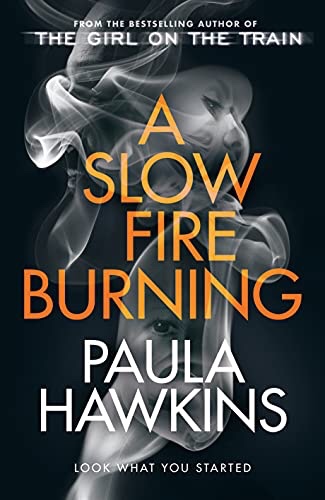
A Slow Fire Burning by Paula Hawkins

I’m a big fan of this author’s previous novels Into The Water and The Girl on the Train. Incidentally, I didn’t like the latter’s film relocation to upstate New York, because I didn’t feel it had the necessary grit of the book’s London location and lost something in translation. I’ve been looking forward to her new novel and I spent the weekend on my chaise longue reading it with a bar of Green and Blacks Sea Salt. Pure bliss! The novel is set in London, on a stretch of the Regent’s Canal between Bethnal Green and Islington. We open with a body being found on one of the canals, the deceased is a young man his neighbour only knows as Daniel. When she boards his boat and finds his body covered in blood she knows she must ring the police. However, in typical Hawkins fashion, the author wishes to unsettle the reader and leave them unsure of who to trust. So, although his neighbour Miriam looks like a run of the mill, middle aged and overweight woman, used to being ignored, she does something unexpected. She notices a key next to the body, and as it doesn’t belong to the boat she picks it up and pockets it.

Our other characters are members of Daniel’s family, who live within walking distance of each other in this area. Daniel’s mother Angela is an alcoholic, in a very strained relationship with her only child until his death. Then there’s his Aunty Carla and Uncle Theo who live near the boat. Daniel appears to have a closer relationship with his Aunty Carla, than he did with his mother, but is it really what it seems? Miriam has noticed some odd comings and goings from the boat next door. This is a family with secrets, both old ones and current ones. Miriam noticed that the girl who works in the local launderette, Laura, was with Daniel on the night in question and they had a row. Laura could have killed him, but Miriam doesn’t think so. Then there’s Irene, an elderly lady who lives next door to Angela and has also noticed some strange behaviour next door too. She knows the family well although Angela has often been too distracted by her own life to form a friendship. Irene does have a soft spot for Laura who helps her out from time to time, by going shopping or running errands. Like Miriam, Irene is also wondering if everything is what it seems with this murder. Lonely people observe a lot and although the family won’t realise this, she’s in possession of a lot of information. Something seismic happened to this family years before, something that changed the lives of everyone involved. Might that have a bearing on their current loss? Could that be the small flame, burning slowly for many years, before erupting into life and destroying everything?

I absolutely fell in love with Laura. She has a disability that affects her mobility and, along with many other symptoms, she has problems keeping her temper. Her hot-headed temperament has led to a list of dealings with the police. This isn’t her normal character though, this rage seems to come from the accident she had as a child. She was knocked down by a car on a country road while riding her bike and broke her legs, as well as sustaining a head injury which has affected her ability to regulate her emotions. Further psychological trauma was caused when she found out the man who hit her, was not just driving along a country round, but driving quickly away from an illicit encounter. Who told him to drive away and why? Laura feels very betrayed and now when she feels threatened, or let down, that rage bubbles to the surface. She’s her own worst enemy, unable to stop her mouth running away with her, even with the police. She has a heart of gold, but very light fingers. She’s shown deftly whipping a tote bag from the hallway of Angela’s house, but in the next moment trying to help Irene when she can’t get out. I found myself rooting for her, probably because she’s an underdog, like Miriam. Miriam feels that because of her age, looks and influence she is completely invisible. She has been passed over in life so many times, it’s become the norm. However, there is one thing she is still angry about. She wrote a memoir several years ago and showed it to a writer; she believes he stole her story for his next book and she can’t let that go.

I love how the author writes her characters and how we learn a little bit different about them, depending on who they’re interacting with. They’re all interlinked in some way, and their relationships become more complex with time. As with her huge hit The Girl on the Train, the author plays with our perceptions and biases. She doesn’t just plump for one unreliable narrator, every character is flawed in some way and every character is misunderstood. We see that Miriam is not the stereotypical middle-aged woman others might think she is, as soon as she pockets that piece of evidence at the crime scene. Others take longer to unmask themselves, but when they do there’s something strangely satisfying about it. We even slip into the past to deepen our understanding of this complicated group of people, letting us into all their dirty little secrets, even those of our victim Daniel. When I’m counselling, something I’m aware of is that I’m only hearing one person’s perspective of an event. Sometimes, that’s all it needs, some good listening skills and letting the client hear it themselves. Yet, it is only one part of a much bigger story. Occasionally, I do get an inkling of what the other person in the story might have felt and I might ask ‘do you think your wife heard it like that or like this?’ If I say ‘if my partner did or said what you did, I might feel….’ it makes the client think and asks that they communicate more in their relationship. Sometimes the intention behind what we say becomes lost in the telling. That’s how it was reading this book, because we do hear nearly every perspective on an event, but also how each event or interaction affects the others. The tension rises and it was another late night as I had to keep reading to the end. Paula Hawkins has become one of those authors whose book I would pre-order unseen, knowing I’m going to enjoy it. In my eyes this book cements her position as the Duchess of Domestic Noir.

Meet The Author.

PAULA HAWKINS worked as a journalist for fifteen years before turning her hand to fiction. Born and brought up in Zimbabwe, Paula moved to London in 1989 and has lived there ever since. Her first thriller, The Girl on the Train, has been a global phenomenon, selling 23 million copies worldwide. Published in over forty languages, it has been a No.1 bestseller around the world and was a No.1 box office hit film starring Emily Blunt.

Into the Water, her second stand-alone thriller, has also been a global No.1 bestseller, spending twenty weeks in the Sunday Times hardback fiction Top 10 bestseller list, and six weeks at No.1.

A Slow Fire Burning was published on 31st August by Doubleday.

Posted in Throwback Thursday, Uncategorized

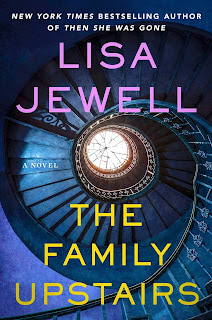
The Family Upstairs by Lisa Jewell.

As some of you may know, reviews can get very personal for me. Probably because I’m a therapist and used to lots of self-reflection. When a book hits me emotionally I really think about why and this book had me scurrying to my journal. Lisa Jewell is a master of these domestic thrillers and the psychological suspense created when groups of people are in conflict. Here the conflict is controlled within one house 16 Cheyne Walk in Chelsea, overlooking the river. That is until it’s secrets explode and the truth of the mystery is scattered across the world.


Three narratives weave in and out of each other to tell the story. We meet twenty five year old Libby with her little garden flat and her job at the kitchen design company where she’s worked for five years. Everything about Libby says organised, professional and quiet. That is until a bombshell is dropped on her life. Woven with this is the story of Lucy – if that is her real name. She is living in France but at the moment we meet her is homeless along with her two children and the dog. The family are reduced to sneaking in to the beach club to get showered but that doesn’t happen everyday. Lucy is at rock bottom. She can’t husk for money but needs money to collect her violin. They have nothing left to sell. Does she go and ask her violent but rich ex-husband for help? Or does she let the children stay with their grandparents? Either way she needs her violin and once she sees the date, she develops an urgent need to make her way back to London and a certain house in Chelsea.

Our third narrator is Henry, relating what happened at the house back in the early 1990s. Henry just about remembers family life when things were normal and it was just the four of them: mum, dad, Henry and his sister. He has vivid memories of going to private school in his brown knickerbockers and sitting drinking lemonade while his Dad read the newspaper at his club. The house was filled with curiosities such as animal heads, ceremonial swords and red thrones. It’s so distinctive in style that when the money starts to run out the house is scouted as a location for a music video. The fiddle player in the band is Birdie and she loves the house. So much so that when she needs a roof over their head, she and her partner, Justin, come to stay in the upstairs room. Henry’s father has had a stroke and doesn’t have the same strength and power he used to have. He seems to sit by and watch as Birdie and Justin take up residence.
Later another couple join the group. David Thomsen is a man Henry dislikes almost instantly because he seems to sense what his Dad and Justin fail to see. David has charisma and seems to have an effect on every woman in the house. His wife Sally and two children, Phin and Clemency, also join them. It starts to feel like they’re living in a commune but the only consolation is Phin. To Henry, Phin is beautiful with floppy hair, cheekbones and a distinctive style. When Phin takes him shopping, Henry develops a crush and trails after him, wanting to be like him. When it is suddenly announced at the dinner table that David and Birdie are now a couple Henry senses this is the start of something evil. They bring out the worst elements of each other and start to assume a power in the house that goes unchallenged by his parents or the other adults. They are told what they will eat, do and even wear. Henry knows this is out of control and this is only the beginning of the damage this man will inflict in the house.
Libby has been set a letter by a group of solicitors telling her she has been left a house. When the solicitor walks her round to the house she realises she is rich. The house is abandoned, but huge and in prime position. It could be worth millions. The solicitor also gives her a newspaper cutting describing the strange events that took place there exactly twenty five years before. Libby has always known she was adopted, but this tells her she was the lone survivor in the house, tucked in her cot with a lucky rabbits foot under the mattress. Downstairs were three people, dressed all in black and dead from poisoning themselves with belladonna. One was David Thomsen. The news story talks of a cult forming within the house and aside from Libby, whose real name is Serenity, all the children living at the house were missing. Libby feels there is more to this story and wants to meet the journalist who wrote the article. What is the answer to how this happened? And who is sneaking in and out of the attic space at the house?


There are so many questions that I won’t answer for fear of ruining the book, but I will tell you about the effect it had on me. When I was 12, the same age as Henry, my parents joined an evangelical church that became all-consuming and took over our lives for a few years. Up until then we’d been part-time Catholic’s and I’d gone to Catholic school for a while through my first confession and communion. These new people felt weird. They were so fervent and all that speaking in tongues was odd. But it got worse. My parents started to have no other social life from church. We were forced into church activities for kids. My dad lit a bonfire and they burned their secular music and all of my mum’s ‘inappropriate ‘ books like the Judith Krantz and Jackie Collins novels. I was scared by this. I started to wonder who my parents were as I was more restricted on what I wore, listened to and read. I couldn’t go to anything where there was a sniff of boys and from what I could see there was a lot of coercive control over women and girls particularly. I felt Henry’s fear when reading this book. I know what it feels to be a kid, looking at your parents and thinking they’ve been taken in by something dangerous. That beliefs are being forced on you and you can’t live like other kids. To feel like all of your security is being taken away.


Of course my solution wasn’t as dramatic as Henry’s but I did have to create coping mechanisms. There are times now when we can laugh about it, because as my brother and I have grown older we have become one of those families that openly discuss everything. However, I still occasionally have dreams where my parents can’t see or hear me and I think it has also bred a lifelong mistrust of authority. So I can understand the seismic effect the arrival of Dave Thomsen had on these children, with repercussions way into adult life. Whether it’s changing who you are to escape, or bouncing from one failed relationship to another or being unable to move on, even geographically, they are all responses to trauma. With a brief nod to the future at the end of the book the author does leave a tiny seed of hope that in future generations a type of healing can be reached. This is a dark, disturbing, look at how sometimes home is the most dangerous place to be.

Posted in Throwback Thursday

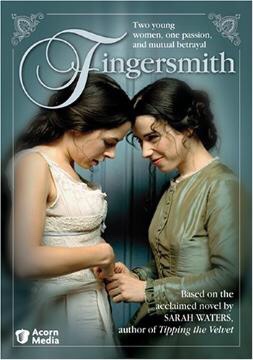
Throwback Thursday! Fingersmith by Sarah Waters.

Sarah Waters is one of my favourite writers. Anything she writes is a pre-order in my house, so there may be some bias in my next statement. For me, she is one of the best writers of the 20th Century with, hopefully, more to come. More recently, she has dabbled into the early 20th Century and even WW2 for her novels The Night Watch and The Little Stranger, but she started back in the 19th Century and this is my favourite from that series. Amazon calls her genre Lesbian Victoriana, which made me giggle a little, but I think Waters is doing more than that; she is chronicling women’s experience. She includes lesbian encounters and women falling in love with women, but in this book that’s an aside rather than the main focus of the plot. I think to term these novels as lesbian novels is reductive and has a sense of prurience. I remember the fuss and excitement when Tipping the Velvet was serialised at the BBC, and male journalists practically salivating over Rachel Stirling and Keeley Hawes. I think they’re intended to be read as women’s experiences of living in Victorian England, with the women’s sexual relationships as part of an unspoken subculture only just emerging into the open. She is using the device of ‘writing back’ to the historical period and bringing a group into the limelight who were hidden at the time and never portrayed in fiction. It’s about seeing the Victorian era and women’s lives in totally new eyes, and accepting that the literary canon only shows us a small part of a vibrant and varied world. As with history being written by the victor, literature of the early to mid 19th Century tends to be written by white, straight, middle-class males. Waters is trying to redress the balance and give us a minority viewpoint which I love.

Orphan, Sue Trinder, lives in a family of petty thieves and is trained to become a ‘Fingersmith’. Based in London, the den is run by a motherly woman who has a hard and ruthless side. All the thieves congregate and bring their wares to ready them for sale, while a baby farm is run on the side. It is here that a man called ‘Gentleman’ recruits Sue for a scam to defraud a wealthy heiress. We also meet a young woman called Maud Lily, she’s an orphan too, but with a home in a gloomy mansion as the ward of an odd Uncle. She has a very comfortable life, helping him with his work as some sort of secretary, but his subject matter might raise an eyebrow or two. He is an avid collector of Victorian pornography. This makes Maud very uncomfortable, but it seems an unspoken agreement that her help is in return for his protection. This strange upbringing makes Maud very sheltered and naïve in one respect, but also strangely knowing in others. Gentleman has devised a long con that starts when Sue is placed within the mansion as Maud’s lady’s maid. She will then encounter the Gentleman who will try to court Maud. They hope, that with Sue’s encouragement, Lily will fall for his charms. His long term aim is to marry her, because according to 19th Century marriage law, all of her fortune will then become his property. Then it’s a simple case of claiming she’s mad, and as long as a doctor agrees, a man could sign his wife into an asylum leaving him free to use her money. If she helps, Sue will be entitled to some of the ‘shine’.

As always with Sarah Waters books, the depth of research is obvious and this feels so real. The sense of place is so strong, in the filthy detail of the London terrace streets and the silent unease in the mansion. These two places feel entirely opposite. Where Sue grew up there’s constant noise, people running in and out, babies wailing upstairs and other people’s belongings being appraised and sold on. There’s squalor and poverty, so for her, the change to being a lady’s maid is a massive leap. By contrast the mansion is quiet with the sound of ticking clocks, days without seeing another soul. There’s a feeling of being imprisoned somehow, it’s stifling and the scene where she works in the library with her Uncle feel so uncomfortable. The tension as the con slowly starts to work is terrible. Then, in what is probably my favourite twist in fiction, the pace picks up and the reader is left reeling as everything changes.

In the second section of the book we go back in time a little to Maud’s story, some of this overlaps with the first part and some of it is her history and how she ended up closed away with only a perverted Uncle for company. We follow Sue’s journey as Maud’s lady’s maid and see how a friendship develops between the two young women. Maud is living like a prisoner and has experienced years of coercive control leaving her timid and unsure. The con would only work if Sue stays focused and doesn’t get involved with her new mistress, but their friendship is deepening and Sue is starting to have doubts about the plan. There is an attraction between the two women that was unexpected, but is there anyway to back out of the plan or is it too late? There is something hypnotic about this book. It is a long read, but unlike the Victorian novels it emulates, it didn’t feel long-winded or become boring. I was engaged at every point of the story, absolutely fascinated with the twists and turns of the plot and never quite sure who is telling the truth. I was desperate to find out who has really been conned in the end. This is one book where BBC adaptation is very good too, with great casting and a definite feel of the book.

However, the novel is perfection. It’s a historical thriller, told through unexpected heroines and delving into the more deviant side of Victorian life: pornography, pick-pocketing, theft, fraud, confidence tricksters, and baby selling. Not to mention the lesbian aspects of the storyline that would have been unthinkable in fiction of the time. In fact I clearly remember a tutor at university telling me that all the focus on deviant sexual behaviour was focused on gay men and prostitution – intimating that the thought of two women having a relationship was so taboo that it didn’t even exist in most Victorian minds. I loved that we were seeing a totally different section of Victorian society and it had a voice. There is a feel of Dickens in the poverty and living conditions, and of course he had his own wife detained in an asylum. However, there’s none of that Victorian moralising that comes with fiction of the period. This is the underclass speaking for itself and the character of Maud’s Uncle hits home the idea that even the middle classes were not necessarily as respectable and God-fearing as they seemed. I would recommend this to anyone who enjoys Victorian fiction whether in the form of historical novels or of the period. It’s also a great thriller with enough double-crossing and revelations to keep any reader satisfied. This really is Sarah Waters at the height of her writing powers and should be on your TBR list immediately.

Meet The Author.

Sarah Waters OBE, was born in Wales. She is the author of six novels, Tipping the Velvet, Affinity, Fingersmith, The Night Watch and The Little Stranger, which have been adapted for stage, television and feature film in the UK and US. Her novels have been shortlisted for the Man Booker Prize and the Women’s Prize for Fiction and she has won the Betty Trask Award; the Somerset Maugham Award; The Sunday Times Young Writer of the Year Award; the South Bank Show Award for Literature and the CWA Historical Dagger. Sarah has been named Author of the Year four times: by the British Book Awards, the Booksellers’ Association, Waterstones Booksellers; Stonewall’s Writer of the Decade in 2015; Diva Magazine Author of the Year Award and The Sunday Times Award for Literary Excellence in 2017, which is given in recognition of a writer’s entire body of work. Sarah was awarded an OBE in 2019 for services to literature in the Queen’s Birthday Honours. Sarah Waters lives in London.

Posted in Throwback Thursday

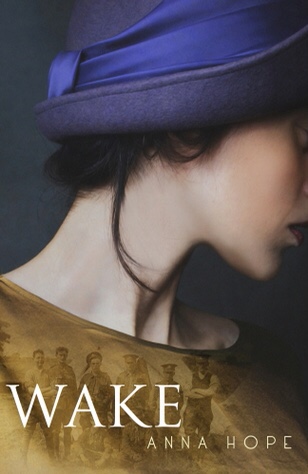
Throwback Thursday! Wake by Anna Hope.

She misses him. Fraser. Here in the shrunken hours of the night. She misses him still so much. Who is there to share her thoughts with? They wither inside her. She cannot even write them to him as she used to, can’t take a cup of tea back to bed and sit with a candle in the blackoutand think of him, trying to imagine where he is, what he sees. She cannot imagine where he is, because he is nowhere, he is nothing. All of the many tiny things that he was – the way he turned his head towards her, the slow breaking of his smile, the laughter in him, the roll of his voice; the way that he eased her, eased her – these are all gone. These are all dead.

Last year I couldn’t move on Twitter without seeing that someone was reviewing and reading Anna Hope’s Expectation. I’ve had such a ridiculous TBR that my copy is still languishing on the pile, but I wasn’t surprised to see the book become a runaway hit. I’d already fallen in love with her writing in 2014, when I read her novel covering the aftermath of WW1. Wake is a brilliant piece of historical fiction based around the real historical event, the creation of the Tomb of the Unknown Soldier. As he is taken from the fields of France, on his journey towards London, three women are linked by a mystery that is starting to unravel. As the Unknown Soldier is meant to provide closure to the war for the British people, these three women can’t look into the future while they are still inextricably linked to the past. Hetty’s wounded brother won’t speak, Evelyn grieves for her lost lover and Ada waits for confirmation of her son’s death, every day that she doesn’t get a telegram is another day he feels alive. We follow these three women over five days, while the selection of the Unknown Soldier is made and his journey towards Westminster Abbey begins. Slowly, a tragic tale of war’s aftermath emerges and links them all.

Hetty lives with her mother still, and her mute, shell-shocked brother. He can no longer work so Hetty has taken a job as a dance instructor at the Palais. It is there she meets an educated, wealthy, man who she quickly falls for. Every indication she has, makes her think he feels the same. However, there’s something she can’t put her finger on, a distance or sense of being unreachable that he has. Where does he go in his mind, when he seems distracted? Evelyn comes from a wealthier background, but feels equally lost. She’s working at the Pensions Exchange, where men returning from the front pass through, claiming benefit for their physical or mental wounds. Evelyn’s own loss is still raw and she feels detached from her parents who can’t understand her experience. She starts to become closer to her brother instead, because he is of her generation, also altered forever by his experience at the front. Ada is haunted by visions of the son she’s lost. She still sees him on the street and for a few moments she’s convinced he is alive. She also feels like she’s struggling alone, because her husband is grieving in his own way, becoming increasingly withdrawn. A door to door salesman attracts her attention and it’s so clear he has suffered from his war experiences and has struggled to find work. He exhibits some worrying symptoms but Ada recognises shell-shock. During one of his disturbed episodes he says the name of Ada’s son. Can she find out what happened to him? The tension really builds as the public spectacle comes closer, the ceremonial internment of this unknown young man can be a catalyst, allowing people to grieve for those whose bodies are lost forever on the fields of France or Belgium.

This is a very interesting part of history for me, because of the tumultuous social change that took place, especially for women. This period is where we saw huge adjustments and change within the aristocratic class. Some families had lost two generations, father and son or the ‘heir and spare’. This led to an estate crippled by death duties and having to be sold, or the new heir forced into reducing costs and servants, or searching for a more advantageous match – marrying American heiresses was sometimes the answer. These changes often brought less formality to the family. Women had worked throughout the war, in jobs usually done by men. There was tension on their return to the workforce, some women didn’t want to return to the home and men who couldn’t find work were reduced to begging or selling door to door. Crime was on the up and families were coming apart at the seams. There was a sense of the old order being overturned and old values like manners, morality and knowing your place being lost.

Finally I loved the significance of the title ‘Wake’ and it’s several meanings: to rouse from sleep; a ritual for the dead; the consequence or aftermath. All of these meanings are apt to the women in the book and their circumstances. This is the moment that the 20th Century finally dawned on people, and society woke from the Victorian era. Victoria’s reign had been so long that some people had never known another monarch, now there would be change from that Victorian order. The ritual refers to the Unknown Soldier, a representative of every man lost, but also representative of that death of the old order, and it’s sensibilities. The consequences of WWI were seismic, we had just fought the first mechanised war and it was hell on earth. Society did not know how to cope with the wounded who returned, whether the ranks of the physically disabled using wooden legs or metal masks to cover burns, or the shell-shocked, constantly trembling and lashing out when feeling threatened. Many ended up in institutions, because they were constant reminders of something younger people wanted to forget. The following few generations would be changed, with the war hanging over them like a giant monolith casting a long shadow. Why couldn’t people be allowed to forget? As the Unknown Soldier passes by someone comments ‘is this supposed to make it all okay?’ This is such a moving read and captures it’s era so perfectly it felt like being there, which isn’t an easy thing to achieve. I felt for each woman, but Evelyn particularly moved me. This is an exceptional piece of writing and a great introduction to this author’s work.

‘I’ll remember you he thinks, and as the gun carriage with it’s coffin and it’s dented helmet passes him by, he closes his eyes. Nothing will bring them back. Not the words of comfortable men. Not the words of politicians. Or the platitudes of paid poets.’

Meet The Author.

ANNA HOPE studied at Oxford University and RADA. She is the internationally prizewinning and bestselling author of Wake and The Ballroom. Her contemporary fiction debut, Expectation, explores themes of love, lust, motherhood, and feminism, while asking the greater question of what defines a generation. She lives in Sussex with her husband and young daughter.