Posted in Personal Purchase

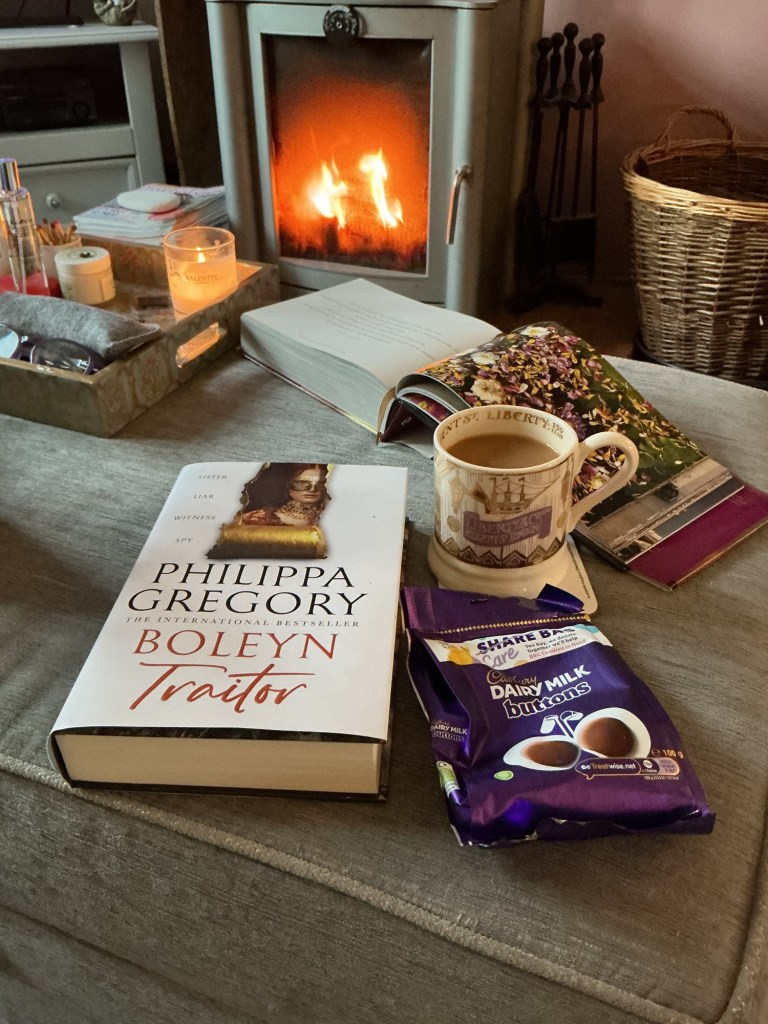
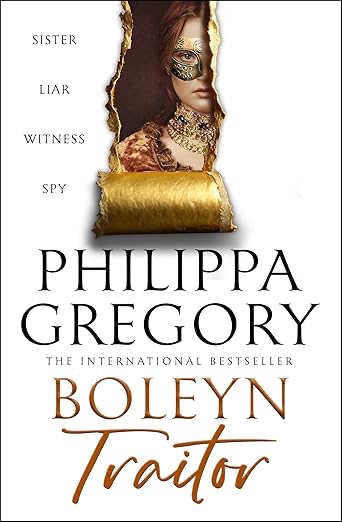
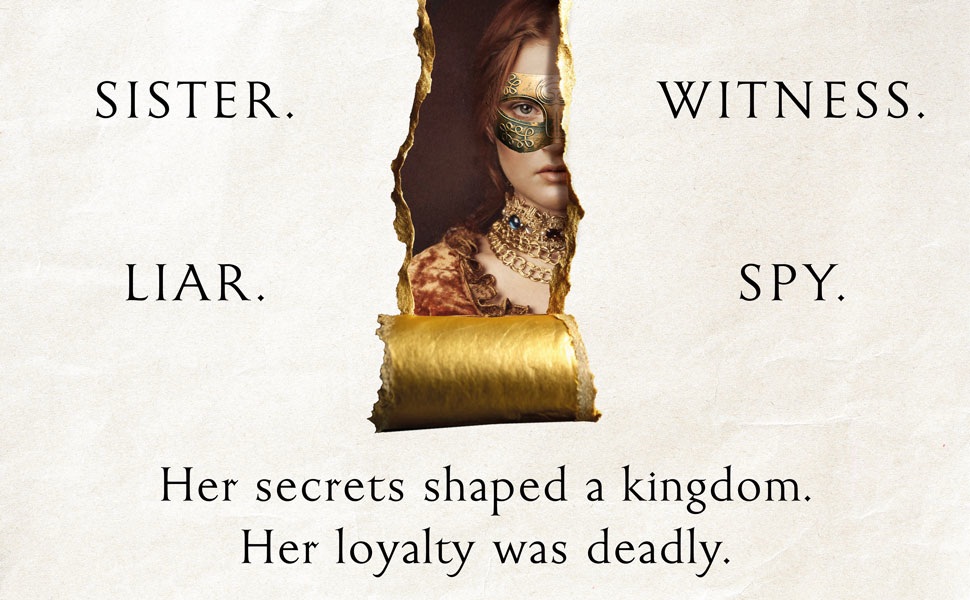
The Boleyn Traitor by Philippa Gregory 

She survives four queens. Will she fall to a tyrant?

Philippa Gregory brings the Boleyn traitor into the light in an explosive story of one woman’s survival in the treacherous heart of the Tudor court.

It’s been a while since author and historian Philippa Gregory delved into the lives of the Tudors, but what a character to come back to. I’ve always been interested in those women who survived Henry VIII, not just Katherine Parr but Mary Boleyn, who was the subject of Phillipa’s first book and managed to spurn court and live in the countryside with her husband and children. There’s Anne of Cleeves who had the common sense to take an annulment and lived the rest of her life as a wealthy woman. Then there’s Jane Boleyn, one of those fascinating people who seems in the background and very unimportant. In fact when I first read about Anne Boleyn her sister-in-law was no more than a functionary, a lady-in-waiting with no bearing on the main story. However, the more I read, the more interesting little snippets occurred to me. She’s named as someone who betrayed their own husband in the trial Henry VIII held against Anne and three men who were close to her, including her brother and Jane’s husband, George Boleyn. I wondered why he wanted to prove incest against Anne, when her adultery was treason anyway. This was a claim that had anger and spite behind it, that wanted to taint and bury the name Boleyn and with Jane surviving the fall it seemed likely that she had provided this salacious claim, perhaps jealous of her husband’s close relationship with his sister. Maybe she was just lucky, but Jane survived four queens, serving as lady in waiting from Katherine of Aragon to Katheryn Howard. That shows she was accomplished at court and able to weather the changes under a very unpredictable king. She survived the change from Roman Catholicism to the Church of England and the huge change in Henry’s court when he became less dependent on the opinions of his dukes and more on the commoner Thomas Cromwell. So I was really looking forward to reading more about this woman and her perspective on a story we know very well. 

Of course there was a certain amount of repetition, but that’s my fault for having read everything there is to know about Henry’s court. Even though we’re firmly in Henry’s time, this book felt strangely contemporary in its themes. As it goes along we start to see Henry the tyrant emerge from the sought after and enlightened prince he once was, possibly due to the blow on the head he suffered while jousting. Now America is in the grip of a similar man, they’re both petty, vindictive, vengeful and willing to manipulate the truth to get the outcome they want. 

“Pity about the horse” my father says […] “the King had him beheaded”. 

By the time we reach Cromwell’s search for a new wife, after the death of Jane Seymour, Henry seems on the brink of insanity and no one can say no to his demands. A whole court revolves around his wishes, no matter how irrational they may be. 

“The King kills those closest to him […] he loves them at first, calling them to his side to make himself shine and then he cannot tolerate that they eclipse him.” 

Philippa writes a brilliant scene based on what we know of Anne of Cleeve’s arrival in the country. We know she spoke very little English or French, but she also had no experience of Henry. One of his foibles was dressing up and fooling people with his appearance. He failed to realise that his sheer size, not to mention his gait which was affected by the wound on his leg, meant he was likely to be identified whatever mask or disguise he wore. Used to the pandering of his courtiers who would pretend not to know him, he was horrified when he burst into Anne’s room dressed as a beggar and she failed to recognise him, even flinching at his touch. It’s was an appalling first impression and Philippa writes Jane as desperately trying to stop it from happening. Jane had spent time with the German bride and knew she wouldn’t get the King’s humour, pleading with Cromwell to stop him. However, it was too late and this woman’s reaction to him would have been a huge dent to his pride. This rejection doomed their relationship before it started, with Henry claiming she was overweight, her breasts were slack and she had a strange smell – a rather bold claim considering Henry’s persistently infected leg and his courtiers having to hold perfume to their noses to disguise the smell. The annulment was swift and Henry’s eye was drawn to a new girl at court, the fifteen year old Katheryn Howard. 

Of course, there is also a contemporary parallel between Katheryn Howard’s past at her aunt’s home and Epstein scandal. She was supposedly being trained as a lady-in-waiting but Gregory’s past novel about Katheryn’s short time as Queen reveals that this finishing school in Norfolk is a magnet for the men of the area who are allowed to visit the girls at night. Katheryn has always been portrayed as promiscuous and it is thought by more recent historians that she was sexually active from a very young age of about twelve to thirteen. We would now consider this grooming of a minor for sexual exploitation and it’s worth remembering that she was executed for treason due to her infidelity with Thomas Culpepper, who had been the King’s favourite, but also for adultery with young men she met before she’d ever come to court. Henry changed the law specifically to charge her with this when he had the evidence to sign her death warrant anyway. He’s not alone in his predilection for young women. His best friend Charles Brandon, Duke of Suffolk, has a young ‘ward’ who lives at Grimsthorpe Castle in my home county of Lincolnshire. As a middle aged man he thinks nothing of marrying her as soon as she’s of age and taking her property as his own. He’s also a lot less appealing when I’m not imagining Henry Cavill who played him in The Tudors. I found the scenes where Henry is brought to Katheryn’s bedchamber almost unbearable to read, but I can’t deny that they are well written. Henry is described as bloated, sweating and leaning upon his courtiers who have to heave him into bed with this young girl. We know he is likely to be impotent at this point in his life, but the fact that this tiny girl has to try and initiate sexual activity with him made me feel sick. I felt a tremendous pity for her and a hope that she found some moments of happiness and love in her short life. 

Gregory writes Jane as a woman who lost her husband, her status and her role as a mother to serve this tyrant King’s court. It’s so fascinating to read how she stays within the King’s good graces for such a length of time. Here the author writes an alliance that might explain that, but we can see she’s intelligent in her own right, speaks several languages, is good at reading people and has a shrewd ability to sense which way the King might drift next. I found myself admiring her quick thinking and felt she could have easily been a politician or spin doctor in modern times. Something that stood out strongly in this novel was the misogyny, which wasn’t surprising but still felt desperately unfair. After Henry suffers his jousting accident he is unconscious for anything from 45 minutes to a couple of hours, with Anne distraught and by his side. Later she miscarries and as awful as that experience is, having been there more than once, what struck me was the shame and guilt she was made to feel. The rush to clean her up and change the bed, making sure it’s all presentable and the Queen looks well enough to accept a visit from the King. Her brother George is the only man who goes to bring comfort, not caring what state she is in. This belief that women are unclean and should come to a marriage bed untouched, no matter how experienced her new husband may be, does breed a resentment and fury into those women. That can start to question in their own mind but it can’t be voiced yet. This is about little rebellions and pushing the boundaries of the powers they do have and Jane is very good at this, knowing which powerful men to trust and those to placate. I found the book gripping even though I knew the outcome would not change and I think that’s a great skill to have. Gregory takes people we know from school and history books and makes them into living breathing humans, with wants and needs that are no different from ours. I felt Jane’s loneliness and this was perhaps why she helped Katheryn in her love affairs. Both have had very little love in their lives and for Jane living this vicariously was so tempting, but very dangerous. This was an interesting look at the Tudor court from the viewpoint of a character whose position makes her almost invisible but also a very compelling witness. 

Meet the Author

Philippa Gregory is an internationally renowned historian and novelist. She holds a PhD in eighteenth-century literature at the University of Edinburgh and is a fellow of the Royal Historical Society and the Universities of Sussex and Cardiff, an honorary research fellow at Birkbeck University of London and she was awarded a CBE in the Queen’s Birthday Honours for her services to literature and to charity. Her novels have been adapted for stage and screen and in 2023 she published her groundbreaking history book, Normal Women – 900 Years of Making History, which was also released as a podcast, a teen edition and a series for young children.

Posted in Personal Purchase

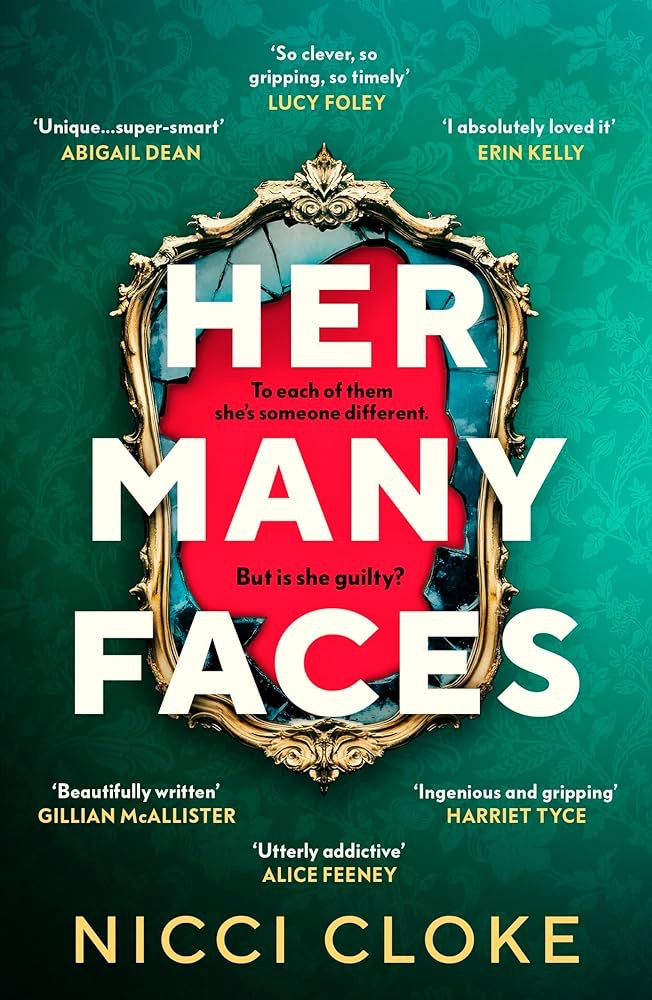
Her Many Faces by Nicci Cloke 

ONE TRIAL. FIVE TRUTHS. BUT ARE THEY READY FOR HERS?

When a waitress is charged with murdering four men at an exclusive private club, her personal life and upbringing are thrust into the spotlight. During the trial, people closest to Katie start to question what they know about her.

Her father remembers the sweet schoolgirl.

Her childhood friend misses her kindness and protection.

Her lover regrets ever falling for her.

Her lawyer believes she is hiding something.

A journalist is convinced she is a cold-blooded killer.
To each of them she’s someone different. But is she guilty?

This thriller grabbed me straight away and never let go! The pace was fast, with short punchy chapters containing the narratives of five men each linked in some way to a woman called Katie. Each man has his own name for this woman and their narratives tell us her story as they see it. John is her father, Gabe is her childhood friend, Conrad is her lover, Tarun is a lawyer and Max is a journalist. Each one thinks they know her, each one presents a different face. But who is she and which is her real identity? Is she a combination of all five or nothing like this at all. It’s a timely, compelling and addictive story that you’ll want to finish in one go. 

The murder that has taken place at March House has killed four very important men at once. Lucian is a businessman and owner of March House, a private members club for the richest and most influential men in the UK and their guests. His guests that night were Harris Lowe, Lucian’s new right hand man, Dominic Ainsworth MP and Russian millionaire Aleksander Popov. They appear to have been poisoned with an incredibly expensive bottle of brandy laced with poison. Only one person has been serving the party all evening and that is waitress Katie. She is soon under arrest, but what possible motive could she have had to kill these men? Yet when police apprehend her not long after she’s left work for the evening she is reported as saying ‘they got what they deserved’. Is this an admission of guilt or an acknowledgment that whoever killed them, did the world a favour? 

It’s hard to get to know Katie because she is simultaneously a wildcat, a conspiracy theorist, a squatter, a farmhand, a waitress or the accused. These are just some of the descriptive words used to label her by the men in her life, but we have to remember that they are viewing her through their own lens. How much can we trust their impressions of her and do we accept that they’re telling the truth? She’s clearly beautiful, even without the ‘right’ clothes she has something that men desire. Conrad feels this when she’s helping out with the pigs on her uncle’s farm but then is shocked when she turns up at his club and his boss Lucien clearly desires her too. Both of them see a sex object rather than the young, troubled woman in front of them. John still sees his little girl, unable to equate the terrible crime she’s accused of with his daughter. However, we learn that she’s always been sympathetic and perhaps a little soft where his daughter is concerned whereas her mother sees her as a naughty child who grew up still getting into trouble. If anyone sees a more rounded Katie it’s her childhood friend Gabe, even if he is in love with her. She pulls him into her internet wormhole of conspiracy theories and he follows her down to London, ready for direct action to change everything that’s wrong with society. Yet when he gets there, Katie is living in a squat and has moved on in her belief system. Gabe has fallen under the spell of the elusive Mr E who appears in the comments under YouTube videos, disparaging the rich and the corruption within the system. He’s saddened to find her working at March House, the centre of online rumours about secret cabals and the ‘real’ people who run the world. He sees the Katie who had these beliefs as the real Katie and now she doesn’t believe or belong to him anymore. Similarly, Conrad sees her as this beautiful, innocent farmhand: 

“You’d taken on a hazy, pure quality, a perfume ad of a person. In the cafe you looked ordinary.” 

Every so often a book comes along that captures a moment and this definitely does. It isn’t the first book I’ve read where online radicalisation is part of the story and how dangerous it can be to become drawn in by conspiracy theorists. We tend to use the word grooming when it refers to children, but young adults and people with learning disabilities are also vulnerable and political or conspiracy theories seem to be changing the way people view the world without them even leaving the house and experiencing it for themselves. The echo chambers created when we look at certain subjects means people can be left thinking they have the majority viewpoint, no matter how crazy or extreme the ideas. Conspiracy theories are popular because it gives explanations for events that are incredibly complex and totally outside of our control. The realisation that a small group of individuals could hijack a few planes and attack the most powerful cities in the USA is almost too scary. People didn’t want to feel that their country was that vulnerable and open to attack, so they created stories that their own government must have been involved. Mr E directs his followers to March House as the real seat of power and their list of members could easily feed into that narrative. There is no doubt that some dodgy deals and introductions go on there, but the difficulties facing the country are international and much more complex than a few smoking men in a private room, but for some, life being random chaos is a scary prospect. 
At the centre of all this is Katie, a lost young woman unsure of who she is and what she wants from life. With no plan or purpose, she lurches from one crisis to the next never feeling safe or grounded. The novel made me angry, especially with Conrad and Max who want to use and exploit Katie. Conrad has the audacity to suggest his connection to her was flimsy at best: 

“I could barely even remember your real name. You had come onto me so hard, when I looked back, that in a way it was embarrassing. I was embarrassed for you”. 

I was furious and desperately wanted him pulled apart in court by her barrister Tarun. It reminded me of how women who are seen as controversial, such as Caroline Flack or the Duchess of Sussex, are presented and packaged by the media. There’s misogyny at the root of this and it’s the same with the male characters in the book who package Katie into roles and personalities that absolves them for the harm they cause and assuages their guilt. This is brilliantly done by the author who doesn’t put a foot wrong in her characterisation and the pace of this novel. It’s fast moving and she doesn’t waste a single word, keeping you gripped by what might happen next. We’re never sure on what has happened or who is responsible and the courtroom scenes are brilliant meaning it was impossible to put down – there was one late night where I completely wrote off the following day for anything useful. This is powerful and will make you angry, but you won’t be able to stop those pages turning. 

Meet the Author

Nicci Cloke is an author and editor based in Cambridgeshire. Her novels have been published in twelve languages, and she has previously worked as a nanny, a cocktail waitress and a Christmas Elf. Before being published, she was a permissions manager, looking after literary estates including those of Sylvia Plath, Ted Hughes and T. S. Eliot, and was also communications manager at the Faber Academy.

Posted in Personal Purchase

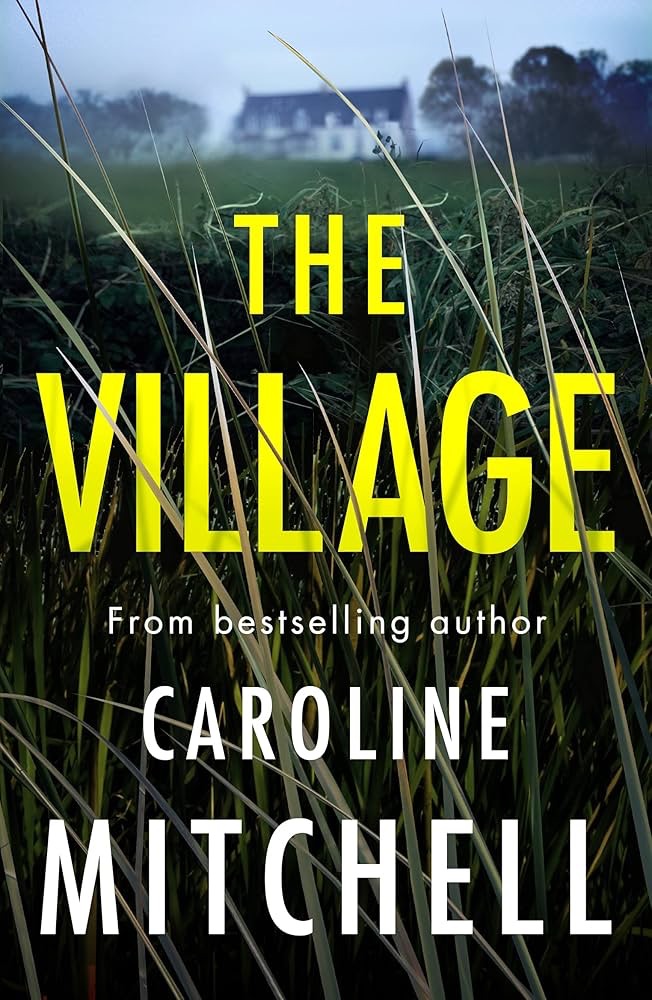
The Village by Caroline Mitchell 

Ten years ago, the Harper family disappeared. Their deserted cottage was left with the water running, the television playing cartoons, the oven ready for baking. The doors were locked from the inside. Overnight, the sleepy village of Nighbrook became notorious as the scene of the unsolved mystery of the decade, an epicentre for ghoulish media speculation.

For crime journalist Naomi, solving the case has turned into an obsession. So now, with Ivy Cottage finally listed for sale, it’s her chance to mount an investigation like no other. And her husband and stepdaughter don’t really need to know what happened in their new home… do they? But Nighbrook isn’t quite the village she expected. No one wants to talk to her. No one will answer her questions. And as she becomes increasingly uneasy, it’s clear that the villagers are hiding something—that there is something very dark at the heart of this rural idyll. And the deeper she digs, the more it seems her investigation could be more dangerous than she ever imagined… In raking up the secrets of the past, has she made her own family the next target?

I came to this novel on the recommendation of another blogger and it’s certainly a page turner. Ivy Cottage isn’t the average house. It’s isolated from the village, tucked away in a forest clearing and inside it’s the archetypal haunted house – dated and untouched, full of cobwebs and creaking sounds. It feels like a house whose history is imprinted on the atmosphere. We also don’t know who can be trusted in this village. At first people are all smiles and welcome, so much so that Naomi takes cakes to the local cafe and the family gets to know local police officer Lloyd, who calls in to introduce himself. The tension is created by intervening chapters that delve into the past and cast doubt on characters that have seemed friendly in the present. They open up questions: why is a girl called Grace slipping out of the cottage in the dead of night and playing in the woods? Why is Lloyd watching? Is he trying to keep her safe or does he have more sinister motives for watching his ‘moonlight girl’. The author also creates disquiet in the reader with odd incidents that have no explanation. We don’t know who is responsible for locking Naomi in the attic one morning. Is her new stepdaughter Morgan resentful or actively dangerous? Who is the teenager talking to online? I found myself full of questions. 

I did have a lot of sympathy for Morgan who doesn’t seem to be such a bad kid, considering her circumstances. I found myself cross with her father Ed and Naomi for destabilising her, especially when she’s already estranged from her mother. Naomi and Ed have married in a whirlwind, then have taken Morgan from everything she knows into the middle of nowhere. They’re barely in Ivy Cottage when Ed announces he’s travelling to Scotland to track down Morgan’s mother who we’re told is an addict and has a life full of drama. It’s not hard to work out that Morgan must feel abandoned by both parents and is now stuck in this creepy house with a woman she barely knows. I felt quite angry with Naomi already, but when we realise she’s dragged her new family into her scheme to investigate the previous owners it seems positively reckless. Not even Ed knows the house’s past so Naomi has started a marriage by lying to everyone. To put a vulnerable teenager into this dangerous environment is at best selfish and at worst callous. Morgan is sullen and angry, which is understandable. When Naomi’s sister turns up she encounters Morgan wandering in the night and decides to give her a few ‘home truths’ which I found particularly spiteful. It’s no surprise that Morgan has started talking to strangers on the internet and wanders outside at night to meet new friends like Dawn, not knowing that she’s putting herself in danger. Can she trust anyone in this village? 

More tension is created by intervening chapters that delve into the past and the unusual life of a young teenage girl called Grace, part of the family who disappeared from this house. She has a very restricted life, plagued by unusual symptoms and even allergic to light. This level of control has led to her sneaking out at night and wandering through the forest, but out there she isn’t alone. Someone watches Grace and we’re not sure whether they’re benign or a danger. I’d worked out what was going on within the Harper family early on, but that’s only a small part of the mystery around Ivy Cottage and their disappearance. When Dawn asks Morgan to sneak out at night they play with an ouija board in the old church and Grace seems to speak to them. It unnerves Morgan but she’s not sure whether it’s a spectral Grace or Dawn she should be wary of. What we do realise is that there are still people lurking in the woods so Morgan and Naomi feel like sitting ducks. There are several twists and turns from here, with a double showdown coming – one for Naomi and Morgan and one in the past – it was nail-bitingly tense. I was also curious about the future of this whirlwind family if they came out of this alive. Would Ed forgive Naomi for lying to him and putting his daughter in unnecessary danger? Could they carry on living at Ivy Cottage? As the night of the Harper disappearance also unfolds I was on tenterhooks. The house was left with half-eaten food on the table as if they were spirited away with no warning. If Grace and her family came out of their ordeal alive, where are they and why did they leave the village? If they’re dead, then who is to blame? With mind games being played and a scene that may just have put me off cake, I’d have been packing my bags very quickly. I did feel there was a twist or two I didn’t need, but the author paints a brilliantly spooky atmosphere around the cottage and it’s hidden past. I didn’t know who to trust out of the villagers and my judgement was completely wrong! This was gripping and is one of those thrillers you’ll devour in a weekend.

Thomas and Mercer Jan 2022

Meet the Author

New York Times, USA Today, Washington Post and International #1 Bestselling Author. Shortlisted by the International Thriller Awards for best ebook 2017, the Killer Nashville Best Police Procedural 2018 and the Audie awards 2022. Over 1.8 million books sold.

Caroline originates from Ireland and now lives in a woodland village outside the city of Lincoln. A former police detective, she has worked in CID and specialised in roles dealing with vulnerable victims, high-risk victims of domestic abuse, and serious sexual offences. She now writes full time.

Caroline writes psychological and crime thrillers. Her stand alone thriller Silent Victim reached No.1 in the Amazon charts in the UK, USA and Australia and was the winner of the Reader’s Favourite Awards in the psychological thriller category. It has been described as ‘brilliantly gripping and deliciously creepy’.

The first in her Amy Winter series, Truth And Lies, is a New York Times bestseller and has been optioned for TV.

You can follow Caroline on:

X: https://twitter.com/Caroline_writes

Facebook: http://www.Facebook.com/CMitchellAuthor

Instagram: http://www.instagram.com/caroline_writes/

Her book site: http://www.caroline-writes.com

Her digital writing courses: http://www.caroline-mitchell.com

Posted in Personal Purchase

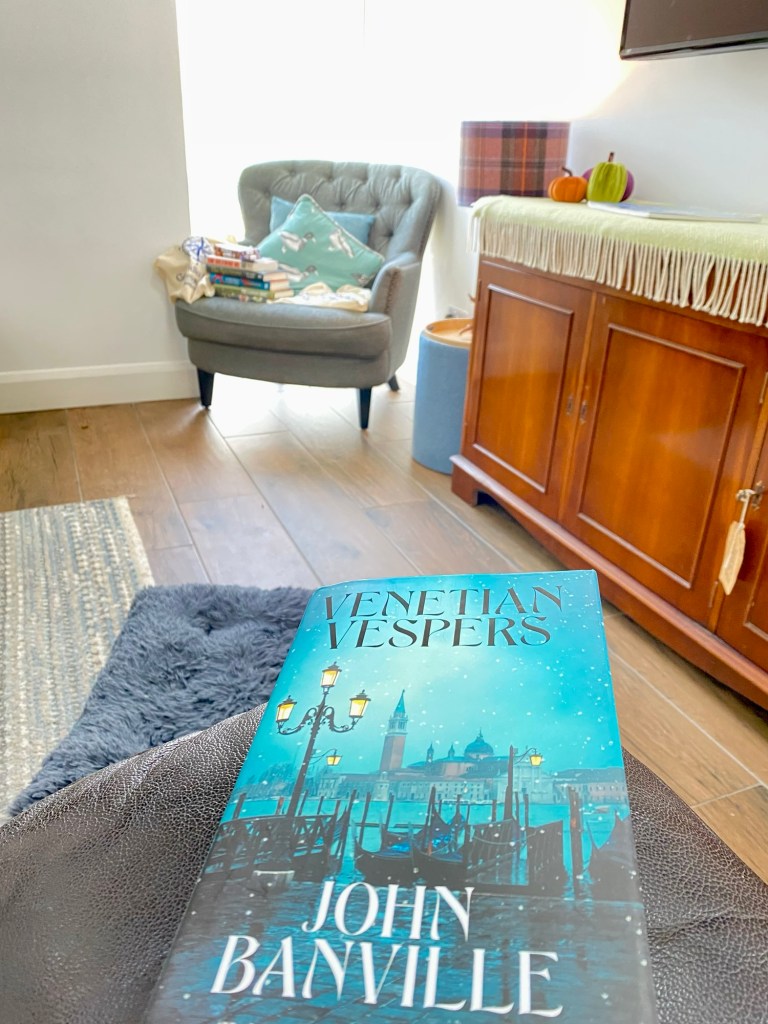
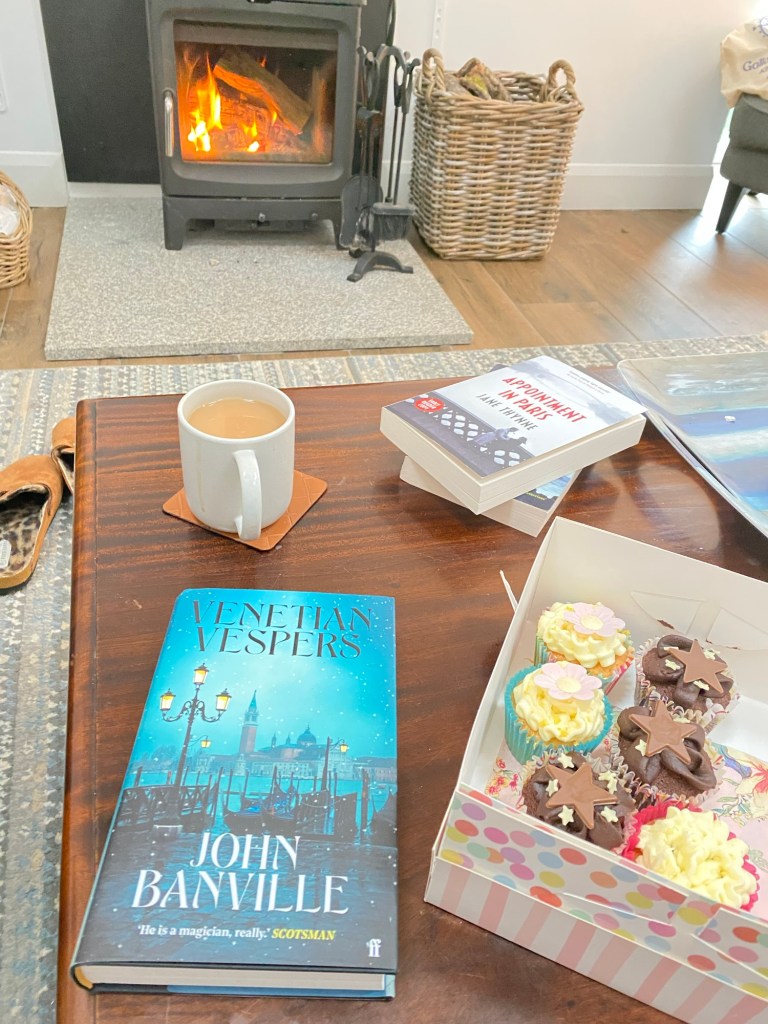
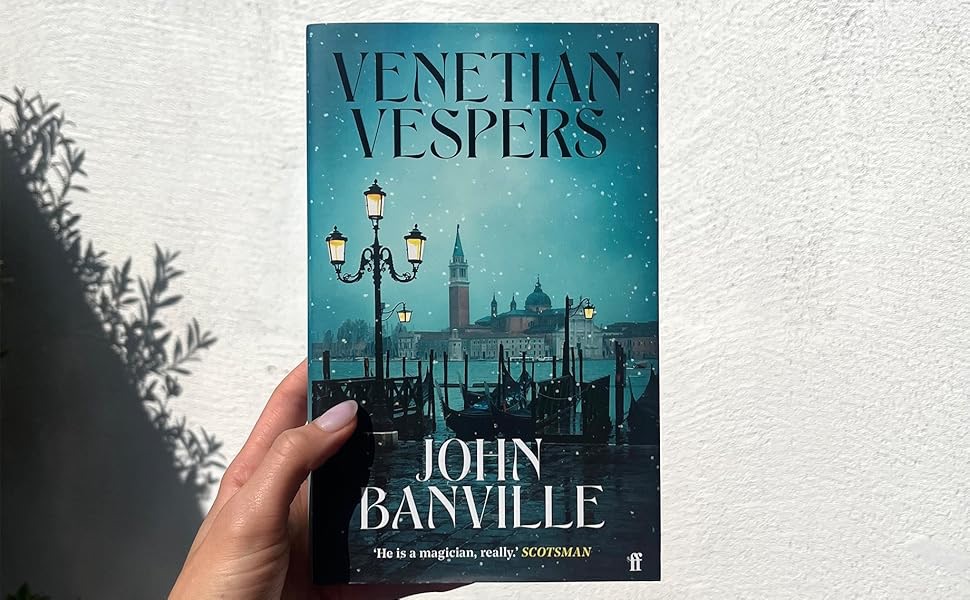
Venetian Vespers by John Banville

This felt like the perfect autumn read – a sinister mystery filled with atmosphere and a slowly building sense of menace. Evelyn Dolman embarks on his honeymoon with his new wife Laura and it proves to be anything but the honeymoon he expected. The couple are greeted by servants at their lodgings, but soon the landlord of Palazzo Dioscuri is there to introduce himself and tell tales of his grand and adventurous ancestors, many of whom Evelyn suspects as figments of the Count’s imagination. Simply a tale to entertain guests. Evelyn fought hard for Laura’s hand, knowing she was far above him in terms of class and finances as he is merely a struggling writer. He’s been looking forward to getting away and as they settle into their rooms he’s sure they’ll have a successful trip. Despite his awareness of the rot and instability underneath some of the grand palazzos they saw from the vaporetto Evelyn is still dazzled by the faded beauty, the light and the history of this group of islands that make up the city. So, with Laura settling in early for the night he decides to go for a walk and perhaps a drink somewhere close by and she suggests Florian, a cafe that first opened in 1720 and still serves Venetian visitors today. A chance meeting is followed by a night of drinking and one unforgivable act. So when he wakes in the morning, sluggish and nauseous and finds his wife isn’t next to him in bed, he imagines she has taken herself to another room. However, as the morning progresses it becomes clear that Laura has simply disappeared. 

I picked this book up on a solid recommendation from the bookshop owner, he said his wife was reading it and was torn between devouring it or savouring every chapter. After reading the first couple of chapters I knew exactly how she felt. I love the city of Venice and I love fiction that is set there, particularly stories that conjure up the feel of the city. I’ve been lucky enough to visit the city twice, both times for a full week of exploring. It was the perfect holiday for me – the gothic feel of the place, the incredible architecture, the artisans creating in their workshops and the history of the islands. This is a city with a potential story round every corner. John Banville has captured this perfectly and the strange atmosphere that goes with it. Venice likes to fool you. Not just at carnival time with its costumes and masks, although there is something thrilling and terrifying about that time, this is a sleight of hand that’s in the everyday: the theatre that is actually a supermarket, a nondescript red brick church adorned with clouds and painted cherubs above the altar, it’s turning off a bustling street full of tourists into an empty piazza, devoid of sound. I think every visitor has the experience of turning into a quiet corner and knowing it’s been like this for centuries and you could have stepped into a completely different time. This idea of the city as a trickster is used cleverly by the author to wrong foot both the reader and our narrator. 

Our first strange event happens in Florian, the gilded and opulent cafe recommended by his wife. As Evelyn begins to settle in with his coffee and brandy a man approaches his table with a shout of surprise. A red haired man introduces himself as Freddie Fitzherbert and can’t believe Evelyn doesn’t recognise him, since they went to the same school. Evelyn has the conviction that he’s never seen this man before, but he seems to know Evelyn and out of politeness he allows himself to be ushered to sit with Freddie and his sister Francesca Ransome, whose charms don’t go unnoticed: 

“This enchanting creature of the heart-shaped face, lustrous eyes and invitingly intimate smile […] how deeply, warmly hued her gleaming ringlets”. 

As Evelyn is coerced into joining them at a late drinking establishment he senses he may be making a terrible mistake.

We see everything through Evelyn’s eyes and he is bluntly honest about his feelings and behaviour. He desires Cesca and once felt a similar craving for his wife, but just like this city appearances can be deceptive. Their marriage looks like a love match, but could it be sitting on gradually rotting foundations. On the night he proposed, Laura accompanied him to his rooms and there “the deed of tender initiation was at last enacted” but far from being the unknowing virgin he expected, his fiance knew the deed and proved more experienced in it than him. She was also eager to participate: 

“To say it plainly her deft embraces and practised kisses were such as to leave me gasping less in ecstasy than astonishment, even dismay.” 

Despite his own initiations that were paid for in a certain type of establishment, he resents hers. Despite the passion, he doesn’t feel he fully possessed Laura. She felt absent to him but the night was never discussed or repeated. Even since the marriage Laura had shown no indication of being receptive to his advances and he is beginning to think that the carnal side of their relationship is over. As he returns to the palazzo, so drunk he is accompanied by Cesca, he is so full of alcohol and lust that he is on course to act in a way that is unforgivable. When he wakes, foggy and nauseous the next morning, it takes a few moments to remember the night before. Once reality hits he searches their rooms and the rest of the palazzo for his wife but he can find no trace of her. Did she leave? Has she gone to a hotel to cool off for a while? Or did more transpire last night than he remembers? 

Caffe Florian 2013

This is a mystery as labyrinthine as the city itself and despite having only one narrator we are left with so many questions. There’s a vagueness about every detail that could be an adherence to social etiquette but could also be deliberate. Evelyn seems easily pulled into harms way and claims to feel utterly detached from his wrongdoing. It’s as if he’s too weak to be autonomous or stick to his principles, or he could be trying to fool us. Despite claiming not to recognise Freddie he was easily swayed to go late night drinking with them and even secures them rooms at the Palazzo Dioscuri when their lodgings on Guidecca need to be vacated. He claims to be bewitched by his wife’s dark haired beauty but very quickly switches interest to Cesca. Could he really be this callous? It seems our narrator is not to be trusted and he’s not alone. Count Barbarigo drifts in and out at will, with long fantastical stories of his ancestors that must be false. Cesca is very enigmatic, seductive one moment and pulling back the next. Where is her husband? What does she expect from Evelyn? We get the feeling that everyone is behaving oddly as if there’s something else going on just out of Evelyn’s sight. As Freddie and Cesca join the palazzo the Count provides a lunch for his guests, a gathering Evelyn refers to as a Mad Hatter’s party and it’s an apt description of this strange assortment of strangers. He notices the servants are sitting with the guests. He gets the sense of watching a play unfold in front of him, with everyone playing their part but something feels ‘off’. To me it felt like the house of misrule where the usual social order is being turned on its head. Not to mention Laura is still nowhere to be found. 

Doubling is also a theme, with Laura seeming to be the quiet, ideal wife but she has this unexpected sexual past. Cesca is pointed out as Laura’s double by the count, with the only difference being her hair colour. Evelyn even wishes his wife was more like Cesca. She does admit to her dual nature and even likens it to the city. 

“You will get used to the pantomime that Venice makes of life.” 

The reference to pantomime again brought up that twelfth night sense of misrule, where women are principal boys and men are the pantomime dames. Cesca claims that the venality of Venice makes her feel like the essence of respectability. Evelyn flirts around this statement, wondering about her respectability elsewhere in the world also wishing to be a wilder version of himself. He bemoans his character, wishing that Cesca could see this other self that’s the perfect fit for Venice in all its elusiveness and deceit.

“Wherever I end up I will still be Evelyn Dolman, a northerner born and bred, utterly un- Venetian.” 

He wishes for the ability to be a wild rover like Freddie, tied down by no one and no principle or creed either. This part of him longs for Casanova levels of debauchery, but as leans his head against the damp wall of the palazzo he longs for his tidy house in Chiswick and the smell of furniture polish. Will this suburban, safe Evelyn win the day or will he allow his darker, shadow self to control his actions? 

There are clues to what is transpiring here but they are subtle. The writer has incredible sleight of hand and they seem inconsequential or at list explicable. Some completely passed me by. As I opened the book again for writing this review it made me think of The Sixth Sense and how no one saw the clues on their first watch of the film but when they watched for a second time they couldn’t believe they’d missed them. Each character is slippery and elusive with an unpredictable quality that felt dangerous. I lived this uncanny feeling the author created which grows organically from the city. This is a sparking jewel of a city that’s risen from the mud and brackish waters of the lagoon. Evelyn mentions the fin de siécle, that time of decadence towards the end of the 19th Century and that timing certainly informs some of the events in the book, particularly the fluid social order and sexual licentiousness. We’re told constantly that Venice is decaying and sinking. One day it may be completely under water, but the decay isn’t what you see when you first visit. Venice bewitches you with its golden domes, Morrison arches, coloured glass and the way sparkling light from the surface of the water bathes everything in a soft light. Then suddenly, only a street away you notice a tree growing out of someone’s house and at night most residences seem in darkness now that families can no longer live in the water logged lower floors. Banville captures this ‘double’ city utterly, describing the timeless romance of a gondolier serenading his passengers but also the jarring sound of the vaporetto. We see the sparkling water but also smell the mud as the passing boats churn it up. He links this duality with human nature, our surface selves and the real us, even the parts we avoid and keep locked away. Everything about this novel is a conjuring trick and I fell head over heels in love with it. 

Meet the Author

John Banville was born in Wexford, Ireland, in 1945. He is the author of thirteen previous novels including The Book of Evidence, which was shortlisted for the 1989 Booker Prize. He has received a literary award from the Lannan Foundation. He lives in Dublin.

Posted in Personal Purchase

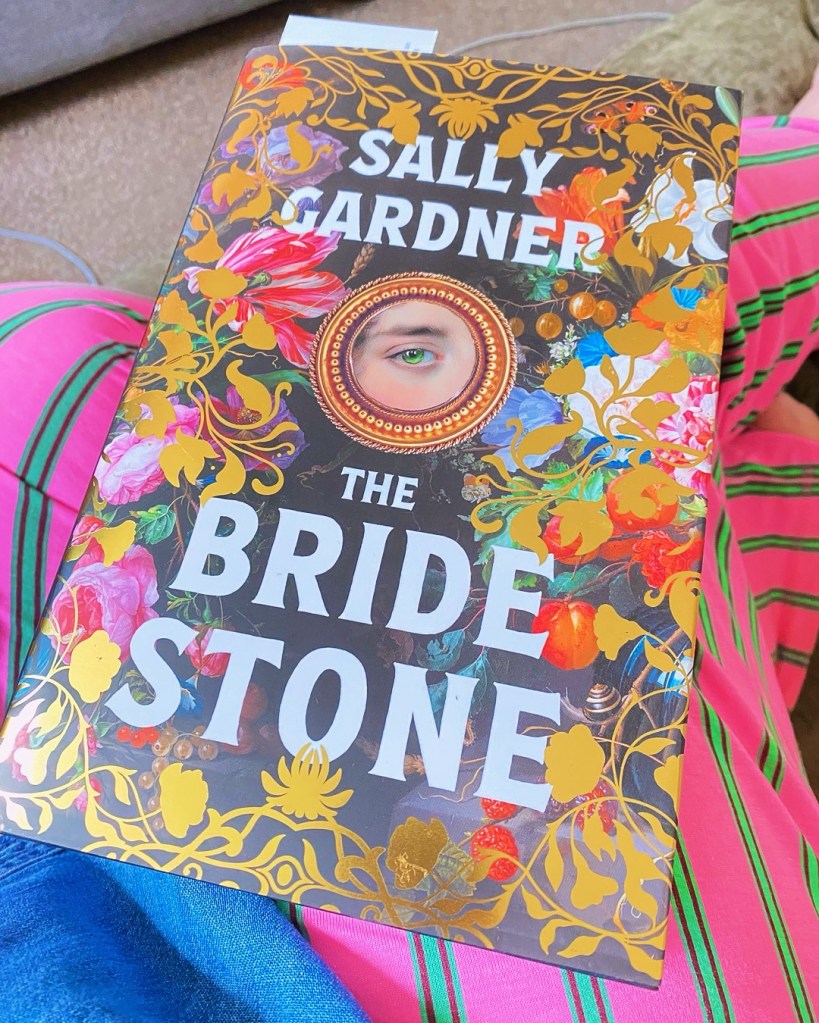
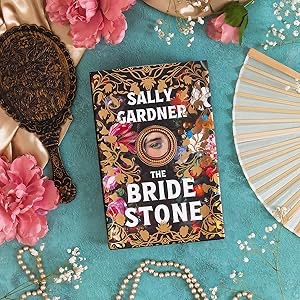
The Bride Stone by Sally Gardner 

According to our narrator, a ‘bride stone’ is a precious stone given to the groom’s family as a dowry. Sometimes though, a beautifully made fake stone was used, one they could only have valued when it was too late. It’s an apt title for a book where women are traded in many different ways and in the human sense the most unprepossessing stones may turn out to be priceless. It is set just after the French Revolution where Marie Antoinette, who would have had no choice in marrying Louis VII, was condemned to the guillotine as his Queen. Many aristocrats left France for British shores at this time and were often welcomed in high society. Edmée has somehow made her way to Britain, despite seemingly being an ordinary citizen and she is being offered at a ‘wife sale’, something I had no idea existed until I read Thomas Hardy’s Mayor of Casterbridge where Michael Trenchard sells both his wife and daughter as chattels he can no longer afford. When I first read it at 14, I felt how degrading it must be and was automatically revolted but now, I’m even more aware of the implications of being sold to the highest bidder. The thought of being owned by a man, a complete stranger, to be treated as he wishes is horrifying. Yet for Edmée this chapter surely can’t be worse than the last? For Duval Harlington it’s something he would never usually countenance, but his circumstances are uniquely desperate. Having been captured by the French while fighting and treating wounded soldiers, he is met by one of the family servants who bears bad news. Duval Harlington so now Lord Harlington because his father has recently died. Although he now has the title, his right to the ancestral home of Muchmore and his father’s wealth is rather more complex. Duval had a tough relationship with his father who didn’t see the point of him training as a doctor. Once he departed for France, Duval’s father installed a distant relative, Mr Carson and his wife, to manage the day to day running of the estate. So his will has an interesting stipulation, in order to claim his inheritance Duval must be married and now he has only two days to achieve this aim. Otherwise the estate becomes Mr Carson’s. When his servant points out the wife sale it seems like a means to an end. Duval notices a young woman being led around the room by a scarf round her neck. Her hair has been shorn away like a boy’s and she has a veil covering her face, but the buyers call out for it to be removed and he’s shocked to see that one side of her face is swollen and covered in bruises. Someone has recently beaten her very badly. On impulse he puts up his hand and bids for her, his intention being to marry her quickly and claim his inheritance. Then he could seek an annulment. However he does find Edmée fascinating and with Mr and Mrs Carson ready for a fight this marriage might not be as easy to shrug off as he thinks. 

This is a fascinating period of history and I didn’t know as much about it as I thought. I knew bits about Versailles, the French Revolution, Marie Antoinette and the guillotine but my understanding was very vague. I hadn’t realised how many aristocrats fled here to escape the Reign of Terror and their fate at the guillotine. Edmée is interesting because she is French but claims not to be an aristocrat, so how else did she end up here? Could she be a Jacobin or a spy? The fear that something similar to the overthrow of the ancién regime could spread here was a real one, because it would remove the power held by the Royal Family and other aristocrats, instead creating a republic where all people would share natural rights of liberty, property, security, and resistance to oppression. Yet a book is always the product of its time and I could definitely see parallels with today’s politics. A dinner guest, Sir Wilfred Fairley MP talks about the influx of French emigrés saying he was asked if he thought ‘we’d been too lenient with the number of emigrés we have allowed into the country and my answer is yes’. However, a Marquis replies very strongly that no one wants to be in that position: 

“To be forced to leave their lands, their houses, to start again in a country that doesn’t possess their humour or their language and is frightened of their religion […] to cross La Manche in a small unseaworthy boat to discover they have paid a fortune to be at the mercy of sailors threatening to throw them overboard if they do not pay double.” 

It felt like it could have been two people arguing on social media today. 

It’s evident Edmée has gone through a terrible ordeal at the hands of her previous husband, the Reverend Hughes. At first she must fear a similar fate from this stranger and Duval doesn’t help by abandoning her as soon as they reach Muchmore to go and sleep with a long term mistress. I was fascinated with Edmée because she’s such an unusual character and like me she keeps a journal and writes daily. The author lets us into that diary and we get to know how unsure she feels and that she has secrets. Duval’s aunt notices Edmée’s vulnerability and really takes a shine to her as they dine together and she takes her to buy gowns from the local dressmaker, a fellow French woman called Madame DuPont. Now that she’s Lady Harlington, she must look like a lady. It’s hard to know who she really is because she could just be fitting into each person’s expectations. Maybe this is something she’s used to doing in order to survive. When she falls ill and Duval returns to Muchmore, using his knowledge as a doctor to treat her, he shows great care and tenderness. As he waits for her to recover he reads her journal and learns so much about this woman he’s married to. With Duval she seems to blossom a little. Something unlocks in her and it’s like watching a mistreated animal learning to trust a human. Until now she’s been a blank space for others to write on, but it seems like Duval might be the person who brings out the real her. It is hard not to like this woman, who is described by her previous husband’s natural son as courageous: 

“There was hardly anything of her but she had a will of steel. I don’t say that lightly. Some soldiers profess bravery and talk about courage, but that’s a woman who says nothing and has survived a Revolution and a violent bastard of a husband […] she would be a hard candle to blow out.” 

This isn’t just a love story though, it’s a thriller. Just as Duval starts to settle in to being home, the unthinkable happens. The couple are talked into holding a ball to introduce the new Lady Harlington to society. Their guests come from the local area, but also from London and some are French emigrés. Mr and Mrs Carson are even invited and unbelievably accept. Edmée is a great success as the host in her new role as mistress of Muchmore, but the next morning she has vanished. Did she leave of her own accord – perhaps spooked by someone she saw the previous night. Or has something more sinister happened? It could be the work of someone closer to home – a disgruntled lover of Duval’s or someone determined that their marriage won’t succeed. I was drawn so deeply into the story of these unlikely partners. Duval and Edmée have both had difficult starts in life. The relationship between Duval and his father is typified by the ridiculous terms of his inheritance. The only thing he has to guide his search is her journal and the book that came with her, seemingly an ordinary history book but beautifully bound.

The theme of domestic violence and sexual assault is distressing and hard to read, but what shocked me most was other people’s ability to ignore what was happening even when they witnessed it with their own eyes. It brought home to me how dependent women were, in fact the only women in control of their own destiny are those who have a skill or their own business such as Madame DuPont the dressmaker or the brothel madam where Duval was a loyal customer in his youth. This is absolutely in line with social history of the 18th and 19th Century, but so much literature adapted for television focuses on the upper and middle classes where marriage is the only means of improving a woman’s status. I love when writers go back and write people back into a history they’ve been erased from due to race, disability or sexuality or when characters are more complicated figures in society. Duval isn’t your average privileged heir and Edmée would never normally be his wife. During dinner discussion on the revolution, Sir Wifred points out that its biggest folly was that all people should be equal, meaning men and women. Duval surprises him by stating that in his view “it was one of the most exciting things to have come out of the revolution.” I love that he is starting to see women as equals. Edmée is surviving the only way she knows how and by the skin of her teeth, so why would she choose to move on again? Duval has no choice but to retrace his steps, go back to where he bought his wife and find the clues. I was hoping for Edmée to have a happy ending, but it was clear this might not be the case making for a tense read in those final chapters. The book has a mix of hardship, adventure and mystery interlaced with the romantic possibility of an unlikely match being perfect. If only Duval can find her again. The author has created a fascinating mystery and an extraordinarily modern hero and heroine that I desperately wanted to find each other again.

Meet the Author

Sally Gardner gained a first class degree at a leading London art college and became a successful theatre costume designer before illustrating and writing books. Her debut novel, I, Coriander won the Nestle Gold Award and she is also a Costa and Carnegie prize-winner. Her books have been translated all over the world and have sold over two million copies. Find Sally online at sallygardner.co.uk, or on Twitter @TheSallyGardner.

Posted in Personal Purchase

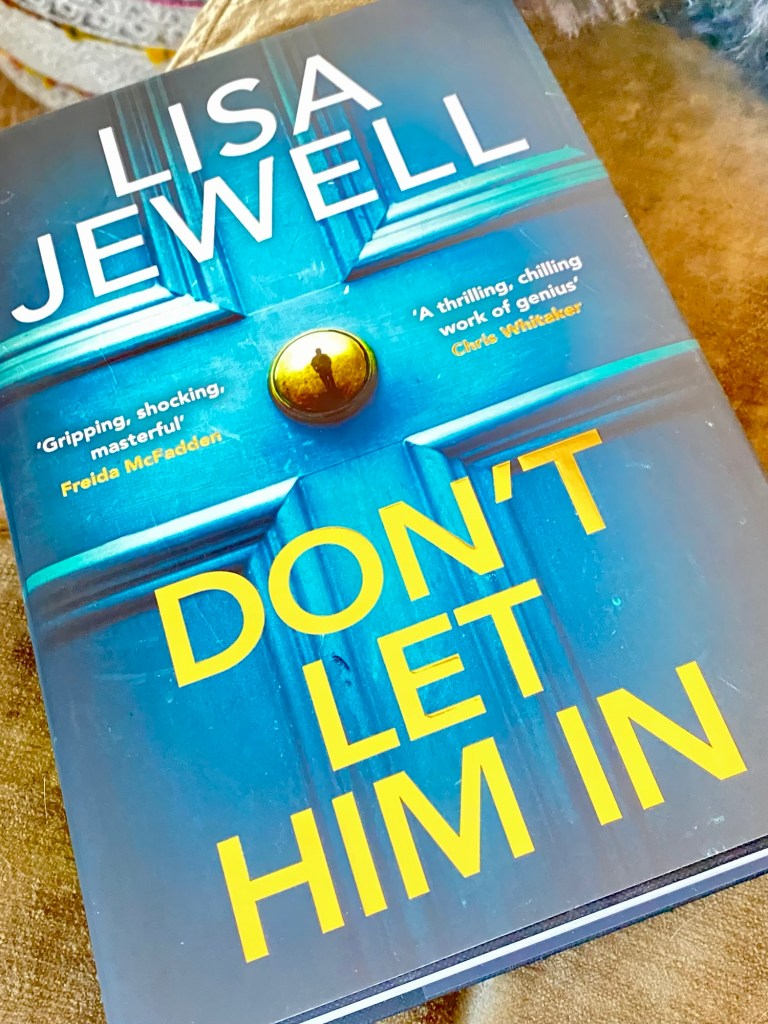
Don’t Let Him In by Lisa Jewell

There was a pivotal moment in this book that made me go cold. It sent me back twelve years when I was trying to understand how someone could treat others so badly, in what seemed like a deliberately cruel way. I remembered something my counsellor said at the time; I was spending all my time trying to work out someone’s motivation and what had happened in life to make them behave that way, instead of considering the impact on me and how unacceptable the behaviour was. Some people just don’t think like others. Nick is a tall silver fox with a lot of charm and a knack with the ladies. He seems to know exactly what will please someone. Exactly the right gift to soften someone. To get under their defences. It’s almost as if he has empathy,  but don’t be fooled. He’s just wearing a human suit. 

Nina and her daughter Ash live in the bougie seaside town of Whitstable in Kent. They are grieving for husband and father Paddy, who was killed when a man having a mental health crisis pushed him into an oncoming train. Ash has been living at home since her own mental health deteriorated. She was living in a house in London with two other girls but she developed a crush on her boss, that turned into an obsession. She claimed to have letters from him, but it turned out she’d written them herself and she was eventually diagnosed with borderline personality disorder. She’d just come home to recover when Paddy was killed. When her mum receives a parcel in the post Ash is intrigued. It’s beautifully wrapped, with a note inside from a man who has heard about Paddy’s death. He used to work with him in the 1990s when Paddy was just starting out. The gift wrapped box contains a Zippo lighter he borrowed but never returned. Since then Paddy has built a restaurant empire, with his flagship restaurant in Whitstable and two others down the coast. He benefitted greatly from the area’s development into the weekend getaway spot for Londoners. Nick’s note explains he is now a troubleshooter, brought into eateries and hotels to assess what’s not working and put it right. There is of course a number, should Nina wish to thank him for his thoughtfulness. Over the next few months Nick and Nina start to WhatsApp each other and then go out for a drink. Ash is glad to see her mum with a glow, but there’s something about Nick that’s just ‘off’. She can’t be sure and maybe she’s viewing this situation through her own grief or her personality disorder, but something isn’t right. She needs to find out more about him before he becomes a permanent fixture. 

It’s so hard to review Lisa’s books without letting things slip, but I’ll try my best. Most authors might have written a thriller based purely on the scenario above – is it the mentally ill daughter or the mum’s new boyfriend that’s the problem? Slowly drawing out the tension of whether she’s right or so unwell that she’s dreadfully mistaken. Lisa Jewell isn’t most authors so she takes that premise and builds an absolutely labyrinthine mystery that’s absolutely spellbinding. In multiple narratives and timelines we meet various women who are struggling in their relationships, all of which are linked by strange or abusive behaviour. There are different behaviours: gaslighting, manipulation, financial embezzlement and even disappearances. In some cases these women are married and have children, in others they’re older and widowed. There were so many conundrums, not least how these men are affording the lifestyle they’re living. Meanwhile, Ash has decided to take help from ‘Mad’ Jane Trevally, her dad’s old girlfriend from the 1990s. Surely if Nick was around for a while, Jane would remember him. Jane did have some obsessive qualities of her own back in the day, so maybe she’s not the best person for Ash to be hanging out with. She knows her mum would be furious. However, when they do meet, Jane tells Ash that Paddy categorically did not have a lighter. He was always taking the matches from the kitchen or cadging a light from other people, so much so that it was an ‘in’ joke with friends and customers. So whose lighter was in that parcel and why did he send it? 

I galloped through this book as we went backwards and forwards in time, every time learning a little more and inching towards the truth. I loved the fragile Ash who is at that stage of recovery where she doesn’t fully trust her own mind. Is she making too much of this? Is she just paranoid? Worst of all, if she finds something questionable, will her Mum even believe her? She’s so lonely at this point, she doesn’t have many friends to talk to and feels bad she’s had to bounce back home at her age. Her mum deserves to be happy and she might ruin it all. Just when you think you have all the answers, the author takes it to the next level! There were twists here that I wasn’t expecting and I felt very relieved that I got away from my own situation relatively easily, if not unscathed. This book is like a twisted knot in a necklace. It takes a long time to loosen it, but suddenly the whole thing unravels before your eyes. This is masterful thriller that absolutely begs to be devoured in a couple of sittings, from an author who gets better and better. 

Meet the Author

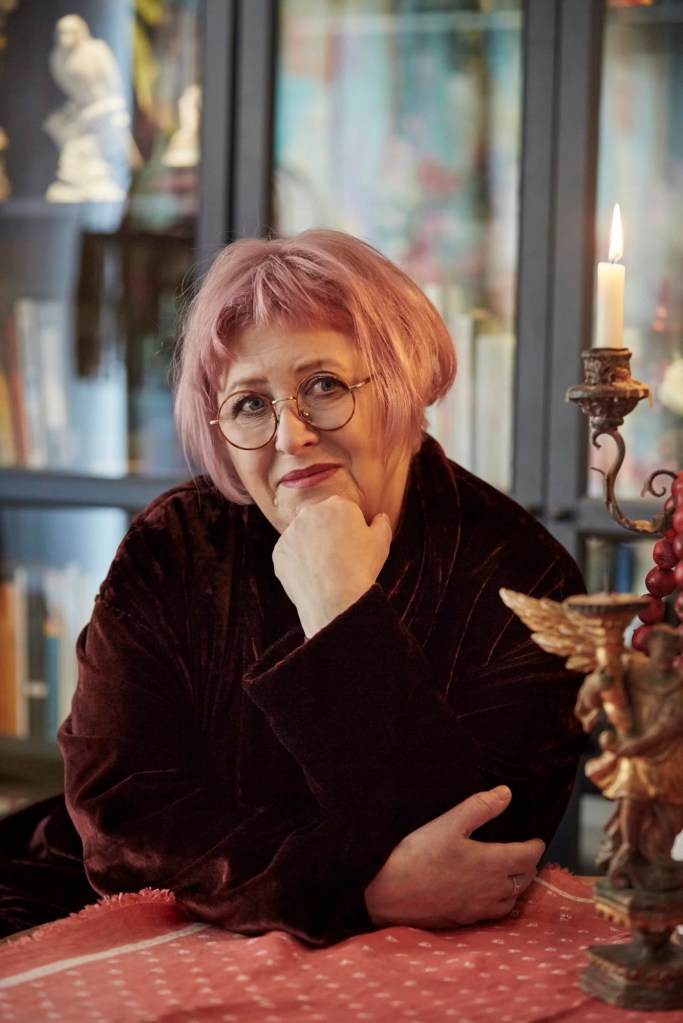
LISA JEWELL was born in London in 1968.

Her first novel, Ralph’s Party, was the best- selling debut novel of 1999. Since then she has written another twenty novels, most recently a number of dark psychological thrillers, including The Girls, Then She Was Gone, The Family Upstairs, The Family Remains and The Night She Disappeared, all of which were Richard & Judy Book Club picks.

Lisa is a New York Times and Sunday Times number one bestselling author who has been published worldwide in over thirty languages. She lives in north London with her husband and two daughters.

Posted in Personal Purchase

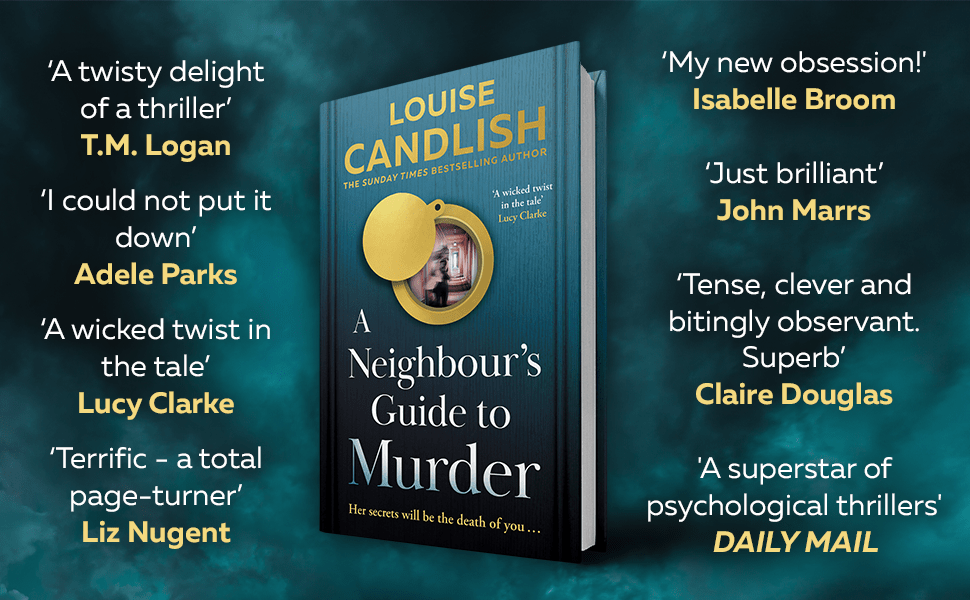
A Neighbour’s Guide to Murder by Louise Candlish 

Gwen loves her home, finally settling into her apartment after a very difficult divorce. She loves the community feel in the building and is often part of the organisation of events as she’s now on the building’s resident association with her friend Dee. Everything changes when she meets a young girl called Pixie who is hoping to rent a room in the flat opposite Gwen’s. Gwen’s neighbour Alex is a Britpop one hit wonder and Pixie seems like one of life’s waifs and strays. As she moves in next door Gwen decides she will keep an eye on her, recommending she get a job in the local coffee shop. Slowly they are becoming friends. However, Gwen isn’t sure that all is well across the landing. She’s heard a few arguments already and she would hate to think that Alex is bullying Pixie or taking advantage. Yet Gwen isn’t always up to speed with life in the 21st Century or the modern battle of the sexes. When she fears a crime is being committed she’s soon up to her neck in both Pixie and Alex’s private life and a ‘sex for rent’ scandal. Sex for rent is a morally dubious, but not illegal practice that she soon learns is rife in London and other big cities. With social media, investigative podcasts and shifting ideas around morality, this could become the next #MeToo movement with Pixie as its poster child, but what does this all mean for Gwen?

I love Louise Candlish’s domestic thrillers and this has all her usual trademarks; a narrator we’re unsure about, push button issues that are ripe for rage baiting and on the verge of becoming the next moral panic. Shes always got her finger on the pulse of modern life. She’s also brilliant at letting the tension rise and rise, oh so slowly, until someone eventually snaps. I must admit I did have some sympathy with Gwen, probably because I’m nearer her age than the younger characters in the novel. Although I use social media all the time, I don’t always understand how best to use it or know the personalities and slang that my step-daughters take for granted. They talk about YouTubers like my age group did tv personalities. They’re more likely to watch TikTok or YouTube than tv and then use us to answer questions about the background or history behind issues, especially since we’re actively Anti-Fascist at home. Having lived in the country my whole life and only being lucky enough to own my home when I became a widow, the struggle to find a roof over your head in the bigger cities came as a shock to me about ten years ago. A friend told me she’d been living with five other people in London, all of them in their thirties and working in well paid jobs. I’d been on my own or living with a partner since I was 23.

This novel seemed to confirm something I’ve been feeling since COVID, like society as a whole is slipping backwards on Maslow’s Hierarchy of Need and in our new found instability we’ve lost compassion for each other. Forty years ago we had Live Aid and the recent showing of the concert footage on BBC2 only added to my memories of the event. We were a country united in shock and a willingness to support. Now we want to shoot refugee boats in the channel. A combination of austerity, COVID, fear of terrorism after 9/11 and access to a social media that’s like the Wild West means we’re bombarded with so many terrible images and lied too so often we’ve become apathetic. This is the world this novel comes from: where people are struggling and making choices that seemed unthinkable, just to keep roof over their heads. Where people are finding new ways to make money. Where the lines of what’s legal, ethical or even true have become so blurred. Those who don’t keep up are simply left behind to flounder.

In this story, it was fascinating to see that young women seemed to be adapting quickly, taking advantage of new marketplaces and revenue streams. Gwen’s own daughter has gone from staunch feminist to a ‘trad wife’ and an Instagram sensation. She creates content daily for her audience of thousands by dressing in a modest but cutesy way, sharing mum hacks, videos of her beautiful home and ways to keep her man happy. All the while her followers are wishing to live like her, but even she doesn’t live like her. It’s a fiction, designed to illicit envy and send followers scurrying to her affiliate links. How much of her new life and views are real? Gwen isn’t sure that her daughter knows or recognises the difference between the image and reality. There’s manipulation of another sort too – the facade of being a decent middle class family, untouched by a scandal they are instrumental in creating. Gwen’s neighbour Dee is the unspoken Queen of the apartments and is always immaculately turned out. Her daughter Stella is an investigative journalist who would love to cover Pixie’s story. Gwen has Pixie living in her flat and relations with her neighbour have gone from frosty to downright hostile, pushed any further and things might explode. Stella manages to get television coverage, no doubt paid very well for her trouble, but is then unable to control the story leading social media content creators, pod casters and news outlets to their door, harassing residents as they come in and out. It isn’t long before they have Alex’s name and start exploiting the aging pop star angle.

I met someone like Pixie once and I learned the hard way that they are best avoided and ignored. They are usually life’s survivors, have learned how to get by in the world and will happily turn on those trying to help. I attended a meditation class and got on well with the teacher, so when she moved the class to her own home I didn’t hesitate. There was talk of working together and I wrote a course on authenticity that combined meditation with art and writing therapy. It started successfully, then one weekend she disappeared with the keys to the premises we were hiring and wouldn’t divulge where she was. We carried on, but she told everyone we had pushed her out and stolen her idea. I found out she’d run a class in another town that she claimed was taken away from her by an ex-partner so she was having to start again. She didn’t mention that she’d stolen his car while drunk and crashed it, losing her licence. She hadn’t mentioned being bi-polar either, something I’d have supported her with. The last I heard she was in a relationship with a man who was buying her a hotel that she could run as a recovery centre. I realised that this was a pattern of self-sabotage and lashing out. Pixie felt like a similar character, who landed herself in difficult situations then found people who would rescue her. I worried that Gwen was going to lose out in helping this young woman. That she might easily cause Gwen harm, if it meant she could move on to the next ‘mark’. 

I was absolutely gripped by this story and definitely recognised elements of it. I could see that some people would come out of this totally untouched while others could be left confused or even culpable. I don’t want to ruin the book by giving you any more details, but it is classic Candlish. Like her last novel that tackled the problem of second homes on the coast, she’s hit the zeitgeist with this one. We’ve all seen how social media has become lawless with so many different people, including authors, caught up in a public judge and jury situation. It’s hard to know how a targeted individual copes psychologically when they’re being exposed or made out to be something they’re not. How do they keep their self-image intact when the general public have a very different idea of who they are? Everyone in this story, apart from Gwen, has a very fluid set of morals. Even her own children. There’s a lot here that’s totally unfair and raises the blood pressure a little! It’s no wonder the atmosphere in the apartments becomes a pressure cooker. I devoured this in two sittings and I’m sure you will too. 

Meet the Author

Louise’s latest release, A NEIGHBOUR’S GUIDE TO MURDER, was published in July 2025 and her latest paperback is OUR HOLIDAY, a Sunday Times bestseller, WHSmith Richard & Judy Book Club pick and Theakston Old Peculier Crime Novel of the Year 2025 nominee. It features love-to-hate characters Perry and Charlotte, second home owners in the idyllic English beach resort of Pine Ridge. It’s now in development for the screen.

Last year Louise celebrated her 20th anniversary as an author with the news of two prestigious awards for her 90s-set thriller THE ONLY SUSPECT: the Capital Crime Fingerprint Award for Thriller of the Year and the Ned Kelly Award for Best International Crime Fiction. Stay tuned for TV news on that one too.

OUR HOUSE is now a major four-part ITV drama starring Martin Compston and Tuppence Middleton (watch the full series free on ITVX). This is the novel that turned her career around, winning the 2019 British Book Awards Book of the Year – Crime & Thriller and shortlisted for the Goldsboro Books Glass Bell Award, the Capital Crime Amazon Publishing Best Crime Novel of the Year Award, and the Audible Sounds of Crime Award. It was also longlisted for the Theakston Old Peculier Crime Novel of the Year Award and the Specsavers National Book Awards. A Waterstones Thriller of the Month, it recently received a Nielsen Bestseller Silver Award for 250,000 copies sold.

Louise lives in a South London neighbourhood with her husband, daughter and a fox-red Labrador called Bertie. Books, TV and long walks are her passions and she loves Tom Wolfe, Patricia Highsmith, Barbara Vine, Agatha Christie and Evelyn Waugh. Her favourite book is Madame Bovary.

Be the first to hear about new releases and price drops ⬇️

Website: http://www.louisecandlish dot com

X/Twitter: louise_candlish

Instagram: louisecandlish

FB: LouiseCandlishAuthor

Posted in Throwback Thursday

The Darkest Water by Mark Edwards

Calvin owns Therapy, the bakery of his dreams in an idyllic village in the Lake District, but business is a little quiet. He’s reluctant when wife Vicky suggests social media but it’s not long before assistant Tara has filmed and posted a reel of him making brownies. Suddenly he’s a local celebrity. It seems everyone wants a piece of Chef Calvin and creepy little DMs start to arrive, including some from a stranger claiming to be his biggest fan. At the same time a local recluse has been found dead on a nearby beach, buried up to the neck in sand and left for the tide to come in. Detective Imogen Edwards is under pressure to solve the case, but who would plan such a long, drawn out murder and did they stay to watch the man’s fate? Calvin’s admirer turns up at Therapy, just as Tara is injured and unable to work. Much to his wife Vicky’s horror, new girl Mel ends up standing in and Calvin offers her a job. At least until Tara returns. Then events seem to start spiralling out of control and Calvin doesn’t know who to trust or what to do. Perhaps these wheels were put in motion a long time before, putting those Calvin loves in terrible danger. 

This is such a page turning thriller that I swept through it in an afternoon and evening. Seemingly unrelated events start to make potentially intriguing patterns. Mark Edwards has a way of sending your mind down a dozen different paths before getting to the truth. He also has the skill of leaving horrifying images in your head. This time it was the sight of Leo James’s head sticking out of the sand as the tide went out. I have a fascination with Anthony Gormley’s Another Place also known as the Iron Men of Crosby Beach in Liverpool. There is something slightly macabre and even profound about watching the tide come in, slowly submerging some figures underwater completely. This was a terrible human version and I couldn’t help musing on how it must have felt to be left waiting for the tide and what sort of man could watch it unfold. I enjoyed the internet element of the story and how reluctant Calvin is to put himself and his bakery out there – something which makes more sense later in the novel. I could understand his reticence. While Book Twitter was once a benign space, there are now arguments and attempts to police what other people are reading. It seems it’s no longer acceptable to separate art and the artist and I definitely spend less time there. When Tara creates her video, the baker starts to gain customers very quickly and this is definitely welcome. However, it comes with a side order of relative fame and that means teenagers want to take a look as well as a certain amount of women. Mel is one of these and the timing of her arrival in the bakery seems very suspect. Both Tara and Vicky are suspicious and my radar for emotionally damaged women was definitely going off. She seems to establish herself as someone who needs to be rescued, something that is Calvin’s kryptonite. She drops hints about a group of teenagers making a nuisance of themselves on the beach near her cottage and trying to intimidate or frighten her. 

It soon becomes clear that Calvin is a rescuer. He has lived in the Lakes all his life and has an experience when he was a teenager that makes him susceptible to women needing him to be the hero. His teenage sister died in a car accident and in flashbacks we go back to that summer and the lead up to this awful event, it’s clear that Calvin carries a lot of guilt around her death but this is only half the story. Our other narrative is that of the murder and the police investigation. Imogen’s first port of call is the dead man’s home which isn’t easy to find, tucked away in the woods and completely off grid. Inside they find the most hideous paintings, possibly created by Leo himself. They show visions of torment and retribution in hell and seem to be inspired by Heironymus Bosch. The house is spartan and gloomy, suggesting that Leo leads a lonely and possibly depressed lifestyle. The paintings point towards his state of mind, but does he believe someone else should receive this punishments or himself? If himself, it seems like at least one other person agreed with him. When Imogen finds a young local girl called Billie lurking nearby she’s determined to find her link to this unusual man. In fact Imogen and Calvin’s wife Vicky seem the most level-headed of the characters. Imogen is a good police officer, methodical and not easily swayed by one thread of the investigation. She lets it reveal itself, but is still only minutes behind the culprit at times. Everything is linked and she just has to find that one person who holds the key. She does come under pressure from above but stays focused.

Vicky is perceptive and there were times I was mentally screaming at Calvin to listen to his wife. She senses someone has been in their house early on and is adamant she didn’t close their bedroom door and shut their cat Jarvis inside. She also wants rid of Mel, not specifically because she has feelings for Calvin, but because she simply doesn’t trust her. Where has she sprung from and why does she seem so keen to please? She thinks the story about teenagers is a deliberate ploy. The tension in each of the narratives is heightened and when Vicky disappears, Imogen has to work out whether this a choice to take time for herself after a row, or something more serious. Although when she speaks to Calvin and finds out that Vicky owns an animal rescue centre, it does seem unlikely for her to leave without warning leaving everything to her assistant Louise. As Imogen starts to join the dots I was praying she wouldn’t be too late for Vicky. How would Calvin cope if he lost Vicky after losing his sister, especially if Mel is involved? As Mel lures him into accompanying her home I was on tenterhooks over whether she would proposition him or whether something more disturbing was going on? The author takes us through some serious twists and turns, just when I thought my suspicions about a character were mistaken they were back on the hook again. I didn’t get to the truth before Imogen though and I managed to do that really annoying thing of rushing through to the end, then wishing I’d taken it slower. This is a first class thriller and has whetted my appetite beautifully for his latest book, The Wasp Trap. 

Meet the Author

I write books in which scary things happen to ordinary people, the best known of which are Follow You Home, The Magpies, and Here To Stay. My novels have sold over 5 million copies and topped the bestseller lists numerous times. I pride myself on writing fast-paced page-turners with lots of twists and turns, relatable characters and dark humour. My next novel is The Wasp Trap, which will be published in July in the UK/Australia and September in the US/Canada. 

I live in the West Midlands, England, with my wife, our three children, two cats and a golden retriever.

Posted in Throwback Thursday

Throwback Thursday: I Wanted You to Know by Laura Pearson.

Dear Edie, I wanted you to know so many things. I wanted to tell you them in person, as you grew. But it wasn’t to be.


This wonderful book left me uplifted and sad all at the same time. This is the bittersweet story of Jessica, a young single mum who finds out she has cancer. As the novel opens, Jess and her baby daughter Edie, have recently moved back home with her Mum. Jess had left home for university, but circumstances have forced her back to her home town. This main narrative, set in Jess’s present, is interspersed with letters written by Jess to her baby. Each letter starts with ‘ I wanted you to know’ and through them we learn about the life she had at university, her relationship with Jake and the unexpected pregnancy that changes everything. The timing of this baby is all wrong, falling just as Jess’s boyfriend Jake is offered a tour with his band. Determined that Jake should follow his dream, the couple had decided to separate, but Jess’s own father left when she was young and she doesn’t want the same for her daughter. So she continues to keep him up to date with baby news until Jake’s contact with slowly fizzles out and Jess comes to the conclusion he is not interested in the pregnancy or having a relationship with daughter Edie. By the time Edie is born, the couple are no longer in regular contact and Jess has to face up to the fact she will be a single mother. Jess approaches her post-natal check up feeling daunted and then receives the news that changes everything. Jess has breast cancer. Now, a new beginning that’s daunting but joyous and filled with hope for the future, is overshadowed by weighty decisions, difficult conversations and the horrible fear that she may have to leave Edie facing life without her.


The narrative gave me a very real sense that the time Jess has left is ebbing away like the sands of an hourglass. As treatment options fail, Jess has so much left undone. Jess’s devastation that she won’t be able to be go through all the milestones that mothers and daughter enjoy together is palpable. So in order to be sure she’s there for these moments Jess begins the letters that will let her daughter know where she comes from and how much her mum loved her. This is even more vital when we realise that Jess’s past relationship with her own mum is far from perfect. However, despite some rough patches, her mum is stepping up and we never doubt that she loves her daughter and wants to help. Even if she does make some terrible mistakes in the way she handles things and on one occasion does one of the worst things you can do to someone with a terminal or life-limiting illness; she takes Jess’s power away. I was genuinely worried whether Jess would be strong enough to take it back.


The way Jess copes with Jake made me long for her to find her voice, even if just for her baby’s sake. She is so worried about ruining Jake’s tour that she doesn’t keep him informed. His contact with her simply dries up and although she is hurt and shouldering her fears about becoming a mum by herself, she doesn’t contact him. Then as the shock of the cancer diagnosis hits she is even more paralysed. If she does let him know, and he cuts his dream short, will he always resent her and his daughter. She doesn’t even know how he feels any more, but knows she wouldn’t want him to return to her because of the cancer. Realistically though, she needs to let him meet his daughter. They have to forge a relationship, especially if she does not respond to treatment.
The most compelling relationship for me was the friendship between Jess and Gemma. This novel is a love letter to female friendship and I liked that this relationship felt the most ‘fleshed out’ in the whole story. Right from the start Gemma is backing Jess up while juggling a job and babysitting Edie when she’s not working. Where the other relationships throw up complications, Gemma seems to know what Jess needs before anyone else. She counteracts Jess’s mum’s tendency to judge and make decisions that don’t include her. Instead she is quietly there all the time, and has an ability to sink into the background when Jess needs time alone or with Edie. Most importantly she encourages Jess but doesn’t take her choices away. She makes it clear that Jess needs to speak to Jake, but stays out of their relationship. When Jess’s mum oversteps the mark, Gemma gives her friend encouragement to speak and permission to be angry. Their relationship shows that our friends are often more supportive than family. It teaches us that our female friendships are often the long term relationships in our lives and that the best friends sustain each other, even in the most difficult situations.


I like that the last words In the book are Jess’s own in the form of her final letter to her daughter. I did have a lump in my throat reading some parts of this and at different points I thought how authentic the voice was, especially in Jess’s letters because they are unfiltered. Often, when reading or watching fictional accounts of illness I become frustrated by inaccuracies or events that are totally impossible. This comes from the life experiences I bring when reading a book. When reading this I felt it was well researched or that someone had used their own experiences to tell Jess’s story. I wasn’t surprised to read that Laura Pearson had a similar diagnosis of breast cancer because her experience shone through. The bewilderment and fear of those closest to Jess felt true to my experience; I lost my husband to the complications of multiple sclerosis when he was only 42 and I was 35. I remember two strong and very contrary feelings. On one hand I was constantly busy and overwhelmed with the paraphernalia of caring for someone who’s dying. I was panicked that time was slipping away from us and I resented it being spent dealing with feeding tubes, chest physiotherapy and the constant fear of infection. While other days felt like a nightmare, living a parallel life where the same routine was replayed over and over while everyone else was getting on with the real business of life. We became a small, committed unit with only one focus and as I read the novel I could see Jess’s loved ones doing the same. They drop out of normal everyday life to focus on their loved one and as I was reading I was aware of the devastation they would feel if they lost Jess anyway. When the person you love becomes terminally ill, and you become their carer, the sense of loss after their death seems compounded by suddenly having no purpose. I went from caring for my husband 70+ hours a week to waking up with nothing to do all day. It complicates the grief. The loss becomes multiple; the person you love, your role as spouse, your job and purpose, structure and status are all gone. The final chapters of Laura’s novel brought this back to me.


I was also heavily invested in Jess’s emotions, she becomes a young, single Mum knowing this new life may be cut brutally short. Jess barely has time to enjoy Edie, before she has to worry about leaving her. She has come to terms with her choice to postpone university and encourage Jake to follow his dream because she assumes, like we all do, that she has all the time in the world. She might not have time to pick up these parts of her life and she may not have time to settle into being a Mum. Questions constantly flash through her mind. If Jake returns, does he love her or is he only there because she’s so ill? How will he cope becoming a single Dad and who might he form relationships with in the future? Most heartbreaking of all; what if Edie doesn’t remember her? This is what prompts her to start writing. She wants to write down everything she thought or felt about her new baby and also pass on those bits of motherly wisdom that would be otherwise lost. Even if Edie does lose her Mum, she will have a constant sense of her through those letters and the pieces of advice she gives. Most importantly, she will know that at this crucial moment of her Mum’s life, she was so glad of her decision to have Edie and that Edie’s loss is uppermost in her mind.

The author delivers weighty subject matter with a real lightness of touch. At times I was reading with a lump in my throat, but I always looked forward to picking up Jess’s story and spending time in her world. The reader always brings something to the book and in this case, my reading experience was more poignant because of my own loss and possibly because of the limitations due to my own long term health problems. I think the author has been so clever to write about a life-changing experience, but never let it become too heavy to read. Despite the heartbreak, there are moments of every day humour and I felt genuinely uplifted by the depiction of female friendship. In difficult times I have found that even whether I’ve had a committed partner or not, it is my female friends who are always constant and hold me up when I can’t do it for myself. Jess and Gemma embody this and I found myself hoping that the author had a Gemma during her own illness. Mostly, I am very grateful that Laura Pearson had the bravery to write about something so close to her own experience, and to write about it with humour, honesty and raw emotion.

Meet the Author

Thanks so much for taking a look at my books. I write what some people call emotional women’s fiction and others call book club fiction. It doesn’t really matter what it’s called – I mostly write about women living ordinary lives and the extraordinary things that sometimes happen to them. I set my novels in places I’ve lived – London, Leicestershire, Cheshire, Southampton – and I people them (mostly) with the kind of women I’d like to meet. 

Some themes I find myself returning to again and again are sibling relationships, enduring friendships, women supporting women, and the tiny decisions that can alter the course of a life. I hope you find something here you’d like to read. 

When I’m not writing or reading, I’m usually hanging out on Twitter (@laurapauthor), so I might see you there, too. 

With love, 

Laura

Taken from Laura’s Amazon author page,

Posted in Personal Purchase

The Names by Florence Knapp

This is one of those books that’s been on the periphery of my wishlist for ages, but I’ve never had time to pick it up. I always set aside a bit of money for visiting a book shop when we go on holiday so when we visited the Lake District this was the first book I saw when I walked into a bookshop in Pooley Bridge. Afterwards, as I looked through the purchases in the pub I read the first few lines, then read the whole chapter and I told my other half it was something special. In 1987 Cora is going to register the birth of her baby boy. His name has been settled on for some time. Cora’s husband has chosen his own name for his son, Gordon. But it wouldn’t be Cora’s choice. Cora’s choice would be something that doesn’t tie him so obviously to his father. She thinks Julian would suit him. Little sister Maia looks in the pram at her brother and decides he looks like a he should be called Bear. All of these options swirl around in Cora’s head. In this moment, Cora has the power to make a choice and it’s done. It can’t be changed. What would happen if she went with Julian or even Bear? In the short term Gordon would be furious. How bad would it be this time? Long term, would it change her baby’s character or path in life? That’s exactly what Florence Knapp does. The book splits into three narratives and we discover what happens to this whole family, depending on Cora’s baby boy’s name. 

We then move on seven years and meet Bear, a name that proves to be a catalyst for change. Or we meet Cora’s choice, Julian – the choice she hoped would break him free from domineering generations of Gordons. Although, what if he is called Gordon? Brought up by a cruel father to continue in the same mould perhaps? Or he might just break free from the shackles of his name. Each life is sparked by this one decision and it isn’t just Cora’s son’s story. This is the life of the whole family with all its ups and downs. It’s about how trauma shapes lives and whether love brings healing and hope to every version of who we are. Even her minor characters absolutely shine. Grandmother Silbhe and her friend Cian are so wonderful, modelling healthy male/female relationships for Julian and Maia. Cian is also Julian’s mentor at work, bringing out a creative side that needs nurturing. Julian needs to work with his hands and meeting fellow creatives helps him find his tribe. Lily is lovely character and we get to know her most during bear’s narrative. I loved how she has to find a balance between giving Bear the freedom he needs without breaking her own boundaries in the relationship. It’s an utterly compelling debut and zooms straight into the list of best books I’ve read so far this year. The author brings incredible psychological insight to a story about how our names shape our identity, our relationships and our life choices. Something we didn’t even choose. Can it influence us to a huge extent, or do we become the same person no matter what the choice? 

One of our family narratives is that mum wanted to call me Little Green after the Joni Mitchell song. Mum is definitely a hippy and Dad is definitely not. My whole life I’ve said ‘thank goodness for Dad’, as I ended up with Hayley Marsha Ann which felt unusual enough. However, when I read the lyrics of the Joni Mitchell song, it was just so beautiful. Written for a child she had when she was very young. She felt she was too young to be a mum and gave her up for adoption. The song is so full of the hopes a mother would have for their daughter: 

“Just a little Green

Like thе color when the spring is born

There’ll be crocuses to bring to school tomorrow

Just a little Green

Like the nights when the Northern lights perform

There’ll be icicles and birthday clothes

And sometimes there’ll be sorrow.”

The book made me wonder whether I’d be a different person now had I been Little Green. Would I have been more confident? Perhaps I’d have been more comfortable in my creativity. Might I have written my book by now? How could I have failed with a name imbued with such hope? I liked that the author included the meaning of all the character’s names at the back of the book. It’s fascinating to look at them after reading knowing they were so carefully chosen. 

Each of three arcs has its share of joy and heartache as Cora’s children cope with the aftermath of that day in 1987. For Gordon the legacy of his father is perhaps the most damaging as Cora feared. Growing up in his father’s presence means he could pass on the misogyny passed down through all the Gordons in his ancestry. It damages his relationship with his mother as he can be used as a tool for his father to oppress Cora further or to spy on her behaviour. It will also affect his own relationships with women, both his sister and potential partners – his teenage crush on Lily becomes something that’s very hard to read, but it’s right to include it. The author depicts inter-generational trauma and how it can damage the next generation in different ways. Abusers can’t always break patterns and sometimes I was compelled to read on in sheer hope. 

Each narrative has its moments of emotion where you have to look up from the book and breathe for a moment. Just to take it in. However, one narrative broke me. I was reading quietly in the same room as my husband and I actually responded out loud. He had to give me a cuddle because I did have tears coming and I’m astonished by the writer’s ability to absorb to that degree. To make words into a flesh and blood person I can shed tears over and another who has the potential to become a monster. Gordon Sr really is terrifying in his reach and I felt Cora’s constant fear and the way she made herself small, not taking up space or making him notice her. The author doesn’t forget Maia either and the effect this monster has had on her life, emphasised in a single moment of panic and horror. Yet would she have become a doctor without witnessing his competence as a doctor or his patient’s respect for his skills. Throughout her love for her brother shines through. This is an absolutely incredible debut with a brilliant grasp of domestic abuse and how it affects every member of a family, their friends and even neighbours. She depicts how the children and grandchildren in this chain have to consciously break the chain. As a daughter and a wife of two men who’ve survived violence in the home I know the struggle to change things and I felt the truth of Knapp’s depiction. It’s easily one of my best reads so far his year (what a year we’re having) and I have no doubt it will still be up there in December. 

Meet the Author

You can find out more about my writing, or what I’ve been reading lately, on the other pages. But for now, a few things about me.

I live just outside London with my husband, our dog, and sometimes one (or two) of our now-adult children. Some of my favourite things are: words, photo booths, old tiles, rain, long phone calls, clothing with pockets, book covers, dimples (I don’t have any of my own, but I covet the cheeks of those who do), houses lit up at night, the word eiderdown, notebooks, kaleidoscopes, homemade soup, Italy, taking photos, book chat, hummus, barre, house plants, a thick duvet with wool blankets piled on top, hand-stitching, making lists.

I’m less keen on condiment bottles, driving on motorways, and socks where the heel slips down.