Posted in Personal Purchase

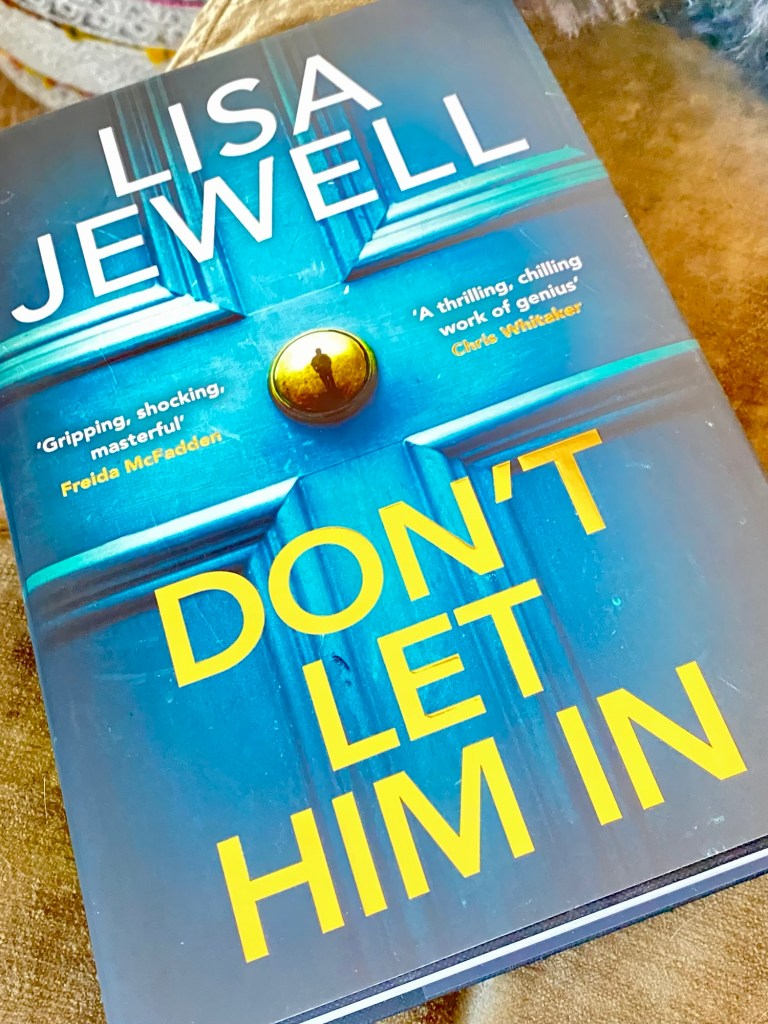
Don’t Let Him In by Lisa Jewell

There was a pivotal moment in this book that made me go cold. It sent me back twelve years when I was trying to understand how someone could treat others so badly, in what seemed like a deliberately cruel way. I remembered something my counsellor said at the time; I was spending all my time trying to work out someone’s motivation and what had happened in life to make them behave that way, instead of considering the impact on me and how unacceptable the behaviour was. Some people just don’t think like others. Nick is a tall silver fox with a lot of charm and a knack with the ladies. He seems to know exactly what will please someone. Exactly the right gift to soften someone. To get under their defences. It’s almost as if he has empathy,  but don’t be fooled. He’s just wearing a human suit. 

Nina and her daughter Ash live in the bougie seaside town of Whitstable in Kent. They are grieving for husband and father Paddy, who was killed when a man having a mental health crisis pushed him into an oncoming train. Ash has been living at home since her own mental health deteriorated. She was living in a house in London with two other girls but she developed a crush on her boss, that turned into an obsession. She claimed to have letters from him, but it turned out she’d written them herself and she was eventually diagnosed with borderline personality disorder. She’d just come home to recover when Paddy was killed. When her mum receives a parcel in the post Ash is intrigued. It’s beautifully wrapped, with a note inside from a man who has heard about Paddy’s death. He used to work with him in the 1990s when Paddy was just starting out. The gift wrapped box contains a Zippo lighter he borrowed but never returned. Since then Paddy has built a restaurant empire, with his flagship restaurant in Whitstable and two others down the coast. He benefitted greatly from the area’s development into the weekend getaway spot for Londoners. Nick’s note explains he is now a troubleshooter, brought into eateries and hotels to assess what’s not working and put it right. There is of course a number, should Nina wish to thank him for his thoughtfulness. Over the next few months Nick and Nina start to WhatsApp each other and then go out for a drink. Ash is glad to see her mum with a glow, but there’s something about Nick that’s just ‘off’. She can’t be sure and maybe she’s viewing this situation through her own grief or her personality disorder, but something isn’t right. She needs to find out more about him before he becomes a permanent fixture. 

It’s so hard to review Lisa’s books without letting things slip, but I’ll try my best. Most authors might have written a thriller based purely on the scenario above – is it the mentally ill daughter or the mum’s new boyfriend that’s the problem? Slowly drawing out the tension of whether she’s right or so unwell that she’s dreadfully mistaken. Lisa Jewell isn’t most authors so she takes that premise and builds an absolutely labyrinthine mystery that’s absolutely spellbinding. In multiple narratives and timelines we meet various women who are struggling in their relationships, all of which are linked by strange or abusive behaviour. There are different behaviours: gaslighting, manipulation, financial embezzlement and even disappearances. In some cases these women are married and have children, in others they’re older and widowed. There were so many conundrums, not least how these men are affording the lifestyle they’re living. Meanwhile, Ash has decided to take help from ‘Mad’ Jane Trevally, her dad’s old girlfriend from the 1990s. Surely if Nick was around for a while, Jane would remember him. Jane did have some obsessive qualities of her own back in the day, so maybe she’s not the best person for Ash to be hanging out with. She knows her mum would be furious. However, when they do meet, Jane tells Ash that Paddy categorically did not have a lighter. He was always taking the matches from the kitchen or cadging a light from other people, so much so that it was an ‘in’ joke with friends and customers. So whose lighter was in that parcel and why did he send it? 

I galloped through this book as we went backwards and forwards in time, every time learning a little more and inching towards the truth. I loved the fragile Ash who is at that stage of recovery where she doesn’t fully trust her own mind. Is she making too much of this? Is she just paranoid? Worst of all, if she finds something questionable, will her Mum even believe her? She’s so lonely at this point, she doesn’t have many friends to talk to and feels bad she’s had to bounce back home at her age. Her mum deserves to be happy and she might ruin it all. Just when you think you have all the answers, the author takes it to the next level! There were twists here that I wasn’t expecting and I felt very relieved that I got away from my own situation relatively easily, if not unscathed. This book is like a twisted knot in a necklace. It takes a long time to loosen it, but suddenly the whole thing unravels before your eyes. This is masterful thriller that absolutely begs to be devoured in a couple of sittings, from an author who gets better and better. 

Meet the Author

LISA JEWELL was born in London in 1968.

Her first novel, Ralph’s Party, was the best- selling debut novel of 1999. Since then she has written another twenty novels, most recently a number of dark psychological thrillers, including The Girls, Then She Was Gone, The Family Upstairs, The Family Remains and The Night She Disappeared, all of which were Richard & Judy Book Club picks.

Lisa is a New York Times and Sunday Times number one bestselling author who has been published worldwide in over thirty languages. She lives in north London with her husband and two daughters.

Posted in Personal Purchase

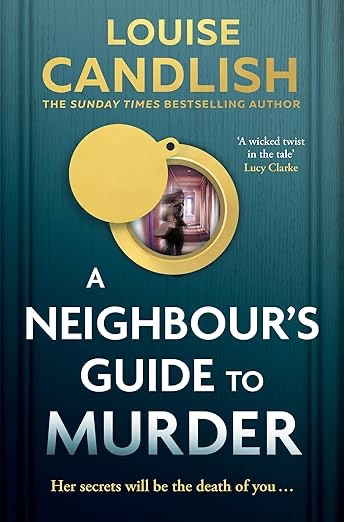
A Neighbour’s Guide to Murder by Louise Candlish 

Gwen loves her home, finally settling into her apartment after a very difficult divorce. She loves the community feel in the building and is often part of the organisation of events as she’s now on the building’s resident association with her friend Dee. Everything changes when she meets a young girl called Pixie who is hoping to rent a room in the flat opposite Gwen’s. Gwen’s neighbour Alex is a Britpop one hit wonder and Pixie seems like one of life’s waifs and strays. As she moves in next door Gwen decides she will keep an eye on her, recommending she get a job in the local coffee shop. Slowly they are becoming friends. However, Gwen isn’t sure that all is well across the landing. She’s heard a few arguments already and she would hate to think that Alex is bullying Pixie or taking advantage. Yet Gwen isn’t always up to speed with life in the 21st Century or the modern battle of the sexes. When she fears a crime is being committed she’s soon up to her neck in both Pixie and Alex’s private life and a ‘sex for rent’ scandal. Sex for rent is a morally dubious, but not illegal practice that she soon learns is rife in London and other big cities. With social media, investigative podcasts and shifting ideas around morality, this could become the next #MeToo movement with Pixie as its poster child, but what does this all mean for Gwen?

I love Louise Candlish’s domestic thrillers and this has all her usual trademarks; a narrator we’re unsure about, push button issues that are ripe for rage baiting and on the verge of becoming the next moral panic. Shes always got her finger on the pulse of modern life. She’s also brilliant at letting the tension rise and rise, oh so slowly, until someone eventually snaps. I must admit I did have some sympathy with Gwen, probably because I’m nearer her age than the younger characters in the novel. Although I use social media all the time, I don’t always understand how best to use it or know the personalities and slang that my step-daughters take for granted. They talk about YouTubers like my age group did tv personalities. They’re more likely to watch TikTok or YouTube than tv and then use us to answer questions about the background or history behind issues, especially since we’re actively Anti-Fascist at home. Having lived in the country my whole life and only being lucky enough to own my home when I became a widow, the struggle to find a roof over your head in the bigger cities came as a shock to me about ten years ago. A friend told me she’d been living with five other people in London, all of them in their thirties and working in well paid jobs. I’d been on my own or living with a partner since I was 23.

This novel seemed to confirm something I’ve been feeling since COVID, like society as a whole is slipping backwards on Maslow’s Hierarchy of Need and in our new found instability we’ve lost compassion for each other. Forty years ago we had Live Aid and the recent showing of the concert footage on BBC2 only added to my memories of the event. We were a country united in shock and a willingness to support. Now we want to shoot refugee boats in the channel. A combination of austerity, COVID, fear of terrorism after 9/11 and access to a social media that’s like the Wild West means we’re bombarded with so many terrible images and lied too so often we’ve become apathetic. This is the world this novel comes from: where people are struggling and making choices that seemed unthinkable, just to keep roof over their heads. Where people are finding new ways to make money. Where the lines of what’s legal, ethical or even true have become so blurred. Those who don’t keep up are simply left behind to flounder.

In this story, it was fascinating to see that young women seemed to be adapting quickly, taking advantage of new marketplaces and revenue streams. Gwen’s own daughter has gone from staunch feminist to a ‘trad wife’ and an Instagram sensation. She creates content daily for her audience of thousands by dressing in a modest but cutesy way, sharing mum hacks, videos of her beautiful home and ways to keep her man happy. All the while her followers are wishing to live like her, but even she doesn’t live like her. It’s a fiction, designed to illicit envy and send followers scurrying to her affiliate links. How much of her new life and views are real? Gwen isn’t sure that her daughter knows or recognises the difference between the image and reality. There’s manipulation of another sort too – the facade of being a decent middle class family, untouched by a scandal they are instrumental in creating. Gwen’s neighbour Dee is the unspoken Queen of the apartments and is always immaculately turned out. Her daughter Stella is an investigative journalist who would love to cover Pixie’s story. Gwen has Pixie living in her flat and relations with her neighbour have gone from frosty to downright hostile, pushed any further and things might explode. Stella manages to get television coverage, no doubt paid very well for her trouble, but is then unable to control the story leading social media content creators, pod casters and news outlets to their door, harassing residents as they come in and out. It isn’t long before they have Alex’s name and start exploiting the aging pop star angle.

I met someone like Pixie once and I learned the hard way that they are best avoided and ignored. They are usually life’s survivors, have learned how to get by in the world and will happily turn on those trying to help. I attended a meditation class and got on well with the teacher, so when she moved the class to her own home I didn’t hesitate. There was talk of working together and I wrote a course on authenticity that combined meditation with art and writing therapy. It started successfully, then one weekend she disappeared with the keys to the premises we were hiring and wouldn’t divulge where she was. We carried on, but she told everyone we had pushed her out and stolen her idea. I found out she’d run a class in another town that she claimed was taken away from her by an ex-partner so she was having to start again. She didn’t mention that she’d stolen his car while drunk and crashed it, losing her licence. She hadn’t mentioned being bi-polar either, something I’d have supported her with. The last I heard she was in a relationship with a man who was buying her a hotel that she could run as a recovery centre. I realised that this was a pattern of self-sabotage and lashing out. Pixie felt like a similar character, who landed herself in difficult situations then found people who would rescue her. I worried that Gwen was going to lose out in helping this young woman. That she might easily cause Gwen harm, if it meant she could move on to the next ‘mark’. 

I was absolutely gripped by this story and definitely recognised elements of it. I could see that some people would come out of this totally untouched while others could be left confused or even culpable. I don’t want to ruin the book by giving you any more details, but it is classic Candlish. Like her last novel that tackled the problem of second homes on the coast, she’s hit the zeitgeist with this one. We’ve all seen how social media has become lawless with so many different people, including authors, caught up in a public judge and jury situation. It’s hard to know how a targeted individual copes psychologically when they’re being exposed or made out to be something they’re not. How do they keep their self-image intact when the general public have a very different idea of who they are? Everyone in this story, apart from Gwen, has a very fluid set of morals. Even her own children. There’s a lot here that’s totally unfair and raises the blood pressure a little! It’s no wonder the atmosphere in the apartments becomes a pressure cooker. I devoured this in two sittings and I’m sure you will too. 

Meet the Author

Louise’s latest release, A NEIGHBOUR’S GUIDE TO MURDER, was published in July 2025 and her latest paperback is OUR HOLIDAY, a Sunday Times bestseller, WHSmith Richard & Judy Book Club pick and Theakston Old Peculier Crime Novel of the Year 2025 nominee. It features love-to-hate characters Perry and Charlotte, second home owners in the idyllic English beach resort of Pine Ridge. It’s now in development for the screen.

Last year Louise celebrated her 20th anniversary as an author with the news of two prestigious awards for her 90s-set thriller THE ONLY SUSPECT: the Capital Crime Fingerprint Award for Thriller of the Year and the Ned Kelly Award for Best International Crime Fiction. Stay tuned for TV news on that one too.

OUR HOUSE is now a major four-part ITV drama starring Martin Compston and Tuppence Middleton (watch the full series free on ITVX). This is the novel that turned her career around, winning the 2019 British Book Awards Book of the Year – Crime & Thriller and shortlisted for the Goldsboro Books Glass Bell Award, the Capital Crime Amazon Publishing Best Crime Novel of the Year Award, and the Audible Sounds of Crime Award. It was also longlisted for the Theakston Old Peculier Crime Novel of the Year Award and the Specsavers National Book Awards. A Waterstones Thriller of the Month, it recently received a Nielsen Bestseller Silver Award for 250,000 copies sold.

Louise lives in a South London neighbourhood with her husband, daughter and a fox-red Labrador called Bertie. Books, TV and long walks are her passions and she loves Tom Wolfe, Patricia Highsmith, Barbara Vine, Agatha Christie and Evelyn Waugh. Her favourite book is Madame Bovary.

Be the first to hear about new releases and price drops ⬇️

Website: http://www.louisecandlish dot com

X/Twitter: louise_candlish

Instagram: louisecandlish

FB: LouiseCandlishAuthor

Posted in Throwback Thursday

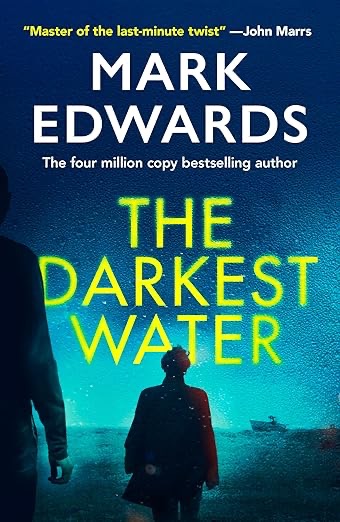
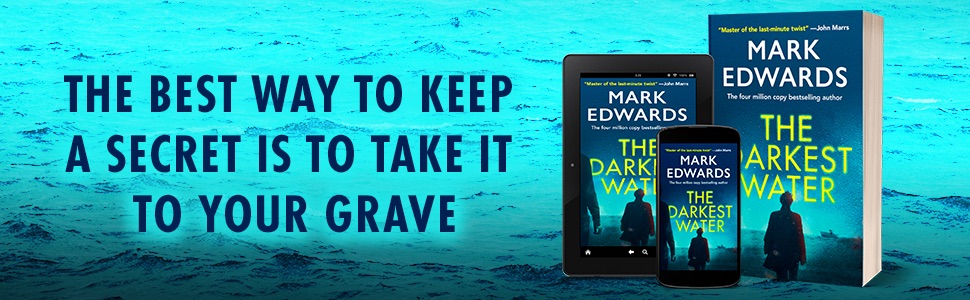
The Darkest Water by Mark Edwards

Calvin owns Therapy, the bakery of his dreams in an idyllic village in the Lake District, but business is a little quiet. He’s reluctant when wife Vicky suggests social media but it’s not long before assistant Tara has filmed and posted a reel of him making brownies. Suddenly he’s a local celebrity. It seems everyone wants a piece of Chef Calvin and creepy little DMs start to arrive, including some from a stranger claiming to be his biggest fan. At the same time a local recluse has been found dead on a nearby beach, buried up to the neck in sand and left for the tide to come in. Detective Imogen Edwards is under pressure to solve the case, but who would plan such a long, drawn out murder and did they stay to watch the man’s fate? Calvin’s admirer turns up at Therapy, just as Tara is injured and unable to work. Much to his wife Vicky’s horror, new girl Mel ends up standing in and Calvin offers her a job. At least until Tara returns. Then events seem to start spiralling out of control and Calvin doesn’t know who to trust or what to do. Perhaps these wheels were put in motion a long time before, putting those Calvin loves in terrible danger. 

This is such a page turning thriller that I swept through it in an afternoon and evening. Seemingly unrelated events start to make potentially intriguing patterns. Mark Edwards has a way of sending your mind down a dozen different paths before getting to the truth. He also has the skill of leaving horrifying images in your head. This time it was the sight of Leo James’s head sticking out of the sand as the tide went out. I have a fascination with Anthony Gormley’s Another Place also known as the Iron Men of Crosby Beach in Liverpool. There is something slightly macabre and even profound about watching the tide come in, slowly submerging some figures underwater completely. This was a terrible human version and I couldn’t help musing on how it must have felt to be left waiting for the tide and what sort of man could watch it unfold. I enjoyed the internet element of the story and how reluctant Calvin is to put himself and his bakery out there – something which makes more sense later in the novel. I could understand his reticence. While Book Twitter was once a benign space, there are now arguments and attempts to police what other people are reading. It seems it’s no longer acceptable to separate art and the artist and I definitely spend less time there. When Tara creates her video, the baker starts to gain customers very quickly and this is definitely welcome. However, it comes with a side order of relative fame and that means teenagers want to take a look as well as a certain amount of women. Mel is one of these and the timing of her arrival in the bakery seems very suspect. Both Tara and Vicky are suspicious and my radar for emotionally damaged women was definitely going off. She seems to establish herself as someone who needs to be rescued, something that is Calvin’s kryptonite. She drops hints about a group of teenagers making a nuisance of themselves on the beach near her cottage and trying to intimidate or frighten her. 

It soon becomes clear that Calvin is a rescuer. He has lived in the Lakes all his life and has an experience when he was a teenager that makes him susceptible to women needing him to be the hero. His teenage sister died in a car accident and in flashbacks we go back to that summer and the lead up to this awful event, it’s clear that Calvin carries a lot of guilt around her death but this is only half the story. Our other narrative is that of the murder and the police investigation. Imogen’s first port of call is the dead man’s home which isn’t easy to find, tucked away in the woods and completely off grid. Inside they find the most hideous paintings, possibly created by Leo himself. They show visions of torment and retribution in hell and seem to be inspired by Heironymus Bosch. The house is spartan and gloomy, suggesting that Leo leads a lonely and possibly depressed lifestyle. The paintings point towards his state of mind, but does he believe someone else should receive this punishments or himself? If himself, it seems like at least one other person agreed with him. When Imogen finds a young local girl called Billie lurking nearby she’s determined to find her link to this unusual man. In fact Imogen and Calvin’s wife Vicky seem the most level-headed of the characters. Imogen is a good police officer, methodical and not easily swayed by one thread of the investigation. She lets it reveal itself, but is still only minutes behind the culprit at times. Everything is linked and she just has to find that one person who holds the key. She does come under pressure from above but stays focused.

Vicky is perceptive and there were times I was mentally screaming at Calvin to listen to his wife. She senses someone has been in their house early on and is adamant she didn’t close their bedroom door and shut their cat Jarvis inside. She also wants rid of Mel, not specifically because she has feelings for Calvin, but because she simply doesn’t trust her. Where has she sprung from and why does she seem so keen to please? She thinks the story about teenagers is a deliberate ploy. The tension in each of the narratives is heightened and when Vicky disappears, Imogen has to work out whether this a choice to take time for herself after a row, or something more serious. Although when she speaks to Calvin and finds out that Vicky owns an animal rescue centre, it does seem unlikely for her to leave without warning leaving everything to her assistant Louise. As Imogen starts to join the dots I was praying she wouldn’t be too late for Vicky. How would Calvin cope if he lost Vicky after losing his sister, especially if Mel is involved? As Mel lures him into accompanying her home I was on tenterhooks over whether she would proposition him or whether something more disturbing was going on? The author takes us through some serious twists and turns, just when I thought my suspicions about a character were mistaken they were back on the hook again. I didn’t get to the truth before Imogen though and I managed to do that really annoying thing of rushing through to the end, then wishing I’d taken it slower. This is a first class thriller and has whetted my appetite beautifully for his latest book, The Wasp Trap. 

Meet the Author

I write books in which scary things happen to ordinary people, the best known of which are Follow You Home, The Magpies, and Here To Stay. My novels have sold over 5 million copies and topped the bestseller lists numerous times. I pride myself on writing fast-paced page-turners with lots of twists and turns, relatable characters and dark humour. My next novel is The Wasp Trap, which will be published in July in the UK/Australia and September in the US/Canada. 

I live in the West Midlands, England, with my wife, our three children, two cats and a golden retriever.

Posted in Throwback Thursday

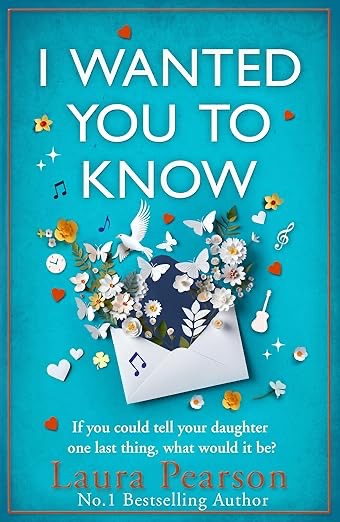
Throwback Thursday: I Wanted You to Know by Laura Pearson.

Dear Edie, I wanted you to know so many things. I wanted to tell you them in person, as you grew. But it wasn’t to be.


This wonderful book left me uplifted and sad all at the same time. This is the bittersweet story of Jessica, a young single mum who finds out she has cancer. As the novel opens, Jess and her baby daughter Edie, have recently moved back home with her Mum. Jess had left home for university, but circumstances have forced her back to her home town. This main narrative, set in Jess’s present, is interspersed with letters written by Jess to her baby. Each letter starts with ‘ I wanted you to know’ and through them we learn about the life she had at university, her relationship with Jake and the unexpected pregnancy that changes everything. The timing of this baby is all wrong, falling just as Jess’s boyfriend Jake is offered a tour with his band. Determined that Jake should follow his dream, the couple had decided to separate, but Jess’s own father left when she was young and she doesn’t want the same for her daughter. So she continues to keep him up to date with baby news until Jake’s contact with slowly fizzles out and Jess comes to the conclusion he is not interested in the pregnancy or having a relationship with daughter Edie. By the time Edie is born, the couple are no longer in regular contact and Jess has to face up to the fact she will be a single mother. Jess approaches her post-natal check up feeling daunted and then receives the news that changes everything. Jess has breast cancer. Now, a new beginning that’s daunting but joyous and filled with hope for the future, is overshadowed by weighty decisions, difficult conversations and the horrible fear that she may have to leave Edie facing life without her.


The narrative gave me a very real sense that the time Jess has left is ebbing away like the sands of an hourglass. As treatment options fail, Jess has so much left undone. Jess’s devastation that she won’t be able to be go through all the milestones that mothers and daughter enjoy together is palpable. So in order to be sure she’s there for these moments Jess begins the letters that will let her daughter know where she comes from and how much her mum loved her. This is even more vital when we realise that Jess’s past relationship with her own mum is far from perfect. However, despite some rough patches, her mum is stepping up and we never doubt that she loves her daughter and wants to help. Even if she does make some terrible mistakes in the way she handles things and on one occasion does one of the worst things you can do to someone with a terminal or life-limiting illness; she takes Jess’s power away. I was genuinely worried whether Jess would be strong enough to take it back.


The way Jess copes with Jake made me long for her to find her voice, even if just for her baby’s sake. She is so worried about ruining Jake’s tour that she doesn’t keep him informed. His contact with her simply dries up and although she is hurt and shouldering her fears about becoming a mum by herself, she doesn’t contact him. Then as the shock of the cancer diagnosis hits she is even more paralysed. If she does let him know, and he cuts his dream short, will he always resent her and his daughter. She doesn’t even know how he feels any more, but knows she wouldn’t want him to return to her because of the cancer. Realistically though, she needs to let him meet his daughter. They have to forge a relationship, especially if she does not respond to treatment.
The most compelling relationship for me was the friendship between Jess and Gemma. This novel is a love letter to female friendship and I liked that this relationship felt the most ‘fleshed out’ in the whole story. Right from the start Gemma is backing Jess up while juggling a job and babysitting Edie when she’s not working. Where the other relationships throw up complications, Gemma seems to know what Jess needs before anyone else. She counteracts Jess’s mum’s tendency to judge and make decisions that don’t include her. Instead she is quietly there all the time, and has an ability to sink into the background when Jess needs time alone or with Edie. Most importantly she encourages Jess but doesn’t take her choices away. She makes it clear that Jess needs to speak to Jake, but stays out of their relationship. When Jess’s mum oversteps the mark, Gemma gives her friend encouragement to speak and permission to be angry. Their relationship shows that our friends are often more supportive than family. It teaches us that our female friendships are often the long term relationships in our lives and that the best friends sustain each other, even in the most difficult situations.


I like that the last words In the book are Jess’s own in the form of her final letter to her daughter. I did have a lump in my throat reading some parts of this and at different points I thought how authentic the voice was, especially in Jess’s letters because they are unfiltered. Often, when reading or watching fictional accounts of illness I become frustrated by inaccuracies or events that are totally impossible. This comes from the life experiences I bring when reading a book. When reading this I felt it was well researched or that someone had used their own experiences to tell Jess’s story. I wasn’t surprised to read that Laura Pearson had a similar diagnosis of breast cancer because her experience shone through. The bewilderment and fear of those closest to Jess felt true to my experience; I lost my husband to the complications of multiple sclerosis when he was only 42 and I was 35. I remember two strong and very contrary feelings. On one hand I was constantly busy and overwhelmed with the paraphernalia of caring for someone who’s dying. I was panicked that time was slipping away from us and I resented it being spent dealing with feeding tubes, chest physiotherapy and the constant fear of infection. While other days felt like a nightmare, living a parallel life where the same routine was replayed over and over while everyone else was getting on with the real business of life. We became a small, committed unit with only one focus and as I read the novel I could see Jess’s loved ones doing the same. They drop out of normal everyday life to focus on their loved one and as I was reading I was aware of the devastation they would feel if they lost Jess anyway. When the person you love becomes terminally ill, and you become their carer, the sense of loss after their death seems compounded by suddenly having no purpose. I went from caring for my husband 70+ hours a week to waking up with nothing to do all day. It complicates the grief. The loss becomes multiple; the person you love, your role as spouse, your job and purpose, structure and status are all gone. The final chapters of Laura’s novel brought this back to me.


I was also heavily invested in Jess’s emotions, she becomes a young, single Mum knowing this new life may be cut brutally short. Jess barely has time to enjoy Edie, before she has to worry about leaving her. She has come to terms with her choice to postpone university and encourage Jake to follow his dream because she assumes, like we all do, that she has all the time in the world. She might not have time to pick up these parts of her life and she may not have time to settle into being a Mum. Questions constantly flash through her mind. If Jake returns, does he love her or is he only there because she’s so ill? How will he cope becoming a single Dad and who might he form relationships with in the future? Most heartbreaking of all; what if Edie doesn’t remember her? This is what prompts her to start writing. She wants to write down everything she thought or felt about her new baby and also pass on those bits of motherly wisdom that would be otherwise lost. Even if Edie does lose her Mum, she will have a constant sense of her through those letters and the pieces of advice she gives. Most importantly, she will know that at this crucial moment of her Mum’s life, she was so glad of her decision to have Edie and that Edie’s loss is uppermost in her mind.

The author delivers weighty subject matter with a real lightness of touch. At times I was reading with a lump in my throat, but I always looked forward to picking up Jess’s story and spending time in her world. The reader always brings something to the book and in this case, my reading experience was more poignant because of my own loss and possibly because of the limitations due to my own long term health problems. I think the author has been so clever to write about a life-changing experience, but never let it become too heavy to read. Despite the heartbreak, there are moments of every day humour and I felt genuinely uplifted by the depiction of female friendship. In difficult times I have found that even whether I’ve had a committed partner or not, it is my female friends who are always constant and hold me up when I can’t do it for myself. Jess and Gemma embody this and I found myself hoping that the author had a Gemma during her own illness. Mostly, I am very grateful that Laura Pearson had the bravery to write about something so close to her own experience, and to write about it with humour, honesty and raw emotion.

Meet the Author

Thanks so much for taking a look at my books. I write what some people call emotional women’s fiction and others call book club fiction. It doesn’t really matter what it’s called – I mostly write about women living ordinary lives and the extraordinary things that sometimes happen to them. I set my novels in places I’ve lived – London, Leicestershire, Cheshire, Southampton – and I people them (mostly) with the kind of women I’d like to meet. 

Some themes I find myself returning to again and again are sibling relationships, enduring friendships, women supporting women, and the tiny decisions that can alter the course of a life. I hope you find something here you’d like to read. 

When I’m not writing or reading, I’m usually hanging out on Twitter (@laurapauthor), so I might see you there, too. 

With love, 

Laura

Taken from Laura’s Amazon author page,

Posted in Personal Purchase

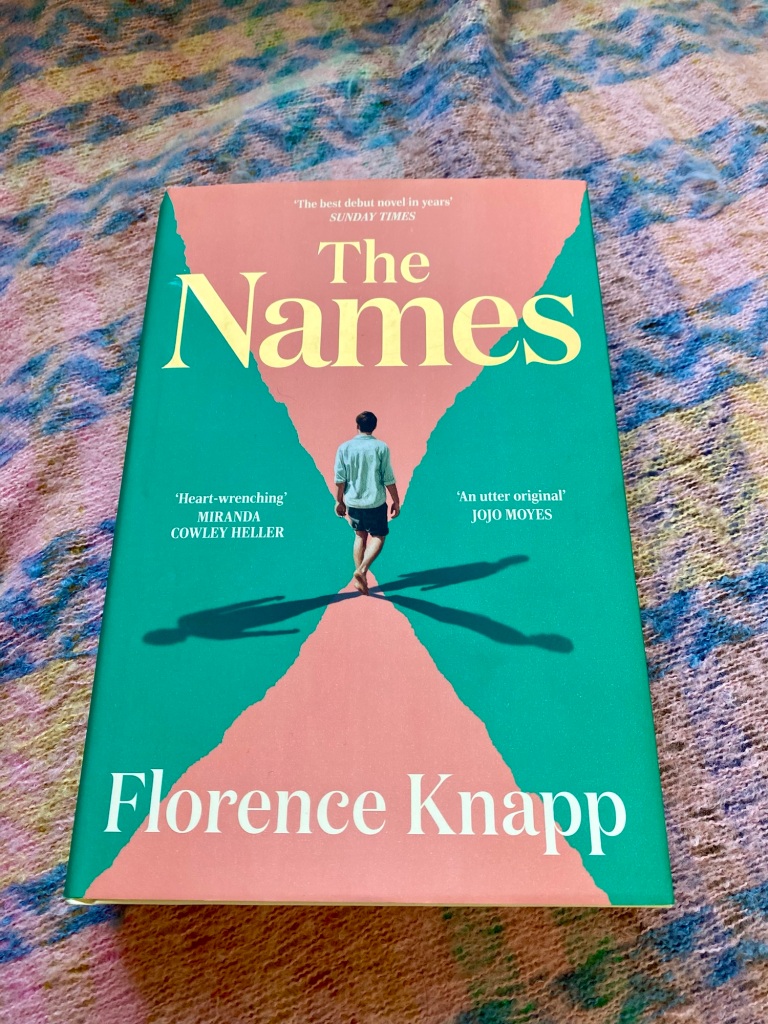
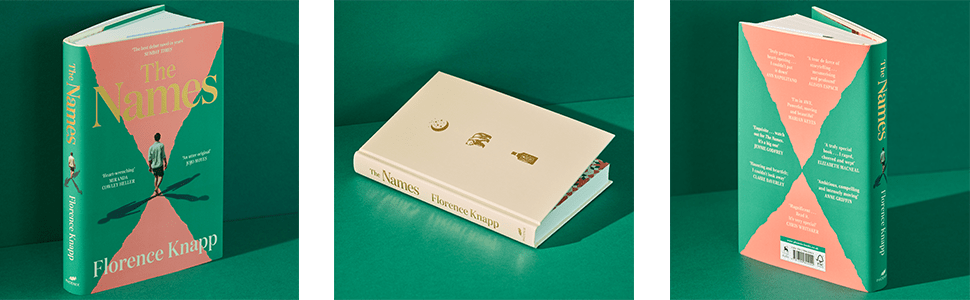
The Names by Florence Knapp

This is one of those books that’s been on the periphery of my wishlist for ages, but I’ve never had time to pick it up. I always set aside a bit of money for visiting a book shop when we go on holiday so when we visited the Lake District this was the first book I saw when I walked into a bookshop in Pooley Bridge. Afterwards, as I looked through the purchases in the pub I read the first few lines, then read the whole chapter and I told my other half it was something special. In 1987 Cora is going to register the birth of her baby boy. His name has been settled on for some time. Cora’s husband has chosen his own name for his son, Gordon. But it wouldn’t be Cora’s choice. Cora’s choice would be something that doesn’t tie him so obviously to his father. She thinks Julian would suit him. Little sister Maia looks in the pram at her brother and decides he looks like a he should be called Bear. All of these options swirl around in Cora’s head. In this moment, Cora has the power to make a choice and it’s done. It can’t be changed. What would happen if she went with Julian or even Bear? In the short term Gordon would be furious. How bad would it be this time? Long term, would it change her baby’s character or path in life? That’s exactly what Florence Knapp does. The book splits into three narratives and we discover what happens to this whole family, depending on Cora’s baby boy’s name. 

We then move on seven years and meet Bear, a name that proves to be a catalyst for change. Or we meet Cora’s choice, Julian – the choice she hoped would break him free from domineering generations of Gordons. Although, what if he is called Gordon? Brought up by a cruel father to continue in the same mould perhaps? Or he might just break free from the shackles of his name. Each life is sparked by this one decision and it isn’t just Cora’s son’s story. This is the life of the whole family with all its ups and downs. It’s about how trauma shapes lives and whether love brings healing and hope to every version of who we are. Even her minor characters absolutely shine. Grandmother Silbhe and her friend Cian are so wonderful, modelling healthy male/female relationships for Julian and Maia. Cian is also Julian’s mentor at work, bringing out a creative side that needs nurturing. Julian needs to work with his hands and meeting fellow creatives helps him find his tribe. Lily is lovely character and we get to know her most during bear’s narrative. I loved how she has to find a balance between giving Bear the freedom he needs without breaking her own boundaries in the relationship. It’s an utterly compelling debut and zooms straight into the list of best books I’ve read so far this year. The author brings incredible psychological insight to a story about how our names shape our identity, our relationships and our life choices. Something we didn’t even choose. Can it influence us to a huge extent, or do we become the same person no matter what the choice? 

One of our family narratives is that mum wanted to call me Little Green after the Joni Mitchell song. Mum is definitely a hippy and Dad is definitely not. My whole life I’ve said ‘thank goodness for Dad’, as I ended up with Hayley Marsha Ann which felt unusual enough. However, when I read the lyrics of the Joni Mitchell song, it was just so beautiful. Written for a child she had when she was very young. She felt she was too young to be a mum and gave her up for adoption. The song is so full of the hopes a mother would have for their daughter: 

“Just a little Green

Like thе color when the spring is born

There’ll be crocuses to bring to school tomorrow

Just a little Green

Like the nights when the Northern lights perform

There’ll be icicles and birthday clothes

And sometimes there’ll be sorrow.”

The book made me wonder whether I’d be a different person now had I been Little Green. Would I have been more confident? Perhaps I’d have been more comfortable in my creativity. Might I have written my book by now? How could I have failed with a name imbued with such hope? I liked that the author included the meaning of all the character’s names at the back of the book. It’s fascinating to look at them after reading knowing they were so carefully chosen. 

Each of three arcs has its share of joy and heartache as Cora’s children cope with the aftermath of that day in 1987. For Gordon the legacy of his father is perhaps the most damaging as Cora feared. Growing up in his father’s presence means he could pass on the misogyny passed down through all the Gordons in his ancestry. It damages his relationship with his mother as he can be used as a tool for his father to oppress Cora further or to spy on her behaviour. It will also affect his own relationships with women, both his sister and potential partners – his teenage crush on Lily becomes something that’s very hard to read, but it’s right to include it. The author depicts inter-generational trauma and how it can damage the next generation in different ways. Abusers can’t always break patterns and sometimes I was compelled to read on in sheer hope. 

Each narrative has its moments of emotion where you have to look up from the book and breathe for a moment. Just to take it in. However, one narrative broke me. I was reading quietly in the same room as my husband and I actually responded out loud. He had to give me a cuddle because I did have tears coming and I’m astonished by the writer’s ability to absorb to that degree. To make words into a flesh and blood person I can shed tears over and another who has the potential to become a monster. Gordon Sr really is terrifying in his reach and I felt Cora’s constant fear and the way she made herself small, not taking up space or making him notice her. The author doesn’t forget Maia either and the effect this monster has had on her life, emphasised in a single moment of panic and horror. Yet would she have become a doctor without witnessing his competence as a doctor or his patient’s respect for his skills. Throughout her love for her brother shines through. This is an absolutely incredible debut with a brilliant grasp of domestic abuse and how it affects every member of a family, their friends and even neighbours. She depicts how the children and grandchildren in this chain have to consciously break the chain. As a daughter and a wife of two men who’ve survived violence in the home I know the struggle to change things and I felt the truth of Knapp’s depiction. It’s easily one of my best reads so far his year (what a year we’re having) and I have no doubt it will still be up there in December. 

Meet the Author

You can find out more about my writing, or what I’ve been reading lately, on the other pages. But for now, a few things about me.

I live just outside London with my husband, our dog, and sometimes one (or two) of our now-adult children. Some of my favourite things are: words, photo booths, old tiles, rain, long phone calls, clothing with pockets, book covers, dimples (I don’t have any of my own, but I covet the cheeks of those who do), houses lit up at night, the word eiderdown, notebooks, kaleidoscopes, homemade soup, Italy, taking photos, book chat, hummus, barre, house plants, a thick duvet with wool blankets piled on top, hand-stitching, making lists.
I’m less keen on condiment bottles, driving on motorways, and socks where the heel slips down.

Posted in Personal Purchase

The Homemade God by Rachel Joyce

I have always loved Rachel Joyce’s work, especially the Harold Fry series, but I also adored her more recent novel Miss Benson’s Beetle. This novel was slightly different from her other work, while it did have an eccentric character on a very singular quest and kept that complexity of emotions she does so well, it also had an historical context which I loved. In A Homemade God we see similar complex relationships, but within a family who have a famous father. Vic Kemp is a painter and I have an absolute fascination with painter’s lives and relationships. I love art and have read widely on groups like the Pre-Raphaelite Brotherhood and the group who gathered around Vanessa Bell and Duncan Grant down at Charleston in Sussex. After seeing a Lucien Freud retrospective at the Tate I was intrigued by his family. His children seemed to be the epitome of that creative and eccentric family we come to expect from artists. Bohemian upbringings are just so interesting because of how the development and character of the children are affected by it and how that family copes with the ‘genius’ in their midst.

Here the family in question are Vic and his four children – Netta, Susan, Iris and Goose (short for Gustav and the only boy). They’ve been parented by Vic and a series of au pairs after the sudden death of their mother just after Iris was born. Their father’s art came first always and the conditions he needed in order to create were paramount, so the oldest girls often played the mother role for Iris and Goose, especially when Vic inevitably slept with the au pairs and they left. Vic was not an artist celebrated by the establishment. The description of his paintings brought Jack Vettriano to mind, criticised heavily by the art world, but very popular with the public. Many of Vic’s paintings had a sexual element to them, a sort of soft BDSM theme, except for his only painting of one of his children, Iris. Depicted on the beach with a sandcastle and a man in the background, it brings up mixed memories for Iris. Now grown up, his children are stunned when Vic suddenly starts losing weight and drinking green, sludgy health drinks. It’s just so out of character. His diet is being looked after by his new girlfriend, 27 year old Bella-Mae. None of his children have met her and she doesn’t seem keen on trying. Within weeks Vic announces they’re engaged and Netta suggests that they all stand back and give this the space it needs to fizzle out. A couple of weeks later, Vic announces their marriage with a single photograph from the family home in Orta on Isola Son Guilio with Bella-Mae in such a heavy veil they can’t make out her face. They are staying at the family villa, situated on an island in the middle of Lake Orta and only two days later Netta is stunned by a phone call from a stranger called Laszlo, claiming to be Bella’s cousin. Vic has been dragged from the lake, drowned after a morning swim went wrong as the mist descended. Vic knew that lake so well. Why would he go swimming in the mist? His children come together to travel to Orta, to finally meet their new stepmother and to find out whether she has killed their father. 

I really enjoyed the different personalities of the Kemp siblings and how they complement and clash with each other. Netta has definite older sister energy. She’s the most organised and ambitious of all the siblings with a background in law. She is the most cynical too, convinced Bella’s health drinks have poisoned her father and now after two days of marriage she could inherit everything. Her instinct was to ransack Vic’s London home for the anything resembling a will and to find Vic’s final painting. There’s nothing, but maybe he was painting in Orta? Susan is also older and very organised especially when it comes to food or her stepsons. Married to Warwick who is a much older man she has some empathy and understanding for her father’s relationship. She hasn’t worked, but stayed at home to look after Warwick’s boys which has been a thankless task as they’ve barely accepted her. Susan is passionate about food, but she chose a relationship without that same feeling. Perhaps viewing the volcanic nature of Vic’s relationships she decided to go for a calmer and more stable love. It has proved a successful partnership but there are wild depths underneath Susan’s calm exterior and when she meets Bella’s cousin Laszlo they might rise to the surface. 

Goose and Iris, the younger siblings, both seem lost somehow, perhaps because they don’t have those memories of their mother and only remember the erratic presence of Vic and the revolving au pairs. Since his father’s agent Harry set up Goose’s first exhibition, he has never painted again. When left alone just before his open view, he destroyed his canvasses and nobody knows why. He seemed catatonic and voluntarily checked into hospital for his mental health. He lives quite a lonely life and never talks about his sexuality or takes a partner home to meet family. He works quietly as his father’s studio assistant and lives alone. Iris lives alone too and she comes across a bit liked a startled fawn. She follows behind her sisters and dotes on her father more than others, struggling to keep her distance when Netta suggests it. She does keep secrets though, seismic in their power. As they all travel to their villa in Northern Italy, ready to confront their father’s 27 year old widow and her cousin, Netta tells them they have two objectives. Find anything that could be a will, even if it’s on the back of an envelope and find that last painting Vic claimed to be working on. 

Bella isn’t what the siblings expect and nor is the villa. The villa looks beautiful and tidy for once. Bella seems insubstantial and too fragile to have caused such an uproar. She looks like she might blow away in a breeze. Yet they’ve pictured her with an iron will, imposing her diet on their father and gaining their inheritance. She will prove to be a mirror through which each of them evaluate their lives. I love family sagas and this one is brilliant. It’s psychologically fascinating and I’m not going to ruin that for you by delving too deeply. I was absolutely transfixed! I couldn’t work out whether there was deliberate manipulation at play or if this was just a case of an outsider causing people to view everything through a different lens. Is Bella a destructive force or a helpful one? Whatever she is, the siblings will have to look at themselves, their choices and their relationship to their father. Some revelations will be explosive and take place in public – one particular meal is cataclysmic. Other revelations are quieter, insidious or internal but no less devastating. Goose’s story left me furious and devastated at the same time. The book works almost like therapy, but without the care and ethics. No one will come out of this trip unaffected.

The author made me think about how we view artists and our expectations of them – whether they are potters, painters or writers. We read about their messy and eccentric lives with fascination, but we don’t always consider the damage they do to those closest to them. I’ve always wondered how Lucien Freud’s daughters felt about posing for him, especially in their awkward teenage years. Iris’s story gave me some insight and made me feel deeply uncomfortable. This was such a beautifully complex study of a family’s dynamics and how each sibling positions themselves within it. Rachel Joyce has depicted the way we mythologise people within our family groups and the stories we choose to represent us. We choose stories to tell others who we are and when we do that we can embroider or edit for the effect we want. Think about the stories in your families and whether they’re honest or whether you are trying to represent yourselves within a particular class, religion or other social structure? Do we do this consciously or unconsciously? This is a very different novel for the author but it’s definitely built on her ability to present very deep emotions and the truth of human experience. I think it’s her best yet. 

After reading the novel, you might enjoy reading this article about Lucien Freud’s relationship with his daughter Annie.

https://www.vanityfair.com/culture/2013/10/lucian-freud-nude-portrait-daughter-annie#:~:text=His%20complex%20relationship%20with%20daughter,recalls%20the%20artist’s%20paternal%20demons.

Meet the Author

Posted in Personal Purchase

The Year of Zara Holt by Kimberley Freeman 

I discovered Kimberley Freeman’s novels about ten years ago and read all of them in one go. It was the combination of historical fiction, with an emphasis on Australian and women’s history that drew me and the romance element is always rooted in that context. I’ve been waiting a very long time for a new novel and this is particularly interesting as it’s based on a true story. I did drop everything to read it. She takes us through a large part of the early – mid Twentieth century through the life of Zara Holt. We join her as a teenager, living with her parents and dreaming of becoming a fashion designer. She spends hours drawing elaborate evening and wedding dresses with Betty her best friend. On a night out together Zara meets Harry, a handsome and ambitious young man who is aiming to get into law or politics. They have an instant connection and Zara feels it, almost like a jigsaw puzzle clicking into place. Their love will dominate her life as she also builds her own fashion empire and travels the world. As fiery as the couple are, it’s never an easy road and Zara will have to make difficult choices about whether she follows her head or her heart. 

I had to keep reminding myself that this was set in the earlier part of 20th Century. Zara feels like a woman far ahead of her time, so that when she comes up against male attitudes and societal expectations it feels like a surprise. It did take me a little while to realise she was a real woman, born in Kew Victoria in 1909 as Zara Kate Dickens. In 1929 when she was still just 19, she approached her father who was a successful businessman for a loan. She made the case that her sister had an expensive wedding and since she had no plans to get married in the near future, could she use the equivalent money to start her own business. With the money and her friend Betty in tow, she opened a dress shop called Magg. They provided a bespoke service with Zara designing for the client and Betty as the seamstress. When Betty got married and left the business, Zara tried to continue alone but was exhausted by her own success. At this point she was expecting a proposal from Harry, which wasn’t forthcoming. On her mother’s advice she liquidated the business, coming out with $1500 ($125,000 in today’s money). She used her money to travel the world, including an impromptu trip to India with Colonel James Fell who she met on her return voyage. James did propose and became her first husband, but this wasn’t the end of Harry and it wasn’t the end of Magg. 

Zara Holt

I found Zara such a compelling character and admired her boundless energy for business and travel. She is endlessly creative, never losing that urge to sketch a dress  or incorporate a detail she’s seen into a new collection. She was particularly inspired by her time in India and the bold colours and decorative flourishes in women’s clothing. In later years, as Harry becomes more important in government she has to try combining her business affairs with the role of a political wife, using her new contacts and always trawling markets in other countries for fabrics to ship back to India. With more age and experience she manages to keep Magg running, even expanding and hiring new seamstresses and designers. I loved her little rebellions, such as talking to a gathering of women about business rather than her life as ‘first lady’. She also changes an opera fundraiser to a fashion show, both rewarded by the enthusiasm of her audience. 

In her personal life she finds it a lot harder to stick to her guns. Harry is utterly single- minded and only proposes when he’s boxed into a corner. She has suspicions about his womanising early on, but it takes decades for him to be honest with her. He never makes promises he can’t keep, aside from his vows, and while he professes to love only her he will not hear ultimatums. What I found hardest to swallow was his disregard for places and people that were special to him and Zara as a couple, he trashes Zara’s special memories of finding a natural waterfall near Bingle Bay where they stay with close friends, eventually buying their own home there. Harry ruins both by taking a mistress there and my sympathies for him were gone at that moment. I wanted Zara to leave him and use all her energy into her work and children. I felt he did not hear her or deserve her. She is left with the age old compromise, that the little bit of him she does have is better than nothing. 

Zara and Harold Holt

Kimberley has Zara narrate the full story and that’s wise because she really is the main draw of the book. I was full of admiration for the way she bucked the system. When living in India she finds out that their head servant is taking such a huge cut of the other servant’s wages they can’t afford to eat. She’s told it’s best to turn a blind eye and that the British don’t meddle in servant’s affairs, but she has him fired anyway. She also builds a friendship with an Indian doctor and academic that she meets at the stables, often riding out with him in the mornings. Her husband James forbids this and is furiously jealous. She has a sense of fairness and equality in how she approaches life which is appealing and interesting when you read about some of the policies that Harry works hard for as prime minister, when he eventually gets there. She stands up for her interest in fashion and is incredibly proud of knowledge and skills she’s built. She can look at any woman and see what dress style will best suit her body and how to combine current trends with what will suit the client. She knows how confident a woman feels when she is well dressed and aims to give all her clients that feeling of looking their best. She also defends it as an art form. Her designs are her preparatory sketches and the fabrics are her paints, what is created from her imagination and these materials is no less an art than an oil painting in a gallery.

I wanted her to have the same confidence in her personal life and to trust that she will find someone who loves her and gives her the attention and fidelity she deserves. Yet her love for Harry seems to transcend his behaviour. If you know anything about the Holts it’s probably the mystery surrounding Harry’s disappearance while swimming in a bay he knew well. It is assumed he was caught in a rip tide and drowned, but his body was never found. Zara wrote her own book about their life together. Her achievements included winning ‘Gown of the Year’ in 1961 and in 1962 Miss Australia, Tania Verstak, wore a Magg gown in the Miss International contest, which she won. Zara also advised on Australian uniforms for events such as Expo ‘67 in Montreal and the Mexico Olympic Games in 1968. In 1979 she was appointed as chair of the Yves Saint Laurent board in Australia. She had a bubbly personality and could say the wrong thing, occasionally portrayed as a bit scatterbrained by the press she was actually incredibly astute with a business brain. She also claimed that her eye for fashion was inspired by her own figure, being rather short and round in shape – something I share with her. When she died in 1989 she left over $5 million dollars and several properties to her three sons. I think Kimberley Freeman does an incredible job of capturing this fascinating woman, including the odd hilarious public gaffe. I thoroughly enjoyed getting to know Zara and I’m sure many other readers will too. 

Out now from Hachette Australia

Meet the Author

Kimberley was born in London and her family moved back to Australia when she was three years old. She grew up in Queensland where she currently lives.

Kimberley has written for as long as she can remember and she is proud to write in many genres. She is an award-winning writer in children’s, historical and speculative fiction under her birth name Kim Wilkins. She adopted the pen name Kimberley Freeman for her commercial women’s fiction novels to honour her maternal grandmother and to try and capture the spirit of the page-turning novels she has always loved to read. Kim has an Honours degree, a Masters degree and a PhD from The University of Queensland where she is also a senior lecturer. She lives in Brisbane with her kids and pets and lovely partner.

Posted in Personal Purchase

Vianne by Joanne Harris

As Vianne scatters her mother’s ashes in New York, she knows the wind has changed and it’s time to move on. She will return to France, solo except for her ‘little stranger’ who is no bigger than a cocoa bean but very present in her thoughts. Drawn to the sea she blows into Marseille and to a tiny bistrot where owner Louis is stuck, struggling with grief for decades after losing his wife Margot. She charms herself into a waitressing job for bed and board, but with his blessing she starts to cook for his regulars using the recipe book Margot left behind. Louis has one stipulation, she mustn’t change the recipe at all. She revives the herb garden and starts to make friends, including Guy who is working towards opening a chocolate shop. This is going to be the place to have her baby, but then she must move on. She can see her child at about six years old, paddling by some riverboats tethered nearby, but she can also see the man her mother feared. The man in black. Vianne has inherited a peculiar kind of magic that urges her to fix the lives of those around her and give them what their heart truly desires. This is fine when it’s discerning their favourite chocolate, but can cause problems when it becomes meddling. Her mother warned her that she shouldn’t settle too long in one place and Vianne knows she has the strength to leave whenever she feels it’s right, but is thinking about those around her? 

What a joy it is to be back in Vianne’s world. It’s like being back with an old friend and in a couple of sentences we’d picked up where we left off. This is a younger Vianne, aware of her burgeoning abilities, but inexperienced in the power she holds and it’s effects on others. Part of that ability is a natural charm and willingness to work hard. She takes time to win people over. She’s happy to take on a challenge whether it’s the recipe book, the garden or the chocolate shop. She merely softens the edges of all this with a ‘pretty’ here and there or tuning into someone’s colours. She has a natural ability to make the best of things, whether it’s adding a vase of flowers to a room or a pinch of chocolate spice here and there. It doesn’t do the work, it just deepens the flavours or enhances what’s there. There’s that little bit too much optimism, not fully reading a situation before wading in, that comes with youth and inexperience. She’s streetwise, used to watching her back. She knows how to protect herself and when to run, but lacks emotional intelligence. She’s unaware that breaking down someone’s defences can leave them vulnerable or even broken. Vianne doesn’t have a malicious bone in her body though, just youthful exuberance and emotional immaturity. 
As always there are wonderfully quirky characters with lots of secrets to uncover and others who become real through memory, artefacts or reviving something they loved and giving it life. Louis has a grumpy exterior, not as grumpy as his friend Emile, but definitely a tough shell and a rigid routine. Every day he cooks for his regulars never deviating from the recipes or her kitchen equipment. Vianne has to use specific pans for certain dishes and ancient utensils that could do with an update, but she doesn’t complain. On Sundays he visits the cemetery, but instead of going to the soulless high rise mausoleum where Margot is laid to rest, he visits her favourite poet and leaves a red rose. Vianne is touched by his adherence to this routine, but it’s only when she is in touch with Margot’s spirit that she can see the full, complicated picture. As she uses the kitchen she feels Margot’s sadness and anxiety. Her need for a baby comes through strongly. Was this the unhappiness at the centre of their marriage? Emile is very difficult to get a handle on, he doesn’t respond to Vianne’s charm or her chocolates. His concern is that she will take advantage of Louis, but the more she seems to settle the more hostile he gets. I enjoyed Guy and the chocolate shop, but it’s another occasion where she doesn’t get the bigger picture. Guy is quite similar to Vianne in temperament, drive and enthusiasm. He seems utterly different in character to his friend Mahmet. Vianne notices Mahmet’s more pessimistic nature and concerns about money. She puts it down to the friend’s different backgrounds and experience, but I could see that Mahmet was a realist and his concerns might be valid. It becomes clear that Guy is a dreamer and as a child of rich parents has never faced the consequences of disaster. He also has a tendency to bail out when things get difficult. 

Motherhood is the major theme of the book from Vianne’s pregnancy to the sadness of Margot and the relationship Vianne had with her own mother. There were memories of Vianne’s mother throughout and she has to battle with her mother’s voice constantly. She has internalised her mother’s voice to such a degree that it’s become one of her own inner voices. She fights against it, letting herself feel that natural urge to belong especially when Louis starts to get ready for the baby’s arrival. Part of her wants to stay, but her mother’s adage about becoming too comfortable is insistent. Is there something they were always running from? She’s angry with her mum in some ways, thinking about what she’s missed out on – a home, a wider family, school and friends her own age. It may be there was a good reason for their anonymity but her mum was all she knew making it all the more devastating when she died and Vianne was left utterly alone. Vianne’s own glimpses of motherhood are in the future, when her baby is a small child. She’s absolutely sure it’s a girl and the name Anouk comes to her. It seems that although her instinct and inner voice suggest they keep moving, she doesn’t want Anouk to have the upbringing she did. She wants Anouk to have a sense of belonging, a school and local friends, which gave me a lovely flash forward to Chocolat and Anouk running wild through the village with a pack of friends behind her. She remembers an instance when her mother insists they leave behind Vianne’s toy rabbit to teach her not to get attached to things. Is it Vianne’s memory of this incident and longing for that toy rabbit that conjures up her daughter’s later imaginary friend, the rabbi Pantoufle? I loved these little links to the future. 

The details and images they conjure up are always the best part of this series for me, because they take me on a visual journey. I was fascinated to read in her Amazon bio that she has synaesthesia, because I do with certain colours and I can feel that in her writing. The author weaves her magic in the detailed recipes of Margot’s book, the incredible chocolates that she and Guy create and the decorative details of their display window with it’s origami animals and chocolate babies. The most beautiful part is how Vianne brings people together. Yes, it’s partly magic but it’s also her kindness and lack of judgement. The noodle shop next door to the chocolate shop leaves rubbish and oil drums in the back alley which are an eyesore. When they’re reported the owner blames Mahmet, possibly due to his seemingly unfriendly demeanour. Vianne spends weeks taking them chocolates and chatting, slowly gaining their trust until they’re helping out for opening day. She even manages to get Louis and the fierce Emile to visit the shop, even though it’s in a part of the city Emile swears neither of them will visit. It’s when we see what Vianne can accomplish on days like this that we see her at her best – thinking forward to her Easter display window in her own shop or the meals cooked for friends under starlit skies. Vianne is a glowing lantern or a warm fire, she draws people to her light and to bask in her warmth. This is also why readers who love the Chocolat series return again and again. We simply want to be with Vianne and that’s definitely a form of literary magic. 

Out Now From ORION

Meet the Author

Joanne Harris (OBE, FRSL) is the internationally renowned and award-winning author of over twenty novels, plus novellas, cookbooks, scripts, short stories, libretti, lyrics, articles, and a self-help book for writers, TEN THINGS ABOUT WRITING. In 2000, her 1999 novel CHOCOLAT was adapted to the screen, starring Juliette Binoche and Johnny Depp. She holds honorary doctorates from the Universities of Sheffield and Huddersfield, is an honorary Fellow of St Catharine’s College, Cambridge, and a Fellow of the Royal Society of Literature.

Her hobbies are listed in Who’s Who as ‘mooching, lounging, strutting, strumming, priest-baiting and quiet subversion of the system’. She is active on social media, where she writes stories and gives writing tips as @joannechocolat; she posts writing seminars on YouTube; she performs in a live music and storytelling show with the #Storytime Band; and she works from a shed in her garden at her home in Yorkshire.

She also has a form of synaesthesia which enables her to smell colours. Red, she says, smells of chocolate.

Photo ©Frogspawn

Posted in Throwback Thursday

Throwback Thursday: Moonlight and the Pearler’s Daughter by Lizzie Pook


Fortune favours the brave . . .

It is 1886 and the Brightwell family has sailed from England to make their new home in Western Australia. Ten-year-old Eliza knows little of what awaits them in Bannin Bay beyond stories of shimmering pearls and shells the size of soup plates – the very things her father has promised will make their fortune. Ten years later, as the pearling ships return after months at sea, Eliza waits impatiently for her father to return with them. When his lugger finally arrives however, Charles Brightwell, master pearler, is declared missing. Whispers from the townsfolk point to mutiny or murder, but Eliza knows her father and, convinced there is more to the story, sets out to uncover the truth. She soon learns that in a town teeming with corruption, prejudice and blackmail, answers can cost more than pearls, and must decide just how much she is willing to pay, and how far she is willing to go, to find them.

Since this week’s Sunday Spotlight takes us on holiday Down Under, I thought I’d re-share my review of Lizzie Pook’s debut novel set in Australia. This incredible debut is richly atmospheric from the get go, throwing us straight into the strangeness of 19th Century Western Australia as if it is an alien landscape. In fact that’s exactly what it is for the Brightwell family, particularly Eliza whose childhood eyes we see it through for the the first time and in a particularly disgusting parody of baptism she is reborn as an Aussie when a bucket of fish guts is launched in their direction. Of course the fisherman apologises for the accident, but we’re left wondering if it’s anything but as he says the words ‘welcome to Bannin Bay’. It foreshadows an immediate imbalance between those who do the work and those who aim to make the money. Eliza’s father has been full of dreams, not just of pearls but the pearl shells to be turned into buttons, hat pins and pistol handles. Yet their unsuitability for this rough and ready environment can be seen as soon as they arrive in their fine clothing they must lift up from the red earth compared to the stevedores dirty vests and cut off trousers. Eliza describes her mother as ‘a dragonfly, once resplendent, marooned in a bucket of old slop water.’ Delicate Victorian ladies are not built for this environment that stinks of sweat, fish guts and the mineral tang of sea kelp. With this totally alien landscape the author creates a vivid backdrop for the incredible historical detail of her story, but also brings a mythic, almost fairy tale quality.

Only ten years after the prologue we meet an older Eliza, wiser to the ways of the Bay and she has developed into a interesting character. Women are either categorised as society women -‘white glove wearers’ – or harlots and it’s a source of irritation to the women in the community that she refuses to be either. Eliza is ploughing her own furrow, and whereas her friend Min’s childhood dreams developed from adventure on the high seas to the type of sailor she might marry, Eliza still craves adventure. She can see no use for a husband, although she doesn’t deny an interest in men which is quite a scandalous notion, even if her main interest is the contents of his library. Eliza’s knowledge of sailing and pearl diving is forensic in its detail and through exploring with her father she has developed a keen interest in the areas flora and fauna too. She is quite unlike the respectable women who still look like wedding cakes in the impossible heat. Her father has been on a voyage for the past three months and a lonely Eliza has been looking forward to his return, but as she sits and waits doubt starts to set in about whether the ship is returning. The light is fading as his lugger appears on the horizon, but her stomach fills with dread when she realises something is wrong. The ship’s flag is at half-mast. When her brother Thomas emerges she learns that her father is gone. While Thomas rushes to secure the business Eliza is left to find out the truth and while she’s told he went overboard, there are also tales of mutiny and murder. Eliza has to visit the sergeant to convince him that she suspects their father’s death was not an accident. Sergeant Archibald Parker is an unpleasant racist and his immediate action is to arrest aboriginal man Billy Balaari, but Eliza is told that Billy wasn’t even on the boat. When Billy escapes, the sergeant is completely focused on finding him, leaving Eliza to do the detective work herself. She finds her father’s diary and eventually sets sail on Father McVeigh’s lugger Moonlight with Axel Kramer and an aboriginal boy called Knife, determined to find the truth of what happened.  

I wasn’t surprised to know there was a very seedy underbelly to the trade where Eliza’s father hoped the build the family fortune. Where incomers make large amounts of money, there is always exploitation and in this case the workers have a very tough working life. Of course it’s the naive Australians who are exploited the most and the author doesn’t pull her punches when it comes to portraying the terrible treatment they receive. Families are torn apart as the strong are enslaved for labour on the Pearler’s boats, usually as pearl divers, the most dangerous job on board. The sheer weight of their gear is terrifying as they don lead boots and copper chest plates. It felt so claustrophobic to imagine them sinking slowly to the bottom of the sea, with only a line connecting them to the ship above. The imagined relief of being winched back to the surface was tempered by the danger of the bends, the pressure of resurfacing quickly forcing organs upward in the body leading to suffocation or leaving the diver ‘agonisingly crippled’. It made me feel a little bit anxious as I was reading their potential fates. If this wasn’t enough, aboriginals were treated as worthless, beaten and even killed without consequence. Eliza has to negotiate her way through the community’s corruption, violence, blackmail and the criminal elements of the pearling business. All the while reading her father’s diary for clues and guiding us to some fascinating characters, some of which are based on historical figures. I loved Eliza’s early feminist stance and her sense of adventure, and the twists and turns her journey takes are gripping and pull you deep into the story. This is a fantastic debut, full of life and death, just like it’s setting. The richness and depth in her storytelling marks Lizzie Pook out as a writer I’ll be watching out for in the future. 

Meet the Author

Lizzie is an award-winning writer and journalist. She has written for the  GuardianThe TelegraphThe TimesThe Evening Standard and Stylist. She is the author of Moonlight and the Pearler’s Daughter, a STYLIST and WOMAN & HOME ‘Best Books of 2022’ pick.

Lizzie began her career in women’s magazines, covering everything from feminist motorcycle gangs to conspiracy theorists, before moving into travel writing, contributing to publications including Condé Nast Traveller, Lonely Planet and the Sunday Times.

Her assignments have taken her to some of the most remote parts of the world, from the uninhabited east coast of Greenland in search of polar bears, to the trans-Himalayas to track snow leopards. She was inspired to write Moonlight and the Pearler’s Daughter, her debut, after taking a road trip through Australia with her twin sister after the death of their father. A chance visit to the Maritime Museum in Fremantle led her to an exhibition about a family of British settlers involved in the early pearl diving industry. Thus began an obsession and a research journey that would take Lizzie from the corridors of the British Library to isolated pearl farms in the farthest reaches of northwest Australia.

Posted in Netgalley, Throwback Thursday

Missing Pieces by Laura Pearson

I’ve read a little bit of Laura Pearson before, so I did come to this expecting a moving and powerful story. It didn’t disappoint. When Bea is born it should have been a healing, new chapter for the family – mum, dad and older sister Esme. However, Bea was born to a family struggling in the aftermath of a tragedy. Esme was only seven years old when her sister Phoebe died suddenly and unexpectedly. It hits Esme hard because she was supposed to be looking after her sister. Their dad Tom feels an immense weight of guilt because he shouldn’t have stayed out later than expected. Esme’s mother is also wrestling with guilt and blame, she’d briefly popped next door to help a neighbour knowing that Tom would be home imminently. This is a story of a family, years later, struggling with unimaginable loss. How can they learn to forgive each other, or themselves?

Laura splits the story into two sections: the first months after Phoebe’s death interspersed with a narrative where Bea is trying to understand what happened to her family a couple of decades later. These feelings are coming to the surface because she herself is pregnant. I really enjoyed the section in the present day as Bea searches for the truth when her parents won’t ever talk about it. It reminded me of something my mum has recently done. Her first sister, Teresa, died on Bonfire Night 1959 and although she doesn’t remember everything she does have a memory of a tiny coffin that my grandad was carrying and putting in a black car. Mum tracked down a community group who were looking for the resting place of their stillborn babies in the same area where she grew up. Back then, if there was no money for a funeral or a grave plot then a baby might have been buried in a coffin with someone else or in a grave for several bodies. Three years ago she was able to take my grandma to a ceremony at the graveyard in Liverpool where a memorial was finally in place for babies lost and buried in a pauper’s grave on the site. It’s easy to underestimate how much the death of a baby affects other children in the house and i think we all underestimated how it still affected my grandma who is now 91. 

Bea feels like she’s lost part of her identity. This loss is part of their joint family history and no one is addressing or memorialising it. Of course this is tough for other family members, all of whom blame themselves. The loss for Bea and her older sister Esme is threefold: they lost a sister, they lost the relationships and life experiences they would have had as three sisters and they lost the happy family life they might have had if their parents hadn’t been carrying the weight of all that grief and guilt. As for the other characters in the book, I did find Linda a bit of a struggle. It’s clear she’s never fully connected with Bea and when we go back in time we can see her conflicting emotions over being heavily pregnant. She is buried by her grief for Phoebe and feels bad for being pregnant again. She doesn’t want to replace Phoebe and sometimes wishes she wasn’t pregnant. A combination of fear, guilt, sadness and anger take over and she really wasn’t there for Esme or Bea, once she’s born. In the past sections there’s an oppressive atmosphere that hasn’t fully lifted, even in the girl’s adulthood. Esme can’t talk with her father so Bea doesn’t stand a chance when wanting to ask questions. It would mean delving back into the pain and communicating honestly, but no one wants to go back into the raw grief and horror of that day. Bea wonders how she can be a good mother when she has no relationship with her own. Will the family be able to rally around her, find a way to talk and become a united family again?

It’s a trademark of Laura’s books that characters are forced to talk about difficult and frightening experiences or situations they find themselves in. I love the openness and honesty these issues need and it is like a counselling process if people can start sharing and healing. I did shed some tears at times. I thought the author’s depiction of the parent’s grief was realistic and raw. We’re let into every aspect of a characters mind, no matter what their thoughts might be. I could genuinely feel these character’s emotions and pain. Yes, this is intense. Somehow through, this isn’t off-putting. We’re given just enough glimpses of hope to lift the story, personified by the new start Bea’s baby brings to the family. I found myself gripped, willing these people to give themselves a break and stop being angry with themselves and each other. This is an emotional but satisfying novel that shows healing is possible, if we’re willing to do the work. Beautifully written, emotional and ultimately hopeful. 

Out now from Boldwood Books

Meet the Author

Laura Pearson is the author of five novels. The Last List of Mabel Beaumont was a Kindle number one bestseller in the UK and a top ten bestseller in the US. Laura lives in Leicestershire, England, with her husband, their two children, and a cat who likes to lie on her keyboard while she tries to write.