Posted in Netgalley

The Storm by Amanda Jennings. #HQ #NetGalley #TheStorm

Last year, Amanda Jennings book The Cliff House was one of books I’d most enjoyed for its wonderful sense of place, complex characters and gripping storyline. I was so excited to be offered the chance to read her new novel with NetGalley and I’ve spent the last two days utterly gripped by the story of Hannah. Hannah lives a life that a lot of people wish for: the big historic house; a handsome husband who’s in demand as a lawyer; enough money not to work, spending her hours walking her dog in the picturesque countryside and tend her garden. Her husband Nathan is attentive, and takes her to the best restaurants, brings her flowers and gifts of jewellery not because it’s her birthday, but ‘just because’. Yet, Hannah is deeply unhappy and plagued by memories of the past self she lost long ago. To get to the bottom of Hannah’s unhappiness we need to see behind the walls of her beautiful home and back to the late 1990s when she was carefree, working in her parent’s bakery and in love with a boy called Cam Stewart.

The book is split into different viewpoints and timelines, so the story is drip fed slowly with past events informing the present as we go along. The chapters are those pesky short ones that make you think ‘just one more’ until it’s 2am! This was definitely one of those situations when I had a good book and no respect for tomorrow. Through Hannah’s eyes we see the current state of her marriage to Nathan Cardew. What outsiders see as attentive, we can now see is control. Nathan’s family have lived in Cornwall for generations, but it is also the place where Nathan’s father committed suicide in his study by blowing his head off with a shotgun. This terrible incident could be the reason behind Nathan’s behaviour, but he is a classic insecure psychological abuser. Hannah and their son Alex are controlled down to the minute. Hannah does not drive, holds no credit cards or money in her own right and is not permitted to work. As far as Nathan is aware she has no friends, but behind his back she meets Vicky, her friend from their teenage years, just once a fortnight. They meet in the local cafe and Vicky brings Hannah the cigarettes she secretly smokes under a tree near her house. She has had to learn to cover her tracks well, because at teatime (at 5pm sharp) Nathan will ask for the return of his card and receipts for all the shopping she has done, down to the last penny. Nathan controls every area of Hannah’s life from her access to money and the outside world, to what she wears, and when they have sex. Yet Hannah tells the reader that she chose this, that marriage to Nathan was a choice and her own fault.

Hannah’s narration slips back to 1998, and the small fishing port of Newlyn where her parents have a bakery. By day she works in the bakery and at night she goes out with Vicky, visits the local pub and falls in love with a boy who works on a trawler. Cam has lived with local couple Sheila and Martin and their son Davy for many years. Both Cam and Davy work as fishermen, but their relationship can be antagonistic because Davy feels that his parents favour Cam. He refers to him as a cuckoo in the nest. Through Cam’s narration we see how he falls in love with the beautiful girl from the bakery. We also see the tough life of the trawler man and the difficult choices he has to make daily between earning a decent wage and putting the men’s lives on the line, especially when he knows a storm is brewing. The men exchange banter and give Cam a good ribbing about his girlfriend, although Davy is perhaps hoping to hit home with his news that Hannah once had a fancy date with Nathan Cardew who is now away working in Paris. Cam doesn’t care, he knows he loves her and they spend cozy evenings tucked away on Cam’s boat on an old sleeping bag. We start to see that Hannah’s current life hinges on one day when a terrible storm threatens the trawler while still out at sea. Cam has a choice, to spend a bit longer out at sea while the catch is good and risk being hit by the storm on their way back to port, or to prioritise their safety and accept a lower payday. His decision leads to a terrible accident that affects the whole crew. Their return to Newlyn culminates in a night out at the pub, where a shocked Cam is in one space with a resentful Davy, Nathan Cardew, who has just returned from Paris, is looking for Hannah, and finally Hannah herself is there with Vicky. The emotional storm that unfolds on this evening is so powerful it shapes all of their lives until the present day and puts the storm they experienced at sea into the shade.

Having been a victim of psychological abuse in a previous relationship, and managing to walk away after five years, I was desperate for Hannah to leave Nathan and walk away with her son Alex. It was the combination of wanting this escape, but also wondering how she got stuck in this relationship in the first place, that pushed me forward and kept me reading. I loved the way that past and present started colliding and Alex was the catalyst for that. Alex starts to question his dad’s behaviour and challenge his rules. Firstly he rebels in small ways such as coming in late for tea or drinking a can of coke in the house. Eventually, the tension comes to a head and having read his mum’s teenage diary Alex puts two and two together and goes looking for Cam. He can’t believe Nathan is his father, and suspects his Mum has kept a secret from him. The truth is the only thing that can create healing in this situation, but it will have to tear apart the status quo before that healing can happen.

Jennings has written another intense and believable psychological thriller, that’s gripping and full of twists and turns. Every character jumps off the page, and I love the detail of Cornwall, a place I love dearly. Hannah and Alex’s ending had a wisdom and integrity to it that I’m sure the author fought for above a more traditional ‘happy’ ending. It felt satisfying while still leaving the door open for what happens next. I have no doubt that this book will be as big a success as her last.

Posted in Netgalley

The Truants by Kate Weinberg. #NetGalley #Bloomsbury #TheTruants

No one is quite what they seem in Kate Weinberg’s novel The Truants. Jess is a typical middle child in a middle class family, she feels overlooked and under appreciated. She thinks university is going to kick start her life, especially if she can be taught by her academic idol Lorna Clay. One Christmas an uncle had bought the family her book The Truants and Jess has chosen her university specifically to be taught by Lorna. In Freshers Week, full of a cold, she receives an email telling her she has been removed from Professor Clay’s class. Furiously she pens an email explaining that her only reason for coming to Norfolk was to take that class, venting her disappointment. She presses send and regrets it almost immediately. However, the return email isn’t what she expected. She is informed she has been moved to Professor Clay’s other module on Agatha Christie.

Also in Fresher’s week, Jess makes her first friend in Georgie, who finds her feeling ill and helps out. They start to enjoy university as a fresher should, getting out to parties, exploring campus and meeting other students. Georgie meets a South African journalist on a fellowship and disappears for a few days. Then takes Jess to a party where Alec will meet them. Unfortunately for Jess they’ve met before. While out running through the woods she comes across a hearse that is totally out of place. As she walks towards it she sees a coffin in the back, with two intertwined bodies inside. Before she can walk away the man looks up and straight into Jess’s eyes. She notices the blue iris, perfect except for a tiny splash of hazel. Now, at the party she is staring into the same eyes, but knowing that it wasn’t Georgie in the coffin with him.

This is a very intelligent and gripping novel, full of complex characters. There’s almost a pattern to the relationships, in that every one except Jess and Nick, who she meets at a party, is triangular. Lorna is able to see these patterns, and the weak points of a person, then uses this to exploit and play with them. At times she reminded me of a cat toying with a mouse, particularly where Jess is concerned. Jess has the traits of a borderline personality in that she has few boundaries and adopts the traits of the person she’s with. This is a very dangerous combination when we mix it with the hero worship she has for Lorna. Lorna’s partner, Professor Steadman, observes that perhaps she should be setting herself apart from her students rather than courting friendships with them. Lorna replies that she likes to spend time with people who interest her and sometimes that happens to be a student. Here she’s either missing his point, or being deliberately evasive. There can never be an equal relationship with her and a student because she is in a position of power over them. She is careless with these student’s lives.

Alec is another character who is careless with other people’s feelings. All of his relationships are triangular: him, Georgie and Jess; him, Jess and Nick; him, Georgie and the woman from the hearse. He has a way of weaving magic with his stories of South Africa, but he uses them to gain advantage, either to seduce, to diminish the other person’s point of view or feelings. There’s almost a sense of criticism, to tell a horrific or heroic story in order to manipulate the other person into thinking their feelings are silly or invalid by comparison to the hardship of others. He’s an accomplished liar, because he always uses some semblance of truth. He tells Jess of his difficult younger brother Sebastian (Basti) who would do something wrong and give Alec the blame. One particular story involves a yellow dressing table and a glass horse, which Basti throws from a window then blames Alec. Jess later finds out that this story is totally fabricated; Basti doesn’t exist in the form Alec represents and the glass horse never belonged to his mother, but to someone else very important to him and to Jess. The relationships are so entangled there has to be a moment when it all implodes.

I enjoyed watching the relationship with Lorna and Jess, as it moves from student/teacher to friends, then a motherly role. Just as you think she’s become a true friend, something else happens that leaves me questioning everything. I could never pin down whether something is for Jess or her own benefit. I think she likes Jess, as much as she can like anyone, but she always puts her own needs first. Jess wonders if perhaps her lover, Professor Steadman, had known Lorna best after all:

There was something unknowable at her centre, something that shifted and changed like a trick of the light. Something that Steady understood about her that had always been vanishing. That may have wanted to be mythologised and missed. But didn’t in fact, want to be found.

Jess has been trying to have a relationship with someone who didn’t really exist, not in a fixed and knowable form. Lorna strikes me as a character who would pop up somewhere else, inventing a totally new persona. I became obsessed with the unknowability of her and whether the whole mystery is planned from start to finish. Why does Lorna move Jess to her Agatha Christie class? Why does she draw attention to the poisons used in her novels right back in Jess’s first essay? I think the author talks to us through Lorna, warning us we can look too closely and try too hard to find the truth. The magic of this novel is the mystery.

Because in solving something, in pinning it down, in reducing it to one reality, something of the magic is lost?

Posted in Netgalley, Publisher Proof

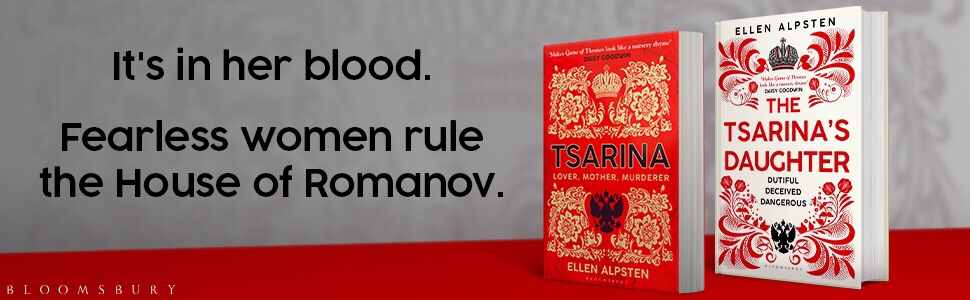
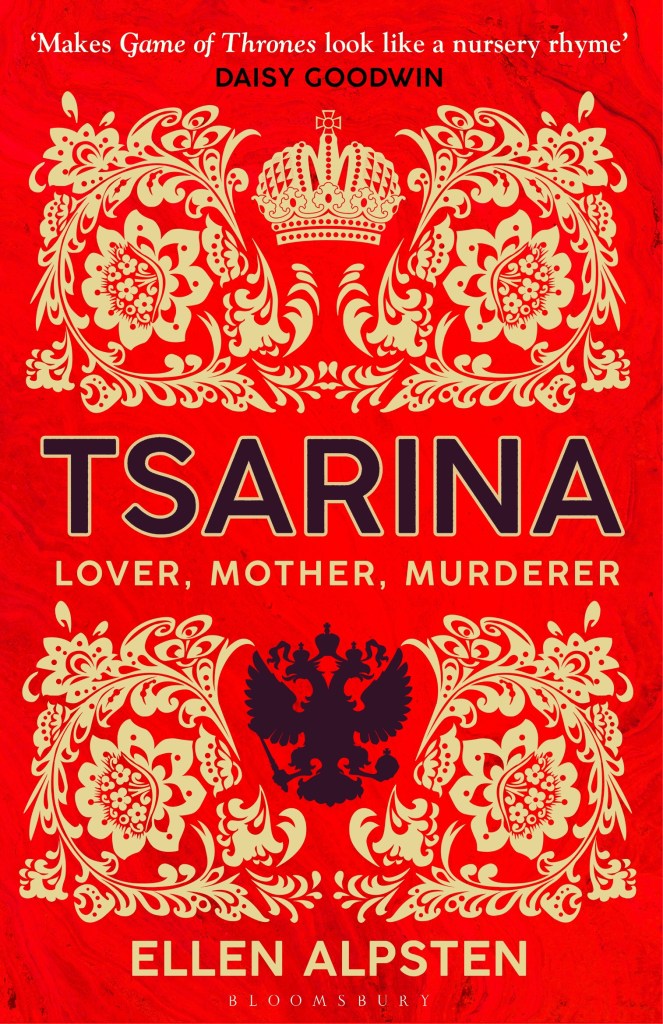
Tsarina by Ellen Epstein.

Catherine Alexeyevna rose from peasant beginnings to become one of the most powerful women in Russia as the second wife of Peter the Great. Known as Marta to her family she was born in 1684 in the village of Livonia. Her meteoric rise from illiterate servitude to the Russian throne is one of chance, but also, as the author puts it ‘intellect, wit and sensuality’. Her parents sold her into the service of a man called Vasilly from the town of Walk. The author pulls us into the world of this nine year old girl as she experiences the town for the first time. She is overwhelmed by the number of people and all the chimneys she can see, each one representing a family. In her wonder, she loses the count and becomes mesmerised by the foods being sold by street vendors. This experience inspires her and she begins to work in the kitchen, soon able to prepare delicious meals of her own.

It’s very hard not to admire the way this incredible woman rose through the ranks of Russian high society, almost always by catching the attention of men. This was a dangerous and volatile period of history and it must have taken a great deal of resourcefulness and cunning to succeed. She was observant, able to read people and their interactions, successful at manipulation and doesn’t let herself be used by men – unless she wants to be of course. There are moments when she is struggling but the right advice or opportunity seems to come along. She takes to heart a lesson taught by Menshikov, the Tsar’s best friend:

Use life’s surprises to your advantage. See your power over men like a hand of cards; play them, to trump your life’.

I really enjoyed it when the focus was on Catherine (Marta) and her rise. When she reaches her position as Peter the Great’s wife and Empress of Russia, the story starts to open up and include others within the court. When we’re not concentrating on Catherine, I wasn’t as engaged with the book, but maybe that was just me. Her life becomes swallowed up by the demands of being a monarch’s wife – the demands on her to produce an heir resulted in twelve pregnancies! The cruelty of Peter starts to come to the fore as well as his contrary nature. He upholds religious and cultural custom to a stubborn degree and then when it suits him, simply discards custom for his own advantage. He’s a textbook narcissist. Even though Catherine is surrounded by riches, lavish banquets and incredible jewels I didn’t envy her position. She knows the dangers of being his wife, because his first wife ended up in a prison cell and her lover was impaled alive, on a spike in Red Square.

Despite this being more fiction than biography, I think the author researched her subject well and worked hard to bring Catherine to life. There are some really dark moments of rape and torture, but this is probably an accurate portrayal of very bloodthirsty time in history. Its also a very sensual book, not just the lusty moments, which I really enjoyed, but also the author’s focus on the senses. The taste of the incredible dishes she creates, the smell of the incense and incredible interiors of the Russian Orthodox Church, all the way down to the sweat and fear of the torture chambers. When Catherine’s trying to keep Peter’s death a secret in order to keep the crown, I was drawn back into the action. As he lies there, dying in the Winter Palace, Peter has to face the fact he is leaving his country without an heir. His only son Alexei, was killed under interrogation for conspiring against him. This is when Catherine undertakes her greatest political manoeuvre and becomes Queen, despite Alexei’s son being the heir apparent. I enjoyed reading from Catherine’s perspective, especially considering the way her male enemies spread misogynistic stories about her suppose voracious sexual appetite. The book did it’s work in making me want to know more about this time and place in history. I’ll be going to All4 and watching their series starring Helen Mirren to learn more about this fascinating character.

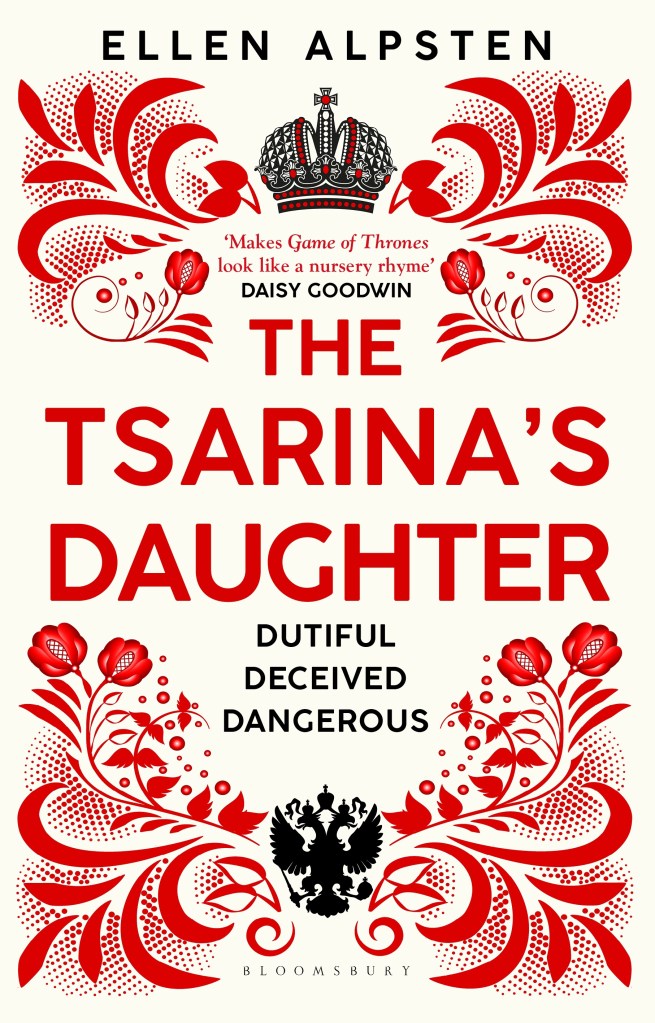
Next month I will be reviewing the author’s next novel

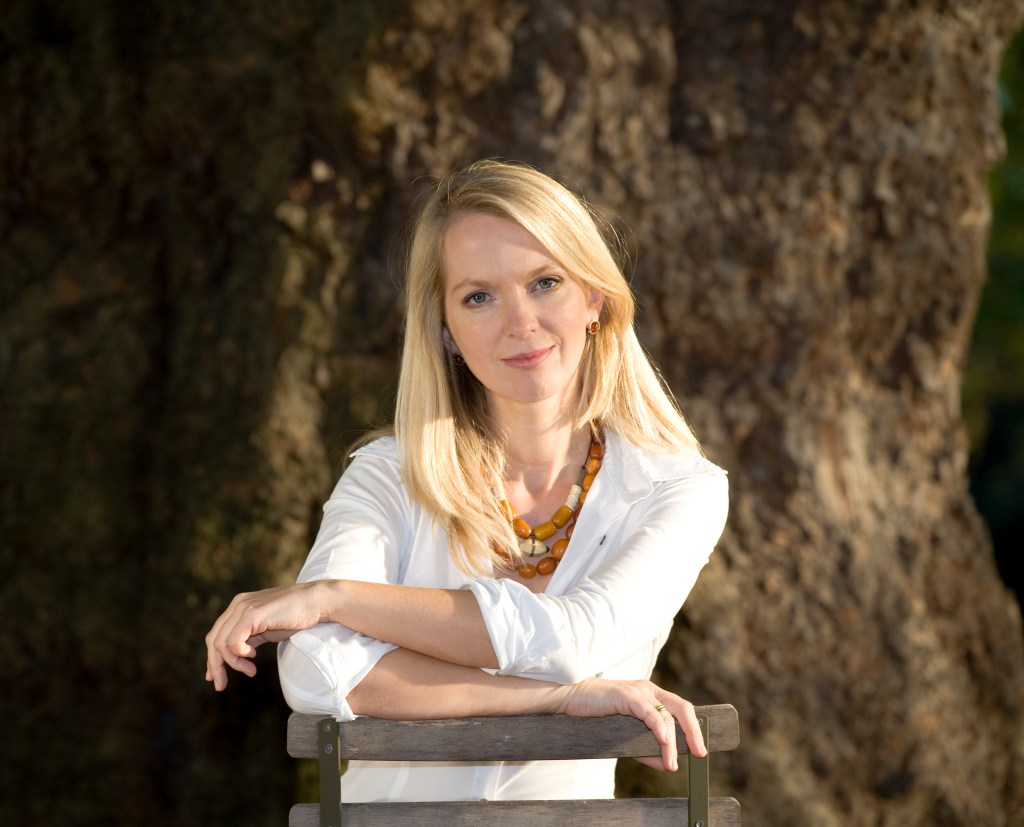
Meet The Author

Ellen Alpsten was born and raised in the Kenyan highlands, where she dressed up her many pets and forced them to listen to her stories. Upon graduating from the ‘Institut d’Etudes Politiques de Paris’, she worked as a news-anchor for Bloomberg TV London. While working gruesome night shifts on breakfast TV, she started to write in earnest, every day, after work, a nap and a run. So much for burning midnight oil!

Today, Ellen works as an author and as a journalist for international publications such as Vogue, Standpoint, and CN Traveller. She lives in London with her husband, three sons, and a moody fox red Labrador.

‘Tsarina’ is her debut novel. For more information about her literary life follow her on social media.

Coming Soon…

Posted in Netgalley

The Island at the Edge of the World by Deborah Rodriguez.

#TheIslandAtTheEdgeOfTheWorld #Netgalley #LittleBrownBookGroup

I have loved reading this novel while in lockdown, because it’s taken me away from my everyday life and thrown all my senses into the vibrant country of Haiti. I’ve been introduced to Haitian literature at university many years ago and love the author Edwidge Danticat. I’ve also read a lot about the history of the island and particularly the aftermath of the terrible earthquake, This novel follows four protagonists in that same time period. Charlie works as a hairdresser and has a great relationship with her grandmother but is estranged from her mother. Charlie has a traumatic past. These issues are both common to women in Haiti – trauma and the estrangement of families. Her grandmother Bea, thinks that Charlie needs a relationship with her mother to make sense of her past and find peace.Lizbeth has travelled to the island from Texas and is hoping to find her grandchild. She’s a widow, who has taken the courage to travel alone and find this part of her family that’s missing from her life. Senzy lives in Haiti and has a pivotal role in teaching these women true strength and resilience of spirit.

The descriptions of the island are immersive, I was assailed by sights, smells and colour until I’d built up such a vivid sense of place it was weird to look up and see my own living room! I enjoyed being educated about Voodoo. I knew how it came about as a combination of African animistic religions from the days of slavery and the French occupiers who practised Catholicism. It was interesting to see what the practice means to everyday Haitians and where spirituality fits into their lives. I also enjoyed the contradiction in both the island and the women of the novel. Haitian women are described as walking with ‘surety’, a pride and certainty in themselves. Rodriguez writes that you were left in no doubt they were not to be messed with. The island is equally bold and strong, but underneath there is some weakness – a sense that life here can be very fragile, despite its vibrant, powerful appearance.

Rodriguez will open some people9s eyes with her exploration of Haitian politics and society. There is, it seems, almost a resigned acceptance that corruption permeates all official organisations. As I know from my own reading, this extends to the NGOs too. The people have seen decades of this and it is now part of life. I find that so sad and struggle to imagine how trapped those at the bottom of society feel – nothing they do can make a difference. Through one of the narratives the author shows how corrupt the orphanages are in the country. Even those trying to help, might have ulterior motives.

Each woman felt real to me and I knew them well by the end of the novel. The author weaves their past into the narrative so we understand how they came to be here. They are well rounded with as many flaws as good points, but that only serves to make them more relatable. More than anything though I loved being immersed in this incredible place and the author completes the experience by giving us information on how to help and recipes to try. This is brilliant for me as I like to cook something to complement the book on my book club evenings. It is rare to come across a novel that balances both escapism and a social conscience but this book has both elements.

Meet The Author

Deborah Rodriguez spent five years teaching at and later directing the Kabul Beauty School, the first modern beauty academy and training salon in Afghanistan. Rodriguez also owned the Cabul Coffee House. She is now a hairdresser, a motivational speaker, and the author of the bestselling novel The Little Coffee Shop of Kabul. Deborah currently lives in Mexico where she owns the Tippy Toes Salon. To learn more about her visit http://www.debbierodriguez.com