Posted in Netgalley

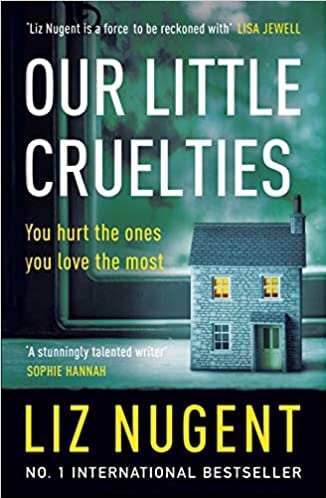
Our Little Cruelties by Liz Nugent

Published: Penguin Paperback Edition 21st Jan 2021

Never have the famous words of Phillip Larkin – ‘they fuck you up your Mum and Dad’ – been so apt. Reading this book was a very interesting experience and patience definitely paid off. Had I given in to my impulses and thrown the book down in frustration during the first part, I would have missed out on a great read. The story of three brothers over their lifetimes is compelling, interesting and a great study in how mental health difficulties can be passed on from one generation to the next.

The structure of the novel is what I had difficulty with at first. The first section was narrated by the eldest brother, Will. Written in short chapters, slipping between decades, we see aspects of his childhood through to the present day where he is a successful movie producer. He meets his wife Kate through his brother Brian,when she’s brought to a family dinner. They have a little girl called Daisy, but Will is much more focused on work than he is his family. We get the sense that Kate is a long suffering woman who gets more support from Brian, who is now Daisy’s godfather as well as her uncle. Brian is there for the birthdays and school concerts and has a great rapport with Daisy. Will is dismissive of Brian and his lack of ambition. He is also dismissive of Luke, despite Luke’s success as a pop star in his late teens. This section was difficult to read because I disliked him from page one. I didn’t think I could stand to listen to his perspective for a whole book. This made me think about my own bias and prejudice – what would I have done if he was a client and I was his counsellor? My main interest was in how close Will was to his Mum and through flashbacks we see she favours him, quite openly.

Luke, by contrast, really gets the brunt of their mother’s moods. He is the youngest, the weakest perhaps, but he is attractive and in his teenage years soon finds real success as a pop star. However, in the later fragments of his life he has times of struggle, where his mental health is poor and he turns to drink or experiments with drugs. He is an unusual child with a religious fixation to the extent where the family priest thinks he has a vocation! The other boys use his goodness against him, he is manipulated by them and by blaming him, they get extra food and attention. Only his Dad seemed wise to this, and just how poisonous the brothers, particularly Will, can be. There are moments where it seems his life is on track and he could be happy, but others where I wondered if he was just not meant for this world.

Finally, there’s Brian the middle brother. If Will is his Mum’s favourite and Luke is doted on by his Dad, who is left for Brian? He does seem mentally torn between both parents, but is without a champion in the same sense his brothers have one. Will is very dismissive of him, even though Brian does so much for his niece. He’s not grateful when Brian stands in for him, but instead is scornful that Brian has nothing more important to do. Will only recognises material success, not the strength or reward of happy relationships. Brian is the one who looks after Luke when his mental health deteriorates, but Will never recognises or appreciates this. In fact Brian’s relationship with Will becomes so destructive that other family members get caught in the crossfire.

The genius of this book is in the knowledge of family dynamics and how destructive they can be, but also in it’s clever structure. As mentioned, during the first part, narrated by Will, I was ready to put the book down. I couldn’t stand him. He was arrogant, self-centred and treats women appallingly. If the whole book had been his viewpoint I might have thrown it out of the window. Just when I was at the point of giving up, I saw Luke’s name across the next section and it was such a relief. As the tale goes back and forth in time and perspective we see a tiny bit more of the whole. At a Bob Dylan concert at a local castle, Will ends up in a fight and is taken to hospital with Dad and Luke following behind. Mum is left behind at the castle and doesn’t arrive at the hospital till late. We think that maybe she’s been caught out here, or that she simply cares more about enjoying herself than her son. But, this is Will’s perspective, for once his Mum has let him down. However, through Luke’s narrative we learn the truth, that something terrible happened to her, something that explains so much about how she behaves. When we finally get Brian’s section we see what a lifetime of being in the middle feels like; he feels overlooked, unconsidered and brushed aside. We find out things we already suspected and other things that surprise and enlighten us. Every single strand of this novel teaches us that we are only ever a small part of the picture and we must step back to see the whole.

This brings me to the second line of Larkin’s poem This Must Be The Verse and easily the best; – ‘they do not mean to but they do’. There are parts of this novel, particularly the way Dad behaves, where genuine mistakes are made and misunderstandings occur in the same way they do with any family. No parent, however hard they try, will get it completely right. However, there are other situations where the mental damage seems deliberate, especially in their mother’s attitude to Luke. Will’s intervention in Luke’s relationship, and the treatment of Will’s daughter Daisy towards the end of the novel are not mistakes. These acts are more than little cruelties. They are deliberately causing lifelong psychological disturbance. This is a complex and interesting novel that deftly moves from one narrow perspective to another, finally giving us all the pieces of the emotional jigsaw puzzle that makes up this family.

Meet The Author

Before becoming a full-time writer, Liz Nugent worked in Irish film, theatre and television. Her three novels – Unravelling Oliver, Lying in Wait and Skin Deep have each been Number One bestsellers in Ireland and she has won four Irish Book Awards (two for Skin Deep). She lives in Dublin with her husband.

Posted in Netgalley

The Night Hawks by Elly Griffiths.

It was lovely to be back in the world of one of my favourite literary heroines, the archaeologist and academic Ruth Galloway. I always feel at home in this space Elly Griffiths has created, with an evocative feeling of Norfolk at its centre. She presents the wide skies, marshlands and seascapes and their flora and fauna so clearly I feel like I know it. Yet there’s always that sprinkling of the mystical, the pagan, and the long buried beliefs of a Norfolk long ago. This mix of the earthy, real and scientific as opposed to the mystery and magic is something also echoed in her characters: the craggy, straightforward, Nelson; the Druid Cathbad with his cloak, sayings and pronouncements; Ruth somewhere in-between – appreciating the science and procedure of her work, but not fully dismissing the beliefs and mysticism that surrounds the burials she visits and excavates.

The Night Hawks of the title are a local metal detecting group, who stumble upon a burial site out on the marshes towards the sea. Ruth has been here before, excavating a ‘henge site’ with her then professor, Eric – a man whose conflict between mysticism and science still hangs over this place. The group finds a hoard of Bronze Age weapons, but nearby they also find a body. Nelson thinks it might be an asylum seeker, desperately trying to cross the channel in tiny boats and fallen overboard. He rings Ruth anyway, because he knows she’ll be able to date the weapon find and know if there’s any link. The body turns out to be a local boy, Jem Taylor, who has just been released from prison and has a distinctive tattoo of a snake on his neck. Cathbad suggests this may be a nod to the local legend of the Norfolk Serpent. This could be an accidental drowning, but the second body suggests murder. There are no real clues to who might have wanted Jem dead.

The second case Nelson is called to investigate is that of a couple who seem to have died in a murder-suicide at a local farm. Black Dog Farm is linked to another local legend, that of the Black Shuck, a large black ghostly dog that is said to appear to people before they die. Nelson is sceptical of course, but since the suicide note ends with the ominous ‘he’s buried in the garden’ he asks Ruth to excavate. Ruth has already had a strange encounter with a large animal on a country lane, so her mind starts whirring when she finds large animal bones. Maybe Cathbad has more wisdom than they give him credit for. As Nelson and Judy talk to the couple’s children and Ruth thinks about the farm, it seems clear that there’s something very wrong about Black Dog Farm, something that might signal serious danger for all concerned.

I never stop talking about how much I love Ruth Galloway and here she’s back to herself after a period of time living with her partner Frank in Cambridge. Norfolk is in Ruth’s bones it seems. She and Kate seem to belong in the small cottage that looks out to the coastline, with their cat. Ruth seems to be still recovering and I love how Griffiths writes Ruth’s inner thoughts as she contemplates the choice she made: to be true to her love for someone unavailable, leaving her alone at times. As we’re all a bit battered by love and relationships as we hit our forties, I found her contemplation of loneliness within and without relationships truthful and moving. What I love most about this character is her authenticity. She doesn’t dumb down her intelligence, she doesn’t change her style and when absorbed in a really mucky dig can be decorated with mud from head to foot but doesn’t care. She is resigned to live on the fringes of Nelson’s life and knows his loyalty must be with his wife Michelle, but this case is a tricky one and may bring them close to danger once again. If one of of their lives is at risk, what will happen to those loyalties?

This was a great addition to the Galloway series and has all the ingredients I enjoy: a potentially sinister group of men, the appearance of a mystical creature, the mix of hard science, history and pagan ritual. All my favourite characters are present – I’m always intrigued with the attraction between Judy and Cathbad. There are new people too. There’s a new man in Ruth’s department at the university, a researcher whose very keen to take charge of the Bronze Age site and seems to be everywhere they turn on this case. Could he be a threat to Ruth’s settled life, her accord with Nelson, her academic prowess or something even more sinister? I found myself suspicious of him throughout. I was recently having a chat on Twitter, including Elly Griffiths, and we discussed casting for a potential TV series ( come on BBC what are you waiting for?). Ruth Jones seemed to be the choice for Ruth, David Tennant for Cathbad and either Debra Stephenson or Leanne Best as Michelle. Nobody had a good idea for Nelson. We all agreed he needed to be older, a bit craggy but somehow attractive, with a twinkle in the eye. I’m putting forward either David Morrissey or Phillip Glenister – both would have the necessary Northern bluntness I think. Till then I’ll wait patiently for the next instalment, when I expect big changes for my favourite archaeologist.

Meet The Author

I’m the author of two crime series, the Dr Ruth Galloway books and the Brighton Mysteries. Last year I also published a stand-alone, The Stranger Diaries, and a children’s book, A Girl Called Justice. I have previously written books under my real name, Domenica de Rosa (I know it sounds made up).

The Ruth books are set in Norfolk, a place I know well from childhood. It was a chance remark of my husband’s that gave me the idea for the first in the series, The Crossing Places. We were crossing Titchwell Marsh in North Norfolk when Andy (an archaeologist) mentioned that prehistoric people thought that marshland was sacred ground. Because it’s neither land nor sea, but something in-between, they saw it as a bridge to the afterlife; neither land nor sea, neither life nor death. In that moment, I saw Dr Ruth Galloway walking towards me out of the mist…

I live near Brighton with Andy. We have two grown-up children. I write in a garden shed accompanied by my cat, Gus.

Posted in Netgalley

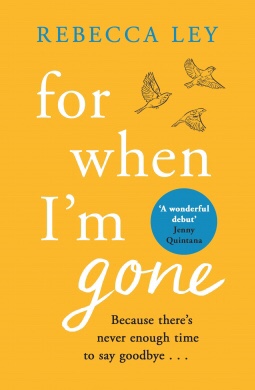
For When I’m Gone by Rebecca Ley.

Publisher: Orion. 3rd September 2020.

There is never enough time. Even when a loved one has been ill for so long and the prognosis is terminal, that moment when they’re gone is seismic. Everything in your world shakes up and resettles around you, but in a totally different shape. When my husband died it had been coming for a long time. He was also suffering. His MS had affected his ability to swallow so he was PEG fed and kept hydrated with a tube directly set into his stomach. He would aspirate saliva, then develop pneumonia in an endless cycle till he decided not to treat it anymore. He’d spent months in hospital, before I received the call from the hospital. Listening to him struggling for breath for 12 hours was torturous. Yet when he took his last breath at 5.15 am, my first thought was ‘no, I wasn’t ready.’

Rebecca Ley’s novel is about a life cut short in this way. Sylvie is given a terminal cancer diagnosis at the age of 38. She and Paul have a marriage that seems perfect. He is a doting husband and father, and loves Sylvie’s intelligence and beauty. There is a certain prickliness to her character, which could make her difficult, but they seem to compliment each other and are great parents to their children Megan and Jude. When Sylvie receives her diagnosis she knows she must help Paul with the aftermath. He needs a manual that helps him deal with a domestic life that’s more complicated than he realises. She also needs to disclose a secret that she’s been keeping for the whole of their married life. As Paul uses her manual to try and negotiate life after Sylvie, he begins to realise just how much she did for them, and how much more indebted he is than he realised. Ley writes about reconciling a life only half lived, but also those compromises made in a marriage and as a mother. This is where he truly gets to know his wife in a way he couldn’t when she was alive.

The book is divided into past and present chapters, so we can be let into Sylvie’s life, but also to form a contrast with after she’s gone. The manual is confessional and written in the first person. Then we have the third person viewpoints of both Paul and Sylvie. Through this we see the beginning of their relationship where everything is romantic to the trickier aspects of their shared life together. I liked that Sylvie isn’t perfect, it’s easy to make a lost loved one into a saint, but Ley avoids that here and it’s all the better for that. Throughout we see that same spiky element to her nature, it’s attractive in a way, but could be seen as hardness or being difficult. As we read through the manual though, after she’s gone, we see a reason for that hardness – Sylvie is this family’s structure, their backbone, and without it what do they have to keep them upright and together?

There is the constant tension of what Sylvie’s long held secret may be, but it wasn’t the thing that kept me reading. It was the slow revelation of her character that held my attention. In Sylvie, Ley has written a truly modern female character who has flaws and makes mistakes, but isn’t cast as a bad person. Often in books about cancer patients, or mothers, there is that temptation to turn them into saints and martyrs. I love that the author made a conscious choice not to do that. Through Sylvie’s choices and her inner monologue as she makes them, we see the complexity of being a woman, a mother and a wife. Sylvie is complicated, sometimes she hurts people and I didn’t always like, or understand her. She is so ‘real’ that I started to think about her in terms of my own friends and family; we don’t always like what they say or do, but we still love them. I felt like I’d got to know a real person and this only added to the devastation when she was gone. I would like to see more women like this in fiction.

The supporting characters were also well written, three dimensional people. I felt particularly for Megan who withdraws as the book goes on. There was also a great contrast between Sylvie and Paul’s mothers, with one very traditional Mum and the other very far from conventional. Ley shows us the chaotic, random and difficult nature of life. This brings home the fact that we never know what’s going to happen next, something people who’ve experienced loss and illness know only too well. I always make sure I tell my new partner and stepdaughters that they should take care and I love them, every time they leave the house. I never want them to wonder how I feel about them, or for something to happen when I haven’t reminded them how much they mean to me. I felt deeply for the family at the heart of this heart-breaking story and it will stay with me for a long time. This extraordinary book is Rebecca Ley’s debut, so I will be following her writing closely to see what’s next.

Meet The Author

I am new to being an author, but the idea that people might read my work and want to connect with me about it is honestly my biggest dream. I would love to hear what you think of For When I’m Gone. You can find click the ‘follow’ button on Amazon, or find me on Twitter or Instagram, where I share fragments of my life raising three children in Hackney, east London. I grew up by the sea in Cornwall and never expected to be raising a family in the inner city, but here we are! I have spent the last sixteen years working as a journalist. I’ve worked on staff at The Times, Sun and Daily Mail, as well as writing a column in The Guardian about my father’s dementia. I’ve also freelanced for a variety of other papers and magazines, including The Telegraph, Psychologies, Mother and Baby and Grazia. And I write scripts for an animation company too.

Posted in Netgalley

The Snow and the Works on the Northern Line by Ruth Thomas.

What a wonderful surprise this novel was. I’m clearly getting worse, we’re only three weeks into January and I’m already in love with a new literary heroine. I absolutely adored Sybil and felt so at home in her company that I just kept reading all day. I finished at 11pm and was bereft, because I wouldn’t be with Sybil any more. Yes, this is what happens to avid readers. We fall head over heels with a character, can’t put the book down, then suffer from book withdrawal. All day I’ve been grumpy and reluctant to start a new book.

Sybil’s life is puttering along nicely. She has a job she enjoys at a London museum – Royal Institute of Prehistoric Studies (RIPS). There she produces learning materials, proof reads and indexes archaeological publications, and helps people with research enquiries. She has a great boyfriend, Simon, who is a chef and likes to make her bread from obscure grains. Her quiet, settled life is turned upside down when she, quite literally, bumps into an old nemesis from her university days. Sybil and Simon have gone ice skating, where they spot Helene Hanson, Sybil’s old university lecturer. Sybil doesn’t want to say hello, after all Helene stole some ideas from her dissertation and put them into her research on the Beaker people. They make their way over, very unsteadily, and end up careering into Helene’s group and in Sybil’s case banging her head. She has a nasty bang, and from there her life seems to change path completely. Only weeks later, Helene has stolen Sybil’s boyfriend and in her capacity working for a funding body she has taken a huge interest in RIPS who will be selling her Beakerware (TM) in the gift shop and welcome her onto their committee as chair of trustees. Sybil’s mum suggests a mature exchange of views, but Sybil can’t do that. Nothing but all out revenge will satisfy how Sybil feels. She’s just got to think of a way to expose that Helene Hanson is a fraud.

First of all I want to talk about the structure of the novel. As Sybil’s life starts to unravel, so does her narration. A suggestion from a friend leads Sybil to a poetry class at her local library, so prose is broken up with poetry and very minimal notes of what Sybil has seen that she hopes to turn into haiku. This is a Japanese form of poetry with a set structure of thirteen syllables over three lines in the order of 5, then 3, and then 5 syllables. Having lived next to a Japanese meditation garden for several years I started to write and teach haiku as a form of meditation. It’s a form linked to nature and is very much about capturing small moments. So if Sybil sees something that might inspire her, it makes its way into her narration. I loved this, because I enjoy poetry but also because it broke up the prose and showed those quiet still moments where Sybil was just observing. She works with found objects – most notably a little teacup, left on a wall, that has ‘a cup of cheer’ written on the side. There’s a very important reason for the fragmentary narration, that I won’t reveal, but I loved it and thought it was so clever. Many of my regular readers will know why I connected with it though. These changes could just be a visible symptom of the chaos in Sybil’s mind as she goes through a massive shift – physically from one flat to another – but a mental shift towards living alone, to coping with her nemesis constantly popping up at her work space and to experience the heartbreak. We’ve all been there so her situation is easy to relate to.

The characters are brilliantly drawn, funny, eccentric and human. Sybil’s boss Raglan Beveridge – who she observes sounds like a cross between a knitted jumper and a hot drink – is such a lovely man, easily swayed but kind and tries to ensure that Sybil is ok. I enjoyed Bill who she meets several times across the book, in different situations. He’s calm, funny, thoughtful and shows himself to be a good friend to Sybil, even while she’s barely noticing him! Helene seems to hang over everything Sybil does, like an intimidating black cloud promising rain to come. She is a glorious villain in that she has very few redeeming features, and tramples all over Sybil’s world at home and at work. The author cleverly represents this in the very structure of RIPS. Sybil likes her slightly fusty, behind the times little museum. There’s a sense in which it is precious, that the spaces within shelter some eccentric and fragile people. They’re like little orchids, who might not thrive anywhere else.

Helene’s organisation brings much needed funding, but with it comes obligation. As chair of the trustees, she wants to change the structure of the building and all these precious spaces might be sacrificed. Her commercial enterprise, recreating Beakerware (TM) for the museum gift shop, means the shop expanding into other areas. Exhibits that have been on display for years will be moved into storage to make room and Sybil dreads Helene using Simon as the face of the range. Imagine giant posters of your ex greeting you every morning at work. To add insult to injury she inserts herself into Sybil’s everyday job by insisting on adding a section into Raglan’s upcoming book, meaning that Sybil has to index Helene’s writing. Could there be a chance here, for Sybil to gain some satisfaction? As Sybil’s mum hints though, revenge can be more damaging to the person seeking it.

This was a quiet book. As I was reading it, I was engrossed and the outside world was muffled for a while. It reminded me of those mornings after snowfall, when the outside world is silenced. I felt a deep connection with Sybil. She’s offbeat, quirky and has a dark sense of humour. We meet her at her lowest point and we’ve all been heartbroken, but it was much more than that. I’ve been this broken by life, I was a like a vase, smashed into so many pieces I didn’t know if I could pull all those pieces back together. Even if I did, I knew I would never be the same person. My loss felt so huge that it affected my actions – I left doors unlocked when I went out, forgot to pay bills, and started to make mistakes at work. I had always prided myself on being very ‘together’ and here I was falling apart. I discovered Japanese art that healed me in some way – it’s called Kintsugi and it’s the art of repairing broken ceramics with liquid gold or other contrasting metal. It shows the cracks, that the piece has been through something, but it’s still whole. I felt that this applied to Sybil’s journey and the book’s structure too. Sometimes, broken things can be even more beautiful than they were before.

A piece of Japanese kintsugi

Meet The Author


Ruth Thomas is the author of three short story collections and two novels, as well as many short stories anthologised and broadcast on the BBC. Her writing has won and been shortlisted for various prizes, including the John Llewellyn Rhys Award, the Saltire First Book Award, the VS Pritchett Prize and the Frank O’Connor International Short Story Award. She lives in Edinburgh and is currently an Advisory Fellow for the Royal Literary Fund. The Snow and the Works on the Northern Line is her third novel.

Why not go back and check out the other reviews from the blog tour:

Posted in Netgalley, Random Things Tours

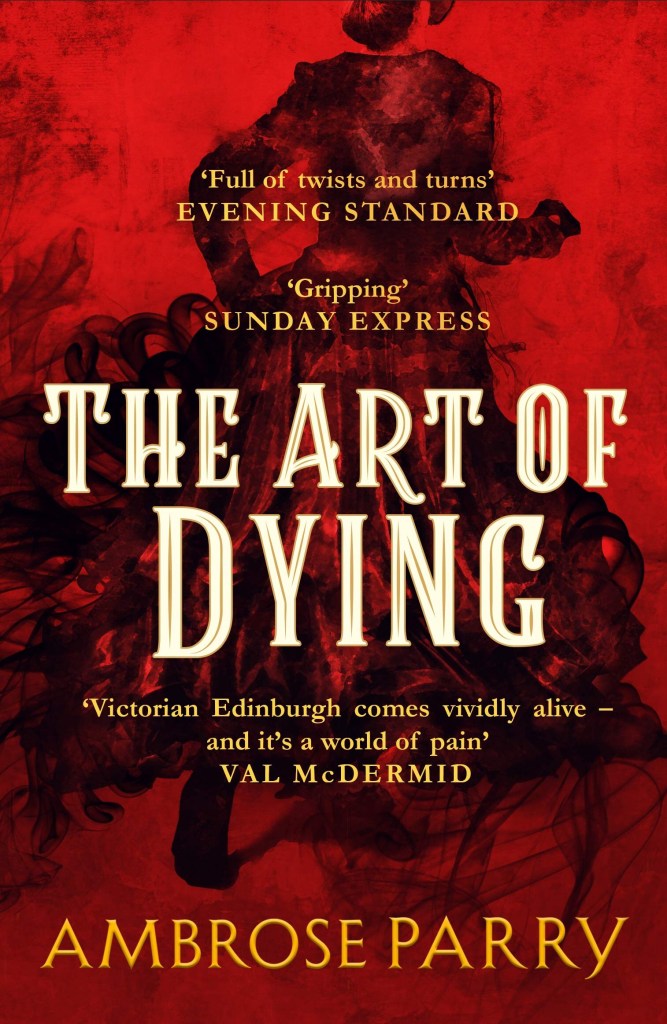
The Art of Dying by Ambrose Parry.

Today, I’m happy to be on the closing day of this blog tour for The Art of Dying. This interesting mix of murder mystery, historical/ medical drama and romance, creeps up on you slowly, until you’re determined to keep reading and see whether a killer is stalking the sick of Edinburgh. In fact at what point I couldn’t decide what I wanted to know more: would the killer face justice, would Raven reconcile with the woman he loved, who was stealing money from the surgery, would Sarah live and what the hell was Quinton up to? It’s hard to sleep with all that going round in your brain! I hadn’t read the first novel featuring Dr. Wilberforce Raven, but it was easy to catch up with this instalment set in Edinburgh in 1849. We really do hit the ground running as Raven is attacked in an alley way in Prague. In the dark and confusion one of the attackers draws a gun, Raven draws his knife and a shot rings out ricocheting off the narrow brick walls. Raven slashes his knife in the air from left to right. He thinks he made contact with an attackers throat, but he doesn’t know if he struck a fatal blow and doesn’t know who is shot.

This chaotic existence seems to be the way Raven lives, but will it follow him back to the streets of Edinburgh. He’s been offered a place under the prestigious obstetrician Dr. Simpson, who he trained under at medical school. He’s looking forward to being back in Edinburgh and in the hospitable, but slightly chaotic, family household. He’s also looking forward to getting away from the guilt that he may well have killed a man in Prague. The only downside involves women. He will be leaving Gabrielle behind – the woman he’s been seeing in Prague – but they’ve both known it was a short term relationship. More pressing than that, he’s wondering whether Sarah is still part of Dr. Simpson’s household. Sarah was originally the Simpson’s housemaid, but did assist the doctor in clinic at times. Raven was attracted to her intelligence and determination. They seemed drawn together by an invisible bond and the closer he gets to his old city, he can feel that bond tugging again. They way they’d been in the past, Sarah might have confidently expected a proposal and had it just been about love, Raven would have had no qualms. However, as a young doctor starting out in a profession where reputation is everything, could he risk marrying a house maid? What would Edinburgh society think and would he be risking his career?

I can’t say I warmed to Raven as a character. I found him arrogant and apt to jump to conclusions, especially where it would benefit him. More importantly, I found him cowardly. Especially in his dealings with Sarah. I had such a moment of satisfaction when he enquired after Sarah when arriving, using her maiden name. When the new house maid explains she is now Mrs Sarah Banks, I actually smiled. To find out that her new husband, Archie Banks, is also a doctor and has a comfortable lifestyle, is a huge life lesson for Raven. Here was a man with strength of his convictions. He had loved Sarah and married her, with no regard to his position or social standing. Of course, we find out later on, that Archie has a reason for not caring about such things but he’s still a man of honour. Sarah is an intelligent, but also perceptive woman, and this is her advantage as she and Raven come together to restore Dr Simpson’s reputation. During a difficult delivery, Simpson is rumoured to have missed a haemorrhage and the dead woman’s mattress was said to be so soaked with blood it had to be disposed of. Simpson expressly asks Raven not to look into the matter and certainly not to bother the grieving widower in his defence. Raven even has the odd worry about Simpson himself, especially his potential overuse of chloroform – Raven is served a drink laced with it on his first evening. Sarah, however, feels that Simpson is a good doctor and that there is something else underlying this need to discredit him.

This is not the only investigation going on in the household. A new employee, Mr. Quinton, is there to look after the admin and keep the books for the practice. Unofficially, he is trying to find the culprit for money going missing in the house. He wants to book drugs in and out too, and research patterns in the practice’s spending. There’s something about his persnickety nature and constant presence that’s very off putting. He doesn’t work in harmony with the house, but rather against it. He isn’t at the Uriah Heap level of obsequiousness, but that’s who I kept thinking of when he came into the story. I liked how the author brought in all these levels of surveillance. Quinton watches the household and practice, but he’s been under the steely eye of the butler since he arrived. Sarah is watching both Dr. Simpson, but also stumbles into another investigation while trying to clear his name. Raven is being watched, but is also watching others with Sarah. Their focus is split though: Sarah thinks Simpson’s name can be cleared and as the deaths pile up, the same name keeps cropping up, a nurse called Mary who has cared for people who seem to have lost their lives in suspicious circumstances. A sudden illness that involves seizures, unconsciousness, fatigue and weakness appears out of the blue, killing people in a matter of hours. Could this Angel of Mercy be an Angel of Death? Or could there be a rare new disease for Raven to discover? He daydreams about the acclaim it could bring if he has uncovered an unidentified disease. With the title Raven’s Malady running through his head, the two are on the look out for different things, but who will be proved right? More importantly will the investigators themselves be safe, as they trail all over Edinburgh to find answers?

If we add to this: a moneylender with a giant as his right hand man and some unexpected debtors on his books; a pregnancy; a bereavement; and a breakneck race to save someone’s life. The book is definitely jam packed with incident and tension, whether that be the tension of the race to find our culprit or the more ‘slow burn’ tension between Raven and Sarah. Our writers leave us with enough answers to feel satisfied and enough cliffhangers to look forward to the next book. This isn’t an easy balance to strike and I felt it was well – judged here. I was intrigued by the period detail when it came to surgery and obstetrics. I found myself won over by most of the characters. Sarah leapt off the page and when I read Mary’s chapters I was drawn into her upbringing and the terrible effect this had on her psychologically. This is a series I will look forward to revisiting and maybe even Raven might win me over next time.

Meet The Authors

This book is the second in the series featuring Dr Raven. This one is published by Canongate (Blackthorn) and will be available on March 2nd 2021. Ambrose Parry is a pseudonym for a collaboration between Chris Brookmyre and Marisa Haetzman. The couple are married and live in Glasgow.

Chris Brookmyre is the international bestselling and multi-award-winning author of over twenty novels, including Black Widow, winner of both the Theakston’s Old Peculier Crime Novel of the Year and the McIlvanney Prize for Scottish Crime Novel of the Year.

Dr Marisa Haetzman is a consultant anaesthetist of twenty years’ experience, whose research for her Master’s Degree in the History of Medicine uncovered the material upon which The Way of All Flesh was based.

Posted in Netgalley

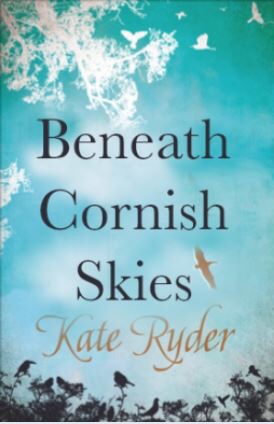
Beneath Cornish Skies by Kate Ryder.

Published: 7th Jan 2021 Aria and Aries ISBN: 978-1800245983

I felt like I’d stepped into a little oasis when I picked up this ARC. I had been reading a very bloody crime novel just before so this was like a balm for the soul! Cassandra appears to have everything she could want in life. She lives in an incredible refurbished farmhouse on the South Downs with attached stables. Her long term partner, David, is a successful businessman who just happens to be charming and good looking. They have money and she can spend her time schooling horses then dressing for dinner from her beautiful walk-in wardrobe. David calls her Sandie and they’ve been together over ten years – in fact ever since she was involved in a car crash that killed both of her parents. David was first on scene and helped her out of the wreckage. They’ve never been apart since. He was attentive in the days following the accident, there for her therapies and as she was wheeled out of the hospital it seemed only sensible to stay with him – there being nowhere else to go. So why is she feeling dissatisfied and as if she’s drifting?

He catalyst comes as she’s out riding one morning and stops for a breather in one of the top fields behind the house. As she looks down to the farmhouse she sees David, who is working from home, and their cleaner Melanie coming to sit outside with a cup of coffee. She wonders to herself about the last time David paused his day to have a moment with her. Then she sees Melanie rest her hand on his arm, in a familiar way and she starts to sense that there’s more going on she realised. The incident brings to the forefront of her mind many things about her life that she’s unhappy with. David is all about appearances, so the house must be kept tidy at all times. She’s almost trained to wash a cup or plate immediately after she’s used it. He likes to come in and find the house immaculate. He calls her Sandie or Sandra when her full name is Cassandra and he likes her to dress well especially if they’re going to a party or function for work. Even then she can’t let loose, no dancing or drinking excessively, nothing that might show him or the business in a bad light. Yet, that very evening at a barbecue, she sees him exiting a private bit of the house, again with Melanie in tow. When she finds an earring in their bedroom, she can’t ignore things any longer. It’s not just the obvious infidelity. She needs something different.

On impulse she picks up The Lady magazine, drawn in by the cover photo of a man walking from a tunnel of trees. The man is a writer, Hunter Harcourt, and his article about ancient byways and the magic they possess. Within the adverts though she finds an advert that catches her eye; a family in a Manor House in Cornwall need help with the stable yard and a growing family for six months. This might be just the breathing space she needs. With David seemingly unrepentant about his affair, Cassandra finally asks him the one thing she has always wanted to know – will he ever be willing to have the children she has always wanted? David is adamant, children are not in his future. So, early one morning Cass hitches the horse box to her Range Rover and takes a leap of faith. She drives to Cornwall, only stopping at Melanie’s home to return the earring. What she finds in Cornwall is space enough to think, but activity enough not to dwell on what has happened. She falls in with the Kinsman family and their gorgeous children very easily. The Manor House and grounds are beautiful and Caspian soon finds his feet with the other horses. Cass finds solace in the rugged Atlantic coastline and the time spent with the children. She is shocked when, on her day off, she is looking for something to fill the hours when she happens on a talk on local history by a local author, Hunter Harcourt, otherwise known as Luke. Their meeting begins a friendship that seems so natural, almost as if they’d met before.

There was so much to like about this book. I love Cornwall and I felt as though I was there, with the descriptions of the villages, the beaches and those ancient places that seem to hold magic. I loved watching Cass unfurl in her new environment as she fits in so beautifully with the Kinsman family, the landscape and the new friends she makes such as surfer Robin. This is about someone awakening and finding their authentic self, something she’s never been able to do before, having been so busy fitting around David’s standards and timetable. Cass went straight from her parent’s household to David’s with no gap between. This is the first time she has stood on her own two feet and her confidence grows. The relationship with Luke seems so predestined that it was a huge disappointment to find out he’s married to the feisty Amanda. We soon see the cracks in their marriage though, not just her infidelity, but their differing views on where to live seem insurmountable. The natural way Luke and Cass seem to fit together seems to be pre-ordained – this is where I felt more could have been made of the supernatural aspect of the story.

Soon after arriving Cass finds that the manor is haunted by several ghosts, but the one she seems to see most is the young girl who had fallen in love with the gamekeeper. Cass feels that, just like the ancient byways, there are spaces within the fabric of time at the manor, where ghosts may appear. Cass has an affinity with the the young woman in her peacock blue dress, but could it be more than that. It felt like the author was flirting with the idea of Cass and Luke being a reincarnation of the couple – the references to her gypsy soul, the sense they have of meeting before, the apparition Cass sees and hears. I think this could have been explored even more than it was. Cass clearly has some psychic ability; she experiences the ghost of a maid, has vivid dreams about places and people from another time, and at one point hears a ghost ship. I found myself wanting more of this and would have loved to know more about the daughter of the house and the gamekeeper, possibly in another time frame. Luke is a dream of a man, gentle, intelligent, loves the outdoors and animals and seems to know himself very well. His marriage seems to be one made when young, when differences in outlook seem to matter less and we think love can overcome anything. Sadly, Luke finds as he gets older, the more he needs the pace of life in the country whereas Amanda is a city girl who needs the bustle and the noise.

Of course I wanted David to get some sort of comeuppance for his awful behaviour. Even in absence he tries to push Cass’s buttons by ordering her home, then pleading that he loves and misses her while mentioning someone he’s having casual sex with in the next breath. He is arrogant, fussy and I couldn’t think of a single reason Cass should return to him at the end – other than habit and conditioning. I won’t ruin the end, but it does keep you hooked to the final pages when a terrible secret emerges. This was a gentle romance, set in a beautiful part of the world and is as much about Cass falling back in love with herself as it is anyone else. It’s a voyage of self-discovery, where slowly she heals and finds her authentic self. I found it thoroughly enjoyable and a little oasis of calm in a busy month.

Meet The Author

Kate Ryder

Kate Ryder is an Amazon Kindle international best seller who writes timeslip and romantic suspense in a ‘true to life’ narrative. On leaving school she studied drama but soon discovered her preference for writing rather than performing. Since then, she has worked in the publishing, tour operating and property industries, and has travelled widely.

A member of the Romantic Novelists’ Association and The Society of Authors, in 2017 Kate signed a 4-book contract with Aria (digital imprint of award-winning independent publisher, Head of Zeus). Originally from the South East of England, today Kate lives on the Cornish side of the beautiful Tamar Valley with her husband and a collection of animals.

Keep in touch with Kate:
http://www.kateryder.me
Twitter: https://twitter.com/KateRyder_Books
Facebook: https://www.facebook.com/kateryder.author
Instagram: @kateryder_author

Posted in Netgalley

The Lamplighters by Emma Stonex.

Published: 4th March 2021 Pan Macmillan (Picador)

I loved this book so much that I went to bed early two nights running so I could finish it uninterrupted. I was so drawn in by the isolation of this lighthouse, that it was just standing directly in the sea and no one could come on or off until the relief boat came. Inspired by true events, the story is set in two time frames. In one we learn that a writer is researching a book on a famous disappearance of three lighthouse keepers. In 1972, miles off the coast of Cornwall a relief boat arrives at the Maiden, to find the door locked from the inside, the clocks stopped and no sign of the Principle Keeper or his two assistants. He contacts the women left behind by these men: Helen, wife of the Principle Keeper, Arthur; Jenny, wife of Bill his deputy; Michelle, girlfriend of the new recruit Vince. They have all received money from Trident, the company who employ the keepers, but with that came a directive, not to talk about the events surrounding the mystery. At the time, Vince came under the most suspicion. New to the area and with a criminal past, he seems the likely candidate to have harmed the others. Yet, why would Arthur write of a huge storm in the log, when seas had been calm all week? What became of the small boat rumoured to have sailed near the Maiden? There were also whispers about a mechanic sent to carry out repairs at the Principle Keeper’s request. It’s hard, years later, to distinguish between rumour and truth. Will any of the women speak to the writer and will they finally solve the mystery of what happened to the men?

This felt like an intriguing mix of mystery and love story, with a hint of the supernatural. There was a real difference between the sections on land and those at sea. As we meet the women, there is a grounded reality about their stories and their lives. Whereas the sections out in the sea are surprising, although there’s routine in the keeping of a lighthouse, it still feels like an escape, cut off from the real world. As they look out surrounded by waves they could be in any time and the struggles of the world can’t reach them. The sea narrative has a disjointed feel at times, they shift and turn, we’re sometimes unsure what is reality and what is fantasy. The women’s recollections feel more based in fact, they’re relating their own history whereas the keepers seem firmly in their present- only reacting and dealing with what is in front of them. This shows the huge disparity in how these couples were living their lives back in 1972. I could really imagine that jolt of having the person you spend your life with leave for several weeks, then just as you’re used to their absence they return again. It made me think of military marriages that often flounder because of this. Just as the home has a routine, it’s disrupted by someone returning again, changing the dynamic and wanted to do things differently. I felt particularly for Jenny, who has children to cope with in this remote area with little support and I could see how resentment might build.

These have not been easy relationships and living with the uncertainty of what happened to their men has affected them differently. Helen has experienced so much loss, losing Arthur after losing her only child who drowned when he was a toddler. The sea has claimed everything she loved and while she is matter of fact in stating the men must be dead, her certainty is brittle and she hasn’t fully let go of the events at Maiden. Helen feels that even when Arthur was home, he wasn’t fully present. Something of him always stays out on the sea – in fact perhaps, it’s the only place he truly makes sense. The Maiden is always there, towering between them like a mistress. Arthur does love to be out there, but for reasons Helen hasn’t realised. There is a sense that this couple have stopped talking and just below the surface there are secrets, some that perhaps explain Jenny’s animosity toward her. Jenny can’t seem to accept that her husband Bill has gone and welcomes someone trying to find out the truth. There is a hatred of Helen that runs deep, but it takes some time to find out whether she has reason to resent her so much. Michelle has moved on and is now married with children. She is very pragmatic about her life choices, she knows she doesn’t love her husband as she loved Vince but it can work and they have a family. Although there were so many rumours, Michelle is adamant in her defence of her first love. Yes, he had committed a crime and had often mixed with the wrong people. She could believe the rumour of the mechanic, despite Trident claiming they didn’t send anyone. Perhaps this was Vince’s past catching up with him, dressed in a mechanic’s overalls?

I loved the descriptions of the sea, and how it was a character in its own right. Sometimes calm, deceptively so, until a sudden swell could catch you by surprise. There are storms where waves batter the tower almost all the way up to the light itself. The sea is capricious, relentless and must be respected. The little touches of the supernatural add to the puzzle and intrigue the reader. Arthur’s sighting of something glinting silver in the sea or the little sail boat that passes by. Bill’s strange story of seeing the same man twice as he’s driving along and has to stop for him to cross – somehow he knows this isn’t a lookalike, it is exactly the same man. Is there a link between this strange story and the mechanic who turns up and seems to know all about them? This is where I started to wonder what was real? I wasn’t sure whether one of the keepers was having a mental health crisis and we were privy to his inner thoughts and delusions. Bill also has a strange attachment to Helen and I wasn’t sure whether his affections were returned or whether he was obsessed. Just enough little creaks, bangs and noises about the place are also making Vince jumpy. Could the isolation have proved too much for him?

The author weaves an unsettling tale and I wasn’t sure we would ever know what really happened. I was surprised, but incredibly satisfied by the ending. I thought the depiction of complicated grief in all the women felt real and honest. The glimmer of hope for their future was very welcome. I was left though, with an eerie feeling and a sense that the lighthouse might still be holding some secrets. That perhaps if you sailed nearby on a clear day you might see a father and his small boy looking out to sea, together forever in this one place outside of time.

Meet The Author


Emma Stonex is a novelist who has written several books under a pseudonym. THE LAMPLIGHTERS is her debut under her own name and has been translated into more than twenty languages. Before becoming a writer, she worked as an editor at a major publishing house. She lives in the Southwest with her family.

Posted in Netgalley

All About Us by Tom Ellen.

This is a great Christmas read and a few friends will be getting this as part of their Christmas parcel this year! I’m a little glad that illness has set me back a few months and I ended up reading this just before Christmas. It’s made me feel fuzzy and full of warmth. This is a sort of Christmas Carol meets One Day type premise. We follow Ben and Daphne who meet at university in an amateur dramatics production and are now married after fifteen years together. From love at first sight this couple’s relationship is fading fast. Ben feels he is at a crossroads and we see their life from his point of view. He feels unsuccessful after several fruitless attempts at a novel, whereas Daphne goes from strength to strength as a literary agent. We start in Christmas 2020 as Daphne goes to her work ‘do’ alone, while Ben is set to put up the Christmas decorations at home. Instead, Ben is at the pub lamenting his lot over a few pints and musing on his marriage, They seem to argue all the time and Ben can’t see a way forward. However, he does find a way back.

In the pub he meets a watch seller, an elderly man who reminds Ben of his Grandad. Although he tries not to engage, he somehow ends up with a wristwatch, that seems stuck a few minutes to midnight. This is the device the author uses to send Ben through time to strategic points that will hopefully be revelatory, in time to realise the right path. For some reason I hadn’t expected this magical element and that really elevated it above the ordinary for me. It made me think of the film About Time where life lessons are learned through the ability to time travel (and I always dissolve into a sobbing heap while watching). Ben’s been feeling dissatisfied for a while. He hasn’t fulfilled his potential as a writer, made worse by the fact that his absent father is so successful. He still isn’t over his mother’s death a few years before. He’s been with his wife, Daphne, since university and he really isn’t sure if they should still be together. They’ve struggled over the last couple of years, and he feels Daphne has changed from the girl he married into a bitter and angry woman, always snapping at him. When he thinks back to the pivotal moment they met, at a university play, he wonders whether he made the right choice that night. He and his friend Alice had spent so much time together that term, there’d been mild flirting as this performance drew near and he felt there was an unspoken agreement that the party after this performance might be the time for things to go further. Then Daphne had come through the door and the attraction was instant. Lately though, he’s been in touch with Alice again and they are making plans to meet. He’s now wondering if he chose the wrong girl all those years, that Daphne was merely a distraction, and he’d be happier with Alice. At this pivotal moment he’s offered the watch, that seems to be stuck at five minutes to midnight. Ben thinks it’s worthless, but this watch will propel him through Christmases past and future to answer the questions he’s asking himself.

There’s a reason people reuse Dickens’s Christmas Carol as a narrative structure, and that’s because it works. It shows us how our hero has become the man we meet at the beginning. It shows him how he got here, but gives him perspective and balance by showing the other person’s viewpoint. Finally, the watch takes him forward into the future he was wishing for himself, so he can see if it’s really better than the one he already has. There are many revelations along the way for us and for Ben. In one section we see how Daphne wins an award at work, but blows off the ceremony in order to commiserate with Ben who is feeling down about his work being rejected. Ben had never known about the award and it triggers him thinking about all the little things she’s done that he hadn’t noticed. A meet up with his Dad at his mum’s funeral opens his eyes to his dad’s failures in other areas of his life compared to his career. Ben had envied his Dad’s success as a writer, but does he have success as a father and as a husband? Ben goes into these encounters with all the knowledge he has in the here and now, so he knows how he responded in the past. He wonders whether changing those responses will impact the future? He’s still unsure about his marriage, but the more he sees of Daphne in the past the more he starts to really appreciate his wife. She’s thoughtful, she listens to him, she’s kind to others and has great friendships. She had a great relationship with his Mum and he realises he never once asked how she felt when his mother died. He sat in his grief alone instead of sharing their loss and missing her together.

I love the psychoanalytical aspect to these travels – he’s faced with the truth of himself and past events: is the image he has of his absent father a true one, what upsets him so much about the discussion he had before his mother died, and why does he now believe that it was his friend Alice, not Daphne, who he should have fallen in love with that night long ago? Is he thinking about Alice because he truly feels she’s the one or is it simply that he has idealised her when compared to the complexity and hard work of living with someone long term? If he only thinks about his father as a great playwright could he be excusing his absence as a Dad, as well as imagining he has passed on an inheritance of genius writing talent – as yet unseen in himself. These questions are answered in a series of self-revelations, as each trip back is like a self-contained therapy session. He realises that he’s been looking back on events as if he’s had no control over them, but some events that ‘just happened’ were choices. Daphne didn’t just happen to him that night at the play, like a quirk of fate, he chose to kiss her. Similarly, the events on a break in Paris, were active choices he made. He has to accept there’s a lot of self-pity in his outlook on life and he can’t abdicate his responsibilities for bad choices. I had to keep reading because I was waiting for him to realise that the angry, bitter woman he describes at the beginning of the book is partly his creation. The culmination of all this comes as he sees Christmas future, the changes he thinks he wants in the present come to pass, and he lives a totally different Christmas Day. This is the catalyst for his decision on what future he really does want, but he isn’t sure whether the watch will ever bring him back to the present. Then, if he does reach the present, can he move forward never talking about the revelations he’s had or admitting the things he’s done wrong? Will he have to risk everything he has, to win it back again?

This is a beautifully written book, with a clever premise and a really interesting character at the centre. As with all versions of this Christmas story, the magic happens to someone whose lost all their hope and optimism in life – partly because of events that have shaped them, but largely due to their own character flaws and outlook. Once they are shown other people’s point of view, a different perspective and where their self-destructive path is leading them, it can hopefully bring about change. I did hope all the way through that Ben would find his way back to Daphne, despite some of the things he’s done. I also wanted him to have consequences, to work a little for the love and support she has shown him over the years that has gone largely unacknowledged. With one magic watch, the old man from the pub manages what I try to achieve with clients in therapy. Self-awareness, clarity about their part in their life choices, responsibility for their actions, then a way of reconciling with all of they have learned and planning a pathway forward. It’s just that Ben does it all in one night! Each time hop has helped him come a little closer to the truths of his life. I didn’t always like him, but then I’m not sure we’re meant to. He needs to be a little flawed, in order for the revelations that come his way to have an effect. It’s a simple lesson – that none of us are perfect, that all relationships involve an element of taking the other person for granted even without meaning to, and that we have to accept our own flaws and mistakes as well as the flaws of our loved ones. Love, acceptance, time travel and Christmas – it’s a magical combination.

Meet The Author

Tom is an author and journalist from London, England. He is the co-writer of three critically acclaimed Young Adult novels: LOBSTERS (which was shortlisted for The Bookseller’s inaugural YA Book Prize), NEVER EVERS and FRESHERS. His solo adult debut novel is the romantic comedy ALL ABOUT US (HQ/HarperCollins, published October 2020). His books have been widely translated and are published in 20 countries. He is a regular contributor to Viz magazine, and has also written for Cosmopolitan, Empire, Evening Standard Magazine, The Daily Mash, Glamour, NME, ESPN, ShortList, Time Out London, Vice, Stylist and many more.

Posted in Netgalley, Uncategorized

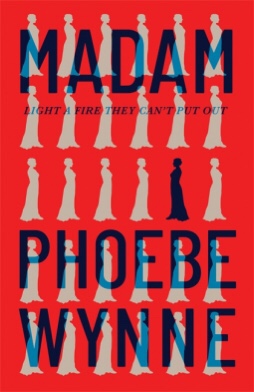
Madam by Phoebe Wynne

Publisher: Quercus (18 Feb. 2021) ISBN: 978-1529408720

Why is it always so hard to write a review when the book is so good? It’s as if I have to wrestle with it for ages, in the hope of doing it justice! All I can do is try and put across all of the reasons I liked it. In fact, I loved everything about this feminist gothic novel from start to finish. First the setting – the eerie, almost otherworldly atmosphere around Caldonbrae School, the strange weather conditions suggesting it’s own micro-climate, and the school’s position as an English outpost (or invader) in Scotland. It’s appearance is like a hulking beast on the coastline, something that shouldn’t be disturbed lest it swallow you up. Secondly, there’s our main character Rose, addressed at all times as ‘Madam’ and finally the dark secret her predecessor tried to uncover at the heart of Caldonbrae, before it was Rose’s turn to fight it’s terrible tradition.

For 150 years, Caldonbrae Hall has sat as a beacon of excellence in the ancestral castle of Lord William Hope. A boarding school for girls, it promises a future where its pupils will emerge ‘resilient and ready to serve society’. Rose Christie, a 26-year-old Classics teacher, is the first new hire for the school in over a decade. At first, Rose feels overwhelmed in the face of this elite establishment, but soon after her arrival she begins to understand that she may have more to fear than her own imposter syndrome. When Rose stumbles across the secret circumstances surrounding the abrupt departure of her predecessor – a woman whose ghost lingers over everything and who no one will discuss – she realises that there is much more to this institution than she has been led to believe. As she uncovers the darkness that beats at the heart of Caldonbrae, Rose becomes embroiled in a battle that will threaten her sanity as well as her safety.

This novel was incredible from start to finish. I loved it. Straight away I noticed echoes of two of my favourite books; Jane Eyre by Charlotte Bronte and Rebecca by Daphne Du Maurier. The younger girls school uniforms reminded me of the aprons of Lowood School. The constant references to the previous classics teacher, and the mystery surrounding what happened to her had definite echoes of Rochester’s wife – hidden from view in the attic for being other than the perfect, meek and gentle wife he wanted. What exactly does this school expect of the teachers and how did Madam fall from grace so spectacularly? The training at the school starts to feel more sinister as time goes on. It begins to feel as if they’re trying to shape young women in a very old fashioned image; teaching them how to stay it in their place and be the 19th Century ideal of the ‘Angel in the House’. Although there’s something a lot more knowing about these girls, they put on this ideal as if its a disguise, designed to please but very aware it’s a conceit sure to reap the rewards of wealth and privilege. The previous ‘Madam’, whose name is Jane, is like the ghostly presence of Rebecca, still holding sway over the girls – especially Bethany who seems to have developed an obsession with her teacher. Jane seems to be everywhere Rose turns, but tantalisingly just out of reach. The author creates an edgy and eerie atmosphere where you feel she might be just ahead of Rose, her gown swishing round the corner.

Rose tries to understand the place she’s come to teach. There is a sense in which this school is a complete culture shock – like a child affected by poverty or a tough inner city environment being expected to thrive at Oxford or Cambridge where there’s an etiquette and language that’s alien to most outsiders. She has to muddle through this aspect of life at Caldonbrae and it makes sense to her if the purpose is to educate and prepare the girls for further education and professions like the law and politics. Yet, alongside this traditional, classical education there are hints of the old ‘finishing school’ where attributes like poise, social etiquette and deportment are deemed equally important. What exactly is she preparing these girls for?

As the secret starts to come to the surface so the tension of the novel rises. Is Rose being trained too? An outsider brought in to see if new teachers can be moulded to the school’s purpose. As Bethany’s attachment to Madam becomes clearer she seems to stalk Rose. and the reader isn’t sure whether she resents Rose being in the place of her former favourite or whether she has simply transferred her affections. When she makes allegations about Rose she threatens her whole future at the school, but is Bethany trying to harm her or warn her? A strange hierarchy operates amongst the girls who know themselves to be the elite performers and those who don’t make the grade are offered inducements to improve, but these inducements can be threats as well as rewards. The horror of a young woman having her head shaved for performing badly is enshrined in patriarchal systems and is designed both to shame the woman and act as a warning to others. Rose guesses what might be happening, before the secret is fully revealed but it’s such an alien and deviant concept in modern society that she can’t believe it could be true. Could she ever be complicit in such a scheme? I found myself wondering how far the girls are ‘groomed’ into accepting this future or how many are knowingly acquiescing to it for the rewards of wealth, status and family honour. Rose is backed into a corner, by fear of what may have happened to her predecessor certainly, but also the knowledge that the school can reward her far beyond what she’s imagined. Her mother, severely disabled by multiple sclerosis, is placed within a state of the art care facility. Can Rose be bought, or will she try and walk away? However, does anyone walk away from Caldonbrae unscathed? Could Rose, as quiet as she seems, finds a way to walk away, but also bring down the whole system in her wake. This was an incredible, unputdownable, novel full of gothic atmosphere, and dark, patriarchal, purpose. However, there is also a feminist heroine ready to shine a light on long held secrets, even at the risk of that light becoming a burning flame.

Posted in Netgalley

The Last Resort by Susi Holliday

Published: Thomas Mercer. 1st December 2020

ISBN: 978-1542020015

This is a deeply unsettling novel, set in a near future dystopia which reminded me somewhat of Westworld. It’s an opportunity that seven strangers can’t pass up when Timeo Technologies invites them to test out the very latest in leisure experiences. Our group of characters are promised a luxury getaway of their dreams, an adventure they’ll never forget. The last part is definitely true.

Amelia wonders why she’s been invited, especially when she meets the other guests who have more obvious benefits to Timeo – a social media influencer, a photographer, a games developer and a financier. They have nothing in common with Amelie who works for an NGO and prioritises helping others. Where do her skills fit in? However, as the trip develops it becomes clear that this seven have something else in common – each has a huge secret they wouldn’t want the world to know about. Every guest is fitted with a tracker that is symbiotic; it fastens into the skin behind the ear to tap into the body’s nervous system. Once activated it’s impossible to remove without causing damage, a sensation that made me feel really uneasy – I would be worried that it would give them control over me. Of course there is a downside. Instead of enhancing their island experience, or simply tracking where they are, this technology appears to harvest memories and then manifest the worst of them like a flickering projector film. Each person must relive a time when they behaved at their worst, knowing that every other guest can see it too. One character relives a time she attacked a girl with a glass in a nightclub. The guilt and shame is terrible and each person responds differently. As injuries and paranoia start to set in, Amelia begins to think that the only way to leave the game is to be the one left standing when the countdown ends. As each person makes their way to the big house, where a party is promised, true characters emerge and the group are split. Who will get there first and what will they have to do in order to get there?

I really enjoyed the opening chapters of the novel where we get to know the seven characters and they get to know each other. This was fascinating to read for a therapist like me, because we are only being introduced to everyone’s surface characteristics. The rest will slowly emerge. The author cleverly sets the scene with a sense of foreboding and although I wasn’t really invested in any particular character, I did start to worry about what was to come. I enjoyed the set-up of the technology, it felt believable within the context of real innovations mentioned in the narrative. This felt like the future, but not too distant. I did think the entire island was virtual for most of the narrative, because the setting felt strange. The island itself felt warmer and more tropical than an island off the south coast of the U.K. A couple of participants seem to have memories of the island and there were also moments that felt artificial, such as where Amelie noticed pixelation at the house. I wondered how far the device they were wearing created the environment and whether Amelie noticed differences because she was on an alternative type of tracker. It was more like a ‘Fitbit’ than the headset worn by the others and wasn’t quite as advanced.

To get the best reading experience I would definitely recommend reading in longer stretches. I had a lot going on when I started this and had to read in short bursts, so I did struggle to remember the characters and become fully immersed in the story. It was great to be able to read in long sections from then on and really lose myself in the story. I also think that in order to truly enjoy a story we need to engage with one of the characters, but I found that difficult to do in this novel. I really didn’t like anyone, even before their past was revealed. If anybody, I think Amelie was the one we were supposed to identify with, but for some reason this didn’t happen for me. This wasn’t just because these characters have done some terrible things, but because they felt as unreal to me as the island itself. These are not people I meet in everyday life, but then I live in a very rural part of the country and so my experience is possibly limited. Social media influencers and financiers are few and far between in Lincolnshire where you’re more likely to meet a farmer, gamekeeper or home carer. I really came away from it thinking this was a world far outside my social and economic experience.

This may say a lot about my character, but the most fascinating parts of the novel come when the characters are at odds with each other or under pressure. There’s a scene between Brenda, the banker, that’s almost Biblical! She is lured away to a quiet spot with a delicious looking picnic, but a nightmarish snake is lurking and starts to slowly wind itself around her leg. For someone with a snake phobia, this was a really vivid scene and hinted that perhaps the technology could root out each participants greatest fears. The following descriptions of Brenda’s leg, as the others try and get her to the big house before the poison takes hold, are horrific. In her pride she hasn’t wanted to tell them she was bitten, but her leg swells and changes colour dramatically and the tension created by the time scale on the injury really added urgency to the narrative.

I think the author had a brilliant premise. She has married our fear of modern technological advances with a good old-fashioned mystery in the style of Agatha Christie. You don’t know who is going to be picked off next. I did feel a bit side-swiped by the ending. It came suddenly and felt a little like the exposition of a Bond film with a villain hiding in his luxury home in an island, playing god with the guests lives. I think Susi Holliday is an incredibly talented writer. I struggled to fully engage with it though and it didn’t reach the heights of her last novel Violet which was one of my books of the year in 2019. However, if you like mysteries, morally questionable characters, and a bit of sci-fi thrown in then this might be the perfect book for you.

Meet The Author

.J.I. (Susi) Holliday grew up in East Lothian, Scotland. A life-long fan of crime and horror, her short stories have been published in various places, and she was shortlisted for the inaugural CWA Margery Allingham prize. She now lives in London (except when she is in Edinburgh) and loves to travel the world. She has written three crime novels set in the fictional Scottish town of Banktoun, which are a mix of police procedural and psychological thriller. They are: “Black Wood”, “Willow Walk” and “The Damselfly” – all featuring the much loved character, Sergeant Davie Gray.

Her serial killer thriller “The Deaths of December” (written as Susi Holliday), featuring Detective Sergeant Eddie Carmine and Detective Constable Becky Greene was a festive hit in 2017. Her spooky mystery “The Lingering” was released in September 2018, followed by “Violet” – a psychological thriller set on the Trans-Siberian Express – in September 2019. “Violet” has been optioned for film. Writing as Susi Holliday (again!) her next two releases, “The Last Resort” and “Substitute” are due out from Thomas & Mercer late 2020 and summer 2021 – both of these books are suspense thrillers with a technological element (a blend of Black Mirror, Tales of the Unexpected and The Twilight Zone).