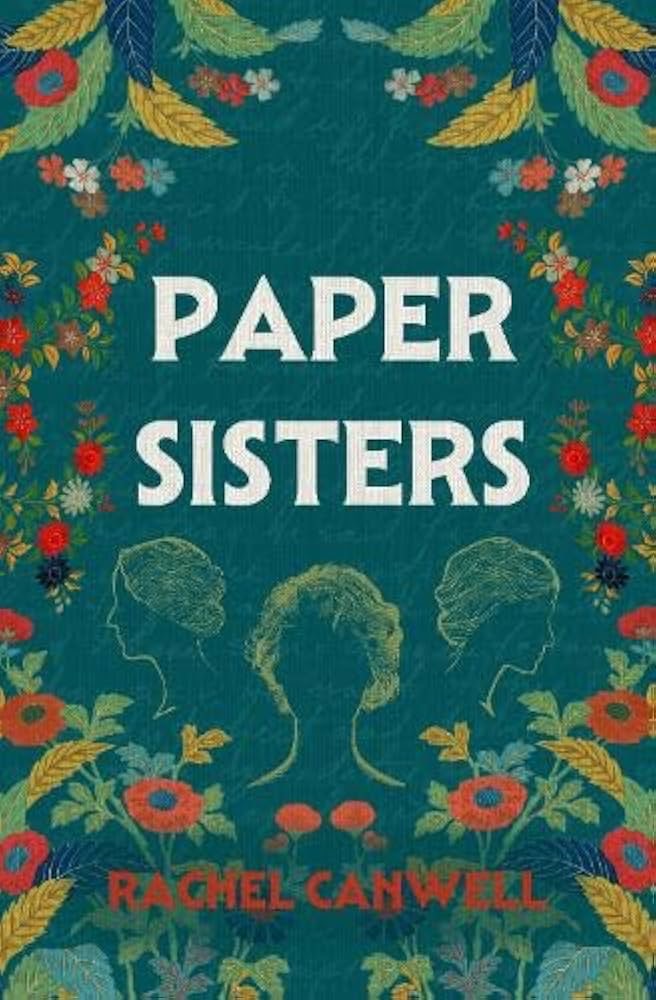
Lincolnshire, 1914. As the First World War approaches, three women are living, trapped between the unforgiving marsh, the wide, relentless river, and the isolation of the fen.
Their lives are held fast by profound grief, haunted by the spectres of the past. Trapped by the looming presence and eerie stillness of a hospital that has never admitted a single patient.
Eleanor longs to escape. To make a life with the man she loves, leaving her sister, and all her ghosts behind. Clara’s marriage is crumbling and violent and she yearns for peace and security for both herself and her innocent children. Meanwhile, Lily, a formidable force of will, stands resolute against the relentless tide of change. She will stop at nothing, no matter the devastating cost, to ensure that life, and her family, remain frozen in an unyielding embrace of the past.
The author, Rachel Canwell, grew up with the story of this forgotten hospital. Isolated, stocked weekly and cleaned daily but never admitting a single patient. The hospital was real, tended by her family for over sixty years and set against the ethereal beauty and loneliness of the Fens, is the inspiration for her novel.
The atmosphere in this story perfectly captures the strange isolated feel of Lincolnshire’s fens. I’m Lincolnshire born and bred, further north than the fens but I know the area. It’s a flat, almost featureless place with dykes that drain the fields and the constant smell of vegetable crops in the air. The novel’s focus is on the area of Sutton Bridge, a village with a famous swing bridge built in 1897 across the River Nene. On one bank, an area of several acres is home to a building site where a port is being built and on the other is a hospital, built to service the workers of the port area. Alongside it is the home of the family who will run it. The author’s family waited for many years, ready to run their hospital, but this is not their story. The author opens with a strange and disorienting scene where a family are disturbed by noises at night and venture out in the pitch dark. As they stand on the bank, theres a loud rumble and the sound of heavy things hitting the water. The family can’t see anything, but in the light it’s clear that all their hopes for a future working alongside the port are gone. The bank on the far side has collapsed in the night, even worse one of their sons is missing, presumed drowned, while helping to look for workers. As we join them in 1910 only two sisters remain on the hospital side of the bank, Lily who has barely moved beyond the threshold since her twin drowned and Eleanor who tends to Lily, their garden and the hospital. Their other sibling, Frank, lives down in the village with his wife Clara and their children. It is the three women – Eleanor, Clara and Lily – who narrate our story.
I felt so strongly about these characters, especially Clara and Eleanor who have always been friends. It soon becomes clear that both are in a similar position. Eleanor is at the mercy of Lily’s health and her moods. She claims to be unable to leave her room and hates to be left alone in the house. Despite being so isolated Eleanor has met and fallen in love with a young man called John who has taken over the village’s smithy. How can she ever plan a future with him if she’s unable to leave the house? Similarly, Eleanor’s friend Clara is at the mercy of husband Frank’s moods and how much he’s had to drink. One of the book’s opening chapters follows the couple and their children on a train to the coast. However, the train hasn’t even left the station and Frank is already belligerent. The author writes this beautifully, with Clara’s hopes for one day of freedom as a family dwindling by the moment. The tension rises as Clara desperately tries to quiet the children, holding herself tightly, too terrified to move and incur his anger. Luckily, his behaviour draws young men from the next carriage and Clara leaves him to fight his own battles. The sudden freedom she and the children have is blissful, laughing as they run down to the sea, removing shoes and socks to jump in the waves. Clara knows her friend Eleanor is under equal pressure, because under a quiet and timid exterior Lily has a core of steel. While Eleanor feels sorry for Lily, trying to respect her grief and many physical symptoms, Clara lives with a bully and she sees beyond Lily’s quiet and apparent shyness, recognising them as control and emotional blackmail. Her interventions at the house, forcing Lily into activity, almost made me laugh. Clara isn’t emotionally attached to Lily so can’t be bullied. This dynamic brings enough tension but soon WW1 will cut a swathe through the men of the village bringing fear and loss in its wake.
Lily made me furious. Her sly nature is infuriating, always listening where she shouldn’t be and snooping in other people’s things. She seems to struggle with empathy, unable to see what her actions might do to others. Despite keeping her own artefacts of a time when the family were whole, she doesn’t recognise other people’s attachment to keepsakes. She’s quite happy to destroy things if she can’t have her way. John is unsure what to do in order to help Eleanor, if they’re to have a future things must change, but how to bring that about without making things worse? It may not be possible for Eleanor to sever her ties as her sister’s carer. Maybe he will have to come to them and get to know Lily. He doesn’t want Eleanor to think he doesn’t care about her sister, but equally he needs Lily to understand that he’s going to be in Eleanor’s life, whatever that takes. However, when pushed, Lily can be incredibly spiteful and destructive. It’s this selfish streak that sees her making reckless and desperate choices. The only times when we see the girl in Eleanor is when she’s with Clara and their shared history gives us all those elements of female friendship that mean so much – the shared jokes and memories, but also the support both physical and emotional. Eleanor may be in love but it’s Clara who fully knows her and will always hold her up when she can’t support herself. All of these women are trapped: Lily by her memories and fears, Clara by her marriage and Eleanor by Lily and the empty hospital she continues to maintain to her father’s standards. It’s almost a shrine to the dreams of those they’ve lost. Then there’s the isolation of the fen, trapped between salt marsh and the river.
War brings different experiences for Clara and Eleanor, especially when Frank joins up early. It’s like spring comes to Clara’s house because the children can play and make noise, she can run the house in a more relaxed way. She can pop over to sit with Lily giving John and Eleanor some freedom too. John’s is a reserved occupation so he doesn’t have to join up straight away. However, these golden times are short lived. It isn’t long before injury, shell shock and even death reach the village and it’s very hard for any of the women to understand their husband’s or brother’s experiences. Through the male characters we see every consequence of fighting for your country. Meanwhile the women are trying to produce food and help on the land. Even to this day, the fen area of the county still produces huge amounts of vegetable produce, as well as potatoes and flowers. To keep crops growing the farmers need labourers and one solution comes in the form of a prisoner of war camp, situated on the site of the old port, directly opposite Eleanor and Lily. The POWs are mainly German soldiers, who will bunk in cabins and work the fields. The author beautifully shows the tensions between prisoners and those men who’ve been fighting overseas. As a dreaded black edged letter arrives, grief now joins domestic violence, manipulation and alcohol issues. This family is set for an explosive reckoning. I became so attached to these women and their family’s tragic history that I read it so quickly. I already know I will go back and read it again though. Every element – character, setting, plot – is beautifully done and the historical background took me back to a time when my own grandparents would have been working the land and living next to the River Trent further north in the county. This is an excellent debut from Rachel Canwell that had me utterly absorbed and feeling every emotion alongside her characters.
Out now from Northodox Press
Meet the Author
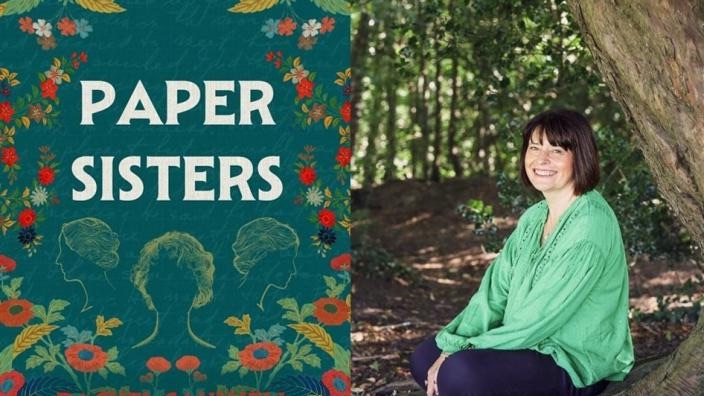
For those close by Rachel will be appearing at Lindum Books on the Bailgate in Lincoln on Saturday 21st Feb from 10.30am
https://www.visitlincoln.com/event/author-shop-signing-rachel-canwell%3B-paper-sisters/104373101/

 The Lotus Readers