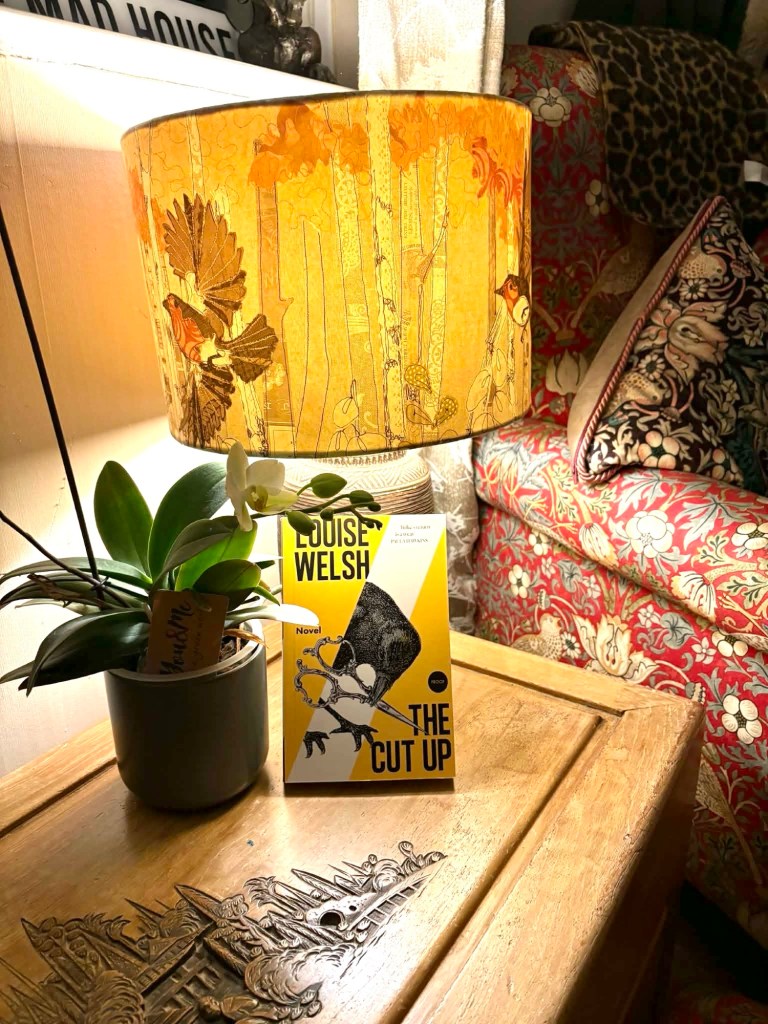
It’s hard to be good when living is expensive. And times are tough on the streets these days. Luckily for Rilke at Bowery Auctions the demand for no-questions-asked cash is at an all-time high, and business is booming.
When Rilke hears his old acquaintance Les is fresh out of prison, his inclination is to stay well out of his way. Letting sleeping dogs lie is one thing – but when one of Bowery’s customers winds up dead on their tarmac, Rilke needs a bit of help from his friends to tidy things up. If only his friends didn’t have such a habit of making things worse.
This is such a brief synopsis for a novel that’s full of character, atmosphere and set in one of the best cities I’ve ever spent time in. The novel is book-ended with someone coming out of prison and this is the world that valuer and auctioneer Rilke operates in. This is a world of second hand goods, murky dealers and eccentric characters who love collecting. Bowery Auctions is run by Rose Bowery and Rilke is part of the furniture. When one of their regulars, the creepy and questionable Manderson, is killed on the premises it’s only 24 hours till their next auction. In fact Manderson has been stabbed in the eye with one of the antique hat pins they had out for the viewing afternoon. An Edwardian amethyst pin would have had to make its way through a huge hat and into a woman’s long, piled up hair, to keep it secure. Now it’s made its way through Manderson’s eye into his brain and it’s going to take a lot of strength to remove it. Knowing the police will be involved and that Bowery’s will be implicated, perhaps it would be better if it wasn’t obvious that he’s been killed with one of their auction lots. Things get worse when a gangster turns up at Bowery Auctions with Rilke’s mate Les in tow. Ray has a way with a razor and he focuses Rilke with a swipe to Les’s face, he must now investigate who killed Manderson in just ten days or Les will pay the consequences. His investigations will take him to an old school where many ex-pupils have reported sexual abuse, to a brothel named after a questionable film and a girl called Chloe who may or may not be controlled by her boyfriend, Dickie Bird. Will he find the answers that will save Les? More to the point, are the answers to be found outside Glasgow or a lot closer to home?
The plot takes a few winding roads but we never forget that Rilke has a time scale for this investigation and he knows that a man like Ray isn’t joking. His best friend Les’s life is in his hands and the pressure and danger builds as we go along. I enjoyed the characters in this novel and I did grow to love them. I have to say thank you to the author here because one of my best friends was an antique dealer so I spent a lot of time visiting auctions and antique fairs with him. He also had an alcoholic cleaner and an ex-prisoner doing his garden. He died eight years ago and I’ve missed that part of my world. It is a world where any eccentric, misfit or miscreant can find a home and for the duration of the novel I was back there with Nigel, in his customary smoking jacket adorned with vintage brooches. So I wasn’t surprised to find characters like Manderson, Les and Rilke rubbing shoulders. Rilke’s vintage style was perfect and he struck me as a decent man who can’t get out of the circle he frequents. He’s also a deeply loyal man, especially to his newly released friend Les. I have to admit to falling in love with Les. I knew I’d love him as soon as he emerged from the Arlington Baths after a stretch in prison wearing ‘ a black kilt, tartan Doc Martens and a t-shirt bearing the slogan Get Your Rosaries Off My Ovaries.’ He’s an absolute imp, a mischief and so impulsive that he makes very bad choices. The author brings humour in with this character so when he’s in genuine danger from gangster Ray it hits even harder. It’s no surprise when Rilke immediately takes on Ray’s ultimatum in order to save him, but Rilke’s also thinking about getting the police out of Bowery Auctions and away from where Manderson was killed. The female crew aren’t remotely bothered that he’s met a sticky end, in fact one of the younger girls describes him as ‘handsy’ – an old man who wears trainers because he doesn’t want to be heard creeping up on them. So far, apart from Ray, nobody seems to missing him.

The city of Glasgow is the main character in the book and I loved seeing the underbelly of a place I’ve only visited as a tourist over several years. The author builds the history of the city beautifully, until we get a sense of it as a multi-layered place, where we only see the tip of the iceberg when it comes to it’s residents:
“The earliest sections of Glasgow’s West End, built on the site of old mines and quarries, for city merchants who had grown rich on the products of Caribbean plantations and compensation for freeing enslaved people who received no reward”.
It’s a city that doesn’t hide it’s darker corners and it is sobering to think that the beautiful Georgian buildings in the best parts of the city could only be so grand due to these inflated profits and the subjugation of African people. There are dark and forbidding areas, pubs where you watch your step and streets where the old mines underneath threaten to drag buildings back into the depths. However, the creepiest setting has to be found on an investigative trip outside Glasgow to the site of an isolated school. Rilke makes the journey with a journalist who has been investigating the history of the school and ex-pupils claims of sexual abuse. It’s abandoned, but with evidence left behind of its original purpose. It reminded me of those videos found online of urban explorers in abandoned hospitals. It’s clearly been a hell for these pupils at the mercy of sadistic staff, but what Rilke needs to know is whether it’s linked to what happened to Manderson. Here the author brings in modern concerns around women using Only Fans and other internet sex work to make ends meet. Can it ever be a feminist thing? There are also issues around coercive control and manipulation, but as Rilke learns it’s easy to get the wrong end of the stick. There’s a familiar jaded feeling around these issues and a knowledge that no matter what’s brought to light, some people will always get away with it.
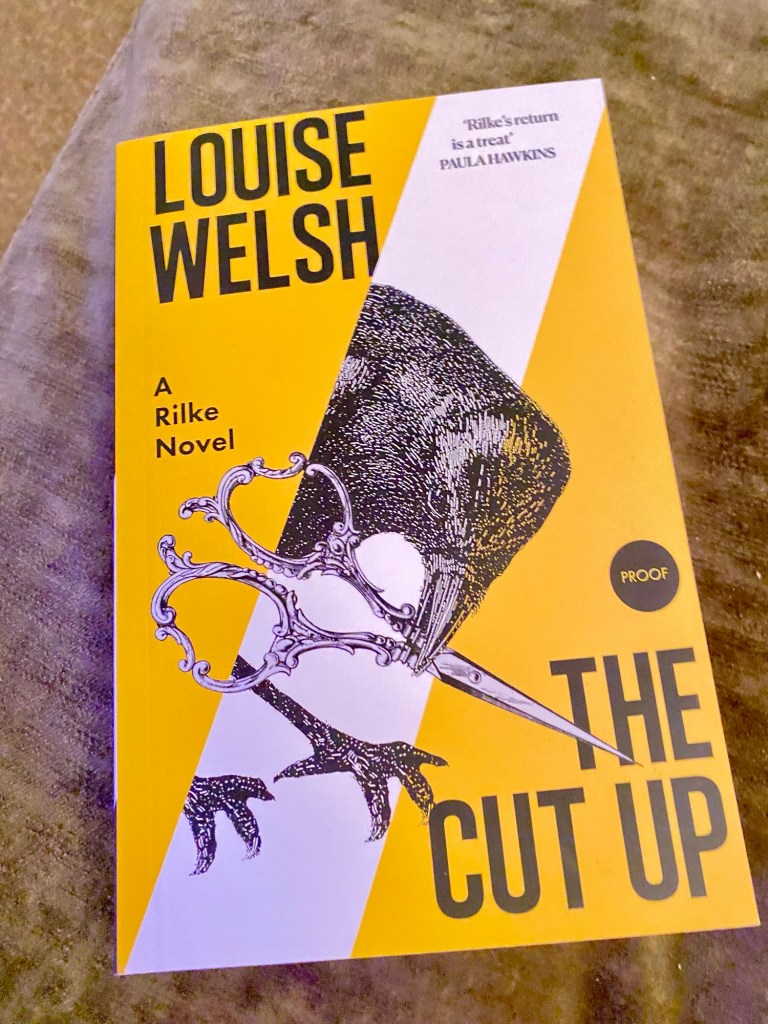
The author absolutely captures the grubbiness of a sale room’s viewing day. Sale rooms are invariably freezing cold, filled with weird and wonderful items and often very dusty. I often came away from rifling through boxes with absolutely black hands. On sale day I’d wear thermals, a solid overcoat and gloves. There are people of every class too, from those who look like they’re homeless to fur coated women. I definitely felt that mix in the book and the little mentions of particular artists and makers made it authentic. Both Rilke and his boss Rose Bowery notice people’s interiors, often bringing humour into very dangerous situations. I loved Rose’s opinion of a particular setting and it’s purpose:
‘Rose looked […] then realisation dawned. The low lighting, the plush carpet, satin upholstery and Japanese prints. “Ah, I thought you just had ghastly taste”.
It’s also Rose who comments that everyone at Bowery’s is so familiar with employee Ina’s womb it should have its own Facebook page. Each character’s language is peppered with Scottish turns of phrase, such as ‘he was a sleekit wee liar as a laddie’. This just adds to all the other layers to convince me I was in a real world. I felt that if I took another trip to Glasgow I’d be able to walk in to Bowery auctions and see Rilke in his Crombie. Now, I can’t wait to read the others in the series.
Meet the Author
Louise Welsh is an award-winning author of ten novels. The Cutting Room, her debut novel, won the Crime Writers’ Association John Creasey (New Blood) Dagger Award and the Saltire First Book of The Year Award. In 2018, she was named the Most Inspiring Saltire First Book Award winner by public vote. She is Professor of Creative Writing at the University of Glasgow. In 2022 she published The Second Cut, which was shortlisted for the Bloody Scotland McIlvanney Prize for Crime Book of the Year and named by The Times as their Crime Book of the Year.

 The Lotus Readers