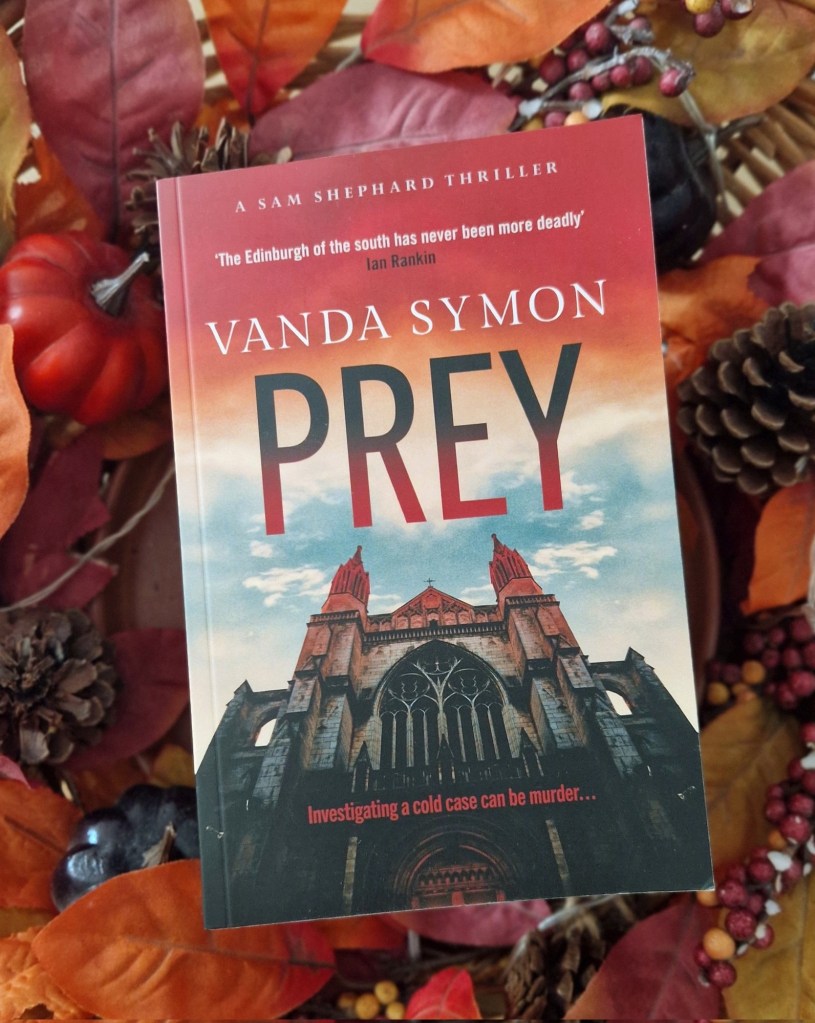
Sam Shephard is on the verge of returning to work after maternity leave and the traumatic circumstances around Amelia’s birth. In order to make the transition as easy as possible, Paul is staying home with Amelia for the first week Sam returns. As is predictable, her boss DI Johns isn’t the most welcoming and gives her a cold case – the murder of Rev. Mark Freeman outside his own church. There’s one potential issue, Mark Freeman was the father of DI Johns wife Felicity. Felicity’s mother has been diagnosed with cancer and the boss would like her to go to her grave knowing who killer her husband. My first thought was that this had the potential to blow up in his face: he’d be all over her progress, creating conflict of interest for Sam that would be exploited if a case ever went to court. He was also being his typical sensitive self by ensuring that his mother-in-law would spend her final months reliving the most terrible experience of her life. Rev. Freeman was found at the bottom of the stone stairs leading up to the church entrance. He had been stabbed in the stomach by a small knife, but that wasn’t the cause of death. His subsequent fall down the steps broke his neck, immediately cutting off his ability to breathe. Horrifically he was found by his son Callum, who had ventured back out into the pouring rain when his father hadn’t returned home after the service. Yet we know at least one other person witnessed the killing, because the book begins with their anonymous account of the murder. The boss has essentially handed Sam a poisoned chalice and she fears one of two outcomes – she won’t be able to solve the case, so will be held responsible for disappointing his wife and her mother or she will solve it, making the previous investigation seem incompetent and potentially tearing his family apart in the process. If we as readers know one thing, it’s that Sam will not rest until the case is solved.
I loved the happy family life Sam and Paul have created with baby Amelia. Their relationship feels like a real long-term partnership with the added bonus that Paul is also a detective. They understand that it’s hard for either of them to switch off when they’re working a case, so can happily bounce ideas and theories off each other in the evening. The addition of Amelia to their relationship is something they’ve taken in their stride. It isn’t always easy. There’s a return to work poonami that had me laughing; how do you shit in your own hair? There’s also an afternoon where each thinks the other is picking her up from childcare, but other than this they’re coping well. The author brings home to us the difficulties of being a working mum. Sam misses Amelia and has to call home to check in and hear what they’re doing. There’s also the issue of expressing milk at work, the family room is at her disposal but it feels awkward and isn’t as private as it could be. It doesn’t take long to get used to her new routine though and she’s soon busy using the time to go through interview notes and test out different scenarios. Paul is incredibly supportive, totally backing Sam up in her eventual decision to swap to bottle-feeding. Of course her mother has plenty to say, but she’s besotted with her granddaughter so that helps ease tensions. This is a case that brings up a lot of personal feelings and memories for Sam, because she too was brought up in a church environment and talking to Callum and Felicity, Mark Freeman’s children, brings up some memories of her own that it might be time to disclose.
“What I hadn’t factored in, though, was the emotional toll it took. The wrench of being away from Amelia when I loved every second of being in her company. The regret about going back to work and putting her into childcare, which felt like paying for someone else to bring up my child. And the guilt over the immense sense of relief I felt at getting away from her and from the relentless demands and responsibility of looking after a baby.”
The Freeman children and their mother are first on the list of people Sam needs to re-interview, but as she suspected, keeping her boss away from her case is difficult. He blows up over the fact she’s interviewed his wife without his knowledge and express permission. He wants all access to the family to come through him, but Sam stands her ground. If his fingerprints are all over this case it doesn’t matter what she finds out. The case would be thrown out of court, a fate even worse than failing to find the killer. I loved how Sam stuck to her guns though and called him out in front of the whole team. He has to stay away from the case and trust her. If he keeps a stranglehold on who she can talk to and what avenue her investigation takes, he will ultimately be responsible for it’s failure. The Freeman family seem lovely, but as Sam knows that’s no indicator of innocence. Sam has had a church upbringing, something I have in common with her, so we know better than anyone that sometimes people hide within a congregation. Their Christianity is a mask, a mask that seems to confer an unquestioning trust on them. Most people Sam talks to see the Reverend as a saint, but Sam isn’t taken in and knows she just has to ask the right people. Luckily, she has two potential witnesses: Aaron Scott was an operative in an Organised Crime Group and he certainly appears ferocious with his size and his Māori tattoos, then there’s Mel Smythe, former youth leader and now a drunk living in a hostel. What Aaron tells her blows the Freeman’s timeline totally off kilter and gives her a glimpse into an angrier and self-righteous Mark Freeman. Mel was well-known for being a bit of a rebel, mainly because she was gay yet she was still a youth leader. I found myself wondering whether the church was quite progressive after all. Despite her heavy involvement at the church during the time of the murder, she was soon caught up in the aftermath. She also brings throws new light on the case, but only twenty-four hours later she’s dead. Stabbed in the stomach in her lonely and bleak hostel room.
The author brings up something about church people that I was very aware of as a Christian teenager. They can seem welcoming, hospitable, even saint-like but if you breach one of their most important rules you can meet a completely different side to that person. While they might preach forgiveness, there are certain things they hold true and they are immovable. Aaron certainly places a new spin on the Reverend, with whom he’d had a great friendship. What he overheard that night showed that when faced with a challenge to his Christian values he wasn’t so great at forgiving. Mel Smyth backs up his story with a revelation of her own, a problem that was brought to her perhaps because she was different and lived outside the traditional Christian view of relationships. These new statements show that the original investigation missed so many leads or simply didn’t follow them up. That it took the saintliness of the Reverend and others around him at face value, perhaps because he was a figure of authority in the community. It’s also leading her towards conclusion that the boss isn’t going to like. As the rest of the team, including Paul, take on the Mel Smyth case Sam feels more supported. She knows that Paul and Shortie have her back and trust her methods to get results. I loved how the author gave us more on the relationship between Sam and her mother too, especially now she has a grandchild to dote on. It’s clear to see in any conversation with her mother where Sam’s self-doubt and over-thinking come from. Trying to please a critical parent is a self-defeating task and even here when talking about the Reverend Freeman case, her mother shows a total belief in the church and it’s figures of authority that’s probably hard for us to fathom in this day and age. Yet it gives us some indication of why the original case had been conducted in the way it was and how powerful church figures were several decades ago.
At the end of the case I felt so sad, that belief in the church and it’s rules were often put before the well-being and love of family and the real and flawed people who make up a congregation. I felt it because I lived it, being a teenager in an evangelical church was no picnic and I got out as soon as I could. I regularly see other waifs and strays who are no longer in the church and thankfully we get a lot of humour and relief or closure from each other. We can say ‘that was a bit mad wasn’t it?’ and hear confirmation that yes, it was utterly bonkers. I was so incredibly proud of Sam to know she was ready to talk to her mother about what happened during those years. It’s common that having your own child triggers feelings about your childhood and how you were parented, especially where there are unresolved issues. It’s no coincidence that in this novel she’s ready to take on the boss and the past, perhaps not just because of Amelia but because of the family unit she’s building with Paul. That was the feeling I took away from this novel overall, it’s main theme is family whether that’s a nuclear family in its most traditional sense, a work family that grows in professions like policing, or a church family. It also gave me a reminder that in all of these relationships, it’s communication and honesty that are the most important facets. If those two things are broken or over-shadowed by authority, a web of secrets and lies are woven that can prove very difficult to unravel. I love Sam, she’s a no bullshit character and at this moment when I am still struggling with my health and keeping up, she gave me some healthy reminders that it’s ok to let things slide a little. This was another great novel in this series, Sam is a character I’d love to go for a drink with and seeing her stand up to her boss was a real highlight!
“I suspected I’d get bored and frustrated with a life of domestic bliss. I certainly wasn’t cut out to be a domestic goddess. Six months of maternity leave had driven that home. Fortunately for me, I wasn’t aware of anyone dying from a lack of vacuuming, bed-making and not managing to get out of their PJs all day.”
Out in August 2024 from Orenda Books

Meet the Author
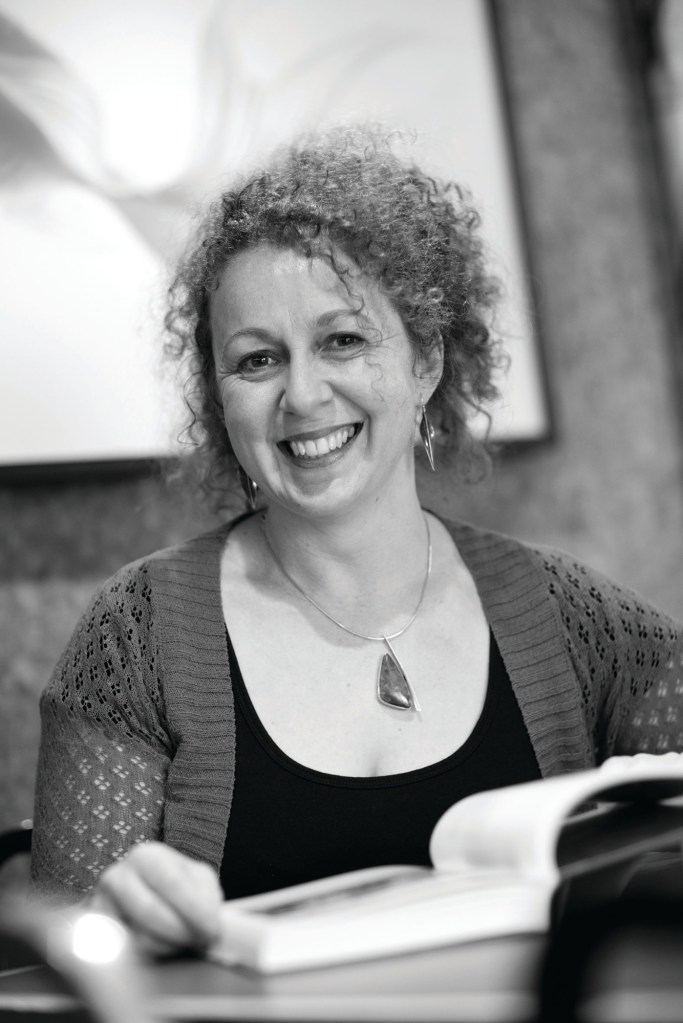
Vanda Symon is a crime writer from Dunedin, New Zealand, and the President of the New Zealand Society of Authors Te Puni Kaituhi o Aotearoa. The Sam Shephard series, which includes Overkill, The Ringmaster, Containment, Bound and Expectant, hit number one on the New Zealand bestseller list, and has also been shortlisted for the Ngaio Marsh Award. Overkill was shortlisted for the CWA John Creasey (New Blood) Dagger and Bound and Expectant have been nominated for USA Barry Awards. All five books have been digital bestsellers, and are in production for the screen. She is also the author of the standalone thriller Faceless, and lives in Dunedin with her family.

 The Lotus Readers