
Nordland. A region in the Norwegian Arctic; a remote valley that stretches from the sea up to the mountains and glaciers.
It is May in what was once a prosperous mining community. The snows are nearly gone and it’s a time of spring and school-leavers’ celebrations – until Daniel, a popular teenage boy, goes missing. Conflicting stories circulate among his friends, of parties and wild behaviour.
As the search for Daniel widens, the police open a disused mine in the mountains. They find human remains, but this body has been there for decades, its identity a mystery.
Everyone in this tight knit, isolated community is touched by these events: misanthropic Svea, whose long life in the area stretches back to the heyday of the mines, and beyond. She has cut all ties with her family, except for her granddaughter, Elin, an outsider like her grandmother. Elin and her friend Benny, both impacted by Daniel while he was alive, become entangled in the hunt for answers, while Svea has deep, dark secrets of her own.
After a move into historical fiction with her fabulous The Beasts of Paris, this feels like a more pared back novel set in modern day Norway. It is a crime novel, based around a missing teenage boy called Daniel. We see a lot of the action through the eyes of an elderly woman called Svea, who has lived here all her life with her two younger sisters. Her youngest sister Nordis, went missing many years ago, thought to have drowned herself in the sea. Svea lives with her puffin hound Asta and has a simple routine of walking into town with her dog for a coffee and pastry, often sharing her breakfast with Odd Emil, another elderly resident of the town who was once in love with the very beautiful Nordis. Daniel is Emil’s grandson and he’s struggling with his inability to do anything, he can’t help. Svea’s granddaughter Elin had been to a russ ball, a little like a senior prom. During russ, school leavers play pranks on each other and issue dares. It’s a time period that teachers tolerate with a roll of the eyes, but never usually goes too far. Both Elin and her friend Benny go in drag and become celebrated for the evening, the heroes of the popular kids. Elin even has a interlude with Daniel – she’s surprised to find this beautiful boy kissing her despite her pink beard! In the early hours of the next morning, Benny is having a liaison of his own when he sees Daniel’s friends parking his car behind the hotel. Then Daniel is reported missing on the trail and Benny is torn, he should mention that Daniel wasn’t in the car but what excuse can he give for being there? Benny has a secret, but he isn’t the only one and some secrets have lasted a lifetime.
I loved the sense of place the author created here. There’s a stillness and isolation about the landscape, it’s beautiful but unforgiving territory. It is like a lot of towns in the north of England, where mining was once the major industry and now they’re closed. There’s something missing in these places, a community that was once focused around the work they shared is gone. I felt this dislocation was an important part of the novel, because although it’s primarily a crime narrative it’s also a look at how much the small community has changed. As the mines closed and the outside world starts to bleed in through the internet and individual mobile phones the town has something of an identity crisis. It explores these contemporary changes in the younger characters like Elin and Benny, but by having Svea as our narrator we can see how seismic the changes have been within her lifetime. Also she breaks the fourth wall a lot which I love in a narrator. For Svea and Emil, who meet for coffee each day, their relationship is loose and undefined. They don’t even say they’ll see each other tomorrow, but usually do. It’s an understanding that’s taken a lifetime. Yet her narration, where she talks directly to us, is more conversational and intimate. Then the author lapses into text speak and emojis for the younger people’s communication. It’s instant, punchy and sometimes indecipherable by someone over forty.
“If you constantly express love as a red tiny heart – ‘bounceable’ and unbreakable – does that diminish the complexity and subtlety of your feelings?”
Svea doesn’t fully understand everything her granddaughter Elin is telling her, but there is an acceptance that shows wisdom rather than comprehension. On the evening of the ball with Benny in his dress and Elin in a suit complete with the pink beard, Elin informs her grandmother that she feels gender fluid. This is possibly an issue at home where her father is the local minister. Benny is openly gay, but his love life is extremely private. He has caught the eye of a hotel guest, a man much older than Benny. He sneaks out to the hotel to meet him, only Elin knowing where he’s going. There can’t be anything wrong with it, because the sex was enjoyable. He didn’t feel forced or taken advantage of, but it did feel strange when he left a huge sum of money for him as if it was a tip. He knows if he admits where he was when he witnessed Daniel’s friends, people will be jumping to all sorts of conclusions.
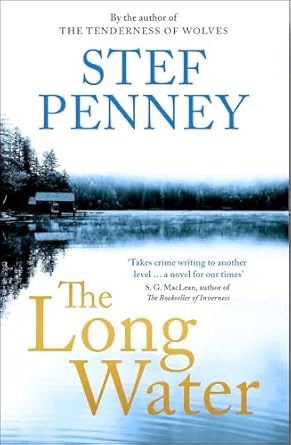
When a body is found in a cave, during the search for Daniel, people start to speculate. It’s been there for some time and it will take DNA testing to find the answers. I did wonder if it might be Svea’s sister Nordis, who didn’t succumb to the sea after all. The past is coming back to haunt them all and what a past it is. Svea explains that her own mother fell in love with a German prisoner of war, much to the disgust of villagers. Svea was known as a Nazi girl and this heritage stayed with her for life in more ways than one. We know something terrible happened because Svea’s father was the enemy, but she leads up to it very slowly, keeping us abreast of the investigation but also delving back into the past. It was this mystery as much as the unsolved crime that drew me in and kept me reading. This is a slow burn, but Svea relates the story as if we’re a friend or acquaintance. It’s as if she’s the spider at the centre of a very dark web and we’re drawn further and further in. The tension of Daniel’s disappearance starts to build as the days go by too. However, it’s not just this that’s fascinating. The interesting relationship between Elin’s father and Marylinn from the school, being conducted in secret so they don’t upset Elin who already has an inkling. Also, being let into the lives of these young people who are so vulnerable, dealing with their emotions, the pressures of school and popularity and trying to work out who they are when there are so many options. Then we’re shot back to Svea’s teenage years and the reminder of all that adolescent angst makes us realise the full implications of what she went through. This is a novel of relationships, romantic and familial as well as the deep bonds of friendship. We see both ends of the spectrum too, those trying to make sense of where they are by harking back to the past and those working themselves out for the first time. It’s also about how we love, whether in secret, in the open, with fireworks or a quiet love that doesn’t even identify itself.
Published by Quercus.
Meet the Author

Stef Penney is a screenwriter and the author of three novels: The Tenderness of Wolves (2006), The Invisible Ones (2011), and Under a Pole Star (2016). She has also written extensively for radio, including adaptations of Moby Dick, The Worst Journey in the World, and, mostly recently, a third installment of Peter O’Donnell’s Modesty Blaise series.
The Tenderness of Wolves won Costa Book of the Year, Theakston’s Crime Novel of the Year, and was translated into thirty languages. It has just been re-issued in a 10th anniversary edition.

 The Lotus Readers