
The Hidden Years is a tender-hearted and bitter sweet tale about how life can take unexpected turns. In fact John Lennon was right, life is what happens when you’re busy making other plans. She also explores how patterns emerge in life: we might find ourselves unconsciously choosing a path that repeats a pattern or takes us to somewhere that has a hidden importance in our lives. Belle has done something very impulsive. From the moment she met Gray they had a connection and now he’s invited her to Silverwood, a mansion next to the Helford River, where a group of his friends are living a different life. They are a creative collective, living as self-sufficiently as possible but dependent on the kindness of the house’s owner. Luckily he’s very fond of his nephew Arlo, one of the residents at Silverwood. As she leaves university and misses her exams for this uncertain life she has no idea that Silverwood holds secrets and some of them are quite close to home.
The author tells her story through a dual timeline; Belle’s story set in the 1960’s and then Imogen’s story, a young woman who visits Cornwall in the 1940’s. Imogen has been working for an agency that secures placements for young women who work with children. It’s mid- WW2 and Imogen is tasked with taking two young brothers down to Silverwood, a boy’s boarding school in beautiful and relatively safe surroundings. She soon finds out that life can change in an instant when she’s asked to temporarily for the school’s Matron who has fallen ill. Imogen takes the booking and finds she loves working with the young boys in the sick bay, feeling unwell and far from home. So, when she’s offered the chance to stay on she decides to take a chance and loves her work. She also makes friends with one of the teachers, Ned. They explore Cornwall on their days off and as the war comes ever closer Imogen makes the huge choice to serve her country, by training in nursing at a hospital in Truro. A bomb narrowly missing the school pushes her to use the skills she’s gained for the war effort. Meanwhile in the 1960’s Belle settles into life at Silverwood with Gray’s friends, trying to help out where she can and joining in with meditation sessions where the incense is more than a bit potent. She’s drawn naturally to Mrs Kitto, a lady of her parent’s generation who lives in a cottage on the estate. She’s slightly taken aback by Belle, because she reminds her of someone she once knew. Their afternoon visits become story sessions as Mrs Kitto tells Belle about a woman she used to know, back in the war.
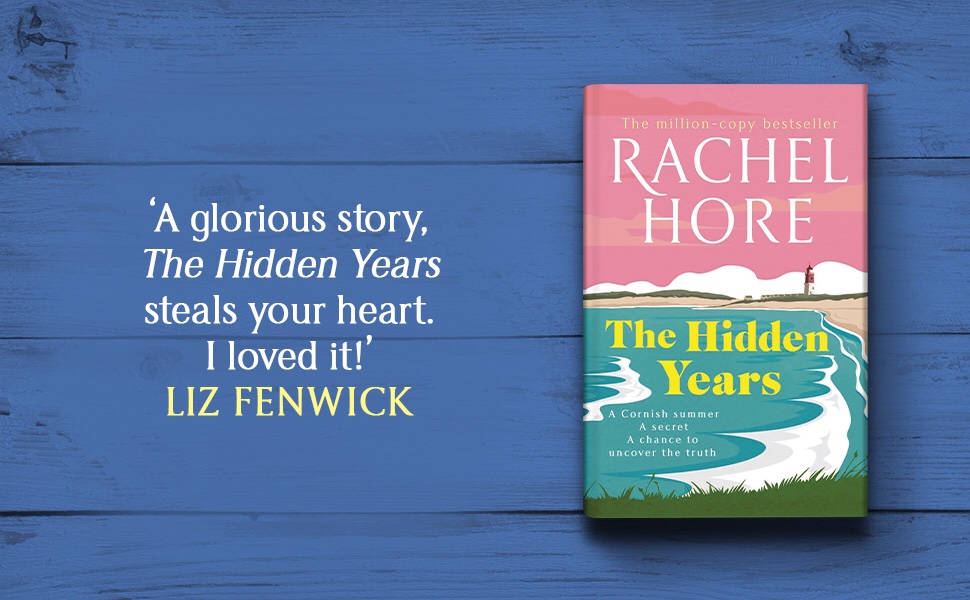
I enjoyed both sections of this lovely story. Often with dual timelines the novel suffers because one narrative is much stronger than the other. Here I thought the author got the balance just about right. Since Imogen’s story is set during WW2 there’s obviously heightened drama and the decisions made can be life and death. However, I think the differences in the timelines complimented each other. The difference in moral expectations and behaviour is huge. There’s also a difference in how people make choices, creating a huge generation gap like the one between Belle and her parents. The fact that she leaves uni with her lover and is clearly living with him at Silverwood is difficult for her parents to understand and would have been unthinkable in the 1940’s when they were Belle’s age. It would be understandable to think that the 1960’s characters have it so much easier compared with their parents. Yet I could empathise with Belle, in fact without WW2 her generation wouldn’t have the freedom to make choices in the same way. Her father has high expectations for her and he wants her to buckle down and make life choices. After all, his generation had to lay their lives and their hearts on the line with often very little understanding of the person they were making promises to. Belle’s not quite ready to make a choice. Should Belle follow duty, when she could be an idealist and follow her heart? Singing with Gray’s folk band The Witchers comes very naturally to her when she’s got over her nerves. There are so many opportunities, how do you know which is the right path?
Imogen is doing her duty in her working life, but her heart is torn. She has a best friend in Ned. They love the same things, they’re comfortable together and have a similar outlook in life. She knows he’s starting to feel more for her than friendship, but also teaching at Silverwood is the rather enigmatic Oliver Dalton and there’s an immediate frisson between them. Although they don’t spend any time together, the pull towards him is hard to resist. When they finally do get a chance to spend time together during her work in Truro, could their spark develop into something more lasting? I found myself rooting for Ned, because he’s so kind and supportive. I thought they’d make a great team. There’s no denying her attraction to Oliver, but he’s more of a closed book and I felt life with him might be more turbulent. Which way would she choose?
I know this area of Cornwall well and it was very easy to imagine myself there as the author explores the scenery. The area was a Mecca for artists in the 1960’s and I loved the ideas that the Silverwood residents had for the place. It’s ripe to be an artistic retreat, offering creative and self- care workshops such as meditation. It’s such a now idea that I wanted to do it myself. I thought it was interesting how Belle reacted to these ideas, making decisions about which parts she’s supports and which isn’t for her. She’s intervened with one resident’s treatment of her son and calls an ambulance rather than watching her continue with homeopathic medicines and see the boy suffer, or perhaps die. That takes bravery and faith in her own convictions. When her family turn up in Cornwall will she get the space she needs to work out what’s best for her. As to Mrs Kitto, how does her story connect to Belle and what impact will this wartime story have on her choice? The historical detail shone through and seeing through Imogen’s eyes the arrival of the American soldiers, the preparations along the Cornish coastline for the D-Day landings and the bombing of Truro really does bring it alive. There’s a realisation that we’re all the product of our experiences and trauma can take a long time to heal, even several generations. I thought this was such such a bittersweet ending and it left me feeling a bit autumnal, sort of melancholy but glad for the experiences of love both women had known.
Out now in hardback from Simon and Schuster U.K.
Meet the Author
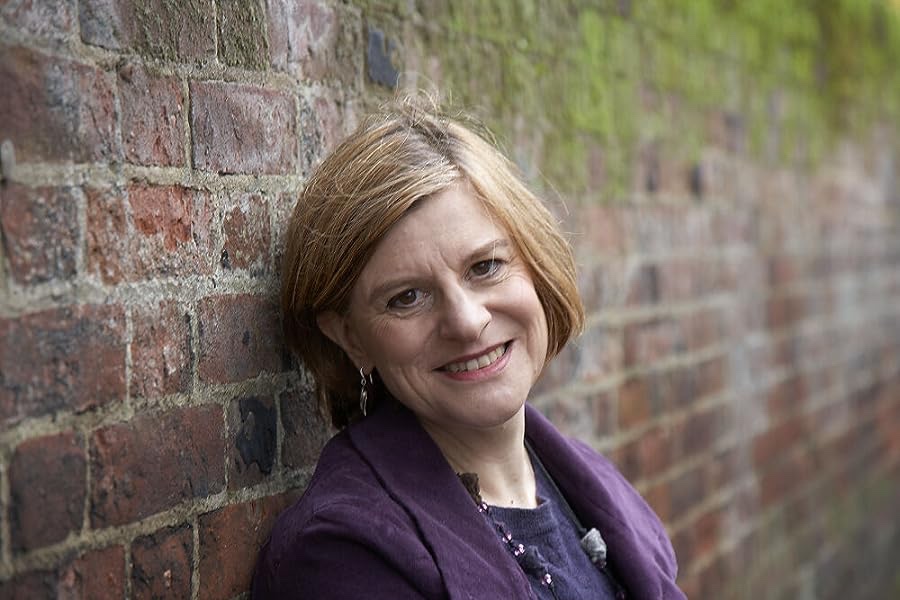
I came to writing quite late, after a career editing fiction at HarperCollins in London. My husband and I had moved out to Norwich with our three young sons and I’d had to give up my job and writing was something that I’d always wanted to try. I originally studied history, so it was wonderful finally to put my knowledge to good use and to write The Dream House, which is partly set in the 1920s in Suffolk and London.
Most of my novels are dual narrative, often called ‘time slip’, with a story in the present alternating with one set in the past. I love the freedom that they give me to escape into the past, but also the dramatic ways in which the stories interact. My characters are often trying to solve some mystery about the past and by doing so to resolve some difficulty or puzzle in their own lives.
The books often involve a lot of research and this takes me down all sorts of interesting paths. For The Glass Painter’s Daughter I took an evening class in working with coloured glass. My creations were not very amazing, but making them gave me insight into the processes so that my characters’ activities would feel authentic. For A Week in Paris I had to research Paris in World War II and the early 1960s through films and books and by visiting the city – that was a great deal of work for one novel. Last Letter Home involved me touring a lot of country houses with old walled kitchen gardens in search of atmosphere and to explore the different kinds of plants grown there.
Places often inspire my stories. The Memory Garden, my second novel, is set in one of my favourite places in the world – Lamorna Cove in Cornwall – which is accessed through a lovely hidden valley. A Place of Secrets is set in a remote part of North Norfolk near Holt, where past and present seem to meet. Southwold in Suffolk, a characterful old-fashioned seaside resort with a harbour and a lighthouse, has been a much loved destination for our family holidays and has made an appearance in fictional guise in several of my novels, including The Silent Tide and The Love Child.
Until recently I taught Publishing and Creative Writing part-time at the University of East Anglia, but now I’m a full-time writer, which felt like a bit step. My boys are all grown up now and finding their way in the world, but we still see a lot of them. My husband David is a writer, too (he writes as D.J. Taylor), so we understand each other’s working lives.
I find I have to have a regular routine with my writing, not least to keep the book in my head. My aim is to sit down at 9am every morning and write till lunchtime, then again the afternoon, but there is often something ready to interrupt this, not least our Labrador girl Zelda, so I go with the flow.
I hope that you are able to find my books easily and enjoy them – I am always happy to hear from readers!
Taken from Rachel’s Amazon author page on 18th Oct 23.

 The Lotus Readers