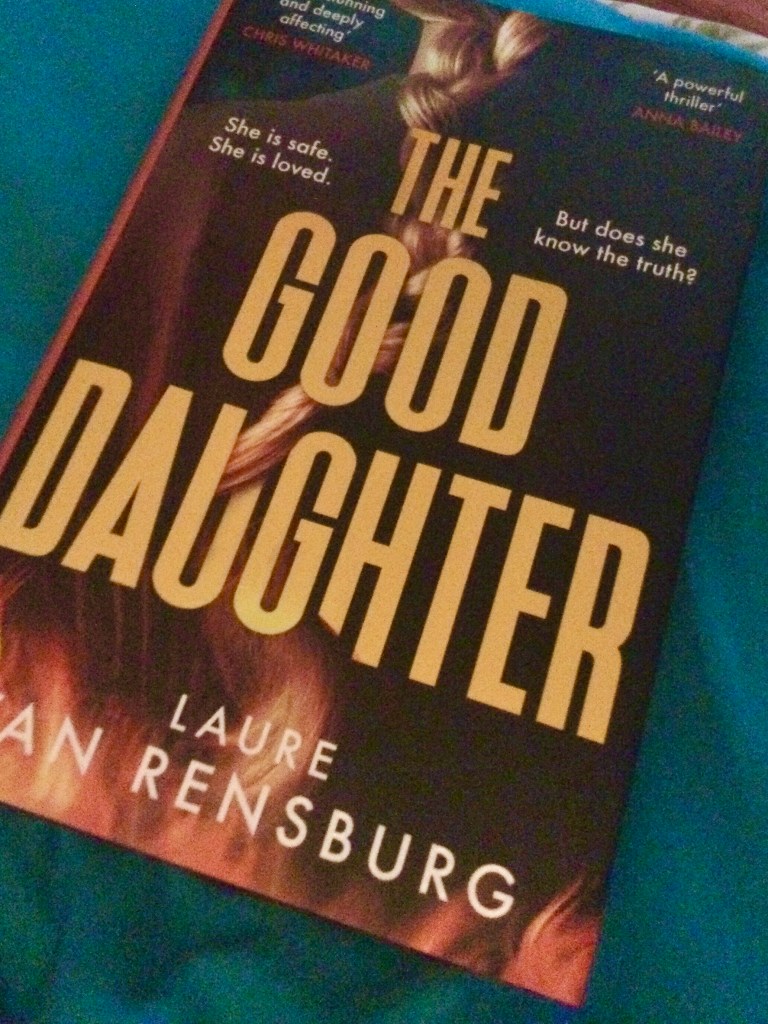
Abigail is a proud member of the New America Baptist Church. A Christian community miles away from the nearest town in South Carolina, she is safe from the depraved modern world.
She is a good daughter. A valued member of the community.
So when she is the sole survivor of a fire that burns her family’s home to the ground, it seems like a tragic accident.
Until a surprising discovery is made: before the fire, Abigail let a stranger in.
Who was the stranger? What started the fire? And was the outside world always the threat – or did danger lurk within the community’s walls?
I became completely immersed in this fascinating story about faith and the complexities of memory while on holiday. Having spent part of my childhood in a church from the American Christian Fundamentalist tradition, I am always alert to the insidious nature of spiritual abuse and cultish techniques used to entrap converts in evangelical churches. The book opens with a death, immediately filling the reader with questions and drawing them into the story. A document tells us about the wreckage of the house, following a fire. From there the author tells her story in two parts: the present day and then back to three weeks before the fire happened. In between these two timelines there are more documents and discussions that work like ‘real life’ pieces of evidence. There are news reports, public comments and podcast transcripts, all working to verify the story and establish a factual perspective opposing the emotion and confusion of our narrator. The opening is dramatic and emotive, as we realise Abigail has lost her parents; Genevieve and Pastor John Heywood were discovered dead after the fire. Yet Abigail survived. Her parent’s congregation are secretly suspicious about Abigail and think she may have started the fire. The police are beginning to think the same, but what reason does Abigail have for doing something so awful? She’s always been a good girl, dutiful and obedient. Or is that just an act? We experience everything through Abigail and her mind is a complex and intense place to be. She felt like a real person to me very quickly.
Their neighbourhood, in a remote part of South Carolina, is entirely made up of New American Baptist church members. The church members, including Abigail’s family, live according to strict rules based on the Bible. They don’t mix with non-church members and have a domestic life where the man is the head of his household. He goes out into the world to provide for his family and the wife is the homemaker, looking after the house and their children according to the principles laid down by her husband. This is a philosophy I’m very familiar with and I remember, even from a young age, wondering how could I possibly defer to my husband if he happened to be a complete idiot? Abigail doesn’t question the religious rules that govern her life, but then she meets a stranger who changes everything. Summer comes to the community to interview church members for a podcast she’s making about the New American Baptist Church. She asks to interview Abigail. They are completely different in terms of life experience but a friendship starts to grow. It’s fascinating watching the changes in Abigail and her characterisation is excellent, as is that of Summer. She is a catalyst of so much and the storytelling is strong, but follows an unpredictable path. It’s a slow start, then as Summer arrives the story takes off and becomes the pacy and addictive psychological thriller I expected from this writer.
Laure Van Rensburg has taken a very sensitive, difficult subject and has managed it with a great deal of care and empathy. It’s hard to tell such a powerful story with the right amount of sensitivity, while also creating a gripping narrative that keeps readers turning the pages, but I think the author has managed that balance well. We’re taken deeper into life on the plantation with brilliant descriptive passages that create insight into the group. There’s a lot here that wasn’t weird to me, although I think it would be for most readers. If I say to people religious fundamentalism most people don’t really know what that means. I was taught to take every word in the Bible as the absolute truth: Noah built an ark, we all come from Adam and Eve and the world was created in 7 days. Every word comes direct from God with no room for interpretation, symbolism, or the historic period or culture it was written in. Years later, when studying literature at university, I was asked to consider the Bible as a book. I had to research how it was produced, when and by whom. It’s obvious why all books included in the New Testament are written by men. It became a written text in AD325 and powerful men decided what went in (at least that explains the prominence of St. Paul the misogynist). Emperor Constantine and a council of men had the final say, but when the reformation swept through Europe in the 16th Century there was a further split on the books included by the existing Roman Catholic Church and the newly formed Protestant belief system. It’s no wonder then, that the New Testament preaches female modesty and subservience; it suited the church and the men in control of it.
When you imagine that that belief system preached to you every Sunday, borne out by the way your home functions it’s clear to see the damage it can do to self-esteem and the way young women form relationships. That was certainly the case for me. It’s a potent recipe of coercive male control and dominance over women and I could feel a familiar conflict brewing within Abigail as she tries to follow the path forced upon her by both the religious group and all the families around her, but starts to wonder if there’s more. Of course the church is judged and treated with suspicion from outside the community, but there’s no room for questions inside. Questioning the status quo is seen as rebellion, a loss of faith or even a spiritual battle going on within the soul. However, as with all organisations, there are disturbing secrets that lies beneath. I will admit that this was difficult to read in parts, because it set off a chain of little light bulb moments for me. Although, I think it would be an emotional experience for any reader. There’s a creeping sinister feeling, but the increasing tension and twists in the tale keep you glued to the page. I came away feeling so many emotions, but mainly I was so angry, for Abigail and the other young women in the community. Of course some of that anger was for me and the other young women who grew up in my church, many of whom I’m in contact with and who, despite all of them leaving the church in their teens and twenties, are still affected by the experience and their internalisation of the church’s teachings. As Amber’s real memories began to appear I was hooked and had to know what had happened and how she was going to move forward.
I am so impressed by the level of research Laure Van Rensburg has done into this type of church and the sinister way it works. She has really captured the narrative that’s constructed, using the Bible to create an outmoded and illusory vision of the world. If you follow their teachings and actively apply them to your life, God will protect you and keep you safe. The loneliness felt by church members when something bad happens to them or their family is heart-breaking; I was told that my multiple sclerosis would be healed by prayer and when it wasn’t it couldn’t be a failure of God, or their prayer. It was my lack of faith. I found Laure’s writing absolutely mesmerising, the Newhaven community felt just as real as Abigail. I could see it vividly in my mind’s eye. Then when she allowed the outside world to encroach on the narrative it came as a shock, because you realise just how far these people are removed from modern society and even reality. Your mind will flit between whether Abigail is genuinely traumatised by the community and the terrible night of the fire, or whether she’s a psychologically astute and proficient liar. It has a slow start, but by the end I was questioning everything! For me, although it’s at the extreme end of experience in a church like this, the teachings and the coercion were no surprise at all. Most readers will be familiar with these but see them as the practices of cults or churches like the Latter Day Saints. I think they might be a lot more comfortable imagining this mistreatment of women is confined to religions like Islam. It will surprise a lot of readers to learn that a modern Christian church could be like this. They do exist, both here and in USA. As both the restriction of women’s rights over her own body and book banning is in progress now in some US states, the timing of this book is just right. It’s not much of a leap from here to The Handmaid’s Tale. I found this a disturbing, dark and addictively intense read that you really won’t want to put down.
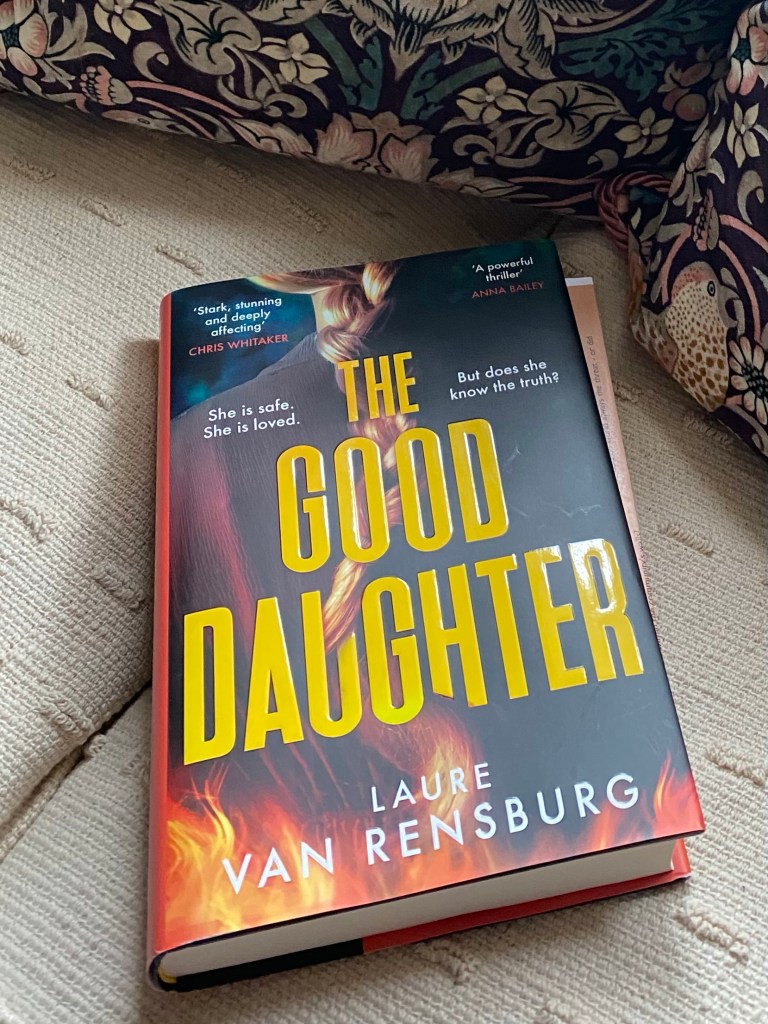
Meet the Author

Laure Van Rensburg is a French writer living in the UK and an Ink Academy alumna. Her stories have appeared in online magazines and anthologies such as Litro Magazine, Storgy Magazine, The Real Jazz Baby (2020 Best Anthology, Saboteur Awards 2020), and FIVE:2:ONE. She has also placed in competitions including 2018 & 2019 Bath Short Story Award.
The Good Daughter is out now from Michael Joseph Books

 The Lotus Readers