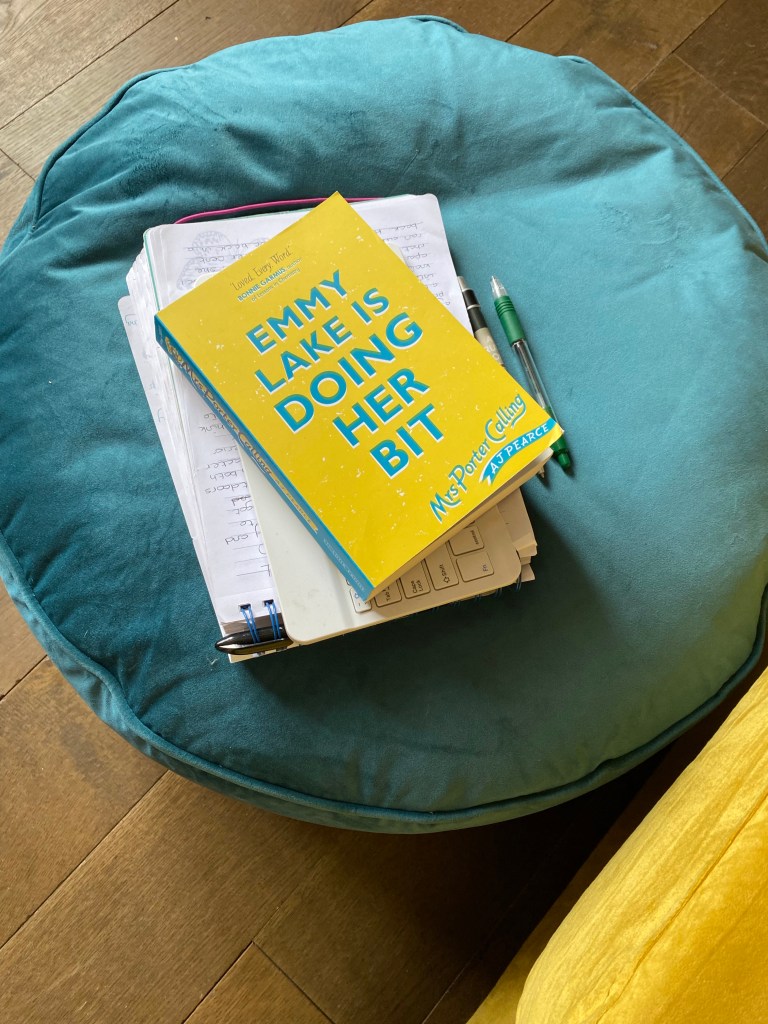
I was new to A.J. Pearce’s world and her character Emmy Lake, so before reading Mrs Porter Calling, I decided to read the previous two novels; Dear Mrs Bird and Yours Cheerfully. Set in WW2, the books follow Emmy as she moves to London to start a career in journalism and soon finds herself in the middle of the Blitz, working for the fire brigade by night and living in her friend Bunty’s grandmother’s house. In Dear Mrs Bird, Emmy has taken up a job offer from Woman’s Friend magazine, working on the problem page. The formidable Mrs Bird is the agony aunt and Emmy must sort through the letters and weed out those that are deemed unsuitable – no funny business at all, not even a hint! Through the novel she moves from being engaged to single status, takes big risks in her job and works hard for the fire service at night dealing with the aftermath of the German bombing. I fell in love with this brave young woman who wants to move with the times and use her writing to help an extraordinary generation of women cope with the difficult situations they find themselves in. Over this and the next book, Yours Cheerfully, Emmy faces some serious challenges: being in love with someone far away and in danger; dealing with terrible loss; helping other young women who have been widowed or find themselves without a home. Yet this isn’t a tale of misery and hardship, there’s an almost relentless positivity to Emmy Lake that I absolutely loved. She’s perky, but not brittle. Her optimism and resilience seem to come completely naturally.
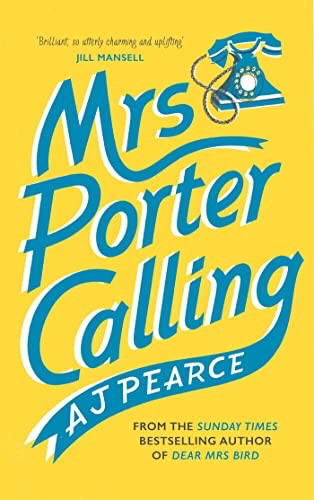
Yet in this latest book, Mrs Porter Calling, she will be facing some of her biggest challenges yet. Emmy has settled into being the lead on the magazine’s problem page and is continuing her series of articles on women who have taken on war work. Everything changes when the owner gifts Women’s Friend to his niece Mrs Porter in lieu of her inheritance. At first the team are optimistic about having a woman at the helm, but it soon becomes clear that Mrs Porter doesn’t want the magazine because of what it is. She wants to turn the magazine into her own scrapbook with society weddings and events alongside beauty and fashion articles that are a distraction from the war. Telling women what they should be rather than being a support. For a team who are used to teaching their readers to reuse and repurpose, this jump to expensive fashions and aspirational articles feels all wrong and Emmy thinks Mrs Porter has missed the whole point of the magazine. Women’s Friend is not aspirational, they don’t want to be dangling fripperies in front of their readers who can’t afford them. Emmy knows that if they change this much they will lose their readership. Even worse, Mrs Porter doesn’t want any more ‘dreary’ war work articles either. It seems that the realities of war haven’t reached her, the nightly bombs Emmy deals with must be muffled by all that jewellery and designer clothing. The team make a pact, to try and keep their beloved magazine as normal as possible while also introducing Mrs Porter’s ideas. In the meantime they will try everything to dishearten their new owner. Hopefully, if things become boring or difficult, she might drop her new hobby and move on. They just have to hope they have enough of a readership left when she does.
Away from the magazine, Bunty is still grieving for her fiancé and continuing her rehabilitation following the bomb blast they were caught in. However, there are signs that she is stating a tentative friendship with another fireman and Emmy has her fingers crossed that things may develop. Emmy and her husband Charles only had a two night honeymoon before he had to return to his posting, now he is moving into North Africa and Emmy depends on his letters. Both girls are forging new friendships with the women who work in a munitions factory and finding out it isn’t always easy to do your bit. I loved this aspect of the novel, because it taught me a lot about what WW2 was really like for women. Despite advocating that all women should find war work, to support their men overseas or help out on the home front, there were difficulties with this that the government seem to have overlooked. The author shows this through the factory women who have issues with childcare and finances. I was shocked to learn that when a Navy husband went missing his salary stopped immediately, but because he was missing and not dead, his wife couldn’t receive a widow’s pension. This loophole left women with no income and potentially homeless. If the factory women had children and worked awkward hours, they often couldn’t get childcare. Some women sneak their children into the factory and hide them so they can still work their shift and get paid, but if found they would be dismissed immediately. Emmy becomes involved in campaigning for factories to apply for the government grants available to set up a nursery for worker’s children. These are the women she wants to celebrate and help in her own time, but also in the magazine. These factory women don’t care about the lavish wedding of some honourable or other, they care about doing their bit, being able to keep a roof over their head and their man coming home.
Emmy has become a team player. Long gone are the early days of her career where she ran away with an idea without thinking of what it meant for those around her. What struck me so strongly was this sense of camaraderie and the sharing of everything – not just the hard stuff that the fire service go through together, but the food, celebrations, home, shelter and even families. I could see that Emmy was in exactly the right place to help when an unexpected loss devastates the factory women and Emmy herself. This tragedy could bring her the biggest challenge she’ll ever have, but I had no doubt she would rise to the occasion. I asked my partner whether he thought our current generation would pull together as well as this generation did and we weren’t sure, although we hoped so. Watching Emmy, exhausted from a day working, change into her uniform and put in a night shift on the fire service switchboard, then go home and reassure children whose house has been bombed out, made me wonder if I could do the same. The perky, excitable girl has become a woman, a woman with a core of steel. If you love historical fiction or just want an uplifting read about women dealing with daily adversity then this is the perfect book for you. I loved all three novels and have happily added them to my forever bookshelves.
Meet The Author

Pearce
AJ Pearce is the author of the Sunday Times Top 10 bestseller DEAR MRS BIRD, which was a Richard and Judy Book Club pick and shortlisted for Debut of the Year at the 2019 British Book Awards. It has been translated into fifteen languages and optioned for development for TV.Born in Hampshire, her favourite subjects at school were English and History, which now (finally!) seems to be making some sense. Her novel, Yours Cheerfully is the sequel to Dear Mrs Bird and is now available in paperback. AJ has just released the third novel in the Emmy Lake Chronicles series, Mrs Porter Calling. Follow AJ on Twitter, Instagram and Facebook: @ajpearcewrites


 The Lotus Readers