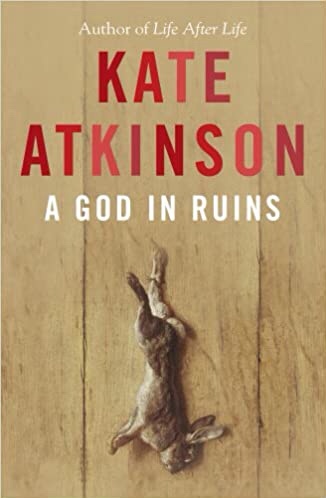
Following on from last week, I wanted to feature this novel which is one of my favourites from the last twenty years and shows that Kate Atkinson is truly one of our best British novelists. It follows another wonderful novel about the Todd family, Life after Life, which focused on the many possible lives of Ted’s older sister Ursula. This is written as a standalone novel, rather than a sequel and has the honour of being one of the few books that genuinely made me cry towards the end. We meet Ted as he’s a pensioner, living in York, and dealing with living his life alone after the death of his wife. However, we don’t stay there, because as with Life After Life, Atkinson mixes past, present and future with great impact. The novel is also told from Teddy’s point of view, although he does seem slightly omniscient at times, knowing things he wasn’t present for. It is such a poignant history of a man who has lived through a world war, and it feels so authentic. In true Atkinson style, it cleverly manages to be a book about fiction itself.
In Life After Life when the focus was on Ursula, Teddy seemed to be set on course to marry childhood sweetheart Nancy and their life was portrayed as idyllic. Yet in this novel we see that their relationship was far from perfect. Despite this we do follow the lives of their daughter and granddaughter too, to great effect, because it opens up all the changes Ted has seen over his long life. Teddy’s mind often wanders back to his time as part of Bomber Command – something I’ve grown up with because I live in Lincolnshire which is known as Bomber County. In fact in the course of his work as a land drainage engineer, my Dad has accidentally dug up a whole Lancaster Bomber, probably trying to limp home to RAF Blyton, only a mile and a half away. Here the bomber raids were described so authentically, they were harrowing in parts and I could imagine the anxiety of waiting back at base to count the planes back in, knowing some would be missing.
Atkinson manages to combine the personal story of Teddy’s family, with societal shifts that occurred between the wartime generation and those who came of age in the second half of the 20th Century. Teddy is an old school gentleman, often showing acts of kindness and chivalry that make him very loveable. His values are challenged by his daughter Viola, the voice of her generation, who is always looking for the next cause to adopt. She campaigned for nuclear disarmament and supported the women protesting at Greenham Common. She’s a feminist and a vegan, something very unusual until fairly recently in the 21st Century. We are shown how the generation gap creates arguments in a family, where one generation fought in a war and later generations don’t appreciate or fully comprehend the sacrifices that were made for them. Viola could be seen as an unsympathetic character, especially when compared with Teddy’s service. However I wondered if her character developed as a reaction against Teddy’s courage and heroism. Such perfection is hard to live up to. In fact, when Viola tries to reconnect with friends from her travelling days she finds one of them has died and one works in finance – far from the ideals they held before. Unlike Teddy’s generation they have had a chance to regret behaviour and change outlook. Teddy’s friends will always be the same age.
I enjoyed the interesting structure of the novel where we float back and forth in time, between characters and settings. At times Atkinson lets slip a future plot, while still in the past. All of this felt very Virginia Woolf-esque and it suited the narrative. She is such a skilled writer that this never feels overtly literary or highbrow, it remains a light easy read. There is a huge twist at the end that has a bearing on everything you’ve read so far, but it’s not there just for the sake of it. Yes, it’s an excellent example of the post-modern novel, in a similar vein to Ian McEwan’s Atonement, but that’s not all. It’s impact of the twist was devastating to me and this is where tears emerged. This unexpected direction is truly a tribute to the men of Bomber Command, especially those who didn’t come home, like the men in the Lancaster my Dad dug up who were only a couple of miles from safety. This novel is simply one way Teddy’s life could have played out and it’s all the more powerful for it. This was an intelligent, well-researched and poignant novel that I think should be viewed as a modern classic.
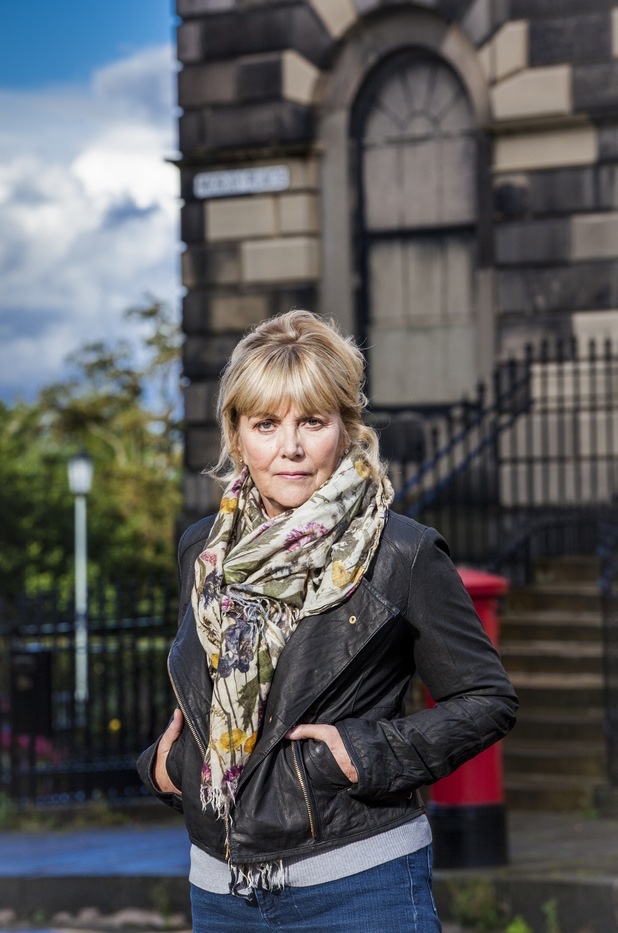
Her four bestselling novels featuring former detective Jackson Brodie became the BBC television series Case Histories, starring Jason Isaacs.Her 2013 novel Life After Life won the South Bank Sky Arts Literature Prize, was shortlisted for the Women’s Prize, and voted Book of the Year for the independent booksellers associations on both sides of the Atlantic. It also won the Costa Novel Award, as did her subsequent novel A God in Ruins (2015).
The sky is clear, star-stamped and silvered by the waxing gibbous moon.
No planes have flown over the islands tonight; no bombs have fallen for over a year.
___________
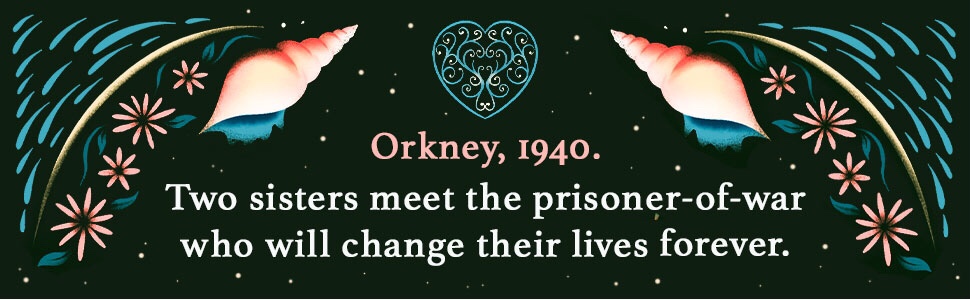
Orkney, 1940.
Five hundred Italian prisoners-of-war arrive to fortify these remote and windswept islands. Resentful islanders are fearful of the enemy in their midst, but not orphaned twin sisters Dorothy and Constance. Already outcasts, they volunteer to nurse all prisoners who are injured or fall sick. Soon Dorothy befriends Cesare, an artist swept up by the machine of war and almost broken by the horrors he has witnessed. She is entranced by his plan to build an Italian chapel from war scrap and sea debris, and something beautiful begins to blossom. But Con, scarred from a betrayal in her past, is afraid for her sister; she knows that people are not always what they seem.
Soon, trust frays between the islanders and outsiders, and between the sisters – their hearts torn by rival claims of duty and desire.
A storm is coming . . .
In the tradition of Captain Corelli’s Mandolin, The Metal Heart is a hauntingly rich Second World War love story about courage, freedom and the essence of what makes us human during the darkest of times.
This book is stunningly beautiful, so much so that I had to sit and think in the quiet when I’d finished it. It’s so rich in folklore, historical detail, the trauma of war and bereavement that I know I could pick it up to read again and still find something new. I immediately ordered a signed copy for my forever shelf, because it is so special. What did I love about it? The Scottish folklore, the incredible landscape, the community, the dignity of people facing the hardest times of their lives. Then amidst the chaos, violence and confinement, beauty emerges in the shape of a deep, immediate, connection and growing love between two people who can’t even speak the same language. The counterpart to this human story is the Italian Chapel, built out of the scraps of metal huts and concrete the prisoners are allowed. Yet from these humble materials a building of true beauty emerges, that still stands today. It made me emotional to think about the lovers, but also the patience and faith of these incredible men who needed a place to worship, a piece of home.
Dorothy and Constance live on Selkie Holm, a small island close to Orkney. They are isolated outcasts, strange simply because of their doubling, but also because they’re thought to have bad luck. There are myths about the island and the selkie women that might lure a man into the water. People go missing there and the old fishermen who gather in the tavern love to swap old stories about the strange shapes seen in the water. It’s said that if you live there you might go mad. Besides, the girls have had bad luck enough with the drowning of their parents as they tried to row to Kirkwall hospital in a storm. People mutter that it isn’t right for two young girls to live there alone. Surely they must need other people? Yet, that’s exactly what Con doesn’t need. They live in the bothy because of a traumatic event that happened in Kirkwall and now she’s frightened of people, particularly men. So when it’s announced at a town meeting that Italian prisoners will be housed on Selkie Holm, Con is terrified. Their protests fall on deaf ears, since the sinking of the Royal Elm, Churchill has decided barriers must be built to prevent invasion. The prisoners will build the barricades and soon there are huts and barbed wire and men with boots all in Con’s place of safety. Worst of all, Angus McLeod has been given a job as a guard on the island and the girls want to avoid him most of all.
This is a story about freedom for all three main characters. Of course Cesare is the one literally behind a wire fence, but Dot and Con’s bothy is a prison of their own making. Watching each of them try to inch towards freedom in their own ways is moving and upholds my belief as a therapist that everyone is capable of change and even in the most straitened circumstances we still have choices. Cesare finds freedom in the infirmary where he is cared for, in the Major’s office helping with correspondence, in the building of the beautiful chapel and the first time he sets eyes on Dorothy or Dorotea in Italian. His utter joy at finding something so precious amongst the dirt, the heavy labour, the biting wind and the regular beatings, is hopeful and bittersweet. Just like the unexpectedly beautiful chapel, treasures are often found in the dirt.
‘Up on the hill, the chapel gleams in the sun. I imagine the light pouring in through the window. The pictures on the walls will gleam with life. And, on the ceiling above the altar, a white dove soars through a bright blue sky. How does something so beautiful come from such darkness? The tears are flowing freely now, as I turn back to the people watching me and I force myself to say, ‘Thank you.’
‘‘Up on the hill, the chapel gleams in the sun. I imagine the light pouring in through the window. The pictures on the walls will gleam with life. And, on the ceiling above the altar, a white dove soars through a bright blue sky. How does something so beautiful come from such darkness? The tears are flowing freely now, as I turn back to the people watching me and I force myself to say, ‘Thank you.’Up on the hill, the chapel gleams in the sun. I imagine the light pouring in through the window. The pictures on the walls will gleam with life. And, on the ceiling above the altar, a white dove soars through a bright blue sky. How does something so beautiful come from such darkness? The tears are flowing freely now, as I turn back to the people watching me and I force myself to say, ‘Thank you.’
Dot finds her instant love for Cesare overwhelming, but she never questions or doubts her feelings or his. Con often reminds her what men are capable of, that she can’t trust someone she doesn’t know. Yet, for the first time, Dot places a boundary between herself and her sister, simply saying ‘I am not you’. This isn’t a criticism of her twin, but just an assertion that she is different, separate, and so is her life. She also makes a point of going to work in the infirmary, leaving Dot at the bothy. This is the first time where Con can see Dot moving into a life beyond her, their psychic or spiritual link can never be broken, but to wake up and live without her physical presence must be terrifying.
For Dot freedom means the ability to live a life separate from her sister’s, but also beyond the shadow of Angus McLeod. Dot’s trauma affected both girls and when she couldn’t go out, neither girl did. They have spent every day and night together since. This wasn’t Dot’s trauma, but she stopped living just the same. Now she dreams of sitting in the warmth of Italy, with Cesare and his family eating wonderful food. The image is a mile away from the dark, cold and stormy reality. Con sees the changes in Dot, and recognises she’s drifting away from her. Fiercely protective of her twin, it takes her a while to realise that in Cesare, Dot has found a man who is gentle and won’t hurt her. She knows she can’t hold her back, but it’s a huge wrench, like giving away part of herself when so much has been taken from her already. Watching Con’s realisations about her trauma and the potential for healing was one of the most moving parts of the novel.
The historical detail in the novel is incredible. Caroline Lea writes in her acknowledgments:
‘I wanted the love affair between my characters to be constrained by time and intensified by the precipitous and perilous nature of war, so I took many liberties with timings and action. This was a very conscious decision: I’m painfully aware of the difficulties in fictionalizing real historical events and people and selling them as ‘fact’, especially when this involves taking on the voices of ‘real’ people: I was very certain that I didn’t want to do that.’
This explains her decision to change certain things: some of the history and geography is changed; the construction of the barriers was started by Irish workers; the sinking of a ship by German u-boat features the Royal Elm, not the Royal Oak. Yet the chapel, situated on Lamb Holm, is still standing and can be visited. Even the metal heart truly exists, created by metal worker Giuseppe Palumbi for an Orcadian woman he fell in love with. He had to return home to his wife and family in Italy and left the heart behind. By doing this she has made sure that no one’s real life experiences are encroached upon. This is definitely a work of fiction, although the amount of research and love for her subject is clear to see. The descriptions of the islands are simply stunning and the relentless sea is mercurial; one moment soothing and the next a punishing, vengeful god. The inhabitants of the islands intrigued me too, in the way they slowly integrated with these prisoners of war. Even the two girls, shrouded in grief and superstition, are gently supported by this generous community. Now the chapel is part of this community’s history, with the metal heart at its centre. It shows us that light can shine into the darkest corners and choosing to love, despite the pain and grief, can be the bravest stand we can take.
‘All across Europe, bodies are falling from the sky or into the sea, or are being blown high into the air. Every explosion is a name. Every lost life is carved on someone else’s heart. Every death takes more than a single life. It takes memories and longing and hope. But not the love. The love remains’.
Published by Penguin, 29th April 2021.
Meet The Author
Caroline Lea grew up in Jersey and gained a First in English Literature and Creative Writing from the University of Warwick, where she now teaches on the Creative Writing degree. Her fiction and poetry have been shortlisted for the Bridport Prize, the Fish Short Story Competition and various flash fiction prizes. She currently lives in Warwick with her two young children and is writing her next novel. Her work often explores the pressure of small communities and fractured relationships, as well as the way our history shapes our beliefs and behaviour.
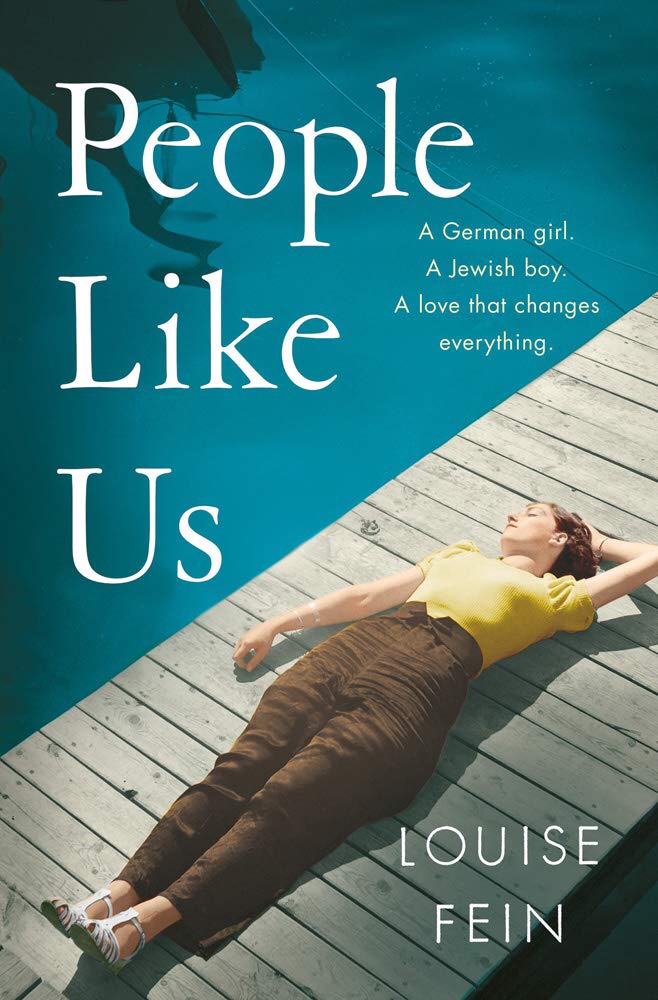
I was deeply affected by this novel about the rise of the Nazi Party in 1930s Germany, told from the perspective of a young girl living in Leipzig. The story opens as a young Herta is rescued from drowning by her brother Karl’s friend, Walter. It’s a powerful opener and a metaphor for the coming years, as Herta is slowly drowned by the tidal wave of nationalism, and fascism that overwhelms her country and changes her life altogether. Fein was inspired to write the novel after researching her family’s Jewish roots and eventual flight to London. During her research, she started to wonder how a country and it’s people could go from being a reasonable and tolerant society, to committing such atrocities against their fellow human beings. So, to explore that idea, she decided to write her novel from the perspective of an ordinary German child, slowly becoming brainwashed by the evil ideology. It’s the childhood innocence of Herta that makes this book work so well and allows us to have empathy, despite her allegiances.
Herta’s father has recently taken control of the city newspaper and his reward is their beautiful new family home, their servants and improved status in Leipzig society. He came from humble beginnings to marry Herta’s elegant French mother, but is now quickly rising through the SS ranks. Her elder brother Karl is in the Hitler-Jugend and she really wants to do her bit to make for Vati and Mutti proud of her too. So she pledges her life to the Fuhrer, to serve him and his purpose, totally unaware of its evil extent. Fein slowly shows us his plans, and along with some of our characters we’re like the proverbial frog in tepid water. Without our luxury of hindsight, we too wouldn’t have recognised how much danger we were in, until it was far too late and we boiled to death. There are those characters who truly embrace Hitler’s philosophy and purpose like Herta’s Vati, and below that are various levels of denial, collaboration and fear. Even Vati, has a jumbled mix of motivations: feelings of inferiority from his background and in his marriage; relishing the status and power; a certain amount of brainwashing.
Hitler’s propaganda machine was in full swing within Germany, aided by the country’s financial struggle since the Great War. The Weimar Republic, the post WWI government, signed the Treaty of Versailles in 1919. The treaty stated that Germany would take responsibility for the war, relinquish parts of its territory and pay reparations to the Allies. These policies caused huge social and economic hardship, a situation that the Nazis blamed on Jewish people and communists. A myth was even started that blamed the Jews for the signing of the treaty. Called the ‘stab-in-the-back’ legend, this story blamed Jewish infiltrators in government for the difficulties the German people were facing, despite the fact that many German Jews had served faithfully in the war. Now, the German people were worn down by hardship and poverty and were looking for someone to blame. Hitler exploited these conditions to devastating effect and ordinary Germans were taken in by it. So, when Jewish neighbours and friends started being restricted or sent to work camps, only very rare, brave individuals stood up for them.
The scene when Herta first realises something is very wrong is at school, and her teachers call on Jewish children to stand up in assembly. The shock is seeing her brother’s childhood friend Walter, singled out for abuse and ridicule. Walter can’t be a Jew. He’s the Aryan ideal, blonde and blue-eyed. Besides which, when she was very small Walter saved her from drowning. He had been a constant presence at the house when they were younger. Now here he was being called terrible names and sneered at by their new teacher. Herta is terribly confused, she has been told that Jews look a certain way, and act in a different way to her, but she feels that she and Walter are both the same. Bravely, she runs after him when he is expelled from school and triggers a friendship of her own. A friendship that as she grows-up, develops into love. What possible future can this relationship have under Nazi rule? Then, as it becomes ever clearer that Hitler will not rest until Germany is cleared of Jews, both Herta and Walter will have to make sacrifices and the legacy of these decisions will last until they are both very old.
I don’t want to say any more for fear of ruining the story, but there were many points where I was moved to tears by the situation these childhood friends and young lovers, found themselves in. The displacement of families during WW2 was extensive and with no way of tracing each other, there would have been people who never saw each other again. I married into a Polish family, my husband died several years ago and my father and brother-in-law more recently. My mother-in-law got out of Warsaw as a little girl, escaping through the sewers. Her mother stayed. Her father ended up in America. The family never reunited fully, with Hana finding out her father had ended up in the Boston area of the USA. He had searched but never found either of them. He assumed they had died and later remarried, never knowing that his wife and child did survive and were now in England together. Luckily when Hana found her other family, she embraced them and they in turn remained close to their English family. I felt that the author had really done her background research, possibly with families like mine. I believed in her world and characters immediately.
The background of Leipzig felt homely and friendly, but then developed into this menacing place where you didn’t speak or even spat at the old couple across the street. The night where Herta looks for Walter, knowing that violent confrontations will be taking place in the Jewish quarter, is so frightening and made me feel physically sick. It’s where the threats and rhetoric become real and deadly. Herta is only ever truly free in nature, walking her dog on a Sunday morning and sometimes seeing Walter. It’s harder for someone to conceal anything themselves in open fields and usually Herta can walk freely, enjoying the air and the birdsong. This place represents normality whereas the city is madness, chaos and murder. The ending broke my heart, as we contemplate with Herta on what the world will be like to a new generation. Will it be peaceful with the effects of war far behind, or will the ripples of this hatred and violence be felt for several generations more? I was so moved by this and the epilogue. Some books stay with you for life and I think this will be one of mine.
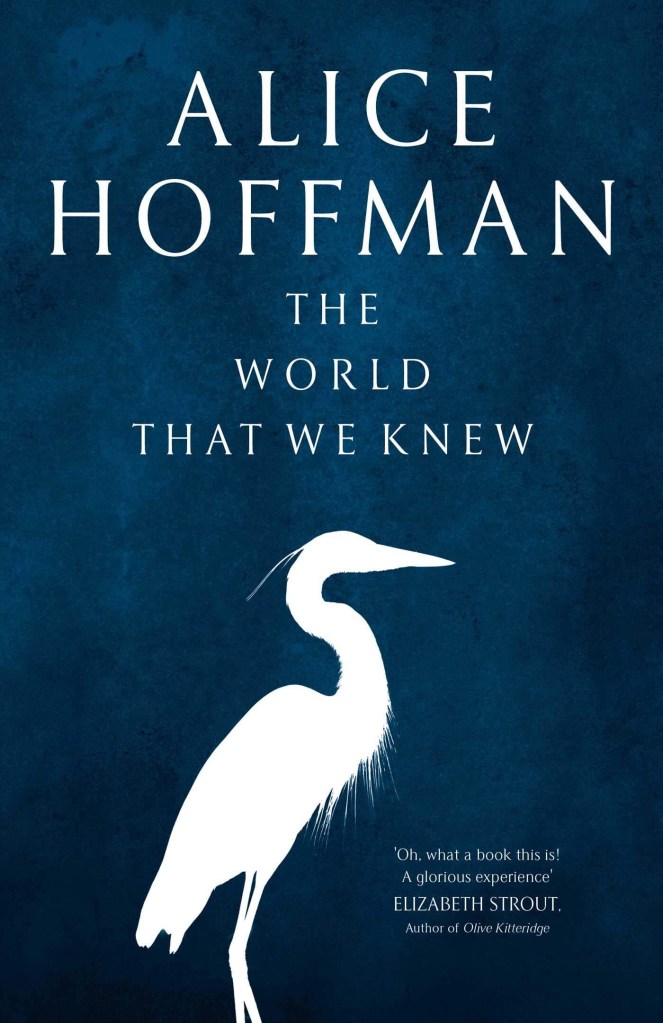
This was a much anticipated read for me as Alice Hoffman is probably my favourite writer. Most people know her for Practical Magic, but I think her more recent novels have been remarkable. The World That We Knew stands with them. It was sad, unflinchingly honest and strangely magical.
We join Hanni Kohn and her daughter Lea in Berlin at the beginning of WWII.The verbal propaganda against German Jews is now turning into action and after Lea is attacked by a soldier on her way home, Hanni intervenes with terrible consequences. Now Hanni knows she must get Lea out of Berlin, but how can they both leave when Hanni is looking after her elderly mother. Desperately looking for some way of protecting Lea, Hanni falls on the idea of a Golem – a mythical Jewish creature animated from clay. First she approaches the rabbi, who turns her down, but the rabbi’s daughter Ettie is listening and spies a chance to escape home. She assures Hanni she has the necessary power and learning to create such a creature, programmed to protect Lea, but only on the basis that Ettie and her sister can travel with them. They gather river clay, water and blood to create Ava, a strong woman with dark eyes and hair, who will travel as Lea’s cousin. However, all Golems must be destroyed once their purpose is done, so Hanni leaves instructions in Lea’s locket to ensure she can carry this out. Hoffman’s story blends historical fact, outlining the fate of Jews in Berlin and France while the world claimed ignorance, with the fictional story of the four girls. One is lost before they leave the country leaving behind a loved one intent on getting their revenge.
There are other characters in the novel bringing their own story and perspective to the story. Despite having their own narrative Hoffman cleverly weaves their stories together so that they encounter each other at some time during the war. On Lea and Ava’s travels in France we meet Julien, his brother Victor and their parents. As a Jewish family resident in Paris their parents imagine themselves safe from the fate of Jewish refugees like Lea and Ava. At huge personal risk they let Lea and Ava join the household, because their servant Marianne has left that morning. Ava takes to kitchen work while Lea forms a friendship with Juliet. Victor has been mourning for Marianne as we follow her home to her father’s farm in the mountains bordering Switzerland. Victor decides to leave soon after, but his travels take him into the Resistance first where he meets a certain young woman hellbent on revenge. Julien is left behind, when Ava and Lea leave, and he watches as his parent’s assumptions are all proved wrong and they are lead to a stadium in burning heat. They are stripped of their jewellery and other valuables and kept without sanitation or food until they can be transported to the death camps, bewildered and broken. Julien hatches a last minute plan and manages to slip out of the stadium and into the labyrinth of streets until a special messenger gives him an idea of where Lea might be.
We follow these various characters through Germany, to Paris, to a convent where silver roses bloom, and a farm in the mountains where over three thousand Jews are walked to the mountains and freedom. In between the many horrors of war sits the beauty of nature, strangely incongruous and almost mystical in that it carries on without or even in spite of us. I love the audacity of Hoffman’s magic realism in juxtaposing the Holocaust with a mysterious heron who dances in the moonlight, at the river’s edge, with a very unusual woman. This beautiful novel weaves together the realities of a terrible war, with an element of ancient magic. Hoffman creates a story about the lengths people will go to in order to survive, protect those they love and fight for what they believe in. We also see the amazing healing power of love and forgiveness. Most of all, against a backdrop of the most evil and inhumane act of the 20th century, Hoffman uses the character of Ava to make us truly think about what qualities make us human.
Meet The Author.
Alice Hoffman is the author of thirty works of fiction, including Practical Magic, The Dovekeepers, Magic Lessons, and, most recently, The Book of Magic. She lives in Boston. Visit her website: http://www.alicehoffman.com
The Bookstore Sisters
I usually expect a new Alice Hoffman novel in the autumn as she’s so prolific, but this year it’s a short story to keep us ticking over until her new novel arrives.
Isabel Gibson has all but perfected the art of forgetting. She’s a New Yorker now, with nothing left to tie her to Brinkley’s Island, Maine. Her parents are gone, the family bookstore is all but bankrupt, and her sister, Sophie, will probably never speak to her again. But when a mysterious letter arrives in her mailbox, Isabel feels herself drawn to the past. After years of fighting for her independence, she dreads the thought of going back to the island. What she finds there may forever alter her path—and change everything she thought she knew about her family, her home, and herself. I’m a lover of books about books, and since the words I keep hearing are ‘relationships, charm and magic’ I’m really looking forward to a long bath with this story.
Published by Amazon Original Stories on 1st Nov 2022.
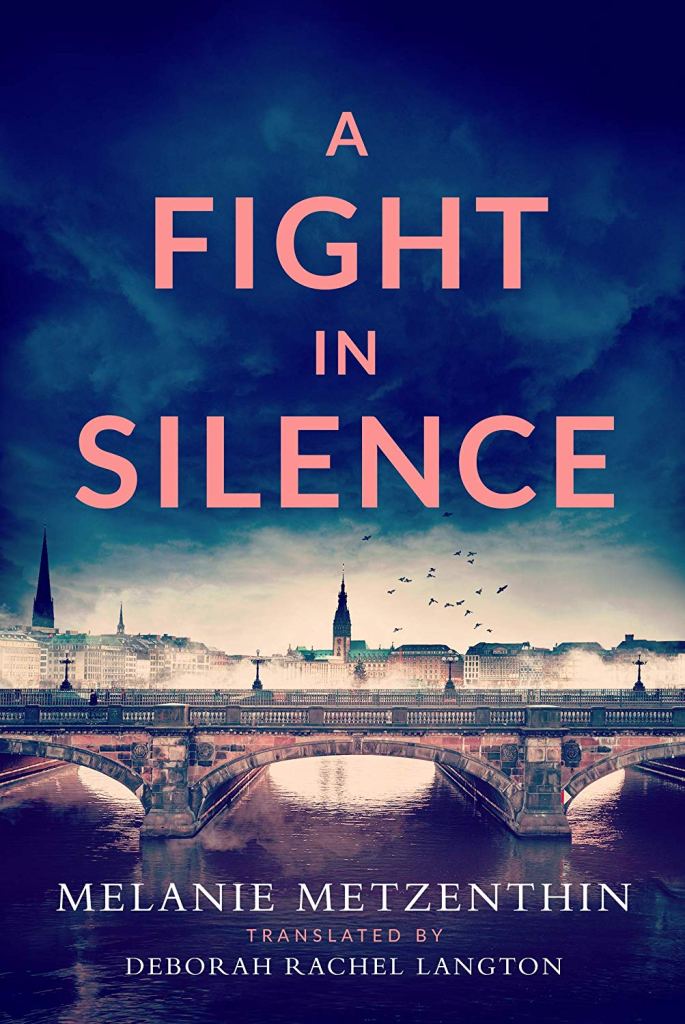
The subject matter of this book is very close to my heart, so despite the WW2 novel market feeling a bit saturated at the moment, I decided to give it a try. I have a disability and have studied disability and literature to post-grad level so Hitler’s treatment of disabled people and eugenics in general are subjects I’ve read about widely. I’ve encountered novels exploring the issue of eugenics in 20th Century North America. However, I have never seen it in a novel based in WW2.
The novel starts in Hamburg in 1926 when our two main characters, Richard and Paula, meet and fall in love. Soon after they marry, Paula becomes pregnant with twins. She gives birth to a boy and girl and this is the happiest time in their lives, with only one problem; their son Georg has been born deaf. They vow to protect him and have optimism that with his family’s help, all will be well. However, as I was reading, I was aware of the time period tucked in the back of my mind. I knew that the rise of Nazism was just around the corner and everything will change. This was uppermost in my mind as it had recently been depicted in the BBC series World On Fire. As the Nazis seize power, they begin to round up adults and children with disabilities for euthanising. Richard is a doctor and finds himself falsifying documents to help his patients. On a personal level he is hiding the disability of his own son. Will they be able to remain hidden, or even stay together?
What makes this book unusual is that we are reading about WW2 from the perspective of German citizens. Ordinary Germans suffered hardship through bombings and loss of both loved ones and their homes and livelihoods. In 2014 a memorial was unveiled in Berlin to commemorate the 300,000 German people killed by the Nazis. That’s without counting those in Poland, Austria and other occupied countries. The book ends Post-war and describes how the Germans were treated in the years following. I think the fact that this a German author accounts for the incredible detail and historical fact woven into the story. Where it lacked occasionally was in the emotions. This could be a realistic depiction of a culture shell shocked by war or it could just as easily be an issue with finding the right words in translation. I felt the book was well researched and characterised. It shows the other side of a war that we’re used to hearing about from the victor’s standpoint, I really enjoyed this different.





 The Lotus Readers