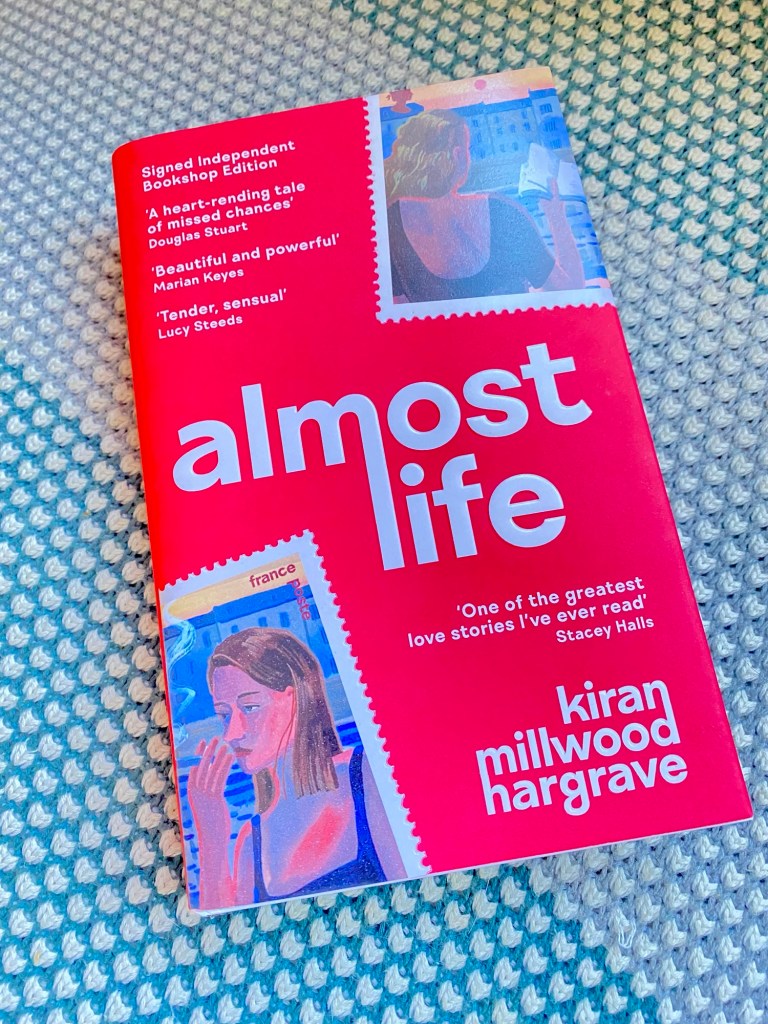
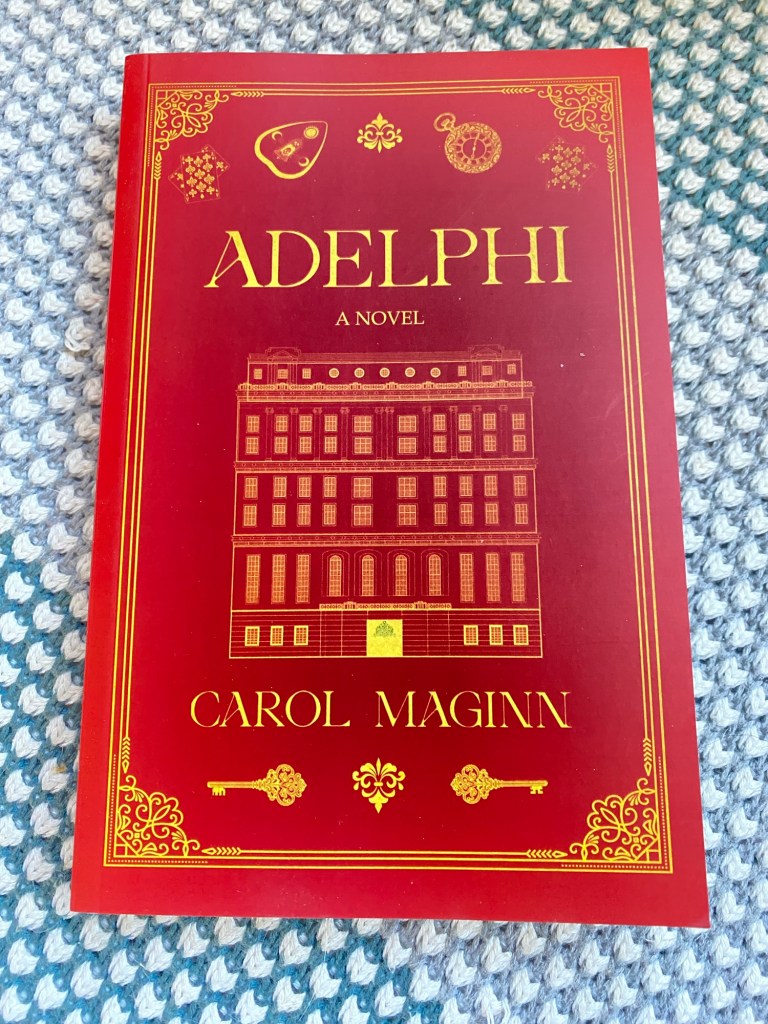
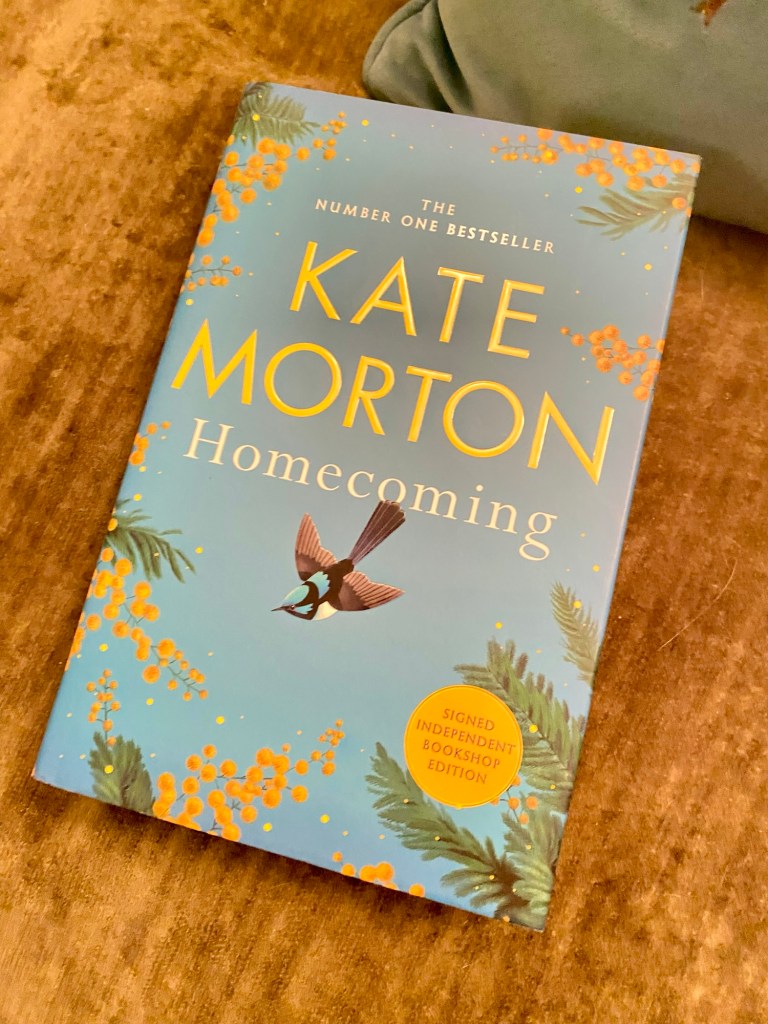
Posted in Personal Purchase

The Boleyn Traitor by Philippa Gregory 

She survives four queens. Will she fall to a tyrant?

Philippa Gregory brings the Boleyn traitor into the light in an explosive story of one woman’s survival in the treacherous heart of the Tudor court.

It’s been a while since author and historian Philippa Gregory delved into the lives of the Tudors, but what a character to come back to. I’ve always been interested in those women who survived Henry VIII, not just Katherine Parr but Mary Boleyn, who was the subject of Phillipa’s first book and managed to spurn court and live in the countryside with her husband and children. There’s Anne of Cleeves who had the common sense to take an annulment and lived the rest of her life as a wealthy woman. Then there’s Jane Boleyn, one of those fascinating people who seems in the background and very unimportant. In fact when I first read about Anne Boleyn her sister-in-law was no more than a functionary, a lady-in-waiting with no bearing on the main story. However, the more I read, the more interesting little snippets occurred to me. She’s named as someone who betrayed their own husband in the trial Henry VIII held against Anne and three men who were close to her, including her brother and Jane’s husband, George Boleyn. I wondered why he wanted to prove incest against Anne, when her adultery was treason anyway. This was a claim that had anger and spite behind it, that wanted to taint and bury the name Boleyn and with Jane surviving the fall it seemed likely that she had provided this salacious claim, perhaps jealous of her husband’s close relationship with his sister. Maybe she was just lucky, but Jane survived four queens, serving as lady in waiting from Katherine of Aragon to Katheryn Howard. That shows she was accomplished at court and able to weather the changes under a very unpredictable king. She survived the change from Roman Catholicism to the Church of England and the huge change in Henry’s court when he became less dependent on the opinions of his dukes and more on the commoner Thomas Cromwell. So I was really looking forward to reading more about this woman and her perspective on a story we know very well. 

Of course there was a certain amount of repetition, but that’s my fault for having read everything there is to know about Henry’s court. Even though we’re firmly in Henry’s time, this book felt strangely contemporary in its themes. As it goes along we start to see Henry the tyrant emerge from the sought after and enlightened prince he once was, possibly due to the blow on the head he suffered while jousting. Now America is in the grip of a similar man, they’re both petty, vindictive, vengeful and willing to manipulate the truth to get the outcome they want. 

“Pity about the horse” my father says […] “the King had him beheaded”. 

By the time we reach Cromwell’s search for a new wife, after the death of Jane Seymour, Henry seems on the brink of insanity and no one can say no to his demands. A whole court revolves around his wishes, no matter how irrational they may be. 

“The King kills those closest to him […] he loves them at first, calling them to his side to make himself shine and then he cannot tolerate that they eclipse him.” 

Philippa writes a brilliant scene based on what we know of Anne of Cleeve’s arrival in the country. We know she spoke very little English or French, but she also had no experience of Henry. One of his foibles was dressing up and fooling people with his appearance. He failed to realise that his sheer size, not to mention his gait which was affected by the wound on his leg, meant he was likely to be identified whatever mask or disguise he wore. Used to the pandering of his courtiers who would pretend not to know him, he was horrified when he burst into Anne’s room dressed as a beggar and she failed to recognise him, even flinching at his touch. It’s was an appalling first impression and Philippa writes Jane as desperately trying to stop it from happening. Jane had spent time with the German bride and knew she wouldn’t get the King’s humour, pleading with Cromwell to stop him. However, it was too late and this woman’s reaction to him would have been a huge dent to his pride. This rejection doomed their relationship before it started, with Henry claiming she was overweight, her breasts were slack and she had a strange smell – a rather bold claim considering Henry’s persistently infected leg and his courtiers having to hold perfume to their noses to disguise the smell. The annulment was swift and Henry’s eye was drawn to a new girl at court, the fifteen year old Katheryn Howard. 

Of course, there is also a contemporary parallel between Katheryn Howard’s past at her aunt’s home and Epstein scandal. She was supposedly being trained as a lady-in-waiting but Gregory’s past novel about Katheryn’s short time as Queen reveals that this finishing school in Norfolk is a magnet for the men of the area who are allowed to visit the girls at night. Katheryn has always been portrayed as promiscuous and it is thought by more recent historians that she was sexually active from a very young age of about twelve to thirteen. We would now consider this grooming of a minor for sexual exploitation and it’s worth remembering that she was executed for treason due to her infidelity with Thomas Culpepper, who had been the King’s favourite, but also for adultery with young men she met before she’d ever come to court. Henry changed the law specifically to charge her with this when he had the evidence to sign her death warrant anyway. He’s not alone in his predilection for young women. His best friend Charles Brandon, Duke of Suffolk, has a young ‘ward’ who lives at Grimsthorpe Castle in my home county of Lincolnshire. As a middle aged man he thinks nothing of marrying her as soon as she’s of age and taking her property as his own. He’s also a lot less appealing when I’m not imagining Henry Cavill who played him in The Tudors. I found the scenes where Henry is brought to Katheryn’s bedchamber almost unbearable to read, but I can’t deny that they are well written. Henry is described as bloated, sweating and leaning upon his courtiers who have to heave him into bed with this young girl. We know he is likely to be impotent at this point in his life, but the fact that this tiny girl has to try and initiate sexual activity with him made me feel sick. I felt a tremendous pity for her and a hope that she found some moments of happiness and love in her short life. 

Gregory writes Jane as a woman who lost her husband, her status and her role as a mother to serve this tyrant King’s court. It’s so fascinating to read how she stays within the King’s good graces for such a length of time. Here the author writes an alliance that might explain that, but we can see she’s intelligent in her own right, speaks several languages, is good at reading people and has a shrewd ability to sense which way the King might drift next. I found myself admiring her quick thinking and felt she could have easily been a politician or spin doctor in modern times. Something that stood out strongly in this novel was the misogyny, which wasn’t surprising but still felt desperately unfair. After Henry suffers his jousting accident he is unconscious for anything from 45 minutes to a couple of hours, with Anne distraught and by his side. Later she miscarries and as awful as that experience is, having been there more than once, what struck me was the shame and guilt she was made to feel. The rush to clean her up and change the bed, making sure it’s all presentable and the Queen looks well enough to accept a visit from the King. Her brother George is the only man who goes to bring comfort, not caring what state she is in. This belief that women are unclean and should come to a marriage bed untouched, no matter how experienced her new husband may be, does breed a resentment and fury into those women. That can start to question in their own mind but it can’t be voiced yet. This is about little rebellions and pushing the boundaries of the powers they do have and Jane is very good at this, knowing which powerful men to trust and those to placate. I found the book gripping even though I knew the outcome would not change and I think that’s a great skill to have. Gregory takes people we know from school and history books and makes them into living breathing humans, with wants and needs that are no different from ours. I felt Jane’s loneliness and this was perhaps why she helped Katheryn in her love affairs. Both have had very little love in their lives and for Jane living this vicariously was so tempting, but very dangerous. This was an interesting look at the Tudor court from the viewpoint of a character whose position makes her almost invisible but also a very compelling witness. 

Meet the Author

Philippa Gregory is an internationally renowned historian and novelist. She holds a PhD in eighteenth-century literature at the University of Edinburgh and is a fellow of the Royal Historical Society and the Universities of Sussex and Cardiff, an honorary research fellow at Birkbeck University of London and she was awarded a CBE in the Queen’s Birthday Honours for her services to literature and to charity. Her novels have been adapted for stage and screen and in 2023 she published her groundbreaking history book, Normal Women – 900 Years of Making History, which was also released as a podcast, a teen edition and a series for young children.

Posted in Netgalley

The House of Hidden Letters by Izzy Broom 

Be whisked away to Greece with this dual narrative novel set on the Greek Islands. Greek cottage. Price: One Euro. Skye doesn’t make impulsive decisions. But when she sees a derelict Greek cottage for sale by lottery, she enters with dreams of a fresh start. However, her heart sinks as she pushes open the tattered blue door weeks later. Can this wreck ever be her home? Then Skye finds a bundle of letters hidden in the fireplace, their faded pages drawing her in with a story of long-forgotten love, tragedy, and unbelievable bravery during WW2. But all the while, Skye’s own past is circling. No matter how far she goes, fate is never far behind…

I throughly enjoyed this novel that treads the difficult line between feeling escapist while looking back to harrowing events in the island’s history. The people who buy the one Euro houses bring an optimism and sense of renewal to the island. The current residents of the island are a joy, incredibly generous with the new arrivals and particularly Andreas who is the builder commissioned to renovate the houses. He is hospitable, showing Skye around her new home and chatting ideas, but he goes above and beyond when he realises she is staying in the empty house so brings her groceries and coffee. When some of the other residents arrive the place is full of camaraderie and new friendships. These are mainly women. Joy is an artist from Australia who clicks with Skye straightaway. There are three sisters, one of which is a builder determined to renovate in her own way much to Andreas’s disgust. As Skye wanders through her house alone, taking in the sea view from the attic room we get a sense of freedom and independence from her, possibly a feeling she hasn’t had for some time. All of this activity is exciting and hopeful, a light-heartedness that’s at odds with the reasons Skye left the UK and her new home’s sad history. Skye and Andreas find Nazi dog tags and a stash of letters in a half collapsed wall, so they know these are from the time of occupation, when Italian and German soldiers were present in the islands. It’s more troubling when remains are unearthed in the garden, some of which appear to be human. What has happened on this particular street? 

I found Katerina’s letters and the times we delve back into the island’s history so vivid and there were scenes so memorable, I don’t think I’ll forget them. It really engaged my emotions and I fell in love with Katerina when we first meet her as she’s climbing to reach her goats. Her relationship with the little three legged goat is so touching. It’s also the reason she meets Stefanos, as her goat climbs a little higher than she should considering her poor balance. Katerina tucks her skirt into her knickers and shows off her own climbing skills. It feels like love at first sight for these two, but war will get in the way of their courtship. This heroine is bold and brave and even though she faces some terrible events she never loses her determination or her love. This is a turn around for the girl who scorned her sister’s marriage and the constraints it placed on her.

“Love, such a stupid thing. She was eighteen, strong, healthy and free to roam between chores. A man would not let her behave in such a way.” 

I found the islander’s experiences at the hands of their occupiers harrowing. They take everything they can from the villager’s stores of food, requisition their animals and leave them starving slowly. Katerina can see her sister is becoming frail, but doesn’t realise what she’s enduring in order to secure the tiny amount of food they have. One particular soldier takes an interest in her and she knows he won’t take no for an answer, even though she is expecting to marry Stefanos if he comes home. As she symbolically tries on her mother’s wedding dress she feels the strength of the older generation with her. This is a strength she sees when encountering an elderly man on the beach who greets her warmly then simply walks away into the sea, unable to cope with what is happening on the island and knowing the young need to be priority when it comes to resources. It’s the young who have to fight, including Stefanos and her sister’s husband, but it’s easy to forget that occupied women are also fighting in their own way. That might be foraging for food, hiding supplies from the occupiers, or even collaborating to survive – something that women were often punished for by their community, but is understandable when there are children to feed and refusal only means they take what they want anyway. Katerina’s principles are steadfast, even when starving and pregnant, but they also lead to devastating consequences. I loved the author’s focus on women helping women, even across the barriers between them. 

Skye arrives in a timid state, but blossoms on the island. She has come through a period of grief after losing her father, but there’s something more in the way she reacts to men and in the joy she takes in making her own choices for her new home. She gains the confidence to tutor some of the children and her friendship with the bold and liberated Joy seems to be exactly what she needs. She also builds a good relationship with Andreas, they work well on the house together and he quickly learns her boundaries. If something has to be done his way because of safety or local regulations he stands his ground, but all other decisions belong to Skye. He literally gives her own power back to her by remaining respectful and passive with decision making. It’s a marker of how broken the mother daughter relationship is, that Skye’s mother turns up on the island with her husband. If I’d disappeared across the continent with no forwarding address my mum would know something was very wrong back home. The author illustrates so well how grief is life-altering, leaving us potentially vulnerable to those who seem to offer love and protection, but actually want to control. With a total break from her usual life and the new people she has around her, I hoped Skye would have enough strength to break from relationships that have become abusive. It emphasises ‘found family’ and shows that community is vitally important to our wellbeing. 

This was a fabulous read, a dual narrative storyline where both timelines held my interest and kept the pages turning. Of course Katerina’s experiences have more power because of the horrors they faced during occupation. I also particularly loved Katerina’s bond with Chrysi her little goat, a relationship that was so touching it brought me to tears. Skye is also fighting for her survival, to build a life that’s how she wants it and the freedom to make her own choices and mistakes. I loved the hint of romance that didn’t overpower or devalue the serious points being made about the strength of women and their supportive bonds with each other. The historical finds that are made really piqued my interest and it was fascinating to see Katerina’s story slowly uncovered and I have wondered since finishing what she might have done next. There is loss, domestic abuse and sexual violence which can be a tough read if you’ve been through it, but all are handled well and felt authentic. I felt Katerina’s despair when she realises she no longer ‘feared the enemy, not their guns and bombs. It was the sorrow that terrified her.’ Like Skye she realises that she must use this as a strength going forward. I was rooting for both women throughout, dealing with the oppression of men and finding their own path. 

Meet the Author

My career as an author really began when I won The Great British Write Off competition in 2014 with a short story called The Wedding Speech. It was the first time anyone in the publishing industry had looked at my writing, and their collective advice and guidance gave me the confidence to complete a proper novel. My Map Of You was the result.

I write escapist fiction because travel is in my soul. My books are about all facets of life and often feature a love story. Getting inside the hearts and minds of my characters continues to fascinate me, as does searching the globe for settings in which to set their stories. I have scaled mountains in Sri Lanka, watched fireworks over Lake Como, swam in crystal clear Croatian waters, made wishes in Prague, hunted for orange houses in Mallorca, fallen off chairs in French bistros and wept over the beauty of the stars in Zakynthos – and these experiences are just the tip of the iceberg.

Each of my novels comes with a promise: to take my readers on an adventure and leave them with hope in their hearts. I hope you enjoy reading them as much as I love writing them.

Posted in Random Things Tours

A Complicated Woman by Rebecca Lucy Taylor aka Self Esteem 

“I never could′ve told you anything I long for

While I was in the water swimming ‘gainst tides we′re taught to

Take it in our stride, laugh it off, take it on the chin just right

Don’t be too loud or too quiet, but I got all this fight

And now I see it clear with every passing of each year

I deserve to be here

And every time I fall, I crawl back like an animal

My focus is powerful.”

I knew I was going to love Self Esteem when I first caught her set at Glastonbury a few years ago, referencing 1990 Madonna with her black suit and corset. What made me stop and watch was that instead of the iconic John Paul Gaultier conical bra each breast was covered with the dome of Meadowhall Shopping Centre in Sheffield. At that point I didn’t know that Rebecca Lucy Taylor was born there but I could see she had a sense of humour, a sense of where she was from and had something very powerful to say as the above lyrics from her song Focus to Power show. In the intervening years Self Esteem has become a creative force with three solo albums, including A Complicated Woman this year. She had a Mercury Prize nomination for her album Prioritise Pleasure in 2022 and was the BBC Music Introducing act in 2021. She is not just a singer, she’s a multi-instrumentalist and has composed for theatre and became a West End lead in 2023/24 playing Sally Bowles in Cabaret. She’s been awarded an honorary doctorate in music from the University of Sheffield and a portrait of her hangs in the National Gallery. Now she has written a memoir, bringing together notes and lyrics, journal entries and observations on life as a woman in the 21st Century, referencing relationships, abuse, self-worth, creativity and living under the weight of the impossible expectations we impose on young women. The blurb refers to it as a ‘subversive anti-Bible’ and a ‘cathartic scream of a book’ and it is raw, emotional and so incredibly exposing. I will be buying it for my stepdaughters. 

The narrative is jagged and feels unfinished, a structure that underlines the theme of being the ‘finished’ article something that applies to both the professional and personal self. Creative work never feels fully done. I always imagined that when writing a book I would know when it was complete and I would feel satisfied that it was finished. A piece of writing is always open to change, but we have to let it go at some point and finishing is a collaborative process with mentors, agents, editors and might end up looking different to what you expected. Similarly as people we are never finished, the self is not one fixed thing and can be influenced by mood, something we watched, whether we slept well or not and interactions with others. I think we imagine as children that there’s a point where we become an adult and our self is a fixed thing, but the self is fluid and open to change until the last day we’re alive. The author writes that she wakes up knowing it’s going to be a day when her brain is against her. So out of all the options open she decides on the middle ground: 

‘Ultimately doing nothing garnished by a little of what I as a child imagined being an adult would be. A coffee in a cafe, walk to the cinema, watch an art house film alone, walk home.’ 

It’s almost a fake it till you make it idea. The self is just a raw block of clay but we still go out there, pretending to do what we think adults should.

Self Esteem at Glastonbury 2022

Toxic relationships are also a huge part of the book and it’s clear there was one in particular that was coercive and damaging. Tiny little snippets of information are dropped about him and I identified strongly with how she feels at these times. She addresses him remembering that: ‘ he made sure to take at least two pieces of jigsaw and hide them so it could finish it himself.’ It made me shiver with recognition. My heart broke for her in this paragraph: 

“I’ll never forget the first time it cracked and he became someone else. I spent that night trying to sleep on the floor and reaching back up to him in his single bed, sleeping soundly. Offering my hand over and over through the night. – And forever he held back. Each tendon in his fingers finally gracing me with tension. And in that moment the sickness in my stomach was gone and the addiction to his acceptance began.” 

She clearly spent years trying to please this person, to be enough but not too much. Enough in the right way that was acceptable to him. A rollercoaster of arguments followed by apologies to make things nice again, a blissful few weeks when he’s happy because she made herself smaller, then a withdrawal of affection, hurtful comments and arguments. It’s a place I’ve been and it only ended when I accepted I was enough, just as I was. I still feel sick to my stomach when something takes me back there and this really hit home. As she says, ‘tell me anyone who left when they should have.’ She also addresses the inevitable question of children, something women are always asked and I have noticed that I make a lot more sense to some friends now I have stepdaughters. The author wishes she could just have one, now, not because she wants one just because it would be done and people would stop asking. They ask as if you’ve forgotten to do it. There’s a point in the book though where change begins and it’s in a letter, because unsent letters have such power. It’s a letting go leaving the path clear to be whatever.

We get the sense of a person who has a huge and imaginative inner world, but is hampered by her own mind throwing out options, constantly questioning whether this or that is the right thing to do. There’s a very busy internal critic here and while the author may be an over-thinker and struggle with anxiety, I think this second-guessing herself is a habit many women have. It starts with parental pressures of what a girl should be, educational expectations influenced by gender, societal expectations of what an adult woman should want and how successful she should be. It’s as if feminism succeeded in giving women more choice, but also more expectations rather than equality. Yes of course we can have a career, but then you must go home and more than a fair share of housework, cooking, laundry and having the mental load of who eats what, which week a friend is coming to stay and an encyclopaedic knowledge of where every object belonging each family member might be found. On top of that are grooming standards, the endless opinions on whether women should age naturally or have surgery, when they should stop wearing short skirts and how to keep their sex lives spicy. No one asks a man when he’s going to fit in having a child or whether he should sacrifice his career for his family. This pressure is described beautifully here as it runs throughout the narrative alongside the extra pressures of being creative and a famous woman. Everyone talks about America Ferrarra’s speech in the Barbie film about what a woman is but I find the author’s words much more affecting as she writes a poem about herself as the woman she feels society wants her to be. A woman who eats the right things, who makes money but stays generous and humble, who is modern and desirable, but above all things maternal. It reads like a modern fairy tale.

‘I had one thousand friends and each and every one was happy with me, and felt I had given them enough time and attention’. 

It feels like slicing yourself into a thousand different pieces to be everything and keep everyone happy and they all think you’re amazing, but you’re still slicing yourself. It takes therapy, age and self-acceptance to throw off these expectations and doubts. In amongst this torrent of emotions there is a down to earth feel and a sense of humour that comes out a lot in lists – ‘things I should have said no to’ being one. There are also blunt truths that she clearly can’t say to the person but records in her diary – ‘I want to be fucked like that but not have to hear about your Edinburgh show.” I loved this directness, tempered with humour. It also shows how hard it can be for some women to say what they want and don’t want without judgement. 

She gives us an insight into how those judgements are magnified in the music industry, where you’re trying to get your creative work out there but are being told you’d sell better if you wrote a certain way or were a bit more attractive. If she’d compromised she’d have a record deal by now, she’s told, why is she so difficult? This is a tale we’ve heard again and again in the music industry but it has to keep being said till something changes. We’ve heard it from the incredible Raye who wrote for other people for years because her own stuff didn’t fit in a specific box, or Cat Burns who writes about how difficult it is to know how to be the human everyone expects. Paloma Faith is an incredible inspiration and I watched a clip of her speaking to students at the university graduation. She has delved into music, fashion, writing, broadcasting and art and she passed on an incredible bit of advice – she has always been brimming with ideas and would worry that she couldn’t fix on one way to get these thoughts and ideas out there. She remembered a conversation with one of the tutors who said she didn’t have to fit all of her ideas into one mould. One idea might be a brilliant book, rather than trying to condense it into a song but another might be better suited to fashion or art. She didn’t have to fit into one mould. I think Rebecca is the embodiment of that idea, brim full of ideas and happy to range across music gigs, theatre shows, dance, tv appearances and memoir writing. The point is the creativity, not the medium. 

I can think of so many women who can take something from this book and it will sit happily up on my shelf with writing from Caitlin Moran and Paloma Faith, hugely creative and intelligent women with a lot to say. It renewed something I’ve been wrestling with in my own head now I’m hitting menopause and middle age – it’s ok not to ‘grow up’ but take joy in every new incarnation of yourself and the changes it brings. It’s subversive in a world where we’re told we should be striving to stay young and relevant. to be unhappy getting older. I found so much inspiration in this memoir, both personal and creative, as well as a wonderful feeling of being seen. 

Posted in Random Things Tours

Dance of the Earth by Anna M Holmes

London, 1897. Nobody, least of all Molly, knows why she ends up taking the foundling home from her job at the Alhambra Theatre. Molly is a seamstress, creating costumes for ballerinas who perform within the music hall tradition. She loves dance but with her built up shoe and awkward gait she is as close to the stage as she can get. When a baby is discovered on the steps of the theatre everyone discusses who could be the mother, but they’re at a loss. It’s hard to hide a pregnancy in a shared dressing room and with seamstresses who note the tiniest change on a tape measure. She takes Rose home, but her upbringing is also at the theatre where everyone takes an interest in this little girl who grows up enjoying the colours, fabrics and feathers of the sewing room but reserves her love for the ballerinas. When she’s old enough she wants to learn and grows into a role in the chorus very quickly. Rose is determined to succeed and keeps pushing for that breakthrough that will give her the starring role. Molly knows Rose is pregnant before she tells her, the result of an affair with a wealthy married man, but the abortion they arrange is abandoned when Rose changes her mind. Rose’s twins are born backstage at the theatre, where life starts and then life ends as Rose’s dancing dreams die. So the boy, Walter, is sent to live with his father and stepmother and Nina stays with Molly. This decision means that Nina has the same upbringing as Rose and becomes even more determined than her mother to be the best dancer she can be. The younger generation pursue their ambitions, loves and dreams in a new world shaped by the pioneering Diaghilev and his dazzling Ballets Russes, Stravinsky’s dissonant music, and the devastating First World War.

I asked to read and review this book because I enjoy ballet, particularly the more lyrical modern ballets by Mathew Bourne and the brilliant Northern Ballet based in Leeds who often do literary adaptations such as Wuthering Heights and The Great Gatsby. I’m also fascinated with this period of history, particularly when it comes to the huge impact of WW1 and the way it affected class structures and the lives of the women left behind. The author weaves her story into this time and society beautifully and with such care over every detail. Even the cover shows her themes of rebirth and regeneration with its large golden egg and a female figure as if drawn by Matisse, non-sexualised and not constricted by the corsets and crinolines of earlier generations. Her shape reminded me of the new ballets produced by Diaghilev and choreographed by Fokine that also showed more freedom in their movements and looser costumes. Rose and Nina have a very different upbringing from the average Edwardian woman, the music hall theatre wouldn’t be considered respectable by the middle and upper classes. Molly has no choice but to work so both Rose, and later her daughter Nina, fell asleep to the sound of sewing machines and have clothes that are colourful and unique, thrown together from fabric remnants. Both are dazzled by the dancers and want to be on the stage and both are successful to different extents. Nina is utterly determined and visits all the ballets she can while training, because she’s aiming beyond the music hall and into the world of modern ballet. She hears of the Ballet Russes and Diaghilev’s new approach, she identifies herself with his ‘Firebird’ – another symbol of renewal and regeneration:

‘Tamara Karsavina wore a magnificent head dress – long flaming feathers quivering – a bodice of brilliant reds and oranges […] she adored the exotic creature”. 

The premiere of this ballet was in 1910 at the Opera de Paris and showed off the choreography of Diaghilev’s collaborator Fokine which was ground breaking. This dancer had to represent an element, with all the wildness of fire, something we think of as hard to contain and dangerous to be near. It’s definitely a force that’s in Nina and represented the changing roles of women in the early 20th Century: women who wanted to go to university, to have a career, to have the vote. Imagine how strange it must have been to see a woman on stage who’s a rebel and has power, especially with its incredible costume and free expressive dancing. 

‘This firebird was her – Nina – aflame, all sharp angles radiating determination’. 

The Firebird from V and A archive

Walter is almost his sister’s opposite, a person you could easily miss in a room and caused by his upbringing. Brought up by his mother’s lover Arthur and his wife Beatrice, he is rich in every sense except the one we most need – love. Beatrice was cold, although it is hard to imagine what it felt like to meet the proof of her husband’s infidelity at the breakfast table each morning, especially when she couldn’t have children of her own. I was intrigued by the differences between the twins and what it said about the nature/nurture debate. Nina has been brought up by the entire theatre community of women from Molly’s fellow seamstresses to the dancers, which gives her so much confidence, drive and inspiration. She sees women making their own money and in a creative career, so she knows women can make it on their own in this world. All Walter seems to learn at home is to stay as small as possible and not upset anybody, something he takes to boarding school with him. His masters at school are trying to turn out traditional middle class men, who go on to university and have a profession. The assumption is they will have a career that can support a family, but Arthur’s only love is music but he doesn’t have the confidence or self-worth to make that happen. When Arthur died I thought Beatrice was particularly brutal in dismissing Walter, making it clear he will liaise with his father’s solicitor from now on. When children are rejected they don’t think something is wrong with the parent, they internalise the rejection and are left feeling something is wrong with themselves. For Walter this is compounded at boarding school where he is not athletic or competitive, he is teased, bullied and never stands up for himself. As he discovers his Grandmother and Nina he’s also having feelings that seem natural, but must be kept secret. When they all go to see the Rite of Spring he watches Nijinsky mimicking an ecstatic and sensual moment on stage and becomes aroused. He’s mortified and has to leave immediately. I kept wondering how he would cope with war on the horizon and the huge pressure on young men to enlist. I couldn’t imagine how he would survive the brutality of the experience. 

Costumes from the Ballet Russes

This fascinating family story feels absolutely real and that is down to the incredible amount of research the author has undertaken. She wholly embeds these characters into the history of the time, weaving social, cultural and political history around them, along with her incredible knowledge on dance history. I loved the vividness of the theatre, the backstage bustle and the magic that is produced for the audience especially when what they’re seeing is groundbreaking. She applies equal care to the war sections of the novel too. It feels like you are in those trenches because there’s an immediacy to them. These sections are also graphic and raw, which makes them hard to read about war when you’re invested in the characters. It had to be strong and true to life for us to understand how and why this war tore straight through the lives people had known before. Although changes were already happening at the turn of the century, WW1 was the first mechanised war and the sheer number of casualties were hard to comprehend. It wiped out a generation of men and afterwards there’s an acceleration of modernism that’s visible in the arts and everyday people’s lives. The aristocracy struggle to hold on to property and land as they are tied up with death duties, sometimes more than once. Middle class women who have always relied financially on men have to face life alone and discover ways of making money – less servants, taking in lodgers and finding jobs. If men came back, they came back changed forever due to shell shock (now PTSD) or physical injury and couldn’t work. Women didn’t want to give up jobs they’d done throughout the war and a freedom they’d never had before. Also contraception becomes more freely available and this was the earliest stages of some women not having to choose between career and relationships. As Nina joins the Ballet Russes she becomes more independent, travelling all over the world and living the life her mother had dreamed of. When we see her reach her first stop in the south of France she is utterly in her element and it’s no surprise that she enters into a controversial mixed race relationship, something more acceptable in that time within the bohemian and arty circles she inhabits. It’s almost as if the war curtailed the freedom of men, especially when conscription began, but emancipated women.  

Nijinsky

In 2010 I visited an exhibit at the Victoria and Albert Museum in London, called Diaghilev and the Ballet Russes which focused on costume and design including collaborations with artists like Picasso and the music of Stravinsky These sketches and costumes were like nothing I’d ever seen, seeming both weirdly modern but archaic at the same time. There’s nothing pretty about them and no tulle in sight, they’re loose with strong colours, geometric shapes and sharp zig-zags. I could see the point being made – by being so aggressively modern it almost forces change and expectation of what a ballet is. I could see how they matched Stravinsky’s music because there was a segment of the Rite of Spring with its themes of growth, fertility and desire. I could see why audiences found this piece so shocking because it has that same aggressive feeling with unusual rhythms and sudden loud bursts of sound. It’s harsher on the ear than the usual score for ballets and the sets were purposely sparse. The dancing had a primitive feel and the subject matter of a young woman sacrificed to the spring is like a modernist version of the contemporary horror film Midsommar. It was reported that people rioted at the premiere, which is probably an exaggeration, but I can imagine an audience finding it strange and confronting when we think of the opulence and beauty they were used to in ballet. It’s such an important piece in the history of dance and without it we wouldn’t have contemporary dance. I came away from the novel feeling I’d learned so much about dance and the early 20th Century in general. While all the characters touched me in different ways I did have a soft spot for Molly, who stands out within these themes of fertility and desire. I thought she was the most incredible mother, yet had never given birth to either of her children. She has a disability but spends her time within a world where bodies are pushed to their limit, creating beauty in their movement. Her love of dance is built into every one of the costumes she lovingly creates and the colourful outfits she makes for her daughters. She provides stability and love for Rose and Nina, plus she never judges their mistakes. She is the earth, grounding these fiery women and eventually Walter, for the rest of her life. She is the heart of this novel for me and Nina can only be what she is because of her. I could imagine her as the central character in an incredibly lush and powerful period drama with the war breaking through everything in its brutality. This is a must read for both lovers of dance and historical fiction. 
The Firebird

Meet the Author

Stories with big themes written as page-turners are Anna M Holmes’s speciality. With an extensive background in dance and theatre, Dance of the Earthis a story she has longed to write. Her novels- The Find, Wayward Voyage, and Blind Eye-are all typified by deep research. Anna worked as a radio journalist before embarking on a career in arts management. Originally from New Zealand, she now lives in South-West London.

Posted in Netgalley

Victorian Psycho by Virginia Fenton

Winifred Notty arrives at Ensor House prepared to play the perfect Victorian governess. She’ll dutifully tutor her charges, Drusilla and Andrew, tell them bedtime stories, and only joke about eating children. But the longer Winifred spends within the estate’s dreary confines and the more she learns of the perversions and pathetic preoccupations of the Pounds family, the more trouble she has sticking to her plan.

Whether creeping across the moonlit lawns in her undergarments or gently tormenting the house staff, Winifred struggles at every turn to stifle the horrid compulsions of her past until her chillingly dark imagination breaches the feeble boundary of reality on Christmas morning.

Having seen this billed as a Victorian horror comedy and having a taste for the macabre I thought this would be my perfect read and it definitely was. If you ever wondered whether the governess was the psychopath in The Turn of the Screw, then this is the book for you. Here our young governess Winifred arrives at Ensor House to take charge of Drusilla and Andrew Pound, however she isn’t just teaching them French, instilling a Christian faith and charitable nature, along with their etiquette. Winifred has instead set herself a very different and unexpected agenda. 

“It is early fall, the cold is beginning to descend, and in three months everyone in this house will be dead.”

So, alongside her everyday duties to the children she slinks around the house unnoticed by the rest of the family – cutting the eyes out of the ancestral portraits, stealing the children and bloodthirstily stalking the servants. Miss Natty is the perfect killer because of her position. I love reading about governesses in fiction because of their liminal position in a household, not as elevated as the family of the house and certainly not in the ranks of the servants. Too educated to fit in downstairs but as someone who earns a living, she’s definitely below the family. In one sense this could make her lonely at Ensor, but it also gives her an incredible amount of freedom. Governesses have bedrooms near the children, but the nanny will be on night duty. She’s free to roam with impunity, carrying out her horrible deeds. By day she’s teaching good manners and Christian values but by night she’s free to follow her darkest obsessions. 

“It fascinates me, the fact that humans have the capacity to mortally wound one another at will, but for the most part, choose not to.”

Disturbingly I found this character rather amusing, there’s a certain quirkiness about her that’s appealing and in places I found myself laughing. She is our narrator so we have her inner monologue as well as the havoc she creates. Miss Natty notices everything in the house with the skill of a psychotherapist: observing the servants, the family and their visitors closely to decide who will be murdered next. She’s weighing up their behaviour and those who are unkind and treat others badly will be in the firing line first. As she becomes increasingly murderous, with plenty of gore flying around, she is most definitely enjoying herself and so are we. What has turned this young woman into a potential psychopath? The author has written this book with the staid politeness of a Victorian novel, contrasting sharply with the mayhem being described. It added to the humour and my enjoyment. Of course there’s a feminist slant to this, the men in the house know it all, explaining away any anger and displeasure from their wives as hysteria. Meanwhile their particular shortcomings go unacknowledged. I think we’re still told a lot about how to behave as women and books like these with a female protagonist who commits terrible acts with total abandon and enjoyment is like a release valve. Her tongue can be as sharp as her scalpel, bringing them rapidly down to size. She is breaking every convention, particularly that of the Victorian ‘angel in the house.’ I felt like the author had taken the two Mrs Rochesters from Thornfield Hall and put them in one woman; the quiet and unassuming governess and the murderous madwoman in the attic. She is so incredibly clever and likes her revenge to come, not cold, but sharply, precisely and decorated with liberal amounts of blood. 

Out now from Fourth Estate Books

Meet the Author

A native of Spain, Virginia Feito was raised in Madrid and Paris, and studied English and drama at Queen Mary University of London. She lives in Madrid, where she writes her fiction in English. Victorian Psycho is being adapted for a feature film.

Posted in Banned Books

Banned Books Week – Lady Chatterley’s Lover

Defending free expression has become a challenge. Words seem to matter more than ever and their impact. Just having an X account in the past week has been painful if you have empathy. It’s a battle for control where the desperate need to counter someone’s post, fights with common sense. By replying, even if it’s scathing, we have entered the arena and boosted that person’s profile. On the other side there are more people taking offence, on their own behalf and on the behalf of others. In this endless spiral of offence and discrimination it can be easy to become apathetic. It’s a political strategy the Kremlin has been using for years, bombard the people with so much opinion and disinformation that they become completely overwhelmed and withdraw. In this war of words, art is a form of activism, said the publisher Crystal Mahey-Morgan in an interview published online this week and as more books seemingly disappear from schools and libraries in America, we have to think carefully about the books we fight for. If we’re asserting that all books matter, then that applies equally to the books we like and those we don’t. If we’re saying books that offend others can’t be banned, we’re fighting equally for books we find distasteful or are offended by. There are books I rather not have read – there were definitely parts of American Psycho I could have done without, but I would never say they shouldn’t exist. Yet we seem to be stuck in a world where various groups in society want to ban or cancel books that don’t align with their views or misrepresent them. Even the writer’s behaviour, political views and private life can contribute to the moral panic around their work and our permission to read them. J.K. Rowling is a case in point and the controversy extends to her Robert Galbraith books which I still read. I grew up a long time before the internet and the cancel culture and I know that my ability to separate art from the artist is frowned upon. I want to talk to you about one of my favourite banned books and it’s the one people remember most – Lady Chatterley’s Lover by D.H.Lawrence. 

An adaptation of Lady Chatterley’s Lover has come to Netflix, where streamed shows are probably the 21st Century’s most popular creator of water cooler moments. The fact that this banned story is there for everyone to watch in their own homes would have shocked the 1960’s general public. The story is a simple one, about a young married woman (Connie Chatterly) and her husband’s gamekeeper (Oliver Mellors), and the forbidden love between them. First published privately in 1928, it took until 1959 for a ban on the book to be lifted in the U.S., and then 1960 when an uncensored version was published in the United Kingdom. Lawrence’s novel was also banned for obscenity in Canada, Australia, India, and Japan. People were genuinely shocked by the explicit descriptions of sex, use of four-letter words, and depiction of a relationship between an upper-class woman and a working-class man. To my mind, the most outrageous part of the book was the author’s portrayal of female sexual pleasure. In fact, Sean Bean’s ‘we came off together that time m’lady’ still lives rent free in my head. Maybe that’s because I spent most of the 1990’s dreaming, like the Vicar of Dibley, that Sean would come striding in and say ‘come on lass’ beckoning me with a single nod towards the door. I believed in him and Joely Richardson as those characters in the Ken Loach adaptation, more so than many others I’ve seen. Although I do have memory of going to see a more explicit French version of the book, wedged between a group of elderly ladies who gasped every time they saw a penis and a man who had a large bag of sweets that he would rummage in, very forcefully, at certain parts of the film. I moved seats in the interval. 

Once I’d read the book, in my teens, I hated the way people talked about it. In my dad’s family, any mention was met with raised eyebrows and Monty Python’s ‘a nudge is as good as a wink’ type of humour. My mum loved D.H.Lawrence and I could see it bothered her to have him relegated to the role of pornographer. My dad’s brothers didn’t have a single bookshelf back in the 1970s and still don’t. They would come to our house with its massive bookshelves and ask ‘have you read them all? It was a question I never really understood. Did they think we were bluffing? Mum let me plunder her bookshelves all the time and this is why I know it isn’t just a ‘dirty book’. If I wanted to read something dirty I’d go for her Jackie Collins, Judith Krantz or Lace by Shirley Conran. I never reached for this as a prurient read, because it isn’t about sex. It’s about love. 

“Sexual intercourse began

In nineteen sixty-three

(Which was rather late for me) –

Between the end of the Chatterley ban

And the Beatles’ first LP.” 

Wrote Larkin and perhaps that’s why my Uncles and Aunties raised their eyebrows, being teenagers pre-1960 and very unlikely to pick up a book by D.H. Lawrence. In fact once they’d seen the naked wrestling of the film adaptation Women in Love, they were convinced Lawrence was a pornographer. My mum happily shared these films with me as a teenager with no comment or explanation, she just let me make sense of it for myself and I knew there was something more complex at play here. 

There is so much more to Lady Chatterley than the sex, although the sex is glorious and we’ll finish with that. Firstly it was fitting that when Penguin did publish in 1959 and challenged the previous year’s Obscene Publications Act, it was sold deliberately at a price that meant the working class and women could afford to buy it. Objections mainly came from the middle and upper classes, who weren’t necessarily concerned that Connie Chatterley committed adultery, but were objecting to her choice of lover. In fact it was this discrepancy between the classes that finally forced the court case, echoing the attitude of Clifford Chatterley. He was quite matter of fact about his wife taking a lover. He realised that his war injury would force Connie into a lifetime of celibacy and no chance of becoming a mother. He also wouldn’t have an heir. In one conversation he is quite open about the fact he doesn’t expect Connie’s fidelity, in fact he thought a lover might be the best thing for her. At least then they could have a child who would take on the title and estate. However, she was to choose someone from their class and he’d like to meet him. This turned Connie’s stomach for two reasons, she didn’t want to be passed from one Lord to another like a chattel and secondly she was shocked that Clifford didn’t seem to care.  She’d expected there would still be some intimacy between them, even if it was confined to the care he needed. Yet, he chooses to employ a woman from the village who’s nursed during the war and there is something intimate in her care of him, something he gains some pleasure or comfort from. This leaves Connie free, but to do what. All their needs are taken care of by servants, she doesn’t need to work and while she does check in on tenants, they are isolated and she has few friends. She’s married and not married. She wants to find someone she has desire and feelings for, not just to jump in bed with someone of the right class and hope it scratches an itch. She wants true intimacy and she has that with Mellors. What we’re seeing in this affair is the breakdown of the aristocracy after WW1 and in this love story is the mixing of different social strata and the changing roles of women. 

There’s also a massive shift for the working classes between the two World Wars. We see Clifford visit the colliery he owns and the workers are restless. They’ve been through terrible experiences on the battlefield and to come back and slot into their old social status, working under a man they’ve fought with in the trenches doesn’t sit right. They want better wages, better living standards and for the respect to work both ways. We can also see mechanisation creeping in. Clifford is ready to try anything new, whether it’s his new motorised bath chair or mechanising the pit. There’s an uncomfortable scene where Clifford uses his chair to walk with Connie in the grounds, but it becomes stuck in the mud. He angrily calls for Mellors to push the chair and he gamely tries to climb on the back and weigh it down enough for the wheels to grip. It’s a metaphor for the death of the aristocracy, all while Connie looks on awkwardly and Clifford becomes more and more frustrated. 

Then there’s Connie and Mellors (Oliver) who are an interesting mix and their sexual tension is palpable but endearingly awkward at first. Mellors clearly desires her but doesn’t know how to treat a woman of her class. That’s not to say Mellors is stupid, because he isn’t. He’s self-taught and he reads too. Their conversations are on the same level as they get to know each other, but their dialect shows the huge difference socially and geographically. Connie has an openness that comes from being the daughter of an artist and it has always afforded her a huge amount of freedom. She and sister Hilda were expected to have lovers, to drive themselves around to parties and different stately homes. They have the opportunity to be upper class, particularly now that Connie is mistress of the Chatterley house, but are also eccentric and bohemian. They can use this to push the boundaries a little and Connie is encouraged to by her sister and her father when they visit near the beginning of the book, noticing she is pale, listless and a little depressed. They see the chasm that has opened up between husband and wife leaving them with the appearance of a marriage, but missing all the elements that make a marriage work – a shared humour, joint outlook, deep conversation and intimacy. 

It’s no wonder that as Connie and Mellors think about a longer term relationship they know they’ll have to emigrate to somewhere new like the USA or Canada. These are the places where a relationship like theirs would be accepted. We see the incongruity of it in their early sex scenes where they move from intimacy to Mellors calling her m’lady because at the same time as being under him she will always be over him. There is tenderness between them, something more than sex. There’s real care and Mellors’s link to nature is important too, such as the first time they meet when he is placing pheasant chicks in their new enclosure. She sees a gentleness and a nurturing side that Clifford does not have. He would care if she was to be with another man and he wants to her to enjoy their encounters, not just him. When she does orgasm with him he comments on it and how special it is when that happens between a couple. He makes her feel safe. They have a joint childlike joy with nature, running around naked in the rain and threading wildflowers in each other’s pubic hair. He wants to be with her after the orgasm, which she hasn’t experienced before. I’m touched by this book and I’m infuriated that it was treated as pornography when it’s a comment on WW1, disability, masculinity, nature and so much more. It’s also a touching love story and you’ll root for this couple. They have an immediate connection, that goes beyond the boundaries of their class. They see each other as two equal human beings (an equality that Clifford disputes even exists) and recognise the loneliness in each other. Even if you do find the sex scenes awkward and you’ve never read this book due to its reputation, go give it a chance. 

The political and religious climate in the USA has seen 16,000 book bans in public schools nationwide since 2021, a number not seen since the Red Scare McCarthy era of the 1950s. This censorship is being pushed by conservative groups of people, such as evangelical Christian and has spread to nearly every state. It targets books about race and racism or individuals of color and also books on LGBTQ+ topics as well those for older readers that have sexual references or discuss sexual violence. One of the most banned authors across America is Jodi Picoult with her novels Nineteen Minutes (school shootings), Small Great Things (Racism) and A Spark of Light (abortion).  In the 2023-2024 school year, PEN America found more than 10,000 book bans affecting more than 4,000 unique titles. Here are a few of them: 

The Bluest Eye by Toni Morrison and The Colour Purple by Alice Walker 

Both these books are banned for themes of racism, sexual abuse and assault. Both break the silence around domestic violence and depict how tough life is for black women in the early 20th Century. 

The Handmaid’s Tale by Margaret Atwood – the book that some people believe is coming to life before their eyes has themes of enslavement, sexual assault, misuse of religion and power. In a future where the elite class are unable to have children ‘handmaids’ are kept in the family home to provide the couple with children. 

Call Me By Your Name by Andre Aciman – is a first love story that springs up between a teenager and an older man, cited for depictions of homosexuality 

The Kite Runner by Khalid Hosseini – was put forward by a group of mums concerned about their children reading an account of ‘homosexual rape’ but Hosseini fought the ban with a letter that talked about the book’s insight into Afghan lives and inspired children to ‘desire to volunteer, learn more, be more tolerant of others, mend broken ties, muster the courage to do the right and just thing, no matter how difficult.’

Small Great Things by Jodi Picoult – begins with a black midwife assigned to a woman in early labour who is then refused by the father, a white supremacist. When the baby is ill and there is only one midwife available does she touch the baby or wait for someone else? This really does have impact and made me think about my own privilege. 

For more info on Banned Books Week visit ⬇️⬇️

https://bannedbooksweek.org/

Posted in Personal Purchase

The Bride Stone by Sally Gardner 

According to our narrator, a ‘bride stone’ is a precious stone given to the groom’s family as a dowry. Sometimes though, a beautifully made fake stone was used, one they could only have valued when it was too late. It’s an apt title for a book where women are traded in many different ways and in the human sense the most unprepossessing stones may turn out to be priceless. It is set just after the French Revolution where Marie Antoinette, who would have had no choice in marrying Louis VII, was condemned to the guillotine as his Queen. Many aristocrats left France for British shores at this time and were often welcomed in high society. Edmée has somehow made her way to Britain, despite seemingly being an ordinary citizen and she is being offered at a ‘wife sale’, something I had no idea existed until I read Thomas Hardy’s Mayor of Casterbridge where Michael Trenchard sells both his wife and daughter as chattels he can no longer afford. When I first read it at 14, I felt how degrading it must be and was automatically revolted but now, I’m even more aware of the implications of being sold to the highest bidder. The thought of being owned by a man, a complete stranger, to be treated as he wishes is horrifying. Yet for Edmée this chapter surely can’t be worse than the last? For Duval Harlington it’s something he would never usually countenance, but his circumstances are uniquely desperate. Having been captured by the French while fighting and treating wounded soldiers, he is met by one of the family servants who bears bad news. Duval Harlington so now Lord Harlington because his father has recently died. Although he now has the title, his right to the ancestral home of Muchmore and his father’s wealth is rather more complex. Duval had a tough relationship with his father who didn’t see the point of him training as a doctor. Once he departed for France, Duval’s father installed a distant relative, Mr Carson and his wife, to manage the day to day running of the estate. So his will has an interesting stipulation, in order to claim his inheritance Duval must be married and now he has only two days to achieve this aim. Otherwise the estate becomes Mr Carson’s. When his servant points out the wife sale it seems like a means to an end. Duval notices a young woman being led around the room by a scarf round her neck. Her hair has been shorn away like a boy’s and she has a veil covering her face, but the buyers call out for it to be removed and he’s shocked to see that one side of her face is swollen and covered in bruises. Someone has recently beaten her very badly. On impulse he puts up his hand and bids for her, his intention being to marry her quickly and claim his inheritance. Then he could seek an annulment. However he does find Edmée fascinating and with Mr and Mrs Carson ready for a fight this marriage might not be as easy to shrug off as he thinks. 

This is a fascinating period of history and I didn’t know as much about it as I thought. I knew bits about Versailles, the French Revolution, Marie Antoinette and the guillotine but my understanding was very vague. I hadn’t realised how many aristocrats fled here to escape the Reign of Terror and their fate at the guillotine. Edmée is interesting because she is French but claims not to be an aristocrat, so how else did she end up here? Could she be a Jacobin or a spy? The fear that something similar to the overthrow of the ancién regime could spread here was a real one, because it would remove the power held by the Royal Family and other aristocrats, instead creating a republic where all people would share natural rights of liberty, property, security, and resistance to oppression. Yet a book is always the product of its time and I could definitely see parallels with today’s politics. A dinner guest, Sir Wilfred Fairley MP talks about the influx of French emigrés saying he was asked if he thought ‘we’d been too lenient with the number of emigrés we have allowed into the country and my answer is yes’. However, a Marquis replies very strongly that no one wants to be in that position: 

“To be forced to leave their lands, their houses, to start again in a country that doesn’t possess their humour or their language and is frightened of their religion […] to cross La Manche in a small unseaworthy boat to discover they have paid a fortune to be at the mercy of sailors threatening to throw them overboard if they do not pay double.” 

It felt like it could have been two people arguing on social media today. 

It’s evident Edmée has gone through a terrible ordeal at the hands of her previous husband, the Reverend Hughes. At first she must fear a similar fate from this stranger and Duval doesn’t help by abandoning her as soon as they reach Muchmore to go and sleep with a long term mistress. I was fascinated with Edmée because she’s such an unusual character and like me she keeps a journal and writes daily. The author lets us into that diary and we get to know how unsure she feels and that she has secrets. Duval’s aunt notices Edmée’s vulnerability and really takes a shine to her as they dine together and she takes her to buy gowns from the local dressmaker, a fellow French woman called Madame DuPont. Now that she’s Lady Harlington, she must look like a lady. It’s hard to know who she really is because she could just be fitting into each person’s expectations. Maybe this is something she’s used to doing in order to survive. When she falls ill and Duval returns to Muchmore, using his knowledge as a doctor to treat her, he shows great care and tenderness. As he waits for her to recover he reads her journal and learns so much about this woman he’s married to. With Duval she seems to blossom a little. Something unlocks in her and it’s like watching a mistreated animal learning to trust a human. Until now she’s been a blank space for others to write on, but it seems like Duval might be the person who brings out the real her. It is hard not to like this woman, who is described by her previous husband’s natural son as courageous: 

“There was hardly anything of her but she had a will of steel. I don’t say that lightly. Some soldiers profess bravery and talk about courage, but that’s a woman who says nothing and has survived a Revolution and a violent bastard of a husband […] she would be a hard candle to blow out.” 

This isn’t just a love story though, it’s a thriller. Just as Duval starts to settle in to being home, the unthinkable happens. The couple are talked into holding a ball to introduce the new Lady Harlington to society. Their guests come from the local area, but also from London and some are French emigrés. Mr and Mrs Carson are even invited and unbelievably accept. Edmée is a great success as the host in her new role as mistress of Muchmore, but the next morning she has vanished. Did she leave of her own accord – perhaps spooked by someone she saw the previous night. Or has something more sinister happened? It could be the work of someone closer to home – a disgruntled lover of Duval’s or someone determined that their marriage won’t succeed. I was drawn so deeply into the story of these unlikely partners. Duval and Edmée have both had difficult starts in life. The relationship between Duval and his father is typified by the ridiculous terms of his inheritance. The only thing he has to guide his search is her journal and the book that came with her, seemingly an ordinary history book but beautifully bound.

The theme of domestic violence and sexual assault is distressing and hard to read, but what shocked me most was other people’s ability to ignore what was happening even when they witnessed it with their own eyes. It brought home to me how dependent women were, in fact the only women in control of their own destiny are those who have a skill or their own business such as Madame DuPont the dressmaker or the brothel madam where Duval was a loyal customer in his youth. This is absolutely in line with social history of the 18th and 19th Century, but so much literature adapted for television focuses on the upper and middle classes where marriage is the only means of improving a woman’s status. I love when writers go back and write people back into a history they’ve been erased from due to race, disability or sexuality or when characters are more complicated figures in society. Duval isn’t your average privileged heir and Edmée would never normally be his wife. During dinner discussion on the revolution, Sir Wifred points out that its biggest folly was that all people should be equal, meaning men and women. Duval surprises him by stating that in his view “it was one of the most exciting things to have come out of the revolution.” I love that he is starting to see women as equals. Edmée is surviving the only way she knows how and by the skin of her teeth, so why would she choose to move on again? Duval has no choice but to retrace his steps, go back to where he bought his wife and find the clues. I was hoping for Edmée to have a happy ending, but it was clear this might not be the case making for a tense read in those final chapters. The book has a mix of hardship, adventure and mystery interlaced with the romantic possibility of an unlikely match being perfect. If only Duval can find her again. The author has created a fascinating mystery and an extraordinarily modern hero and heroine that I desperately wanted to find each other again.

Meet the Author

Sally Gardner gained a first class degree at a leading London art college and became a successful theatre costume designer before illustrating and writing books. Her debut novel, I, Coriander won the Nestle Gold Award and she is also a Costa and Carnegie prize-winner. Her books have been translated all over the world and have sold over two million copies. Find Sally online at sallygardner.co.uk, or on Twitter @TheSallyGardner.

Posted in Monthly Wrap Up

Best Reads August 2025

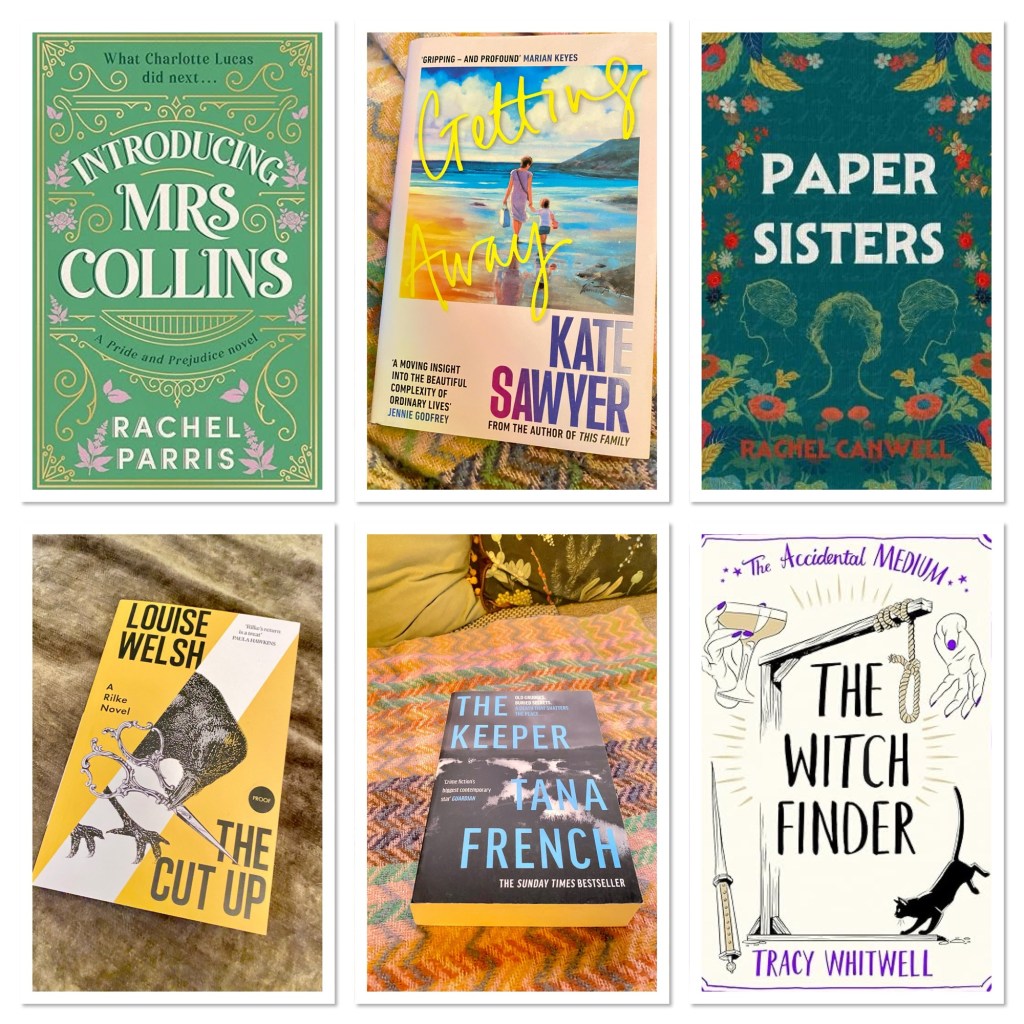
It’s been a month of crime/thriller reads and historical fiction, plus a couple of crime and historical combinations which I really enjoy. It’s also been a month where I found it difficult to concentrate because finally, after five years of brown tiles, lime green walls and cupboards with no handles we have been able to afford to renovate the kitchen. So for two weeks we have had no ceiling, no floor and no hob. As of Monday, we will be cooking in the garden until everything is back together again. I am not good with chaos so if you can imagine me wedged into a corner on the sofa with the contents of every kitchen cupboard taking up the study and other end of the living room. Hopefully only two weeks left to go. It can’t come soon enough. The other half is building the seating area under the pergola at the bottom of the garden. It feels like a symphony of drills and hammers at times but it will be lovely to be able to go and sit outside and read with roses growing around me. So much to look forward to in September with some fantastic reads on the list too. ❤️ 📚

Unbelievably this is the third novel from Kate Foster and firmly puts her on my ‘must-buy’ authors list. They’ve all been worthy of a place on my best reads list but I think this is her best yet. Maggie is a young girl from Fisherrow whose father is a fisherman and her mother ons of the fishwives who help bring in the catch, clean it for market and then repair nets ready for the next day’s fishing. She, her parents and sister Joan live in a one bedroom cottage but Maggie dreams of a life so different to this, where there isn’t back breaking work and she’s not at the mercy of her father’s drunken temper. So when ambitious trader Patrick turns up at the door, looking for somewhere to keep goods for making perfume she senses a chance. She knows Joan is prettier but she would make a far better wife to help him in his business. Luckily he sees this in her and after a short courtship they become married and set up home in a cottage in the village. They are happy until suddenly Maggie gets the news that a press gang has been to the hotel and Patrick was one of the men taken for the navy. Somehow Maggie finds herself travelling to London, to build her new life. At a stopover in Kelso she takes a couple of weeks to stay and earn some money. She knows now she is pregnant and conceals it, to keep on working. So how does she come to be in Edinburgh a few months later, being sent to the gallows on charges of concealing a pregnancy and killing her baby. Yet miraculously she survives the hanging, how and what she chooses to do with her second chance at life are the main contents of this brilliant novel. I loved the history, the growing up that Maggie does on her journey and how brilliant an advocate Kate Foster is for these women she finds in historical documents, often in dire situations at that time for ‘crimes’ it’s hard to comprehend today. Most of all I loved the bold, feminist take on Maggie’s life and the links that could be made with modern day politics. Brilliant.

My second historical fiction read of the month was this mesmerising and clever thriller from Laura Shepherd-Robinson that’s jumped straight onto my books of the year list. The Art of A Lie begins in a confectioner’s shop called the Punchbowl and Pineapple, run by the newly widowed Hannah Cole. This is the late 18th Century and Hannah grew up in the shop that was started by her grandfather. Her husband Jonas had been her father’s apprentice and now she must keep their shop running for it to be handed to his cousin. Jonas was found down river, washed up by the Thames with head injuries and missing anything of value including a watch given to him by Hannah that used to belong to her grandfather. Novelist and magistrate Joseph Fielding visits Hannah to say he is investigating Jonah’s murder, for he doesn’t think it’s as cut and dried a case as it might seem. Thank goodness for the lovely William Devereux, a friend of Jonas’s who introduces himself ar the funeral. He calls on Hannah at the shop, hearing of Joseph Fielding’s interference in the case and hoping to be of help. He gives her his grandmother’s recipe for iced cream, thinking it may be a hit with her customers and could tied her over until the case is closed and Jonas’s estate is released. Laura tells this tale so cleverly, drifting between narrators and shocking us with an aspect of their characters or the case. Both are fascinating and not necessarily what they appear to be at first. With each revelation I became more and more intrigued with this cat and mouse game and the psychological make up of those involved. Hannah is an astute businesswoman, good at reading people quickly and usually accurately. It’s hard to tell at times who is scamming who and I was so utterly entranced I was still thinking about it a week later. Simply brilliant in its setting, historical background and the constant simmering tension.

A modern thriller this time from one of the Queens of the genre and this really was an up to the minute tale of secrets, lies and murder. Gwen is an older widow, living in a complex of smart apartments in a nice area. She has decent neighbours, some of whom she might call friends. When her nearest neighbour Alex is looking for a new lodger she meets one of the candidates, Pixie. They start chatting and she is pleased to hear when the Britpop one hit wonder decides to offer her the room. Pixie gets a job at the bakery and cafe that Gwen frequents and they get on very well, so Gwen is disturbed to hear what sound like arguments from across the hall. She also catches a phrase that sounds like ‘you knew the deal when you moved in. When she catches up with Pixie she’s disturbed to hear that the deal involves sex in lieu of rent. She confronts Alex and takes Pixie in, writing a complaint to the building’s governing board. Her neighbour Dee tells her that she talked to her daughter Stella about it and she’s been making a documentary news item about the growing ‘sex for rent’ scandal. Would Pixie like to be interviewed? Soon the story is out of control, Alex is angry and denying everything and Gwen is public enemy number one. I loved how ‘of the moment’ this was with Gwen at a loss when it comes to freelance investigative journalism, sex for rent, trad wives and influencers. As she starts to feel out of her depth, those around her continue to manoeuvre and manipulate until life will never be the same again. This was so tense and the eventual murders most unexpected indeed.

I had the luck to read two Mark Edwards novels in August. a throwback to last year and this, his brand new thriller. The Wasp Trap was the jokey name given to a side project. While trying to form an algorithm for one of the first ever online dating apps, a group of university students have another idea. Each one specifically chosen by their professor, Sebastian, they are the best in their fields and are spending their summer at his mansion in the country. Will tells our flashback story, the creative who is meant to be coming up with a name for their site he is also hopelessly un love with Sophie but too scared to make a move. Together they come up with ‘butterfly.net’ but it’s Lily who comes up with a side project – an algorithm that could identify psychopaths. Statistically one of them could be and since they’re serving as guinea pigs for the dating apps why not for this? Now decades later they are gathered again, this time at Theo and Georgina’s mansion – the couple got together that summer and are married with two daughters. Strangely, they announce that one of their daughters is missing so it seems an odd time to have a dinner party. They also have caterers which is unusual for them, so Will isn’t shocked when it turns out to be a cover. The fake chef is Callum and he gives them an ultimatum- he’s giving them an hour to think and when he returns he wants to know the secret from that summer. If the secret isn’t divulged then someone will die. The tension rises as the hour ticks down, who has a secret? How do they know which is the right one? As Callum comes back into the room they’re left in no doubt that he means business. The rising and falling of tension is pitch perfect and in between the action we get flashbacks to that summer where more than one person is holding a secret and we start to wonder who exactly was the psychopath that Lily was searching for.

My final recommendation for last month is this last novel in the historical fiction quartet about the agony aunt of the Women’s Friend, a magazine running during WW2. It was lovely to be back with the gang and particularly Emmy Lake as they enter the final and arguably most difficult stretch of WW2. After five years of war both the team and their readers are tired. As a way of boosting morale at the magazine Emmy suggests they all decamp to Bunty and Harold’s in the countryside. As Hitler’s V1 and V2 bombs start to hit, it will certainly be safer. Emmy strongly feels they all need a boost in order to keep supporting and inspiring the women who read their magazine. If they’re tired and the magazine suffers, how will their readership keep the fight going? Emmy throws herself into rural life and is soon organising games nights, competitive knitting and planning the very important wedding of their officer administrator Hester and her fiance Clarence. She also has a phone call from the ministry to travel abroad and report from the French field hospitals and even manages to mastermind a break into husband Charles’s barracks before they’re both deployed. Emmy has no idea how much she’s going to need those around her in the coming months as her hardest test is yet to come. On their return to London she receives a telegram to say that Charles is missing, presumed captured in enemy territory and she has the agonising wait for the confirmation letter. Then Hester receives a blow when Clarence calls to say he’s being deployed in three days, two days before their planned wedding. Hester is inconsolable and after catching Emmy in a moment of frustration, she disappears. However, Emmy isn’t one to dwell on her misfortunes for long and I wondered what schemes and plans she would hatch next. 

The author doesn’t let us forget the sacrifice and loss in people’s lives, but still manages to bring in humour and a defiantly upbeat, make do and mend attitude. This is the closest I’ve seen Emmy come to breaking point and it’s hard to when you’re the one whose role it is to buoy everybody else up. As she finds out though, those who she’s helped and supported are so happy to be able to return the favour and support her. This is a set of books I always recommend, to women of all ages, because it’s so easy to relate to one of the characters and absolutely root for them. The main impression I take away from them is that sense of female solidarity. The instinct we have to come together, share the load and make each other’s lives a little easier from taking on someone’s children all the way down to being there with a meal or a shoulder to cry on. Emmy uses her writing to do the same and triumphs in being exactly what the magazine promises – the Woman’s Friend. 

Here’s a hint of what I’ll be reading in September:

Posted in Netgalley

The Mourning Necklace by Kate Foster

Inspired by an infamous real-life case, The Mourning Necklace is the unforgettable feminist historical novel from the Women’s Prize-longlisted author of The Maiden, Kate Foster.

They said I would swing for the crime, and I did . . .

1724. In a tavern just outside Edinburgh, Maggie Dickson’s family drown their sorrows, mourning her death yet relieved she is gone. Shame haunts them. Hanged for the murder of her newborn child, passers-by avert their eyes from her cheap coffin on its rickety cart.

But as her family pray her soul rests in peace, a figure appears at the door.

It is Maggie. She is alive.

Bruised and dazed, Maggie has little time for her family’s questions. All that matters to her is answering this one: will they hang her twice?

What a brilliant advocate Kate Foster is for these women she finds in historical documents, often in dire situations in their time for ‘crimes’ it’s hard to comprehend today. Although, in our heroine Maggie’s case, this has novel does have some relevance to modern day America where politicians seemingly wish to revert to the Puritan values last seen when the first settlers arrived and James VI of Scotland was on the throne. In some states we have recently seen women arrested after stillbirths or miscarriages, something I find disturbing and is deeply traumatic for a bereaved woman in her most vulnerable state. This is the fate that awaits Maggie, but first Kate takes us back to how Maggie ended up in this terrible situation. Maggie and her younger sister Joan have grown up in a coastal village known for its fishing and the strong, hardworking women that mend the nets and clean the fish ready for market. It’s a hard life and not one that Maggie wants forever. She dreams of living in London and making her own life there. So, when Patrick Spencer walks into their cottage one evening, with his sparkling eyes and easy charm Maggie sees someone like her, who wants to make their own luck. He has come to ask father if he could store some items in their safe – something the family do from time to time for tea merchants. These are altogether different ingredients, they are ingredients for perfume. Patrick wants to open his own perfume shop and will occasionally be passing through with expensive ingredients, could they agree a price to store them? Maggie knows she isn’t the beauty of the family because anyone can see that’s Joan. She isn’t even the favourite, but she does know that if Patrick is looking for a wife to support and help him in business that she’s the best choice. When he takes her out walking one evening she hopes that perhaps he’s seen someone as ambitious and hardworking as he is. Their courtship and marriage are a whirlwind and they’re soon living in a bungalow closer to the centre of the village. Married life is not what Maggie expected, after all her only example is her mother and father and they’ve always come in third place after his drinking and his temper, but she’s in thrall to Patrick. So, it’s a terrible shock when she hears the news that a press gang has visited the hotel bar in town and they’ve taken Patrick into the navy. 
Maggie doesn’t have many choices. She’ll need income in a short while or she must return to her family. Maybe this is the only chance she has of getting herself to London and as the days go by she’s ever more sure that she’s having a baby, it must be now. Her mind is made up by a terrible betrayal and she sets off, reaching a a quiet market town where she picks up some work in the inn, concealing her pregnancy and living in an upstairs room. However, the truth always finds a way out and it’s not long before she finds herself standing in front of the justices to answer charges of concealing a pregnancy and infanticide. 
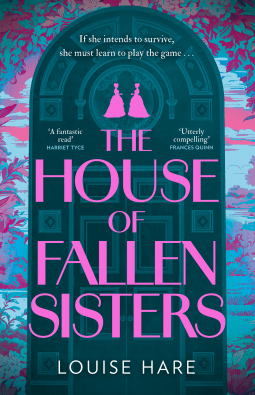
I was fascinated by Maggie’s story immediately, desperate to find out how she survived the gallows and whether she could advocate well enough for herself to avoid a second hanging. She’s a dreamer, but she’s also determined and incredibly intelligent. It’s this combination of qualities that Patrick sees in her and why he thinks she will be a good partner to him. Although his wandering libido destroys their chances all too quickly. Maggie’s ambition to carry on her plans after his disappearance has all the impetuosity and ignorance of youth. She would never be able to hide her pregnancy for long, if she’d been honest about being pregnant and her husband deserting her I had a feeling that the innkeeper might just have given her a chance anyway. There is curiosity about her though and an attempt at friendship teaches her that there are far worse ways to live than being a fishwife. It also puts her in the path of a local doctor who is so unpleasant that I wanted to wash my hands just reading about him. However, it’s the early arrival and sudden death of her daughter that has her transported to Edinburgh. This is a capital case and must be heard by the best justices in the land, although it’s common knowledge they drink at lunchtime. What’s amazing about Maggie is her ability to adapt and keep going. Despite being dealt a terrible hand, her will to survive and to appreciate the humble life she once had is admirable. She is a match for any man, whether it’s a hangman, the justices, her husband or even her violent and drunken father. She will make sure she has her dues from Patrick Spencer and that she will remove her mother and sister from the cottage where they’ve spent their lives fearing payday and her father’s visit to the inn. She is a better woman than me because I’d have left my sister there. Joan is one of those characters you want to slap, but I think that Maggie can see she was just another starry eyed girl being manipulated by a man used to getting his way. 

As always Kate’s novels are rich with description, placing us very firmly in Scotland and in very different establishments. Maggie’s family live in a one room cottage and all of them work incredibly hard, but they need the extra money they make from holding onto goods for those avoiding the law or the tax office. Despite a poor existence the family have a rich community around them and a long tradition of fishwives. When she’s in Kelso Maggie learns that the women of Fisherrrow are well thought of and known for their hard work. It’s the heritage she wants to escape that gets her first job. The cottage where she lives with Patrick is a step up but still a world away from the women who would buy his perfumes. The doctor in Kelso has a grand house, but once Maggie knows what takes place within its walls she could never envy it. All of is thrown into stark relief by the squalor of where she’s held awaiting trial. It’s filthy, filled with vermin and women willing to exchange sexual favors with the guards for extra privileges. Maggie would rather go hungry. Each of these worlds is beautifully rendered and I could see it all very clearly in my mind’s eye. 

I am amazed by the talent of Kate Foster that she is able to find these cases from Scottish history and breathe life into them. She takes them from a simple story in a news sheet of the time and like many of us who aspire to write she thinks ‘this would make a good novel’ and actually fleshes out these characters and places with what must be endless research. She creates women who feel like they could be one of us. Instead of being a distant newspaper headline they become real, with hopes and dreams and make incredibly relatable mistakes. Having lost my own babies I felt so much for Maggie at that moment and understood completely her need to say her own goodbye. For a long time it has been just the two of them and I could see that it would feel strange to involve others, they’d never known her anyway. I flew through the rest of the novel to find out how Maggie would move on from her moment on the gallows, should she be successful in arguing for her life first. Would she go back to her fishing village and the shared room with her parents? Would she make bold choices in order to remain independent? Or would she look for the man who set all this in motion and look for revenge or reparations? I loved the idea of the scar round her neck as a mourning necklace. There’s something about setting making inner wounds visible that resonates very strongly with humans. How many of us go on to have a tattoo after a traumatic or memorable event? Anyone who has gone through a profound experience has a sense of being stationary as the rest of the world keeps turning. When recently bereaved I wondered why people couldn’t see just how changed I was and I was frustrated by my inability to explain. Losing a baby is so hard because you are a mother, but because you don’t have a child no one ever sees you that way. Maggie could see her scar as a mark of shame, to be covered. However, she chooses to wear it with pride because it is proof that her little girl lived. I felt proud of Maggie, which might be a strange thing to say about a fictional character, but I was so happy that she took the path she did. Hardened by experience, she thinks of her fellow women first, but doesn’t allow that experience to completely rob her of a future. This is the best of her novels so far and that’s a high accolade considering how good they were. 

Meet the Author

Kate Foster worked as a national newspaper journalist for more than twenty years before becoming an author. Growing up in Edinburgh, she became fascinated by its history and often uses it as inspiration for her stories. Her previous novels include The Maiden, which won the Bloody Scotland Crime Debut of the Year and was longlisted for the Women’s Prize for Fiction, and The King’s Witches. The Mourning Necklace is her third novel. She lives in Edinburgh with her two children.

Posted in Netgalley

Dear Miss Lake by A.J. Pearce

It was lovely to be back with the gang at Woman’s Friend magazine and particularly with our narrator Emmy Lake as they enter the final and arguably most difficult stretch of WW2. After five years of war both the team and their readers are tired. As a way of boosting morale at the magazine Emmy suggests they all decamp to Bunty and Harold in the countryside. As Hitler’s V1 and V2 bombs start to hit, it will certainly be safer. Emmy strongly feels they all need a boost in order to keep supporting and inspiring the women who read their magazine. If they’re tired and the magazine suffers, how will their readership keep the fight going? Although they’ll still be working, the children, the animals and the beautiful countryside should have the desired effect. Plus, for Emmy, she’ll be closer to where her husband Charles is posted and she’ll be with her best friend Bunty. Emmy throws herself into rural life and is soon organising games nights, competitive knitting and planning the very important wedding of their officer administrator Hester and her fiance Clarence. She also has an important phone call from the ministry to travel abroad and report from the French field hospitals looking after the wounded. She even manages to mastermind a break into husband Charles’s barracks before they’re both deployed. Emmy has no idea how much she’s going to need those around her in the coming months as her hardest test is yet to come. On their return to London after the summer she receives a telegram to say that Charles is missing, presumed captured, in enemy territory and she has the agonising wait for the confirmation letter. Then Hester receives a blow when Clarence calls to say he’s being deployed in three days, two days before their planned wedding. Hester is inconsolable and after catching Emmy in a moment of frustration, she disappears. However, Emmy isn’t one to dwell on her misfortunes for long and I wondered what schemes and plans she would hatch next. 

This is a very fitting end to the Emmy Lake series, because it showed, no matter how Pollyanna our attitude is, it is okay to sometimes find we’ve run out of steam. It’s hard to imagine what five years of war must feel like when we take into consideration women having to work, look after children, support their husbands and face the fear of losing someone important to them or even their home if situated in London or other major cities. The nearest thing we have to such upheaval is the COVID pandemic and that meant two years of shielding for me. However, I still had tv to stream, books to read and could send myself little treats from Amazon or Betty’s tearooms. I can’t imagine how I’d have felt if I was exhausted from working, missing my husband, had the possibility of a bomb coming through the ceiling and had to find the tenth thing to do with a cabbage. Although the Lakes and friends are relatively okay financially, many were not and the author brings in these experiences through the magazine where some readers are infuriated with the magazine’s rather chirpy, optimistic tone or want to vent about the desperate situations they’re in. I loved the storylines about unexpected pregnancies as I could really understand getting carried away in the moment when someone you love is being deployed to fight, perhaps never to return. I could also imagine myself being swept off my feet by an American GI or one of the Polish airman posted only a few miles away from my village all those years ago. I could absolutely understand why some readers lost their faith in the magazine and whether it’s writers truly understood the predicaments some readers were in. I could also understand if Emmy did run out of patience, because sometimes the only answer is ‘talk to the people who love you’ no matter how angry or disappointed they might seem at first. It always gets easier.

 When news arrives that Charles’s secret mission was Arnhem and he’s been captured behind enemy lines, it takes a while for Emmy’s emotions to catch up with the news. She has all the information at her fingertips, having had years of finding out what to do for her readers. Practically she’s doing all she can, plus organising the Christmas Fair and making connections with other POW wives. She’s particularly proud of the piece she wrote for the ministry on the military hospitals so hopes for another mission. When she, the editor and publisher are pulled in for a chat the news isn’t good. It’s this that seems to bring her to a standstill. Returning to the magazine office she’s despondent and feels a deep sense of injustice, leading to a sudden and misdirected rant. Things go from bad to worse when the next morning, Hester has gone missing. Emmy knows she took her cancelled wedding plans hard, but surely that’s not the reason for her disappearance? Could it have been her own moment of anger and emotion that provoked this sudden reaction? Emmy realises how much of a lifeline they all are to each other and resolves to find her, whatever it may take. 

A.J. Pearce has written a triumph of a series in this quartet of books and in her main character too. We’ve experienced the ups and downs of different editors and publishers, the staff’s other responsibilities for their families and war jobs such as the fire service or driving ambulances, as well as terrible losses on the battlefield and in the Blitz. Through what seems on the surface to be a light-hearted and perhaps frivolous lens, I’ve learned so much about what it was like to be a young woman during WW2. It’s given me an insight into my grandparent’s generation – my Aunty Connie who was an unmarried mother and a subsequent marriage to my Uncle John who suffered from PTSD after his ship was attacked and his friend was blown up right next to him. My grandad went into the army just as war was ending and experienced the other side’s struggles – German cities destroyed by our bombardments and people living in the ruins of their homes. I don’t know if I’d have the strength and determination to contribute in the way people did, something brought into sharp focus when I had to discuss what the war in Ukraine could mean for those who’ve served in the forces but are still under reserve? Could I cope if he was called back in?

Strength is one of those things we find reserves of when the situation demands it of us and I have no doubt I could keep the ‘home fires burning” but I certainly don’t have the grit that some of the Ukrainian women are showing, having lost their husband then joining up to fight themselves. I feel the author doesn’t let us forget the sacrifice and loss in people’s lives at this time, but still manages to bring in humour and a defiantly upbeat make do and mend attitude. This is the closest I’ve seen Emmy come to breaking point and it’s hard to do when you’re the one whose role it is to buoy everybody else up. As she finds out though, those who she’s helped and supported are so happy to be able to return the favour and support her. This is a set of books I always recommend, to women of all ages, because it’s so easy to relate to one of the characters and absolutely root for them. The main impression I take away from them is that sense of female solidarity. The instinct we have to come together, share the load and make each other’s lives a little easier – from taking on someone’s children all the way down to being there with a meal or a shoulder to cry on. Emmy uses her writing to do the same and triumphs in being exactly what the magazine promises – the Woman’s Friend. 

Meet the Author

AJ Pearce was born in Hampshire, UK. Her favourite subjects at school were English and History, which now (finally!) makes sense.

Her debut novel Dear Mrs Bird was a Sunday Times Bestseller and Richard and Judy Bookclub Pick. It was shortlisted for Debut of the Year at The 2019 British Book Awards and has been published in the USA, Canada and Australia and in translation in over fifteen languages.

Dear Mrs Bird was the first in AJ’s series The Wartime Chronicles which now includes Yours Cheerfully and Mrs Porter Calling. Her books are funny, sometimes extremely sad, but always uplifting stories about a group of women standing together to face the challenges of World War II.

The fourth and final book in the series, Dear Miss Lake, will be published in the UK on 5 July 2025 (and on 3 August in the USA and Canada).

When not writing books, AJ enjoys being fairly rubbish at a variety of hobbies and has recently started to learn to paint, with so far messy although enthusiastic results.

Follow AJ on Instagram, Facebook and Threads: @ajpearcewrites.