Posted in Squad Pod Collective

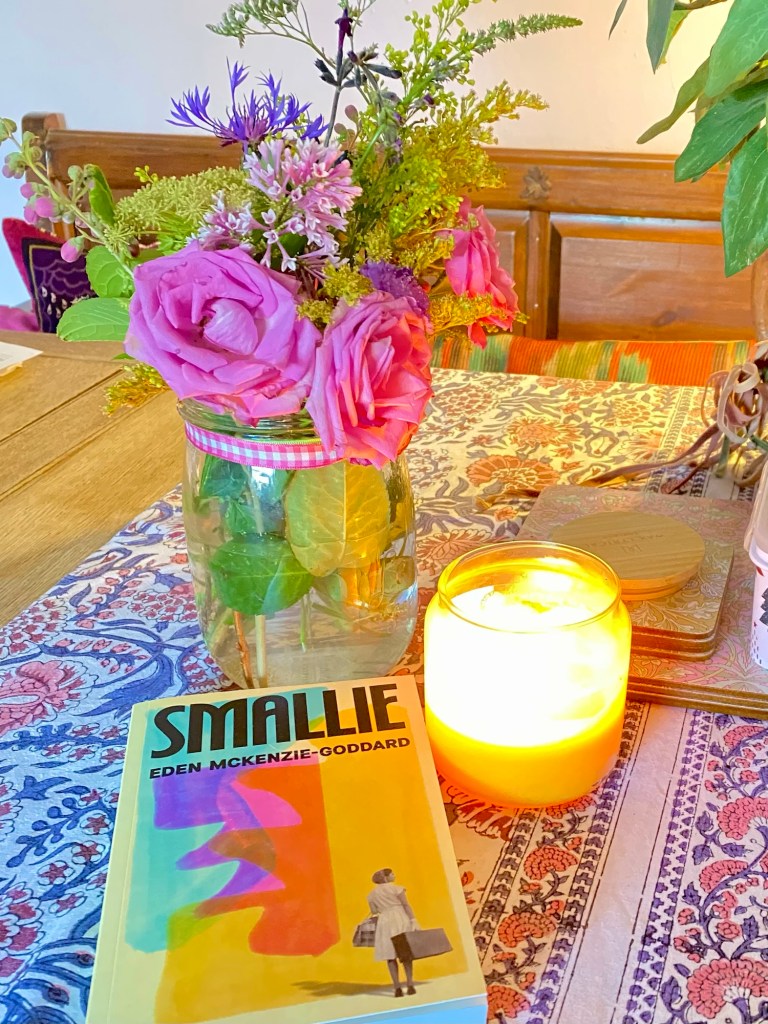
Smallie by Eden McKenzie-Goddard 

Smallie adj. |smal·lie|
Definition: Caribbean (informal). Describing or relating a person from a small island; a small islander.

In 1961, nineteen-year-old Lucinda Brown travels to England in search of her son’s father, Clarence Braithwaite, who left Barbados to join the British army. But aboard the ship to Southampton she meets a man named Raldo who offers her a glimpse of a new life, a freer life. Bound by the memory of her son waiting at home, she chooses Clarence – realizing too late that war has made a stranger out of him.

Nearly fifty years later, Lucinda receives a letter from the Home Office that threatens to tear her world apart. Her children rally together to prove her legal arrival, and to do so they must track down an elusive man from her past, a man she wanted to love but instead lost, a man who now holds the key to her family’s future. Raldo . . . An exhilarating and expansive tale of a family thrown into collision with the Windrush scandal, Smallie shows just how easily the past can spill into our lives, even when – especially when – we think we’ve closed the door on it.

The author splits their timeline so in 2017 we see Lucinda’s children trying to make sense of the letter from the Home Office that states she has no leave to remain in the UK. Then we go back several decades to her early life in Barbados and her trip to the UK. This worked so well because we get to see the huge generation gap in her children’s incredulous response to the letter and Lucinda’s more mured response. They have lived in the UK all their lives and with their education and important jobs they’ve experienced racism but not in the same way their mother has. They don’t know that the system can fail. This is their first real sense of utter powerlessness. Whereas Lucinda has spent most of her life like a leaf in the wind. Her strict religious father would keep her at home with a life that revolved around church, chores and schoolwork. In fact it’s only her friend Sheila that manages to lure her out to a club, where she meets Clarence, a liaison that results in a hidden pregnancy and her son Reggie. Yet still her father calls the shots and when Clarence decides to emigrate to the UK she is only allowed to follow on the proviso that they marry, only then will her father release Reggie to join them. Then, on the voyage across she meets Raldo and their chemistry is immediate, he offers her a way out. When they reach the UK she can leave with him and his friend, avoiding Clarence. Will she make the decision to put herself or Reggie first? I couldn’t stop reading because in the 2017 timeline I was desperate to know whether her children would manage to find enough evidence for their mother to stay, but also I wanted to know who was the father of her children born in the UK? It’s cleverly plotted to keep you guessing, even when their father is present.  

I loved the moments of freedom that Lucinda has with Sheila, nights of jazz, dancing, laughing where she comes alive. Either in clubs or at house parties they forget the one room they share, the lack of money, the family they clean for and the way British people treat them. Sheila is older and wiser. She explains to Lucinda why their employer’s treat them differently. Both girls work for a cleaning company run by a friend and Sheila points out how differently she is treated compared to Lucinda. They speak harshly to Sheila and expect her to steal, whereas Lucinda is treated more politely. She explains what ‘passing’ means, the family treat Lucinda better because of her paler skin. She could pass as a white girl. Even so, neither of them can have bank accounts and decide to use the ‘pardner’ system. Every week they all put their wages into a pot that’s kept by the most trustworthy friend, then once a month they take it in turns to have the lump sum. It’s the only way individuals could buy a house and set down roots here. Strong communities were built from these bonds of trust. The group decide that Lucinda should look after the money, but her trustworthiness is dependent on whether Clarence decides to beat her or not, till she hands it over. She is being brought down by this relationship, but she still clings to the idea of Reggie making his way here to be a family. Yet every so often she sees Raldo, conducting buses or at the same party and that spark is still there. He brings her alive.

It seems inconceivable that someone who has lived in this country for most of their lives could be detained and placed in an immigration facility. Lucinda is placed in Yarl’s Wood and her children are falling apart. She is the foundation that supports them all. While they struggle to come to terms with the situation, Lucinda quietly gets on with it. The Home Office need proof that she arrived on a certain date, with her boarding pass or similar, but then also prove that she didn’t leave for a period of time. They are applying 21st Century rules to a time when paper tickets were damaged or thrown out, where jobs were cash in hand and there was no paper trial. As they desperately look around for people who could corroborate her account, they unearth more of their mother’s story. There’s betrayal, anger and bitterness that’s lasted over fifty years. Will they find this man called Raldo who looked after her boarding pass? As the date for the hearing looms closer, Lucinda starts to wonder whether it’s time to make decisions that suit her, not everyone else leading to an ending I didn’t expect, but that was total perfection. I felt so much reading this book – everything from anger to joy and so much inbetween. Lucinda is a brilliant central character, so used to being pushed around she almost disappears in the cacophony of her children. We know theres so much depth and experience in this woman and I was willing her on to finally make a choice for herself. Beautifully written, this is an emotional account of one woman’s life caught up in the Windrush scandal and it kept me spellbound to the end. 

Out Now From Penguin

Meet the Author

Eden McKenzie-Goddard is a UK-based writer and podcaster, with Barbadian-Jamaican roots. His work sheds light on the lives of the forgotten and bringing their stories to the forefront.

In 2018, Eden co-founded the top 30 music and culture podcast Don’t Alert The Stans – commended by Apple Podcasts, Complex, Beats By Dre and more.

With almost a decade working in publishing and a degree in English Literature and Creative Writing from University of Westminster, McKenzie-Goddard is a student of literary minds Silvia Plath, Hanya Yanagihara and James Baldwin.

Posted in Throwback Thursday

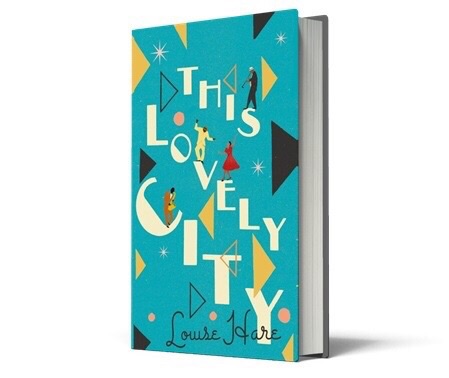
Throwback Thursday! This Lovely City by Louise Hare

This first of Louise Hare’s novels really stayed with me, it grabbed me early and never let go. When a writer whisks you so convincingly to another time and place it’s such an incredible skill. I found myself in post-Windrush London where new people are making the capital their home and the huge social change is causing friction. As one mixed race character observed ‘she was no longer the odd one out’ as she went to the market. More immigrants are arriving, wandering the streets, weighed down by layers thrown on haphazardly as the reality of a British winter starts to bite. However, as those first pioneers answered the call from the motherland, they’d found London not at all what they were expecting. The British government had put that call out to its colonies. They needed workers, to replace those men lost in WW2 and to rebuild cities recovering from the Blitz. Yet no one seemed grateful, no one said thank you and the living was far from easy.

We follow two main characters: Lawrie and Evie. They are courting in the old fashioned sense. Lawrie sees in Evie a nice girl, a girl who has been well brought up even though she has never known her father. He wants to do things properly, do right by her. So he calls and they go to the cinema or for a walk. Lawrie has come over from Jamaica and works part time as a musician in a local band and full time as a postman, with a sideline in the odd special black market delivery too. Evie has lived in London her whole life with her mother Agnes. They have been Lawrie’s neighbours ever since a rented room opened up at the house next door. The two women understand prejudice, because they too have been victims of it, and live a life kept very much to themselves. Evie is mixed race and Agnes, who is white, has been the subject of gossip and judgement ever since she Evie was born. So, although what transpires in the book may be shocking to us, it barely surprises them, because they know how people feel about any sort of difference from the white British norm. 

The story splits into two time frames approximately one year apart. In one, Lawrie is cutting across Clapham Common at the end of his postal route when he hears a woman shouting. She has found a baby in the pond. Lawrie rushes to help, but they are both too late. The baby becomes the book’s central mystery and because she has black skin, suspicion falls upon the already beleaguered Jamaican community. Rathbone, is the police officer assigned to the case and he relishes causing problems for the community. His suspicions fall on Lawrie, as the first man on the scene, but Rathbone doesn’t just investigate, he sets out to ruin Lawrie’s life. However, there is a secret to this baby’s background that is closer to home than Lawrie imagines.

I found myself rooting for Lawrie and Evie. I wanted them to be able to make marriage plans and live the simple, quiet life they dreamed about. Her mother Agnes has had to be very strong, being an unmarried mother of a mixed race child meant being ostracised. Evie has a childhood memory of her mother having the neighbours for tea when, against her instructions, Evie was caught looking down through the banisters. They never had tea for the neighbours again. It takes Evie several years to make the link; she is the reason her mum has no friends or visitors. This same hostility is now experienced by the men who arrived on the Windrush and it must have been bewildering. To be asked to this country, to fill a shortage of labour and pull a country out of difficulty, then meet nothing but hostility and suspicion from its people seems so unjust. 

A lot of the tension in the novel is around sex and relationships. When the band are booked to play a wedding, the British host is immediately taken aback but decides they can play. All is well until a woman stumbles on the dance floor and one of the band rushes to help. Her husband doesn’t appreciate his wife being touched by a black man and a brawl breaks out causing the band to run for their lives. Provocative women, like the character Rose, stir up tension even more. The men refer to her as Rita Hayworth, the red-haired Hollywood bombshell. When the men first arrive she helps with getting them settled. Then she offers to take Lawrie and his friend to the Lido, dazzling them in her bikini and flirting with Lawrie. She makes it very clear that she wants him with no thought to the consequences if her husband finds out. Interracial relationships are simply not accepted. As Agnes points out, her daughter Evie is far better off in a long term relationship with Lawrie, because although they come from very different places, society will view them as the same due to their skin colour. 

I felt immersed in this world the author has created. From the cold mornings on Lawrie’s postal round, to the smoky nightclubs the band plays into the early hours. This is my grandparents generation so I could also imagine the homes, the struggle of still being on rations and for the women, trying to look nice on a tight budget. It reminded me of stories my grandma and great- aunts told me about going out dancing in post-war Liverpool. I felt so much for Evie, especiallywhen her whole story unfolded towards the end of the novel. There is a whole cast of interesting characters, but Evie and Lawrie are this novel’s heart and I desperately wanted life to work out for them. Louise Hare has written a vibrant book with an incredible sense of place and time, and interesting characters. I loved it. In fact it’s a mark of how much I now love this author that I pre-ordered her next book due in 2026.

Meet the Author

Louise Hare is a London-based writer and has an MA in Creative Writing from Birkbeck, University of London. Originally from Warrington, she has found inspiration in the capital for much of her work, including This Lovely City and Miss Aldridge Regrets.

This Lovely City was featured on the inaugural BBC Two TV book club show, Between the Covers, shortlisted for the RSL Ondaatje Prize, and longlisted for the HWA Debut Crown Award. Louise was selected for the Observer Top 10 Best Debut Novelists list in 2020, securing her place as an author to watch.

Posted in Throwback Thursday

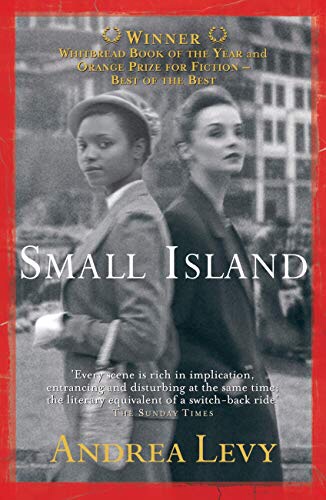
Throwback Thursday! Small Island by Andrea Levy.

I have been looking for second hand copies of this book, because I’m creating a book stall at our village book exchange for the Queen’s Platinum Jubilee. My plan is to include books based in the Commonwealth countries or that represent a definitive moment in the Queen’s reign. This book sits a little early, starting in WW2, but sets a scene for those early years of her reign and shows how the people of the Commonwealth felt about their ‘mother country’. I first read Small Island after university, where I’d become the student obsessed with diversity, disability and all of those words that mark out difference. In my final year I looked closely at Caliban in The Tempest because my heart went out to him. I did a module in the Gothic, Grotesque and Monstrous, and another in Post-Colonial literature. I didn’t realise it at the time, but I was ploughing a very specific furrow and my dissertation in disability earned me a solid first. These studies really did hone my taste in reading and while I read across the breadth of fiction genres and subjects, the books that really get me in the heart have a thread of social justice and characters coping with prejudice. This book appealed to me because I hadn’t read much about the Windrush generation. Andrea Levy won the Orange Prize for Fiction and the Orange Prize ‘Best of the Best’ as well as the Commonwealth Writers’ Prize and the Whitbread for this novel. It was also described as ‘possibly the definitive fictional account of the experiences of the Empire Windrush generation’, when it was selected by the BBC as one of its ‘100 Novels That Shaped Our World’.


It is 1948, and England is recovering from a war. But at 21 Nevern Street, London, the conflict has only just begun. Queenie Bligh’s neighbours don’t approve when she agrees to take in Jamaican lodgers, but with her husband, Bernard, not back from the war, she has little choice in the matter. Gilbert Joseph was one of the many Jamaican men who joined the RAF to fight Hitler. But when he returns to England as a civilian he doesn’t receive the welcome he was expecting, and it’s desperation that drives him to knock at Queenie’s door. Gilbert’s wife Hortense, who for years has longer for a better life in England, soon joins him. But London is far from the golden city of her dreams, and even Gilbert is not the man she thought he was.

Small Island explores a point in England’s past when the country began to change. In this delicately wrought and profoundly moving novel, Andrea Levy handles the weighty themes of empire, prejudice, war and love, with a superb lightness of touch and generosity of spirit.

I loved the slow pace of this novel, allowing each character’s story to unfold fully, and meander across each other. I felt deeply for Queenie, with a father-in-law shell-shocked from the First World War and her husband Bernard still away, even though WW2 has ended. I could understand how her friendship with lodger Michael started, she must have been so lonely. However the consequences of the relationship only serve to isolate her further. Gilbert follows friend Michael to the U.K. for active service, only to return in 1948 when the British Government put a call out to the colonies for workers. Many English men were lost during the war leaving a labour shortage and Gilbert knows he has the skills to help. Hortense has always had a dream of going to England, where she would want to be a teacher like she is in Jamaica. As married couples are more likely to be accepted, Gilbert and Hortense make a pact, to have a marriage that fools the authorities and forge futures for themselves in England. He knows exactly where they’re going to live, 21 Nevern Street, because Queenie’s were the only lodgings that didn’t have a card in the window saying ‘No Blacks.’

I fell in love with Gilbert, who proves himself to be a loyal and trustworthy friend to both Queenie and Hortense, although there are times when the latter would test the patience of a saint. Hortense is so haughty! She made me smile with her airs and graces. I love the way she dresses, with her gloves and handbags strangely reminiscent of Queen Elizabeth’s style. In her mind she has done everything her mother country asked of her. She’s been to a good school and become educated, she has her teaching certificate and is a dedicated Anglophile. When the call comes to the colonies, that England is in need of workers, she thinks she can be useful. Gilbert tries to explain to her that England won’t be what she is expecting, her education will be looked down upon and instead of welcoming, people may be hostile. She tells him he’s wrong. England is a massive shock to Hortense, not just the cold, but the shame of everything she’s worked for being worth nothing. She’s also misjudged their friend Michael, who had passed through during the war. Back in Jamaica, Michael is practically a saint and Hortense is taken in by his good looks and nice manners. Another hard lesson to learn. At least Gilbert is there, faithfully keeping her going, trying to soften the blows and always sleeping on the chair while she takes the bed. I had so much sympathy for Queenie, who is overwhelmed and exhausted. Her father-in-law can be hard work, he doesn’t speak and is prone to wandering. I can feel that she is very fond of him. Her pregnancy is conceived in the spirit of war; a mix of attraction, plus loneliness and a sense that death might not be so far away. Women who conceived while their husbands were away, often hid the pregnancy under the respectability of their marriages. If their husband returned on time they could announce a baby which was then born prematurely. If not, the woman was very reliant on her husband to accept and choose to bring up the child. Sadly for Queenie this choice isn’t open to her and we see what society’s reaction might be to a mixed race child. Would her father-in-law or her husband even accept her baby?

I thought the structure was brilliant, moving back and forth from before and during the war, to post war. It also moves geographically, from England to Jamaica. These changes in structure were helpful to the storyline, because of the perspective it gives us on events. Going to Jamaica shows us the attitude of our characters to England and how that changes once they’ve helped us through a war. Gilbert expected to be treated better. He answered the call to go to war and then goes to England’s aid a second time. It’s a shock to find there isn’t a welcome. In fact a lot of people are downright hostile and it feels so unfair. Hortense thinks her skills and presence will be welcomed too, but they’re not. Why ask them to come if they aren’t welcome? By visiting each character in turn we get to know them intimately, their whole inner world is open to us. We might see reasons for behaviour that had seemed strange before and we might change our mind about a character. The slow pace helps the reader really get to know them and how they change through their experiences. Through these people the author brings to life issues of identity and our cultural heritage, bringing to mind interesting contrasts with today’s attitudes, especially in light of the more recently discovered Windrush Scandal. Levy created characters that years later still feel as real to me as my friends and by the end I cared about them so much that there were tears. I’ve re-read this novel so many times and it’s power doesn’t fade, nor does the impact of the characters, and it’s this that makes Levy’s book a masterpiece.

Meet The Author

After she passed away on the 14th of February 2019, the Bookseller wrote: ‘Andrea Levy will be remembered as a novelist who broke out of the confines assigned to her by prejudice to become a both a forerunner of Black British excellence and a great novelist by any standards.’


Born in England to Jamaican parents who came to Britain in 1948, Andrea Levy wrote the novels that she had always wanted to read as a young woman, engaging books that reflect the experiences of black Britons and at the intimacies that bind British history with that of the Caribbean. She was described by BBC News as ‘a writer who tackled important social issues . . . her writing . . . witty, humane and often moving, and full of richly drawn characters’.


She was the author of six books, including SMALL ISLAND, which won the Orange Prize for Fiction, and the Whitbread book of the Year, and was adapted for TV and for the stage, by the National Theatre. It was selected by the BBC as one of its ‘100 Novels That Shaped Our World’. Her most recent novel, THE LONG SONG, won the Walter Scott Prize and was shortlisted for the Man Booker Prize, and was adapted for TV by the BBC.