Posted in Throwback Thursday

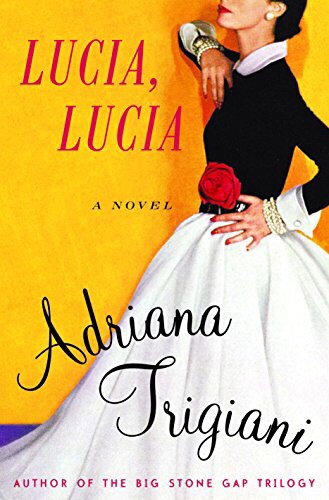
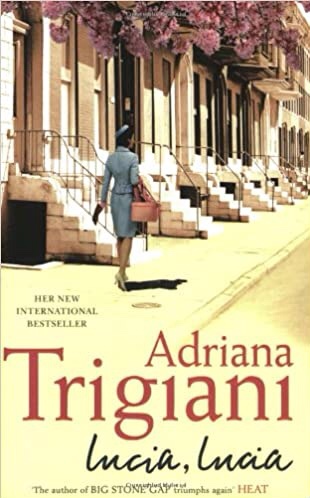
Throwback Thursday! Lucia Lucia by Adriana Trigiani.

Lucia Sartori is the beautiful twenty-five-year-old daughter of a fine Italian immigrant family in Greenwich Village, New York, in 1950. Fuelled by the post-war boom, in which talented girls with ambition are encouraged to follow their dreams, Lucia becomes an apprentice for a made-to-wear clothing designer at a chic department store on Fifth Avenue. Though she is sought after as a potential wife by the best Italian families, Lucia stays her course and works hard, determined to have a career. She juggles the roles of dutiful daughter and ambitious working girl perfectly. When a handsome stranger comes to the story and catches her eye, it is love at first sight for both of them. In order to win Lucia’s hand, he must first win over her traditional family and make the proper offer of marriage. Their love affair takes an unexpected turn as secrets are revealed, Lucia’s family honour is tested, and her own reputation becomes the centre of a sizzling scandal. Set in a time of possibility and change for women in America, in a city that celebrates its energy with style and elegance, LUCIA, LUCIA is the story of a girl who risks everything for the belief that a woman could – and should – be able to have it all.

When I want something to read that isn’t challenging, but is heartwarming, funny and emotional I turn for an Adriana Trigiani novel. Her stories, often based within Italian American culture, have feisty heroines, epic love stories, and wondrous descriptions of either food, clothes and shoe making, decorating or the music business. Lucia, Lucia begins as we meet Kit Zanetti, a playwright waiting to be discovered, who meets her upstairs neighbour. Lucia Sartori offers Kit some tea, and this evolves into a museum or gallery visit as Lucia shows Kit just some of the treasures she has accumulated over her life. Astounded by some of Lucia’s possessions, Kit asks for her story. So Lucia begins to tell a story that starts in 1950s New York when she was the most beautiful girl in The Village. She and her four brothers are brought up in NYC within a close knit Italian community and she is engaged to a lovely Italian boy, Dante. She also has a career she loves as a seamstress in a big department store. Worried that her marriage would mean giving up the job she loves, she decides to end her relationship. She is fighting against the very role her society expects of her – to become a wife and mother, with all of her energy focused on the home.

Then, John Talbot arrives on the scene. John is a businessman who appears wealthy and could take Lucia away from the ‘little life’ she was promised by Dante. She imagines a more upscale lifestyle where she can continue her work designing and creating on Fifth Avenue, plus have all the trimmings of an affluent home life. I kept thinking that this was a pipe dream and everything was going to go wrong. I understood Lucia. It wasn’t just about having money, but having choices. She wants the cushioning afforded by John’s money to pursue her own dreams without it being such a struggle. Yet, John has drawbacks too. He isn’t Italian for a start, but also he’s secretive and quite tight lipped about where his money is from. I worried that Lucia was being conned and that choosing John would be a harder path than she expects.

In-between this love story, Lucia has a wonderfully described trip to Italy with her family. Here Lucia discovers art and culture, swaps incredible recipes with her sister-in-law and even has a job offer from her co-employer. This is where Lucia could make choices that give her true independence, but is she now too entwined with John? Will she find herself choosing between marriage and a career after all? She may have to face more serious revelations about this man than she ever expected. It’s clear to me that John is a bad choice very early on, but I’m older and have made poor choices in relationships when I was young. Lucia doesn’t have that hindsight or experience. It’s easy to think she could have stayed with Dante and still worked as a seamstress, but we forget that before the contraceptive pill, marriage automatically meant children. Once children came along it would have been very hard to pursue a career as a designer, she may have been able to take in sewing, but not pursue a career.

There’s so much to like about this book. I loved the portrayal of the Italian American community and Lucia’s relationships with her family. The author gives us just enough information up front, but we don’t find out how Lucia’s life moved on until the final section when she finishes relaying her story to Kit. It keeps the reader engaged, because we’re dying to know how things worked out for her. This is a bittersweet novel that reminds us we can’t have everything in life. Many choices, no matter how hopeful and happy they seem, can come with a sacrifice in the long term. The sort of romance we see in the movies, all hearts, flowers and candlelit baths, is rare in real long term relationships. Living together, especially within a family, can be anything but romantic. However, if we prefer the hearts and flowers, we can miss out on the closeness and support in those tougher times. Lucia gives us the benefit of her hindsight as she evaluates her life, perhaps hoping to pass on this wisdom.

Meet The Author

Beloved by millions of readers around the world for her “dazzling” novels (USA Today), Adriana Trigiani is “a master of palpable and visual detail” (Washington Post) and “a comedy writer with a heart of gold” (New York Times). She is the New York Times bestselling author of eighteen books in fiction and nonfiction, published in 38 languages around the world, making her one of the most sought after speakers in the world of books today. 

Adriana is also an award-winning film director and screenwriter, playwright, and television writer and producer. She wrote and directed the award-winning major motion picture Big Stone Gap, based on her debut novel, filmed entirely on location in her Virginia hometown. Big Stone Gap spent 11 weeks in theatres in the fall of 2015 and was the #2 top-grossing romantic comedy of the year. She wrote and directed the documentary film Queens of the Big Time, winner of the Audience Award at the Hamptons and Palm Springs International Film Festivals. Her screen adaptation of her bestselling novel Very Valentine premiered on Lifetime television in June 2019, launching their National Book Club. She directed the feature film Then Came You, starring Craig Ferguson and Kathie Lee Gifford, filmed on location in Scotland. Adriana co-founded The Origin Project, an in-school writing program which serves over 1,700 students in the Appalachian Mountains of Virginia. Adriana is at work on her next novel for Dutton at Penguin Random House for release in 2021, and a children’s picture book for Viking at Penguin Random House for release in 2021. She lives in New York City with her family. 

Follow Adriana on Facebook and Instagram @AdrianaTrigiani or visit her website: AdrianaTrigiani.com.
Join Adriana on Facebook for Adriana Ink every Tuesday at 6 PM EST!

Posted in Throwback Thursday, Uncategorized

Throwback Thursday! Engleby by Sebastian Faulks.

‘My name is Mike Engleby and I’m in my second year at an ancient university’.

In this book Faulks creates one of the best unreliable narrators in fiction. His voice is mesmerising, intelligent and strangely compelling. I found myself strangely drawn in by him. In fact he’s very funny, in a darkly humorous way. We’re restricted to his first person narrative and his tale of a working class upbringing, affected by poverty and physically abusive treatment from his stepfather. Despite his disadvantages, he wins a place at a Cambridge college. Although he’s intellectually capable of fitting in, socially he’s a misfit, struggling on the edges of college society. Then he sees a girl in the tearoom of the University Library and an obsession starts. He observes Jennifer to a degree that’s detailed and creepy.

‘She was smoking a cigarette and trying not to laugh, but her eyes looked concerned and vulnerable as Robin’s low voice went urgently on. She is alive, Godammit she is alive. She looks so poised, with that womanly concern, beginning to override the girlish humour. I will always remember that balanced woman/girl expression on her face.’

This is the detail of someone who is watching constantly. He seems to have very little empathy for others, apart from Jennifer. So when she disappears, we are left in conflict. Where should our sympathies lie? Has Engleby lost someone he truly cared for or is something more sinister going on? Now I can’t claim that Faulks created the unreliable narrator, but this is the first time I truly had the rug swept from under me by a book. It’s not so much a twist, as a seismic shift that makes me question absolutely everything I’d read up to this point. The next books that surprised me this much was Atonement and We Need To Talk About Kevin so the book is in great company.

The build up is very slow, but the tension soon becomes unbearable. We’re waiting for something to snap! I felt myself weirdly torn between compassion and contempt for this boy who has been subjected to cruelty and possibly developed this faux intellectual and pretentious personality to survive. Or, has simply been lying to us all along? Faulks is questioning the way writers construct identity on the page and the reader’s tendency to believe the person presented to them, often without question. Is identity as fluid as he presents, or are some of our characteristics set in a permanent ‘self’ as most of us would like to believe. It’s an uncomfortable read, not just because we might feel confused with our own fixed and fluid selves, but because we feel complicit with a narrator we’ve enjoyed. Even more uncomfortable, could it be because there might be a little bit of Engleby in all of us.

Meet the Author


Sebastian Faulks was born in April 1953. Before becoming a full-time writer in 1991, he worked as a journalist. Sebastian Faulks’s books include A Possible Life, Human Traces, On Green Dolphin Street, Engleby, Birdsong, A Week in December and Where My Heart Used to Beat.

Posted in Personal Purchase

Throwback Thursday! The Enchanted April by Elizabeth Von Armin.

This is such an apt novel for the time of year, but I’ve found myself thinking about it recently for two other reasons. Of course spring is on it’s way, but this year is something of a personal renaissance. I’ve been shielding since the second lockdown, because I have multiple sclerosis and it means I have a few issues with swallowing and breathing. This was a personal choice, but thank goodness I did, because I did receive a government letter four weeks ago telling me I should have been shielding. A brilliant bit of irony. So now I can have friends come and join me for a dog walk or sit in my garden for a cuppa together. I can’t explain how joyful this makes me feel. I will feel connected to the world again – well, as much as I ever want to be. I can also have my hair coloured silver blonde with lilac dip-dye! Hairdressers here I come.

The other reason is that four weeks ago I moved to my new home. It’s an 18th Century cottage in a really happy village, and I feel like the real me is re-emerging. We’d been living in the city, on a relatively new estate and I had no idea how much of an effect this as having on my mental health. I was sitting on my reading couch at the weekend with the sun coming in, next door have an apple tree and the branches hang over the fence, so I can smell the blossom when I have the window open. On Sunday afternoon we had a pot of tea and our Easter cake outside in the garden, where an enormous jasmine hangs heavily on the wall wafting a heady scent over the whole garden. I started planning what I’d like in the garden across the seasons and that always feels like a corner has been turned. It’s as if we went into hibernation in winter 2019 and we’re only just coming out and that feeling reminded me of the characters in this novel.

The premise of the book is that a discreet advertisement appears in The Times, addressed ‘To Those who Appreciate Wisteria and Sunshine’. On offer is a small medieval castle for rent, above a bay on the Italian Riviera. Four very different women – the dishevelled and downtrodden Mrs Wilkins, the sad, sweet-faced Mrs Arbuthnot, the formidable widow Mrs Fisher and the ravishing socialite Lady Caroline Dester – are drawn to the shores of the Mediterranean that April. As each, in turn, blossoms in the warmth of the Italian spring and finds their spirits stirring, quite unexpected changes occur. These characters drive the novel, as it is their responses to each other and to Italy that take centre stage. Mrs Wilkins and Mrs Arbuthnot are the first to respond, both ladies living resignedly, but quietly, in unhappy marriages. They are joined by Lady Caroline, a younger, beautiful woman who has found that her looks can be more of a burden than a blessing. Finally, there’s Mrs Fisher. A formidable woman who has a very strong will, which she tries to impose on the other women. The author is so perceptive when it comes to human foibles and how personalities rub against each other when living side by side. Tiny little acts of pettiness and selfishness can take on huge importance in these situations. However, what the author also shows is that one person’s character failing can have a transformative effect on someone else. One woman’s need to be in charge, inspires assertiveness in a quieter, more timid member of the party. The early chapters are a comedy of errors and miscommunication as the women try and often fail to understand each other.

The author deliberately creates an opening that feels like being under a rain cloud. The weather is miserable and cold, each woman feels unhappy or have lost themselves in some way. Then as they’re thrown together for this month in the castle we wonder if they’ll ever get along and if Italy will work its magic on them. The second half of the book feels like entering spring, the sun is shining and the surroundings start to work on each woman, even Mrs Fisher. The characters and the surroundings come into bloom. There are vivid descriptions of the castle and its gardens so the reader can really visualise the setting. It feels like a literary painting. Slowly, each woman begins their transformation. In the case of the married ladies, they invite their husbands to join them in Italy. Could this special place transform their marriages, relight a spark or remind them of the deeper love they once shared?

The movie version of the novel.

The novel is charming and light, without falling into whimsy or sentimentality, showing extraordinary skill in the writer. Despite barely having a plot, the book can be read as a satire on class and society post WW1. It could be read as a travel novel or just a study in how a different culture, characters and nature can soften and change us for the better. There isn’t a single character here who isn’t changed by the magic of Italy, and that’s the final reason I love this book. I was meant to get married last spring and go to Venice for my honeymoon. I picked the perfect hotel room with a double aspect and a balcony over one of the smaller canals. It would have been my third trip to Venice, but I don’t think I’ll ever tire of it. The first time I visited we arrived at night and took a water taxi in the dark across the lagoon. We arrived at a small jetty and it was so quiet, just the sound of water lapping against the buildings. The lamplight was reflected in the ripples on the surface, as well as tiny lanterns as we stepped up into a small garden. We walked through a courtyard with pots, pergolas with hanging plants and the tiny points of light hanging within. It was such a surprise because gardens are rare in Venice, but there it was. I did feel changed by my visit. I felt amazed that such a beautiful place actually existed and that I could go there whenever I wanted. It improved my confidence, my creativity and taught me to go a bit slower. If I never go abroad again in my life, I’ll be happy because I went to Venice. This book captures some of that transformative feeling; its a witty and delightful depiction of what it is like to rediscover joy.

Elizabeth von Arnim (1866-1941) was an Australian-born British novelist who was married to a Prussian aristocrat. Her most famous works include Elizabeth and Her German Garden and The Enchanted April

Posted in Personal Purchase

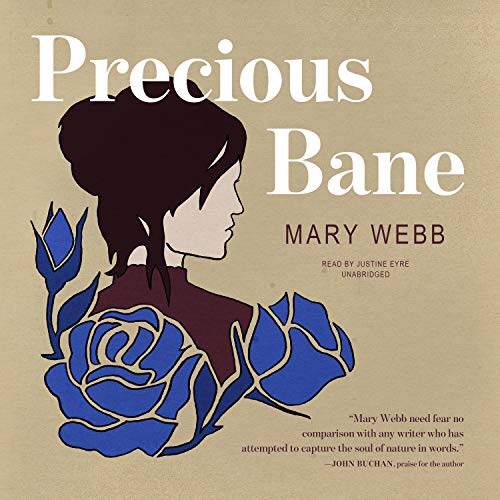
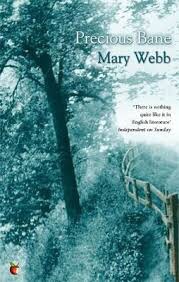
Throwback Thursday! Precious Bane by Mary Webb.

I was drawn to this novel because of my mum’s interest in Mary Webb’s novel Gone to Earth and the film adaptation starring Jennifer Jones. At the time I was writing my dissertation for my undergraduate degree in English Literature. I was writing about disability in 20th Century literature, but also developed an interest in disfigurement of female characters in literature such as Rosa Dartle in Dickens’s David Copperfield. I was interested in the way authors use it as an indicator of evil and/or sexual immorality. My mum suggested a more positive representation of disfigurement might be found in Precious Bane. Prudence is one of those characters it’s so easy to fall in love with. She’s so inextricably linked to the book’s setting, the wild country of Shropshire at the time of Waterloo. Prudence Sarn is a wild, passionate girl, cursed with a hare lip — her ‘precious bane’. Cursed for it, too, by the superstitious people amongst whom she lives. Prue loves two things: the remote countryside of her birth and, hopelessly, Kester Woodseaves, the weaver. The tale of how Woodseaves gradually discerns Prue’s true beauty is set against the tragic drama of Prue’s brother, Gideon, a driven man who is out of harmony with the natural world.

Prudence helps her mother and father on their farm, but is also deeply in tune with the wild countryside in which they live and grow crops. When her father dies suddenly, Prudence and her mother are under the protection of her brother Gideon who inherits the farm. Gideon was mistreated by their father, so now he sees the freedom to make changes at the farm and run it his way. This worries Prudence who knows her brother isn’t in tune with nature – at the funeral we see local superstition as the clergyman calls for the sin eater. Sin eaters were at funerals to take in the guilt and shame left over from sins that were not confessed before death. As Pru’s father died suddenly, they need someone to take on his sins so that he can enter heaven. The whole funeral party gasps as Gideon steps forward to take on his father’s sins. This will change his characters and peace of mind, as well as ruin his fledgling relationship with the beautiful Janice.

We see everything through Pru’s eyes and learn her innermost feelings about her life, family or about her looks. She refers to her lip as ‘hare-shotten’ – meaning that her pregnant mother was startled by a hare affecting her baby. Pru’s disability is what we know as a cleft palate; an opening in the lip that could extend to the nose or upper palate. This disability causes problems with eating, speaking and even hearing. These days it’s often corrected. Pru is philosophical about her lot and sees it as something that could have been much worse. It only starts to affect her when she falls in unrequited love. Each small holding would spin their own wool and employ a travelling weaver to create the fabric that they could use or trade. Pru is helping at Janice’s parents when the weaver arrives. Janice is the daughter of local wizard Beguildy, who has begrudgingly promised her to to Pru’s brother Gideon. All the women come together for a ‘love spinning’ to celebrate the wedding, but for Pru everything changes when Kester Woodseaves arrives. She explains it as a feeling that ‘the master has come’, but immediately knows there’s no future in it. Kester would not want a hare-shotten wife so she keeps her love close to her heart.

In the meantime, Gideon’s character has changed considerably since eating his father’s sins. He wants to run the farm his way after years of cruel treatment by his father. This means Pru and her mother working their fingers to the bone, for long hours and little thanks. He becomes obsessed with wanting a grand house in town and starts to neglect his relationship. He sees Janice less and when he does see her he is pressurising her to give up her virginity before their wedding. Janice will do anything for Gideon and when the consequences of his actions start to show, he has a choice. Will he forego material aspirations, marry Janice and claim their child? Or will he reject Janice’s plea for help and keep working towards the grand house? Even worse, if Janice is rejected by Gideon where will she go? Meanwhile Pru is strong as a workhorse, but life has had the joy sucked out of it and she worries about the long hours their elderly mother is working. She’s also concerned that Gideon has lost his soul.

Meanwhile, in a strange and comical turn of fate involving the mischievous Beguildy, Kester has seen Pru as a desireable woman. Aside from her face, Pru is aware that she’s not curvy and golden like Janice, but tall and willowy. Kester is transfixed by her figure when she poses as Venus, but he doesn’t see her face. However, he carries that vision in his mind as he moves to his next job far away and can’t forget her. For Pru, life takes a turn into tragedy that leaves her vulnerable. As the consequences of Gideon’s choices start to reverberate through the village, those who were friends and neighbours start to think differently. Crops fail and they’re looking for someone to blame. Superstition runs rampant as they suggest that witches can affect crops and livestock. Does a witch live in their midst? Does anyone have the mark of a witch? Pru is without protection and if the villagers turn who will save her?

I love this book because it depicts a woman with a disability in love, and being seen as desirable. Of course Mary Webb is writing back to the 18th century, from 1924. It has parallels with Daphne Du Maurier’s 1946 novel The King’s General, where the heroine, Honor, is a wheelchair user. It’s as though awareness at that time had changed towards disability – potentially due to two world wars creating veterans with impairments. I am emotionally invested as a disabled woman, because I want to see characters with impairments and illnesses being seen as sexual beings and potential life partners. Pru’s humbleness is so endearing. She doesn’t imagine for a second that Kester might see her or pick her out in a room full of women. That he might see her calmness, her intelligence, her modesty and think she’s the sort of woman he might want. I love the rural setting, the local superstition, and rituals like the love spinning or picking each other’s crops. Every time I read this, I fall in love with it over again. I can smell the warmth on the hay bales, the fresh picked apples and hear the buzz of dragonflies on the pond. This is one of my favourite love stories and it breaks my heart as Pru resigns herself to never being loved like Gideon loves Janice. Yet it warms my heart every time too. Pru calls her cleft palate her ‘precious bane’ and in truth it is a blessing. In a way it forces someone to look past her looks to her character and it brings her someone who is genuine, who loves her as she truly is and who gets her. That’s all we ever want.

Posted in Personal Purchase

Throwback Thursday! A Song for Issy Bradley by Carys Bray.

Meet the Bradleys.

In lots of ways, they’re a normal family:
Zippy is sixteen and in love for the first time; Al is thirteen and dreams of playing for Liverpool. And in some ways, they’re a bit different:
Seven-year-old Jacob believes in miracles. So does his dad. But these days their mum doesn’t believe in anything, not even getting out of bed.

How does life go on, now that Issy is gone?

This book is truly beautiful, moving and insightful novel about a family dealing with grief. The Bradley family have lost four year old Issy, and Carys Bray tells their story through each family member in turn. Bray has personal insight into the Mormon church, although she’s no longer a member. That doesn’t mean that this is a grand criticism of the religion, what she does is use her insight to craft a family of faith coping with the worst thing that could happen to them. She takes us on the weekly Merry-go-round of family night, youth club, Saturdays writing sermons and church on Sunday. I was brought up in a similarly restrictive evangelical Christian background till I rebelled at 16. I have spent my whole life watching adults try to reconcile their faith in an interventional God, with tragic events in their lives. When people believed that God granted them the good weather for their BBQ, it was hard for them to understand why my Multiple Sclerosis hadn’t responded to their healing. This could go one of two ways: God had a reason for giving me MS or I didn’t have enough faith for their healing to work. This family experience similar feelings and treatment, as their comfortable and cosy religious world implodes.

What the author shows us, is that nobody is immune from grief. Dad is a bishop in the church, and since marriage outside the faith is discouraged, Mum is a Mormon convert. His standpoint, although written with great empathy, is the one I found it hardest to relate to. Possibly this is because of my religious bias, but it felt like he was trying to make sense of it too early in the grieving process. It can take years to be able to put such an enormous loss into context and be able to identify its effect on your emotions and choices. This is the immediate aftermath and Ian is trying to make sense of it in terms of God’s purpose. As a bishop he has the pressure of the ‘public’ face he has to maintain. He’s a leader so he can’t appear weak, doubtful or as if he’s questioning God. It’s quite a normal reaction to feel very angry with God. If you have given your life over to his work you could be forgiven for having questions: Why has this happened when I serve you? Why should I believe in you? If followers see that doubt or uncertainty, it could undermine their faith. The only way to rationalise this, in the context of his position, is to assume God is testing him – testing his faith like Job or teaching him something. While this might keep Ian’s public face intact, he could be experiencing a crisis of faith behind the mask. Even worse it could put him on a collision course with the rest of his family.

Wife Claire is simply overwhelmed, unable to maintain a private face never mind a public one. She retires to her bed, completely paralysed by grief. She finds herself asking all the questions Ian is avoiding and as a convert she has a different context through which she can view her grief in many different ways, instead of just one. However, as she stays in bed, the rest of the children are dealing with their grief alone. The faith they’ve been brought up in has failed them, they have been faced with mortality so close to home it raises fears of further trauma. Eldest girl Zippy is trying to hold everything together at a turbulent point in her own development. She tries to be Mum to her youngest brother, the beautifully drawn Jacob. Her brother Alma is disappearing into his football and dreams of playing for Liverpool. All the children find their father’s responses strange and unsympathetic, but feel abandoned by Mum. There’s also an anger developing. Their father is a powerful man in church terms, so how have their parents let this happen? Could it happen to them? Bray has written in these children’s voices with skill and empathy. She has thoroughly imagined what their inner language would sound like. Jacob’s concept of his faith as at least the size of a toffee bonbon. They were so real I wanted to gather them and care for them.

For me, this was a stunning first novel and catapulted Carys Bray onto my list of authors whose work I would buy without hesitation. Her understanding of family dynamics and construction of each character’s inner world is exquisite. She just ‘gets’ the psychology of grief and I wasn’t surprised to discover she has experienced personal loss. Her care for each of these people, and even the religion she has left behind, is so evident and I was left feeling an affinity for her as well as the characters. The death of someone in such a young family is like throwing a grenade into the room. I felt like this book was capturing that immediate aftermath where adrenaline is still running, your ears are ringing, you don’t know where anyone else is or even how injured you are. I remember that feeling – of being so lost, you don’t know how lost you are. Bray is a novelist of exceptional depth and skill. I have just bought her third novel and I’m so looking forward to immersing myself into another of her worlds.

Meet The Author


Carys Bray was brought up in a devout Mormon family. In her early thirties she left the church and replaced religion with writing. She was awarded the Scott prize for her début short story collection Sweet Home. A Song for Issy Bradley is her first novel. She lives in Southport with her husband and four children.

Her first novel A SONG FOR ISSY BRADLEY was serialised on BBC Radio Four’s Book at Bedtime and was shortlisted for the Costa Book Awards and the Desmond Elliott Prize. It won the Authors’ Club Best First Novel Award. Her second novel, THE MUSEUM OF YOU, was published in June 2016. WHEN THE LIGHTS GO OUT, her third novel, was published in May 2020. Carys has a BA in Literature from The Open University and an MA and PhD in Creative Writing from Edge Hill University.