Posted in Throwback Thursday

Throwback Thursday! Platform Seven by Louise Doughty.

Having spent a bit of time hanging round Peterborough train station over the years, I thought it seemed an unpromising place to set a novel, but Louise Doughty has proved me wrong. In Platform Seven, she weaves an unmissable whodunnit where Lisa tries to understand why she died.The book opens following security guard Dalmar, a refugee from Somalia, as he carries out his night shift. After midnight the station goes quiet and most people might assume it is closed, but it runs with a skeleton staff and between the hours of 3am and 6am only freight trains rumble through at platform seven. This is the last platform, towards the back of the station and only partially viewable by CCTV. It is the perfect place for homeless people to hide out and try to sneak into the warmth of the waiting room for a few hours. Dalmar has been desperate, so sometimes he doesn’t have the heart to move them on, feigning ignorance so they can grab a few moments of warmth. At first, he mistakes the man walking through the station, for a homeless person and pays no attention. The man, wearing a cap and donkey jacket makes for platform seven and waits. To Dalmar he seemed hunched in the cold and seems to almost be in a trance.


There is only one other witness to his arrival and that is Lisa. Lisa is trapped in the station, she knows all the staff by name but can’t get them to see and hear her. On this occasion she is sure she understands the desperation in this mans eyes and she worries he isn’t just here for the warmth. As a freight train trundles towards the station he steps towards the platform edge and Lisa desperately tries to stop him but he can’t hear her. Dalmar finally sees the man, but is too far away to make a difference. He shouts. But the man keeps going. He steps through Lisa and straight under the train. Doughty explores the effect this man’s suicide has, firstly on the railway staff. PC Ashcroft from the British Transport Police, and his boss face the task together. Ashcroft has never experienced a railway death before and the horrifying detail of gathering body parts, sorting through clothing to look for ID and organising a cleaning team affects him and us at the same time. He doesn’t want to break down but struggles and wants to understand what could make a man die like this? Dalmar, who witnesses the incident with Lisa, is triggered into a flashback of his own. We are transported back to a dinghy on a river and a woman who’s head is the only part up above the water. In reality it’s detached, merely floating on the surface, but screaming at the same time. Lisa wanted to stop the man and is horrified by what she’s seen. She comes to a horrifying realisation.

In the days that follow Lisa becomes fascinated with a distraught young man she sees in the cafe, while PC Ashcroft discovers that a young woman died recently on the same platform. Something about her death piques his interest and makes him wonder whether the events leading up to her apparent suicide were properly investigated. He asks if he can do some digging and gets the go ahead. Lisa also has a breakthrough, she finds that she can follow this young man out of the station and accompanies him on his walk home. This begins her wanderings and the unlocking of her story. Doughty’s description of the romance between Lisa and her doctor boyfriend, Matty, is brilliantly written and shows a real understanding of domestic abuse. Psychological or emotional abuse has only been made a criminal offence more recently, but it is subtle and difficult to pinpoint even for the victim. I was in an emotionally abusive relationship for five years and despite having therapy there are still times when I am confused about how and why I let this happen. Of course I’m not responsible for the abuse, but I was responsible for allowing it to continue. We see how slow and subtle the behaviour begins; a throwaway comment that could be a criticism, a moment of jealousy, an insistence that a hurtful comment was simply a joke and you’re too sensitive. I highlighted a whole passage to use with writing therapy clients: The sad, sobering and undramatic truth is that I made the same mistake that women and girls throughout the ages and across continents have so often made. The one that is so easy, seductive, and most flattering to ourselves. I mistook possessiveness for love. By the time I realised the magnitude of that mistake, I had too much invested in the relationship to simply undo it. I had to keep on making the mistake in order to justify the fact that I had made it in the first place. It was too large and complex an error to admit and how could I explain I had made a mistake to family and friends when I didn’t even understand how I had made it myself? This section of the book is such a beautiful piece of writing and answers perfectly the question everyone asks; ‘why didn’t you leave?’ When asked by my family why I’d never told them, the answer was the same. My husband had died, I had been broken and this person professed to love me. I was ready for something positive to happen in my life. I glossed over a couple of red flags, because he was stressed at work, or moving house and as well as an excuse he made promises to change. If I admitted that my relationship was a sham I would have to admit there was no happy ending and I would be back where I started: bereaved, broken and alone.

It took me five years to admit to others and myself that I had to leave. I’d had to gather my strength over time and eventually he behaved so badly I couldn’t gloss over it any more. I was aware reading Lisa’s story that things could have been so much worse. Matty breaks her confidence and by using the technique of gaslighting leaves her in a place where she doesn’t even trust her own judgement anymore. The outcome is devastating. I really enjoyed the way Doughty slowly frees Lisa. Firstly, she is liberated from the station, then finds a way to whisper a suggestion to someone, then m finally she travels all over Peterborough and even beyond the city towards the end. She finds others like her: the old man from the station suicide pops up soon after his death; a woman in an orange suit striding towards the station; the weird grey blob at the top of the multi-storey car park who she knows to stay away from. However, there are places she wants to be. Most importantly, an urgent visit to a woman she once saw through a window who seemed to need her help. This is domestic noir at it’s absolute best and has stayed with me ever since.

Meet The Author

Louise Doughty is the author of nine novels, including the soon-to-be-published Platform Seven. She has also written one work of non-fiction and five plays for radio.Her most recent book, Black Water, is out now from Faber & Faber UK and Farrar Straus & Giroux in the US, where it was nominated as one of the New York Times Book Review Top 100 Notable Books of 2016.

Her previous book was the number one bestseller Apple Tree Yard. First published in 2013, it has sold over half a million copies in the UK alone and has been translated in thirty territories worldwide. A four-part TV adaptation with Emily Watson in the lead role was broadcast on Sunday nights on BBC1 in January 2017. 

Doughty’s sixth novel, Whatever You Love, was shortlisted for the Costa Novel Award and longlisted for the Orange Prize for Fiction. She has also won awards for radio drama and short stories, along with publishing one work of non-fiction, A Novel in a Year, based on her popular newspaper column. She is a critic and cultural commentator for UK and international newspapers and broadcasts regularly for the BBC and has been the judge for many prizes and awards including the Man Booker Prize and the Costa Novel Award. She lives in London.

Posted in Publisher Proof

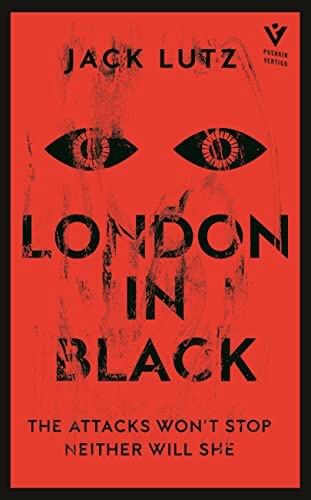
London in Black by Jack Lutz

A TENSE, TICKING-BOMB THRILLER SET IN A GRITTY NEAR-FUTURE LONDON

LONDON 2027

Terrorists deploy London Black, a highly sophisticated nerve gas, at Waterloo Station. For ten percent of the population – the ‘Vulnerables’ – exposure means near-certain death. Only a lucky few survive.

LONDON 2029

Copy-cat strikes plague the city, its Vulnerable inhabitants kept safe by regular Boost injections. As the anniversary of the first attacks draws near, DI Lucy Stone, a guilt-ridden Vulnerable herself, is called to investigate a gruesome murder of a scientist. Her investigation soon unearths the possibility that he was working on an antidote – one that Lucy desperately needs, as her Boosts become less and less effective.
But is the antidote real? And can Lucy solve the case before her Boosts stop working?

I felt thrust into a post-apocalyptic London in this mix of dystopian thriller and police procedural. I was immediately on board with our narrator Lucy, a super sweary and ballsy detective. A very young DI who’s well known amongst colleagues for not taking any bullshit, but also bringing with her a huge amount of baggage. She has a tough exterior, even using boxing to cope with her mental health, but is constantly treading a fine line between losing her temper and having a panic attack. She is also a ‘super recogniser’ – able to recognise anyone if she has seen them before, even if it was just passing them in the street. It’s quite something to read how her brain works as she almost shuffled through the faces stored in her brain like a game of Guess Who. Her constant medical issues are enough to induce panic as she faces measuring her Boost levels constantly, then worries when they seem low for that time of day. There’s also the event that happened – a terrible trauma that she hates to recall and doesn’t talk about. All of this creates quite a flawed and frustrated character, but I did see past a lot of the guarded behaviour and found her quite endearing. Maybe because she has this huge vulnerability. Flashbacks take us to her life before the Waterloo Station event and the normal life she’s known is suddenly eroded. Her pharmacist boyfriend realises she’s a ‘Vulnerable’, but thinks she’s safe because of all the Boosts they have at the hospital pharmacy. It’s when he realises that there aren’t enough and doses will have to be rationed that the scale of what has happened hits him. They have gone from a world where anything they need is accessible to them to one where their security, health and welfare is in doubt. It’s such a massive shift in their living standards it’s hard to comprehend. When we come back to Lucy’s present and see her psyching herself up to inject, the reality of how reliant she is on these booster injections is visible in her black and bruised abdomen.

I found it hard to believe that this is a debut novel, it’s incredibly well plotted and so imaginative. It’s hard enough to create a dystopian thriller that’s believable, but I think the plausibility was helped by recent terrorist attacks and the pandemic. We know now that these things can happen so the deployment of London Black seems like a possible future event, as scary as that is. I thought it was clever that even society’s language has been changed by the attack, in much the same way that we have new phrases and words in common use since the start of the pandemic. The idea of being a ‘vulnerable’ scared me, so Lucy’s determination to take part in the world and investigate this murder impressed me. The severity of the symptoms is horrifying so I’d be locked in my flat with a food delivery service on speed dial. I really did have a constant low level anxiety throughout. However, the murder case is so intriguing I couldn’t put the book down. Who would kill a man that might have the antidote the world is looking for? It’s Lucy’s only hope for a normal life so her determination to solve the murder is understandable. I really loved her developing relationship with DI King and would love to see more of them both going forward in future novels. The author has plotted a great crime novel on the back of a dystopian thriller. It’s anxiety inducing, compelling and has a complex heroine that I was rooting for throughout.

Published by Pushkin Vertigo April 2022.

Meet The Author

Jack Lutz lives in London with his wife and daughter. He is fascinated by the city he calls home and loves to read about and explore it. The idea for London in Black came to him as he changed trains on the Tube. London in Black is his first novel.

Posted in Random Things Tours

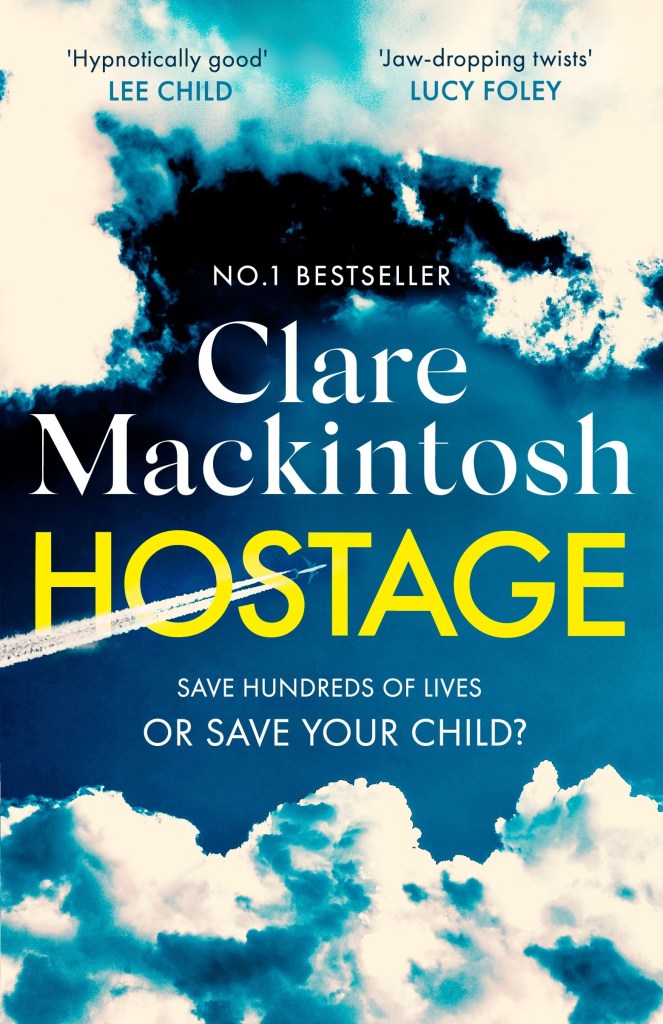
Hostage by Clare Mackintosh

This was an absolutely nail-biting thriller of a novel that never lets up and practically had me biting my own nails. In fact I’d been reading this, then binge watching Ozark with my other half and had to ask for a half hour of comedy before bed, because I couldn’t cope with any more tension! I probably should also be honest and say that planes make me horribly claustrophobic. I’m never scared of crashing. I just hate that I can’t get up and walk out of the door. So my own phobia probably added to the tension of the novel. Mina is a flight attendant and has the honour of working on the first ever direct flight from London to Sydney. Back home, husband Adam is holding the fort while he comes to terms with recent mistakes in his marriage. He is also finding it hard to develop a relationship with his adoptive daughter Sophie. After waiting a long time to adopt a child, they’ve had problems settling Sophie and also connecting with her in the way they expected. However, she does love her most recent babysitter, so Adam is quite relieved when Mina has booked this miracle worker to cover her hours on this historic flight. So, it’s a massive shock when her baby sitter takes them both hostage, citing her membership to a climate change group and explaining that Mina’s plane will now be in the hands of her fellow protestors. Simultaneously, Mina is left with a note and a choice; let one of the protestors onto the flight deck or her daughter’s life is in danger. Mina has already found Sophie’s ‘Epipen’ in the galley, so she knows they mean business. She has also been left in no doubt that one of their associates has been following Sophie and their young babysitter, leading Mina to believe it’s going to be easy for them to get to her. Their plan, if Mina cooperates, could be to fly the plane and all three hundred passengers into the Sydney Opera House. She is left with a terrible dilemma – one life, that of her precious daughter, or the lives of everyone on board.

The book alternates between Mina’s perspective and what’s happening at home for Adam and Sophie. In between are chapters from the perspective of one of the hijackers, each one named after a river. These are an interesting break from the tension, because they explain that person’s reasons for joining a radical climate change group, one that’s willing to consider acts of terrorism to bring their cause to the forefront of the news agenda. I didn’t feel a connection or empathy with these, or any of the main characters really. They’re flawed and therefore very human and believable. Mina’s husband Adam has been deceitful and their marriage is still in a state of repair over his behaviour. This isn’t about character though, this is all about the situation. The pressurised and locked cabin adds to the claustrophobic atmosphere the author has created and the passenger’s isolation from both their loved ones and the safety of their homes. This is all about the rollercoaster thrills of the hostage situation and perhaps the fear many of us have about the heightened terrorism threat and flying in general.

Although I guessed some of what happens, the story definitely entertains and keeps you on edge. In fact I could see a film version doing exactly the same thing. Some aspects were unexpected though, especially the situation Adam and Sophie find themselves in back in London. Due to unforeseen complications, they are in more danger than was planned and certainly more than Mina has expected. I really enjoyed this subplot, because it went somewhere I didn’t expect and I was definitely on tenterhooks wondering whether they would come out alive. It was also clever to have little snippets of information about the passengers and what had made them book this inaugural flight non-stop around the world. Whether they were here by intention or simple chance, none of them expected to become a fireball in the sky. This did induce some emotion in me, because it made the passengers more than a seat number. Sophie became the most interesting character for me as the book progressed. Her behaviour, when seen in detail, could point to her being neuro divergent and I thought this was portrayed well. She is extremely intelligent and I loved how that becomes more obvious as their predicament worsens. Oh and read all the way to the end. The twists don’t stop coming with the tense and very modern take on this common nightmare scenario.

Meet The Author

With over 2 million copies of her books sold worldwide, number one bestseller Clare Mackintosh is the multi-award-winning author of I Let You Go, which was a Sunday Times and New York Times bestseller and the fastest-selling title by a new crime writer in 2015. It also won the Theakston Old Peculier Crime Novel of the Year in 2016. Both Clare’s second and third novels, I See You and Let Me Lie, were number one Sunday Times bestsellers. All three of her thrillers were selected for the Richard & Judy Book Club, and together have been translated into forty languages. After the End was published in 2019 and became an instant Sunday Times bestseller, and in 2021 Hostage flew straight into the top ten. Together, her books have spent more than sixty weeks in The Sunday Times bestseller lists. 

Clare is patron of the Silver Star Society, a charity based at the John Radcliffe hospital in Oxford, which supports parents experiencing high-risk or difficult pregnancies. She lives in North Wales with her husband and their three children.

For more information visit Clare’s website http://www.claremackintosh.com or find her at http://www.facebook.com/ClareMackWrites or on Twitter @ClareMackint0sh #ILetYouGo #ISeeYou #LetMeLie #AftertheEnd #HostageBook

Posted in Publisher Proof

The Family Remains by Lisa Jewell

Ever since reading Lisa Jewell’s novel The Family Upstairs I’ve been hoping she’d write a sequel. The book was certainly satisfying as a standalone, but the characters were so complex and their situation so traumatic I was certain it would bubble up to the surface sooner or later. Detective Samuel Owusu thinks the same, when human remains are found washed up on the banks of the Thames by a mud lark. When he sends the bones for forensic examination it’s clear that she was murdered; there’s an injury to the skull that could only have come from blunt force trauma. The other clue from the bag is a mulch of leaves, unusual ones for London, taking him to a mansion house in Chelsea. There, thirty years ago, three people were found dead in a kitchen and upstairs was an unharmed baby girl with a rabbit’s foot tucked into her cot. The clues are pointing to two missing teenagers, Henry and Lucy Lamb, belonging to two of the deceased. Yet, neighbours had said they hadn’t seen the children for years. We follow DCI Owusu’s investigation, but also this missing brother and sister who are doing some investigating of their own. They’re looking for a third teenager, Phinneas Thomsen, son of the third deceased adult and also a resident of the Chelsea mansion, hoping he can make sense of their childhood. Why was the Thames body separate from the other three and what was her link to the adults living there? The house has just sold for over seven million pounds and it’s owner is a young woman called Libby, so she must be their first port of call. This is just the first step in untangling a very dark web of trauma, murder and a family who have tried to bury secrets that just won’t stay dead.

Lisa Jewell really is the master of this domestic noir genre. She could have plodded along, unravelling secrets from long ago and it would still have been a very good book. However, she doesn’t take the easy option, she chooses to introduce new characters and storylines that are equally compelling and link into to the Cheyenne Walk mystery. As well as Samuel, Henry and Lucy narrating the story, we have a woman called Rachel narrating a present day storyline too. Rachel is a jeweller, just waiting for a big store to pick up her designs and thrust her work into the limelight. After years of dating and not finding the one, she meets a man called Michael who seems almost perfect for her. He is attractive, attentive, wealthy and seems available emotionally, which makes a change from other men she’s dated. He’s been married before, to a woman he met while she was busking in France and he was staying at his home in Antibes. Rachel doesn’t really pry into his past and all Michael volunteers is that she was musical and ‘a nightmare.’ Her name was Lucy. In a whirlwind, Rachel and Michael get married and she’s of an age where people don’t tend to take you aside and ask if its all moving a bit fast. Perhaps friends are just glad that this has finally happened for her and her father seems happy for her too, believing Michael to be that rare thing – an older, unmarried, great bloke. On honeymoon, amongst the rose petal strewn sheets and days spent reading by the ocean, Rachel thinks she might suggest a bit of fun in the bedroom. She’s happy with vanilla sex, but wonders if some light BDSM games might bring variety. She unpacks some special underwear, some ties and a leather whip and is looking forward to a fun night, but Michael looks embarrassed, then furious. He flies into a rage, accusing her of having no class, sleeping around and ruining their honeymoon. Rachel is bewildered as he storms off to sleep separately and refuses to talk about it. All she can hope is that he calms down, but she is starting to feel like she must apologise, although she doesn’t really know why. How can she return from her honeymoon and tell anyone her husband is disgusted by her?

I loved how these four narratives were interwoven, because they cleverly show us how abuse in all it’s forms leaves it’s legacy. Whether it’s self-hatred and body dysmorphia, a deep seated rage thats ready to boil over, or a desperate need for love and a tendency to repeat the patterns of childhood. I thought Rachel’s story was particularly compelling, because I’ve experienced that pattern of abuse – the love bombing, rejection, gaslighting and fits of rage. I hated Michael and really understood her need to find Lucy and talk to her. It felt like she’d lost the ability to trust her own judgement, so if there was someone else he was abusive to, she could start to accept and own her own truth. Her confidence had sunk so low she was struggling to fight for herself, but as soon as Michael’s behaviour affected someone else she loved she was able to stand up to him. Henry is also struggling with what happened in childhood, his twisted and confused emotions surrounding Phinn were complex. Phinn was held up as an example of what a boy should be, with Henry receiving punishments and neglect for not being more like him. We might expect Henry to feel hatred and even harbour harmful thoughts about Phinn, and to an extent he does feel these things. There’s a part of him that never wants to see Phinn again. However, there is a part of him that is still the little boy who wants to please, so he has changed the way he looks and now looks at Phinn in the mirror every morning. There’s definitely an element of hero worship and sexual desire too. I was actually scared of what Henry might do if he ever found Phinn, who is thought to be working on a game reserve in Africa. Lucy is living with her brother at the start of the book, along with her two children. Henry’s upmarket flat with it’s high thread count sheets and all the right TV packages is the height of luxury to her two children. They have slept in some terrible places while homeless and they don’t want to be on the run again. Lucy is scared and not just about the events in her childhood, because she’s been replicating the pattern of abuse she learned to endure at Cheyne Walk, into her adult relationships. She’s also used to running from people she owes money to. She hopes that now the house is sold, she can find a secure and happy home for her children close enough to keep in touch with her brother. She knows that Henry is more fragile than he seems, but also that there’s a darkness at his centre and she doesn’t know what might happen if he ever lets it come to the surface.

The pace of the novel is pretty fast and I almost read it in one sitting. Short chapters mean it’s very easy to get caught by that little voice that goes ‘just one more chapter won’t hurt’ when it’s gone midnight and you have to be up in the morning. The tension is builds, then decreases, then builds again by using clever tactics like finding something out at the end of a chapter, then the next chapter going back in time or dismissing what you’ve just found out. Although the storyline seems clear she throws in little curveballs like a spot of blackmail here or an unexpected murder there, to take us off the main track. I found some dark humour in two people turning up to murder the same person. I thought that the author also managed to inject some hope for the future too, in what has been a very dark and painful story. If you’ve been through childhood abuse, domestic violence and sexual violence there are some tough paragraphs here and there. I must admit I found some of the coercive control and verbal abuse difficult, and I found myself holding my breath in parts, but that’s how I knew the author had got it absolutely right. This was a fantastic sequel, that I would say needs to be read after the first novel and not as a stand-alone. It really stands up to the power of the first novel with it’s tension, darkness and psychological game playing but also offers some measure of healing too. A fantastic sequel from an author at the top of her game.

Meet The Author

Lisa Jewell has written and published another sixteen books, since her debut Ralph’s Party, from the ‘curry and flatmates’ novels of the nineties and noughties like Thirtynothing, One Hit Wonder, A Friend of the Family and Vince & Joy, to more family-themed novels like After The Party, The Making of Us and The House We Grew Up In and more recently, psychological thrillers such as I Found You, Then She Was Gone, Watching You and The Family Upstairs, which charted in the summer of 2019 at number one in the hardback charts.

Lisa lives in London with her husband, two daughters, two hairy cats, two nervous guinea pigs and a lovely auburn dog. She writes every day, a minimum of one thousand words, in a cafe, with no access to the internet, in two to three hour sessions

Posted in Random Things Tours

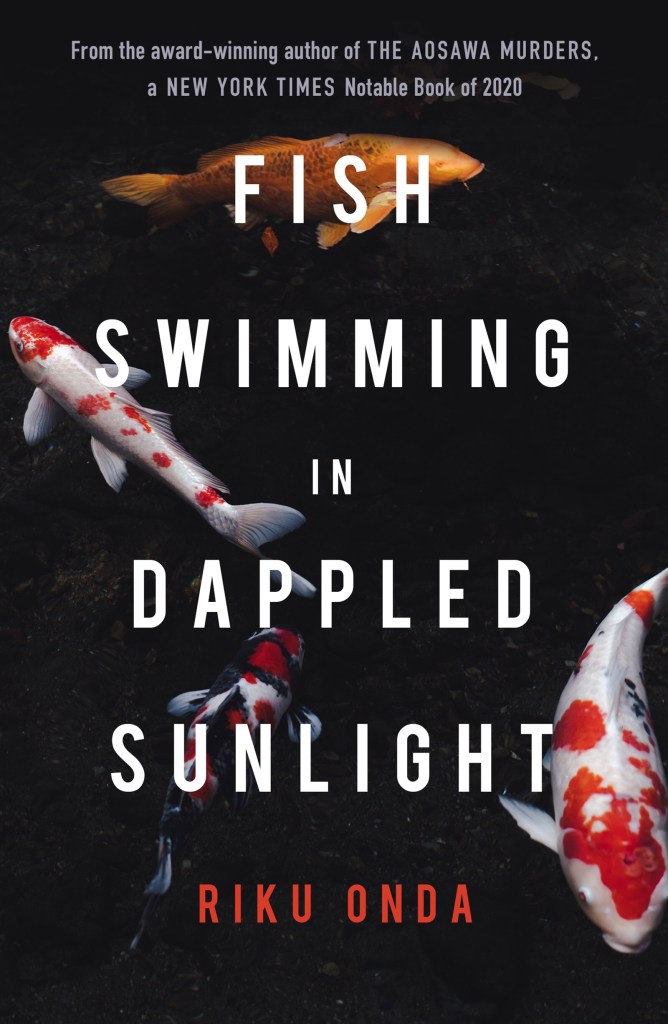
Fish Swimming in Dappled Sunlight by Riku Onda.

This book was an incredibly different reading experience considering it followed an historical fiction novel and a Regency romance. All that lush description and melodrama, followed by this very spare and quiet novel set over one night and mainly in one empty apartment. The contrast was stark and showed that we don’t need very much to convey a story and engage the reader. So short that I read it in one afternoon, this is a story of two people moving out of a flat and agreeing to spend their final night of the tenancy together. Aiko and Hiro are our only characters and their relationship has broken down since taking a trip together, trekking in the mountains of northern Japan. During the trek their mountain guide died inexplicably and both believe the other to be a murderer. This night is their last chance to get a confession out of each other and finally learn the truth. Who is the murderer and what actually happened on the mountain? This is a captured evening where a quiet battle of wills is taking place and the shocking events leading up to this night will finally be revealed.

My first assumption was that Hiro and Aiko are a couple, breaking up after living together, perhaps during their university years. The author conveys an eerie atmosphere, the couple are quite subdued and it’s almost as if they aren’t fully there. Have their minds sprung forward to their next step in life, or backwards to when things were different? There are those annoying marks and shadows on the walls that show where their furniture and pictures once were. The couple feel similar to those marks, like ‘ghostly shadows’ on the rug they’re merely an imprint of what was once present. Even their conversation is sparse, but when we’re taken into their minds we can see that’s where they really live. So much is going on emotionally and intellectually that I could imagine them giving off a sound, like a hum or buzz to signify the intensity of their inner thoughts. We never move out of the room, but we delve into the recent and distant pasts through their inner world. In the room with each other, they start in a quiet and measured way, then with each new piece of information they start to calculate and consider the other. This is where the tension builds, we can feel it inside them and it’s only a matter of time before it spills over into the room. Then comes the first accusation and the pace picks up. It’s not long before the first revelations begin.

I thought that the author used metaphors and memories beautifully and wove them into the psychological game being played. One is the ‘Pearl Earring’ song by Yumi Matsutoya that Hiro remembers an old girlfriend listening to when he was at school. The memory is triggered by Aiko saying she lost an earring while packing. In the song the girl throws her pearl earring under her lover’s bed when she knows it’s the last time she’ll be there. Aiko suggests she doesn’t want this reminder of her lover so throws it away, perhaps after ceremonially throwing the other at a place with special meaning. Hiro gives it more of a metaphorical meaning – one half of a pair is no use without the other. Is this what he thinks about him and Aiko. Aiko hasn’t lost her earring, she has stuffed it in his backpack and claims not to know why. She describes it as a landline, just waiting for him to find it. I think we leave things behind when we want to return or be remembered. The one that resonated most with me was the fish metaphor, where the title of the book comes from:

I see sunlight flickering through the trees. Fragments of the stifled emotions and desire we do not put into words, flit across them, like shadows moving through the wavering light. Deep below the dappled sunlight, fish twist and turn at the bottom of a dark-blue pool […] it is impossible to see them clearly or count them.

Aiko notices their presence, in and out of this room as she thinks of the fish. She sees Hiro has retreated mentally, he’s deep inside his own head just like the fish who disappear into the darker reaches of the pool with a flick of their fins. They are completely present with each other only fleetingly, as dappled sunlight dances across and illuminates them. They come together, then scuttle into the darkened corners, nursing their wounds and planning their next move. The same metaphor occurs at a pivotal point in the novel and gives a sense of the light illuminating different worlds, universes and possibilities.

I’m being so careful not to give away a single revelation or twist, but there are a few and they are unusual and surprising. This is a really unique psychological thriller, it seems sparse, but actually has so much depth and richness. I found myself completely immersed in this couple’s story, both the visible and the invisible. Still playing with memory, the pair delve into their childhoods, trying to work out what makes each other tick and discover how they ended up here. One has more memories of their childhood than the other, but can we trust what we remember? Our impression of something, may be no more than a fleeting glimpse of a much bigger picture. We may have based a lifelong idea of a situation or person on a mere fragment. Even the things we use to jog our memory can be misleading, such as photographs. Hiro muses on how we’re pushed into smiling for photos, to look like we’re enjoying ourselves and love the people we’re with. If we believe our photo albums, the picture we have of the past is distorted. There are so many things going on behind the scenes that are never captured – the moments in the deep blue water.

Published by Bitter Lemon Press 16th June 2022.

Meet The Author

Author: Riku Onda, born in 1964, has been writing fiction since 1991 and has published prolifically since. She has won the Yoshikawa Eiji Prize for New Writers, the Japan Booksellers’ Award, the Yamamoto Shūgorō Prize and the Naoki Prize. Her work has been adapted for film and television.

Translator: Alison Watts is an Australian-born Japanese to English translator and long time resident of Japan. She has wrote the translation of The Aosawa Murders, Aya Goda’s TAO: On the Road and On the Run In Outlaw China and of Sweet Bean Paste by Durian Sukegawa.
Published by BITTER LEMON PRESS•E: books@bitterlemonpress.com Distributed by TURNAROUND PUBLISHER SERVICES•T: 020 8829 3000 PR by Alex Hippisley-Cox• T: 07921 127077 E: alex@ahipcoxpr.co.uk

Posted in Netgalley, Throwback Thursday

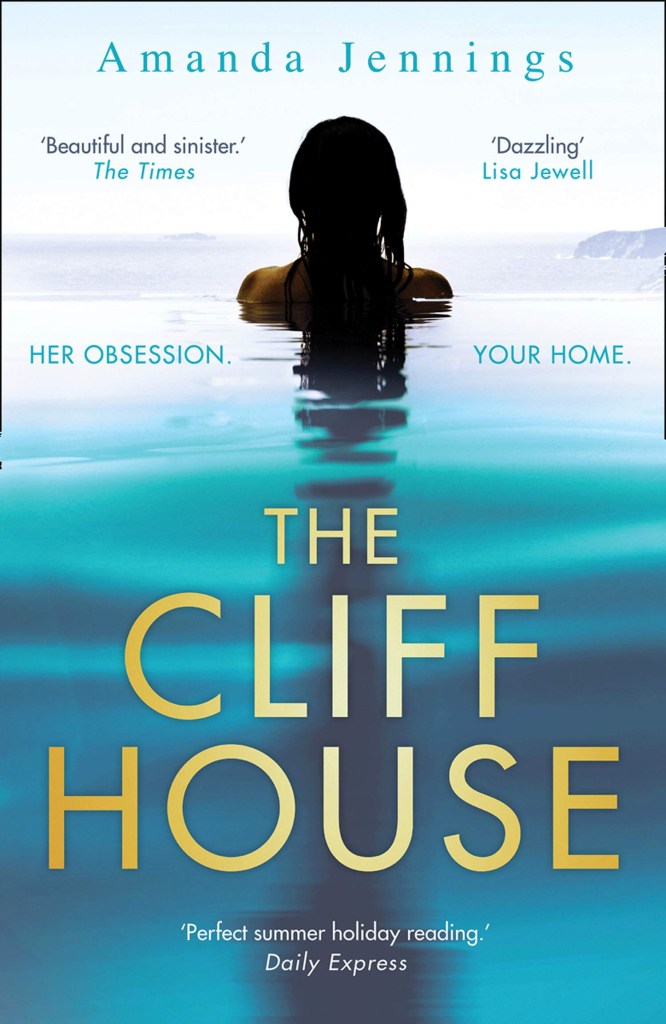
Throwback Thursday! The Cliff House by Amanda Jennings.

With the summer holidays upon us already I thought I’d flag up some great holiday reads on Throwback Thursday. I often pick up books about Cornwall as it is a favourite haunt of mine, somewhere I love to go in the summer. It’s a romantic, beautiful setting, but it’s history of struggle between the haves and have nots goes back through the centuries. This tension between Cornwall’s local population and it’s wealthy visitor is just as highly charged today and still resonates through the pages of this book set largely in the 1980s.

Tamsyn is as local as it gets. Her grandfather worked the tin mines, her father was a lifeboat volunteer alongside his work, but her brother is struggling to find work that’s not seasonal. Tamsyn’s attachment to The Cliff House to a beautiful coastal property just outside her village comes to a head in the summer of 1986. To her, the house represents an escape, a lifestyle that’s completely out of range for her and represents the perfect life. It’s also her last link to her father, who brought her here to swim in the pool when he knew the owners were away. Her father felt rules were made to be broken and they both considered it madness to own such a slice of perfection overlooking the sea yet rarely visit except for a few weeks in the summer. Now he’s gone, Tamsyn watches the Cliff House alone and views it’s owners, the Davenports, as the height of sophistication. Their life is a world away from her cramped cottage, her Granfer’s coughing into red spattered handkerchiefs and their constant struggle for money.

Tamsyn’s family are firmly have nots. Her hero father died rescuing a drowning child and now she has to watch her mother’s burgeoning friendship with the man who owns the chip shop. Her brother is unable to find steady work, but finds odd jobs and shifts where he can, to put his contribution under the kettle in the kitchen. Mum works at the chip shop, but is also the Davenport’s cleaner. She keeps their key in the kitchen drawer, but every so often Tamsyn steals it and let’s herself in to admire Eleanor Davenport’s clothing and face creams and Max’s study with a view of the sea. Yet, the family’s real lives are only a figment of her imagination until she meets Edie.

Edie Davenport is a disaffected teenager with heavy eye make-up, black clothing and a love of The Cure. The two girls hit it off after bumping into each other on the cliff and Tamsyn learns that Edie has been expelled from her exclusive girl’s school. She has a spiky relationship with her Mum and as readers we can see why, but Tamsyn seems oblivious to the problems of the family; a family that the reader can see is already disintegrating. Max hides away writing and is accused of having multiple affairs by his wife. Eleanor is an alcoholic, on medication for depression and seemingly paranoid about her husband’s behaviour. As the summer goes on, their relationships worsen and we get a sense that the Davenports are the worst kind of rich people; to quote from The Great Gatsby, they are people who are careless of the lives of others. The summer party shows the couple at their decadent worst and it is fitting that the final acts of the novel occur surrounded by the detritus of that night.

Tamsyn wishes her mum were more like Eleanor at times. She thinks Eleanor is so kind by helping with her make-up, painting her nails and even letting her borrow her clothes, but these are easy gestures when money isn’t an issue. We can we that Eleanor never sees Tamsyn as an equal to her own daughter. The scene where Tamsyn realises that she hasn’t been invited to the Davenport’s party, but is instead expected to work in the kitchen, is particularly painful. I found myself very drawn in with Tamsyn’s narrative – possibly because I was an awkward teenager from a poor background at a school full of middle class kids. I longed to have the things they did, the fashionable school shoes and bags instead of the clunky, unattractive ones that were built to last. However, was this familiarity and empathy for her emotional state, blinding me to the faults in her character. It’s clear she’s becoming obsessed with the house and family, but could I be underestimating just how attached she is to a home she could never own. As Edie meets Tamsyn’s brother Jago and another family member falls under the Davenport’s spell, Tamsyn’s jealousy becomes obvious. Is she jealous that he’s taking Edie from her, or is Edie taking up the time she might have spent with her brother? There is a creeping sense that from here, these entangled lives and simmering tensions will reach a crescendo – rather like Jago points out, the seventh wave is always the largest and comes crashing towards the cliff, drowning the rocks down below.

The crescendo is certainly explosive and in the quiet aftermath, true characters and motivations are revealed. Some characters surprised me completely, and I found myself wanting to read their sections again. Would they read differently now I knew the truth and the eventual outcome? I think the author was very cleverly keeping some characters deliberately understated, leaving the more volatile and explosive characters driving the surface narrative. I was left with questions around how we feel and act once we get what we’ve always wanted? Do we bask in the glory and celebration of the win, or are we left haunted by what we chose to do in order to succeed? Is our victory the fulfilment we’ve been chasing or is it largely empty? Ultimately, as a reader, it made me think about the trust we place in the narrators of a story and how effective it can be when we find out our trust in some characters was completely misplaced.

Published by HQ 7th May 2018

Meet the Author

On her Amazon author page, Amanda Jennings says she loves anything with a dark vein and secrets which affect families. Her books tend to fall into the psychological suspense category. Her books, The Storm, In Her Wake and The Cliff House are all set in Cornwall: Newlyn, St Ives, and Sennen respectively. Her mother’s side of the family is from Penzance and she has strong memories of long summers spent there as a child. She is happiest when beside the sea, but is also fond of a mountain, especially when it’s got snow on it. When she’s not beside the sea or up a mountain, she’s sitting at her desk, you can usually hear her chatting on the radio as a regular guest on BBC Berkshire’s weekly Book Club, or loitering on Twitter (@mandajjennings), Facebook and Instagram (@amandajennings1). She loves meeting with and engaging with readers, whether that’s on social media, or at libraries, book clubs and literary festivals. You can find more information on her webpage: http://www.amandajennings.co.uk

Posted in Netgalley

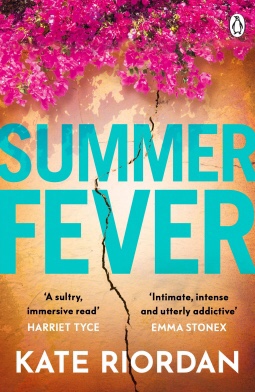
Summer Fever by Kate Riordan

This is a real sizzler of a novel! Hot in every sense of the world, set in picturesque Italy with a sense of growing menace all the way through. I read this one in the garden, with a Pimms in hand and with every chapter became more convinced of the old saying; the grass is never greener on the other side. Laura and Nick have been through a lot. Back in London they were struggling with infertility and Laura hadn’t felt like herself for a long time, the fertility drugs pumping her full of hormones and the grief of miscarriage left her feeling broken. When she discovers a betrayal, after Nick accidentally leaves his phone at home, she’s angry and resentful too. In his eagerness to make it up to her, Nick suggests they do what Laura has always wanted, move to Italy and create a holiday hideaway for couples. They discovered Luna Rossa on a visit to Italy several months ago, after which Laura suffered a third miscarriage. It is in the Marche region, a largely unknown area of Italy next to Tuscany, but less expensive. Luna Rossa is wonderfully isolated and just dilapidated enough to still be charming. It includes a pool, a small derelict cottage and beautiful grounds that fall away steeply gifting the house with incredible views across the countryside. Only a few months later they are preparing to welcome their first couple for a three week stay. It seems idyllic, but they’re taking a risk in welcoming complete strangers into their home. Laura has stalked her guest Madison on social media and she seems very outgoing and glamorous. Laura and Nick could be underestimating how disruptive it can be to have strangers living in your home, especially these strangers…

I felt the author set out Nick and Laura’s back story and state of mind very well. Nick is contrite and desperate to make it up to Laura for his indiscretion, but he’s sacrificed a lot to follow her dream and might have been desperate to make it happen at all costs. Laura is still resentful of Nick’s mistake and the trauma of infertility has left her a little lost, unsure of who she is anymore. With hormones still not back to normal and the sadness of losing a child she’s very fragile and could easily be manipulated. I got a sense that she wanted to recapture herself, the person she was before their fertility journey began. It’s as if she wants to take off her experiences like taking off a costume and simple be who she was before. It takes time to process trauma and assimilate the experience into your sense of self, something she’s barely started. There’s a reckless feel to her actions, almost a need to self destruct. I thought the author’s description of the miscarriage experience was brilliant, I’ve been there and recognised Laura’s confusion at some of the euphemism’s used by medical staff to avoid emotive language; using ‘products of conception’ rather than baby and ‘come away’ rather than loss. It rang so true and I had empathy for her. As we start seeing flashbacks of her life at university and her relationship with the man she loved, I found her curiously passive. This annoyed me, although I did realise later on that it might be a coping mechanism. She seems to slip away in her mind and so any trauma or difficult experience only happens to her bodily rather than emotionally, hopefully leaving her able to cope. Sadly it just leaves her divorced from her emotional self, like an observer rather than someone truly living that moment and feeling it. Shutting emotions out never works and her destructive behaviour is the bodily experience of those repressed emotions.

Once their guests arrive, Madison and husband Bastian, the tone is set for their stay. Gregarious and sociable Madison seems to suck Laura and Nick into her orbit and they’re soon acting like friends visiting rather than paying guests. This is inexperience on the couple’s part and ordinarily they might learn from it, but there’s an air of menace in the way Madison ‘plays’ with Laura. She dresses Laura up, is overtly sexual and likes to play mind games with her husband. Is it for herself, or Bastian’s pleasure that she does this? At a neighbour’s pool one afternoon Madison comes on to Laura with Bastian watching. He’s clearly enjoying himself, but is it just the titillation or is he enjoying Laura’s discomfort and confusion too? In these moments of challenge Laura is again curiously passive, going along with the moment rather than causing a fuss. There’s also a feeling of unease around the builders who turn up to see Nick, their disdain of Laura very evident in the way they dismiss her objections as if she knows nothing about her own house. Is this simply a chauvinistic attitude or is something more sinister going on? The tension is often at fever pitch, accentuated by the physical temperature and constant need to cool off. The author then adds sections of unbearable tension, such as the slightly ‘Don’t Look Now’ masquerade feel of the town’s medieval festival. The heat is unbearable and Laura is never sure who is behind the costume and has the uneasy feeling that they could have stepped back in time; the permanence of the ancient buildings seeming to mock her for feeling untethered and temporary. The author also drip feeds a little bit of stress into everyday life, such as Madison’s wardrobe making Laura feel she has to make an effort too. Nick notices she’s now wearing make- up every day and styling her hair whereas she wouldn’t normally bother. These changes show that Laura isn’t comfortable in her own skin, this pair have some sort of hold or influence but what is it? We are taken back in time to her university days for the answers and then the shock revelations surrounding the guests start to unfold. With secrets being kept about Luna Rossa too, the conclusion is explosive to say the least. This will make you wish you were in Italy, but not with these people.

Meet The Author

Kate Riordan is a writer and journalist. She is an avid reader of Daphne du Maurier and Agatha Christie, both of whom have influenced her writing. She lives in the Cotswolds, where she writes full-time. The Heatwave is her fourth novel

Posted in Netgalley, Publisher Proof

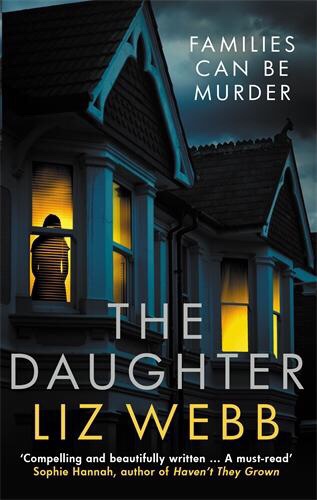
The Daughter by Liz Webb

One of the first things my therapy supervisor said to me was ‘no two kids have the same childhood, even those who grow up together’. This kept going through my mind as I started to read Liz Webb’s book and grew ever more apt as the story unfolded. As regular readers know I do like to indulge in a good thriller and despite knowing nothing about the book or the author, something drew me in when I read the blurb. I’m so glad I took the chance to read it because it is a dark, psychological, and unsettling domestic noir based around the violent death of the charismatic mum in the Davidson family. Hannah doesn’t always have her life on track and she lives away from her physicist father Phillip, but is called when he ends up in hospital. Now suffering with Alzheimer’s and at the end of his life, Hannah has to make a tough choice; does she leave him in the hands of strangers or should she be the one to nurse him in his final months? It’s not long before Hannah finds herself back home and falling into a time warp. Not only has her father left the decorating and furnishings back in the 1990’s, there are piles of magazines and other detritus still littering the same place. It’s as if he stopped when his wife Jennifer was found in the woods at the back of the house, with a kitchen knife plunged into her chest. Hannah finds her surroundings bringing memories and inevitable questions to the forefront of her mind; no one was ever charged for her mum’s murder. This house is haunted. Her mum’s most successful photographs are still hung on the walls and her dark room is untouched, the wardrobe is full of her colourful clothes with the ghost of Chanel No 5. Just the faintest trace touches the air when Hannah runs a hand over her mother’s clothes. Hannah’s very presence completes the picture, she’s a waif compared to the overweight woman she’s been for most of her life. Now she’s the image of her mum, so much so that an unexpected glimpse in a mirror makes her jump. Her brother Ryan, now a famous actor, has commented on her ‘stuckness’, her inability to move beyond that day in the 1990’s. Hannah doesn’t think she’ll ever be able to move forward and pursue a life for herself, until she can resolve what truly happened that day and who killed her mother.

I did find myself rooting for Hannah, despite her flaws and her past behaviour – with more revelations popping up when I didn’t expect them. She feels more vulnerable and is honest about how broken she is by the past. The author carefully keeps her on that edge so I was mostly on board with her version of events, but every now and again I would question whether she was truly a reliable narrator. There was her drinking and the impression she has of her family life and her mother. She sees her mother as a beautiful free spirit, with her gorgeous rainbow clothes, her glamorous and creative career as a photographer with it’s world of gallery openings and meeting other artists. She sees her parents as very different, her father being much older and in a more steady career as a physics professor. When her parents couldn’t be there, Mrs Roberts and her husband from next door would step in with her more old-fashioned parenting style and her good looking son Marcus. This return home and her father’s deterioration seem to trigger something in Hannah and her brother is convinced she’s in a downward spiral where her mental health is concerned. He now stars in a BBC murder mystery series based in Spain, where his wise-cracking detective solves murders within the ex-Pat community and has famous co-stars happy to swap a guest starring role for a week in the sun. He’s also written a book titled Solving Me which Hannah thinks is pompous at best, but probably arrogant and a potential challenge. His childhood is peppered with incidents of their parents arguing, usually about their mother’s behaviour and he’s completely convinced that their father murdered her after years of being pushed too far.

I loved how the author balanced the story with the darkness and tension, broken by the realties of being a carer and the humorous little allusions to her father’s research subject. Their pets are named after Feynmann (the dog) and Schrödinger (the cat of course) á la Sheldon’s cats in The Big Bang Theory. The Schrödinger reference is very apt with Hannah alluding to their mother as potentially living and dead at the same time. For years her head has been full of simultaneous movie reels, each one with a different ending to the story, she would love to be able to shut down all those other screens and see what really happened. The caring details, everything she’ll need to bring Dad home from the hospital, are spot on. One detail I loved because it showed experience, or at least talking to those with it, and it was the ‘shit-stained’ sole of her father’s foot visible to to a person standing at the bottom of the bed but often missed by the busy healthcare assistant doing this morning’s strip wash. The investigation she conducts gives her a lot more questions about her mother, as she remembers her. She’s warned by the original detective on the case that she might not like what she finds. Even her mum’s art seems to hold clues: the close-ups of tiny domestic objects till it’s hard to know what they are; the fascination with motorcycle stuntman Evil Knieval and the moment of being in free fall; an entire series called Falling showing objects in that moment before they land. What she seemed to forget is that Evil Knieval’s stunts finally went too far with disastrous consequences. As the revelations about Jennifer Davidson begin the story becomes even more fascinating, because Hannah gets to see the person her mum was before becoming a parent and whether motherhood changed her at all. I enjoyed the interplay between the siblings and was engrossed in finding out whose version of events was closer to the truth. This was incredibly well-written, tense and psychologically very clever. It left me thinking about how others see our parents and who they truly are when they’re not being mum and dad.

Meet the Author

Liz Webb originally trained as a classical dancer, then worked as a secretary, stationery shop manager, art class model, cocktail waitress, stand-up comic, voice-over artist, script editor and radio drama producer, before becoming a novelist. She lives in North London with her husband, son and serial killer cat Freddie.

Posted in Monthly Wrap Up

Books of the Month! May 2022

It’s been an odd month here, because I went into the month full of energy and looking forward to a busy blog month. Then I felt very unwell and sadly had to let blog tour organisers and publishers which I hate. Thankfully I’d written this ahead of time as I read each novel, so all I had to do was write this little intro. My favourite books this month were mainly dual narrative novels, a structure I really enjoy especially when it’s done as well as these authors. I hope you all have a lovely Jubilee weekend, whether you are a royalist or are just looking forward to a long weekend off work. My carer and other half are helping me with a stall at our village jubilee celebrations. I’m at our book exchange with a box full of old proofs to swap, book suggestions and a tombola with books from the Jubilee Big Read as prizes. All the books are from Commonwealth writers so I’m looking forward to introducing people to a different perspective on our Queen’s long reign. Photos to follow!

I enjoyed this book much more than I’d expected to. It’s not that there was anything wrong with the blurb or the cover, but I thought it might be just another ‘stately home + mystery’ novel with no huge surprises. However, the depth of characterisation and complexity of the story drew me in and kept me reading for two straight days. Ellie is our present day narrator and she’s having to take leave from work as an investigative journalist after trying to expose an important businessman ended badly. So she returns to her family home in County Kerry, Ireland to spend time with her mother. Trying to keep a low profile is a lost cause in a small Irish village. It’s only because she’s desperate for reading material that she braves the charity shop to collect a box of books that have come from the large stately home nearby, Blackwater Hall. Ellie is grateful to see a few Agatha Christie novels on the top and takes the whole box. Inside is a mysterious letter, addressed only to ‘T’ but clearly belonging to the Rathmore family. It ignites a spark in Ellie and she tries to do the right thing and return it, but is bitten by the mystery surrounding the family. Charlotte Rathmore disappeared during the early part of WWII leaving a broken string of pearls by the lake. The official version is that Charlotte killed herself, but Ellie senses a story and starts to seek out other remaining members of the family. Can she solve the mystery of Charlotte’s disappearance and what changes will the truth bring to Blackwater Hall and the Rathmore family? Despite wanting all the answers, I didn’t want this book to end and there’s no better compliment than that.

Another dual timeline novel here, with another mysterious set of letters. This was our Squad Pod read for May and as usual my review is late, but it’s no secret that I LOVED this book. I even made Chocolate Mojito cupcakes to celebrate the fact. I was unsure where this book was going to go, considering the rather modern looking cocktail cover. However, it’s story was deeper and more moving than I expected. In the 1970’s Ava Winters lives in a New York apartment with her mother and a father who seems to wander in and out. Her mother shows signs of mental illness and seems haunted by something in her past. With both parents AWOL Ava is lonely and becomes fascinated by a box sent to her apartment addressed to a woman called Gillian. It’s from Paris and holds letters as well as a butterfly necklace and a photo with LIAR scrawled across it. In the same apartment, but twenty years earlier, teachers Dovie and Gillian are roommates. However, they’re very private and guard their home lives fiercely until one unguarded moment exposes the wrong person to the truth. This novel showed me a side of life I knew nothing about. A time where ‘unnatural activities’ and desires could lead to a loss of everything from your job to your liberty. I will save the rest for my review, but don’t miss this one. It’s an incredible debut from a very talented writer.

This beautiful novel covers the early Twentieth Century in the lives of one family, from WWI to WWII. This book feels like an epic. A whale washes up on the beach of the Chilcombe Estate and is claimed for the Seagrave family by Cristabel who is the orphan cousin and doesn’t really fit anywhere. She loves adventure, activity, and endeavours, conquering the Seagrave estate rather than being the lady her stepmother would expect. The Seagrave children are an odd bunch, brought up by staff and each other, while their parents stay in bed late, are never without houseguests and like to drink as early as it is socially acceptable to do so. This is the story of the heir and the spare. Jasper Seagrave brings his new wife home to the Chilcombe Estate and Rosalind is thrown into being mistress of the house and stepmother to his daughter Cristabel. Rosalind is happy to have bagged an aristocratic husband, considering they’re in very short supply since the war. That is until the ‘spare’ arrives. Willoughby is everything his elder brother isn’t; a dashing war hero fascinated by speed whether it’s a new car or learning to fly. There’s an immediate attraction, deepening when Rosalind is on bed rest in the last stages of pregnancy and Willoughby keeps her company. Is the Chilcombe estate about to lapse into scandal and what will become of Cristabel? As the family grows to include a half-sister and brother for Cristabel we follow them towards WWII. The author shows what a toll both wars took on people and the rapid changes they forced on society. I won’t reveal whether any of our characters survive, but Cristabel remembers a saying, that war can bring out the best in people. There are those who shine through difficult days and in their own ways I think the Seagrave children all stepped up to the mark. This is a beautiful piece of historical fiction and I would happily read it all over again.

This book is my only thriller this month and it’s a cracker. This is perfect summer holiday reading whether you’re somewhere exotic or lounging in your own back garden. Hot in every sense of the world and set in picturesque Italy with a sense of growing menace all the way through. I read this one in the garden, with a Pimms in hand and with every chapter became more convinced of the old saying; the grass is never greener on the other side. Laura and Nick have been through a lot. Back in London they were struggling with infertility and Laura hadn’t felt like herself for a long time, the fertility drugs pumping her full of hormones and the grief of miscarriage left her feeling broken. When she discovers a betrayal, after Nick accidentally leaves his phone at home, she’s angry and resentful too. In his eagerness to make it up to her, Nick suggests they do what Laura has always wanted, move to Italy and create a holiday hideaway for couples. They discovered Luna Rossa on a visit to Italy several months ago, after which Laura suffered a third miscarriage. It is in the Marche region, a largely unknown area of Italy next to Tuscany but less expensive. Luna Rossa is isolated, includes a pool, a small cottage and beautiful grounds that fall away steeply gifting the house with incredible views across the countryside. Only a few months later they are preparing to welcome their first couple for a three week stay. It seems idyllic, but they’re taking a risk in welcoming complete strangers into their home. Laura has stalked her guest Madison on social media and she seems very outgoing and glamorous. Laura and Nick could be underestimating how disruptive it can be to have strangers living in your home, especially these strangers…. This is a real sizzler of a novel! My full review is coming next week.

This book is a beautiful example of writing back in history to give a voice to someone who was silenced. Celestine Babbington is recorded for history in a silent form, photographed wearing clothes he didn’t choose and posing with a man whose relationship to him is very problematic. The man, Richard Babbington, is a rich explorer who has a love for Africa and a large mansion house in England. Yet by 1907, Celestine is being kept in the attic of the house, only allowed out to work as a domestic slave. Years later, a young girl called Lowra is suffering the same fate. Locked in the attic as punishment for any transgression, when her fate has been left in the hands of her resentful stepmother. While locked in the attic she finds an unusual necklace with clawed hands, unlike anything she’s seen before. There’s also an old-fashioned porcelain doll and a sentence on the wall, written in an unfamiliar language. These are her only comfort, because she feels as if the person that owned them is with her in some way. As an adult, her stepmother’s abuse still affects her and she’s conflicted when she inherits Babbington’s house. People seem to think she’s lucky and the town is proud of this intrepid explorer. Looking into the house’s history leads her to an exhibition of Babbington’s life, where she sees photographs of Babbington and a young black boy wearing an African wrap and what looks like her necklace, the one from the attic. However, the thing that keeps Lowra transfixed, is the young boy’s eyes. Lowra sees someone filled with sorrow, a fellow sufferer of the darkness inside that house. His name is Celestine Babbington. Lowra wants to find out more about this boy, how he came to be in England and what happened to him after Babbington’s death. This book was moving and had me in it’s grip straight away. It takes me back full circle to the beginning of my post and hearing voices from the Commonwealth countries and from Black British writers. I’ll be taking a copy of this book to my stall at the weekend and I’m looking forward to sharing it with new readers.

Posted in Squad Pod

Nobody But Us by Laure Van Rensburg

I heard such great things about this dark thriller that I’ve been chomping at the bit to read it asap! It was our Squad Pod read for last month and as usual I’m late. The blurb grabbed me right away and my mind went immediately to Gone Girl so I expected some twisted people and storylines. That tagline is designed to draw us in, but also has a hint of humour as if she’s mocking the genre – meet 2022’s most f*cked up couple. I was waiting for a gap in blog tours and managed to get a sunny weekend, my day bed set up in the garden and a willing slave to keep me supplied with drinks and adjusting my parasol. It didn’t take long to hook me.

Ellie and Steven have finally managed to find a gap in their busy schedules to get away for a few days and celebrate their six month anniversary. They’re heading to an isolated cabin in the woods, many miles away from the hustle and bustle of New York. It will be the perfect opportunity to spend some quality time together and really get to know each other. A perfect weekend for a perfect couple. Except, that’s not quite the truth. Ellie and Steven are far from perfect. They both have secrets. They’re both liar. Steven isn’t who he says he is. But then neither is she …

The setting was clever too, usually I’d expect a log cabin in the woods or a period house as a background, but this is a contemporary, architect’s house. I didn’t think a modern house could be scary, but I found it’s glass and steel exterior very unwelcoming – there’s nothing cosy about this weekend. In fact the perfection, the materials used and the sheer amount of space seem strangely oppressive. The contrast with the forest outside is jarring, the natural surroundings make it feel like the owner is pitting his house against the elements, imposing man made order on the natural chaos outside. Yet, when the storm sets in, nature seems to be getting it’s own back, with the large glass panels showing the storm’s fury. Trees are lashing against each other and the snow is coming thick and fast. In fact the weather adds to the sense of isolation, no one is coming to save them, no matter how much they scream.

The story is told by the two characters in turn, relating the details of their weekend away, but also drifting into their pasts so we get some idea of how Steven and Ellie came to this point. Still, the biggest revelations are kept back from us so we don’t have the full picture. This drip feed of information kept me hooked. I needed to know what happened next and who the characters really were under their facades. Mostly though I wanted to know what had set these dramatic events in motion. I couldn’t love these characters, so I wasn’t invested in one side or the other at first, but as the flashbacks came I was surprised to find I did have flashes of sympathy for Ellie or Steven, depending on what had happened to them.

I enjoyed the way the author played with that edge, between what was once acceptable and now isn’t. In light of the #MeToo movement many women in my 40+ age group who can look back at events from the 1990’s and think they wouldn’t be acceptable now: a stolen kiss at a party; a hand on the backside while waiting on a table; pressure to go further sexually than we might have been comfortable with. Now, relationships where there is any form of power imbalance are viewed as wrong. The married man and the teenage babysitter, the older boss and young employee, or student and tutor relationships were happening around me at that time and I don’t remember thinking they were intrinsically wrong, just a bit dodgy. Now, thirty years later, the mood is very different. But of course that’s only one aspect of this complicated story. This is a gripping, atmospheric and explosive novel. If you love thrillers this should definitely be on your summer reading list.

Laure Van Rensburg