Posted in Personal Purchase

The Running Grave by Robert Galbraith

I wouldn’t have imagined back at the beginning, that we would get this many books down the line with private investigators Cormoran Strike and Robin Ellacott. In fact after the last book I thought the author had hit a wall with ideas or was trying to hard to be up to the minute with technology and new trends. I was pleased to find that this was a much better investigation. Full of tension and very dark in tone, this book delves into a church that’s really a cult, every bit as huge and secretive as Scientology. This is a tale of abuse: financial, physical, sexual and spiritual. In parts it is hard to read but compelling and fascinating to see how it’s teaching affect the people who follow it, but also our investigative duo. Sir Colin Edensor approaches Strike to try and bring his son home from the United Humanitarian Church’s compound in Norfolk. Chapman Farm claims to be self-sufficient, growing fields of vegetables and keeping animals, as well as undertaking evangelical work on the streets of Norwich. Sir Colin’s son Will has been part of the UHC for several years and would seem completely indoctrinated. He’s failed to get him out before, but desperately wants him home to see his mother who is dying of cancer. How will Strike and Robin go about their task?

The best way to discredit the church and get close to Will would be for someone to go in undercover. It would be better if that was a woman and Robin volunteers. Strike is reluctant to agree, but can’t come up with a sensible reason for that instinct, knowing his reluctance is probably down to his growing feelings for his partner. However, their other female investigator Midge is covering a famous actress who has a father and son stalker team who want to kidnap her. Robin is adamant it should be her and creates a persona called Rowena, who visits their London base for a ‘service’ with just the right clothes to suggest she has money, borrowed from Strike’s half-sister Prudence. It’s agreed that Robin will go to Chapman Farm for an induction period but they pick a place on the perimeter fence to leave a fake rock. Every Thursday Strike will leave a letter under the rock for Robin to find and she will leave a reply, if she wants to come out she can let them know and they will use blot cutters on the fence and bring her out.

As regular readers will know, Strike and Robin are one of my favourite literary couples, but I’ve been wondering during the last two novels how long she can keep them apart? There’s also a trend for putting Robin in danger to evoke feelings in her partner. Here I was genuinely worried for Robin before she even went into the farm. I could understand her wanting to assert her ability to go undercover and her authority as partner to make the choice – it shouldn’t have to be okayed by Strike. Yet as a person Robin has certain life experiences that a church like this could see as weaknesses to exploit: the rape she suffered at university, the knife attack on her first case that left her with PTSD, there’s also the fall out from her marriage to Matthew and her undisclosed feelings for Strike. These chinks in her armour will be seen by people used to exploiting others. I think there are times when asserting your authority and taking a feminist stance are admirable, but not at the expense of your own safety. ‘Rowena’ is noticed straight away by recruiters at the London temple and after a few attendances, Rowena is taken to Chapman Farm and starts at the bottom of the pile, working in the fields and mucking out the animals. In between there are services or talks about the church’s purpose, bombarding new recruits with images of everything that’s wrong in the world until their current place seems like one of safety. Then a process of breaking recruits down begins – lack of sleep, restricted food or fasting, manual labour and strange interventions and group therapy where the individual is broken down mentally. All of this starts to have a detrimental effect on Robin, but the most disturbing practices are around familial relationships. Children are taken to a dormitory and school so they are no longer a family unit but belong to everyone. Family groupings outside the UHC are rubbished as false attachments that should be broken immediately. Then there’s the spirit bonding. On the farm there are pods called ‘retreat rooms’ there expressly for the purpose of when someone approaches you and asks for sex. Emotional bonding is not the norm, sex is just another form of service, given freely with no ties. What will Robin do if approached?

There were times when I found myself a bit lost on who was who because the cult has so many members and their relationships are complex. There are also complications about the names they have for themselves. I think the author could have achieved the same effects and build up of tension within the farm with less characters and a shorter process of indoctrination. I also felt that Robin would have struggled to come out more than she did. The PTSD seemed mild considering what she’s seen and heard. The experience of looking after a disabled child who isn’t receiving the medical care he should was horrifying and was the main experience she struggled to shake off. The neglect was terrible and Robin desperate wanted him found by the police. However, she was cornered in the retreat room by a naked Will Edensor and was sexually assaulted by the church leader, but once she’s out it’s never mentioned and she doesn’t even tell Strike or Detective Murphy, her boyfriend. I wondered if this might be revisited in the future but it did seem odd to leave it hanging. I also started to be confused by the ex members that Strike was interviewing and where they’d fit into the hierarchy. There was so much detail surrounding the doctrine of the cult and it’s different prophets that I felt the other cases disappeared into the background. In fact one case seemed to be there only to serve as a distraction for Strike at a strategic point. Nevertheless, the tension built as Strike started to unravel the truth and Robin was still inside.

All that being said this was a much better novel than the last in the series. I was totally engrossed in it by half way through and barely surfaced till the end. Of course there is the question of Robin and Strike’s relationship. Ex-girlfriend Charlotte comes to the fore again, trying to lure him back in with an unforgivable lie. I was hoping he would see the manipulation, especially since he’s on his own and can’t run anything past his best friend. He’s wrestling with risking all that he’s built in terms of his business and their friendship if he tells Robin that Charlotte has been right all along, he does love her. Can he find the courage to tell her?

Meet the Author

Robert Galbraith’s Cormoran Strike series is classic contemporary crime fiction from a master story-teller, rich in plot, characterisation and detail. Galbraith’s debut into crime fiction garnered acclaim amongst critics and crime fans alike. The first three novels The Cuckoo’s Calling (2013), The Silkworm (2014) and Career of Evil (2015) all topped the national and international bestseller lists and have been adapted for television, produced by Brontë Film and Television. The fourth in the series, Lethal White (2018), is out now.

Robert Galbraith is a pseudonym of J.K. Rowling, bestselling author of the Harry Potter series and The Casual Vacancy, a novel for adults. After Harry Potter, the author chose crime fiction for her next books, a genre she has always loved as a reader. She wanted to write a contemporary whodunit, with a credible back story.

J.K. Rowling’s original intention for writing as Robert Galbraith was for the books to be judged on their own merit, and to establish Galbraith as a well-regarded name in crime in its own right.

Now Robert Galbraith’s true identity is widely known, J.K. Rowling continues to write the crime series under the Galbraith pseudonym to keep the distinction from her other writing and so people will know what to expect from a Cormoran Strike novel.

Posted in Random Things Tours

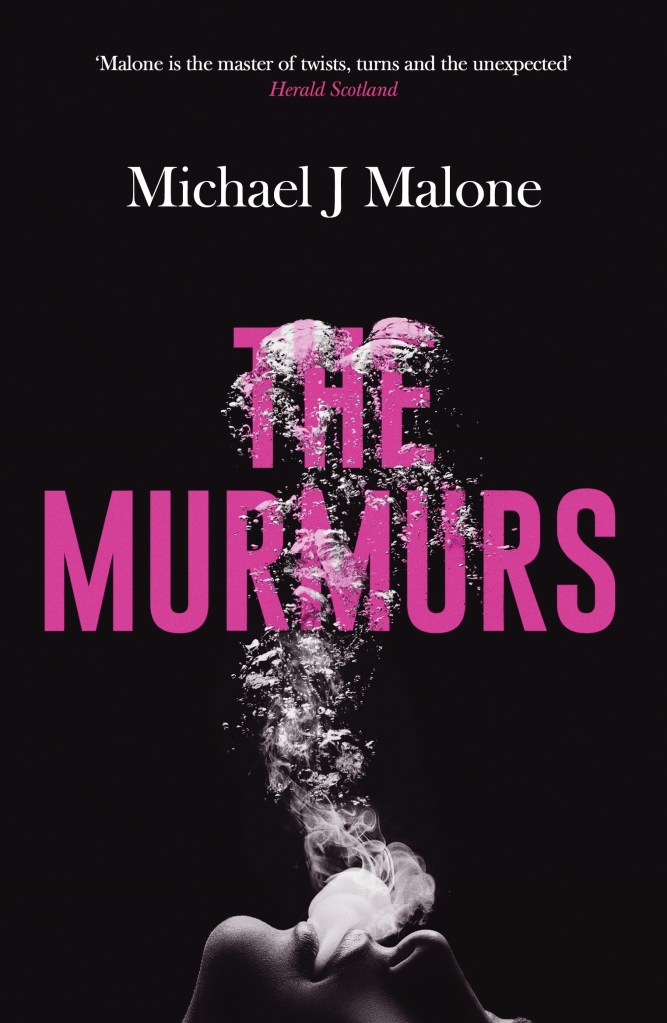
The Murmurs by Michael J Malone

I quickly became fascinated with this mix of historical fiction, psychological suspense and the paranormal. We meet Annie Jackson as she tentatively starts her new job in a nursing home in the West End of Glasgow, hoping to get her life back on track. Annie suffers with terrible nightmares where she’s stuck in a car underwater. She also has the sensation that someone is holding her head under water until her lungs feel ready to burst. She also has debilitating headaches and she can feel one threatening as her new manager introduces her to resident Steve. Then something very odd happens, as a blinding pain in Annie’s head is followed by Steve’s face starting to shake, then reform. A whispering sound begins in her head and she sees Steve as a skull, followed by a vision of him falling in his room and suffering a debilitating stroke. She desperately wants to tell him but how can she without seeming like a lunatic? He becomes agitated and upset, as Annie starts to describe the layout of Steve’s bathroom and he asks her to stop. As she’s sent home from another job she starts to think back to her childhood and the first manifestations of her debilitating problem. Annie survived the terrible car accident that wiped her childhood memories and killed her mother. This strange supernatural phenomenon is why Annie is alone and struggles to make friends. These are ‘the murmurs’.

I felt so much compassion for Annie, as the story splits into two different timelines: we are part of Annie’s inner world as a child, but also 0in the present as fragments of memory slowly start to emerge. We also go back even further to the childhood of Annie’s mother Eleanor and her two sisters Bridget and Sheila. We experience their lives through other people’s stories and written correspondence, especially that of a nun who also works in a residential home. I enjoyed how this gave me lots of different perspectives and how the drip feed of information slowly made sense of what was happening in the present day. Different revelations have a huge effect on the adult Annie and because her memories have been buried for so long she experiences the shock and surprise at exactly the same time as we do. This brings an immediacy to the narrative and I felt like I was really there alongside her, in the moment. With my counselling brain I could see a psyche shattered by trauma, desperately looking for answers, she is piecing herself back together as she goes.

Teenage Annie had a similar vision about a girl called Jenny Burn, who went missing never to return. The murmurs awakened when her mum’s sister Aunt Sheila came to visit them. She tried to openly discuss an Aunt Bridget who also had a ‘gift’ but has ended up in a home. Eleanor, Annie’s mother, asks Sheila to leave, but it’s too late because Annie has already seen that her aunt is dying of cancer. Annie evades her mum and makes her way to the hotel, the only place Sheila can be staying. Unfortunately, Jenny is working on reception. Annie can see her climbing into a red car and she desperately wants to warn her, but she knows she’ll come across as a crazy person. Eleanor is desperately looking for a way to deal with her daughter, she’s a person of importance in the church and she can’t be seen to have a daughter who has visions. Pastor Mosley has Eleanor exactly where he wants her. There’s a control and fanaticism in him that scared me much more than Annie’s murmurs. When Eleanor takes Annie to the pastor, he demonstrates his control by holding her head firmly under his head as he prays for her. When she almost faints, he’s convinced there’s a demon in her. Annie is scared of him, she gets a terrible feeling about him but doesn’t know why. Religion is portrayed as sinister and controlling, with fervent followers who never question, but live in the way they’ve been instructed is Christian? story takes an interesting turn when Annie’s brother Lewis, a financial advisor, becomes involved with the church once more and it’s new pastor Christopher Jenkins, the son of their childhood neighbour. He’s revolutionised the church and through the internet he’s turning it into a global concern. He’s not just interested in saving souls though, he’s also amassing money from his internet appeals. He also seems very interested in meeting Annie.

As the book draws to a close the revelations come thick and fast as both past and future collide. The search for Aunts Bridget and Sheila seems to unearth more questions than answers. Annie finds out that Jenny wasn’t the only woman who went missing in Mossgaw all those years ago. As she starts to have suspicions about her childhood home, Chris seems very keen to draw her back there. Might he be planning a huge surprise? I was a bit confused at first with all these disparate elements, but as all the pieces started to slot together I was stunned by the truths that are unearthed. Then as Annie’s childhood memories were finally triggered I felt strangely terrified but also relieved for her all at once. I hoped that once she’d regained that past part of herself she would feel more confident and free, despite the strange gift she seemed to have inherited. Maybe by facing the past and leaning in to her relationship with her brother, she might feel more grounded and strong enough to cope with her ‘gift’. I thought the author brought that compassion he’s shown in previous novels but combined it with a spooky edge and some intriguing secrets. I really loved the way he showed mistakes of the past still bleeding into the present, as well as the elements of spiritual abuse that were most disturbing. This book lures you in and never lets go, so be prepared to be hooked. Michael Malone is a natural storyteller and the fact this is billed as Annie Jackson Number One makes me think there may be others. I certainly hope so,

Out Now from Orenda Books.

Meet the Author

Michael Malone is a prize-winning poet and author who was born and brought up in the heart of Burns’ country. He has published over 200 poems in literary magazines throughout the UK, including New Writing Scotland, Poetry Scotland and Markings. Blood Tears, his bestselling debut novel won the Pitlochry Prize from the Scottish Association of Writers. Other published work includes: Carnegie’s Call; A Taste for Malice; The Guillotine Choice; Beyond the Rage; The Bad Samaritan; and Dog Fight. His psychological thriller, A Suitable Lie, was a number-one bestseller, and the critically acclaimed House of Spines and After He Died soon followed suit. Since then, he’s written two further thought-provoking, exquisitely written psychological thrillers In the Absence of Miracles and A Song of Isolation, cementing his position as a key proponent of Tartan Noir and an undeniable talent. A former Regional Sales Manager (Faber & Faber) he has also worked as an IFA and a bookseller. Michael lives in Ayr.

Posted in Netgalley

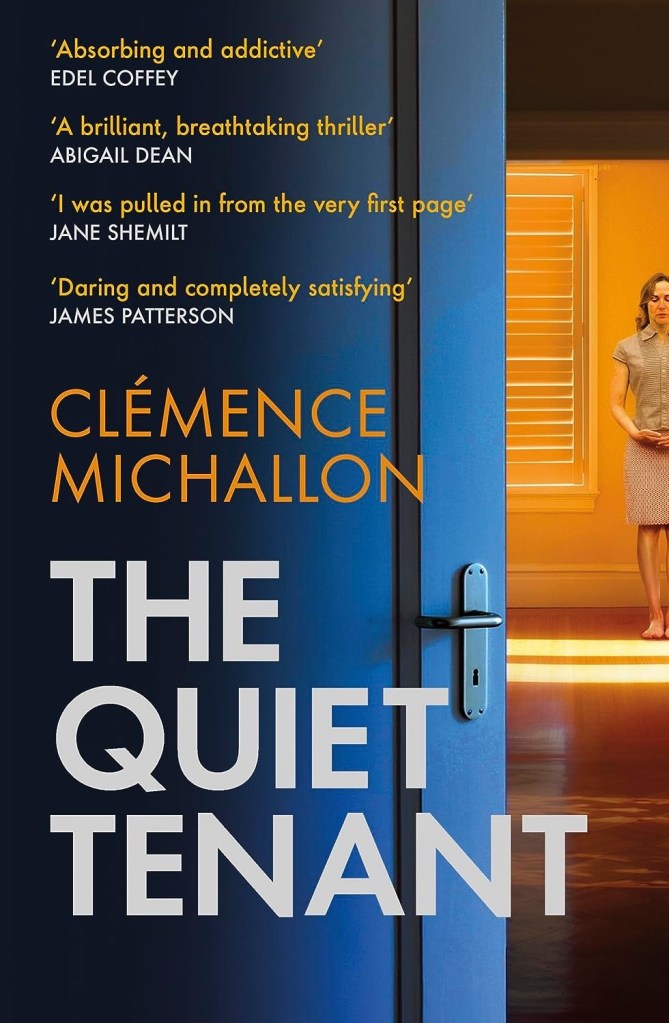
The Quiet Tenant by Clémence Michallon

He took you and you have been his for five years. But you have been careful. Waiting for him to mess up. It has to be now.

Reading this novel was quite an experience! I didn’t want to put it down, I was reading so fast to get to the next bit that I sometimes had to go back and re-read a paragraph. I had to tell myself to read slower and take it in, because the urge to devour this story is so strong. The writer has chosen an interesting viewpoint, that of the women in a killer’s life. I loved that contrast to other serial killer novels where a male serial killer and a male detective often narrate the story. Where the only women are the dead ones. Women are not expendable here. Even the murdered ones.

This is still the story of Aiden, a serial killer, but told from the perspective of the women in his life: his daughter, the woman he has abducted and imprisoned in a shed, and the bartender who is infatuated with him. There are also small sections from the women he imprisoned before, now dead. Each woman’s narrative gives the reader a different side to this hidden monster. It’s an intimate reading experience, because I felt like I knew everything about this woman: how she thinks, how she feels and even the details of her dreams. It feels like you’re with her in that tiny space, sharing her experience. It’s a very tense existence, knowing that you’re here at the whim of a man who’s already killed so many times you mean nothing to him. As someone who gets claustrophobic it felt almost too close and I felt her fear that it might just take one wrong move for him to kill again.


Aiden’s wife has just died, so he and his daughter Cecelia need to move house and his captive moves with them. She goes from her place in the garden shed to being chained to a radiator in the house. If she puts a foot wrong he will kill her and somehow he does know everything she’s doing even while he’s out of the house. How is he watching her? Incredibly, he has a daughter in the main part of the house as well as a souvenir stash in the basement. This only adds to the tension. What is hard to understand is how he rationalises his killing of women when he’s father to a daughter.– to a place with no shed. After years of isolation, Rachel is allowed inside a house again, and meets her captor’s child. I had so many questions though. Why is she still alive? It’s been five years now and he’s always killed his victims. He also seems to be out stalking a new victim, Emily, a local restaurant owner. Is this good news for the captive, or is he looking for a replacement?

Since the book Rebecca I’ve always been intrigued by characters that we don’t see, but even more so, by characters without the right name or a name at all. We know this woman as Rachel, but the choice not to use her own name makes you think. It seems common sense that he wouldn’t use it, he’s trying to distance himself. To make her an object rather than a human being. Yet she doesn’t mention her name either. Maybe even she can’t remember it or maybe every one of his captives is ‘Rachel’. This is part of the mystery that I wondered about when I was going about my day. It has allowed the author to place emotion and the victims at the centre of this thriller, making it stand out. As others have noted there’s a hint of Emma Donoghue’s Room here, where the four walls you’re in become your whole world and you become whatever you’re called. Rachel is a complicated character, and it’s clear that she’s suffered at the hands of Aiden. There are moments where I was rooting for her escape. She has time and opportunity, but can’t take it out of fear. From reading cases of abductions and long captivity, this isn’t unrealistic. Yes, she’s a strong woman, but she’s been manipulated and terrorised by this man so has to be sure before she takes a chance.

In the local area Aiden is seen as a good husband and father, in fact there’s probably an element of hero worship. So, local restaurateur Emily is aware of him already and might even be a little into him. She’s also young and alone, so it doesn’t take long for till she’s under his spell completely. Through these three narratives, Aiden’s captive, his daughter and the new love interest, Aiden’s dark truths are unravelled. This is not about considering his motivation or perspective, all of this story is about his victims and the mess the man like this leaves in his wake. I loved how the style of the author’s writing, which is mesmerising and poetic contrasts strongly with the dark subject matter. I doesn’t rush like thrillers often do. The contrast shows us that life can be beautiful, but what Aiden does is twisted and sadistic. I was desperately hoping that Rachel would survive and we might know who she really is.

Meet the Author

Clémence Michallon was born and raised near Paris. She studied journalism at City University of London, received a master’s in Journalism from Columbia University, and has written for The Independent since 2018. Her essays and features have covered true-crime, celebrity culture, and literature. She moved to New York City in 2014 and recently became a US citizen. She now divides her time between New York City and Rhinebeck, NY.

Posted in Squad Pod

The Continental Affair by Christine Mangan

Meet Henri and Louise.

Two strangers, travelling alone, on the train from Belgrade to Istanbul. Except this isn’t the first time they have met. It’s the 1960s, and Louise is running: from her past in England, from the owners of the money she has stolen―and from Henri, the person who has been sent to collect it. Across the Continent―from Granada to Paris, from Belgrade to Istanbul―Henri follows. He’s desperate to leave behind his own troubles and the memories of his past life as a gendarme in Algeria. But Henri soon realises that Louise is no ordinary traveller.

As the train hurtles toward its final destination, Henri and Louise must decide what the future will hold―and whether it involves one another. Stylish and atmospheric, The Continental Affair takes you on an unforgettable journey through the twisty, glamorous world of 1960s Europe.

All the way through the novel I kept thinking of The Thomas Crown Affair, the glamorous and seductive 1960’s film starring Faye Dunaway and Steve McQueen as a rich playboy suspected of stealing a priceless painting and the insurance investigator sent in to catch the thief. The Continental Affair had that same mix of incredible style, plot twists and wonderful locations. I mustn’t forget the sexual tension – that chess scene alone is a masterclass in seduction! Christine Mangan’s third novel is similarly alluring, from the Hitchcock-esque cover design to the incredible cat and mouse tale within.

The story is told through a dual timeline narrative, enhancing the sense of cat and mouse between the characters. Yet they have more in common than we might initially think. Yes, the chase has this cat and mouse running in the same direction but it’s not just about the chase, they’re both trying to escape their past as well. From the moment they ‘meet’ in a train compartment on the way to Istanbul they’re playing a game. They might be acting as if they’ve never met, with their polite conversation, but Henri knows who she is because he’s been tracking her from country to country. Similarly, Louise knows exactly who Henri is and why he’s there. She first ventured into Europe as an escape from a cruel and restrictive family life in England. Then, in Granada she stole from a criminal gang and went on the run. Henri was related to the criminal gang who sent him to collect an amount of money, only to witness Louise stealing it right in front of him. Yes, he’s been sent to retrieve the money but he’s also driven by a fascination in Louise and the more he follows her, the more fascinated he is. Interestingly, Henri worked in Algeria as a gendarme and this past plays on his mind constantly, yet once he starts pursuing Louise he’s distracted from his own demons. This is a police officer who finds himself on the wrong side of the law. Henri is the first narrator and once I got to know him I expected to be on his side. Then I heard Louise’s back story and I felt sorry for her, struggling with her disabled father after her mother left the family home. The only joy and escape she had was in books and I was torn between my understanding for her and my knowledge that she’s taken someone else’s money.

Reading this book felt like the Saturday afternoons I spent with my grandad watching old black and white films, where he’d teach her me who all the actors and actresses were. This could have been the gentleman Cary Grant pursuing Grace Kelly with her sleek, sophisticated glamour. I’m now waiting for a gap in reads so I can go back and read the author’s previous novels on the strength of this one. I enjoyed all the settings, the incredible landmarks, the food and the two intriguing people I was travelling alongside. I was glued to this tale wondering whether Henri would overcome his fascination and retrieve the money or whether this developing relationship would take our pair to becoming friends, or even more. I’d had this book on NetGalley for quite a while and I can’t believe I left it until the Squad Pod got the chance to read and review? It’s the sort of book I love to get lost in because it combines such evocative descriptions of European destinations and the 1960’s era. I felt like I was there for every moment and I when I was away from the book, I missed it. I loved the journey, the actual and the emotional one. Henri and Louise want the same things and it was delicious watching them realise this and become ever closer. I was transfixed, waiting to see if Henri would actually complete his mission to retrieve the family money, or whether he’d forget their game of cat and mouse. Christine Mangan has created two such intriguing characters who despite their mistakes are incredibly likeable and memorable. This a wonderful escapist read full of both style and substance.

Meet the Author

Christine Mangan has a PhD in English from University College Dublin, where her thesis focused on eighteenth-century Gothic literature, and an MFA in fiction writing from the University of Southern Maine. Tangerine is her first novel

Posted in Netgalley

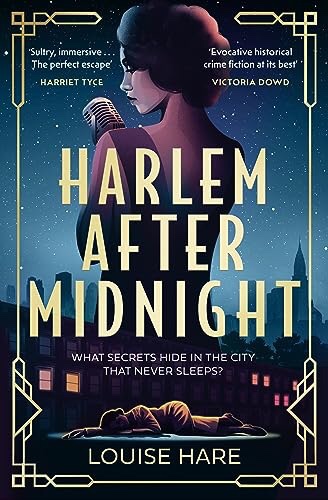
Harlem After Midnight by Louise Hare

Ever since the final page of Miss Aldridge Regrets I’d wondered what would happen next to Lena, who had managed to escape the clutches of a murderer, find her birth mother and become the lover of band leader Will all on board ship. She was sailing to New York to audition for a new musical on Broadway, but became embroiled in the life of a rich NYC family after being placed with them for dinner. Now in New York, what would become of her relationships – both with her mother and with Will? Would she be able to find work after finding out the Broadway job was a ruse to get her on the voyage? I was shocked when the novel began with a woman, sprawled on the sidewalk after failing from a high rise window. As the police arrived and start to look at the body they notice she’s clutching something in her hand. It’s a passport in the name of Lena Aldridge. The author then takes us back to Lena’s arrival in NYC nine days earlier, when Will had taken her to stay with friends of his until the return voyage. What could possibly have gone so wrong?

Lena has found herself dragged into Will’s world, perhaps a little sooner than would be expected in a conventional relationship. As Will takes leave she wonders if this will give them time to test their relationship out and whether they could have a future. His friends Claudette and Louis are a lovely couple who live in a good neighbourhood in Harlem. Claudette is a librarian and she settles Lena into their spare bedroom, telling her about how long they have known Will and that they’re looking forward to getting to know her. Will’s only family is his sister Belle and niece Joey, who he stays with when the ship’s on a fortnight turnaround. The five are pretty close knit, apart from the obvious tension between Will and his sister, despite which he absolutely adores his niece. Even though she’s wary, Lena and Belle get along enough to go out shopping and have cocktails in a fancy bar. I started to feel this creeping sensation that Lena was on the outside of something. The three friends have secrets and so does Belle, is it because Lena is new to the group and maybe not quite trusted yet? Is there something about her being British that makes them think she won’t get it? She is surprised to find out That despite their animosity, Will does go to any lengths to protect his sister. Lena is patient though, she has concerns about her own situation and doesn’t want to delve too far into their secrets, without knowing what’s going to happen between her and Will. It’s too early to say love or talk about permanence. She doesn’t even know if she could find herself living in Harlem. Lena’s also looking for people who knew her father to learn about his early life and if there’s family that Lena’s never met. There are also financial and emotional issues in her relationship with her mother that must be resolved. It’s a huge crossroads to negotiate and the tension builds as we start rooting for her future and worrying she’s plummeted to her death.

I love this combination of historical crime mystery, especially those set in such a stylish city and time period. I think in a lot of ways this was a more successful novel than the first and I definitely felt the time period in the social life of Harlem and the contrasting Sunday church going. The glamour of New York was set beautifully against those less fortunate and I was interested in the way colour had some bearing on this; Lena and Belle can ‘pass’ as white enough to get into a fancy bar, but the much darker skinned Will would have struggled. I enjoyed these deeper looks into racial divisions, class and privilege, as well as how they differed in the earlier timeline. Lena being bi-racial didn’t seem to have the same complexity in London as it did in New York, but she is reminded a few times that it would be worse in the south. There are references to lynchings, the prejudice around mixed race relationships (both for Alfie and his daughter) and the exploitation of black women by wealthy white men. In this earlier timeline I enjoyed this exploration of young black women’s lives as well as the contrast with the relative freedom Lena and Belle are enjoying. Have things changed or is it their lighter skin?

I thought the historical element really came to life and I enjoyed these sections that went back even further to 1908, when her father Alfie suddenly fled New York for London. As both of these storylines started to reveal their secrets, the novel became intense and gripping. I had suspicions around both Claudette and her husband, because although they were there for Lena in a practical sense they didn’t give much of themselves emotionally. There were also certain morals to their way of life, such as Will not staying with Lena at their flat. I wasn’t sure that they actually liked her, but wanted to do a favour for Will. The central mystery really held my attention and remained tense even with the flashbacks in-between. The more building blocks we had to construct Lena’s, the more I felt I knew her and the hope she’d have a happy ending grew for me. I would suggest reading the first novel before this one as there are links and recurring characters throughout. There was an open ended feel to the final chapter so who knows we may be able to spend time with Lena again. I’d be more than happy to join her.

Meet The Author

Louise Hare is a London-based writer and has an MA in Creative Writing from Birkbeck, University of London. Originally from Warrington, the capital is the inspiration for much of her work, including This Lovely City, which began life after a trip into the deep level shelter below Clapham Common. This Lovely City was featured on the inaugural BBC TWO TV book club show, Between the Covers, and has received multiple accolades, securing Louise’s place as an author to watch.

Posted in Personal Purchase

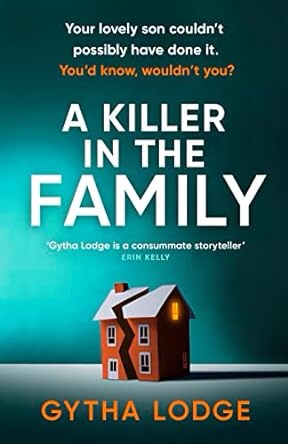
Killer in the Family by Gytha Lodge

Aisling would do anything for her family – but can she protect a killer?

I had about three false starts with this book. Having read all her other books in the series when I won them in a competition on Twitter, I was intrigued to see what was next. I would read a bit, then a blog tour would come along or an urgent bit of bookpost would fall through the door and I would have to set it aside. I was so glad to finally get going with it again on holiday and it didn’t take me long to race through to the finish. The story gained both momentum and tension from about chapter four onwards. We’re back with Detective Chief Inspector Jonah Sheen’s team as the uncertainty of his private life is overshadowed by a terrible case and a man nicknamed the Bonfire Killer. He has killed two women already and the police have very little to go on. Then single mum and game developer Aisling, puts her DNA on an ancestry site. She’s thrilled to find a match, but that piece of her she felt was missing might come with some serious baggage – starting with an interview with CID. Aisling’s DNA is a match to the crime scene and possibly the Bonfire Killer himself, so the police have their eye on her two sons, Ethan and Finn, as well as her long lost father. There are secrets in this family, not limited to her missing parent. Will she be willing to unearth a painful past to prevent someone else suffering a painful future?

Aisling is an interesting and unexpected central character, with a life that isn’t everything it seems. She has gone to great lengths to avoid her past and she isn’t the only one in the family. Her father, Dara Cooley, went missing years before. As the team try to crack the case, they break into smaller working groups to find Dara Cooley, chase up the DNA and interview suspects that arise, and investigate a stud farm where a horse has been taken and killed, then burned on a pyre. Could it be linked to the case? The detectives spend time with the farmer and his two sons, trying to establish who would want to hurt their mare, Merivel. There are so many blind alleys and red herrings, but they have to be followed just in case one of them leads to a breakthrough. I loved the complications around an Irishwoman named Anneka Foley and her potential relationship to the case. One of Aisling’s sons is in a band, that one of the killer’s victims had a fascination with and that’s before we get to the exploration of Aisling’s own teenage years. I was suspicious, but loved Aisling’s loyalty to her sons. Her ‘first love’ story was so relatable and digging into the past can stir up a lot of feelings, especially when an unexpected visitor turns up. She’s unusual, a gamer who likes to play at home with her sons, but is also quietly very successful as a developer in her own right. She’s been tough and dedicated to her boys. Can she come to terms with her past and open herself up to a different future?

The team are on form, but I particularly loved the subplot around Juliette who is receiving unwanted attention from an old boyfriend. At a couple of crime scenes there have been markers that he might be around again: her favourite hot coffee and a waterproof jacket left on the bonnet of her car on a cold wet night. We see the strain she’s under, but she still does her job. It’s a subplot that seemed to have petered out but now returns with deadly consequences. This was a story I’ll love to see concluded in the next book. Then there’ Jonah’s private life, where trying to do the right thing seems to have backfired spectacularly. How does he extricate himself from this without causing further harm? Will the right path still be open to him when he does? With a fascinating background of Ireland’s poverty and the ways in which people struggled with a restrictive religious society, this is a fascinating thriller with so many different aspects to it. Gytha Lodge brings all these seemingly disparate strands together and successfully resolves most of them, only leaving us with one cliffhanger. But it is a humdinger of a cliffhanger! All of this as well as a atmosphere and tension you could cut with a knife, this is another brilliant read from a consummate crime writer.

Meet the Author

Gytha Lodge is a multi-award-winning playwright, novelist and writer for video games and screen. She is also a single parent who blogs about the ridiculousness of bringing up a mega-nerd small boy.

She has a profound addiction to tea, crosswords and awful puns. She studied English at Cambridge, where she became known quite quickly for her brand of twisty, dark yet entertaining drama. She later took the Creative Writing MA at UEA. 

Her debut crime novel, She Lies in Wait, has been published by Penguin Random House in the US and UK, and has also been translated into 12 other languages. It became an international bestseller in 2019, and was a Richard and Judy book club pick, as well as a Sunday Times and New York Times crime pick.

Posted in Squad Pod Collective

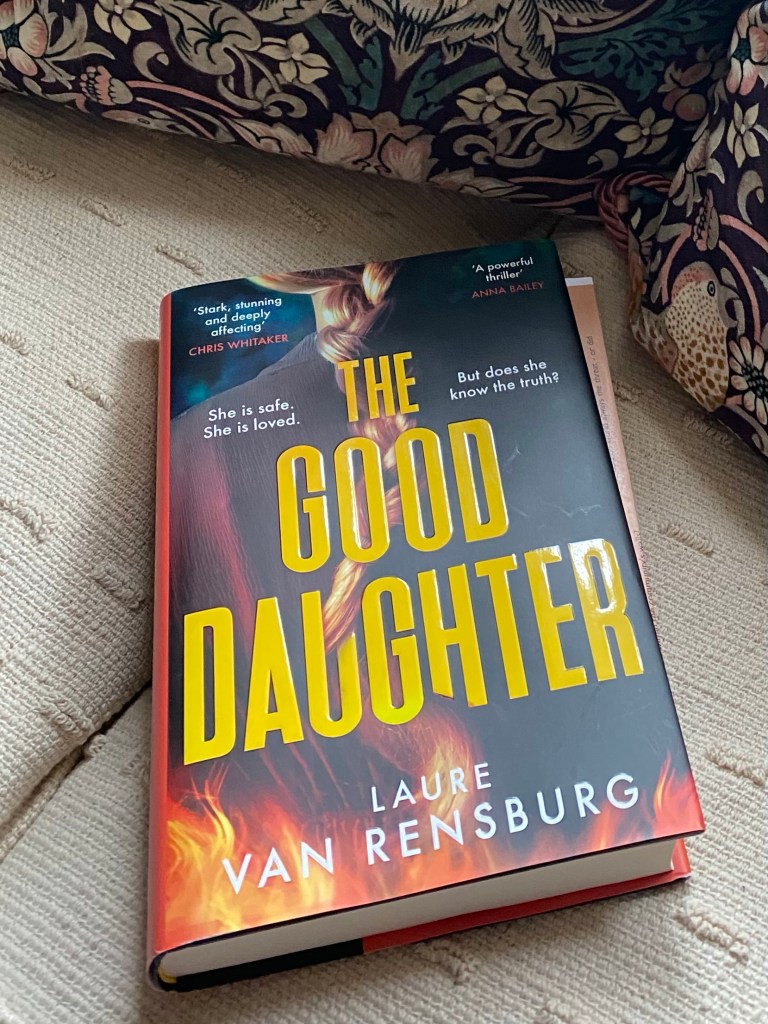
The Good Daughter by Laure Van Rensburg

Abigail is a proud member of the New America Baptist Church. A Christian community miles away from the nearest town in South Carolina, she is safe from the depraved modern world.

She is a good daughter. A valued member of the community.


So when she is the sole survivor of a fire that burns her family’s home to the ground, it seems like a tragic accident.

Until a surprising discovery is made: before the fire, Abigail let a stranger in.

Who was the stranger? What started the fire? And was the outside world always the threat – or did danger lurk within the community’s walls?

I became completely immersed in this fascinating story about faith and the complexities of memory while on holiday. Having spent part of my childhood in a church from the American Christian Fundamentalist tradition, I am always alert to the insidious nature of spiritual abuse and cultish techniques used to entrap converts in evangelical churches. The book opens with a death, immediately filling the reader with questions and drawing them into the story. A document tells us about the wreckage of the house, following a fire. From there the author tells her story in two parts: the present day and then back to three weeks before the fire happened. In between these two timelines there are more documents and discussions that work like ‘real life’ pieces of evidence. There are news reports, public comments and podcast transcripts, all working to verify the story and establish a factual perspective opposing the emotion and confusion of our narrator. The opening is dramatic and emotive, as we realise Abigail has lost her parents; Genevieve and Pastor John Heywood were discovered dead after the fire. Yet Abigail survived. Her parent’s congregation are secretly suspicious about Abigail and think she may have started the fire. The police are beginning to think the same, but what reason does Abigail have for doing something so awful? She’s always been a good girl, dutiful and obedient. Or is that just an act? We experience everything through Abigail and her mind is a complex and intense place to be. She felt like a real person to me very quickly.

Their neighbourhood, in a remote part of South Carolina, is entirely made up of New American Baptist church members. The church members, including Abigail’s family, live according to strict rules based on the Bible. They don’t mix with non-church members and have a domestic life where the man is the head of his household. He goes out into the world to provide for his family and the wife is the homemaker, looking after the house and their children according to the principles laid down by her husband. This is a philosophy I’m very familiar with and I remember, even from a young age, wondering how could I possibly defer to my husband if he happened to be a complete idiot? Abigail doesn’t question the religious rules that govern her life, but then she meets a stranger who changes everything. Summer comes to the community to interview church members for a podcast she’s making about the New American Baptist Church. She asks to interview Abigail. They are completely different in terms of life experience but a friendship starts to grow. It’s fascinating watching the changes in Abigail and her characterisation is excellent, as is that of Summer. She is a catalyst of so much and the storytelling is strong, but follows an unpredictable path. It’s a slow start, then as Summer arrives the story takes off and becomes the pacy and addictive psychological thriller I expected from this writer.

Laure Van Rensburg has taken a very sensitive, difficult subject and has managed it with a great deal of care and empathy. It’s hard to tell such a powerful story with the right amount of sensitivity, while also creating a gripping narrative that keeps readers turning the pages, but I think the author has managed that balance well. We’re taken deeper into life on the plantation with brilliant descriptive passages that create insight into the group. There’s a lot here that wasn’t weird to me, although I think it would be for most readers. If I say to people religious fundamentalism most people don’t really know what that means. I was taught to take every word in the Bible as the absolute truth: Noah built an ark, we all come from Adam and Eve and the world was created in 7 days. Every word comes direct from God with no room for interpretation, symbolism, or the historic period or culture it was written in. Years later, when studying literature at university, I was asked to consider the Bible as a book. I had to research how it was produced, when and by whom. It’s obvious why all books included in the New Testament are written by men. It became a written text in AD325 and powerful men decided what went in (at least that explains the prominence of St. Paul the misogynist). Emperor Constantine and a council of men had the final say, but when the reformation swept through Europe in the 16th Century there was a further split on the books included by the existing Roman Catholic Church and the newly formed Protestant belief system. It’s no wonder then, that the New Testament preaches female modesty and subservience; it suited the church and the men in control of it.

When you imagine that that belief system preached to you every Sunday, borne out by the way your home functions it’s clear to see the damage it can do to self-esteem and the way young women form relationships. That was certainly the case for me. It’s a potent recipe of coercive male control and dominance over women and I could feel a familiar conflict brewing within Abigail as she tries to follow the path forced upon her by both the religious group and all the families around her, but starts to wonder if there’s more. Of course the church is judged and treated with suspicion from outside the community, but there’s no room for questions inside. Questioning the status quo is seen as rebellion, a loss of faith or even a spiritual battle going on within the soul. However, as with all organisations, there are disturbing secrets that lies beneath. I will admit that this was difficult to read in parts, because it set off a chain of little light bulb moments for me. Although, I think it would be an emotional experience for any reader. There’s a creeping sinister feeling, but the increasing tension and twists in the tale keep you glued to the page. I came away feeling so many emotions, but mainly I was so angry, for Abigail and the other young women in the community. Of course some of that anger was for me and the other young women who grew up in my church, many of whom I’m in contact with and who, despite all of them leaving the church in their teens and twenties, are still affected by the experience and their internalisation of the church’s teachings. As Amber’s real memories began to appear I was hooked and had to know what had happened and how she was going to move forward.

I am so impressed by the level of research Laure Van Rensburg has done into this type of church and the sinister way it works. She has really captured the narrative that’s constructed, using the Bible to create an outmoded and illusory vision of the world. If you follow their teachings and actively apply them to your life, God will protect you and keep you safe. The loneliness felt by church members when something bad happens to them or their family is heart-breaking; I was told that my multiple sclerosis would be healed by prayer and when it wasn’t it couldn’t be a failure of God, or their prayer. It was my lack of faith. I found Laure’s writing absolutely mesmerising, the Newhaven community felt just as real as Abigail. I could see it vividly in my mind’s eye. Then when she allowed the outside world to encroach on the narrative it came as a shock, because you realise just how far these people are removed from modern society and even reality. Your mind will flit between whether Abigail is genuinely traumatised by the community and the terrible night of the fire, or whether she’s a psychologically astute and proficient liar. It has a slow start, but by the end I was questioning everything! For me, although it’s at the extreme end of experience in a church like this, the teachings and the coercion were no surprise at all. Most readers will be familiar with these but see them as the practices of cults or churches like the Latter Day Saints. I think they might be a lot more comfortable imagining this mistreatment of women is confined to religions like Islam. It will surprise a lot of readers to learn that a modern Christian church could be like this. They do exist, both here and in USA. As both the restriction of women’s rights over her own body and book banning is in progress now in some US states, the timing of this book is just right. It’s not much of a leap from here to The Handmaid’s Tale. I found this a disturbing, dark and addictively intense read that you really won’t want to put down.

Meet the Author

Laure Van Rensburg is a French writer living in the UK and an Ink Academy alumna. Her stories have appeared in online magazines and anthologies such as Litro Magazine, Storgy Magazine, The Real Jazz Baby (2020 Best Anthology, Saboteur Awards 2020), and FIVE:2:ONE. She has also placed in competitions including 2018 & 2019 Bath Short Story Award.

The Good Daughter is out now from Michael Joseph Books

Posted in Throwback Thursday

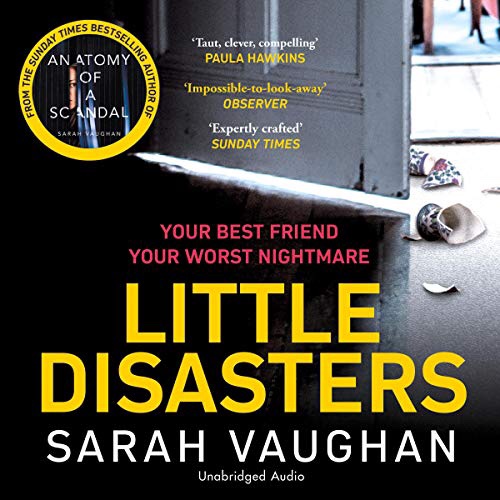
Little Disasters by Sarah Vaughan

You think you know her…

But look a little closer

She is a stay-at-home mother of three with boundless reserves of patience, energy and love. After being friends for a decade, this is how Liz sees Jess.

Then one moment changes everything.

Dark thoughts and carefully guarded secrets surface – and Liz is left questioning everything she thought she knew about her friend, and about herself.

As regular readers know, between my blog tour and current fiction reads I always like to go back and read an author’s earlier works. I thoroughly enjoyed this novel from Anatomy of a Scandal writer Sarah Vaughan, first published in 2020. It starts with an ordinary evening on duty for Liz, who is a registrar in paediatrics. She’s called down to A&E to see a ten-month-old baby presenting with strange symptoms. She’s been vomiting, and seems drowsy but doesn’t have a temperature which rules out a virus or infection. However, Liz is familiar with this particular baby girl, because she belongs to her best friend Jess and she’s definitely not acting normally. Jess has always seemed an absolute natural when it came to motherhood, certainly more than Liz. Jess made parenting seem easy, spending so much time making sure her children have the right foods, and lots of activities to try and nurture their minds. She’s the stay at home full time parent, but where Liz would struggle without working, Jess seems born for the role. Yet, this is not the same Jess that Liz knows outside of work – she’s edgy and claims her daughter had a fall. All children fall and through no fault of the parent, but the accident Jess describes doesn’t account for the boggy head injury that Liz can feel at the back of her baby’s head. Why would Jess lie?

Told through different perspectives, from Jess to Liz, this is a brilliant domestic thriller with tension so tight it might snap. This tension in the writing echoes Jess’s mind, at any time she might completely unravel but that doesn’t mean she hurt her baby. Vaughan is exceptional at drip feeding us a little at a time. A tiny bit of extra information here. A new viewpoint there. But never more than you need to keep the story flowing. It’s a powerful and emotive story, but Vaughan never descends into sentimentality or melodrama, this is sharp, addictive and never slows down, insisting you read another chapter, then another.

She is painfully honest about parenthood, so much so that it’s painful to read at times. Especially when the perspective shifts to one of the children and we’re suddenly reminded in the midst of all this, just how vulnerable they are. We are never really aware, until it happens to us or a close friend or family member, just how transformative giving birth can be. Some births are difficult, violent even. Yes, it’s a time of incredible joy and celebration, but my friends were exhausted in those first few days. Exhausted to the point of being almost catatonic. They were uncomfortable, dealing with caesarean scars and infection, stitches, painfully swollen breasts so that every bit of them seemed to be either hurting or leaking! It didn’t look like fun to me and there was a small part of me that was a little bit glad I couldn’t have children. We hear comedians and celebrities publicly talking about how difficult parenting can be and it isn’t just the body that’s affected. The birth can leave you feeling traumatised. The lack of sleep wears you down and you can’t remember things. Then your mind can play tricks on you. Are you really up to this? What if you’re not doing this right? Some women don’t bond with their baby straight away then berate themselves for being terrible mothers. We know so much more about post-natal depression and post-partum psychosis these days, but women still get missed because they’re too scared to say how they feel. If you’re having thoughts of harming your baby, how can you tell anyone?

I think this story that will resonate with many women. Jess and her baby really do pluck your heartstrings. At first I was so suspicious, because she’s cagey and closed off. I couldn’t understand why you would wait nearly six hours to get help for an obvious head injury. I was pretty sure where the narrative was going, but then the author surprised me with a new perspective and a huge twist that was really unexpected. This is a far darker path than I’d expected. Domestic thrillers are one of my a favourite genres and this is up there with the best. It really delves under the layers of motherhood and overturns that old expectation that every woman is naturally maternal. That post-natal depression can happen to anyone, even when they’ve not experienced it with their other children. It brings home to the reader that looking after a newborn baby is a giant undertaking and it how vital it is to ask for help. This is such a perceptive novel with an unexpectedly treacherous conclusion. Sarah Vaughan is an incredibly clever writer, balancing both our sympathy for Jess and her baby, but also our thriller reader’s desperation to uncover what has happened.

Published by Simon and Schuster 2020

Meet the Author

Sarah Vaughan is the international bestselling author of the Number one Netflix TV series, Anatomy of a Scandal, and four other novels. A former journalist, she read English at Oxford before training at the Press Association and spending 11 years at the Guardian as a news reporter and political correspondent. After having her second baby, she left to freelance, and eventually to write fiction. Two women’s fiction novels followed before Anatomy of a Scandal, her 3rd novel and her first courtroom drama/psychological thriller, heralded a new direction and became an instant international bestseller. Sold to 24 countries, it was also a Sunday Times top five bestseller, spending 10 weeks in the top 10 charts; a kindle number 1 bestseller; and one of Richard & Judy’s best dozen books of the decade. In April 2022, it dropped as a six-part Netflix mini-series, written by David E Kelley and Melissa James Gibson, and starring Sienna Miller, Michelle Dockery, and Rupert Friend. In its first 3 days, it debuted at number 3 worldwide and was the number 1 most watched Netflix TV show in multiple countries, including the UK and US. In its first 3 days alone, it notched up 40.28 million viewing hours.

Little Disasters, published during the first and third lockdowns, was a Waterstone’s Thriller of the Month and is in the process of being adapted for a UK broadcaster. It was also WH Smith paperback of the month, a Kindle bestseller, and has been published in the US and various other countries. Reputation, published in March 2022, has also been optioned by the team behind Anatomy of a Scandal with a view to being developed for TV. It will be published in the US in July, and in various other countries throughout the year

Posted in Netgalley

Black Thorn by Sarah Hilary

Black Thorn by Sarah Hilary

Sarah Hilary has this amazing ability to leave the reader floundering between law, morality and ethics. I never quite know who I’m rooting for. Who’s in the right or the wrong? I come to different answers depending on the lens I’m viewing it through – someone can be within the law whilst being morally questionable. I often find myself stopping to wonder if I even like any of the characters. This is one of those stories that expose the dark underbelly of what looks like the dream neighbourhood. The houses at Black Thorn are like those you see in the Omaze giveaway adverts. The opening scenes of a neighbourly barbecue show us two very different narratives: the jolly and friendly neighbours enjoying each other’s hospitality; the neighbour who breaks into the party with a grudge. Is Luke Dearborn a nutter and a conspiracy theorist? Is there something rotten at the heart of this dream housing development?

The timeline slips back and forth from pre to post-abandonment. Both timelines race towards Day 0, the day of ‘abandonment’ and possibly the truth about what has been happening, both to the houses and the people living there. I was interested in the word ‘abandonment’ because it feels as if it’s in the wrong context. It describes the development as something with feelings rather than bricks and mortar. Also ‘abandonment’ suggests an element of choice, when actually the residents were forced to leave by the authorities. It was an evacuation more than abandonment, a word that gives the sense of an unloved child rather than an inanimate house. Adrian is affected the most because not only did he sell the development, he bought one for his family. This leaves him on site for all the problems to come to his door, creating enormous stress for all of them. It’s almost as if Adrian fell for his own sales patter. He’s sold the units as state of the art living with coastal views through the huge glass sections at the back of the house. It seems a bleak setting to me, the last places before you drop off the edge of the world! They’re also described as luxury, but it feels like a Scandi design, more minimalist. To me luxury means softness, comfort, colour and warmth. These rooms seem to be more about impressing others than thinking what is comfortable for long term residents. Maybe they’d be better holiday homes. Even their gimmick of fake diamonds scattered throughout seems wrong, they’re hard and cold and not something you’d want to tread on in bare feet. Trevor, his business partner, manages to escape this by going off site or bedding down in one of the unsold units where he can’t be seen. In our flashbacks we know that six people die, but what of? Is there poison in the heating systems or is it carbon monoxide poisoning? Adrian clearly feels responsible, falling into a deep depression. Trevor is still hanging around, being cocky and unwilling to admit that corners were cut or mistakes made. Through Agnes we slowly untangle a whole web of deceit and lies, but Trevor is one of those people where nothing sticks. It’s Adrian who might end up taking the blame.

The character I seemed to view things through was Agnes, because I think she represented the reader – an outsider, lost, in the dark and vulnerable. She’s part of a family – her father Adrian was the salesman for this development – but has lived in London for a number of years. She’s had some distance from the project and can look at it with fresh eyes. Yet for a girl whose in her twenties, Agnes seems very naïve and a bit lost. We know that Agnes has split with her girlfriend so may be feeling vulnerable, but she is suspicious of her family’s new home at once. It’s almost as if her nervous system is affected by them. There’s something in the walls, there are trenches in the gardens and her pet rabbit dies. In the aftermath, her family are now living in a caravan park near her friend Errol and his grandmother Bette who was the cleaner at Black Thorn. Her friendship with Errol is warm and open and she’s welcomed into their caravan in a way that feels natural compared to the fractured and strained relationships elsewhere. Her father is almost catatonic and her mother is working round the clock trying to keep her family safe. Agnes is desperately trying to keep younger brother Christie safe, but he is lured back to the development. He walks along the coast road every day and breaks into a house, slowly going through what’s left and choosing his favourite items to take back to the caravan. Agnes feels she must protect him, particularly from Trevor who seems to exert a malign influence over Christie. Agnes knows first hand exactly how far Trevor will go to get what he wants.

As always the author’s writing is incredible. She keeps the reader on edge, never knowing who is lying or who’s in the wrong. She gives us ambiguous characters like Erica who masqueraded as a butcher’s assistant to deliver meat for the BBQ, keen to stay to show them how best to cook it and get to know the residents. Yet she’s not who she says she is and her deceit will place her in danger. Even the person we spend most time with, Agnes, is hard to connect with. As in real life, everyone has their faults, but it isn’t just that. I struggled because no one seemed to be showing human feelings or genuineness. As a result there were a couple of points in the book where I didn’t feel enough for the characters to be completely invested in the story so it stalled a little for me. However, I did want to know what exactly had happened in the houses and it was that need to know the truth that kept me reading. I had to wait till the very end for some characters to show how they really felt; until now feeling totally numb and shocked, or trying to hold it together and be the strong one for everyone else. This was an addictive read and did keep me guessing till the final page.

Published by Macmillan 13th July 2023

Meet the Author

Sarah Hilary’s new novel BLACK THORN will be published in summer 2023 by Pan Macmillan. Her first standalone FRAGILE came out in 2021. Mick Herron called it ‘a dark river of a book’ while Erin Kelly said, ‘Timeless, tense and tender, Fragile will worm its way deep into your heart.’

Sarah’s debut SOMEONE ELSE’S SKIN won Theakstons Crime Novel of the Year 2015. It was a World Book Night selection and Richard & Judy Book Club pick. The latest in her D.I. Marnie Rome series NEVER BE BROKEN was published by Headline in 2019.

Visit http://www.sarahhilary.com for news, updates and reviews.

Posted in Netgalley

None Of This Is True by Lisa Jewell.

I always look forward to a new novel by Lisa Jewell, because I know I’m going to be engrossed in it for the weekend, oblivious to everything else that’s going on around me. This new novel was so addictive I’m not sure I looked up and luckily my other half knows when to disappear into his workshop and to deliver a hot brew on the hour. I have no idea how this writer manages to be so prolific, but thank goodness she does! She always manages to find a new angle to the thriller and this novel has a really interesting premise based around the phenomenon of podcasts. One of our protagonists, Alix, has been running a successful weekly podcast based around women’s lives and interviewed women who would inspire her listeners. However, it was time for some new ideas and so far Alix hasn’t had one. Then she meets Josie Fair. Josie is celebrating her forty-fifth birthday with her husband in a restaurant that’s a little more upmarket than they would usually book. She notices a group at a large table celebrating the birthday of a rather glamorous woman. Later in the night, the women bump into each other in the lady’s loo. Josie mentions to Alix that they share a birthday and is surprised to discover they are both 45 years old. They make a joke about being birthday twins then go back to their tables where the huge contrast between them becomes clear. Alix’s table is filled with friends, flowers and balloons whereas Josie is having a quite dinner, just her and her husband Walter. A few days later they accidentally meet again outside Alix’s children’s school. This time they chat about Alix’s work and Josie admits she’s been listening to some of Alix’s podcast since they met. Alix has made a successful series interviewing inspiring women, but admits she’s now looking for a change of direction. Josie volunteers herself as a subject, admitting that she’s about to go through some major life changes and seemingly convinced that Alix’s listeners will want to hear her story. They swap contact details and each comes away feeling positive, but Josie wasn’t exaggerating. Big changes are on the way, just not in the positive, life-affirming way Alix is used to. After interviewing Josie once Alix knows her story will appeal to listeners, because despite being very unsettled by her subject, she can’t help wanting to dig further.

The format really does work, with the interviews providing so much information to unravel and tantalise the reader. In-between we see the effect Josie’s revelations have on her own family life and on Josie’s as well. Each interview works very like a counselling session, but perhaps most like the early sessions when the client is telling you their story so far and what brings them to therapy. Alix is a fantastic listener and allows Josie to tell her story in her own way and at her pace, only asking questions to clarify or encourage her interviewee to expand on a point. I detected a subtle shift as the interviews progressed, but it’s almost imperceptible. While at first Alix is in control of the project, Josie starts to take charge both of the content and how often they meet and work together. This could simply be a woman finding her confidence or having an emotional need to offload her story quickly, while she has the courage. Josie weaves a tale of grooming and domestic abuse that’s not easy to listen to. Her husband Walter is much older and very set in his ways, they started their relationship when Josie was a teenager and Walter was in his thirties. There are little clues to the control he has over his wife, such as wearing double denim to please him and not having a job, even though their daughters are beyond school age. At this point I feared for Josie, but also for her daughters: why has one left home at 16 and why does the other one seem locked in her bedroom with a diet that consists of nothing but baby food? One tiny act of Josie’s made me go cold. Each time she visits, she starts to take small items from Alix’s home, starting with a coffee pod that she hides in her underwear drawer.

As Josie becomes more involved in Alix’s life, Alix’s Instagram lifestyle seems to erode.

“She thinks of Alix’s home: from the front, a neat, terraced house with a bay window, no different to any other London Victorian terraced house, but inside a different story. A magazine house, ink-blue walls and golden lights and a kitchen that appeared weirdly to be bigger than the whole house with stone-grey cabinets and creamy marble counters and a tap that exuded boiling water at the touch of a button. A wall at one end reserved purely for the children’s art!”

Her husband Nathan has always had issues with alcohol, but they really come to the fore. He’s always had a line he doesn’t cross, but now he starts to stretch to one more drink, staying out later with work colleagues, going out for a normal lad’s night then not coming home. Alix knows that once it reaches a certain time, it’s likely he will be on a bender, only coming home when he’s run out of funds or sobered up. Where is he when he doesn’t come home? Alix starts to doubt Nathan’s fidelity and finds herself searching for evidence. As the stress at home cranks up a notch, Alix notices that Josie is pushing the boundaries of their agreement. She turns up where Alix doesn’t expect her, stays longer than their agreed session and Alix can’t tell if she’s becoming subsumed by Josie’s world, or if Josie is starting to take over hers. There’s a claustrophobic feeling and a sense of menace starts to creep in, as Josie controls her story and will only let it unfold in the way she has planned. I sensed something was very wrong and wanted Alix to back off the story, even though it could make her name in the world of podcasts. Alix seems transfixed by Josie’s story, her life is like a car crash you can’t look away from and although part of Alix has the journalistic interest in a great story, another part is fascinated by the horror of what Josie is telling her. In much the same way as the reader is fascinated too, I genuinely couldn’t put the book down until I’d worked out what was going on. Were Josie’s revelations putting herself and Alix in danger from Walter? Will telling her story change Josie, acting as the catalyst to leave the situation and get help for her daughter? I kept wondering about the other daughter, the one who left home. I couldn’t help but think she might be the key to the truth about Josie and Walter’s marriage.

I thought the structure, using the podcast for Josie to tell her story, was really clever considering how popular true crime podcasts are these days. I thought the idea for Alix’s podcast, interviewing inspirational women was very like the Megan podcast in tone showing how up to the minute Lisa Jewell has been in the creative way she frames her story. As coercive control is now so well known, as compared to four or five years ago. Everyone understands what it means and terms like ‘gaslighting’ have become the norm, showing up in soap storylines and all over social media. I think what Lisa has tapped into here is the overuse of these terms, so much so that they’ve become diminished. It seems that daily someone is claiming their ex was a narcissist but these are huge psychological labels that shouldn’t be used lightly – in the same way people say ‘I’m a bit OCD’ the real understanding of the disorder has become lost. It isn’t all about arranging your kitchen shelves so the labels show at the front. We are all educated into believing the victim of abuse, but in a society where these terms are so misused, should we reserve a little bit of judgment? If I was Alix I might have been inclined to walk away from the story – especially as she starts to have questions and doubts – to concentrate on my own problems. Josie’s story and it’s fallout are almost too messy and she seems very adept at knowing when Alix is doubting her, on one occasion turning up on the doorstep having apparently confronted Walter, and definitely outstaying her welcome. Lisa Jewell really is a master at these dark, almost nightmarish, stories about women’s lives while weaving so many twists and turns the reader can’t stop guessing until they’ve reached the final page. While I’ve enjoyed her recent novels I was absolutely gripped by this one and think she’s outdone herself. The setting and situation are so believable, the characters are incredibly well drawn, full of enough flaws and contradictions that you’ll be questioning everything they tell you.

Published by Random House 20th July 2023

Thank you to the publisher for allowing early access to the novel in exchange for an honest review.

Meet the Author


LISA JEWELL was born in London in 1968.

Her first novel, Ralph’s Party, was the best- selling debut novel of 1999. Since then she has written another nineteen novels, most recently a number of dark psychological thrillers, including The Girls, Then She Was Gone and The Family Upstairs and The Night She Disappeared, all of which were Richard & Judy Book Club picks.

Lisa is a New York Times and Sunday Times number one bestselling author who has been published worldwide in over twenty-five languages. She lives in north London with her husband, two teenage daughters and the best dog in the world.