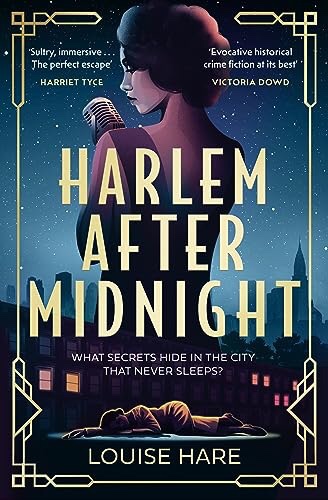
Ever since the final page of Miss Aldridge Regrets I’d wondered what would happen next to Lena, who had managed to escape the clutches of a murderer, find her birth mother and become the lover of band leader Will all on board ship. She was sailing to New York to audition for a new musical on Broadway, but became embroiled in the life of a rich NYC family after being placed with them for dinner. Now in New York, what would become of her relationships – both with her mother and with Will? Would she be able to find work after finding out the Broadway job was a ruse to get her on the voyage? I was shocked when the novel began with a woman, sprawled on the sidewalk after failing from a high rise window. As the police arrived and start to look at the body they notice she’s clutching something in her hand. It’s a passport in the name of Lena Aldridge. The author then takes us back to Lena’s arrival in NYC nine days earlier, when Will had taken her to stay with friends of his until the return voyage. What could possibly have gone so wrong?
Lena has found herself dragged into Will’s world, perhaps a little sooner than would be expected in a conventional relationship. As Will takes leave she wonders if this will give them time to test their relationship out and whether they could have a future. His friends Claudette and Louis are a lovely couple who live in a good neighbourhood in Harlem. Claudette is a librarian and she settles Lena into their spare bedroom, telling her about how long they have known Will and that they’re looking forward to getting to know her. Will’s only family is his sister Belle and niece Joey, who he stays with when the ship’s on a fortnight turnaround. The five are pretty close knit, apart from the obvious tension between Will and his sister, despite which he absolutely adores his niece. Even though she’s wary, Lena and Belle get along enough to go out shopping and have cocktails in a fancy bar. I started to feel this creeping sensation that Lena was on the outside of something. The three friends have secrets and so does Belle, is it because Lena is new to the group and maybe not quite trusted yet? Is there something about her being British that makes them think she won’t get it? She is surprised to find out That despite their animosity, Will does go to any lengths to protect his sister. Lena is patient though, she has concerns about her own situation and doesn’t want to delve too far into their secrets, without knowing what’s going to happen between her and Will. It’s too early to say love or talk about permanence. She doesn’t even know if she could find herself living in Harlem. Lena’s also looking for people who knew her father to learn about his early life and if there’s family that Lena’s never met. There are also financial and emotional issues in her relationship with her mother that must be resolved. It’s a huge crossroads to negotiate and the tension builds as we start rooting for her future and worrying she’s plummeted to her death.
I love this combination of historical crime mystery, especially those set in such a stylish city and time period. I think in a lot of ways this was a more successful novel than the first and I definitely felt the time period in the social life of Harlem and the contrasting Sunday church going. The glamour of New York was set beautifully against those less fortunate and I was interested in the way colour had some bearing on this; Lena and Belle can ‘pass’ as white enough to get into a fancy bar, but the much darker skinned Will would have struggled. I enjoyed these deeper looks into racial divisions, class and privilege, as well as how they differed in the earlier timeline. Lena being bi-racial didn’t seem to have the same complexity in London as it did in New York, but she is reminded a few times that it would be worse in the south. There are references to lynchings, the prejudice around mixed race relationships (both for Alfie and his daughter) and the exploitation of black women by wealthy white men. In this earlier timeline I enjoyed this exploration of young black women’s lives as well as the contrast with the relative freedom Lena and Belle are enjoying. Have things changed or is it their lighter skin?
I thought the historical element really came to life and I enjoyed these sections that went back even further to 1908, when her father Alfie suddenly fled New York for London. As both of these storylines started to reveal their secrets, the novel became intense and gripping. I had suspicions around both Claudette and her husband, because although they were there for Lena in a practical sense they didn’t give much of themselves emotionally. There were also certain morals to their way of life, such as Will not staying with Lena at their flat. I wasn’t sure that they actually liked her, but wanted to do a favour for Will. The central mystery really held my attention and remained tense even with the flashbacks in-between. The more building blocks we had to construct Lena’s, the more I felt I knew her and the hope she’d have a happy ending grew for me. I would suggest reading the first novel before this one as there are links and recurring characters throughout. There was an open ended feel to the final chapter so who knows we may be able to spend time with Lena again. I’d be more than happy to join her.
Meet The Author
Louise Hare is a London-based writer and has an MA in Creative Writing from Birkbeck, University of London. Originally from Warrington, the capital is the inspiration for much of her work, including This Lovely City, which began life after a trip into the deep level shelter below Clapham Common. This Lovely City was featured on the inaugural BBC TWO TV book club show, Between the Covers, and has received multiple accolades, securing Louise’s place as an author to watch.
1939 – Grace Grey lives in Grosvenor Place in London, with her mother Edeline who is a friend of the notorious Mosleys and wears the uniform of the Blackshirts. As war comes ever closer, Edeline makes the decision to send Grace and the housekeeper’s daughter Rose Munro to stay with her brother Marcus and his wife Olive in the north west coast of Tasmania. After an eight week voyage the girls are welcomed to Towerhurst, an unusual house with a whole tower where Uncle Marcus writes his poetry. Olive immediately takes to the beautiful Rose, but Marcus forms a bond with Grace over the poems of Banjo Patterson, an Australian ballad poet. Grace is reserved and shy, but is slowly coaxed out of her shell by Daniel McGillycuddy an Irish lad working at his aunt and uncle’s sawmill for Huron Pine. As war creeps ever nearer to their part of the Pacific there are dangerous emotional games at play between these young people with fall out that will extend over the rest of the century.
1975 – out of the blue Willow and Ben have been summoned to the north west of Tasmania because of a mysterious legacy. Willow has been left a house called Towerhurst, by an anonymous benefactor who placed it in trust. They decide it’s a great place for Ben to write and Willow to paint, but on their first visit Ben goes missing in the rainforest having fallen down an old mine shaft. What he finds there sends him on a quest that ends in London chasing a story about two young girls who lived at Towerhurst during WW2.
2004 – Libby has flown from Tasmania to London, wanting to claim the belongings of her father who died in the Moorgate Tube Station accident before she was born. Staying with her eccentric aunts in Grosvenor Square, she starts to follow the clues she finds in her father’s satchel: a publisher’s address, a book of ballads by poet D. McGillycuddy and the name Molly Munroe. Her quest will take her to a gentleman’s club, a narrow boat and eventually out to Ireland to solve a mystery that’s been laid buried for half a century.
I enjoyed Amanda Gerard’s first novel last year, so looked forward to reading her new one for a while. I was interested to see how her writing had developed over the last couple of years. To undertake a novel that takes in most of the 20th Century, three timelines and three different settings takes enormous confidence and she has definitely grown in confidence. This is a more complex novel, combining historical fiction with mystery and some romance too, but she pulls it off beautifully and I’ve absolutely loved it. From the historical perspective I learned a lot about living through WW2 in the Pacific Ocean, a completely different experience compared to Europe and the U.K. particularly. I thought Amanda beautifully captured how transient lives were at that time. This wasn’t just about the two English girls, Grace and Rose, uprooted from everything they knew and sent to the other side of the world. It was about the chaos of war, never knowing where your loved ones were, particularly if they were away fighting and whether they would ever come home again. For women that was especially difficult, left at home to wait but also left outside the experiences their men were having. Many women did their own war work, both to do their bit but also to feel a little closer to their men and as if they’re helping them to fight. War displaces people and there were huge shifts across the years of WW2 and afterwards as prisoners of war were slowly released and women who’d married a G.I. or perhaps a Polish airman travelled back to their native countries to start a new married life. It was a good time for people to disappear or slip away under the radar. I already knew a lot about the Blackshirts and their admiration of Hitler’s Nazi Party, but here I learned more about the women recruits and their activities. There was a breadth of research here, underpinning and enhancing the story across three different generations.
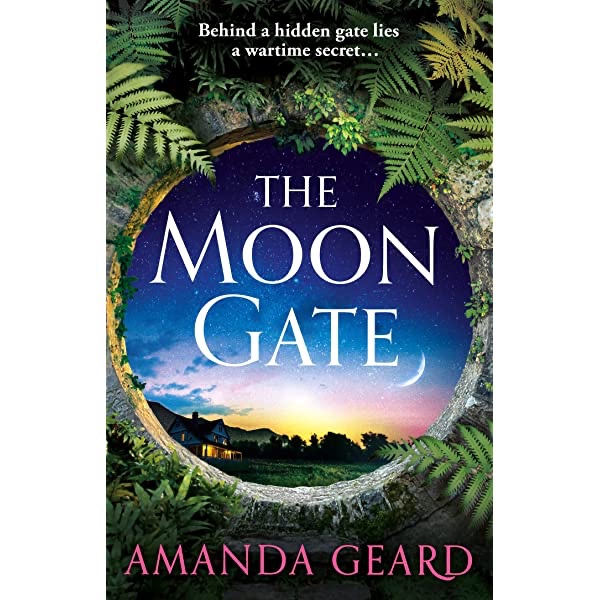
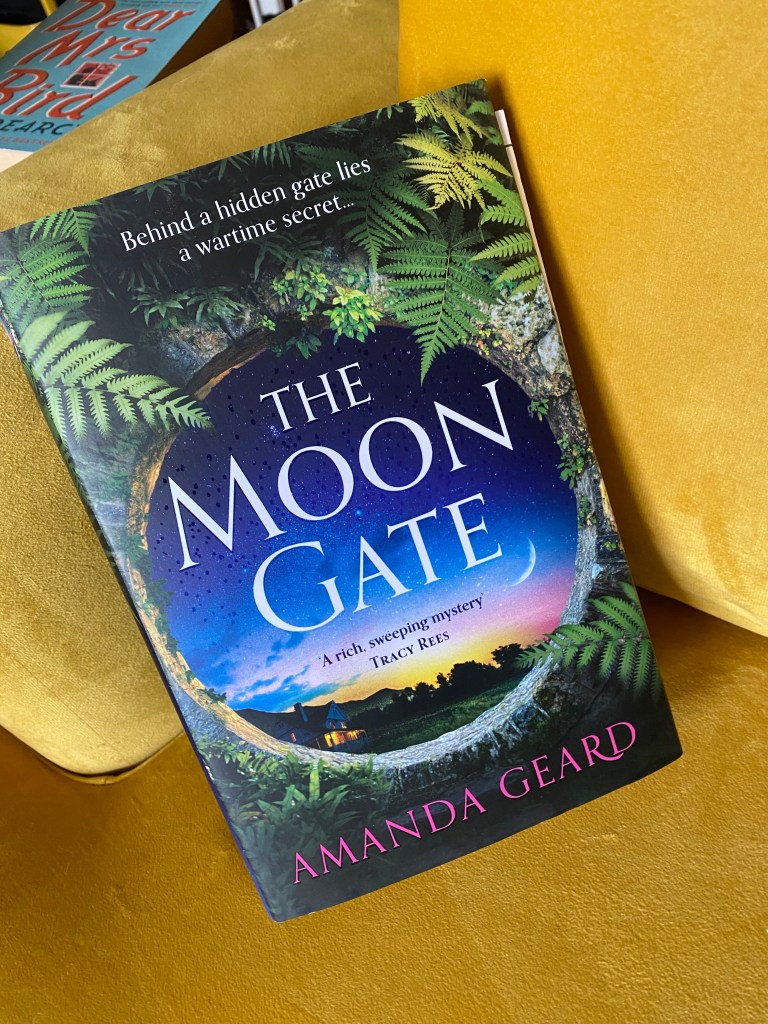
The main love story is so touching as the slightly awkward Grace is lured down to the beach by neighbour Daniel where he tries to kiss her. Sadly though it’s for a five shilling bet and as his mates turn up in a boat to witness her humiliation she runs away into the sea. It’s his friend Puds who has to rescue her, as she can’t swim and finds herself caught in an undertow. Daniel regrets his actions deeply, apologising the very next day and asking if Grace would perhaps share the book of ballads she’d been telling him about. They pass through the Moon Gate, a perfectly round doorway made of Atlantisite that leads to the waterfall and a small freshwater pool. Uncle Marcus claims that to pass through the gate is to become a new person and that certainly seems the case with Grace who not only forgives Daniel, but shares the ballad poems and agrees that he can teach her to swim. It’s so beautiful to watch them become close friends, but Grace knows that it’s Rose that Daniel finds attractive as everyone does at first. I felt for Grace deeply and I think a lot of other bookworms will too because she’s so uncomfortable in company, prefers solitude and loves words so much. My therapist side wanted to help her, because how does she learn to be herself and be confident in that, when even her own mother preferred Rose? When we’re not shown love from our parents, a child can’t understand that it’s a fault of the parent, so they learn there is something wrong with themselves. Grace is shocked by the help and affection she gets from Uncle Marcus, because her own mother is so austere and critical.
It was Rose who spent time with Edeline and became a member of the Blackshirts alongside her. Whereas Rose’s mother, the housekeeper Molly, can see something wonderful in Grace and so can her Uncle Marcus, it just needed to be coaxed out and nurtured. I was so invested in her feelings for Daniel and desperate for him to be clear about whether he had feelings for her. Rose is doing her bit in undermining and leading Grace to believe that Daniel only has eyes for her. She makes sure Grace knows when he writes from wherever he is in the world and if Grace shares news of her friend, Rose makes it clear she knew first. I’ve never wanted to slap a book character more! I wasn’t even sure that she genuinely loved Daniel, she’s just so used to getting one over on Grace that she hasn’t stopped to think it through. There are rumours in town about Rose and Uncle Marcus, she even winds Puds round her little finger but I wasn’t sure to what end? She certainly keeps her cards close to her chest, but when Rose takes up war work and isn’t around as much Grace can actually breathe. As I read I wasn’t sure what Rose was up to but I was certain there was something behind her manipulations and out of character support for the war effort. It’s a shock when her name comes up again in Libby’s investigations, was her father Ben simply interested in her fascist connections or is it something more personal?
There are definite echoes through the different time periods and motherhood is one of those themes that recurs. It’s an inter-generational trauma that starts with Edeline’s treatment of her daughter. Grace knows she isn’t her mother’s favourite, but is confused when this animosity seems to recur with her Aunt Olive. She asks a devastating question of her Uncle Marcus – ‘am I unloveable?’ because if her own mother can’t love her, why would anyone else? Willow has never known her birth parents, instead brought up with her two sisters who are twins. She never asked the question, even though she can see how different she is physically from her sisters. So when Towerhurst comes along, she starts to be intrigued by who created the trust and whether it could be one of her real parents. She finds out she’s pregnant alone, while Ben is over in London, but manages to tell him on the phone just before he is killed and they are both so happy in that moment. To then become a single parent, in such tragic circumstances must have been so difficult to come to terms with. Willow has never tried to collect Ben’s belongings despite knowing they were found and Libby clearly thinks her mother will disapprove of her choice to follow in his footsteps. Willow hasn’t been a terrible mother, just rather aloof and deeply engrossed in her work as a painter, where she demonstrates her terrible grief by only painting in black and white. She hasn’t grieved fully and I could see that Libby’s findings might bring those feelings to the surface. Luckily, Libby has had her eccentric aunts for support and it’s clear they adore her, but I hoped that Libby and Willow would have chance to talk and heal together.
As the mystery begins to unravel, there are revelations about these three generations that keep coming and a twist I truly didn’t expect. There are small disclosures, like the local police sergeant who helps the search for Ben is actually Puds, Daniel’s best friend who suffered a serious injury in the war and had to return home. How will he go about investigating what Ben finds in the mine shaft, when it might be better if they’d stayed buried? I was desperate to find the whereabouts of Rose, because all the hints are pointing to an answer I simply couldn’t bear! It seems possible that Grace never returned to England, but when Rose’s mother tells Ben she definitely saw Grace after the war he starts his search afresh. Could she have disappeared on this side of the world? I was constantly holding out a little bit of hope for the ending I wanted, so I had to keep reading – up till 2am again! There are so many layers to this story and often with dual timelines there’s a weaker section, but every timeline is intriguing, evocative and emotional. Tasmania sounds wild, dangerous, magical and atmospheric all at once. I loved the reference to the creature that lurks around the pool beyond the moon gate, could it be a shy Tasmanian devil? There’s such a massive difference between Tasmania and London, which feels more domestic than wild with very curated spaces like the old fashioned gentleman’s club and the minimalist narrow boat where Libby meets Sam. Then there’s Ireland, waiting like a promised land with all the answers and the beauty that Daniel shares with Grace right back at the beginning. We are left with an incredible tapestry of places and people full of colour, emotion and a yearning for home whether home is a place or a person.
Meet the Author
I have always loved dual-timeline novels, where stories from the past weave with those of the present day. I want to write books that transport you to another time and place, where secrets lie just beneath the surface if only the characters know where to look.
My new novel, The Moon Gate, is set across three locations I ADORE: Tasmania (my home state), London (where I rented a houseboat for many years) and County Kerry, Ireland (where I now live with my family). Each of these places is special to me and I hope you’ll feel you’re entering the temperate rainforest with Grace, opening the door to Towerhurst with Willow, walking through London’s layered history with Libby and stepping out to the heather-clad hills of County Kerry with … well, with several characters, the names of who I won’t reveal here!
The inspiration for my first novel, The Midnight House, appeared in the rafters of our Irish home, a two-hundred-year-old stone building perched on the edge of the Atlantic. Hidden there was a message, scratched into wood: ‘When this comes down, pray for me. Tim O’Shea 1911’. As I held that piece of timber in my hands, dust clinging to my paint-stained clothes, I was humbled that a person’s fingerprint could, in a thousand ways, transcend time, and I wanted nothing more than to capture that feeling of discovery on the page.
I’m also a geologist who loves to explore the world’s remote places. Luckily for me, writing novels provides a similar sense of wonder and discovery; but the warm office, fresh food and a shower in the evening make the conditions rather more comfortable! It’s also the perfect excuse to regularly curl up by a fire with a great book (often by the wonderful authors who write in my genre). I treasure my reading time, and I know you do too, so thank you for taking a chance on my books.
Come over to Instagram and Twitter (@amandageard) where I share plenty of photos of the wild settings in The Midnight House. You can also find me on Facebook (@amandageardauthor).
I love hearing from readers, so please get in touch!
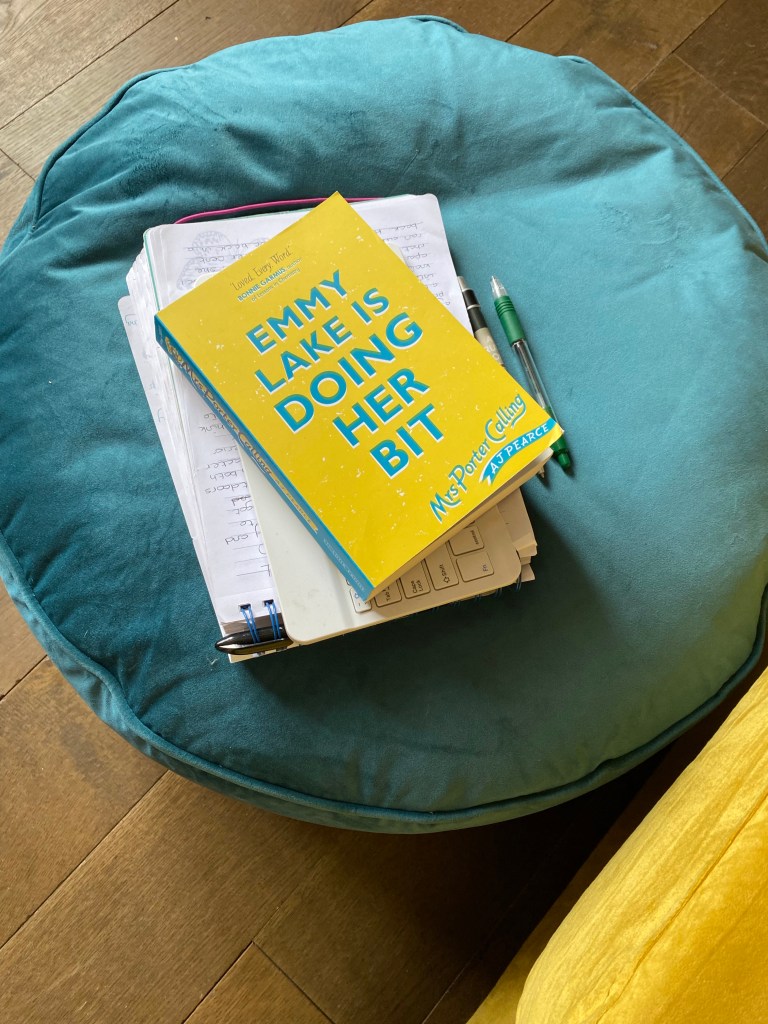
I was new to A.J. Pearce’s world and her character Emmy Lake, so before reading Mrs Porter Calling, I decided to read the previous two novels; Dear Mrs Bird and Yours Cheerfully. Set in WW2, the books follow Emmy as she moves to London to start a career in journalism and soon finds herself in the middle of the Blitz, working for the fire brigade by night and living in her friend Bunty’s grandmother’s house. In Dear Mrs Bird, Emmy has taken up a job offer from Woman’s Friend magazine, working on the problem page. The formidable Mrs Bird is the agony aunt and Emmy must sort through the letters and weed out those that are deemed unsuitable – no funny business at all, not even a hint! Through the novel she moves from being engaged to single status, takes big risks in her job and works hard for the fire service at night dealing with the aftermath of the German bombing. I fell in love with this brave young woman who wants to move with the times and use her writing to help an extraordinary generation of women cope with the difficult situations they find themselves in. Over this and the next book, Yours Cheerfully, Emmy faces some serious challenges: being in love with someone far away and in danger; dealing with terrible loss; helping other young women who have been widowed or find themselves without a home. Yet this isn’t a tale of misery and hardship, there’s an almost relentless positivity to Emmy Lake that I absolutely loved. She’s perky, but not brittle. Her optimism and resilience seem to come completely naturally.
Yet in this latest book, Mrs Porter Calling, she will be facing some of her biggest challenges yet. Emmy has settled into being the lead on the magazine’s problem page and is continuing her series of articles on women who have taken on war work. Everything changes when the owner gifts Women’s Friend to his niece Mrs Porter in lieu of her inheritance. At first the team are optimistic about having a woman at the helm, but it soon becomes clear that Mrs Porter doesn’t want the magazine because of what it is. She wants to turn the magazine into her own scrapbook with society weddings and events alongside beauty and fashion articles that are a distraction from the war. Telling women what they should be rather than being a support. For a team who are used to teaching their readers to reuse and repurpose, this jump to expensive fashions and aspirational articles feels all wrong and Emmy thinks Mrs Porter has missed the whole point of the magazine. Women’s Friend is not aspirational, they don’t want to be dangling fripperies in front of their readers who can’t afford them. Emmy knows that if they change this much they will lose their readership. Even worse, Mrs Porter doesn’t want any more ‘dreary’ war work articles either. It seems that the realities of war haven’t reached her, the nightly bombs Emmy deals with must be muffled by all that jewellery and designer clothing. The team make a pact, to try and keep their beloved magazine as normal as possible while also introducing Mrs Porter’s ideas. In the meantime they will try everything to dishearten their new owner. Hopefully, if things become boring or difficult, she might drop her new hobby and move on. They just have to hope they have enough of a readership left when she does.
Away from the magazine, Bunty is still grieving for her fiancé and continuing her rehabilitation following the bomb blast they were caught in. However, there are signs that she is stating a tentative friendship with another fireman and Emmy has her fingers crossed that things may develop. Emmy and her husband Charles only had a two night honeymoon before he had to return to his posting, now he is moving into North Africa and Emmy depends on his letters. Both girls are forging new friendships with the women who work in a munitions factory and finding out it isn’t always easy to do your bit. I loved this aspect of the novel, because it taught me a lot about what WW2 was really like for women. Despite advocating that all women should find war work, to support their men overseas or help out on the home front, there were difficulties with this that the government seem to have overlooked. The author shows this through the factory women who have issues with childcare and finances. I was shocked to learn that when a Navy husband went missing his salary stopped immediately, but because he was missing and not dead, his wife couldn’t receive a widow’s pension. This loophole left women with no income and potentially homeless. If the factory women had children and worked awkward hours, they often couldn’t get childcare. Some women sneak their children into the factory and hide them so they can still work their shift and get paid, but if found they would be dismissed immediately. Emmy becomes involved in campaigning for factories to apply for the government grants available to set up a nursery for worker’s children. These are the women she wants to celebrate and help in her own time, but also in the magazine. These factory women don’t care about the lavish wedding of some honourable or other, they care about doing their bit, being able to keep a roof over their head and their man coming home.
Emmy has become a team player. Long gone are the early days of her career where she ran away with an idea without thinking of what it meant for those around her. What struck me so strongly was this sense of camaraderie and the sharing of everything – not just the hard stuff that the fire service go through together, but the food, celebrations, home, shelter and even families. I could see that Emmy was in exactly the right place to help when an unexpected loss devastates the factory women and Emmy herself. This tragedy could bring her the biggest challenge she’ll ever have, but I had no doubt she would rise to the occasion. I asked my partner whether he thought our current generation would pull together as well as this generation did and we weren’t sure, although we hoped so. Watching Emmy, exhausted from a day working, change into her uniform and put in a night shift on the fire service switchboard, then go home and reassure children whose house has been bombed out, made me wonder if I could do the same. The perky, excitable girl has become a woman, a woman with a core of steel. If you love historical fiction or just want an uplifting read about women dealing with daily adversity then this is the perfect book for you. I loved all three novels and have happily added them to my forever bookshelves.
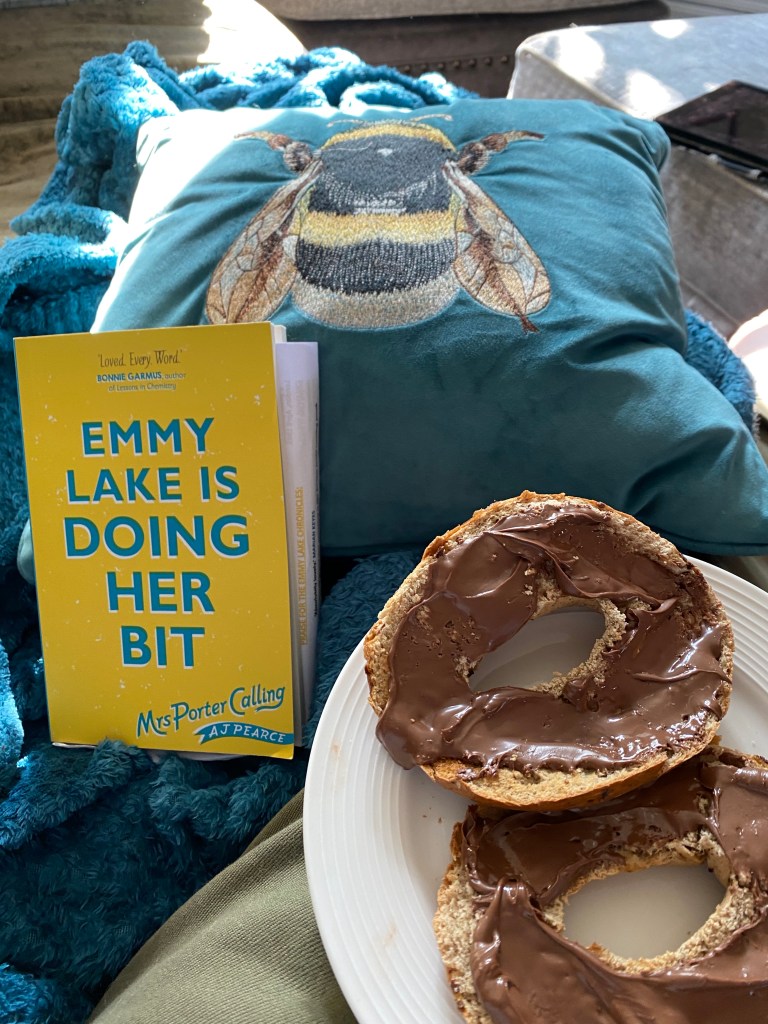
Weekend breakfast and a great book. Bliss!
Meet The Author
Pearce
AJ Pearce is the author of the Sunday Times Top 10 bestseller DEAR MRS BIRD, which was a Richard and Judy Book Club pick and shortlisted for Debut of the Year at the 2019 British Book Awards. It has been translated into fifteen languages and optioned for development for TV.Born in Hampshire, her favourite subjects at school were English and History, which now (finally!) seems to be making some sense. Her novel, Yours Cheerfully is the sequel to Dear Mrs Bird and is now available in paperback. AJ has just released the third novel in the Emmy Lake Chronicles series, Mrs Porter Calling. Follow AJ on Twitter, Instagram and Facebook: @ajpearcewrites
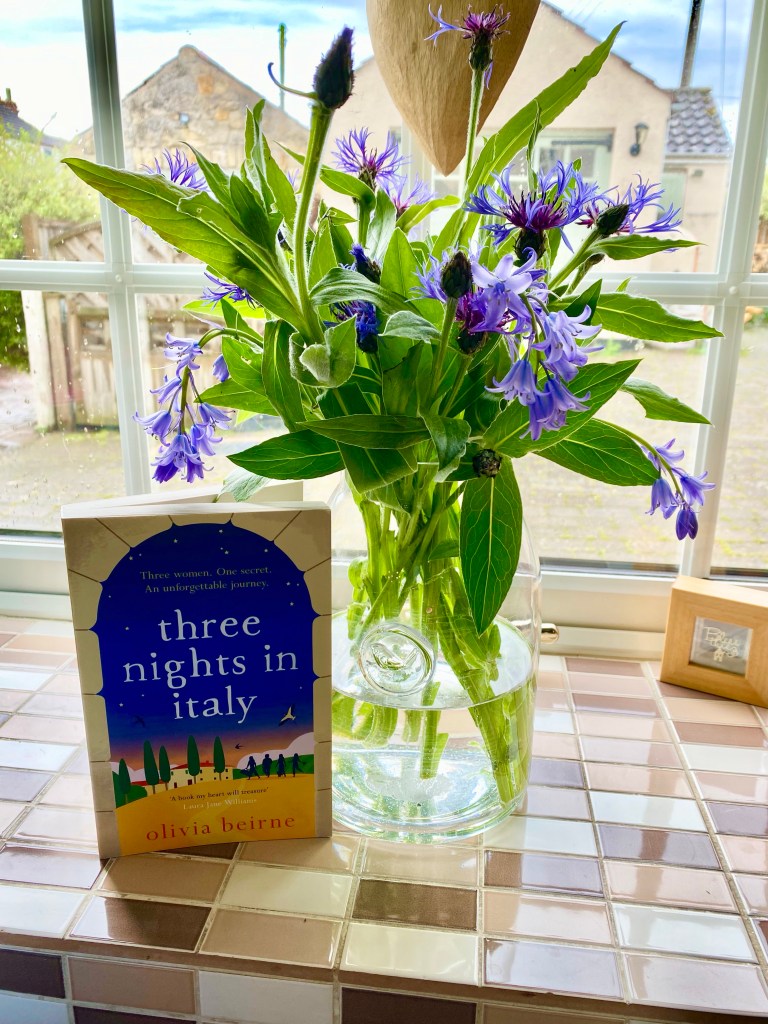
As this novel opens Zoe has just lost her grandmother, a larger than life, charismatic artist who lived in Italy. Zoe and her mum Ange are left grieving in Cornwall, but they grieve differently and Zoe is worried about her mum, who appears to be in a trance but answers ‘fine’ when anyone asks how she is. Fine is a word banned in my counselling room, so I could understand Zoe’s concern. It’s a form of masking how we truly feel. Uncle Reg is dealing with all the legal and financial stuff, holding an auction of his mother’s belongings only a week after her funeral in Italy. Zoe and Ange plan to stay in Cornwall, but Zoe is uneasy about Uncle Reg and so was I. Her grandma promised her the beautiful emerald engagement ring that she claimed had magical properties. So, when Aunt Fanny turns up after being missing for fourteen years, she encourages them to travel out to Italy. She should know if it’s necessary, after all she was once married to Uncle Reg. With a reluctant agreement from Ange, they agree to travel to Italy for three nights only. They must go to grandma’s house and search for the ring before Uncle Reg even knows they’ve left the country.
Our young heroine Zoe shares the narrative in short, snappy sections with her friend Harriet, Mum Ange, and of course, Aunt Fanny. There are times when her voice gets a little lost amongst these other sparky and formidable women, especially Fanny who has chosen this diminutive of her true name Fenella just to see the blushes it causes. Zoe has stayed in her home town since school and works as a high end wedding coordinator. It’s as if she hasn’t really started in life, adept at creating and delivering the dreams of others she has forgotten her own. I loved her sparky little assistant Kitty who was giving off perky Reece Witherspoon vibes. Zoe hasn’t travelled, had a long term relationship or been to university. Her most important relationship is with close friend Harriet who also seems stuck, but we’re given more access to her inner world and she knows she’s treading water. It’s always been just Harriet and her mum, so it was a shock when Mum met someone and now has a newborn baby. They feel like a family and Harriet has felt like she doesn’t belong. Zoe has also had an all female upbringing made up of Mum and Aunt Fanny, along with holidays in Italy with her grandmother. Mum Ange remembers meeting Fanny just after she married her brother Reg and despite being so different they clicked instantly. Fanny is distinctly upmarket and while Reg always seemed embarrassed that his sister and niece were dressed by Next, Fanny never made her feel like that. With Reg working away the two women became Zoe’s parents and Zoe remembers the shock they felt when Fanny left suddenly and never contacted them till now. Zoe doesn’t have the pizzazz or individuality of her aunt or grandmother and it seems she has really suffered from the absence of these women in her life.
I enjoyed the women’s camaraderie and the way they supported each other. Despite seeming a bit disconnected from Mum at the moment, Zoe is devoted to her and wouldn’t think of leaving while she’s in this trancelike state. Aunt Fanny is the backbone of this group and such a formidable woman in her stilettos and her trademark ice-blonde bob that’s never out of place. She is loud, flirtatious and determined to live life to the full. She seems unbreakable and undaunted, buying everyone’s ticket to Italy, convincing Ange to come, overcoming obstacles and hiking in four inch heels! She grabs every opportunity to have fun and takes adversity in her stride, she even encourages the others to let their emotions out. Yet there are so many questions: where has she been for fourteen years? How does she keep her bob so immaculate? Does she really have a fortune from inventing a nail file? Why does she have other people’s credit cards? And why did she leave in the first place?
There is some romance too, with a love interest for Zoe in red-headed Sam who she meets by knocking a drink over him at the airport and pops up in the most unexpected places. They have a first date in Grandma’s town and I loved the women helping her get ready, just like they would when she was younger and going out. Even our older ladies (my age actually) have their flirtations, but this book is mainly about personal transformation though and finding your authentic self – something that’s not always easy for women who are bombarded with messages about who and how they should be. This is personified by Zoe’s grandmother whose presence is huge, despite her absence. I felt the book would have really benefited from more flashback moments between her, Ange and Zoe. She’s present in the laidback town where she lives, in her hillside home, and most of all in her paintings. The painting that’s a self-portrait of grandma in dungarees with her paint brushes in her pocket, seems to leap off the page with her life force. The depth and number of vivid colours show how vivacious she is and captures her love of life. It’s just so perfectly her, living her best life. I couldn’t bear to think of this stunning painting being sold at the auction. Even more than the engagement ring, it would have been the thing I had to keep. All I kept hoping was that Zoe could take some of grandma’s magic and apply it to her own life, to find out who she truly was and live her own fabulous, authentic life.
Thank you so much to Headline Review, Olivia Beirne and the Squad Pod Collective for the chance to read this book.
Meet the Author
Olivia Beirne is the bestselling author of The List That Changed My Life, The Accidental Love Letter and House Swap. She has worked as a waitress, a (terrible) pottery painter and a casting assistant, but being a writer is definitely her favourite job yet. Three Nights in Italy is her fourth novel.
After being slowly enticed by the glowing reviews of Olivie Blake’s Atlas Six series, I finally decided to take the plunge with this one. I’m a huge fan of Alice Hoffman so magic, romance and witchery are right up my street. However, this was the same themes but with some added NYC grit and sass.
In New York City, two rival witch families fight for the upper hand.
The Antonova sisters are beautiful, cunning and ruthless, and their mother – known only as Baba Yaga – is the elusive supplier of premium intoxicants. Their adversaries, the influential Fedorov brothers, serve their crime boss father. Named Koschei the Deathless, his enterprise dominates the shadows of magical Manhattan.
For twelve years, the families have maintained a fraught stalemate. Then everything is thrown into disarray. Bad blood carries them to the brink of disaster, even as fate draws together a brother and sister from either side. Yet the siblings still struggle for power, and internal conflicts could destroy each family from within. That is, if the enmity between empires doesn’t destroy both sides first.
I found myself hurled straight into this vivid world. It is earth but harbours a secret; witch families are vying to supply humans with magical pharmaceuticals. I loved the idea that there might be another realm within our own, hiding in plain sight. Baba Yaga has a shop – like Lush but with extra ingredients – whereas the Federovs sell on the streets and in the bars and clubs of the city. The rivalry and language of their industry was very ‘gangster’, with specific territories and penalties for stepping out of line. The patriarchal Federovs and the the matriarchal Antonova sisters. The sisters, although doing the bidding of Baba Yaga, are kept in line by eldest daughter Marya, also known as Masha. The scene that grabbed me was Masha simply walking into the Federovs lair and demanding to see second brother Dima. There has been an issue with territory and Masha believes it is Dima’s fault, so she carries out a terrifying enchantment that leaves Dima totally incapacitated. I was fascinated that youngest brother Lev tries to stop her, but is held back by his brother. Is there an honour code between the families? Even more intriguing is the obvious and immediate chemistry between Dima and Masha. The atmosphere was electric, the air charged with feelings and I was drying to know what had happened before and if these two had historic feelings for each other. If so, Masha is ruthless when it comes to business, but must have been full of hidden emotion. Would she be just as ruthless when protecting her family?
This scene showed me that Masha was confident in her power and very likely the successor to her mother. Masha is overseeing the expansion of their business. I found the idea of pharmaceutical drugs touched by magic fascinating too, I wanted to know more about their effects and whether they were largely benign. Did the customers truly know the power of what they were buying? I wondered about the family’s ethics with regards to black or white magic and was intrigued by how both families used their magic differently. Lev is sent to check out the clubs and see if he can work out the Antonov family’s next move, but he is distracted from his job by a young beautiful woman being hassled by a college student. As soon as he sees her he wants to help her, but already his attraction to her is obvious. She is very assertive and assures him she can look after herself and as Lev follows them out of the club she breaks the student’s nose. Intrigued by her confidence and the way she handled the situation, Lev offers to walk her home. Every block she tells him she can manage, but Lev has fallen in too deep already and the attraction is mutual. They have a passionate encounter down a side street. What Lev doesn’t know is that this young woman is Sasha, youngest of the Antonova sisters. As the pair fall in love, Lev confides the task he’s been given by his brothers. I wondered how she would react and whether she’s think his feelings were genuine or entrapment. Lev’s feelings are genuine and I was already wondering whether this was a repeat of Masha and Dima’s story. More importantly, if it comes to a showdown between the two families, which side would Lev choose?
Considering the amount of characters, they do have depth and feel very real. I think their back stories helped and the Russian folklore woven into their backgrounds seemed to ground them. Koshchei the Deathless is a male protagonist in Russian folklore, usually cast as an evil father figure who imprisons the male hero’s lover. He is called the immortal because he keeps his soul hidden within inanimate objects. Often he would hide his soul inside a tiny object then place it inside another object, perhaps an animal, like a rather grotesque set of Russian dolls. Baba Yaga was originally a supernatural being who hides within the disguise of a grotesque old woman. In a bizarre version of her story, which I love, she lived in a kettle with chicken’s legs – rather like the archetypal witch we all know from fairy tales. She would often take a maternal role and use that to hinder a character from the story. How these archetypes work within this story I’ll leave for you to find out. Then there’s the Romeo and Juliet parallel which certainly gives us the basic plot line of two rival families, where the youngest members of each family are falling in love with each other. That’s really where the comparisons end, because this is a loose retelling so don’t expect specific characters or even the same plot lines. This is a tragedy and it’s genuinely heartbreaking, but with gritty, real violence and it’s bloody consequences, just don’t expect the same victims. I loved that the rivalries are decades old and I think there’s definitely scope for more novels in this setting.
Although I loved Blake’s descriptive prose and enjoyed her characters, I did feel that the central love story lacked a bit of depth. I could tell these characters were in lust because their scenes were hot, but I didn’t feel the love at first. Perhaps that’s because I’m an older reader though and why I was interested in the oldest sister’s story. Also there were so many twists towards the end I had to go back and re-read sections to keep up with what was going on. However, for such a big book, it really fly by and the heady mix of love, power, magic, revenge and tragedy is a winner for sure. The art both inside and on the cover is absolutely beautiful. I feel that I could easily come back to these rival families in the future and it has certainly made me want to check out the author’s previous novels. If you like your love stories dark and laced with magic, violent tragedy and witches this is the book for you. It was definitely the book for me.
Published on 20th April by Tor (Pan Macmillan)
Meet The Author
Olivie Blake is the pseudonym of Alexene Farol Follmuth, a lover and writer of stories, many of which involve the fantastic, the paranormal, or the supernatural, but not always. More often, her works revolve around what it means to be human (or not), and the endlessly interesting complexities of life and love.
Olivie has penned several indie SFF projects, including the webtoon Clara and the Devil with illustrator Little Chmura and the viral Atlas series. As Follmuth, her young adult rom-com My Mechanical Romance releases May 2022.
Olivie lives in Los Angeles with her husband and baby, where she is generally tolerated by her rescue pit bull. More on Olivie can be found at http://www.olivieblake.com
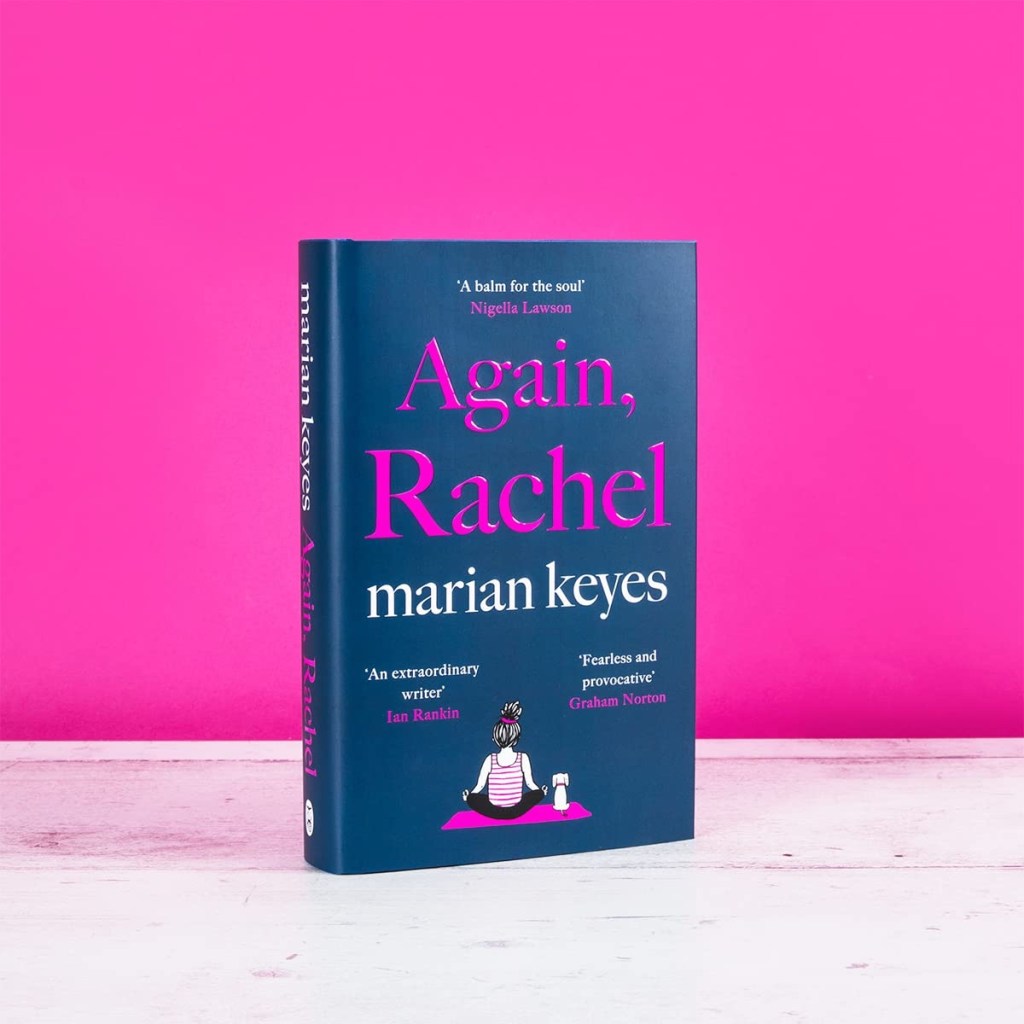
Over the last couple of weeks I’ve had the brilliant experience of buddy reading with my eldest stepdaughter. I bought her Rachel’s Holiday and this sequel Again, Rachel for Christmas and she decided to read them in her down time from revising for her A’Levels. I realised it would be a great opportunity to share the reading experience together. I finished this on my weekend away and I genuinely found it hard to look up from the story. For the author, the anxiety of revisiting a much loved character must be huge, because I felt it too. I’d kept it on one side for this long because of that anxiety. I loved Rachel and the whole Walsh family and I wasn’t sure I wanted to know what happened next. We’re twenty years on from the end of the last book and Rachel is settled, with a job she loves and a happy home. She works as a senior counsellor at The Cloisters – the place where she started her own recovery journey. She owns a beautiful little house and a garden that’s become an unexpected part of her ongoing recovery and mental well-being. She also has a little dog, Crunchie. There’s also a man, Nick Quinliven (known as Quin) who has a penchant for trying new and exciting things from from the latest restaurant to wild swimming and escape rooms. They haven’t said they love each other yet, but he is an important part of her life. Life is great until Rachel hears that Rose Costello has died. Rose was her mother-in-law and although she hasn’t seen her since she and Luke divorced, she does feel an obligation. Should she go to the funeral or not?
Rachel and Luke have never spoken since he left their Brooklyn flat several years ago and cut all contact. I kept thinking what on earth could have separated these two people who really loved each other? Skilfully taking us back and forth in time, Marian Keyes constructs the intervening years as Rachel copes with the unexpected present and the painful past. Rachel’s whole life is upended as she sees Luke for the first time and tries to cope with the emotions of their reunion. However, she’s also plunged deeply into the past and the reasons she and Luke ended. Rachel is emotionally intelligent and knows all about buried trauma, but is surprised when she experiences all of those emotions afresh as if it only happened yesterday. It upsets her equilibrium, but has that sense of calm recovery merely been a front? Rachel hasn’t wilfully deceived others. She’s deceived herself. Is her version of what happened back then even the truth? If given the chance to connect with Luke and unpick their past, should she take it?
Marian Keyes really knows her stuff when it comes to addiction and mental health. It’s always a joy to read her books because they’re so emotionally intelligent. This framework provides so much depth to the characters and their story. Here she shows us a wounded healer, as Rachel struggles through addiction and loss, but still supports clients to achieve psychological change. I love her courage, because anyone who uses their own pain to help others is an incredible human being. I love how Keyes describes group sessions, as Rachel keeps her boundaries and sticks to her script, no matter how strongly she might be identifying with the client or feeling deeply moved by their story. We get to see that conflict in her; as a human being she might want to comfort that person, but as a therapist she must hold back to effect change. She knows that sometimes it’s important to sit with the feelings, to truly feel negative emotions without distractions or outside comfort. They always pass. I loved the wisdom she’s acquired over the years and how she rides to cope with her own trauma the same way.
I was deeply moved by Luke and Rachel’s experience because I’ve been through something similar. It made some parts hard to read, but it was written beautifully and with an accuracy I really appreciated. Keyes offsets the sadness with the usual comic touches, with Walsh family conferences being a great source of humour. All the sisters have their own idiosyncratic characters, causing conflict at times but we know that love is always present. Mrs Walsh is typically overbearing and contrary and her upcoming ‘surprise’ birthday party is an extra source of stress, especially when she decides to invite her ex-son-in-law. Luckily, the meticulously organised Claire has everything in hand, despite also trying to negotiate a session of swinging for her and her husband. Husband Adam is reluctant, but once convinced he becomes so enthusiastic that Claire is furious with him! The love stories are convincing and both Rachel’s current beau Quin and ex-husband Luke have their strengths. I held out hope for Quin and Rachel because I thought they suited each other. However, once Luke is on the scene the chemistry and unfinished business between him and Rachel is undeniable. Quin isn’t the only obstacle either, Luke’s partner Callie is with him in Ireland and seems very determined to keep Rachel close. I didn’t know if Rachel and Luke would be able to move past their history and connect again, as the people they are now. I loved how they tried their hardest to work through what happened, despite the pain it’s clearly causing. Could they possibly remain friends and share their loss, after all only the two of them can fully understand what they went through. Despite knowing that that Rachel didn’t need either man to build a happy life, I knew where my loyalties as we approached the end. Oh what an ending!! I was snap chatting my stepdaughter and we’d both cried buckets at the ending. I was so glad that Marian Keyes had been brave enough to revisit Rachel again.
Published by Penguin 13th April 2023
Marian Keyes is the international bestselling author of Watermelon, Lucy Sullivan is Getting Married, Rachel’s Holiday, Last Chance Saloon, Sushi for Beginners, Angels, The Other Side of the Story, Anybody Out There, This Charming Man, The Brightest Star in the Sky , The Mystery of Mercy Close, The Woman Who Stole My Life, The Break and her latest Number One bestseller, Grown Ups. Her two collections of journalism, Making it up as I Go Along and Under the Duvet: Deluxe Edition are also available from Penguin.
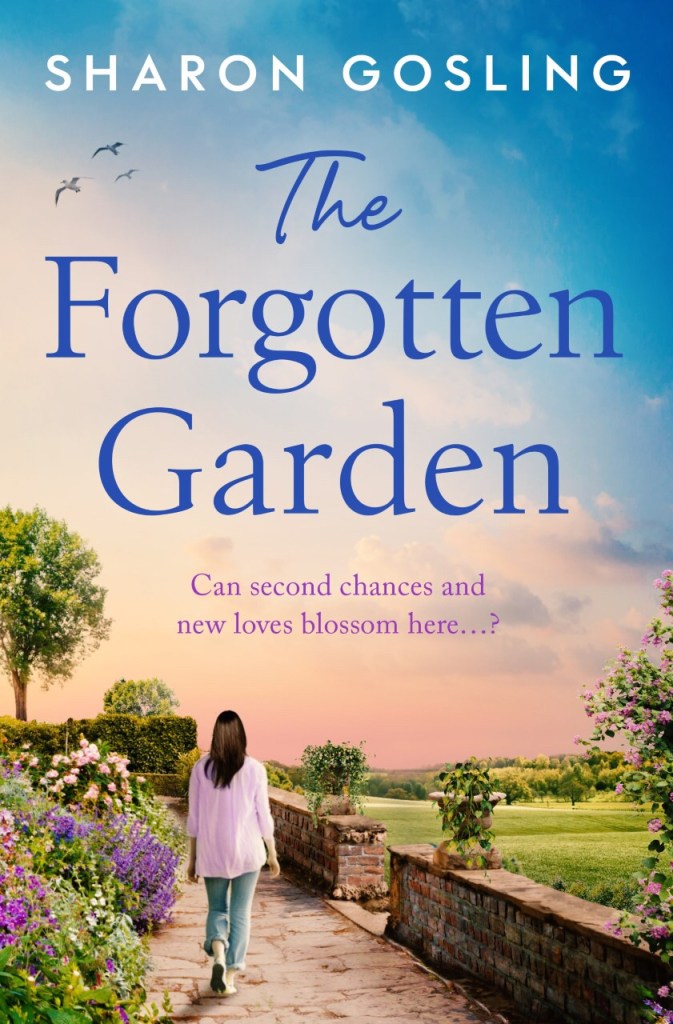
Thanks to enjoying the blog tour for Sharon Gosling’s first novel, The House Beneath the Cliffs, she became an author I kept an eye on. I was on the look out for her next and The Lighthouse Bookshop confirmed for me that if I’m looking for an escapist read, she is one of my go-to authors. She seems to effortlessly blend a mix of sadness and heartache, secrets, warmth and potential romance into an engrossing read that’s so enjoyable. Our main character, Luisa McGregor, has allowed herself to become stuck. A life that once felt safe, secure and predictable is now starting to stifle Luisa and she needs more, a new challenge perhaps. Then into her lap falls great opportunity. Her friend Oliver presents a daunting, but tantalising proposition. Instead of carrying on as a gardening assistant to a woman she feels increasingly out of step with, she should check out an opportunity to build a whole new garden at a site near the Cumbrian coast. There’s a pot of money available to build a community garden on wasteland next to a gym and youth club. Luisa agrees to visit the site and is daunted by the amount of work needed, but also inspired by what could be achieved there. As we meet the people of this disadvantaged area of Collaton, we can see what a community garden could mean to these people. There’s teacher Cas, who is pouring all of his energy and spare time into the young people of the area. Harper is a teenager with a lot on her plate, but determined to find a way out of Collaton towards a different future. Can Luisa design a garden that brings both healing, inspiration and a stronger sense of community for the residents?
I did connect with Luisa and the position she has become stuck in. She has had to recover from the terrible trauma of losing her husband in an accident. She has dragged herself up from the darkest and most difficult days following her husband’s death, to a point where she feels she has rebuilt her life. She’s working in garden design, even if she doesn’t like her boss, she has a nice home and great support in her sister. Really though, she’s just treading water and terrified of stretching herself or reaching for something that she could lose. I loved the way the author shows Luisa coming alive again as she works on the new garden. She literally blooms alongside her plants and seems to gain something from working with others and passing on her skills. Without trying too hard, the garden draws in those who need it including a woman who’s been her husband’s carer since an accident paralysed him. He’s initially sceptical and annoyed that his wife’s attention has been captured by Luisa’s plans, but just a few hours a week gaining respite from her caring role has transformed her. It’s not long before he’s creating bespoke benches for the garden, adapting the way he uses his joinery skills to his disability. Harper is a character who really stands out, she’s a young girl brimming with potential, but struggling to escape the difficult circumstances of her life. She is the main caregiver for her younger brother, now that their mum has died and their father has escaped into the bottle. Harper has a skill for mechanics, engineering and invention. She spends her spare time either at the club with Cas or helping at the local garage where she’s doing up a battered old Mini that Cas has gifted to her. Harper’s story shows us how hard it can be for someone to escape where they live and their family circumstances. Her cousin Darren is out of prison and is back dealing drugs in the area again, Harper is devastated when he preys upon her younger brother, Max. Max is easily influenced, especially when it comes to friendships. He struggles to make friends and has been subjected to bullying, so when someone older and seemingly cool pays him attention it’s an easy conquest. Darren wants him as a drug runner or lookout, but Harper puts her foot down and offers herself up instead. I was on tenterhooks, knowing that this decision would have consequences in the future.
There are a few powerful scenes that really stand out. Max has a secret that he’s been working on in Harper’s absence, inspired by the garden and when it was unveiled I almost held my breath. I loved the idea for his garden and the description was so lush and vivid I could almost smell the vegetation and feel the warmth. I could imagine sitting there, early on a sunny morning and enjoying a coffee. I also kept thinking what an incredible wedding venue it would be. It’s clear as soon as Cas and Luisa meet that there is potential for romance, but I wondered if both of them were too hurt by their pasts to take the chance. I was sure it needed a catalyst and the author certainly gives us one. The scene where Darren’s thugs get into the garden was heartbreaking and heart-stopping. I could actually feel the fear of the volunteers and residents as Darren shows his true colours and the bad boy reputation he’s trying to create for himself in the community. However, the gang don’t expect to be challenged, with devastating results. I was rooting for Cas and Luisa, with their endeavours in the community and their potential romance too. I read to the end quickly, determined to see the garden succeed and whether Luisa would overcome her fear of love and inevitable loss. I took the book on holiday with me and it was an enjoyable and emotional read, with an ending that was truly satisfying. This is an author who understands that life has seasons and that women have an amazing capacity to accept life’s changes, as well as the resilience to reinvent themselves and start over again.
Published by Simon and Schuster UK 27th April 2023
Meet the Author
I’ve been writing since I was a teenager, which is now a distressingly long time ago! I started out as an entertainment journalist – actually, my earliest published work was as a reviewer of science fiction and fantasy books. I went on to become a staff writer and then an editor for print magazines, before beginning to write non-fiction making-of books tied in to film and television, such as The Art and Making of Penny Dreadful and Wonder Woman: The Art and Making of the Film.
I now write both children’s and adult fiction – my first novel was called The Diamond Thief, a Victorian-set steampunk adventure book for the middle grade age group. That won the Redbridge Children’s prize in 2014, and I went on to write two more books in the series before moving on to other adventure books including The Golden Butterfly, which was nominated for the Carnegie Award in 2017, The House of Hidden Wonders, and a YA horror called FIR, which was shortlisted for the Lancashire Book of the Year Award in 2018.
My debut adult novel was published by Simon & Schuster in August 2021. It was called The House Beneath the Cliffs and it was set in a very small coastal village in Scotland. The idea for it had lodged in my head years before. I have a love for unusual dwelling places and I came across a tiny house that completely captured my imagination. My adult fiction tends to centre on small communities – feel-good tales about how we find where we belong in life and what it means when we do. Although I have also published full-on adult horror stories, which are less about community and more about terror and mayhem…
I was born in Kent but now live in a very small house in an equally small village in northern Cumbria with my husband, who owns a bookshop in the nearby market town of Penrith.
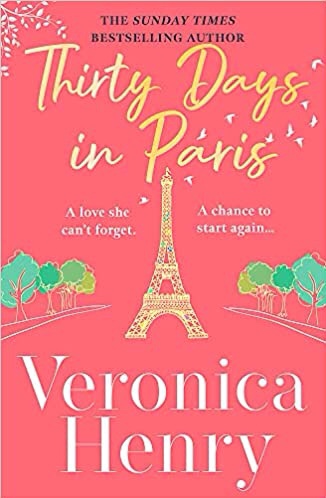
Years ago, Juliet left a little piece of her heart in Paris – and now, separated from her husband and with her children flying the nest, it’s time to get it back! So she puts on her best red lipstick, books a cosy attic apartment near Notre-Dame and takes the next train out of London.
Arriving at the Gare du Nord, the memories come flooding back: bustling street cafés, cheap wine in candlelit bars and a handsome boy with glittering eyes. But Juliet has also been keeping a secret for over two decades – and she begins to realise it’s impossible to move forwards without first looking back.
Something tells her that the next thirty days might just change everything…
I hadn’t read any of Veronica Henry’s novels until I did a blog tour for her novel The Impulse Purchase. I found it delightfully escapist and optimistic while exploring female relationships, especially familial ones, in an interesting way. In her new novel we’re more focused on one woman; Juliet is a middle-aged, ghost-writer who’s at a huge crossroads in life. She and her husband have taken the very brave decision to separate as their last child leaves home for university. Most of their friends think they’re crazy, because the couple still get along, they’re probably the best of friends in fact. However, they feel they’ve drifted into two different paths. As her husband has embraced all things cycling – including the Lycra and the diet – Juliet isn’t enamoured and would rather curl up with a good book or go to the theatre. They’ve each become comfortable in their own routines and as the time to sell their large family home has come around, they can’t see the point of trying to meld their differing lifestyles into another joint home. So each will take half of the house sale and do their own thing and Juliet would like to take a trip into her past. Years ago, when she was still a teenager, Juliet went to work as an au pair in Paris, but returned in shame and sadness only a few month later. She has rented an apartment for a month to reacquaint herself with the city and spend some time writing her own story. However, revisiting the past is never easy and Juliet finds there are experiences she still needs to process and come to terms with.
I found reading this book a little lie watching Sex and the City or perhaps more aptly, Emily in Paris which I binge-watched over the Christmas period. Everything about Juliet’s time in Paris is simply gorgeous from the description of the patisseries near her apartment, to the clothes worn by her friend ….. and the work Juliet starts on her book project. Thanks to the two series mentioned, along with a teenage diet of Judith Krantz novels, I find Paris ridiculously romantic and imagine it full of quirky shops, artists, vintage bookshops and incredibly elegant women. Every walk she takes I was imagining the decorative shop windows, acres of pastel coloured macarons and fairy lit trees, not to mention the incredible bridges, cathedrals and art galleries. I’m also a sucker for transformation shows like the old Gok Wan and those wedding shows where people choose their dress and I also had that vibe too. This might seem like I’m making the book sound trivial or all about appearances, but it’s far from that. This isn’t just about visual transformation. The author takes what can be a difficult period in a woman’s life: empty nest syndrome; menopause; relationship breakdown and that sense of having lost who you are. Veronica Henry takes us into that process of grieving and growth and I kept reading in the hope Juliet would come to that place of finding herself – the person she is now and the way she wants the rest of her life to be. Before she can do that she needs to face what happened all those years ago when she was such a young girl and just starting out in life.
I really felt for the younger Juliet and these sections leapt off the page. I loved how brave she was in leaving her cozy home and family to do something completely different. That sense of being a fish out of water really comes across as she tries to settle into the apartment of the French family she’ll be living with. Her French is minimal and I could feel the nerves as she tries to fit in, especially when the children’s mother is quite volatile and erratic in mood. However, the father seems kind and tries to make Juliet feel at home by taking her out for Sunday lunch with the children. Juliet comes across as a kind young girl, good with the children and concerned about their mother whose moods fluctuate between treating Juliet like a little sister and angry, tearful outbursts. I warmed to Juliet because she doesn’t become angry or resentful, but is worried that her employer is struggling as a working mum of three children and perhaps needs extra support. I had concerns about the way the children’s father acted around Juliet early on and couldn’t decide whether he was trying to make her feel like family, or whether the late nights, sharing a bottle of wine, might lead to more. Juliet’s affections are completely engaged by Luke as soon as they meet. Her friend calls it a ‘coup de foudre’ or love at first sight and it does seem to be an immediate connection, as if their souls know each other before they even speak the same language. In the present day sections, Juliet hints at a disastrous ending to her time in Paris and a separation from Luke that leaves unfinished business. I wondered whether she would feel the urge to reconnect and explain what happened all those years before.
If you’re looking for an enjoyable, escapist read this winter/spring then this is definitely the book for you. Juliet is interesting and her earlier years in Paris really help us understand her character’s choices later on. I wondered how much her stable, but safe, marriage was a response to these early romantic mistakes and terrible heartbreak. I would say that her return to Paris, especially her rekindled friendship with Nathalie, brings out her spontaneous and playful side. Nathalie takes risks, from visiting less salubrious parts of the city, to accepting random invitations and wearing some quirky outfits. Their friendship picks up where they left off and I would definitely be the demographic buying Nathalie’s memoir and cookbook. I loved the way Juliet tackled what happened in the past and it showed the difference in attitudes between then and now; where once Juliet took on a lot of the blame, she can now see other people’s part in what happened and how they took advantage of her naivety. While I wasn’t necessarily rooting for a romantic ending to the story I was rooting for Juliet to build a totally new life for herself where she’s with the people who inspire her. I enjoyed the ending and felt it worked well for the character, especially when a call from home dangles her old safe life in front of her. I wanted her to continue growing and trying new things, because just reading about it felt like taking a holiday.
Meet The Author
I was so interested in reading Veronica’s author section on Amazon because it’s so personal. So I’ve reproduced part of it below.
‘People often ask me what kind of books I write and it’s a very difficult question to answer in one sentence. Primarily, I love to take my readers somewhere they might like to be, whether a gorgeous house in the countryside or on a seaside clifftop. There, my characters go through the trials and tribulation of everyday life, embroiled in situations and dilemmas we can all relate to. Love is at the heart of it, but all kinds of love, not just romantic: the love of friends and family, or a place, or a passion for what you enjoy (food, wine and books, in my case . . .)
I have a background in writing television drama (Heartbeat, Holby City) so that has been an influence – creating lots of characters whose lives impact on each other. Working on The Archers I was taught ‘Make ’em laugh; make ’em cry; but above all, make ’em wait’!
I hope my books are beautifully written, uplifting and a little bit escapist. I’d love to know what you think, so do leave a review. Or you can contact me via Twitter @veronica_henry, or on Facebook or Instagram @veronicahenryauthor
A little bit about me: I live by the sea and head to the beach every day with my dog Zelda. I love cooking and discovering new restaurants on city breaks, with a bit of yoga to offset the calories – and I’ve just bought an e-bike. My biggest writing influences are HE Bates, Nancy Mitford, Jilly Cooper and any book that has a big rambling house and an eccentric family.’ From http://www.amazon.co.uk
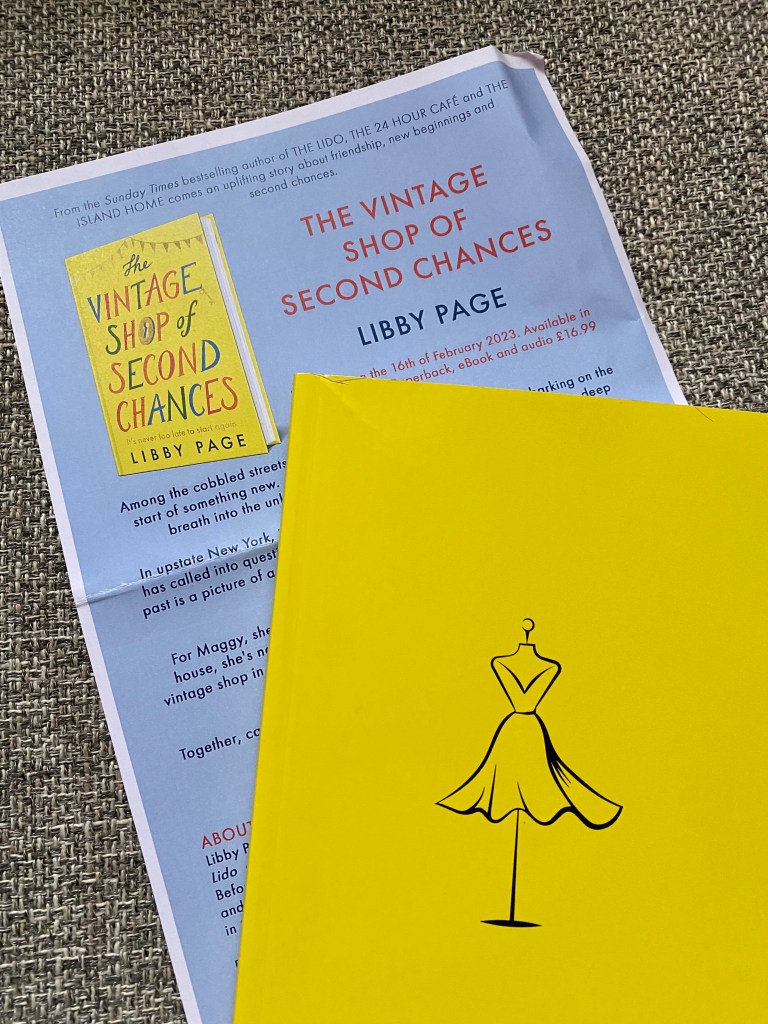
Libby Page was one of those authors that completely passed me by until I started book blogging and this is the first of her novels that I’ve reviewed. I don’t know why I hadn’t picked up one of her books before, because reading this gave me the same feel as an Adriana Trigiani or Marian Keyes novel. There were strong female characters, female friendships, achieving ambitions and fulfilling long held dreams. There are deep emotional aspects bringing flavour and depth to her story, but also enough icing and sprinkles to lift the spirits. Here the sprinkles were one of my favourite things, vintage clothing. Our heroine is Lou, who moved to a small market town to care for her mother who was terminally ill. Since her death Lou has been working hard, selling the family home and buying a shop with flat above in the town centre. With builder Pete upstairs creating her living space, Lou has opened the shop and is looking at ways to save money and boost business. Pete puts her in touch with Maggie, another lady who has gone through a big change. Maggie’s a grandmother and often provides care for her grandchildren in the house that was the family home. However, her husband has recently left Maggie for a younger woman and she is rattling round in the big house. So, when Pete suggests that she rents a room to Lou until her flat is ready it turns out to be a lifeline for both of them. Finally, we have Donna, who works at her family’s hotel in the US. In a daily uniform of jeans and hotel sweatshirt, Donna follows a routine where she does the paperwork and the books and checks in on her elderly parents, but she too has a shock in store. When her mother suffers a sudden mini-stroke, her conscience causes her to disclose a family secret – they are not Donna’s birth parents, her mother was a woman from a small market town in England.
The thing that links these disparate women is a vintage dress. 1950’s in style and a stunning buttercup yellow this dress has a full circle skirt just made for dancing. Embroidered with meadow flowers, the dress hangs above the counter in Lou’s vintage shop and is the only item that isn’t for sale. It’s flanked by a picture of her mother Dorothy, the owner of the beautiful dress. I love vintage clothes and this dress, plus the descriptions of her shop really did draw me in. I love colour and just reading Lou’s outfits and her transformation of Maggie’s wardrobe made me smile and inspired me to be more colourful again. The warm feeling I got from Maggie and her beautiful home helped as well and within a couple of chapters I had completely relaxed into their world. Each woman had her own chapters throughout so we could see things through their viewpoint. While I felt an immediate kinship with Lou and Maggie, Donna seemed less accessible. She was very intent on routine and was considered abrupt or even rude by some people. I wondered if she was neuro divergent and suffering from anxiety, so her routines and uniform might have come from an inability to change or decide when under pressure. All these women face change and have to start life anew. In between their narratives are very short chapters from the past, where a young woman is making a yellow embroidered dress for a secret assignation with a man she’s fallen in love with.
I really enjoyed the journey to understanding the owner of the stunning dress and how it ended up at Lou’s shop. There is a revelation for all concerned when Donna gets on a plane and travels to England and to Lou’s shop. A series of letters between sisters add an extra clue to the mystery. Aside from this main story there are other subplots that also caught my imagination. I loved Maggie and her journey of rediscovery is a joyous one. When Lou arrives it’s clear Maggie is trained by years of looking after someone else: her husband, her children, guests. She’s not putting any love into herself and this shows in her completely black wardrobe. A little bit of input from Lou and she’s wearing orange with combinations of colours she didn’t expect. This small change and their growing friendship means that Maggie is busy for the first time in a long time. Her children can’t rely on her for free child care because she’s not home and this is just the start of Maggie accepting her divorce and creating a new life for who she is now. That’s partly a case of reconciling with her past and a summer in 1960’s London where she was the sort of girl who wore yellow Mary Quant boots and fell in love with an artist. There is romance here, but it’s not the only story. This story is about women supporting and inspiring each other and being our best selves. I liked that there was a lot of emphasis on self- care, from the colourful vintage clothes to taking control and finding our passion in life, instead of being the care givers we’re often expected to be. I came away from this story glad that society’s moral standards have changed and that for many women their lives are no longer ruined by shame or fear of what the neighbours might think. I felt like I’d been given a warm hug and I came away from the story smiling and inspired to wear some of my more colourful clothing.
Published on 16th Feb 2023 by Orion.
Libby Page graduated from The London College of Fashion with a BA in fashion journalism before going on to work as a journalist at The Guardian. After writing, her second passion is outdoor swimming. Libby lives in London, where she enjoys finding new swimming spots and pockets of community within the city. The Lido is her first novel. Follow her on Twitter @LibbyPageWrites and Instagram @TheSwimmingSisters
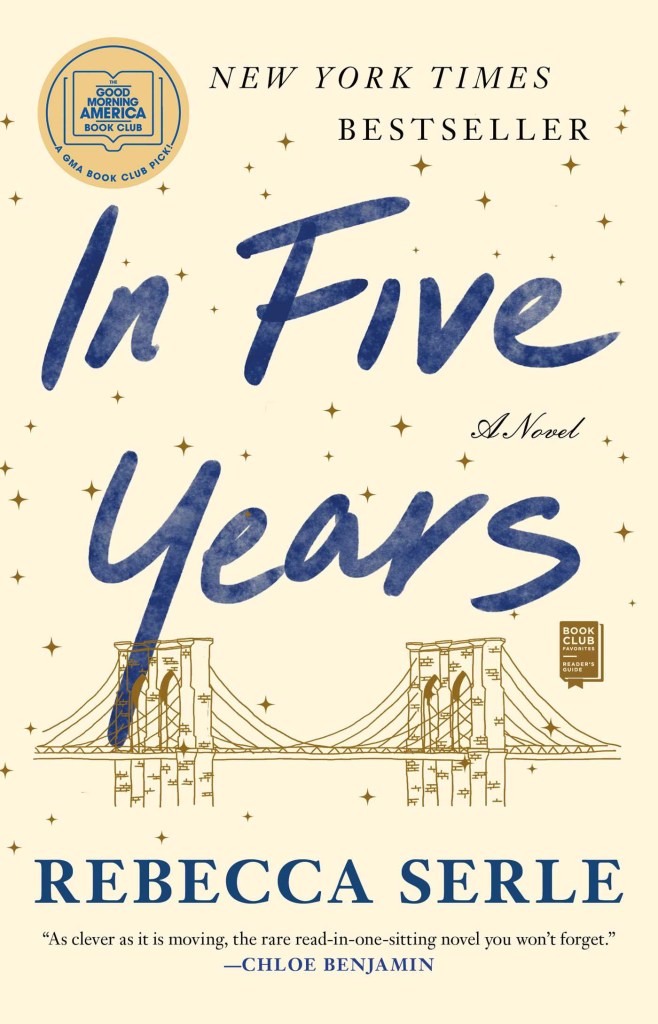
This book surprised me, delighted me and broke my heart. It was not at all what I expected, but was all the more special for that. Cleverly, Serle wrong foots the reader into thinking this is a straight forward romance, but it really isn’t. It’s about love and just as our heroine Dannie is some times unsure what love looks like, so is the reader. We are used to certain conventions and have expectations about how a love story will unfold. It teaches us that sometimes we don’t notice or fully appreciate what we already have.
Dannie is a corporate lawyer, living in Manhattan and dating the eminently eligible David. David and Dannie live together after dating for two years. They have done everything according to an unspoken, but very correct timetable; everything about their relationship is planned and just right. In fact their relationship is so predictable that when David suggests dinner at the Rainbow Room, Dannie knows he’s going to propose. She says yes when he presents the perfect engagement ring, but they don’t plan their wedding. They continue to drift along as they are, until Dannie has the dream. This vivid dream shows a loft apartment in Dumbo with interior design details such as an art print of an optician’s chart with a witty slogan. It’s nowhere Dannie can imagine living. It’s trendy and edgy. She and David live in Gramercy Park. A perfect location for their work and fitting for where they are in life. Yet, the Dumbo apartment feels comfortable. Then a man appears. She’s never met him before but yet there is a connection, something she can’t define. As he moves closer she feels actual electricity. She has never felt this before. Like some huge force compels them to be together. When she wakes, Dannie feels strange, like she’s questioning everything around her.
Dannie has planned to see her friend Bella. They have been friends since boarding school and are still incredibly close. Bella takes more risks than Dannie and in some ways Dannie sees her as someone who doesn’t finish things, perhaps a bit of a flake. Bella loves art, she lives to travel and has a more bohemian outlook on life. Dannie has a more settled and perhaps, conventional life where work is the priority and her stable relationship with David simply ticks along. Up until now Bella hasn’t had a stable relationship in her life, but she has brought someone important to meet Dannie. When he walks in, Dannie is shocked to see the man from her dream. She panics and decides to do everything she can to stop her dream from coming true. But life can take strange turns and a series of events unfold that she never imagined. They make her rethink everything about how to live life and how to love.
I became so involved with Dannie and Bella’s story that it was hard to put the book down towards the end. The story crept up on me from something very light to an emotional tale about the strength of female friendship. These girls are life partners. Their presence sustains each other in ways that romantic relationships sometimes don’t. Bella’s mother lets slip that she purposely placed her daughter in the same school as Dannie, because she saw them together and could not part them. The very structure of the book teaches the reader something. We learn, at the same time as Dannie, that the happy ending is not always about a man, because love comes in many forms. Also, that loss and love are the same thing. When we grieve it just proves how much we loved. I found myself becoming very emotional towards the end of the book and that rarely happens. I found the writing so truthful and similar to my own experience of grief that I had a lump in my throat. I loved the ending and the fact it wasn’t predictable elevated the book above the ordinary. I will be hugging my friends a little closer and appreciating all the people in my life who love me.
Meet the Author
Rebecca Serle is an author and television writer who lives in New York and Los Angeles. Serle developed the hit TV adaptation of her YA series Famous in Love, and is also the author of The Dinner List, and YA novels The Edge of Falling and When You Were Mine. She received her MFA from the New School in NYC. Find out more at RebeccaSerle.com.
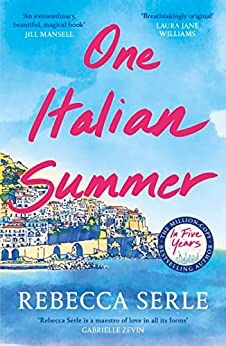
Her latest novel One Italian Summer came out in paperback last year and was a wonderful look at love, mothers and daughters, and the things we learn about ourselves through travelling.















 The Lotus Readers