Posted in Publisher Proof

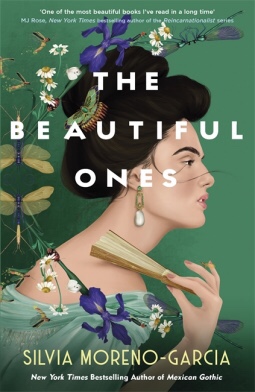
The Beautiful Ones by Silvia Moreno-Garcia.

Last year I read Silvia Moreno-Garcia’s incredible novel Mexican Gothic and I absolutely loved it. So when I was offered the chance to read one of her earlier novels, being reissued in a beautiful hard back copy this week, I was really excited to tell you all about it as part of the blog blast.

They are the Beautiful Ones, Loisail’s most notable socialites, and this spring is Nina’s chance to join their ranks, courtesy of her well-connected cousin and his calculating wife. But the Grand Season has just begun and already Nina’s debut has gone disastrously awry. She has always struggled to control her telekinesis: the haphazard manifestations of her powers have long made her the subject of gossip – malicious neighbours even call her the Witch of Oldhouse.

But Nina’s life is about to change, for there is a new arrival in town: Hector Auvray, the renowned entertainer, who has used his own telekinetic talent to perform for admiring audiences around the world. Nina is dazzled by Hector, for he sees her not as a witch, but ripe with magical potential. Under his tutelage, Nina’s talent blossoms – as does her love for the great man.

But great romances are for fairy-tales, and Hector is hiding a secret bitter truth from Nina – and himself – that threatens their courtship.

This book is different from either Mexican Gothic or Gods of Jade and Shadow. This is a romance, brim full of melodrama and heartache. Yet there are also those wonderful threads that seem to exist through her work: feminism, awakening sexual desire, an eye for women’s self-expression through clothing, and a sprinkle of the paranormal. I didn’t know where the book was set at first, because the city name Loisail and personal names have a French feel to them, but certain word usage such as fall for autumn made me think of North America. The manners and etiquette seem almost British regency in date (this could give Bridgeton a real run for its money on the small screen), but the far off place Iblevard sounds like South America. This is our world, just not as we know it.
I absolutely adored Nina from the start, because I’ve felt like the slightly awkward girl who doesn’t fit. Next to her cousin’s wife Valerie she seems a bit of an ugly duckling, but she’s chaperoning Nina through the Loisail season in hope of finding her a suitable husband. Valerie is the stereotypical blonde, blue-eyed, perfectly coiffed, graceful beauty and her marriage to Gaetens was a great match, because he was a steady, slightly older man with financially stability. His finances have kept her family afloat. Whereas Nina has none of the superficial qualities of Valerie. Her hair is raven black and there’s more of a handsomeness to her than prettiness. Worse still, she is awkward, often saying the wrong thing, but she’s physically clumsy too and there’s more to Nina’s clumsiness than meets the eye.

From a young age Nina has been able to move objects with the power of her mind. Sometimes it’s involuntary, such as when her emotions are roused in anger or sadness. Nina doesn’t know much about telekinesis, it has simply always been with her and back at the family home in the country she is known as the Witch of Oldhouse. Here in Loisail though, nobody knows about her strange ability and if she is dressed well, schooled in how to behave and tries her hardest to be ‘normal’ maybe she could make a good marriage. Nina is inexperienced and naive, but trusts Valerie implicitly. Her cousin Gaetens has always had her best interests at heart so she happily puts her future in Valerie’s hands, but there’s a bitterness and envy in Valerie that runs very deep. She knows that her husband dotes on his cousin and he wouldn’t force her to marry anyone she didn’t consent to, but she thinks that Nina is spoiled. Valerie had to make a decision, to marry a man she didn’t love to get better conditions for her family. She had to grow up, put thoughts of love and romance aside, and take the best decision rationally as if marriage is a business. If she had to do this, why shouldn’t Nina be expected to grow up and accept someone chosen for her?

Then Hector Auvray comes into the picture, gentlemanly, handsome and, because he’s a performer, just a whiff of scandal about him. He’s definitely not the sensible choice, but controlling her emotions has never been one of Nina’s strengths. I loved that the pair shared this talent, Hector as the mentor and Nina as the ingenue, just starting out. When he calls on Nina at home, they can easily spend hours talking about telekinesis and practicing control. Nina visits his show which is quite glitzy, and he has an incredible finale of dancing mirrors. For me, there wasn’t quite enough magic. It’s as if magic realism was something she was toying with, then in later novels she really had the confidence to go for those paranormal elements. I knew this was a reissue, but those who don’t could be disappointed there isn’t more made of Nina’s skills. It’s almost as if she learned to control it rather than celebrate it. I’d have loved the author to write sections where they perform together, because I know how incredible they would have been.
There was something very Jane Austen about this society, it’s manners and it’s dilemmas for women. I thought of the disappointment a lot of readers feel when Lizzie Bennett’s friend Charlotte Lucas accepts the proposal of the ludicrous vicar Mr Collins in Pride and Prejudice. Lizzie has rejected him and by doing so, placed her family in financial uncertainty, but Charlotte is more pragmatic. She knows he’s ridiculous, but she also knows he has a living, the patronage of a fine Lady, and a large enough house to lose him in. This is the decision that Valerie has made, but is very angry about. Her anger is at her family, but is also directed inward. She doesn’t like to face the truth; that she was the one who made this choice.

“She wanted to cry and could not. She wanted to weep for that proud girl who had broken her own heart and tossed it to the dogs, and she wanted to weep for the woman who had been left behind with a gaping hole in her soul. But if she could do it again, she knew she’d still retrace her steps. She was not Antonina Beaulieu, who offered herself like a sacrificial lamb, who gave everything of herself to the world for the world to devour. She was Valérie Véries. She hated herself sometimes for it, but she was Valérie Véries, a Beautiful One, not some weakling nor a halfwit”.

I also got hints of The Great Gatsby, every time I saw a character allude to an elite group of ‘Beautiful Ones’ the Lana Del Ray song ‘Young and Beautiful’ kept floating through my head. I felt it in this passage when Hector talks of the love he had when he was younger, the girl he asked to wait for him. He thinks he’s still in love with this woman, but he’s really still in love with his idea of this girl and what they could have had.

“He was chained to her, to this brilliant ideal of a perfect love. Because he had always known that if he could have (her) in his arms again, all would be well. It would be as though the decade that separated them had never happened and they would return to the happy days of their youth when everything was possible. It was as if he could unwind the clock with her aid. And once this happened, there would be nothing but joy.”

The first part of the novel is quite slow and as Hector and Nina meet and form their friendship, but I enjoyed getting to know them. I felt as if I was watching them fall in love very slowly, but it’s as if only the reader knows it. Then comes a terrible betrayal, and Nina loses that innocence of youth, but grows so much as a person. She starts to have pride in who she is, because she has space to be herself. When she returns to Loisail the following season she is a different woman, confident enough to make her own choices. There’s a new found confidence and experience in her character as she steps out into city. She’s refusing to be the ugly duckling of this story and has blossomed, but from the inside. There’s a feminist soul in Nina and I loved seeing that awakening. She’s also more comfortable with her ‘talent’ even if it isn’t on display very much. Before long a very suitable young man starts to court her; it would be a great match, but not love. As Hector Auvray drifts back to the city again, and wishes to resume their friendship, what effect on Nina will he have? I enjoyed this novel because it’s unashamedly romantic, and magical. It’s a coming of age story, showing this young woman’s awakening conscience as well as her desire. Nina Beaulieu learns to live life on her own terms and makes her own choices, especially where her heart is concerned.
Meet the Author

Silvia Moreno-Garcia is the New York Times bestselling author of the novels Mexican Gothic, Gods of Jade and Shadow, Untamed Shore, and many other books. She has also edited several anthologies, including the World Fantasy Award-winning She Walks in Shadows (a.k.a. Cthulhu’s Daughters).
Posted in Throwback Thursday

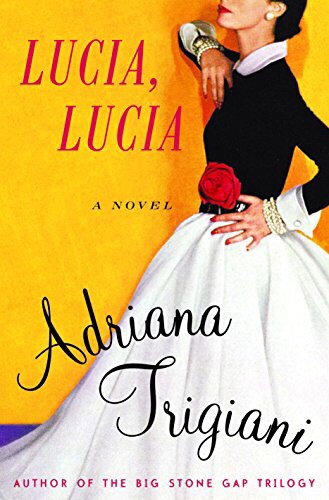
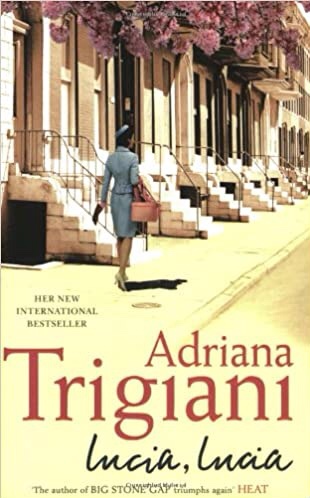
Throwback Thursday! Lucia Lucia by Adriana Trigiani.

Lucia Sartori is the beautiful twenty-five-year-old daughter of a fine Italian immigrant family in Greenwich Village, New York, in 1950. Fuelled by the post-war boom, in which talented girls with ambition are encouraged to follow their dreams, Lucia becomes an apprentice for a made-to-wear clothing designer at a chic department store on Fifth Avenue. Though she is sought after as a potential wife by the best Italian families, Lucia stays her course and works hard, determined to have a career. She juggles the roles of dutiful daughter and ambitious working girl perfectly. When a handsome stranger comes to the story and catches her eye, it is love at first sight for both of them. In order to win Lucia’s hand, he must first win over her traditional family and make the proper offer of marriage. Their love affair takes an unexpected turn as secrets are revealed, Lucia’s family honour is tested, and her own reputation becomes the centre of a sizzling scandal. Set in a time of possibility and change for women in America, in a city that celebrates its energy with style and elegance, LUCIA, LUCIA is the story of a girl who risks everything for the belief that a woman could – and should – be able to have it all.

When I want something to read that isn’t challenging, but is heartwarming, funny and emotional I turn for an Adriana Trigiani novel. Her stories, often based within Italian American culture, have feisty heroines, epic love stories, and wondrous descriptions of either food, clothes and shoe making, decorating or the music business. Lucia, Lucia begins as we meet Kit Zanetti, a playwright waiting to be discovered, who meets her upstairs neighbour. Lucia Sartori offers Kit some tea, and this evolves into a museum or gallery visit as Lucia shows Kit just some of the treasures she has accumulated over her life. Astounded by some of Lucia’s possessions, Kit asks for her story. So Lucia begins to tell a story that starts in 1950s New York when she was the most beautiful girl in The Village. She and her four brothers are brought up in NYC within a close knit Italian community and she is engaged to a lovely Italian boy, Dante. She also has a career she loves as a seamstress in a big department store. Worried that her marriage would mean giving up the job she loves, she decides to end her relationship. She is fighting against the very role her society expects of her – to become a wife and mother, with all of her energy focused on the home.

Then, John Talbot arrives on the scene. John is a businessman who appears wealthy and could take Lucia away from the ‘little life’ she was promised by Dante. She imagines a more upscale lifestyle where she can continue her work designing and creating on Fifth Avenue, plus have all the trimmings of an affluent home life. I kept thinking that this was a pipe dream and everything was going to go wrong. I understood Lucia. It wasn’t just about having money, but having choices. She wants the cushioning afforded by John’s money to pursue her own dreams without it being such a struggle. Yet, John has drawbacks too. He isn’t Italian for a start, but also he’s secretive and quite tight lipped about where his money is from. I worried that Lucia was being conned and that choosing John would be a harder path than she expects.

In-between this love story, Lucia has a wonderfully described trip to Italy with her family. Here Lucia discovers art and culture, swaps incredible recipes with her sister-in-law and even has a job offer from her co-employer. This is where Lucia could make choices that give her true independence, but is she now too entwined with John? Will she find herself choosing between marriage and a career after all? She may have to face more serious revelations about this man than she ever expected. It’s clear to me that John is a bad choice very early on, but I’m older and have made poor choices in relationships when I was young. Lucia doesn’t have that hindsight or experience. It’s easy to think she could have stayed with Dante and still worked as a seamstress, but we forget that before the contraceptive pill, marriage automatically meant children. Once children came along it would have been very hard to pursue a career as a designer, she may have been able to take in sewing, but not pursue a career.

There’s so much to like about this book. I loved the portrayal of the Italian American community and Lucia’s relationships with her family. The author gives us just enough information up front, but we don’t find out how Lucia’s life moved on until the final section when she finishes relaying her story to Kit. It keeps the reader engaged, because we’re dying to know how things worked out for her. This is a bittersweet novel that reminds us we can’t have everything in life. Many choices, no matter how hopeful and happy they seem, can come with a sacrifice in the long term. The sort of romance we see in the movies, all hearts, flowers and candlelit baths, is rare in real long term relationships. Living together, especially within a family, can be anything but romantic. However, if we prefer the hearts and flowers, we can miss out on the closeness and support in those tougher times. Lucia gives us the benefit of her hindsight as she evaluates her life, perhaps hoping to pass on this wisdom.

Meet The Author

Beloved by millions of readers around the world for her “dazzling” novels (USA Today), Adriana Trigiani is “a master of palpable and visual detail” (Washington Post) and “a comedy writer with a heart of gold” (New York Times). She is the New York Times bestselling author of eighteen books in fiction and nonfiction, published in 38 languages around the world, making her one of the most sought after speakers in the world of books today. 

Adriana is also an award-winning film director and screenwriter, playwright, and television writer and producer. She wrote and directed the award-winning major motion picture Big Stone Gap, based on her debut novel, filmed entirely on location in her Virginia hometown. Big Stone Gap spent 11 weeks in theatres in the fall of 2015 and was the #2 top-grossing romantic comedy of the year. She wrote and directed the documentary film Queens of the Big Time, winner of the Audience Award at the Hamptons and Palm Springs International Film Festivals. Her screen adaptation of her bestselling novel Very Valentine premiered on Lifetime television in June 2019, launching their National Book Club. She directed the feature film Then Came You, starring Craig Ferguson and Kathie Lee Gifford, filmed on location in Scotland. Adriana co-founded The Origin Project, an in-school writing program which serves over 1,700 students in the Appalachian Mountains of Virginia. Adriana is at work on her next novel for Dutton at Penguin Random House for release in 2021, and a children’s picture book for Viking at Penguin Random House for release in 2021. She lives in New York City with her family. 

Follow Adriana on Facebook and Instagram @AdrianaTrigiani or visit her website: AdrianaTrigiani.com.
Join Adriana on Facebook for Adriana Ink every Tuesday at 6 PM EST!

Posted in Netgalley

The Metal Heart by Caroline Lea.

The sky is clear, star-stamped and silvered by the waxing gibbous moon.

No planes have flown over the islands tonight; no bombs have fallen for over a year.

___________

Orkney, 1940.

Five hundred Italian prisoners-of-war arrive to fortify these remote and windswept islands. Resentful islanders are fearful of the enemy in their midst, but not orphaned twin sisters Dorothy and Constance. Already outcasts, they volunteer to nurse all prisoners who are injured or fall sick. Soon Dorothy befriends Cesare, an artist swept up by the machine of war and almost broken by the horrors he has witnessed. She is entranced by his plan to build an Italian chapel from war scrap and sea debris, and something beautiful begins to blossom. But Con, scarred from a betrayal in her past, is afraid for her sister; she knows that people are not always what they seem.

Soon, trust frays between the islanders and outsiders, and between the sisters – their hearts torn by rival claims of duty and desire.

A storm is coming . . .

In the tradition of Captain Corelli’s Mandolin, The Metal Heart is a hauntingly rich Second World War love story about courage, freedom and the essence of what makes us human during the darkest of times.

This book is stunningly beautiful, so much so that I had to sit and think in the quiet when I’d finished it. It’s so rich in folklore, historical detail, the trauma of war and bereavement that I know I could pick it up to read again and still find something new. I immediately ordered a signed copy for my forever shelf, because it is so special. What did I love about it? The Scottish folklore, the incredible landscape, the community, the dignity of people facing the hardest times of their lives. Then amidst the chaos, violence and confinement, beauty emerges in the shape of a deep, immediate, connection and growing love between two people who can’t even speak the same language. The counterpart to this human story is the Italian Chapel, built out of the scraps of metal huts and concrete the prisoners are allowed. Yet from these humble materials a building of true beauty emerges, that still stands today. It made me emotional to think about the lovers, but also the patience and faith of these incredible men who needed a place to worship, a piece of home.

Dorothy and Constance live on Selkie Holm, a small island close to Orkney. They are isolated outcasts, strange simply because of their doubling, but also because they’re thought to have bad luck. There are myths about the island and the selkie women that might lure a man into the water. People go missing there and the old fishermen who gather in the tavern love to swap old stories about the strange shapes seen in the water. It’s said that if you live there you might go mad. Besides, the girls have had bad luck enough with the drowning of their parents as they tried to row to Kirkwall hospital in a storm. People mutter that it isn’t right for two young girls to live there alone. Surely they must need other people? Yet, that’s exactly what Con doesn’t need. They live in the bothy because of a traumatic event that happened in Kirkwall and now she’s frightened of people, particularly men. So when it’s announced at a town meeting that Italian prisoners will be housed on Selkie Holm, Con is terrified. Their protests fall on deaf ears, since the sinking of the Royal Elm, Churchill has decided barriers must be built to prevent invasion. The prisoners will build the barricades and soon there are huts and barbed wire and men with boots all in Con’s place of safety. Worst of all, Angus McLeod has been given a job as a guard on the island and the girls want to avoid him most of all.

This is a story about freedom for all three main characters. Of course Cesare is the one literally behind a wire fence, but Dot and Con’s bothy is a prison of their own making. Watching each of them try to inch towards freedom in their own ways is moving and upholds my belief as a therapist that everyone is capable of change and even in the most straitened circumstances we still have choices. Cesare finds freedom in the infirmary where he is cared for, in the Major’s office helping with correspondence, in the building of the beautiful chapel and the first time he sets eyes on Dorothy or Dorotea in Italian. His utter joy at finding something so precious amongst the dirt, the heavy labour, the biting wind and the regular beatings, is hopeful and bittersweet. Just like the unexpectedly beautiful chapel, treasures are often found in the dirt.

‘Up on the hill, the chapel gleams in the sun. I imagine the light pouring in through the window. The pictures on the walls will gleam with life. And, on the ceiling above the altar, a white dove soars through a bright blue sky. How does something so beautiful come from such darkness? The tears are flowing freely now, as I turn back to the people watching me and I force myself to say, ‘Thank you.’

‘‘Up on the hill, the chapel gleams in the sun. I imagine the light pouring in through the window. The pictures on the walls will gleam with life. And, on the ceiling above the altar, a white dove soars through a bright blue sky. How does something so beautiful come from such darkness? The tears are flowing freely now, as I turn back to the people watching me and I force myself to say, ‘Thank you.’Up on the hill, the chapel gleams in the sun. I imagine the light pouring in through the window. The pictures on the walls will gleam with life. And, on the ceiling above the altar, a white dove soars through a bright blue sky. How does something so beautiful come from such darkness? The tears are flowing freely now, as I turn back to the people watching me and I force myself to say, ‘Thank you.’

Dot finds her instant love for Cesare overwhelming, but she never questions or doubts her feelings or his. Con often reminds her what men are capable of, that she can’t trust someone she doesn’t know. Yet, for the first time, Dot places a boundary between herself and her sister, simply saying ‘I am not you’. This isn’t a criticism of her twin, but just an assertion that she is different, separate, and so is her life. She also makes a point of going to work in the infirmary, leaving Dot at the bothy. This is the first time where Con can see Dot moving into a life beyond her, their psychic or spiritual link can never be broken, but to wake up and live without her physical presence must be terrifying.

For Dot freedom means the ability to live a life separate from her sister’s, but also beyond the shadow of Angus McLeod. Dot’s trauma affected both girls and when she couldn’t go out, neither girl did. They have spent every day and night together since. This wasn’t Dot’s trauma, but she stopped living just the same. Now she dreams of sitting in the warmth of Italy, with Cesare and his family eating wonderful food. The image is a mile away from the dark, cold and stormy reality. Con sees the changes in Dot, and recognises she’s drifting away from her. Fiercely protective of her twin, it takes her a while to realise that in Cesare, Dot has found a man who is gentle and won’t hurt her. She knows she can’t hold her back, but it’s a huge wrench, like giving away part of herself when so much has been taken from her already. Watching Con’s realisations about her trauma and the potential for healing was one of the most moving parts of the novel.

The historical detail in the novel is incredible. Caroline Lea writes in her acknowledgments:

‘I wanted the love affair between my characters to be constrained by time and intensified by the precipitous and perilous nature of war, so I took many liberties with timings and action. This was a very conscious decision: I’m painfully aware of the difficulties in fictionalizing real historical events and people and selling them as ‘fact’, especially when this involves taking on the voices of ‘real’ people: I was very certain that I didn’t want to do that.’

This explains her decision to change certain things: some of the history and geography is changed; the construction of the barriers was started by Irish workers; the sinking of a ship by German u-boat features the Royal Elm, not the Royal Oak. Yet the chapel, situated on Lamb Holm, is still standing and can be visited. Even the metal heart truly exists, created by metal worker Giuseppe Palumbi for an Orcadian woman he fell in love with. He had to return home to his wife and family in Italy and left the heart behind. By doing this she has made sure that no one’s real life experiences are encroached upon. This is definitely a work of fiction, although the amount of research and love for her subject is clear to see. The descriptions of the islands are simply stunning and the relentless sea is mercurial; one moment soothing and the next a punishing, vengeful god. The inhabitants of the islands intrigued me too, in the way they slowly integrated with these prisoners of war. Even the two girls, shrouded in grief and superstition, are gently supported by this generous community. Now the chapel is part of this community’s history, with the metal heart at its centre. It shows us that light can shine into the darkest corners and choosing to love, despite the pain and grief, can be the bravest stand we can take.

‘All across Europe, bodies are falling from the sky or into the sea, or are being blown high into the air. Every explosion is a name. Every lost life is carved on someone else’s heart. Every death takes more than a single life. It takes memories and longing and hope. But not the love. The love remains’.

Published by Penguin, 29th April 2021.

Meet The Author

Caroline Lea grew up in Jersey and gained a First in English Literature and Creative Writing from the University of Warwick, where she now teaches on the Creative Writing degree. Her fiction and poetry have been shortlisted for the Bridport Prize, the Fish Short Story Competition and various flash fiction prizes. She currently lives in Warwick with her two young children and is writing her next novel. Her work often explores the pressure of small communities and fractured relationships, as well as the way our history shapes our beliefs and behaviour.

Posted in Netgalley

Madame Burova by Ruth Hogan.

I absolutely love Ruth Hogan’s novels, because they have interesting, quirky characters that I always want to know more about and stories that are ultimately uplifting. I was immediately fascinated by Imelda Burova, with her Russian-Romany background and her gorgeous borzoi Dasha. Imelda has inherited her mother’s fortune telling booth on the seafront in Brighton. Not that Shunty-Mae has gone anywhere. She comes to help when the booth is busy in the summer season and has a disconcerting habit of sitting behind the curtain at the back then interjecting the odd comment when least expected! Imelda is invited to read for people as part of the entertainment staff at the holiday park and this introduces her to a whole new group of people. There’s the three mermaid sisters, a contortionist, Jeanie who has the voice of an angel and the dark, handsome wall of death rider Cillian. Imelda feels an immediate spark with Cillian, but Jeannie’s femme fatale friend Vivien makes it clear that Cillian is off limits. Book ending this tale of 1970s Brighton is our other heroine Billie, who is in a vulnerable place having lost her university job, her marriage and her mum. She receives some life changing news from her Dad, that sends her on a trip to Brighton to meet a mysterious woman who holds two brown envelopes. These will give Billie some clues to a mystery that has spanned forty years, and a love story that has lasted through time.

I really felt for Billie, who has reached a point in life where everything is changing, but she’s willing to take on the challenges she faces. She finds her seventy year old benefactress inspiring and starts to be drawn into the world of Brighton. She meets a family named after precious stones who run the cafe next door to the fortune tellers booth. She has help getting a new project off the ground with a lovely man called Treasure. Then there’s a man she meets on the train who travels all the way to St Pancras once a week just to play the piano. Plus a man who seems to be just a passing eccentric, using his elastic bands to send colour messages to the CIA or MI5, but who witnesses a crucial event that answers so many questions. In the time she spends in Brighton, Billy starts to feel at home. What could fate have in store for her here and is she brave enough to follow the path?

The earlier sections, told by Madame Burova with a heavy dose of hindsight, are so evocative of the 1970s. There’s an incredible bohemian feel to the interiors, such as the decor of the booth, the stunning gypsy caravan that sits in the garden for occasional sleepovers, not to mention Madame Burova’s wardrobe. Lush fabrics and vintage clothes float my boat so I was in heaven here. The central love story is brief, but all encompassing. Cillian is the perfect hero – I was thinking Peaky Blinders as I was reading him so it was hilarious to find ‘Cillian Murphy’ left on a page in the NetGalley copy! It shows that Ruth Hogan and I are on the same page when it comes to passionate love interests. He and Imelda are clearly made for each other, so watching Vivien try to come between them is infuriating. Not that Cillian helps, his taciturn nature and avoidance of fuss can lead to misunderstandings. Imelda isn’t sure whether he’s playing the field, but his eyes are firmly trained on her all the time. I was transfixed by the love story and hoping against hope that Imelda wouldn’t have her heart broken.

This is such a charming and whimsical novel, with a a huge side helping of nostalgia for the time of the seaside holiday heyday. A time when people did take their families to a holiday park and take part in all the entertainments on offer. I love the way Brighton fits Billy perfectly, with her vintage style, bowler hat and the opportunity she gets to potentially bring that retro vibe to the seafront seems perfect. Will she take the chance? More importantly, will the quest that brought her to Brighton and to meet Madame Burova, come to a happy end? I was satisfied with the end, despite the heartache along the way and came away with a real feeling of joy. Along with the apple blossom coming in and birds nesting in the garden, this book has been like a little breath of spring.

Meet The Author

A car accident led to Ruth Hogan taking her wish to be a writer more seriously and the result was THE KEEPER OF LOST THINGS – a Richard and Judy Book Club pick. Since then she has had two further novels published, THE WISDOM OF SALLY RED SHOES and QUEENIE MALONE’S PARADISE HOTEL and for her fourth, MADAME BUROVA, she learned to read Tarot cards and developed a hankering for a traditional vardo and pony.

‘I live in a chaotic Victorian house with an assortment of rescue dogs and my long-suffering husband. I am a magpie; always collecting treasures (or ‘junk’ depending on your point of view), a huge John Betjeman fan and I would very much like a full-size galloping horses carousel in my back garden. As a full-time author I am living the dream, and I’m so grateful to all my readers for making that possible. I love hearing from you, so please feel free to drop me a line on Twitter, Instagram or Facebook.’ From Ruth’s author page on Amazon.com

Posted in Publisher Proof

Another Life by Jodie Chapman.

Published by Michael Joseph, 1st April 2021.

Nick and Anna work the same summer job at their local cinema. Anna is mysterious, beautiful and from a very different world to Nick.

She’s grown up preparing fot the end of days, in a tightly-controlled existence where Christmas, getting drunk and sex before marriage are all off limits.

So when Nick comes into her life, Anna falls passionately in love. Their shared world burns with poetry and music, cigarettes and conversation – hints of the people they hope to become.

But Anna, on the cusp of adulthood, is afraid to give up everything she’s ever believed in and everyone she’s ever loved. She walks away and Nick doesn’t stop her.

Years later, a tragedy draws Anna back into Nick’s life.

But rekindling their relationship leaves Anna and Nick facing a terrible choice between a love that’s endured decades, and the promises they’ve made to others along the way.

Wow! I expected a love story and received so much more from this wonderful read. Jodie Chapman has managed to capture all of life’s stages as we to and fro through the years with Anna and Nick. Told mainly by Nick, we begin on Christmas Eve in NYC 2018, then we tumble back through the years: to when he meets Anna; to his childhood years and everything beyond. Everything we come to learn about Nick’s personality, his closed off manner and inability to let anyone close, is made clear by one childhood event. So dreadful and emotional that it brought me up short. I had to close the book for a moment to process it and think about what such a loss could do to a young boy.

Nick and Anna first meet in their early twenties, while working at their local cinema. In the heat soaked days of summer 2003, their love burns with a similar intensity, as only young love can. They seem opposites. Nick is quiet and has a solidity to his character. Anna is more intense and emotion driven. These differences could balance each other out, but instead they mean the relationship never fully catches light. Anna’s fervency could come from her deeply religious upbringing. Her beliefs are strong and part of her, not just as a religion but as a culture, a way of being. If she’s to throw that life away she doesn’t just lose her church, she loses her friends, her family, her certainty in the way she sees the world. Only promises of Nick’s real feelings could persuade her to let go of these ties. Yet Nick isn’t built for such intensity of feeling. His calmness and solidity come from a place of not wanting to feel such extremes of emotion. He closes off just when Anna needs assurances. It is a short lived romance that never fully gets off the ground. Yet, this is not the last time they will meet, as they are thrown together again several times over a lifetime.

Love in all its forms is celebrated here, not just romantic love, but sibling love, family love, and love of a religion or way of life. Nick and his brother Sal have such a special relationship, condensed into that opening section, which is set in Manhattan. Nick pours a lifetime of shared love and memories into just a few pages and it grabs you, it pulls you into the story. In a way Sal is more like Anna, more fiery and quick to share his thoughts and feelings. Despite this difference in their characters the brothers are very close. We’re taken deeper into their lives together later in the novel, almost as if Nick has had to take the time to open up to the reader. These chapters are infused with nostalgia for the late eighties and early nineties – probably because I was a teenager back then, but also because they have the feel of faded home movies and I could almost here the sound of an old-fashioned projector running in the background. The author lulls us into a sepia toned dream and then shatters our emotions again as we revisit that terrible life changing event, but in greater detail. We see that this has affected both brothers, but in different ways. It also feels like one of those moments where everything clicks into place and our understanding of Nick’s behaviour and personality opens up completely.

I understood the young Anna well, because I was brought up within the confines of religion. My primary school years were spent partly in Catholic school and I made my first communion and confession, then inexplicably my Mum jumped to an evangelical church which became all encompassing. It was our Sundays, then weekly prayer meetings, house group, youth group and social events. In hindsight I was being indoctrinated and at times my parents actually scared me, because their behaviour was so out of character. If I liked a boy, my head would start whirling with how much my parents might disapprove, how they would act, the constant teaching of purity and dating exclusively within the faith and its rules. Often I found myself in the painful position of ‘just friends’ with someone I really liked, because I was too frightened to go out with them. I understood that Anna needed to hear more about how Nick felt. Did he love her? She couldn’t wait and let things play out because she didn’t have the freedom.

Personally, I realised that I needed to face whether or not I believed in this system of religion, independent from my parents. Not for a relationship, but for me. Then, although we didn’t always agree, I could make my own life choices based on my moral compass and not someone else’s. This is something Anna needed to learn too, whether she wanted that religious life or something different for herself in the future, because within some religions there is no compromise. I did appreciate the author’s autobiographical influence here, because I learned more about the Jehovah’s Witnesses and their faith. It gave me a more nuanced picture than I had previously and helped me understand Anna’s choices. I also loved the touch of having Anna’s emails and poems throughout, because it is the only way we hear her voice unmediated by Nick.

The background of Nick’s parents marriage was a great addition to the novel, because it shows us how two very different people can be together. Eve is one of those people whose warmth can light up a room. She’s also keenly intelligent, not just intellectually but emotionally too. She can definitely read the men in her life. Her husband Paul is hard to like, because he’s more austere and can be unpredictable. It’s as if he’s resentful of something, and while it’s hard to understand what that might be at first, Nick does eventually discover why his father was so difficult. From the outside, people would shake their heads and wonder why this couple are together and how the relationship works. Marriage is a secret room, and only the two people inside it truly have the key to open its door. This book also feels like a key. A key to the inside of Nick and how he sees his life and relationships. A privileged and rare look into how he truly thinks and feels, but only for those who open it’s pages. I feel very lucky to be one of those few and I hope you will too.

Meet The Author

Born and raised in England, Jodie spent a decade as a photographer before returning to her first love of writing. She lives in Kent with her husband and three sons. Another Life is her first novel, coming April 2021.

Instagram: @jodiechapman
Twitter: @jodiechapman

Posted in Netgalley

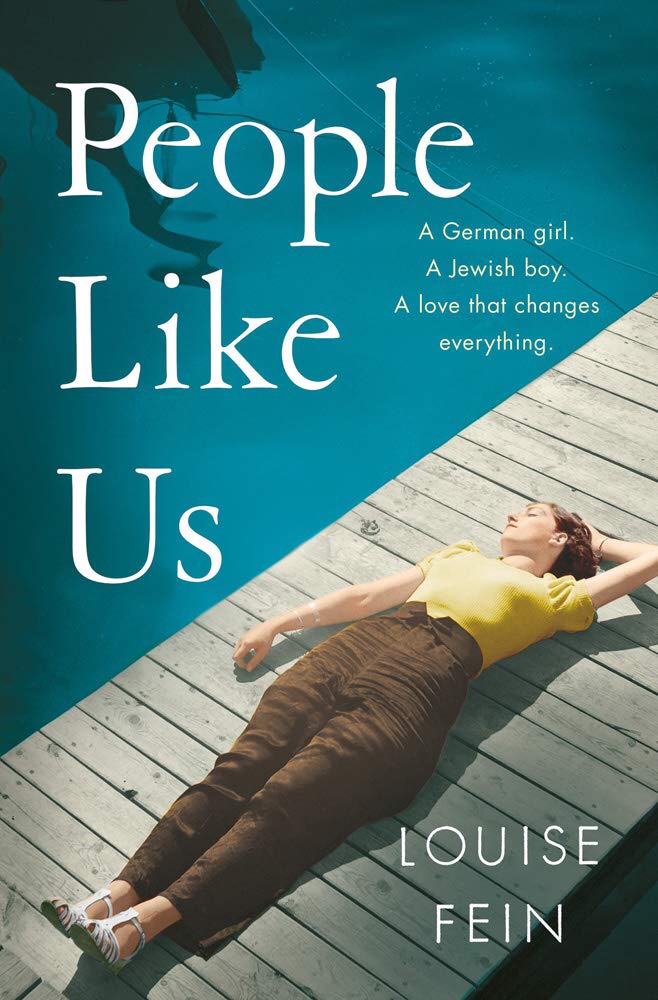
People Like Us by Louise Fein.

I was deeply affected by this novel about the rise of the Nazi Party in 1930s Germany, told from the perspective of a young girl living in Leipzig. The story opens as a young Herta is rescued from drowning by her brother Karl’s friend, Walter. It’s a powerful opener and a metaphor for the coming years, as Herta is slowly drowned by the tidal wave of nationalism, and fascism that overwhelms her country and changes her life altogether. Fein was inspired to write the novel after researching her family’s Jewish roots and eventual flight to London. During her research, she started to wonder how a country and it’s people could go from being a reasonable and tolerant society, to committing such atrocities against their fellow human beings. So, to explore that idea, she decided to write her novel from the perspective of an ordinary German child, slowly becoming brainwashed by the evil ideology. It’s the childhood innocence of Herta that makes this book work so well and allows us to have empathy, despite her allegiances.

Herta’s father has recently taken control of the city newspaper and his reward is their beautiful new family home, their servants and improved status in Leipzig society. He came from humble beginnings to marry Herta’s elegant French mother, but is now quickly rising through the SS ranks. Her elder brother Karl is in the Hitler-Jugend and she really wants to do her bit to make for Vati and Mutti proud of her too. So she pledges her life to the Fuhrer, to serve him and his purpose, totally unaware of its evil extent. Fein slowly shows us his plans, and along with some of our characters we’re like the proverbial frog in tepid water. Without our luxury of hindsight, we too wouldn’t have recognised how much danger we were in, until it was far too late and we boiled to death. There are those characters who truly embrace Hitler’s philosophy and purpose like Herta’s Vati, and below that are various levels of denial, collaboration and fear. Even Vati, has a jumbled mix of motivations: feelings of inferiority from his background and in his marriage; relishing the status and power; a certain amount of brainwashing.

Hitler’s propaganda machine was in full swing within Germany, aided by the country’s financial struggle since the Great War. The Weimar Republic, the post WWI government, signed the Treaty of Versailles in 1919. The treaty stated that Germany would take responsibility for the war, relinquish parts of its territory and pay reparations to the Allies. These policies caused huge social and economic hardship, a situation that the Nazis blamed on Jewish people and communists. A myth was even started that blamed the Jews for the signing of the treaty. Called the ‘stab-in-the-back’ legend, this story blamed Jewish infiltrators in government for the difficulties the German people were facing, despite the fact that many German Jews had served faithfully in the war. Now, the German people were worn down by hardship and poverty and were looking for someone to blame. Hitler exploited these conditions to devastating effect and ordinary Germans were taken in by it. So, when Jewish neighbours and friends started being restricted or sent to work camps, only very rare, brave individuals stood up for them.

The scene when Herta first realises something is very wrong is at school, and her teachers call on Jewish children to stand up in assembly. The shock is seeing her brother’s childhood friend Walter, singled out for abuse and ridicule. Walter can’t be a Jew. He’s the Aryan ideal, blonde and blue-eyed. Besides which, when she was very small Walter saved her from drowning. He had been a constant presence at the house when they were younger. Now here he was being called terrible names and sneered at by their new teacher. Herta is terribly confused, she has been told that Jews look a certain way, and act in a different way to her, but she feels that she and Walter are both the same. Bravely, she runs after him when he is expelled from school and triggers a friendship of her own. A friendship that as she grows-up, develops into love. What possible future can this relationship have under Nazi rule? Then, as it becomes ever clearer that Hitler will not rest until Germany is cleared of Jews, both Herta and Walter will have to make sacrifices and the legacy of these decisions will last until they are both very old.

I don’t want to say any more for fear of ruining the story, but there were many points where I was moved to tears by the situation these childhood friends and young lovers, found themselves in. The displacement of families during WW2 was extensive and with no way of tracing each other, there would have been people who never saw each other again. I married into a Polish family, my husband died several years ago and my father and brother-in-law more recently. My mother-in-law got out of Warsaw as a little girl, escaping through the sewers. Her mother stayed. Her father ended up in America. The family never reunited fully, with Hana finding out her father had ended up in the Boston area of the USA. He had searched but never found either of them. He assumed they had died and later remarried, never knowing that his wife and child did survive and were now in England together. Luckily when Hana found her other family, she embraced them and they in turn remained close to their English family. I felt that the author had really done her background research, possibly with families like mine. I believed in her world and characters immediately.

The background of Leipzig felt homely and friendly, but then developed into this menacing place where you didn’t speak or even spat at the old couple across the street. The night where Herta looks for Walter, knowing that violent confrontations will be taking place in the Jewish quarter, is so frightening and made me feel physically sick. It’s where the threats and rhetoric become real and deadly. Herta is only ever truly free in nature, walking her dog on a Sunday morning and sometimes seeing Walter. It’s harder for someone to conceal anything themselves in open fields and usually Herta can walk freely, enjoying the air and the birdsong. This place represents normality whereas the city is madness, chaos and murder. The ending broke my heart, as we contemplate with Herta on what the world will be like to a new generation. Will it be peaceful with the effects of war far behind, or will the ripples of this hatred and violence be felt for several generations more? I was so moved by this and the epilogue. Some books stay with you for life and I think this will be one of mine.

Published by Head of Zeus 7th May 2020.

Posted in Netgalley

The Last Goodbye by Fiona Lucas

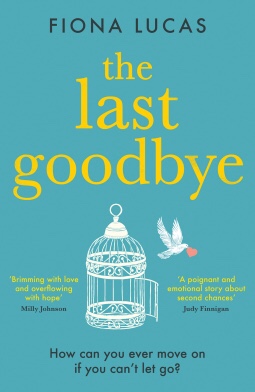
This romantic comedy had an unusual premise, but first attracted me because of the cover! I have a tattoo exactly the same on my lower back with a quote from Jane Eyre, so I was interested to know why the image represented the book.

Our female protagonist, Anna, is in the throes of grief after the death of her husband. The plot hinges on an interesting device – Anna calls her dead husband’s phone number and weirdly, someone answers. A tentative friendship develops allowing her to explore the anger, numbness, false starts and maelstrom of emotions as she rebuilds her life after such a huge loss. The first call happens on a New Years Eve just over two years since Anna lost Spencer. She has been coerced by her friend Gaby to go to a party and is suffering just one of several attempts over the last few months to set her up with a nice man. Of course whenever Anna meets someone new, it’s like a klaxon goes off in her head screaming ‘not Spencer’ over and over again. On this night Anna flees the party and heads for the comfort of home and for emotional support she rings Spencer’s mobile number, thinking that hearing his voice on the answerphone will reassure her. However, instead of hearing Spencer’s voice, a strange man comes on the line saying ‘ I beg your pardon’.

As more weeks pass and Anna feels so scared of leaving Spencer behind and living in the moment, she continues to call the number and talk to the man at the end of the phone. A friendship starts to emerge between her and the man who has inherited Spencer’s old number. His name is Brody and Anna starts to realise she is not the only one who wants to live in the past. Brody gives Anna the space to grieve. He doesn’t know Spencer so he has no vested interest or conflicting opinion to intrude on Anna’s grief process. In this way he acts rather like a therapist with empathy, zero judgement and a hope Anna will get through this. Other people in her life either want Anna to move forward when she is not ready, or to wallow in grief. Her friends seem to think two years is enough time to start moving forward and although they are well-meaning their interventions annoy Anna and push her too far too soon. Spencer’s mother Gayle wants to envelop Anna in her grief process. She assumes that because they both loved Spencer, their grieving process is the same. Anna keeps up their tradition of Sunday lunch together, just like when Spencer was alive, but also pores over old photo albums and still wants them to mark anniversaries like his birthday together. In her presence Anna becomes suffocated by grief and guilt when she thinks about moving on with her life. Anyone new in Anna’s life would seem like an insult to Gayle. There is nowhere she can do this grieving thing her way, honestly and openly.

My counselling supervisor used to say that if you find yourself giving the same piece of advice to several clients, it may be something you should look at for your own life. This is definitely the case with Brody, as he gives Anna advice he could do with listening to. Brody is living an isolated existence on Dartmoor with his dog. He allows Anna’s emotions to take the lead in their phone calls, but doesn’t seem keen to divulge his own. I started to wonder why he is living the life of a hermit. What is he hiding away from? Between Brody and her best friend Gabi, Anna starts to feel she can gather all these broken fragments of herself together and start to rebuild. The author found a unique structure for the novel, that allowed Anna’s raw grief to find its voice in these late night phone calls. Brody becomes Anna’s closest friend and with Gabi’s help, she now has hope and a way forward that is so uplifting for the reader. Both the main characters have such moving stories they bring a lump to the throat and their journey through grief is brilliantly rendered by the author. She shows us that each person’s grief is individual, it has its own path with unique highs and lows. She also depicts something I often say to – you can’t get round or climb over grief, the only way out is through it. I could see Anna reaching for the other side of her pain and I found myself wishing for Brody to find his way out too.

What a beautifully written account of grief this is. I was moved and uplifted, and the experience of grief felt very authentic. So what about the cover image and that tattoo? My husband died in 2007 and I rushed my grief journey, only to end up in an abusive relationship that took three years to leave. So, on my fortieth birthday I had my birdcage tattoo and underneath the words from Jane Eyre ‘ I am no bird; and no net ensnares me’. It reminds me I can get through anything so it feels like a fitting image for Anna and Brady’s story.

Meet the Author

Fiona Lucas is an award-winning author of contemporary women’s fiction. The Last Goodbye is her first novel written under this name, but she’s been writing heartwarming love stories and feel-good women’s fiction as Fiona Harper for more than a decade. During her career, she’s won numerous awards, including a Romantic Novel Award in 2018, and chalked up a no.1 Kindle bestseller. Fiona lives in London with her husband and two daughters

Posted in Netgalley

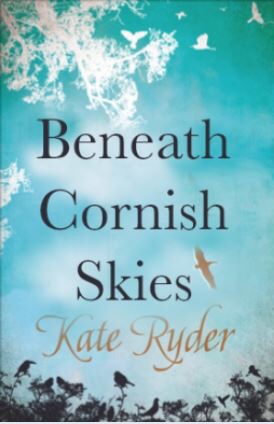
Beneath Cornish Skies by Kate Ryder.

Published: 7th Jan 2021 Aria and Aries ISBN: 978-1800245983

I felt like I’d stepped into a little oasis when I picked up this ARC. I had been reading a very bloody crime novel just before so this was like a balm for the soul! Cassandra appears to have everything she could want in life. She lives in an incredible refurbished farmhouse on the South Downs with attached stables. Her long term partner, David, is a successful businessman who just happens to be charming and good looking. They have money and she can spend her time schooling horses then dressing for dinner from her beautiful walk-in wardrobe. David calls her Sandie and they’ve been together over ten years – in fact ever since she was involved in a car crash that killed both of her parents. David was first on scene and helped her out of the wreckage. They’ve never been apart since. He was attentive in the days following the accident, there for her therapies and as she was wheeled out of the hospital it seemed only sensible to stay with him – there being nowhere else to go. So why is she feeling dissatisfied and as if she’s drifting?

He catalyst comes as she’s out riding one morning and stops for a breather in one of the top fields behind the house. As she looks down to the farmhouse she sees David, who is working from home, and their cleaner Melanie coming to sit outside with a cup of coffee. She wonders to herself about the last time David paused his day to have a moment with her. Then she sees Melanie rest her hand on his arm, in a familiar way and she starts to sense that there’s more going on she realised. The incident brings to the forefront of her mind many things about her life that she’s unhappy with. David is all about appearances, so the house must be kept tidy at all times. She’s almost trained to wash a cup or plate immediately after she’s used it. He likes to come in and find the house immaculate. He calls her Sandie or Sandra when her full name is Cassandra and he likes her to dress well especially if they’re going to a party or function for work. Even then she can’t let loose, no dancing or drinking excessively, nothing that might show him or the business in a bad light. Yet, that very evening at a barbecue, she sees him exiting a private bit of the house, again with Melanie in tow. When she finds an earring in their bedroom, she can’t ignore things any longer. It’s not just the obvious infidelity. She needs something different.

On impulse she picks up The Lady magazine, drawn in by the cover photo of a man walking from a tunnel of trees. The man is a writer, Hunter Harcourt, and his article about ancient byways and the magic they possess. Within the adverts though she finds an advert that catches her eye; a family in a Manor House in Cornwall need help with the stable yard and a growing family for six months. This might be just the breathing space she needs. With David seemingly unrepentant about his affair, Cassandra finally asks him the one thing she has always wanted to know – will he ever be willing to have the children she has always wanted? David is adamant, children are not in his future. So, early one morning Cass hitches the horse box to her Range Rover and takes a leap of faith. She drives to Cornwall, only stopping at Melanie’s home to return the earring. What she finds in Cornwall is space enough to think, but activity enough not to dwell on what has happened. She falls in with the Kinsman family and their gorgeous children very easily. The Manor House and grounds are beautiful and Caspian soon finds his feet with the other horses. Cass finds solace in the rugged Atlantic coastline and the time spent with the children. She is shocked when, on her day off, she is looking for something to fill the hours when she happens on a talk on local history by a local author, Hunter Harcourt, otherwise known as Luke. Their meeting begins a friendship that seems so natural, almost as if they’d met before.

There was so much to like about this book. I love Cornwall and I felt as though I was there, with the descriptions of the villages, the beaches and those ancient places that seem to hold magic. I loved watching Cass unfurl in her new environment as she fits in so beautifully with the Kinsman family, the landscape and the new friends she makes such as surfer Robin. This is about someone awakening and finding their authentic self, something she’s never been able to do before, having been so busy fitting around David’s standards and timetable. Cass went straight from her parent’s household to David’s with no gap between. This is the first time she has stood on her own two feet and her confidence grows. The relationship with Luke seems so predestined that it was a huge disappointment to find out he’s married to the feisty Amanda. We soon see the cracks in their marriage though, not just her infidelity, but their differing views on where to live seem insurmountable. The natural way Luke and Cass seem to fit together seems to be pre-ordained – this is where I felt more could have been made of the supernatural aspect of the story.

Soon after arriving Cass finds that the manor is haunted by several ghosts, but the one she seems to see most is the young girl who had fallen in love with the gamekeeper. Cass feels that, just like the ancient byways, there are spaces within the fabric of time at the manor, where ghosts may appear. Cass has an affinity with the the young woman in her peacock blue dress, but could it be more than that. It felt like the author was flirting with the idea of Cass and Luke being a reincarnation of the couple – the references to her gypsy soul, the sense they have of meeting before, the apparition Cass sees and hears. I think this could have been explored even more than it was. Cass clearly has some psychic ability; she experiences the ghost of a maid, has vivid dreams about places and people from another time, and at one point hears a ghost ship. I found myself wanting more of this and would have loved to know more about the daughter of the house and the gamekeeper, possibly in another time frame. Luke is a dream of a man, gentle, intelligent, loves the outdoors and animals and seems to know himself very well. His marriage seems to be one made when young, when differences in outlook seem to matter less and we think love can overcome anything. Sadly, Luke finds as he gets older, the more he needs the pace of life in the country whereas Amanda is a city girl who needs the bustle and the noise.

Of course I wanted David to get some sort of comeuppance for his awful behaviour. Even in absence he tries to push Cass’s buttons by ordering her home, then pleading that he loves and misses her while mentioning someone he’s having casual sex with in the next breath. He is arrogant, fussy and I couldn’t think of a single reason Cass should return to him at the end – other than habit and conditioning. I won’t ruin the end, but it does keep you hooked to the final pages when a terrible secret emerges. This was a gentle romance, set in a beautiful part of the world and is as much about Cass falling back in love with herself as it is anyone else. It’s a voyage of self-discovery, where slowly she heals and finds her authentic self. I found it thoroughly enjoyable and a little oasis of calm in a busy month.

Meet The Author

Kate Ryder

Kate Ryder is an Amazon Kindle international best seller who writes timeslip and romantic suspense in a ‘true to life’ narrative. On leaving school she studied drama but soon discovered her preference for writing rather than performing. Since then, she has worked in the publishing, tour operating and property industries, and has travelled widely.

A member of the Romantic Novelists’ Association and The Society of Authors, in 2017 Kate signed a 4-book contract with Aria (digital imprint of award-winning independent publisher, Head of Zeus). Originally from the South East of England, today Kate lives on the Cornish side of the beautiful Tamar Valley with her husband and a collection of animals.

Keep in touch with Kate:
http://www.kateryder.me
Twitter: https://twitter.com/KateRyder_Books
Facebook: https://www.facebook.com/kateryder.author
Instagram: @kateryder_author

Posted in Personal Purchase

Halloween Reads: The Gothic Romances of the Brontes and Du Maurier

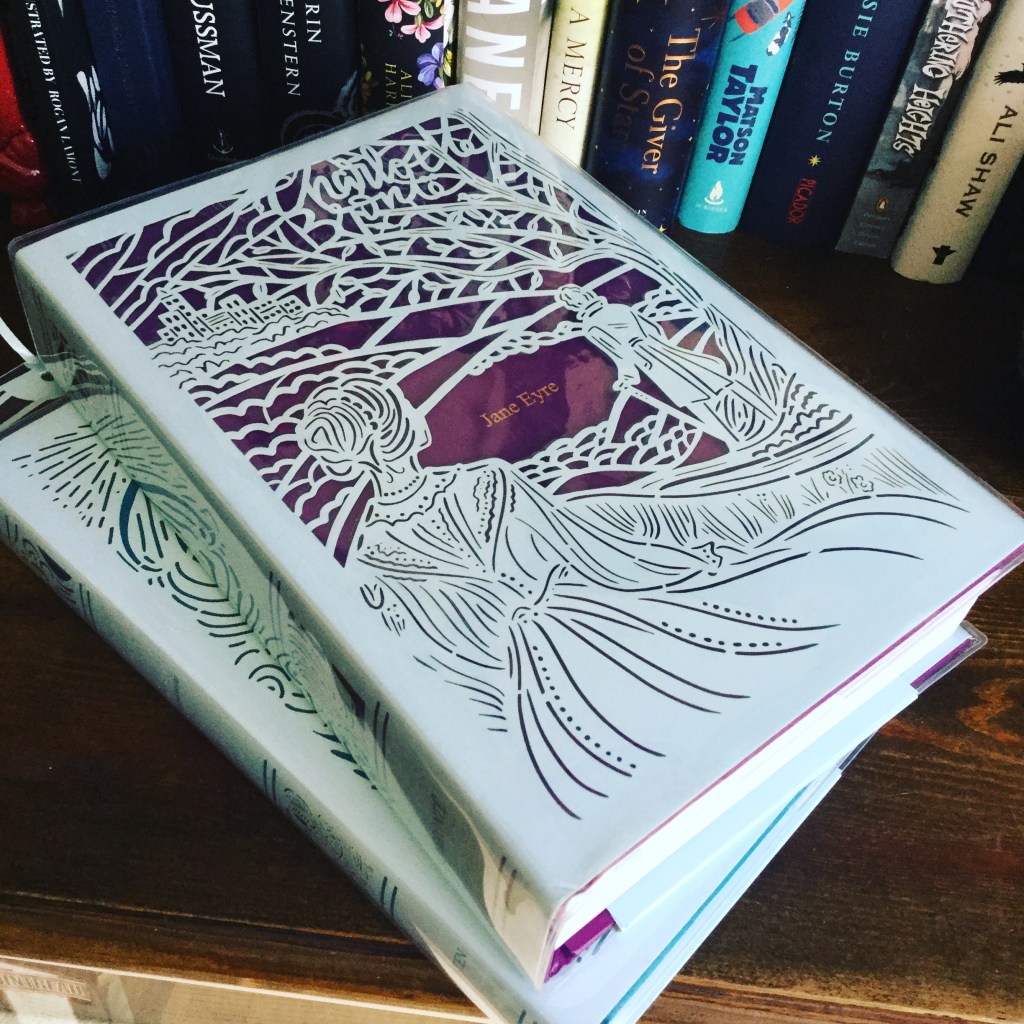
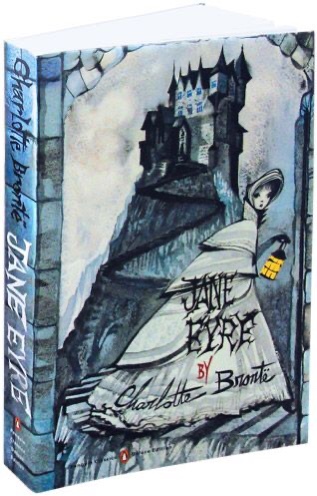
When we talk about classic Halloween reads we tend to think of M.R. James, Dracula or Frankenstein and they’re all brilliant. Most people don’t automatically reach for the Brontes, but for me they were my first scary reads. I was ten when I first read an abridged version of Jane Eyre, closely followed by watching the BBC series with Timothy Dalton as Mr Rochester. In my ten year old mind this wasn’t a love story, or a feminist manifesto but a really spooky ghost story. My abridged version included the supernatural experience Jane has when her guardian Mrs Reed has her locked in the Red Room. Aware of stories about orbs of light fitting around the graveyard at night, Jane bangs on the door desperate to escape. In her state of fear and passion Jane sees a light and feels the presence of her dead Uncle Reed. She tries to beat down the door before falling into a faint.

Thornfield Hall is remote, dark and brooding rather like its owner. Every hint leans towards something spooky going on. Rochester’s first appearance is preceded by a huge black dog appearing from the fog, and Jane thinks it is a supernatural being. Rochester appears on a black horse and soon on his return things start to go bump in the night. Jane hears strange laughter in the night, banging from the door to the attic and one night, smoke is billowing from Rochester’s room. The blame for this attempt to burn Rochester in his bed is laid at the door of Grace Poole, a strange servant who seems to have no purpose in the house. I remember my ten year old self being scared but thrilled by this mystery of who or what exactly occupies upstairs. The scene of the night before Jane and Rochester’s wedding really spooked me. Jane wakes to see a tall, dark haired, woman wearing her wedding veil. She’s looking at her own reflection which is ghastly white. She then slowly moves round to look at Jane in the bed and my heart is speeding up at this moment. I was scared stiff but couldn’t stop reading. Jane recalls a ghastly visage, darkened circles round the eyes, reddened lips. There is definitely something vampiric about her, rather than ghostly. Rochester tries to gaslight Jane into thinking it’s a dream, but she has proof it was something more human than spectre. Her wedding veil is rent in two. Now Rochester says it must have been Grace, but Jane is unsure. This looked like someone completely different and why would Grace tear her wedding veil?

At ten I only thought about the ghostly aspects of this and when the truth was revealed I saw a monster and not a person. Bertha Mason was simply a madwoman foisted upon Rochester, because my focus was on Jane and her love story. Of course with re-readings and a feminist awakening in my teens I could see that this was an awful tragedy for Bertha too. I also loved The Wide Sargasso Sea and understood that in another reading of the story Bertha was born Antoinette and sent into a marriage with Rochester. Due to being passionate and wild natured she is rejected by Rochester who expected a more measured, obedient bride, sexually shy and generally calm and quiet. For being herself she has her name taken away, is removed from the Jamaica she loves and is imprisoned in an attic with only a servant for company. No wonder she’s angry!

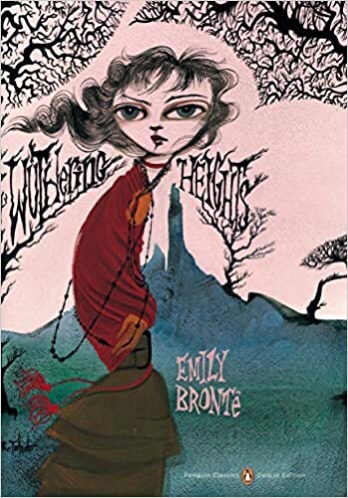
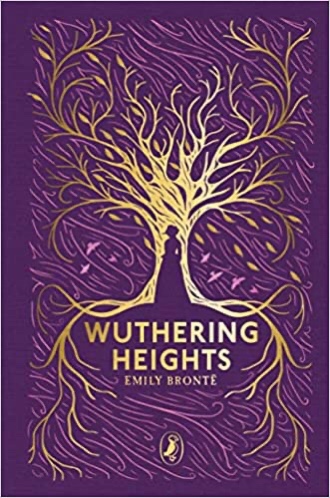
Charlotte’s sister Emily is also adept at creating a gothic atmosphere and there are parts of her novel Wuthering Heights that are downright terrifying. Of course Cathy and Heathcliff’s relationship is dark, dangerous and obsessional. The atmosphere is brilliantly creepy with the bleak moors, driving winds and lowering skies. The house is old and remote, containing many years of unhappiness by the time our first narrator happens upon it in a storm. He desperately needs shelter and although the people of the house seem odd and the master unnecessarily brusque and harsh towards the younger residents, he is grateful of a room for the night. The room he is given contains books with the name Catherine Earnshaw inscribed inside the cover and he wonders idly who she might have been. The wind is wild outside the window and he settles into his bed grateful he has found the place. He is woken by what sounds like tapping at the window and he thinks it must be branches. He opens the sash to grasp the branch and snap it off but the window breaks and he finds himself holding a freezing cold child’s hand. I remember being so scared by the thought of this ghostly child, floating at the window, desperate to be let in. She pleads with Lockwood to let her in. She is so cold. Yet when he tries to let to go, she grasps on tightly. In fear, Lockwood forces the wrist down into the jagged edge of glass left in the window frame. He then pulls it back and forth until blood runs from the white cold wrist. This is pure horror. If we imagine this scene being filmed as it’s written, it really would be scary.

Most adaptations tend to focus on the love story, but this could be a really tense story of ghostly horror. There are ghosts aplenty in this house. Hindley drinks himself to death haunted by the loss of his wife. Heathcliff is so haunted by Cathy he pushes Lockwood aside and tries to call her back from the moors. When she dies he dashes his head violently against a tree till he’s bleeding. He then goes to her grave and tries to dig her up with his bare hands. I watched an enjoyable adaptation, again with Timothy Dalton, where Cathy’s ghost lures him back to Wuthering Heights. Her ghost floats across the moor calling to him and he follows all the way back to the farm where he is shot as an intruder. Then he and Cathy flit out onto the moors together as wandering spirits, reliving their childhood wild days exploring and hiding from the adults. It’s not true to the book, but I loved that it embodies those gothic origins to the tale.

I love that these quiet sisters, living together in a Yorkshire vicarage, came up with these dark obsessional characters and horrific scenes of gothic horror. I believe my early reading choices are what shaped my love of writers like Laura Purcell, Diane Setterfield’s The Thirteenth Tale and last year’s The Lost Ones by Anita Frank. As soon as I start a book like this I smile to myself and I feel something of that magical excitement I used to get when reading a chapter of Wuthering Heights before bed or settling down at Saturday teatime to watch an adaptation of Jane Eyre. Both these Victorian tales create a similar feeling in the reader. It’s the confusing mix of excitement and terror that every good horror story needs, it’s what keeps us reading – as well as being too scared to turn the light off.

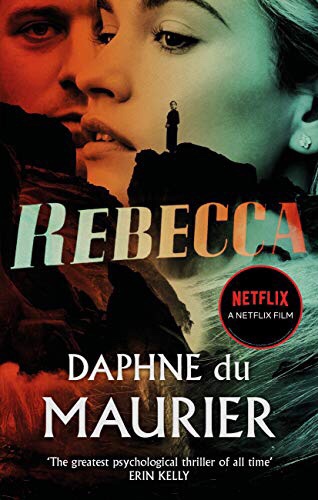
Another writer strongly influenced by Jane Eyre in particular is Daphne Du Maurier. Most readers have come across her short stories thanks to the film versions of The Birds and the brilliantly creepy Don’t Look Now. However, the book in my list of all time favourite reads is a Rebecca. This book is up there with the best psychological thrillers of all time and takes that theme of ‘madwoman in the attic’ and brings it into the 20th Century. It also has one of the scariest gothic creations in housekeeper Mrs Danvers – still hopelessly devoted to her dead mistress, the first Mrs de Winter. In a great first line – ‘ last night I dreamt I went to Manderley again’ – we are introduced to the gothic mansion, the ancestral seat of the de Winter family. Large, foreboding, and clinging to the edge of a cliff in Cornwall. When master of the house, Maxim de Winter brings a young bride home from Europe they are both assailed by memories of his beautiful and brilliant late wife Rebecca, who drowned while out sailing. This haunting is a psychological one and the attic is the mind. The unnamed second wife is plain, young, inexperienced and gauche. She has no idea how to run a house like Manderley and everywhere are signs of her predecessor: the west wing, the embroidered R de W everywhere, her correspondence in the morning room. The staff continue to run the house as before and instead of taking charge she tries to fit in. She lives under the impression that she’s second best and will never measure up.

Many of her qualities echo those of Jane Eyre and there’s a lot to be said about older men wanting more acquiescence and a chance to mould a younger, second wife. While this young woman tortures herself about how much her husband must have loved this brilliant woman, Mrs Danvers starts to turn the screw. Cadaverous in appearance and very severe when communicating, she does everything she can to intimidate her new mistress. She even shows her Rebecca’s lingerie, totally sheer and embroidered with R they conjure up an image of sexual experience, something else this woman doesn’t have. Worst of all, she suggests that copying a portrait of Maxim’s ancestor Lady Caroline de Winter might be a good costume for the ball they’re holding. On the night she appears at the top of the stairs to gasps from the guests and unchecked anger from her husband. Totally bewildered and distraught, her sister in law informs her that Rebecca had done the same thing for the last ball. It was like a ghost appearing at the top of the stairs. Mrs Danvers lures her to the west wing and almost talks her into jumping from the window in a scene of heart-stopping tension. When the truth about Rebecca emerges what will it mean for everyone at Manderley? This book is a romance, but with strong gothic overtones in its setting and although Rebecca does not physically appear as a ghost, she is often more present in this house than anyone else. It is most definitely within the Bronte’s genre of gothic romances and delivers good, old-fashioned, creepiness. Look out for a new adaptation of Rebecca coming soon to Netflix.