Posted in Random Things Tours

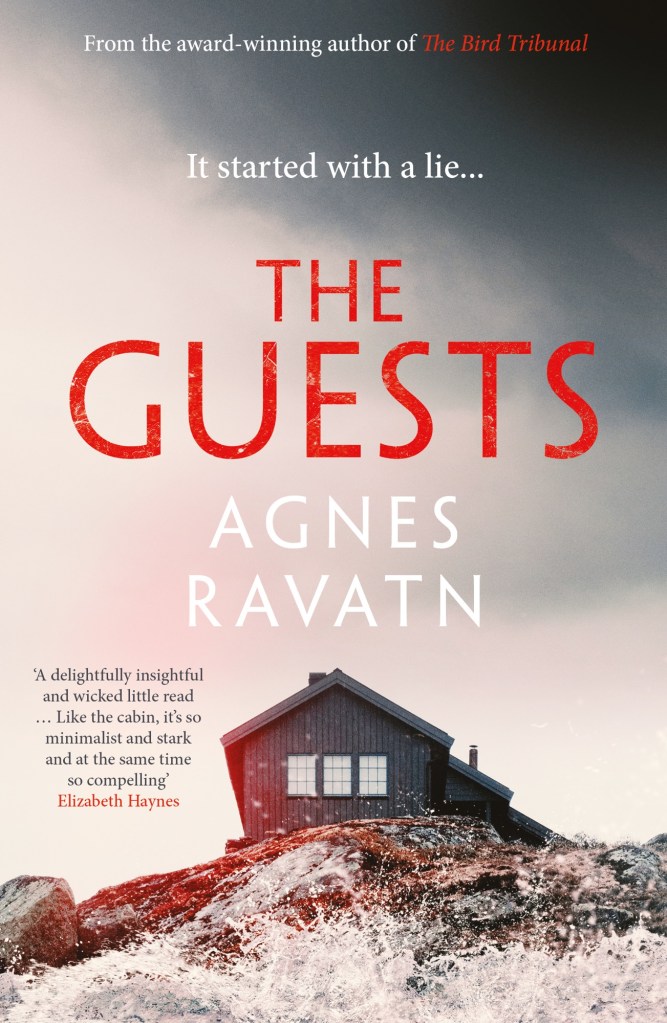
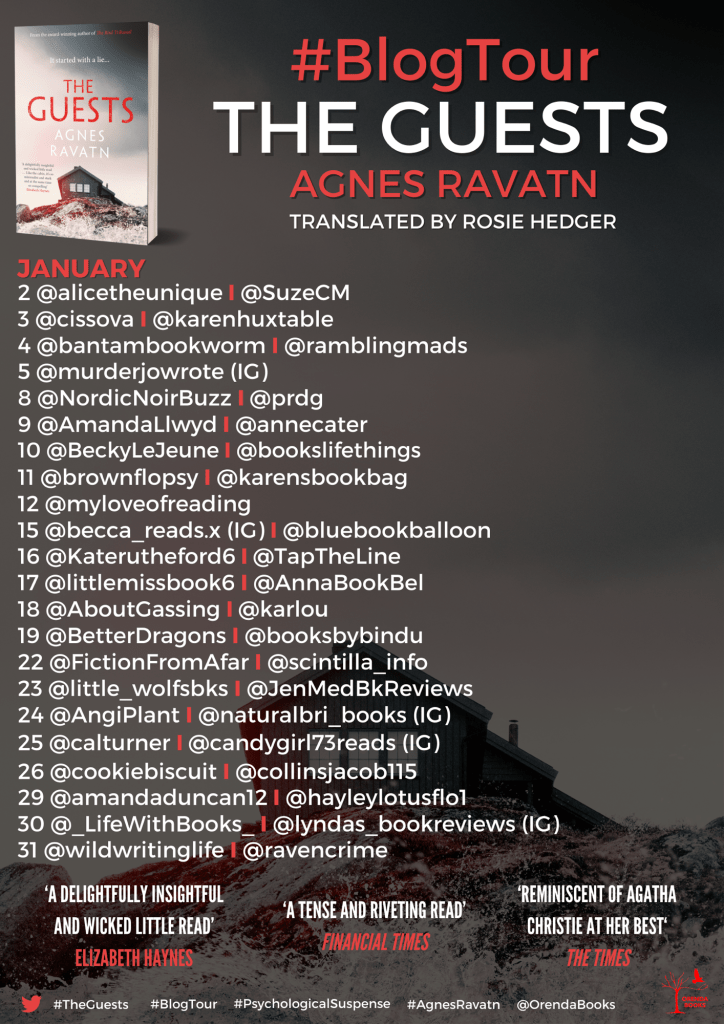
The Guests by Agnes Ravatn


It started with a lie…
Married couple Karin and Kai are looking for a pleasant escape from their busy lives, and reluctantly accept an offer to stay in a luxurious holiday home in the Norwegian fjords.


Instead of finding a relaxing retreat, however, their trip becomes a reminder of everything lacking in their own lives, and in a less- than-friendly meeting with their new neighbours, Karin tells a little white lie…


Against the backdrop of the glistening water and within the claustrophobic walls of the ultra-modern house, Karin’s insecurities blossom, and her lie grows ever bigger, entangling her and her husband in a nightmare spiral of deceits with absolutely no means of escape…

This is a slow burn novel, with a cast of characters that I wasn’t even sure I liked, yet somehow it gets under your skin. It says a lot about the way we want others to perceive us and how appearances can be deceptive. Karin works in local government, in the planning office, and her husband Kai is a joiner by trade and has his own business. Iris, a woman Karin once knew and dislikes, has offered Kai the job of renewing some steps on the jetty of her family’s holiday home. It’s in a very exclusive area of the Norwegian Fjords that’s a playground for the upper middle classes. From the start Kai seems more comfortable about accepting the holiday for what it is – an experience they’d never afford themselves and they might as well enjoy it. Karin is more conflicted and not just because the owner is Iris. Iris found herself a very rich husband, who started out selling solar panels. Karin’s discomfort worsens when she finds out how Mikkel has made his fortune. He invented a search engine with an algorithm that sorts and compiles publicly available data into a report to inform the potential buyer of a new home. However, instead of the usual data we’re used to on RightMove or Zoopla, this provides information that seems a little more intrusive. With the touch of a button the potential buyer can find out:

Salaries, professions, nationalities. Political leanings, religious affiliations, previous convictions, plus links to any social-media profiles they might have. The average grades and results of any national examinations in all schools within the catchment area. The ethnic composition of each individual class at each individual school and nursery in the area. A pie chart showing annual salaries within the neighbourhood, all handily compiled in one diagram. And all of this within a radius of your choosing!

Karin is horrified by the implications of the search. It means people can avoid having neighbours of a different ethnic origin if that’s important to them. They can make sure their children are mixing with others of the ‘right’ class and educational attainment. It allows people’s prejudices to determine their postcode and creates upper class enclaves that exclude people like her and Kai. The children of the buyers would be brought up to look down on others and believe that any weakness in life warrants contempt. There’s a wonderful line where Karin comments on how incredible it is to start your working life selling solar panels and ending up pushing social segregation. While out walking along the water’s edge, Karin comes across some other cabins and a man fishing. As she nears him he tells her she’s on private property. Karin turns back, seething about his rudeness, but she has also recognised him as the author Per Sinding. She hasn’t read any of his novels but she has read and enjoyed those of his wife, Hilma Ekhult. Karin believes Ekhult is a wonderfully authentic author, the ‘real deal’. So when they bump into them later while out on the boat, Karin has a moment of madness and tells the couple that she and Kai own the house and claims to have invented the property search engine she despises. Now seen as the ‘right sort’ of people, they are invited for dinner and now the couple must keep up the pretence.

The tension is incredible as these couples continue to meet. Even just Karin’s internal tension as she veers between thinking she’s getting one over on the famous couple but perhaps underneath she wants to be accepted by them. Kai is a more laid back character, going along with the ruse but really not bothered by what these people think of him. In fact he and Per get along rather well, but would they if they’d met in different circumstances? I was on tenterhooks waiting to see if Karin would break, but in her paranoia she starts to suspect everyone. She views their holiday home on GoogleEarth and sees Kai’s van there, but how could it be? The picture is months ago. Could he have known Iris before they ‘accidentally’ met? The twists are great and though I didn’t like the characters I was fascinated by the way they interact with each other and on what terms. This is beautifully written and very psychologically astute, and the author has her finger on the pulse of modern society’s preoccupations, goals and rules of engagement. If like me you enjoy people, society and how we fit together (or don’t) then this is a great read for you.
Meet the Author

Agnes Ravatn is a Norwegian author and columnist. She made her literary début with the novel Week 53 in 2007. Since then she has written a number of critically acclaimed and award-winning essay collections, including Standing, Popular Reading and Operation Self-discipline, in which she recounts her experience with social-media addiction. Her debut thriller, The Bird Tribunal, won the cultural radio P2’s listener’s prize in addition to The Youth’s Critic’s Prize, and was made into a successful play in Oslo in 2015. The English translation, published by Orenda Books in 2016, was a WHSmith Fresh Talent Pick, winner of a PEN Translation Award, a BBC Radio Four ‘Book at Bedtime’ and shortlisted for the Dublin Literary Award and the 2017 Petrona Award for Best Scandinavian Crime Novel of the Year. Critically acclaimed The Seven Doors was published in 2020. Agnes lives with her family in the Norwegian countryside.
Posted in Squad Pod

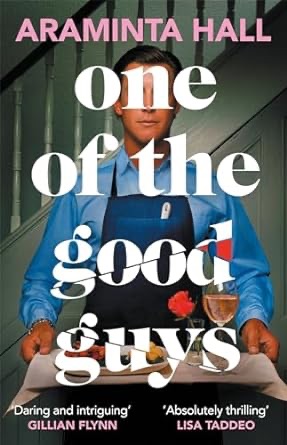
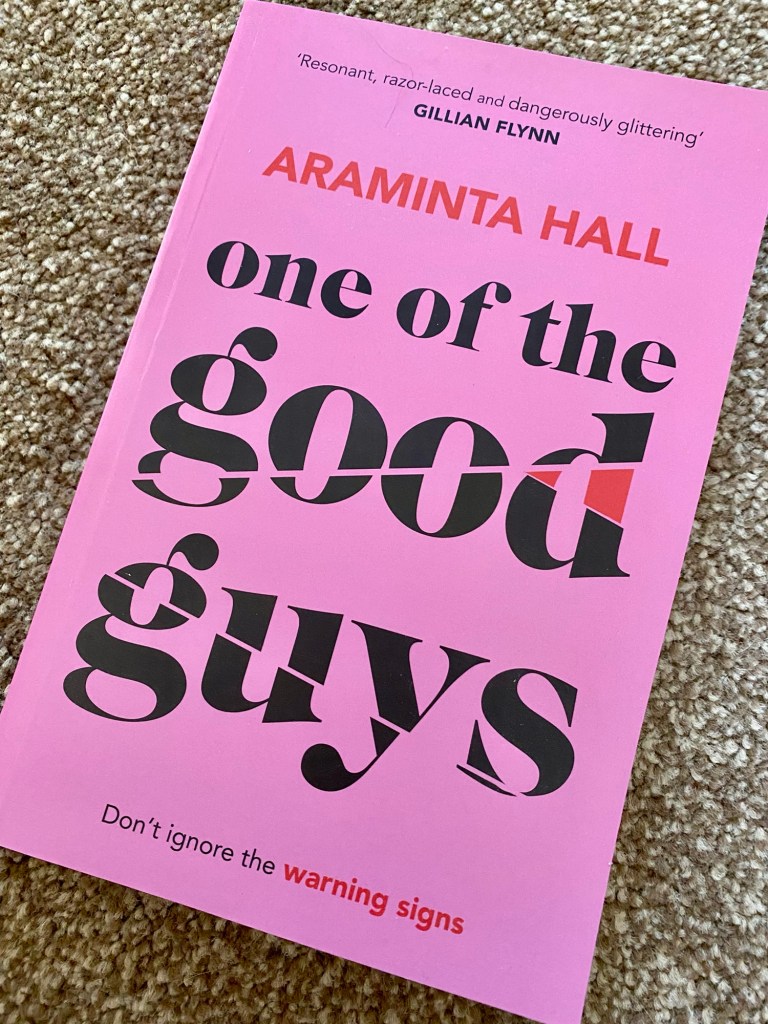
One of the Good Guys by Araminta Hall

Cole is the perfect husband: a romantic, supportive of his wife, Mel’s career, keen to be a hands-on dad, not a big drinker. A good guy.

So when Mel leaves him, he’s floored. She was lucky to be with a man like him.

Craving solitude, he accepts a job on the coast and quickly settles into his new life where he meets reclusive artist Lennie.

Lennie has made the same move for similar reasons. She is living in a crumbling cottage on the edge of a nearby cliff. It’s an undeniably scary location, but sometimes you have to face your fears to get past them.

As their relationship develops, two young women go missing while on a walk protesting gendered violence, right by where Cole and Lennie live. Finding themselves at the heart of a police investigation and media frenzy, it soon becomes clear that they don’t know each other very well at all.

This is what happens when women have had enough.

Wow! This blows your eyes wide open. I warn you not to start reading at night, unless like me you have a total disregard for tomorrow. Even if I wasn’t actively reading it, I was thinking about it. Cole has moved to a remote part of the coast for a total life change after the collapse of his marriage. Cole considers himself one of the good guys. In fact he would probably call himself a feminist. So the marriage breakdown and Mel’s reasons are inexplicable to him. He was proud of Mel, who was launching her own business, but as they crept towards their late thirties he was starting to wonder if they were leaving it a bit late to start the family they both wanted. After trying for a while, they’d decided on IVF which he knows was more gruelling for Mel than him, but was she really giving their embryos their best chance? Always working late, not eating properly and popping back to work after implantation were all endangering their chances of a viable pregnancy. Despite cooking and caring for her, and supporting her business dreams, Cole is now facing a pile of legal papers on the kitchen table – divorce papers, financial settlements and perhaps most hurtful, a form agreeing to destruction of their final three embryos. What can he have done to deserve this?

As he slowly heals he notices someone is living in the old coastguard’s cottage, a woman he can’t stop watching. She seems so feminine, but yet grounded enough to put her wellies on with her dress while she’s gardening. She is an artist and when they meet a party she introduces herself as Lennie. When he asks what it’s short for she tells him it’s Leonora. No one calls her that but Cole insists. It suits her better he tells her, softer and more feminine. Could the two of them strike up a friendship, or even more? In the background, getting air time on radio and television, are two young women in their twenties who have decided to take on a challenge – a fitting continuation of the work done by women’s movement in the 1970’s. They want to highlight the daily misogyny and violence against women that’s endemic in society. So they plan to walk over 300 miles of the coastal path, camping out each night in a tent. They know that this is dangerous but they want to support a domestic violence charity and raise as much awareness as possible for those women and girls living in daily fear of violence. However as the girls go missing one night it seems they may have fallen victim to their own cause. Could they have become lost and died from exposure? Could they have misjudged their steps and fallen from the cliffs? Or has something far more sinister happened – one of their online trolls following through on comments like ‘you deserve to be raped’.

I loved the way the author put her story together, using fragments from lots of different stories and different narrators. Just when we get used to one and start to see their point of view, the perspective shifts. I thought this added to the immediacy of the novel, but also reflected life and the constant bombardment of information and misinformation we sift through every day. As well as Cole we have narration from Lennie and Mel interspersed with transcripts of radio shows and podcasts, Twitter threads and TV interviews. All give their perspective or commentary on the casual misogyny and violence against women that almost seems like the norm these days. Just like real life the book sometimes felt like a merry-go-ground of opinion, counter argument and trolling. Sometimes I was left so twisted around I wasn’t sure what I thought any more. The only thing I was sure about was much I disliked every single character, but I couldn’t stop reading them either. I would believe one narrator, but then later revelations would blow what I thought right out of the water. As the missing person’s case continues, everyone is weighed up then torn apart on social media and in the press. It made me ask questions: about the nature of art and it’s ethics; about whether all men truly hate women; to what lengths do we go to protest; when is enough, enough? It’s been over a week since I finished this extraordinarily controversial story and I still can’t stop thinking about it. Is it too early to predict a book of the year? I don’t think so.

Thanks to Macmillan and The Squad Pod Collective for my proof copy of this amazing novel.

Meet The Author

Hello, I’m a writer of thrillers and a lover of stories. 

My latest book, ONE OF THE GOOD GUYS, was inspired by a groundswell of anger I’ve been feeling myself and amongst the women I know. Because if we don’t feel safe in the world, then it’s still a very unequal world. This is my answer to what happens when women have had enough of being scared.

I hope you enjoy this tense story set in a remote seaside location. I’d love to know if you guess the twist – I’m on instagram and X @aramintahall 

And, if you do enjoy this one, I’ve published five other novels, EVERYTHING & NOTHING (2011), DOT (2013), OUR KIND OF CRUELTY (2017), IMPERFECT WOMEN/PERFECT STRANGERS (2019) & HIDDEN DEPTHS (2021

Posted in Squad Pod

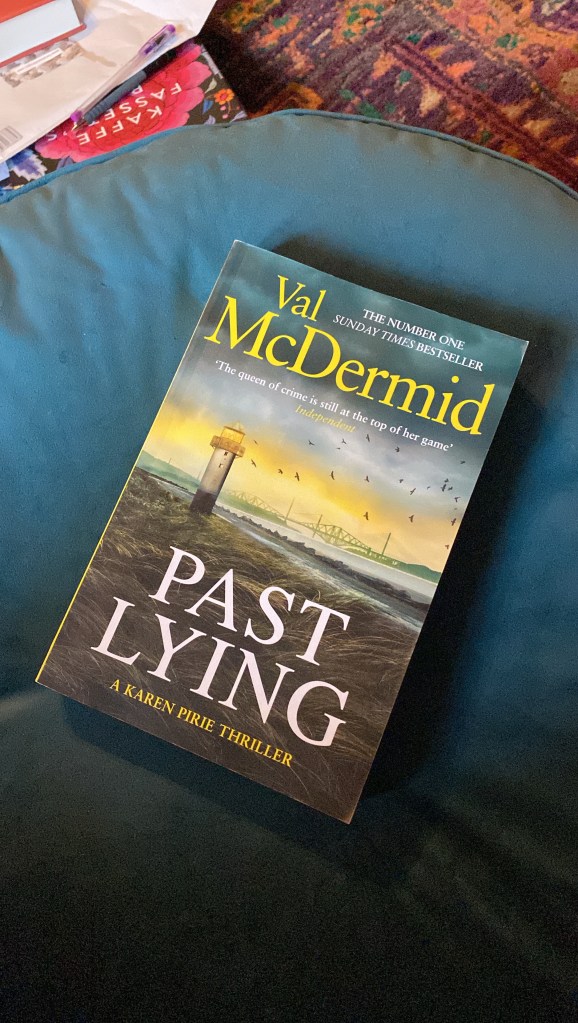
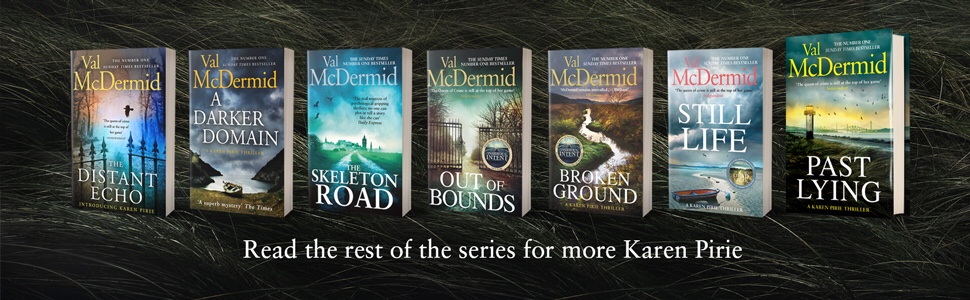
Past Lying by Val McDermid. Karen Pirie Series.

I was so blown away by my first Val McDermid novel last month that I couldn’t settle to any other reading when I knew that this sequel was waiting for me on the book trolley! So in the end I gave in. We left DCI Karen Pirie at the beginning of lockdown, which she’d decided to spend in her lover Hamish’s huge Edinburgh flat with her new constable Daisy. It was a hurried and unexpected choice, with Hamish retreating to his Croft in the Highlands where he was now making hand sanitiser and profiting nicely. The team are officially stood down from working, but Karen had ordered some cold case files to be taken to the flat so they could at least read and review them. She isn’t known for being good at following rules so lockdown is a challenge, with her midnight walks and checks on the old flat she bends things a little to suit her. It would be impossible to imagine her not working though and luckily her DS Jason gets an unexpected call that triggers something. A librarian is using lockdown to file away items donated to the archive and she has been working on the papers of the late author Jake Stein. In them she found an unfinished manuscript that bothered her. The narrator is a crime writer and he abducts an aspiring writer from one of his workshops, a young girl called Laurel Oliver. He describes taking her to a shack in the woods and strangling her, then planting her body in the garage of another crime writer, Rob McEwan. Rob and Jake met at a festival and became friends, with Jake being the big name and Rob just starting out. They discovered a mutual love of chess and would play each other each week at Jake’s house, where he has the classic car, the high end kitchen decor and a beautiful wife. A beautiful wife who seems to get along with Rob very well. Stars in any creative field can fall as well as rise and as the tables start to turn for these two could Jake have carried out this murderous blueprint? All the way down to the detail of concreting her body into the inspection pit of Ron’s swanky new house? Since once of their cold cases is a young girl called Lara Hardie who did disappear in Edinburgh at the time of this manuscript, Karen can’t afford to take any chances.

It must have been very hard to write tension and excitement into a situation where people can’t go far and are largely researching online and in archives. It’s not fast paced activity and I always remember laughing out loud at a moment in one of Dan Brown’s thrillers where his hero tries to make running to the library sound macho and full of action. It could have gone horribly wrong, but somehow Val McDermid brings real tension to the case. That’s without the anxieties of every day life at this very surreal time, which are captured perfectly by the author. She relates to us the strange emptiness of a busy capital city and the difficulty of having to apply the intricacies of COVID legislation to your every movement, even if it’s just looking at papers in a library. Karen is possibly even more impatient in her working life, so there are times to bend the rules a little, but it means she never slips into the slapdash lazy ways of other people who seem to think it’s an excuse to shut down. Her boss ‘the Dog Biscuit’ thinks she could easily stay at home because HCU cases can wait; the case has no urgency, since the main suspect, Jake Stein, will never come to trial. However, maybe because she lost the love of her life to murder, Karen understands that the sooner a victim’s family finds out the truth, the better. This applies whether the suspected killer is alive or not. Besides, despite what the manuscript suggests, she’s not going to pigeon hole the case just yet. Things aren’t always what they seem.

Her relationship with Hamish is proving difficult and not because he’s in the Highlands on his croft. They actually have more problems when they see each other, probably because they shouldn’t be. There’s something about Hamish’s cheerful ability to make money out of other people’s misery that rankles with Karen. He’s angry to find Karen isn’t home in the night, but she’s out walking. Unbeknownst to Hamish, there’s an asylum seeker staying in Karen’s flat after threats were made against his life. It’s a favour for a good friend and Karen is so moved by his situation that she buys him new clothes and stocks the cupboards. We see a side to Hamish we’ve never seen before when he has a confrontation with Daisy after turning up at the flat with no warning and against regulations. This time he threatens Daisy, but on a second illegal visit he becomes violently angry to find this strange man staying in Karen’s flat. When he tries to break the door down Karen is furious: it’s her flat and it’s not Hamish’s place to tell her who can be in it; he has no empathy for the man’s plight and zero understanding of his own privilege. Plus, he shouldn’t be here in the first place. Could this be the end for their relationship? Despite this, the COVID journey that Daisy and Karen have is a lot better than most. They have plenty of room in the flat they’ve borrowed from Hamish and their frustrations are small ones, mainly confined to how difficult it is to investigate a case when every establishment seems to be working to their own idea of the rules. Jason has a truly terrible experience when his mum is hospitalised with the virus, because they can’t see her or reassure her unless the staff organise a FaceTime session. Jason’s brother takes his frustration to the extreme while Jason is just terribly sad and scared for her. The snippets of her small team’s personal lives are more apparent now that their living and working spaces are in one place. Jason is in lockdown with girlfriend Eilidh, but has proximity made their relationship stronger? Daisy has been hiding a secret about her personal life and finds lockdown a difficulty when embarking on a new romance.

Karen’s grief for Phil ebbs and flows, not helped by the extra time she has to overthink. She has to think about whether her relationship with Hamish gives her what she needs. They miss a shared outlook on the world, something she had and lost with Phil. The case didn’t go the way I expected at all, making the last sections really gripping. Karen’s ability to get results in a global pandemic doesn’t surprise me. Where some potential witnesses try to fob her off, using COVID as an excuse, Karen always tries to find a way to stay within the law while still getting the job done. I love seeing her come across petty bureaucracy, it makes me laugh because they have no idea what they’re dealing with if they take on Karen. This is crime fiction at it’s best and I’m now starting back at the beginning with the first novel featuring this interesting and incredibly insightful detective.

Out on 12th October 2023 from Sphere

Meet the Author

Val McDermid is a number one bestseller whose novels have been translated into more than forty languages, and have sold over eighteen million copies. She has won many awards internationally, including the CWA Gold Dagger for best crime novel of the year and the LA Times Book of the Year Award. She was inducted into the ITV3 Crime Thriller Awards Hall of Fame in 2009, was the recipient of the CWA Cartier Diamond Dagger in 2010 and received the Lambda Literary Foundation Pioneer Award in 2011. In 2016, Val received the Outstanding Contribution to Crime Fiction Award at the Theakstons Old Peculier Crime Writing Festival and in 2017 received the DIVA Literary Prize for Crime, and was elected a Fellow of both the Royal Society of Literature and the Royal Society of Edinburgh. Val has served as a judge for the Women’s Prize for Fiction and the Man Booker Prize, and was Chair of the Wellcome Book Prize in 2017. She is the recipient of six honorary doctorates and is an Honorary Fellow of St Hilda’s College, Oxford. She writes full-time and divides her time between Edinburgh and East Neuk of Fife.

Posted in Netgalley

Lady McBethad by Isabelle Schumer

I was first introduced to Macbeth thanks to my crush on Sean Bean. I was living in Milton Keynes at the time and studying for my English Lit degree. We knew that Macbeth was coming in our final year and when we found out that Sean Bean would be playing the title role at our local theatre we had to see it. It was a production that had some unusual choices, but an incredibly clever banquet scene that has stayed with me. However, it was the more recent Michael Fassbender and Marion Cotillard film that I found absolutely spellbinding and moving in it’s depiction of Macbeth and his wife as two grieving parents. It gave some context to their actions in the play, particularly Lady Macbeth who is often depicted as a power hungry harpy who coerces her husband into a violent act that he’s unable to live with. I’ve always thought Lady Macbeth was done a disservice, depicted rather like Eve in the garden of Eden as a woman dissatisfied with her lot who convinces her husband to eat apples from the only tree God expressly told them not to touch. According to most dramatists she’s greedy, dissatisfied and power hungry. She was ripe for a rewrite and here it is in Lady Macbethad.

Gruoch has druid heritage and her grandmother prophesied that she would be Queen of Alba. She believes in this prophecy and will try her best to fulfil it. She was born the daughter of a King, even though her father has now been ousted. Her heart and desires are with Macbeth but she is the betrothed of Duncan, the heir elect and marriage to him should enable her to fulfil her destiny. Yet life at court comes with it’s difficulties, it’s lonely and uneasy to know every woman at court would do anything to be in her position. He coronation approaches, with the women keeping her at a distance and giving her the cold shoulder. An unexpected turn of events tears her plans apart and she’s forced to run for her life and leave her ambitions for the crown behind. Now she must fight just to survive, never mind the crown.

This was a really interesting take on the tale of Macbeth and a woman whose motivations are always unclear. There’s a feel of Eve about her, it is Macbeth who wields the knife yet in many depictions I’ve seen, the emphasis is on Lady Macbeth as the instigator of the killings. The evil temptress whispering in the blameless man’s ear. I was intrigued by a retelling of the story, based on a real woman who did marry a man called Macbethad who became the king of Scotland. The book starts as a fiction about Gruoch, but becomes an origin story for the character of Lady Macbeth. I thought these two women were brought together well, creating one character. She does have aspects of character that Shakespeare establishes in the play, becoming a scheming, power hungry woman. She’s also rather paranoid and even violent in her own right. However, whereas in the play we don’t know why she is this way, here we get her back story and have an opportunity to understand her a little better. Even if we don’t necessarily like her.

Macbethad seemed to be more balanced and measured in character. He stands out for this, which seems an irony when I expected to respond to Gruoch more sympathetically. There are other characters in the book based on real people from history, covering their family allegiances and their conflicts. I think it’s so difficult to marry historical facts with a fictional story in this way and I was impressed with the author’s attention to detail. She sets the book firmly in it’s Scottish setting by using Scottish Gaelic, as well as the stories and folklore of the area. She brought to life the conflict between the established pagan traditions and the growing practice of Christianity, something I found really interesting. Her descriptions of the place felt vibrant and alive, I could actually see it. She is equally vivid when it comes to the more brutal aspects of the story. There were parts of this book that I enjoyed immensely and I would definitely recommend it to those interesting in historical fiction and Shakespeare.

Meet the Author

Isabelle Schuler is a Swiss Hawaiian-American actress, writer and former Waterstones bookseller. She has a BA in Journalism and her screenplayQueen Hereafter was longlisted by the Thousand Films Screenwriting Competition in 2019. In 2020, Schuler adapted Queen Hereafter into her debut novel, Lady MacBethad. She lives in Hertfordshire.

Posted in Personal Purchase

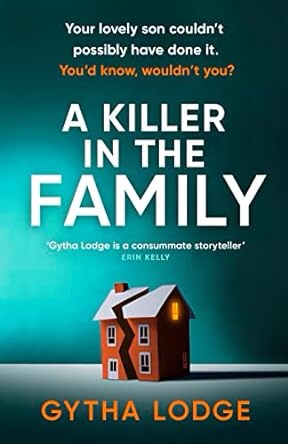
Killer in the Family by Gytha Lodge

Aisling would do anything for her family – but can she protect a killer?

I had about three false starts with this book. Having read all her other books in the series when I won them in a competition on Twitter, I was intrigued to see what was next. I would read a bit, then a blog tour would come along or an urgent bit of bookpost would fall through the door and I would have to set it aside. I was so glad to finally get going with it again on holiday and it didn’t take me long to race through to the finish. The story gained both momentum and tension from about chapter four onwards. We’re back with Detective Chief Inspector Jonah Sheen’s team as the uncertainty of his private life is overshadowed by a terrible case and a man nicknamed the Bonfire Killer. He has killed two women already and the police have very little to go on. Then single mum and game developer Aisling, puts her DNA on an ancestry site. She’s thrilled to find a match, but that piece of her she felt was missing might come with some serious baggage – starting with an interview with CID. Aisling’s DNA is a match to the crime scene and possibly the Bonfire Killer himself, so the police have their eye on her two sons, Ethan and Finn, as well as her long lost father. There are secrets in this family, not limited to her missing parent. Will she be willing to unearth a painful past to prevent someone else suffering a painful future?

Aisling is an interesting and unexpected central character, with a life that isn’t everything it seems. She has gone to great lengths to avoid her past and she isn’t the only one in the family. Her father, Dara Cooley, went missing years before. As the team try to crack the case, they break into smaller working groups to find Dara Cooley, chase up the DNA and interview suspects that arise, and investigate a stud farm where a horse has been taken and killed, then burned on a pyre. Could it be linked to the case? The detectives spend time with the farmer and his two sons, trying to establish who would want to hurt their mare, Merivel. There are so many blind alleys and red herrings, but they have to be followed just in case one of them leads to a breakthrough. I loved the complications around an Irishwoman named Anneka Foley and her potential relationship to the case. One of Aisling’s sons is in a band, that one of the killer’s victims had a fascination with and that’s before we get to the exploration of Aisling’s own teenage years. I was suspicious, but loved Aisling’s loyalty to her sons. Her ‘first love’ story was so relatable and digging into the past can stir up a lot of feelings, especially when an unexpected visitor turns up. She’s unusual, a gamer who likes to play at home with her sons, but is also quietly very successful as a developer in her own right. She’s been tough and dedicated to her boys. Can she come to terms with her past and open herself up to a different future?

The team are on form, but I particularly loved the subplot around Juliette who is receiving unwanted attention from an old boyfriend. At a couple of crime scenes there have been markers that he might be around again: her favourite hot coffee and a waterproof jacket left on the bonnet of her car on a cold wet night. We see the strain she’s under, but she still does her job. It’s a subplot that seemed to have petered out but now returns with deadly consequences. This was a story I’ll love to see concluded in the next book. Then there’ Jonah’s private life, where trying to do the right thing seems to have backfired spectacularly. How does he extricate himself from this without causing further harm? Will the right path still be open to him when he does? With a fascinating background of Ireland’s poverty and the ways in which people struggled with a restrictive religious society, this is a fascinating thriller with so many different aspects to it. Gytha Lodge brings all these seemingly disparate strands together and successfully resolves most of them, only leaving us with one cliffhanger. But it is a humdinger of a cliffhanger! All of this as well as a atmosphere and tension you could cut with a knife, this is another brilliant read from a consummate crime writer.

Meet the Author

Gytha Lodge is a multi-award-winning playwright, novelist and writer for video games and screen. She is also a single parent who blogs about the ridiculousness of bringing up a mega-nerd small boy.

She has a profound addiction to tea, crosswords and awful puns. She studied English at Cambridge, where she became known quite quickly for her brand of twisty, dark yet entertaining drama. She later took the Creative Writing MA at UEA. 

Her debut crime novel, She Lies in Wait, has been published by Penguin Random House in the US and UK, and has also been translated into 12 other languages. It became an international bestseller in 2019, and was a Richard and Judy book club pick, as well as a Sunday Times and New York Times crime pick.

Posted in Throwback Thursday

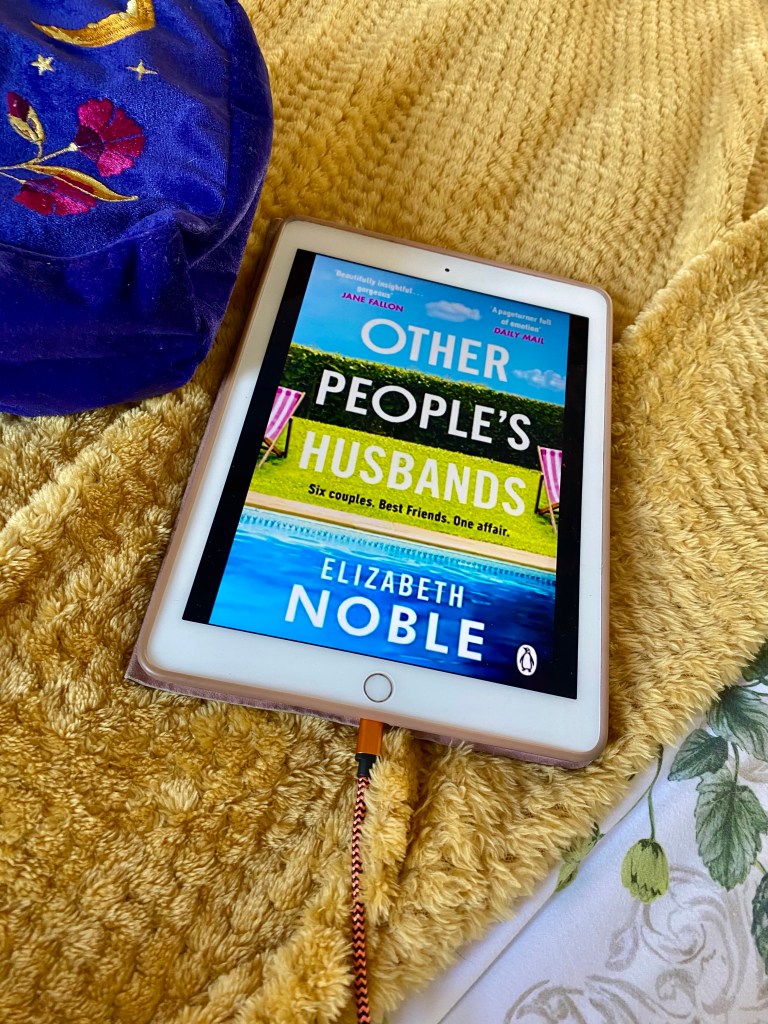
Other People’s Husbands by Elizabeth Noble

Elizabeth Noble’s domestic drama is focused around a solid group of friends. Six women and their husbands have been a ‘pack’ for several years after chat at the school gates led to lunches, then dinners and now regular get togethers like their annual May Day bank holiday. Traditionally this weekend is always spent together, sometimes abroad but usually at Annie’s picturesque holiday cottage. Annie loves sharing her home with her closest friends and is the best host, often heading down there a couple of days before the others to air the house out and prepare the bedrooms. This is where the ripples begin. In previous years Annie remembers all the kids coming along, playing in the pool and shrieking with laughter. More recently it’s just been the adults and the first day usually involves getting out of travelling clothes and spending the afternoon by the pool, the men in their swimming shorts and the women in sensible Boden one piece swimsuits, an unspoken rule. Kit and Natalie are late for everything and this weekend is no exception, so everyone is already lounging outdoors when Natalie joins them. This is the moment that everything changes, as Natalie strolls out in a high legged red bikini walks the length of the pool and climbs in. The red is as subtle as a matador’s cape, but will anyone take up the challenge? All the women know without speaking that this is a betrayal of the sisterhood, an open sexual invitation, a red flag. Even a couple of the men mention it, later on in bed with their wives they say it was a statement, pure theatre, something that shouldn’t be a surprise considering Natalie is an actress. Yet her husband Kit barely seems to notice.

However, one of the husbands noticed a long time ago that Nat is beautiful. In fact over twenty years there have been several moments – a glance, a brush of the fingers, a hand that lingers on a shoulder, a kiss that strays from the cheek to the edge of the mouth. Will this now become something more? The author lets the tension rise beautifully. She perfectly captures how one action acts like a ripple in a pond within a group like this. It would affect every one of the friends and the next generation who have grown their own friendships over the years. Natalie is feeling restless and expressing that in her clothing and changing her routine. She and husband Kit have a small flat in London that she can pop to on the train and visit galleries or go shopping. Previously she’s been held to the routine of children at home but now she’s free from that and has time for herself. Her husband Kit seems absolutely solid and a great dad, but Natalie misses that frisson of attraction and electricity between two people. So, when she and Dom accidentally bump into each other in London she doesn’t have anywhere to be or to rush back for, so they can enjoy the warmth of a city evening. Joining others who are sat on the embankment, looking at the river and enjoying a bottle of wine or ice cream. The heat between them is obvious, but there’s always been something to stop them before. Dom loves his wife, she’s solid and dependable but their sex life has dwindled of late and they don’t seem to have made the transition back from family to being a couple again. His attraction to Natalie, something he felt at their very first meeting, has never diminished. What if they now have a chance to be together? Whereas Natalie seems to agonise over her husband and children finding out, Dom doesn’t seem to think about the catastrophe this would cause.

Noble has written their characters very carefully so that I really did care about Natalie despite her actions. I enjoyed her relationship with daughter, listening to Temple’s marriage problems and going away with her for the weekend for some quality time. Natalie’s issues were largely her own and they had nothing to do with her relationship with Kit. Dom’s wife Sarah was very organised, something that seemed to fit with her job as a schoolteacher. She often organised group get togethers and was very family orientated. She knew that her sex life with Dom had slipped a bit of late but she wasn’t too worried. She thought that sex did tend to dwindle a little when people reached middle age and had been together so long. That didn’t mean they didn’t love each other. However, she had really been too busy to stop and think about whether they actually did still love each other. The author’s ability to get inside the mind of these characters was incredible and I enjoyed how the story was split between various different members of the group, including the next generation who were facing changes of their own. I loved how the women tried to remain friends with each other, despite everything that was happening around them.

While this intense drama was going on it was balanced by a peek into these couple’s lifestyle. I coveted Annie’s holiday home with it’s old fashioned charm. The events they’re all invited to, such as one of their daughter’s weddings being held in the garden at home, were lavish and beautifully arranged. These were dreamy interludes between the domestic drama that I drifted through, thoroughly enjoying how lovely they were. There was also a gorgeous little romance developing between two of the next generation, who had spent years climbing trees and running through sprinklers in each other gardens, but were now confused because their feelings were changing. In the main it was the women who stood out in this novel, whereas a lot of the husbands simply faded into the background. These were strong women, having to keep afloat careers, family commitments, parents and marriages. These are the ‘middle’ years where children still need you and parents start to rely more on their children. It’s a little like spinning plates, but at least these ladies had gorgeous homes and getaways. Let’s be honest, no one here is struggling on minimum wage. It’s gloriously gossipy though and I felt like a thoroughly spoiled fly on the wall by the end. Perfect for by the pool reading, this really was an enjoyable and addictive domestic drama.

Meet the Author

Elizabeth Noble is the internationally bestselling author of The Reading Group, The Friendship Test, Alphabet Weekends, and Things I Want My Daughters to Know. She lives in New York City with her husband and their two daughters.

Posted in Netgalley

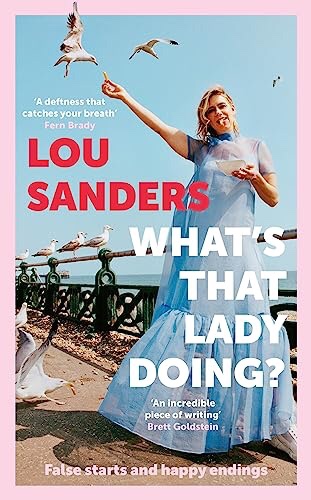
What’s That Lady Doing? By Lou Sanders

I’ve felt over the last year that every comedian has a book out. This is the result of the pandemic, where comedians could write material but had no way of testing it out on audience. It seems that a lot of them decided to use this time to write a memoir and this is up there with the best of them. One of the most important things about a memoir written by a celebrity is that it feels authentic and this book feels like a rambling conversation with Lou. She has such a strong narrative voice. I must admit to being a bit fascinated with Lou Sanders for a while now. I’d seen snippets of her stand-up, appearances on panel shows and a gloriously deranged turn as Mel Giedroyc’s sidekick on Unforgivable. However, it was her appearance on another Dave comedy show that cemented her in my memory as someone I’d like to know more about. On Outsiders, she was in a team with Ed Gamble, tackling activities out in the woods to earn Scout-style badges devised by David Mitchell. It was her effect on Ed that absolutely floored me. She slowly drove him to distraction by agreeing a plan, then as he struggled with it, she would get bored and wander off to start a Plan B by herself. His exasperation is delightful. Similarly, on Chris and Rosie Ramsay’s BBC2 show, she dissolved the presenters to puddles of uselessness by beautifully relaying a story about a dog’s back end while visibly gagging! I felt like this was a lady with a gloriously quirky and unapologetic way of being herself in the world that I simply loved. I learned while reading this memoir that her ease with herself, her authenticity, has been very hard won. I now admire her all the more and plan on buying this book for all the teenage girls in my life by the bucketload.

Lou tells her story with no frills or filter and that led to a really intimate reading experience. I could hear her voice immediately and that is the best thing about it. She tells the story of a difficult early life – struggles with ADHD and a very late diagnosis, coupled with devastatingly low self-esteem. Totally misunderstood at home, she was drinking and drug-taking from an early age. All to mask feeling different and as if she didn’t belong anywhere. Leaving home at 15 and working in pubs, she learned to use drink to create a new persona, one that made people laugh. She used whatever it was that made her feel different and strange for laughs. Drama followed her and some of her stories, especially around the opposite sex are starkly told and are all the more devastating for their honesty. She only realises in reverse that it’s impossible to give consent when you’re incapacitated. She’d learned that it was sometimes easier to give in and drink numbed the reality of what had happened. Each wound is almost unnoticed and that’s not just because she was obliterated. She’s totally unaware that she has the ability to keep to her boundaries, in fact I don’t think she was aware of her ability to set them. People who are worth nothing can’t ask for things. They’re not even aware they have the right to say no.

Lou is very matter of fact and unshowy about choosing to get sober and change her life. She credits AA with her success and it took a few false starts to get passed the times she kidded herself – ‘I’ve not had a drink for months, surely one or two would be okay?’ She learned that for her, one leads to many so she can’t have any. Ever. It only became clear for her when she realised she was ruining her own chances, self-sabotaging her career. She would ask comic friends why new comics were getting TV gigs and she wasn’t. After shows where she was obliterated, threw things into the audience and even bit someone, it took a good honest friend to tell her the truth. TV producers didn’t trust her, she was too unpredictable. That friend probably saved her career, in act they saved her life. I found her clarity around this part of her life really admirable, but she doesn’t want to see herself as a heroine or an example. This book doesn’t have a self-help vibe. She knows that she is a work-in-progress and only sticking with AA and practicing abstinence will work for her. In fact she also realises that therapy keeps her life ticking over, it gives her a release – like the pressure valve for her life. I loved the raw honesty of Lou’s writing. This is a book that never could have happened if she hadn’t learned to love every bit of herself. Well, most bits anyway. Some celebrity books are a list of achievements or a ‘how I became famous’ journey, but you don’t really meet the person. I’m not very good at surface stuff. Small talk is impossible for me, because it feels totally inauthentic. I put this book down feeling like I’d really met the person between it’s covers and we’d had a long, honest conversation about life.

Meet the Author

Lou Sanders is a British comedian. She is the champion of series eight of Taskmaster, co-hosts Mel Giedroyc: Unforgivable and has made a host of other television appearances from Live at the Apollo to The Late Late Show.

Lou has performed stand up around the world, including venues in New York, LA, Berlin and sell-out runs in Edinburgh and Soho. Lou has written articles for The Guardian, Time Out and GQ magazine.

More from Lou

Cuddle Club – The podcast where each week Lou Sanders (Taskmaster, QI, Would I Lie To You) asks a special guest the hard hitting questions that other non-cuddle based podcasts don’t dare to. Hot stuff like: Which kid did your parents prefer? Why are we all pretending massages are normal? And, can you ever trust anyone to order for you?

https://www.lousanders.com/gigs

Posted in Squad Pod Collective

Minor Disturbances at Grand Life Apartments by Hema Sukumar

The Grand Life Apartments are a series of dwellings with beautiful garden surroundings in the coastal city of Chennai. It’s residents are varied and each one has their own sections to the story. Kamala is a dentist on the edge of retirement who counts down the days to her annual visit from daughter Lakshmi who is studying at Oxford University in the U.K. Her tendency towards religious offerings and a more traditional view on marriage and family, sometimes put her at loggerheads with Lakshmi. Revathi is 32 and a successful engineer who lives alone, something her mother never tires of reminding her is not normal. She is reaching her expiry date in the arranged marriage market. Reva likes her freedom and has entertained thoughts that maybe not everyone is cut out for marriage and a family, but hasn’t dared tell her mother who is setting up her latest ‘introduction’. Then there is Jason, a young British chef who has impulsively decided to work at an exclusive hotel in Chennai. He has been driven from his London home by an awful break-up that he’s struggling to get over. In the meantime he is making friends with his neighbours and helping out Mani, the owner of the apartments. Mani is facing his own struggle though. A developer offered him a sum of money for the apartments, planning to level them and their gardens so they can extend their luxury apartment blocks across the street. Mani refused their offer, setting off a dangerous and dramatic series of events that will bring the residents together.

I thoroughly enjoyed this slice of life in Chennai, narrated by the the various inhabitants of Grand Life Apartments. I feared a sanitised setting, rather like the The Great Exotic Marigold Hotel’s beautifying of India. However, here the author manages a great balance of being honest about the difficulties of India, whilst also showing it’s warm welcome and sense of family and community. She also showed how travelling or working in the city could sustain someone and take them on an uplifting and life changing journey. A setting with this dichotomy of incredible positives versus the difficulties of corruption and poverty, is very difficult to write in a light-hearted novel. It takes serious skill and I was surprised to find it was a debut novel. It was no surprise to learn that Hema had been a travel writer, because when reading I did feel like I was there. This wasn’t the tourist route either, but real people living and working in the heat and smog of the city. The heat comes across strongly (possibly more to do with my menopause when I think about it) and the dust laying over everything. There was a great mix of things that are comforting and welcoming, but other stories and mentions that reinforced the foreignness of India. These momentary snippets of Indian daily life were brilliant, I loved Jason Skyping his mum who was terrified to see a lizard walking up the wall of his living room! ‘Oh that’s just Lizzie the Lizard’. The apartment’s beautiful gardens are a wonderful touch of old and new, as well as the place where residents tend to come together. It’s a unifying force for the residents and allows young and old to come together – such as on Kamala’s birthday where a power cut and Jason’s rice pudding are central to the impromptu celebration.

This is a book where the characters are really important, because the story comes out of their relationships and personality. Kamala’s daughter Lakshmi comes to stay and with incredible bravery shares a secret about her life that she knows will shock and possibly disappoint her traditional and religious mother. I loved the detail of Kamala’s life, the descriptions of her spice filled cooking and the rituals of her worship at her homemade shrine, with the flowers she buys to accompany her prayers. There’s a solidity about Kamala, she knows who she is and what she believes. Now her thoughts on life are being challenged and she’s having to step out of her comfort zone and let go of the things she expected for her life. I loved the scenes with her friend Sundu (a formidable woman and lawyer) when they come to England. Sundu forces Kamala into trainers on their trip to London and is often amused by her rather blinkered view of the world. The scene with the group of young men on a corner and Kamala’s observation that they smelled of a spice she’d never encountered before, made me laugh out loud.

I felt something for Reva, a connection of some sort although I couldn’t pinpoint why. The way Reva wants to be really does rub up against cultural and familial expectations in her personal life, whilst also coming up against the patriarchy at work. She’s an engineer who knows her own talent and ability to manage a team, but she finds her experience and ability overlooked by management. She’s thinking of moving to another company if they choose to promote a man over her this time, but is she too old to start again or choose a start-up company? She’s contemplating the same risk in her personal life. The pressure she feels from her mother, who doubts her prospects on the marriage market as a woman in her thirties, means she meets men that her mother has arranged. We see her on these ‘dates’ and she does meet nice men, but is ‘nice’ enough? Her mother can’t control Reva’s inner voice and it tells her to hold out for a love match. She knows it’s a risk, but what would happen if she didn’t find love? She would live the life she lives now: working, meeting friends, socialising with her neighbours and checking in on the older residents like Mani and Kamala. Would that be so bad? Does her freedom mean that much to her?

Finally there’s Jason and he has the part of an Englishman abroad. He’s an incredibly sensitive man who has come to Chennai on an impulse to avoid heartbreak at home. His relationship with Elizabeth came to an abrupt end and he’s facing that period of ruminating on the state of their relationship. He was imagining marriage, possibly a family and he thought they were on the same page. Clearly she wasn’t, so was she tricking him or was he simply so caught up in his own expectations he never noticed that she was lagging some way behind. He does spend time checking her social media profiles, dreading but knowing that eventually he will see a hand on her shoulder or a grinning face next to hers. However, when the news comes, it’s nothing he expected and he feels sick. It feels like a betrayal. I was desperately holding out hope that Jason would blossom in Chennai and I loved reading tiny steps towards this. His relationship with Kamala is based on food, she wants him to experience real South Indian food and he desperately wants to impress her. She feels like a grandmother figure to him and he’s so respectful of her. His relationship with Mani is great too and I loved how he helped with the garden, understanding how important it is to Mani and his memories, but also making small changes that help it sustain the lives of the people currently living at the flats. I was more than a little bit desperate for him to forget his heartbreak and maybe spend time with someone a little closer to his new home.

The corruption seen in the building company plot line isn’t the only real or gritty bit of the tale. Begging comes up a few times and Reva thinks about women who fall foul of the social rules and can find themselves drowned in the village pond! There’s also a young boy who rushes around delivering from the local store and has a manner like a little old man. It was great to have this edge because it made India feel real, rather than a Disneyfied version. I found the book, especially Jason and Reva’s journeys, really inspiring. They’ve both made big choices in life – to go away to university, to become a chef, to fly to the other side of the world even! I loved the way Jason was learning a new skill, with Kamala’s advice and making steps towards moving forward in life, by getting rid of his social media. Could they perhaps move forward towards each other? I kept hoping. I had visions of their setting as the perfect haveli with a stone courtyard, beautifully scented climbers and water feature at the centre with just the right trickling sound. I was scared for Mani and not just because the developer’s threatening behaviour worsened. With all of his memories tied up in these apartments, it would be an emotional upheaval for him to leave. I was left with some questions unanswered and I hope this means a sequel might be in the pipeline. I wondered: where Jason and Reva’s lives might go; how Lakshmi might build her life, knowing how much her mum is trying to understand; would Sundu be able to save the apartments? I was deeply invested in these characters and their journeys. The author engaged my senses and my emotions in her debut novel, so much so that I’m already waiting for what comes next.

Out now from Coronet Books.

Book blogger problems No 1: Nosy cats 🐈
Posted in Netgalley

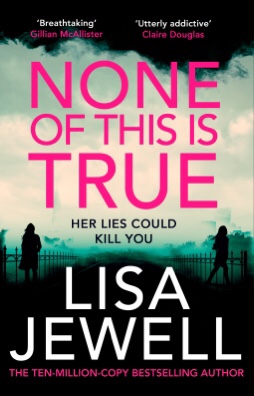
None Of This Is True by Lisa Jewell.

I always look forward to a new novel by Lisa Jewell, because I know I’m going to be engrossed in it for the weekend, oblivious to everything else that’s going on around me. This new novel was so addictive I’m not sure I looked up and luckily my other half knows when to disappear into his workshop and to deliver a hot brew on the hour. I have no idea how this writer manages to be so prolific, but thank goodness she does! She always manages to find a new angle to the thriller and this novel has a really interesting premise based around the phenomenon of podcasts. One of our protagonists, Alix, has been running a successful weekly podcast based around women’s lives and interviewed women who would inspire her listeners. However, it was time for some new ideas and so far Alix hasn’t had one. Then she meets Josie Fair. Josie is celebrating her forty-fifth birthday with her husband in a restaurant that’s a little more upmarket than they would usually book. She notices a group at a large table celebrating the birthday of a rather glamorous woman. Later in the night, the women bump into each other in the lady’s loo. Josie mentions to Alix that they share a birthday and is surprised to discover they are both 45 years old. They make a joke about being birthday twins then go back to their tables where the huge contrast between them becomes clear. Alix’s table is filled with friends, flowers and balloons whereas Josie is having a quite dinner, just her and her husband Walter. A few days later they accidentally meet again outside Alix’s children’s school. This time they chat about Alix’s work and Josie admits she’s been listening to some of Alix’s podcast since they met. Alix has made a successful series interviewing inspiring women, but admits she’s now looking for a change of direction. Josie volunteers herself as a subject, admitting that she’s about to go through some major life changes and seemingly convinced that Alix’s listeners will want to hear her story. They swap contact details and each comes away feeling positive, but Josie wasn’t exaggerating. Big changes are on the way, just not in the positive, life-affirming way Alix is used to. After interviewing Josie once Alix knows her story will appeal to listeners, because despite being very unsettled by her subject, she can’t help wanting to dig further.

The format really does work, with the interviews providing so much information to unravel and tantalise the reader. In-between we see the effect Josie’s revelations have on her own family life and on Josie’s as well. Each interview works very like a counselling session, but perhaps most like the early sessions when the client is telling you their story so far and what brings them to therapy. Alix is a fantastic listener and allows Josie to tell her story in her own way and at her pace, only asking questions to clarify or encourage her interviewee to expand on a point. I detected a subtle shift as the interviews progressed, but it’s almost imperceptible. While at first Alix is in control of the project, Josie starts to take charge both of the content and how often they meet and work together. This could simply be a woman finding her confidence or having an emotional need to offload her story quickly, while she has the courage. Josie weaves a tale of grooming and domestic abuse that’s not easy to listen to. Her husband Walter is much older and very set in his ways, they started their relationship when Josie was a teenager and Walter was in his thirties. There are little clues to the control he has over his wife, such as wearing double denim to please him and not having a job, even though their daughters are beyond school age. At this point I feared for Josie, but also for her daughters: why has one left home at 16 and why does the other one seem locked in her bedroom with a diet that consists of nothing but baby food? One tiny act of Josie’s made me go cold. Each time she visits, she starts to take small items from Alix’s home, starting with a coffee pod that she hides in her underwear drawer.

As Josie becomes more involved in Alix’s life, Alix’s Instagram lifestyle seems to erode.

“She thinks of Alix’s home: from the front, a neat, terraced house with a bay window, no different to any other London Victorian terraced house, but inside a different story. A magazine house, ink-blue walls and golden lights and a kitchen that appeared weirdly to be bigger than the whole house with stone-grey cabinets and creamy marble counters and a tap that exuded boiling water at the touch of a button. A wall at one end reserved purely for the children’s art!”

Her husband Nathan has always had issues with alcohol, but they really come to the fore. He’s always had a line he doesn’t cross, but now he starts to stretch to one more drink, staying out later with work colleagues, going out for a normal lad’s night then not coming home. Alix knows that once it reaches a certain time, it’s likely he will be on a bender, only coming home when he’s run out of funds or sobered up. Where is he when he doesn’t come home? Alix starts to doubt Nathan’s fidelity and finds herself searching for evidence. As the stress at home cranks up a notch, Alix notices that Josie is pushing the boundaries of their agreement. She turns up where Alix doesn’t expect her, stays longer than their agreed session and Alix can’t tell if she’s becoming subsumed by Josie’s world, or if Josie is starting to take over hers. There’s a claustrophobic feeling and a sense of menace starts to creep in, as Josie controls her story and will only let it unfold in the way she has planned. I sensed something was very wrong and wanted Alix to back off the story, even though it could make her name in the world of podcasts. Alix seems transfixed by Josie’s story, her life is like a car crash you can’t look away from and although part of Alix has the journalistic interest in a great story, another part is fascinated by the horror of what Josie is telling her. In much the same way as the reader is fascinated too, I genuinely couldn’t put the book down until I’d worked out what was going on. Were Josie’s revelations putting herself and Alix in danger from Walter? Will telling her story change Josie, acting as the catalyst to leave the situation and get help for her daughter? I kept wondering about the other daughter, the one who left home. I couldn’t help but think she might be the key to the truth about Josie and Walter’s marriage.

I thought the structure, using the podcast for Josie to tell her story, was really clever considering how popular true crime podcasts are these days. I thought the idea for Alix’s podcast, interviewing inspirational women was very like the Megan podcast in tone showing how up to the minute Lisa Jewell has been in the creative way she frames her story. As coercive control is now so well known, as compared to four or five years ago. Everyone understands what it means and terms like ‘gaslighting’ have become the norm, showing up in soap storylines and all over social media. I think what Lisa has tapped into here is the overuse of these terms, so much so that they’ve become diminished. It seems that daily someone is claiming their ex was a narcissist but these are huge psychological labels that shouldn’t be used lightly – in the same way people say ‘I’m a bit OCD’ the real understanding of the disorder has become lost. It isn’t all about arranging your kitchen shelves so the labels show at the front. We are all educated into believing the victim of abuse, but in a society where these terms are so misused, should we reserve a little bit of judgment? If I was Alix I might have been inclined to walk away from the story – especially as she starts to have questions and doubts – to concentrate on my own problems. Josie’s story and it’s fallout are almost too messy and she seems very adept at knowing when Alix is doubting her, on one occasion turning up on the doorstep having apparently confronted Walter, and definitely outstaying her welcome. Lisa Jewell really is a master at these dark, almost nightmarish, stories about women’s lives while weaving so many twists and turns the reader can’t stop guessing until they’ve reached the final page. While I’ve enjoyed her recent novels I was absolutely gripped by this one and think she’s outdone herself. The setting and situation are so believable, the characters are incredibly well drawn, full of enough flaws and contradictions that you’ll be questioning everything they tell you.

Published by Random House 20th July 2023

Thank you to the publisher for allowing early access to the novel in exchange for an honest review.

Meet the Author


LISA JEWELL was born in London in 1968.

Her first novel, Ralph’s Party, was the best- selling debut novel of 1999. Since then she has written another nineteen novels, most recently a number of dark psychological thrillers, including The Girls, Then She Was Gone and The Family Upstairs and The Night She Disappeared, all of which were Richard & Judy Book Club picks.

Lisa is a New York Times and Sunday Times number one bestselling author who has been published worldwide in over twenty-five languages. She lives in north London with her husband, two teenage daughters and the best dog in the world.

Posted in Netgalley

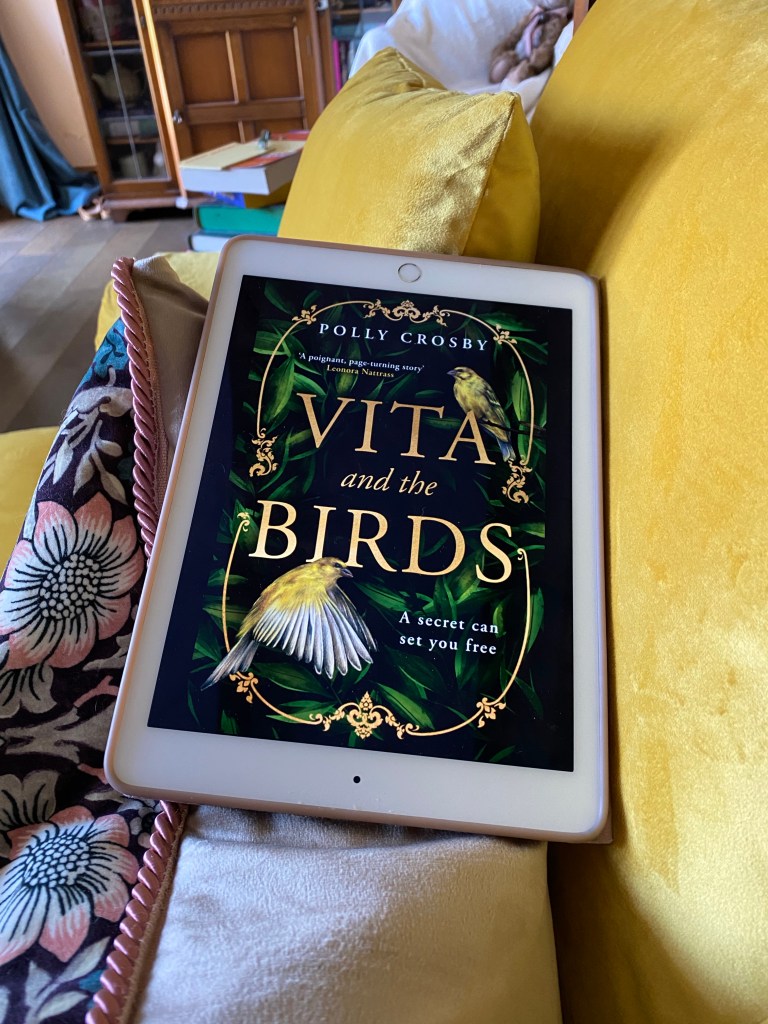
Vita and the Birds by Polly Crosby

1938: Lady Vita Goldsborough lives in the menacing shadow of her controlling older brother, Aubrey. But when she meets local artist Dodie Blakeney, the two women form a close bond, and Vita finally glimpses a chance to be free.

1997: Following the death of her mother, Eve Blakeney returns to the coast where she spent childhood summers with her beloved grandmother, Dodie. Eve hopes that the visit will help make sense of her grief. The last thing she expects to find is a bundle of letters that hint at the heart-breaking story of Dodie’s relationship with a woman named Vita, and a shattering secret that echoes through the decades.

What she discovers will overturn everything she thought she knew about her family – and change her life forever.

I’ve looked forward to the new Polly Crosby novel for a while, it was one of my most anticipated books of 2023. I love her writing so I gave myself a lovely sunny weekend to completely wallow in the story. It seemed fitting that I was outside, since nature plays a strong part in the novel both metaphorically and as an extra character that’s often more vivid than the inner spaces. Eve has felt adrift since her mum Angela died so her four brothers think it might be good for her to take a trip to the coast and clear out their grandmother’s studio. Grandmother Dodie was a painter and lived a fairly basic life in a small ramshackle studio just off the beach. Eve has fond memories of childhood holidays there, when her brothers would snuggle up with her like sleepy puppies on the studio floor at night. Close by is the strangely alluring Cathedral of the Marshes, a glass building so imposing it has the presence of such a holy building. Once, when she was a teenager, Eve had taken a dare to go into the cathedral with Elliot, one of the local boys. She remembers being terrified, but doesn’t remember much else about that night apart from seeing a painting standing on an easel. Strangely, it was a portrait of her and she ran out into the night, never to return. How will it feel to be back in a place that she has feared, but that still holds some of her best childhood memories? When she finds Dodie’s letters and reads of her relationship with Vita, she is plunged into a completely hidden part of her grandmother’s life.

This is a dual timeline novel, so through the letters we go back to the outbreak of WW2 and Dodie’s early years at the studio. She met one of her more notorious neighbours, Vita Goldsborough, resident of Goldsborough Hall and an owner of the glass cathedral. Vita and her brother Aubrey are the subject of gossip in the village. The stories are varied: Vita went mad and was put in a psychiatric hospital; Vita and Aubrey committed incest; they were to blame for ‘the vanishings’. They didn’t mix in the village and the stories around the siblings seemed to multiply and when a local girl vanished they were the first to be blamed by villagers. Strangely, as Eve arrives, a boy goes missing. It seems like an echo of the past, a foreshadowing, as if this is a thin place where memories and historical events seem close enough to touch. The physical sorting of her grandmother’s belongings is a simple enough task, she will just hire a skip, but when it comes to finding things that evoke memories and emotions they’re not so easily thrown away. Now Eve finds herself questioning the past and discovering things about this place and her beloved grandmother that she’d never imagined.

I thought this was a fascinating story highlighting women’s history and showing how much Victorian attitudes still prevailed in aristocratic society. The way Aubrey Goldsborough thinks feels around forty years out of date and the power he has over his sister we would now label as coercive control. Vita tries to explain to Dodie that his hold over her is so powerful he doesn’t have to force her, he simply has to tell her what to do and she obeys. He wants Vita to be respectable and only spend time with the right sort of people. Becoming friends with a bohemian artist like Dodie was definitely unexpected and she is the epitome of the wrong sort of company. Vita decides that Dodie must paint her portrait, something that her brother can’t really object to. Aubrey would like her to make a good marriage, but Vita’s interactions with men are fast and short-lived. Vita’s rebellions had to be passive aggressive – she gathers her jewels and keeps them in a box chained to the bottom of a pond in the glass cathedral. Hopefully, she can sell them without Aubrey knowing and have some financial freedom. She and Dodie hide in plain sight after Aubrey goes to war. They set up home in the cathedral, able to see everything around them, but thanks to the reed beds outside they are very unlikely to be seen. In another echo of her grandmother’s past, Eve meets an elderly lady in the village who asks to have her portrait painted. Eve isn’t usually a portrait painter, but can’t turn down the generous money offered for the work. She has the key to the cathedral and suggests they use it for their sitting, so Eve stands where her grandmother did many years before. What might this lady know about that time and her grandmother’s life?

The outside spaces seem to have an effect on Eve and I noticed a more natural, authentic part of her shine through. When she’s wild swimming or having a campfire on the beach with her brothers it feels like she belongs here. I was fascinated with how Polly plays with interior and exterior spaces, mirroring the parts of themselves her characters are revealing and concealing. Dodie’s studio has one glass side, leaving the whole living space open to view and her only concession to privacy is a screen where her models can undress. This is so in keeping with Dodie’s character, she is who she is and nothing is usually concealed. A beautiful detail comes when Eve is aware that putting the light on opens the space up to the outside like a stage set, but switching it off opens up the landscape outside. The cathedral is something of a paradox because I thought at first the glass would be very exposing, but Aubrey had designed it with living spaces that were kept private. I was imagining it like a Victorian glasshouse or orangery, very ornate with an almost tropical climate inside. The central ‘Turkish Room’ where Vita sits for her portrait has an otherworldly feel, with a smell of vegetation and rotting fruit. A large pool sits at the centre and church pews are placed around it upholstered with Turkish throws and pillows. There’s a sensuality to this space, the heavy warmth and the softness of pillows contrasts sharply with the glass. The room is hidden by the marsh reeds and it feels like a world apart, a feeling echoed by the ornamental bird cage engraved just for them. It holds Vita’s canaries, until one day they escape out through a hole in the roof. Yet they come back and visit Vita, eating out of her hand and filling the room with beautiful bird song. The name Eve finds scratched on the cage alongside that of Vita and Dodie should be no surprise. It’s a hope that person will return and bring a new generation back to the cathedral, represented by the flock of yellow and brown canaries Eve sees fly into the cathedral – the ancestors of those first two birds returning to their home.

As with previous novels, Polly really knows how to pile on the layers of mystery and create an undercurrent that’s quite unnerving: the painting that looks like Eve; the birdcage and the names engraved on it; the earrings Eve finds under the sink in the studio that she’s never seen her grandmother wear. Eve’s mind plays tricks on her, confused by the likeness between Vita and her grandmother, but also with herself. She’s still confused about that night when she was a teenager, when she went into the cathedral on a dare. Did she really hear a woman’s voice? Was she holding something when she ran away? Was it a shard of glass? As we move towards finding out what happened in the cathedral all those years ago the tension builds and I worried whether the two women would be safe from someone like Aubrey. Eve knows that he was found dead in the cathedral cut by a shard of glass, but was it suicide or murder? Whatever happened to Vita, someone her grandmother never talked about? There’s also the question of Eve’s mum Angela, born around the same time period but brought up by Dodie alone and has never known her father. As Goldsborough Hall was obliterated by a bomb during the war, only the cathedral remains and I wondered who owned it now? I was totally engrossed by this point and dishes went unwashed, the dog went unwalked and my other half, who knows when I’m lost in a story, kept me amply supplied with tea and toast. I do this strange thing when I’ve really enjoyed a book, I seem to hug it to my heart as if it can reach the characters inside. This was one of those books. It’s a beautiful hidden love story and an intriguing mystery as well, told with compassion and empathy.

Meet the Author

Polly Crosby grew up on the Suffolk coast, and now lives with her husband and son in the heart of Norfolk.

Polly’s third novel, Vita & the Birds, came out in May this year. Her first novel for young adults, This Tale is Forbidden – a dystopian fractured fairytale with hints of the Brother’s Grimm and The Handmaid’s Tale – is out in January next year with Scholastic.

In 2018, Polly won Curtis Brown Creative’s Yesterday Scholarship, which enabled her to finish her debut novel, The Illustrated Child. Later the same year, she was awarded runner-up in the Bridport Prize’s Peggy Chapman Andrews Award for a First Novel. Polly received the Annabel Abbs Creative Writing Scholarship at the University of East Anglia.

Polly can be found on Twitter, Instagram & Tiktok as @WriterPolly

Website: pollycrosby.com