Posted in Squad Pod Collective

Minor Disturbances at Grand Life Apartments by Hema Sukumar

The Grand Life Apartments are a series of dwellings with beautiful garden surroundings in the coastal city of Chennai. It’s residents are varied and each one has their own sections to the story. Kamala is a dentist on the edge of retirement who counts down the days to her annual visit from daughter Lakshmi who is studying at Oxford University in the U.K. Her tendency towards religious offerings and a more traditional view on marriage and family, sometimes put her at loggerheads with Lakshmi. Revathi is 32 and a successful engineer who lives alone, something her mother never tires of reminding her is not normal. She is reaching her expiry date in the arranged marriage market. Reva likes her freedom and has entertained thoughts that maybe not everyone is cut out for marriage and a family, but hasn’t dared tell her mother who is setting up her latest ‘introduction’. Then there is Jason, a young British chef who has impulsively decided to work at an exclusive hotel in Chennai. He has been driven from his London home by an awful break-up that he’s struggling to get over. In the meantime he is making friends with his neighbours and helping out Mani, the owner of the apartments. Mani is facing his own struggle though. A developer offered him a sum of money for the apartments, planning to level them and their gardens so they can extend their luxury apartment blocks across the street. Mani refused their offer, setting off a dangerous and dramatic series of events that will bring the residents together.

I thoroughly enjoyed this slice of life in Chennai, narrated by the the various inhabitants of Grand Life Apartments. I feared a sanitised setting, rather like the The Great Exotic Marigold Hotel’s beautifying of India. However, here the author manages a great balance of being honest about the difficulties of India, whilst also showing it’s warm welcome and sense of family and community. She also showed how travelling or working in the city could sustain someone and take them on an uplifting and life changing journey. A setting with this dichotomy of incredible positives versus the difficulties of corruption and poverty, is very difficult to write in a light-hearted novel. It takes serious skill and I was surprised to find it was a debut novel. It was no surprise to learn that Hema had been a travel writer, because when reading I did feel like I was there. This wasn’t the tourist route either, but real people living and working in the heat and smog of the city. The heat comes across strongly (possibly more to do with my menopause when I think about it) and the dust laying over everything. There was a great mix of things that are comforting and welcoming, but other stories and mentions that reinforced the foreignness of India. These momentary snippets of Indian daily life were brilliant, I loved Jason Skyping his mum who was terrified to see a lizard walking up the wall of his living room! ‘Oh that’s just Lizzie the Lizard’. The apartment’s beautiful gardens are a wonderful touch of old and new, as well as the place where residents tend to come together. It’s a unifying force for the residents and allows young and old to come together – such as on Kamala’s birthday where a power cut and Jason’s rice pudding are central to the impromptu celebration.

This is a book where the characters are really important, because the story comes out of their relationships and personality. Kamala’s daughter Lakshmi comes to stay and with incredible bravery shares a secret about her life that she knows will shock and possibly disappoint her traditional and religious mother. I loved the detail of Kamala’s life, the descriptions of her spice filled cooking and the rituals of her worship at her homemade shrine, with the flowers she buys to accompany her prayers. There’s a solidity about Kamala, she knows who she is and what she believes. Now her thoughts on life are being challenged and she’s having to step out of her comfort zone and let go of the things she expected for her life. I loved the scenes with her friend Sundu (a formidable woman and lawyer) when they come to England. Sundu forces Kamala into trainers on their trip to London and is often amused by her rather blinkered view of the world. The scene with the group of young men on a corner and Kamala’s observation that they smelled of a spice she’d never encountered before, made me laugh out loud.

I felt something for Reva, a connection of some sort although I couldn’t pinpoint why. The way Reva wants to be really does rub up against cultural and familial expectations in her personal life, whilst also coming up against the patriarchy at work. She’s an engineer who knows her own talent and ability to manage a team, but she finds her experience and ability overlooked by management. She’s thinking of moving to another company if they choose to promote a man over her this time, but is she too old to start again or choose a start-up company? She’s contemplating the same risk in her personal life. The pressure she feels from her mother, who doubts her prospects on the marriage market as a woman in her thirties, means she meets men that her mother has arranged. We see her on these ‘dates’ and she does meet nice men, but is ‘nice’ enough? Her mother can’t control Reva’s inner voice and it tells her to hold out for a love match. She knows it’s a risk, but what would happen if she didn’t find love? She would live the life she lives now: working, meeting friends, socialising with her neighbours and checking in on the older residents like Mani and Kamala. Would that be so bad? Does her freedom mean that much to her?

Finally there’s Jason and he has the part of an Englishman abroad. He’s an incredibly sensitive man who has come to Chennai on an impulse to avoid heartbreak at home. His relationship with Elizabeth came to an abrupt end and he’s facing that period of ruminating on the state of their relationship. He was imagining marriage, possibly a family and he thought they were on the same page. Clearly she wasn’t, so was she tricking him or was he simply so caught up in his own expectations he never noticed that she was lagging some way behind. He does spend time checking her social media profiles, dreading but knowing that eventually he will see a hand on her shoulder or a grinning face next to hers. However, when the news comes, it’s nothing he expected and he feels sick. It feels like a betrayal. I was desperately holding out hope that Jason would blossom in Chennai and I loved reading tiny steps towards this. His relationship with Kamala is based on food, she wants him to experience real South Indian food and he desperately wants to impress her. She feels like a grandmother figure to him and he’s so respectful of her. His relationship with Mani is great too and I loved how he helped with the garden, understanding how important it is to Mani and his memories, but also making small changes that help it sustain the lives of the people currently living at the flats. I was more than a little bit desperate for him to forget his heartbreak and maybe spend time with someone a little closer to his new home.

The corruption seen in the building company plot line isn’t the only real or gritty bit of the tale. Begging comes up a few times and Reva thinks about women who fall foul of the social rules and can find themselves drowned in the village pond! There’s also a young boy who rushes around delivering from the local store and has a manner like a little old man. It was great to have this edge because it made India feel real, rather than a Disneyfied version. I found the book, especially Jason and Reva’s journeys, really inspiring. They’ve both made big choices in life – to go away to university, to become a chef, to fly to the other side of the world even! I loved the way Jason was learning a new skill, with Kamala’s advice and making steps towards moving forward in life, by getting rid of his social media. Could they perhaps move forward towards each other? I kept hoping. I had visions of their setting as the perfect haveli with a stone courtyard, beautifully scented climbers and water feature at the centre with just the right trickling sound. I was scared for Mani and not just because the developer’s threatening behaviour worsened. With all of his memories tied up in these apartments, it would be an emotional upheaval for him to leave. I was left with some questions unanswered and I hope this means a sequel might be in the pipeline. I wondered: where Jason and Reva’s lives might go; how Lakshmi might build her life, knowing how much her mum is trying to understand; would Sundu be able to save the apartments? I was deeply invested in these characters and their journeys. The author engaged my senses and my emotions in her debut novel, so much so that I’m already waiting for what comes next.

Out now from Coronet Books.

Book blogger problems No 1: Nosy cats 🐈
Posted in Netgalley

None Of This Is True by Lisa Jewell.

I always look forward to a new novel by Lisa Jewell, because I know I’m going to be engrossed in it for the weekend, oblivious to everything else that’s going on around me. This new novel was so addictive I’m not sure I looked up and luckily my other half knows when to disappear into his workshop and to deliver a hot brew on the hour. I have no idea how this writer manages to be so prolific, but thank goodness she does! She always manages to find a new angle to the thriller and this novel has a really interesting premise based around the phenomenon of podcasts. One of our protagonists, Alix, has been running a successful weekly podcast based around women’s lives and interviewed women who would inspire her listeners. However, it was time for some new ideas and so far Alix hasn’t had one. Then she meets Josie Fair. Josie is celebrating her forty-fifth birthday with her husband in a restaurant that’s a little more upmarket than they would usually book. She notices a group at a large table celebrating the birthday of a rather glamorous woman. Later in the night, the women bump into each other in the lady’s loo. Josie mentions to Alix that they share a birthday and is surprised to discover they are both 45 years old. They make a joke about being birthday twins then go back to their tables where the huge contrast between them becomes clear. Alix’s table is filled with friends, flowers and balloons whereas Josie is having a quite dinner, just her and her husband Walter. A few days later they accidentally meet again outside Alix’s children’s school. This time they chat about Alix’s work and Josie admits she’s been listening to some of Alix’s podcast since they met. Alix has made a successful series interviewing inspiring women, but admits she’s now looking for a change of direction. Josie volunteers herself as a subject, admitting that she’s about to go through some major life changes and seemingly convinced that Alix’s listeners will want to hear her story. They swap contact details and each comes away feeling positive, but Josie wasn’t exaggerating. Big changes are on the way, just not in the positive, life-affirming way Alix is used to. After interviewing Josie once Alix knows her story will appeal to listeners, because despite being very unsettled by her subject, she can’t help wanting to dig further.

The format really does work, with the interviews providing so much information to unravel and tantalise the reader. In-between we see the effect Josie’s revelations have on her own family life and on Josie’s as well. Each interview works very like a counselling session, but perhaps most like the early sessions when the client is telling you their story so far and what brings them to therapy. Alix is a fantastic listener and allows Josie to tell her story in her own way and at her pace, only asking questions to clarify or encourage her interviewee to expand on a point. I detected a subtle shift as the interviews progressed, but it’s almost imperceptible. While at first Alix is in control of the project, Josie starts to take charge both of the content and how often they meet and work together. This could simply be a woman finding her confidence or having an emotional need to offload her story quickly, while she has the courage. Josie weaves a tale of grooming and domestic abuse that’s not easy to listen to. Her husband Walter is much older and very set in his ways, they started their relationship when Josie was a teenager and Walter was in his thirties. There are little clues to the control he has over his wife, such as wearing double denim to please him and not having a job, even though their daughters are beyond school age. At this point I feared for Josie, but also for her daughters: why has one left home at 16 and why does the other one seem locked in her bedroom with a diet that consists of nothing but baby food? One tiny act of Josie’s made me go cold. Each time she visits, she starts to take small items from Alix’s home, starting with a coffee pod that she hides in her underwear drawer.

As Josie becomes more involved in Alix’s life, Alix’s Instagram lifestyle seems to erode.

“She thinks of Alix’s home: from the front, a neat, terraced house with a bay window, no different to any other London Victorian terraced house, but inside a different story. A magazine house, ink-blue walls and golden lights and a kitchen that appeared weirdly to be bigger than the whole house with stone-grey cabinets and creamy marble counters and a tap that exuded boiling water at the touch of a button. A wall at one end reserved purely for the children’s art!”

Her husband Nathan has always had issues with alcohol, but they really come to the fore. He’s always had a line he doesn’t cross, but now he starts to stretch to one more drink, staying out later with work colleagues, going out for a normal lad’s night then not coming home. Alix knows that once it reaches a certain time, it’s likely he will be on a bender, only coming home when he’s run out of funds or sobered up. Where is he when he doesn’t come home? Alix starts to doubt Nathan’s fidelity and finds herself searching for evidence. As the stress at home cranks up a notch, Alix notices that Josie is pushing the boundaries of their agreement. She turns up where Alix doesn’t expect her, stays longer than their agreed session and Alix can’t tell if she’s becoming subsumed by Josie’s world, or if Josie is starting to take over hers. There’s a claustrophobic feeling and a sense of menace starts to creep in, as Josie controls her story and will only let it unfold in the way she has planned. I sensed something was very wrong and wanted Alix to back off the story, even though it could make her name in the world of podcasts. Alix seems transfixed by Josie’s story, her life is like a car crash you can’t look away from and although part of Alix has the journalistic interest in a great story, another part is fascinated by the horror of what Josie is telling her. In much the same way as the reader is fascinated too, I genuinely couldn’t put the book down until I’d worked out what was going on. Were Josie’s revelations putting herself and Alix in danger from Walter? Will telling her story change Josie, acting as the catalyst to leave the situation and get help for her daughter? I kept wondering about the other daughter, the one who left home. I couldn’t help but think she might be the key to the truth about Josie and Walter’s marriage.

I thought the structure, using the podcast for Josie to tell her story, was really clever considering how popular true crime podcasts are these days. I thought the idea for Alix’s podcast, interviewing inspirational women was very like the Megan podcast in tone showing how up to the minute Lisa Jewell has been in the creative way she frames her story. As coercive control is now so well known, as compared to four or five years ago. Everyone understands what it means and terms like ‘gaslighting’ have become the norm, showing up in soap storylines and all over social media. I think what Lisa has tapped into here is the overuse of these terms, so much so that they’ve become diminished. It seems that daily someone is claiming their ex was a narcissist but these are huge psychological labels that shouldn’t be used lightly – in the same way people say ‘I’m a bit OCD’ the real understanding of the disorder has become lost. It isn’t all about arranging your kitchen shelves so the labels show at the front. We are all educated into believing the victim of abuse, but in a society where these terms are so misused, should we reserve a little bit of judgment? If I was Alix I might have been inclined to walk away from the story – especially as she starts to have questions and doubts – to concentrate on my own problems. Josie’s story and it’s fallout are almost too messy and she seems very adept at knowing when Alix is doubting her, on one occasion turning up on the doorstep having apparently confronted Walter, and definitely outstaying her welcome. Lisa Jewell really is a master at these dark, almost nightmarish, stories about women’s lives while weaving so many twists and turns the reader can’t stop guessing until they’ve reached the final page. While I’ve enjoyed her recent novels I was absolutely gripped by this one and think she’s outdone herself. The setting and situation are so believable, the characters are incredibly well drawn, full of enough flaws and contradictions that you’ll be questioning everything they tell you.

Published by Random House 20th July 2023

Thank you to the publisher for allowing early access to the novel in exchange for an honest review.

Meet the Author


LISA JEWELL was born in London in 1968.

Her first novel, Ralph’s Party, was the best- selling debut novel of 1999. Since then she has written another nineteen novels, most recently a number of dark psychological thrillers, including The Girls, Then She Was Gone and The Family Upstairs and The Night She Disappeared, all of which were Richard & Judy Book Club picks.

Lisa is a New York Times and Sunday Times number one bestselling author who has been published worldwide in over twenty-five languages. She lives in north London with her husband, two teenage daughters and the best dog in the world.

Posted in Netgalley

Vita and the Birds by Polly Crosby

1938: Lady Vita Goldsborough lives in the menacing shadow of her controlling older brother, Aubrey. But when she meets local artist Dodie Blakeney, the two women form a close bond, and Vita finally glimpses a chance to be free.

1997: Following the death of her mother, Eve Blakeney returns to the coast where she spent childhood summers with her beloved grandmother, Dodie. Eve hopes that the visit will help make sense of her grief. The last thing she expects to find is a bundle of letters that hint at the heart-breaking story of Dodie’s relationship with a woman named Vita, and a shattering secret that echoes through the decades.

What she discovers will overturn everything she thought she knew about her family – and change her life forever.

I’ve looked forward to the new Polly Crosby novel for a while, it was one of my most anticipated books of 2023. I love her writing so I gave myself a lovely sunny weekend to completely wallow in the story. It seemed fitting that I was outside, since nature plays a strong part in the novel both metaphorically and as an extra character that’s often more vivid than the inner spaces. Eve has felt adrift since her mum Angela died so her four brothers think it might be good for her to take a trip to the coast and clear out their grandmother’s studio. Grandmother Dodie was a painter and lived a fairly basic life in a small ramshackle studio just off the beach. Eve has fond memories of childhood holidays there, when her brothers would snuggle up with her like sleepy puppies on the studio floor at night. Close by is the strangely alluring Cathedral of the Marshes, a glass building so imposing it has the presence of such a holy building. Once, when she was a teenager, Eve had taken a dare to go into the cathedral with Elliot, one of the local boys. She remembers being terrified, but doesn’t remember much else about that night apart from seeing a painting standing on an easel. Strangely, it was a portrait of her and she ran out into the night, never to return. How will it feel to be back in a place that she has feared, but that still holds some of her best childhood memories? When she finds Dodie’s letters and reads of her relationship with Vita, she is plunged into a completely hidden part of her grandmother’s life.

This is a dual timeline novel, so through the letters we go back to the outbreak of WW2 and Dodie’s early years at the studio. She met one of her more notorious neighbours, Vita Goldsborough, resident of Goldsborough Hall and an owner of the glass cathedral. Vita and her brother Aubrey are the subject of gossip in the village. The stories are varied: Vita went mad and was put in a psychiatric hospital; Vita and Aubrey committed incest; they were to blame for ‘the vanishings’. They didn’t mix in the village and the stories around the siblings seemed to multiply and when a local girl vanished they were the first to be blamed by villagers. Strangely, as Eve arrives, a boy goes missing. It seems like an echo of the past, a foreshadowing, as if this is a thin place where memories and historical events seem close enough to touch. The physical sorting of her grandmother’s belongings is a simple enough task, she will just hire a skip, but when it comes to finding things that evoke memories and emotions they’re not so easily thrown away. Now Eve finds herself questioning the past and discovering things about this place and her beloved grandmother that she’d never imagined.

I thought this was a fascinating story highlighting women’s history and showing how much Victorian attitudes still prevailed in aristocratic society. The way Aubrey Goldsborough thinks feels around forty years out of date and the power he has over his sister we would now label as coercive control. Vita tries to explain to Dodie that his hold over her is so powerful he doesn’t have to force her, he simply has to tell her what to do and she obeys. He wants Vita to be respectable and only spend time with the right sort of people. Becoming friends with a bohemian artist like Dodie was definitely unexpected and she is the epitome of the wrong sort of company. Vita decides that Dodie must paint her portrait, something that her brother can’t really object to. Aubrey would like her to make a good marriage, but Vita’s interactions with men are fast and short-lived. Vita’s rebellions had to be passive aggressive – she gathers her jewels and keeps them in a box chained to the bottom of a pond in the glass cathedral. Hopefully, she can sell them without Aubrey knowing and have some financial freedom. She and Dodie hide in plain sight after Aubrey goes to war. They set up home in the cathedral, able to see everything around them, but thanks to the reed beds outside they are very unlikely to be seen. In another echo of her grandmother’s past, Eve meets an elderly lady in the village who asks to have her portrait painted. Eve isn’t usually a portrait painter, but can’t turn down the generous money offered for the work. She has the key to the cathedral and suggests they use it for their sitting, so Eve stands where her grandmother did many years before. What might this lady know about that time and her grandmother’s life?

The outside spaces seem to have an effect on Eve and I noticed a more natural, authentic part of her shine through. When she’s wild swimming or having a campfire on the beach with her brothers it feels like she belongs here. I was fascinated with how Polly plays with interior and exterior spaces, mirroring the parts of themselves her characters are revealing and concealing. Dodie’s studio has one glass side, leaving the whole living space open to view and her only concession to privacy is a screen where her models can undress. This is so in keeping with Dodie’s character, she is who she is and nothing is usually concealed. A beautiful detail comes when Eve is aware that putting the light on opens the space up to the outside like a stage set, but switching it off opens up the landscape outside. The cathedral is something of a paradox because I thought at first the glass would be very exposing, but Aubrey had designed it with living spaces that were kept private. I was imagining it like a Victorian glasshouse or orangery, very ornate with an almost tropical climate inside. The central ‘Turkish Room’ where Vita sits for her portrait has an otherworldly feel, with a smell of vegetation and rotting fruit. A large pool sits at the centre and church pews are placed around it upholstered with Turkish throws and pillows. There’s a sensuality to this space, the heavy warmth and the softness of pillows contrasts sharply with the glass. The room is hidden by the marsh reeds and it feels like a world apart, a feeling echoed by the ornamental bird cage engraved just for them. It holds Vita’s canaries, until one day they escape out through a hole in the roof. Yet they come back and visit Vita, eating out of her hand and filling the room with beautiful bird song. The name Eve finds scratched on the cage alongside that of Vita and Dodie should be no surprise. It’s a hope that person will return and bring a new generation back to the cathedral, represented by the flock of yellow and brown canaries Eve sees fly into the cathedral – the ancestors of those first two birds returning to their home.

As with previous novels, Polly really knows how to pile on the layers of mystery and create an undercurrent that’s quite unnerving: the painting that looks like Eve; the birdcage and the names engraved on it; the earrings Eve finds under the sink in the studio that she’s never seen her grandmother wear. Eve’s mind plays tricks on her, confused by the likeness between Vita and her grandmother, but also with herself. She’s still confused about that night when she was a teenager, when she went into the cathedral on a dare. Did she really hear a woman’s voice? Was she holding something when she ran away? Was it a shard of glass? As we move towards finding out what happened in the cathedral all those years ago the tension builds and I worried whether the two women would be safe from someone like Aubrey. Eve knows that he was found dead in the cathedral cut by a shard of glass, but was it suicide or murder? Whatever happened to Vita, someone her grandmother never talked about? There’s also the question of Eve’s mum Angela, born around the same time period but brought up by Dodie alone and has never known her father. As Goldsborough Hall was obliterated by a bomb during the war, only the cathedral remains and I wondered who owned it now? I was totally engrossed by this point and dishes went unwashed, the dog went unwalked and my other half, who knows when I’m lost in a story, kept me amply supplied with tea and toast. I do this strange thing when I’ve really enjoyed a book, I seem to hug it to my heart as if it can reach the characters inside. This was one of those books. It’s a beautiful hidden love story and an intriguing mystery as well, told with compassion and empathy.

Meet the Author

Polly Crosby grew up on the Suffolk coast, and now lives with her husband and son in the heart of Norfolk.

Polly’s third novel, Vita & the Birds, came out in May this year. Her first novel for young adults, This Tale is Forbidden – a dystopian fractured fairytale with hints of the Brother’s Grimm and The Handmaid’s Tale – is out in January next year with Scholastic.

In 2018, Polly won Curtis Brown Creative’s Yesterday Scholarship, which enabled her to finish her debut novel, The Illustrated Child. Later the same year, she was awarded runner-up in the Bridport Prize’s Peggy Chapman Andrews Award for a First Novel. Polly received the Annabel Abbs Creative Writing Scholarship at the University of East Anglia.

Polly can be found on Twitter, Instagram & Tiktok as @WriterPolly

Website: pollycrosby.com

Posted in Squad Pod Collective

Tiny Pieces of Enid by Tim Ewins

I was so emotionally invested in this deeply moving story, written with such care and empathy for the characters, but also the people who are going through similar experiences in real life. I would also suggest hankies or tissues, a big bar of chocolate and a cat to cuddle. This is an incredible read – but you will cry, in fact if you don’t there’s probably something wrong with you. Our heroine Enid has had a stroke and also has a diagnosis of dementia. She has aphasia causing problems with comprehension and formulation of words. Often, people with aphasia know what they want to say, but find something stops them expressing it. Having looked after people who’ve had a stroke I know it is one of the most frustrating neurological symptoms someone can have. The author has set the book inside Enid’s brain – we learn that she’s not completely senile, in fact she has moments of incredible clarity and is often witty, with a great sense of humour. However, she is forgetful and shows a lot of frustration about her lot. Enid has lived with husband Roy for many years, but after another incident at home their daughter Barb has to make a horrible decision. She decides her mum would be better in a specialist nursing home, but this means separating her from her beloved husband. Enid believes that this is a temporary separation and that soon Roy will come live with her in the nursing home. Meanwhile Roy is trying to cope alone, missing his wife terribly but having to plod on without her.

In the home Enid meets Olivia, a young mum who frequently visits another resident and they have an affinity. While they might seem to be very different on the surface, they connect on a deep emotional level. Every time Olivia visits, Enid is reminded of her first marriage and the memories are painful. Enid’s husband was violent and she can see that Olivia’s husband is also a very angry man. She wants to help, to explain that she doesn’t have to stay with him, that there is happiness beyond here. The fact that Olivia and Enid become friends, despite all of Enid’s challenges is so important because Enid’s life experience could help Olivia make a definitive decision. To save her own life. Their experience shows that friendship comes in so many forms and we shouldn’t make snap judgements about who can bring something meaningful to our lives. It made me think of an observation I made a long time ago, when someone has a long term illness their life doesn’t stop at the time of diagnosis. Some people seem to think that an unwell person steps out of life, has treatment, then comes back when they’re cured but it isn’t so. There are so many of us out here, like Enid, living with an illness and even if our lives look different they’re still meaningful and worthwhile.

When Enid isn’t watching life pass by she’s remembering, it’s like her own personal movie running behind her eyes. She sees Roy, from their earlier life together and when they’re falling in love after the trauma of her first marriage. There’s her old home and her daughter Barb who was fascinated with birds, her Tom Jones & Elvis records waiting to be played. She then remembers a scar she has on her forehead. When was that from? It feels like another life. Then she’s back with Roy. Remembering their love story. Roy is her best friend.

The way the author has constructed Enid’s inner world is brilliant. All the information is there, but it’s fractured and complicated. It isn’t always there when she needs it. She’s a time traveller, not present in the moment but enjoying her early years with Roy. Then she’s with a little girl, her daughter. These memories are so clear, but the moments of lucidity are so fleeting and we’re aware that eventually they may disappear altogether. I’ve worked in a dementia unit and every week I would push one of our residents down through the village to the home he’d shared with his wife. He seemed to have no idea where we were, he was rarely, fully in the room. Mostly we would do jigsaws and he would try to wipe his nose on my cardigan. One day we were sat with his wife in the kitchen and I was helping him with his cup of tea when he looked over at her. Then he looked at me and said ‘I don’t know who this lady is, but isn’t she kind? I like her’. It made me cry that they had a whole history that he couldn’t recall, but in that moment he knew she was special. There was a little glimmer of feeling. It’s hard to live separately from someone you’ve had a life with, especially when the relationship hasn’t ended. You’re living like a single person again and while you can always visit your partner (and appreciate the respite from being a full time carer) there are parts of that person you miss. The tragedy is you didn’t need to separate from the person, just their condition. So it was easy to understand Roy’s decline without Enid, he’s lost the shared jokes, the conversational shorthand and that sense of it being the two of them against the world. Although Enid is safe, part of Roy will wish she was still at home with him. I would imagine he must miss her sense of mischief more than anything. Enid will try anything to be with Roy again, and she relies on an imaginary parrot to help her.

Tim Ewins has written a really special book with such fully rounded characters who have busy inner lives, including Enid. I have a long-term illness and it’s great to read a writer who understands that journey and shows how rich our lives can be, even if they are different. My late husband had the same illness as me and this book reminded me of the snatched moments we spent together between carers, district nurses, palliative stays and hospital admissions. Despite all of that ‘stuff’ no one could take away that connection we had and some of my happiest memories were in those snatched moments; the tiny pieces of life that Enid remembers might seem commonplace, but they are the very moments I’ve treasured and remembered ever since. This is a special book, written with such heart and compassion.

Meet The Author

Tim has enjoyed an eight-year stand-up career alongside his accidental career in finance.

He has previously written for DNA Mumbai, had two short stories highly commended and published in Michael Terence Short Story Anthologies, and enjoyed a very brief acting stint (he’s in that film Bronson, somewhere in the background). We Are Animals is his first novel.

When not writing, he enjoys travel, reading (of course), cycling and spending time with his wife, son and dog in Bristol. Follow him on Instagram @timewins and @quickbooksummaries where he writes inaccurate but humorous book reviews.

Posted in Squad Pod

This Family by Kate Sawyer

I fell in love with Kate Sawyer’s imagination and writing skill when I read her debut novel The Stranding, so I was excited when the Squad Pod were able to confirm her new novel for our May book club. I didn’t know what to expect, whether there would be more of the same dystopian themes and emotional intelligence that I’d loved before or something completely different? This Family is different in that it’s set on one day where a family, with all it’s fractures and memories, are celebrating a wedding day. I often read books where I know I’m getting only a fragment of a much bigger picture. Kate Sawyer writes on several levels at once, from the personal to the universal. Each character has their inner world, their current outer world, other times and events, other people’s perspective on the character and events, then national and international concerns. It’s like someone shaking out the contents of my mind into a big jumble and seeing every single thought: I need to get some bread, last night’s dinner party was boring, thoughts of another dinner party years ago where I said something stupid, a worry about my dad’s health, thoughts on the book I’m reading, concern about the state of the health service and the war in Ukraine. Kate constructs her characters with all those levels creating a tapestry of this family’s life and how they all fit together to make a beautiful whole.

This was one of those books where I was conscious of empathising with an older character – Mary – who is getting married today and wants to have just one day where everyone behaves and is thinking of her happiness above their own concerns. She wants Phoebe to stay sober. She wants Emma to speak to her sister. Could her first husband Richard not be a dick? That’s all she wants. Just one day. As the family come together we see aspects of the day from different perspectives with all of the details I’ve mentioned. We see Phoebe’s inner thoughts. Then Mary’s thoughts and impressions of Phoebe. Rosie brings up a global concern – usually climate change, but Mary says it’s banned for one day. There is talk of COVID, the financial crisis, and even small boats crossing the Channel. Life is a tapestry of all these things, multi-layered and with contrasting colours. Kate gives each character their section, but she includes those events over the last few years that have stopped us all in our tracks like 9/11, theBoxing Day tsunami, the London terror attacks. Mary’s thread of worry when she hears of the tsunami, knowing one of her daughters is in Thailand. The thought she might be hurt pushing aside all irritations and harsh words. As a worker in the NHS Rosie’s proximity to the terror attacks and the pandemic cause other’s concern. This family is a jumble of memories, hurts caused, joint history, change, and then those moments of sharp focus when all that matters is their love for each other.

Their relationships are complex and at first it’s hard to know who everyone is and how they relate to each other. In fact the story of Mary is told so slowly I didn’t know who she was marrying until at least half way through the book. Going back over time, characters were married to different people and the relationships change. Even the sisters relationships with each other turn out to be complicated, yet they are still family. Emma’s story hit me deeply, because it was a story of childlessness and grief tearing lives apart. Emma married Michael, who was Phoebe’s best friend at university. Their marriage suffered due to pregnancy loss and when they lose their son, just as Emma was starting to think everything would be okay, it’s Mary that she asks for. She shuts Michael out and starts divorce proceedings, holding tightly to her feelings and unable to take on anyone else’s feelings of loss. Yet Michael will be at the wedding and will Emma be able to face him? There’s also her sister Phoebe to face and she has had a family, including a newborn. There’s a lack of communication between these two sisters, all pent up anger, jealousy and loss that they must put aside at least for today. When the truth of their rift is revealed the scene physically winded me. I felt for Emma, but could also see she’s her own worst enemy at times. It made me think about my own childlessness and the things people have said to me that hurt deeply at the time, but I could see if I held on to them I was hurting myself. At a time of great loss Emma cuts out the very people who might have helped and has missed seeing her niece and nephew.

Phoebe is a real talking point to and discussing her with other members of the squad has been enlightening, with many disliking her intensely. I could see where she’s hurt people with her reckless temper and with her addiction. Phoebe is now sober and married with a family, somewhere it’s hard to imagine her being when we delve into her past. I could understand how the family feel cannibalised by Phoebe’s successful newspaper column and her book, Mary particularly. She tried not to read it because she didn’t want to be blindsided by something her daughter recalls, in her own inimitable way. Phoebe needs her family, but their relationships with her are being slowly devoured, sentence by sentence. I found it interesting that when others recall terrible things Phoebe has done in the past, she really couldn’t see their position because she’s clouded by drink. She feels sorry for herself and can’t see past the self pity to wonder how others feel. As she recalls the terrible thing she said to her sister all the feelings of shame come bubbling to the surface, but she repeats a mantra to herself – ‘I do not hate myself; I hate the actions of my addiction’. She accepts that even though she has made amends, Emma doesn’t have to forgive her or accept her apology. Phoebe can only forgive herself.

I loved the meta-fiction element of how the story is told. Mary comments on the nature of stories, how the same event can be viewed differently by every person who was there just as the book’s structure shows. The wedding, when it finally arrives, feels like a natural full stop. As Mary looks out of the kitchen window and sees the three sisters laughing under the tree that made her want this house, she sees closure. As they laugh in the dappled un light and Emma holds her nephew Albie for the first time something has healed. This beginning – the start of Mary and her husband’s married life – is also an ending. He commits to a new chapter, leaving his first wife behind, but knowing that both he and Mary share their memories. Mary is moving from the house that the sisters have spent their whole lives in. She knows she will miss that tree. But she will no longer have the care of her previous mother-in-law, Irene. She observes that this day is only the end of a chapter, not the end of the book. More will happen, shown in that surprising fragment of an ending. We long for the closed answer, the neat and tidy ending, but that’s not life. Life is unexpected, messy, cruel and joyous. Then the author throws in a shock we aren’t expecting and despite Phoebe having done so much damage to this family, I didn’t want this ending for her. Yet her daughter Clara is only looking back, a memory she grasps at but can’t fully know. Is it a true memory, or is it a memory constructed from other people’s stories of that day? The author is always questioning how we construct reality, whether there is one true account of an event, or whether the story is fragmented, fluid and ever changing? This was a fascinating read psychologically and really made me think about how others see events we’ve shared and how families choose to overlook each other’s faults and bad behaviour, to come together and choose love, again and again.

Published by Coronet 11th May 2023

Kate was born in Bury St Edmunds, Suffolk, UK where she grew up in the countryside as the eldest of four siblings, after briefly living with her parents in Qatar and the Netherlands. 

Kate Sawyer worked as an actor and producer before turning her hand to fiction. She has previously written for theatre and short-film. Having lived in South London for the best part of two decades with brief stints in the Australia and the USA she recently returned to East Anglia to have her first child as a solo mother by choice.

Posted in Netgalley

Windmill Hill by Lucy Atkins

One night in a remote hunting lodge with a Hollywood director causes an international scandal that wrecks Astrid’s glittering stage career, and her marriage. Her ex-husband, the charismatic Scottish actor Magnus Fellowes, goes on to find global fame, while Astrid retreats to a disintegrating Sussex windmill.

Now 82, she lives there still, with a troupe of dachshunds and her long-suffering friend, Mrs Baker, who came to clean twenty years ago and never left. But the past is catching up with them. There has been an ‘Awful Incident’ at the windmill; the women are in shock. Then Astrid hears that Magnus, now on his death bed, is writing a tell-all memoir. Outraged, she sets off for Scotland, determined to stop him.

Windmill Hill is the story of two very different women, both with painful pasts, and their eccentric friendship – deep, enduring, and loyal to the last.

I’m a big fan of Lucy Atkins and I love the multi-faceted female characters she creates and Windmill Hill is no exception. Astrid is in her eighties and shares her rather unique home with her friend Mrs Baker and several dachshund’s named after brands of gin. They live in a cottage attached to a windmill which has a quite a history but is now derelict and badly in need of renovation. We find the women in the aftermath of a terrible incident, something that is referred to but not explicit. A young writer is on her way to talk to Astrid about her ex-husband’s memoir. Nina has been hired by Magnus’s son Dessie and it’s Dessie who is shaping his father’s story and perhaps censoring the less palatable aspects of his life. Nina’s visit is about a party that took place in an old Tudor Lodge, where one thing happened between Magnus, the director Rohls and an aspiring young actress called Sally. Astrid was present and was blamed by the tabloids for the whole thing, it ruined her reputation, her career and her marriage. Dessie wants Nina to stick to the ‘official’ story, but Nina knows it’s not the truth and would like to hear it from Astrid. There’s also the fact that Magnus is dying and he would like to see Astrid one final time. Will she travel all the way to Scotland to confront him?

The more recent ‘incident’ that took place only a few months ago is only hinted at and involves Mrs Baker. She has always been mysterious, coming to the cottage as a cleaner, with no family or friends to speak of, then staying. I was immediately intrigued by her past, what was she escaping from? There are hints of a man called Alan, possibly a violent ex and I wondered whether her past had finally caught up with her. We’re seeing this through Astrid’s eyes and having it all replayed through Astrid’s memory. It didn’t take long for me to wonder whether Astrid’s memory was reliable. There’s an opacity to her recollection and the information comes in fits and starts. At one point I wondered if we were delving into magic realism, because she almost seems to slip back into the past like a time traveller. I think it was the intensity of the memories that drew her back. Some of these memories she avoided for a long time, popping them in a lockable box and tucking them to the back of her mind. So, once she did open the box it was like reliving the memory all over again. By dropping these little nuggets of information, the author kept me reading and wanting to know more too. However, Astrid also learns what can happen when these locked memories are addressed and let into the open. Lucy has a brilliant grasp of psychology and complicated relationship dynamics. We often see our ‘self’ as the constant, never changing core of us, but Lucy has been so clever here by showing us how fragmented, fleeting and changeable the self can be. There are maybe some core traits, but our sense as self can be eroded, altered by experience and through these women she shows that life has seasons.

The women’s relationship is the real strength of this novel and I loved that these two women lived together and are each other’s significant person. They’re not in a sexual relationship, but they are each other’s support, strength and companionship. These qualities are seriously underrated and when I look back in my own life it’s women who have kept me standing and helped me survive some of life’s hardest experiences. Some of the happiest times in my life have also been with my women friends. There’s also the fact that both women are survivors and that has created a strong bond between them. What better way to live your later years than with your best friend? Soul mates don’t have to be lovers. Men don’t come across well in this novel, although age and perspective have mellowed some of them and allowed them to be vulnerable and honest. Nina is a lovely character who I really warmed to soon after her arrival. The fact that she’s giving Astrid a right to reply speaks well of her, because she could have taken the money and written the book Dessie wanted. She’s more honest than that and is risking her contract by travelling to the windmill and asking awkward questions. She’s also open to friendship with these eccentric older women and their various dogs in wooly jumpers. A lot of people overlook friendship with people older than them, but they can be the richest relationships and I’ve learned so much from friendships with older men and women. Nina also wants to help the women with the windmill, a character in it’s own right. Through letters that Astrid finds in the windmill she’s let into the world of Lady Constance Battiscombe who owned the windmill in the 1920’s. I loved her antics and how they scandalised the village. It felt like the windmill also had a life of many seasons from the terrible story of the little girl killed by one of the sails, to Lady Constance’s bohemian scandals. Now, with the help of Nina, the windmill will shelter Mrs Baker, Astrid, the dogs and Tony Blair the taxidermy stoat, but will last beyond them too into another season. Full of wit, warmth and fabulous characters this is a great addition to Lucy’s body of work.

Meet the Author

Lucy Atkins is an award-winning British author and journalist. Her latest novel, MAGPIE LANE, was picked as a ‘best book of 2020’ by BBC Radio 4’s Open Book, the GUARDIAN, the TELEGRAPH and GOOD HOUSEKEEPING MAGAZINE. Her other novels are: THE NIGHT VISITOR (which has been optioned for TV), THE MISSING ONE and THE OTHER CHILD. Lucy is book critic for The Sunday Times and has written for publications including the Guardian, the Telegraph, the Times, and many magazines. She teaches on the creative writing Masters degree at the University of Oxford. 

She has written several non-fiction books including the Amazon #1 parenting guide, FIRST TIME PARENT (Collins). 

For news, events and offers see http://www.lucyatkins.com

Follow Lucy on Twitter @lucyatkins Instagram @lucyatkinswriter

Posted in Netgalley, Publisher Proof

In A Thousand Different Ways by Cecilia Ahern

Cecilia Ahern gets better and better. I loved Freckles, which I’d tried despite hating her early books (especially P.S. I Love You, a book I hated with such a passion I wanted to throw it on the fire). This was such a profound book and touched me deeply. It was no stretch to believe in our heroine Alice and her ability to see people’s emotions as colours. I could also empathise with how difficult it is for her to cope with. I identified with our heroine so strongly, both physically and mentally. To explain, ever since I was diagnosed with MS I get strange crossed wires with my senses, especially around sight and taste. If I see a beautiful display of daffodils, I suddenly taste delightfully sour sherbet lemons and my mouth waters to the point of pain. Every so often, if I’m anxious, the smell and taste of Mum’s cottage pie drifts in and I can actually experience it as a physical sense. It’s obviously something that’s comforting to me. These experiences are as vivid and real as if what I smell and taste is directly in front of me. I think this ability to make strange connections and perceive senses in different ways also stretches to other people’s emotions. There are times when someone walks into a room when I can feel their emotion as strongly as my own. It goes beyond a knowledge of body language, I can actually feel their anger, confusion, grief or joy in my own body. As you can imagine this has been incredibly useful in my counselling work, but it’s also completely exhausting, especially when a lot of people are around.

Alice is from a dysfunctional family and we’re thrown directly into their daily life, where elder brother Hugh and Alice are desperately trying to keep their family together. Alice has to get her younger brother up and ready for school, trying so hard not to wake their mother Lily and incur her wrath. Sometimes when they return Lily still hasn’t surfaced, but if she has it’s still best to remain under the radar because she’s usually irritable, lethargic and unable to connect with her children. Other days they may come home and find Lily up, dressed and full of energy. She may be frantically cooking pancakes, multiples of them, while working out the overheads of running a mobile pancake van. This tendency to flit between extremes is spoken of in whispers between the children, quick warnings to brace themselves or expect the worst. One day after school Alice comes home and finds Lily still in bed, even worse there’s an eerie blue mist emanating from the bed and filling the room. Alice fears the worst and rings an ambulance, then runs into her room and hides. It’s only when she hears her mother screaming and swearing at the paramedics that she realises Lily is alive. What’s baffling to Alice is that no one else seems to see the blue colour emanating from her mum.

I absolutely loved the way the author described Alice’s adjustment to having this vivid colour display wherever there are people. In the school environment it’s a nightmare for her, everyone gives off a different mix of colours, moving and flashing at her eyes until she starts to suffer migraines. Her insistence on wearing sunglasses to school brings her to the teacher’s attention and they think she’s playing up and being insolent. Hugh knows though and seems to realise instinctively that it’s part of Alice’s hyper-sensitivity; the colours are simply a physical manifestation of her ability to feel other’s emotions. Alice is what might be called an empath, she has a highly tuned radar for the moods and sensitivities of people in close proximity to her. As a child she sees the negatives in her situation, mainly because she doesn’t have autonomy. If Lily is blue, red, or at worst black, there’s nothing Alice can do to avoid it. She can get out of the house if Lily hasn’t seen her, but that’s not always possible, leaving her at the mercy of her mother’s mood. The author brilliantly conveys Alice’s feeling of powerlessness and the fear she feels as she comes home, unsure of what will happen when she goes inside. Scenes where Lily is at her most angry, in one scene towards Hugh and his plans to go to university, the furious and messy black colour Alice can see is really menacing. Yet they go on hiding Lily’s condition, because the alternative is social services and possibly having to split the family up.

I found myself really worried for Alice, because in the swirl of colours and emotions that assail her every hour of the day how can she ever find peace? Between that and the terrible situation at home there’s never a moment for her to develop herself. We only know who Alice is in relation to everyone around her. She becomes subsumed by their emotions, needs and wants to such an extent that her own don’t get a look in. I was devastated by her choice to stay at home after leaving school with Lily and her little brother, who’s rapidly becoming a violent criminal. His antagonism towards Alice comes from being the baby of the family and not yet being able to view his mum objectively. Lily has the ability to threaten and manipulate quietly, deliberately under the radar of her youngest son. So he only sees Alice’s attempts to stick up for herself, which cause such a furore that in his eyes Alice is the problem. I was worried that she would never be able to leave home, follow a career or get married and have her own children. She has become so emotionally literate though and still worries about her family members, even the ones who treat her badly. I was worried she wouldn’t be able to discover her authentic self and develop the life she wants without leaving. One catalyst for change is the man she happens to see on his way to work. He stands out instantly because he isn’t giving off any colours and Alice is so fascinated that she follows him. Andy is a strange mix of both restful and mysterious. Alice has never had to work so hard on getting to know someone, it’s both scary and intoxicating to peel back the layers. However, when they’re just ‘being’ – taking a walk or watching a movie – Alice can relax fully, because she can’t sense all the colours lurking underneath the surface. I was intrigued to know whether this could mean he is Alice’s ‘one’, but also whether there were other colourless people in the world.

From the perspective of this reader with a disability it was so interesting to watch someone negotiate the world with a difference like this. I’d probably call it an ability rather than a disability. I loved discovering whether Alice grows to cope with her colours or moves beyond the difficulties of her childhood. As we moved through her life I forgot she wasn’t a real person, that’s how well-rounded a character she is. I felt like I was having a conversation with one of my counselling clients because of the depth the author goes to and the richness of her inner world. It was a surprise to see how her age and experience changes her relationships with other characters. I found the final sections of the novel, deeply moving and strangely comforting. I felt privileged to have moved through life with this extraordinary woman.

Meet the Author

After completing a degree in Journalism and Media Communications, Cecelia wrote her first novel at 21 years old. Her debut novel, PS I Love You was published in January 2004, and was followed by Where Rainbows End (aka Love, Rosie) in November 2004. Both novels were adapted to films; PS I Love You starred Hilary Swank and Gerard Butler, and Love, Rosie starred Lily Collins and Sam Claflin.

Cecelia has published a novel every year since then and to date has published 15 novels; If You Could See Me Now, A Place Called Here, Thanks for the Memories, The Gift, The Book of Tomorrow, The Time of My Life, One Hundred Names, How To Fall in Love, The Year I Met You, The Marble Collector, Flawed, Perfect and Lyrebird. To date, Cecelia’s books have sold 25 million copies internationally, are published in over 40 countries, in 30 languages.

Cecilia Ahern writes on her Amazon author page that the thread linking her work is in capturing that transitional period in people’s lives. She is drawn to writing about loss, to characters that have fallen and who feel powerless in their lives. She is “fascinated and inspired by the human spirit, by the fact that no matter how hopeless we feel and how dark life can be, we do have the courage, strength and bravery to push through our challenging moments. We are the greatest warriors in our own stories. I like to catch my characters as they fall, and bring them from low to high. My characters push through and as a result evolve, become stronger and better equipped for the next challenge that life brings. I like to mix dark with light, sadness with humour, always keeping a balance, and always bringing the story to a place of hope.”

Posted in Throwback Thursday

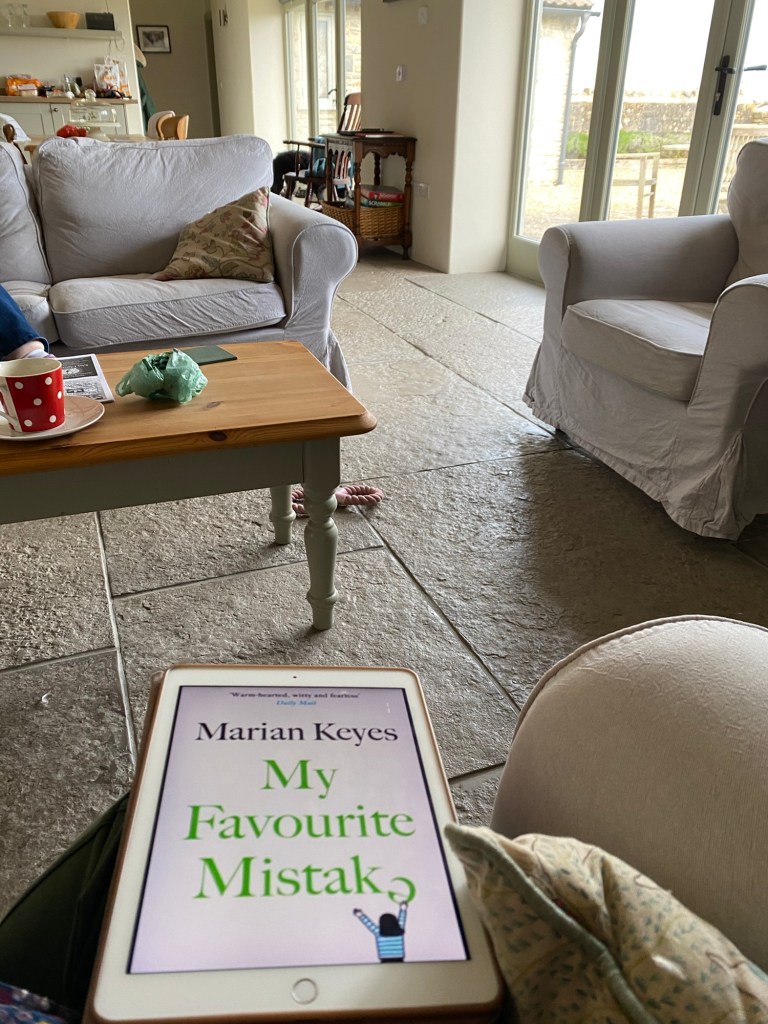
Again Rachel by Marian Keyes

Over the last couple of weeks I’ve had the brilliant experience of buddy reading with my eldest stepdaughter. I bought her Rachel’s Holiday and this sequel Again, Rachel for Christmas and she decided to read them in her down time from revising for her A’Levels. I realised it would be a great opportunity to share the reading experience together. I finished this on my weekend away and I genuinely found it hard to look up from the story. For the author, the anxiety of revisiting a much loved character must be huge, because I felt it too. I’d kept it on one side for this long because of that anxiety. I loved Rachel and the whole Walsh family and I wasn’t sure I wanted to know what happened next. We’re twenty years on from the end of the last book and Rachel is settled, with a job she loves and a happy home. She works as a senior counsellor at The Cloisters – the place where she started her own recovery journey. She owns a beautiful little house and a garden that’s become an unexpected part of her ongoing recovery and mental well-being. She also has a little dog, Crunchie. There’s also a man, Nick Quinliven (known as Quin) who has a penchant for trying new and exciting things from from the latest restaurant to wild swimming and escape rooms. They haven’t said they love each other yet, but he is an important part of her life. Life is great until Rachel hears that Rose Costello has died. Rose was her mother-in-law and although she hasn’t seen her since she and Luke divorced, she does feel an obligation. Should she go to the funeral or not?

Rachel and Luke have never spoken since he left their Brooklyn flat several years ago and cut all contact. I kept thinking what on earth could have separated these two people who really loved each other? Skilfully taking us back and forth in time, Marian Keyes constructs the intervening years as Rachel copes with the unexpected present and the painful past. Rachel’s whole life is upended as she sees Luke for the first time and tries to cope with the emotions of their reunion. However, she’s also plunged deeply into the past and the reasons she and Luke ended. Rachel is emotionally intelligent and knows all about buried trauma, but is surprised when she experiences all of those emotions afresh as if it only happened yesterday. It upsets her equilibrium, but has that sense of calm recovery merely been a front? Rachel hasn’t wilfully deceived others. She’s deceived herself. Is her version of what happened back then even the truth? If given the chance to connect with Luke and unpick their past, should she take it?

Marian Keyes really knows her stuff when it comes to addiction and mental health. It’s always a joy to read her books because they’re so emotionally intelligent. This framework provides so much depth to the characters and their story. Here she shows us a wounded healer, as Rachel struggles through addiction and loss, but still supports clients to achieve psychological change. I love her courage, because anyone who uses their own pain to help others is an incredible human being. I love how Keyes describes group sessions, as Rachel keeps her boundaries and sticks to her script, no matter how strongly she might be identifying with the client or feeling deeply moved by their story. We get to see that conflict in her; as a human being she might want to comfort that person, but as a therapist she must hold back to effect change. She knows that sometimes it’s important to sit with the feelings, to truly feel negative emotions without distractions or outside comfort. They always pass. I loved the wisdom she’s acquired over the years and how she rides to cope with her own trauma the same way.

I was deeply moved by Luke and Rachel’s experience because I’ve been through something similar. It made some parts hard to read, but it was written beautifully and with an accuracy I really appreciated. Keyes offsets the sadness with the usual comic touches, with Walsh family conferences being a great source of humour. All the sisters have their own idiosyncratic characters, causing conflict at times but we know that love is always present. Mrs Walsh is typically overbearing and contrary and her upcoming ‘surprise’ birthday party is an extra source of stress, especially when she decides to invite her ex-son-in-law. Luckily, the meticulously organised Claire has everything in hand, despite also trying to negotiate a session of swinging for her and her husband. Husband Adam is reluctant, but once convinced he becomes so enthusiastic that Claire is furious with him! The love stories are convincing and both Rachel’s current beau Quin and ex-husband Luke have their strengths. I held out hope for Quin and Rachel because I thought they suited each other. However, once Luke is on the scene the chemistry and unfinished business between him and Rachel is undeniable. Quin isn’t the only obstacle either, Luke’s partner Callie is with him in Ireland and seems very determined to keep Rachel close. I didn’t know if Rachel and Luke would be able to move past their history and connect again, as the people they are now. I loved how they tried their hardest to work through what happened, despite the pain it’s clearly causing. Could they possibly remain friends and share their loss, after all only the two of them can fully understand what they went through. Despite knowing that that Rachel didn’t need either man to build a happy life, I knew where my loyalties as we approached the end. Oh what an ending!! I was snap chatting my stepdaughter and we’d both cried buckets at the ending. I was so glad that Marian Keyes had been brave enough to revisit Rachel again.

Published by Penguin 13th April 2023

Marian Keyes is the international bestselling author of Watermelon, Lucy Sullivan is Getting Married, Rachel’s Holiday, Last Chance Saloon, Sushi for Beginners, Angels, The Other Side of the Story, Anybody Out There, This Charming Man, The Brightest Star in the Sky , The Mystery of Mercy Close, The Woman Who Stole My Life, The Break and her latest Number One bestseller, Grown Ups. Her two collections of journalism, Making it up as I Go Along and Under the Duvet: Deluxe Edition are also available from Penguin.

Posted in Random Things Tours

The Forgotten Garden by Sharon Gosling

Thanks to enjoying the blog tour for Sharon Gosling’s first novel, The House Beneath the Cliffs, she became an author I kept an eye on. I was on the look out for her next and The Lighthouse Bookshop confirmed for me that if I’m looking for an escapist read, she is one of my go-to authors. She seems to effortlessly blend a mix of sadness and heartache, secrets, warmth and potential romance into an engrossing read that’s so enjoyable. Our main character, Luisa McGregor, has allowed herself to become stuck. A life that once felt safe, secure and predictable is now starting to stifle Luisa and she needs more, a new challenge perhaps. Then into her lap falls great opportunity. Her friend Oliver presents a daunting, but tantalising proposition. Instead of carrying on as a gardening assistant to a woman she feels increasingly out of step with, she should check out an opportunity to build a whole new garden at a site near the Cumbrian coast. There’s a pot of money available to build a community garden on wasteland next to a gym and youth club. Luisa agrees to visit the site and is daunted by the amount of work needed, but also inspired by what could be achieved there. As we meet the people of this disadvantaged area of Collaton, we can see what a community garden could mean to these people. There’s teacher Cas, who is pouring all of his energy and spare time into the young people of the area. Harper is a teenager with a lot on her plate, but determined to find a way out of Collaton towards a different future. Can Luisa design a garden that brings both healing, inspiration and a stronger sense of community for the residents?

I did connect with Luisa and the position she has become stuck in. She has had to recover from the terrible trauma of losing her husband in an accident. She has dragged herself up from the darkest and most difficult days following her husband’s death, to a point where she feels she has rebuilt her life. She’s working in garden design, even if she doesn’t like her boss, she has a nice home and great support in her sister. Really though, she’s just treading water and terrified of stretching herself or reaching for something that she could lose. I loved the way the author shows Luisa coming alive again as she works on the new garden. She literally blooms alongside her plants and seems to gain something from working with others and passing on her skills. Without trying too hard, the garden draws in those who need it including a woman who’s been her husband’s carer since an accident paralysed him. He’s initially sceptical and annoyed that his wife’s attention has been captured by Luisa’s plans, but just a few hours a week gaining respite from her caring role has transformed her. It’s not long before he’s creating bespoke benches for the garden, adapting the way he uses his joinery skills to his disability. Harper is a character who really stands out, she’s a young girl brimming with potential, but struggling to escape the difficult circumstances of her life. She is the main caregiver for her younger brother, now that their mum has died and their father has escaped into the bottle. Harper has a skill for mechanics, engineering and invention. She spends her spare time either at the club with Cas or helping at the local garage where she’s doing up a battered old Mini that Cas has gifted to her. Harper’s story shows us how hard it can be for someone to escape where they live and their family circumstances. Her cousin Darren is out of prison and is back dealing drugs in the area again, Harper is devastated when he preys upon her younger brother, Max. Max is easily influenced, especially when it comes to friendships. He struggles to make friends and has been subjected to bullying, so when someone older and seemingly cool pays him attention it’s an easy conquest. Darren wants him as a drug runner or lookout, but Harper puts her foot down and offers herself up instead. I was on tenterhooks, knowing that this decision would have consequences in the future.

There are a few powerful scenes that really stand out. Max has a secret that he’s been working on in Harper’s absence, inspired by the garden and when it was unveiled I almost held my breath. I loved the idea for his garden and the description was so lush and vivid I could almost smell the vegetation and feel the warmth. I could imagine sitting there, early on a sunny morning and enjoying a coffee. I also kept thinking what an incredible wedding venue it would be. It’s clear as soon as Cas and Luisa meet that there is potential for romance, but I wondered if both of them were too hurt by their pasts to take the chance. I was sure it needed a catalyst and the author certainly gives us one. The scene where Darren’s thugs get into the garden was heartbreaking and heart-stopping. I could actually feel the fear of the volunteers and residents as Darren shows his true colours and the bad boy reputation he’s trying to create for himself in the community. However, the gang don’t expect to be challenged, with devastating results. I was rooting for Cas and Luisa, with their endeavours in the community and their potential romance too. I read to the end quickly, determined to see the garden succeed and whether Luisa would overcome her fear of love and inevitable loss. I took the book on holiday with me and it was an enjoyable and emotional read, with an ending that was truly satisfying. This is an author who understands that life has seasons and that women have an amazing capacity to accept life’s changes, as well as the resilience to reinvent themselves and start over again.

Published by Simon and Schuster UK 27th April 2023

Meet the Author

I’ve been writing since I was a teenager, which is now a distressingly long time ago! I started out as an entertainment journalist – actually, my earliest published work was as a reviewer of science fiction and fantasy books. I went on to become a staff writer and then an editor for print magazines, before beginning to write non-fiction making-of books tied in to film and television, such as The Art and Making of Penny Dreadful and Wonder Woman: The Art and Making of the Film. 

I now write both children’s and adult fiction – my first novel was called The Diamond Thief, a Victorian-set steampunk adventure book for the middle grade age group. That won the Redbridge Children’s prize in 2014, and I went on to write two more books in the series before moving on to other adventure books including The Golden Butterfly, which was nominated for the Carnegie Award in 2017, The House of Hidden Wonders, and a YA horror called FIR, which was shortlisted for the Lancashire Book of the Year Award in 2018. 

My debut adult novel was published by Simon & Schuster in August 2021. It was called The House Beneath the Cliffs and it was set in a very small coastal village in Scotland. The idea for it had lodged in my head years before. I have a love for unusual dwelling places and I came across a tiny house that completely captured my imagination. My adult fiction tends to centre on small communities – feel-good tales about how we find where we belong in life and what it means when we do. Although I have also published full-on adult horror stories, which are less about community and more about terror and mayhem…

I was born in Kent but now live in a very small house in an equally small village in northern Cumbria with my husband, who owns a bookshop in the nearby market town of Penrith.

Posted in Netgalley, Publisher Proof

Every Happy Family by Sarah Stovell

‘All happy families are alike; each unhappy family is unhappy in it’s own way’. Anna Karenina Leo Tolstoy

I’ve been wanting to try a Sarah Stovell novel for the last couple of years, because it’s a name that’s come up with other bloggers as someone I would enjoy. This story had me gripped to the very last page. This is the history of a family, but told like a thriller. We know that one central incident is the lynchpin of the whole story, explaining the family’s geography, personalities and dynamics with each other. Yet the incident isn’t laid bare for the reader. We must go back and forth in time, with the truth only revealed in short bursts and from different family member’s perspectives. Minnie is an academic, a professor of sociology and women’s studies and is married to Bert, another academic. Minnie is also the matriarch of the Plenderleith family: Owen, his wife Sophie and daughter Layla; Lizzie who lives in a platonic partnership with Tamsin and has a daughter, Ruby; then there’s baby Jessie and her wife Anna who have had two babies in quick succession. For the first time, Minnie will have her entire family under one roof for Christmas. This is a rare occasion because Owen lives in Australia and everyone leads very busy lives. Plus there is a tension at the centre of this family, something they never talk about, which has led to misunderstanding, distance and fear. Fear that if the incident is brought into the open and talked about, the family might implode. However, Owen hasn’t brought his wife to England and his teenage girlfriend Nora is in the village, sorting out her father’s house after his death. Could Nora be the catalyst that for an explosive Christmas?

The depth of characterisation in these family members is brilliant. I found myself understanding each family member as I read their section of the narrative. Even where their point of view clashed completely with someone else, or where they’re acting from a complete misunderstanding, I could empathise with their position. I fell in love with Lizzie, probably because I am overweight, nearing middle age and have an abusive relationship behind me. There was an instant understanding of her emotional need for calm, quiet and meditation. I also understood her medication, whether it was food or a prescription from the GP. Lizzie left a physically abusive relationship when her daughter Ruby was 16, with her self-esteem and sense of self eroded almost beyond repair. Lizzie is the jolly, overweight sister who jokes about her love of cake and seems outwardly confident, someone who owns her choices. Underneath though, is a animal that stays curled into a ball waiting for the next kick. Perhaps unable to trust men, or even trust her own judgement, she has found solace in a platonic family unit with friend Tamsin and although they perhaps don’t fully understand it, the family accepts it as a life choice and Tamsin is very much part of the family. Twenty years earlier, when Owen started dating Nora, Lizzie made friends with this unusual girl. Nora is the opposite of Lizzie, she looks like a fragile waif that you would want to feed and look after. Having lost her mother at a young age, Nora only had her father and it wasn’t an ideal relationship, so when Owen started bringing her home, his family became Nora’s family too. Minnie is impressed with her son’s choice, because she’s not into fashion or anything superficial, she’s bright, idealistic and wants to change the world. She’s going to spend summers working on conservation projects in different parts of the world and she follows through on her dreams. She might seem frail, but she’s determined and not scared of stepping out into the world alone. She’s so different to Owen but they have a connection that’s natural, deep and all encompassing.

I really did understand Minnie, a woman with so much education, intelligence and personal experience. She is the centre of the incident and takes so much of the blame for what happened, even though her point of view isn’t unreasonable. Minnie is on her second marriage, her first was to Owen and Lizzie’s father who was a drunk. Minnie was trying to hold down an academic position, run a household and two children, but always on tenterhooks for the next crisis to hit. Would she come home from work and find their father had hurt himself, given away the family car or worse? When he died, it was more of a relief than anything but Minnie was burned out. I could see immediately that Minnie was one of life’s ‘copers’. She’s used to picking up the pieces of whatever disaster her family members bring home, always without complaint and assuring them it will be ok. Holding the anxiety and responsibility for everyone creates burn out and resentment. When is it someone else’s turn to hold it together? She just wants one opportunity to fall apart. So when the big incident happened Minnie decided this was one mess she would not be clearing up. The fall out from this decision will last twenty years, compounded by miscommunication, layers of regret and grief, and the blame never apportioned out loud.

When trauma isn’t processed and discussed it grows and can come out in the most unexpected ways. Like on Christmas Day, when at least three generations of the family bring the trauma into the present. I loved how the author brought all those strands together to create this tension filled and momentous day. There’s all the usual stuff; prepping the veg, opening the presents and playing games. Between the celebrations, we’re told parts of the story by those who were there and those who are living in the aftermath. Even the grandchildren are affected, because things that are never spoken about can be misunderstood and blown out of proportion. The sections become shorter and faster towards the end, driving then tension and compelling you to keep reading. This is a brilliant, emotional and addictive read that’s a must read for this spring and would make a great TV thriller.

Published by HQ 30th March 2023

Meet the Author


Sarah lives in Northumberland, England, with her family. She teaches creative writing at Lincoln University. During the Covid pandemic, she was unable to write because her children kept interrupting her, so she started baking instead. She now spends her time writing, teaching, hanging out with her kids, baking fine patisserie and trying to believe her luck.