Posted in Netgalley

The Princess by Wendy Holden 

It was all she ever wanted. Until her dreams came true…

The moving new novel about the young Diana.

Diana believes in love. Growing up amid the fallout of her parents’ bitter divorce, she takes refuge in romantic novels. She dreams of being rescued by a handsome prince.

Prince Charles loves his freedom. He’s in no rush to wed, but his family have other ideas. Charles must marry for the future of the Crown.

The right girl needs to be found, and fast. She must be young, aristocratic and free of past liaisons.

The teenage Diana Spencer is just about the only candidate. Her desperation to be loved dovetails with royal desperation for a bride.

But the route to the altar is full of hidden obstacles and people with their own agendas.

When she steps from the golden carriage on her wedding day, has Diana’s romantic dream come true?

Or is it already over?

Princess Diana hit the headlines when I was nine years old, perfect timing for me to buy into the fairytale and fall in love with her. I had my hair cut into Diana’s short style and I had one of her jumpers, well an Asda version, covered in sheep with one little black sheep in the bottom corner. When we look back at her life in retrospect, it could be that she was trying to tell us something. This book focuses on Diana’s earlier years, from her schooldays until that fairytale of a wedding which seemed to cement her into the consciousness of everyone, across the world. It was interesting to read more about her single life before dating Charles, a period that struck me as interesting when it was dramatised in The Crown. She had a busy, fun lifestyle sharing a flat with three friends and working in a nursery. Then as soon as the engagement was announced she was taken into apartments at Buckingham Palace, totally closed off from outside, but also from other members of the royal family. It was quiet, almost like a church, with no one reachable by phone and Charles on a tour abroad. His only thought in terms of company was to introduce her to Camilla Parker Bowles. 

The book did well when describing the dysfunctional way the Royals live. It’s an almost surreal existence with very specific rules to live by. When I read how much time each member spends alone I started to understand why they all have dogs. They don’t eat together daily, non-royals don’t come to the palace unless invited and each royal has their own quirks. For a 18-19 year old wandering round empty rooms and not being able to talk to friends must have been totally isolating. It was for her security of course, but it also meant she could be trained to fit the role she would play. She must have been so lonely. I’ve clearly read a lot of the same books as the author, because I knew about King Charles’s very odd boiled egg habits and the Queen Mother’s exploits in her home at Clarence House, but there were some things that were new to me. 

It was clear that Diana was a young girl full of life and romantic ideas about men and marriage. Wendy Holden tells the story through the eyes of Diana, her best friend at boarding school Sandy and Stephen Barry who was the Prince of Wales’s valet. The girls read paperback romances, the type of story written by Diana’s relative Barbara Cartland. When the girls imagine love at the age of 13, they imagine it being: ‘like a particularly delicious bath, deep and warm, with lots of bubbles.’ It conjures up a sense of comfort and pampering that I do actually feel sometimes with my other half, but a man who doesn’t know what love means isn’t equipped to love like that. The only people who pampered him were his servants, how can you provide what you’ve never had? I think Holden has captured the essence of a girl in adolescence, dreaming what her life might be. She’s a lively, bubbly girl who loves music and the company of others. She has a shy charm that’s so endearing, but her parents divorce has left a mark and I wondered whether it instilled in her a determination to get it right, which left me feeling a little sad for her.  

The second section of the novel definitely has a a melancholy feel, that shows us how well the author has brought the fun, young Diana to life. This is such a contrast. It also makes us realise how young she was to get married anyway, never mind becoming a future Queen of England. It is only six years since that journey with Sandy to boarding school. So, when she becomes engaged to the then Prince of Wales she was probably still expecting the comfort and care of a warm bath. She must have been disappointed at this moment. I always feel that Diana married the people on that day, rather than Charles. When she has some late doubts her sister Sarah warns her that her face is already on the tea towels. It’s too late. The pressure must have been immense. She has spent months hounded by the press and the famous moment where photographers captured her with a see through skirt is just one incidence of naivety on her part. She’s been getting thinner and her wedding dress needed taking in constantly. This isn’t the fairy tale love she’s dreamed about, more the matchmaking of two grandmothers living in the past and desperately trying to break off Charles’s adulterous relationship with Camilla.

I think the author attempted something very difficult here, to create a unique view of a story that’s a modern parable. Everyone knows a version of what happened. So, to create something that captures the voice of the most well known woman in the world, while bringing something new to her story, is near impossible. I think she partly succeeds. I didn’t learn anything new, but I did feel that I was listening to Diana in this story. It doesn’t have that compelling quality, because we already know about the divorce in 1996 and her death only a year later. I felt there was a bit of fire in this girl, despite her naivety. The rude awakening that she was simply a brood mare fuelled a fightback – the Andrew Morton book, the interview with Bashir and that last poignant summer are her pushing back against a system she felt used and abandoned by. A desperate need to be heard. I thought it was interesting to know she spent time with Princess Margaret, another young, royal woman who learned early on that her happiness came very low on the list of priorities. The royals never tried to be her family, missing that warmth and heart Diana was known for. I think this warmth, plus her fight and desire to buck the system is perhaps inherited by her son Harry. This was a well-researched book that really captured the spirit and personality of the most famous woman in the world. 

Out Now from Mountain Leopard Press

Posted in Netgalley

Clear by Carys Davies 

1843. On a remote Scottish island, Ivar, the sole occupant, leads a life of quiet isolation until the day he finds a man unconscious on the beach below the cliffs. The newcomer is John Ferguson, an impoverished church minister sent to evict Ivar and turn the island into grazing land for sheep. Unaware of the stranger’s intentions, Ivar takes him into his home, and in spite of the two men having no common language, a fragile bond begins to form between them. Meanwhile, on the mainland, John’s wife, Mary, anxiously awaits news of his mission.

Against the rugged backdrop of this faraway spot beyond Shetland, Carys Davies’s intimate drama unfolds with tension and tenderness: a touching and crystalline study of ordinary people buffeted by history and a powerful exploration of the distances and connections between us.

Clear is so beautifully set within some very significant events. In the 19th Century evangelical worshippers moved away from the Church of Scotland to form the Free Church of Scotland. Also, there was a second wave of Scottish landowners driving their tenants from the land, choosing to make a better profit grazing sheep, know as the Highland Clearances. Our characters are deeply involved with these events. John Ferguson has been a minister in the Church of Scotland, but his conscience draws him away towards the Free Church. This leaves him without an income since the new church isn’t yet established. John’s wife Mary may be the answer, because her brother-in-law asks a landowner if he could offer John a job. The job has one purpose, travelling to a remote island in the North Sea close to Norway. There he has to evict the landowner’s last remaining tenant, a man named Ivar who is barely scratching a living with a handful of livestock. However, Ivar doesn’t speak English, but an old dialect that’s a mix of Norwegian and Gaelic. John has just one month till the boat returns to take both of them back to Shetland. How will he convince Ivar to leave? 

The story is focused on the relationship these two men have to develop with each other and it starts in a way neither expect. The bailie’s house is empty as he’s already left the island so John plans to make it his base, but needs to find somewhere locally that he can wash. He finds a spring and decides to bathe, but he slips and falls down a cliff. Ivar finds the unconscious man and takes him to his own hut. As John slowly regains consciousness and begins his recovery, the two man have to work out a way of speaking to each other and eventually John has to explain what he’s there for. As we watch their relationship grow and how they work on communication, Mary has grown worried about John. She thinks he may have taken on the task without enough preparation and she decides to travel out there and join him. The narrative felt like being a fly on the wall to to these events. Once the three are together I had the strange feeling that this was really happening and I was simply watching history, bearing witness to the emotions flowing between them. 

This is such a gentle story that contains so much. Instead of pushing an agenda or viewpoint, the author just lets it play out naturally. Nature is so much more than just a setting, it’s life itself. The island is mercurial, with it’s changeable weather creating the mood. Ivar lives entirely off this land, his life a routine of hard work and at home he spins wool or knits. Even the regular agent who collects rent for the landowner is paid in wool, feathers or wrack. Ivar is part of this island, a bear of a man with only his animals for company. There’s a purity to his life that’s almost spiritual, an interesting contrast to John’s organised religion. There’s so much going on under the surface of the story, told in the tiny details of everyday life: their gestures, the intimacies they share and how those connections change as a language is formed between them. It’s interesting to see the established dynamic of John and Ivar affecting how Mary settles into the cottage. The men’s connection brings the three of them into a unit, so that they don’t feel like a married couple and a lone man any more. Each of them forms a strong connection with each other and the landscape. I found reading this an almost meditative experience, because it’s so slow and calm. The ending came suddenly and was a shock. 

Published by Granta 7th March 2025

Meet the Author

Carys Davies’s debut novel West (2018) was shortlisted for the Rathbones Folio Prize, runner up for the Society of Authors’ McKitterick Prize, and winner of the Wales Book of the Year for Fiction. Her second novel The Mission House was first published in the UK in 2020 where it was The Sunday Times 2020 Novel of the Year.

She is also the author of two collections of short stories, Some New Ambush and The Redemption of Galen Pike, which won the 2015 Frank O’Connor International Short Story Award and the 2015 Jerwood Fiction Uncovered Prize. She is the recipient of the Royal Society of Literature’s V.S. Pritchett Prize, the Society of Authors’ Olive Cook Short Story Award, a Northern Writers’ Award, a Cullman Fellowship at the New York Public Library, and is a member of the Folio Academy. Her fiction has been translated into nine languages.

Born in Wales, she grew up there and in the Midlands, lived and worked for twelve years in New York and Chicago, and now lives in Edinburgh.

Posted in Netgalley

Garden of her Heart by Zoe Richards

I was immediately attracted to this book because of it’s themes of trauma and recovery, something I have personal and professional experience with. This is an ultimately uplifting story of healing that was the perfect antidote to the current news cycle and being pretty much housebound due to illness. The story is set on a well-being retreat and follows one loner, two secrets and three weeks at Pinewoods Retreat. When Holly Bush (yes, that’s her name ) is made redundant with gardening leave, after suffering a brutal attack. She decides to visit a retreat not far from home, finding friendship and a garden in need of love. She ends up doing literal gardening leave and journals her way through the holiday, working on both her mental and physical scars as well as discovering an inner strength and resilience.

I’d been looking forward to reading this, but the TBR and my health got in the way. Although, perhaps this was the perfect time to read it. Zoe is open about her own journey with mental health and it’s something that will resonate with a lot of people. I bonded with Holly very quickly and was rooting for immediately. I thought all of the characters were very real and the owners of the retreat, Dee and Lorraine, were incredibly authentic and seemed to truly care about their residents. They reminded me of people I’ve worked with and thank goodness for people like this! The other residents were an interesting mix and I loved watching Holly’s relationship with Bex, Ruth and San grow into friendship and mutual support. They all felt honest and real. Hunter, the odd-job guy, was a bit of a fox and almost made me want to pick up a trowel and get planting. I loved the journaling aspects of the retreat, because it’s something I’ve taught for some time in mental health settings and for people with acquired disabilities. It makes such a difference to people’s wellbeing and their acceptance of a huge life change. I loved facilitating these sessions and being unable to work at the moment it was lovely to be back in that atmosphere.

The story is moving and there are sad parts, these are people who are healing and they need to process their trauma in order to move on. There are characters who don’t behave very well, but they’re on their own healing journey and it really isn’t easy. I found it moving as people let go of all the fear, anger and frustration they were feeling. There’s something so beautiful about seeing someone blossom this way and the garden was obviously a great metaphor for that. It’s why I chose the lotus flower as my logo for counselling because of the quote about it growing from a muddy pod; beautiful and strong. There was just so much hope for the future, not to mention the enduring friendships that are made. I think Zoe captured the sense of peace that comes from being your authentic self. While there is a hint of romance, I loved the way it was kept in the background, with the friendship and trust between Holly and the new allies being the most important part. This is a great debut, creating a place of healing that readers could easily be inspired by. It’s not just a enjoyable story, I think a lot of people will identify with it and perhaps start their own recovery journey. It’s a book that will stay in my uplifting reads for those grey days when I need comfort from what I’m reading. 

Out now from UCLan Publishing

Meet the Author

Zoë Richards was inspired to write Garden of Her Heart by being a suicide survivor from which she learned the healing that worked best for her, which is not the same for everyone. Dog walks around the Formby pinewoods, not far from her home, gave her the location, in an area known locally as The Lost Resort, a town that never came into existence, close to the sea. In the woods there is a sole Victorian house, standing alone on a cinder track, and this is the inspiration for the location of Pinewoods Retreat. She lives in Southport, near Liverpool, has been married to Rob for 34 years, and they have a grown-up daughter and a cockapoo who will never grow up. She worked for the NHS as an improvement programme manager, reforming how children and young people with special educational needs and disabilities are supported in healthcare. Writing gives her an escape from the intensity of work and from caring for her elderly mother.

Zoë is an author and host of the podcast, Write, Damn It!. She has written for national magazines for many years. She is represented by Clare Coombes of The Liverpool Literary Agency and her debut novel, Garden of Her Heart, a novel about recovery, community and purpose, was published by UCLan Publishing in June 2024. Her second novel, Tell It To The Bees is a standalone sequel, and is out in August 2025.

With over 30 years of experience of working on mindset, and a teacher of coaching for over 25 years, Zoë hosts the Write, Damn It! podcast, where she has weekly conversations with authors, and offers doses of support to writers. She also coaches writers to overcome their demons and blocks, and helps them get the writing done. Much of what she uses on mindset comes from lived experience, as she is a suicide survivor who learned how to get through the darkest times using mindset and wellbeing support. 

Zoë lives on the Merseyside coast with her husband and MillyMoo the cockapoo. She has an adult daughter and a granddaughter – and best not forget Peanut the grandpup too.

Posted in Throwback Thursday

The Giver of Stars by Jojo Moyes.

When I first read The Giver of Stars I felt it was a totally different type of Jojo Moyes novel. Using the historical setting of the Great Depression, she takes us to a town in rural Kentucky., where most people work in the Van Cleeve family’s mines and levels of rural poverty are high. In Kentucky, African-Americans are still subject to segregation and middle class women are expected to stay home and know their place. Women in poorer families are working hard while trying their best to feed and look after ever-growing families. Into this setting comes Alice, the English bride of the heir to the mining fortune, Bennet Van Cleeve. Bennet is handsome and considerate, and their marriage seems to start well but once they reach the family home things change. Bennet has lived with his father, following the death of his mother and the house is still being run to her exacting standards. Alice finds she has little to do, with a house is full of her late mother-in-laws ornaments and china dolls, especially since Mr Van Cleeve doesn’t like anything to be out of it’s normal place. More worrying is the change in Bennet now they are home. Despite showing some desire at the beginning, the proximity to his father is affecting their sex life. Several months down the line their marriage is still unconsummated and Mr Van Cleeve keeps hinting about grandchildren, adding to the pressure.

When a town meeting is called to discuss President Roosevelt’s initiative to get the rural poor reading, Alice senses an outlet for her energy. Margery O’Hare will head up the initiative, a wonderfully outspoken and self-sufficient women who doesn’t listen to the opinion of anyone else, particularly men. She opens a door for Alice, out of the claustrophobic Van Cleeve household and into the wild forests of Kentucky. Alice learns to ride a mule, and along with Margery and two other local women she sets out as a librarian for the Packhorse Library. At first, rural locals are suspicious of an Englishwoman coming to the door offering them books, but soon Alice finds a way in and starts to be trusted. She also finds she likes the open air, the smells of the forest and singing of the birds. There is also the freedom to be in more casual dress and the camaraderie she is building up with her fellow librarians. She is close to Margery and when she confides about her marriage, Margery loans her a book she has been sneaking out with the novels and recipes. It is an instruction book on married love and Margery has been loaning it to poor women on her rounds who are inundated with children and need educating about sex. Alice takes the book home and a series of events are set in motion that will change not only the Van Cleeve household, but the whole town.

Mr Van Cleeve is determined to deal with Margery O’Hare once and for all, as he vows to destroy the Packhorse Library altogether. Margery is sure that a devastating flood had more behind it than high rainfall and suspects the mines. She has left herself vulnerable though, with what Van Cleeve sees as transgressive behaviour: she is exposed as having a relationship out of wedlock, she has hired an African-American woman who used to run the coloured library and she is encouraging townswomen to take control of their own lives. She seems impervious to other people’s disapproval so what lengths will he have to go to in order to stop her?

This was a beautifully written book and was on holiday when reading. I encouraged my other half to go fishing so I could stay in the holiday cottage to read it. It is so well researched, with real and authentic characters I fell in love with. Moyes manages to capture the tensions and societal changes of the Depression, depicting rural poverty, domestic abuse, and the rise of feminine power. We can see new attitudes towards race and feminism particularly where marriage and sex are concerned. Progressive attitudes come up against old money and old values in a tragic way. It was interesting to re-read it with the backdrop of Trump’s America where such traditional values are being forced on women in many states. I found myself desperate for the progressive characters and attitudes to prevail and it was this that built the tension and kept me reading till 2am! This was real, romantic and simply great storytelling. It’s an absolute must read and one of her best novels to date.

Posted in Random Things Tours

Madame Matisse by Sophie Haydock 

This is the story of three women – one an orphan and refugee who finds a place in the studio of a famous French artist, the other a wife and mother who has stood by her husband for nearly forty years. The third is his daughter, caught in the crossfire between her mother and a father she adores.

Amelie is first drawn to Henri Matisse as a way of escaping the conventional life expected of her. A free spirit, she sees in this budding young artist a glorious future for them both. Ambitious and driven, she gives everything for her husband’s art, ploughing her own desires, her time, her money into sustaining them both, even through years of struggle and disappointment.

Lydia Delectorskaya is a young Russian emigree, who fled her homeland following the death of her mother. After a fractured childhood, she is trying to make a place for herself on France’s golden Riviera, amid the artists, film stars and dazzling elite. Eventually she finds employment with the Matisse family. From this point on, their lives are set on a collision course….

Marguerite is Matisse’s eldest daughter. When the life of her family implodes, she must find her own way to make her mark and to navigate divided loyalties.

Based on a true story, Madame Matisse is a stunning novel about drama and betrayal; emotion and sex; glamour and tragedy, all set in the hotbed of the 1930s art movement in France. In art, as in life, this a time when the rules were made to be broken…

Almost eleven years ago my lovely arty friend Mandy wanted to visit the Matisse exhibit at Tate Britain. I really hope I didn’t ruin it for her. I probably did. I confess I’m not a lover of modernist art. We went to the Guggenheim in New York and I proclaimed it disappointing. We had to go across to the MET and see their collection of Impressionists to cheer me up. My loves are the Pre-Raphaelites and the Art Nouveau/ Arts and Crafts period so we’re a long way away from each other in preference. Art is her subject so I’m happy to own that she certainly knows a lot more than me. I was interested to read in her afterword that the author has always had an interest in Matisse, with a black and white postcard of him on her notice board for several years. I have one of Gustav Klimt wearing an artist’s smock and clutching a cat, with a look of devilment on his face. It makes me smile whenever I see it so I understand how a particular artist can inspire your imagination. Sophie’s first novel, The Flames, was about a protégé of Klimt. It was narrated by the women in the life of Egon Schiele, the subjects of four of his paintings. Here she takes a similar look at the women who surrounded Henri Matisse, showing how they advised, supported and sustained him in his endeavours, but remained completely in the background to his talent. 

The story starts with Amélie, an incredibly brave young woman who takes a chance on marrying an artist rather than a more conventionally acceptable partner. She sees something in Matisse’s paintings, recognising the way his work could be at the forefront of modernism. Previously his colourful style has been rejected for exhibition in Paris, but Amélie knows that innovative artists often take a while to break through. In fact it is a painting of Amélie that is the catalyst for Henri’s career to take off. Woman in a Hat is exhibited in Paris and bought by siblings Gertrude and Leo Stein, a bohemian pair central to the art world throughout the early 20th Century. This is where Amélie makes the bravest and most important decision of her husband’s career. The Stein’s offered only two thirds of the asking price. Eager to make a sale to the influential pair, Henri is willing to give the discount but Amélie advises him to wait and hold out for the asking price. He takes her counsel and they go and meet the Steins, convincing them that Henri is central to the next great artistic movement. The Steins pay the full price. The couple are a great team with Amélie making all the household and business decisions, freeing Henri to paint and become a famous member of the Fauvist Movement. She also brings Henri’s daughter Marguerite into their growing family, when her own mother is struggling to care for her. Yet, not everything about their relationship runs smoothly. Once they are able to afford a family home with a garden and studio for Henri, Amélie’s help is no longer needed. Henri takes on a series of young assistants and Amélie has the more traditional wife’s role which doesn’t suit her. It’s fascinating to read about the changes, once their joint struggle is over they cease to become a team and the problems begin. 

Woman in a Hat

Another section of the novel is devoted to Marguerite, Henri’s illegitimate daughter. Once Amélie has brought her to live within their family, Marguerite seems to blossom under the care of her stepmother. She also makes herself useful to her father, tidying his studio and anticipating his needs. It is interesting to hear about Amélie and Henri’s relationship from her perspective and her anxieties that the family she’s been brought into, stays together. She shares a lot of Amélie’s suspicions about some of the assistants who breeze in and out of their lives. She’s also a strong advocate for her stepmother, even into her parent’s old age. Yet there were times when I felt she was taken advantage of by Amélie and her father. There’s a sense in which, despite seeming kind, loyal and trustworthy, Matisse does use the women around him. The household was entirely groomed to anticipate his needs and the women are sacrifices for his artistic genius. 

Most interesting to me was Lydia Delektorskaya, born in Tomsk, Russia, in the tumultuous period after the revolution. After the murders of the Royal family, Lydia has just lost her mother when her father decides she must leave the country. He gives her a gun with three bullets left in their chambers and sends her to China on the Trans-Siberian Express with her Aunt Berthe. After building a life there Lydia must make a choice between the Sorbonne in Paris or to marry her lifelong friend and stay. Lydia takes neither choice and instead aims for the South of France, a place that couldn’t be more different to the place she was born. She spends time working in a bar but when she sees a job with the Matisse family she decides to apply. The job is to look after Henri’s wife Amélie who has a chronic illness and is confined to their apartment. Lydia has experience of working with her mum and her aunt and felt fulfilled by her caring role. Once she starts work though, some of her duties are to assist Henri in his studio, eventually sitting for portraits and sketches. Amélie eyes their relationship with suspicion despite there being no evidence of impropriety. This is more than an affair, it’s a meeting of souls and when ultimatums are made they have terrible consequences. 

Marguerite Asleep

I loved reading about these fascinating women, all of which step outside the traditional role of most women of the time. Sophie beautifully situates Matisse within his peer group, especially his great rival Picasso. She situates each woman perfectly within their history, the most in depth being Lydia’s Russian background and Marguerite’s incredible bravery in WW2. Both are fascinating to read and show us the extreme cruelty and playbook of totalitarian regimes. She also shows us how incredibly brave and resourceful each woman is, more involved in the world and bigger risk takers than Matisse. Lydia’s realisation of what her father truly sacrificed to stay in Russia happens when she is older. First they came for the royal family and aristocracy, then those with intelligence and  the ability to challenge them, just as the Nazis did in Poland. This perhaps has more resonance thanks to current world events. I thoroughly enjoyed looking up the paintings mentioned and seeing Matisse’s representation of the three women who were closest to him and I found myself reading articles about him and Picasso. It left me with a sense of anger and empathy for how much women sacrifice so that men can excel at what they do, realising their ambitions while their wive’s ambitions are forgotten or buried under a suffocating mental load – still the thing women in my group talk about most. These women never take the limelight away from Matisse, even while stripped bare for people to view. The focus is always on the painter, their brush strokes, choice of colour and artistic decisions. I love that in this novel they are more than body parts, they’re shown as the vital, brave, complex and generous women they clearly were.  

Lydia Delectorskaya

Meet the Author


Sophie Haydock is an author, editor and journalist (Sunday Times, Financial Times, Guardian), based in Folkestone, Kent, where she is curator of Folkestone Book Festival. Her debut, The Flames – about the women who posed for the scandalous artist Egon Schiele in Vienna a century ago – was named by the Times as one of the Best Historical Fiction Books of 2022. It was longlisted for the HWA Debut Crown Award, and the Italian translation, Le Fiamme, won the Premio Letterario Edoardo Kihlgren for debut novels. She worked for the Sunday Times Short Story Award and is associate director of the Word Factory. Her Instagram @egonschieleswomen has 110,000 followers. Visit: sophie-haydock.com

Posted in Throwback Thursday

Throwback Thursday! City of Girls by Elizabeth Gilbert.

When one of my favourite authors writes a new book I always experience a confusing mix of emotions. Excitement and anticipation mix with fear; will I love it as much as I love their last book? I don’t want to be disappointed. Since there’s a new Liz Gilbert out this year I thought I’d share my review of her last novel, City of Girls. Like a lot of readers my first encounter with Gilbert’s writing was Eat, Pray, Love; a book that was nothing short of a cultural phenomenon, not to mention the following hit film. For me, it was her novel The Signature of All Things that caught the imagination. The combination of a sparky and intelligent heroine, the feminist theme and the historical detail came together in a beautifully woven story. So as the publication date approached for this new novel I desperately wanted it to live up to her first.

I shouldn’t have worried. City of Girls is a joyous, exhilarating riot of a book. Our narrator, Vivian, plunges us into 1940s Manhattan where she is sent by her parents after expulsion from Vassar. There she is placed in the care of her Aunt Peg who runs the, slightly ramshackle, Lily Theatre. I was suddenly immersed in the bohemian world of theatre people where Vivian soon finds her niche. At Vassar she made friends by creating outfits for the other girls on her trusty sewing machine. So, in her new rooms above the theatre she is soon surrounded by showgirls wanting costumes. I have an interest in fashion and sewing, so I really enjoyed the descriptions of Vivian’s creations, made on a shoestring with a lot of help from Lowtsky’s vintage clothing store downtown. Yet not everything is as it seems on the surface. Is her friendship with showgirl Celia as mutual as it appears? What influence does the matronly and doom laden Olive have over Aunt Peg? Where is Uncle Billy, whose rooms Vivian has been using since her arrival?

 Some of these questions are answered during the production of the brand new play City of Girls. Aunt Peg’s friend Edna Parker Watson comes to stay after losing her London home during the Blitz. Edna is a talented theatre actress who is petite, beautiful and impeccably dressed. She arrives at the Lily with her huge wardrobe and her very famous and much younger husband, Arthur. Every member of the theatre company does their very best to get this musical off the ground and make it a success. Vivian works hard on her costume designs, but also finds herself becoming an unofficial PA and friend to Edna. Determined to put on the best show they can to turn the Lily Theatre’s fortunes around, Aunt Peg agrees to audition for new actors. When Vivian meets Anthony, the new leading man, she falls in love for the very first time. But alongside the awakening of first love, Vivian will also have her eyes opened to how cruel showbiz and the wider world can be. Several revelations teach her that not everyone can be trusted, the most unexpected people can come to your aid, and Vivian realises she has been walking around with her eyes closed. As the Second World War moves ever closer to their shores Vivian is left with a reckoning of her own. Does she want the respectable, quiet life her family expects or does she want to make her own way in a city and a career that is anything but quiet?  

You will fall in love with Vivian as she takes you into her past and candidly shares her exploits in 1940s NYC. She takes you from theatre, to nightclub to a dingy apartment in Hell’s Kitchen where she conducts her first love affair. She holds nothing back and I felt her delight at encountering the bohemian characters of the theatre, her passion and ingenuity for costume work and her discovery of a city laid out before her like a playground. She allows us to experience her growing up with every triumph and mistake she makes along the way. Such an engaging central character is well matched with other beautifully drawn female characters from the dowdy killjoy Olive who has surprising depths, the enigmatic Edna Parker Watson, the brisk and sometimes foolhardy Aunt Peg to the glamorous showgirl Celia who leads our narrator into a world of nightclubs, make-up and disposable men. The women in this novel are strong, surprising and all teach Vivian something about the kind of woman she wants to be. The novel emphasises the importance of strong female role models or mentors in both our personal and working life. I found myself torn between bingeing on this book or savouring it slowly: I wanted to know what happened next but I didn’t want my adventures with Vivian to come to an end. 

Meet the Author


Elizabeth Gilbert is an award-winning writer of both fiction and non-fiction. Her short story collection Pilgrims was a finalist for the PEN/Hemingway award, and her novel Stern Men was a New York Times notable book. In 2002, she published The Last American Man, which was a finalist for both the National Book Award and the National Book Critics’ Circle Award. She is best known for her 2006 memoir Eat, Pray, Love, which was published in over thirty languages and sold more than seven million copies worldwide. The film, released in 2010, stars Julia Roberts and Javier Bardem. Committed: A Sceptic Makes Peace with Marriage, a follow-up to Eat, Pray, Love, was published in 2010. Elizabeth Gilbert lives in New Jersey, USA.

Posted in Squad Pod

After the Fire by Charlotte Rixon 

This is the story of girl meets boy.

And then everything goes wrong . . .

Ever since they first met at university, Beth and Nick have circled in and out of one another’s lives: supporting each other through grief, marriage, divorce, career crises and family dramas.

Fourteen years ago, when they were on the cusp of adulthood, they both survived a devastating fire that sent their lives in different directions. And they’ve been running ever since: from the pain, from the memories, and most devastatingly of all, from the guilt.

But no matter how hard they try, there’s something else they can’t run from. The inescapable, terrifying truth: they’re in love with each other.

But how can they move forward, when neither of them can stop looking back?

I always say I don’t like romance, then a book like this comes along and I’m all in. Maybe it’s being over 50, but stories of first love grab me in the feels. Especially tragic first love. The thing is we’ve all had the experience of love that’s come at the wrong place or the wrong time, so reading a love story like Beth and Nick’s brings up memories and feelings of nostalgia. Our first love experiences are so intense and when feeling are unrequited or interrupted they can stay with us for the rest of our lives. Beth and Nick have a brilliant first meeting. They’re placed in the same flat at university and Beth walks into the shared bathroom and gets an eyeful! Beth is the last person to join the flat because she’s been ill so relationships have already been established. The other two girls, Rosa and Anna, were best friends before university and Nick is already in a relationship with Anna. Beth senses some chemistry between her and Nick, but she tries hard to ignore it. Nobody wants to be the girl who steals their flatmate’s boyfriend in the first weeks of the first term. When he turns up to watch her in drama club she thinks he must feel the same. 

It’s Nick who takes action. He breaks up with Anna and invites Beth on a late night walk. As they walk there’s just so much anticipation. The author builds to their first kiss with all that yearning and tension around who will make the first move. When they spot the fire in their building it’s already well ablaze and Anna is killed. 

Wracked with survivor’s guilt, Nick leaves university. Beth struggles to cope, feeling like Nick has abandoned her. She decides to stay and finish her drama course. Lives move on. Yet feelings for each other and about the tragic start to their time at university, still linger. The author tells the story through both characters and over 15 years as they build careers and relationships. They both think of each other. They try to keep in touch as friends and their paths do meet from time to time, but they’re always held back by the past. They do try to support each other, so when Beth’s long-term relationship breaks down, she finds herself wanting to talk to Nick. I really felt their longing for that first love and their thoughts that maybe it could have worked. Then reality crashes in and those feelings of guilt cloud their hopes. Yet the novel isn’t schmaltzy. There are meaty issues here like domestic violence and mental health, not to mention those trauma related feelings they’ve never really shared with each other.  

If there was ever a book to emphasise the importance of counselling or simply talking to each other, it’s this one. Until Nick and Beth talk through what happened and how it’s affected them since, they will always be haunted by Anna’s death. When trauma is left unresolved people find unhealthy ways to deal with those hidden emotions. Nick has a rescuer personality, developed because he never again wants to feel like he did back then as the cause of Anna’s sadness in her final hours. I love that Beth writes about what happened and her feelings for Nick because at least she’s processing the trauma, because the more we talk about it the less power it has. The tension in the novel comes from wondering if this pair will ever come together at the right time and place. Will they get the chance to put things right? Can they ever find their way back to each other? I was deeply invested and filled with hope for them. The author has written a beautiful love story, but it has impact because it isn’t a fairy tale and these two characters feel absolutely real. At the end I felt like comparisons to One Day, the archetypal friends to lovers classic, are entirely justified. 

Out now in paperback from Aria.

Meet the Author


Charlotte Rixon is the pen name of Charlotte Duckworth, USA Today-bestselling author of suspense fiction published by Quercus. Charlotte studied Classics at Leeds University and went on to gain a PGDip in Screenwriting. She worked for many years as a magazine journalist, and is a graduate of the Faber Academy ‘Writing A Novel’ course. You can find out more about her on her website: charlotterixon.com.

Posted in Random Things Tours

Black Woods Blue Sky by Eowyn Ivey

“Now are the woods all black, but still the sky is blue. May you always see a blue sky overhead.”  Proust. 

I was utterly mesmerised by this unusual grown-up fairy tale. Having read the author’s work before I was expecting a certain strangeness and this story definitely delivered. It’s hard to write about without revealing anything and you need to go into this book without spoilers. The story is told through the eyes of Birdie and her little girl Emmaleen. Birdie is a young, single mum. She’s living in a cabin out behind the bar where she works for Della. Birdie is just getting by. She has a wild spirit and although she loves Emmaleen, she’s not the most consistent parent. We meet her on a beautiful morning where she has woken up from the night before relatively unscathed. Yes, she’s a bit hungover and she knows Della is going to have words for her when she goes into work. For now though, the woods and creek are calling her, so she takes her fishing rod and leaving Emmaleen asleep and alone she walks through the trees and down to the water. She rationalises that she won’t be long and Emmaleen will sleep for a while yet. She catches a rainbow trout, guts and cleans it in the creek, before setting off back to the cabin. When she gets there, Emmaleen is gone. Birdie goes into panic mode, desperate to find her daughter but terrified to admit to Della that she’s left her alone. It’s a man called Arthur who eventually emerges from the woods with Birdie’s daughter on his shoulders and she’s never been more relieved. She knows Della will have something to say about this, but for now she’s just happy that Emmaleen is safe. When Della moves her onto the day shift, it’s a comment on her partying and parenting lifestyle. She has to bring Emmaleen into the lodge with her, but she sits colouring and doesn’t pester while she’s trying to work. 

Arthur comes in most mornings, he sits through the bar side of the lodge alone and orders toast. She’s fascinated by this strange, wild man. He has scarring and only the remains of an ear one side of his face. Birdie thinks he smells of wild places, never artificial scent. He smells mossy and like earth. From time to time she brushes his shoulder and if Della is out getting supplies, she might take a moment and sit with him. He’s so natural and gentle with Emmaleen too. He’s quiet and when he does say something it’s strangely, always in the present. She asks him why and he tells her that for him the world is like that. He’s always in the here and now. He understands the wildness in Birdie and her yearning to be out in the mountains. His parents have had a cabin in the woods since before he was born and it’s become his more or less. For several months of the year he takes himself up into the mountains and lives off the land and whatever supplies his dad flies in. It’s total isolation, off grid and without comforts. When he asks Birdie if she and Emmaleen would like to make a home out there in the mountains, there is only one answer. Yes.

“That’s how it was with Arthur. Getting close to him, feeling his eyes on her – like touching something dark and wild, then watching it dart away.’

Between the pages of this book I was totally lost in the wildness of Alaska. The author’s descriptions are vividly beautiful and I found myself wondering about a place I’d imagined as being full of snow. All of my senses were engaged and I became entranced by Emmaleen’s discovery of nature as Arthur shows her the forest floor with it’s springy moss and tiny wildflowers. There’s a strangeness and even a danger to being so far away from civilisation. Arthur’s cabin has been needing a woman’s touch for a long time. The floor is covered with leaves and dirt from the forest and mosquitoes are squeezing through the gaps round the windows. Birdie sets about cleaning the cabin and Emmaleen gets used to her environment, playing with her gnome friends and tasting bluebell flowers. The days are harsh, but Birdie’s enjoying the challenge of cooking and laundry out here without heating or electricity. She likes not knowing what time it is and working to her own body clock. She feels like part of the place. Yet underneath these drowsy and idyllic warm days, there’s a sneaky sense of unease. Arthur’s father Warren seems reluctant to leave the woman and her daughter alone in such a secluded place with Arthur. He’s never seen his son  be so tender as he is with this little girl. He even flies over 48 hours later and sees all three of them hiking up one of the mountains and they wave to him. Maybe he’s worrying about nothing. Yet Arthur does disappear and reappear without warning and sleeps on the floor. He seems curiously unsure when it comes to sex. There’s a mound near the cabin where Arthur yells at Emmaleen, telling her not to play there.
There’s a hidden animal pelt under the earth and caribou bones under the bed. How long before Birdie and Emaleen learn the terrifying truth about Arthur? 

This incredible story fits it’s unusual background perfectly. I loved how accepting Birdie was, despite the fact that she’s making risky decisions she doesn’t doubt Arthur for a moment. She accepts his unusual and seemingly inexperienced caresses without question. I didn’t know what to expect from the sections where we’re in Emmaleen’s world, but they are really strong, with bags of imagination and inventiveness. She’s so innocent and precious. I’ve lived in rural Lincolnshire as a child, mainly on farms so her wanderings and imaginary games reminded me of being small. I used to draw flowers and bark patterns or lie in a willow tree that hung over the water and read all day while my brother fished. I was fascinated with wild flowers so the details of plants and berries, which to eat and which were poisonous are so familiar. I also grew a strong stomach, having sat and watched my Dad gut rabbits and pheasants. I loved that Birdie could do these things, she has basic survival skills but that’s for expected dangers. I had a feeling that the potential threat would be out of the ordinary. Even though she makes mistakes I had a real maternal fondness for this young woman and her acceptance of this taciturn young man. Love comes in so many different forms and even though I could feel something looming on the horizon for this new little family I was hoping against hope for the transformative power of love. 

Out Now from Tinder Press

Meet the Author

Eowyn Ivey’s debut novel, THE SNOW CHILD, was published in twenty-six languages, and became an international bestseller. It was a finalist for the Pulitzer Prize 2013, and Eowyn won the International Author of the Year category at the 2012 National Book Awards. A former bookseller, Eowyn lives in Palmer, Alaska, with her family.

Posted in Squad Pod Collective

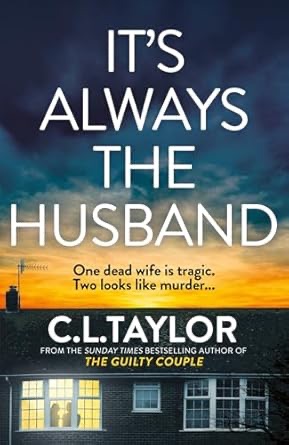
Every Move You Make by C.L. Taylor 

Alexandra, Lucy, Bridget, River and Natalie. Five friends who wish they’d never met. Because the one thing they have in common is the worst thing in their lives: they are all being stalked.

When one of their group is murdered, days after their stalker is released from prison, time stands still for them all. They know their lives could end just as brutally at any moment – all it takes is for the people they fear the most to catch up with them.

When the group receive a threat that one of them will die in ten days’ time, the terror that stalks their daily lives becomes all-consuming. But they know they don’t want to be victims anymore – it’s time to turn the tables and finally get their revenge.

Because the only way to stop a stalker is to become one yourself…

After starting the novel with a tense and terrifying narrative of a woman being stalked, the author jumps forward and shows us how the loss of Natalie has affected those around her so deeply. For a handful of mourners, her loss is a terrible reminder of how they met and increases the fear of their own fate. Natalie’s friends tell their stories through the WhatsApp group they share. Alex, Lucy, Bridget and River are all victims of stalking. They formed their group to support each other and as a way of looking out for each other, using it to check in when outside their homes and when they return. However, when a very clear threat is made against them, they have to protect themselves. What lengths will they go to? The structure takes us between characters giving us a little bit of their story each time. Each of their stories slowly weaves together to create a whole; the phrase ‘one more chapter’ is very apt for this book. Sometimes you get caught up in a particular story, reach a cliffhanger and realise you have to read through three more chapters to find out what happened. It’s a interesting mix of characters, choosing women of different ages and a man shows us that it’s not only young women who are victims of stalking. I could sense that there were secrets to unearth with all of them and I found myself unable to fully trust anyone. They were complex and I thought the author explored their character and the group dynamics really well. I found myself switching between who I mistrusted and why. This suspicion did ramp up the tension not to mention the thrilling action scenes. 

The other aspect of this novel that is brilliantly executed is the description of the psychological impact that the stalking has on each character. We can see each character dealing with their situation differently, based on their personality, past experiences and who is stalking them. Some know exactly who their stalker is, while others are stalked by a complete stranger. The author manages to put across the constant vigilance, that feeling of always looking over your shoulder and the fear of what the stalker might do next. She shows how some stalkers escalate, keeping their victim behind closed doors, terrified to venture into the outside world alone. There’s also an element of victims taking their power back and carrying out acts of retaliation. The remaining four of the group do this by tagging their stalkers so they can monitor their whereabouts at all times. To do this without the stalker realising is incredibly dangerous. As each chapter counts down to the potential murder of one of the victims, the sense of fear really does set in and keeps those pages turning. 

Reading this in the same week that Louise, Hannah and Julie Hunt’s killer was found guilty of their murder really hit home. Misogyny and violence against women seems to be on the rise at the moment. Often violence follows months or even years of abuse, coercive control and stalking. It also seems that women are losing trust in the system that’s designed to protect them, especially since Sarah Everard was killed by a serving police officer. Here the characters are avoiding telling the police and I was left wondering it was disillusionment with the police force or whether some characters had something to hide. For the person who once professed to love you, to exhibit such abusive behaviour, must be terrifying. In fact it is often walking away from the relationship and cutting off communication that leads to escalation, just when the victim is settled and starting to feel safe again. The author’s writing brings the truth of this issue to light, because it shows how important it is to have all the parts of a story. The problem is, stalking is often a case of one person’s word against the other. The book’s structure shows how one person’s account either illuminates or throw suspicion on someone else. Whether they’re guilty or not can depend upon their eloquence and ability to charm others. This is such a timely novel and it was interesting to read how the author’s research and personal experience informed her story. For me it was this personal insight that made her story feel so authentic.

Available now. Published by Avon Books

Meet the Author

C.L. Taylor is an award winning Sunday Times bestselling author of ten gripping psychological thrillers including EVERY MOVE YOU MAKE, a Richard and Judy Book Club pick for autumn 2024, THE GUILTY COUPLE, (Richard and Judy Book Club 2023) and SLEEP (Richard and Judy Book Club 2019).

C.L. Taylor’s books have sold over two million copies in the UK alone, hit number one on Amazon Kindle, Audible, Kobo, iBooks and Google Play, and have been translated into over 30 languages and optioned for TV.

Her books are not a series and can be read in any order:

Posted in Squad Pod Collective

Leaving by Roxana Robinson. 

For years and years, when I’m asked the question which book has hit me hardest emotionally I’ve always had to say One Day by David Nicholls. It’s the last book that made me cry spontaneously for one of the characters. I still remember the exact line. Now I’ll be able to say Leaving was the last book that absolutely tore my heart out. Sarah sees Warren, who she dated for a while in their college years. She had ended it, unsure whether they were a good fit. Yet they never stopped thinking about each other. Sarah is divorced now and lives alone in her country home with her dog Bella for company. She has a daughter who’s married and lives a distance away with her husband and two children. Sarah works at a gallery, currently putting together an exhibition about the Bloomsbury Group. Warren lives just outside Boston and has his own architectural practice in the city. He’s married to Janet, exactly the sort of wife he has needed: attractive, a good hostess and great mum to their daughter Kattie who is an older teenager. However, his wife is also a snob, very aware of who should be in their social circle and how things should be done. They don’t talk about current affairs together, listen to an opera or read the same books. Perhaps their marriage has always been like this, but it feels empty since he saw Sarah again. Can he spend the rest of his life in this marriage as he promised or can he be with Sarah? If he leaves what price will he have to pay? 

This novel is so clever in the way it engages with your morals and emotions. I was so caught up with the romance of Sarah and Warren, so much sweeter because it is second time around. I felt their urgency. It’s unthinkable thar they shouldn’t grab, what feels like, a last chance of happiness. I felt so much for Sarah, who is an intelligent and self-sufficient woman post divorce. She has such a solitary life, seemingly with a handful of friends. Her life is made up of her job, her home with poodle Bella and occasional visits with her daughter and son-in-law. I loved the tender moments she has with her dog, something I understand completely and just as important as anyone else when considering big life decisions. It feels like she’s where she belongs on the edge of the reservoir walking with her canine companion, so in tune together. She does feel a little remote from her daughter, wanting to be like other grandmothers who look after their grandchildren regularly and have one multi-generational family. Sarah doesn’t quite feel invited into her daughter’s life. I didn’t feel any dislike for her or begrudge her happiness with Warren, even though it comes at the cost of his wife’s happiness. They felt easy and uncomplicated together. Sarah thinks of his wife but doesn’t feel like the other woman because he was hers first. Their relationship is a continuation of something started long ago, or is this simply their justification for something outside their normal moral code. The author beautifully captures those heady romantic moments of a new relationship with simple moments, the joy of receiving flowers or the secret smile that comes from a loving text in the middle of a working day. Sarah doesn’t lie to her own children, she tells them she’s seeing someone from her past. That he’s married. They are happy for her. 

Warren’s life is more complicated. The author takes us between his and Sarah’s inner thoughts seamlessly. They are two halves of a whole. By comparison his married life feels mundane and rather one note, but it’s unfair to compare a new love or even a recaptured love with thirty years of married life. A few deft touches show us a marriage that’s become routine, Janet’s red house dress being just one. The reappearance of a frozen chicken pot pie is a beautifully used example. It appears early on, only to be replaced with a beautifully cooked beef bourguignon as Janet tries to win her husband back. It promises so much, this is how it will be from now on. Only to revert to chicken pot pie again, but it isn’t just a pie, it signifies a marriage that’s fallen back into a well worn groove. It screams ‘is this it?’ Janet has done nothing wrong, they haven’t had a bad marriage and when Warren feels the weight of those years there’s a fondness, a gratitude for all those shared moments that make up a marriage. He is both grateful for them and buried beneath them. Does he deserve to climb out from underneath them? Or is it an unforgivable betrayal of everything they’ve shared as a couple and a family? 

I loved some of the subplots to the main love story. I found Sarah’s work fascinating. I remember talking to someone ar the V & A about one of their fashion exhibits and the process of creating something with such impact. I hadn’t known a job existed where you could sit and discuss a artist’s work, then choose the pieces you want to tell a story. I thought the quandary over whether to go with a well- known scholar on the Bloomsbury group versus a newer academic voice echoed the love story so completely. The best known scholar may promise something new but will likely deliver something competent but safe. The newer voice might offer something dynamic and new but they aren’t a very big name yet, is newer always better? Sarah’s daughter’s third pregnancy isn’t easy and terrible news brings Sarah deeper into their lives and closer to her grandchildren. I also loved how Kattie’s wedding placed stress on her whole family, especially where Janet wants the big, formal society wedding and her daughter starts to feel overwhelmed. The wedding planner tells them that a wedding is basically a microcosm of society, the one of which their family is a part. People aren’t perfect, so weddings never are either. Neither is marriage.

Everything about this novel rings true, from the details that set each scene to the love story that binds everything together. It’s exquisitely written, drawing you in so very slowly, then unravelling quickly to it’s emotional conclusion. There’s a point in the book where I have never wanted to slap a character more! Even though their actions are understandable and possibly morally justified, I was still absolutely furious and had to share the story with my husband whose immediate response was exactly the same. Once an affair starts to turn into something more, so many decisions have to be made and the sacrifices those choices will create become stark and very real. Sarah has imagined living with Warren, but she’s always thought of them at her home. This is where she rebuilt herself after her divorce. It’s a place she loves and doesn’t think she can give up. Arguably, Warren’s choices are even more difficult. He knows if he does this, his relationship and happiness with Sarah will come at the cost of someone else’s feelings. On the scales does one happiness outweigh another? Or are some costs simply too great? I simply loved this book and although it’s only January but I have no doubt this will be in my best books list come the end of the year. I would happily read everything else the author’s ever written.

Published by Magpie Feb 2024

Meet the Author

Roxana Robinson is the author of eleven books: seven novels, three story collections, and the biography of Georgia O’Keeffe. Four of these were New York Times Notable Books. 

Robinson was born in Kentucky, but grew up in Bucks County, Pennsylvania. She attended Bennington College and graduated from the University of Michigan. She worked in the art world, specializing in the field of American painting, before she began writing full-time. Her novel, Cost, was a finalist for the NEBA, was named one of the five best fiction books of the year by the Washington Post and received the Fiction Award from the Maine Publishers and Writers Association.Her novel, Sparta, was named one of the ten best books of the year by the BBC, and won the James Webb Award for Distinguished Fiction from the USMC Heritage Foundation, and the Fiction Award from the Maine Publishers and Writers Association. Her fiction has appeared in The Atlantic, The New Yorker, Harper’s, Tin House, Best American Short Stories, and elsewhere. Her non-fiction has appeared in The New York Times, The Washington Post, Bookforum, Harper’s, and elsewhere. She was twice a finalist for the NBCC Balakian Award for Criticism and has received fellowships from the National Endowment for the Arts and the Guggenheim Foundation. She teaches at Hunter College, has twice served on the board of PEN, and was President of the Authors Guild, where she continues to serve as a member of the Council. She lives in New York and Connecticut, and spends as much time as she can in Maine.