Posted in Netgalley

Hello Stranger by Rachel Marks

Rachel Marks writes books that are deceptively simple, they flow well and it’s easy to find yourself six chapters in and fully immersed within the character’s world before you know it. Her novels are probably categorised as Contemporary Romance, but that suggests they follow a formula set down as far back as Shakespeare – from boy meets girl, through obstacles and eventually to the ubiquitous happy ending. I think there’s more to her work than that. Marks specialises in the messiness and complexity of modern relationships, tackling issues like mental health, addiction, divorce, co-parenting and bereavement. She has proved herself to be psychologically astute when it comes to the dynamics of relationships and families, and when I pick up one of her novels I know it’s going to be about relationships, but always with a twist or different perspective. Hello Stranger is no exception as we meet Lucy and Jamie, talking in bed one morning like any other couple. Except Lucy and Jamie are the loves of each other’s life and they are breaking up.

The book splits from this point, into the before of their break-up and the after. We get to see them meet for the first time and take the first tentative steps into their relationship towards the morning we’ve just witnessed. In between are the chapters looking at the aftermath from both points of view. I promise you, you will read this absolutely rooting for this couple just as I did. It’s heartbreaking to find that at the centre of their break-up is the question of whether they want to have children or not; Jamie does, but Lucy doesn’t. Lucy is something of a free spirit, who doesn’t really want the conventional life that she’s seen play out for her sister, who is married with two children. Lucy loves being an aunty more than anything, but has never felt maternal or had a sense of her biological clock ticking. She knows that people think she’ll change her mind one day, but Lucy doesn’t think so. It’s not a flippant choice, it’s something she’s thought a lot about and weighed up the pros and cons endlessly. She knows that her choice makes her unnatural in a lot of people’s eyes and she knows how much it disappoints her mum, who would love more grandchildren. She can’t feel what they want her to feel and it would be wrong to have children just to make others feel comfortable. I really felt for her, especially as she goes into the dating world knowing this about herself. I can’t have children and have an invisible disability so I was always concerned about when to slip this information into conversation. It’s not really a first date type of topic, when you want to be thinking of nothing more than whether there’s a spark between you. Yet, when is the right time to drop a bombshell like this on someone? If you wait till you know it’s a long term relationship haven’t you misled them? The problem is there are some things that society tends to assume about young women; they will be healthy and they will want to have a family.

Jamie is one of life’s good guys, the sort of boyfriend who will pop to the shop to buy some tampons and throw in a bar of chocolate without being asked. He’s thoughtful, open and honest. He does have baggage though. He lost his father at a very young age and still carries some guilt that he was not there when he died suddenly from a heart attack. His family also suffered the loss of a child, when his brother Thomas was stillborn. Children are an emotive subject for Jamie and he’s always known he wants them, to create a family of his own, now that it’s just him and his mum. He finds Lucy a challenge, but in a good way. She pushes him out of his comfort zone by taking him on an activity holiday in Andalusia where they go rafting over rapids. At first he’s nervous, but he finds it exhilarating. In fact Lucy is an exhilarating sort of person, she’s lively, talkative and full of ideas and plans for the future. It’s not long before he’s in love with her and he knows this is different from anything he’s felt before. He wants to be with this girl for life. When they finally discuss children, it’s clear this is something he has assumed she would want in the future. He’s known that travelling the world is important to her and he wants to discover new places and have adventures with her, but knows that realistically parenthood will curb that wanderlust. Despite finding themselves constantly back at this impasse, they don’t break-up. Lucy is as in love with Jamie as he is with her. As their relationship continues to go through milestones the question becomes ever more important, but it is essentially unsolvable. No one can compromise without sacrificing the life they want.

Is Lucy enough for Jamie, or will he come to resent her as the reality of being without children starts to sink in? Lucy can’t imagine having children for Jamie’s sake, wouldn’t she start to resent them for the changes in her life and the loss of the life she wanted. Maybe they just aren’t right for each other, despite the deepening feelings. For Lucy, Jamie is enough and she imagines a great life just the two of them. Lucy is immovable and it is up to Jamie to choose, but he can’t imagine life without Lucy in it. We follow every heart rending discussion that leads us to that morning in bed, but who will make the choice? It will take a catalyst to break the deadlock between them and throughout the book I could feel the tension rising towards that moment. I only know that once the choice was made I was desperately sad and kept hoping they would come back together, because this was a romance after all and don’t they always have happy endings?

I applaud the author for creating a character who has a point of view that many people still find difficult to understand, but making her sympathetic and loveable. She knows all the arguments and insults that people will throw at her for her choice; unnatural, cold, not a real woman, selfish. I have had the selfish argument mentioned to me in a discussion about the different siblings in a family. The childless couple were branded as really selfish, spending all their time playing golf, going on cruises and suiting themselves. I was dumbfounded by this argument that only by having children can we be truly selfless and found myself asking whether her children had wanted to be born? I kept hearing her say ‘we wanted’ children and surely that’s no less selfish than someone wanting to travel the world. People have children because they ‘want’ them, not because they’re doing the world a favour. If we stop using emotive words and assuming there’s one right way of being a woman, the decision to have children is simply a choice.

I have friends on both sides of this life choice: people who can’t have children; people who’ve sacrificed their desire for a family to stay with a partner who didn’t want them; people who thought they didn’t want children then became pregnant accidentally; people who’ve broken up with a partner who didn’t want children. There are also people like me, who lost several pregnancies, haven’t had children, then became a step-mum at 45. It’s never an easy road and I think we need to be more respectful of other people’s choices on this issue. Not everyone wants to be a parent and that’s okay. I felt sad for Lucy, terribly so, but I also felt strangely proud of her for sticking to her gut instinct and not being swayed, even by the person she loved most. To leave such a beautiful and loving relationship takes such courage and I didn’t envy their eventual decision. Marks has once again written such a bittersweet novel. I love the way it delves into the complexities and assumptions around motherhood. She takes two incredibly likeable characters and places them in such an impossible situation. However, what she also does is show that time mellows all experiences, even the painful ones. There is healing there for Lucy and Jamie, whether they eventually stay together or not.

Published on 18th August 2022 by Penguin.

Meet the Author

Rachel’s first two novels, Saturdays at Noon and Until Next Weekend, dealt with issues like addiction, divorce, parenting and re-marriage. Hello, Stranger is her third novel and came out in August. She lives in Gloucestershire with her husband and three children. When she’s not writing, she loves travelling, snowboarding and photography.

If you would like updates on upcoming books, offers etc you can follow Rachel on Twitter @Rache1Marks and Instagram rachelmarksauthor.

Posted in Throwback Thursday

Throwback Thursday! The Giver of Stars by Jojo Moyes.

I love Jojo Moyes. Like many people I was introduced to her writing with the novel Me Before You. I became immediately attached to Louisa Clark, mainly because I felt that Moyes had created her character by stepping inside my head! My husband was paralysed due to MS and when I fell in love with him he was in a similar wheelchair to Will, with the same interests and charismatic spirit. Sadly, I lost him in 2007 and I have read Moyes’ follow up novels and found her depiction of grief and moving forward intelligent, moving and real.

The Giver of Stars is a different type of novel, more historical fiction than romance. It’s setting is the Depression era and a small town in rural Kentucky where the Van Cleeve family own the mines where most people work. Levels of rural poverty are high, African-Americans are still subject to segregation and while middle class women are expected to stay home and know their place, women in poorer families are working hard while trying their best to feed and look after ever-growing families. Into this setting comes Alice, the English bride of the heir to this mining fortune. Bennet Van Cleeve is handsome and considerate, and their marriage seems to start well but once they reach the family home things change. Bennet lives with his father and the death of his mother still hangs heavy over the house, with everything still being run to her exacting standards. Alice finds she has little to do and the house is full of her late mother-in-law’s ornaments and china dolls. She daren’t change anything because Mr Van Cleeve doesn’t like anything to be out of it’s normal place. More worrying is the change in Bennet now they are home, despite showing some desire at the beginning, the proximity to his father seems to be affecting their sex life. Several months down the line their marriage is still unconsummated and Mr Van Cleeve keeps hinting about grandchildren, adding to the pressure she feels.

When a town meeting is called to discuss President Roosevelt’s initiative to get the rural poor reading, Alice senses an opportunity and an outlet for her unspent energy. Margery O’Hare will head up the initiative. She is an outspoken and self-sufficient women who doesn’t listen to the opinion of anyone else, particularly men. She opens a door for Alice to escape the claustrophobic Van Cleeve household, into the wild forests of Kentucky. Alice learns to ride a mule, and along with Margery and two other local women she sets out as a librarian for the Packhorse Library. At first, rural locals are suspicious of an Englishwoman coming to the door offering them books, but soon Alice finds a way in and starts to be trusted. She also finds she likes the open air, the smells of the forest and singing of the birds. She enjoys the freedom of more casual clothes and the camaraderie she is building up with her fellow librarians. She is close to Margery and when she confides about her marriage, Margery loans her a book she has been sneaking out with the novels and recipes. It is an instruction book on married love and Margery has been loaning it to poor women on her rounds who are inundated with children and need educating about sex. Alice takes the book home and a series of events are set in motion that change not only the Van Cleeve household, but the whole town.

Old Mr Van Cleeve is determined to deal with Margery O’Hare and vows to destroy the Packhorse Library altogether. Margery is shrewd and is sure that a devastating flood had more behind it than high rainfall and suspects the mines. However, she has left herself vulnerable with what Van Cleeve sees as evidence of transgressive behaviour: she is exposed as having a relationship out of wedlock, she has hired an African-American woman who used to run the coloured library and she is encouraging townswomen to take control of their own lives. She seems impervious to other people’s disapproval so what lengths will he have to go to in order to stop her? Meanwhile, Alice starts to fall into a friendship with Frank who helps out at the library by chopping wood, putting up shelves and being a general handyman. They bond over poetry and spend hours talking and working side by side in the library building. The other librarians have seen what’s happening, but Alice doesn’t seem to realise this man is falling in love with her.

I loved this book and writing about it again has made me want to reread it. I was on holiday the first time and I stayed in my holiday cottage for two days to read it cover to cover. As always with Moyes, it is beautifully written and researched, with characters I fell in love with. She writes about relationships with so much insight and emotional intelligence. She captures the tensions of the Depression perfectly, depicting the rural poverty where work is scarcer and poor women really take the brunt of the economic conditions. Stuck at home with ever growing families they must have felt desperate for a break. They had land to grow vegetables and keep livestock, but there was still worry over where the next meal was coming from and hoping and praying that there are no more mouths to feed. Just as in the recent pandemic, money worries and pressure meant more domestic abuse. Margery is determined to educate these women to keep themselves safe and prevent their families growing. The town hasn’t kept up with the national shift in women’s attitudes and opportunities. Moyes shows that feminine power is on the rise and the new attitudes towards feminism, as well as marriage and sex, could end up battling against old money and old values. For the women, the poorer families and those residents who are African-American losing the power struggle could be disastrous, and some characters might pay a high price. I was braced for tragedy, but found myself desperate for the progressive characters and attitudes to prevail. It was this struggle that built the tension and kept me reading till 2am! Moyes achieved something real, romantic and historically significant with this novel, but most of all it is simply great storytelling. This book is an absolute must read and I still think it is probably her best novel to date.

Posted in Throwback Thursday

Throwback Thursday! Platform Seven by Louise Doughty.

Having spent a bit of time hanging round Peterborough train station over the years, I thought it seemed an unpromising place to set a novel, but Louise Doughty has proved me wrong. In Platform Seven, she weaves an unmissable whodunnit where Lisa tries to understand why she died.The book opens following security guard Dalmar, a refugee from Somalia, as he carries out his night shift. After midnight the station goes quiet and most people might assume it is closed, but it runs with a skeleton staff and between the hours of 3am and 6am only freight trains rumble through at platform seven. This is the last platform, towards the back of the station and only partially viewable by CCTV. It is the perfect place for homeless people to hide out and try to sneak into the warmth of the waiting room for a few hours. Dalmar has been desperate, so sometimes he doesn’t have the heart to move them on, feigning ignorance so they can grab a few moments of warmth. At first, he mistakes the man walking through the station, for a homeless person and pays no attention. The man, wearing a cap and donkey jacket makes for platform seven and waits. To Dalmar he seemed hunched in the cold and seems to almost be in a trance.


There is only one other witness to his arrival and that is Lisa. Lisa is trapped in the station, she knows all the staff by name but can’t get them to see and hear her. On this occasion she is sure she understands the desperation in this mans eyes and she worries he isn’t just here for the warmth. As a freight train trundles towards the station he steps towards the platform edge and Lisa desperately tries to stop him but he can’t hear her. Dalmar finally sees the man, but is too far away to make a difference. He shouts. But the man keeps going. He steps through Lisa and straight under the train. Doughty explores the effect this man’s suicide has, firstly on the railway staff. PC Ashcroft from the British Transport Police, and his boss face the task together. Ashcroft has never experienced a railway death before and the horrifying detail of gathering body parts, sorting through clothing to look for ID and organising a cleaning team affects him and us at the same time. He doesn’t want to break down but struggles and wants to understand what could make a man die like this? Dalmar, who witnesses the incident with Lisa, is triggered into a flashback of his own. We are transported back to a dinghy on a river and a woman who’s head is the only part up above the water. In reality it’s detached, merely floating on the surface, but screaming at the same time. Lisa wanted to stop the man and is horrified by what she’s seen. She comes to a horrifying realisation.

In the days that follow Lisa becomes fascinated with a distraught young man she sees in the cafe, while PC Ashcroft discovers that a young woman died recently on the same platform. Something about her death piques his interest and makes him wonder whether the events leading up to her apparent suicide were properly investigated. He asks if he can do some digging and gets the go ahead. Lisa also has a breakthrough, she finds that she can follow this young man out of the station and accompanies him on his walk home. This begins her wanderings and the unlocking of her story. Doughty’s description of the romance between Lisa and her doctor boyfriend, Matty, is brilliantly written and shows a real understanding of domestic abuse. Psychological or emotional abuse has only been made a criminal offence more recently, but it is subtle and difficult to pinpoint even for the victim. I was in an emotionally abusive relationship for five years and despite having therapy there are still times when I am confused about how and why I let this happen. Of course I’m not responsible for the abuse, but I was responsible for allowing it to continue. We see how slow and subtle the behaviour begins; a throwaway comment that could be a criticism, a moment of jealousy, an insistence that a hurtful comment was simply a joke and you’re too sensitive. I highlighted a whole passage to use with writing therapy clients: The sad, sobering and undramatic truth is that I made the same mistake that women and girls throughout the ages and across continents have so often made. The one that is so easy, seductive, and most flattering to ourselves. I mistook possessiveness for love. By the time I realised the magnitude of that mistake, I had too much invested in the relationship to simply undo it. I had to keep on making the mistake in order to justify the fact that I had made it in the first place. It was too large and complex an error to admit and how could I explain I had made a mistake to family and friends when I didn’t even understand how I had made it myself? This section of the book is such a beautiful piece of writing and answers perfectly the question everyone asks; ‘why didn’t you leave?’ When asked by my family why I’d never told them, the answer was the same. My husband had died, I had been broken and this person professed to love me. I was ready for something positive to happen in my life. I glossed over a couple of red flags, because he was stressed at work, or moving house and as well as an excuse he made promises to change. If I admitted that my relationship was a sham I would have to admit there was no happy ending and I would be back where I started: bereaved, broken and alone.

It took me five years to admit to others and myself that I had to leave. I’d had to gather my strength over time and eventually he behaved so badly I couldn’t gloss over it any more. I was aware reading Lisa’s story that things could have been so much worse. Matty breaks her confidence and by using the technique of gaslighting leaves her in a place where she doesn’t even trust her own judgement anymore. The outcome is devastating. I really enjoyed the way Doughty slowly frees Lisa. Firstly, she is liberated from the station, then finds a way to whisper a suggestion to someone, then m finally she travels all over Peterborough and even beyond the city towards the end. She finds others like her: the old man from the station suicide pops up soon after his death; a woman in an orange suit striding towards the station; the weird grey blob at the top of the multi-storey car park who she knows to stay away from. However, there are places she wants to be. Most importantly, an urgent visit to a woman she once saw through a window who seemed to need her help. This is domestic noir at it’s absolute best and has stayed with me ever since.

Meet The Author

Louise Doughty is the author of nine novels, including the soon-to-be-published Platform Seven. She has also written one work of non-fiction and five plays for radio.Her most recent book, Black Water, is out now from Faber & Faber UK and Farrar Straus & Giroux in the US, where it was nominated as one of the New York Times Book Review Top 100 Notable Books of 2016.

Her previous book was the number one bestseller Apple Tree Yard. First published in 2013, it has sold over half a million copies in the UK alone and has been translated in thirty territories worldwide. A four-part TV adaptation with Emily Watson in the lead role was broadcast on Sunday nights on BBC1 in January 2017. 

Doughty’s sixth novel, Whatever You Love, was shortlisted for the Costa Novel Award and longlisted for the Orange Prize for Fiction. She has also won awards for radio drama and short stories, along with publishing one work of non-fiction, A Novel in a Year, based on her popular newspaper column. She is a critic and cultural commentator for UK and international newspapers and broadcasts regularly for the BBC and has been the judge for many prizes and awards including the Man Booker Prize and the Costa Novel Award. She lives in London.

Posted in Throwback Thursday

Throwback Thursday! Mix Tape by Jane Sanderson.

Jane Sanderson’s new novel, Waiting For Sunshine, is on my most anticipated list for the summer. So it’s a great time to look back on her previous work and MixTape really resonated with me. I loved this book. Is it because I had a Dan? A musician who started as my best friend, but who I fell in love with. I was 18 and he took me to my first prom. His band were playing and it was 1991 so perms were everywhere and we were just adopting grunge. I would turn up for school in jumble sale floral dresses with my ever present oxblood Doc Martens. They played some of my favourite songs on prom night: some that were contemporary like Blur and others were classics like Wild Thing. I most remember Waterloo Sunset. Then, like a scene in a rom-com we walked across town to his house – me in a polka dot Laura Ashley ball gown and him in his dinner suit with the bow tie undone. He had a ruffled shirt underneath that he’d bought from Oxfam. We crept into the house and into the playroom so we didn’t wake any of his family, then watched When Harry Met Sally. I remember a single kiss and then we fell asleep but the love carried over the years.

When I think of Elliot I always think of those best friend couples, like Harry and Sally or later, Emma and Dex in One Day. Now I can add Dan and Ali to the list. Alison and Dan live in Sheffield in the late 1970s when the city is still a thriving steel manufacturer. Dan is from the more family friendly Nether Edge, while Alison is from the rougher Attercliffe area, in the shadow of a steel factory. They meet while still at school and Dan is transfixed with her dark hair, her edge and her love of music. Their relationship is based on music and Dan makes mix tapes for her to listen to when they’re not together such as ‘The Last Best Two’ – the last two tracks from a series of albums. What he doesn’t know is how much Alison needs that music. To be able to put it on as a wall of sound between her and her family. Dan never sees where she lives and doesn’t push her, he only knows she prefers his home whether she’s doing her homework at the kitchen table, getting her nails painted by his sister or sitting with his Dad in the pigeon loft. Catherine, Alison’s mum, is a drinker. Not even a functioning alcoholic, she comes home battered and dirty with no care for who she lets into their home. Alison’s brother, Pete, is her only consolation and protection at home. Both call their mum by her first name and try to avoid her whenever possible. Even worse is her on-off lover Martin Baxter, who has a threatening manner and his own key. Alison could never let Dan know how they have to live.

In alternate chapters we see what Alison and Dan are doing in the present. Now a music writer, Dan splits his time between a canal boat in London and home with his partner Katelin in Edinburgh. Alison has written a new novel ‘Tell the Story Sing the Song’ set in her adopted home Australia and based round an indigenous singer. It’s a worldwide hit and she finds herself in demand, having to negotiate being interviewed and getting to grips with social media. She has an affluent lifestyle with husband Michael and has two grown up daughters. She has a Twitter account that she’s terrible at using and it’s this that alerts Dan, what could be the harm in following her? The secret at the heart of this book is what happened so long ago back in Sheffield to send a girl to the other side of the world? Especially when she has found her soulmate. She and Dan are meant to be together so what could have driven them apart? Dan sends her a link via Twitter, to Elvis Costelloe’s ‘Pump It Up’, the song she was dancing to at a party when he fell in love with her. How will Alison reply and will Dan ever discover why he lost her back in the 1970s?

I believed in these characters immediately, and I know Sheffield well, here described with affectionate detail by the writer. The accent, the warmth of people like Dan’s dad, the landmarks and the troubled manufacturing industry are so familiar and captured perfectly. Even the secondary characters, like the couple’s families and friends are well drawn and endearing. Cass over in Australia, as well as Sheila and Dora, are great characters. Equally, Dan’s Edinburgh friend Duncan with his record shop and the hippy couple on the barge next door in London are real and engaging. Special mention also to his dog McCullough who I was desperate to cuddle. Both characters have great lives and happy relationships. Dan loves Katelin, in fact her only fault is that she isn’t Alison. Alison has been enveloped by Michael’s huge family and their housekeeper Beatriz who is like a surrogate Mum. It’s easy to see why the safety and security of Michael’s family, their money and lifestyle have appealed to a young Alison, still running away from her dysfunctional upbringing. She clearly wants different fir her daughters and wishes them the sort of complacency Dan shows in being sure his parents are always there where he left them. But is the odd dinner party and most nights sat side by side watching TV enough for her? She also has Sheila, an old friend of Catherine’s, who emigrated in the 1970s and flourished in Australia. Now married to Dora who drives a steam train, they are again like surrogate parents to Alison. So much anchors her in Australia, but are these ties stronger than first love and the sense of belonging she had with Dan all those years before?

About three quarters of the way through the book I started to read gingerly, almost as if it was a bomb that might go off. I’ve never got over that unexpected loss in One Day and I was scared. What if these two soulmates didn’t end up together? Or worse what if one of them is killed off by author before a happy ending is reached? I won’t ruin it by telling any more of the story. The tension and trauma of Alison’s family life is terrible and I dreaded finding out what had driven her away so dramatically. I think her shame about her mother is so sad, because the support was there for her and she wouldn’t let anyone help. She’s so fragile and on edge that Dan’s mum has reservations, she worries about her youngest son and whether Alison will break his heart. I love the music that goes back and forth between the pair, the meaning in the lyrics and how they choose them. This book is warm, moving and real. I loved it.

And what of my Daniel? Well he’s in Sheffield strangely enough. Happily partnered with three beautiful kids. I’m also happily partnered with two lovely stepdaughters. We’re very happy where we are and with our other halves. It’s nice though, just now and again, to catch up and remember the seventeen year old I was. Laid on his bedroom door, with my head in his lap listening to his latest find on vinyl. Or wandering the streets in my ballgown, high heels in one hand and him with his guitar case. Happy memories that will always make me smile.

Meet The Author

A former BBC Radio 4 producer, Jane Sanderson’s first novel – Netherwood – was published in 2011. She drew on much of her family’s background for this historical novel, which is set in a fictional mining town in the coalfields of Yorkshire. Ravenscliffe and Eden Falls followed in the two subsequent years, then in the early summer of 2017, This Much Is True was published, marking a change in direction for the author. This book is a contemporary tale of dog walks and dark secrets and the lengths a mother will go to protect her family. 

Jane lives in Herefordshire with her husband, the journalist and author Brian Viner. They have three children.

Posted in Throwback Thursday

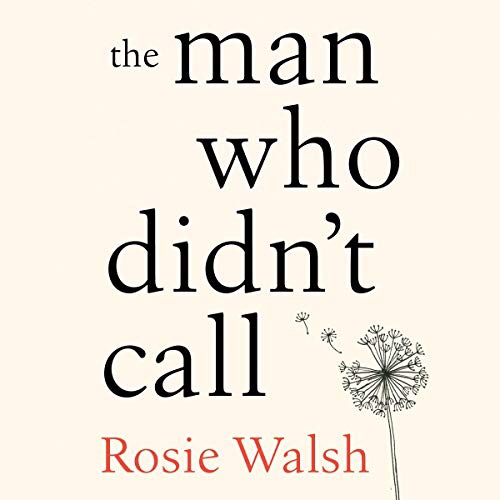
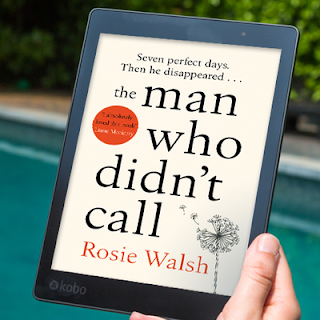
Throwback Thursday! The Man Who Didn’t Call by Rosie Walsh.

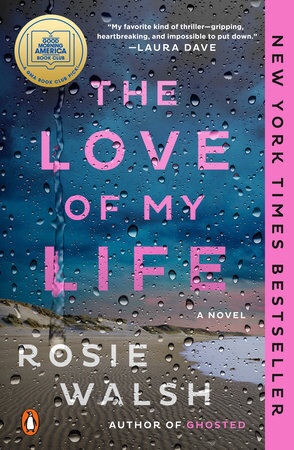
I’ve been putting together a list of all the summer releases I’m looking forward to and one of my most anticipated books is Rosie Walsh’s The Love of My Life. So I thought it was a great time to look back on her last novel which I absolutely loved.

I read this in two long bursts – one of which started at 3am. It’s a book I couldn’t put it down because all I wanted was these two people back together. The harsh realities of grief and lifelong family rifts are well drawn and believable. All of these people are trying to move forward despite their lives missing a beat one day on a country road, where a split second decision has lifelong consequences. This book explores grief, loss, loyalty, loneliness and the incredible ability the human heart has to heal.

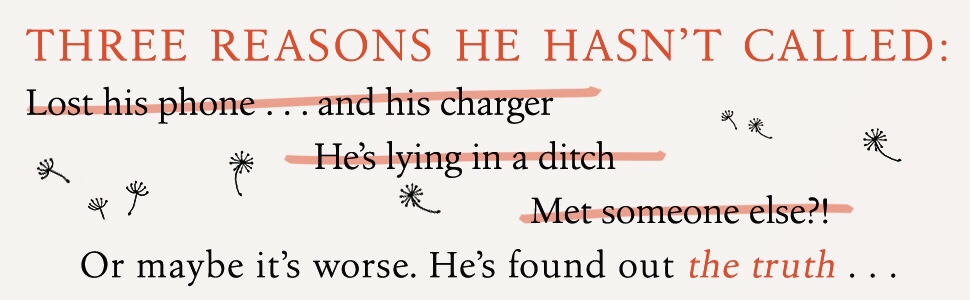
Sarah has a 7 day whirlwind romance with Eddie. They meet by chance on a country road while Sarah is visiting her parents. She thinks Eddie just might be the one. But, Eddie goes away on holiday and she never hears from him again. Is Eddie a heartless playboy who never intended to call? Did Sarah do something wrong? Or has something terrible happened to him? Instead of listening to friends and writing this off as a one night stand, Sarah begins to obsess and is determined to find the answer. Every clue she has comes to a dead end and she is in danger of completely losing her dignity. As her time back home in the UK starts to run out, Sarah looks for clues to track Eddie down. What she hears is confusing her further. His friend doesn’t give the simple answer, that Eddie has moved on, but gives her a warning; if she knows what’s best for her, she needs to stop looking for Eddie

I quickly became invested in Sarah and Eddie’s story. I think we’ve all been subjected to the watched phone that never rings and how crazy it can make us. It could have made me dislike Eddie early on, but for some reason I never did. I’m definitely a hopeless romantic so I seemed to accept Sarah’s hope that this could still work out. The other characters in the novel are also well-written and compelling. I’m a therapist so I was particularly interested in Eddie’s mother and her mental ill health. I think her symptoms and the way she manipulated Eddie showed a streak of narcissism. She finds it impossible to see this situation from his point of view, only how it affects her. Anything that threatens their dynamic as carer and patient is a huge threat to her and she responds with emotional blackmail and hostility. Eddie is as much a prisoner of her mental ill health as she is. I also had empathy for Sarah’s friend Jenny who is struggling to conceive and undergoes IVF treatment to the point of financial ruin. Her character probably leapt out at me because I’m also not able to have children, and know how difficult it can be to come to terms with. Her stoicism and determination to support her friend in the face of her own loss is very moving.

I stayed up late to finish the book, because I had everything crossed that the mystery would be explained and these two people could move forward together. To different degrees, all the novels characters are imprisoned by the past and losses they can’t accept. My husband died when he was 42 and I was 35. It’s like a chasm opened up and I had to choose between staying on one side forever, with the past and my feelings of loss and fear. Or I could choose to jump over that chasm into a new future. I never forget what happened or the love I have for Jerzy, but twelve years later I have a wonderful partner and two beautiful stepdaughters. Thankfully, I had the bravery to move forward knowing I can’t lose my memories of the past but I still have a future full of possibilities I never imagined. That’s what the characters in the novel are trying to do. Grief is different for everyone and there are always tensions between those who are trying to heal and those who can’t imagine healing because it feels like a betrayal. Rosie Walsh draws these different threads together beautifully, creating a bittersweet novel that captures that moment of choice – to draw on our reserves of resilience, jump over the chasm and live again.

Meet the Author

Rosie Walsh is the internationally bestselling author of two novels, the global smash hit THE MAN WHO DIDN’T CALL, and – new for 2022 – THE LOVE OF MY LIFE, a heart-wrenching, keep-you-up-all-night emotional thriller, which was an instant New York Times bestseller and stayed in the German top ten for several weeks. 

Rosie Walsh lives on a medieval farm in Devon, UK, with her partner and two young children, after years living and travelling all over the world as a documentary producer and writer. 

The Man Who Didn’t Call (UK) / Ghosted (US) was her first book under her own name, and was published around the world in 2018, going on to be a multimillion bestseller. 

Prior to writing under her own name she wrote four romantic comedies under the pseudonym Lucy Robinson. When she isn’t parenting or writing, Rosie can be found walking on Dartmoor, growing vegetables and throwing raves for adults and children in leaking barns.

Posted in Random Things Tours

Beloved Ghost by Fiona Graph

I thoroughly enjoyed Fiona Graph’s first novel Things That Bounded because of the wonderfully detailed historical context she wove around her story. Here she does the same for her characters Theo and Zac, who meet during WWII and survive Dunkirk together. After this experience they become lovers. Theo works at Bletchley Park with Alan Turing, then goes to work in the Foreign Office after the war, while Zac works for MI6. They have a good life. However, this is a time where the love they’ve found with each other, isn’t accepted in the way it is now. Homosexuality is a crime and it’s not hard to imagine how stressful it must be to hide your true self as soon as you leave your front door. The pressure of being an outcast takes it toll on their mental health, with Zac becoming so severely depressed he has to go away. Can this beautiful relationship survive?

I love how Fiona Graph creates her characters, then uses them to drive the story forward. There’s a quiet bravery in their choice to be together in a society doesn’t accept them. The fact that they’re establishment figures is interesting too, both working as civil servants for a system of government that actively persecuted them. The fear of being outed, particularly at work, must have been incredible. Add to that the very real fear of being assaulted, arrested and ultimately being jailed for nothing more than loving each other. There’s the loneliness too, where straight couples can be open and make connections with their neighbours or work colleagues, these men can’t. They can’t invite anyone into their lives and be honest about their love for each other. This means avoiding friendships and relying solely on each other, placing further strain on the couple; they have to be everything to each other. This intensity is hard to maintain and I was so invested in their love for each other, that I was genuinely upset when the pressure became too much.

The author presents the mundane everyday things that happen when two people live together, because of course the men live just like any other couple, gay or straight. She does this by showing their routine, the domestic detail of everyday life is touching. This is all Zac and Theo want, the ability to live like anyone else. It makes us realise how brave men of this generation had to be, just to have what a straight couple probably takes for granted. It drives home the sense of injustice they must have felt. It seems galling that they fought side by side like every other man in WWII, but back in the ordinary world they have to live with a terrible fear of betrayal and prosecution. I kept reading as I was longing for their love to triumph over everything. However unrealistic that might be. The author’s setting was beautifully evoked and I felt firmly in the mid – 20th Century. I felt the most important thing Graph succeeds in doing is to show us, through these characters, the experience of so many men who were vilified and criminalised for loving the ‘wrong’ person. Yet we never feel that Theo and Zac are just ciphers created for this purpose. They feel wholly real and I was so involved with their emotional journey that I almost expected to look up from my book and see them there. Also, this could have been relentlessly miserable, but it isn’t. There’s something hopeful and uplifting about their courage and their enduring love for each other. I truly wanted them to triumph over the obstacles that faced them and for their love, despite the challenges it brings, to remain undimmed.

Meet The Author

Fiona Graph lives in London.

Her first novel, ‘Things That Bounded‘, was published in October 2020.

Beloved Ghost’ is her second novel

Twitter @fiona_graph

Posted in Netgalley

Summer Fever by Kate Riordan

This is a real sizzler of a novel! Hot in every sense of the world, set in picturesque Italy with a sense of growing menace all the way through. I read this one in the garden, with a Pimms in hand and with every chapter became more convinced of the old saying; the grass is never greener on the other side. Laura and Nick have been through a lot. Back in London they were struggling with infertility and Laura hadn’t felt like herself for a long time, the fertility drugs pumping her full of hormones and the grief of miscarriage left her feeling broken. When she discovers a betrayal, after Nick accidentally leaves his phone at home, she’s angry and resentful too. In his eagerness to make it up to her, Nick suggests they do what Laura has always wanted, move to Italy and create a holiday hideaway for couples. They discovered Luna Rossa on a visit to Italy several months ago, after which Laura suffered a third miscarriage. It is in the Marche region, a largely unknown area of Italy next to Tuscany, but less expensive. Luna Rossa is wonderfully isolated and just dilapidated enough to still be charming. It includes a pool, a small derelict cottage and beautiful grounds that fall away steeply gifting the house with incredible views across the countryside. Only a few months later they are preparing to welcome their first couple for a three week stay. It seems idyllic, but they’re taking a risk in welcoming complete strangers into their home. Laura has stalked her guest Madison on social media and she seems very outgoing and glamorous. Laura and Nick could be underestimating how disruptive it can be to have strangers living in your home, especially these strangers…

I felt the author set out Nick and Laura’s back story and state of mind very well. Nick is contrite and desperate to make it up to Laura for his indiscretion, but he’s sacrificed a lot to follow her dream and might have been desperate to make it happen at all costs. Laura is still resentful of Nick’s mistake and the trauma of infertility has left her a little lost, unsure of who she is anymore. With hormones still not back to normal and the sadness of losing a child she’s very fragile and could easily be manipulated. I got a sense that she wanted to recapture herself, the person she was before their fertility journey began. It’s as if she wants to take off her experiences like taking off a costume and simple be who she was before. It takes time to process trauma and assimilate the experience into your sense of self, something she’s barely started. There’s a reckless feel to her actions, almost a need to self destruct. I thought the author’s description of the miscarriage experience was brilliant, I’ve been there and recognised Laura’s confusion at some of the euphemism’s used by medical staff to avoid emotive language; using ‘products of conception’ rather than baby and ‘come away’ rather than loss. It rang so true and I had empathy for her. As we start seeing flashbacks of her life at university and her relationship with the man she loved, I found her curiously passive. This annoyed me, although I did realise later on that it might be a coping mechanism. She seems to slip away in her mind and so any trauma or difficult experience only happens to her bodily rather than emotionally, hopefully leaving her able to cope. Sadly it just leaves her divorced from her emotional self, like an observer rather than someone truly living that moment and feeling it. Shutting emotions out never works and her destructive behaviour is the bodily experience of those repressed emotions.

Once their guests arrive, Madison and husband Bastian, the tone is set for their stay. Gregarious and sociable Madison seems to suck Laura and Nick into her orbit and they’re soon acting like friends visiting rather than paying guests. This is inexperience on the couple’s part and ordinarily they might learn from it, but there’s an air of menace in the way Madison ‘plays’ with Laura. She dresses Laura up, is overtly sexual and likes to play mind games with her husband. Is it for herself, or Bastian’s pleasure that she does this? At a neighbour’s pool one afternoon Madison comes on to Laura with Bastian watching. He’s clearly enjoying himself, but is it just the titillation or is he enjoying Laura’s discomfort and confusion too? In these moments of challenge Laura is again curiously passive, going along with the moment rather than causing a fuss. There’s also a feeling of unease around the builders who turn up to see Nick, their disdain of Laura very evident in the way they dismiss her objections as if she knows nothing about her own house. Is this simply a chauvinistic attitude or is something more sinister going on? The tension is often at fever pitch, accentuated by the physical temperature and constant need to cool off. The author then adds sections of unbearable tension, such as the slightly ‘Don’t Look Now’ masquerade feel of the town’s medieval festival. The heat is unbearable and Laura is never sure who is behind the costume and has the uneasy feeling that they could have stepped back in time; the permanence of the ancient buildings seeming to mock her for feeling untethered and temporary. The author also drip feeds a little bit of stress into everyday life, such as Madison’s wardrobe making Laura feel she has to make an effort too. Nick notices she’s now wearing make- up every day and styling her hair whereas she wouldn’t normally bother. These changes show that Laura isn’t comfortable in her own skin, this pair have some sort of hold or influence but what is it? We are taken back in time to her university days for the answers and then the shock revelations surrounding the guests start to unfold. With secrets being kept about Luna Rossa too, the conclusion is explosive to say the least. This will make you wish you were in Italy, but not with these people.

Meet The Author

Kate Riordan is a writer and journalist. She is an avid reader of Daphne du Maurier and Agatha Christie, both of whom have influenced her writing. She lives in the Cotswolds, where she writes full-time. The Heatwave is her fourth novel

Posted in Squad Pod

Nobody But Us by Laure Van Rensburg

I heard such great things about this dark thriller that I’ve been chomping at the bit to read it asap! It was our Squad Pod read for last month and as usual I’m late. The blurb grabbed me right away and my mind went immediately to Gone Girl so I expected some twisted people and storylines. That tagline is designed to draw us in, but also has a hint of humour as if she’s mocking the genre – meet 2022’s most f*cked up couple. I was waiting for a gap in blog tours and managed to get a sunny weekend, my day bed set up in the garden and a willing slave to keep me supplied with drinks and adjusting my parasol. It didn’t take long to hook me.

Ellie and Steven have finally managed to find a gap in their busy schedules to get away for a few days and celebrate their six month anniversary. They’re heading to an isolated cabin in the woods, many miles away from the hustle and bustle of New York. It will be the perfect opportunity to spend some quality time together and really get to know each other. A perfect weekend for a perfect couple. Except, that’s not quite the truth. Ellie and Steven are far from perfect. They both have secrets. They’re both liar. Steven isn’t who he says he is. But then neither is she …

The setting was clever too, usually I’d expect a log cabin in the woods or a period house as a background, but this is a contemporary, architect’s house. I didn’t think a modern house could be scary, but I found it’s glass and steel exterior very unwelcoming – there’s nothing cosy about this weekend. In fact the perfection, the materials used and the sheer amount of space seem strangely oppressive. The contrast with the forest outside is jarring, the natural surroundings make it feel like the owner is pitting his house against the elements, imposing man made order on the natural chaos outside. Yet, when the storm sets in, nature seems to be getting it’s own back, with the large glass panels showing the storm’s fury. Trees are lashing against each other and the snow is coming thick and fast. In fact the weather adds to the sense of isolation, no one is coming to save them, no matter how much they scream.

The story is told by the two characters in turn, relating the details of their weekend away, but also drifting into their pasts so we get some idea of how Steven and Ellie came to this point. Still, the biggest revelations are kept back from us so we don’t have the full picture. This drip feed of information kept me hooked. I needed to know what happened next and who the characters really were under their facades. Mostly though I wanted to know what had set these dramatic events in motion. I couldn’t love these characters, so I wasn’t invested in one side or the other at first, but as the flashbacks came I was surprised to find I did have flashes of sympathy for Ellie or Steven, depending on what had happened to them.

I enjoyed the way the author played with that edge, between what was once acceptable and now isn’t. In light of the #MeToo movement many women in my 40+ age group who can look back at events from the 1990’s and think they wouldn’t be acceptable now: a stolen kiss at a party; a hand on the backside while waiting on a table; pressure to go further sexually than we might have been comfortable with. Now, relationships where there is any form of power imbalance are viewed as wrong. The married man and the teenage babysitter, the older boss and young employee, or student and tutor relationships were happening around me at that time and I don’t remember thinking they were intrinsically wrong, just a bit dodgy. Now, thirty years later, the mood is very different. But of course that’s only one aspect of this complicated story. This is a gripping, atmospheric and explosive novel. If you love thrillers this should definitely be on your summer reading list.

Laure Van Rensburg
Posted in Netgalley

The Birdcage by Eve Chase

Eve Chase’s new novel had all the ingredients of a perfect read for me – quirky bohemian family, unconventional artistic father, large Cornish house and family secrets that have haunted his daughters for years. It’s the psychological impact of these family secrets that really make the novel. The story is told in a dual timeline, in the present Lauren, Kat and Flora are returning to Rock Point, her father’s mansion house on the Cornish Coast. He has invited them after many years away from the house, following a terrible incident that occurred on the day of the eclipse in August 1999. The events of this day are told in our second timeline. Lauren is the youngest by a few years, and on that day she was an adolescent , while her half-sisters Flora and Kat are older teenagers. Each girl has a different mother and their overlapping ages show the sexual profligacy of their father Charlie, a well-known artist. As he sits down with his three adult daughters, Charlie has a big announcement for them. The girls are expecting an illness or plans concerning his artwork, but they have a shock in store.

The complexity of this family’s relationships is at the core of this novel and I really enjoyed going back in time to work out why and how each woman’s personality was formed. On the surface Flora is the most conventional sister, with a husband and young son Raff, but is everything at home as happy as it seems on the surface? Kat is the most career minded sister having developed a well-being app. She is constantly checking her phone and looking for a reliable signal so she can work, but is she just busy or is the world of well-being more stressful than it should be? Lauren has had the most recent difficulties in life, nursing her mother Dixie who was terminally ill. After moving into a local hospice Dixie died, and although Flora invited her for Christmas Lauren didn’t come. These women are anxious to be together again. Flora and Kat used to tease Lauren, even bully her a little bit. The reasons for this become clearer, but Lauren has always thought it was about Dixie. Dixie was different to me 6 hCharles’s usual choice in women, she was unadorned apart from piercings, kept her hair shorter and was artistic in her own right. Indeed Charlie is touchingly affected by her death and seems to regard this separation as something he most regrets in life. Each sister’s personality fits perfectly with their back story: Flora’s hesitancy and submissive nature; Kat’s avoidance and distraction, creating workaholic tendencies; Lauren’s phobias, which are usually under control, but thanks to Bertha the parrot and the wealth of seabirds surrounding their home it can be a problem. The parrot has other tricks as well, mimicking the house’s occupants with phrases that only one person knows are true or false.

I thought the pace was clever, becoming more urgent in the past and present day at once propelling the reader towards the eclipse event and the effect of it’s revelations in the present. What was particularly clever was the way some people are only revealed in all their complexity, in the present. Angie, who worked as their au pair, was disliked by Lauren when she was a child. Lauren sensed her duplicitous nature and knew she wasn’t really there for them, describing her as hungry to get to Charlie like an art groupie. However, as an adult Lauren can see that this was more complicated and how she didn’t understand adult relationships. There’s a shift in years and awareness, where Lauren and her sisters can now see that Charlie wasn’t just a man beleaguered by women throwing themselves at him. He is an active participant in these complicated affairs and in bringing these girls into the world. He’s even passive at their visits, always pleased to see them but never negotiating with exes, or organising the logistics. Their gran does all the work, leaving Charlie free to paint in his studio, a place where only his models and Lauren are welcome. He’s never taken responsibility for his actions and as events unfold it’s possible that those actions have created a perfect storm of sibling jealousy and conflict.

That eclipse summer, Charlie has asked his three daughters to sit for a painting with the large ornamental birdcage. It’s the painting that will become his most well known and most valuable, in fact the girls are sorry it’s gone to art collector because as far as they know it’s his most personal. There’s a wealth of imagery in this painting, starting with the three sister’s pose, sitting together but not touching, like three separate islands. There’s the solemnity behind it too, the girls are not talking or cracking a joke and all three are staring out towards the viewer. Or is it towards the painter? In feminist readings of visual arts the bird within a cage represents the imprisonment of women, but also the gilded frame through which we view femininity. We can’t know the painter’s intention, but by painting it next to his daughters is he acknowledging their freedom? Or could he be pointing out a sexual double standard? He has been free to create these overlapping lives without censure, whereas their mothers and the girls have borne the gossip, shaming, poverty and hardship that comes with being a single parent. They’ve had to hear the whispers and insults about their morals, while he has been free to carry on with only the reputation of being bohemian to his name. Or could the birdcage contain his secret? The consequences of this secret we see on eclipse day, although it isn’t fully revealed until the present when it puts Lauren and her nephew Raff in danger. Only then will Charlie have to deal with how his behaviour has affected others, like ripples on a pond. This was an engaging tale of complex family ties and the psychological effect of a parent’s action. It has all the bohemian glamour of a country house occupied by an artist and a gorgeous atmospheric setting in beautiful Cornwall. I was gripped to the final page, having felt an affinity with Lauren and Flora I wanted to know how their stories turned out and the epilogue brings a satisfying ending to this family saga.

Published by Penguin on 28th April 2022

Eve Chase is an author who writes rich suspenseful novels about families – dysfunctional, passionate – and the sort of explosive secrets that can rip them apart. She write stories that she’d love to read. Mysteries. Page-turners. Worlds you can lose yourself in. Reading time is so precious: I try to make my books worthy of that sweet spot – she says on her Amazon.com author page.

Her office is a garden studio/shed with roses outside. She lives in Oxford with her three children, husband, and a ridiculously hairy golden retriever, Harry. She invites readers to say hello. ‘Wave! Tweet me! I love hearing from readers’.

Eve is on Twitter and Instagram @EvePollyChase and on Facebook, eve.chase.author.

Posted in Publisher Proof

A Little Hope by Ethan Joelle

Set in an idyllic Connecticut town over the course of a year, A LITTLE HOPE follows the intertwining lives of a dozen neighbours as they confront everyday desires and fears: an illness, a road not taken, a broken heart, a betrayal.

Freddie and Greg Tyler seem to have it all: a comfortable home at the edge of the woods, a beautiful young daughter, a bond that feels unbreakable. But when Greg is diagnosed with a rare and aggressive form of cancer, the sense of certainty they once knew evaporates overnight. Meanwhile, Darcy Crowley is still coming to terms with the loss of her husband as she worries over her struggling adult son, Luke. Elsewhere, Ginger Lord returns home longing for a lost relationship; Ahmed Ghannam wonders if he’ll ever find true love; and Greg’s boss, Alex Lionel, grapples with a secret of his own.

Ethan Joella’s novel feels perfect for this moment in life. Since 2020 our world has changed irreparably, for some this means that every day life has changed so they no longer work in an office full of other people, or they’ve missed going out over the past two years, or had their exams cancelled. For others it means learning to live with loss, coping mentally with the work they did on the NHS frontline or dealing with the challenges of long COVID. For me it has meant still being super careful when I go out, avoiding large and crowded gatherings and my mobility being reduced because of treatment that’s been postponed indefinitely. Thanks to long periods of isolation, we are all used to living in our own world and can even be overwhelmed by what we’re facing inside our own front doors. To some degree, the plight of the Ukrainian people has brought us out of our own concerns and back into a collective again. We want to help and take action. It has given us perspective. This novel works in the same way. It feels inspired by the realisation we are only a small part of the jigsaw that makes up life. It’s the literary equivalent of that feeling I always get on the train in the dark, when I can see the human theatre of everyday life through the glowing windows of people who don’t shut their curtains. Every passing window is a snapshot of life. Ethan Joelle gives us a different life per chapter, as we meet the residents of the small US town of Wharton, Connecticut. Each chapter is separate, but related, and through the author’s lens we are granted access to the extraordinary lives captured within each unremarkable window.

We start with Freddie, who is coping with the fact that husband Greg has just been diagnosed with a cancer of the white blood cells called multiple myeloma. Not only that, they haven’t yet told their young daughter Addie. Freddie is just trying to process the news, but is worrying about what Greg’s diagnosis will do to their daughter at the same time. The author then takes us into Greg’s world, into his working life, where he has concerns that haven’t even crossed Freddie’s mind yet. His worries are caught up with what kind of man he is if he can’t work and provide for his family. His boss is trying to support him, but there’s a wall of denial and false optimism to get through, and what if that wall is the only structure holding him up? We weave through the lives of other Wharton residents, such as Iris, Darcy, Ginger, Luke and Ahmed. Each life is so preciously unique, their take on their world so different and beautifully human.

We are all familiar with the hashtag #BeKind and memes that remind us we never know what others are going through. Through these stories this really is brought home to the reader, as our characters touch on each other’s lives, sometimes without knowing what they’re coping with just under the surface. Yet, while taking us through every experience from infidelity to loss, the book never feels overwhelming or melancholy. Yes I wanted to shed tears from time to time, but somehow there is always a ray of hope. It reminded me that things like community, friendship, shared experiences and compassion can change everything. The author doesn’t hold back on how difficult and painful life can be, but yet always finds some element of joy that reminds us what a gift it is too. This book is poetic, achingly beautiful and full of empathy for the human condition.

Meet The Author

Ethan Joella teaches English and Psychology at the University of Delaware and specialises in community writing workshops. His work has appeared in River Teeth, The International Fiction review, The MacGuffin, Delaware Beach Life and Third Wednesday. He lives in Delaware with his wife and two daughters and is of Irish heritage.