Posted in Squad Pod

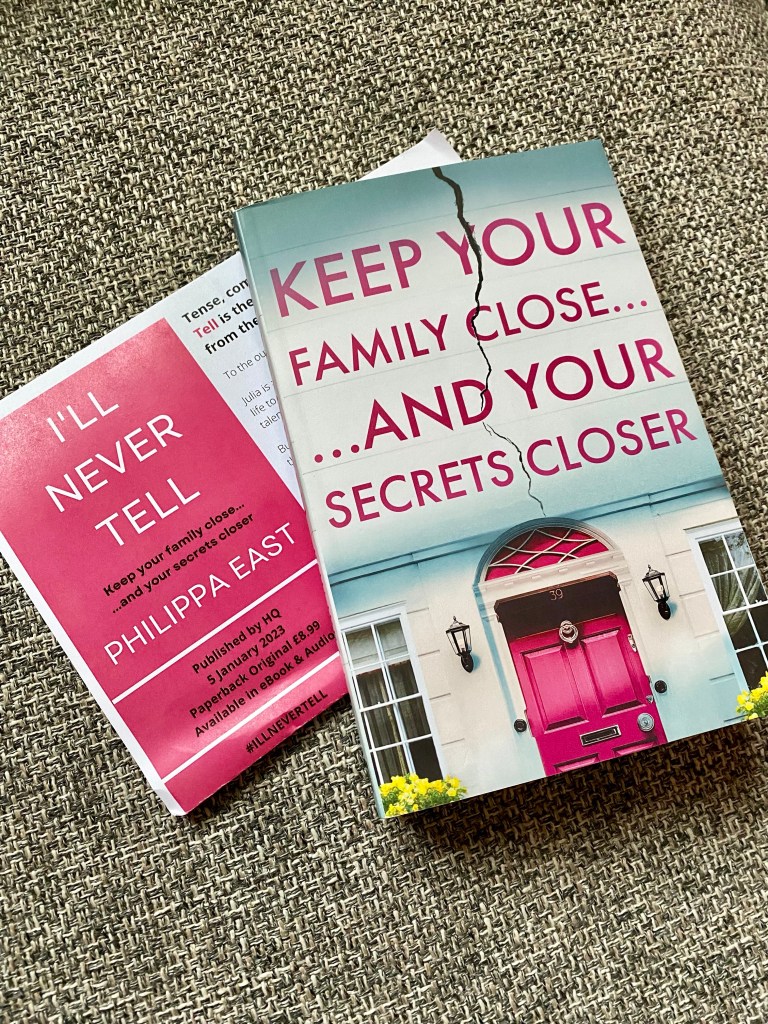
I’ll Never Tell by Philippa East

Keep your family close and your secrets closer….

To the outside world, the Goodlights are perfect.

Julia is a lawyer, Paul a stay-at-home dad who has dedicated his life to helping their daughter Chrissie achieve her dreams as a talented violinist. But on the night of a prestigious music competition, which has the power to change everything for Chrissie and her family, Chrissie goes missing. She puts on the performance of a lifetime, then completely disappears. Suddenly every single crack, every single secret that the family is hiding risks being exposed.

Because the Goodlights aren’t perfect. Not even close.

Wow this book is tense! Tense enough to give you a migraine. East has a way of writing that flows so well, but is paced to give a really slow drip drip of information. It’s clear from just the day to day activities of the Goodlights that something is ‘off’ and my brain was skittering all over the place to work it out, rather like Bambi on the ice. The author pulls off a clever trick, by letting the Goodlights speak for themselves. She’s not explicit, but their inner talk and actions allow the evidence to pile up; something is badly wrong here, but the author withholds just enough that we don’t know what is that is. As I read on, my brain was coming up with more and more questions. What’s with Julia’s parents and their strange attitude towards women’s behaviour? Why is Paul so obsessed with his stepdaughter’s career and so rigid with her regime? Is it the result of a thwarted desire in his own life and will Chrissie snap under the pressure? What’s with the strange background conversations between Julia’s mother and Paul? I’m not surprised at all when Chrissie goes missing, the only surprise is that she didn’t go sooner.

I found Paul’s attitude with Chrissie really disturbing. I understand wanting the best for your child, but this is creepy. Not only does he control her potential career and keep her practicing, he looks after her diet, her free time and leaves her with no privacy – even policing her phone, from quickly checking the screen when a notification comes in, to demanding to look through all her messages and emails. Does he have her on such a short lease to prevent something happening, or is he reacting to something that’s happened before? There’s a strange dynamic between Chrissie’s grandmother and Paul. I was disturbed by her attitude towards her daughter and granddaughter with her suggestion that certain behaviours are in the blood and there’s something tainted in their DNA. It’s almost as if they appreciate Paul more than their own flesh and blood. At times Celina speaks to him as if he’s a member of staff. There are pictures hidden in Julia’s childhood bedroom of a time at university when she appears free and perhaps part of a hippy group, implying experimentation with drugs and promiscuity. Celina is concerned that her ‘tainted blood’ has passed to Chrissie and tells Paul ‘I can smell it on her’ giving an unpleasant image of an animal in heat. Was she the instigator of the rigid regime Paul imposed on his stepdaughter or was she merely the gatekeeper? Patriarchies often depend on women to uphold their rules. I felt uncomfortable all the way through this novel, but in retrospect I think this was down to my own experience in an abusive relationship. There’s now something in me that is repulsed by males like Paul exerting power over the women in their family, exerting coercive control and gaslighting those they are supposed to love most. This tells me that the author’s depiction is successful, or it wouldn’t have made me feel this way.

Throughout the novel my brain was drifting back to Jane Eyre and Jean Rhys’s response Wide Sargasso Sea and the anti-heroine Bertha Mason. Bertha (whose name is actually Antoinette) is Mr Rochester’s first wife, doomed to a life locked in an attic, because of her unnatural passions and hereditary madness. She works as a contrast to the still and quiet Jane, who was constantly told to rein in her passionate nature when she was a child. Bertha’s fate could have been Jane’s. However, in her book Wide Sargasso Sea, Jean Rhys gives Bertha a back story where Rochester marries then rejects the wife who was too passionate in the bedroom and enjoyed his advances – the inference being that a wife should meekly accept sexual advances, but not relish them. I felt throughout East’s novel, that a similar misogynistic double standard is at play. When we delve into Julia’s inner world we can see how insidious emotional abuse is, because these ideas are running through her head constantly. She doubts her own instincts and worries that Chrissie’s disappearance is a consequence of her failure to ‘behave’ in the way she’s been taught. Paul and Julia don’t fully communicate either, operating in completely different spheres with him at home and her at work. Law is such a demanding career and Julia works constantly, almost like it’s a penance, rarely interacting with Paul or Chrissie and never involved in her daughter’s strict regime. It’s almost as if she’s abdicated all responsibility for her to Paul, but is that choice or a mistaken belief that he’ll do a better job than her? There’s also the shadowy figure of Francis, someone she doesn’t want near her family and seems to fear. This really is a toxic mix, a family who seem shielded from scrutiny by their money and once you delve beyond appearances, are a million miles away from the ordinary. Will Chrissie be found and is her disappearance down to a malign outside influence as they all suspect? Whatever has happened to Chrissie, you’ll not stop reading till you work out what is so deeply wrong at the heart of this family?

Published on 12th January by HQ

Thanks to HQ and the Squad Pod Collective for my proof copy.
Posted in Netgalley

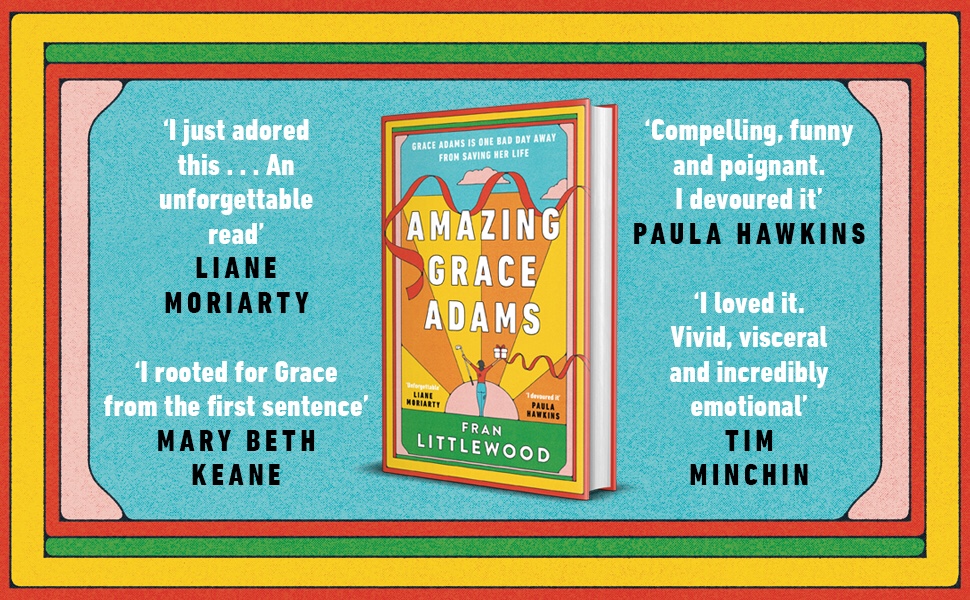
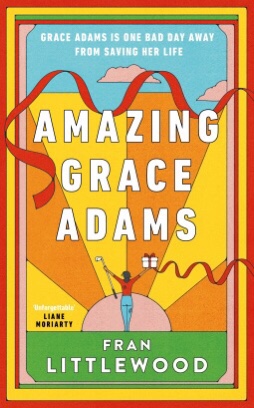
The Amazing Grace Adams by Fran Littlewood

It’s possibly way too early to start picking candidates for favourite books of 2023 – I’m still deliberating over 2022 – but I think this book is certainly going to be in contention. Grace is one of those characters that you fantasise about having cocktails with and you already know you’d have the best time. Grace is stuck in traffic, it’s a boiling hot day and she’s melting. All she wants to do is get to the bakery and pick up the cake for her daughter’s birthday. This is one hell of a birthday cake, not only is it a Love Island cake; it has to say that Grace cares, that she’s sorry, that will show Lotte she loves her and hasn’t given up on their relationship. It’s shaping up to be the day from hell and as Grace sits in a tin can on boiling hot tarmac, something snaps. She decides to get out of the car and walk, leaving her vehicle stranded and pissing off everyone now blocked by a car parked in the middle of a busy road. So, despite the fact her trainers aren’t broken in, she sets off walking towards the bakery and a reunion with Lotte. There are just a few obstacles in the way, but Grace can see the cake and Lotte’s face when she opens the box. As she walks she recounts everything that has happened to bring her to where she is now.

When we first meet Grace she’s living alone, estranged from husband Ben and even from her teenage daughter Lotte. She’s peri-menopausal, wearing trainers her daughter thinks she shouldn’t be wearing at her age and she’s had enough. There’s that sense of the Michael Douglas film Falling Down except when the meltdown comes all she has is a water pistol filled with river water, an embarrassingly tiny Love Island cake and a blister on her heel. Then in flashbacks we can follow Grace all the way back to the start, to when she and Ben met at a competition for polyglots. We also get Ben’s point of view here too, so we see her through his eyes and fall in love with her too. He describes her as looking like Julianne Moore, her hair in a messy up do with the odd pencils tucked in. She suggests that, should she win the prize of a luxury hotel break in Cornwall, they should go together. It’s a crazy suggestion, but deep down, he really wants to go with this incredible woman. Once there, the first thing she does is dive into the sea to save a drowning woman. Ben has never met anyone so free and fearless. Yet on their return four months pass before Grace tracks him down and they meet at the Russian Tea Room. There Grace tells him that he’s going to be a father, he doesn’t have to be in, but can they come to an agreement? Of course Ben is in, he was never out. There love story is touching and yet honest at the same time, it’s not all schmaltzy romance – for example after coming together in Cornwall, Grace’s bed is full of sand. It’s so sad to contrast these early months with the distance between them now, what could possibly have brought them to this place.

I eagerly read about Grace and Lotte’s relationship because I’m a stepmum to a 13 and 17 year old girl. I thought this was beautifully observed, with all the ups and downs of two women at either end of a battle with their hormones. There’s that underlying sadness, a sort of grief for the child who called out for her Mum, who let Mum play Sutherland her hair and would lie in an entwined heap on the sofa watching films. Grace aches to touch her daughter in the same way she did when she was a toddler, but now Lotte watches TV in her bedroom and shrugs off cuddles and intimacy of the physical or emotional life. Pulling away is the normal process of growing up and reminds me of the ABBA song ‘Slipping Through My Fingers’. In the film Mamma Mia, Meryl Streep plays Donna as she helps her daughter get ready for her wedding. In the cinema with my Mum I could see she was emotional and now with my own stepdaughters I can understand it. I just get used to them being a certain age and they’ve grown, with one going to university next year I’m going to be so proud of her, but I’m going to miss her terribly. There’s also a terrible fear, as Grace sees her daughter’s behaviour at school deteriorate and her truant days start to add up, she’s desperate to find out what’s wrong, but Lotte won’t talk. She’s torn between Lotte’s privacy and the need to find the problem and help her daughter, but some mistakes have to be made in order to learn. Grace might have to sit by and watch this mistake unfold and simply be there when it goes wrong. No doubt, she thinks, Grace is involved with a boy and it will pass, but the reality is so much worse.

The truth when it comes is devastating, but feels weirdly like something you’ve known all along. Those interspersed chapters from happier times are a countdown to this moment, a before and after that runs like a fault line through everything that’s happened since. As Grace closes in on Lotte’s party, sweaty, dirty and brandishing her tiny squashed cake, it doesn’t seem enough to overturn everything that’s happened, but of course it isn’t about the cake. This is about everything Grace has done to be here, including the illegal bits. In a day that’s highlighted to Grace how much she has changed, physically and emotionally, her determination to get to Lotte has shown those who love her best that she is still the same kick-ass woman who threw caution to the wind and waded into the sea to save a man she didn’t know from drowning. That tiny glimpse of how amazing Grace Adams is, might just save everything.

Published by Michael Joseph 19th Jan 2023.

Posted in Throwback Thursday

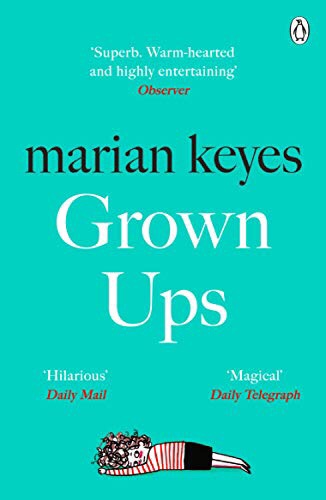
Grown-Ups by Marian Keyes.

Years ago, when I was a book snob after my English lit degree, I wouldn’t have read Marian Keyes. It was firmly in the category of chick-lit and that meant it would be ‘easy-reading’. The literary equivalent of easy listening music, pleasant but no depth, just tinkling on in the background when I wanted my reads to grab me, make me think and blow me away. It was reading Jojo Moyes ‘Me Before You’ that put me onto Rachel’s Holiday and the Walsh family. Before I knew it I was racing through her back catalogue and loving every minute of it. It helps that she’s also an incredible woman, mad as a box of frogs and funny, enthusiastic about what she loves and chatters on ten to the dozen. She’d fit right in with my family and is one of the first people I’d invite to a fantasy dinner party. If I had to pick one thing about her writing that makes it so good, amply demonstrated in this novel, it’s that she provided a family tree to keep track of the characters and how they were related to each other, but I didn’t need it once. Each and every character was so real and so distinct that I felt I knew them all personally.

Ed, Johnny and Liam are brothers and enjoy a large extended family. Their background isn’t great, in fact their parents are awful people – demonstrated at their golden wedding anniversary when their father’s speech manipulated and put down each of his sons in turn. Ed has never had that feeling of being grounded, of belonging somewhere, until he met his wife Cara. She makes him feel safe. Cara has a head receptionist role at the Ardglass Hotel in Dublin and they have two children. Cara has always had problems with her body image and has been yo-yo dieting ever since Ed met her. She can’t seem to resist bingeing on chocolate and then hates herself for having no will-power, but is this cycle of overeating just a blip or is she heading for something more serious? Jonny and Jessie are the successful pair in the family, running their own chain of specialist food shops and a cookery school. Jessie had the original idea, with Jonny and his best friend Rory Kinsella going to work for her several years later. However, it was Rory who won Jessie’s heart and they were married with two children when he died suddenly. The Kinsella family were like a second family for Jonny, especially Rory’s dad Michael who had been a surrogate father since his own was so lacking. They all grieved together, until two years later when Jonny and Jessie found themselves drawn to each other. Surely the Kinsellas would be happy for them? Now years on, with three more children, and despite being a good husband and stepfather to Ferdia and Saoirse, the Kinsellas had cut themselves off from their former daughter-in-law. It was probably for this reason that Jessie focussed so much time on their family spending time together, all three brothers and their respective families spent Easter and many other holidays together, with Jessie even footing the bill to make it happen. Yet neither had ever really given up hope that everyone would be reunited in time, but time runs out and so does money.

Liam is the youngest brother, an ardent runner in his prime he now had to cycle thanks to a difficult knee injury. Handsome and charming, it never took very long for him to get what he wanted in life. Most would say he had a charmed life, despite his split with wife Paige and her relocation to the US with his two daughters, who are missed terribly by their cousins. In an incredible financial settlement, Liam lives in an apartment in Dublin paid for by Paige. When he meets Nell, a young set designer full of idealism and principles, he has to have her. Nell is beautiful, with cascades of pink hair and a quirky dress sense that comes from never buying anything new. She’s so passionate about art and conveying the message of a play through her set, plus she’s passionate about so many causes. The family love her and she brings her outlook on life to everyone, especially Liam’s nephew Ferdia who has similar opinions but never does anything to back them up. The family are surprised when the couple get married in an ice hotel on the arctic circle. Since the wedding though, despite Nell throwing herself into the family and their rather claustrophobic way of doing everything together, Liam hasn’t seemed the same. He starts to drop out of things she’s planned, branding them boring, and then chips away at her confidence. When she has a good review saying she’s the most exciting new designer in the country – he points out that Ireland is a very small place. He’s also very creepy, ogling his young niece’s friends and his nephew’s girlfriend. Nell is drawn to Ferdia, young, ethical and concerned with social justice, but can they be friends?

I loved how Marian Keyes presents the image of a perfect family that others must see, when they gather for an Easter Egg Hunt at a luxury hotel or holiday together in a Tuscan villa. Then she undermines it by showing that none of these people, or their relationships, are perfect. Her depiction of Cara’s eating problems were familiar to me because I’ve also had that urge to eat my feelings from time to time. I thought the way Cara down played the seriousness of her bulimia was realistic and the resistance to treating it as an addiction also rang true. Her counsellor was also brilliant, firm and not pulling her punches about the road ahead for Cara as a patient. If there was anyone I was rooting for it was Cara and husband Ed. Getting married again when you’re a widow is also something I know about and the relationship dynamics are so fragile. Luckily for me my lat husband’s family were very understanding and I treated them with respect, being up front and letting them know everything early on. I really felt for Jessie, but in the early chapters I really didn’t understand her desperate need for the whole family to get together constantly. There was a moment where she’s laid on a pool lounger with all the kids (bunnies) piled on top of her and she’s supremely happy. Then I got it. The friendship she had with Rory’s sisters Izzy and Keeva was the first real friendship she had and being part of the Kinsella tribe was just as important to her as it was to Jonny. She needed to belong. Strangely I also felt for Nell. I liked her as a person and thought she had been love-bombed by Liam into a marriage without truly knowing who he was. I really loathed him and that’s rare for me. He was lazy, living entirely off his ex-wife and not making any effort to see or maintain his relationship with his children. The way he commented on her talent and gaslighted her made me furious. I wanted Nell to have the romantic happy ending. In this book Marian Keyes has punctured that Instagram perfection many families seem to project these days. It’s also a welcome reminder that we never know what another person is going through, even the person lying next to us. I also found the message that we have to work on ourselves, take responsibility and live authentically, very empowering. I truly enjoyed my time as a fly on the wall with this family and laughed out loud so much that my other half commented on how much I seemed to be enjoying it.

Meet The Author

Marian Keyes is the international bestselling author of Watermelon, Lucy Sullivan is Getting Married, Rachel’s Holiday, Last Chance Saloon, Sushi for Beginners, Angels, The Other Side of the Story, Anybody Out There, This Charming Man, The Brightest Star in the Sky , The Mystery of Mercy Close, The Woman Who Stole My Life, The Break and her latest Number One bestseller, Grown Ups. Her two collections of journalism, Making it up as I Go Along and Under the Duvet: Deluxe Edition are also available from Penguin.

Posted in Throwback Thursday

Throwback Thursday: Romance Rocks! The Fortune Hunter by Daisy Goodwin

I was lucky enough to be sent a pre-publication copy of The Fortune Hunter via Twitter. I had never read Daisy Goodwin’s novels just her collections of poetry so this was a first for me and I was pleasantly surprised.

I like historical fiction and love the Victorian period particularly so what caught my imagination first were the historical details. I love clothes so the intricate descriptions of the layers in women’s Victorian clothing were very enjoyable. The details of fashion etiquette were interesting too; when and where certain clothing was worn and how those rules were affected by class were all fascinating too. In a world where the only detailed protocol we still use is probably at our weddings it is amazing to think that this is how the upper and middle classes lived their everyday lives. Having studied Victorian art as well as literature I was drawn in by the details of the heroine Charlotte Baird’s hobby of photography but then gradually I fell in love with Charlotte herself.

Charlotte is an heiress to the Lennox fortune and is a target for fortune hunters everywhere. Far from being the usual simpering Victorian heroine Charlotte is more of a bluestocking girl; educated and very intelligent. Instead of being caught up in a social whirlwind, as favoured by her brother and sister-in-law, Charlotte does not care for clothes, parties or the famous Lennox diamonds she owns, but does care passionately for her hobby of photography. Meanwhile her brother and his wife engage wholeheartedly in the social life she dislikes, because as the guardians of her fortune they live from the interest until Charlotte marries and takes the reins for herself (or more likely her husband does). At a party Charlotte meets the handsome and infamous Bay Middleton who is a horseman, hunter and famous playboy in his social set. They seem an unlikely match but Bay is drawn to Charlotte’s quiet manner and intelligence. She is not a great beauty, so those around her assume the worst and are very keen to protect her from fortune hunting. Yet Bay seems sincere about his fondness for Charlotte, that is until a rival appears on the scene and it’s not easy when your rival is the Empress of Austria.

Elizabeth (known as Sisi to close friends) was married when she was 16 to the Emperor of Austria. They had nothing in common but Eizabeth soon became known as one of the most beautiful and fashionable woman in 19th Century Europe. Her passion in life is riding and she arrives in England for the hunting season with a string of ponies and huge household. She cannot be rivalled in the hunting field but in England she does not know the terrain. Worried that she will lose her way or at worst, take a bad fall, it is suggested she should have a ‘pilot’. A pilot is a guardian who hunts alongside her, making sure she knows the way and getting her home safely. Bay Middleton is in a rest period before attempting his life’s ambition to win the Grand National and he is suggested for the role with the Empress. On the day of the hunt and for their first glimpse of the royal visitor Charlotte has set up her camera. She aims to capture the hunt in all their glory and is also tempted to take a photo of the Empress who is renowned for her hatred of photographs. Sisi knows she is not the unmarked beauty she was ten years ago and is at great pains to salvage her complexion by swathing her face in veal during the night. Charlotte takes a shot which the Empress deflects by holding up her fan, but the photo shows something else; Bay’s face shows his immediate and total enchantment with Sisi. The photograph has the potential to break Charlotte’s heart.

This book has the ability to grab you and then keep you reading. I started one day and read right through to finish the following night. I missed sleep to find out what would happen to Charlotte. The book has just enough detail to anchor you totally in upper class Victorian circles without bogging the reader down in swathes of description. It moved quickly and had me rooting for Charlotte all the way through because I felt a kinship with her; not quite beautiful, but patient, kind and modestly talented it is hard not to like her. By contrast Sisi is exposed as a frightened and spoiled woman who is used to getting what she wants without having to fight for it. She is worried about losing her looks and this is her main frailty. Sisi needs Bay in a way Charlotte does not; Sisi is fragile, melancholic and needs something to break the suffocating formality of her role. Whereas Charlotte, though heartbroken, has a plan to survive and live life her own way. I would say that the character of Bay really loses out to the women in the novel. He is not as vividly drawn as the Empress and I didn’t feel anything for him. I started to feel sorry for the Empress as the book went on, even as I disliked her. Charlotte infuriated me because of the passive way she was dealing with Bay’s very obvious affair with the royal visitor. Despite being shamed publicly by Bay’s behaviour she keeps her cool right up to the point of the exhibition at the academy and the displaying of that photograph. I won’t reveal the end, only to say that I half wished to read about Charlotte’s adventures as a photographer and pioneer, wherever in the world her talent and determination would take her.

Meet the Author

When Daisy Goodwin went to Cambridge University to study history her first assignment was on Queen Victoria and the media. She went to the library to consult her diaries. Queen Victoria wrote sixty two million words in her life time and when she pulled out the first leather bound volume she was overwhelmed by its size and weight. It fell open at the entry for 3rd Nov 1839, ” I saw my dearest Albert who was all wet in his white cashmere breeches with nothing on underneath.” She laughed out loud and the other readers looked at her with disapproval. This gave her a different perspective on Queen Victoria, as more than the boot faced old bag with a bonnet she had imagined, but as a woman after her own heart.

All Daisy Goodwin’s novels have been set in the Victorian era: the first is about a ‘dollar princess’ called Cora Cash who marries an English duke. The Fortune Hunter is the story of Sisi, the beautiful Austrian Empress who came to England to hunt – in the novel Sisi meets Queen Victoria. Daisy enjoyed writing this encounter so much – ‘Victoria’s voice came so easily to me, that I decided that my next next novel would be about the young Victoria. But as I started writing it, I thought it would make a great tv drama, which is how I ended up writing the PBS Masterpiece series Victoria, as well as my novel Victoria, a novel of a young Queen.’

When Daisy is not immersed in the nineteenth century, she lives in London with three dogs, two daughters and a husband.

You might also like…

My Last Duchess

Cora Cash has grown up in a world in which money unlocks every door. Her coming-out ball promises to be the most opulent of the gilded 1890s, a fitting debut for New York’s ‘princess’. Yet her fortune cannot buy her the one thing she craves — the freedom to choose her own destiny. For Cora’s mother has her heart on a title for her daughter, and in England — where they are bound, to find Cora a husband. 

When Cora loses her heart to a man she barely knows, she soon realises that she is playing a game she does not fully understand — and that her future happiness is the prize.

Posted in Throwback Thursday

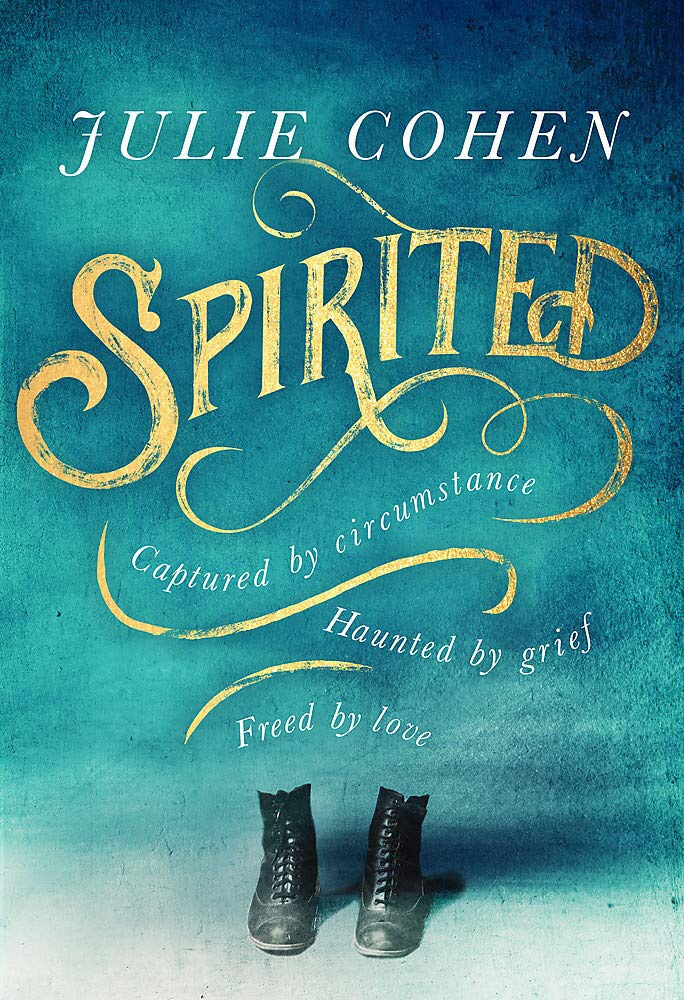
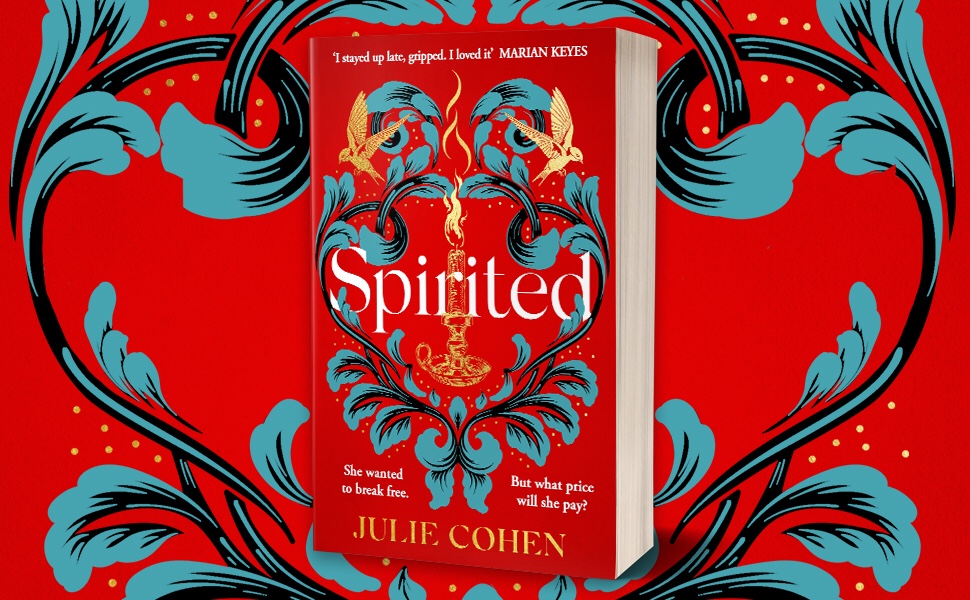
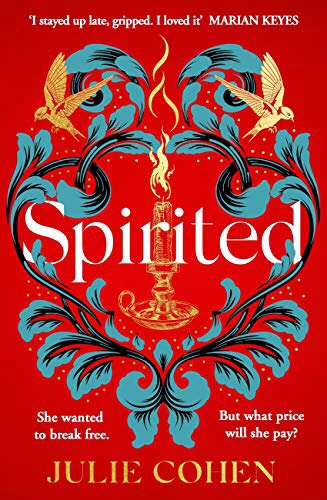
Throwback Thursday! Spirited by Julie Cohen

This week I’ve been writing a Sunday Spotlight post about the Victorian novels of Sarah Waters and while I was thinking about some of the themes of Affinity this book popped into my mind. So I decided to make it this week’s Throwback Thursday. At the time I’d never read Julie Cohen’s work, so I didn’t know what to expect from her writing. Only a few weeks before, on Twitter, I was discussing when a new Sarah Waters novel would be appearing. Spirited by Julie Cohen has definitely filled that gap. It’s also made an impact on me that’s all it’s own. Viola Worth has grown up cared for by her clergyman Father, as well as his ward, a little boy called Jonah. Viola and Jonah are the best of friends, spending their childhoods largely inseparable. As we meet them in adulthood, they are getting married, but in mourning. A lot has happened during the period of their engagement. Jonah had been out to India, staying at his family’s haveli and checking on his financial interests. For Viola, it’s been a tough time nursing, then losing, her father. He encouraged her in his own profession as a photographer and she has become accomplished in her own right. Viola’s father wanted her to marry Jonah, and they are still the best of friends, but the time apart has changed them and neither knows the full extent of the other’s transformation. As they try to settle into married life on the Isle of Wight, Jonah spends his time sketching fossil and bone finds with his scientific a friend. Viola feels cut adrift and without purpose, as we find out later she doesn’t even feel she is fulfilling her role as Jonah’s wife. Through new friends the couple meet a visiting spirit medium, although as daughter of a clergyman, Viola would never normally enjoy this type of entertainment. Little do they know, this woman will change their lives.

The author slips back and forth in time to tell us about Henriette, who worked her way in life from being a servant to a respected spirit medium. She is a woman who started with no advantage in life, and as a young servant models herself on the governess in the house, a French woman known as Madame to the family. Henriette diligently listens to the children’s French lesson and nurses a hope of a future where she doesn’t clean up after other people or have to wish for a roommate so she isn’t sexually assaulted in the night. Her attacker labels her a whore and one early morning, after there’s been a house party, she stumbles on a group of men in the stables betting. They are playing cards for money, but once they see Henriette they become intent on a different sport. It is Madame who interrupts the attackers and she gives Henriette advice from one woman surviving alone in the world to another. The author also takes us back to Jonah’s time in India. We discover that in social circles Jonah is a hero, because during a massacre he rescued a young girl who lived in his haveli after all her family are killed. Viola wonders if it is this experience that has changed Jonah. They live as if they are brother and sister, Jonah spends less time with her than before and at bedtime they still go to their separate bedrooms and sleep apart. Viola knows there is more between husband and wife but doesn’t really know what and has no idea who to talk to. Through Henriette, Viola is asked to take a photograph of a child who has died so the parents have an image to keep. No one is more stunned than Viola when she develops the image and sees a blurred figure standing next to the bed, the likeness to their child shocks and comforts the parents; they feel reassured that their child lives on in spirit. This experience, and her experience of her first proper female friendship, is like a floodgate opening for Viola. She starts to question the limits of her faith, whether there is more in life she would like to try and as time goes on, whether the burgeoning feelings she has for Henriette are friendship or something else.

I loved the feminist threads running through this novel. The central women in the novel are each in liminal spaces, different from the conventional Victorian women we see like Mrs Newham. Henriette is a self-made woman, unmarried and travelling from space to space offering her spiritualist services for enough to survive on. She has moved from bar girl, to servant, to nursing and losing her elderly husband, and now into a semi-respected occupation. She gets to visit the homes of those she might have once waited upon, but isn’t tied by their social rules and conventions. In India we meet Pavan, who has made the exceptional choice within her societal rules to become educated and has made huge sacrifices in order to achieve that. Love was not on her agenda, and when it comes she experiences a painful separation between her intellectual choice and her emotions. Viola may seem the most conventional of these women, but her relationship with her father has set her apart from others of her class. He believed in educating Viola the same way as Jonah, then teaches her the art of photography too, usually considered a male pastime. Viola is respectful of many conventions, but finds herself emboldened by Henriette and the new experiences she brings to her life. She tries bathing in the sea and is bold enough to start accepting her ‘gift’ of capturing spirits. Behind them all is the french governess Madame. The role of Victorian governess is the very definition of a liminal space: she works in the home but is not a servant, educated and unmarried, respectable, but not on the same level as the family she works for. She has power in that she works for herself, has and controls her own money and can choose to leave her position and join another family, in a different place. Her acknowledgment of Henriette’s fate, as a pretty face in the power of men, inspires Henriette to be more. It gives her aspiration, although she may never be a gentlewoman, with careful decision making she could be more like Madame.

It is within the physical liminal spaces where there are beautiful passages of writing from the author. The scene where Henriette and Viola go bathing is absolutely exquisite because I could feel everything. The strangeness of undressing in a darkened box on wheels, the feel of the swimming dress, the rough and tumble of being pulled into the sea by a horse, then opening the door to see nothing but the ocean in front of you. This is a play on conventional baptism for Viola. She fully immerses herself in the water, supported by Henriette, and feels a rebirth. The heaviness in the uncoiling of her hair and letting it float free signifies a freeing from the constraints of Victorian fashion, as is the unlacing of the corsets. As they trundle back up to the sand after their swim, Viola wishes they could stay in this space in the dark for the intimacy with Henriette, and the knowledge of the freedom she will feel as she opens the door and sees nothing but ocean. When the women share Viola’s room the writing is so tender. Viola worries what the servants might think, but Henriette frees her thinking again. Love between women does not exist, she tells her, there are laws and conventions regarding love between a man and a woman, and even the love between men. What they are to each other is beyond the thoughts of most people, the servants will see two friends staying together and nothing more. Pavan and Jonah, don’t meet in the main haveli but in an ancient old temple in its grounds, a space no longer used for its purpose and outside the family structure inside the house. They meet as two people of different cultures and beliefs, but find a connection so powerful that each would put their lives on the line for the other. Jonah wonders whether he could live a different life to the one laid out for him back in England. He’s seen other English men here who have married Indian women and had children. They’re neither totally respectable, but are not shunned either. This is a novel of people, particularly women, learning to live in the spaces between; the places that promise more freedom.

This was an original, emotional and beautifully written novel that weaves a powerful story from a combination of painstaking historical research and imagination. Each character is fully fleshed out and has a rich inner life. Where real events such as the 1857 Siege of Delhi are used in the novel, they are deeply powerful and the author treats them with respect. The elements of spiritualism and spirit photography are well researched and based on a real fascination for the paranormal in Victorian society. Cohen acknowledges that this is a novel about faith: religious faith, faith in the paranormal and that the ties to those we love don’t end in death; faith in romantic love and the promises we make to each other; even the faith she has in herself. In the acknowledgements to this novel Julie Cohen says ‘I wrote the first draft of this book when I thought my writing career was over’. Judging by this book, it’s far from over. However, by allowing herself to think of that possibility, she gave herself the space to write something truly extraordinary.

Meet The Author

Julie Cohen grew up in the western mountains of Maine and studied English at Brown University and Cambridge University before pursuing a research degree in nineteenth century fairies. After a career as a secondary school English teacher, she became a novelist. Her award-winning novels have sold over a million copies worldwide. DEAR THING and TOGETHER were both selected for the Richard and Judy Book Club. Julie runs an oversubscribed literary consultancy which has helped many writers go on to be published. She is a Vice President of the Romantic Novelists’ Association, founder of the RNA Rainbow Chapter for LGBTQ+ authors, and a Patron of literacy charity ABC To Read. You can find Julie on Twitter: @julie_cohen or you can visit her website: http://www.julie-cohen.com

Latest Novel from Julie Cohen

‘Marriages end with a whisper, not a bang. Not an argument, which is after all about passion, waves crashing on a shore, but with the small pockets of coldness that an argument creates. It’s like islands. They don’t sink like Atlantis. They wear away, little by little, until all you’ve got left is a single rock and a light. A warning to safer travellers to stay away’.

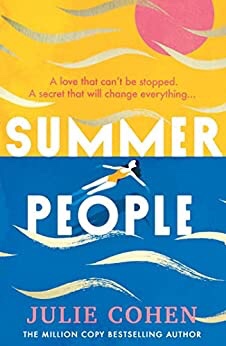
Sitting on my TBR is this latest novel from Julie Cohen, a very different novel to Spirited in that it’s contemporary, but still about love and relationships. The last time Vee left the shores of Unity Island, she thought she’d left forever. But this summer, she’s returning with her charming husband, Mike. Vee’s unexpected arrival, this time as one of the wealthy ‘summer people’, sets the small island community alight with gossip. What’s more, her childhood best friend, Sterling, is furious that she’s come back – Vee abandoned him when he needed her most.

And then Vee meets Rachel, Sterling’s wife, and a spark is ignited within her that she can’t extinguish. And as summer turns to autumn, long-buried secrets emerge that will cause a storm greater than any of them could ever have imagined.

But when autumn comes, who will sail away with the tide and who will choose to stay behind on the island…?

Published by Orion 4th August 2022

Posted in Netgalley

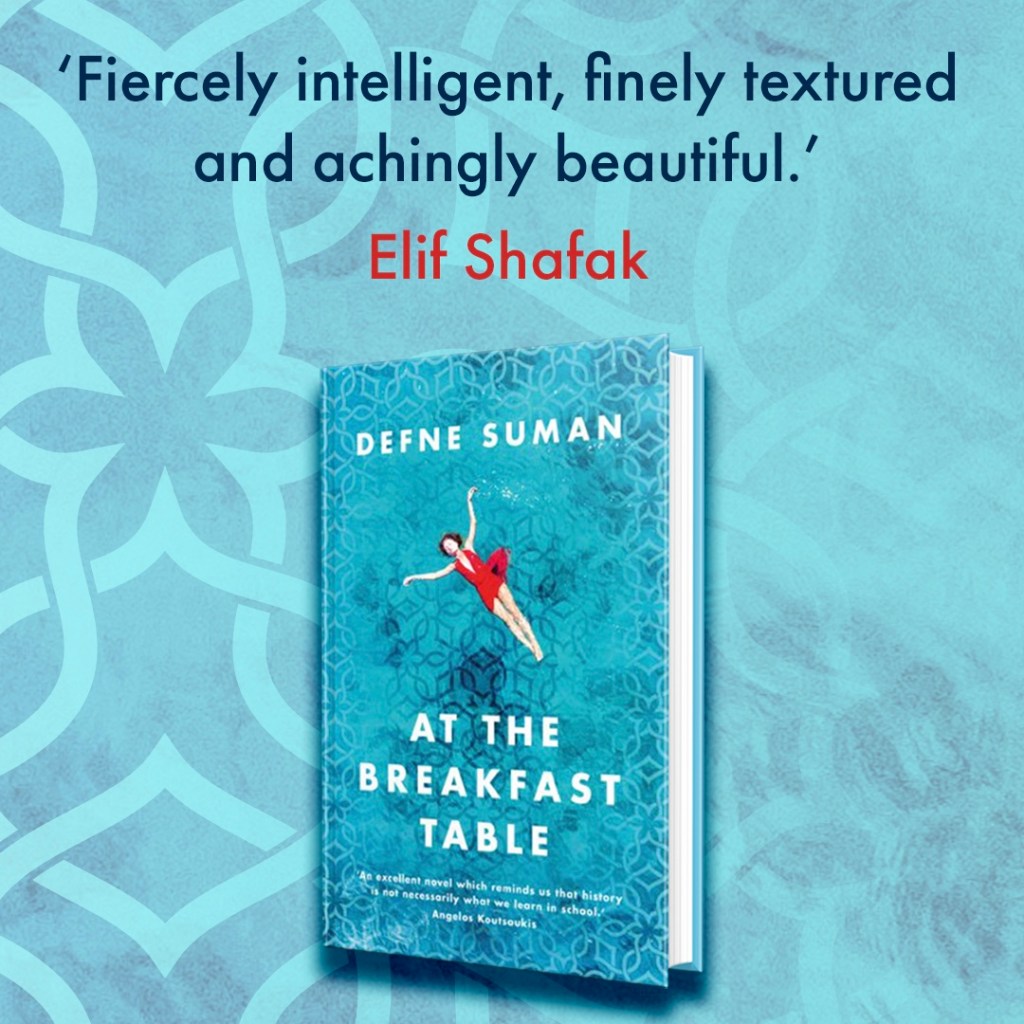
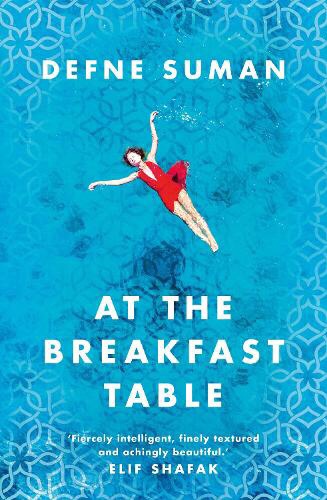
At The Breakfast Table by Defne Suman

I don’t know a lot about Turkey, so I jumped at the chance to read this book that delves into Turkish history and the heart of it’s people. Set in 2017, at Buyukada in Turkey we watch as a family gathers to celebrate the 100th birthday of the famous artist Shirin Saka. They are expecting reminiscences that are joyful, with everyone looking back on a long and succesful artistic career, and on family memories spanning almost a century. Some members of the family are set on this opportunity to delve into family history. However, for Shirin, the past is a place she has been happy to leave behind. In fact she has concealed some of her experiences even from her closest family. In particular her children and great-grandchildren have no idea what those experiences were, despite being aware of their psychological consequences. Some are thinking of Shirin and hoping she can open up and heal. Others want, perhaps, to find answers for their own struggles. In an attempt to persuade her into telling her full story, one of her grandchildren invites family friend and investigative journalist Burak, to celebrate her achievements but in the hope of helping her too. Burak has his own reasons for being there – he was once the lover of Shirin’s granddaughter. I wondered if the younger members of the family truly understood the well of pain that Shirin has kept from them? They have never gone through the type of experience and turbulence Shirin and those of her generation have. Unable to express her pain any other way, Shirin begins to paint her story. Using the dining room wall she reveals a history that’s been kept from her family, but also from the public’s consciousness, an episode from the last days of the Ottoman Empire.

As a believer in the healing power of many different art forms, including writing, I was very interested in how her family’s plan would work out. We don’t always know how people will react to opening up in this way, it’s why trained therapists like me are taught to create a safe space for people to talk and reveal their secrets. Even the client has no idea how they will react, so I felt Shirin’s family were playing with something they didn’t understand. Why would they think their grandmother would want to delve into her trauma on her birthday, let alone divulge her history to Burak? Surely therapy would have been more appropriate first? To tell her history, the author splits the narrative across four characters, each one is a member of Shirin’s family and friend group. This gives us a wide angle lens on the past. I loved the atmosphere created and the way the author didn’t exoticise Turkey. She still showed us a place of vibrancy and colour, but this wasn’t a tourist’s view. It was the Turkey of the people who work and live there. I felt there could have been more balance between the past and the present, because I was interested in Shirin’s recovery from these memories being dragged up, especially at such an emotional time. As it was, the book felt off balance, more heavily weighted in the past and from four different perspectives rather than just Shirin’s.

However, the four narrators did work in terms of showing the same events from different perspectives. There were times when one character’s view of the facts was so far from the truth it had an emotional effect on me! This is an emotionally intelligent author at work, she wants us to feel that dissonance so we can understand the painful consequences of these misunderstandings. I’m a big believer in generational trauma and how strong it’s effects can be. We see that, despite Shirin thinking she’s shielded her children and grandchildren from these events, they have still been deeply affected by her trauma. They are traumatised because of her pain and how it influenced her personality and her actions, without ever knowing the full story. I could imagine the relief of understanding why a parent has behaved a certain way, especially if it caused you pain. Despite me wishing I could have spent more time with them, we do see enough of the present to know that despite the stress fractures in this family, they still love each other. Their playfulness and sibling banter was realistic and touching. The dynamics of their interactions were so deeply rooted in the past, but we’re the only ones who can see it all with our privileged 360 degree view. This was a fascinating look at a family’s history and how their intertwined lives spiral out from one single event so long ago.

Translated by Betsy Göksel. Published by Apollo 1st September 2022

Meet The Author

Defne Suman was born in Istanbul and grew up on Buyukada Island. She gained a Masters in sociology from the Bosphorus University and then worked as a teacher in Thailand and Laos, where she studied Far Eastern philosophy and mystic disciplines. She later continued her studies in Oregon, USA and now lives in Athens with her husband. Her books include The Silence of Scheherazade and At The Breakfast Table. Her work is translated to many languages all around the world.

Posted in Random Things Tours

Ahead of the Shadows by A.B. Kyazze

When a photographer witnesses war crimes, will she have to abandon her calling to save herself?

As Lena and Kojo work in conflicts across East and Central Africa, there is immense psychological pressure, and it’s not certain if their relationship will survive.

Eighteen years later, Bene walks the gritty back streets of Paris for one night in a music festival. He is on his way to meet his father in Kenya, a man he’s never met.

Ahead of the Shadows is about the intense relationships that come from work in war zones, the transmission of trauma from one generation to the next, and how one unconventional boy might be able to break the cycle.

It’s such a pleasure to close the blog tour for this small but powerful book about the dangers and struggles of working in conflict zones. I had a period in my teens where I wanted to be a journalist and was in awe of Kate Adie and Feargal Keane. My life didn’t go that way, but I remember reading Feargal Keane’s memoir and a long piece by Italian correspondent Janine di Giovanni that really impressed upon me the life long effects of being and working surrounded by danger. There are the effects of what they’ve seen such as PTSD and a terrible restlessness left over from living such an adrenaline fuelled existence. Many can’t overcome that restlessness and choose to live a peripatetic existence, endlessly wandering from one crisis to the next, using drink to avoid the worst of their memories. It destroys people and their relationships. So, when I saw the blurb for this novel I was interested to read it.

I think the author really captured how adrenalin fuelled these jobs can be as we follow Lena into the Democratic Republic of Congo. With her group she settles into their temporary accommodation for the night, only to be woken by the sound of a dozen phone alarms going off raised voices and activity. With very quick thinking she pushes a piece of furniture across her door and sits against it, eventually falling asleep on the floor. It shows the reader how alert Lena is to the possibility of violence at a moment’s notice. With no clear sides in the country’s conflict, as well as soldiers for hire, child soldiers and rape regularly used as a weapon, Lena doesn’t know from which side danger might come. There’s no clear wrong or right and danger could come from local bandits, not just men engaged in conflict. The next day, with most of her party having left in the night, Lena rings her lover Kojo for advice on what to do. He advises her to walk to the border and cross to Kigali in Rwanda where he can send someone to meet her. As she walks alone towards to border my heart was in my throat. The author creates so much tension and our own knowledge of corruption and violence in these regions adds to our fears for Lena. It seems to take forever for her to cross the no man’s land between the two countries and she seems so defenceless. Hours later in Kojo arms, she is awake as he sleeps, aware that she feels so much safer with him present, but she still has adrenaline coursing through her body.

When writing about such dramatic events and heightened emotions in one timeline of the book can leave the present day sections feeling flat by comparison. However, as we go to Paris with Bene who is on his way to meet his father for the first time in Kenya, the author doesn’t try to compete. She lets Bene’s world seem almost dreamlike in comparison, at least on the surface. As he wanders in Paris he meets a beautiful young woman called Fatima who takes him on a tour of her city. These sections are like a dream sequence within the harsh realities of Africa from almost two decades before. There’s a sense of going with the flow as Bene goes out with Fatima into the evening. This stop has been a hiatus in his journey out to Kenya to meet his father for the first time. He should be carefree, but here and there we get traces of anxiety. When she takes him to a party at her ex-boyfriend’s place he doesn’t look forward to being with strangers, especially if they’re fakes. Most are out on the apartment balcony, watching a singer in the square below. It’s not his type of party. He goes to find Fatima as he wants to leave and steps onto the heaving balcony and wonders at how easy it would be to throw oneself over the railings and what it would take to turn that urge into a reality? I wondered where these dark thoughts and anxieties came from in such a young man. As if he’s only just running one step ahead of the shadows.

Lena’s time in Sudan is a tough read, but an important one. There was a period of time when family and friends were fed up of hearing me ask why news programs and governments had forgotten what was happening in Sudan. I remember George Clooney funding a satellite to view areas where rumours abounded about the mysterious ‘Janjaweed’. The UN seemed reluctant to use the word genocide but it was happening. The author captures the fear these masked murderers on horseback generated in the villages. They were thought to be mercenaries, appearing with no warning, except for the sound of pounding hooves. They left no time for people to flee and showed no mercy. Men were killed, young boys rounded up and recruited or killed, young girls and women gang raped. Then the survivors rounded up and placed in camps. Lena travels there as an NGO worker, trusted to bring back her clear observations for Kojo’s project.

Kojo has trusted Lena to see exactly what’s happening, she has experience of travelling through conflict regions and knows how to find the truth. Even he is taken aback by her phone call, when she tells him that no other place they’ve travelled to holds the amount of fear expressed by survivors. She tells him there’s something more going on here, that even the workers are scared and the people to scared to speak. They’re petrified. Kojo has never known Lena use hyperbole, so when she suggests people are being rounded up, Kojo suggests they talk in person. The longer Lena spends in Darfur the more she thinks about her friend Stefan, another photographer, the one who killed himself. Kojo notices when they’re reunited, a mental distance, and a physical one too – as if she’s constantly on alert and ready to flee. It takes a catalyst to set, what has only been a feeling up till now, into reality. Something to force her into taking flight. The author brings all these strands together beautifully, a full eighteen years since Lena and Kojo were in Sudan. Will Kojo come to understand her urge to flee and find safety all those years ago? Will he forgive her for keeping secrets? This is a beautiful book about the horrors humanity is capable of and what it means to bear witness to these atrocities. It is about being broken down with no joy in life and a sense of despair that can kill and how those responses to trauma can pass to the next generation. However, it’s also about those things that happen to bring us back to ourselves. The things that help us to see the future again with a sense of joy and hope.

Meet The Author

A.B. Kyazze is a British-American writer and photographer. She spent two decades writing and taking photographs around the world in conflicts and natural disasters – in the Democratic Republic of Congo and Darfur, Sudan, where Ahead of the Shadows takes place, and other parts of Africa, Asia and the Balkans. Her photographs and non-fiction work have been published in travel magazines, The Huffington Post, The Washington Times, The International Review of the Red Cross, and by Oxfam, Save the Children, and the British Red Cross.Into the Mouth of the Lion, A.B. Kyazze’s debut novel, was published in May 2021. She has also published the Humanity in the Landscape photography book series, and a number of short stories, articles and book reviews. Today, she lives in southeast London with her young family. There she writes, mentors other writers, runs a freelance editing business, and facilitates creative writing workshops in schools and libraries. She serves as a Trustee for the Oxford Centre for Fantasy, a creative writing charity. For more information go to http://www.abkyazze.com

Posted in Netgalley

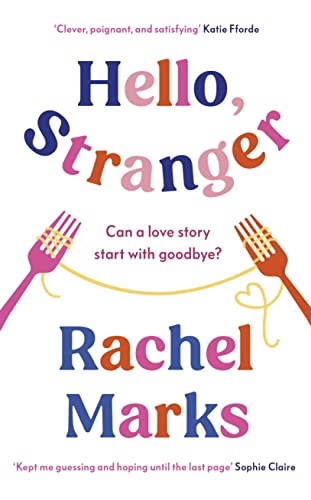
Hello Stranger by Rachel Marks

Rachel Marks writes books that are deceptively simple, they flow well and it’s easy to find yourself six chapters in and fully immersed within the character’s world before you know it. Her novels are probably categorised as Contemporary Romance, but that suggests they follow a formula set down as far back as Shakespeare – from boy meets girl, through obstacles and eventually to the ubiquitous happy ending. I think there’s more to her work than that. Marks specialises in the messiness and complexity of modern relationships, tackling issues like mental health, addiction, divorce, co-parenting and bereavement. She has proved herself to be psychologically astute when it comes to the dynamics of relationships and families, and when I pick up one of her novels I know it’s going to be about relationships, but always with a twist or different perspective. Hello Stranger is no exception as we meet Lucy and Jamie, talking in bed one morning like any other couple. Except Lucy and Jamie are the loves of each other’s life and they are breaking up.

The book splits from this point, into the before of their break-up and the after. We get to see them meet for the first time and take the first tentative steps into their relationship towards the morning we’ve just witnessed. In between are the chapters looking at the aftermath from both points of view. I promise you, you will read this absolutely rooting for this couple just as I did. It’s heartbreaking to find that at the centre of their break-up is the question of whether they want to have children or not; Jamie does, but Lucy doesn’t. Lucy is something of a free spirit, who doesn’t really want the conventional life that she’s seen play out for her sister, who is married with two children. Lucy loves being an aunty more than anything, but has never felt maternal or had a sense of her biological clock ticking. She knows that people think she’ll change her mind one day, but Lucy doesn’t think so. It’s not a flippant choice, it’s something she’s thought a lot about and weighed up the pros and cons endlessly. She knows that her choice makes her unnatural in a lot of people’s eyes and she knows how much it disappoints her mum, who would love more grandchildren. She can’t feel what they want her to feel and it would be wrong to have children just to make others feel comfortable. I really felt for her, especially as she goes into the dating world knowing this about herself. I can’t have children and have an invisible disability so I was always concerned about when to slip this information into conversation. It’s not really a first date type of topic, when you want to be thinking of nothing more than whether there’s a spark between you. Yet, when is the right time to drop a bombshell like this on someone? If you wait till you know it’s a long term relationship haven’t you misled them? The problem is there are some things that society tends to assume about young women; they will be healthy and they will want to have a family.

Jamie is one of life’s good guys, the sort of boyfriend who will pop to the shop to buy some tampons and throw in a bar of chocolate without being asked. He’s thoughtful, open and honest. He does have baggage though. He lost his father at a very young age and still carries some guilt that he was not there when he died suddenly from a heart attack. His family also suffered the loss of a child, when his brother Thomas was stillborn. Children are an emotive subject for Jamie and he’s always known he wants them, to create a family of his own, now that it’s just him and his mum. He finds Lucy a challenge, but in a good way. She pushes him out of his comfort zone by taking him on an activity holiday in Andalusia where they go rafting over rapids. At first he’s nervous, but he finds it exhilarating. In fact Lucy is an exhilarating sort of person, she’s lively, talkative and full of ideas and plans for the future. It’s not long before he’s in love with her and he knows this is different from anything he’s felt before. He wants to be with this girl for life. When they finally discuss children, it’s clear this is something he has assumed she would want in the future. He’s known that travelling the world is important to her and he wants to discover new places and have adventures with her, but knows that realistically parenthood will curb that wanderlust. Despite finding themselves constantly back at this impasse, they don’t break-up. Lucy is as in love with Jamie as he is with her. As their relationship continues to go through milestones the question becomes ever more important, but it is essentially unsolvable. No one can compromise without sacrificing the life they want.

Is Lucy enough for Jamie, or will he come to resent her as the reality of being without children starts to sink in? Lucy can’t imagine having children for Jamie’s sake, wouldn’t she start to resent them for the changes in her life and the loss of the life she wanted. Maybe they just aren’t right for each other, despite the deepening feelings. For Lucy, Jamie is enough and she imagines a great life just the two of them. Lucy is immovable and it is up to Jamie to choose, but he can’t imagine life without Lucy in it. We follow every heart rending discussion that leads us to that morning in bed, but who will make the choice? It will take a catalyst to break the deadlock between them and throughout the book I could feel the tension rising towards that moment. I only know that once the choice was made I was desperately sad and kept hoping they would come back together, because this was a romance after all and don’t they always have happy endings?

I applaud the author for creating a character who has a point of view that many people still find difficult to understand, but making her sympathetic and loveable. She knows all the arguments and insults that people will throw at her for her choice; unnatural, cold, not a real woman, selfish. I have had the selfish argument mentioned to me in a discussion about the different siblings in a family. The childless couple were branded as really selfish, spending all their time playing golf, going on cruises and suiting themselves. I was dumbfounded by this argument that only by having children can we be truly selfless and found myself asking whether her children had wanted to be born? I kept hearing her say ‘we wanted’ children and surely that’s no less selfish than someone wanting to travel the world. People have children because they ‘want’ them, not because they’re doing the world a favour. If we stop using emotive words and assuming there’s one right way of being a woman, the decision to have children is simply a choice.

I have friends on both sides of this life choice: people who can’t have children; people who’ve sacrificed their desire for a family to stay with a partner who didn’t want them; people who thought they didn’t want children then became pregnant accidentally; people who’ve broken up with a partner who didn’t want children. There are also people like me, who lost several pregnancies, haven’t had children, then became a step-mum at 45. It’s never an easy road and I think we need to be more respectful of other people’s choices on this issue. Not everyone wants to be a parent and that’s okay. I felt sad for Lucy, terribly so, but I also felt strangely proud of her for sticking to her gut instinct and not being swayed, even by the person she loved most. To leave such a beautiful and loving relationship takes such courage and I didn’t envy their eventual decision. Marks has once again written such a bittersweet novel. I love the way it delves into the complexities and assumptions around motherhood. She takes two incredibly likeable characters and places them in such an impossible situation. However, what she also does is show that time mellows all experiences, even the painful ones. There is healing there for Lucy and Jamie, whether they eventually stay together or not.

Published on 18th August 2022 by Penguin.

Meet the Author

Rachel’s first two novels, Saturdays at Noon and Until Next Weekend, dealt with issues like addiction, divorce, parenting and re-marriage. Hello, Stranger is her third novel and came out in August. She lives in Gloucestershire with her husband and three children. When she’s not writing, she loves travelling, snowboarding and photography.

If you would like updates on upcoming books, offers etc you can follow Rachel on Twitter @Rache1Marks and Instagram rachelmarksauthor.

Posted in Throwback Thursday

Throwback Thursday! The Giver of Stars by Jojo Moyes.

I love Jojo Moyes. Like many people I was introduced to her writing with the novel Me Before You. I became immediately attached to Louisa Clark, mainly because I felt that Moyes had created her character by stepping inside my head! My husband was paralysed due to MS and when I fell in love with him he was in a similar wheelchair to Will, with the same interests and charismatic spirit. Sadly, I lost him in 2007 and I have read Moyes’ follow up novels and found her depiction of grief and moving forward intelligent, moving and real.

The Giver of Stars is a different type of novel, more historical fiction than romance. It’s setting is the Depression era and a small town in rural Kentucky where the Van Cleeve family own the mines where most people work. Levels of rural poverty are high, African-Americans are still subject to segregation and while middle class women are expected to stay home and know their place, women in poorer families are working hard while trying their best to feed and look after ever-growing families. Into this setting comes Alice, the English bride of the heir to this mining fortune. Bennet Van Cleeve is handsome and considerate, and their marriage seems to start well but once they reach the family home things change. Bennet lives with his father and the death of his mother still hangs heavy over the house, with everything still being run to her exacting standards. Alice finds she has little to do and the house is full of her late mother-in-law’s ornaments and china dolls. She daren’t change anything because Mr Van Cleeve doesn’t like anything to be out of it’s normal place. More worrying is the change in Bennet now they are home, despite showing some desire at the beginning, the proximity to his father seems to be affecting their sex life. Several months down the line their marriage is still unconsummated and Mr Van Cleeve keeps hinting about grandchildren, adding to the pressure she feels.

When a town meeting is called to discuss President Roosevelt’s initiative to get the rural poor reading, Alice senses an opportunity and an outlet for her unspent energy. Margery O’Hare will head up the initiative. She is an outspoken and self-sufficient women who doesn’t listen to the opinion of anyone else, particularly men. She opens a door for Alice to escape the claustrophobic Van Cleeve household, into the wild forests of Kentucky. Alice learns to ride a mule, and along with Margery and two other local women she sets out as a librarian for the Packhorse Library. At first, rural locals are suspicious of an Englishwoman coming to the door offering them books, but soon Alice finds a way in and starts to be trusted. She also finds she likes the open air, the smells of the forest and singing of the birds. She enjoys the freedom of more casual clothes and the camaraderie she is building up with her fellow librarians. She is close to Margery and when she confides about her marriage, Margery loans her a book she has been sneaking out with the novels and recipes. It is an instruction book on married love and Margery has been loaning it to poor women on her rounds who are inundated with children and need educating about sex. Alice takes the book home and a series of events are set in motion that change not only the Van Cleeve household, but the whole town.

Old Mr Van Cleeve is determined to deal with Margery O’Hare and vows to destroy the Packhorse Library altogether. Margery is shrewd and is sure that a devastating flood had more behind it than high rainfall and suspects the mines. However, she has left herself vulnerable with what Van Cleeve sees as evidence of transgressive behaviour: she is exposed as having a relationship out of wedlock, she has hired an African-American woman who used to run the coloured library and she is encouraging townswomen to take control of their own lives. She seems impervious to other people’s disapproval so what lengths will he have to go to in order to stop her? Meanwhile, Alice starts to fall into a friendship with Frank who helps out at the library by chopping wood, putting up shelves and being a general handyman. They bond over poetry and spend hours talking and working side by side in the library building. The other librarians have seen what’s happening, but Alice doesn’t seem to realise this man is falling in love with her.

I loved this book and writing about it again has made me want to reread it. I was on holiday the first time and I stayed in my holiday cottage for two days to read it cover to cover. As always with Moyes, it is beautifully written and researched, with characters I fell in love with. She writes about relationships with so much insight and emotional intelligence. She captures the tensions of the Depression perfectly, depicting the rural poverty where work is scarcer and poor women really take the brunt of the economic conditions. Stuck at home with ever growing families they must have felt desperate for a break. They had land to grow vegetables and keep livestock, but there was still worry over where the next meal was coming from and hoping and praying that there are no more mouths to feed. Just as in the recent pandemic, money worries and pressure meant more domestic abuse. Margery is determined to educate these women to keep themselves safe and prevent their families growing. The town hasn’t kept up with the national shift in women’s attitudes and opportunities. Moyes shows that feminine power is on the rise and the new attitudes towards feminism, as well as marriage and sex, could end up battling against old money and old values. For the women, the poorer families and those residents who are African-American losing the power struggle could be disastrous, and some characters might pay a high price. I was braced for tragedy, but found myself desperate for the progressive characters and attitudes to prevail. It was this struggle that built the tension and kept me reading till 2am! Moyes achieved something real, romantic and historically significant with this novel, but most of all it is simply great storytelling. This book is an absolute must read and I still think it is probably her best novel to date.

Posted in Throwback Thursday

Throwback Thursday! Platform Seven by Louise Doughty.

Having spent a bit of time hanging round Peterborough train station over the years, I thought it seemed an unpromising place to set a novel, but Louise Doughty has proved me wrong. In Platform Seven, she weaves an unmissable whodunnit where Lisa tries to understand why she died.The book opens following security guard Dalmar, a refugee from Somalia, as he carries out his night shift. After midnight the station goes quiet and most people might assume it is closed, but it runs with a skeleton staff and between the hours of 3am and 6am only freight trains rumble through at platform seven. This is the last platform, towards the back of the station and only partially viewable by CCTV. It is the perfect place for homeless people to hide out and try to sneak into the warmth of the waiting room for a few hours. Dalmar has been desperate, so sometimes he doesn’t have the heart to move them on, feigning ignorance so they can grab a few moments of warmth. At first, he mistakes the man walking through the station, for a homeless person and pays no attention. The man, wearing a cap and donkey jacket makes for platform seven and waits. To Dalmar he seemed hunched in the cold and seems to almost be in a trance.


There is only one other witness to his arrival and that is Lisa. Lisa is trapped in the station, she knows all the staff by name but can’t get them to see and hear her. On this occasion she is sure she understands the desperation in this mans eyes and she worries he isn’t just here for the warmth. As a freight train trundles towards the station he steps towards the platform edge and Lisa desperately tries to stop him but he can’t hear her. Dalmar finally sees the man, but is too far away to make a difference. He shouts. But the man keeps going. He steps through Lisa and straight under the train. Doughty explores the effect this man’s suicide has, firstly on the railway staff. PC Ashcroft from the British Transport Police, and his boss face the task together. Ashcroft has never experienced a railway death before and the horrifying detail of gathering body parts, sorting through clothing to look for ID and organising a cleaning team affects him and us at the same time. He doesn’t want to break down but struggles and wants to understand what could make a man die like this? Dalmar, who witnesses the incident with Lisa, is triggered into a flashback of his own. We are transported back to a dinghy on a river and a woman who’s head is the only part up above the water. In reality it’s detached, merely floating on the surface, but screaming at the same time. Lisa wanted to stop the man and is horrified by what she’s seen. She comes to a horrifying realisation.

In the days that follow Lisa becomes fascinated with a distraught young man she sees in the cafe, while PC Ashcroft discovers that a young woman died recently on the same platform. Something about her death piques his interest and makes him wonder whether the events leading up to her apparent suicide were properly investigated. He asks if he can do some digging and gets the go ahead. Lisa also has a breakthrough, she finds that she can follow this young man out of the station and accompanies him on his walk home. This begins her wanderings and the unlocking of her story. Doughty’s description of the romance between Lisa and her doctor boyfriend, Matty, is brilliantly written and shows a real understanding of domestic abuse. Psychological or emotional abuse has only been made a criminal offence more recently, but it is subtle and difficult to pinpoint even for the victim. I was in an emotionally abusive relationship for five years and despite having therapy there are still times when I am confused about how and why I let this happen. Of course I’m not responsible for the abuse, but I was responsible for allowing it to continue. We see how slow and subtle the behaviour begins; a throwaway comment that could be a criticism, a moment of jealousy, an insistence that a hurtful comment was simply a joke and you’re too sensitive. I highlighted a whole passage to use with writing therapy clients: The sad, sobering and undramatic truth is that I made the same mistake that women and girls throughout the ages and across continents have so often made. The one that is so easy, seductive, and most flattering to ourselves. I mistook possessiveness for love. By the time I realised the magnitude of that mistake, I had too much invested in the relationship to simply undo it. I had to keep on making the mistake in order to justify the fact that I had made it in the first place. It was too large and complex an error to admit and how could I explain I had made a mistake to family and friends when I didn’t even understand how I had made it myself? This section of the book is such a beautiful piece of writing and answers perfectly the question everyone asks; ‘why didn’t you leave?’ When asked by my family why I’d never told them, the answer was the same. My husband had died, I had been broken and this person professed to love me. I was ready for something positive to happen in my life. I glossed over a couple of red flags, because he was stressed at work, or moving house and as well as an excuse he made promises to change. If I admitted that my relationship was a sham I would have to admit there was no happy ending and I would be back where I started: bereaved, broken and alone.

It took me five years to admit to others and myself that I had to leave. I’d had to gather my strength over time and eventually he behaved so badly I couldn’t gloss over it any more. I was aware reading Lisa’s story that things could have been so much worse. Matty breaks her confidence and by using the technique of gaslighting leaves her in a place where she doesn’t even trust her own judgement anymore. The outcome is devastating. I really enjoyed the way Doughty slowly frees Lisa. Firstly, she is liberated from the station, then finds a way to whisper a suggestion to someone, then m finally she travels all over Peterborough and even beyond the city towards the end. She finds others like her: the old man from the station suicide pops up soon after his death; a woman in an orange suit striding towards the station; the weird grey blob at the top of the multi-storey car park who she knows to stay away from. However, there are places she wants to be. Most importantly, an urgent visit to a woman she once saw through a window who seemed to need her help. This is domestic noir at it’s absolute best and has stayed with me ever since.

Meet The Author

Louise Doughty is the author of nine novels, including the soon-to-be-published Platform Seven. She has also written one work of non-fiction and five plays for radio.Her most recent book, Black Water, is out now from Faber & Faber UK and Farrar Straus & Giroux in the US, where it was nominated as one of the New York Times Book Review Top 100 Notable Books of 2016.

Her previous book was the number one bestseller Apple Tree Yard. First published in 2013, it has sold over half a million copies in the UK alone and has been translated in thirty territories worldwide. A four-part TV adaptation with Emily Watson in the lead role was broadcast on Sunday nights on BBC1 in January 2017. 

Doughty’s sixth novel, Whatever You Love, was shortlisted for the Costa Novel Award and longlisted for the Orange Prize for Fiction. She has also won awards for radio drama and short stories, along with publishing one work of non-fiction, A Novel in a Year, based on her popular newspaper column. She is a critic and cultural commentator for UK and international newspapers and broadcasts regularly for the BBC and has been the judge for many prizes and awards including the Man Booker Prize and the Costa Novel Award. She lives in London.