“Until the lions have their own historians, the history of the hunt will always glorify the hunter.”
Chinua Achebe (Author)
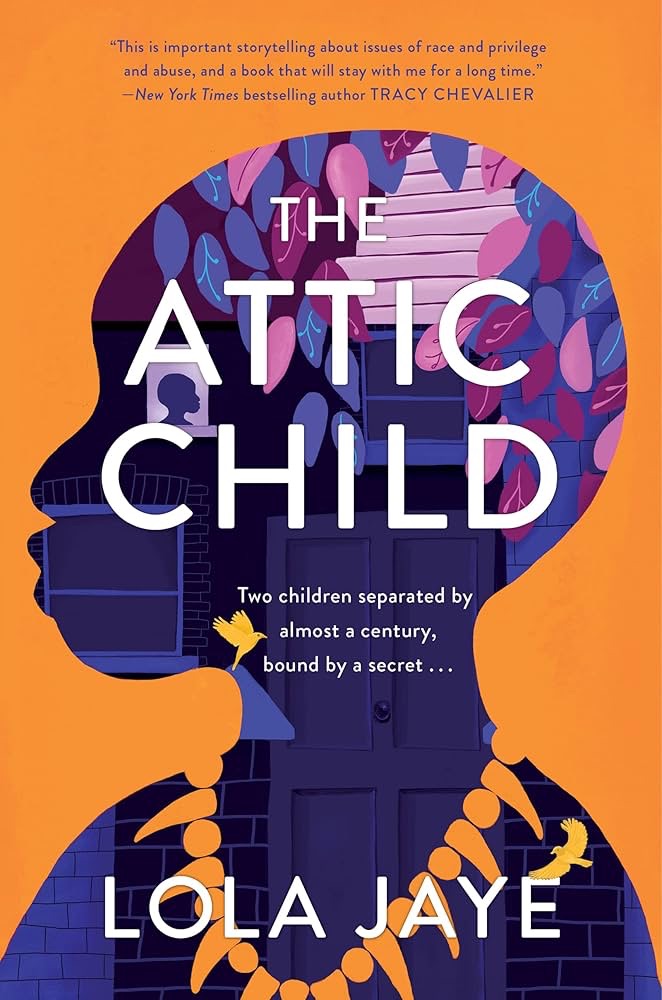
When I was gathering books for the Queen’s jubilee stall at our village book exchange, I could have stuck to the British Isles and its experience of life in the reign of Elizabeth II. However, I wanted to look at the jubilee from a global viewpoint and include the voices of all the Queen’s subjects. For me that includes voices from countries that were once part of our empire, some of whom are now under the Commonwealth banner. I think these other voices are important; those who are literally silenced, but also those who were ignored because were simply not the white, middle class, man that society is used to listening to. This book had a beautiful example of one such voice and I was reading it around jubilee time. Celestine Babbington is recorded for history in a silent form, photographed wearing clothes he didn’t choose and posing with a man whose relationship to him is very problematic. The man, Richard Babbington, is a wealthy explorer who has a love for Africa and a large mansion house in England and by 1907, Celestine is being kept in the attic of that house, only allowed out to work as a domestic slave.
Years later, a young girl called Lowra is suffering the same fate. Locked in the attic as punishment for any transgression since her fate was left in the hands of her resentful stepmother. After her mother died, Lowra’s dad remarried and from that day on her life was punctuated by spells of abuse. While locked in the attic she finds an unusual necklace with clawed hands, unlike anything she’s seen before. There’s also an old-fashioned porcelain doll and a sentence on the wall, written in an unfamiliar language. These are her only comfort, because she feels as if the person that owned them is still with her in some way. As an adult, her stepmother’s abuse still affects her and she’s conflicted when she inherits Babbington’s house. People seem to think she’s lucky and the town is proud of this intrepid explorer. Looking into the house’s history leads her to an exhibition of Babbington’s life, where she sees photographs of Babbington and a young black boy wearing an African wrap and what looks like her necklace, the one from the attic. However, the thing that keeps Lowra transfixed, is the young boy’s eyes. Lowra sees someone filled with sorrow, a fellow sufferer of the darkness inside that house. His name is Celestine Babbington. Lowra wants to find out more about this boy, how he came to be in England and what happened to him after Babbington’s death. She enlists the help of a history specialist called Monty, who has an interest in stories that have not been told, particularly those of empire. Together they start their search for the attic child.
I think anyone who talks about the glory of our empire should be encouraged to read this book. It’s fitting that the opening quote of the book is from the incredible author Chinua Achebe, because his novel Things Fall Apart is a perfect companion to this tale. This time the story is partially told by an innocent victim of our Victorian forays into Africa, a child called Dikembe, who is largely ignorant of the atrocities being carried out by the Belgian forces plundering the natural resources of his homeland. At the time of Dikembe’s childhood, his homeland was named the Belgian Congo, a large area of Africa now known as Zaire, then the Democratic Republic of Congo. Very few Europeans had reached this area of Africa, known for tropical diseases like sleeping sickness. King Leopold of Belgium had urged the Belgian Government to colonise the country, but when they stalled their efforts he decided to take charge himself. He took ownership of the country and named it the Congo Free State in 1885, using his private army the Force Publique to press gang Congolese men and boys to work for him in the production of rubber. No one knows the exact population of the country at this time, but due to exploitation and the exposure to new diseases it is estimated that up to ten million native people died during Leopold’s rule of the country. Dikembe is young enough to stay at home each day with his mother, but he envies his brothers who go off to work with their father every morning. His parents keep him ignorant of the way native workers were treated so it is an utter shock when his father is killed one day. Richard Babbington, based on a real man called Henry Morton Stanley, expresses an interest in Dikembe. He wants to take him back to England and turn him into a gentleman and his companion. Ridden with grief and terrified about what could happen to her youngest son, his mother agrees, knowing this may be the only way to keep him safe. Although his intentions seem pure, isn’t this just another form of colonisation? He then takes away Dikembe’s name, calling him Celestine Babbington.
I found both these children’s circumstances heartbreaking and realised that Lowra’s affinity with this boy is because she sees something in his photographs echoed in her own eyes. I thought the two character narrative worked really well here, but all of the characters are so well crafted that they pulled me into their stories and didn’t let go till the end. We’re with Lowra and Monty on their quest, finding out more about Dikembe’s story and we experience the effect these revelations have on all the characters. It’s moving to see Monty identifying with Dikembe and feeling emotional pain from the injustices he has gone through. Monty still experiences racism and oppression, just in different ways and Lowra can’t be part of that even though she has empathy for how Monty feels. They worked together well and slowly become close by being honest about their pasts and what effect their life experiences have had on them mentally. Lola Jaye has managed to engage the emotions, but also educate me at the same time, because I didn’t know much about the Belgian empire or King Leopold’s exploitation and murder of the Congolese population. However, it was those complex issues of identity and privilege that really came across to me, especially in the character of Richard Babbington. His arrogant assumption that he could give Dikembe a better life is privilege in action, as Dikembe soon finds out that he’s a womanising drunk and the companionship he spoke of only works one way. All he does bestow is money, for clothes and school, but what Dikembe craves is the warmth and love of his mother calling him a ‘good child’. The way this need for love and comfort was also exploited made me cry. I was desperately hoping that by the end, these terrible injustices didn’t stop him living his life to the full, including embracing happiness when the chance came his way. We see this play out for Lowra during the novel, can she ever accept that she is worthy of love? I wasn’t surprised to learn that Lola Jaye is a therapist, because she understands trauma and how it can manifest through several generations. The story doesn’t pull it’s punches so I felt angry and I felt sad, but somehow the author has managed to make the overall message one of hope. Hope in the resilience of the human spirit.
Lola Jayne’s latest novel is The Manual for Good Wives. It came out in 2025 is on my tbr for March.
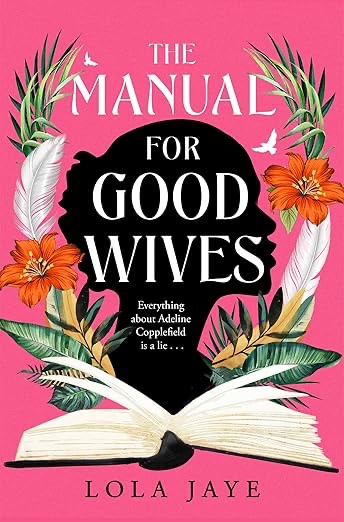
Everything about Adeline Copplefield is a lie . . .
To the world Mrs Copplefield is the epitome of Victorian propriety: an exemplary society lady who writes a weekly column advising young ladies on how to be better wives.
Only Adeline has never been a good wife or mother; she has no claim to the Copplefield name, nor is she an English lady . . .
Now a black woman, born in Africa, who dared to pretend to be something she was not, is on trial in the English courts with all of London society baying for her blood. And she is ready to tell her story . . .


 The Lotus Readers