Posted in Random Things Tours

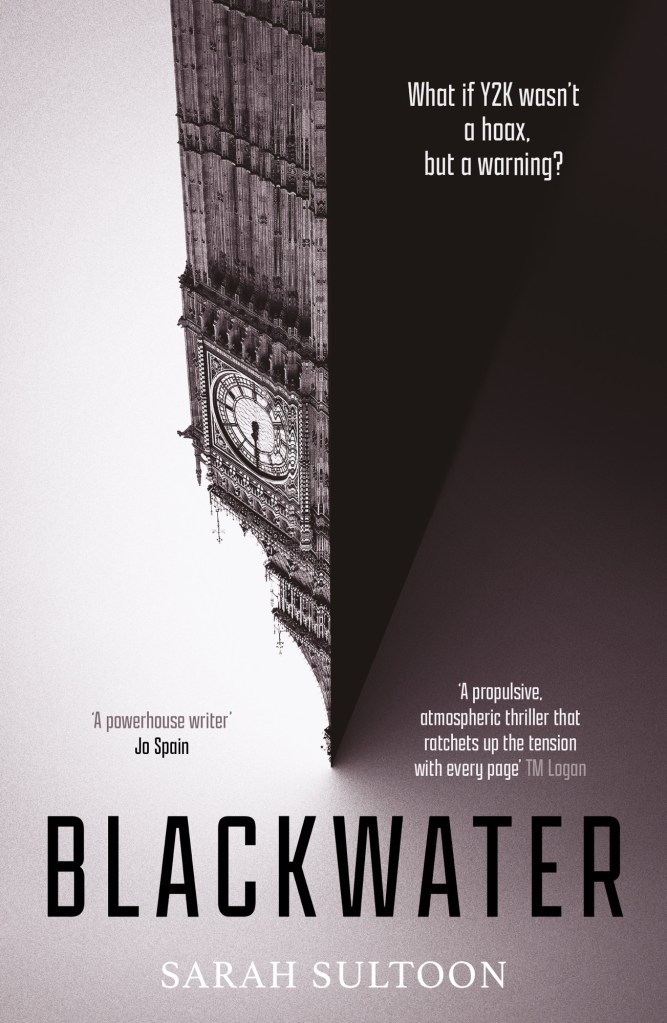
Blackwater by Sarah Sultoon 

As the clock ticks towards the millennium – and the threat of a potentially new apocalyptic reality – Jonny Murphy is sent to investigate the discovery of a child’s body on a deserted swamp island, fifty miles from London. What he finds is more than just a tragedy, it’s a warning. Something big is coming … Can Jonny stop it? Should he?

London, Christmas 1999. The world is on edge. With the new millennium just days away, fears of the Millennium Bug are spiralling – warnings of computer failures, market crashes, even global catastrophe. But fifty miles east, on the frozen Blackwater Island, a different kind of mystery unfolds. A child’s body is discovered on the bracken, untouched by footprints, with no sign of how he died. And no one has come forward to claim him.

At the International Tribune, reporter Jonny Murphy senses something is off. Police are appealing for relatives, not suspects. An anonymous call led officers to the scene, but no one knows who made it. While the world fixates on a digital apocalypse, Jonny sees the real disaster unfolding closer to home. With just twenty-hour hours before the century turns, he heads to Blackwater – driven by curiosity, desperation, and the sting of rejection from his colleague Paloma.

But Blackwater has secrets buried deep in the frozen ground. More victims – some dead, others still paying for past sins. And when Paloma catches up to him, they stumble onto something far bigger than either of them imagined. Something that could change everything. The millennium is coming. The clock is ticking. Can Jonny stop it? Should he?

I went into this novel quite late, so I was incredibly pleased to find that this is definitely a gripping, read in one sitting type of thriller. This is Sarah Sultoon’s third novel featuring investigative journalist Jonny Murphy, but could very easily be read as a standalone. For people like me, old enough to be an adult at the time of the possible ‘millennium bug’, I remember the panic and the predictions that planes would fall out of the sky, banking systems would collapse and the apocalypse would begin. I remember the money spent trying to mitigate its potential effects but like the British seem to do, we gathered with friends and family anyway and set off fireworks in the freezing cold and precisely nothing happened. It feels like an innocent time now, when we think that 9/11 came only 18 months later, followed by going to war in Afghanistan and Iraq and then years of austerity followed by a pandemic. It’s certainly been turbulent ever since. My dad was convinced that the bug was a made up bogeyman, allowing technology companies and their shareholders to clean up by proposing to ‘fix’ something that didn’t exist. Maybe he was right. We don’t call him Fox Mulder for nothing.

Here Sarah Sultoon has created a fast paced thriller that plays out in the days before Millennium Eve. The timing gives us a countdown, but believe me this story creates its own tension. The setting of Blackwater Island is familiar but alien at the same time. Situated in an inlet only 50 miles from London and with a direct route by boat into the Channel and the Thames this place is hiding in plain site. Beyond the last village, the terrain feels like the eerie marshlands at the beginning of Charles Dickens’s David Copperfield. The mist is so thick someone could be standing next to you and the black, viscous mud has the feel of quicksand. It sucks all explorers into its depths and is enough to put anyone off reaching the island itself. As if that wasn’t enough, the author brings elements of folk horror to the narrative as Jonny is warned off by very unfriendly and odd locals. The only place to stay is an old inn in the village, but the landlady isn’t very welcoming. She warns him that the only resident of Blackwater is Inka who is depicted in a framed picture behind the bar and on graffiti near the island:  

“it’s apparently a picture of a ghost that’s been haunting Blackwater since the Dark Ages. Our landlady told me some mad story about a mythical Icelandic warrior named Inka with a diamond-tipped spear and a mermaid’s tail.” 

Jonny is canny enough to know when he’s being warned away from something and it only sets his investigative skills tingling. On the other hand, actual protection for the crime scene is very thin on the ground. He meets the only police officer in the area and she feels like she’s been dumped in the backwaters of Essex with no support or back up. The facts are that the body of a boy was found on the island with no visible cause of death, but the weirdest part is that he was dressed like an extra from Oliver! His Victorian urchin clothing is so incongruous, but could mean anything from local amateur dramatics to time travel. It’s once Jonny manages to get on the island that answers start to come and it was nothing I’d considered. 

Jonny is a rather fascinating character. He’s absolutely determined to track down his story and has defensive walls a mile high where friendship and romance are concerned. Yet he does have empathy and tries to take the honourable route where possible. He clearly has feelings for photographer Paloma, but has been determined not to pursue them, not wanting to inflict himself on someone else. What does he know about himself that makes him hesitate? Will the story always come first? The scariest part of the whole story is that it’s believable and the afterword really does show that sometimes, what feels far fetched, is only the beginning. Taking in biological experimentation and weaponry, black ops, government conspiracies and the price paid by the locals caught up in it, it’s the writing and the very real atmosphere at the time that makes this a believable story. Jonny’s mission becomes unbearably tense as he has to make it to the centre of London with the city’s ’River of Fire’ fireworks display under threat. Thousands are gathered to hear Big Ben strike midnight and the start of a new century. Jonny fears they may be the target, but there’s also the press area where Paloma is hoping to catch the display on camera, no matter his reservations he’s determined to save her. Events and emotions build and I was half expecting a huge explosion, but Sarah Sultoon is more subtle than that and the fear here is insidious. It warns us not to trust those in authority, to question and investigate everything – an instinct that in real life seems to have been lost since the pandemic. Jonny is a brilliant hero because he has that instinct still and a moral compass that guides his work, something that’s a rare combination. This is incredibly tense, gripping and packed full of action with the added nostalgia of millennium memories. 

Out now from Orenda Books

Meet the Author

Sarah Sultoon is a novelist and journalist, whose prior work as an international news executive at CNN has taken her all over the world, from the seats of power in both Westminster and Washington to the frontlines of Iraq and Afghanistan. She has extensive experience in conflict zones, winning three Peabody awards for her work on the war in Syria, an Emmy for her contribution to the coverage of Europe’s migrant crisis in 2015, and a number of Royal Television Society gongs. As passionate about fiction as nonfiction, she recently completed a Masters of Studies in Creative Writing at the University of Cambridge, adding to an undergraduate degree in languages, chosen mainly so she could spend time itinerantly travelling the world. She likes running, Indian food, cocktails, playing sport with her children and throwing a ball for her dog, order dependent on when the cocktails are consumed.

Posted in Monthly Wrap Up

Best Reads October 2025

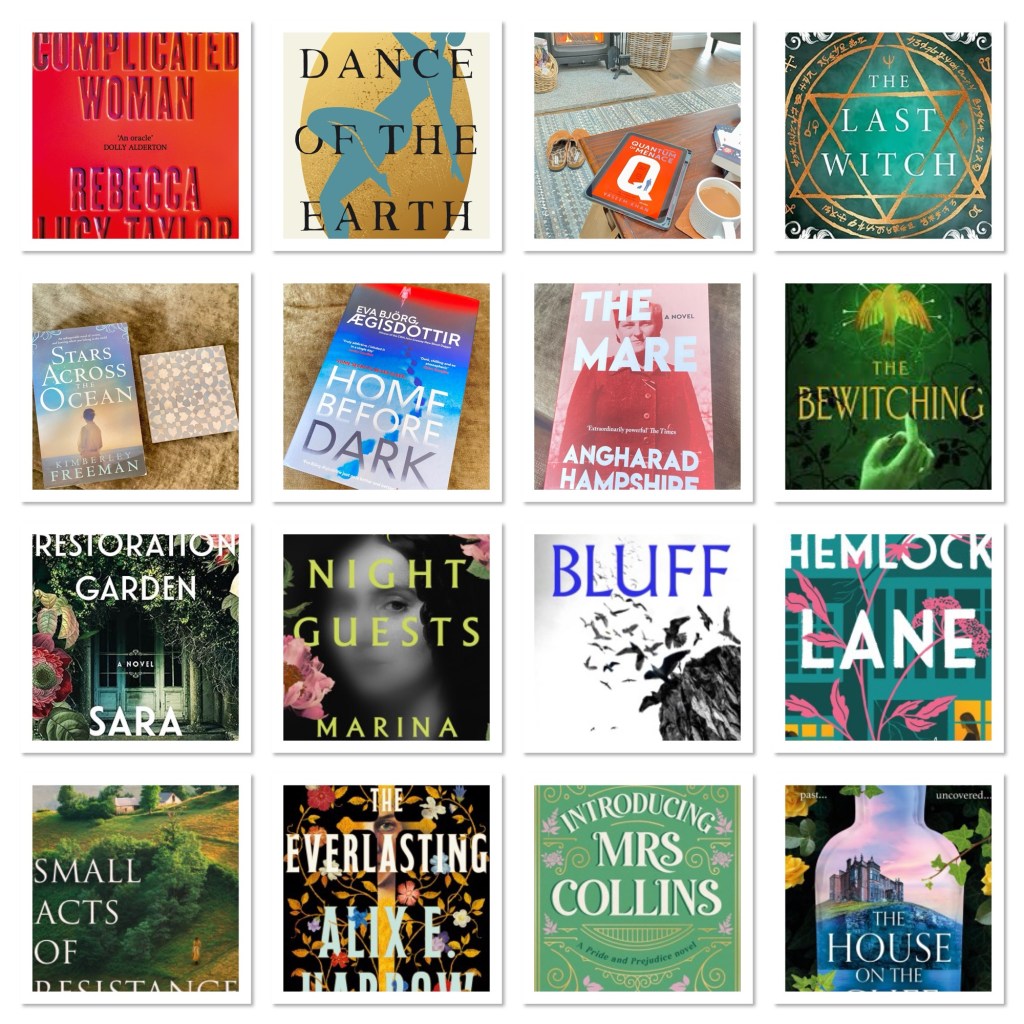
October brought many several wonderful things, as birthday months so often do. As always we went away, this time for two weeks in Dumfries and Galloway for book shopping at Wigtown and fishing for my other half. We knew we were onto a winner as we turned off the single track road onto a farm track that was a mile long! I’ve never stayed somewhere so quiet and because it was a Dark Skies area we got to stargaze too, with a meteor shower being a high point of the fortnight. I finally got to check out The Bookshop, run by author Shaun Bythell. The daily occurrences in the shop are depicted in his three books and I grabbed the latest one along with some second hand purchases too. As well as all the shops in Wigtown we stumbled across a little gem called Gallovidia Books in Kircudbright. This was a treasure trove of new fiction, poetry and children’s books as well as a good collection of biographies. The owner was very knowledgeable, definitely a real book lover and he recommended one of my choices above as his wife was reading it and was torn between savouring and devouring it. We alternate on holiday, when it’s a fishing day I stayed on the farm and had a fabulous view to enjoy while reading and getting some of my own writing done. After a couple of months without a kitchen it was a joy to come home to everything finished so I now have a functional kitchen again.

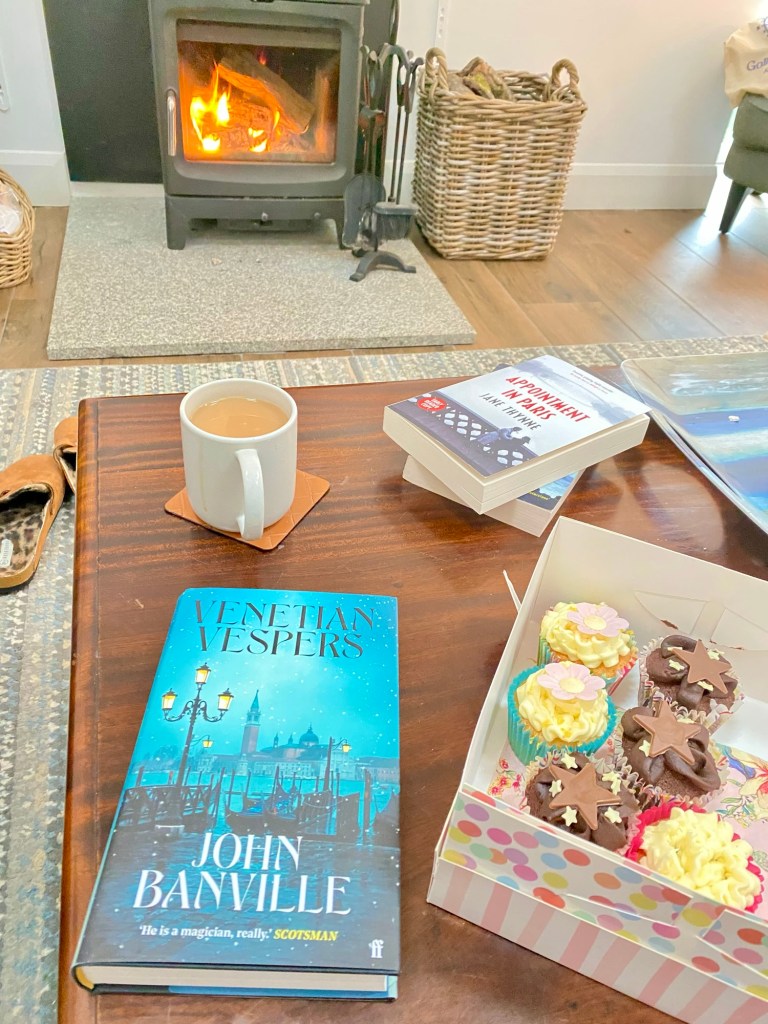
Bought on recommendation from the owner of Gallovedia Books I couldn’t wait to read this atmospheric book so dived straight in, This felt like the perfect autumn read – a sinister mystery filled with atmosphere and a slowly building sense of menace. Evelyn Dolman embarks on his honeymoon with his new wife Laura and it proves to be anything but the honeymoon he expected. With Laura settling in early for the night at Palazzo Dioscuri he decides to go for a walk and perhaps a drink somewhere close by and she suggests Florian, a cafe that first opened in 1720 and still serves Venetian visitors today. A chance meeting is followed by a night of drinking and one unforgivable act. So when he wakes in the morning, sluggish and nauseous and finds his wife isn’t next to him in bed, he imagines she has taken herself to another room. However, as the morning progresses it becomes clear that Laura has simply disappeared. 

There are clues to what is transpiring here but they are subtle. The writer has incredible sleight of hand and they seem inconsequential or at list explicable. Some completely passed me by. As I opened the book again for writing this review it made me think of The Sixth Sense and how no one saw the clues on their first watch of the film but when they watched for a second time they couldn’t believe they’d missed them. Each character is slippery and elusive with an unpredictable quality that felt dangerous. I lived this uncanny feeling the author created which grows organically from the city. This is a sparking jewel of a city that’s risen from the mud and brackish waters of the lagoon. Evelyn mentions the fin de siécle, that time of decadence towards the end of the 19th Century and that timing certainly informs some of the events in the book, particularly the fluid social order and sexual licentiousness. We’re told constantly that Venice is decaying and sinking. One day it may be completely under water, but the decay isn’t what you see when you first visit. Venice bewitches you with its golden domes, Morrison arches, coloured glass and the way sparkling light from the surface of the water bathes everything in a soft light. Then suddenly, only a street away you notice a tree growing out of someone’s house and at night most residences seem in darkness now that families can no longer live in the water logged lower floors. Banville captures this ‘double’ city utterly, describing the timeless romance of a gondolier serenading his passengers but also the jarring sound of the vaporetto. We see the sparkling water but also smell the mud as the passing boats churn it up. He links this duality with human nature, our surface selves and the real us, even the parts we avoid and keep locked away. Everything about this novel is a conjuring trick and I fell head over heels in love with it. 

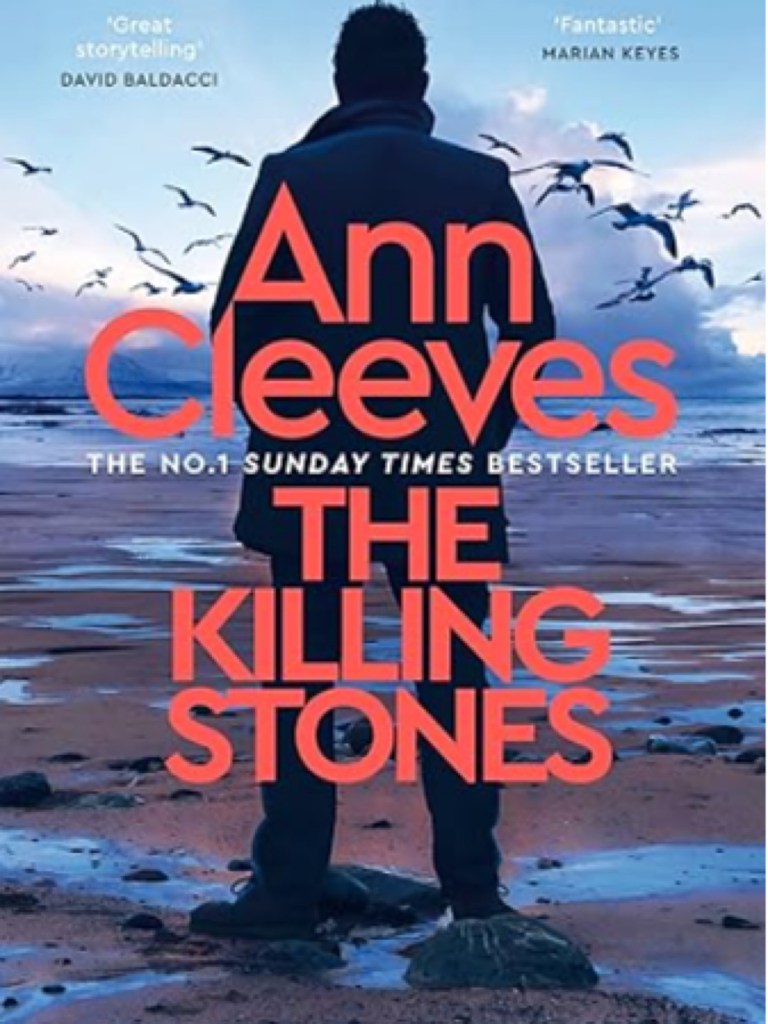
I can barely contain my happiness at being back in the world of Jimmy Perez, this time in the Orkney islands where he grew up. Jimmy is living with partner Willow Reeves, who’s both his boss and heavily pregnant with his child. It’s Christmas and the couple are looking forward to the celebrations. Jimmy’s stepdaughter Cassie is spending the holidays with her father Duncan and his family on Shetland, so it just the two of them and son James. For the police, Christmas isn’t a holiday and as a huge storm passes across the islands, terrible discoveries are made. Everywhere there’s storm damage, but when a body is found at an ancient archaeological site Jimmy is devastated to find out it’s his childhood friend Archie Stout. Archie is a well known ‘larger than life’ character who’s the centre of every gathering and runs the family farm with a wife and two teenage sons. Jimmy finds that Archie has suffered a blow to the head and the murder weapon is a Neolithic stone covered in ancient runes and Viking graffiti, one of a pair taken from the heritage centre. Now Willow and Jimmy must investigate their friends and neighbours to solve the murder in the run up to Christmas, where events will traditionally bring the whole island together. The uncomfortable truth is that the murderer is likely to be someone they know and that means nobody is safe. 

I really loved Willow and the atmosphere she creates at home, particularly around Christmas. Just as dedicated to her work as Jimmy she takes an active role in the investigation, her pregnancy not holding her back at all. She knows it’s a delicate situation, working together and being in a relationship, especially when she’s the boss. Somehow they manage to keep the personal and the work life separate and she seems to know which responsibilities she must let Jimmy bear and those she’s happy to share. As Christmas Eve approaches fast she’s not running around like a headless chicken trying to make sure they have all the right things, they have food and she points out something I say every year – the shops are only closed for one day. It’s the traditions and being together that are the most important thing. She’s a great interviewer though, brilliant at picking up what people are not saying. She reads their body language and their tone, plus knowing each islander’s history helps too. What she picks up on are the unexpected or secret alliances, such as Archie’s investment in the hotel or his in-law’s apparent friendship with a regularly visiting academic. The case is fascinating, covering potential adultery, family tensions, environmental disagreements and historical conflicts, as well as academic jealousy. As everyone gathers on Christmas Day for The Ba and someone goes missing, my nerves were like violin strings! It’s this gradually rising tension alongside the beautifully drawn relationships that make Anne Cleeves’s novels. Jimmy has always had incredible empathy for others, feeling his own loss alongside theirs and understanding behaviour that might at first glance seem inexplicable. This is a hugely welcome return for Jimmy, both in a different landscape and place in life. Hopefully it’s the first of many. 

The haunting final chapter to an award-winning series

And a final reckoning…

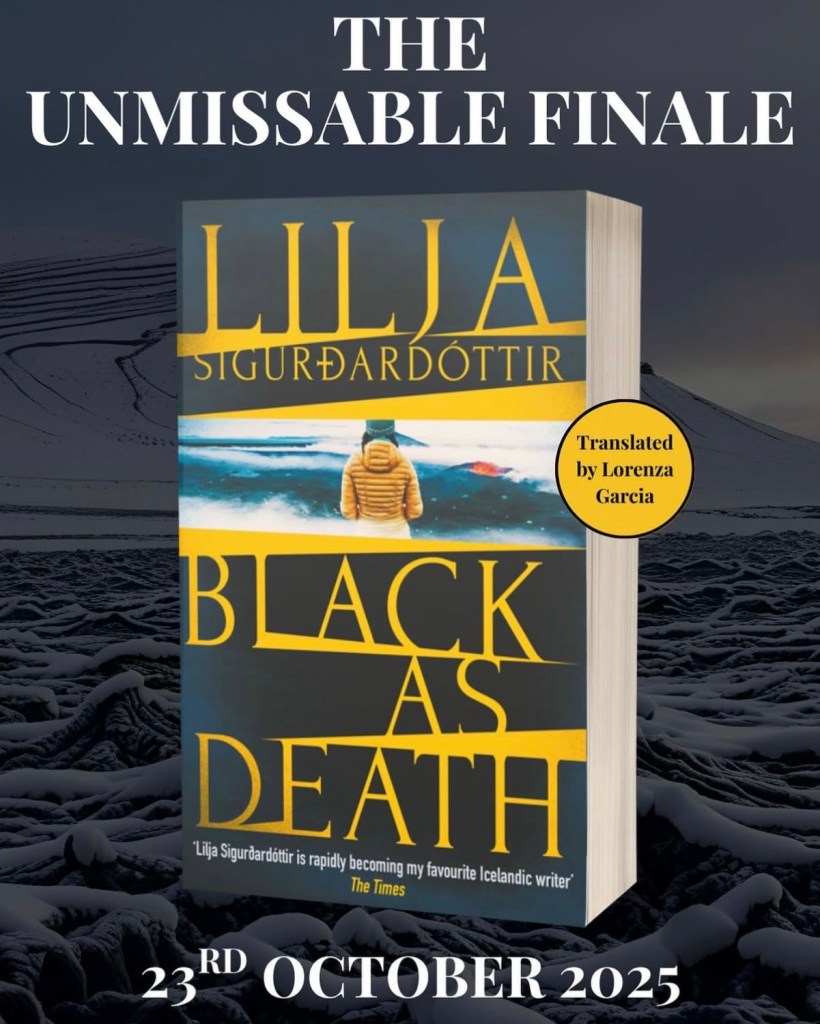
With the fate of her missing sister, Ísafold, finally uncovered, Áróra feels a fragile relief as the search that consumed her life draws to a close. But when Ísafold’s boyfriend – the prime suspect in her disappearance – is found dead at the same site where Ísafold’s body was discovered, Áróra’s grip on reality starts to unravel … and the mystery remains far from solved. To distract herself, she dives headfirst into a money laundering case that her friend Daníel is investigating. But she soon finds that there is more than meets the eye and, once again, all leads point towards Engihjalli, the street where Ísafold lived and died, and a series of shocking secrets that could both explain and endanger everything…

I’ve been hooked on the story of Áróra and the case of her missing sister Ísafold for a few years now and the tension has slowly gripped the reader ever tighter with each novel as each one has brought it’s revelations. With this being the reason Àrora is in Iceland, it’s always been the over-arching narrative, but other cases run alongside. The combination of Áróra’s skills as a financial investigator plus the skills and powers of Daniel and Helena who are detectives, complex cases are profiled and attacked from different directions, making them a formidable team. We meet everyone after the discovery of Ísafold’s body in a suitcase deep within a fissure in a lava field. They were directed to it by an unusual little girl who claimed to be the reincarnation of Ísafold, something that was difficult for Daniel to accept. There’s so much more to understand and we get the narrative through different viewpoints, aside from Áróra, Daniel and his colleague Helena. Felix has fallen into working for a local dealer and we see his fear as the bag he has been sent to collect has disppeared from the car while he was getting some food. There are also flashbacks to the last few months Ìsafold was alive and we finally hear her story in her own voice, which I loved.

We’ve always had suspicions but have never known who killed Ísafold. The novel is gripping and of course we want this mystery resolved, but I didn’t feel any of that racing tension or triumph that I often get from thrillers when the killer’s revealed, especially when I’m right. This was just so desperately sad. I found myself taking a moment for this under confident woman who was so far out of her depth. A woman whose emotions dictated her life decisions. I was harrified and had that strange empty feeling of loss. A loss I knew Áróra would feel. The question is, if she does get all the answers she needs, what will Áróra do next? Unlike her sister Áróra has a clear sense of what she wants and needs to be happy and fulfilled. She makes decisions based on self-knowledge and it remains to be seen whether Daniel is a part of that eventual happiness. 

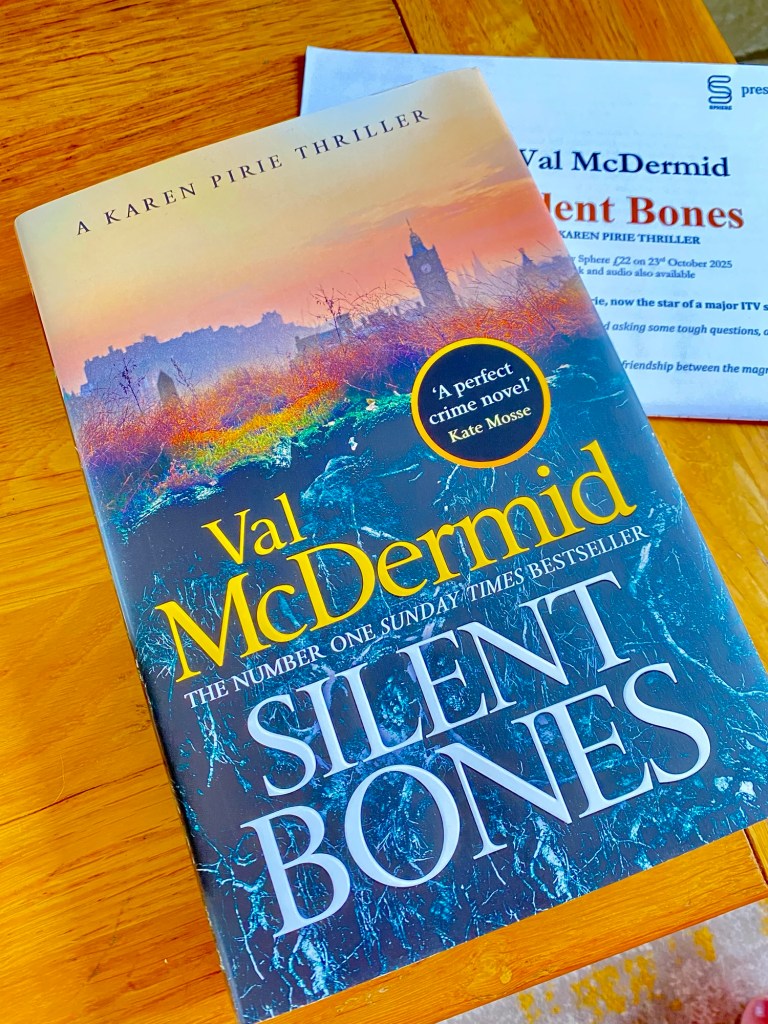
It’s delightful to be back in the hands of a consummate storyteller like Val McDermid. She takes us straight into the story and I always feel like these characters are real, going about their lives and then we drop into their world from time to time. Here the Historic Cases Unit are working two cases: the death of a high-end hotel manager and a body found after a landslip in heavy rain on the M73. Tom Jamieson’s death is flagged up by his brother in New Zealand. Thought to be an accidental death, Tom’s brother has footage that shows someone was behind Tom as he left the hotel after his shift and in the staircase where he met his death. If this man entered the steps after Tom and can be seen exiting then he must at least have seen Tom’s fall, or is there a more sinister explanation? The body in the M73 has to have been placed there deliberately. It turns out to be the body of investigative journalist Sam Nimmo, thought to have killed his pregnant girlfriend Rachel before going on the run about eleven years ago. The discovery opens up her murder case as well as Sam’s. I was hooked by the evidence that leads to a secretive book club of successful men who meet once a month in Edinburgh. They’re named the Justified Sinners, alluding to a James Hogg book that is based on the Calvinist principle that once a person is ‘saved’ they can commit any sin, even murder, and still enter the kingdom of heaven. Is this a joke between literary friends or something more sinister? Have they stumbled upon an unofficial Freemasons’ club where the members share business tips and inside knowledge? The team start to wonder about the potential benefits of becoming one of the twelve members and whether those benefits are worth subterfuge or even criminal acts. 

The book is rooted in the now with cancel culture, the MeToo movement, Covid and the corruption around it and the cost of living crisis all pertinent to these cases. I think the team are feeling overwhelmed, even without the quagmire surrounding the Justified Sinners and Sam’s quest for the truth. I thought that some characters did behave unpredictably, just like they do in life. The outcome isn’t straightforward and there were people to blame that I genuinely didn’t expect. This is an enthralling read from a writer at the very top of her game. Someone who knows exactly how to pitch a story and keep the reader engrossed until the final pages. She knows that the joy of a book is in the journey and that sometimes we don’t get the answers we expect. 

It’s getting quieter as we move into the last months of the year but here’s my expected reading for November:

Posted in Random Things Tours

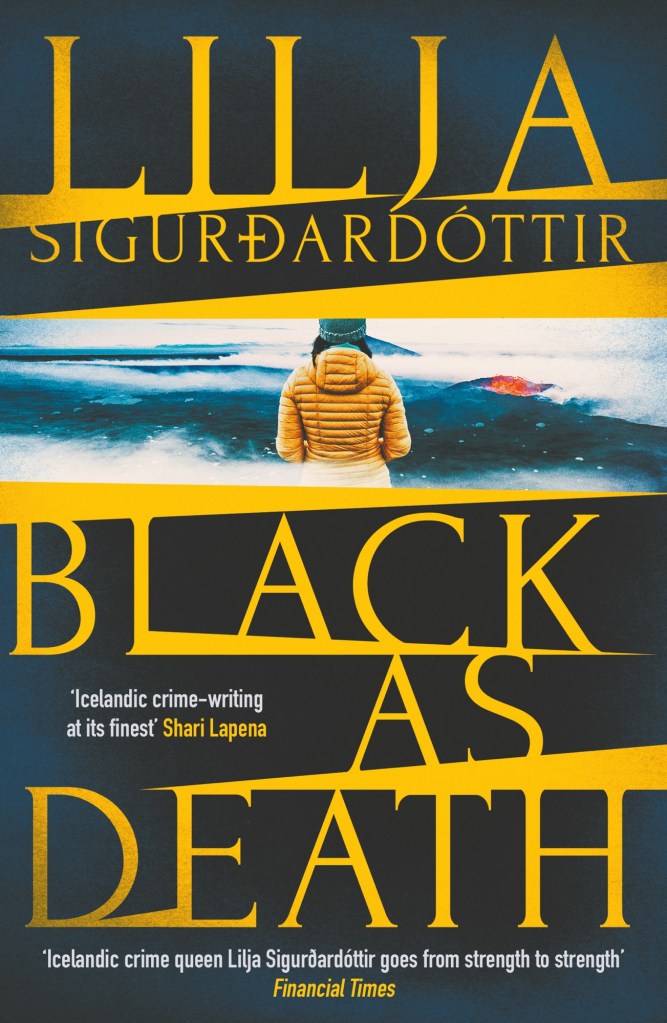
Black as Death by Lilja Sigurdardóttir  

The haunting final chapter to an award-winning series…

And a final reckoning…

With the fate of her missing sister, Ísafold, finally uncovered, Áróra feels a fragile relief as the search that consumed her life draws to a close. But when Ísafold’s boyfriend – the prime suspect in her disappearance – is found dead at the same site where Ísafold’s body was discovered, Áróra’s grip on reality starts to unravel … and the mystery remains far from solved. To distract herself, she dives headfirst into a money-laundering case that her friend Daníel is investigating. But she soon finds that there is more than meets the eye and, once again, all leads point towards Engihjalli, the street where Ísafold lived and died, and a series of shocking secrets that could both explain and endanger everything…

I’ve been hooked on the story of Áróra and the case of her missing sister Ísafold for a few years now and the tension has slowly gripped me ever tighter as each novel has brought its revelations. With her disappearance being the reason Àrora is in Iceland, it’s always been the over-arching narrative, with other cases running alongside. The combination of Áróra’s skills as a financial investigator plus the skills and powers of Daniel and Helena who are detectives, means complex cases are profiled and attacked from different directions, making them a formidable team. We’re back with everyone after the discovery of Ísafold’s body in a suitcase deep within a fissure in a lava field. They were directed to it by an unusual little girl who claimed to be the reincarnation of Ísafold, something that was difficult for Daniel to accept. As Áróra’s boyfriend, his hackles were raised particularly with her parents who he suspected of feeding ideas and information to their daughter with the aim of deceiving them. But what possible motive could they have? As we meet our characters again, Áróra occasionally has the urge to go back and visit the family, but there’s been nothing new from her reincarnated sister for some time as if the thread that bound them has broken or the little girl’s age means the channel that was open between this life and the next has now closed. With Bjorn found in the same fissure as Ísafold many new questions are thrown up. Not least the one aspect of Ísafold’s death has remained a secret up till now. Daniel doesn’t know how to tell Áróra that her sister’s body was found without a heart. 

There’s so much to understand here and we get the narrative through different viewpoints, not just from Áróra, Daniel and his colleague Helena. One narrator named Felix has fallen into working for a local dealer and we see his fear as the bag he was sent to collect disappears from the car while he’s getting some food. This theft draws his ties to this man ever closer, with no real chance of escape. There are also flashbacks to the last few months Ìsafold was alive and we finally hear the story in her own voice, which I loved. There’s a lot of crossover between these two narratives in terms of control and manipulation. The means used to tie Felix to the drugs gang are diabolical, making sure he ‘owes’ the boss and keeping him firmly onside. On one hand the boss demands total loyalty from its operatives but on the other he uses treachery to keep everyone in their place. Bjorn’s treatment of Ísafold feels even worse, because this is someone is supposed to love her. We have always known that Ísafold’s partner was violent, in fact Áróra’s guilt about her sister is based around their last phone call when for the first time Áróra decided not to run to her sister’s aid. The downstairs neighbour Grimur had also testified to the violence his neighbour suffered, but hearing it from the victim adds another layer to the narrative. We can feel how vulnerable Ísafold is and the tenderness Bjorn treats her with from time to time, that glimmer of a meaningful connection he drip feeds to her guarantees her forgiveness again and again. Almost more than the violence I hated that he took away her only bit of independence by making her leave the job she loved, to work with elderly people. At first it’s a suggestion, then he flatters her by saying how good she would be in a caring role, but the truth is he wants to coerce her into stealing their drugs. There’s a realisation that Bjorn is a low level dealer, just doing enough to get by but slowly coming to the attention of the bigger players who feel their territory has been encroached upon. Could this be the beginning of the end for the couple?

The tense and twisty parts narrative also follows Daniel’s investigation into a local coffee chain, where every barista seems to tell customers that their other sites are busier. What he finds is a company with a large turnover but no real evidence of where that money is coming from. None of their shops are in tourist areas and they seem to take a large amount in cash, an unusual thing these days. He also finds a couple of complaints from the director’s home of criminal damage, that they later chose not to pursue. This seems like a case where Áróra’s financial skills could be utilised and she throws herself into it, with dangerous consequences. This is where the couple work so well together, although there’s a recklessness to Áróra that Daniel finds difficult. He would never get in her way, she’s tough and quite capable of looking after herself physically but it’s in his nature to worry about those he cares for. He knows that her weight training and work are her ways of sublimating her frustration that she still doesn’t have all the answers about her sister. With Helena currently working the case he has a choice to make, if answers come does he let Helena break the truth to her, or does he choose to do that himself? Although he could have the chance to comfort and support her as he’s wanted, will she let him? Or will he always be the man who told her the harshest and most painful truth she will ever hear? 

We’ve always had suspicions but have never known who killed Ísafold. The novel is gripping and of course we want this mystery resolved, but I didn’t feel any of that racing tension or triumph that I often get from thrillers when the killer’s revealed. This was just so desperately sad. I found myself taking a moment for this under confident woman who was so far out of her depth. A woman whose emotions dictated her life decisions. I was horrified and had that strange empty feeling of loss. A loss I knew Áróra would feel. The question is, if she does get all the answers she needs, what will Áróra do next? Unlike her sister Áróra has a clear sense of what she wants and needs in order to be happy and fulfilled. She makes decisions based on self-knowledge and it remains to be seen whether Daniel is a part of that eventual happiness. This has been an incredible series from the author, combining a good mystery with real intelligence and depth of emotion played out on a bleak and forbidding landscape.

Out now from Orenda Books

Meet the Author

Icelandic crime writer Lilja Sigurðardóttir was born in the town of Akranes in 1972 and raised in Mexico, Sweden, Spain and Iceland. An award-winning playwright, Lilja has written eleven crime novels, including Snare, Trap and Cage, making up the Reykjavík Noir trilogy, and her standalone thriller Betrayal, all of which have hit bestseller lists worldwide. Snare was longlisted for the CWA International Dagger, Cage won Best Icelandic Crime Novel of the Year and was a Guardian Book of the Year, and Betrayal was shortlisted for the prestigious Glass Key Award and won Icelandic Crime Novel of the Year. The film rights for the Reykjavík Noir trilogy have been bought by Glassriver. Cold as Hell, the first book in the An Áróra Investigation series, was published in the UK in 2021 and was followed by Red as Blood, White as Snow and Dark as Night. TV rights to theseries have been bought by Studio Zentral in Germany. Lilja lives in Reykjavík with her partner and a brood of chickens.

Posted in Random Things Tours

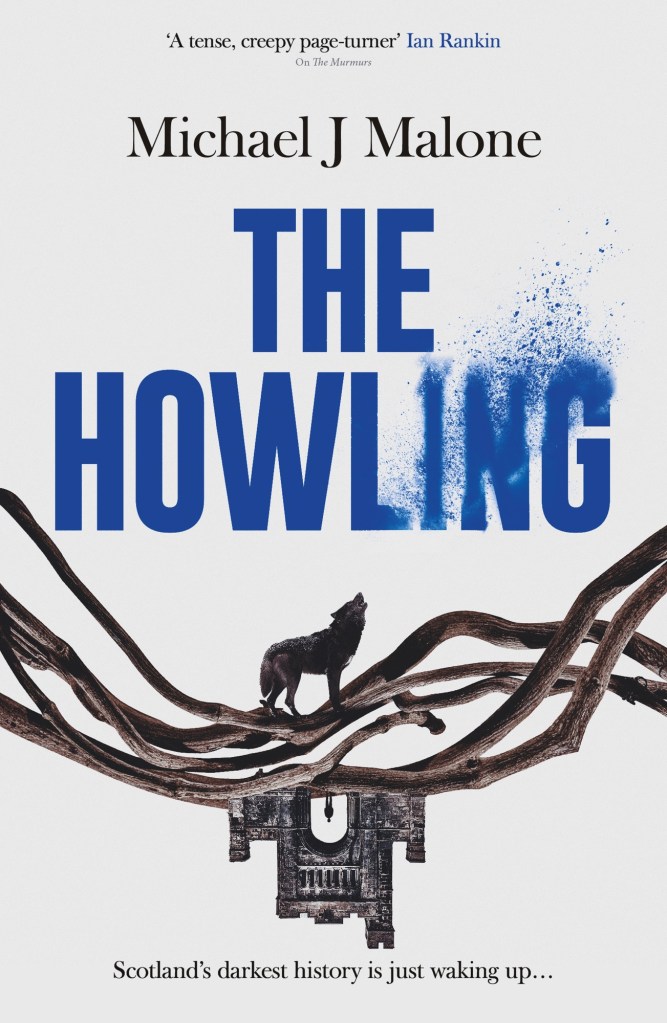
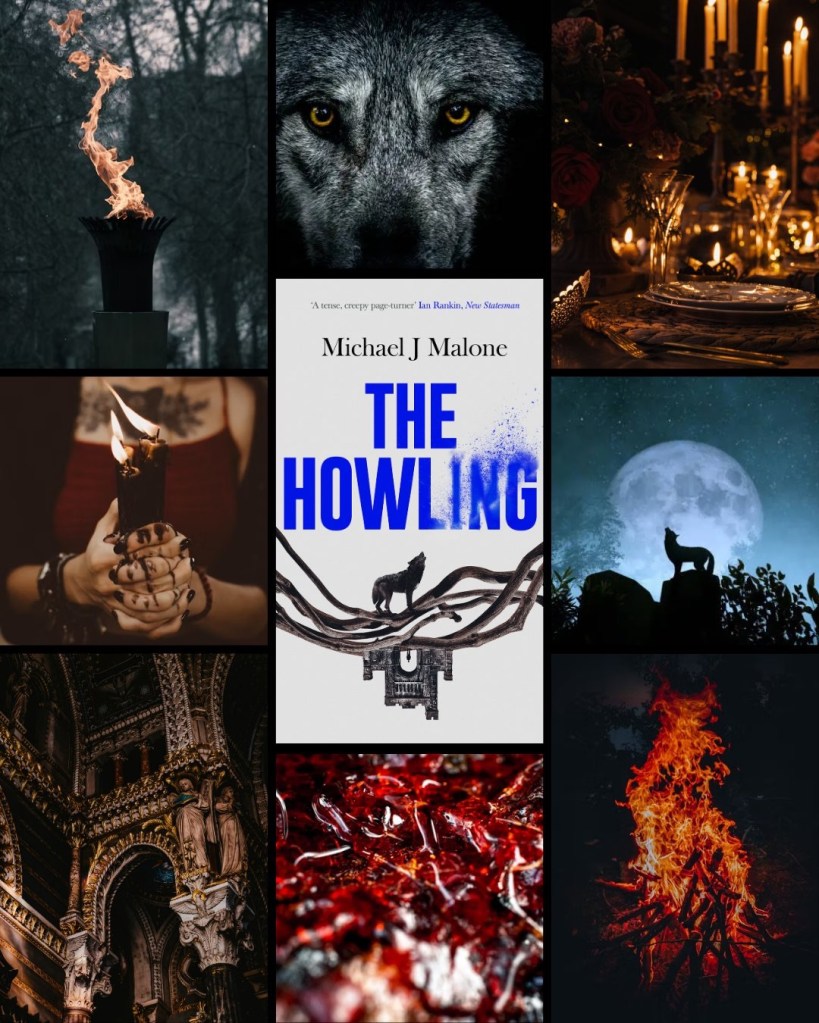
The Howling by Michael Malone 

There was such an atmospheric opening to this last novel in the Annie Jackson series, setting up the link between the incredible scenery and Scottish folklore. Then we see Annie in her safe place, the little cottage she calls home nestled in the middle of nowhere. The only place where she gets some respite from the ‘murmurs’, the terrible portents of death she suffers when she meets someone who is going to die. They are a curse, not just because of the painfully loud noise in her head but because if she tells someone they rarely listen and if she doesn’t she’s left racked with guilt. She is taking in some fresh air outside, when she falls into the stream that runs at the front of the cottage. It’s freezing cold and reminds us that whenever Annie starts to feel safe, something comes along to challenge that sense of peace. This time it’s her brother Lewis and his girlfriend Clare with some brilliant news, they’re having a baby. Annie is so excited for them, but there is a downside. Even though it’s very early days, Annie is worried that this child will inherit the family curse of the murmurs. Maybe there’s a chance she can put the curse to bed? The woman who tried to kill her wants Annie to visit her in prison. Sylvia Lowry-Law was pulled into the dark arts by a professor at her university and believed that sacrificing Annie would raise an ancient demon to do her bidding. Now she needs Annie’s help in tracing the son she had adopted 17 years ago. Could this boy be the key to a future where she’s not waiting for the next murmurs to hit? That would be life-changing for Annie, not to mention Claire and Lewis’s baby. 

This is a complicated story that Michael Malone tells with multiple narrators and different time frames, slowly bringing them all together to solve the mystery. Linking with the opening section, there’s a boy called Drew who feels bonded with a wolf cub more than the family around him. 

“I was a wolf. And I was a boy. It was a long time ago. They wore funny clothes […] I would run away from my mother and be a wolf. And we were killed. They said we were witches”. 

It’s been quite a year for witches and books that hark back to King James VI of Scotland and all of them have been incredible reads. Here Malone alludes to the dangerous atmosphere in that time, where even the remotest villages were aware the King had given licence for witchfinders to root out anyone seen as different or troublesome. They would be tested against the king’s book Daemonologie then strangled and burned at the stake. Drew clearly has a similar ancestry to Annie and perhaps a long line of ancestors fighting against lycanthropy. His family are emigrating and as usual the author takes us deep inside the character. Drew’s childhood narrative is so emotive because I understood his feeling overwhelmed in an airport full of people and having to feel all the layers of their anxiety. All he wants to do is curl up quietly with his fellow wolf cubs and when he’s pushed, his shout sounds more like a wolf howl – a definite cold feeling down the spine moment. Then there’s Annie and Lewis who are a great investigative pairing, Annie has bags of empathy and insight even without the murmurs and Lewis is well versed in the technology side of investigation, but one thing they both have is a stubbornness that means once they’ve started looking they can’t stop until it’s done, even when the costs for Lewis become very high. They both go to Ashmoor Hospital, the psychological facility where Sylvia is being treated, but she wants to see Annie alone. What she asks for is help finding her son and puts them on to her lawyer Bernard Peters, a timid soul who has worked for her several years as his grandfather did before him. They were helping trace her family and a rather familiar and colourful tale emerges: 

“Witches and curses and twin sisters who fought over a man, leading to one of them being burned at the stake”. 

There is a sense here of history repeating itself through generations. It blends with Scottish folklore and it being a ‘thin place’, the term for places where the veil between this and the spirit world is almost transparent – those that believe and can tune into it of course. Bernard is astounded by the prominent people who are caught up in this strange ancient order that Sylvia belongs to. She tells him she owned his grandfather and that there are secret records that must be protected. Bernard’s grandfather dying suddenly, leaves some of this dark and dangerous business undone. Even as they try to help him they can’t wait to get into the secret room he’s been searching in. There are secrets in here that could bring down very powerful people, but why would the order keep them? Again it brings to mind current news, the Epstein Files and the buzz around having them released, bringing into the spotlight people we could never have imagined to be involved. I felt for Bernard because everyone else has some understanding of the background to this, but he’s blindsided. Also everyone else is here by choice, whereas he is thrust into the middle of it by birth and the death of someone he loved and looked up to. Now he’s implicated in a widespread network of influence and blackmail. The author balances all these narrative viewpoints so well and each section brings a little more information, with sudden little discoveries that fill in gaps and definitely drip feed tension to the story. 

This series has always been an unusual mix of thriller, family saga, horror, magic, folklore and crime. It defies being placed in a genre and I often find that’s where the best and most surprising reads are. It was lovely to have Sister Theresa make a cameo, with her sketchy grasp of data protection she’s a real asset in finding out about the past and nuns are often very quirky and unusual individuals I’ve always found. I left this novel less worried about Annie, I had always wondered if the isolation and loneliness of life with her gift would overwhelm her. Here I felt like Annie’s murmurs took a bit of a back seat, but she gets stronger with each book; a more resilient heroine who still has an otherworldly and mysterious air about her. I always imagine her rather like Kate Bush, which is always a compliment. The more she finds out about her family, the more settled she seems to be and is still working in the local café despite previous incidents with customers whose deaths she could see. However, as we raced towards the ending with tension in bucketloads I couldn’t be sure she’d be safe. The order is a many tentacled monster and I wondered if they would really be able to sever and destroy all its parts. As Sylvia says, they have ‘fingers in a lot of very interesting pies’. There is no depth they won’t stoop to and they operate very quickly indeed as Lewis finds out. I can’t ever imagine that Lewis and Annie will give up investigating and trying to help others, it doesn’t seem in their nature to kick back and enjoy the quiet life. Not for long anyway. 

Meet the Author

Michael Malone is a prize-winning poet and author who was born and brought up in the heart of Burns’ country. He has published over 200 poems in literary magazines throughout the UK, including New Writing Scotland, Poetry Scotland and Markings. Blood Tears, his bestselling debut novel won the Pitlochry Prize from the Scottish Association of Writers. His dark psychological thriller, A Suitable Lie, was a number-one bestseller, and is currently in production for the screen, and five powerful standalone thrillers followed suit. The Murmurs and The Torments, first in the Annie Jackson Mysteries series, were published to critical acclaim in 2023. A former Regional Sales Manager (Faber) he has also worked as an IFA and a bookseller. Michael lives in Ayr, where he also works as a hypnotherapist.

Posted in Random Things Tours

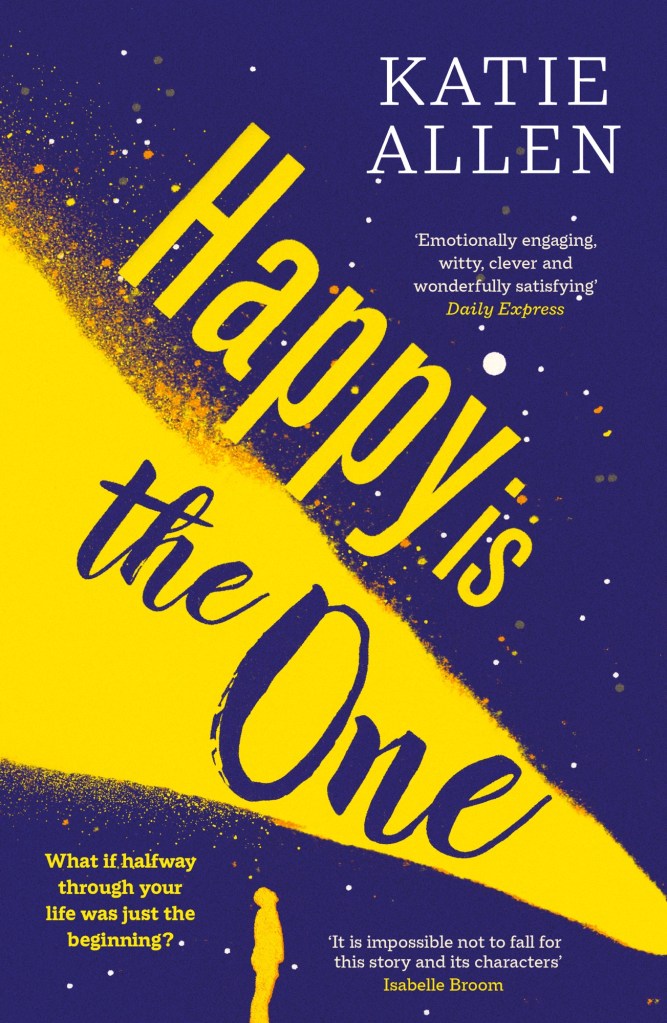
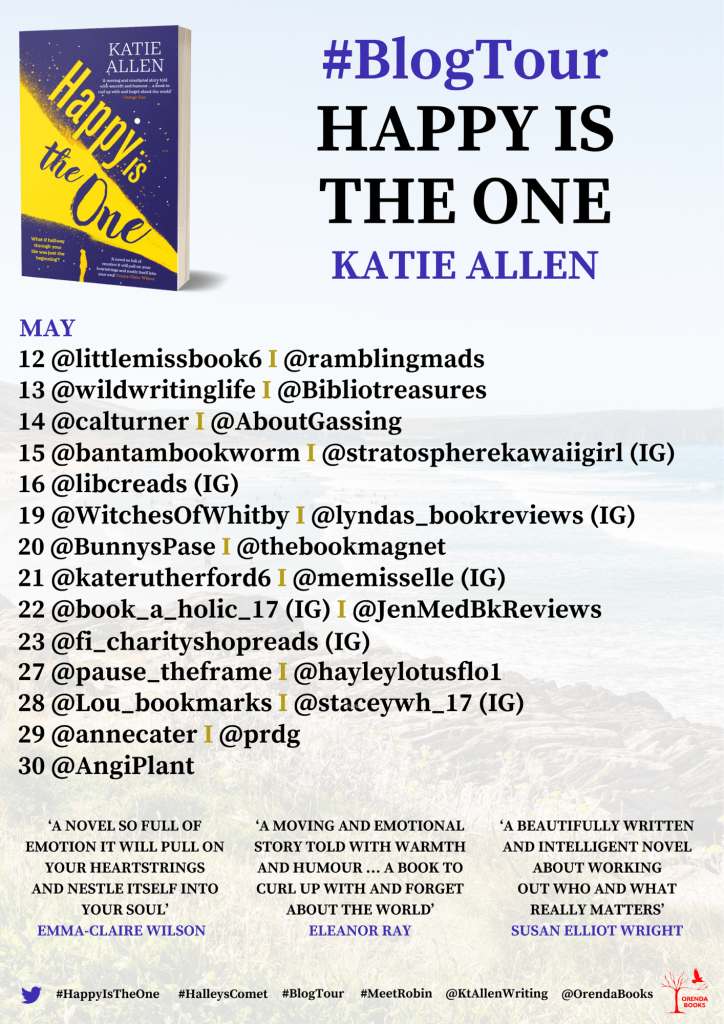
Happy Is The One by Katie Allen

Robin is exactly half way through his life. Like Mark Twain before him, Robin came into the world with Halley’s Comet in 1986 and fully expects to go out again when it returns in 2061. Recently he’s had a huge life change. He’s moved back to his home town of Eastgate to care for his sick father, who due to a disability has had one accident too many. Robin had a well-regimented life in London with girlfriend Gemma. He also had a boring well-paid job as an accountant. Now everything has been thrown up in the air and he’s living in a tiny bedroom surrounded by boxes he hasn’t unpacked. He’s trying to forge a relationship with a father who can’t communicate and who he never connected with as a child. There are childhood ghosts to face and a new connection with Astrid, fellow outsider and professor at a nearby university. She’s brutally straightforward and Robin has never met anyone like her. She’s also hiding something, but he’s hiding even more from her. Can Robin make friends, help his father and accept this is the next chapter of his life?

This was a great book that’s simply joyful to read, even while addressing some really difficult themes. Robin is a great character to spend time with. I found myself feeling quite protective of him, despite his rather pernickety ways. I could honestly feel his anxiety and he copes by planning for eventualities that might never happen. He ekes out money, setting a daily amount for a minimal food plan and then bulk shopping at Costco. He’s worked out how long his savings will last, trying to keep Dad’s care to a minimum so he can afford it for longer. He seems at odds with everyone; not communicating with his father, bickering with Jackie who is his father’s man carer, and not even trying to find old friends. I’ve been a carer and I felt how overwhelmed he is by everything when he climbs up on the roof for some peace. He has to connect in order to get this new chapter of life started. However, to do that he has to accept that this is his life for now. The daytime telly shows, the sorting of meds and lifting his dad off the loo is life. He doesn’t seem to realise that while he fights it, he remains standing still. If he accepts Astrid’s friendship, unpacks the boxes and breathes, life will get better. 

My two favourite characters are the forthright Astrid and Jackie. Astrid is a strong character and has a lot to say, but enough quirks to humour Robin and push him just a little into enjoying life. She embraces and accepts where he is in life, happily trawling Costco for savings. His relationship with her little boy is lovely too. No one can go through life as an island though and Eastgate is a small place. It’s almost inevitable that these new relationships are uncomfortably entangled with others he’s been trying to avoid. Jackie is wise and more of an asset than Robin realises as he spends weeks trying everything to avoid her – even climbing onto the roof. She’s brilliantly written because I’ve met carers like this and they’re worth their weight in gold. Nothing phases her and she is soon onto Robin’s ways. She reminded me of an incredible carer called Barbara who worked in a pair looking after my late husband. She was wider than she was tall and smoked like a chimney between calls. She was also matter of fact, never allowing him to be embarrassed about any aspect of his care. Barbara had seen it all and her stories had him in fits of laughter. I knew he was in safe hands with her, an incredible weight off my mind when I had to go in to University. Barbara passed out one day at work and died only a few days later, from a brain tumour she didn’t know she had. She was caring for people at the end of their lives, not knowing she was close to her own.

The wonderful relationship between Robin and old friend Danny felt so genuine and the way they talked to each other felt exactly like people who’ve known each other from childhood. There’s a shorthand and we start to realise some of Robin’s quirks have been there a while. You get the sense that if they were going on a bike ride Robin would spend so long getting prepped with wet weather gear and a puncture repair kit that they’d run out of time. Danny on the other hand would set off as is and get soaking wet, then tell everyone the story for years. Danny is full of life and has a great business idea to run past Robin, but can he be tempted to take the risk? Robin is eking out an existence that goes way off into the distant future, but our futures change all the time and one day he’ll start living yet another chapter. Living is right now! It’s not when we have money, or have lost weight, or when we have better health. It’s now, when we’re skint, fat and feeling ill. Whatever life looks like right now, we absolutely must live. Many people don’t get the time to waste. Of course, when we find out why Robin is so adamant about his comet theory – while being forced to evaluate his choices by a strident Astrid – it all becomes clear. A heart-breaking tale emerges, just as Robin is faced with yet another loss. He’s forced to admit why he jumped off a cliff into the water when he was a child. He thinks he can’t die, because once he survived something and can’t make sense of it. In fact immortality is the only explanation that does make sense to him. He’s doing what humans do, we subscribe meaning to events that have none. It’s just messy, terrifying, random and heart-breaking life. Katie infuses this difficult truth with beauty, humour and hope because life is beautiful and joyous too, if you let it be. 

Out 22nd May from Orenda Books

Meet the Author

Katie Allen was a journalist and columnist at Guardian and Observer, starting her career as a Reuters correspondent in Berlin and London. Her warmly funny, immensely moving literary debut novel, Everything Happens for a Reason, was based on her own devastating experience of stillbirth and was a number-one digital bestseller, with wide critical acclaim. Katie grew up in Warwickshire and now lives in South London with her family.

Posted in Orenda, Random Things Tours

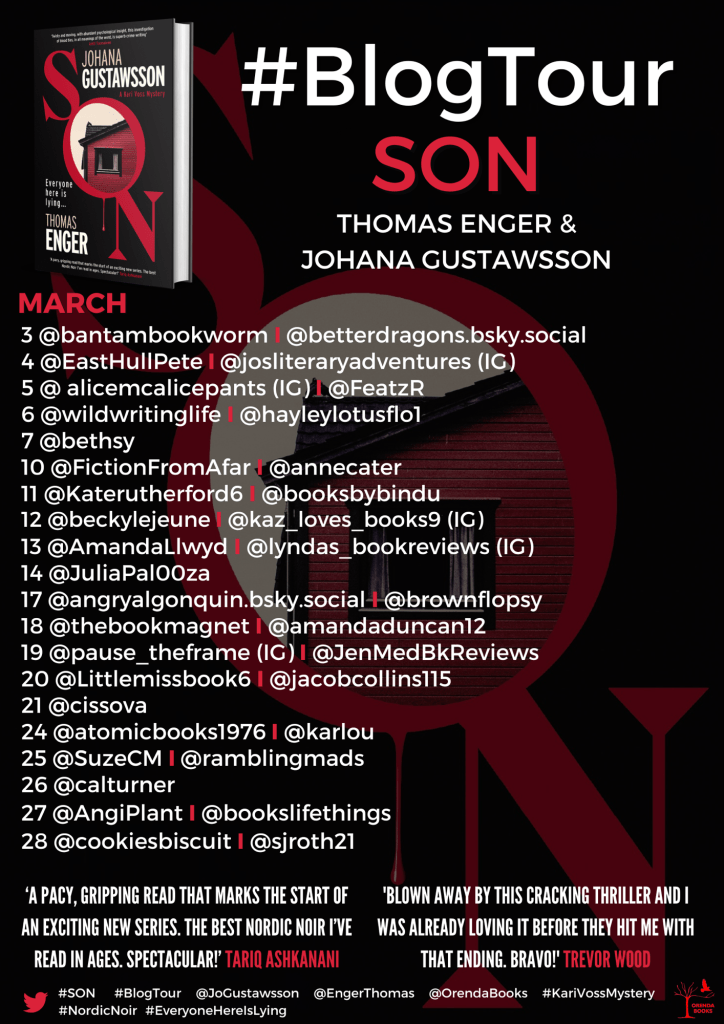
Son by Thomas Enger and Johana Gustawsson

The blurb on the back of this novel promises an electrifying blockbuster that will be the start of a ‘nerve shattering’ new series. So there’s a lot to live up to, but don’t worry Son definitely delivers. To use a rather impolite phrase, this is a therapist’s wet dream of a novel – hidden characters, unexplained black outs, grief, trauma and an investigator who is dubbed ‘The Human Lie Detector’. I was definitely in my element here. Kari Voss is the centre of this tangled web, a psychologist who specialises in memory and body language making her a perfect consultant to Oslo’s police force. When two girls are brutally killed in a summer house in the village of Son, it’s a crime that’s closer to home than she would want. The girls, Eva and Hedda, were best friends with Kari’s son Vetle when they were younger. In fact it was while on a holiday seven years ago that Vetle disappeared in nearby woods and was never found. The girls are now teenagers and were planning a Halloween party for their friends, but were found tied to dining chairs with their throats cut. They were found by a third friend, Samuel Gregson, when he turned up to start the festivities. However, there was someone else there, someone who left slippery marks in the blood that has poured onto the floor. He’s the first person that police chief Ramona Norum arrests and starts to question. When Kari is asked to consult she knows this will be difficult, not only is she friends with the girl’s families, but their lives are inextricably linked to her missing son. How will she negotiate all the emotions this case will unleash and stay focused enough to find the girl’s killer? 

Often with thrillers, I find they’re full of action, twists and turns that are really addictive, but have no emotional depth. The characters are often one dimensional and it’s hard to care about what happens to them. There’s no danger of that here. This is the perfect combination of twisty and unexpected, but underpinned with huge emotional weight. It’s deeply unsettling, with a questionable suspect and an equally unreliable narrator. Not only is Kari still dealing with the trauma of losing her son, she’s also grieving for the more recent loss of her husband. She can’t sleep and seems to running on empty from the start. Yet, the way she observes people is so detailed and it seems almost effortless. This goes way beyond the basics like crossed arms meaning someone feels defensive. In a lecture she tells students that in the space of an ordinary conversation we give away over eighty-five non – verbal signs about the mood we’re in. She’s not afraid of giving an unpopular opinion either. She absolutely backs the science and her ability to analyse people, whether they’re claiming to be innocent or guilty. I loved the tension created by the authors as they played with her expertise and her emotions. Is she detached enough to make a sound judgement here? As if that isn’t enough, there seem to be instances where Kari loses time. She wakes up in the car on her own driveway with no recollection of the journey home. She seems to have been on autopilot, so caught up in her own thoughts she hasn’t noticed the journey. She had similar blackouts after her husband died, but what has triggered them? When the young man arrested at the scene of the crime also seems to have experienced a black out I wondered whether he knew her history. Could he be deflecting attention from himself because he knows Kari’s secret? Or is Kari more liable to believe a story like that because she’s experienced it herself? It’s this complexity that makes the plot and Kari herself more fascinating. 

No one is what they appear here. As Kari starts to ask questions about Eva and Hedda, it turns out that they aren’t always the polite children or young teenagers they appeared to be to the adults in their lives. Everyone has different layers, choosing what to reveal and to whom they reveal it. The authors are very clever about the amount of introspection they use, creating a hidden layer to the crimes and a breathing space between the character driven chapters and the ones filled with nail-bitingly intense action. Then they throw in another twist, to keep you engaged, leaving me unsure of my own deduction skills. There’s even subterfuge in the title, Son is a place that’s slightly north of Oslo, steeped in Nordic history and full of that unsettling atmosphere that I find Nordic Noir is so good at. Yet it’s also a person, so missed by those who love him and inextricably linked to this landscape, that has potentially become his final resting place. I was compelled to read this to the end, taking it everywhere with me on holiday so I could grab a chapter in a coffee shop or even in the car. This is an engrossing and addictive start to a promised new series and I’m already craving the next instalment.  

Out on 13th March from Orenda Books

Meet the Authors

Known as the Queen of French Noir, Johana Gustawsson is one of France’s most highly regarded, award-winning crime writers, recipient of the prestigious Cultura Ligue de l`Imaginaire Award for her gothic mystery Yule Island. Number-one bestselling books include Block 46, Keeper, Blood Song and her historical thriller, The Bleeding. Johana lives in Sweden with her family. A former journalist, Thomas Enger is the number-one bestselling author of the Henning Juul series and, with co-author Jørn Lier Horst, the international bestselling Blix & Ramm series, and one of the biggest proponents of the Nordic Noir genre. He lives in Oslo. Rights to Johana and Thomas’ books have been sold to a combined fifty countries and, for the first time, two crime writers, from two different countries, writing in two different languages, have joined forces to create an original series together.

Posted in Back of the Shelf, Throwback Thursday

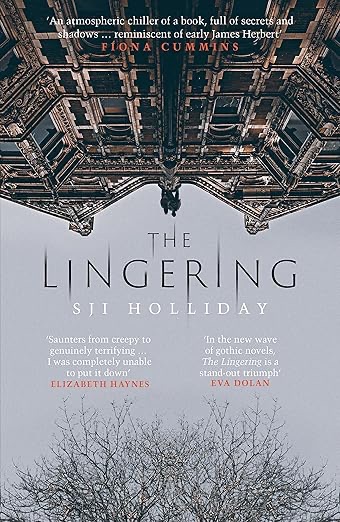
The Lingering by S.J. Holliday

In the free reading time I have towards the end of the year I’ve chosen to read the back catalogue of a few authors and S.J.Holliday happened to be someone I was really interested in. I love most of Orenda Books’s authors and I first came into contact with them through S.J. Holiday’s book Violet, which was one of my first ever blog tours. I loved the psychological aspects of the book and the way the author saw women as they really are – the heroes of their own stories, making autonomous decisions with the potential to be just as violent and chaotic as a male character. I’ve had The Lingering on the shelf for a while, but something made me take it down last week to read while soaking in the bath. Ali and her husband have made a huge decision. They’ve sold up almost everything they own and joined a commune of people living in what was an old psychiatric unit. At first they’re unsure of the group and their surroundings, but as her husband starts to settle in, his wife Ali seems less able to. Is it the strange house, with it’s abandoned wing full of old psychiatric equipment? Is it the sceptical locals? Or do Ali and husband Jack have dark secrets of their own?

The setting of this story is so gothic and atmospheric, with a dark history that slowly reveals itself both through local’s stories and the things left behind – physical and paranormal. Angela, the other narrator in our story, is the keeper of these stories and an amateur investigator of the paranormal. She has the house wired with sound equipment and cameras, particularly those areas where her sixth sense starts tingling. One of those areas is the bathroom adjoining Ali and Jack’s new bedroom, but also in the attic room above. I was slightly alarmed by the way she was watching the new couple, in a detached way almost like they were animals in an experiment. She seems like a new age, tree hugging, ethereal type of woman who has really bought into the ethos of the community. Ali notices her reverence in the rituals they share as a group and in the meditation sessions. Her name outlines her role within the group, she is the angelic and slightly naïve little sister to the others. Yet there is another side to her, the side that enjoys the stories told by locals like Mary in the shop about the house’s witches and the later rumours surrounding the asylum. She seems to enjoy the intrigue and proves to be quite the detective when it comes to Ali and Jack, showing a sneakier and unpleasant part to her character. The house itself is a labyrinth, with secret rooms and endless corridors. That strange juxtaposition of the natural and the man made felt wrong. All the hospital equipment and furniture just sitting there as if still being used, whilst the outside elements and nature are starting to encroach inside left me feeling uneasy. I felt as if any moment Ali or Angela might look in the mirror and see a busy ward behind them, like a glimpse through time.

In my closest city of Lincoln there is an old Victorian asylum on the outskirts, now slowly being developed into residential spaces. For years it remained deserted and derelict, with a strange aura around it. I wouldn’t have been surprised to see a 19th Century nurse at one of the broken windows, because it was untouched all that energy still seemed present. Local explorers did search around inside and take pictures of the iron bedsteads and old medical equipment just lying around as if someone had only just left the room. The mould, piles of rotted leaves, cobwebs and dirt added to the sense of abandonment. You certainly wouldn’t have found me in the there at night! This was exactly what was running through my mind as I was reading and it set me on edge. This house felt as if some parts were inhabited by the living and others by the dead. I won’t spoil the scary moments for other readers, but Ali’s first experience as she climbs into the bath after their long journey would have sent me running back up the drive. It has double impact because not only is it inexplicable, it’s an echo back to events that really happened in the house’s past, events that are haunting even without their ghostly context.

I didn’t trust anyone after a few chapters, despite at first happily reading Ali’s experience and trusting her account. As a reader I’m used to fictional communities like this being sinister under their surface mantras of love and light. Yet Angela makes discoveries that put the couple’s story in doubt and I began to wonder about Jack. What had forced these people to leave behind two respected professions and could it have something to do with a box of hidden news cuttings? One of the most tense sections of the book had nothing to do with the paranormal and involved some of the villagers. Late night Ali notices a 4X4 vehicle coming up the drive with a large lantern on the roof and several men inside, most of them holding a gun. As she goes outside to confront them they explain that they’re merely ‘lamping’ nearby and have an agreement to flash their late at the community leader’s bedroom window so he knows they’re nearby. Much as it seems ridiculous to flash a light in someone’s window so you don’t disturb them, their excuse is a plausible one and it’s something I often see in the fields surrounding us. Yet there is an undercurrent in their conversation with Ali and when explaining what happened she does reference Straw Dogs, a violent 1970’s film where an academic and his wife move to the country and are terrorised by the villagers. However, her reaction is excessive and made me wonder what had happened in the past to trigger her that way. The author flips us between Angela and Ali, building the tension towards some sort of confrontation. Will Ali find out that Angela has been watching them and explode or will Angela’s snooping reveal something dreadful about the new recruits? I loved the hauntings, especially the emotive little child’s wet footprints that dot around the place. Do these apparitions have a malign purpose or are they simply trapped in a place where traumatic events play over and over like a continuous cinema reel? This is a brilliantly tense and spooky read that seems perfect for autumnal evenings, but might put you off baths for a little while.

Out now from Orenda Books

Meet the Author

Susi (S.J.I.) Holliday is the bestselling Scottish author of 11 novels, a novella and many short stories. By day she works in pharmaceuticals. She lives in London (except when she’s in Edinburgh) and she loves to travel the world.

Posted in Netgalley

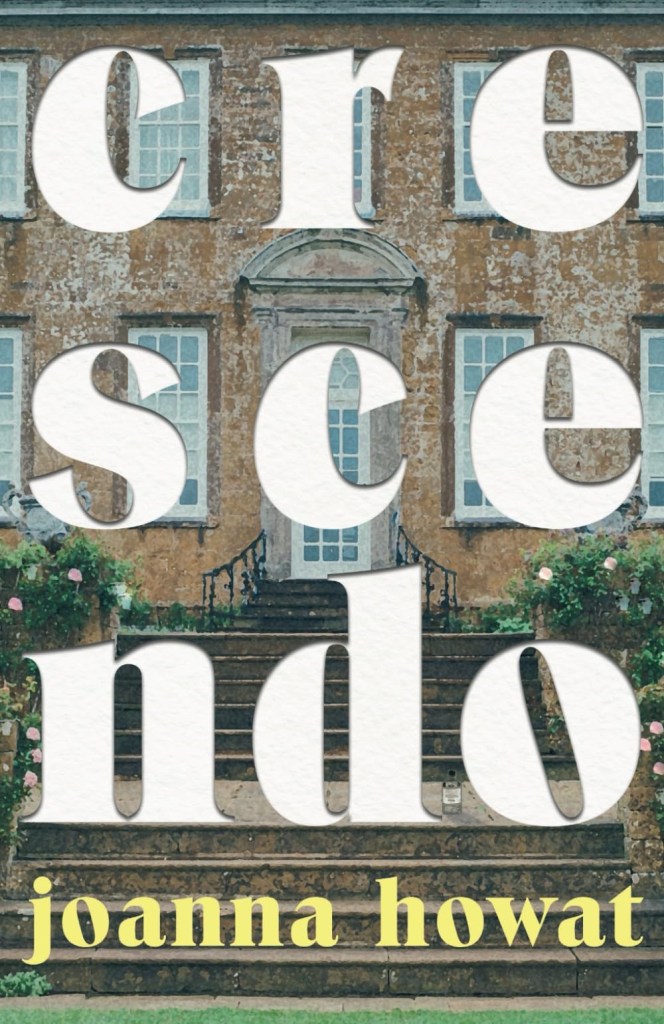
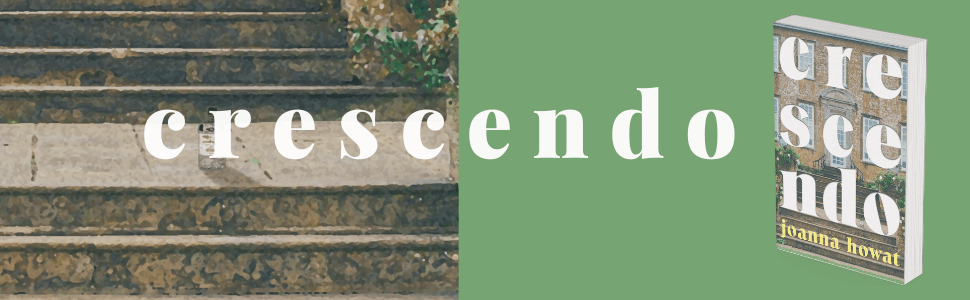
Crescendo by Joanna Howat

I love reading debuts because you’re never sure what you’re going to find and this tale of two adult siblings who lose their parents suddenly has all the family dynamics and trauma that I love to untangle in a novel. Jamie and Caz are used to their parents being top of the social scale in their area, a small village close to a market town in Yorkshire. Their family home is a hall in the centre of the village, where Jamie still lives alongside his parents having not found his career path yet. Caz has left home, but has a chequered history of teen pregnancy and alcoholism. She married husband Steve after he came to work on the hall’s electrics when her first little girl was only a baby and she had been sober for several months. Now they live in a cottage a short drive away from her childhood home and recently she’s had another baby. The catalyst to their problems is the loss of their parents. One Sunday both siblings are there for lunch when Jamie and his father clash over what he sees as his son’s fecklessness when it comes to making a life for himself. Jamie has secured a job with the local estate agents but desperately needs to sell a house this month. The best thing in his life is his recent relationship with local vet Zoe. What Jamie loves is his piano, but he doesn’t think he has the skill of a concert pianist. This Sunday he decides not to take his father’s criticism and storms out in a huff. That night the hall goes up in flames, so fast that no one could escape and the hall is burned to the ground. 

For both siblings the village now looks like a set of teeth with one missing. The huge gap left in the centre is soon boarded so no one can see the wreckage, but it doesn’t allay the shock. Caz is immediately emotional, dazed even and takes refuge with Ruth, their housekeeper who lived next to the hall. Jamie seems frozen. The only thing he wants to save is his piano but it is damaged, maybe beyond repair. Insurance will take care of it and will hopefully rebuild the hall, but do they want that? They have no idea about their parent’s wishes, for the meantime Jamie has to buy some clothes and moves in with Zoe. It’s very early in their relationship but Jamie thinks they’ll get along fine. As he moves through life like an automaton, Caz starts to slide downhill. Gin was her usual tipple, but avoiding that she thinks an occasional glass of wine won’t hurt. One glass soon becomes a bottle and as she starts to hide her stash from Steve we can see that this could be a serious relapse. So can Jamie, but he’s having his own problems. The turmoil in his life is too heavy for the early stages of a relationship. Zoe had no relationship with his parents and although she can listen, she still has her own routine of riding and looking after her horse, whereas at the moment Jamie is sleepwalking through work and every time they are intimate, visions of the hall burning down come into his mind and ruin the moment. He’s not sure if he’s dealing with his grief at all. When Zoe decides they need some space from each other, he moves out to Caz and Steve’s house. Now he’s noticing that his sister isn’t coping either and his nieces are suffering. How can the siblings best help each other to cope? 

I loved how the author shows grief hitting people in different ways. In some ways Jamie has never had to grow up. Living under his parent’s roof has enabled to try jobs and leave them with minimum consequences, while away hours in the village pub and not think beyond tomorrow. Caz has also depended on her parents, dropping out of university pregnant and with an alcohol problem. She moved home and had her baby there, until Steve actually walked through the door for a contracting job and they fell in love. For both of them, there’s now no safety net and the place filled with all those memories has gone too. Jamie also fears the loss of his piano, which has been lifted from the wreckage and been sent to a specialist repairer by the insurers. Music was the way that Jamie processed his emotions and without it he seems strangely neutral all the time, occasionally tapping out melodies using his fingers on whatever surface he find. Caz is more erratic, grabbing convenience foods instead of her usual home cooked meals and forgetting the girls activities or even to wash their uniforms. When the drinking starts Steve stays away from it, leaving Jamie with a full time job and two small children to feed and get out of the door in the open. He knows teachers have noticed the girls are a bit unkempt, but he doesn’t want to drop his sister in it. He just keeps smiling and nodding that everything’s okay. There’s only one person that won’t have the wool pulled over their eyes and that’s their parent’s housekeeper Ruth. Caz fears not letting the emotions out. Jamie thinks if he gives in and feels his emotions he might fall apart completely.

Through Jamie the author shows how grief can change our outlook on life completely. He becomes sentimental about an old couple looking for a house. He has a beautiful Georgian house on the books and he’s shown it to a rude and superior client with an enormous dog who didn’t seem interested. Then he has an adorable old couple who want to downsize and be closer to amenities, but he needs a studio to work in and it is in town. When he shows it to them he knows it should be theirs and when they offer he is ecstatic and shakes hands. Then the first woman comes back and offers 10k over the asking price, but Jamie says it’s already sold and turns her offer down, much to the fury of his manager. Jamie feels different, where once he might have taken the high offer now he can’t. Does he see his own parents in the old couple? Or is it that loss has given him a conscience? I really identified with this because after being seriously ill I returned to my work as an advertising rep only to struggle with selling newspaper space. It felt so trivial in the scheme of things I simply didn’t have the killer instinct. This was when I was sacked but went on to train as a counsellor and worked with the Mental Health Team in my area. It felt like I’d helped someone every day I went to work and it felt more in tune with my changing values. 

I really felt for Jamie and wanted him to get his piano back and be able to express himself more. I was also so happy at his care for his nieces and his loyalty to his sister. Underneath the immaturity Zoe was concerned about, he’s a kind, perceptive and caring man. I was hoping they would find a way back to each other. Similarly I wanted Steve to reconnect with his wife and family and realise that while keeping a roof over their head was important, so was spending time together as a family. The author’s setting is perfect and having lived in villages all my life, I knew they come with beautiful countryside around them, but also residents who want to know all of your business. As my parents get older I do wonder what it might be like when they’re gone and I’m now the oldest member of the family. They’re my anchor, but so is my brother and I know our relationship will probably be stronger. I think the author makes it clear how seismic a shock it is when someone close to us dies. I loved the play on musical terms because the storyline has a tempo and Jamie is our conductor, desperately trying to keep the orchestra together towards the crescendo and beyond. This is a thoughtful and real story that had a lot of heart in it. 

Out now from Flying Dog Press

Meet the Author


Joanna Howat trained as a journalist and worked as a news producer for BBC Radio 5 Live. She now lives in her native North Yorkshire with her family and two spaniels, and is a keen classical pianist. Crescendo is her first published novel.

Posted in Random Things Tours

The Torments by Michael J. Malone

I was bowled over by the first novel in the Annie Jackson series – The Murmurs. I already knew that Michael was an incredible writer, able to bring great compassion and intelligence to his characters while delivering a page turning thriller. The added elements of the paranormal and Scottish folklore really grabbed my attention and fulfilled my craving for all things weird and gothic. Here we find Annie living in her little cottage with a view of the loch, the only place that gives her peace from ‘the murmurs’ that can strike at any time beyond the walls of her home. The murmurs are sibilant whispers letting her know that someone close by is near to death. A vision of a skull appears over the person’s face, followed by a horrible premonition of how they meet their fate. One day, while working a shift in the local coffee shop, Annie can hear the whispers and feel the rising nausea. This vision is for a young local man called Lachlan. Annie sees a terrible car accident and Lachlan’s vehicle wrapped around a tree. Torn between warning him and drawing attention to herself, or walking out and ignoring the vision, Annie chooses a middle ground. She tells him his tyres are bald and he really should change them. Even this course of action backfires as only hours later she is berated by a man who comes to tell her Lachlan is dead and she could have prevented it, but didn’t. The rumours about her powers go into overdrive as people realise Annie is the woman who found the bodies of several murdered women. 

Annie can’t win. She’s either dismissed as sinister or even mad or she stays quiet and is blamed for whatever ensues. Desperately wanting to hide from the world, she hopes her little cottage will continue to protect her from the murmurs, but hadn’t banked on how angry locals would be. They break her windows and target her house with red paint. Thankfully, her twin brother Lewis arrives to stay and help just as their adoptive aunt visits, hoping that Annie’s gift might help someone in need. She wants them to look into a missing person case; a young man called Damian has disappeared and she suspects something sinister has happened to him. Damian has had a very complicated past, including ending up in prison on one occasion, but in recent months he had calmed down due to the birth of his son Bodhi. While Annie is keen to explain that she isn’t a medium and can’t find people on command, Lewis thinks they might be able to help. Why not research and interview people like a private investigator? Then during their investigation if anything comes up for Annie they can act on her ideas. What awaits them is a surprising and complex puzzle, that seems to include the dark arts and a woman with the ability to ‘glamour’ others. This time Annie could be in serious danger. 

Michael moves us through different timelines and perspectives, from Annie and Lewis’s investigations to new characters called Ben and Sylvia who are pupils at a private school several years earlier. I found their tutor very disturbing, almost grooming both of them into his fascination with the occult. He’s chosen exactly the right students to draw into his web, students who are distanced or estranged from family and potentially vulnerable. His name is Phineas Dance – an awesome name for the villain of the piece! He gives them a reading list including Alastair Crowley and other proponents of the dark arts and they take to his teaching very well, particularly Sylvia who we watch become more obsessive as she matures. Their training involves ritualistic sacrifice, as well as the attainment of wealth and success – using their new powers to ensnare other followers of celebrity and influence. This leaves them both free rein to operate where they live, having local dignitaries in their pocket. Every few years they have a chance of ensnaring the Baobhan Sith, a mythical female deity who can unleash havoc. All they need is a sacrifice and who better than Annie? The author excels at creating a nail-biting game between Sylvia and Annie’s powers, with Sylvia drawing Annie towards her beautiful home and Annie’s murmurs being suppressed then surging again. Annie is confused by this strange sensation, that feels as if her brain is dialling in and out of a radio station! I was mentally begging her to resist Sylvia’s strange abilities and stay with her brother who is in a battle of his own. He’s using detective work to find out about their missing man Damien and unearthing a possible link to a terrible fatal accident that happened when he was only a teenager. Could this incident be behind Damien’s reckless and addictive behaviours? I loved his interactions with the detective working the missing person’s case, Clare is deeply suspicious of the brother and sister team at first. However, when she has an inkling that corruption might be at play she works in tandem with Lewis and they make a formidable team. I even detected a a bit of chemistry between them. This is a fast moving case, especially when Annie is targeted, meaning you won’t be able to put the book down until you know if she can be found before the ritual sacrifice begins. 

When you finish this book you’ll feel like you’ve been on a fairground ride! The author has a brilliant way of engaging the reader’s emotions, drawing us into the character’s inner lives in a depth that can be rare in thrillers. It’s his ability to make us root for this brother and sister pairing that drives this novel. I feel so much for Annie, who hasn’t asked for this strange ability she has but has to live with the consequences and it’s a lonely life. She’s misunderstood and shunned by people who really don’t understand how powerless and frightened she feels. It was great to see her with the back up of her brother, who accepts her abilities without question and doesn’t judge. Their bond felt very real and setting aside the paranormal elements of their quest, they did remind of the close bond I have with my own brother. When you add these characters to a great case, full of drama and danger, it makes for a very satisfying reading experience. I absolutely raced to the conclusion, never expecting the outcome and enjoying the twists along the way. It left me hoping for more from Annie and Lewis, with a hope that Annie gets a little bit of respite from the murmurs first.  

Published by Orenda Books 12th September 2024

For more reviews check out these bloggers on Septembers blog tour.

Meet the Author

Michael Malone is a prize-winning poet and author who was born and brought up in the heart of Burns’ country. He has published over 200 poems in literary magazines throughout the UK, including New Writing Scotland, Poetry Scotland and Markings. Blood Tears, his bestselling debut novel won the Pitlochry Prize from the Scottish Association of Writers. His psychological thriller, A Suitable Lie, was a number-one bestseller, and the critically acclaimed House of Spines, After He Died, In the Absence of Miracles and A Song of Isolation soon followed suit. A former Regional Sales Manager at Faber & Faber, he has also worked as an IFA and a bookseller. Michael lives in Ayr.

Posted in Orenda

The Murmurs by Michael J. Malone

I quickly became fascinated with this mix of historical fiction, psychological suspense and the paranormal. We meet Annie Jackson as she tentatively starts her new job in a nursing home in the West End of Glasgow, hoping to get her life back on track. Annie suffers with terrible nightmares where she’s stuck in a car underwater. She also has the sensation that someone is holding her head under water until her lungs feel ready to burst. She also has debilitating headaches and she can feel one threatening as her new manager introduces her to resident Steve. Then something very odd happens, as a blinding pain in Annie’s head is followed by Steve’s face starting to shake, then reform. A whispering sound begins in her head and she sees Steve as a skull, followed by a vision of him falling in his room and suffering a debilitating stroke. She desperately wants to tell him but how can she without seeming like a lunatic? He becomes agitated and upset, as Annie starts to describe the layout of Steve’s bathroom and he asks her to stop. As she’s sent home from another job she starts to think back to her childhood and the first manifestations of her debilitating problem. Annie survived the terrible car accident that wiped her childhood memories and killed her mother. This strange supernatural phenomenon is why Annie is alone and struggles to make friends. These are ‘the murmurs’. 

I felt so much compassion for Annie, as the story splits into two different timelines: we are part of Annie’s inner world as a child, but also in the present as fragments of memory slowly start to emerge. We also go back even further to the childhood of Annie’s mother Eleanor and her two sisters Bridget and Sheila. We experience their lives through other people’s stories and written correspondence, especially that of a nun who also works in a residential home. I enjoyed how this gave me lots of different perspectives and how the drip feed of information slowly made sense of what was happening in the present day. Different revelations have a huge effect on the adult Annie and because her memories have been buried for so long she experiences the shock and surprise at exactly the same time as we do. This brings an immediacy to the narrative and I felt like I was really there alongside her, in the moment. With my counselling brain I could see a psyche shattered by trauma, desperately looking for answers, she is piecing herself back together as she goes. 

Teenage Annie had a similar vision about a girl called Jenny Burn, who went missing never to return. The murmurs awakened when her mum’s sister Aunt Sheila came to visit them. She tried to openly discuss an Aunt Bridget who also had a ‘gift’ but has ended up in a home. Eleanor, Annie’s mother, asks Sheila to leave, but it’s too late because Annie has already seen that her aunt is dying of cancer. Annie evades her mum and makes her way to the hotel, the only place Sheila can be staying. Unfortunately, Jenny is working on reception. Annie can see her climbing into a red car and she desperately wants to warn her, but she knows she’ll come across as a crazy person. Eleanor is desperately looking for a way to deal with her daughter, she’s a person of importance in the church and she can’t be seen to have a daughter who has visions. Pastor Mosley has Eleanor exactly where he wants her. There’s a control and fanaticism in him that scared me much more than Annie’s murmurs. When Eleanor takes Annie to the pastor, he demonstrates his control by holding her head firmly under his head as he prays for her. When she almost faints, he’s convinced there’s a demon in her. Annie is scared of him, she gets a terrible feeling about him but doesn’t know why. Religion is portrayed as sinister and controlling, with fervent followers who never question, but live in the way they’ve been instructed is Christian? story takes an interesting turn when Annie’s brother Lewis, a financial advisor, becomes involved with the church once more and it’s new pastor Christopher Jenkins, the son of their childhood neighbour. He’s revolutionised the church and through the internet he’s turning it into a global concern. He’s not just interested in saving souls though, he’s also amassing money from his internet appeals. He also seems very interested in meeting Annie. 

As the book draws to a close the revelations come thick and fast as both past and future collide. The search for Aunts Bridget and Sheila seems to unearth more questions than answers. Annie finds out that Jenny wasn’t the only woman who went missing in Mossgaw all those years ago. As she starts to have suspicions about her childhood home, Chris seems very keen to draw her back there. Might he be planning a huge surprise? I was a bit confused at first with all these disparate elements, but as all the pieces started to slot together I was stunned by the truths that are unearthed. Then as Annie’s childhood memories were finally triggered I felt strangely terrified but also relieved for her all at once. I hoped that once she’d regained that past part of herself she would feel more confident and free, despite the strange gift she seemed to have inherited. Maybe by facing the past and leaning in to her relationship with her brother, she might feel more grounded and strong enough to cope with her ‘gift’. I thought the author brought that compassion he’s shown in previous novels but combined it with a spooky edge and some intriguing secrets. I really loved the way he showed mistakes of the past still bleeding into the present, as well as the elements of spiritual abuse that were most disturbing. This book lures you in and never lets go, so be prepared to be hooked.

Meet the Author

Michael J. Malone was born and brought up in the heart of Burns’ country, just a stone’s throw from the great man’s cottage in Ayr. Well, a stone thrown by a catapult, maybe.

He has published over 200 poems in literary magazines throughout the UK, including New Writing Scotland, Poetry Scotland and Markings.

BLOOD TEARS, his debut novel won the Pitlochry Prize (judge:Alex Gray) from the Scottish Association of Writers and when it was published he added a “J” to his name to differentiate it from the work of his talented U.S. namesake.

He can be found on twitter – @michaelJmalone1

Facebook – https://www.facebook.com/themichaeljmalonepage

And here’s my newsletter – subscribe for lots of cool stuff! – https://michaeljmalone.substack.com