Posted in Netgalley

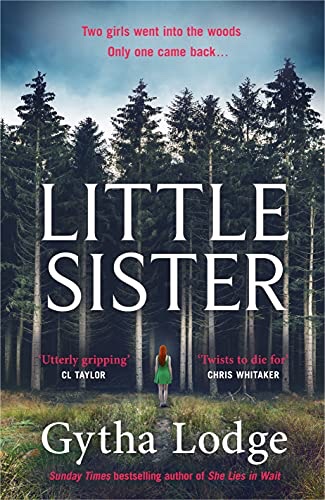
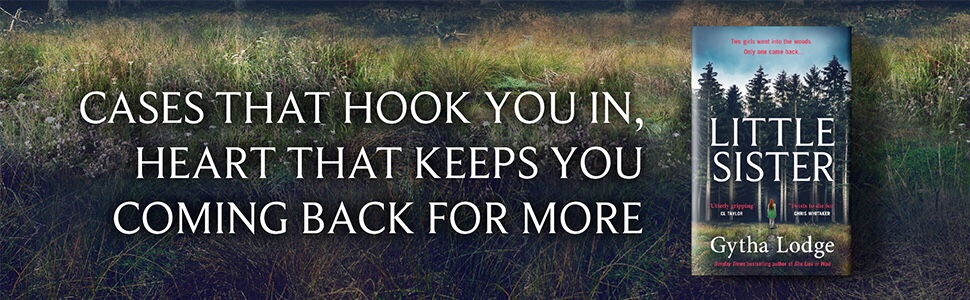
Little Sister by Gytha Lodge.

Two sisters went missing. Only one of them came back . . .
________

A teenage girl wanders out of the woods.

She’s striking, with flame-red hair and a pale complexion. She’s also covered in blood.

Detective Jonah Sheens quickly discovers that Keely and her sister, Nina, disappeared from a children’s home a week ago. Now, Keely is here – but Nina’s still missing.

Keely knows where her sister is – but before she tells, she wants Jonah’s full attention . . .

Is she killer, witness, or victim?

And will Jonah find out what Keely’s hiding, in time to save Nina?
Last year I was lucky enough to receive a prize from Gytha Lodge and now have three of her hardbacks, all individually signed. I haven’t had chance to read them and as I was granted access to this fourth novel in the series on NetGalley I decided to dive in and hope it would work as a standalone novel. I needn’t have worried at all. This was immediately accessible, yes there were aspects of Jonah’s life that I’m looking forward to finding out more about, but on the whole I could enjoy the mystery without feeling like I didn’t know my protagonist.

The opening scene is absolutely brilliant, vivid and shocking at the same time. Jonah sits in a warm beer garden with his baby in a pram at his side. He’s musing on life and his recent choice to return to a relationship with the mother of his child, leaving behind a burgeoning relationship with Jojo who he misses enormously. It takes a moment for him to notice the young woman who has come into the garden. She has red hair and her hands and chest are covered in blood. While others simply stare in shock, Jonah rings his partner Michelle to pick up the baby, then moves over to the girl and offers to get her a drink. They sit and her story starts to come out, but this is going to be a tricky interview and investigation. Jonah wants to take his time, go gently and not rush this young woman, who could be a victim, but could also be a suspect. Then she makes a revelation. Her name is Keeley and her sister is Nina, this could be Nina’s blood and of course they need to find her, but first Keeley wants to tell them a story.
Nina and Keeley have spent their entire childhood in care. Bouncing from children’s home to foster parent, they seem to have been magnets for predators at an early age. There are two foster homes where their placement failed. One was at the Murray-Watts, who live in a large house in the country with their son Callum and the right type of Range Rover. However, Keeley remembers a regime of cruelty and starvation, where their foster father was always pitting the children against each other and for punishment would lock them in a dark basement for days. His wife Sally might not be so cruel, but she never failed to do his bidding. From there to the Pinders, their home is a huge contrast situated on a council estate. There the girls made a complaint of sexual assault against their foster father who groomed them with trendy clothes, alcohol and watched Gossip Girl with them. This was all fine until he started to want things in return. The problem with these accusations is that nobody believed them, and even though they were removed from the homes in question, no one was prosecuted. Jonah and his excellent team have to tread a very fine line. Keeley comes across as cold and calculating one moment, but then like a broken little girl the next. Which is an act? Or are they both the same girl? Either way she won’t compromise; Jonah listens to her full story or she won’t tell them where Nina is. Time is ticking and if Nina is severely injured will she last to the end of the story?

I thought Keeley was a fascinating character, psychologically flawed and clearly traumatised by their past, however much of it is true. The girl’s social worker seems very sure that all the claims are false, just girls making up stories. However, it’s clear that some aspects of the girls accusations are true. So, if someone makes multiple accusations does it mean they’re all false? The book kept me guessing and there were times when I wondered whether I even trusted Keeley with her own sister. The chapters based around Jonah and the investigation are interspersed with Keeley’s first hand testimony. She shows all the traits of a psychopath; has she always been this way or has she been created by the treatment of those meant to care for her? If Nina has been subjected to the same treatment won’t she be afflicted psychologically too? I was also dying to know where these foster parents were. Pinder is giving the same story as the girl’s social worker, but the Murray-Watts have completely disappeared. Did the girls have help to weave a twisted treasure hunt for the police? I started to wonder if Keeley had known that Jonah was in the beer garden that day. She seems to be fascinated with his team so could one of them have come across the girls before?

There are some very dark stories here and they could be distressing for people who’ve gone through a similar experience, but it’s that darkness that keeps the reader wanting the truth and to see those responsible punished. If Keeley has planned how to elicit sympathy from the police, she certainly knows what she’s doing. As readers we are pulled along with Jonah from distress and empathy to disbelief and a sense that something is very, very wrong either with Keeley or the system. This is a great mystery, with huge twists in store and a police team I enjoyed getting to know. Now I’m looking forward to going back to the first novel in this series and filling in the gaps in my knowledge, while enjoying even more of this talented writer’s incredibly creative plots and dark, brooding atmosphere.
Meet The Author

Gytha Lodge is a multi-award-winning playwright, novelist and writer for video games and screen. She is also a single parent who blogs about the ridiculousness of bringing up a mega-nerd small boy. 

She has a profound addiction to tea, crosswords and awful puns. She studied English at Cambridge, where she became known quite quickly for her brand of twisty, dark yet entertaining drama. She later took the Creative Writing MA at UEA. 

Her debut crime novel, She Lies in Wait, has been published by Penguin Random House in the US and UK, and has also been translated into 12 other languages. It became an international bestseller in 2019, and was a Richard and Judy book club pick, as well as a Sunday Times and New York Times crime pick. 

Watching From the Dark, her second novel, was released in February 2020, with her third book lined up for spring of 2021. This fourth novel is published on 28th April 2022.

Posted in Netgalley

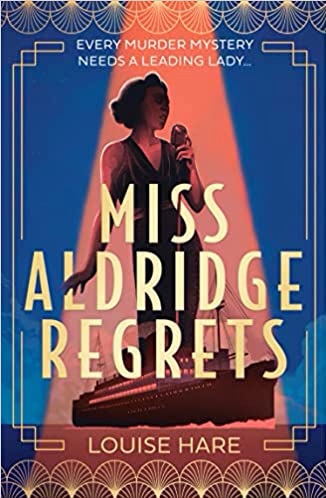
Miss Aldridge Regrets by Louise Hare

London, 1936

Lena Aldridge is wondering if life has passed her by. The dazzling theatre career she hoped for hasn’t worked out. Instead, she’s stuck singing in a sticky-floored basement club in Soho and her married lover has just left her. She has nothing to look forward to until a stranger offers her the chance of a lifetime: a starring role on Broadway and a first-class ticket on the Queen Mary bound for New York.

After a murder at the club, the timing couldn’t be better and Lena jumps at the chance to escape England. Until death follows her onto the ship and she realises that her greatest performance has already begun.

Because someone is making manoeuvres behind the scenes, and there’s only one thing on their mind…

MURDER

Miss Aldridge Regrets is the exquisite new novel from Louise Hare. A brilliant murder mystery, it also explores class, race and pre-WWII politics, and will leave readers reeling from the beauty and power of it.

This is one of my most anticipated books of the year, mainly based on how much I loved her debut This Lovely City, but also because I loved the sound of this mix of historical fiction and murder mystery. It doesn’t disappoint and really has the feel of an Agatha Christie novel, not just the plot either, but the glamorous location, the wealthy passengers and the sumptuous descriptions of their clothes and jewellery. The story has its period detail spot on whether it’s the latest bathing suit or 1930’s politics. Woven within this whodunnit are themes of identity, belonging, family and class division. It’s gripping without being showy or depending on shocks, or endless twists and turns. It’s elegant and allows it’s secrets to unfurl slowly.

Lena is a sympathetic character, who has sacrificed the start of her own career to care for her father Alfie who has recently died after a long illness. In order to pay the bills Lena has worked with the club band, but she has ambition and has always wanted to work in the theatre, preferably the bright lights of the West End or Broadway. We get the sense that she’s good enough too. We meet her first as she embarks on her voyage across the Atlantic with a theatre producers assistant, strangely named Charlie Bacon. Charlie has offered her the chance of a lifetime, a part on Broadway in a new musical. This is a favour from Charlie’s boss who once knew Alfie and felt he owed him for an old transgression. The cabin is first class and Lena has never had such luxury, in fact she has a suitcase of clothes from best friend Maggie because she didn’t own anything grand enough for the first class dining room of the Queen Mary. There’s a sense in which she doesn’t feel like herself, sailing on someone else’s charity, in grand society and in someone else’s clothes. She then finds herself dining with the Abernathy’s. The head of this wealthy family is their father Frank, now disabled due to a stroke (apoplexy) but once an absolute tyrant and still uses the family riches to manipulate his children and grandchildren. Alongside the family are Frank’s assistant Daisy and his own private doctor.

At first Lena is a little intimidated by this entitled and often quite unpleasant bunch. This is a mix of knowing she isn’t of the same class, perhaps opting to gravitate towards Daisy and Dr. Wilding who are the help. However, Lena’s whiff of stardom seems to satisfy the family that she is suitable company and she’s certainly glamorous enough to fit in. However, there’s also the question of race, brought to the fore when Lena encounters one of the ship’s band Will. Will isn’t fooled by glamour or the first class ticket when they meet out on the deck by accident. He doesn’t even ask, simply identifies her as black like him. At first she denies this, not wanting to be found out. Lena has always been able to ‘pass’ because she is so light skinned, but later when she sees Will again she trusts him a little more and owns her identity. It brings home to us the difficulties of being mixed race, perhaps worse for Lena who has never known her mother and didn’t grow up with that side of her identity explored. We can only imagine the taboo nature of a relationship between a black man and a white woman in the early 20th Century, a time when eugenics was gaining a foothold on both sides of the Atlantic. There is discussion at the dinner table of Adolf Hitler and his successes in improving German life after WW1, but this is the run up to WW2 and knowing what comes next in the name of racial purity made this a sobering experience as a reader. Lena isn’t just playing with identity here, in America it may have an impact on her ambitions and her place in society. As Will observes its okay for the black men of the band to entertain the rich and white passengers, but not to fraternise with them and he’s very careful that he and Lena are not seen together. However, when Lena is asked down to steerage for an evening of music in the bar there, it is the most fun she seems to have on the whole voyage. It’s the only time she’s not on tenterhooks and can relax. She feels like she’s with her own kind – people without money and influence, people who scrape by, who play music and really let their hair down.

Yet, she is accepted upstairs and is a hit with both Eliza Abernathy and her daughter Carrie. Lena is invited to tea, asked to go bathing and meets up for drinks. She likes Carrie who seems so young and controlled by her family, desperate for some company of her own age. Eliza is Frank’s daughter, rather aloof at first and seemingly unaware that her husband is seducing Frank’s assistant Daisy when no one is looking. None of the family seem particularly happy, with a lot of sniping at dinner and all the vices of drinking, gambling and … It makes Lena nostalgic for her father and the easy way they got along, and also Maggie who despite her difficult marriage and the terrible drama of her husband Tommy’s recent murder, has always been like a sister to Lena. It’s a huge shock when the rich family patriarch starts to choke at dinner. Dr. Wilding springs into action, but it becomes clear nothing is obstructing his airway and he starts to foam at the mouth. Lena is horrified, he’s acting the same way Tommy did and rather horrifically he dies at the table. An investigation is started immediately and everyone is interviewed. We are privy to Lena’s thoughts and she’s terrified that what happened at the club has happened again here. She didn’t poison him, but maybe someone knows something about Tommy’s murder. Are they taunting her? Is this something to do with her? Surely its too much of a coincidence. The proximity of the group and the inability to get off the boat adds to the tension of the novel. Who will be next?

I thought the mystery was well thought out and unexpected too. There were a couple of moments where I wanted to shake Lena or shout at her not to do something. It really brings home to us that here Lena is alone in this new life. She’s without family and friends to protect or support her. As the bodies begin to pile up I was asking questions of everyone in the party, even Lena herself – could she be an unreliable narrator, committing crimes without really knowing? It all seemed such a big coincidence, but then when the revelations started coming it all made sense. I can honestly say I didn’t have a clue what was coming for Lena’s private life, or who was next in the murderer’s firing line. I thought the pace was perfection and the claustrophobic atmosphere of the Queen Mary, however luxurious, really added to the tension. The opulence of the setting, the fashion and Lena’s new wardrobe are dazzling and so perfectly in tune with the time period. I loved the author’s depiction of difficulties in identity and the distinctions of race and class for these passengers. The contradiction that the band are allowed to entertain first class passengers, but not sit with them, is something that will stay with me. As will the idea of ‘passing’, an interesting part of my own identity as someone with an invisible disability who sits uncomfortably between people with disabilities and the able-bodied. I loved This Lovely City and I think with this novel Louise Hare has repeated her success. I’ve already ordered my special signed copy, because this is definitely a keeper.

Published by HQ 28th April 2022

Meet The Author

Louise Hare is a London-based writer and has an MA in Creative Writing from Birkbeck, University of London. Originally from Warrington, the capital is the inspiration for much of her work, including This Lovely City, which began life after a trip into the deep level shelter below Clapham Common. This Lovely City was featured on the inaugural BBC TWO TV book club show, Between the Covers, and has received multiple accolades, securing Louise’s place as an author to watch. Miss Aldridge Regrets is her second novel.

Posted in Netgalley

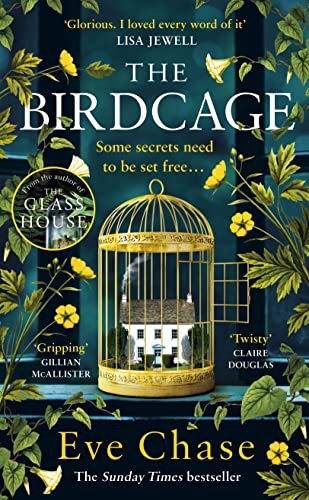
The Birdcage by Eve Chase

Eve Chase’s new novel had all the ingredients of a perfect read for me – quirky bohemian family, unconventional artistic father, large Cornish house and family secrets that have haunted his daughters for years. It’s the psychological impact of these family secrets that really make the novel. The story is told in a dual timeline, in the present Lauren, Kat and Flora are returning to Rock Point, her father’s mansion house on the Cornish Coast. He has invited them after many years away from the house, following a terrible incident that occurred on the day of the eclipse in August 1999. The events of this day are told in our second timeline. Lauren is the youngest by a few years, and on that day she was an adolescent , while her half-sisters Flora and Kat are older teenagers. Each girl has a different mother and their overlapping ages show the sexual profligacy of their father Charlie, a well-known artist. As he sits down with his three adult daughters, Charlie has a big announcement for them. The girls are expecting an illness or plans concerning his artwork, but they have a shock in store.

The complexity of this family’s relationships is at the core of this novel and I really enjoyed going back in time to work out why and how each woman’s personality was formed. On the surface Flora is the most conventional sister, with a husband and young son Raff, but is everything at home as happy as it seems on the surface? Kat is the most career minded sister having developed a well-being app. She is constantly checking her phone and looking for a reliable signal so she can work, but is she just busy or is the world of well-being more stressful than it should be? Lauren has had the most recent difficulties in life, nursing her mother Dixie who was terminally ill. After moving into a local hospice Dixie died, and although Flora invited her for Christmas Lauren didn’t come. These women are anxious to be together again. Flora and Kat used to tease Lauren, even bully her a little bit. The reasons for this become clearer, but Lauren has always thought it was about Dixie. Dixie was different to me 6 hCharles’s usual choice in women, she was unadorned apart from piercings, kept her hair shorter and was artistic in her own right. Indeed Charlie is touchingly affected by her death and seems to regard this separation as something he most regrets in life. Each sister’s personality fits perfectly with their back story: Flora’s hesitancy and submissive nature; Kat’s avoidance and distraction, creating workaholic tendencies; Lauren’s phobias, which are usually under control, but thanks to Bertha the parrot and the wealth of seabirds surrounding their home it can be a problem. The parrot has other tricks as well, mimicking the house’s occupants with phrases that only one person knows are true or false.

I thought the pace was clever, becoming more urgent in the past and present day at once propelling the reader towards the eclipse event and the effect of it’s revelations in the present. What was particularly clever was the way some people are only revealed in all their complexity, in the present. Angie, who worked as their au pair, was disliked by Lauren when she was a child. Lauren sensed her duplicitous nature and knew she wasn’t really there for them, describing her as hungry to get to Charlie like an art groupie. However, as an adult Lauren can see that this was more complicated and how she didn’t understand adult relationships. There’s a shift in years and awareness, where Lauren and her sisters can now see that Charlie wasn’t just a man beleaguered by women throwing themselves at him. He is an active participant in these complicated affairs and in bringing these girls into the world. He’s even passive at their visits, always pleased to see them but never negotiating with exes, or organising the logistics. Their gran does all the work, leaving Charlie free to paint in his studio, a place where only his models and Lauren are welcome. He’s never taken responsibility for his actions and as events unfold it’s possible that those actions have created a perfect storm of sibling jealousy and conflict.

That eclipse summer, Charlie has asked his three daughters to sit for a painting with the large ornamental birdcage. It’s the painting that will become his most well known and most valuable, in fact the girls are sorry it’s gone to art collector because as far as they know it’s his most personal. There’s a wealth of imagery in this painting, starting with the three sister’s pose, sitting together but not touching, like three separate islands. There’s the solemnity behind it too, the girls are not talking or cracking a joke and all three are staring out towards the viewer. Or is it towards the painter? In feminist readings of visual arts the bird within a cage represents the imprisonment of women, but also the gilded frame through which we view femininity. We can’t know the painter’s intention, but by painting it next to his daughters is he acknowledging their freedom? Or could he be pointing out a sexual double standard? He has been free to create these overlapping lives without censure, whereas their mothers and the girls have borne the gossip, shaming, poverty and hardship that comes with being a single parent. They’ve had to hear the whispers and insults about their morals, while he has been free to carry on with only the reputation of being bohemian to his name. Or could the birdcage contain his secret? The consequences of this secret we see on eclipse day, although it isn’t fully revealed until the present when it puts Lauren and her nephew Raff in danger. Only then will Charlie have to deal with how his behaviour has affected others, like ripples on a pond. This was an engaging tale of complex family ties and the psychological effect of a parent’s action. It has all the bohemian glamour of a country house occupied by an artist and a gorgeous atmospheric setting in beautiful Cornwall. I was gripped to the final page, having felt an affinity with Lauren and Flora I wanted to know how their stories turned out and the epilogue brings a satisfying ending to this family saga.

Published by Penguin on 28th April 2022

Eve Chase is an author who writes rich suspenseful novels about families – dysfunctional, passionate – and the sort of explosive secrets that can rip them apart. She write stories that she’d love to read. Mysteries. Page-turners. Worlds you can lose yourself in. Reading time is so precious: I try to make my books worthy of that sweet spot – she says on her Amazon.com author page.

Her office is a garden studio/shed with roses outside. She lives in Oxford with her three children, husband, and a ridiculously hairy golden retriever, Harry. She invites readers to say hello. ‘Wave! Tweet me! I love hearing from readers’.

Eve is on Twitter and Instagram @EvePollyChase and on Facebook, eve.chase.author.

Posted in Back of the Shelf

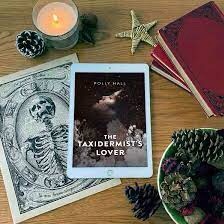
Back of the Shelf! The Taxidermist’s Lover by Polly Hall.

A modern Gothic tale of a woman obsessed with her lover’s taxidermy creatures and haunted by her past.

One stormy Christmas, Scarlett recalls the ebb and flow of a yearlong love affair with Henry, a renowned taxidermist. Obsessed with his taxidermy creatures, she pushes him to outdo his colleague and world-famous rival in a crescendo of species-blending creativity. Scarlett will not be able to avoid a reckoning with her own past as Henry’s inventions creep into her own thoughts, dreams, and desires.

Drenched in the torrential rains of the Somerset moorland and the sensual pleasures of the characters, The Taxidermist’s Lover lures you ever deeper into Scarlett’s delightfully eerie world.

Bram Stoker Award Shortlist for Superior Achievement in a First Novel • IPPY Awards 2021 Gold Medal Winner

Anyone who knows me well is aware that I have a weird penchant for antique taxidermy, so I jumped at the chance to read this. This was an eerie story of obsession from a writer I’ve not come across before, but will look out for in the future. I expected the feel of a historical novel, with something a little spooky about it and I wasn’t disappointed. Dipping in and out of the past, Scarlett addresses her lover Henry, who is hoping to my find a foothold in this niche world of taxidermy. I loved these forays into the past, as it allows us to witness a developing tale of obsession and the macabre, in the tradition of gothic fiction – one of my favourite genres. There’s a strange sensation that you are reading a Victorian novel instead of a contemporary story. Hall’s writing is haunting and sensual, and sets a dark, forbidding tone. Although it’s a second person narration it feels very personal.There’s a sense of foreboding and I kept wondering about the veracity of Scarlett’s story. Would Henry tell us a different tale? Despite it’s potential unreliability, I felt drawn in and I simply couldn’t guess how all this would play out. I think it is so compelling because of that personal feel; writer is echoing that feel of obsession by deliberately keeping her focus narrow.

Scarlett and Henry’s relationship was very fast moving, with them moving in almost immediately and getting married very soon after. She becomes involved in his career and suggests he try something different; chopping and changing animal parts to create totally new creatures, rather like the jackalope. To say Scarlett is obsessed would be an understatement really, not with Henry, but with his taxidermy. It seems very unhealthy, but when we hear about Scarlett’s twin brother Rhett and the death of her parents, this obsession with body parts starts to make sense. However, it’s sense of a very disturbed kind. There’s a Frankenstein element to the tale, both in the jumbled creatures and the sense we get that the process of making them might be more satisfying than the finished product. It’s become more about the ability of the creator than the actual creature. Some readers might feel sorry for Scarlett and I did understand how life events might have overwhelmed and damaged her psyche. I found it satisfying to delve so deeply under a character’s skin, because we don’t often get the chance to really analyse someone this way in fiction.

This is a slow story so if you’re looking for fast thrill rides this isn’t the book for you, but that said it’s strangely satisfying. If you like character, quirkiness and having all your senses engaged, then this is your book. The menace builds inexorably until you’re desperate for the worst to happen, just for it to be over. The twists come thick and fast, until you’re finally faced with the horror ending. This is dark, twisted and very unique, with an atmosphere that will stay with you long after the final page is turned.

Published by Camcat Books 8th December 2020.

Meet The Author

Hall’s writing is lush, filled with startling conclusions about the nature of art and love and death. . . [A] shudder-inducing debut.” ~ The New York Times

Polly Hall is author of The Taxidermist’s Lover, conceived while studying for an MA in Creative Writing at Bath Spa University.

Her flash fiction, poetry and stories have been included in national and international anthologies and collaborative arts projects. 

You can find her @PollyHallWriter on Instagram, Facebook and Twitter.

Praise for The Taxidermist’s Lover:

.

Posted in Back of the Shelf

Back of the Shelf! The Dressmaker’s Secret by Lorna Cook.

1941, Nazi-occupied Paris: In the glamorous Ritz hotel there is a woman with a dangerous secret…

As Coco Chanel’s assistant, Adèle lives side by side with German officers in the splendour of The Ritz hotel. But Adèle has a secret. She is working for the resistance, right under the Germans’ noses. As occupied Paris becomes more and more dangerous, Adèle will have to decide if she can risk everything to save innocent lives and protect the man she loves…

Present day: Chloé’s grandmother has never spoken about the war and avoids questions about the legendary designer she once worked for. Now Chloé has come to Paris, to uncover the truth about Adèle’s life. But is she prepared for what she will find? And for the power of her grandmother’s secrets to change her family forever…

Chloé has travelled to Paris after the breakdown of her marriage in order to help a friend with their vintage shop. She knows her grandmother worked for Chanel in the 1940’s so when she hears about an auction taking place at the Ritz she decides to have a look. The Ritz is selling some wartime items which grab her interest and when she meets Etienne, who is an art dealer and war historian, he is a great source of knowledge. He tells her about recently unearthed information that Chanel was sympathetic to Hitler’s cause and had visited Berlin several times. Like many people who survived the war, her grandma has been very reticent about sharing her experiences for that? As Chloé starts to look in the archives, she begins to worry. What will she feel if she finds out her grandmother collaborated.

The historical research undertaken for this novel is undeniable and before reading this I had no idea of Coco Chanel’s stance in WW2 or the stories of her collaboration with the Nazis. I think now that history has shown us the full extent of the Holocaust and Hitler’s belief in a master race, we can’t conceive of anyone who doesn’t see him and his actions as unremittingly evil. However, it’s clear that during the war, for both Germans and occupied citizens the distinction wasn’t so clear. With our own aristocracy hiding many who were enthralled by Hitler’s planned genocide, it shouldn’t be a surprise that in France, Greece and Italy allegiances and the reasons for them were very complicated. If you had a bakery in the occupied Greek islands would you rather see bread go to waste or would you sell to the occupying force? For Chanel, living in the Paris Ritz alongside German soldiers it must have been hard to live next door and keep up a secret campaign of hatred. This is where Adèle’s story shines a light, as Chanel’s PA she can come very close to them, but still want them dead and gone from France. So with great bravery she resists under their very noses.

Adèle’s wartime story is so engrossing, that I think it makes the book a little lopsided. The dual timeline, as in the present Adèle’s granddaughter Chloé researches her family history, is definitely the weaker end of the story. It’s almost there as a device and although it gives present day interest, I think the book would be just as strong without it. It’s possibly just that the tension and drama need to be high for the WW2 setting, so anything would have seemed quiet in comparison. Prior to the war, Adèle grew up in an orphanage, taught by nuns. She had worked for Chanel before war broke out and is lucky to be chosen as her personal secretary when the atelier is closed, because all the other staff are let go. Adéle is in charge of her correspondence, packing her luggage when she travels and organises any meetings she has. However, she does not enjoy living at the Ritz, especially when the German soldiers move in and Chanel starts to socialise with them, dating a much younger man at the same time. It’s the guilt that’s so hard to deal with, especially when Adèle sees other people going hungry. When she first sees a Jewish woman being arrested, she’s stunned and feels sick that this is happening in her country. As she goes for her routine blood donation to the Red Cross she meets Theo, a doctor who is a member of the resistance. Can Adèle continue to watch others suffer or will she have to help?

I think that this writer takes a piece of history and weaves a great story, full of intrigue and drama especially in the WW2 sections. Chloé needs to move forward from her divorce and find her confidence again and there is something about filling in the gaps of her family history that does this. Learning the truth about her grandmother is nerve-wracking considering her employer’s history, but if it shows she was a hero then Chloé will filled buoyed up by it. Knowing you’re from a line of strong women, can help you find your own strength and I think that’s the essence of Chloé’s journey. Adèle is a courageous woman in a very tough situation and I thoroughly enjoyed getting to know her and the full history of one of France’s most famous collaborators.

Published on 22nd January 2022 by Avon Books.

Meet The Author

Lorna Cook is the author of the The Girl From the Island, The Forbidden Promise and the Kindle Number 1 Bestseller ‘The Forgotten Village’, which was her debut novel, staying in the Kindle Top 100 for four months. It has sold over 150,000 copies, has eleven overseas/foreign language editions, won the Romantic Novelists’ Association Katie Fforde Debut Romantic Novel of the Year Award and the RNA Joan Hessayon Award for New Writers. Keep up with all her news and bookish chat at:www.lornacookauthor.com www.facebook.com/LornaCookWriterwww.instagram.com/lornacookauthorwww.twitter.com/LornaCookAuthor

Posted in Random Things Tours

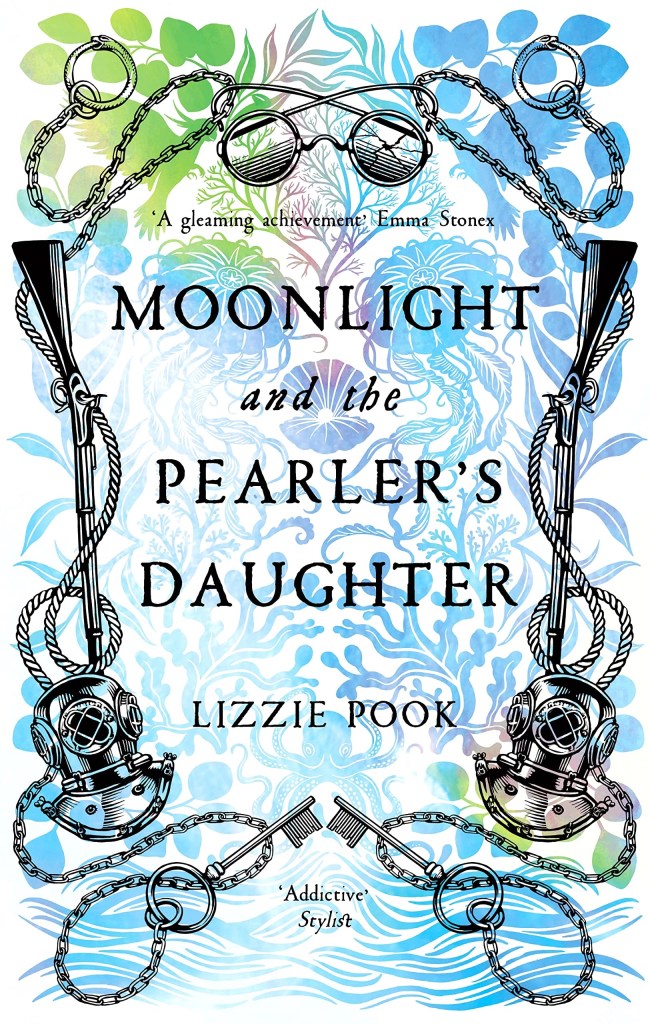
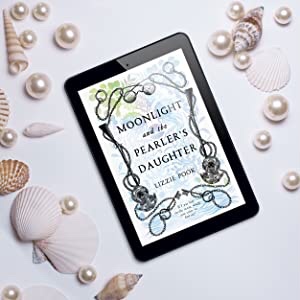
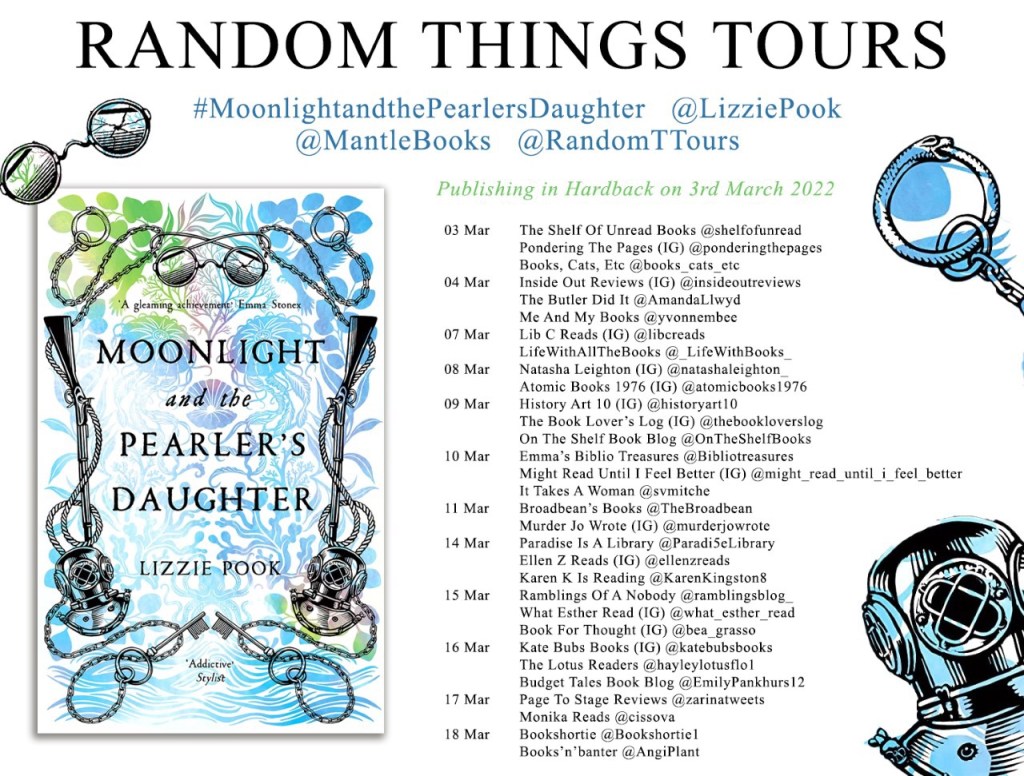
Moonlight and the Pearler’s Daughter by Lizzie Pook.

Fortune favours the brave . . .

It is 1886 and the Brightwell family has sailed from England to make their new home in Western Australia. Ten-year-old Eliza knows little of what awaits them in Bannin Bay beyond stories of shimmering pearls and shells the size of soup plates – the very things her father has promised will make their fortune. Ten years later, as the pearling ships return after months at sea, Eliza waits impatiently for her father to return with them. When his lugger finally arrives however, Charles Brightwell, master pearler, is declared missing. Whispers from the townsfolk point to mutiny or murder, but Eliza knows her father and, convinced there is more to the story, sets out to uncover the truth. She soon learns that in a town teeming with corruption, prejudice and blackmail, answers can cost more than pearls, and must decide just how much she is willing to pay, and how far she is willing to go, to find them.

This incredible debut is richly atmospheric from the get go, throwing us straight into the strangeness of 19th Century Western Australia as if it is an alien landscape. In fact that’s exactly what it is for the Brightwell family, particularly Eliza whose childhood eyes we see it through for the the first time as, in a particularly disgusting parody of baptism, a bucket of fish guts is thrown into her face. Of course the fisherman apologises for the accident, but we’re left wondering if it’s anything but as he says the words ‘welcome to Bannin Bay’. It foreshadows that immediate imbalance between those who do the work and those who aim to make the money. Eliza’s father has been full of dreams, not just of pearls, but the pearl shells to be turned into buttons, hat pins and pistol handles. Yet their unsuitability for this rough and ready environment can be seen as soon as they arrive in the fine clothing they must keep lifted away from the red earth, especially when compared to the stevedores dirty vests and cut off trousers. Eliza describes her mother as ‘a dragonfly, once resplendent, marooned in a bucket of old slop water.’ Delicate Victorian ladies are not built for this environment that stinks of sweat, fish guts and the mineral tang of sea kelp. With this alien landscape the author creates a vivid backdrop for the incredible historical detail of her story, whilst also creating a mythic, almost fairy tale quality to the story.

Only ten years after the prologue we meet an older Eliza, who’s wiser to the ways of the Bay and has developed into a interesting character. Women are either categorised as polite society -‘white glove wearers’ – or harlots and it’s a source of irritation to most women in the community that Eliza refuses to be either. She is ploughing her own furrow and whereas her friend Min’s childhood dreams develop, from escapades on the high seas to the type of sailor she might marry, Eliza still craves the adventure. She can see no use for a husband, although she doesn’t deny an interest in men, which is quite a scandalous notion even if her main interest is the contents of his library. Eliza’s knowledge of sailing and pearl diving is forensic in its detail and through exploring with her father she has developed a keen interest in the areas flora and fauna too. She is quite unlike the respectable women who still look like wedding cakes in the impossible heat. Her father has been on a voyage for the past three months and a lonely Eliza has been looking forward to his return, but as she sits and waits doubt starts to set in about whether the ship is returning. The light is fading as his lugger appears on the horizon, but her stomach fills with dread when she realises something is wrong. The ship’s flag is at half-mast. When her brother Thomas emerges she learns that her father is gone. While Thomas rushes to secure the business Eliza is left to find out the truth and while she’s told he went overboard, there are also tales of mutiny and murder. Eliza has to visit the sergeant to convince him that she suspects their father’s death was not an accident. Sergeant Archibald Parker is an unpleasant racist and his immediate action is to arrest aboriginal man Billy Balaari, but Eliza is told that Billy wasn’t even on the boat. When Billy escapes, the sergeant is completely focused on finding him, leaving Eliza to do the detective work herself. She finds her father’s diary and eventually sets sail on Father McVeigh’s lugger Moonlight with Axel Kramer and an aboriginal boy called Knife, determined to find the truth of what happened.

I wasn’t surprised to find a very seedy underbelly to the trade where Eliza’s father had hoped the build the family fortune. Where incomers make large amounts of money, there is always exploitation and in this case the workers have a very tough working life. Of course it’s the native Australians who are exploited the most and the author doesn’t pull her punches when it comes to portraying the terrible treatment they receive. Aboriginal families are torn apart as the strong are enslaved for labour on the Pearler’s boats, usually as pearl divers, the most dangerous job on board. The sheer weight of their gear is terrifying as they don lead boots and copper chest plates. It felt so claustrophobic to imagine them sinking slowly to the bottom of the sea, with only a line connecting them to the ship above. The relief of being winched back to the surface must have been tempered by the danger of the bends, caused by the pressure of resurfacing too quickly, forcing organs upward in the body leaving the diver dead or ‘agonisingly crippled’. It made me feel a little bit anxious as I was reading their potential fates. If this wasn’t enough, aboriginals were treated as worthless, beaten and even killed without consequence. Eliza has to negotiate her way through the community’s corruption, violence, blackmail and the criminal elements of the pearling business. All the while reading her father’s diary for clues and guiding us to a cast of fascinating characters, some of which are based on historical figures. I loved Eliza’s early feminist stance and her sense of adventure, not to mention the gripping twists and turns that pull you even deeper into the story. This is a fantastic debut full of life and death, just like it’s setting. The richness and depth of her storytelling marks Lizzie Pook out as a talented writer I’ll keep watching out for in the future.

Published by Mantle Books 3rd March 2022

Meet The Author

Lizzie Pook is an award-winning journalist and travel writer contributing to The Sunday
Times, Lonely Planet, Rough Guides, Condé Nast Traveller and more. Her assignments have taken her to some of the most remote parts of the planet, from the uninhabited east coast of Greenland in search of roaming polar bears, to the foothills of the Himalayas to track endangered snow leopards.
She was inspired to write Moonlight and the Pearler’s Daughter, her debut novel, after spending time in north-western Australia researching the dangerous and fascinating pearl-diving industry. She lives in London.
You can find Lizzie on Twitter and Instagram: @LizziePook.

Posted in Personal Purchase

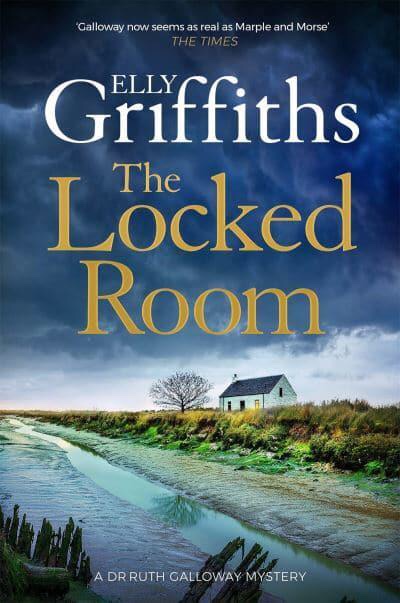
The Locked Room by Elly Griffiths

Ruth Galloway is one of my all-time favourite characters in fiction, because I love her perspective on life, her intelligence and the fact that she doesn’t give in to all those things women are pressured to worry about. So, as I read her latest exploits, imagine my shock when she is lured to a Lean Zone meeting! I was horrified. I can’t cope with a Ruth who avoids cake. Rest assured, our favourite forensic archaeologist isn’t about to become a calorie counter. I gave a huge sigh of relief. When chatting about her decision not to continue at Lean Zone, Ruth tells her neighbour she was only inspired to go because she’d seen a school friend who lost an enormous amount of weight. The neighbour asks ‘and you thought she looked better?’ Ruth considers for a moment and replies ‘no I thought she looked worse.’ This is just one of the reasons I love Ruth and have followed her through 14 novels. How long will it take for someone to turn this into a TV series? There’s so much material to work with and she’s such a relatable character. I’ve entered into debate on Twitter over who should play these characters I love, even with Elly Griffiths herself. I know Ruth Jones was discussed, but I favour Olivia Colman who’s actually from Norfolk. David Tennant was put forward as Cathbad and I’m sure he’d pull it off admirably, although for some reason Rhys Ifans floats into my mind. As for Ruth’s love interest, the slightly ravaged and wonderfully Northern, DI Harry Nelson I’m thinking of either David Morrissey or Phillip Glenister (a little bit worn, but still a certain something that’s attractive).

There are several mysteries in this latest book in Elly Griffith’s Ruth Galloway series, both professional and personal. Ruth is called in to excavate human remains discovered by a roadworks crew, in the evocatively named Tombland area of Norwich. This alerts her to Augustine Seward’s House, close to the cathedral and rumoured home of the Grey Lady – a young girl locked into the house during the plague with her sick parents in order to stop them spreading the virus. Plague sufferers were often barricaded into their homes, but rumours suggest that this young girl was alive long after her parents death and had tried to eat them when she was starving. Another grim discovery is the death of an older woman, found by her cleaner after taking an overdose in her bedroom. A prior case had already caught DI Nelson’s eye because he couldn’t understand why someone suicidal, would put their ready meal in the microwave first. This latest death adds to Nelson’s suspicions, because the cleaner is convinced she had to unlock the room, from the outside. There is also a personal mystery for Ruth, who is clearing out her mother’s things. Her widowed dad has remarried and after several years leaving things as they were, his new wife would like to redecorate their home. It falls to Ruth to sort her clothes and belongings. She finds a box of photographs and is shocked to find a picture of her own cottage – a place her mother never really warmed to. Written on the back is Dawn, 1963, a full four years before Ruth was born. Why would her mother have kept this and why did she never share that she’d been there?

The pandemic is woven so well into the story and Griffiths really captures the disbelief, mental struggles and frustrations of trying to live in this strange time. It was interesting to see characters who are so familiar to us, reacting to something we’ve all lived through. Nelson is sceptical at first, but a few weeks later as wife Michelle ends up locked down with her parents in Blackpool, will he cope with living alone? Ruth takes lockdown in her stride, trying to juggle home schooling, lectures via Zoom and supporting her students. Griffiths weaves in the story of those students who haven’t been able to go home and are isolated in halls of residence, including one young man who is very interested in Dr. Galloway. Judy is as practical as ever, but surely this is the sort of crisis her partner Cathbad is ready for? Druid, wizard and all round mystical being, Cathbad is teaching yoga in the morning and has a pantry ready for any crisis. I felt quite tense though, waiting to see how COVID would affect these characters I love and worrying for them. Nelson’s team are struggling to investigate their case with the restrictions in lockdown, but the case is still fascinating with a lot of red herrings to muddy the waters. I loved how this mystery really looks at mental health and how difficult life events can leave us vulnerable to those who would prey on us. All the possible victims are women, live alone and have faced difficulties in life such as the loss of a partner. It also seems that all have been to weight loss groups, but is that a clue or a sad indication of the modern pressures of being a woman?

The personal mystery of Ruth’s had me hooked even more than the crime this time around. Ruth’s mother had never understood why she wanted to live her life in such an isolated place and there are times during lockdown where Ruth has wondered this herself, especially for Kate who is now 11 and has been totally reliant on the Internet to talk to friends. Ruth’s dad is equally befuddled by the photo she’s found which predates even his relationship with his wife. Ruth keeps wondering why, when she found her cottage, her mother never mentioned seeing it before. Plus, if it wasn’t important, why keep the photo for all these years? Answers come, but they’re unexpected and even life changing. It’s the personal relationships that shine here and the unexpected places and people that bring us comfort. For Judy, used to the ethereal and spiritual Cathbad, it’s her straight talking old sidekick Cloughie who brings the solace she needs from a friend. Ruth is surprised to find she has spent most of her time feeling almost separate from the world. She feels the strangeness of her daily life changes: more time in bed, the different way of working, and the jarring first sight of shoppers queueing outside the supermarket in their masks. Most of her observations are practical changes though and she’s remarkably comfortable, just her, Kate and Flint the cat. In fact the upside has been the lack of other people, the beautiful scenery and wildlife on their doorstep. They even have a new neighbour, who Ruth enjoys getting to know with a socially distanced glass of wine each evening separated by the garden fence. They can walk together on the beach and do Cathbad’s daily yoga, making them feel a connection rather than isolation. Nelson however is completely alone with only his dog Bruno for company. Used to a house run by Michelle and the rough and tumble of young son George he’s strangely lost and finds himself drawn mentally to the cottage on the coast and his other family.

There are little observations that make Griffith’s world feel so real to me. Lured to a small school reunion while staying at her parent’s house in London, Ruth observed how everyone had aged. In fact her school boyfriend Daniel is bald and she observes she wouldn’t have recognised him a line-up. She then does the middle aged calculation that all of us over 45 do in these circumstances; she wonders if she’s looking as old as they are. Then as the pandemic hits, these people she’s not seen for decades, are sending her messages on social media prompted by the ‘strange times’ we’re living through. It’s something I observed over over the last two years, when daily life is put on pause we look for things to ground us or start to re-evaluate our lives. These touches are grounded in that incredible Norfolk setting, fully formed in my brain now I can immediately see inside Ruth’s cottage by the salt marsh. This mysterious and wild space is offset by the city of Norwich and in this case, the setting of Tombland around the cathedral. This spiritual and ghostly space felt unsettling, as friend Janet explains to Ruth about sitings of the Grey Lady who wanders the house with a lit candle, but also walks through the walls where there used to be doors. It’s no surprise that Cathbad has once seen her in this area and the ghost story adds to the confusion of those final chapters as the case builds to a climax. I really loved the theme of the outcast dead, whether they are the undiscovered plague pits that one of Ruth’s students becomes fascinated with or the graves of those who committed suicide. Historically, people who’ve committed suicide are placed outside the boundaries of the graveyard in unconsecrated ground. The idea of punishing someone in so much pain seems archaic now and I loved the idea of a yearly church service to acknowledge all these outcast people. There are interesting elements of coercive control in the investigation and our team have to ask questions about their preconceptions of who commits crime and what criminals look like, never mind how and if they can prosecute. However, my mind was also occupied with worrying over which of my beloved characters might catch COVID and how their loved ones might cope. I’d set aside two days to read this novel on publication and I only needed one, because I had to know all my characters were safe and when I reached it, I was immediately hooked into waiting for my next instalment.

Meet The Author

ELLY GRIFFITHS is the author of the Ruth Galloway and Brighton mystery series, as well as the standalone novel The Stranger Diaries, winner of the Edgar Award for Best Novel, and The Postscript Murders. She is the recipient of the CWA Dagger in the Library Award and the Mary Higgins Clark Award. She has published a children’s book, A Girl Called Justice. She has previously written books under her real name, Domenica de Rosa.

The Ruth books are set in Norfolk, a place she knows well from childhood. It was a chance remark of her husband’s that gave her the idea for the first in the series, The Crossing Places. They were crossing Titchwell Marsh in North Norfolk when he mentioned that prehistoric people thought that marshland was sacred ground. Because it’s neither land nor sea, but something in-between, they saw it as a bridge to the afterlife; neither land nor sea, neither life nor death. In that moment, she saw Dr Ruth Galloway walking towards her out of the mist…

She lives near Brighton with her husband Andy, an archaeologist. She has two grown-up children. She writes in the garden shed accompanied by her cat, Gus.

Posted in Publisher Proof

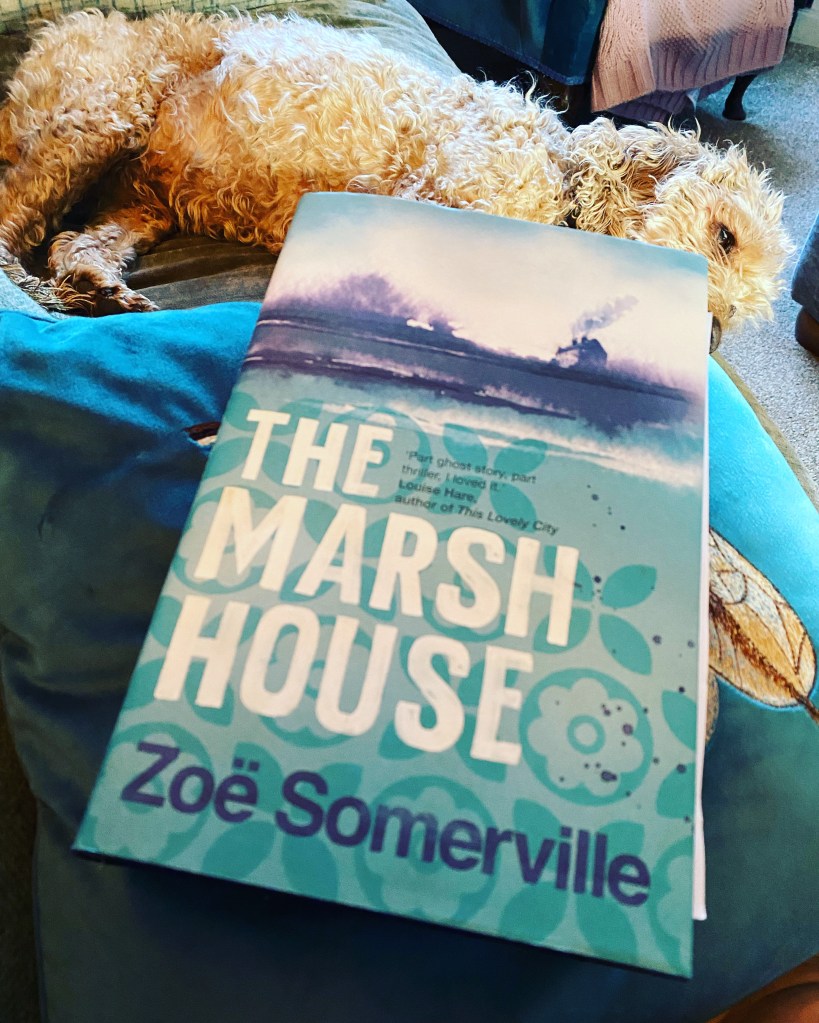
The Marsh House by Zoë Somerville

I simply loved this book. In fact, a finished copy arrived through the post and I started browsing the first page then couldn’t stop reading. So I read it straight through, finishing at 2am. It’s a split timeline story, beginning with Malorie and her daughter deciding to spend Christmas in a cottage on the Norfolk coast after an argument with her boyfriend. Malorie feels like a bad mother and wants to get one thing right – an idyllic holiday cottage Christmas for her daughter. Maybe if she achieves this one thing, she can convince herself she’s not as useless as she imagines. The sense of foreboding hits the reader immediately as the weather promises snow and Malorie becomes disoriented in the fog. She skids and ends up wedged into a hedge. The Marsh House itself is damp, dark and neglected. They cannot even see the sea through the mist. Malorie begins to wonder if this is a bad idea, but finds a pair of journals in the attic while searching for Christmas decorations, and she begins to read. Written by a young woman called Rosemary, who lived in the house, the journals tell a tale of a young woman’s crush on the boy from the big house. This young woman’s story paints a picture of 1930’s rural Norfolk, becoming a young mum and her husband’s link to fascism and Oswald Moseley in particular. Malorie can’t put the journals down, but alongside the house’s strange atmosphere, they are having an effect on her sleep and her state of mind.

I felt for Malorie straight away and her sprite of a daughter. Malorie is very hard on herself and has a negative inner voice, not helped by an over critical partner at home. Here she is capable, ordering logs and a turkey, rigging up a Christmas tree with vintage ornaments from the loft, and even managing real candles in their holders. However, even when she’s barely started the journals, the locals are giving her the house’s sordid history. That whiff of fascism becomes stronger when Malorie finds leaflets in the attic and the girl in the village shop asks if she knows what happened at The Marsh House? Tales of lost cocklers cut off by the tide that can still be heard screaming in the fog don’t help her state of mind. The house itself holds some scary relics too including a weird picture of women who perhaps lived here, one with bright green eyes that bore into you. I loved how the author drip fed these little bits of information, adding to the house’s history but also to the creepy tension that keeps building. It’s Malorie’s kinship with Rosemary, the writer of the journals, that drives the story forwards. The more she understands about the writer’s life, the more confused she becomes between fantasy and reality leading to some truly terrifying visions in the night. Why does she feel so connected with someone she’s never met who lived here thirty years before? Who is the strange woman with the large dog she sees from time to time, and why does she seem to be looking after the family by leaving logs to keep them warm?

I did enjoy Rosemary’s story too, her innocent crush on the boy from the family at the big house. She fantasises about what it would be like to have him like her too, to kiss her on the cheek and choose her above the more well to do girls in society. There does seem to be a part of him that is attracted to Rose, but she might also suit his purposes – a compliant country wife at home to keep the line going while he gallivants in London with Moseley’s social circle. Having read a bit about the Mitford sisters and Unity in particular, I had already known how popular fascism was in the ranks of the aristocracy and how some of our great country houses were used as meeting places for talks on appeasing Hitler. I hadn’t known of it’s hold in Norfolk and found this aspect of the book interesting. As time goes on and Rosemary is treated very badly by her husband it was clear that something terrible was going to happen, but the final revelations are truly shocking. I loved the way she delved into the complicated, emotional experience of becoming a mother. She opens up the inner world of these women, with their constant questioning of whether they’re good enough, or are they failing at this job we’re led to believe should come naturally? There is a special skill in weaving real historical events with fiction and this author is so talented and creative. She brings this area of England to life and makes the reader want to visit and search it out for themselves. The atmosphere was so evocative I spent two days with a ‘book hangover’ – unable to start another book because my emotions and senses were so embedded in Malorie’s story. I loved this so much I could have happily gone back to the first page and read it over again.

Published by Apollo 3rd March 2022

Meet The Author

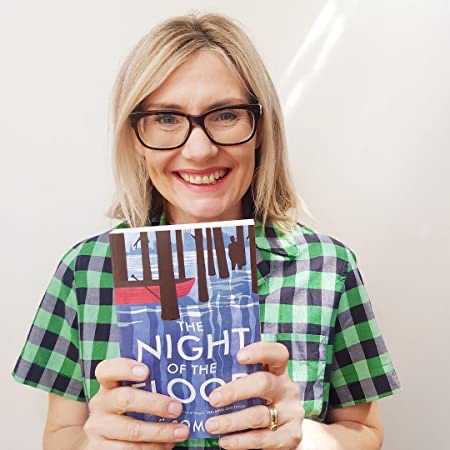
Zoë Somerville is originally from Norfolk, but has settled with her husband and children in the West Country. She works as an English teacher. Zoë began her debut novel, The Night of the Flood on the Bath Spa Creative Writing MA in 2016. It was published in September 2020. Her second novel, The Marsh House, a ghost story and mystery is published in March 2022. She is currently writing her third novel.

Posted in Publisher Proof

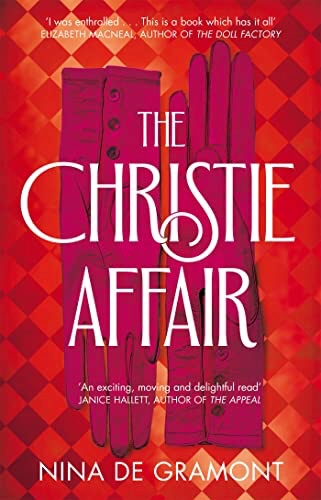
The Christie Affair by Nina de Gramont.

I enjoyed this fascinating novel that fictionalises the famous disappearance of Agatha Christie. On December 3rd 1926, after an argument with her husband Archie, Agatha Christie disappeared. Although there is still some mystery around her movements, it seems she crashed her car while driving down to London. Thousands of police officers and volunteers scoured the countryside near the crash site for Christie, but she was nowhere to be found. It was a huge news story with Arthur Conan Doyle becoming involved and famously hiring a spirit medium to find her whereabouts. She stayed missing for eleven days until she was found in a spa hotel in Harrogate, signed in under the surname of Archie’s lover. Contemporary theories were that this was a publicity stunt, even though Christie appeared to have been in a fugue state. She may have suffered a nervous breakdown after hearing the news that Archie was leaving her. Nina de Gramont weaves a complex tale around this incident, told through the eyes of Nan – Archie Christie’s mistress – an Irish woman whose pursuit of Archie had been so successful he decided to leave Agatha and divorce her, in order to marry Nan. This is only one part of the jigsaw that makes up the full story the author is telling, ranging back and forth and touching on various viewpoints, with the central figure never quite clear and the importance of peripheral figures more vital than I first realised.

We travel back to WW1 and it’s terrible effects on the years that follow. A time when the nation didn’t yet know that the peace they’d achieved was a mere interval of respite where recovery was barely possible. Nan is born of an Irish family, living in London, but is sent back to visit relatives in County Cork in summer since childhood. There she forms a friendship with Finnbarr, a dark Irish boy who has an affinity with animals, particularly his sheepdog Alby. Over the years their friendship grows into love and she is sure they will marry. A chance meeting on Armistice Day is a passionate interlude which leads to Nan being pregnant. Believing their marriage to be only a formality, Nan steals some money, laid aside by her Mum in case one of her daughters gets herself into trouble, and travels to Ireland and the farm. There she finds that Finn is delirious with fever from the Spanish Influenza brought back by returning soldiers. Denied by his family and with Finn thought to be at death’s door, she ends up in a Catholic Home for unmarried mothers. This place is really the genus of the story, because this isn’t Agatha’s tale, despite her being famous and the one who disappeared.

Meanwhile years later, as the Christie’s marriage implodes and Agatha disappears, we’re taken to a hotel in Yorkshire where Nan goes to stay and take a break before the transition of living with Archie. It’s a spa hotel with healing springs, two sets of newly wed couples and an Inspector Chiltern who has been sent to search for Mrs Christie. From these two time frames, the author cleverly weaves her story with the past gradually catching up with the present. I loved the historical detail of the story as the author uses everything from the decor to the women’s clothes to evoke the 1920s setting. There’s a sumptuousness to these descriptions that contrasts strongly with the earlier poverty, with the Magdalene Laundry section being particularly harrowing. I loved how playful the structure was, not quite revealing it’s genre. Is it a love story, an autobiography, or a detective novel? I also loved going back and forth in time, slowly picking up new threads of the story. I had no idea how they would all come together, but loved the way they did.

Meet The Author

Nina de Gramont’s latest novel, The Christie Affair, will be available In February, 2022. She is the author of a collection of short stories, Of Cats and Men, as well as the novels Gossip of the Starlings and The Last September. She has written several YA novels (Every Little Thing in the World, Meet Me at the River, The Boy I Love, and — under the pen name Marina Gessner — The Distance From Me to You). Nina teaches creative writing at the University of North Carolina Wilmington. She lives in coastal North Carolina with her daughter and her husband, the writer David Gessner. 

Learn more about Nina at http://www.ninadegramont.com

Posted in Back of the Shelf

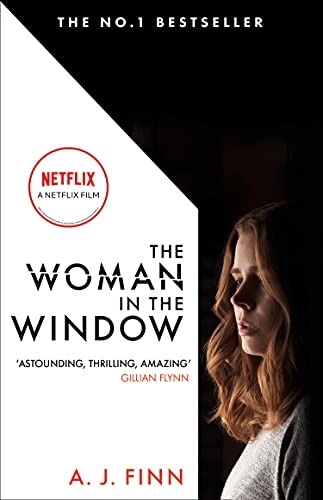
Back of the Bookshelf! The Woman in the Window by A.J. Finn

I reached to the back of the shelf for this 2018 paperback copy of The Woman in the Window. There’s a strong Rear Window vibe to this thriller, as our lead character Anna Fox, is trapped within her house, only living through the lives of her neighbours, who she watches through her binoculars. Instead Rear Window’s physical disability, she is restricted by her mental health, which has suffered a response to extreme trauma. Some unknown traumatic incident has resulted in agoraphobia and she has spent ten months inside her large New York house, like a ghost. Before this, Anna was a successful psychologist and the fact that her affliction is a mental health issue really muddies the waters here. How far can we trust what she sees and experiences? Does her training mean we trust her more, or less?

No longer living with her own husband and daughter, she becomes obsessed with the Russell family across the road. A mother, father and teenage son. She is especially interested in the son, and his mother who she meets and names Jane Russell because of her likeness to the beautiful movie star. Her world is filtered through binoculars and her only interest seems to be the black and white movies she watches religiously most evenings. Then one night, as she surveys the neighbourhood, she sees something horrifying at the Russell’s. A scream rips through the evening air and alerts Anna to the Russell’s windows and all she can do is watch in horror. She can’t go out, so rings the police. What follows has everyone questioning Anna’s judgement, including herself. As she starts to suspect someone is getting into her house, her fears increase and she continually talks to her husband and daughter to assuage her anxiety. As she does we start to wonder, where exactly are her family? Why did they leave and will they ever return?

This is one of those thrillers that I can devour in one sitting. It has an elegance and old-fashioned feel that Hitchcock would have optioned on the spot. Incidentally, there is a Netflix series that I’m now dying to watch. Anna is intriguing. I wanted to trust her, but my head was constantly full of questions. I was instantly suspicious of her charming and handsome downstairs lodger too, as well as Mr. Russell. The depiction of Anna’s panic attacks was so realistic and had me holding my breath. The severity of her symptoms, on the few occasions she does try to go beyond the front door, had me fearing the revelations about her past. The pacing was perfect, the tension never let up and I found myself taking it everywhere so I could squeeze in a few more pages whenever I got the chance. I was so impressed when I found out this was a debut, because it feels like a classic. I also made the assumption it was written by a woman, which showed up my reading prejudice about men writing women characters. In all this was an enjoyable and enthralling tale, with a nod to film noir that was very satisfying for this black and white movie lover. I can’t believe that this has been at the back of my shelf until now and I’m glad I decided to give it a go.

Meet The Author

A.J.Finn

THE WOMAN IN THE WINDOW has been sold in 43 territories around the globe. The film adaptation, starring Amy Adams, Gary Oldman, and Julianne Moore, will be released worldwide in autumn 2019. The movie directed by Joe Wright, written by Tracy Letts, and produced by Scott Rudin.

I spent a decade working in publishing in both New York and London, with a particular emphasis on thrillers and mysteries. Now I write full-time, to the relief of my former colleagues. THE WOMAN IN THE WINDOW was inspired by a range of experiences: my lifelong love affair with suspense fiction, from the Sherlock Holmes stories I devoured as a kid to the work of Patricia Highsmith, whom I studied at the graduate level at Oxford; my passion for classic cinema, especially the films of Alfred Hitchcock; and my struggles with depression and mental health. The result, I hope, is a psychological thriller in the vein of Gillian Flynn, Tana French, and Kate Atkinson, among others.

Stuff I love: reading; swimming; cooking; dogs; ice cream; travel. (Note that third semicolon. It’s crucial. I do not love cooking dogs.) I collect first-edition books and enjoy spending time with my French bulldog, Ike.

From A.J. Finn’s Amazon Author Page 21/01/22