Posted in Sunday Spotlight

Sunday Spotlight! Memoirs and Other Non-Fiction Lifesavers

I’ve been struggling over the last couple of weeks, probably since the procedure on my back and short term increase of medication, I’ve struggled to connect fully with a book and to remember all the plot points in those twisty – turny thrillers I usually love. Often when I’m like this I find the best thing to read is non-fiction, which in my case usually means history or memoirs. So for the next few Sundays I’m going to feature some of the non-fiction books I’ve enjoyed and those that have changed my life.

An Evil Cradling by Brian Keenan

I wouldn’t have read this amazing piece of writing, had it not been set for my Autobiography class at university. It is an absolutely stunning book, for it’s story, it’s language and how Keenan tries to hold on to his sense of self when everything that normally defines us is stripped away. The Irish writer was teaching in Beirut in the 1980’s, when he was taken hostage by Shi’ite Militia Men, he was held for four years, much of his time with the British writer John McCarthy. What Keenan manages to do is convey the fear, the indignities, the atrocities and the endless hours of waiting. He muses on what it is that makes us ‘us’. Usually when we are asked what makes us who we are we tend to list the foods, music, sport or pastimes we love. I might feel defined as a rock music fan, who loves Italian food, Woody Allen films and reading novels. However, if we imagine all those things taken away, who do we become? While keeping us abreast of day to day events, Keenan goes inside himself to ask who he is when he isn’t observed or compared to another. He has to consider whether it is easier to let his psyche split into many different pieces that may be impossible to assemble should he survive? Or should he try to keep his sense of a cohesive self, if indeed there is one, and if he reminds himself daily of who he is will it help him survive. It’s hard to imagine the situation Keenan is in and how deprived he is of sensory information, so much so that just seeing an orange inspires this passage:

‘I want to bow before it. Loving that blazing, roaring, orange colour … Everything meeting in a moment of colour and form, my rapture no longer abstract euphoria. It is there in that tiny bowl, the world recreated in that broken bowl. I feel the smell of each fruit leaping into me and lifting me and carrying me away. I am drunk with something that I understand but cannot explain. I am filled with a sense of love. I am filled and satiated by it. What I have waited and longed for has without my knowing come to me, and taken all of me.’

Three Things You Need to Know About Rockets by Jessica A Fox

This was one of those books I simply fell upon while on holiday in Northumberland as I was browsing in Cogito Books at Hexham. For some reason this appealed to me as a holiday read because it felt light and had an escapist quality. Fox is living a life I can’t imagine, in a sublet house that has a lovely garden for meditation and she has a job working as a story teller, at NASA of all places. When she’s hit with redundancy she feels a need for a change of direction and Googles ‘second hand bookshops in Scotland’, dreaming of a quiet bookish retreat. She finds a bookshop in Wigtown where there is a book festival in the summer and they want voluntary help, with accommodation included. She fires off an email which starts an incredible journey geographically and emotionally.

She arrives in Scotland and is welcomed into the home and shop of Euan, where she’s due to spend a month. It’s not long before it’s clear there are feelings between these two book lovers, but they are very different people. Jessica’s is enthusiastic and wears her heart on her sleeve whereas Euan is all reserve and doesn’t want to define or commit to the relationship. When she returns to Scotland for a second time, she makes it clear that she needs to know he is as committed to this as she is and sets an ultimatum. She will return to the US and if he wants a relationship with her he must come out to get her before a certain date. Heartbroken, she returns to her parents house and tries to put her life back together again, thinking that she must move forward in case he doesn’t come. This isn’t soppy or sentimental, as Jessica relates a good amount of personal growth too. She learns to slow down, after living in a city where everything is available at any time of day, and has to accept that in Wigtown going for a walk or seeing some Highland Cattle is quite enough incident in one day. I truly enjoyed this and look forward to reading Euan’s story, under his real name Shaun Bythell.

Small Dogs Can Save Your Life by Bel Mooney
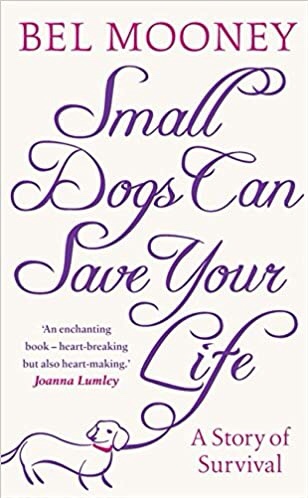
Although this is now packaged in a cutesy pink way, it’s quite a powerful memoir about loss and finding one’s identity against, written by journalist Bel Mooney and relating some of the most painful times in her life. Married for thirty-five years, Bel recounts the life shattering experience of her husband coming home and telling her he was in love with someone else. He had met an opera singer through his work and it had been an instant understanding between them. Through her pain, Bel could recognise this as love and he left the family home. While still in shock and starting to negotiate the terms of their divorce, Mooney rescued a small Maltese dog called Bonnie. Her story recounts the growth of her bond with this little rescue dog and how the simple act of looking after an animal can aid the process of recovery. The small steps it required to look after her small dog were the first tentative steps towards finding a new life, when she couldn’t even imagine what it might look like. When her husband’s new partner was suddenly diagnosed with terminal cancer, she even finds the strength to be loving and compassionate despite her own pain.

I know the power of a dog to heal. After the death of my husband I’d managed to do no more than put one foot in front of the other for about six months, when I bought a tiny cockapoo puppy. I collected him on New Year’s Eve and we settled in to a night in front of the fire with the TV on. I was watching the film Finding Neverland and the sequence where the boy’s mother slowly slips away while they perform a play for her really hit a nerve with me. The weight of the past six months seemed to suddenly become unbearable and for the first time in my life I actually considered what a relief it might be to not be here anymore. I knew I had enough medication in the house to do the job. The thing that stopped me was the bundle of fur I’d brought home that afternoon. In the battle going on inside my head I kept coming back to how scared and bewildered he would be. His first night away from his litter I couldn’t do that to him. Rafferty has been by my side ever since and on those days where I couldn’t face coming out from under the duvet, having to get up and let him out in the morning forced me to keep going. He’s now fifteen and his health is failing, but I’m still there each day supporting him like he’s supported me. Without him, I wouldn’t be here. So it seems that books and small dogs can save your life.

Posted in Throwback Thursday, Uncategorized

Throwback Thursday! Stuart: A Life Backwards by Alexander Masters.

Hardback with Masters’s original drawings.

I enjoy reading memoirs, especially when they’re innovative and try to show life in a different way. This fantastic biography does both. It’s unique in it’s subject – a homeless man the author meets while volunteering at a charity. It’s also unique because it’s told backwards- a device that has a massive emotional impact. Despite it’s subject, this isn’t a misery memoir. I’m not a fan of them myself, although I accept their therapeutic value, both as catharsis for the writer and as a powerful shared experience for the reader who’s survived similar experiences. I always feel prurient reading such personal and traumatic testimony. Although Stuart’s life is undeniably traumatic I never get that uncomfortable feeling when reading.

Stuart Shorter is a homeless, ex- junkie and possible psychopath. Alexander Masters first met Stuart out begging, then continues to spend time with him after securing a role as a fundraiser for Wintercomfort. His job is to make funding applications to different benefactors to keep the charity providing a day centre for homeless people in Cambridge. Set up in 1989 the charity worked with some of the worst cases living rough, giving them somewhere with supportive staff to spend time in. The founder was hoping to help individuals and reduce anti social behaviour in the city. However, when the main staff members, Ruth and John, were arrested for allowing drugs to change hands on the premises, Masters found himself at the centre of a protest movement. He also had to be more ‘hands on’ with the centre’s many users. This was when he met and formed a tentative friendship with Stuart Shorter. They were paired up to give talks around the country about the values of the charity and the campaign to free Ruth and John. They were the only people who had the time and Masters becomes intrigued with Stuart, who more often than not received a standing ovation after speaking – even if he did let out a stray ‘fuck’ from time to time. Stuart is intrigued to spend time with middle class people. ‘I thought middle class people had something wrong with them’, he says ‘but they’re just ordinary.’

This I think is the key to Master’s tale. Stuart, and some of the situations he finds himself in are genuinely funny. I also felt as if Stuart was looking at me as much as I was looking at him. The jarring contrast of Stuart’s everyday life to that of Masters, or to the reader really does hit hard. He’s a person whose life would be described as chaotic by social services or a mental health team. One or the other have been a constant in Stuart’s life, an amorphous mass of middle class do-gooders he calls ‘The System’. He’s had one service or another observing or judging his life since he was twelve years old. Like most homeless people he despises the system, because agencies that are supposed to support and help those who are struggling, are actually duplicitous. Using their observations to record and relay information to other agencies in a carrot and stick approach. Most people would assume the system is there to help, but it patronises, damages and blames too. There are welfare benefits and back to work schemes, but if the person doesn’t cooperate in come the police and prison. We learn that Stuart has been bounced round the care system, has been placed in a group home run by paedophiles, then placed into a brutal juvenile detention centre when he strays from their control. It’s easy to see why homeless people even become suspicious of things that are supposed to help, because once one part of the system comes in, everything else follows. He knows he was placed with paedophiles unwittingly, but as he points out, that doesn’t really matter when you’re 14 years old with a ‘grown man’s dick in your throat.’

It’s a brutal read in parts, but it has to be. I didn’t realise how dysfunctional the lives of my clients were, until I tried to describe to someone what my job entailed while at a ball. I was starting my career as a mental health support worker and my everyday was working with people like Stuart. I would help them with day to day tasks like shopping and budgeting, cleaning the house, and even just getting out of bed if they were struggling. People at my table couldn’t believe there was a job that entailed these things. It’s when I realised that there was a class of people more successful than me, who never learned about these incredible people and their difficult lives and I was proud to be someone who did know. The book is honest about what it was like to be a friend and supporter of Stuart. Sometimes it was frustrating, moving, devastating and other times it felt incredible. Yet we really hear Stuart’s voice too. Really the book is written by both of them. Masters never takes over or forgets that this is a collaborative effort. It’s not sugar-coated and at the beginning it’s Stuart who first reads Master’s manuscript and says he could do better. He needs to make it more readable, Stuart says, because people should want to read it, like a Tom Clancy novel.

‘Do it the other way round’ he tells Masters, ‘make it more like a murder mystery. What murdered the boy I was? See? Write it backwards’.

The BBC film starring Benedict Cumberbatch and Tom Hardy
Posted in Publisher Proof

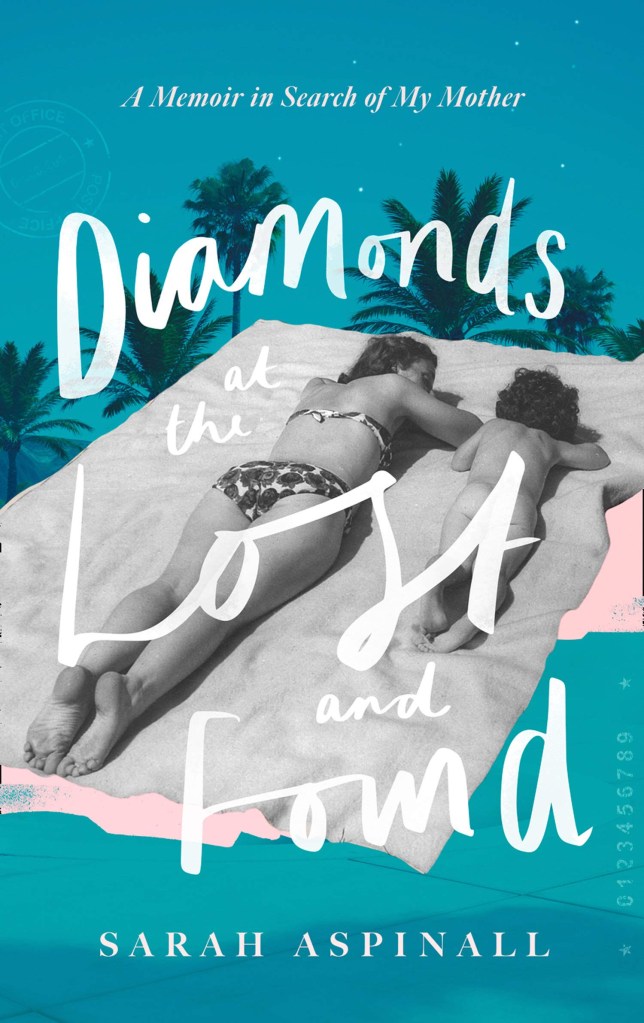
Diamonds at the Lost and Found by Sarah Aspinall.

This memoir sounded so intriguing and had such a great write up from other authors who I love, so I was very keen to read it. This is the story of a woman who didn’t live life by society’s rules. Even with a child in tow, she lived life on a knife edge in the hope of fulfilling the childhood belief she was destined for greater things than the poverty she was born into in 1930s Liverpool. My mum’s side of our family are from Liverpool and this was my grandmother’s era so I had a real sense of the sort of poverty the author’s mother might have experienced. As one of five in an Irish Catholic family with a father who was a miner, it can’t have been an easy life. I had thought my Great-Aunt Connie must have lived an interesting life having become pregnant as a teenager, yet managing to keep her daughter and bring her up as single mum. It would have been brave of my great-grandfather and ‘Mother’ (as she was known) to accept the stigma from neighbours and their church community. Connie had earrings that looked like mint imperials and was incredibly glamorous, always ready with a laugh or a joke and always had an admiring gentleman in tow, right up into her seventies. I thought she was fabulous. However, this author’s mother was in another league altogether and I loved hearing these incredible and mysterious escapades.

The best word I can think of to describe Sarah Aspinall’s mother Audrey is incorrigible. Our opening chapter takes us to a Hong Kong hotel bar in 1965 when Sally (now Sarah) is eight years old. The opening conversation between mother and daughter really sets the tone for the type of woman Audrey is. A piano player is softly running through his repertoire of Frank Sinatra tunes. Sally knows them all, she’s heard them in every piano bar she’s been to, but something about this song makes her ask her mother:

‘Why is she a tramp? I ask.

‘ She wants to be free to do her own thing’ she says, ‘you know’, then she croons about having the wind in our hair and being without a care’.

This small conversation opens a window onto a life that is far from conventional and often, shocking, like what transpires next. Audrey calmly identifies a lone man at the bar to her little apprentice who lets her Mum know she’s going to the bar for a Coke. Sally then wedges herself onto a bar stool next to the man and calmly asks him if he will ‘look after’ her Mummy when she goes to bed. When she’s pointed out, Audrey pretends to be bemused, but in a heartbeat turns herself into a fascinating femme fatale. She apologises for her bothersome daughter and says she must get her settled in bed. The man is hooked – could they possibly have a nightcap? Back in their room, Sally watches her mother refresh her smokey eye make-up and step into a mist of perfume, then she departs. Sally knows she won’t be back till morning, so settles to read herself a book, wondering what scent she will wear when she is older. Books are Sally’s only education and she is fascinated with love, currently studying the love story in Somerset Maugham’s Of Human Bondage.

I didn’t want to ask my mother, as she didn’t like to talk about things in books, but […] why didn’t one of those men who my mother met ever love her, when she was so beautiful and could sing and dance and tell funny stories and make the room light up? It must have been a run of terrible luck.

The author is brilliant at occupying the mind of a child, who is by turns naïve and innocent, but also knowing and wise beyond her years. Often she can see when an ‘opportunity’ is going sour before her mother. She is definitely a willing accomplice, but is that down to her mother’s training or simply a family trait? The pair flee from one country (and prospect) to another, via luxury travel and the best hotels if lucky, or on a wing and a prayer if not. It is glamorous, exciting and full of adventure, as Sally mostly presents it. However, it must have been destabilising and possibly even scary at times, especially in her youngest years. For me there was something touching about this little girl, taking herself to bed in a strange hotel while her mother works on their chosen ‘mark’ down in the bar. Sally treads a very careful line; this is no misery memoir, as she makes clear in the afterword. She writes truthfully, but stops short of outright criticism of her mother. Nevertheless, I sensed loneliness in a little girl who only has adults to converse with and is reading books she manages to find left in hotels, some of which are way beyond her years and understanding. This is how she gets an education of sorts. Although the book really does celebrate the glamorous and irrepressible Audrey, there is a hint of anger and resentment too.

Even back in Southport, Audrey isn’t the settling down, cosy type of woman at first. She’s something of a local celebrity. What she doesn’t seem to recognise is the void opening up in her daughter – that need to know who you are and where you’re from – coming from the lack of knowledge around her father and his death. She doesn’t remember him, but has enough skill at reading people to know that just under the surface of her mother’s party personality, is a deep sadness and even perhaps, depression that surfaces from time to time. This keen sense of perception is what drives Sally forward, into completing the jigsaw puzzle that is her mother’s life, for herself and for the reader. I was deeply engaged at this point, eager to understand both of these incredible women. When, finally, Audrey does find some contentment in life and Sarah has the settled family she has always craved, the anger and resentment does start to surface. Audrey appears none the worse for her escapades, but Sarah has paid a heavy price including her lack of education and structure. Now she rebels against rules that are being imposed for the first time. Yet, this is such a generous book. Although she tells the story honestly, Aspinall never judges and shows incredible compassion towards her mother. Yes, this is a very unorthodox mother and daughter relationship, but she didn’t want her memoir to be a grenade lobbed backwards, detonating the past. She allows Audrey to shine out of the pages as the beautiful, dazzling and vivacious woman she was. Meanwhile she shows herself at peace with the past and her mother, by becoming a smart, capable woman with a beguiling set of storytelling skills.

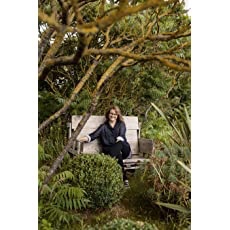
Meet The Author

Sarah Aspinall is a producer and documentary maker. She has four children and lives with her partner in London and on the South coast.

Posted in Publisher Proof

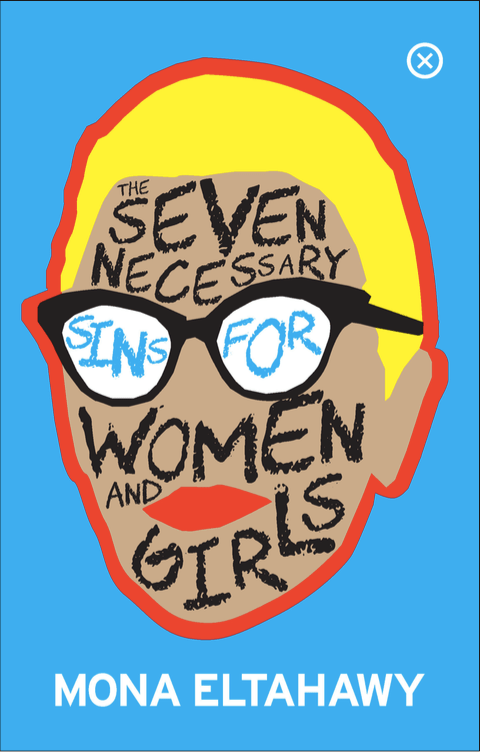
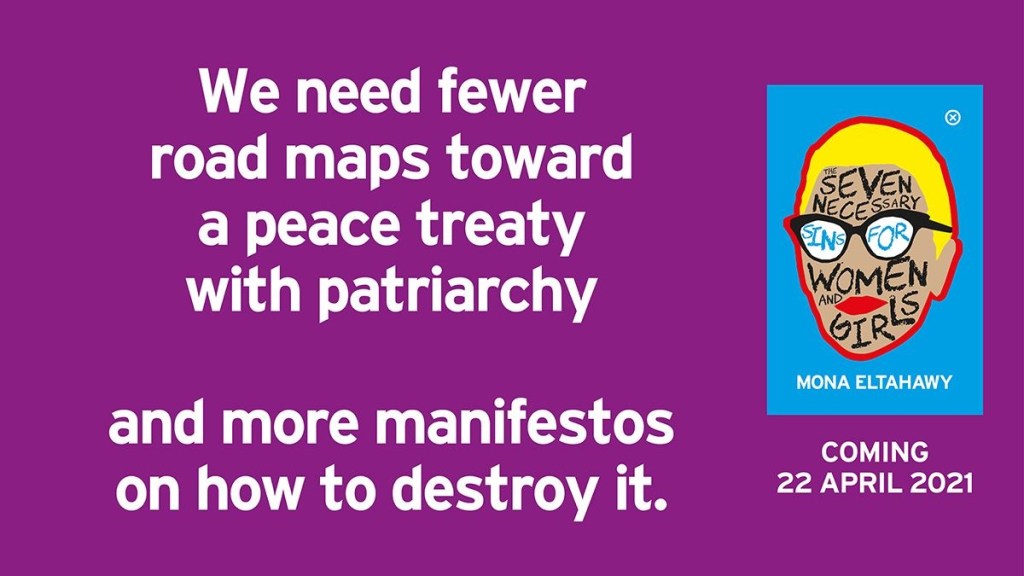
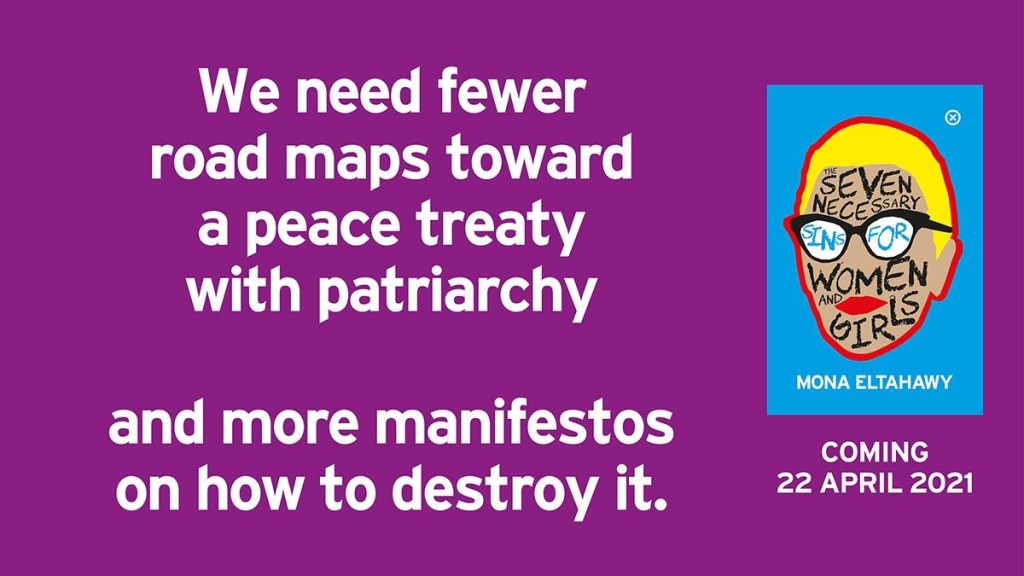
The Seven Necessary Sins For Women and Girls by Mona Eltahawy.

Fuck the Patriarchy!

This incredible book is a battle cry. So I thought I’d start with one. The one Mona uses whenever she is asked to speak at a podium on feminism. I started reading this morning, thinking I would sample a couple of chapters each day over the weekend, but before I knew it, the clock said 3pm and I’d read the whole thing. Once finished, I felt a renewed anger about things that had happened in my life, some of which chimed with the author’s experience. She shows that the patriarchy isn’t just ‘over there’ in the restrictions women live with in Saudi Arabia or in conflicts like the Balkan War or the massacre in Rwanda where rape was used as a weapon. It isn’t just with the celebrities and actors who accused Harvey Weinstein, it’s just that their voices were heard louder than the young black teenagers who accused R.Kelly. Every woman, regardless of race, colour, religion, class, sexuality or the gender they were assigned at birth, are ruled by a global patriarchy. It’s here, with a 47 year old middle class, disabled woman living in the rural wilds of Lincolnshire. You can shop at Waitrose and still be fucked by the patriarchy.

In case you wondered about the profanity, it’s one of the seven necessary sins the author would like women to reclaim and use to fight for equality. So I’m reclaiming it, because this book roused me and made me angry (another necessary sin).

‘Patriarchy is universal. Feminism must be just as universal. I want patriarchy and all who benefit from it to have the same look of terror, as that man in a Montreal club who, before he ran away, took a look at me so he could see the woman who dared strike back. I want patriarchy to know that feminism is rage unleashed against its centuries of crimes against women and girls around the world, crimes that are justified by ‘culture’ and ‘tradition’ and ‘it’s just the way things are’, all of which are euphemisms for ‘this world is run by men, for the benefit of men’. We must declare a feminism that is robust, aggressive and unapologetic. It is the only way to combat a patriarchy that is systemic.’

Every woman who reads this book must be roused by these words and understand that unless we all fight this, unless we all fight dirty and loud, nothing will change.

I could tell you about the author’s arguments, the incredible and eloquent rage that comes through in her writing, and the journey that brought her to who she is today, but I want you to discover this for yourself. I want you to read it and find your own connections to the arguments, the events she describes and have your own awakening. I can tell you about two ways I felt a personal connection with the author’s story and as I was reading how a righteous anger started to awaken within me.

I had a late awakening, about ten years ago really. That sounds terribly late, but there are reasons for that. I believe my mother was a feminist. Until I was around ten years old, she subscribed to Spare Rib magazine and read feminist books. However, our parents then discovered a new church – an offshoot of the American Evangelicals that the author talks about in her book – and everything changed. Despite having been in the Roman Catholic Church previously I hadn’t been old enough to feel it’s restrictions and I had always felt the ability to argue with it’s teachings, encouraged by the visits of our priest to school every week for question and answer sessions. So unfortunately, just as I was becoming a teenager, I came up against one of the most fanatical and restrictive forms of Christianity we could find. I was taught I should be quiet, demure, pure, and ruled by my father. I was taught a shame I’d never felt before, an awkwardness about a body that was growing, sprouting, forming curves too obvious to fit into their rigid boxes. I had to cover up, be modest, but still dress like a girl. Then as I grew older, I was taught the most important rule of all; I should not share my body with anyone else. The author describes this from the Islamic perspective:

‘My upbringing and faith taught me that I should abstain until I married. I obeyed this until I could not find anyone I wanted to marry and grew impatient. I have come to regret that it took my younger self so long to rebel and experience something that gives me so much pleasure.’

It’s a reminder that the ‘cult of virginity’ isn’t restricted to just one religion or culture.

For me, weird youth group sessions ensued where we were taught about which sexual activities were ‘acceptable’ -kissing – and that everything else should be saved for marriage. I was told about the ‘Silver Ring Thing’ phenomenon sweeping America, where a teenage girl would go through a ceremony where she pledged to her father that she would remain a virgin until she married. A silver pledge ring was then placed on her wedding finger, until it was removed for her wedding ring; one symbol of ownership replaced by another. I remember feeling that this was beyond creepy. My sexuality had nothing to do with my father. He didn’t own my body. Eventually I made the decision for myself that what I did with my body was my own business. I couldn’t imagine that God would truly be that interested in what a young woman did with her body. Evangelicals believe that the Bible is the actual word of God, but the truth was the Bible was written by men, edited by men, for the benefit of men. I reasoned that a supreme being had better things to do than police my vagina! So I did what I wanted and lied about it for a quiet life. Once old enough to decide I stopped going to church. This was the 90s, and I would sometimes drive to pick up Mum from church playing Rage Against the Machine and wearing my Hello Boys T-shirt and Wonderbra. We thought we had it sussed, that our mothers had sorted out this feminist lark. We were ladettes. We thought we could drink like men, have sex like men, and do any job we liked. The Spice Girls told us we had girl power and we believed it, but it was all surface and no substance. The patriarchy remained.

Years later, now a 35 year old widow with a disability, and in a very vulnerable place, I met up with my old youth pastor from the church. He didn’t attend any more and assured me he didn’t hold any of the beliefs he’d been trying to in-still us with as teenagers. I realise now that my world had turned upside down and I was looking for safety, but I mistook control for security. As we embarked on a relationship I felt happy and I really needed something positive in my life, not realising that given time, I could find my own happy. I thought the church was the origin of his patriarchal ideas, but really he’d been searching for a community that thought like he did. A place he could find a good, quiet, chaste girl who wouldn’t question walking three steps behind. The abuse started as soon as we were engaged, phases of total withdrawal of attention, time, and sex. Followed by rages if I questioned his behaviour, kicking furniture, throwing things and threats to leave. He was master of this house, he made the decisions, just like at work where he employed seven workers – all women. He isolated me from family and friends and made it quite clear that I was fat, ugly and nobody else would want me if he left me. If I’d had a bad spell with my multiple sclerosis he said I was lazy, needed to try a bit harder and did I realise how hard it was to find me attractive when I was ill? He flaunted cards and Facebook contact from other women and raged if I dared to complain. Luckily my family are persistent, so to get rid of them he took a huge gamble. Behind my back he made sexual advances to my Mum who was ‘more his type and age’ he admitted he liked her ‘quiet nature’ and had ‘fancied her for some time’. When I found out, a huge rage took hold of me so I drove home and asked ‘why haven’t you packed your bags yet?’ I ran round like a whirlwind, packing his bags and I threw them and him out onto the drive. I told him that I knew about his antics and that he had been psychologically abusive for the past three years. I told him I was done. That I wasn’t scared of him leaving any more. I’d rather be alone.

I couldn’t stop thinking about the letter he sent me afterwards, still controlling the situation by telling me he didn’t want to be with me any more, as if I hadn’t thrown his arse out on the driveway. He wrote that he found me ‘too much’. He wanted a Madonna and had found a whore. That he’d tried and tried but he simply couldn’t control me. Everything he wanted in a wife, was described by Mona in her chapter on profanity.

‘Women are supposed to be ‘less than’ and not ‘too much’. Women are meant to be quiet, modest, humble, polite, nice, well-behaved, aware of the red-lines. They are supposed to tread softly and within their limits. I am proud to be described as ‘too loud, swears too much, and goes too far’. When a woman is ‘too much’ she is essentially uncontrollable and unashamed. That makes her dangerous’.

At first his letter made me cry, I was hurt and vulnerable. Then that anger was roused again as I realised I liked the woman he described in that letter. She sounded fun, ballsy and exciting. She was intelligent and didn’t take any shit. She was formidable. So I made a pact with myself that I would always be that formidable woman and teach other women to do the same. Now I have two stepdaughters and I encourage them to speak up, to get angry, to be feisty and loud. This is the passage I read to them this weekend:

‘What would the world look like if girls were taught they were volcanoes, whose eruptions were a thing of beauty, a power to behold and a force not to be trifled with’.

I want my girls to know this. To go out into the world unashamed, uncontrollable and ready to smash the patriarchy for themselves and their sisters around the world. This book reignited my fervour. It may challenge you and your beliefs, but you must read it. Mona Eltahawy is a force to be reckoned with and I applaud her for this manifesto. It is moving and comes from a deeply felt sense of injustice. It is necessary. It’s impolite, brave, forthright and packs a mighty punch. Read it, then give it to your daughters, your nieces and your friends, because every woman should read this.

Meet The Author.

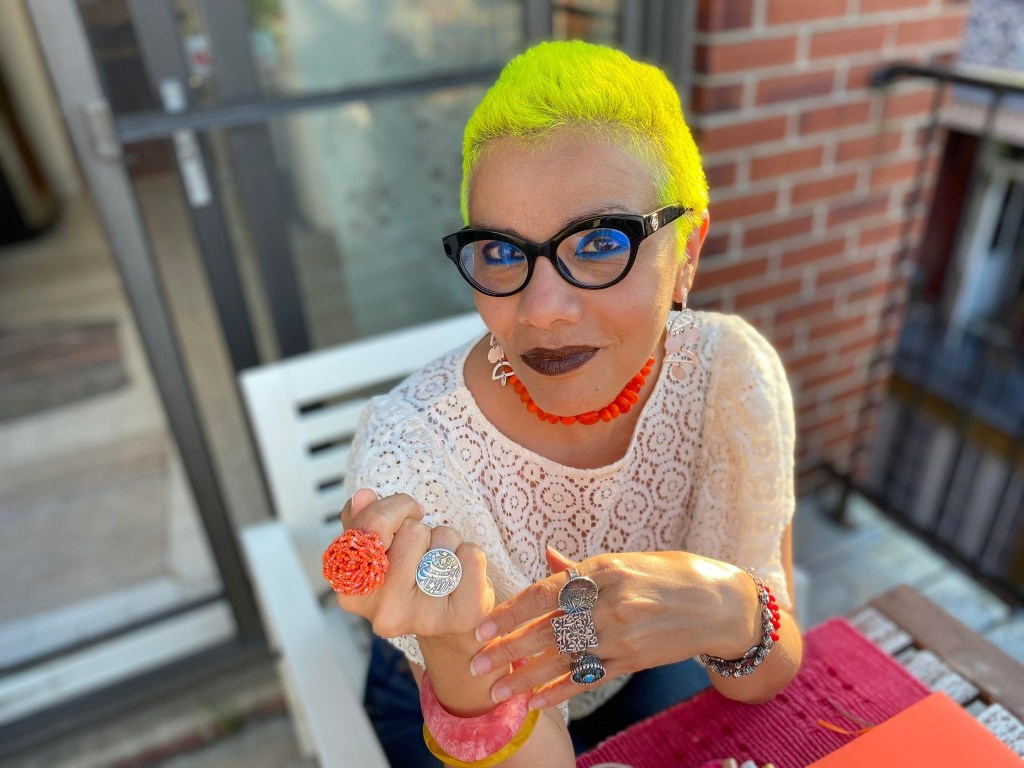
Mona Eltahawy is a feminist author and award-winning commentator and public speaker. Her work has been published in The Guardian, The New York Times, The Washington Post and other publications around the world. She is a frequent commentator on current affairs on the BBC, CNN and Al Jazeera and other media outlets, where her goal is always to disrupt patriarchy. She is the author of Headscarves and Hymens and recently launched her feminist newsletter Feminist Giant. Follow her on Twitter and Instagram: @monaeltahawy

About Tramp Press

Tramp Press was launched in 2014 to find, nurture and publish exceptional literary talent. Based in Dublin and Glasgow, they publish internationally. Tramp Press Authors have won, been shortlisted and nominated for many prizes including the Irish Post Book of the Year, the Booker Prize, the Costa, the Desmond Elliot Prize and the Guardian First Book Award.

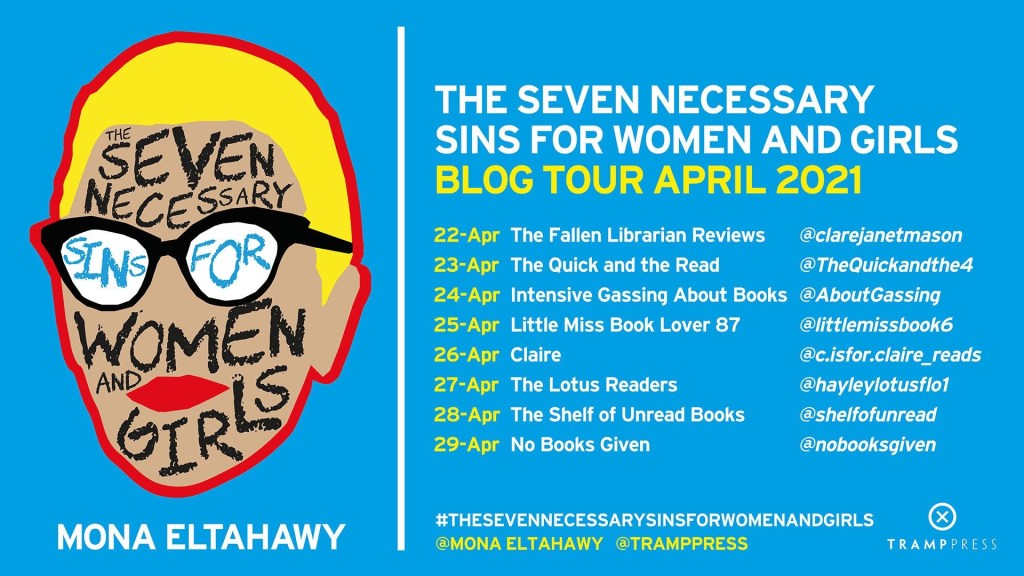
Please check out the other bloggers on the tour: