Posted in Netgalley

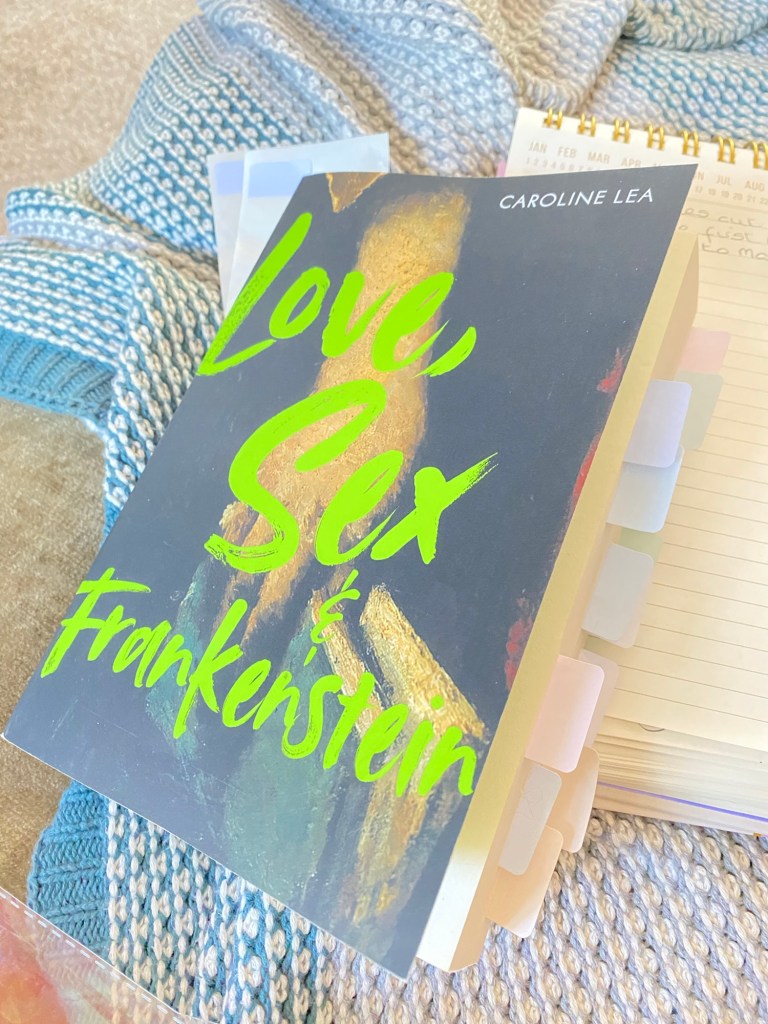
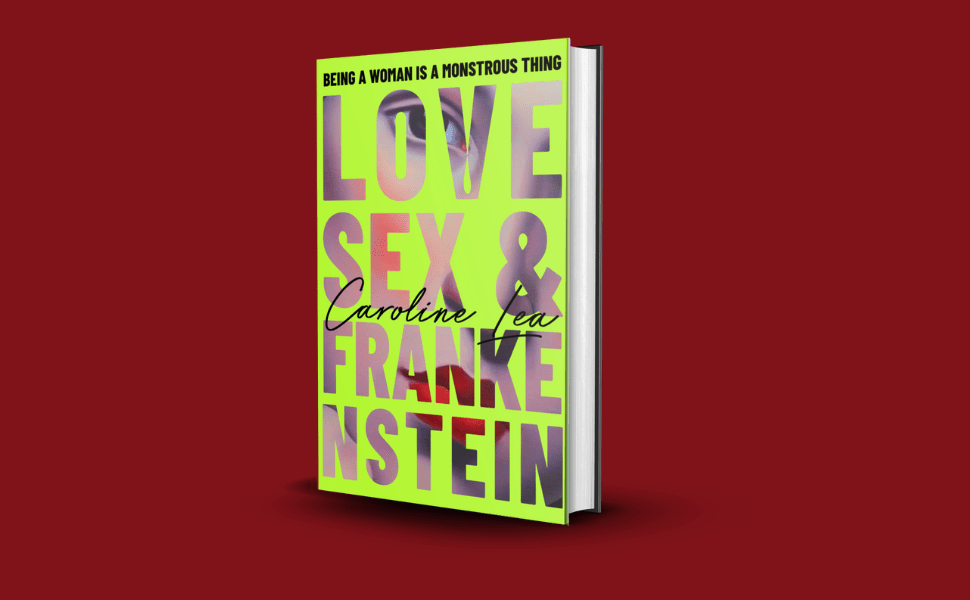
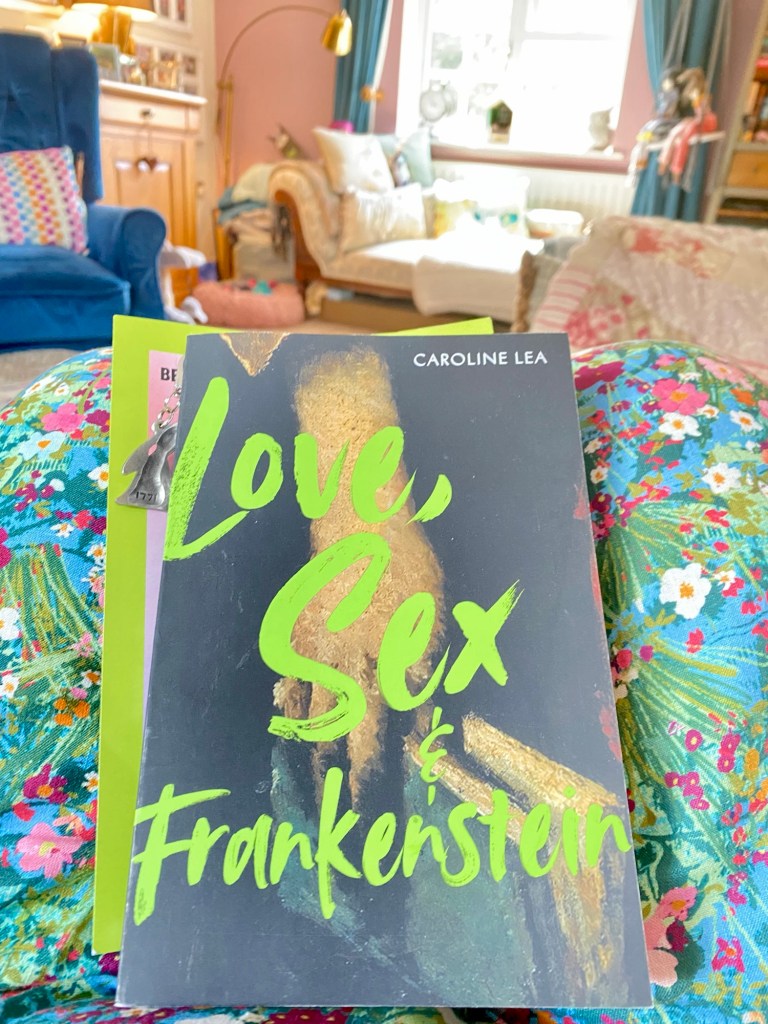
Love, Sex and Frankenstein by Caroline Lea

Mary Shelley, the author of Frankenstein, was born in 1797 to politician and writer William Godwin and his wife and fellow writer, Mary Wollstonecraft who wrote The Vindication of the Rights of Women. In her book she made, possibly the first, claim that women were not naturally inferior to men. It was a feminist manifesto centuries ahead of it’s time. Sadly Mary’s mother died only eleven days after she was born from puerperal fever, leaving Godwin to raise Mary as a single father. However, he remarried in 1801 to a widow with two children of her own, Clare being very near in age to her stepsister Mary. In 1841 Mary became connected to the poet Percy Bysshe Shelley, a well-known writer who was already married with three children. Shelley was 22 and Mary was 16. Facing nothing but criticism and social sanctions in London, the couple decided to escape to the continent along with Mary’s step-sister Clare. They then settled for a time on Lake Geneva, sharing a house with Lord Byron and his doctor Polidori. As the weather changed they become snowed in for a period of time and one of the diversions thought up by Byron was that each of them write a ghost story. Up until this point, Mary has only written in her journal but she can feel something stirring within her and in this strange place, Frankenstein’s monster is born. 

Probably every English Graduate who specialised in Gothic Fiction has fantasised about a stormy night, in a house on the edge of a lake near Geneva. That night was supposedly the genesis of the first vampire story – Polidori’s The Vampyre – and Mary Shelley’s classic horror, Frankenstein. It always seemed strange to me, how two iconic horror legends were conjured up in the same place on the same night. Of course it was a longer period of time and everything these writers experienced in their young lives so far was fuel for their creativity. The setting is definitely strange and unsettling. Caroline Lea paints a picture of the lake becoming monstrous, magical but evil too and no longer a place where children paddle and dive underwater. The sky is dark, trees look like ‘funeral lace’ and ash rains down from above. Local people have noticed that at times the lake throws up strange shadows and clouds, some that look like sky cities floating in the air. When they find a man called Karl Vogel drowned in the lake with his eyes turned from brown to blue – they are shocked, but this is a place of transformation. It’s as if nature is creating the perfect circumstances for monsters to be born. 

This incredible book. is a brilliant combination of historical and horror fiction, with a large side order of feminism – all of my favourite things. Every time I put the book down I would look at my husband and say ‘wow’ then try to write down everything that struck me. I ended up with ten pages of notes that I now need to build into coherent sentences and do this novel justice! Firstly the historical settings were incredible. When we first meet Mary and Clare, they are living in lowly lodgings in London. Mary’s baby is born and they are desperately trying to avoid the bailiffs that seem to follow Shelley wherever he goes. The author really captures 18th Century London with the girl’s filthy lodgings a bleak place to look after a baby. They’re also struggling to sleep, worried that any moment their flimsy door will be kicked down. This is the reality of being the mistress and illegitimate child of a well-known poet who does not pay his debts and has retreated back to his family home. I never imagined that Shelley left her in this position. I’d imagined them living on Lake Geneva complete with servants and all the excesses that Byron was famous for, then travelling around Europe, leaving their troubles behind them. Their relationship would probably be considered abusive now, not just because of their age difference but because of the way Shelley manipulates her. Something that only worsens when Byron and his peculiar brand of chaos are on the scene. When Mary tries to stick up for herself, all the qualities he supposedly loved about her – her independence, her spirit, her intelligence – are thrown back at her, in order to control, manipulate and punish her. He calls her a good mother, but also accuses her of fretting and becoming boring. It is her independent spirit that landed her in Shelley’s arms but he’d rather she didn’t have the independence to question him, refuse him or leave him. His threat is very clear:

‘Women who leave their children, will never see them again’. 

Of course Shelley wouldn’t give up his carefree life to look after his child. He would probably hire a string of nursemaids to seduce then discard, until his only option is to dump his son on his long suffering wife who is pregnant again. Mary starts to realise that although he professes to love her, once she has become a mother she is always expendable. My urge to slap Mary’s step-sister Clare started early in the book and flared up very frequently. She has absolutely no girl code. She had left with Mary in the hope of rekindling a brief liason with Byron. However, it’s clear she’s happy to switch affections if he isn’t there, even onto Shelley. She flirts and simpers, touching his arm and holding his hand to guide her outside. Byron’s treatment of Clare is utterly cruel, he manages to ghost her even when they’re finally face to face. He refuses to acknowledge she exists and then only picks her up again when the weather descends and there are no other prospects. Despite this it is hard to like her, especially when she gains snippets of information from Shelley only to drop them on Mary when they’ll hurt the most. The arrogance of both poets is endless! Byron isn’t just a seducer of women, he drinks and takes laudanum at every opportunity too. He abuses his supposed friend and doctor Polidori, considering him dull and mimicking his stutter in front of the women. His own disability is never mentioned by anyone – the limping stride he’s had since childhood is overlooked or even compensated for as Mary notices some people unconsciously falling into step next to him, slowing their stride to match his. His impulsivity is like that of a toddler, moving mid-week from a hotel to the house on the lake, determined not to pay for the weeklong stay he originally booked. It will cost more for the hotelier to clean up after his bizarre animals, including two eagles, a huge dog and a monkey. He sets his sights on Mary and despite his magnetism she can see what he truly is – a boy throwing mud at windows to detract from his own badness and shortcomings. 

The setting is glorious and it’s clear why frozen mountains, cavernous lakes and the arctic weather feature heavily in Frankenstein. It’s where Mary goes to have time to think, away from the chaos and hedonism indoors. The seemingly magical weather conditions are explicable, even though they feel supernatural. Lake Geneva is known for throwing up mirages called ‘Fata Morgana’. They take the form of distorted boats just above the horizon or even ‘castles in the air’, where a whole city seems projected into the clouds. Named after Morgan Le Fay the mirages are created by rays of light pass through air layers of different temperatures. The sheets of ice on a lake keep the surface air cooler than in the layers above. It’s easy to see why people might by unnerved by something that appears so otherworldly. A more psychological phenomenon that’s clearly takes hold within the house is cognitive dissonance, felt strongly by Mary in particular. The villa is starting to feel like a place she doesn’t belong because her emotions and reactions don’t seem to match anyone else’s in the group. 

‘She feels like a stranger in the foreign land of this room, unable to understand their bright chatter and loud laughter […] every moment takes her further away from these awful people who carry on as if she isn’t there at all’. 

Motherhood and the reality of being Shelley’s mistress has changed Mary and it’s so relatable. She wonders whether all women feel pulled in so many different directions at once. She also wonders if she ever had a true understanding with Shelley. A fire that lit up her heart and her mind is now glimpsed very rarely and she wonders if it ever truly existed. Has she fallen in love with her idea of Shelley – the one who creates the grand illusion of romance in his poems. He doesn’t love her, merely the idea of love itself. In disappointment with all men she turns to the wisdom of women, particularly her mother’s work. Mary Wollstonecraft was the first woman to write a feminist manifesto and she truly understood what needed to change for women – the problem of having to depend on a man. She realised that nurturing women’s learning was the first step: 

‘Strengthen then the female mind by enlarging it and there will be an end to blind obedience’. 

Women could only overcome their dependence on men if they were educated and could earn their own living. In Mary’s dark night of the soul she hears her mother’s voice encouraging and coaching her and the minute she does Mary’s able to breathe again and see a clear way to support herself – by selling her writing. Once she can do that, it no longer matters whether Shelley is inconstant or distant – she does not depend upon him for security and stability. She is ashamed that despite her intellect she has allowed this man to reduce her. Yet she has to tread a fine balance and think these things rather than say them outright. She fears that Polidori’s friendship with the two men, means they have convenient access to a doctor. If she fully expresses what she feels might Shelley think her mad and seek to have her committed? However, she is furious that she might be asked, yet again, to grant forgiveness to a man who is not sorry. She feels that both poets have taken and ruined promising young women, not caring that the consequences of their actions will rest solely on the girl’s shoulders. She wonders what it must be like to take up space in the world, to believe it is your birthright to dictate the temperature of every room they’re in. It is Byron’s arrogance that becomes her blueprint for a future self, allowing herself to be angry and consequences to be damned. She wants to be more like him, true to her emotions and principles and saying exactly what she thinks without worrying about the outcome. In fact it’s a dalliance with Byron where Mary seems to find more strength. It’s an uncomplicated exchange of desire, full of passion, but at no paint does he take anything from her. It gives her the strength to confront Shelley about returning to his wife and leaving both women at the mercy of debt collectors, out of sight and out of mind. She finds her voice and addresses Shelley as a man, rather than the great poet, making her feelings about his infidelity very clear, but also pointing out his cowardice and the times he hasn’t been there for her. 

I loved how the story of Frankenstein’s monster is psychological fragments stitched together, just like the monster himself. Through writing Mary processes her own emotions and thoughts which then feed into the emotions of the abandoned monster. She remembers stories of medical students digging up bodies and stealing them for dissection. Then she gives the creature an internal monologue, ripe with the emotions she has felt, but never expressed. Frankenstein leaves his monster just as Shelley left Mary and their baby in squalor. She’s writing a criticism of men who create with no thought for the thing they’ve created. Victor Frankenstein goes to sleep expecting his creature to die and feels nothing. The creature meanwhile feels a combination of Mary’s grief and abandonment, first losing her mother and then the loss of her father, a man who brought her up to have a rebellious spirit and think for herself, but rejected her when she lives by these principles. Mary is this bewildered and angry creature and that’s perhaps why she gives her monster the equivalent of philosopher John Locke’s tabula rasa – the blank slate of a small child ready to experience nature, love and all that is beautiful. Frankenstein’s monster embodies the nature/nurture debate in that the creature isn’t born evil, it’s other people’s cruel treatment of him that makes him monstrous. Her writing has processed all these feelings and working through them makes her feel hopeful for the first time. She might return to London with her son and instead of being beholden to Shelley or her father, she could keep them both with her own writing. 

Typically, blinded by his own arrogance Shelley doesn’t see himself in Victor Frankenstein at all. At first Mary thinks he’s feigning ignorance, but he genuinely can’t see his own reflection. He sees too much ambiguity in the story, thinking either the creature should make Victor look at his own shortcomings or she should make it so monstrous that no reasonable person would expect Victor to care for it. I loved the way she takes his criticism, because it shows us how much Mary has grown up. She realises that at every stage on the way to publication there will be a man who wants to shout his opinion. It doesn’t matter, because she knows they will all be mistaken. The book, like the creature at it’s centre, will be sent out into the wilderness looking for a creator. She’s fairly sure it will find one, because she knows her book is special. As for Caroline’s book, this is an absolute masterpiece and made me think about Frankenstein from so many different angles. Caroline Lea’s Mary take us through the psychological trauma and brings to life her relationship with Shelley, often told in a rather salacious or romantic way without any thought to the inequality between them. Through this experience she guides the reader through the genesis of this incredible novel. It is stitched together from so many different parts, but here we can see them all and understand the circumstances they come from. What Caroline has written is a Bildungsroman, a novel of Mary’s rebirth from girlhood to womanhood. Frankenstein is the chronicle of that birth, as messy, terrifying, horrific and momentous as it is. This birth being the genesis of Mary Shelley as a woman but also as a writer of one of the most important novels in literature.                                                                                                                                                                                                                                                                    

Meet the Author

Caroline Lea grew up in Jersey and gained a First in English Literature and Creative Writing from the University of Warwick, where she has also taught on the Creative Writing degree. Her fiction and poetry have been longlisted for the BBC Short Story Prize and Sunday Times Short Story Award, and shortlisted for the Bridport Prize, the Fish Short Story Competition and various flash fiction prizes. Her novel, THE GLASS WOMAN, was published to critical acclaim and shortlisted for the HWA Debut Crown. Her next novel, THE METAL HEART, was Scottish Waterstones Book of the Month. Her most recent novel, PRIZE WOMEN was featured and acclaimed on BBC Women’s Hour. Caroline is passionate about helping other writers to grow and succeed: she teaches creative writing both privately and, currently, for Writing West Midlands and is often recruited to give talks at literary festivals and events. She currently lives in Warwick with her partner and children and is working on her next novel about Mary Shelley writing Frankenstein. Her books often feature ordinary women in extraordinary circumstances.

Posted in Personal Purchase

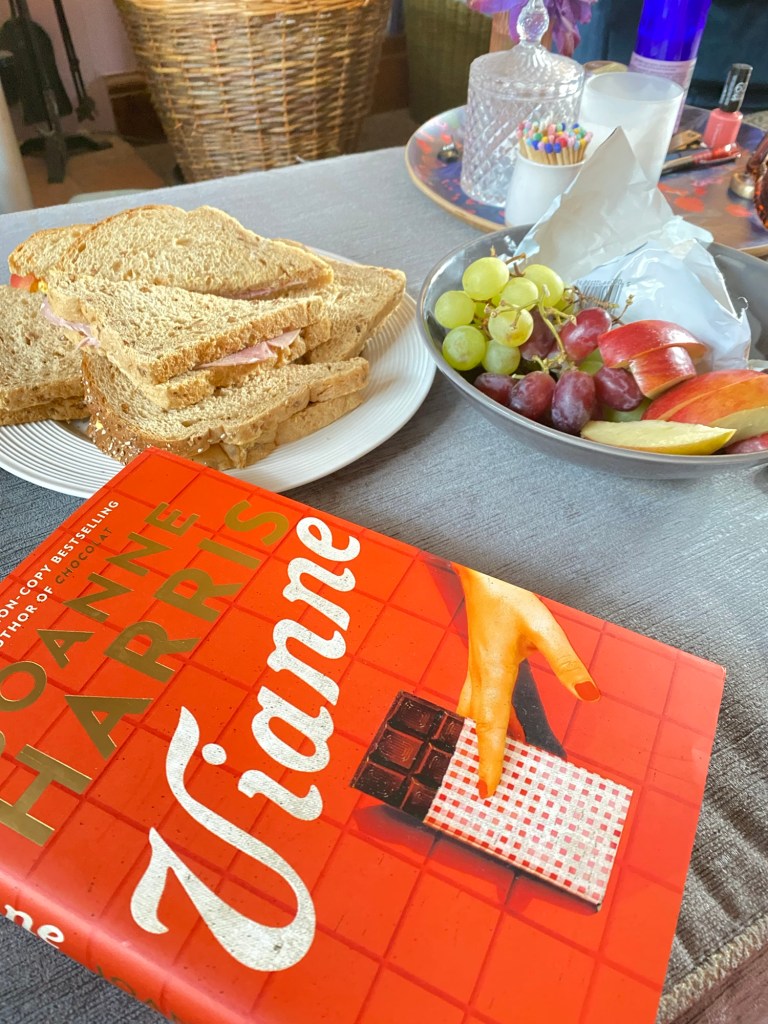
Vianne by Joanne Harris

As Vianne scatters her mother’s ashes in New York, she knows the wind has changed and it’s time to move on. She will return to France, solo except for her ‘little stranger’ who is no bigger than a cocoa bean but very present in her thoughts. Drawn to the sea she blows into Marseille and to a tiny bistrot where owner Louis is stuck, struggling with grief for decades after losing his wife Margot. She charms herself into a waitressing job for bed and board, but with his blessing she starts to cook for his regulars using the recipe book Margot left behind. Louis has one stipulation, she mustn’t change the recipe at all. She revives the herb garden and starts to make friends, including Guy who is working towards opening a chocolate shop. This is going to be the place to have her baby, but then she must move on. She can see her child at about six years old, paddling by some riverboats tethered nearby, but she can also see the man her mother feared. The man in black. Vianne has inherited a peculiar kind of magic that urges her to fix the lives of those around her and give them what their heart truly desires. This is fine when it’s discerning their favourite chocolate, but can cause problems when it becomes meddling. Her mother warned her that she shouldn’t settle too long in one place and Vianne knows she has the strength to leave whenever she feels it’s right, but is thinking about those around her? 

What a joy it is to be back in Vianne’s world. It’s like being back with an old friend and in a couple of sentences we’d picked up where we left off. This is a younger Vianne, aware of her burgeoning abilities, but inexperienced in the power she holds and it’s effects on others. Part of that ability is a natural charm and willingness to work hard. She takes time to win people over. She’s happy to take on a challenge whether it’s the recipe book, the garden or the chocolate shop. She merely softens the edges of all this with a ‘pretty’ here and there or tuning into someone’s colours. She has a natural ability to make the best of things, whether it’s adding a vase of flowers to a room or a pinch of chocolate spice here and there. It doesn’t do the work, it just deepens the flavours or enhances what’s there. There’s that little bit too much optimism, not fully reading a situation before wading in, that comes with youth and inexperience. She’s streetwise, used to watching her back. She knows how to protect herself and when to run, but lacks emotional intelligence. She’s unaware that breaking down someone’s defences can leave them vulnerable or even broken. Vianne doesn’t have a malicious bone in her body though, just youthful exuberance and emotional immaturity. 

As always there are wonderfully quirky characters with lots of secrets to uncover and others who become real through memory, artefacts or reviving something they loved and giving it life. Louis has a grumpy exterior, not as grumpy as his friend Emile, but definitely a tough shell and a rigid routine. Every day he cooks for his regulars never deviating from the recipes or her kitchen equipment. Vianne has to use specific pans for certain dishes and ancient utensils that could do with an update, but she doesn’t complain. On Sundays he visits the cemetery, but instead of going to the soulless high rise mausoleum where Margot is laid to rest, he visits her favourite poet and leaves a red rose. Vianne is touched by his adherence to this routine, but it’s only when she is in touch with Margot’s spirit that she can see the full, complicated picture. As she uses the kitchen she feels Margot’s sadness and anxiety. Her need for a baby comes through strongly. Was this the unhappiness at the centre of their marriage? Emile is very difficult to get a handle on, he doesn’t respond to Vianne’s charm or her chocolates. His concern is that she will take advantage of Louis, but the more she seems to settle the more hostile he gets. I enjoyed Guy and the chocolate shop, but it’s another occasion where she doesn’t get the bigger picture. Guy is quite similar to Vianne in temperament, drive and enthusiasm. He seems utterly different in character to his friend Mahmet. Vianne notices Mahmet’s more pessimistic nature and concerns about money. She puts it down to the friend’s different backgrounds and experience, but I could see that Mahmet was a realist and his concerns might be valid. It becomes clear that Guy is a dreamer and as a child of rich parents has never faced the consequences of disaster. He also has a tendency to bail out when things get difficult. 

Motherhood is the major theme of the book from Vianne’s pregnancy to the sadness of Margot and the relationship Vianne had with her own mother. There were memories of Vianne’s mother throughout and she has to battle with her mother’s voice constantly. She has internalised her mother’s voice to such a degree that it’s become one of her own inner voices. She fights against it, letting herself feel that natural urge to belong especially when Louis starts to get ready for the baby’s arrival. Part of her wants to stay, but her mother’s adage about becoming too comfortable is insistent. Is there something they were always running from? She’s angry with her mum in some ways, thinking about what she’s missed out on – a home, a wider family, school and friends her own age. It may be there was a good reason for their anonymity but her mum was all she knew making it all the more devastating when she died and Vianne was left utterly alone. Vianne’s own glimpses of motherhood are in the future, when her baby is a small child. She’s absolutely sure it’s a girl and the name Anouk comes to her. It seems that although her instinct and inner voice suggest they keep moving, she doesn’t want Anouk to have the upbringing she did. She wants Anouk to have a sense of belonging, a school and local friends, which gave me a lovely flash forward to Chocolat and Anouk running wild through the village with a pack of friends behind her. She remembers an instance when her mother insists they leave behind Vianne’s toy rabbit to teach her not to get attached to things. Is it Vianne’s memory of this incident and longing for that toy rabbit that conjures up her daughter’s later imaginary friend, the rabbi Pantoufle? I loved these little links to the future. 

The details and images they conjure up are always the best part of this series for me, because they take me on a visual journey. I was fascinated to read in her Amazon bio that she has synaesthesia, because I do with certain colours and I can feel that in her writing. The author weaves her magic in the detailed recipes of Margot’s book, the incredible chocolates that she and Guy create and the decorative details of their display window with it’s origami animals and chocolate babies. The most beautiful part is how Vianne brings people together. Yes, it’s partly magic but it’s also her kindness and lack of judgement. The noodle shop next door to the chocolate shop leaves rubbish and oil drums in the back alley which are an eyesore. When they’re reported the owner blames Mahmet, possibly due to his seemingly unfriendly demeanour. Vianne spends weeks taking them chocolates and chatting, slowly gaining their trust until they’re helping out for opening day. She even manages to get Louis and the fierce Emile to visit the shop, even though it’s in a part of the city Emile swears neither of them will visit. It’s when we see what Vianne can accomplish on days like this that we see her at her best – thinking forward to her Easter display window in her own shop or the meals cooked for friends under starlit skies. Vianne is a glowing lantern or a warm fire, she draws people to her light and to bask in her warmth. This is also why readers who love the Chocolat series return again and again. We simply want to be with Vianne and that’s definitely a form of literary magic. 

Out Now From ORION

Meet the Author

Joanne Harris (OBE, FRSL) is the internationally renowned and award-winning author of over twenty novels, plus novellas, cookbooks, scripts, short stories, libretti, lyrics, articles, and a self-help book for writers, TEN THINGS ABOUT WRITING. In 2000, her 1999 novel CHOCOLAT was adapted to the screen, starring Juliette Binoche and Johnny Depp. She holds honorary doctorates from the Universities of Sheffield and Huddersfield, is an honorary Fellow of St Catharine’s College, Cambridge, and a Fellow of the Royal Society of Literature.

Her hobbies are listed in Who’s Who as ‘mooching, lounging, strutting, strumming, priest-baiting and quiet subversion of the system’. She is active on social media, where she writes stories and gives writing tips as @joannechocolat; she posts writing seminars on YouTube; she performs in a live music and storytelling show with the #Storytime Band; and she works from a shed in her garden at her home in Yorkshire.

She also has a form of synaesthesia which enables her to smell colours. Red, she says, smells of chocolate.

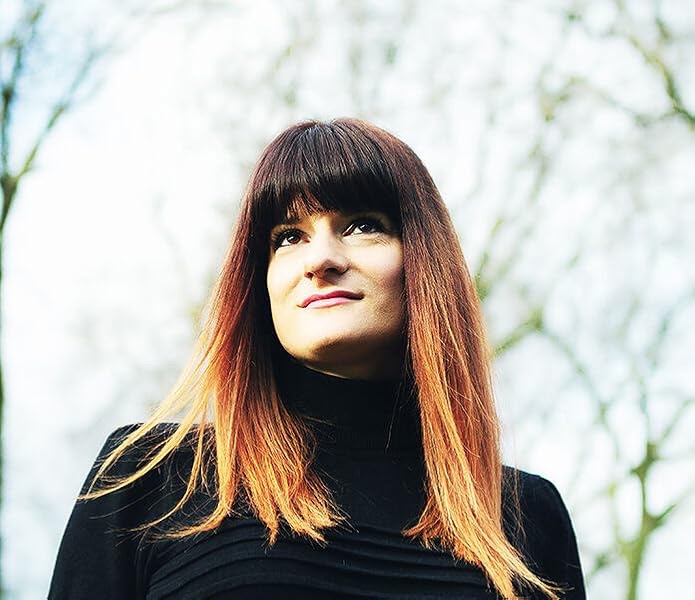
Photo ©Frogspawn

Posted in Netgalley

The Eights by Joanna Miller 

I pre-ordered this book as soon as I read the blurb. I could see myself falling in love with this story of four pioneering women who attend Oxford University as part of the first cohort to gain an actual degree. The four women arrive at Oxford in a time of great upheaval. The First World War has ended and women have just been awarded the vote. Women have experienced more freedom during war time, by working to replace enlisted men, volunteering for the war effort. Beatrice comes from a progressive family, with a suffragette mother who attended Oxford herself. Beatrice is very political, obviously a feminist and is used to being noticed, as she’s usually the tallest woman in a room. Marianne is a scholarship student, but she seems to have secrets. She returns home every other weekend and struggles financially but she is determined to get what education she can. Ottoline (Otto) comes from a wealthy family, but is haunted by volunteering for a nursing role during the war. She found it so distressing, she was redeployed as a driver giving patients transportation rather than working on the front line. She’s had symptoms of PTSD ever since, but also feelings of shame that she couldn’t do her duty. Dora also struggles with the consequences of war. She received a letter from her fiancé Charles’s regiment to inform her he’d been killed, then only two weeks later her brother George also lost his life. She still sees Charles wherever she goes and being so close to his university only serves to keep him at the forefront of her mind. These four girls are assigned to a corridor where the rooms start with the number eight, giving them their affectionate nickname. This seemingly random allocation starts strong friendships as the girls help each other negotiate their university work, their memories of the war and being taken seriously by their male counterparts. 

Oxford University is the oldest English- speaking university in the world, having and I was amazed to read it was founded in the 11th Century. The first colleges for men were fully established 200 years later and the Bodleian Library opened in 1602. Women were only starting show interest in an Oxford education in the late 1800s and four women’s colleges were established, however even after years of negotiation to do the same courses as men, women had to be chaperoned to lectures. I was also amazed that despite doing exactly the same exams, women could not be awarded degrees and dons would still refuse to teach them. I couldn’t imagine doing all that work, then having nothing tangible to show for it. It must have been soul-destroying. The author’s story begins after women got the vote and it took until 1920 for women to become fully enrolled at the university as men had been, a ritual called matriculation. The author lays out this facts at the beginning of the novel, which is brilliant for setting the scene generally but also allows us into what is an exclusive world with it’s own language and culture. She separates her book into the named terms – such as Michaelmas or Hilary – and lays out the dress code and rules, different for men and women. She also lets us into what the exams are called and has a glossary at the back in case you get lost. Finally she splits her first chapter between the four girls so we get a really good sense of who they are and where they’re from.

This is a real character led novel from Joanna Miller, creating a similar feel to those novels I loved as a girl such as the Little Women series or What Katy Did At School. With both of those novels I felt like I knew the characters and they would be great fun to be friends with. I loved the secret societies, the scrapes they got into and the character building lessons learned. This has all that, but with great emotional heft and real, gritty issues from that time period. I loved how the characters developed over time and how each of the friends supported but also changed each other with their different backgrounds and perspectives on the world. I felt Marianne’s predicament strongly, in that she’s landed with three friends who are reasonably comfortable financially. I felt it when they all swapped presents for Christmas, but Marianne couldn’t afford to buy for each of them, so instead created a framed favourite poem each. Her offerings are always from the heart and she’s definitely the most thoughtful and most serious of the girls. She also has the hurdle of illness to climb over, as well as whatever takes her home on weekends. The others notice that she’s never managed her reading so what is she doing? She has the constant fear of not passing the year and losing her scholarship, so she’s mentally preparing herself for the eventuality of only spending one year studying. Ottoline is probably her opposite, in fact if it wasn’t for her love of maths she might be tearing about London with her sister and the rest of the Bright Young Things. There’s the rather imperious side to Otto, such as the way she’s always scuttling into tearooms and the nickname ‘Baroness’ that she earned in the war. However, there’s a softer side too and that terrible sense of failure she still feels. Yet she definitely comes through for Marianne when she contracts flu. Otto proves capable of dealing with bodily fluids, cooling Marianne in the bath and even washing her down with a damp cloth. She is even the first to uncover Marianne’s secret and guards it ferociously. 

Beatrice is living with the weight of her mother’s success, both as a student of Oxford and a suffragette. She is a woman of ‘considerable reknown’ and this has given Beatrice an interesting childhood. She now has several hobbies – writing letters to politicians and watching debates in the commons, propagating orchids and being able to read Ancient Greek. She seems the perfect fit for Oxford but has never really lived in close proximity to other young women or lived anywhere but the family home in Bloomsbury. Two key events in the book seem to shape her future. She meets a young woman called Ursula who is outspoken, political and wears men’s clothing, which is much more comfortable than women’s. Beatrice is bowled over by her new acquaintance and is determined to wear men’s shirts and ties from then on. There is also the ceremony for her mother who will finally be awarded an Oxford degree. There’s a constant push and pull between who Beatrice is and where she has come from; does she accept and enjoy the legacy of her mother, or does she move away from it? Through her we learn about some of the most harrowing aspects of the suffragette’s fight, particularly the way the women were treated as protestors and prisoners. Dora is a delightful girl from the country, who comes to university seeming rather old-fashioned. Her longer skirts and waist length hair seem incongruous when hemlines are rising and hair is being shingled shorter than ever. Yet she’s weighed down with the early throes of bereavement and has come to Oxford in the hope of feeling closer to the memory of her fiancé who should have come to Queen’s College. She wants more from life than to pour tea, play whist and prop up her mother whose grief is inconsolable. Dora will perhaps change the most and with a terrible shock to come, she may have to make a decision between the new life she has created or her old one. 

I loved every moment I spent with these young women. They are all equally interesting and important so I couldn’t pick one I gelled with most. I loved Beatrice’s awakening, her straight forward manner and her bravery. Otto made me laugh and became so much more nuanced than the spoiled rich girl she could have been. Dora’s gentle strength is admirable, especially when it is tested. Marianne is the dark horse of the group, but she’s surprising and has a strong sense of what is right for her. This is a favourite time period for me so I loved the clothing, the outings, the rising tide of women wanting more from life than a ring and motherhood. These women are the birth of who we are now and I think the author was really successful in portraying issues that are still relevant. As we see women’s rights being eroded and the misogyny on social media, the novel is also about how men treat women. It can even be seen in small ways, such as the pranks played on the women by male students. However, it’s also the control wielded by a father figure or professor, the deception and double-standards men use to manipulate women, the sexual predator or abuser who finds a chance moment or a position of power to commit violence. I believe that just the chance to pursue their education with the freedom men take for granted, is a huge step for the women in terms of status but also self-confidence. However, it is the friendship of these four women, first and foremost, that helps them grow. Their unflinching support and understanding of each other is beautifully drawn and brings to mind something I’ve always said to women on my ‘authentic self’ workshops; men may come and go, but it’s the women in your life who will hold you up’. 

Out now from Fig Tree

Meet the Author

Joanna has always loved stories – even from an early age, when the Headteacher complained to her parents that she had read all the books in the school library. Joanna went on to study English at Exeter College, Oxford and later returned to the University to train as a teacher.

After ten years in education, she set up an award-winning poetry gift business. During this time, she wrote thousands of poems to order and her rhyming verse was filmed twice by the BBC.

Unable to resist the lure of the classroom, Joanna recently returned to Oxford University to study for a diploma in creative writing. THE EIGHTS is her debut novel and is inspired by her love of local history and historical fiction.

When Joanna is not writing, she is either walking her dog or working in the local bookshop. She lives with her husband and three children near the Grand Union Canal in Hertfordshire, UK.

Posted in Publisher Proof

Marshal of Snowdonia by Simon McCleave 

Living and working in Snowdonia was always retired detective Frank Marshal’s dream. Until a phone call asking for his help turns it into his worst nightmare.

Retired detective Frank Marshal lives in a remote part of Snowdonia with his wife Rachel who is suffering from dementia. Working as a park ranger, Frank gets a phone call from close friend Annie, a retired judge. Her sister Meg has gone missing from a local caravan park and she needs his help to find her.

As Frank and Annie start to unravel the dark secrets of Meg’s life, it seems at first that her disappearance might be linked to her nephew and a drug deal gone wrong. In a shocking twist, their investigation leads them to a series of murders in North Wales from the 1990s and a possible miscarriage of justice.

Can Frank and Annie uncover the sinister truth so they find her sister in time to save her? Or will a brutal serial killer add Meg to his list of victims?

I love Snowdonia and have visited at least once a year since I was a child, even now staying in or close to the farmhouse we’ve booked since I was 12 years old. I also enjoy crime fiction so I can’t believe I haven’t come across Simon McCleave before. This is the start of a new series so I have the joy of going straight to the beginning of his other novels and devouring them. Frank Marshal is an interesting man, the ex-detective and mountain ranger lives in Snowdonia with wife Rachel who has dementia. For most of the novel their daughter Caitlin lives in the annexe with her son after fleeing an abusive relationship. It was quite a slow start to the novel but I could see what the writer was doing, setting the scene of the awe-inspiring landscape and also sowing seeds for future novels. I could see family issues and heartbreaking choices ahead for Frank, as well as some future rivals in the force and the criminal world. Annie was an interesting character too, an ex-judge and described as a close friend of Frank’s, he definitely shows his commitment and loyalty to that friendship as he puts himself in danger to find her sister Meghan. In a lot of ways Frank reminded me of my own father who has spent his life climbing all over Welsh mountains as a youth worker and climbing instructor. Frank’s desire to protect his family, as well as forgetting his age in the process was very familiar to me. Thank goodness my dad doesn’t have his guns anymore, but he’s not afraid to put his bare knuckle fighting and boxing skills to use when necessary. He’s a real worry. So I could imagine being Frank’s daughter and I recognised his determination when he realises half way through a fight that he’s feeling almost all of his 71 years. 

The story really picks up speed after the first few chapters and as it became more addictive, I admit I stayed up until 1am this morning to finish. I had a hunch and I had to see how it played out. Frank and Annie’s investigation starts as Meghan goes missing and her son Callum turns up in hospital with amnesia. Annie doesn’t want to think that her nephew has anything to do with this, but at first they make a couple of discoveries that seem to point in his direction. However there are other potential avenues. The murky world of a 1990s serial killer, convicted when Frank was still on the force and a drug boss who dresses like a Boden model but is a Scouse gangster underneath. Frank’s police connections get them places most people couldn’t, including visiting a serial killer. They have a couple of nasty skirmishes too and I had to keep reminding myself that this was a couple of OAPs! Annie is equally ballsy and has some connections of her own, including a youth offender who now works in IT so he can care for his elderly mum. I’m fascinated with cold cases, in terms of the science we now use to convict offenders decades later, but also because of the things that are missed and dismissed. There’s a detail that’s so important to finding the truth that was completely dismissed by officers due to the witness being a sex worker. I watched a documentary about the Yorkshire Ripper where the police’s attitude to first killings was almost a shrug of the shoulders because they were sex workers. Yet when he killed a young woman on her way home after a night out both police and press said it was his first ‘innocent’ victim which made my blood boil. Frank and Annie find the witness, who has two very pertinent clues ignored for thirty years that could be the key to the case. 

I’m always complaining about thrillers and crime novels that rely on their twists and turns without any depth to the characters or the story. I couldn’t complain at all here. There are twists, including one I only started to suspect few pages before it was revealed. However, the book was also full of emotion: Frank and his wife sitting in bed and looking at old photos was so poignant since both know she is slowly forgetting it all; the beautiful relationship between Frank and his grandson; Annie’s grief over her sister’s disappearance and her nephew’s accident. All felt like fully realised people, even those only in the novel a short time. I could see Frank locking horns with police chief Dewi in the future. I felt totally creeped out by Meghan’s rather unsettling neighbour at the caravan park. I was even interested in the scouse drug dealers and could imagine them finding their way into future storylines. I loved the setting too, the author has managed to capture it’s beauty and it’s bleakness, plus I look forward to visiting the Barmouth chippy when I go there later this year. This was a cracking mystery that crept up on you slowly then didn’t let you put it down. I’m looking forward to many more adventures with Frank Marshal. 

Out now from Stanford Publishing

Meet the Author

Simon McCleave is a multi million-selling crime novelist who lives in North Wales with his wife and two children.

Before he was an author, Simon worked as a script editor at the BBC and a producer at Channel 4 before working as a story analyst in Los Angeles. He then became a script writer, writing on series such as Silent Witness, The Bill, EastEnders and many more. His Channel 4 film Out of the Game was critically acclaimed and described as ‘an unflinching portrayal of male friendship’ by Time Out.

His first book, ‘The Snowdonia Killings’, was released in January 2020 and soon became an Amazon Bestseller, reaching No 1 in the UK Chart and selling over 400,000 copies. His twenty subsequent novels in the DI Ruth Hunter Snowdonia Series have all been Amazon bestsellers, with most of them hitting the top of the digital charts. He has sold over 3 million books to date. 

‘The Dark Tide’, Simon’s first book in an Anglesey based crime series for publishing giant Harper Collins (Avon), was a major hit in 2022, becoming the highest selling Waterstone’s Welsh Book of the Month ever. 

This year, Simon is releasing the first in a new series of books, ‘Marshal of Snowdonia’ with several more planned for 2025. 

Simon has also written a one-off psychological thriller, Last Night at Villa Lucia, for Storm Publishing, which was a major hit, The Times describing it as ‘…well above the usual seasonal villa thriller…’ with its ‘…empathetic portrayal of lives spent in the shadow of coercion and abuse.’ 

The Snowdonia based DI Ruth Hunter books are now set to be filmed as a major new television series, with shooting to begin in North Wales in 2025.

Posted in Netgalley

Sycorax by Nydia Hetherington

Seer. Sage. Sorceress.

“I know the power of stories and of voices. Even silenced ones. So let me end mine with what I have seen of Sycorax, and assure you again that once, she had a voice, and it was loud and melodious and filled with magic”. 

I was entranced by this beautifully lyrical tale of the unseen sorcerous of Shakespeare’s The Tempest. This is my favourite Shakespeare play because I love its atmosphere and the use of musical sounds to conjure up this enchanted island, ruled by the magician Prospero. Sycorax isn’t even present in the play, but is mentioned as a sorcerous and mother of Caliban, who is depicted as a monster and a slave to Prospero. The author wants to give Sycorax a voice, one that she doesn’t have in the play, to tell us in her own words what it was like to be treated with suspicion and cruelty. Sycorax’s story is an emotional one as she wrestles with her identity, her powers and the loneliness of being an outcast. Each time her powers grow the more isolated she becomes.The author is clearly so passionate about this book and giving her central character a voice and I think she achieves it beautifully. 

The story unfolds slowly while the author immerses us in the world Sycorax inhabits, at first with her parents. Taking her cue from Shakespeare her prose is lyrical and poetic. I really felt like I was in the presence of a magical being and it was the sounds that really grabbed me – the tinkle of sea shells on her mother’s anklets, the sounds of the sea, the lazy buzz of the honey bees they keep. I felt as if I was cocooned on a Caribbean island and strangely relaxed too. Everything is so aligned with nature and nothing interrupts, because even the market is just laying a blanket at the side of the road and selling in the open. By creating this mindful and harmonious background the author makes sure that when something does interrupt, it tears through this idyll and comes as a shock. So when Sycorax goes down to the marina and sailors are unloading goods, the noise is a huge contrast and the roughness of these men who are filthy and covered with lice makes us realise what a feminine energy the rest of the book has. This assault on her senses is violent and the unmistakably male. Despite the beauty of it’s language there are tough subjects here, that are based in misogyny and how women with healing skills are misunderstood by society. There’s also an element of colonialism here, over women’s bodies as well as where they live. 

“Women are used as an instrument of war. Our bodies are another land to be invaded, destroyed and conquered.”

There’s a big hint that her mother was aware of men’s need to conquer and control. In fact, her mother blindfolds Sycorax from a young age, covering the incredible violet colour – I imagined them like Elizabeth Taylor’s amazing eyes. Yet she doesn’t hide them because something is wrong with them, but more because they are extraordinary and it might draw male attention. This could mean a sexual possession, such as the attention Sycorax experiences from Afalkay the Beautiful. However, nothing makes men more fearful than a woman with knowledge and if she won’t behave or remain hidden might they attempt to silence her? In spite of everything she faces, Sycorax remains strong, a strength that could be attributed to her upbringing with her tenacious and otherworldly mother. Sycorax’s ongoing inner strength and determination to find her own identity in a world that shuns her, is something to truly admire. Because of this she is vehemently hated among the townsfolk, especially men because she won’t disappear.

I admired Sycorax’s strength, just her ability to keep getting up each day and going on. Everything they try to be rid of her just doesn’t work. Described as born of the sun and moon and shaped by fire and malady gives us a sense of her resolve, she’s hard as forged iron. Of course my main interest would be disability and chronic illness, being a fellow sufferer. I wrote my English Lit dissertation on disability representation and my Renaissance literature exam on Caliban and a potential reading of his character as someone with a disability. Yet somehow I hadn’t picked up on his mother and here we see her as stiffened, bent over and in chronic pain. This is Nydia’s purpose in writing this story, she beautifully dedicates her book to readers with chronic illness. This is so moving to me because we’re so rarely seen these days in an empathic or positive way. We’re so rarely seen at all. I mean really seen by someone who knows our struggle. It’s important to point out that Sycorax is a woman with chronic illness and this is a very different experience to a man – it’s shown in research that women’s pain is taken less seriously when presenting at A and E. Even when when women visit multiple times, doctors are slower at ordering tests or referring to a consultant. 

There’s a constant sense of give and take between Sycorax and her universe. Strangely the more she’s affected by illness, the more powerful she becomes. The power comes in the shape of wisdom, because people with chronic illness understand things about life that other people won’t get in a lifetime. It’s also about resilience, something that comes with time and getting to know how your illness affects you. By working with it, Sycorax knows what her body can do and how much activities will take out of her. Everything is a bargain and when she has to take to her bed she counts rest as an activity. I love that Nydia puts her own wisdom into the character, in the need to measure out energy daily and live with constant pain. Everything Sycorax goes through and learns about her illness, we follow and it was moving to hear words that have gone through my own head. I’ve woken up in agony, out of nowhere, trying to work out what tasks are absolutely necessary and which can wait. I was moved when Sycorax was taken to a woman in labour by a friend of her mother’s, teaching her how to help and support. The woman is screaming and thrashing, so Sycorax goes and kneels by her head, holding it gently and singing a song in a rhythm. She slows down the woman’s breathing and draws her attention to the ebb and flow of the pain. It calms the woman and allows her to work with contractions rather than fight them. This is something I do when in pain and something I’ve taught clients with chronic pain. Even severe pain is rarely continuous agony. It has a pattern, a shift, an ebb and flow. If you tune into the ebb and flow of pain you can go with it rather than fight it. That’s what I’m going to take away from this beautiful book, to remind myself of the ebb and flow in life and in my own body. Nydia has written a beautiful piece of work that takes us full circle to The Tempest. She’s managed to bring 21st Century injustices to the forefront without losing any of the magical beauty of the original play.

Meet the Author

From Leeds — although born on Merseyside and spending the first few years of life on the Isle of Man — Nydia Hetherington moved to London in her early twenties to embark on an acting career. Later she moved to Paris where she created her own theatre company. When she returned to London a decade later, she completed a creative writing degree graduating with first class honours.


Posted in Sunday Spotlight

Sunday Spotlight: A Work of Art

Artists are an endless source of material for novelists and have fascinated me for most of my adult reading life. I think we afford artists the right to behave badly, because what they do feels like alchemy. To be able to take mere pen and paint and turn it into something that’s beautiful or utterly new is magical to someone like me who can only just manage to sketch something if I have lots of time and patience. I stick to colouring for my artistic endeavours. If I think about it I’ve been going to art galleries since my teenage years when the chance to see Klimt’s work at Tate Liverpool was too exciting to pass on. I loved ‘The Kiss’ but this exhibit took his work and placed it into the context of the secessionist movement, just one branch of Art Nouveau. I continued to visit exhibits on Art Nouveau, at the Kelvingrove Gallery in Glasgow to see the Glasgow School exhibits, The Met in New York a few times, as well as the Guggenheim there and in Venice. I visited London for many exhibits at the V and A and the Tate including Lucian Freud, a painter I’ve come to appreciate more recently. One of my great loves are the Pre-Raphaelites, since having the chance to study their work at university. We visit my mum’s hometown of Liverpool very frequently and I’m a regular at the Walker Gallery and Lady Lever gallery in Port Sunlight both of which have a great collection of Pre-Raphaelite work. Artists are often unconventional, have complicated love lives and some have a reputation for being hellraisers. Is it any wonder that we love to read about them? I usually jump at the chance and have quite a collection! here are a few of my favourite novels that feature painters.

Mistral’s Daughter by Judith Krantz

I have a very cracked and broken copy of this novel and I’ve read it several times. I blame it for starting my fascination with painters, I used to swipe it off mum’s bookshelves when I was a teenager. It’s romantic and sexually explicit, two things teenagers are definitely interested in! It follows the story of three generations of women from Paris to New York. We first experience Maggie Lunel’s journey to become an artist’s model. She is chosen by Julian Mistral and becomes his muse, as well as his lover until his ego and arrogance make her walk out. Years later, Maggie’s daughter Teddy is working as a fashion model. Her father Perry Kilkullen was the last man Maggie would fall in love with. Teddy has a job in France posing with artists for a fashion shoot and as soon as she poses with Mistral it is love at first sight. Mistral is married, but he leaves and sets up home with Teddy, never returning to America. Fauve Lunel is Mistral’s daughter, brought up with her grandmother Maggie she visits Mistral in the summer at his villa in the south of France. Fauve is a talented artist and begins to look into her family roots, finding out they are Jewish. When she realise Mistral might have been a collaborator during WW2 the revelation tears father and daughter apart, will they ever reconcile? This is a great story, romantic and bit racy too.

The Marriage of Oppositesby Alice Hoffman

As you all know by now, I’m a big fan of Alice Hoffman, but when I first picked up this novel on publication day I found it was very different from her usual books. We always expect to find strong women in Hoffman’s novels but there’s usually an element of magic realism to her work. Our heroine Rachel is definitely a strong woman, but magic takes a back seat for this novel that reads more like an biography. Rachel lives on the stunning island of São Tomé or St Thomas and is the mother of Camille Pissarro, one of the founders of Impressionism. Rachel is brought up with a strict Jewish faith, but she has always dreamed of getting off the island and going to Paris. Unfortunately Rachel has no choice and is married off to a widower with three children. Nevertheless she makes of the best of things until her husband dies suddenly. When his nephew Frédéric comes from Paris to settle the will and there is an instant spark between them. For once Rachel decides to make decisions for her own life and begins a passionate affair. The scandal that ensues when they marry has the whole island in uproar, but Rachel stands firm and will not be moved. This is a beautiful story, set on a lush island that’s described in gorgeous detail by Hoffman – she made me want to go there. I loved her relationship with her son and hoped that one day she would get to go to Paris as she dreamed.

Notes From An Exhibition by Patrick Gale

Set in the beautiful county of Cornwall, around Newlyn and Penzance, this is the story of a family struggling with secrets, brought back to the place they were born after a tragedy. Their mother, celebrated artist Rachael Kelly, is found dead in her Penzance studio after struggling with the creative highs and devastating lows that have coloured her life. As her family try to make sense of their mother’s life and it’s effect on them, devastating secrets come to light. As always with Patrick Gale the level of empathy in this book is incredible, he understands how different people think and respond to events. His depiction of mental illness is so authentic and heart-breaking. Rachael’s bi-polar disorder is the source of her art, but Gale also explores how it affects the rest of her working life and how it impacts on her family, especially her children. This is a favourite of mine and I’ve read it several times, but it never loses it’s power.

The Flames by Sophie Haydock

I devoured this brilliant book by Sophie Haydock, where she takes four women painted by artist Egon Schiele. Set in Vienna in 1912, on the back of the secessionist movement and artists like Gustav Klimt, Schiele paints four women and Sophie gives them a voice. Gertrude is in awe of her brilliant older brother, often posing for him but envying his freedom and agency. Then there’s Vally, a model for Klimt who’s trying to work her way out of poverty. Then sisters Edith and Adele move into the apartment building opposite Schiele’s in Vienna. The daughters of wealthy parents, they are not the type of girls who usually model for an artist and are expected to marry well. Yet both become embroiled with Schiele, professionally and privately. A portrait is always how the artists sees or wants to present you to the world, here the women step out from behind that image and tell their own story.

The Paris Muse by Louise Treger

Louise Treger’s 2024 novel concerns the life, or more accurately the love, of Dora Maar – a photographer and painter who lived in Paris for most of her life and most notably, during the German occupation in WWII. Born Henrietta Theodora Markovitch in 1907, she was known as a surrealist photographer exhibiting alongside Dali and other notable surrealists. She used her photographic art to better represent life through links with ideas, politics and philosophy rather than slavishly photographing what was naturally there. She was exhibited in the Surrealist Exposition in Paris and the International Surrealist Exhibition in London in 1936. In the same year she was exhibited at MOMA in NYC. She first encountered Picasso while taking photos at a film set in 1935, but they were not introduced until a few days later when Paul Elduard introduced them at Cafe des Deux Magots. They met in quite a dramatic way that showed her intent to catch his eye. She sat alone and using a pen knife she drove the blade between her splayed fingers and where she missed, blood stained the gloves she wore. The fact that Picasso kept these gloves and packed them away with his treasured mementoes is a metaphor for their entire relationship – he fed from her emotions. The author allows Dora to tell her own story and we are inside her mind at all times. We could say this is only her viewpoint of their relationship, but in a world where she is most known through her relationship with a man instead of her own work, Treger is simply redressing the balance. This is tough to read in parts, showing the ego of Picasso and how his call for freedom in their relationship, means his freedom. I felt sad for Dora, possibly influenced by some of my own experiences. She seemed like a smaller woman at the end with none of her original vitality and flamboyance. I’m so glad to know that her art lives on and is still exhibited as part of the surrealist canon. 

The Blue Hour by Paula Hawkins

WELCOME TO ERIS – A TIDAL ISLAND WITH ONLY ONE HOUSE, ONE INHABITANT, ONE WAY OUT. . .

A place that is unreachable from the Scottish mainland for twelve hours each day. Once the hideaway of Vanessa, a famous artist whose husband disappeared twenty years ago. Now home to Grace. A solitary creature of the tides, content in her own isolation. Local GP Grace, often referred to as Vanessa’s companion or friend, might have inherited Eris. However, Vanessa’s artworks were left to an art foundation set up by her first agent. The curator of the foundation is Becker, hired for his expertise in Vanessa’s work. He is under pressure from the new owner to extract the last of Vanessa’s work from Eris. They have tried polite enquiries, legal letters and ultimatums but they are sure this has all been in vain and that Grace is deliberately holding back. Now a situation has arisen with one of Vanessa’s found object installations already on display in the gallery. A visiting doctor is convinced that the bone suspended in a glass box is human. They withdraw the box from view and contemplate having to break it open to have the bone properly tested. The unspoken thought on everyone’s mind is whether this might solve the mystery of Vanessa’s missing husband? It’s an opportunity for Becker to tell Grace face to face, but also to address the missing works that must be on Eris. He feels this is the best way forward; a last ditch attempt before legal action. However, visiting Eris is not without it’s risks. Are all of it’s secrets and lies about to be uncovered? This is a great thriller, full of questions about what an artist needs to be able to create, who owns an artwork and when does friendship become obsession?

New Reads To Look Out For …

Sophie Haydock is delving back into the art world with her novel about the women surrounding the artist Matisse.

This is the story of three women – one an orphan and refugee who finds a place in the studio of a famous French artist, the other a wife and mother who has stood by her husband for nearly forty years. The third is his daughter, caught in the crossfire between her mother and a father she adores. Amelie is first drawn to Henri Matisse as a way of escaping the conventional life expected of her. A free spirit, she sees in this budding young artist a glorious future for them both. Ambitious and driven, she gives everything for her husband’s art, ploughing her own desires, her time, her money into sustaining them both, even through years of struggle and disappointment. Lydia Delectorskaya is a young Russian emigree, who fled her homeland following the death of her mother. She is trying to make a place for herself on France’s golden Riviera, amid the artists, film stars and dazzling elite. Eventually she finds employment with the Matisse family. From this point on, their lives are set on a collision course. Marguerite is Matisse’s eldest daughter. When the life of her family implodes, she must find her own way to make her mark and to navigate divided loyalties. Based on a true story, Madame Matisse is a stunning novel about drama and betrayal; emotion and sex; glamour and tragedy, all set in the hotbed of the 1930s art movement in France. In art, as in life, this a time when the rules were made to be broken…

Out from Doubleday on 6th March 2025

PROVENCE, 1920

Ettie moves through the remote farmhouse, silently creating the conditions that make her uncle’s artistic genius possible. Joseph, an aspiring journalist, has been invited to the house. He believes he’ll make his name by interviewing the reclusive painter, the great Edouard Tartuffe. But everyone has their secrets. And, under the cover of darkness, Ettie has spent years cultivating hers. Over this sweltering summer, everyone’s true colours will be revealed.

Because Ettie is ready to be seen. Even if it means setting her world on fire. This book will transport you straight to the south of France and straight to the heart of one woman’s rage.

Out on 30th Jan from John Murray Press.

Posted in Throwback Thursday

Silence Is A Sense by Layla AlAammar

Even though I’m so late reading this book, in a way I’m glad. For the past two years we have been embroiled in the aftermath of the previous government’s decision to house asylum seekers at the the now closed RAF base close by. While many of the community were worried about the issue, our reasons for concern were very different. When a local meeting descended into a heated exchange, it became clear that despite our concerns for the asylum seekers, we couldn’t voice them because of the sheer weight of people strongly opposing the plan for other reasons. Local concerns became lost in the wider debate on refugees. The campaign was targeted by far right organisations that didn’t really care about reasonable concerns, they just wanted to use the opportunity for their own political gain. Known fascists became interested and the gate to the base became a makeshift camp festooned with flags, stop the boats banners and others claiming asylum seekers were paedophiles. It became really hard to drive past and see all this racism and misinformation on the gates of such an iconic base, ironically known for it’s fighting against a fascist regime taking over Europe. We became part of an organisation set up to support the asylum seekers as they arrived into this hostile environment. When the new government changed course with the policy, we were relieved to know that there no longer fascist organisations camping out up the road. This book gave me more insight into a refugee’s journey.

The writer cleverly chooses a fragmented structure to tell her heroine’s story. Named ‘The Voiceless’ she writes about her experience as a way of processing her story and communicating it to other people as far as she can. Her memory comes in snippets, so her narrative moves back and forth in time and might seem a bit sketchy. Imagine everything you have is taken away from you. Your home is rubble, everything you owned that said something about who you are is gone with it. You have no documents to prove your identity or your education. Everyone you have known is either dead or scattered to the wind. She has escaped Aleppo with nothing. If you think about how your belongings, choices of clothing and your photographs say something about who you are, now imagine it gone. How do you keep a sense of self? Especially when you’re seeing or subjected to atrocities like killing, abuse and rape. Your psyche becomes shattered. Our narrator is trying to record those fragments, to bear witness and also to put the bits of herself back together. It might feel strange, even jarring at first but it’s supposed to be. It’s meant to confront and make you think.

The author shows us how she tries to embark on a future and make connections. She’s starting a journey of self-discovery, rebuilding herself in this new environment. She writes from home and watches her neighbours, keeping her eye on them. It’s called hyper-vigilance and it’s hard for her to drop these habits even though she’s now safe. Her muteness isolates her from others, in fact many people assume she’s deaf as well. She takes small steps outside, using the shop and going to the mosque and starts to meet people. Her observations of her neighbours are quite humorous as she gives them names that reflect their behaviour – the Juicer and No Light Man. Her insight into us is brilliant. She has that outsider’s gaze and because she doesn’t want to reveal too much about herself at first, she can use these observations. She writes about the people she sees, the strange way of life she can observe with so much scrutiny because it’s alien to her.

Slowly she starts to process and share her own story. She once had a somewhat privileged upbringing, she was well-educated too but war has left her with nothing. Then there’s the war, loss and the terror of trying to get to a place of refuge; a refuge that isn’t always the safe place it seems. She slowly makes space for new people in her life. I felt like her writing and sharing was helping her heal, remembering the trauma and processing it fully helps make room for growth. As someone who advocates writing therapy I found this so moving. The author has captured this process so beautifully as the writing becomes less fragmented and less about the past. This is such an important story and I’ll be buying the book for a few friends who I know will want to read it and maybe a few who wouldn’t. The sections of her time in Syria and travelling to the UK is so evocative, I defy people not to be moved by the raw truth of her experience.

Posted in Netgalley

The Sky Beneath Us by Fiona Valpy 

Fiona Valpy is a newish author to me, someone that I’ve come across while blogging and I always request her books on NetGalley. I know I’m going to get a read that’s focused on women, their history and characters going through an experience that changes their outlook on life. I love the psychology behind these stories and this new novel was no exception, taking our main character through her family history to explore her identity and her direction now she’s in middle life. In two timelines we meet Violet Mackenzie- Grant and her great niece Daisy almost a century later. In 1927, Violet is leaving the family estate to focus on a new and exciting career path for women. Having watched her sister settle into the role of wife, Violet wants her life to be different and enrols at The Edinburgh School of Gardening for Women. Manual labour isn’t really what her family had in mind for her daughter, but Violet is so excited especially when she gets the chance to use her drawing skills to sketch plant specimens for the Edinburgh Botanical Gardens. She is thrilled to see the amazing plants being brought back from expeditions all over the world. Little does she know that this work will inspire a journey of her own; the trek of a lifetime to Kathmandu and beyond. In 2020, her great niece Violet Loverack has always dreamed of retracing Violet’s steps ever since she discovered her journals at the family home in Scotland. Her plant hunting exploits inspired Daisy’s own career as a landscape gardener, but from her tiny flat in London, Kathmandu has always seemed a long way away. Now divorced and with her last daughter leaving home for university, she’s made the decision to go on the trip of a lifetime. As she arrives in Nepal, ready for her trek into the Himalaya, fate has a different plan in store for her in the shape of the COVID pandemic. It prevents her mother joining her on the trip and soon after her arrival, the country is shut down leaving her stuck mid-way to the village Violet mentions with her two Sherpas. She must now undertake her journey alone with her guides, hoping for shelter at the same village. As she starts to piece together all the parts of Violet’s story she uncovers long held family secrets, can they inspire Daisy to find her own path forward and build a new life for herself? 

I was so inspired by this story, especially the adaptability and courage of these women. It gave me the travel bug too and I booked a little trip to Venice half way through! Violet is an incredible character, brave and perhaps a touch naïve at first. She doesn’t want to be restricted by what her family and society expect for her, but isn’t quite prepared by how strong their beliefs and rigid class structure is. Even going away to study us a massive step away from that path of marriage and children her parents were hoping for and manual labour for a woman of Violet’s class is possibly unheard of. There’s an openness and freedom to how she thinks that’s partly being young, part never challenging the status quo before and partly her own restless spirit. Things changed rapidly after WW1 for both women and the rigid class structure of the Edwardians. There’s a definite generational gap between those who remember those early years of the early Twentieth Century and those born after the war. Men were more scarce and that applied particularly to women of Violet’s social standing. There were more spinsters at that time, but the war also had an effect on class. It’s a change watchers of Downton Abbey saw between the dowager Duchess played by Maggie Smith and her granddaughter Sybil, who elopes with the young chauffeur. The family also struggled to keep the estate financially viable and many aristocratic families at this time had to give up their stately homes or married American heiresses who were only to keen to gain a British title in return for fixing the stately home’s roof or paying the multiple death duties. Young people of the 1920’s were the flappers and bright young things of the ‘Roaring Twenties’. Violet’s parents seem relatively relaxed about her studying, but probably assume Violet will give it all up when the right man comes along. In finding him, I’m not sure Violet understood how restricted her choices actually were. 

When Violet meets Callum Gillespie at the botanic gardens it’s a meeting of minds as well as hearts. Both love gardens and are inspired by the intrepid plant hunters who travel all over the world to bring back the specimens that Violet is sketching. They are experimenting by cultivating seeds and cuttings to see which plants grow well in the Scottish climate. Violet’s home is situated where the Gulf Stream brings milder temperatures and along with it”s mountainous countryside it could be the perfect site to cultivate plants coming from Nepal. Violet has fallen in love with the stunning Himalayan poppy, it’s sky blue petals and orange centre jumps out from the page and she’d love to grow it back home. Callum is going on the next expedition to Nepal, but first Violet takes him to meet her parents. It’s fair to say she’s stunned by their reaction. They insist that there’s no future in their relationship. He’s so far beneath them in class, that they couldn’t possible give their blessing to the relationship. Violet must break off their relationship. Determined to be with Callum, they both leave and spend the night in a nearby bothy together, cementing their union before a trip to Callum’s parents where they expect a better reception . Sadly things are equally awkward. Callum’s mother is uncomfortable when Violet tries to help out with tea. They are more used to working for people of Violet’s class, and to Callum’s embarrassment they act more like servants than family. They tell Callum he should look for a wife from his own class because this will never work and he could ruin Violet’s chances of a more suitable marriage. As Callum leaves for Nepal the pair are downcast and worry for their future. They continue to write to each other over the weeks and Violet becomes ever more sure that he is her soulmate. Surprise news makes Violet realise she wants to be with him, wherever he is and with the help of her sister she sets off to Nepal where life changing events await her. 

Years later Daisy is setting out on the same journey. She’s recently been very uncertain about the direction of her life now she’s no longer a wife or a full-time Mum. I loved following her journey, taking Violet’s steps into the Himalaya and at such an extraordinary time too. While the landscape itself is unchanged, more and more tourists have made their own attempts to conquer Everest. Previously, the Nepalese people thought it disrespectful to the mountain goddess to climb her, but since then both the Tibetan and Nepalese governments have allowed tourism in the area. Of course this has opened up the small communities to the rest of the world and allowed communication links to and from the area. It was fascinating to read about the effects of tourism on the people and the delicate eco-system around them. Sherpas are now employed to to tackled the most dangerous aspects of climbing Everest. They know the mountain, the weather and the best paths to take. Some are employed to create paths of ladders across the glaciers and many lives are lost, depriving families of their fathers and the income. It was clever to set Daisy’s journey in the pandemic because she gets to see the valley where Violet lived without tourists. The place feels untouched and even more remote as tourists have rushed home and the villages are locked down. So Daisy gets to experience the trek very much like Violet did, it’s quiet, there’s nobody on the same path and when she reaches the village she’s so surprised to a warm welcome. She’ll have to quarantine of course, but she has a family here with so many cousins she’s lost count. She also has access to the rest of Violet’s journals and will be able to read what remains of her life story. Just as these people did for Violet when she arrived a century ago, they now take Daisy in and look after her, 

I loved the equality of the village and I’m sure this is what Violet enjoyed too. There’s no class structure and seemingly no judgement either. She was taken in and as soon as a house becomes available it is cleaned and given to her for as long as she needs it. They don’t find industrious and hard working women an anomaly. This is somewhere Violet can settle and now Daisy can meet Violet’s descendants. Their societal structure is based on community and sharing. No one is without, but equally no one has ownership either. I loved how Daisy is inspired by the villagers and their generosity. It sparks a fire in her for community garden, partly to put something back into this wonderful place, a replacement for what years of visitors have taken. She also thinks it could work back home in Scotland, sharing some of the land that’s been her privileged birthright with the community. She inspires her daughters to improve the estate with an organic gardening project and more ethical values. The settings in the novel are incredible, equally beautiful but it’s hard not to be in awe of the incredible landscapes Daisy uncovers on each day’s trek. The valley between the mountains has its own climate and a unique combination of plants. I was blown away by the author’s description of the flower meadow which I pictured as a living rainbow of roses, rhododendrons and climbers. Of course there are also those vivid blue poppies and yes, I have already sourced some seeds. The idea of being above the clouds was incredible, almost as if it’s a magical, heavenly place. 

Of course there are some darker moments. COVID hits the family hard, just as typhoid hit Violet’s plans a hundred years earlier. The trek is challenging as Daisy struggles with the altitude and the stamina required to reach the village, in fact she’s stunned by how sure footed and physically fit the older members of the community are. This was heartbreaking in parts but also incredibly uplifting. It left me thinking I could start to tick off those bucket list items and fulfil those dreams I had for my life but set aside when I first became ill. Daisy’s Sherpa has a great way of combatting her fears and anxieties about completing the trek. He tells her to keep taking small steps, one in front of the other and I think this is great advice for any overwhelming task and life in general. You only fail if you give up. 

 Out 10th September from Lake Union Publishing.

Meet the Author

Fiona is an acclaimed number 1 bestselling author, whose books have been translated into more than thirty different languages worldwide.

She draws inspiration from the stories of strong women, especially during the years of World War II. Her meticulous historical research enriches her writing with an evocative sense of time and place.

She spent seven years living in France, having moved there from the UK in 2007, before returning to live in Scotland. Her love for both of these countries, their people and their histories, has found its way into the books she’s written. Fiona says, “To be the first to hear about my NEW releases, please visit my website at http://www.fionavalpy.com and subscribe to the mailing list. I promise not to share your e-mail and I’ll only contact you when there’s news about my books.”


Posted in Random Things Tours

This Motherless Land by Nikki May.

This book was an absolute joy to read, which may sound strange considering the subject matter but somehow it awakened my senses, stirred my emotions and kept me reading. In fact I read it so quickly I was finished in an evening that turned into morning before I knew it. Funke lives in Nigeria with her mother, known as Misses Lissie to most people, her father and brother Femi. Mum is a teacher and Dad works at the university. Their entire world is shattered one morning as they make their normal run to school when their mother’s car fails to stop and ploughs directly under a lorry. The drivers side of the car is destroyed but Funke’s side is left completely unscathed. She loses her mother and brother in a moment. In his grief, her father Babatunde is inconsolable and he takes it out on Funke. How did she get out without a scratch? Encouraged by his superstitious mother, he calls Funke a witch and insists she must be protected by some magical being. Seeing how Funke will be treated by her grandmother, her aunties put their heads together and decide she should be sent for a while to her mother’s family in England. Her white family. Funke is ripped away from everything she knows and sent to The Ring, the mansion where her mother and Aunty Margot grew up. There, although she isn’t being hit or accused of evil spells, she feels the resentment of Aunt Margot and her cousin Dominic. They call her Kate, after all it’s easier than pronouncing Funke isn’t it? There’s no colour, bland food and where she was accused of being white in Nigeria, here she is seen as black – with all the racist connotations that come alongside it. Especially in white, upperclass Britain. England’s only saving grace is her cousin Liv. Liv scoops her up and feeds her comfort food. The problem is it’s not the food or the comfort she’s used to.

This is a book about being in between. Funke’s mother was ostracised by her family for marrying a Nigerian man. Aunt Margot sees Lizzie’s relationship with Babatunde as the reason for her own engagement being called off just before the wedding. In her eyes Lizzie was selfish, pursuing her own feelings at the expense of her family. She feels Lizzie had the looks, the charisma and the man she loved, while Margot was left heartbroken and with parents who seemed to miss Lizzie more than they enjoyed Margot’s presence. She sees Funke as her mother’s daughter and a threat to her own children. Her parents seem to love Kate, as they’ve christened her, and Margot doesn’t want her to take all the attention, the love and their eventual inheritance. She’s a bitter woman who is very hard to like. Sadly for Funke, history repeats itself and on the night of their prom a series of events mean they must drive home early. Liv is drunk and high. Yet even Funke, who is teetotal, feels unwell. Dominic throws caution to the wind and decides to drive them home, despite his own drinking, and a terrible accident occurs. Everyone survives but Liv suffers a bad break to her leg. In the aftermath Dominic asks Funke to admit to driving, which she agrees to, not knowing that covering for her cousins will lead to her life being uprooted for the second time.

Funke feels like she belongs nowhere. In Nigeria when her mother was alive they had a wonderful life, even if children would follow her singing a song about her pale skin. That’s nothing to the blatant racism she faces in England, but she faces it down and it fuels her will to succeed. Then she’s back in Nigeria and is again the odd one out. This time she’s in her dad’s new family and their lifestyle in the village is very different to the childhood she remembers on the university compound. His new wife and their children eat and live in ways her dad would have dismissed as ‘bush’ when Funke was a child. Her small brother and sister are black and fascinated with her pale, mixed race skin. Things are familiar, such as the spicy red stew and the heat, but it’s a changed land without her mother in it. At least in England she didn’t expect her mother to be there. Now she faced with the shock of her absence all over again. Will she ever find home? Meanwhile, back in Britain, when Liv finally comes round from the accident she asks for Kate. What will her mother tell her?

I thought the author brilliantly showed how different people cope with mental pain. Funke takes a bottle top from her mother’s hoard (for craft projects) and holds it in her hand so hard that it cuts into her palm. Liv is horrified that she’s hurt herself like this, but for Funke it’s the only thing that distracts her from the grief of losing her and her brother. Liv also deals with motherly absence, but externalises her feelings in a different way. She has a mother who is present, just not for her. Liv starts to drink excessively, uses marijuana and acid tabs to blank out the feelings that she isn’t loved and therefore isn’t worth anything. When we’re children and we’re rejected by a parent, we never assume it’s the parent’s fault and we don’t stop loving them. Instead we internalise their criticism and think we are the problem. Liv has a lot of casual sex because she thinks it sex is all she really has to offer. Meanwhile Funke struggles to give love and truly trust someone. She is in a relationship with a young man who is keeping his true sexuality under wraps, because it’s not accepted in his family or community. The younger people are aware he’s gay and call Funke his ‘beard’, but how far can she take this relationship? What if he suggests a more permanent arrangement and is Funke willing to give her life away so easily? The the same root cause, a loss of the mother figure they so needed, affects both girls, it just manifests in different ways. With them both on opposite continents, how will they ever find each other again? The spaces between can be painful and isolating places to be and the author depicts that with such tenderness and understanding. However, liminal spaces are also freeing. Being in-between gives us the space to choose, to take bits and pieces from each place, each family and make our own identity. I found the end chapter so uplifting and it gave me hope that we can each forge our own identity, once we’ve explored who we truly are. This is a fascinating, touching story about growing up and how we become who we are. It’s vibrant, atmospheric and an absolute must read.

Meet the Author

Born in Bristol, raised in Lagos, I’m proud to be Anglo-Nigerian. I ran a successful ad agency before turning to writing and now live in Dorset with my husband, two standard schnauzers, and way too many books.

My debut novel WAHALA was inspired by a long (and loud) lunch with friends. It was published around the world in January 2022 and is being adapted into a major BBC TV drama. This Motherless Land is my second novel.

Posted in Publisher Proof

The Bookshop Ladies by Faith Hogan

One sure way to entice us bookworms is to write a book about books and this one has all the warmth, friendship and female empowerment we would expect from a Faith Hogan novel. It’s like receiving a big warming hug, but in book form. Our central character is Joy and we meet her at a hugely traumatic point in her life. Joy lives in Paris with her husband Yves Bachand, a well-known art dealer who has made the career of many a new struggling artist. Joy has a very successful career of her own in public relations. Everything is turned upside down when Yves suffers a massive heart attack and in his dying moments manages to tell Joy he has a daughter. Over the next few weeks as Joy starts to comes to terms with losing her husband, she’s also trying to get her head around his dying words. Could he possibly have been unfaithful? The whole idea adds a new level of devastation because Joy and Yves couldn’t have children of their own. Their solicitor approaches Joy about an unusual request in his will, he has bequeathed a painting he owned to a girl called Robyn. When Joy returns home she goes into Yves’s office where the painting hangs and studies it, trying to see what he saw in this particular work of the Seine. Joy takes in the muddy coloured water, the litter and the green surroundings and thinks it could be a river anywhere. There is nothing to suggest this is the Seine that lovers travelling to Paris dream of walking along. Where are the honey coloured stones, the lampposts and the bridges? It takes time for her to notice anything about it she likes, but there is a streak of light that catches her eye in the top corner. The more she looks at it the more she wonders whether it was this glimmer that kept bringing Yves back to the painting. A promise that the grey cloud would lift and the sun would break through changing the whole scene to something altogether more hopeful. In this moment she makes a decision, she will travel to a Ireland and put this painting in the hands of Robyn herself.

We’re back in the gorgeous coastal village of Ballycove, where our other main character Robyn lives. Robyn has a small bookshop, with largely second hand books on various subjects from rare birds to trains. It’s been just ticking over for several years and while Robyn’s family own the building, including her flat above the shop, she has taken over the stock from it’s previous owner Douglas who has retired. To say the shop is a little tired is an understatement and it really needs some pizzazz to bring it back to life again. Yet it is lovely in it’s own way with it’s floor to ceiling bookshelves and their carvings of animals, little rooms for every subject and a darling little children’s section in a small nook. Although Robyn has put the stock onto online book sites she isn’t exactly turning a profit and she wonders if she’s made a big mistake. Her grandfather Albert suggests that she hire someone or find a volunteer to do a few hours in the shop to free Robyn up for business planning and working on her vision for the shop. Into this scenario walks Joy, renting the flat above Albert’s and hoping to stay for only a couple of weeks in order to pass on the painting. She can see that it belongs with Robyn as it was painted by her mother Fern. Joy both welcomes and dreads meeting Robyn and definitely her mother. If she can do it quickly, almost like ripping off a band aid, she can get the painting handed over and be back on a plane to Paris in no time. However, she hadn’t factored Robyn into the equation. She walks past the shop twice plucking up courage and when she does finally walk in she’s so taken aback by this girl who looks so much like Yves she could only be his daughter. Stunned into silence, Robyn’s chatter takes over and she assumes that Joy is there to apply for the position she advertised in the window. In her stunned state Joy doesn’t argue and soon she is Robyn’s new book assistant. Joy walks away wondering what on earth she’s done and how she’ll cope if Robyn’s mum turns up before she leaves.

I really enjoyed the women in this novel, especially Joy who is so resilient and generous with her time, her emotions and her heart. I felt like Ballycove worked it’s usual magic, but Joy matches it, bringing her enthusiasm and joie de vive to the bookshop. She’s using her professional skills of course, but there is just that touch of enchantment about her too. She’s like a bookish Mary Poppins, thinking up events and little touches to brighten the place including a toy train track which is one of my favourite parts of the brilliant Barter Books in Alnwick, Northumberland. Yet it’s the fact that she’s giving her time and expertise freely to her husband’s secret daughter that makes her all the more extraordinary. Yet I think she gets something special from Robyn too. Robyn allows her to spend time with someone with the characteristics and mannerisms of Yves and in a sense it seems to comfort her that he’s still here in the form of this shy, bookish girl. I also think Robyn balances some of the grief Joy went through when they lost their own baby who would have been a similar age. I was waiting to see what would happen when Robin’s mother Fern arrived. Would Fern immediately know who Joy was and what would it do to her relationship with Robyn? I felt sad that Joy might lose everything she’s built in Ballycove and the sense of family she’s enjoyed with Robyn and her grandfather. There’s a lovely little romantic subplot and a lot of personal growth on Robyn’s part, particularly the unresolved emotions around being bullied at school. The word that always best describes Faith’s writing is charming. It’s like making new best friends and although her stories are emotional and raise serious issues, they are always uplifting too. This felt like a lovely warm hug in a book and added lots of ideas to my imaginary future bookshop.

Meet the Author

Faith Hogan is an award-winning, million copy best selling author. She is a USA Today Bestseller, Irish Times Top Ten and Kindle Number 1 Best Selling writer of nine contemporary fiction novels. Her books have featured as Book Club Favorites, Net Galley Hot Reads and Summer Must Reads. She writes grown up women’s fiction which is unashamedly uplifting, feel-good and inspiring.

Her new summer read The Guest House By The Sea is out now and it’s a great big welcome back to Ballycove for her readers.

She writes twisty contemporary crime fiction as Geraldine Hogan.

She lives in the west of Ireland with her family and a sausage-loving Labrador named Penny. She’s a writer, reader, enthusiastic dog walker and reluctant jogger – except of course when it is raining!

http://www.faithhogan.com

http://www.Facebook/FaithHogan.com

Twitter @gerhogan

Instagram @faithhoganauthor