Posted in Netgalley

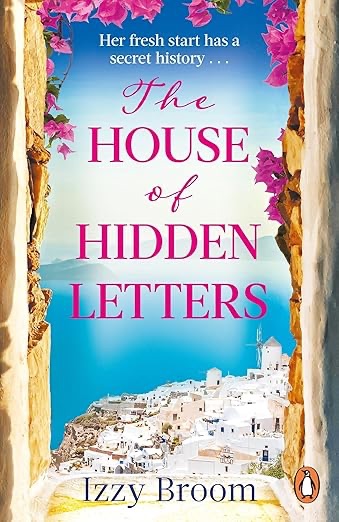
The House of Hidden Letters by Izzy Broom 

Be whisked away to Greece with this dual narrative novel set on the Greek Islands. Greek cottage. Price: One Euro. Skye doesn’t make impulsive decisions. But when she sees a derelict Greek cottage for sale by lottery, she enters with dreams of a fresh start. However, her heart sinks as she pushes open the tattered blue door weeks later. Can this wreck ever be her home? Then Skye finds a bundle of letters hidden in the fireplace, their faded pages drawing her in with a story of long-forgotten love, tragedy, and unbelievable bravery during WW2. But all the while, Skye’s own past is circling. No matter how far she goes, fate is never far behind…

I throughly enjoyed this novel that treads the difficult line between feeling escapist while looking back to harrowing events in the island’s history. The people who buy the one Euro houses bring an optimism and sense of renewal to the island. The current residents of the island are a joy, incredibly generous with the new arrivals and particularly Andreas who is the builder commissioned to renovate the houses. He is hospitable, showing Skye around her new home and chatting ideas, but he goes above and beyond when he realises she is staying in the empty house so brings her groceries and coffee. When some of the other residents arrive the place is full of camaraderie and new friendships. These are mainly women. Joy is an artist from Australia who clicks with Skye straightaway. There are three sisters, one of which is a builder determined to renovate in her own way much to Andreas’s disgust. As Skye wanders through her house alone, taking in the sea view from the attic room we get a sense of freedom and independence from her, possibly a feeling she hasn’t had for some time. All of this activity is exciting and hopeful, a light-heartedness that’s at odds with the reasons Skye left the UK and her new home’s sad history. Skye and Andreas find Nazi dog tags and a stash of letters in a half collapsed wall, so they know these are from the time of occupation, when Italian and German soldiers were present in the islands. It’s more troubling when remains are unearthed in the garden, some of which appear to be human. What has happened on this particular street? 

I found Katerina’s letters and the times we delve back into the island’s history so vivid and there were scenes so memorable, I don’t think I’ll forget them. It really engaged my emotions and I fell in love with Katerina when we first meet her as she’s climbing to reach her goats. Her relationship with the little three legged goat is so touching. It’s also the reason she meets Stefanos, as her goat climbs a little higher than she should considering her poor balance. Katerina tucks her skirt into her knickers and shows off her own climbing skills. It feels like love at first sight for these two, but war will get in the way of their courtship. This heroine is bold and brave and even though she faces some terrible events she never loses her determination or her love. This is a turn around for the girl who scorned her sister’s marriage and the constraints it placed on her.

“Love, such a stupid thing. She was eighteen, strong, healthy and free to roam between chores. A man would not let her behave in such a way.” 

I found the islander’s experiences at the hands of their occupiers harrowing. They take everything they can from the villager’s stores of food, requisition their animals and leave them starving slowly. Katerina can see her sister is becoming frail, but doesn’t realise what she’s enduring in order to secure the tiny amount of food they have. One particular soldier takes an interest in her and she knows he won’t take no for an answer, even though she is expecting to marry Stefanos if he comes home. As she symbolically tries on her mother’s wedding dress she feels the strength of the older generation with her. This is a strength she sees when encountering an elderly man on the beach who greets her warmly then simply walks away into the sea, unable to cope with what is happening on the island and knowing the young need to be priority when it comes to resources. It’s the young who have to fight, including Stefanos and her sister’s husband, but it’s easy to forget that occupied women are also fighting in their own way. That might be foraging for food, hiding supplies from the occupiers, or even collaborating to survive – something that women were often punished for by their community, but is understandable when there are children to feed and refusal only means they take what they want anyway. Katerina’s principles are steadfast, even when starving and pregnant, but they also lead to devastating consequences. I loved the author’s focus on women helping women, even across the barriers between them. 

Skye arrives in a timid state, but blossoms on the island. She has come through a period of grief after losing her father, but there’s something more in the way she reacts to men and in the joy she takes in making her own choices for her new home. She gains the confidence to tutor some of the children and her friendship with the bold and liberated Joy seems to be exactly what she needs. She also builds a good relationship with Andreas, they work well on the house together and he quickly learns her boundaries. If something has to be done his way because of safety or local regulations he stands his ground, but all other decisions belong to Skye. He literally gives her own power back to her by remaining respectful and passive with decision making. It’s a marker of how broken the mother daughter relationship is, that Skye’s mother turns up on the island with her husband. If I’d disappeared across the continent with no forwarding address my mum would know something was very wrong back home. The author illustrates so well how grief is life-altering, leaving us potentially vulnerable to those who seem to offer love and protection, but actually want to control. With a total break from her usual life and the new people she has around her, I hoped Skye would have enough strength to break from relationships that have become abusive. It emphasises ‘found family’ and shows that community is vitally important to our wellbeing. 

This was a fabulous read, a dual narrative storyline where both timelines held my interest and kept the pages turning. Of course Katerina’s experiences have more power because of the horrors they faced during occupation. I also particularly loved Katerina’s bond with Chrysi her little goat, a relationship that was so touching it brought me to tears. Skye is also fighting for her survival, to build a life that’s how she wants it and the freedom to make her own choices and mistakes. I loved the hint of romance that didn’t overpower or devalue the serious points being made about the strength of women and their supportive bonds with each other. The historical finds that are made really piqued my interest and it was fascinating to see Katerina’s story slowly uncovered and I have wondered since finishing what she might have done next. There is loss, domestic abuse and sexual violence which can be a tough read if you’ve been through it, but all are handled well and felt authentic. I felt Katerina’s despair when she realises she no longer ‘feared the enemy, not their guns and bombs. It was the sorrow that terrified her.’ Like Skye she realises that she must use this as a strength going forward. I was rooting for both women throughout, dealing with the oppression of men and finding their own path. 

Meet the Author

My career as an author really began when I won The Great British Write Off competition in 2014 with a short story called The Wedding Speech. It was the first time anyone in the publishing industry had looked at my writing, and their collective advice and guidance gave me the confidence to complete a proper novel. My Map Of You was the result.

I write escapist fiction because travel is in my soul. My books are about all facets of life and often feature a love story. Getting inside the hearts and minds of my characters continues to fascinate me, as does searching the globe for settings in which to set their stories. I have scaled mountains in Sri Lanka, watched fireworks over Lake Como, swam in crystal clear Croatian waters, made wishes in Prague, hunted for orange houses in Mallorca, fallen off chairs in French bistros and wept over the beauty of the stars in Zakynthos – and these experiences are just the tip of the iceberg.

Each of my novels comes with a promise: to take my readers on an adventure and leave them with hope in their hearts. I hope you enjoy reading them as much as I love writing them.

Posted in Netgalley

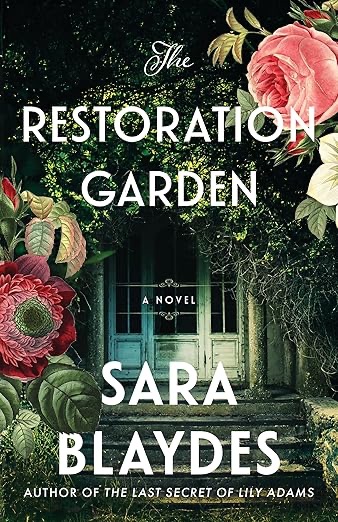
The Restoration Garden by Sara Blaydes 

I love spending time in beautiful gardens. One of my favourite childhood places was Chatsworth House, mainly because I had delusions of grandeur and wanted people to ask ‘have you seen Hayley?” “This morning she was in the library.” I also loved the garden because it has such an incredible mix: cozy hiding places (I think I’ve always been Jane Eyre hiding in the window seat), highlights like a bronze willow tree that sprinkles water and creates rainbows, huge tropical conservatories and grand vistas that open up to reveal incredible views of the Peak District. My favourite place was The Grotto, a stone building next to a large pond that was like a bandstand with a pointed roof and open sides. I imagined sitting there and reading, able to look out over the valley below. Gardens are powerful places that can evoke so many different emotions and I was fascinated with our heroine Julia who is a garden restorer. This means having all the landscaping skills and plant knowledge of a gardener with an emphasis on the history of the place. It gives Julia’s job an added emotional element whether the client is trying to recreate a garden from their ancestral past or a garden that existed within the client’s lifetime, potentially bringing up the feelings it once evoked and whatever led to it’s destruction or decline. Here it is WW2 that interrupted the garden’s original beauty, particularly the moonlit garden that was repurposed as a kitchen garden to supplement rationing. Based mainly around greenery and white flowering plants, the emphasis was placed on plants the would reflect moonlight or only flowered at night. Julia’s client Margaret does remember the garden from before the war, but is struggling to convey to Julia the details. The 92 year old lady of the manor is rather enigmatic, but steadfast in her instructions that it should be exactly as it was. So Julia must do some digging into the family’s historical documents and photos so she can hopefully give Margaret those feelings once again. However, digging into the archives will unearth more than plants as family secrets come to light. 

“Moon gardens were often believed to be deeply spiritual places, where the barrier between the dead and the living thinned.” 

The author tells the story in a dual timeline with two narrators. In the present day timeline we follow Julia’s perspective and her strange position of living in Havensworth Manor with her nephew while she fulfils her contract. It’s a slightly awkward situation, with Julia worrying about the disruption of the house’s quiet, slightly stifling atmosphere. Margaret is her client, but she is often restricted from seeing her by Andrew, Margaret’s nephew who is also a GP. Bringing a curious and excited child into the mix does bring its moments, but there’s a sense of these newcomers bringing the manor back to life again. Sam bursts into this careful and structured home with all the innocence, excitement and curiosity you’d expect from a small boy and he’s a delightful character. Where Julia feels she has to be careful around Margaret, Sam asks the questions that Julia can’t, having been steered away from certain topics like the war by Andrew. More specifically the family don’t talk about Margaret’s sister Irene, but it’s clear that Irene and the garden have a strong link. When Julia finds a sketchbook filled with botanical drawings she is fascinated. In fact the book is a florilegium – where specific flowers are drawn together with their meanings underneath. The Victorians were fascinated by the language of flowers and this artist had a gift for expressing meaning through her flower drawings. We learn that Margaret’s elder sister Irene was the artist, but the two became estranged during the war when Irene fled the family home and brought disgrace on her family. Having both lost a sister, Julia and Irene could connect, with Julia still unable to separate the disparate emotions of grief and anger. Might this common experience help her with the garden? 

I felt like the book was a little slow to reveal things in the first third and I didn’t connect with Julia, who sometimes felt more like the catalyst for Irene’s narrative than a fully rounded character in her own right. However, Irene’s story immediately grabbed me as we heard how her life unfolded in her own words as compared to the family version in which she never saw her family or the manor again. All Irene wanted to do was go to art college but her parents refused, even though she was talented enough to be accepted. Art was a pastime for a lady, not a profession. Irene’s life at Havenworth is limited, leaving her both naive and frustrated. This is the perfect combination for James Atherton, a handsome RAF officer to sweep her off her feet, when he comes to stay with her brother. She has her head turned by his flattery, especially when it’s about her work and the romantic symbolism and sentiment of flowers and gestures. When he asks her to run away to London and marry him she only pauses to think about how hard it will be leaving Margaret. She’s soon in the thick of London nightlife, meeting new friends and shopping in Selfridges never stopping to wonder where the money is coming from. London is now in the thick of the Blitz and Irene will have to face the reality of her new life, especially when she’s asked to make a choice she could never have imagined. Her narrative gives the book its urgency and drama as WW2 slices through the life of this family like a knife. The author brings home the differences between life before and during the war, both at Havenworth and in the city, particularly for women. There’s a sense in which Julia and Sam’s presence thaws this family riven with secrets, they bring life into a largely silent house and although Julia worries that Sam might be too much, he seems to work his charm on Margaret and Andrew. As the garden starts to come back to life so do they, actually connecting as a family when it finally gives up its secrets. 

Out now from Lake Union Publishing

Meet the Author

Sara Blaydes has been obsessed with books ever since she demanded her parents teach her to read at four years old so she could steal her older brother’s comic books. It was only natural she start crafting stories where she, a perpetual daydreamer, could escape into worlds of her own creation. She currently lives in British Columbia with her handsome husband, two amazing children, and an overly anxious Boston terrier. She believes books are magic, summer is the best season, and parsley is never optional.

Posted in Random Things Tours

Dance of the Earth by Anna M Holmes

London, 1897. Nobody, least of all Molly, knows why she ends up taking the foundling home from her job at the Alhambra Theatre. Molly is a seamstress, creating costumes for ballerinas who perform within the music hall tradition. She loves dance but with her built up shoe and awkward gait she is as close to the stage as she can get. When a baby is discovered on the steps of the theatre everyone discusses who could be the mother, but they’re at a loss. It’s hard to hide a pregnancy in a shared dressing room and with seamstresses who note the tiniest change on a tape measure. She takes Rose home, but her upbringing is also at the theatre where everyone takes an interest in this little girl who grows up enjoying the colours, fabrics and feathers of the sewing room but reserves her love for the ballerinas. When she’s old enough she wants to learn and grows into a role in the chorus very quickly. Rose is determined to succeed and keeps pushing for that breakthrough that will give her the starring role. Molly knows Rose is pregnant before she tells her, the result of an affair with a wealthy married man, but the abortion they arrange is abandoned when Rose changes her mind. Rose’s twins are born backstage at the theatre, where life starts and then life ends as Rose’s dancing dreams die. So the boy, Walter, is sent to live with his father and stepmother and Nina stays with Molly. This decision means that Nina has the same upbringing as Rose and becomes even more determined than her mother to be the best dancer she can be. The younger generation pursue their ambitions, loves and dreams in a new world shaped by the pioneering Diaghilev and his dazzling Ballets Russes, Stravinsky’s dissonant music, and the devastating First World War.

I asked to read and review this book because I enjoy ballet, particularly the more lyrical modern ballets by Mathew Bourne and the brilliant Northern Ballet based in Leeds who often do literary adaptations such as Wuthering Heights and The Great Gatsby. I’m also fascinated with this period of history, particularly when it comes to the huge impact of WW1 and the way it affected class structures and the lives of the women left behind. The author weaves her story into this time and society beautifully and with such care over every detail. Even the cover shows her themes of rebirth and regeneration with its large golden egg and a female figure as if drawn by Matisse, non-sexualised and not constricted by the corsets and crinolines of earlier generations. Her shape reminded me of the new ballets produced by Diaghilev and choreographed by Fokine that also showed more freedom in their movements and looser costumes. Rose and Nina have a very different upbringing from the average Edwardian woman, the music hall theatre wouldn’t be considered respectable by the middle and upper classes. Molly has no choice but to work so both Rose, and later her daughter Nina, fell asleep to the sound of sewing machines and have clothes that are colourful and unique, thrown together from fabric remnants. Both are dazzled by the dancers and want to be on the stage and both are successful to different extents. Nina is utterly determined and visits all the ballets she can while training, because she’s aiming beyond the music hall and into the world of modern ballet. She hears of the Ballet Russes and Diaghilev’s new approach, she identifies herself with his ‘Firebird’ – another symbol of renewal and regeneration:

‘Tamara Karsavina wore a magnificent head dress – long flaming feathers quivering – a bodice of brilliant reds and oranges […] she adored the exotic creature”. 

The premiere of this ballet was in 1910 at the Opera de Paris and showed off the choreography of Diaghilev’s collaborator Fokine which was ground breaking. This dancer had to represent an element, with all the wildness of fire, something we think of as hard to contain and dangerous to be near. It’s definitely a force that’s in Nina and represented the changing roles of women in the early 20th Century: women who wanted to go to university, to have a career, to have the vote. Imagine how strange it must have been to see a woman on stage who’s a rebel and has power, especially with its incredible costume and free expressive dancing. 

‘This firebird was her – Nina – aflame, all sharp angles radiating determination’. 

The Firebird from V and A archive

Walter is almost his sister’s opposite, a person you could easily miss in a room and caused by his upbringing. Brought up by his mother’s lover Arthur and his wife Beatrice, he is rich in every sense except the one we most need – love. Beatrice was cold, although it is hard to imagine what it felt like to meet the proof of her husband’s infidelity at the breakfast table each morning, especially when she couldn’t have children of her own. I was intrigued by the differences between the twins and what it said about the nature/nurture debate. Nina has been brought up by the entire theatre community of women from Molly’s fellow seamstresses to the dancers, which gives her so much confidence, drive and inspiration. She sees women making their own money and in a creative career, so she knows women can make it on their own in this world. All Walter seems to learn at home is to stay as small as possible and not upset anybody, something he takes to boarding school with him. His masters at school are trying to turn out traditional middle class men, who go on to university and have a profession. The assumption is they will have a career that can support a family, but Arthur’s only love is music but he doesn’t have the confidence or self-worth to make that happen. When Arthur died I thought Beatrice was particularly brutal in dismissing Walter, making it clear he will liaise with his father’s solicitor from now on. When children are rejected they don’t think something is wrong with the parent, they internalise the rejection and are left feeling something is wrong with themselves. For Walter this is compounded at boarding school where he is not athletic or competitive, he is teased, bullied and never stands up for himself. As he discovers his Grandmother and Nina he’s also having feelings that seem natural, but must be kept secret. When they all go to see the Rite of Spring he watches Nijinsky mimicking an ecstatic and sensual moment on stage and becomes aroused. He’s mortified and has to leave immediately. I kept wondering how he would cope with war on the horizon and the huge pressure on young men to enlist. I couldn’t imagine how he would survive the brutality of the experience. 

Costumes from the Ballet Russes

This fascinating family story feels absolutely real and that is down to the incredible amount of research the author has undertaken. She wholly embeds these characters into the history of the time, weaving social, cultural and political history around them, along with her incredible knowledge on dance history. I loved the vividness of the theatre, the backstage bustle and the magic that is produced for the audience especially when what they’re seeing is groundbreaking. She applies equal care to the war sections of the novel too. It feels like you are in those trenches because there’s an immediacy to them. These sections are also graphic and raw, which makes them hard to read about war when you’re invested in the characters. It had to be strong and true to life for us to understand how and why this war tore straight through the lives people had known before. Although changes were already happening at the turn of the century, WW1 was the first mechanised war and the sheer number of casualties were hard to comprehend. It wiped out a generation of men and afterwards there’s an acceleration of modernism that’s visible in the arts and everyday people’s lives. The aristocracy struggle to hold on to property and land as they are tied up with death duties, sometimes more than once. Middle class women who have always relied financially on men have to face life alone and discover ways of making money – less servants, taking in lodgers and finding jobs. If men came back, they came back changed forever due to shell shock (now PTSD) or physical injury and couldn’t work. Women didn’t want to give up jobs they’d done throughout the war and a freedom they’d never had before. Also contraception becomes more freely available and this was the earliest stages of some women not having to choose between career and relationships. As Nina joins the Ballet Russes she becomes more independent, travelling all over the world and living the life her mother had dreamed of. When we see her reach her first stop in the south of France she is utterly in her element and it’s no surprise that she enters into a controversial mixed race relationship, something more acceptable in that time within the bohemian and arty circles she inhabits. It’s almost as if the war curtailed the freedom of men, especially when conscription began, but emancipated women.  

Nijinsky

In 2010 I visited an exhibit at the Victoria and Albert Museum in London, called Diaghilev and the Ballet Russes which focused on costume and design including collaborations with artists like Picasso and the music of Stravinsky These sketches and costumes were like nothing I’d ever seen, seeming both weirdly modern but archaic at the same time. There’s nothing pretty about them and no tulle in sight, they’re loose with strong colours, geometric shapes and sharp zig-zags. I could see the point being made – by being so aggressively modern it almost forces change and expectation of what a ballet is. I could see how they matched Stravinsky’s music because there was a segment of the Rite of Spring with its themes of growth, fertility and desire. I could see why audiences found this piece so shocking because it has that same aggressive feeling with unusual rhythms and sudden loud bursts of sound. It’s harsher on the ear than the usual score for ballets and the sets were purposely sparse. The dancing had a primitive feel and the subject matter of a young woman sacrificed to the spring is like a modernist version of the contemporary horror film Midsommar. It was reported that people rioted at the premiere, which is probably an exaggeration, but I can imagine an audience finding it strange and confronting when we think of the opulence and beauty they were used to in ballet. It’s such an important piece in the history of dance and without it we wouldn’t have contemporary dance. I came away from the novel feeling I’d learned so much about dance and the early 20th Century in general. While all the characters touched me in different ways I did have a soft spot for Molly, who stands out within these themes of fertility and desire. I thought she was the most incredible mother, yet had never given birth to either of her children. She has a disability but spends her time within a world where bodies are pushed to their limit, creating beauty in their movement. Her love of dance is built into every one of the costumes she lovingly creates and the colourful outfits she makes for her daughters. She provides stability and love for Rose and Nina, plus she never judges their mistakes. She is the earth, grounding these fiery women and eventually Walter, for the rest of her life. She is the heart of this novel for me and Nina can only be what she is because of her. I could imagine her as the central character in an incredibly lush and powerful period drama with the war breaking through everything in its brutality. This is a must read for both lovers of dance and historical fiction. 

The Firebird

Meet the Author

Stories with big themes written as page-turners are Anna M Holmes’s speciality. With an extensive background in dance and theatre, Dance of the Earthis a story she has longed to write. Her novels- The Find, Wayward Voyage, and Blind Eye-are all typified by deep research. Anna worked as a radio journalist before embarking on a career in arts management. Originally from New Zealand, she now lives in South-West London.

Posted in Random Things Tours

Black as Death by Lilja Sigurdardóttir  

The haunting final chapter to an award-winning series…

And a final reckoning…

With the fate of her missing sister, Ísafold, finally uncovered, Áróra feels a fragile relief as the search that consumed her life draws to a close. But when Ísafold’s boyfriend – the prime suspect in her disappearance – is found dead at the same site where Ísafold’s body was discovered, Áróra’s grip on reality starts to unravel … and the mystery remains far from solved. To distract herself, she dives headfirst into a money-laundering case that her friend Daníel is investigating. But she soon finds that there is more than meets the eye and, once again, all leads point towards Engihjalli, the street where Ísafold lived and died, and a series of shocking secrets that could both explain and endanger everything…

I’ve been hooked on the story of Áróra and the case of her missing sister Ísafold for a few years now and the tension has slowly gripped me ever tighter as each novel has brought its revelations. With her disappearance being the reason Àrora is in Iceland, it’s always been the over-arching narrative, with other cases running alongside. The combination of Áróra’s skills as a financial investigator plus the skills and powers of Daniel and Helena who are detectives, means complex cases are profiled and attacked from different directions, making them a formidable team. We’re back with everyone after the discovery of Ísafold’s body in a suitcase deep within a fissure in a lava field. They were directed to it by an unusual little girl who claimed to be the reincarnation of Ísafold, something that was difficult for Daniel to accept. As Áróra’s boyfriend, his hackles were raised particularly with her parents who he suspected of feeding ideas and information to their daughter with the aim of deceiving them. But what possible motive could they have? As we meet our characters again, Áróra occasionally has the urge to go back and visit the family, but there’s been nothing new from her reincarnated sister for some time as if the thread that bound them has broken or the little girl’s age means the channel that was open between this life and the next has now closed. With Bjorn found in the same fissure as Ísafold many new questions are thrown up. Not least the one aspect of Ísafold’s death has remained a secret up till now. Daniel doesn’t know how to tell Áróra that her sister’s body was found without a heart. 

There’s so much to understand here and we get the narrative through different viewpoints, not just from Áróra, Daniel and his colleague Helena. One narrator named Felix has fallen into working for a local dealer and we see his fear as the bag he was sent to collect disappears from the car while he’s getting some food. This theft draws his ties to this man ever closer, with no real chance of escape. There are also flashbacks to the last few months Ìsafold was alive and we finally hear the story in her own voice, which I loved. There’s a lot of crossover between these two narratives in terms of control and manipulation. The means used to tie Felix to the drugs gang are diabolical, making sure he ‘owes’ the boss and keeping him firmly onside. On one hand the boss demands total loyalty from its operatives but on the other he uses treachery to keep everyone in their place. Bjorn’s treatment of Ísafold feels even worse, because this is someone is supposed to love her. We have always known that Ísafold’s partner was violent, in fact Áróra’s guilt about her sister is based around their last phone call when for the first time Áróra decided not to run to her sister’s aid. The downstairs neighbour Grimur had also testified to the violence his neighbour suffered, but hearing it from the victim adds another layer to the narrative. We can feel how vulnerable Ísafold is and the tenderness Bjorn treats her with from time to time, that glimmer of a meaningful connection he drip feeds to her guarantees her forgiveness again and again. Almost more than the violence I hated that he took away her only bit of independence by making her leave the job she loved, to work with elderly people. At first it’s a suggestion, then he flatters her by saying how good she would be in a caring role, but the truth is he wants to coerce her into stealing their drugs. There’s a realisation that Bjorn is a low level dealer, just doing enough to get by but slowly coming to the attention of the bigger players who feel their territory has been encroached upon. Could this be the beginning of the end for the couple?

The tense and twisty parts narrative also follows Daniel’s investigation into a local coffee chain, where every barista seems to tell customers that their other sites are busier. What he finds is a company with a large turnover but no real evidence of where that money is coming from. None of their shops are in tourist areas and they seem to take a large amount in cash, an unusual thing these days. He also finds a couple of complaints from the director’s home of criminal damage, that they later chose not to pursue. This seems like a case where Áróra’s financial skills could be utilised and she throws herself into it, with dangerous consequences. This is where the couple work so well together, although there’s a recklessness to Áróra that Daniel finds difficult. He would never get in her way, she’s tough and quite capable of looking after herself physically but it’s in his nature to worry about those he cares for. He knows that her weight training and work are her ways of sublimating her frustration that she still doesn’t have all the answers about her sister. With Helena currently working the case he has a choice to make, if answers come does he let Helena break the truth to her, or does he choose to do that himself? Although he could have the chance to comfort and support her as he’s wanted, will she let him? Or will he always be the man who told her the harshest and most painful truth she will ever hear? 

We’ve always had suspicions but have never known who killed Ísafold. The novel is gripping and of course we want this mystery resolved, but I didn’t feel any of that racing tension or triumph that I often get from thrillers when the killer’s revealed. This was just so desperately sad. I found myself taking a moment for this under confident woman who was so far out of her depth. A woman whose emotions dictated her life decisions. I was horrified and had that strange empty feeling of loss. A loss I knew Áróra would feel. The question is, if she does get all the answers she needs, what will Áróra do next? Unlike her sister Áróra has a clear sense of what she wants and needs in order to be happy and fulfilled. She makes decisions based on self-knowledge and it remains to be seen whether Daniel is a part of that eventual happiness. This has been an incredible series from the author, combining a good mystery with real intelligence and depth of emotion played out on a bleak and forbidding landscape.

Out now from Orenda Books

Meet the Author

Icelandic crime writer Lilja Sigurðardóttir was born in the town of Akranes in 1972 and raised in Mexico, Sweden, Spain and Iceland. An award-winning playwright, Lilja has written eleven crime novels, including Snare, Trap and Cage, making up the Reykjavík Noir trilogy, and her standalone thriller Betrayal, all of which have hit bestseller lists worldwide. Snare was longlisted for the CWA International Dagger, Cage won Best Icelandic Crime Novel of the Year and was a Guardian Book of the Year, and Betrayal was shortlisted for the prestigious Glass Key Award and won Icelandic Crime Novel of the Year. The film rights for the Reykjavík Noir trilogy have been bought by Glassriver. Cold as Hell, the first book in the An Áróra Investigation series, was published in the UK in 2021 and was followed by Red as Blood, White as Snow and Dark as Night. TV rights to theseries have been bought by Studio Zentral in Germany. Lilja lives in Reykjavík with her partner and a brood of chickens.

Posted in Netgalley

The Killing Stones by Anne Cleeves

I can barely contain my happiness at being back in the world of Jimmy Perez, this time in the Orkney islands where he grew up. Jimmy is living with partner Willow Reeves, who’s both his boss and heavily pregnant with his child. It’s Christmas and the couple are looking forward to the celebrations. Jimmy’s stepdaughter Cassie is spending the holidays with her father Duncan and his family on Shetland, so it just the two of them and son James. For the police, Christmas isn’t a holiday and as a huge storm passes across the islands, terrible discoveries are made. Everywhere there’s storm damage, but when a body is found at an ancient archaeological site Jimmy is devastated to find out it’s his childhood friend Archie Stout. Archie is a well known ‘larger than life’ character who’s the centre of every gathering and runs the family farm with a wife and two teenage sons. Jimmy finds that Archie has suffered a blow to the head and the murder weapon is a Neolithic stone covered in ancient runes and Viking graffiti, one of a pair taken from the heritage centre. Now Willow and Jimmy must investigate their friends and neighbours to solve the murder in the run up to Christmas, where events will traditionally bring the whole island together. The uncomfortable truth is that the murderer is likely to be someone they know and that means nobody is safe. 

Jimmy always comes across as someone who’s very still, the listener rather than the talker and the exact opposite of Archie and perhaps that’s why they became friends when they boarded at secondary school, something that all the islanders doat that age. Only the reader and perhaps Willow know the depth of feeling that runs underneath Jimmy’s calm exterior. We are privileged in knowing the depth of his grief for his previous partner Fran, the mother of his stepdaughter Cassie. I’ve always loved the way Duncan and Jimmy co-parent Cassie after Fran made it clear she wanted Jimmy to be the resident parent. He’s also dad to James and we can see the love and the anxiety he has about both his children, brought to a head when James becomes lost on Christmas Day. Part of him hates delving into the private lives of people he’s so close too, but then his knowledge and understanding of this small community is also a strength. He finds out things he didn’t know about his friend: an unexpected relationship with an island newcomer; a secret investment in the hotel and bar; financial difficulties at the farm. The killer made a point with their choice of weapon because they managed to get access to the heritage centre then lugged the stones to the murder site. But what was the point? Did they think Archie was betraying the community or the history of the islands? Is the inscription a clue? To have lured Archie out to such a remote spot in a storm means the site or the weapon must have been important to him. 

Anne Cleeves creates a beautiful atmosphere in this novel, her descriptions of this series of islands are both beautiful and savage, echoing its residents who are inextricably linked to each other and their shared ancestry. The storm really sets the scene of just how remote this community is and how they must pull together to get through difficulties, even where they don’t like each other. Each of the families are living history, something you can hear when Jimmy and Willow interview people and they have an encyclopaedic knowledge of several generations of other island families. Each generation has been at school together, worked together, attended each other’s weddings and celebrated the birth of the next generation. Archie’s father Magnus was an amateur historian and archivist, with a box of his research in the heritage centre. Even his looks hark back to a time when Vikings invaded the islands with his blonde hair and stature a stark contrast to Jimmy’s dark hair and Spanish eyes, thought to be a throwback to an Armada ship blown off course and it’s sailors who settled in Orkney. The different celebrations that lead up to Christmas show these different influences from the Christian carol service at the cathedral, to The Ba on Christmas Day and then Shetland’s Up Helly Aa in January. James’s determination to watch Archie’s sons participate in The Ba shows how the upcoming generations are inspired to take part just as their forefathers did in their predestined teams of the Uppies and Doonies. It’s best described as a game of ‘mob football’, something very like the Haxey Hood that takes place on 6th January with two teams trying to get their hands on a leather hood and take it back to one of two pubs in the village in the Isle of Axholme. My dad and his father before him participated in the Hood as young men and it’s still Christmas until Twelfth Night in our family. The author also uses this history to highlight tension between generations, those who leave and those who stay, those who participate and those who don’t, islanders and incomers. This tension also exists over development on the island and those trying to keep a balance between respecting the past, but also providing projects to employ newer generations. Incomers who use islanders to further their own agenda or make money will be made unwelcome. 

I really loved Willow and the atmosphere she creates at home, particularly around Christmas. Just as dedicated to her work as Jimmy she takes an active role in the investigation, her pregnancy not holding her back at all. She knows it’s a delicate situation, working together and being in a relationship, especially when she’s the boss. Somehow they manage to keep the personal and the work life separate and she seems to know which responsibilities she must let Jimmy bear and those she’s happy to share. As Christmas Eve approaches fast she’s not running around like a headless chicken trying to make sure they have all the right things, they have food and she points out something I say every year – the shops are only closed for one day. It’s the traditions and being together that are the most important thing. She’s a great interviewer though, brilliant at picking up what people are not saying. She reads their body language and their tone, plus knowing each islander’s history helps too. What she picks up on are the unexpected or secret alliances, such as Archie’s investment in the hotel or his in-law’s apparent friendship with a regularly visiting academic. The case is fascinating, covering potential adultery, family tensions, environmental disagreements and historical conflicts, as well as academic jealousy. As everyone gathers on Christmas Day for The Ba and someone goes missing, my nerves were like violin strings! It’s this gradually rising tension alongside the beautifully drawn relationships that make Anne Cleeves’s novels. Jimmy has always had incredible empathy for others, feeling his own loss alongside theirs and understanding behaviour that might at first glance seem inexplicable. This is a hugely welcome return for Jimmy, both in a different landscape and place in life. Hopefully it’s the first of many. 

Meet the Author

Ann Cleeves is the author of more than thirty-five critically acclaimed novels, and in 2017 was awarded the highest accolade in crime writing, the CWA Diamond Dagger. She is the creator of popular detectives Vera Stanhope, Jimmy Perez and Matthew Venn, who can be found on television in ITV’s Vera, BBC One’s Shetland and ITV’s The Long Call respectively. The TV series and the books they are based on have become international sensations, capturing the minds of millions worldwide.

Ann worked as a probation officer, bird observatory cook and auxiliary coastguard before she started writing. She is a member of ‘Murder Squad’, working with other British northern writers to promote crime fiction. Ann also spends her time advocating for reading to improve health and wellbeing and supporting access to books. In 2021 her Reading for Wellbeing project launched with local authorities across the North East. She lives in North Tyneside where the Vera books are set.

Posted in Random Things Tours

Deadman’s Pool by Kate Rhodes 

Winter storms lash the Isles of Scilly, when DI Ben Kitto ferries the islands’ priest to St Helen’s. Father Michael intends to live as a pilgrim in the ruins of an ancient church on the uninhabited island, but an ugly secret is buried among the rocks. Digging frantically in the sand, Ben’s dog, Shadow, unearths the emaciated and ruined remains of a young girl. The discovery chills Ben to the core. The victim is Vietnamese, with no clear link to the community – and her killer made sure that no one found her easily. The storm intensifies as the investigation gathers pace. Soon Scilly is cut off by bad weather, with no help available from the mainland. Ben is certain the killer is hiding in plain sight. He’s worried they are waiting to kill again – and at unimaginable cost.

When this blog tour request came through, I was intrigued by the blurb and the feel of the Scilly Isles as a backdrop for a murder investigation. Then I realised it was the eighth book in the Ben Kitto series, although the first in its new home at Orenda Books and it’s a perfect match. I was worried about whether I would be lost without all that back story. Thankfully I wasn’t lost at all. I was drawn in immediately by the opening chapter as Ben took Father Michael to St Helen’s, an uninhabited island that’s always been seen as the spiritual centre of the Scilly Isles. Father Michael uses one of my favourite phrases for places that feel holy and haunted at the same time: 

‘Christians call these places “thin”. The gap between us and the spiritual world is narrower here than any shrine I know, even Lourdes. It was hallowed ground for centuries.’ ‘It still feels haunted.’ The sky overhead is boiling with clouds.

I love the idea of thin places, that ghosts are not necessarily trying to haunt you, they’re just going about their business. In fact you’re probably as much of a fright for them as they are for you. It’s just that the veil between us and them has worn so thin we’ve become visible to each other. The author keeps this metaphor throughout the story and it soon becomes clear that the actual world also has its veils. We meet Mai, a girl trapped somewhere, unseen by those gardening only a small pane of glass away because they’re not looking down. There’s the gap between what the teenagers and the adults see; the rumour in school that there’s a network of well known adults trafficking children is dismissed as a conspiracy theory early on. But these young people lead a different lifestyle to the adults, they’re around in the dead of night travelling by boat to the uninhabited islands either to party or be where they can’t be seen. There are signs of a camp fire and drinks cans just inches from the body Ben and Father Michael discover, only a small layer of earth between the living and the dead. This mystical feel does extend to the body of the child, wrapped in what looks like a prayer shawl with jade charms left inside. There’s a sense of contradiction here, between the care taken to bury the body and the huge hole where the skull has been smashed. The atmosphere created by the author along with the description of the body make it one of the most horrifying I’ve read, emphasising that this is a human being clearly emaciated and treated with extreme violence. There’s also a loneliness to her final resting place, cut off from those living on the islands but also buried in a soil that isn’t her own. 

‘I crouch down to study the victim’s face more closely. There’s nothing inside the eye sockets except blackened hollows, but her exposed jaw catches my attention. Most of her teeth are intact, but several are blackened by decay. It’s unusual these days, when most kids obsess over their teeth, bleaching them to a perfect white.’

These are established characters but I felt that I knew them very quickly. Ben comes across as a gentle giant, huge in stature but easily affected by the cases he investigates. He comments that his wife Nina who works as a counsellor, has a way of detaching from the terrible things she hears at work while he doesn’t. Becoming a father hasn’t helped, especially when cases involve children like this one. When a baby is then left on the steps of the police station Ben is horrified. Their pathologist thinks the dead girl has Vietnamese heritage, if the baby is the same they have a monster on their hands and he has to face the fact that it is one of his neighbours. Until they know he has to make sure that there are no teenage girls who could have been concealing a pregnancy. It’s particularly distressing for Ben’s lifelong friend Zoe who has tried everything to become a mum, but I loved his sensitivity with her and the way he talked to the teenage girls he has to question. I loved how Nina’s violin playing allows him a meditation, sifting through the images of the day in his head and finding enough solace to sleep. 

“I can still feel the girl’s cold weight in my hands, when we lifted her from the sand, and see her blue-white skin. I have to find the monster who put her there, or she’ll be in my head forever. When I open my eyes again, Nina is returning her violin to its case, and it’s time we slept, before Noah wakes us again at dawn.”

We know someone is being kept prisoner because there are short narratives between Ben’s chapters told by a young girl called Mai. She lives in one room with constant fear of the door opening and her captor coming in. These are distressing scenes and really add to the urgency of finding this man. My nerves were shredded by one of Mai’s narratives where she’s been trying to break the rotten frame of a tiny window, high up in the room. It doesn’t give her much light because all she can see are the weeds and grasses of an unkempt garden, but one day as she’s working away on loosening the frame she sees the feet of someone cutting a lawn and she desperately wants them to notice her. The knowledge that she’s so close to this stranger but living in an entirely different world really got my heart racing. I was simply begging them to look down. The more we get to know her, the more Ben’s desperate search feels. There are potential suspects, particularly a musician who lives in an isolated position on the coast with a house that looks out to St Mary’s and a telescope trained on the horizon. He definitely has an odd manner but Ben needs much more than that to go on. The author pitched this quiet start to the investigation beautifully, it’s definitely not cozy but there’s a sense of waiting, the calm before the storm. It then kicks up a notch as the forensic examiner, Gannick, finds red carpet fibres and results on the baby’s DNA point to a young Vietnamese girl who’s fostered by a family on Bryher. Suddenly Ben has something to go on and he can’t move quickly enough. He sets the uniformed officers out to check households for red carpet and he sets out to the school to talk to the girl who is related to the abandoned baby. Now he’s sure that his suspect is an island resident, it’s just a race against time to find someone with a red carpet but also a cellar or storage area where someone could be kept and never seen.

One of my favourite characters was Gannick, the grumpy and brusque forensics specialist. Ben is privileged to have her company at home, where Nina seems to melt the icy facade in just a few minutes. There are some lovely moments where Ben just observes and appreciates her careful work and how she does everything to ensure she gets the evidence needed to lock this murderer away for a long time. He tells us she has severe and chronic back pain and he describes her using her crutches to swing across the terrain of St. Mary’s missing nothing. He knows she’s in considerable pain and as a woman with a similar disability I loved having a disabled character who isn’t instantly likeable or some sort of superhero. She’s just quietly getting on with her job the best way she can. There’s no redemptive character arc here and I loved that her disability and her grumpy attitude remain. Yet Ben does confide in her that he’s worried, that the closer they come to the offender the more danger his victim is in. Gannick acknowledges that ‘this one’s a psycho’ but they will definitely get him. As we come closer to the truth, the weather mirrors Ben’s turmoil: 

“The outside world is comfortless, though. When I pull back the curtain, breakers are lashing the shore. Seabirds are returning to Bryher in flocks, scattered by the breeze. It feels like we’re at the mercy of some savage force that’s trying to tear these islands apart.”

This is a fantastic crime novel, acknowledging both the savagery of someone who will traffic young women and keep them captive, but also the wildness and daily difficulty of living on these islands in the Atlantic. When a storm blows in people are cut off, there’s no way to travel between the islands and everything has to stop. Nina worries that as he’s older Noah won’t know what it’s like to be able to meet friends in town and to visit a cinema together. On the other hand he’ll have experiences other teenagers won’t like making a fire and cooking on the beach, camping on uninhabited islands and learning to drive a speedboat. I could see what Ben finds so special about this place and while there are many experiences he’ll only have rarely, there are others that some people don’t have in a lifetime. Yet the case does taint his idea that the islands are a safe place, to have had a crime that’s so serious happen right under his nose has left him feeling unsure and more suspicious of his fellow islanders. It’s going to be fascinating to see where things go from here for Ben Kitto. In fact I’m so fascinated that I’ve bought all the previous novels in the series to take on holiday with me and have a binge read. I’ve fallen in love with this unusual and wild backdrop but also with this giant of a man who carries the weight of the crimes he investigates with him. 

Meet the Author

Kate Rhodes is an acclaimed crime novelist and an award-winning poet, selected for Val McDermid’s New Blood panel at Theakston Old Peculier Crime Writing Festival for her debut, Crossbones Yard. She has been nominated twice for the prestigious CWA Dagger in the Library award, and is one of the founders of the Killer Women writing group. She lives in Cambridge with her husband, the writer and film-maker Dave Pescod, and visited the Scilly Isles every year as a child, which gave her the idea for the critically acclaimed Isles of Scilly Mysteries series.

Posted in Monthly Wrap Up

Best Reads August 2025

It’s been a month of crime/thriller reads and historical fiction, plus a couple of crime and historical combinations which I really enjoy. It’s also been a month where I found it difficult to concentrate because finally, after five years of brown tiles, lime green walls and cupboards with no handles we have been able to afford to renovate the kitchen. So for two weeks we have had no ceiling, no floor and no hob. As of Monday, we will be cooking in the garden until everything is back together again. I am not good with chaos so if you can imagine me wedged into a corner on the sofa with the contents of every kitchen cupboard taking up the study and other end of the living room. Hopefully only two weeks left to go. It can’t come soon enough. The other half is building the seating area under the pergola at the bottom of the garden. It feels like a symphony of drills and hammers at times but it will be lovely to be able to go and sit outside and read with roses growing around me. So much to look forward to in September with some fantastic reads on the list too. ❤️ 📚

Unbelievably this is the third novel from Kate Foster and firmly puts her on my ‘must-buy’ authors list. They’ve all been worthy of a place on my best reads list but I think this is her best yet. Maggie is a young girl from Fisherrow whose father is a fisherman and her mother ons of the fishwives who help bring in the catch, clean it for market and then repair nets ready for the next day’s fishing. She, her parents and sister Joan live in a one bedroom cottage but Maggie dreams of a life so different to this, where there isn’t back breaking work and she’s not at the mercy of her father’s drunken temper. So when ambitious trader Patrick turns up at the door, looking for somewhere to keep goods for making perfume she senses a chance. She knows Joan is prettier but she would make a far better wife to help him in his business. Luckily he sees this in her and after a short courtship they become married and set up home in a cottage in the village. They are happy until suddenly Maggie gets the news that a press gang has been to the hotel and Patrick was one of the men taken for the navy. Somehow Maggie finds herself travelling to London, to build her new life. At a stopover in Kelso she takes a couple of weeks to stay and earn some money. She knows now she is pregnant and conceals it, to keep on working. So how does she come to be in Edinburgh a few months later, being sent to the gallows on charges of concealing a pregnancy and killing her baby. Yet miraculously she survives the hanging, how and what she chooses to do with her second chance at life are the main contents of this brilliant novel. I loved the history, the growing up that Maggie does on her journey and how brilliant an advocate Kate Foster is for these women she finds in historical documents, often in dire situations at that time for ‘crimes’ it’s hard to comprehend today. Most of all I loved the bold, feminist take on Maggie’s life and the links that could be made with modern day politics. Brilliant.

My second historical fiction read of the month was this mesmerising and clever thriller from Laura Shepherd-Robinson that’s jumped straight onto my books of the year list. The Art of A Lie begins in a confectioner’s shop called the Punchbowl and Pineapple, run by the newly widowed Hannah Cole. This is the late 18th Century and Hannah grew up in the shop that was started by her grandfather. Her husband Jonas had been her father’s apprentice and now she must keep their shop running for it to be handed to his cousin. Jonas was found down river, washed up by the Thames with head injuries and missing anything of value including a watch given to him by Hannah that used to belong to her grandfather. Novelist and magistrate Joseph Fielding visits Hannah to say he is investigating Jonah’s murder, for he doesn’t think it’s as cut and dried a case as it might seem. Thank goodness for the lovely William Devereux, a friend of Jonas’s who introduces himself ar the funeral. He calls on Hannah at the shop, hearing of Joseph Fielding’s interference in the case and hoping to be of help. He gives her his grandmother’s recipe for iced cream, thinking it may be a hit with her customers and could tied her over until the case is closed and Jonas’s estate is released. Laura tells this tale so cleverly, drifting between narrators and shocking us with an aspect of their characters or the case. Both are fascinating and not necessarily what they appear to be at first. With each revelation I became more and more intrigued with this cat and mouse game and the psychological make up of those involved. Hannah is an astute businesswoman, good at reading people quickly and usually accurately. It’s hard to tell at times who is scamming who and I was so utterly entranced I was still thinking about it a week later. Simply brilliant in its setting, historical background and the constant simmering tension.

A modern thriller this time from one of the Queens of the genre and this really was an up to the minute tale of secrets, lies and murder. Gwen is an older widow, living in a complex of smart apartments in a nice area. She has decent neighbours, some of whom she might call friends. When her nearest neighbour Alex is looking for a new lodger she meets one of the candidates, Pixie. They start chatting and she is pleased to hear when the Britpop one hit wonder decides to offer her the room. Pixie gets a job at the bakery and cafe that Gwen frequents and they get on very well, so Gwen is disturbed to hear what sound like arguments from across the hall. She also catches a phrase that sounds like ‘you knew the deal when you moved in. When she catches up with Pixie she’s disturbed to hear that the deal involves sex in lieu of rent. She confronts Alex and takes Pixie in, writing a complaint to the building’s governing board. Her neighbour Dee tells her that she talked to her daughter Stella about it and she’s been making a documentary news item about the growing ‘sex for rent’ scandal. Would Pixie like to be interviewed? Soon the story is out of control, Alex is angry and denying everything and Gwen is public enemy number one. I loved how ‘of the moment’ this was with Gwen at a loss when it comes to freelance investigative journalism, sex for rent, trad wives and influencers. As she starts to feel out of her depth, those around her continue to manoeuvre and manipulate until life will never be the same again. This was so tense and the eventual murders most unexpected indeed.

I had the luck to read two Mark Edwards novels in August. a throwback to last year and this, his brand new thriller. The Wasp Trap was the jokey name given to a side project. While trying to form an algorithm for one of the first ever online dating apps, a group of university students have another idea. Each one specifically chosen by their professor, Sebastian, they are the best in their fields and are spending their summer at his mansion in the country. Will tells our flashback story, the creative who is meant to be coming up with a name for their site he is also hopelessly un love with Sophie but too scared to make a move. Together they come up with ‘butterfly.net’ but it’s Lily who comes up with a side project – an algorithm that could identify psychopaths. Statistically one of them could be and since they’re serving as guinea pigs for the dating apps why not for this? Now decades later they are gathered again, this time at Theo and Georgina’s mansion – the couple got together that summer and are married with two daughters. Strangely, they announce that one of their daughters is missing so it seems an odd time to have a dinner party. They also have caterers which is unusual for them, so Will isn’t shocked when it turns out to be a cover. The fake chef is Callum and he gives them an ultimatum- he’s giving them an hour to think and when he returns he wants to know the secret from that summer. If the secret isn’t divulged then someone will die. The tension rises as the hour ticks down, who has a secret? How do they know which is the right one? As Callum comes back into the room they’re left in no doubt that he means business. The rising and falling of tension is pitch perfect and in between the action we get flashbacks to that summer where more than one person is holding a secret and we start to wonder who exactly was the psychopath that Lily was searching for.

My final recommendation for last month is this last novel in the historical fiction quartet about the agony aunt of the Women’s Friend, a magazine running during WW2. It was lovely to be back with the gang and particularly Emmy Lake as they enter the final and arguably most difficult stretch of WW2. After five years of war both the team and their readers are tired. As a way of boosting morale at the magazine Emmy suggests they all decamp to Bunty and Harold’s in the countryside. As Hitler’s V1 and V2 bombs start to hit, it will certainly be safer. Emmy strongly feels they all need a boost in order to keep supporting and inspiring the women who read their magazine. If they’re tired and the magazine suffers, how will their readership keep the fight going? Emmy throws herself into rural life and is soon organising games nights, competitive knitting and planning the very important wedding of their officer administrator Hester and her fiance Clarence. She also has a phone call from the ministry to travel abroad and report from the French field hospitals and even manages to mastermind a break into husband Charles’s barracks before they’re both deployed. Emmy has no idea how much she’s going to need those around her in the coming months as her hardest test is yet to come. On their return to London she receives a telegram to say that Charles is missing, presumed captured in enemy territory and she has the agonising wait for the confirmation letter. Then Hester receives a blow when Clarence calls to say he’s being deployed in three days, two days before their planned wedding. Hester is inconsolable and after catching Emmy in a moment of frustration, she disappears. However, Emmy isn’t one to dwell on her misfortunes for long and I wondered what schemes and plans she would hatch next. 

The author doesn’t let us forget the sacrifice and loss in people’s lives, but still manages to bring in humour and a defiantly upbeat, make do and mend attitude. This is the closest I’ve seen Emmy come to breaking point and it’s hard to when you’re the one whose role it is to buoy everybody else up. As she finds out though, those who she’s helped and supported are so happy to be able to return the favour and support her. This is a set of books I always recommend, to women of all ages, because it’s so easy to relate to one of the characters and absolutely root for them. The main impression I take away from them is that sense of female solidarity. The instinct we have to come together, share the load and make each other’s lives a little easier from taking on someone’s children all the way down to being there with a meal or a shoulder to cry on. Emmy uses her writing to do the same and triumphs in being exactly what the magazine promises – the Woman’s Friend. 

Here’s a hint of what I’ll be reading in September:

Posted in Netgalley

The Art of a Lie by Laura Shepherd-Robinson

I loved this book. It drew me in immediately and two days after I finished it I can’t let go of it. I can’t start another book. It’s left me bereft. Our setting is 18th Century London and George II is on the throne. On St James’s Street is a confectioner’s shop called the Punchbowl and Pineapple and running it is the newly widowed Hannah Cole. This was her grandfather’s shop and has been handed down the family. Her father realised he needed an apprentice to pass on his skills and to work with Hannah, so he employed a young lad called Jonas Cole. Jonas and Hannah grew close and fell in love, with Hannah losing her father only a few days after they were married. So until a couple of days ago Hannah and Jonas ran the shop, with Hannah becoming quite an accomplished businesswoman. Jonas could be hard and ruthless in his business dealings and of recent years they had grown apart, with Jonas often spending evenings away from home. Then two nights ago he did not return and was found further down the Thames minus his money, his watch and several teeth. Hannah has had to borrow, especially to re-open after his death, something that caused a minor scandal so soon. She can’t afford to be closed and is waiting on their savings being released from the bank so she may pay her suppliers. Then Henry Fielding pays a call. In his role as magistrate rather than novelist, he explains that all money will remain frozen while he investigates Jonas’s death. He isn’t sure this is a simple robbery and wonders whether he should be looking into his business or personal dealings. He informs Hannah that Jonas had money in the bank, more than the £200 she knew about. Fielding explains he wants to be sure that the money was obtained legally and above board. Luckily, at Jonas’s funeral Hannah meets William Devereux. An acquaintance of Jonas, he has never met Hannah before but is very sympathetic to her plight. He promises to visit her shop and discuss how he may help her with Fielding and Jonas’s life outside the home – was he gambling, womanising or getting into shady business dealings? He also mentions a delicacy his Italian grandmother used to make called iced cream. It has all the ingredients of a custard, but flavoured with fruit or chocolate and is then frozen and eaten as a desert. Hannah resolves to let William help her and to master the art of ice cream, but are either of them being fully honest with each other about who they are and what their purpose is? 

As with all Laura’s books we become fully immersed in the setting straight away and it’s the little details that stand out and make us believe in this world. I loved the descriptions of Hannah’s various confections and the way she can tell what people will choose, not to mention what it says about them. 

“He paused to take a bite of his Piccadilly Puff, washing it down with a generous gulp of green walnut wine. It is a favourite choice of the sybarite: the silken sweetness of the custard, the crunching layers of puff paste, the dusky depths of the spices mingling with the sourness of lemon. I might have guessed that Mr Fielding was a man who struggled to keep his appetites in check.”

I believed in Hannah as a businesswoman and confectioner very quickly thanks to these details and as she narrates she tells us her hopes and dreams, including a joint dream of her and Jonas, to buy the empty premises next door and extend the shop so they could have more tables and chairs, especially when her iced cream starts to become popular. I think we always imagine that people from the 18th and 19th Century are very genteel and well behaved, this comes of too many Austen adaptations and strange hybrid historical settings like Bridgerton. While lovely to watch they give us little idea of what these centuries were like for those of the lower classes in society and women who worked. Real life 18th Century London was rather more colourful than Pride and Prejudice, as depicted in some of Fielding’s novels like Tom Jones and Daniel Defoe’s Moll Flanders. The author gives us the dirt and the bawdy side of London life when Hannah takes a trip to the theatre. 

“The playhouse crowd gave a wide berth to the nest of alleys around the back of the Theatre Royal, home to brothels and bath houses, gin shops and squalid taverns. The residents started drinking over breakfast and then kept going. Groups of ragged men stood about on corners. One lot were fighting, skidding in vomit. Half-naked women leaned from the upper windows shouting encouragement.” 

The King openly has a mistress and there are brothels and gaming rooms everywhere, operating just on the edge of the law. This is a book with every vice on display, even when if it is just cake. As Hannah points out when she’s evaluating Fielding, every man has his personal struggle. She is incredibly astute when it comes to assessing character and has Fielding’s own psychological make-up worked out through reading his novels. William Devereux appears to be equally astute, visiting Fielding’s rooms he notes the perfectly bound volumes of his own books and the wine glasses etched with the crest of Eton College, it’s students described beautifully as the “school of the most selfsatisfied fucksters in the kingdom.” I thought there were some brilliant choices in terms of the book’s structure and the way the story passed from Hannah to William was brilliant. Often when reading from NetGalley there are little mistakes or quirks to the format that can ruin the reading of the book, but here reading from NetGalley was a benefit because with no gaps or idea how far I was into the book, when the shocks came they were huge. The author has cleverly used aspects of modern thriller writing and applied them to her story, so there are twists and turns aplenty. She uses sudden unexpected confessions or statements that mean we know something no one else does. Other times a character suddenly changed their demeanour or had a different inner compared to their outer voice that made me go back a few pages in confusion. Then just as I become comfortable with my narrator, they switched back again.

This is definitely a cat and mouse game between three characters, a battle of wits where you’re never quite sure who is on the right side. Fielding appears to be pursuing this case to make his point to parliament that a national police force is needed to deal with crimes like murder. He also has a good point, Jonas’s watch had belonged to Hannah’s father and had a Russian Imperial Eagle on the case. If that had been stolen, every pawn shop and jewellers in London would have remembered someone trying to sell it. So where is it? Has the thief taken it to be sold elsewhere or is it still with a murderer rather closer to home? Devereaux seems like a gentleman, he introduces Hannah to friends who seem wealthy and of good status and they all vouch for his honesty and charity. He even seems to be thinking of making a young boy belonging to a distant relative his ward, in order to give him a better life. Hannah had a hard life at Jonas’s hands, especially when she found she was unable to have children something they both wanted. I loved the author’s detail of them both saving some urine to pour on a seedling and if the seedling grew they were believed to be fertile. Hannah’s didn’t grow and she felt her husband hardened his heart to her at that point and perhaps looked elsewhere. She has her head turned by the handsome gentleman who wants to find out where Jonas was going at night and intervening with Fielding on her behalf. He wants to help her keep her shop too and his iced cream idea is proving a huge hit, with even an impromptu visit from the King’s mistress who reassures Hannah that a hint of scandal is not necessarily a bad thing: “virtue matters rather less once you are rich.” Devereaux has some ideas in that area, that maybe rather than leave her money in the bank she might like to meet some of the people who’ve invested in a company of his called Arcadia, based in a place called Bentoo. Is he genuine or not? Does he have feelings for her, because Hannah’s starting to have stirring feelings she hasn’t had for years. Surely though Devereaux’s  interest wouldn’t lie in the direction of an older widow? 

I was utterly entranced in this novel from the first page to the last, especially as the tensions mounted in the final third when Fielding makes his move. However, just when you think you’ve worked everything out another twist will come along and surprise you. I was rooting for Hannah to come out on top, but was very scared for her in parts. For both her heart and her liberty! I wanted her to live out her days as the grand proprietress of the Punchbowl and Pineapple. I very much feared that Fielding had the desire to see her face the hangman’s noose. While I didn’t trust Devereaux at first I did wonder if he had feelings for Hannah or whether he was some sort of confidence trickster. There is certainly sexual chemistry by the bucketload. I was working out in my head who might play Hannah in a film or TV adaptation because it would be a brilliant period thriller with lots of raunchy scenes perfect for Netflix. I was honestly hypnotised by this story and Laura’s talent. Bravo on such a fantastic story that I’m still thinking about four days after finishing it. Go beg, steal or borrow a copy of this one, it’s a cracker. 

Out now from Mantle Books

Meet the Author

Laura Shepherd-Robinson is the award-winning, Sunday Times and USA Today bestselling author of three historical novels. Her books have been featured on BBC 2’s Between the Covers and Radio 4’s Front Row and Open Book. Her fourth novel, The Art of a Lie, will be published in Summer 2025. She lives in London with her husband, Adrian.

Posted in Netgalley

Dear Miss Lake by A.J. Pearce

It was lovely to be back with the gang at Woman’s Friend magazine and particularly with our narrator Emmy Lake as they enter the final and arguably most difficult stretch of WW2. After five years of war both the team and their readers are tired. As a way of boosting morale at the magazine Emmy suggests they all decamp to Bunty and Harold in the countryside. As Hitler’s V1 and V2 bombs start to hit, it will certainly be safer. Emmy strongly feels they all need a boost in order to keep supporting and inspiring the women who read their magazine. If they’re tired and the magazine suffers, how will their readership keep the fight going? Although they’ll still be working, the children, the animals and the beautiful countryside should have the desired effect. Plus, for Emmy, she’ll be closer to where her husband Charles is posted and she’ll be with her best friend Bunty. Emmy throws herself into rural life and is soon organising games nights, competitive knitting and planning the very important wedding of their officer administrator Hester and her fiance Clarence. She also has an important phone call from the ministry to travel abroad and report from the French field hospitals looking after the wounded. She even manages to mastermind a break into husband Charles’s barracks before they’re both deployed. Emmy has no idea how much she’s going to need those around her in the coming months as her hardest test is yet to come. On their return to London after the summer she receives a telegram to say that Charles is missing, presumed captured, in enemy territory and she has the agonising wait for the confirmation letter. Then Hester receives a blow when Clarence calls to say he’s being deployed in three days, two days before their planned wedding. Hester is inconsolable and after catching Emmy in a moment of frustration, she disappears. However, Emmy isn’t one to dwell on her misfortunes for long and I wondered what schemes and plans she would hatch next. 

This is a very fitting end to the Emmy Lake series, because it showed, no matter how Pollyanna our attitude is, it is okay to sometimes find we’ve run out of steam. It’s hard to imagine what five years of war must feel like when we take into consideration women having to work, look after children, support their husbands and face the fear of losing someone important to them or even their home if situated in London or other major cities. The nearest thing we have to such upheaval is the COVID pandemic and that meant two years of shielding for me. However, I still had tv to stream, books to read and could send myself little treats from Amazon or Betty’s tearooms. I can’t imagine how I’d have felt if I was exhausted from working, missing my husband, had the possibility of a bomb coming through the ceiling and had to find the tenth thing to do with a cabbage. Although the Lakes and friends are relatively okay financially, many were not and the author brings in these experiences through the magazine where some readers are infuriated with the magazine’s rather chirpy, optimistic tone or want to vent about the desperate situations they’re in. I loved the storylines about unexpected pregnancies as I could really understand getting carried away in the moment when someone you love is being deployed to fight, perhaps never to return. I could also imagine myself being swept off my feet by an American GI or one of the Polish airman posted only a few miles away from my village all those years ago. I could absolutely understand why some readers lost their faith in the magazine and whether it’s writers truly understood the predicaments some readers were in. I could also understand if Emmy did run out of patience, because sometimes the only answer is ‘talk to the people who love you’ no matter how angry or disappointed they might seem at first. It always gets easier.

 When news arrives that Charles’s secret mission was Arnhem and he’s been captured behind enemy lines, it takes a while for Emmy’s emotions to catch up with the news. She has all the information at her fingertips, having had years of finding out what to do for her readers. Practically she’s doing all she can, plus organising the Christmas Fair and making connections with other POW wives. She’s particularly proud of the piece she wrote for the ministry on the military hospitals so hopes for another mission. When she, the editor and publisher are pulled in for a chat the news isn’t good. It’s this that seems to bring her to a standstill. Returning to the magazine office she’s despondent and feels a deep sense of injustice, leading to a sudden and misdirected rant. Things go from bad to worse when the next morning, Hester has gone missing. Emmy knows she took her cancelled wedding plans hard, but surely that’s not the reason for her disappearance? Could it have been her own moment of anger and emotion that provoked this sudden reaction? Emmy realises how much of a lifeline they all are to each other and resolves to find her, whatever it may take. 

A.J. Pearce has written a triumph of a series in this quartet of books and in her main character too. We’ve experienced the ups and downs of different editors and publishers, the staff’s other responsibilities for their families and war jobs such as the fire service or driving ambulances, as well as terrible losses on the battlefield and in the Blitz. Through what seems on the surface to be a light-hearted and perhaps frivolous lens, I’ve learned so much about what it was like to be a young woman during WW2. It’s given me an insight into my grandparent’s generation – my Aunty Connie who was an unmarried mother and a subsequent marriage to my Uncle John who suffered from PTSD after his ship was attacked and his friend was blown up right next to him. My grandad went into the army just as war was ending and experienced the other side’s struggles – German cities destroyed by our bombardments and people living in the ruins of their homes. I don’t know if I’d have the strength and determination to contribute in the way people did, something brought into sharp focus when I had to discuss what the war in Ukraine could mean for those who’ve served in the forces but are still under reserve? Could I cope if he was called back in?

Strength is one of those things we find reserves of when the situation demands it of us and I have no doubt I could keep the ‘home fires burning” but I certainly don’t have the grit that some of the Ukrainian women are showing, having lost their husband then joining up to fight themselves. I feel the author doesn’t let us forget the sacrifice and loss in people’s lives at this time, but still manages to bring in humour and a defiantly upbeat make do and mend attitude. This is the closest I’ve seen Emmy come to breaking point and it’s hard to do when you’re the one whose role it is to buoy everybody else up. As she finds out though, those who she’s helped and supported are so happy to be able to return the favour and support her. This is a set of books I always recommend, to women of all ages, because it’s so easy to relate to one of the characters and absolutely root for them. The main impression I take away from them is that sense of female solidarity. The instinct we have to come together, share the load and make each other’s lives a little easier – from taking on someone’s children all the way down to being there with a meal or a shoulder to cry on. Emmy uses her writing to do the same and triumphs in being exactly what the magazine promises – the Woman’s Friend. 

Meet the Author

AJ Pearce was born in Hampshire, UK. Her favourite subjects at school were English and History, which now (finally!) makes sense.

Her debut novel Dear Mrs Bird was a Sunday Times Bestseller and Richard and Judy Bookclub Pick. It was shortlisted for Debut of the Year at The 2019 British Book Awards and has been published in the USA, Canada and Australia and in translation in over fifteen languages.

Dear Mrs Bird was the first in AJ’s series The Wartime Chronicles which now includes Yours Cheerfully and Mrs Porter Calling. Her books are funny, sometimes extremely sad, but always uplifting stories about a group of women standing together to face the challenges of World War II.

The fourth and final book in the series, Dear Miss Lake, will be published in the UK on 5 July 2025 (and on 3 August in the USA and Canada).

When not writing books, AJ enjoys being fairly rubbish at a variety of hobbies and has recently started to learn to paint, with so far messy although enthusiastic results.

Follow AJ on Instagram, Facebook and Threads: @ajpearcewrites.

Posted in Throwback Thursday

Throwback Thursday: I Wanted You to Know by Laura Pearson.

Dear Edie, I wanted you to know so many things. I wanted to tell you them in person, as you grew. But it wasn’t to be.


This wonderful book left me uplifted and sad all at the same time. This is the bittersweet story of Jessica, a young single mum who finds out she has cancer. As the novel opens, Jess and her baby daughter Edie, have recently moved back home with her Mum. Jess had left home for university, but circumstances have forced her back to her home town. This main narrative, set in Jess’s present, is interspersed with letters written by Jess to her baby. Each letter starts with ‘ I wanted you to know’ and through them we learn about the life she had at university, her relationship with Jake and the unexpected pregnancy that changes everything. The timing of this baby is all wrong, falling just as Jess’s boyfriend Jake is offered a tour with his band. Determined that Jake should follow his dream, the couple had decided to separate, but Jess’s own father left when she was young and she doesn’t want the same for her daughter. So she continues to keep him up to date with baby news until Jake’s contact with slowly fizzles out and Jess comes to the conclusion he is not interested in the pregnancy or having a relationship with daughter Edie. By the time Edie is born, the couple are no longer in regular contact and Jess has to face up to the fact she will be a single mother. Jess approaches her post-natal check up feeling daunted and then receives the news that changes everything. Jess has breast cancer. Now, a new beginning that’s daunting but joyous and filled with hope for the future, is overshadowed by weighty decisions, difficult conversations and the horrible fear that she may have to leave Edie facing life without her.


The narrative gave me a very real sense that the time Jess has left is ebbing away like the sands of an hourglass. As treatment options fail, Jess has so much left undone. Jess’s devastation that she won’t be able to be go through all the milestones that mothers and daughter enjoy together is palpable. So in order to be sure she’s there for these moments Jess begins the letters that will let her daughter know where she comes from and how much her mum loved her. This is even more vital when we realise that Jess’s past relationship with her own mum is far from perfect. However, despite some rough patches, her mum is stepping up and we never doubt that she loves her daughter and wants to help. Even if she does make some terrible mistakes in the way she handles things and on one occasion does one of the worst things you can do to someone with a terminal or life-limiting illness; she takes Jess’s power away. I was genuinely worried whether Jess would be strong enough to take it back.


The way Jess copes with Jake made me long for her to find her voice, even if just for her baby’s sake. She is so worried about ruining Jake’s tour that she doesn’t keep him informed. His contact with her simply dries up and although she is hurt and shouldering her fears about becoming a mum by herself, she doesn’t contact him. Then as the shock of the cancer diagnosis hits she is even more paralysed. If she does let him know, and he cuts his dream short, will he always resent her and his daughter. She doesn’t even know how he feels any more, but knows she wouldn’t want him to return to her because of the cancer. Realistically though, she needs to let him meet his daughter. They have to forge a relationship, especially if she does not respond to treatment.
The most compelling relationship for me was the friendship between Jess and Gemma. This novel is a love letter to female friendship and I liked that this relationship felt the most ‘fleshed out’ in the whole story. Right from the start Gemma is backing Jess up while juggling a job and babysitting Edie when she’s not working. Where the other relationships throw up complications, Gemma seems to know what Jess needs before anyone else. She counteracts Jess’s mum’s tendency to judge and make decisions that don’t include her. Instead she is quietly there all the time, and has an ability to sink into the background when Jess needs time alone or with Edie. Most importantly she encourages Jess but doesn’t take her choices away. She makes it clear that Jess needs to speak to Jake, but stays out of their relationship. When Jess’s mum oversteps the mark, Gemma gives her friend encouragement to speak and permission to be angry. Their relationship shows that our friends are often more supportive than family. It teaches us that our female friendships are often the long term relationships in our lives and that the best friends sustain each other, even in the most difficult situations.


I like that the last words In the book are Jess’s own in the form of her final letter to her daughter. I did have a lump in my throat reading some parts of this and at different points I thought how authentic the voice was, especially in Jess’s letters because they are unfiltered. Often, when reading or watching fictional accounts of illness I become frustrated by inaccuracies or events that are totally impossible. This comes from the life experiences I bring when reading a book. When reading this I felt it was well researched or that someone had used their own experiences to tell Jess’s story. I wasn’t surprised to read that Laura Pearson had a similar diagnosis of breast cancer because her experience shone through. The bewilderment and fear of those closest to Jess felt true to my experience; I lost my husband to the complications of multiple sclerosis when he was only 42 and I was 35. I remember two strong and very contrary feelings. On one hand I was constantly busy and overwhelmed with the paraphernalia of caring for someone who’s dying. I was panicked that time was slipping away from us and I resented it being spent dealing with feeding tubes, chest physiotherapy and the constant fear of infection. While other days felt like a nightmare, living a parallel life where the same routine was replayed over and over while everyone else was getting on with the real business of life. We became a small, committed unit with only one focus and as I read the novel I could see Jess’s loved ones doing the same. They drop out of normal everyday life to focus on their loved one and as I was reading I was aware of the devastation they would feel if they lost Jess anyway. When the person you love becomes terminally ill, and you become their carer, the sense of loss after their death seems compounded by suddenly having no purpose. I went from caring for my husband 70+ hours a week to waking up with nothing to do all day. It complicates the grief. The loss becomes multiple; the person you love, your role as spouse, your job and purpose, structure and status are all gone. The final chapters of Laura’s novel brought this back to me.


I was also heavily invested in Jess’s emotions, she becomes a young, single Mum knowing this new life may be cut brutally short. Jess barely has time to enjoy Edie, before she has to worry about leaving her. She has come to terms with her choice to postpone university and encourage Jake to follow his dream because she assumes, like we all do, that she has all the time in the world. She might not have time to pick up these parts of her life and she may not have time to settle into being a Mum. Questions constantly flash through her mind. If Jake returns, does he love her or is he only there because she’s so ill? How will he cope becoming a single Dad and who might he form relationships with in the future? Most heartbreaking of all; what if Edie doesn’t remember her? This is what prompts her to start writing. She wants to write down everything she thought or felt about her new baby and also pass on those bits of motherly wisdom that would be otherwise lost. Even if Edie does lose her Mum, she will have a constant sense of her through those letters and the pieces of advice she gives. Most importantly, she will know that at this crucial moment of her Mum’s life, she was so glad of her decision to have Edie and that Edie’s loss is uppermost in her mind.

The author delivers weighty subject matter with a real lightness of touch. At times I was reading with a lump in my throat, but I always looked forward to picking up Jess’s story and spending time in her world. The reader always brings something to the book and in this case, my reading experience was more poignant because of my own loss and possibly because of the limitations due to my own long term health problems. I think the author has been so clever to write about a life-changing experience, but never let it become too heavy to read. Despite the heartbreak, there are moments of every day humour and I felt genuinely uplifted by the depiction of female friendship. In difficult times I have found that even whether I’ve had a committed partner or not, it is my female friends who are always constant and hold me up when I can’t do it for myself. Jess and Gemma embody this and I found myself hoping that the author had a Gemma during her own illness. Mostly, I am very grateful that Laura Pearson had the bravery to write about something so close to her own experience, and to write about it with humour, honesty and raw emotion.

Meet the Author

Thanks so much for taking a look at my books. I write what some people call emotional women’s fiction and others call book club fiction. It doesn’t really matter what it’s called – I mostly write about women living ordinary lives and the extraordinary things that sometimes happen to them. I set my novels in places I’ve lived – London, Leicestershire, Cheshire, Southampton – and I people them (mostly) with the kind of women I’d like to meet. 

Some themes I find myself returning to again and again are sibling relationships, enduring friendships, women supporting women, and the tiny decisions that can alter the course of a life. I hope you find something here you’d like to read. 

When I’m not writing or reading, I’m usually hanging out on Twitter (@laurapauthor), so I might see you there, too. 

With love, 

Laura

Taken from Laura’s Amazon author page,