Posted in Netgalley

The End of Summer by Charlotte Philby

Judy left England as a teenager and is lived with her aunt In New York City. Looking for ways to survive she starts scamming and stealing. Judy’s mother drummed it into her that it was wise for a woman to have her own money and never rely solely on a man. This lesson was well learned, but without any real qualifications or means of making money Judy has to be more creative. She’s a grifter, stealing here and scamming there. So when she sees a story in a newspaper about a rich resident of Cape Cod becoming a widower, she decides on her next mark. Judy finds her way to a vineyard in the same area, taking a job there and making herself known until the inevitable happens and she meets Rory. She plays it clever, doesn’t ask for anything and is never pushy or monopolises his time. She’s playing the long game because she wants him to fall for her, hook line and sinker. What she didn’t bank on was falling in love with him. When they marry she has access to some of the wealthiest people in the area so she’s easily sneaking the odd item from their home and from other society people to sell on through a fence. Every summer they spend in their chateau in France and one summer Rory’s asked to hold the local Wine Appreciation Society ball. Judy is left with a dilemma. Her fence in London is blackmailing her, asking her to provide details of the ball including exits and entrances of the chateau and a guest list of who’s attending. She doesn’t want to help, but when he threatens to tell husband Rory about her past she has no choice. As the burglary takes place, Judy is locked in a toilet cubicle listening to the melee. She’s devastated to hear shots and when she runs to look for Rory she finds herself in the aftermath with a man bleeding out on the floor who turns out to be one of the robbers. When he dies she laments that a young man has died because of her and she can’t shake it off. Years later, it’s in her French home that Judy receives the phone call, the one she’s dreaded and expected all at the same time. The police are looking into a murder, but is the victim the man in France?

When Judy’s daughter Francesca gets a visit from the police and journalists it’s like a bolt from the blue. She’s a lawyer, in London and is aghast when police inform her that her mother seems to have fled the country and is wanted for murder. Francesca is left bewildered and unsure what to do. Yet she knows she must protect her mother, after all her mother has always protected her. This is a smart thriller, that doesn’t fall into cliché territory. The two women’s narratives are layered over each other, with some in the present and others set in the past, taking us from the 1960s in Cape Cod, the 1980s in the South of France and the 2000s in Kensington, London. The author is very adept at giving out just enough information, drip feeding little clues here and there that keep you reading and keep you guessing. Then, suddenly, she wrong foots you with a different direction. I found Judy so fascinating that Francesca suffered a bit in comparison. Not only is Judy beautiful, she’s a smart cookie. She can think on her feet and gets out of the tightest spots, her adrenaline running so high that my heart raced on occasions. She’s the female equivalent of the ruggedly handsome rogue, with a habit of stealing from the rich like a modern day Robin Hood. I love that the author gives her this free-spirited autonomy. She wears a mask at times, but after several years with Rory has relaxed a bit, only for a person from the past to find her. There is only one woman who suspects Judy might not be all she seems and she won’t let go of her suspicions, even taking them to the grave. I loved the allusions to Lady Audley’s Secret a Victorian ‘sensation’ novel based around the fact that Lady Audley is living a lie and may be found out. It’s a book I read at university and I was so shocked by how easy to read it was. It wasn’t slow and ponderous like other Victorian novels, it had pace and excitement just like a contemporary thriller. This is in that same tradition, but Judy has more freedom and status in today’s society. There’s less to lose, thanks to never relying solely on a man, but I was pretty sure that Judy would try her hardest to find a way out anyway. Is it wrong that the thought of her getting away with it made me smile?

Out on 20th June from The Borough Press

Meet the Author
Charlotte worked as a newspaper reporter and editor for years before moving into magazines, and then turning her hand to fiction after having her third baby. As a journalist, her work varied from undercover investigations to celebrity interviews – but what really interests her is seemingly ordinary people who do extraordinary things. This is definitely the springboard for the ideas in her novels, which she hopes are as pacey and entertaining as they are transportive. She’s inspired by favourite books including Apple Tree Yard by Louise Doughty, Restless by William Boyd, Alys, Always by Harriet Lane, The Secret History by Donna Tartt and The Constant Gardener by John Le Carre, but she’s also inspired by (and unashamedly addicted to) compelling TV drama, with favourite series including The Night Manager, True Detective, and The Honourable Woman. After spending time exploring the legacy of her grandfather, the double agent Kim Philby, she became interested in spy fiction and decided to write the books she longed to read: female-led stories that are twisty, stylish and multi-layered, tying together global espionage with haunting domestic noir.


Posted in Netgalley

The Cuckoo by Camilla Lackberg

A community torn apart

As a heavy mist rolls into the Swedish coastal town of Fjällbacka, shocking violence shakes the small community to its core. Rolf Stenklo, a famous photographer, is found murdered in his gallery. Two days later, a brutal tragedy on a private island leaves the prestigious Bauer family devastated.

A town full of secrets

With his boss acting strangely, Detective Patrik Hedström is left to lead the investigation. Tensions rise threatening cracks in the team of officers at Tanumshede police station and pressure mounts as the press demand answers.

A reckoning in blood

In pursuit of inspiration for her next true-crime book, Patrik’s wife Erica Falck leaves behind their three children and travels to Stockholm to research the unsolved decades-old murder of a figure from Rolf’s past. As Erica searches for the truth, she realizes that her mystery is connected to Patrik’s case. These threads from the past are woven into the present and old sins leave behind long shadows.

This was my first Camilla Lackberg novel and I thoroughly enjoyed my introduction into the world of Detective Patrik Hedström and his wife Erica. At first it didn’t grab me. I couldn’t remember all of the characters and how they all related to each other at the party. Henning and Elizabeth Bauer are celebrating their wedding anniversary with family and friends, but sprinkled amongst the celebrations the author places little hints of menace or disquiet. As Henning’s son Rikard stands to make a speech we realise all is not well in their relationship. Even worse the couple’s oldest friend Rolf has declined to come, but is over in the gallery organising the photos for his exhibition with an ominous final pair entitled ‘innocence’ and ‘guilt’. Old secrets are stirring and when Rolf is found dead, killed by a nail gun, Patrik has to look at who had something against him. His wife Vivian is shocked and devastated, especially since she was partying the night away. Could there be a link to his exhibition? Or was there something to uncover at Blanche, the club that the friends owned together? Then the next day, when a terrible discovery is made on the Bauer’s private island the pressure mounts on Patrik to find out who could have committed such a sickening crime. Meanwhile his wife Erica has a link to the crime through Louise, Henning’s daughter-in- law. Erica finds herself drawn to a certain aspect of the crimes, through Rolf’s photographs which appear to have featured women in the transgender community. It seems that many years ago the group were linked to another terrible murder.

The author has placed Lola’s narrative in sections throughout the main story. At first I was completely confused as I read about a little girl called P’tite and her daddy Lola. I honestly did look twice to see if it was a mistake, Lola is a woman but her daughter calls her daddy. P’tite isn’t confused or concerned as people might expect, she’s simply accepting of the fact that her daddy is a transgender woman. Lola works in a club at night and there she met Rolf, with whom she built up a friendship. Nights out often ended up at Lola’s flat, with P’tite asleep in bed and the group playing music in the kitchen. Through her narration we know that Lola’s little girl is her absolute world. The only other thing that’s precious to her are her notebooks, that she carries with her and is always writing in any spare moments she gets. I was really interested in Lola’s story, much like Erica, I sensed there was a lot more to her story that would reveal itself. However, we do know that Lola was killed in a fire along with her daughter who was found locked in a trunk. Erica starts to do some research, knowing that she must be careful to stay away from Patrick’s investigation but determined to find out why Lola met such a terrible death. As she starts to ask questions, strange anomalies come to light. The post-mortem shows that Lola had no smoke in her lungs, meaning something or someone killed her before the fire started. Sadly, the child found in the trunk did die of smoke inhalation. However, Erica does uncover something that changes absolutely everything, from the historic crime to Patrik’s investigation. Even worse it might place her in terrible danger.

I thought the author was brilliant in the way she slowly pulled apart this previously solid group of friends and family. There were professional jealousies with Henning about to be announced as the winner of the Nobel Prize for Literature. His sons Peter and Rikard couldn’t be less alike. We hear Rikard discussing with his partner that they’ll be able to get money out of Elizabeth still, despite his father cutting him off. His contempt for his parents is uncomfortable to listen to and it would be easy to imagine him committing the crimes. Peter is more traditional and stands on his own two feet. It hasn’t been easy to be a committed father since the death of his first wife Cecily. Thankfully Louise came along and carefully supported him and the boys. In fact she made herself so indispensable they are now married. The team come across rumours of one of their group, Ole, touching young women inappropriately at Blanche and pay offs having to be made. All the group are well known in their field and one of them sits on the Nobel committee, so one sniff of scandal could completely change their status. With the Bauers wealthy enough for a home on a private island it isn’t just saving their status as artists and writers, it’s preserving their wealth too.

There are very difficult subjects in the novel, dealt with sensitively and with depth. Lola’s experience of transphobia is awful. Her family only see her as Lars and won’t accept Lola at all. In fact her sister visits and makes her position clear, but making the threat that she could let child services know that P’tite lives in such an unconventional situation. This is a rather self-serving threat as she wants the little girl for herself. While Lola is accepted in her group of friends, not everyone feels the same way and the incident with a group of teenage boys outside the club is sickening and terrifying. I wasn’t sure whether she’d been killed in a similar situation or whether her killer was someone closer to home. I felt that Lola had more talent, generosity and integrity than all of her friends put together. Her sections of the book drew me in more than anything else, so I kept reading because I had to find out what happened to her. In this way I felt a kinship with Erica, who’s also compelled to follow Lola’s trail. Probably because I’m an aspiring writer, I was fascinated by her process even though I was scared for her as she started to unravel events. For light relief I loved the sections where Erika’s in-laws decide to redecorate her house while she’s away researching and Patrik is caught up in the investigation. I was inwardly cringing at the archway and the salmon pink kitchen. This is an engaging novel that compels you to keep reading, with a maze of connections and some delicious twists towards the end.

Out on 23rd May from Hemlock Press

Meet the Author

Born in 1974, Camilla Läckberg graduated from Gothenburg University of Economics, before moving to Stockholm where she worked for a few years as an economist. However, a course in creative writing triggered a drastic change of career. Her ten novels all became Swedish No. 1 bestsellers. She lives with her family in Stockholm.

Posted in Random Things Tours

Toxic by Helga Flatland

When Mathilde is forced to leave her teaching job in Oslo after her relationship with eighteen-year-old Jacob is exposed, she flees to the countryside for a more authentic life.

Her new home is a quiet cottage on the outskirts of a dairy farm run by Andres and Johs, whose hobbies include playing the fiddle and telling folktales – many of them about female rebellion and disobedience, and seeking justice, whatever it takes.

Toxic was a perfect read for me because the author creates such psychologically detailed characters and a setting so real I felt like I was there. Helga never underestimates the intelligence of her readers, assuming we’ll make sense of these complex characters and their backgrounds. The story is structured using two narrative voices, that of Mathilde and Johs. Johs’s narrative establishes both his family and the setting of the farm where Mathilde will make her new home. At first the narratives seemed completely divorced from each other; life at the farm is only just starting to undergo change after the rather stifling management of their grandfather Johannes, whereas Mathilde is a city dweller who seems hellbent on pushing boundaries and pursuing freedom. It is that search for freedom, during the COVID pandemic, that starts Mathilde hankering after a more rural life and losing her job is the catalyst for taking action. Quickly I became so drawn in by the two narratives that I stopped worrying about a link and once Johs and Mathilde are on the same farm their differences create a creeping sense of foreboding.

Mathilde is a teacher by profession, teaching students up to the age of 18. She is approached by a student, Jakob, and doesn’t even seem to stop and think about what the consequences of a potential affair might mean either for him or for her job and reputation. I was shocked that when called in by the school’s principle she doesn’t even try to deny it. She rationalises that he’s an adult, over 18, so it isn’t illegal. Everything was consensual and in fact Jakob approached her and she has proof of his pursuit in their messages. She was no longer teaching him directly when their affair began. Yet she doesn’t seem to be defending herself with an underlying awareness that what she’s done is at least unethical and an abuse of power. It’s as if she really can’t see the problem. Mathilde has very few boundaries it seems and allows her wants and needs to become her driving force. She doesn’t seem to recognise that she’s made an active choice, instead assuming their encounters were inevitable or ‘just happened’. Her indifference in the meeting at work, becomes obsession afterwards as she messages Jakob frantically wanting to talk. Jakob isn’t an innocent party in this, to me he seems largely indifferent emotionally even when the relationship is at it’s peak. It’s lust rather than an emotional connection on his part and I even felt there was an element of pride that he’s bedded a teacher. He rather likes the status the conquest gives him amongst his friends. He comes across very cold. I was interested to see if she would hear from him again, once she leaves Oslo.

The farm and it’s family are a world of difference to Mathilde’s city routine. Their life is regimented, ruled by the routine of the dairy cattle and the calendar for their arable crops. Andres is the brother who inherited the farm, but it is a family concern and even their elderly mother has the same hardened attitude and work ethic. Even if Johs has decided to take his day off, he often sees his mother rather pointedly starting tasks she thinks he should be doing. There’s a definite imbalance between the way Johs and Andres are treated by their parents. Johs is often quietly infuriated by his brother, who is paranoid about COVID symptoms and often takes sick days when there’s very little wrong. Yet on those days their mother happily picks up Andres chores without any of the attitude she gives Johs. He sees his mother as a cold woman and I would have to agree. She doesn’t show her love for her husband or Johs and even though she appears to spoil Andres she sometimes barely talks to them, just silently follows the routine the farm has always had probably since she was a little girl. Grandfather Johannes looms like a dark shadow over everything, not just the small house where he lived his final years, but the main house too. Johs feels his presence strongly in the living room, where he spent his final days in a hospital bed largely silent except for sudden, shocking expletives and insults about their grandmother. One evening he suddenly yells that he doesn’t want to spend eternity in the same grave as that ‘whore’. There’s an unspoken code here, one that’s different for men and women.

The author uses local Nordic myths and songs to give us a sense of the history of the area, but also the attitudes towards modernity and women. I found these songs harmless at first, simply an understandable part of a community where families have remained for generations. However, the more I heard, especially with their interpretations from granddad Johannes who performs them on his Hardinger fiddle, the more the content felt controlling and misogynistic. He seems to prefer women who are seen and not heard, who don’t interfere in the business of men but work hard and remain loyal to their husbands. All the songs seem to reference young women who want more than the traditional life, who might fall in love with the wrong man or try to leave. They always end with the woman suitably punished, imprisoned somewhere or even killed. I felt that Johannes actively believed in these values and indoctrinated his family with them. That’s not to say his grandsons had an easy life, because he expected hard work on the farm, excellence on the fiddle (Johs is considered not good enough) and feats of strength and masculinity when out in nature, such as making them dive naked into a high waterfall when they were only boys. Johannes was a bully and I hate people who bully. Johs believes his grandad is responsible for his mother’s coldness, towards him and his father. If you never receive love, how can you give it? While Andres has a wife and child, Johs has remained single and lives alone in the big house. He wants to make changes to modernise how they farm and has succeeded in getting the milking process mechanised. Now he wants to rent their grandparents small house next door to his and this brings Mathilde into their orbit.

This is where the book’s tension starts to build and I couldn’t imagine how Mathilde’s lack of boundaries and open sexuality would fit in here. Johs is drawn to her and watches her from his windows that overlook her garden. He seems to find her differences fascinating, although the more everyday aspects of her character do irritate him. She wants to make changes to the house, which he doesn’t mind, in fact the more she erases the smell of his grandfather the better. It’s her lack of work ethic and her waste that he finds difficult. In the spring she asked to plough up some of the lawn to create a vegetable patch, but then never plants anything. By the autumn it’s a muddy patch of weeds but still she sits by it reading a book with no attempt to clear it. She doesn’t cut the lawn and the property is looking shabby. This brought back a reminder of living with my Polish father-in-law who couldn’t understand why we were remodelling our garden but not planting a single vegetable. I was creating a garden we could sit in, enjoy the fresh air and beautiful flowers. He saw it as a waste of land when we could have been self-sufficient. He loved that his other son had bought a property and immediately ploughed up the tennis courts and planted potatoes. It was simply a different background and life experiences coming up against each other. It’s the same here, two totally different upbringings have created different values and lifestyles. Yet I felt that an antipathy was building towards Mathilde and that one wrong move could cause this tinder box to ignite. With her lack of boundaries, that wrong move seemed very possible. I was surprised by where the ending came, although not shocked. As I took a moment and thought back, every single second we spend with each character is building towards this moment. Utterly brilliant.

Meet the Author

Helga Flatland is one of Norway’s most awarded and widely read authors. Born in Telemark, Norway, in 1984, she made her literary debut in 2010 with the novel Stay If You Can, Leave If You Must, for which she was awarded the Tarjei Vesaas’ First Book Prize. She has written six novels and a children’s book and has won several other literary awards. Her fifth novel, A Modern Family (her first English translation), was published to wide acclaim in Norway in August 2017 and was a number-one bestseller. The rights have subsequently been sold across Europe and the novel has sold more than 100,000 copies. One Last Time was published in 2020 and also topped bestseller lists in Norway. Helga lives in Oslo.

Out on 23rd May from Orenda Books

Posted in Squad Pod

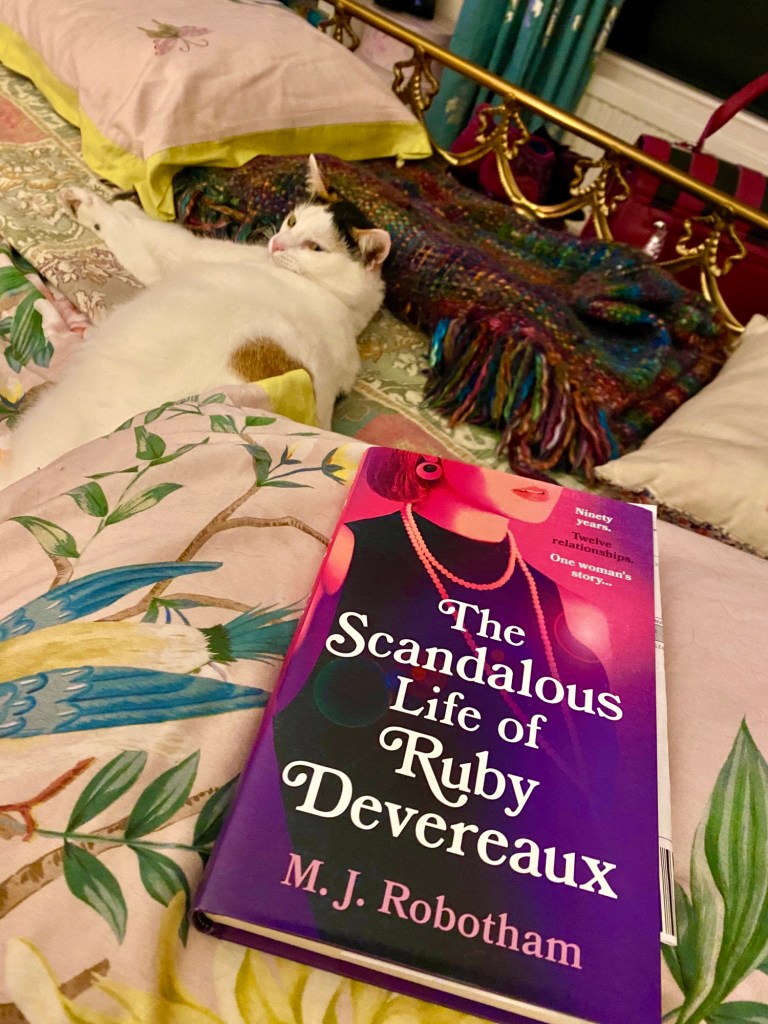
The Scandalous Life of Ruby Devereaux by MJ Robotham

Everyone knows Ruby Devereaux’s books. But no one knows her story… until now.

From a teenager in wartime England to a veteran of modern-day London – via 1950’s New York, the Swinging Sixties, Cold War Berlin, Venice and Vietnam – Ruby Devereaux has lived one hell of a life: parties, scandals and conflict zones, meeting men and adventure along the way. In a writing career spanning seven decades and more than twenty books, she’s distilled everything into her work. Or has she?

There were times during this novel where I wished I was the transcriber in the room, just so I could be the first to hear this lifetime of stories. Ruby Devereaux’s editor is under pressure from above. Ruby is almost 90 years old and the publisher is determined to get the one last book she owes them. So her editor suggests that she closes her illustrious writing career with a memoir. Ruby was on the verge of packing up her typewriter, but she does perhaps have one story left in her, or maybe twelve…

The bulk of the book is Ruby’s memoir as told to her transcriptionist Jude, each chapter named after a man in her life and telling the story of their relationship. Although it’s not as simple as that, through these affairs she takes us through the latter half of the 20th Century and right across the world. It takes us through one woman’s history, but also the ever changing landscape of the world around her, taking in those unforgettable moments and some fascinating social history too. I used to be fascinated with my 90 year old grandmother and the changes she’d seen over a lifetime in the countryside: from horse drawn ploughs to huge tractors; from cycling everywhere to her children owning cars; from handwritten letters to online communication. This has similar vibes, but on a bigger scale as Ruby moves from peacetime to war and across three continents with the world constantly changing beneath her. The author weaves together the social history, world events and Ruby’s growing up with romance and scandal. Ruby has spent seventy years telling her character’s stories, but now it’s time for her own. It’s definitely a life well lived as it’s taken her to the 1950’s New York of the Mad Men, Berlin and Budapest during the Cold War, into Vietnam and into relationships with twelve different men. These are the men who’ve inspired her novels. Make no mistake though, this isn’t really about the men in her life, this is about Ruby. Each relationship captures where Ruby is at that point in her life; a chapter in her personal growth. Ruby easily outshines her male counterparts because she has such a zest for life and breaks society’s rules and expectations about women everywhere she goes. As a young girl in post-war England she’s very matter of fact about her first sexual experience, wanting it out of the way before she leaves home. She’s an incredibly resilient character, despite experiencing loss and heartbreak at a very young age. She makes a promise to herself and the person she’s lost to keep going, grabbing opportunities whenever they arise. Never realising that all along she’s writing the most exciting story she’ll ever tell.

It’s this resilience and insistence on saying yes to experiences that take her across the globe. Starting in London, she lives and falls in love in the romantic city of Venice, via a terrible experience in New York that spawns her second book. She then explores Saigon and Budapest, before finally ending up in Cornwall. She spends time in a commune, dabbles in the world of spying and has assignments in war zones. Just as in her love life, she’s tough and doesn’t dwell on failures or knock backs, she chalks it up to experience and moves on. There is a danger of some of the men in her life becoming a mere backdrop to Ruby and her escapades, it’s very hard to keep up with her energy. However the later sections in England felt a little more detailed and because they’re not as filled with adventures, the men have more room to develop. Their relationships with Ruby feel deeper and more real. Ruby is always at the centre though and I loved following her character development. We can see which experiences have given her strength and a sense of boundaries. I love a scandal so this was definitely a fun romp in parts, whilst also having a sense of reflection and self-awareness as Ruby becomes an older lady. There’s a bravery in her willingness to share her life, particularly her emotions and those difficult parts of her life – relationships that went wrong, the loss, motherhood and her mental health. However, despite this we’re caught up in Ruby’s humour and ability to heal. I think the author has created a brilliant character and blended actual history with her life very well. Ruby is such an incredibly memorable character and I enjoyed spending time in her company.

Published by Aria 11th April 2024

Meet the Author

M J Robotham had wanted to write from a very young age, inspired by the book ‘Harriet the Spy’. However life got in the way and it was journalism and having a family keeping her occupied. She was a midwife for several years, but started to write seriously after completing an MA in Creative Writing. her first novel was A Woman of War followed by The Secret Messenger set in occupied Venice.

Her next two books were set in pre and post war Berlin, then wartime Norway, both are places she loves to visit. In her spare time she visits the gym, to knit unusual things and enjoys the music of Jack Savoretti,

Posted in Netgalley, Publisher Proof

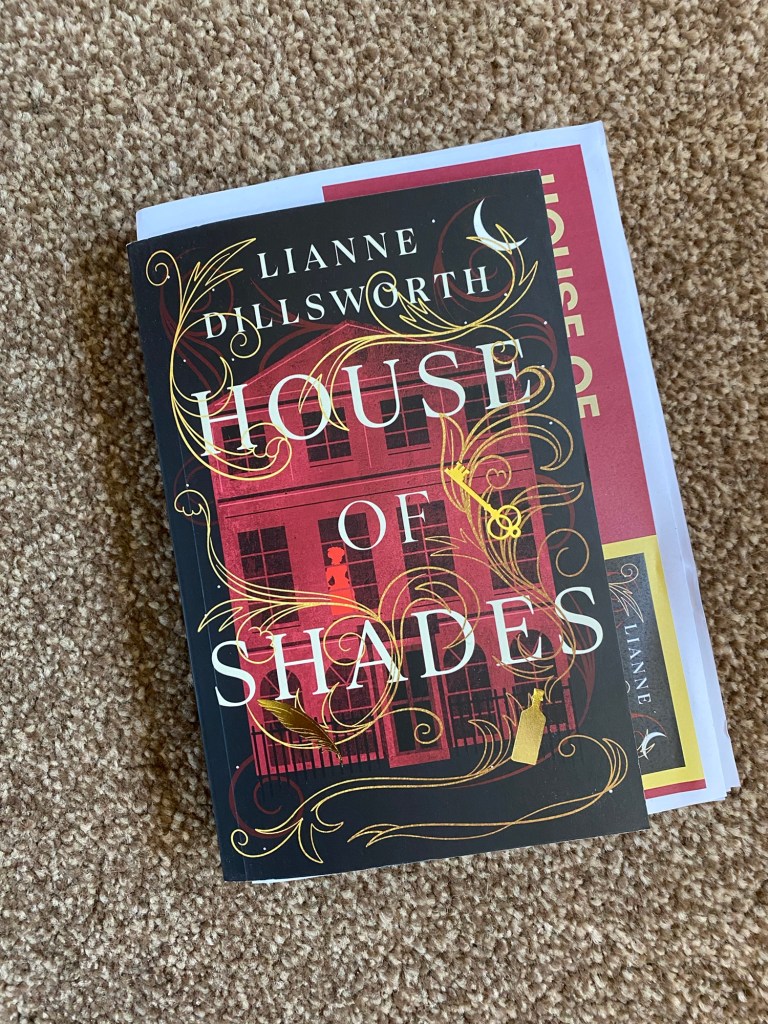
House of Shades by Lianne Dillsworth

Hester is a doctoress, using her mother’s skills and recipes to treat the ladies of the night around her Kings Cross home. She’s offered a commission to work in the Fitzrovia home of Gervaise Cherville, a rich factory owner with declining health.

If Hester can diagnose and treat his illness he will pay her ten pounds, a life changing amount of money in 1833. Thinking that the fee will help them move to a better area of London, she leaves behind husband Jos and slightly wild sister, Willa, to work at Tall Trees the Cherville mansion. However there’s a dark energy in this old house, as if there’s a curse on Cherville and his mansion.He asks if Hester will track down two women who worked in the house – Aphrodite and Artemis. However, they weren’t servants but slaves and Cherville’s treatment of them torments him and keeps him awake at night. If Hester can find the women, allowing him to make reparation before he dies, he will raise her fee to twenty pounds. Hester is torn, twenty pounds would allow them to move to the country, removing Willa from the temptations that keep her out at night. Yet, will these women want to found, especially given Cherville’s abuses of power? Also, can Hester as a black woman, put another black women in danger without the consequences being on her conscience forever?

Inheritance is a huge theme in the novel and especially, the way in which characters receive their portion. Of course an inheritance isn’t always financial and the intentions of the giver play a large part in what it can do. Hester’s mother has given her an incredible inheritance, her doctoress’s bag of herbs and potions that can ease sicknesses of the mind and body. This of course helps her earn a living, tending to the prostitutes around their part of town at night. Kings Cross is known as a red light district and Hester tends to their venereal diseases, but also their bruises when men take what they want without paying. However, she also has the keeping of her younger sister Willa which isn’t easy. Willa is wild, easily led and naive when it comes to the intentions of men. Hester’s husband Jos finds it difficult living with Willa, especially when the sisters are at odds with each other. Willa works at the Cherville’s factory and has been noticed by Gervaise Cherville’s son, Rowland. It’s clear to Hester that his intentions aren’t honourable, but can she convince her headstrong sister that he isn’t as in love with her as he claims? When working at the Cherville’s house can she stop Rowland from recognising who she is, while also taking care that he doesn’t put undue influence on his father. Rowland isn’t happy with Gervaise giving away ‘his money’ in reparations, after all their plantation has hundreds of slaves and where will his charity end?

I loved the double meaning of the title House of Shades; the shades or ghosts of the past play their part here, especially in the mahogany furniture Cherville had made from the trees on the plantation. However, it also refers to shades of skin colour. I loved how the author explored the concept of ‘passing’ and colourism, especially in the light skinned character Lady Raine. Hester herself is very dark skinned, a colour that immediately places her in an unusual category. Her position as a doctoress situates her far higher in a house’s hierarchy than we might expect. There would be darker skinned slaves on Cherville’s plantation who are confined to working in the fields and bear the brunt of the ill treatment meted out, whereas those slaves considered lighter skinned might get to work in the household. Traditionally house slaves were thought to be higher in status than field workers, but whereas field workers get to leave the crops and spend time with their families in the village in he evenings, house slaves are at the beck and call of their master or mistress and even sleep in the house away from their families. They’re also closer to the male family members and therefore very vulnerable. There is a moment where Margaret is startled when she bumps into Hester on the landing, lurking in the darkness. She would only expect to meet servants of her own status on the master’s floor, not a black woman with her herbs and potions. I wondered how light skinned Willa was, to make her ‘palatable’ to Rowland Cherville, who appears to think slaves are expendable. He certainly doesn’t want them taking ‘his’ money.

Reparations are a huge theme in the novel and potentially the cause of Gervaise Cherville’s illness, as he admits the concerns and guilt around his treatment of slaves. Could his disturbing symptoms of insomnia, hallucinations and sleepwalking be put down to the end stage syphillis he’s suffering, or are the women he’s wronged in that house haunting him? When Hester first finds a dark, cold room off the kitchen she feels straight away that this isn’t a cold larder. There’s something about the space that she can feel and isn’t remotely surprised that slaves were sleeping in there, deemed unfit to be housed in the attic rooms with the servants. If all he wants to do is make reparations and apologise would it help the women to hear it? Or will the mention of their former master be so terrifying it disturbs their lives and leads to them fleeing once again? I suspected Gervaise hadn’t told Hester all that transpired between him and the women, in fact I doubted he even fully understood the extent of what he’d done. Yet it was Rowland Cherville who made my blood run cold, not only is he entering into exploitative relationships with young women who work in his factory but he doesn’t appear to have any empathy at all. His entire focus is on his own needs. He refers to his father’s money as his own, even though his father is still alive, and seems to have no feeling for his illness or imminent death. In fact he’d rather his father died, before he’s able to give all his money away. He also cares nothing for any of the slaves on whose backs the factory, Tall Trees and his inheritance have been built. They’re simply incidental to his own plans.

I really enjoyed the way this novel took me into the reality of Victorian England for black women. It gave me a new perspective, after Lianne’s first novel which looked at the rise of freak shows and the display of black women’s bodies. The private showings being another insidious and secret experience like rich men using women as domestic slaves and the objects of their desire behind closed doors, while seeming like a respectable businessman to society. Yet, the freak shows seemed to be freer and more in the control of the individual performer. One of the things I hated most when I visited the Slavery Museum in Liverpool, was the taking away of identity, so the way Cherville gave his slaves the names of goddesses made me shiver. It shows his desire for them on one hand, while keeping them in a cupboard, locked away all night like animals. While Hester is searching for them I was wondering whether they’d found their identity again, reclaimed their names and found a space to be relatively free. I feared that they’d had to adopt yet another identity, to disappear, constantly looking over their shoulder. Hester is a heroine that it’s easy to become involved with and I really sympathised with her feeling of being in-between: torn between being a wife and a sister; between her patient and her fellow women; not a servant, but not entirely free either. There’s even a revelation that draws her further into the history of Tall Trees. I wanted a happy ending for Hester, that she might be able to leave London and live that simpler life she and Jos have been craving. This is another triumph for Lianne Dillsworth and neatly places her on the list of authors whose books I would buy without question in future.

Published on 16th May 2024 from Random House

Meet the Author

Lianne Dillsworth lives and works in London. She has always loved anything and everything to do with books and her earliest memories involve reading and being read to. At school Lianne’s favourite subjects were English and History, so when she started writing, historical fiction was a natural choice. In Theatre of Marvels, her debut novel, Lianne indulges her love for the Victorian period evoking London in all its mid-nineteenth century glory. She is currently working on her second book under the watchful eye of her tiny terrier.

Posted in Random Things Tours

The Garnett Girls by Georgina Moore

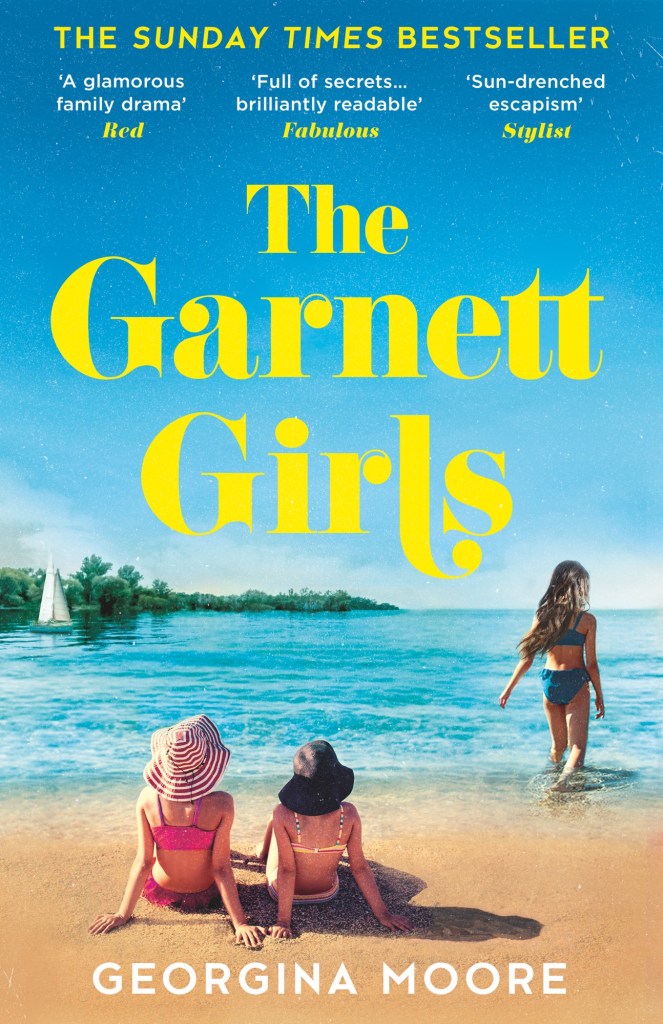
Regular readers will know how much I love stories of large families, their complicated dynamics and the psychological ins and outs of why they are, the way they are. This was the perfect read for me and I was immediately intrigued by the deep family secrets at the centre of the three sister’s relationships with their mother Margo. The three sisters are: eldest, Rachel married to Gabriel with two small girls and a career as a lawyer; Imogen, the playwright who is anticipating long term boyfriend William to conduct the perfect proposal while being unsure whether it’s what she wants. Then there’s Sasha, the fierce and rather wild youngest sister, who is struggling between her family and her coercive husband Phil while family friend Johnny watches on, wildly in love with her. The sisters live in the shadow of their mother Margo and father Richard’s tempestuous love affair and marriage which sadly ended in divorce. His drinking and their arguing lead to Richard walking out, to join his secret other family. None of the girls have ever seen their father since that day. Rachel remembers moving to their holiday home Sandycove from their house in London and Margo being unwell. She and Imogen, along with their Aunt Alice try to keep the house running, but Sasha is still a baby struggling to cope with Margo’s unavailability. In the present day, every one of the Garnett girls is carrying a secret, but Sasha’s secret has the potential to blow the family apart.

I loved the community on the island, where the family home has always stood. Rachel and Gabriel now live in Sandycove with their children. Rachel works in London during part of the week and Gabriel works as a counsellor but also looks after the home and the girls. Sandycove is still the official place where the Garnett family get together for special occasions and Margo is constantly popping in and out, helping with cooking and childcare. She now lives at at The Other Place, a bungalow up in the village. It’s here she conducts day to day life and her illicit love affairs, kept separate from her family, who often know a lot more than she realises. Because they’re together in the week, Gabriel and Margo often plan family get togethers and outings. This bothers Rachel who knows they’re only trying to take the burden from her, but she often feels like Sandycove isn’t their own, it belongs to everyone. In gaining the family legacy they’ve also lost something. Their close knit days of just the four of them are gone. Imi’s story starts in beautiful Venice where her perfect boyfriend William is set to propose. She knows this because Margo and Rachel are calling on a daily basis to hear what they’ve been up to. They’ve been a couple for a long time now and her family love William. They think he’s perfect too and Imi knows that if she vocalised her doubts to her mum or one of her sisters they’d think she’s lost her mind. On her return the read through of her play is set to begin and an up and coming Hollywood star has been cast in the lead role. Imi isn’t sure about Rowan and worries that it may be the worst kind of stunt casting, but from the moment she meets the actress, she can’t stop looking at her. Having always felt her relationship falls short of her parent’s great love, finally Imi knows what a coup de foudre feels like. Sasha has had a radical and fierce short haircut that she knows Margo will hate and will make her look very different from her sisters. Sasha is holding on to something else they’ll hate too, she is in contact with their father Richard and his family. Over the course of the novel, all the secrets hoarded by the sisters will come out. Can their close knit relationships survive?

Each of the three sisters are beautifully drawn by the author and became completely real to me very quickly. I loved their family dynamic too, even though I might find it a little bit suffocating if they were mine! Margo especially is a lot to take, with her daily phone calls and constant ‘pop-in’s’. There’s also the potential embarrassment of her sexual adventures, although I did enjoy her liberation and openness about having an active sex life as a grandmother. Sandycove has so many deep emotions buried in it’s walls. It almost runs like a stately home, with a list of annual events for family and friends that are a fixture in the village calendar. The family’s parties are incredible and I’d love to go to one! I thought the way the author used flashbacks was clever, because they helped me understand each of the women. So we see Sandycove as the home of 16 year old Margo who thinks she’s met the love of her life. Margo’s mother is unconvinced and is determined to keep this older man away from her daughter. Margo isn’t easily dissuaded from her love affair and ropes her sister Alice into helping her, eventually fleeing her childhood home with Richard in tow. Her self-awareness doesn’t stretch to realising that she’s now doing just the same with her own daughters – so sure that William is the one for Imi she’s planning the wedding before the proposal. We also go back to the moment when this family fell apart; this past event answered a lot of questions for me. I loved the moment of realisation for Rachel that her need for independence lies back there, in fact it was about survival. Yet she knows her independence made Margo feel unwanted and also masked a need to live up to her mother’s expectations and a fear of being unable to. She didn’t want to live somewhere that people came up to her in the street to tell her how like Margo she was. She wanted to live somewhere there was no Margo, maybe then there’d be enough space left for her to be Rachel. She knows that now these old feelings put a distance between her and Gabriel, in fact the whole family see strong, capable Rachel without thinking how exhausting it must be at times, how she can never be vulnerable.

Imi longs for someone to listen, so much so that on the day of her Venice proposal she drinks at the hotel bar with a young man just because he doesn’t talk over her, or assume what she wants in her life. When William proposes he uses the words ‘it’s what everyone wants’ before asking if it’s what she wants. It’s as if she’s ripe for rebellion, but doesn’t know how yet. Sasha’s rebellion is rather more visible, the short platinum blonde crop is a backlash against the long flowing hair that makes her a Garnett girl. Her identity is visible in the way she looks, with her slightly severe and spiky clothes and her red-soled high heels. She picks at Imi for accepting Margo’s bullying and interference, knowing straight away that Margo had bought Imi’s dress for the engagement party. Sasha can see that though she is beautiful she isn’t comfortable in it. In fact Imi wasn’t even comfortable with the party. Yet Sasha soon returns to Phil’s side, as he lurks in the doorway looking put out. He hates Garnett parties and prefers to have Sasha to himself; there are deep-seated reasons why Sasha has fallen into this possessive relationship, mistaking control for love. I thought these labyrinthine dynamics were brilliantly done, so real and perfectly in tune with coercive control and how intergenerational trauma works. I knew it was going to take the revelation of all the family secrets, probably in an explosive Garnett way, for these dynamics to change and for the girls and Margo to heal. I was so sucked into their world that I read the book in two sittings, desperate to see the girls speak their truth and start controlling their own lives. I also wanted healing for Margo too, because she’s been at war with an idea for the past twenty years. Her impression of the man who left her and the life he left her for is all in her head and it’s maybe time to face reality. The Garnett women can only move forward by being honest and real with each other and themselves. This was a wonderful read for people like me – the nosey and psychologically trained. It’s astute, beautifully written and full of strong women who are talented, ambitious and intelligent. It was a joy to read.

Published in paperback this month by HQ Stories.

Check out the rest of the blog tour

Meet the Author

Georgina Moore grew up in London and lives on a houseboat on the River Thames with her partner, two children and Bomber, the Border Terrier.   The Garnett Girls is her first novel and is set on the Isle of Wight, where Georgina and her family have a holiday houseboat called Sturdy. Georgina is working on her second novel, Walnut Tree Island, which will be published in 2025.

Posted in Throwback Thursday

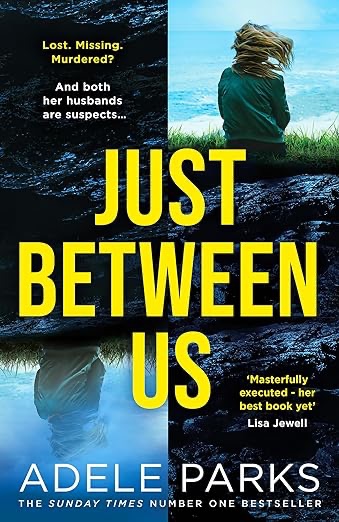
Just Between Us by Adele Parks

For some reason, I wasn’t fully engaged with Adele Parks’s last novel Both of You and I wasn’t expecting a sequel. I didn’t really like any of the characters involved. Kylie has two pseudonyms and two lives: half the time she’s Leigh, wife to Mark and stepmum to Oli and Seb; the rest of the time she’s Kai, wife to Dutch banker Daan Jaanssen and lives in an upmarket apartment with luxury clothes, cosmetics and holidays. The two seem to balance Kylie’s complicated needs, she’s equally at home having dinner in a Michelin starred restaurant as she is eating sand filled butties on a cold beach with the kids. Kylie’s other important relationship is Fiona, her friend of many years who has become part of the family and unofficial aunty to the boys. There isn’t a single person in Kylie’s world who knows about her double life, until one day she disappears. Now the whole world knows about Kylie’s bigamous marriages and the husbands and children are dragged into a police operation and a media frenzy. This sequel picks up after the first, when we’ve just found out who has been keeping Kylie prisoner. Just when we think it’s all over, we’re only halfway there.

I won’t ruin any of the twists and turns of either book, because this is one of those you need to start without any idea what’s going on. We have the original characters including the rather wise and interesting DCI and we have small chapters from every point of you. However, there are some newbies too and it was here where the book really took off for me. I was so eager to know what the hell was going on and where these people fit into the original story. We are in the depths of lockdown and Kenneth has been shielding alongside his grown-up daughter Stacie. Stacie is in the early stages of recovery from cancer treatment and she has fought hard to keep living. She deliberately doesn’t look at herself but knows she looks a little beaten up with her shorn hair and the scarring. Sadly, she has the added complication of amnesia after falling so dangerously ill so she doesn’t even remember treatment or anything before that. Thankfully she has Kenneth to fill in the blanks and he seems like such a caring and loving dad, luckily he’s also a retired GP so he’s perfectly placed to reassure Stacie and support her recovery. They have a quiet routine of daily dog walks, cooking and board games. They’re in the town of Lyme Regis and Stacie does feel like she knows the place and her dad has told her about her engagement to local lad Giles. She called the wedding off two weeks before the date and moved to Paris. Then something odd happens. Stacie is on the beach when she feels a sensation of being watched. Up on the promenade there is a woman staring at her with a fierce intent. She wonders if this is someone who knew her from before. So, she makes her way over, keeping a safe social distance and introduces herself, explaining that she might look a little different, because she’s had cancer. No, the woman says, you’re not Stacie. This is a moment where the hairs go up on the back of the neck, but we don’t know who the woman is or how well she knows Stacie and Kenneth. What possible reason could she have to confuse a woman who’s had cancer treatment and lost her memory?

I enjoyed having more input from the husbands and Kylie’s two stepsons this time around. The boys are incredibly loyal to her, despite being hurt by finding out about her second husband and let’s not forget, all of them are grieving. Daan Jaanssen also shows an incredible amount of loyalty and concern, especially considering he’s being charged with Kylie’s kidnap and murder. Does this mean he didn’t do it or is he putting up a smokescreen in the hope of walking free? Mark is angry and bitter, perhaps because he’s was her husband first. He is on the verge of making mistakes because of that anger. Seb and Ollie show maturity and enormous love beyond their years and put their own Dad to shame. The short, sharp chapters keep the momentum going and definitely have that ‘one more chapter’ addictive quality. Be prepared to set aside a day to finish it when you can’t put it down. This is definitely one of those sequels where you need to read the first novel, there’s a little bit of exposition about Kylie’s ordeal but not too much. The main question is what happened to her afterwards? Is she dead as the police think? This is a great thriller from Adele Parks and it made me feel back on track with loving her writing.

Meet the Author

Adele Parks MBE is the author of twenty-three bestselling novels including the recent Sunday Times hit Just Between Us and the audible Number One sensation One Last Secret. Over 5 million English editions of her work have been sold and she is translated into 31 different languages.

Her number one bestsellers Lies Lies Lies and Just My Luck were both shortlisted for the British Book Awards and have been optioned for development for film & TV.

41,000+ 5 star reviews have kindly been written by her fans on Amazon 🙂

She is an ambassador of the National Literacy Trust and the Reading Agency: two charities that promote literacy in the UK.

Adele was born in North Yorkshire and has lived in Botswana, Italy and London and is now settled in Guildford, Surrey.

In 2022 she was awarded an MBE by King Charles III for services to literature.

Connect with Adele Parks on Twitter @adeleparks, Instagram @adele_parks and Facebook @OfficialAdeleParks or visit her website for more information.

Posted in Netgalley

The Unfinished Business of Eadie Browne by Freya North

Eadie lives an unusual life in her garden city home, situated next to a cemetery. Far from being macabre and frightening, the dead are often this lonely little girl’s best friends. They provide her with somewhere to go and talk, without censorship or interruption. Her Mum and Dad work jobs outside the home, one in the day and one at night, but the rest of their time is spent at their desks in the family living room each completely engrossed in their writing work. She is an outsider at school, without friends and a target for kids like Patrick Semple. Patrick is relentless in his bullying of Eadie and it takes her a long time to find her little tribe. Her friend Josh lives with his grandfather who has a convenience shop, he’s also a concentration camp survivor. She also makes friends with Celeste, who’s lived in France and her mother, Sandrine, is an alcoholic. These are her first friends her own age, as up until now she’s mainly hung out with Michael, an elderly man who tidies the cemetery and Ross who plays the bagpipes at funerals. Eadie is feeling so settled with her life, but these three young friends are on the cusp of a huge change. All three will be going to different universities and while Eadie likes to think nothing will change, distance does have an effect on relationships and the whirlwind of Fresher’s Week will immerse them in their new lives. Will they still have time for each other? More importantly, will Eadie be able to leave the difficulties of her childhood behind her and make a life in Manchester?

Freya North beautifully inhabits the world of a young child and the fears and preoccupations that are their daily lives. It immediately swept me back to my own childhood and moments when I was afraid or felt like I didn’t belong. In my first year of primary school at age 5 we lived so rurally I had to get on a public service bus and remember when to get off and how much to pay the driver. It left me anxious about public transport ever since. I was also bullied, being poor but having a place at the local grammar school wasn’t easy and I never had the right clothes. My family also went to an evangelical church which made me different and restricted my social life. I really identified with Eadie, for feeling that her background was less than perfect. I felt Eadie’s pain. As children, if people tell us we’re odd or wrong in some way we internalise that feeling and assume they’re right. Eadie’s parents are not neglectful, but they are a very definite twosome, seemingly unaware that their only daughter is achingly lonely and suffering from immensely low self-esteem. As adults we can step back and see that her bully is probably suffering too, but children don’t realise this. As the group of friends grow towards leaving school, the changes are not easy for Eadie to cope with. What will happen to their trio as they all go their separate ways? While Josh and Celeste are excited about what’s coming, Eadie is anxious. What will Manchester hold? Will she be accepted?

I love the North West of England, my family are originally from Liverpool but my best friend is a Mancunian and we’ve spent an enormous amount of time there over the years, mainly seeing gigs from Manchester bands like Elbow. However, I grew up in the late 1980s and early 1990s and I was an indie kid. I started with The Smiths and Morrissey through to the Madchester scene and although I was too young for the halcyon days of the Hacienda I did love New Order with a passion and Bizarre Love Triangle is one of my favourite ever tracks. I felt immediately transported back to the reign of Tony Wilson, when New Order would be in residence and the club was heaving. North captures perfectly the heady days of the summer of love – the advent of Acid House and Ecstasy. Here, having made friends, Eadie finds her place of worship. She loves ‘the Hac’. She can be found on the dance floor in just a sports bra and shorts combo, able to dance all night with a raging thirst from E and a feeling of well-being to the whole world. This is before and the terrible deaths that occurred. Eadie and her friends rent a house on Hathersage Road, across the road from the amazing Baths with its art nouveau interiors. This is her home now. In fact she becomes so comfortable in her life here that she stops going home, she stops writing to friends and lives completely in the moment. It’s when things start to change that Eadie begins to struggle. Housemates have plans for their second year, placements abroad, moving back into halls and Eadie starts to fall apart. An unexpected face from the past comes back to haunt her too. After a warning from the barman at the local pub where she works, that the Hacienda is being run by drug gangs and that means violence. This leads to an unexpected blast from the past and is the catalyst for a breakdown. Eadie finds herself unable to complete work and even starts to question whether to stay at university. With her housemates making different plans for next year, Eadie can feel the foundations of her life shaking.

Freya North captures perfectly how secrets and traumatic experiences can follow us through life. If left unaddressed, our life is like a wall with a fault in it’s foundations. It can only be fixed by removing the upper layers until you reach and remedy the original fault. Eadie has covered her trauma over with many different layers: her friendships with the residents of the cemetery; alcohol and E; the Hacienda and acid house. I felt something with Eadie’s story, because of my own recent experiences with old friends. We can experience so much difficulty and pain in life that we feel far removed from those friends we’ve had in the past, but often they’re still there, just waiting for a sign that they can help or support us. I loved Eadie’s relationship with Kip, which isn’t perfect but the love is all the more real for those imperfections. His love is shown in actions rather than words and is stretched to it’s limits at times. Eadie is one of those people who takes a long time to work out who she is and what she wants to do in life, that is until she takes care of her unfinished business and then she flies.

Out now from Mountain Leopard Press

Meet the Author

I’m the author of 15 bestselling novels and am so excited to bring you my 16th novel: THE UNFINISHED BUSINESS OF EADIE BROWNE. I know you can read the blurb here – but I wanted to tell you how important and personal this book is to me… Much of it was drawn from my own memories of leaving home for Manchester Uni in the late 80s and remembering what that FELT like. Also, I live outside Welwyn Garden City in Hertfordshire – and I became interested in the visionary ethos of the Garden City movement. Because lockdown cancelled all the lovely centenary celebrations planned for Welwyn Garden City, this novel also serves as my tribute to the town and its Founder. I hope you’ll enjoy the novel – unlike Little Wing, my previous novel which flew out of me in 4 months flat, I really toiled over Eadie Browne; writing and rewriting and REWRITING until I was confident I’d written my best book yet… this much I owe to you, my lovely readers.

2021 marked the 25th anniversary of the publication of my first novel Sally! My 15th novel Little Wing was written during the first lockdown. Set partly in the Outer Hebrides and interweaving the secrets and lies of two families over two time frames – it was a joy to research and write and certainly kept me sane during the Pandemic. I’ve always been focussed on a sense of place being a key feature of my writing – settings being a leading character, not merely a backdrop. Previous locations have included North Norfolk, British Columbia, Derbyshire, Vermont, France, Scotland, Wales, Cornwall… I’m an avid reader too – and the novels of Barbara Trapido, Jane Gardam, Rose Tremain and Mary Wesley inspired me to write. I hope you enjoy my books – please keep in touch via my website, Facebook, Twitter and Insta! Happy Reading! Sign up for my newsletter (via my website)

Posted in Random Things Tours

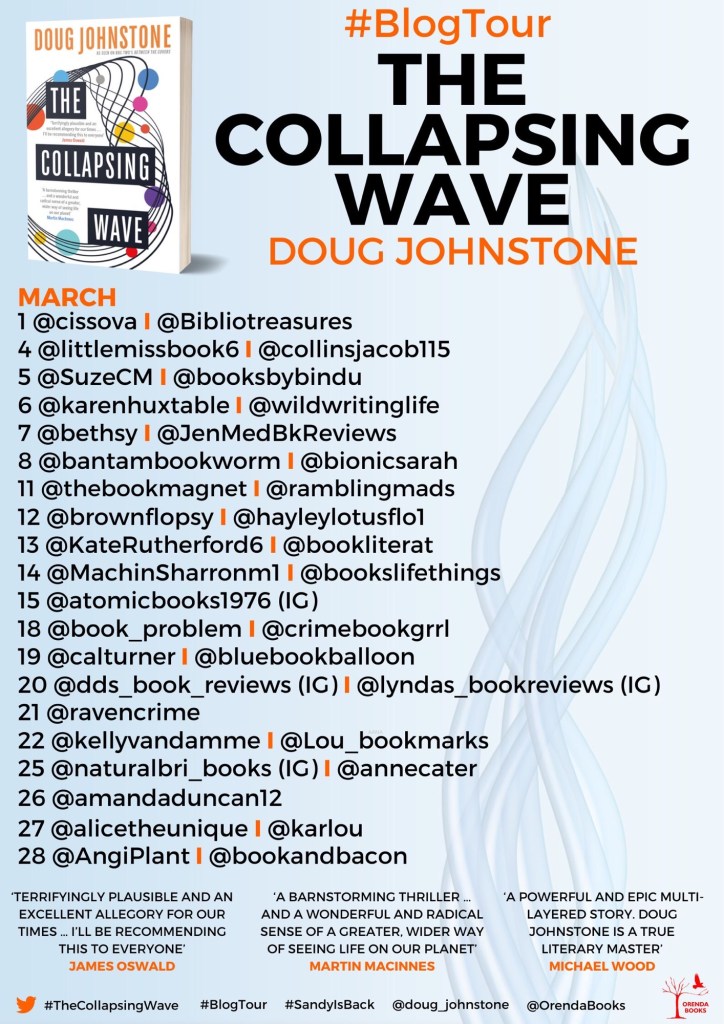
The Collapsing Wave by Doug Johnstone

When I first met the incredible being Sandy in The Space Between Us I had no idea that there would be a sequel, never mind a trilogy. I grew up at the time when home VCRs were becoming affordable and we rented the Star Wars films so many times that I’m sure if we added up the hire fees we probably bought them. Doug Johnstone’s second novel has something in common with the original trilogy in that this second outing is much like The Empire Strikes Back, it’s darker in tone and it looks like our heroes may be beaten. Heather, Ava and Lennox come up against the worst traits of human nature; fear, hate and paranoid self-preservation seem to be winning and it’s the military’s role to carry this ideology through.We start several months after the last book ended as Sandy was reunited with the rest of his species at Ullapool and disappeared into the sea loch. Our three heroes seemed set for different fates as the research scientists and police who’d been tracking their journey finally caught up with them. Ava is confronted by and wreaks revenge on her abusive husband who pushed her to the edge of suicide and now tries to take her baby Chloe away. At the beginning of this novel we find her in Edinburgh for the court case, watched by her sister who is now Chloe’s guardian. As she’s given a suspended sentence Ava’s elation turns to terror as she’s swept up outside the court room by military officers with guns. Lennox and Heather have been in a makeshift compound that’s now become the biggest American military base on British soil, named New Broom it sits at one end of Ullapool’s sea loch in the middle of nowhere, like Guantanamo Bay rebuilt in a beautiful Highland setting. Heather and Lennox are detained, seemingly with no legal basis, as MI7 Agent Oscar and the American military attempt to capture partial enceladons and understand the way they work. Oscar at least has an academic interest, whereas the military seem more fixated on how to exploit their alien powers to overpower and control the Earth. Nothing could be further from the alien’s minds, they are simply looking for somewhere to live now that their oceanic home has become colonised by another species. They are refugees.

I think the political climate and local circumstances had me reading the book on two levels: as a great science fiction story, but also as an allegory. For those who don’t know my closest city is Lincoln and we’re currently experiencing community divisions. The government’s decision to requisition the recently closed RAF base of Scampton, home of the Dam-Busters, and turn it into a centre for asylum seekers has met with uproar. It’s terrifying to hear the opinions of people who drink in the same pub, deliver the mail or wash the windows, in case it’s far removed from your own. There were sensible arguments against the plan: there was already a plan to turn the base into a museum and heritage centre, for which local people had fundraised hard; the government are not using the actual existing barrack blocks to house the men, but putting portacabins on the runway instead; it’s so far away from any services in the city. Yet, instead of being able to protest these points at a local level, a far right extremist group from Yorkshire has hijacked the cause and set up a protest camp at the base’s main gate with racist signage and ideology. They are protesting against any asylum seekers: ‘coming in illegally for the benefits; to commit crime; to be terrorists; to groom children; to take social housing’. They don’t even understand that in order to claim asylum someone must first arrive in their chosen country. Maybe because this is now part of my everyday life, the parallels between the enceladons and asylum seekers/ refugees were undeniable. Both have been forced from their own country for whatever reason and the majority seek to live somewhere peacefully and in harmony with the existing population, not realising that to some people, their very arrival itself is a threat.

New Broom’s research staff are carrying out experiments that wouldn’t have been out of place in concentration camps. They are building Faraday Cages to capture partial enceladons and prevent them communing with others through telepathy. This silence is enough to depress and eventually kill them, because they can’t live separately only as part of the whole. Lennox and Heather miss the sense of communion they get from their telepathic communication with Sandy. They can commune with each other though and do so whenever they can. Heavily guarded wherever they go, they have no idea that Ava and Chloe are on their way, or that a camp of ‘Outwithers’ has built up on the edge of the loch filled with travellers, believers, anti-government protestors and anyone who despises the idea of such a huge military base on Scottish soil or the capture and torture of enceladons. There’s only one American soldier who shows a trace of empathy, the others are simply unquestioning drones taught to believe they are acting in the interests of National Security and the defence of the Western way of life. The two main men in charge are clearly in the grip of obsession, whether it’s a selfish intellectual curiosity or the terrifying birth of a megalomaniac. While I felt Oscar could perhaps be redeemed, General Carson is itching to exert authority over both security and experimentation. The only character who has their freedom is Sandy, but how can they be truly free with their family being captured bit by bit and their peace threatened by a man determined to destroy them all. Make no mistake, this is not the soft humorous story we might have expected from the first novel. In parts it was hard to read and made me feel physically sick, especially when Ava is finally reunited with her friends at New Broom. As Carson separates Ava from her daughter and proceeds to torture Chloe I felt so angry I was tearful. It is horrific and has the reader rooting for the overthrow of the Americans, by whatever means necessary.

It’s the feelings that Doug Johnstone’s writing conjures in the reader, that make this such an immersive read. The moments of love, friendship and sacrifice between these characters are beautiful and are but a small part of the collaborative existence the enceladons share. The moments where Sandy takes a human into the ‘whole’ are euphoric and more than a little trippy! The way the enceladons harness and work with nature to fight back against the military base has a similar feeling. The way Heather decides to stop resisting the cancer invading her body and just enjoy the life she has left living within the collective. All of these are pointing to the same life philosophy. We must work with something, not against it. The enceladons want to exist alongside humans, to become friends and communicate with them. After years of Thatcherism and the message that autonomy is the route to success and freedom, working together actually is an alien concept. It isn’t just the communication between the three friends that proves to be powerful. It’s the mother – daughter bond between Ava and Chloe. It’s the ‘Outwithers’ who have come together to create their protest camp and two women; Jodie, a lifelong activist for connection and Vonnie, whose love connection with Lennox creates it’s own power. Communication with the Outwithers is what changes Oscar, although whether this actually redeems his character overall I don’t know. These are the people who understand that connection with the colony can strengthen society as a whole, rather than destroy it. There are also those who choose not to see, whether that’s by building a fence and only caring about what’s in your own backyard, or by choosing to believe the government and mainstream media narrative, which only exists to manipulate. It reinforced my belief that language is so incredibly important. If we choose the word integration instead of infiltration, opportunity rather than threat, to embrace something changing for the better rather than hankering after a nostalgic past that mustn’t be destroyed, if it ever existed. If we realise that connection is more important than individual attainment we learn to grow, adapt and embrace new things. It’s amazing that E.M. Forster’s quote ‘only connect’, although now it’s over a 100 years old, still has such huge resonance.

Published on 14th March by Orenda Books.

Meet the Author

Doug Johnstone is the author of twelve novels, most recently The Great Silence, the third in the Skelfs series, which has been optioned for TV. In 2021,The Big Chill, the second in the series, was longlisted for the Theakston’s Old Peculier Crime Novel of the Year. In 2020, A Dark Matter, the first in the series, was shortlisted for the McIlvanney Prize for Scottish Crime Novel of the Year and the Capital Crime Amazon Publishing Independent Voice Book of the Year award. Black Hearts (Book four), will be published in 2022. Several of his books have been best sellers and award winners, and his work has been praised by the likes of Val McDermid, Irvine Welsh and Ian Rankin. He’s taught creative writing and been writer in residence at various institutions, and has been an arts journalist for twenty years. Doug is a songwriter and musician with five albums and three EPs released, and he plays drums for the Fun Lovin’ Crime Writers, a band of crime writers. He’s also player-manager of the Scotland Writers Football Club. He lives in Edinburgh.

Posted in Throwback Thursday

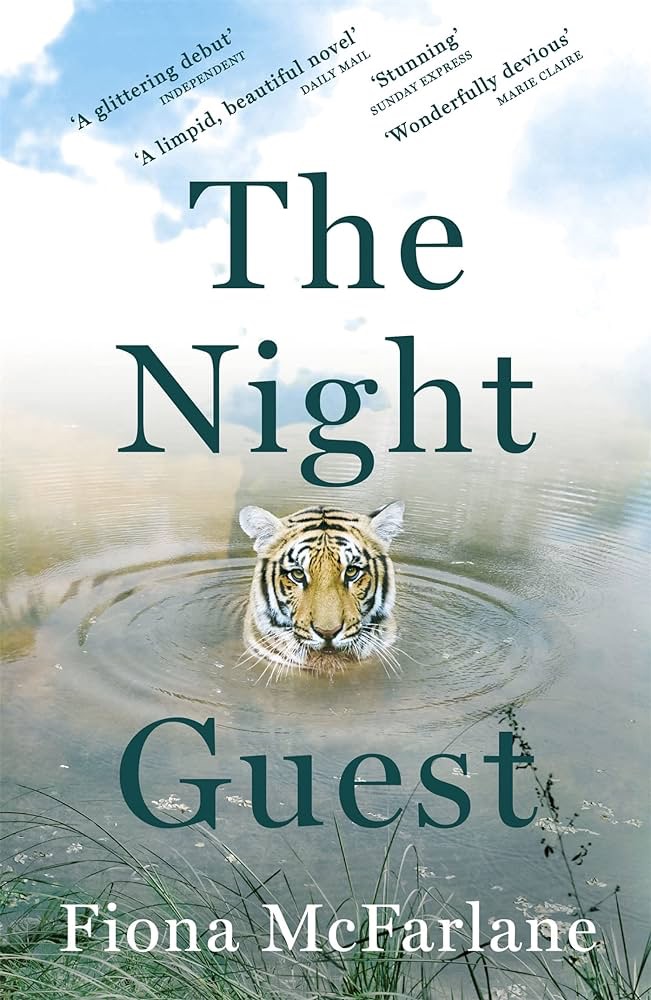
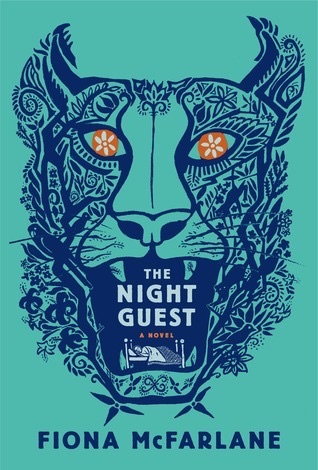
The Night Guest by Fiona McFarlane

Booksellers often joke about customers who come into their shop and ask for help finding a book: they either don’t have the title but vaguely remember the author; they don’t know the author but know there was a bird on it or the book was blue; they saw the book on that programme, the one with Sara Cox but don’t know which episode or even the series it was from; it’s an old book, they read it at school; they think it was set in China, or maybe South America. On it goes and more often than not, once the mystery is solved, they ask the bookseller to write it all down on a slip of paper then go home and order it from Amazon. I was having that sort of experience with this unusual novel, in fact nobody I asked had ever heard of it. Possibly not helped by my description – ‘ it had an old lady in it and a tiger came to visit her at night.’ Inevitably most people heard ‘tiger’ in the story or on the cover and I’d be answered with Life of Pi or The Tiger Who Came To Tea, excellent books but not the one I was looking for. Then finally one day the title sort of came to me. I say sort of, because I kept calling it The Night Visitor which sounds like a creepy name for incontinence or night sweats! I’d taken the book out from the library originally and when funds allowed I wanted to have a copy on my shelves. It is there on Amazon, but maybe pop it on your charity shop list because it is a little gem.

The book tells the story of Ruth, an elderly lady who lives alone in a remote house on the coast of Australia. She has family but her son has relocated for work, meaning that day to day help isn’t something he can provide. Her son phones regularly, but he’s busy with work, kids and a home of his own. However, he does start to worry when she rings to tell them she’s had a night guest; a large tiger came to visit in the night. At first she woke up scared there might be an intruder, but it was a handsome tiger instead. Her son suggests that perhaps she was dreaming? Ruth is adamant, the tiger woke her and she wasn’t asleep. Her son and his wife confer and decide they’re worried. What if their mother’s mind is going? How will they manage to get her the help she needs? Their mother can be low in mood at times, mainly because she’s spending so much time alone and that leads to ruminating on the past such as her girlhood in Fiji. One of my favourite tropes is the unreliable narrator and that’s what we have in Ruth. Her story is so implausible she must be losing her marbles. What unfolds is an unusual psychological thriller with a side order of magic realism, which I love. 

The book tells the story of Ruth, an elderly lady who lives alone in a remote house on the coast of Australia. She has family but her son has relocated for work, meaning that day to day help isn’t something he can provide. Her sonphones regularly, but he’s busy with work, kids and a home of his own. However, he does start to worry when she rings to tell them she’s had a night guest; a large tiger came to visit in the night. At first she woke up scared there might be an intruder, but it was a handsome tiger instead. Her son suggests that perhaps she was dreaming? Ruth is adamant, the tiger woke her and she wasn’t asleep. Her son and his wife confer and decide they’re worried. What if their mother’s mind is going? How will they manage to get her the help she needs? Their mother can be low in mood at times, mainly because she’s spending so much time alone and that leads to ruminating on the past such as her girlhood in Fiji. One of my favourite tropes is the unreliable narrator and that’s what we have in Ruth. Her story is so implausible she must be losing her marbles. What unfolds is an unusual psychological thriller with a side order of magic realism, which I love.  morning after the tiger visits a woman knocks on Ruth’s door. She introduces herself as Frieda and claims to have been sent by the government to help Ruth clean the house and stay on top of things. She’s also from Fiji, so Ruth can talk to her about the past and those memories and regrets that occupy her mind. It would seem that Frieda awakens something in Ruth that’s lain dormant till now. Her memories of Fiji become even more intense and flourish under Friedan’s gaze. In the back of my mind I was a little suspicious that much like the tiger, Frieda might not be everything she seems. Alternatively, she might be everything she seems and more. Ruth is more vulnerable than she cares to admit, a woman whose memory and understanding of events may not be accurate. Her mind wanders, but is she knowingly lapsing into daydreams or does she believe the fantasy? I felt concerned that while Ruth was narrating the more fantastical aspects of her daily life, like her visiting tiger, underneath there might be something more dangerous going on. Elderly people who have altered consciousness are so vulnerable to manipulation and abuse, whether it be sexual, physical, emotional, spiritual or financial. As changes were revealed, baby step by baby step, they were going unnoticed by Ruth. I was desperate for her to sit up and realise something odd was going on, before the results became permanent.

There are things in life that we choose not to see. We erect a wall to shield ourselves and never look over it so we can say ‘I didn’t know…’ This is often the case when someone we love is in deteriorating health, especially if they’re our parents who used to look after and support us. I think this is what Ruth’s son is doing, closing his eyes to the fact that their situations have reversed and now mum needs him. Ruth’s vulnerability is sad, because she’s so open to exploitation. It’s not just that her mind might be affected cognitively, but that she’s so lonely she craves someone to be interested in her. If someone enjoys spending time with her, they could quickly form a bond and shut everyone else out. As Frieda starts to infiltrate all parts of Ruth’s life, taking on more and more responsibility for her affairs, Ruth’s determination and independent spirit become worn down and she starts to depend on Frieda. In contrast with Frieda, Ruth does come across as mentally frail. Whereas the carer is the life and soul of the party. Ruth’s worsening nightmares of being stalked in her own home by a striped predator could be pure imagination, allegorical, magical or a manifestation of a sixth sense telling Ruth she’s in danger. This is a brilliantly complex debut, with layers of manipulation and deception that extend to the reader. All the way through I kept thinking I didn’t want my life to end up like this. Despite this, I was compelled to keep reading and I’ve never forgotten it. Now, thankfully, I have my own copy so I can re-read whenever I like.