Posted in Personal Purchase

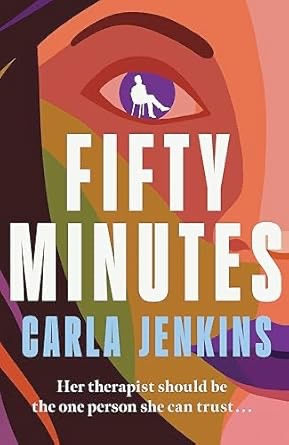
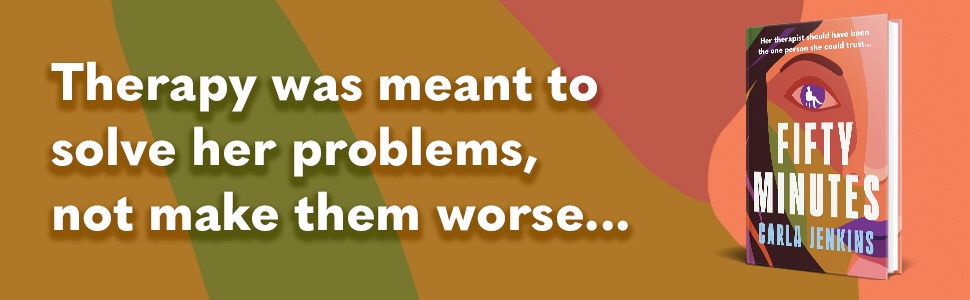
Fifty Minutes by Carla Jenkins 

Therapy was meant to solve her problems, not make them worse…

Smart twenty-year-old Dani is desperate to overcome her eating disorder, leave her dead-end job and return to her hard-won place at university. Using her limited earnings, she decides to start seeing a psychotherapist.

Richard Goode is educated, sophisticated and worldly-everything Dani aspires to be. As he intuitively unpicks her self-loathing, Dani assumes the fantasies she’s developing about him live only in her head. That is, until things take a shocking turn…

Descending into a maelstrom of twisted desire, manipulation and mistrust, the power struggle between Dani and Richard escalates until she’s forced to make a decision that might finally give her the freedom she deserves.

Dani has hit rock bottom. Her eating disorder is out of control and her declining mental health has meant suspending her place at university where she was studying English Literature. She’s now living in a flat with her sister Jo and her boyfriend Stevie, having to share with his daughter Ellie when she’s there for weekends. She’s working as a pot-washer to pay the bills, but longs to go back to university. Despite having very little money, she decides to see a therapist and has a session with Richard. She feels at home in Richard’s room, in the quiet with the smell of books and furniture polish. She feels like he listens and he seems perceptive, noticing her low self-esteem and anxiety. So she takes the decision to continue therapy with him, although he’s expensive. She starts to feel more positive, greatly reducing her bingeing and purging cycle. 

This was a setting I was very familiar with and although Richard has all the right certificates, counselling spiel and does detect Dani’s self-loathing, I kept feeling something wasn’t right. I couldn’t pinpoint anything in detail but I was concerned for Dani. She is so vulnerable. Her attraction to him wasn’t surprising. To have a man listen and understand her might be a first. He also embodies all the things she wants for her own life; qualifications, respect from others, a better standard of living. She has attachment issues so I was sure Richard would have expected some element of transference to creep into the relationship. I was also unsure about Dani’s home life. Her sister’s boyfriend, Stevie, seems like he’s easy going, tv loving, stay at home partner. He’s a good dad to Ellie, but with Dani I wondered if he wasn’t overstepping the mark. He likes things kept neat and tidy, the rent paid on time and Ellie to be safe and happy. There are a couple of occasions when he goes in quite hard on Dani for not being fit for work in the morning or for leaving her room in a state. I wasn’t sure whether this was concern or control? The author cleverly makes the reader unsure and with Dani in such a vulnerable place I was on high alert, like a mum of fledgling baby birds.

The author also keeps us unsure about Dani, not in the sense of believing her narrative, but as to whether she can genuinely break out of the cycle she’s in. As the book begins she’s still bingeing and purging as a means of managing her emotions, in fact this process is like a metaphor for how she manages her whole life. She wants her needs met, to feel emotionally filled or satiated. Then she needs to rid herself of it, to push it away before it gets taken away perhaps? She longs to be loved, but self-sabotages; something that Richard is very aware of and points out. Neither of the sisters have had that feeling of being loved or that they can feel safe within it, sure it won’t be taken away. They have been, at the very least, neglected by both parents. The girls are close, but are not as bonded as sisters can be within a loving family. There are times when Jo acts without realising what effect that behaviour might have on Dani. Thank goodness for Pat from work, who is steadfast in her care of Dani. Even in a complete crisis it is Pat who’s there for her, not her sister who’s busy making her own mistakes. Even when she’s been rebuffed or Dani has lashed out, Pat gives consistent care in a very motherly way and we see that best when Dani is ill. Dani doesn’t know she is beautiful. She knows men are attracted to her red hair and blue eyes, but never knows deep down that she’s worth anything. Besides, it’s always desire rather than love and care. However, she is adamant that she wants more from life. She wants to get better and study again. She knows this will help her get a better future, but she also thinks she’ll gain respect from others. She says that education is the only thing that can’t be taken away from her. I really understood that. 

The attraction to Richard is so complicated, but is bound up in her wanting a better life. There is an initial jolt of chemistry too. It’s something that should be talked about in the room, using the transference to work on Dani’s real needs for affection and worth. There is also counter-transference and both should be easy to recognise by a therapist who has Richard’s level of experience. She loves the way he reinforces her positive behaviours and finds ways forward, but she doesn’t realise she’s doing the work. He’s guiding her, but the achievements are hers. The author places clever little ‘lightbulb’ moments, such as Dani realising the picture she has of Richard in her mind, where he’s sitting in an armchair reading by lamplight, is actually an amalgam of an image she has of her father. It’s also very telling that when she’s sees him in casual rather than professional clothing, she feels let down and that attraction fades. It’s interesting that as boundaries start to break down, the last person she wants to confide in are Pat and Stevie, suggesting that she sees them as parental figures in her life. She knows if she tells them that they’d be angry and she wants to avoid that. She doesn’t like them being angry with her, but also they’d be angry on her behalf and might demand action. I thought it was interesting that she recognises Stevie in a parental role, when talking to her sister. Jo complains that he’s a homebody and they don’t really have fun together any more, but Dani points out that Stevie has always been a homebody. She tells her that this is the type of man she needs, even conceding that when he gets cross she doesn’t mind because at least he cares. 

Of course as counselling boundaries start to be overturned Dani starts to spiral. It’s a really tough part to read, because I was feeling parental towards her. She puts herself in some incredibly dangerous situations, trying to find experiences that fulfil her needs. I was hoping that she’d realise she’d pressed the self-destruct button before it was too late. She has the resources to succeed, but can she utilise them when she feels so unstable? Honestly, my heart ached for this girl and that tells you a lot about my issues with clients! I wished she’d gone to a female counsellor. She needed that female nurturing, a mother’s care and love. When it comes to a need and parents like Dani’s the only answer is to choose our family. There are further behaviours and revelations I won’t go into for fear of ruining the suspense and eventual outcome, but I was genuinely scared that Dani couldn’t pull back from the mess she was in. When someone has listened to your innermost thoughts they are a formidable agent for change and an even more powerful opponent. I had everything crossed that I’d underestimated Dani and that she could find those reserves to get through to the other side. This was a fantastic debut novel, full of suspense and stirring the emotions of the reader with real finesse. 

Out now from Trapeze Books
Posted in Personal Purchase

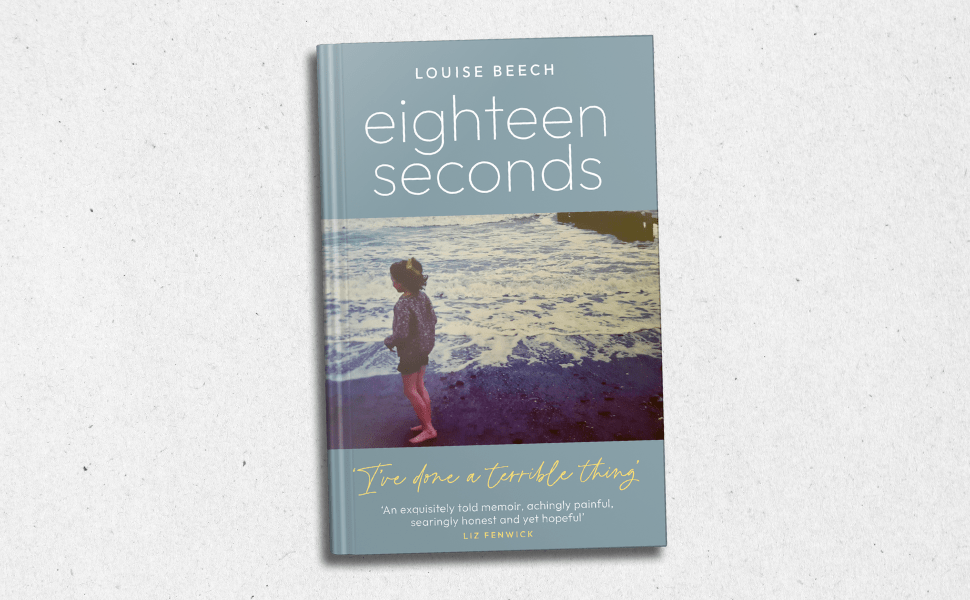
Eighteen Seconds by Louise Beech

My mother once said to me, ‘I wish you could feel the way I do for eighteen seconds. Just eighteen seconds, so you’d know how awful it is.’

I was reading this raw and painful memoir to discuss at my local book club Pudding and Pages. Sadly, my health wasn’t great that day and I wasn’t able to go. So I decided to tell all of you about it instead, because I love Louise’s writing and I identified very strongly with some of her experiences. This is such a psychologically astute story, from someone who has done a lot of work on their childhood trauma, even while being traumatised anew with the shock that comes on an ordinary morning. Normally, Louise would take her children to school and then have a walk along the path at the side of the River Humber and underneath the bridge itself. Her husband asks if she will take her walk earlier than normal as he has a package being delivered later and needs her to be home. She agrees, completing her walk earlier than usual, and returning home to a call from one of her sisters. Their mother has thrown herself off the Humber Bridge, it’s only by changing her schedule that Louise didn’t witness it. This call hits the reader like a punch to the gut and I’m sure that’s how she must have felt. If you’ve ever had a similar call you’ll know it hard to communicate the force of that moment. Your mind is still at home holding the phone while your body is grabbing the car keys and scrambling to reach A+E as soon as possible. 

Honestly, the siblings are shocked to find their mother alive when they reach the hospital. She landed, not in the water but on the path, causing multiple broken bones, internal bleeding and head injuries. As they navigate those first few hours Louise contrasts them with inserts that are flashbacks to their childhood. Their mum’s first suicide attempt flashes through her mind. The three girls were placed with grandma for several month, but Baby Colin had to be taken into foster care. Although losing their mum was terrifying for Louise’s younger twin sisters it must have been desperately traumatic for Colin who lost his whole family that day. She describes these months with grandma as the safest and most loved she ever felt. Their return to their mother heralded the worst years of their childhood, the abuse ranged from neglect to prioritising her own needs and emotions over that of her children. New relationships always came first, placing them in grave danger as she plunged headfirst into alcoholism. For Louise, as the eldest, it meant being a second mum to the other three while mum partied. In a way Louise became the identified problem of the family – she’s miserable, no fun and constantly moaning according to her mother and her male friends. It was an immense struggle to keep the younger ones happy, especially the girls who worried every time the door closed that their mother would ever come back. The didn’t know she was choosing to be in the pub. Louise’s attempts to get her mother to see what effect her alcoholism was having on the twins were met with either silence or insults, depending on which friend was drinking with her at the time. She just wants her mum to be responsible for her own children. 

This is such a hard read in parts but it isn’t without humour and hope. Once her mum is recovered enough to talk again, her sense of humour is restored and she is remarkably charming when she wants to be. I loved how the siblings handled her, with a patience and humour she barely deserves at times. I loved the sibling’s family WhatsApp group, including their Uncle Edwin who’s in Australia. Their ability to share gallows humour, even in the worst of circumstances reminded me a little of my family. Their discussions about her underwear and accusing Colin of sneaking it away, descends into uproar when he tells them it looks better on him. ‘Well you haven’t seen it on Edwin’, one of his sister’s hits back. My family and I used gallows humour all the time when my husband was dying. From my own experience I recognised the bulldozing that happens in MDT Discharge meetings, where everyone is agreeing to a plan you haven’t said yes to. Once I was told by an NHS Continuing Care nurse that my opinion didn’t really count because I wasn’t a nurse. No consideration to the fact that the care was happening in my house and I was the only full-time carer. In fact I was carrying out medical tasks such as pump feeding, suction and catheterising, so to all intents and purposes I was nursing him. The horror of realising there was nowhere for my husband to die broke me, because he didn’t have cancer so couldn’t go to a hospice. He wanted to come home but I couldn’t do it alone, Louise writes about similar issues in a very matter of fact way, because that’s the only way to be at times like this – blunt and forthright. Then in between the family uses humour to deal with a hurt that can’t heal and can’t change. 

I read this at a difficult time for my family, because my mum and her two sisters are dealing with care for my 90 year old grandmother, who has been a very difficult woman. My mum has felt completely overlooked by her mother, often left out of decisions or not considered when it comes to family memories or possessions. As the only daughter with any memory of her grandma (always referred to as Mother) she had hoped to be given her engagement ring when the time came, with her sisters receiving the wedding and engagement ring of their own mum. She was really upset to find her middle sister had been given Mother’s ring, with the other two going to her youngest sister. It wasn’t the item as much as the memory, not helped by my grandma saying ‘well the others really wanted them and I knew you wouldn’t make a fuss’. This total lack of consideration opened a Pandora’s box of hurt, including a terrible decision made when the family returned from a spell in Australia in the late 1960s. Having to accept housing away from their home city of Liverpool, they settled in Scunthorpe but both of my grandparents needed to work. My mother was twelve and her two sisters were pre-school age, so my grandma didn’t register my mum for school and left her at home caring for the younger children. This lack of education was devastating for my mum who felt like she was sacrificed for the good of her sisters and also felt ashamed that she had few qualifications. It affected her opportunities but also her confidence, leading to life long mental health issues. Despite this my mum shows incredible intelligence, is well-read and has had a lot of psychotherapy. I think that at the age of 72 she is very in touch with her authentic self and knows that she needs to ration the time spent with her mother, place careful boundaries around herself and us and accept a relationship that’s very one sided. I recognised a lot of my mum in Louise’s personal growth and that motherly relationship with her younger siblings. This book made me realise there are families like ours where intergenerational trauma is a very real part of life. I think the book holds out a lot of hope that with boundaries, solid friendships, somewhere to express the negative emotions and a lot of humour it’s possible to survive narcissistic parenting. Lastly, I admire Louise’s honesty and openness in writing this memoir so beautifully and I hope it has proved both cathartic and healing for her too.

Meet the Author

Louise Beech lives in East Yorkshire and grew up dreaming of being a writer but it took many years and many rejections for her to finally get a book deal in 2015, aged 44. Her debut, How to be Brave, got to No4 on Amazon and was a Guardian Readers’ Pick; Maria in the Moon was described as ‘quirky, darkly comic and heartfelt’ by the Sunday Mirror; The Lion Tamer Who Lost was shortlisted for the Popular Romantic Novel of 2019 at the RNA Awards and longlisted for the Polari Prize 2019; Call Me Star Girl was Best magazine’s Book of the Year 2019; I Am Dust was a Crime MagazineMonthly Pick; and This Is How We Are Human was a Clare Mackintosh Book Club pick. In 2023 her new novel, End of Story, will be published under the pen name Louise Swanson. Louise regularly writes short stories for magazines, blogs, and talks at universities and literary events.

Posted in Sunday Spotlight

Sunday Spotlight: Non- Fiction on My TBR

I started the year wanting to read more non-fiction, something I usually do when I need a literary ‘palate cleanser’. We all get those slumps or brain fog moments because we’ve not stopped reading for weeks. My usual pick -me-up is to grab a memoir or psychology book and for some reason that always works. So I want to share with you a few of the books I’ve read or that are on my TBR and wishlist.

Books I Re-Read

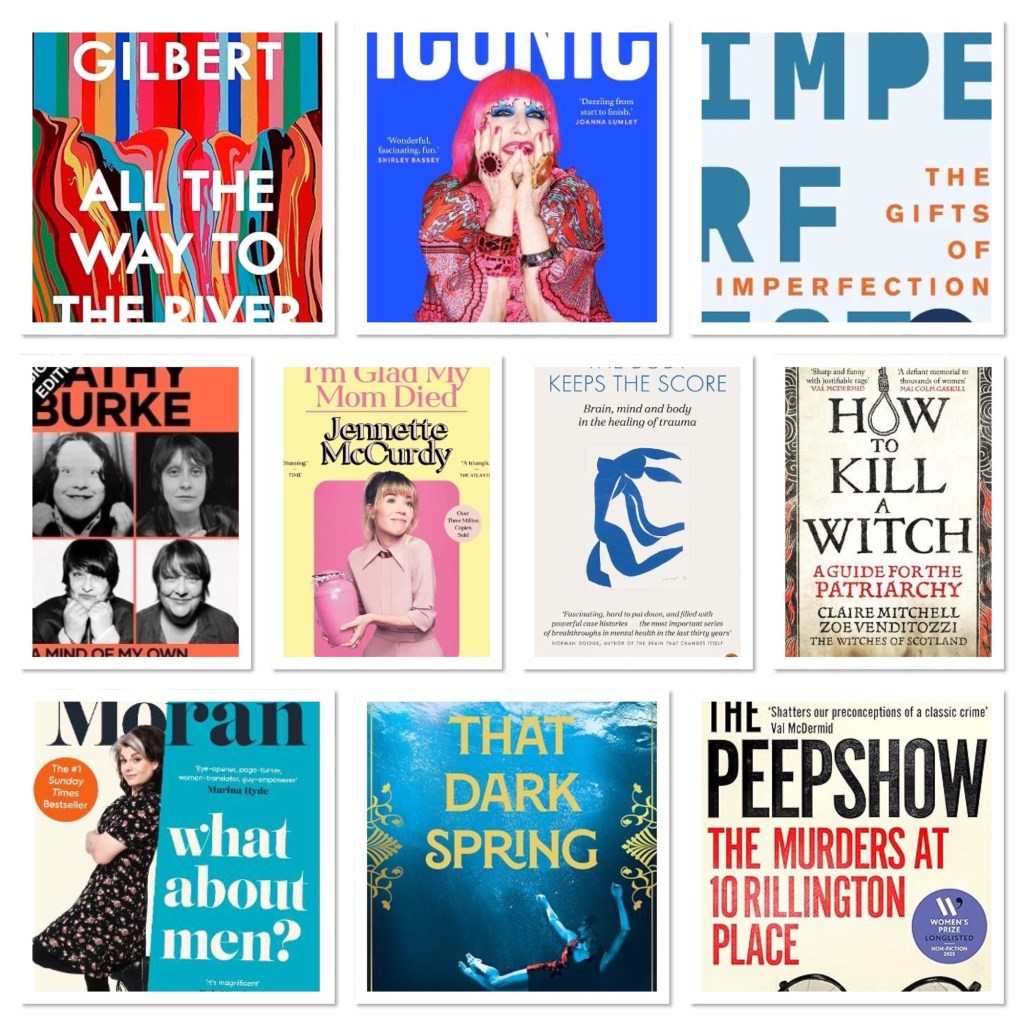
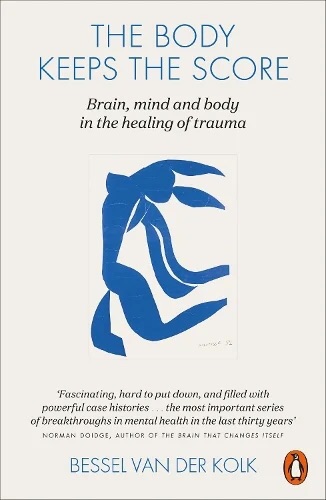
This book was one I picked up during my training in counselling. I was working with people who have acquired a disability through disease or trauma and I was really interested in how people process such a huge change in life. There’s such a long grieving process for what is lost, including the life they were expecting to have. This is the effect of a physical illness or disability on mental health. This book made me think about the opposite effect though, the effect thar emotional trauma has on the body. Mental pain, felt bodily, can be devastating for sufferers, their families and future generations. If you think about something mentally painful that has happened to you – the loss of a loved one or pet, workplace or exam stress, the breakdown of a friendship or relationship – now think about your behaviour or responses at that time. Some of them will be mental but others will be physical: feeling sick or losing your appetite; having a headache or migraine; sleeping more than usual or insomnia. Some people are unable to feel mental pain until they feel it in the body, in fact most of you will have thought about how stressed you’ve been when your shoulders feel tense or a headache is creeping up on you. It’s believed some people never feel mental pain immediately when the trauma is happening and the body stores it, converting it into physical symptoms. Written by one of the world’s experts on traumatic stress, this book offers a bold new paradigm for treatment, moving away from standard talking and drug therapies and towards an alternative approach that heals mind, brain and body.

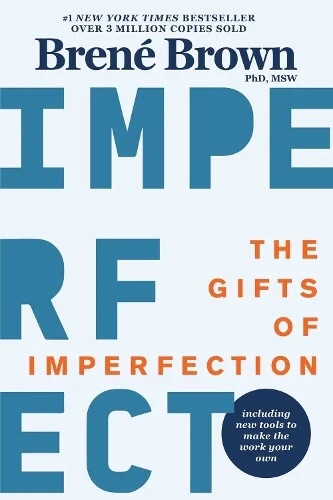
I’m a huge fan of Brené Brown and as a perfectionist I get a lot out of her work on accepting imperfection. I’ve always wanted to write a book but I’m impeded by imposter syndrome and fear of failure. In this book she approaches this as both a social scientist and a friend. She tells the truth, makes us laugh, and even cry with you. And what’s now become a movement all started with The Gifts of Imperfection. She doesn’t just give us statistics and words on a page, but creates effective daily practices called the ten guideposts to wholehearted living. These guideposts help us understand the practices that will allow us to change our lives and families, they also walk us through the unattainable and sabotaging expectations that get in the way. I found this incredibly helpful and I dip in and out of the book when I’m having imposter moments or have fallen out of practice with my writing.

My Non- Fiction TBR

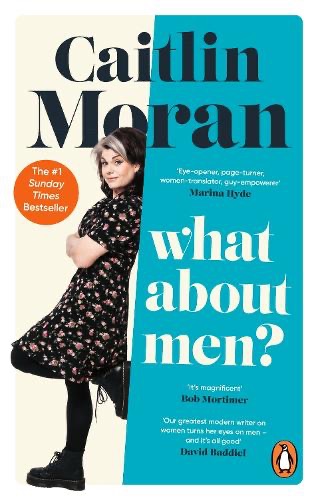
I am a huge fan of Caitlin Moran and have been since her NME days in the 1990s. Her How to be a Woman book is my go to gift for teenage girls. Her writing is frank, raw, informative and hilariously funny. She lays out her teens for us as she struggled with identity, menstruation, weight gain and having so many siblings exploring masturbation was almost impossible. She talks about the things no one talks about openly and with my book group it really opened up some difficult conversations. Here she takes a look at men, at a time where misogyny is a daily occurrence and men like Andrew Tate are inciting hatred of women online. Written before the recent drama Adolescence, she proposes it has never been a more difficult time to be a teenage boy. And, therefore, there has never been a more difficult time to be the parent of a teenage boy.

We’ve all read the headlines, boys are failing in education; facing a hopeless jobs market; getting their sexual education from violent pornography; and being endlessly targeted by online influencers who, yes, tell them to make their beds, and go to the gym – but also push dodgy cryptocurrency schemes, and think the best place for a woman is ‘working in a Romanian sex-dungeon’. She opens with a group of angry teenage boys claiming feminism has ‘gone too far’, and asks: what do boys actually mean when they say that? Are all angry boys, underneath everything, scared? What happens when your son becomes a fan of Andrew Tate? And why do one-in-ten gym-going boys say they’ve felt ‘suicidal’ about their bodies?

Having spent a decade writing about women, girls, and their problems, Caitlin Moran found that, in reality, boys and girls have more in common than they think. Women have spent decades trying to feel better about their bodies; trying to find positive role-models; and feeling angry, and scared, about their place in the world. If feminism has ‘gone too far’ is it because we have started to solve these problems? And, if so, what can boys, and men, learn from this? I am possibly the only person who hasn’ t watched Adolescence yet and I’d like to read this first.

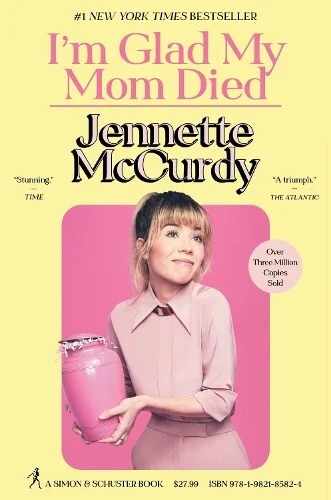
I’m a big believer, whether it’s with friends or in therapy, I’m giving people permission to say the unsayable. In fact this is probably most useful in my conversations with Mum who has to deal with a parent who’s definitely in denial and is so focused on appearing nice to others that it’s pretty much impossible to have an honest conversation. So we make an effort as I’m in middle age and she’s in old age, to be honest with each other and say ‘this made me angry’ or ‘that made me feel sad.’ I thought the title of this book was definitely one of those unsayable things! This memoir by iCarly and Sam & Cat star Jennette McCurdy about her struggles as a former child actor—including eating disorders, addiction, and a complicated relationship with her overbearing mother—and how she retook control of her life. 

I didn’t know Jennette until my stepdaughters explained she’d been acting since she was six years old when she had her first audition. Her mother’s dream was for her only daughter to become a star, and Jennette would do anything to make her mother happy. So she went along with what Mom called “calorie restriction,” eating little and weighing herself five times a day. She endured extensive at-home makeovers while Mom chided, “Your eyelashes are invisible, okay? You think Dakota Fanning doesn’t tint hers?” She was even showered by Mom until age sixteen while sharing her diaries, email, and all her income.

Jennette recounts all this in unflinching detail—just as she chronicles what happens when the dream finally comes true. Cast in a new Nickelodeon series called iCarly, she is thrust into fame. Though Mom is ecstatic, emailing fan club moderators and getting on a first-name basis with the paparazzi (“Hi Gale!”), Jennette is riddled with anxiety, shame, and self-loathing, which manifest into eating disorders, addiction, and a series of unhealthy relationships. These issues only get worse when, soon after taking the lead in the iCarlyspinoff Sam & Cat alongside Ariana Grande, her mother dies of cancer. Finally, after discovering therapy and quitting acting, Jennette embarks on recovery and decides for the first time in her life what she really wants. I received this for Christmas and I know I’m going to love it.

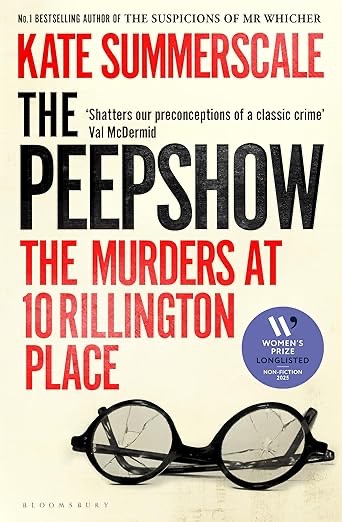
Another book I bought at Christmas, but I haven’t managed to read it yet. I had heard of 10 Rillington Place as a murder site but hadn’t read the story. In London, 1953. Police discovered the bodies of three young women hidden in a wall at 10 Rillington Place, a dingy terrace house in Notting Hill. On searching the building, they found another body beneath the floorboards, then an array of human bones in the garden. But they had already investigated a double murder at 10 Rillington Place, three years ago, and the killer was hanged. Did they get the wrong man?

A nationwide manhunt is launched for the tenant of the ground-floor flat, a softly spoken former policeman named Reg Christie. Star reporter Harry Procter chases after the scoop. Celebrated crime writer Fryn Tennyson Jesse begs to be assigned to the case. The story becomes an instant sensation, and with the relentless rise of the tabloid press the public watches on like never before. Who is Christie? Why did he choose to kill women, and to keep their bodies near him? As Harry and Fryn start to learn the full horror of what went on at Rillington Place, they realise that Christie might also have engineered a terrible miscarriage of justice in plain sight. In this riveting true story, Kate Summerscale mines the archives to uncover the lives of Christie’s victims, the tabloid frenzy that their deaths inspired, and the truth about what happened inside the house.

I love fashion and have quite a collection of fashion books, mainly from visiting exhibits and museums. Zandra Rhodes is fascinating because she’s an unapologetic maximalist. In this insightful memoir, Zandra shares her life story for the first time. Told through a variety of mementos collected over the years, it is a vibrant account filled with rockstars and royalty, of life-changing friendships and poignant reflections on her personal triumphs and tragedies, as well as the fears, sacrifices and pressures that come with being an era-defining designer.

Full of poignant reflections and life lessons on achieving success while defying convention, Zandra takes the reader right alongside her as she recounts being inspired by her avant-garde mother to her time at the Royal College, from a road trip to Rome with Ossie Clark and Celia Birtwell, to opening her first London store thanks to a kind loan from Vanessa Redgrave with Joe Cocker singing With a Little Help From My Friends, from hanging out with Andy Warhol and Halston in New York’s Studio 54 to lifelong friendships with legends such as Karl Lagerfeld and Diana Vreeland; from designing for everyone from Freddie Mercury to Diana Ross, Princess Dianato Barbra Streisand to founding the Fashion and Textile Museum.

Capturing the rich and unexpected life of a British icon, this memoir explores what it is to defy the norm.

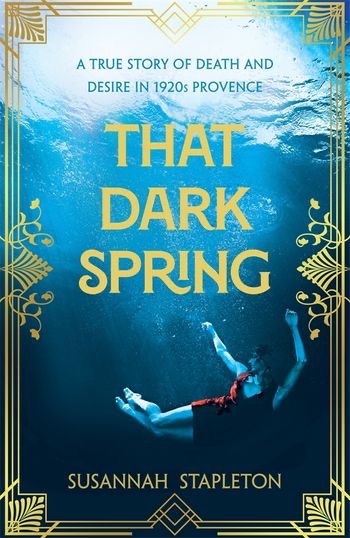
I must admit that the cover drew me to this book and I didn’t initially realise this was a true crime book. In April 1929, the body of British artist Olive Branson was found submerged in a water tank outside her farmhouse in a picturesque Provence village. Dressed only in a pink shirt and stockings, she had a bullet hole between her eyes and a revolver by her side.

Was it suicide – or murder?

The initial investigation concluded suicide, but under pressure from Olive’s family to conduct a murder enquiry, city detective Alexandre Guibbal was brought in to reopen the case. Examining never-before-seen evidence, acclaimed true crime writer Susannah Stapleton builds a vivid and absorbing picture of an unconventional life and a violent death, and an investigation that shines a bright light on a village simmering with resentments and dangerous rivalries . . .

On My Wishlist

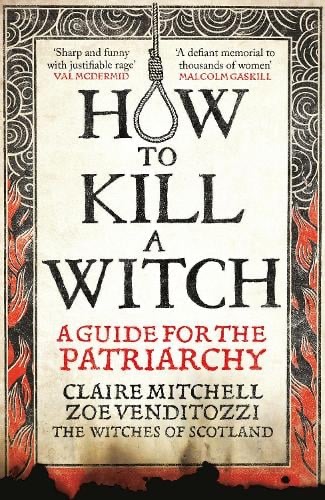
Last year I read two books based within the history of witch hunters in Scotland and I became fascinated with the truth behind these stories so I’ve been waiting for this to come out. As a woman, if you lived in Scotland in the 1500s, there was a very good chance that you, or someone you knew, would be tried as a witch. Witch hunts ripped through the country for over 150 years, with at least 4,000 accused, and with many women’s fates sealed by a grizzly execution of strangulation, followed by burning.
Inspired to correct this historic injustice, campaigners and writers Claire Mitchell, KC, and Zoe Venditozzi, have delved deeply into just why the trials exploded in Scotland to such a degree. In order to understand why it happened, they have broken down the entire horrifying process, step-by-step, from identification of individuals, to their accusation, ‘pricking’, torture, confessions, execution and beyond. 
With characteristically sharp wit and a sense of outrage, they attempt to inhabit the minds of the persecutors, often men, revealing the inner workings of exactly why the Patriarchy went to such extraordinary lengths to silence women, and how this legally sanctioned victimisation proliferated in Scotland and around the world. 

With testimony from a small army of experts, pen portraits of the women accused, trial transcripts, witness accounts and the documents that set the legal grounds for the hunts, How to Kill A Witch builds to form a rich patchwork of tragic stories, helping us comprehend the underlying reasons for this terrible injustice, and raises the serious question – could it ever happen again?

Out on 15th May from Monoray

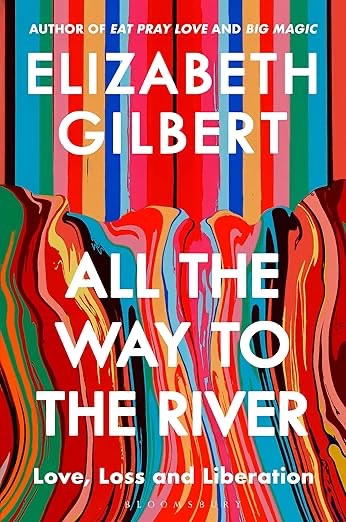
I loved Eat, Pray, Love when I read it and hoped Elizabeth Gilbert had found happiness with the man she met in Bali towards the end of the novel. Then I was vaguely aware that her life had become tumultuous. This memoir details that time. In 2000, Elizabeth Gilbert met Rayya. They became friends, then best friends, then inseparable. When tragedy entered their lives, the truth was finally laid bare: the two were in love. They were also a pair of addicts, on a collision course toward catastrophe.

What if your most beautiful love story turned into your biggest nightmare? What if the dear friend who taught you so much about your self-destructive tendencies became the unstable partner with whom you disastrously reenacted every one of them? And what if your most devastating heartbreak opened a pathway to your greatest awakening?

All the Way to the River is a landmark memoir that will resonate with anyone who has ever been captive to love – or to any other passion, substance or craving – and who yearns, at long last, for liberation.

Out on 9th September 2025 from Bloomsbury Publishing

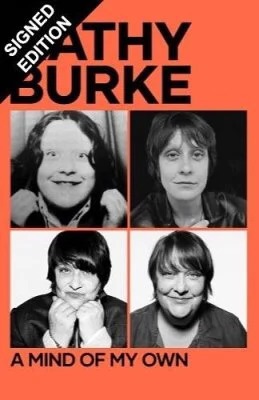
Who doesn’t love Kathy Burke? She’s an absolute treasure. I loved the documentaries she did for Channel 4. Just following her on X keeps me amused so the idea of a memoir is so exciting. There’s only a short blurb for this one but it’s already on my birthday list.

Even when she was a kid in Islington, Kathy Burke did things her own way. After gaining a place at the Anna Scher Theatre when she was a teenager changed the course of her life, she became an actor in 1982. By the mid-1990s Kathy was a household name. Whether you know her as the beloved Perry, for her award-winning acting, or for being proudly woke and calling out tw*ts on social media, Kathy has always had a mind of her own. Funny and wise, this is her memoir.

Out on 23rd October from Gallery UK

Posted in Publisher Proof

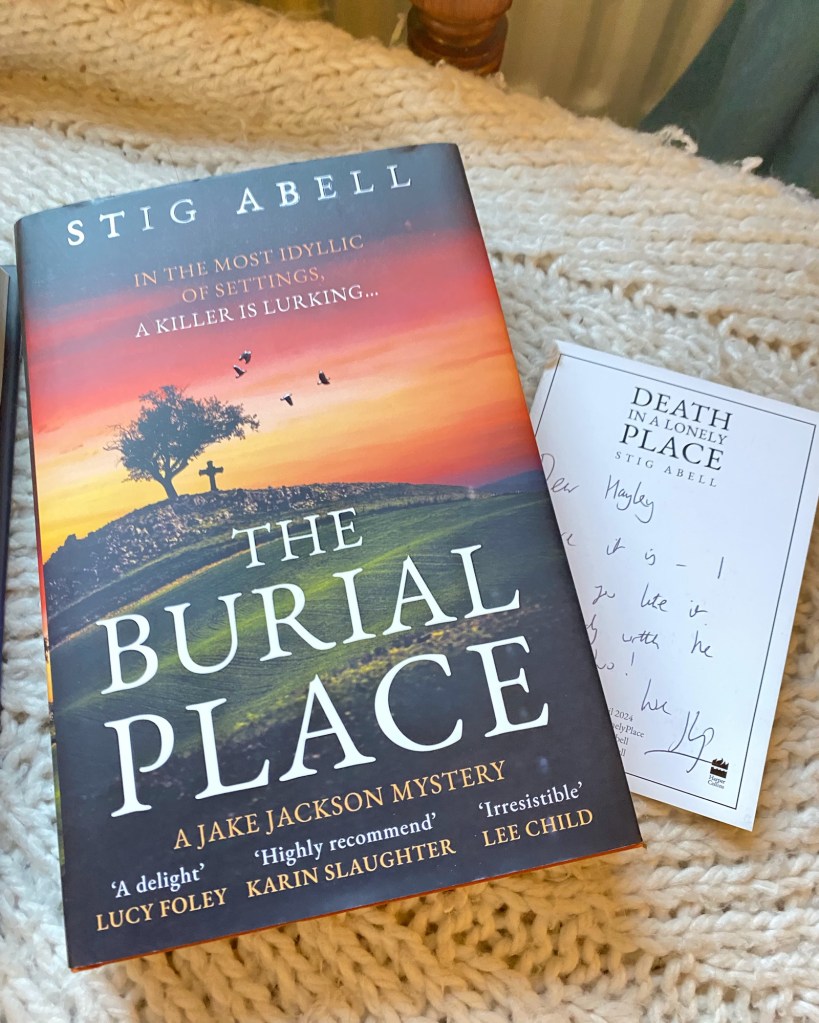
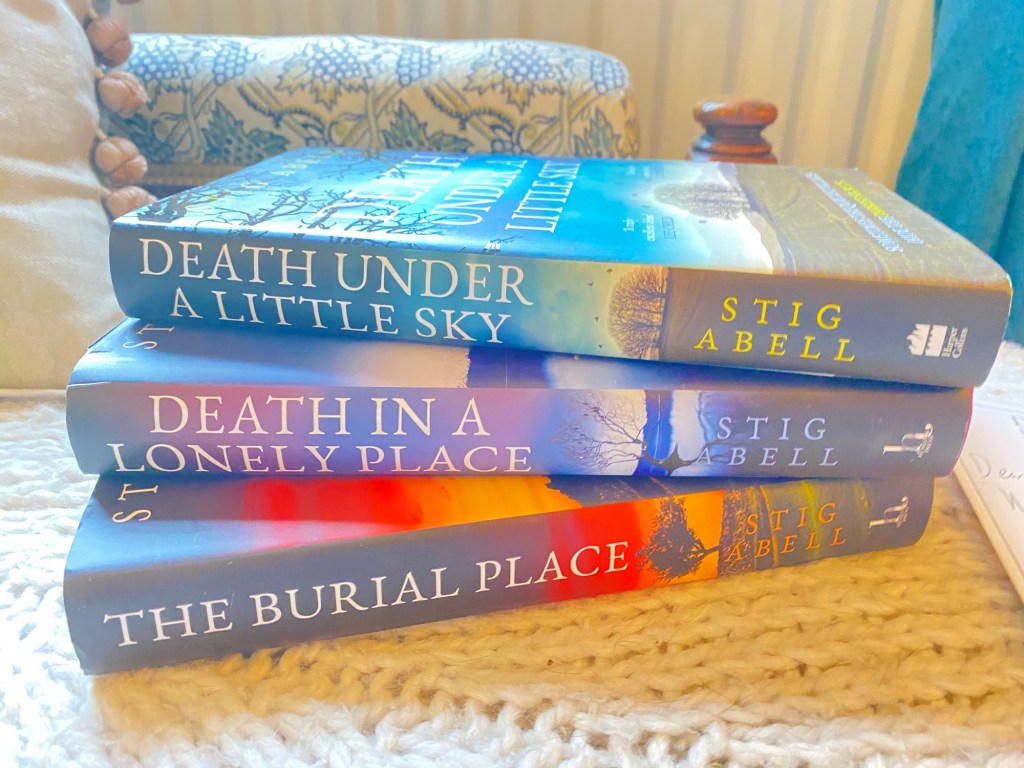
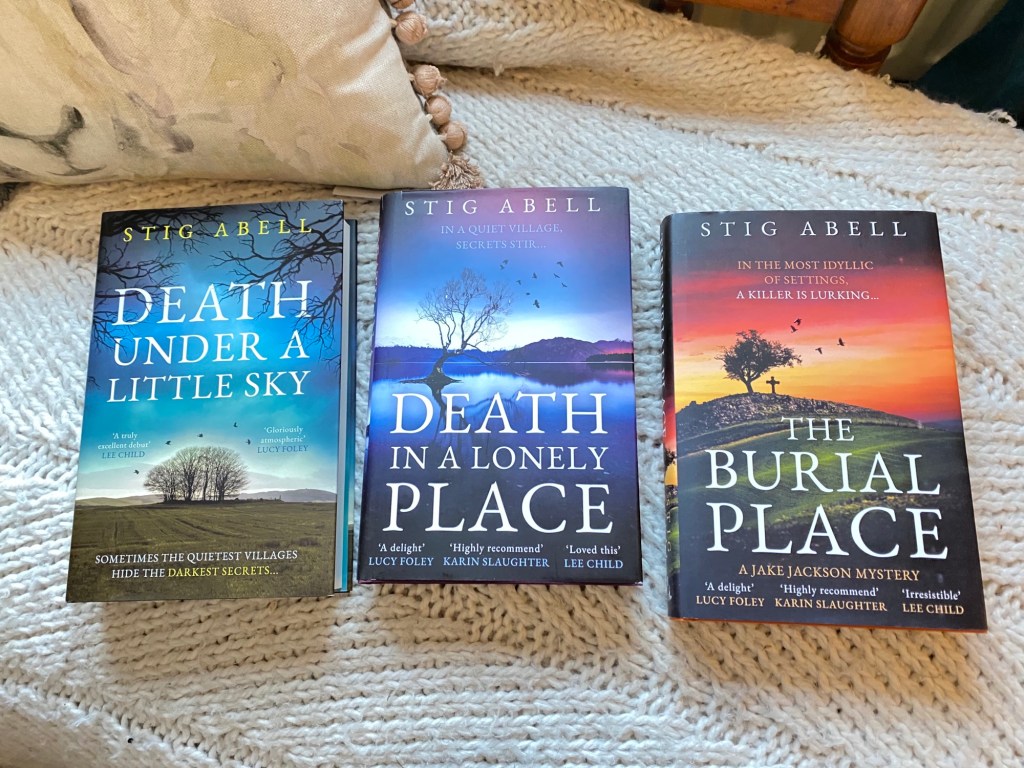
The Burial Place by Stig Abell

I was so lucky to be sent a copy of this new book in the Jake Jackson series, based on a conversation about my love of Martha – an abrupt but super intelligent analyst and crime writer. I love a no nonsense woman and Martha is one of the best bits of this series. After Jake and his ‘team’ tangled with an international criminal gang in the last book, this is more of a home grown mystery but just as dangerous. There has been an archaeological dig close to Little Sky and a recent hoard of treasure found close by. The ownership of this treasure is in dispute because it’s unclear who owns the land it was found in. Meanwhile, work carries on for the archaeologists, academics and local enthusiasts who have been working on the site, but when a body is found it must shut down. It’s hard for new DCI McAllister to understand the motive and being new to the area he enlists Jake’s help, both for his investigative skills and his local knowledge. The community are aware that several nuisance letters have been sent to the dig office and various people who’ve worked on the site. They’re a strange mix of threats, Bible verses and ancient prophecies signed off by Wulfnoth – an ancient Briton purportedly from the area. The writer promises a terrible end for the dig and whoever benefits from the treasure found. Can Jake find the killer before anyone else is hurt? 

Again it’s mainly the brilliant characters that attract me in this novel. Although it’s also interesting to see Jake working with his team, I noticed that Livia is fully committed this time and has definitely earned a chair at the table with Jake, Martha and Aletheia. They are definitely growing closer, since the finale of the last case ended with Livia driving through the wall of her own front room to save their lives. She and her daughter have relocated to Little Sky while the house is being repaired. I must admit I didn’t fully take on board all the dig characters, but the dig itself and the history behind it was really interesting. I’ve often wondered how digs are run and they’re every bit as complex as I thought, with a real mix of motivations and different pressures. Some people have their jobs and reputations on the line, while others seem to have more personal reasons for taking part. What’s difficult for Jake to understand is the gap between letters written when the first dig started and those that came when the second dig site and treasure were discovered. It’s as if Wulfnoth comes out of retirement for some reason, possibly the treasure or could it be more complex than that?

One of the other interesting aspects of the story is the importance of belonging and the sacredness of land. The fact that the burial place of the title holds both ancient and recent burials shows an interesting continuation of the land’s purpose. Jake hears one of the academics talking about different layers or strata of soil, but it all looks like mud to him. The same can be said of the ancient remains, having newly buried bodies on top, as if years of history is mimicking the layers of soil. We live upon years and years of history, something I think about regularly having never moved far away from the River Trent. I have ancestors who are Dutch and arrived in the area with engineer Vermuyden in the 14th Century, designing and creating a system of drainage that would create much of Lincolnshire’s farmland. The fact that my father has spent more than thirty years of his life working as a land drainage engineer, without knowing this history, feels like an echo but also a sense of belonging to that particular land. If I’m ever feeling a bit lost I go the river, take off my shoes and stand barefoot on the bank. Then I know I’m home and on the bank of the same river where I took my first steps. Jake talks about how human spirituality is linked to water, from sacred springs to floating lanterns and wishing wells. Humans have cast their prayers and wishes on water for generations. Livia brings up belonging in one of their case discussions. She doesn’t understand how anyone could feel so connected to ‘patches of ground’. Aletheia points out that Livia has a rare ability to belong, to fit exactly where she is. Her own family roots are in Ghana, but points out that she is now where she is because her ancestors were uprooted. People who are removed or separated from land that belonged to their ancestors for generations can struggle to belong. It’s Livia’s ability to belong, as another woman of colour that she’s really commenting on, because Aletheia does understand that if someone is cheated out of their birthright it can become an obsession. 

Across the book, new relationships are being built and I love that, in what could have been a very lonely place, Jake’s has a healthy support system around him. I did worry a little for Martha though, even though the author writes her with great affection I did feel her ‘aloneness’ in this novel, something I’m describing carefully because there’s a difference between alone and lonely. I feel he writes about her disability with great understanding. Martha lost both her legs in a shoot out when working as a detective and he describes her as suffering constant pain. I’ve suffered chronic pain for many years, particularly nerve pain so I know how strange and maddening it can be. I have had referred pain, very similar to phantom limb pain, where the site of pain bears no relation to the actual problem. Without my medication I have constant burning sensation outside my body – for those of you who are a certain age I often describe this as my ‘Ready Brek’ feeling. The author refers to Martha’ ability to function on drugs that are prescription and those that aren’t. Her skill is a sad one, known to most pain patients, where she copes with a certain level of pain and can still function but there are also days where functioning is impossible. There’s a real sense of sadness that while she can numb the pain it is ever present. I found this portrayal so authentic and possibly researched through lived experience. 

Jake is already an introspective man but he has a lot to think about in this book. He and Livia have decided to start a family together, much to Diana’s disgust. It almost seems like fate when his ex-wife Faye needs to see him. He’s just starting to have concerns about infertility, because he and Faye split up after a traumatic time trying to have a family. He’s worried that it’s taking a while for him and Livia. What if he’s the problem? It’s immediately obvious when they meet that Faye is pregnant and they have a lovely heart to heart in the park. It’s clear that Faye is in a good place and Jake is so happy for her, but nagging doubts are creeping in. If Faye can get pregnant without him, what does it mean for him and Livia’s chances? I still find many male detectives and investigators who don’t have this complex inner life and I love that Jake does. He might seem like a moody loner at times, someone who keeps his feelings hidden even from himself, but he’s just a deep thinker and so empathic. Even when he finds a body, his response is different. He is appalled by the body of one murdered woman who has been left exposed and was potentially murdered during sex. He feels for her dignity and has an urge to cover her up, even though he knows he can’t and must preserve the crime scene as is. It’s as if he takes on the shame this woman might have felt at being left exposed and perhaps taken for a fool by her lover. He has such a strongly developed feminine side and this helps enormously when dealing with Diana. She is clashing with Livia about potentially having a new baby around. Jake is the one who manages to calm her down and show her the positives. I’m so glad Jake has Little Sky and all it offers to balance out these tumultuous feelings. I think his Uncle Arthur knew him very well. 

Posted in Netgalley

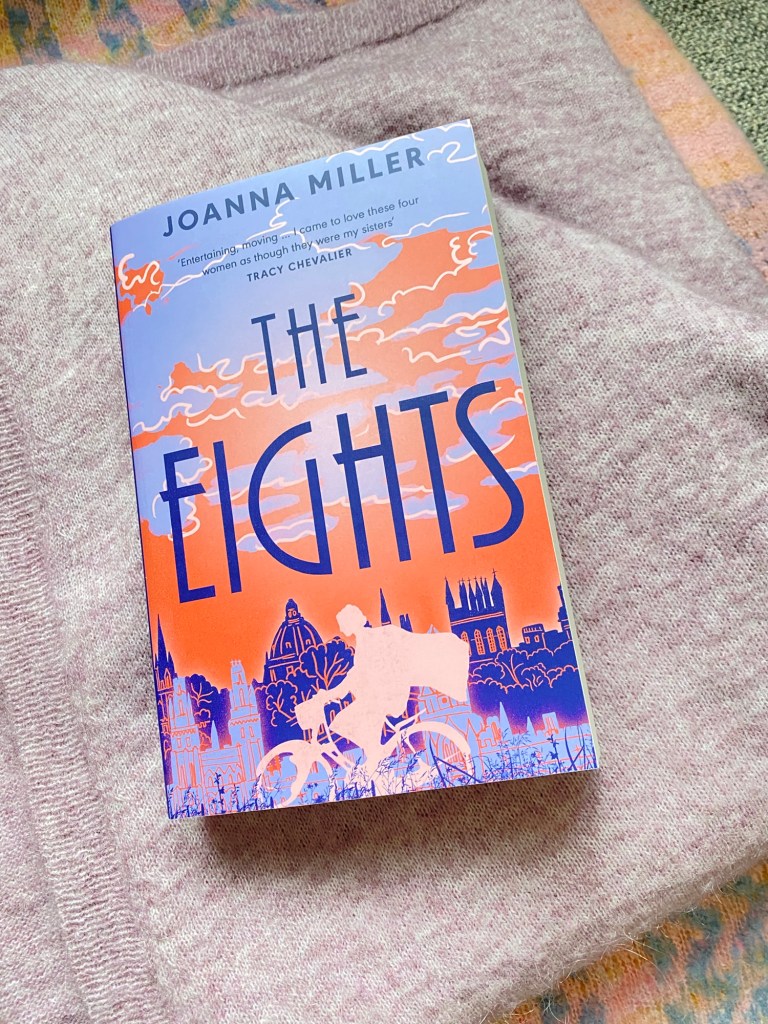
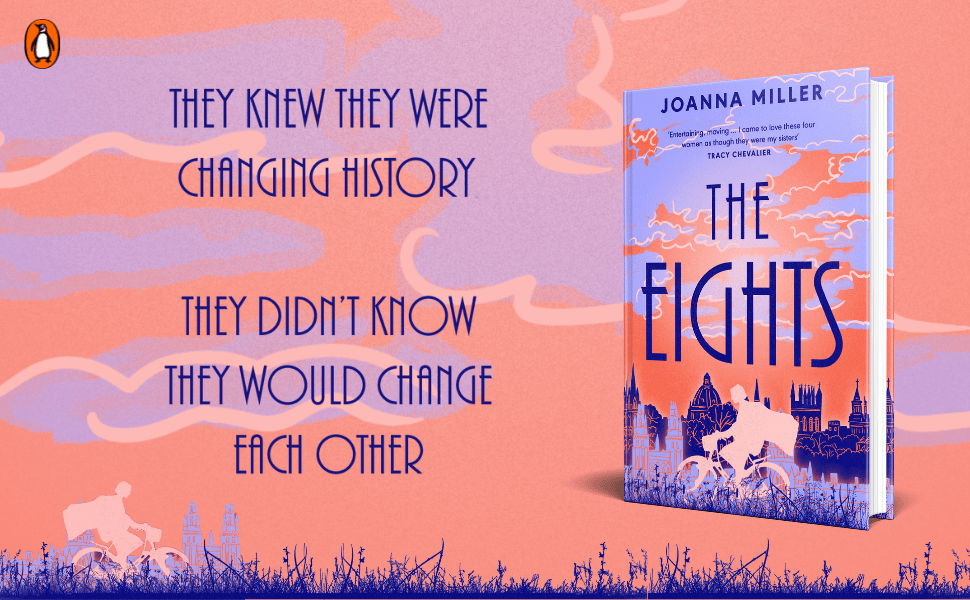
The Eights by Joanna Miller 

I pre-ordered this book as soon as I read the blurb. I could see myself falling in love with this story of four pioneering women who attend Oxford University as part of the first cohort to gain an actual degree. The four women arrive at Oxford in a time of great upheaval. The First World War has ended and women have just been awarded the vote. Women have experienced more freedom during war time, by working to replace enlisted men, volunteering for the war effort. Beatrice comes from a progressive family, with a suffragette mother who attended Oxford herself. Beatrice is very political, obviously a feminist and is used to being noticed, as she’s usually the tallest woman in a room. Marianne is a scholarship student, but she seems to have secrets. She returns home every other weekend and struggles financially but she is determined to get what education she can. Ottoline (Otto) comes from a wealthy family, but is haunted by volunteering for a nursing role during the war. She found it so distressing, she was redeployed as a driver giving patients transportation rather than working on the front line. She’s had symptoms of PTSD ever since, but also feelings of shame that she couldn’t do her duty. Dora also struggles with the consequences of war. She received a letter from her fiancé Charles’s regiment to inform her he’d been killed, then only two weeks later her brother George also lost his life. She still sees Charles wherever she goes and being so close to his university only serves to keep him at the forefront of her mind. These four girls are assigned to a corridor where the rooms start with the number eight, giving them their affectionate nickname. This seemingly random allocation starts strong friendships as the girls help each other negotiate their university work, their memories of the war and being taken seriously by their male counterparts. 

Oxford University is the oldest English- speaking university in the world, having and I was amazed to read it was founded in the 11th Century. The first colleges for men were fully established 200 years later and the Bodleian Library opened in 1602. Women were only starting show interest in an Oxford education in the late 1800s and four women’s colleges were established, however even after years of negotiation to do the same courses as men, women had to be chaperoned to lectures. I was also amazed that despite doing exactly the same exams, women could not be awarded degrees and dons would still refuse to teach them. I couldn’t imagine doing all that work, then having nothing tangible to show for it. It must have been soul-destroying. The author’s story begins after women got the vote and it took until 1920 for women to become fully enrolled at the university as men had been, a ritual called matriculation. The author lays out this facts at the beginning of the novel, which is brilliant for setting the scene generally but also allows us into what is an exclusive world with it’s own language and culture. She separates her book into the named terms – such as Michaelmas or Hilary – and lays out the dress code and rules, different for men and women. She also lets us into what the exams are called and has a glossary at the back in case you get lost. Finally she splits her first chapter between the four girls so we get a really good sense of who they are and where they’re from.

This is a real character led novel from Joanna Miller, creating a similar feel to those novels I loved as a girl such as the Little Women series or What Katy Did At School. With both of those novels I felt like I knew the characters and they would be great fun to be friends with. I loved the secret societies, the scrapes they got into and the character building lessons learned. This has all that, but with great emotional heft and real, gritty issues from that time period. I loved how the characters developed over time and how each of the friends supported but also changed each other with their different backgrounds and perspectives on the world. I felt Marianne’s predicament strongly, in that she’s landed with three friends who are reasonably comfortable financially. I felt it when they all swapped presents for Christmas, but Marianne couldn’t afford to buy for each of them, so instead created a framed favourite poem each. Her offerings are always from the heart and she’s definitely the most thoughtful and most serious of the girls. She also has the hurdle of illness to climb over, as well as whatever takes her home on weekends. The others notice that she’s never managed her reading so what is she doing? She has the constant fear of not passing the year and losing her scholarship, so she’s mentally preparing herself for the eventuality of only spending one year studying. Ottoline is probably her opposite, in fact if it wasn’t for her love of maths she might be tearing about London with her sister and the rest of the Bright Young Things. There’s the rather imperious side to Otto, such as the way she’s always scuttling into tearooms and the nickname ‘Baroness’ that she earned in the war. However, there’s a softer side too and that terrible sense of failure she still feels. Yet she definitely comes through for Marianne when she contracts flu. Otto proves capable of dealing with bodily fluids, cooling Marianne in the bath and even washing her down with a damp cloth. She is even the first to uncover Marianne’s secret and guards it ferociously. 

Beatrice is living with the weight of her mother’s success, both as a student of Oxford and a suffragette. She is a woman of ‘considerable reknown’ and this has given Beatrice an interesting childhood. She now has several hobbies – writing letters to politicians and watching debates in the commons, propagating orchids and being able to read Ancient Greek. She seems the perfect fit for Oxford but has never really lived in close proximity to other young women or lived anywhere but the family home in Bloomsbury. Two key events in the book seem to shape her future. She meets a young woman called Ursula who is outspoken, political and wears men’s clothing, which is much more comfortable than women’s. Beatrice is bowled over by her new acquaintance and is determined to wear men’s shirts and ties from then on. There is also the ceremony for her mother who will finally be awarded an Oxford degree. There’s a constant push and pull between who Beatrice is and where she has come from; does she accept and enjoy the legacy of her mother, or does she move away from it? Through her we learn about some of the most harrowing aspects of the suffragette’s fight, particularly the way the women were treated as protestors and prisoners. Dora is a delightful girl from the country, who comes to university seeming rather old-fashioned. Her longer skirts and waist length hair seem incongruous when hemlines are rising and hair is being shingled shorter than ever. Yet she’s weighed down with the early throes of bereavement and has come to Oxford in the hope of feeling closer to the memory of her fiancé who should have come to Queen’s College. She wants more from life than to pour tea, play whist and prop up her mother whose grief is inconsolable. Dora will perhaps change the most and with a terrible shock to come, she may have to make a decision between the new life she has created or her old one. 

I loved every moment I spent with these young women. They are all equally interesting and important so I couldn’t pick one I gelled with most. I loved Beatrice’s awakening, her straight forward manner and her bravery. Otto made me laugh and became so much more nuanced than the spoiled rich girl she could have been. Dora’s gentle strength is admirable, especially when it is tested. Marianne is the dark horse of the group, but she’s surprising and has a strong sense of what is right for her. This is a favourite time period for me so I loved the clothing, the outings, the rising tide of women wanting more from life than a ring and motherhood. These women are the birth of who we are now and I think the author was really successful in portraying issues that are still relevant. As we see women’s rights being eroded and the misogyny on social media, the novel is also about how men treat women. It can even be seen in small ways, such as the pranks played on the women by male students. However, it’s also the control wielded by a father figure or professor, the deception and double-standards men use to manipulate women, the sexual predator or abuser who finds a chance moment or a position of power to commit violence. I believe that just the chance to pursue their education with the freedom men take for granted, is a huge step for the women in terms of status but also self-confidence. However, it is the friendship of these four women, first and foremost, that helps them grow. Their unflinching support and understanding of each other is beautifully drawn and brings to mind something I’ve always said to women on my ‘authentic self’ workshops; men may come and go, but it’s the women in your life who will hold you up’. 

Out now from Fig Tree

Meet the Author

Joanna has always loved stories – even from an early age, when the Headteacher complained to her parents that she had read all the books in the school library. Joanna went on to study English at Exeter College, Oxford and later returned to the University to train as a teacher.

After ten years in education, she set up an award-winning poetry gift business. During this time, she wrote thousands of poems to order and her rhyming verse was filmed twice by the BBC.

Unable to resist the lure of the classroom, Joanna recently returned to Oxford University to study for a diploma in creative writing. THE EIGHTS is her debut novel and is inspired by her love of local history and historical fiction.

When Joanna is not writing, she is either walking her dog or working in the local bookshop. She lives with her husband and three children near the Grand Union Canal in Hertfordshire, UK.

Posted in Sunday Spotlight

Sunday Spotlight: Uplifting and Comforting Recent and Upcoming Reads

Today I’m talking about the recent reads that I found uplifting or comforting, followed by a reminder of some reads I’m looking forward to this year. These are books I couldn’t put down, not because they were twisty or thrillers but because I loved the characters so much I had to know if they were going to change, to overcome their obstacles or have that breakthrough they needed to make life better.These are books of friendship, life changes, finding ourselves, romance, getting older and communicating with an octopus. I promise you’ll be getting all the feels.

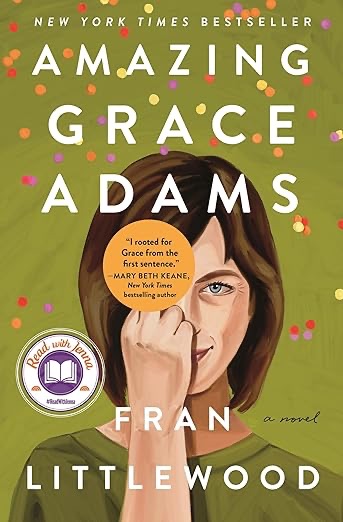
Grace is one of those characters that you fantasise about having cocktails with and you already know you’d have the best time. Grace is stuck in traffic, it’s a boiling hot day and she’s melting. All she wants to do is get to the bakery and pick up the cake for her daughter’s birthday. This is one hell of a birthday cake, not only is it a Love Island cake; it has to say that Grace cares, that she’s sorry, that will show Lotte she loves her and hasn’t given up on their relationship. It’s shaping up to be the day from hell and as Grace sits in a tin can on boiling hot tarmac, something snaps. She decides to get out of the car and walk, leaving her vehicle stranded and pissing off everyone now blocked by a car parked in the middle of a busy road. So, despite the fact her trainers aren’t broken in, she sets off walking towards the bakery and a reunion with Lotte. There are just a few obstacles in the way, but Grace can see the cake and Lotte’s face when she opens the box. As she walks she recounts everything that has happened to bring her to where she is now. 

As Grace closes in on Lotte’s party, sweaty, dirty and brandishing her tiny squashed cake, it doesn’t seem enough to overturn everything that’s happened, but of course it isn’t about the cake. This is about everything Grace has done to be here, including the illegal bits. In a day that’s highlighted to Grace how much she has changed, physically and emotionally, her determination to get to Lotte has shown those who love her best that she is still the same kick-ass woman who threw caution to the wind and waded into the sea to save a man she didn’t know from drowning. That tiny glimpse of how amazing Grace Adams is, might just save everything. 


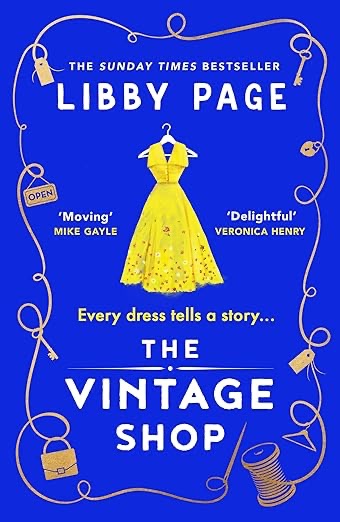
Our heroine is Lou, who moved to a small market town to care for her mother who was terminally ill. Since her death Lou has worked hard, selling the family home and buying a shop with flat above in the town centre. With builder Pete upstairs creating her living space, Lou has opened the shop and is looking at ways to save money and boost business. Pete puts her in touch with Maggie, another lady who has gone through a big change. Maggie’s a grandmother and often looks after her grandchildren in the house that was the family home. Maggie’s husband recently left her for a younger woman and she is rattling round in the big house. So, when Pete suggests that she rents a room to Lou until her flat is ready it turns out to be a lifeline for both of them. Finally, we have Donna, who works at her family’s hotel in the US. When her mother suffers a sudden mini-stroke, her conscience causes her to disclose a family secret – they are not Donna’s birth parents, her mother was a woman from a small market town in England. The thing that links these disparate women is a vintage dress. 1950’s in style and a stunning buttercup yellow this dress has a full circle skirt just made for dancing. Embroidered with meadow flowers, the dress hangs above the counter in Lou’s vintage shop and is the only item that isn’t for sale. It’s flanked by a picture of her mother Dorothy, the owner of the beautiful dress. I love vintage clothes and the descriptions of her shop really did draw me in. This story is about women supporting and inspiring each other and being their best selves. I liked the emphasis on self- care, from the clothing to taking control and finding our passion in life, instead of being the care givers we’re often expected to be. I felt like I’d been given a warm hug and I came away from the story smiling. There were strong female characters, forging friendships and achieving long held dreams. There are deep emotional aspects bringing flavour and depth to her story, but also enough icing and sprinkles to lift the spirits. Here the sprinkles were one of my favourite things, vintage clothing.

Allegra Bird’s arms are scattered with freckles, a gift from her beloved father. But despite her nickname, Freckles has never been able to join all the dots. So when a stranger tells her that everyone is the average of the five people they spend the most time with, it opens up something deep inside. The trouble is, Freckles doesn’t know if she has five people. And if not, what does that say about her? She’s left her unconventional father and her friends behind for a bold new life in Dublin, but she’s still an outsider. Now, in a quest to understand, she must find not one but five people who shape her – and who will determine her future.

Told in Allegra’s unique and vivid voice, this book is so heartwarming and full of humour. It’s about finding your own authentic self and being proud of where you’re from. The author contrasts genuine, warm and accepting people with the false, Instagram brigade who are more interested in how life looks than how it is. I loved the contrast between the city streets of Dublin and the wild Atlantic island Allegra calls home. She has to make a decision about where her home is, which place truly suits the person she is instead of the woman she thought she had to be. All through the novel I found myself smiling and that was exactly what I needed at this moment.

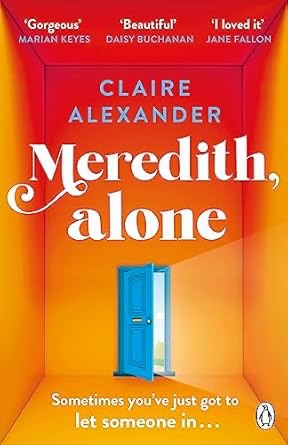
This was one of those books where it only took a couple of pages for me to be ‘in’ the author’s world and completely convinced by her main character. Meredith hasn’t left her house for more than a thousand days, but her inner world is so rich and full. She was absolutely real to me and I could easily imagine having a coffee and a catch up with her. We meet her at a crossroads in life. She’s trying to make changes. Her daily life is quite full, she works from home as a writer and between work she bakes, exercises by running up and down the stairs, reads and fills in jigsaws of amazing places from all over the world. The jigsaws are the key. Meredith doesn’t stay inside from choice, just standing outside her front door gives her a wave of rising panic. Meredith feels a terrible fear, her heart starts hammering out of her chest, her throat begins to close and she feels like she’s going to die. However, as she looks at yet another jigsaw of something she’d love to travel and see in person, she becomes determined to live a fuller life. Meredith has sessions with an online counsellor and a new addition to her weekly calendar is a visit from Tom, who is a volunteer with a befriending society. With this support and that of her long time best friend Sadie, can Meredith overcome her fear and come to terms with the events behind her phobia?

The gradual upsurge of positivity in Meredith’s life is exhilarating to read, but it’s also necessary because I knew that I was also getting closer to finding out what had brought Meredith home one day, close her door and not go out again. Claire Alexander balances this beautifully and where many authors might have gone for the schmaltzy ending, she doesn’t. She keeps it realistic and in doing so made me aware of everything that Meredith has had going for her all along. She’s so self-aware, independent and knows who she is. Above all, even as she starts to overcome her demons she’s determined to do it on her own two feet. She appreciates support, but gives it as well. She doesn’t want to become dependent on an emotional crutch. Meredith is perfectly ok. Alone. 

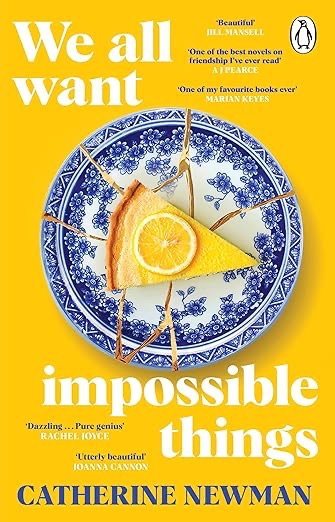
This book was a joy. That’s going to seem odd when I explain what it’s about, but it is joyful and full of life. Even though at it’s centre there’s a death. Ash and Edi have been friends forever, since childhood in fact. They’ve gone through adolescence together: survived school; other girls; discovering boys and even that awkward phase of starting adult life, when one went to college and the other stayed behind. They’ve both married and been each other’s maids of honour and become mothers. Instead of any of these things pulling them apart they’ve remained platonic partners in life. However, now Edi is unwell and decisions need to be made. After years of struggle with being, treatment, remission and recurrence, Edi now has to decide how she’ll be dying. With all the hospices locally being full, Ash makes an offer – if Edi comes to a hospice near Ash, she can devote time to being with her and Edi’s husband can get on with every day life for her son Dash. There’s a hospice near Ash that’s like a home from home, with everything that’s needed medically, but the informality and personal touch of a family. Now Ash and Edi have to negotiate that strange contradiction; learning how to live, while dying.

This is just the sort of book I enjoy, full of deep emotion but also humour, eccentric characters and situations. It takes us through a process of how someone’s life and death changes those around them, with unexpected behaviours and consequences all round. Before you think this sounds schmaltzy and sentimental I can assure you that these characters are not perfect. The author provides us with this loving picture but then undermines it slightly, so it isn’t perfect. We are imperfect beings and no one knows how they will react in a time like this, until we’re there. Catherine Newman shows this with realism, charm, humour and buckets of compassion.

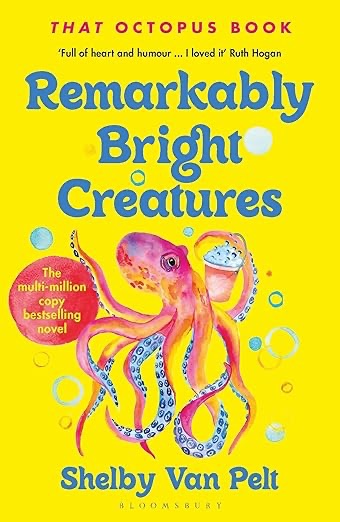
I bought a second hand copy of this book with absolutely no knowledge of what I was getting, but when the first page is narrated by an octopus I’m there. After Tova Sullivan’s husband died, she began working the night cleaner shift at the Sowell Bay Aquarium. Ever since her eighteen-year-old son, Erik, mysteriously vanished on a boat over thirty years ago keeping busy has helped her cope. One night she meets Marcellus, a giant Pacific octopus living at the aquarium who sees everything, but wouldn’t dream of lifting one of his eight arms for his human captors – until he forms a remarkable friendship with Tova. Ever the detective, Marcellus deduces what happened the night Tova’s son disappeared. And now Marcellus must use every trick his old body can muster to unearth the truth for her before it’s too late…

This is a thoroughly charming and unusual story that I happily spent a weekend reading. Our central characters Tova and a man called Cameron are so believable with interesting quirks. There’s a lovely humour to the story and it’s highly original, especially Marcellus who I’ll admit, I did fall in love with. His presence is surreal but adds so much to the story. Backed up by a cast of family and friends who really care for our characters, Cameron and Tova take us through grief, loss and regret towards new opportunities. This is a thoughtful story and Marcellus is worth the read alone.

Upcoming Novels For Your Wishlist

The Women at Ocean’s End by Faith Hogan 5th June 2025 Aria

The Light a Candle Society by Ruth Hogan 26th June 2025 Corvus

The Forest Hideaway by Sharon Gosling 28th August 2025 Simon & Schuster

The View from Lake Como by Adriana Trigiani 17th July 2025 Penguin

Dear Mrs Lake by AJ Pearce 3rd July 2025 Picador

Births Deaths & Marriages Laura Barnett 3rd June 2025 Doubleday

Table for One by Emma Gannon 24th April Harper Collins

One Night at the Chateau by Veronica Henry Out Now Orion

Posted in Netgalley

The Princess by Wendy Holden 

It was all she ever wanted. Until her dreams came true…

The moving new novel about the young Diana.

Diana believes in love. Growing up amid the fallout of her parents’ bitter divorce, she takes refuge in romantic novels. She dreams of being rescued by a handsome prince.

Prince Charles loves his freedom. He’s in no rush to wed, but his family have other ideas. Charles must marry for the future of the Crown.

The right girl needs to be found, and fast. She must be young, aristocratic and free of past liaisons.

The teenage Diana Spencer is just about the only candidate. Her desperation to be loved dovetails with royal desperation for a bride.

But the route to the altar is full of hidden obstacles and people with their own agendas.

When she steps from the golden carriage on her wedding day, has Diana’s romantic dream come true?

Or is it already over?

Princess Diana hit the headlines when I was nine years old, perfect timing for me to buy into the fairytale and fall in love with her. I had my hair cut into Diana’s short style and I had one of her jumpers, well an Asda version, covered in sheep with one little black sheep in the bottom corner. When we look back at her life in retrospect, it could be that she was trying to tell us something. This book focuses on Diana’s earlier years, from her schooldays until that fairytale of a wedding which seemed to cement her into the consciousness of everyone, across the world. It was interesting to read more about her single life before dating Charles, a period that struck me as interesting when it was dramatised in The Crown. She had a busy, fun lifestyle sharing a flat with three friends and working in a nursery. Then as soon as the engagement was announced she was taken into apartments at Buckingham Palace, totally closed off from outside, but also from other members of the royal family. It was quiet, almost like a church, with no one reachable by phone and Charles on a tour abroad. His only thought in terms of company was to introduce her to Camilla Parker Bowles. 

The book did well when describing the dysfunctional way the Royals live. It’s an almost surreal existence with very specific rules to live by. When I read how much time each member spends alone I started to understand why they all have dogs. They don’t eat together daily, non-royals don’t come to the palace unless invited and each royal has their own quirks. For a 18-19 year old wandering round empty rooms and not being able to talk to friends must have been totally isolating. It was for her security of course, but it also meant she could be trained to fit the role she would play. She must have been so lonely. I’ve clearly read a lot of the same books as the author, because I knew about King Charles’s very odd boiled egg habits and the Queen Mother’s exploits in her home at Clarence House, but there were some things that were new to me. 

It was clear that Diana was a young girl full of life and romantic ideas about men and marriage. Wendy Holden tells the story through the eyes of Diana, her best friend at boarding school Sandy and Stephen Barry who was the Prince of Wales’s valet. The girls read paperback romances, the type of story written by Diana’s relative Barbara Cartland. When the girls imagine love at the age of 13, they imagine it being: ‘like a particularly delicious bath, deep and warm, with lots of bubbles.’ It conjures up a sense of comfort and pampering that I do actually feel sometimes with my other half, but a man who doesn’t know what love means isn’t equipped to love like that. The only people who pampered him were his servants, how can you provide what you’ve never had? I think Holden has captured the essence of a girl in adolescence, dreaming what her life might be. She’s a lively, bubbly girl who loves music and the company of others. She has a shy charm that’s so endearing, but her parents divorce has left a mark and I wondered whether it instilled in her a determination to get it right, which left me feeling a little sad for her.  

The second section of the novel definitely has a a melancholy feel, that shows us how well the author has brought the fun, young Diana to life. This is such a contrast. It also makes us realise how young she was to get married anyway, never mind becoming a future Queen of England. It is only six years since that journey with Sandy to boarding school. So, when she becomes engaged to the then Prince of Wales she was probably still expecting the comfort and care of a warm bath. She must have been disappointed at this moment. I always feel that Diana married the people on that day, rather than Charles. When she has some late doubts her sister Sarah warns her that her face is already on the tea towels. It’s too late. The pressure must have been immense. She has spent months hounded by the press and the famous moment where photographers captured her with a see through skirt is just one incidence of naivety on her part. She’s been getting thinner and her wedding dress needed taking in constantly. This isn’t the fairy tale love she’s dreamed about, more the matchmaking of two grandmothers living in the past and desperately trying to break off Charles’s adulterous relationship with Camilla.

I think the author attempted something very difficult here, to create a unique view of a story that’s a modern parable. Everyone knows a version of what happened. So, to create something that captures the voice of the most well known woman in the world, while bringing something new to her story, is near impossible. I think she partly succeeds. I didn’t learn anything new, but I did feel that I was listening to Diana in this story. It doesn’t have that compelling quality, because we already know about the divorce in 1996 and her death only a year later. I felt there was a bit of fire in this girl, despite her naivety. The rude awakening that she was simply a brood mare fuelled a fightback – the Andrew Morton book, the interview with Bashir and that last poignant summer are her pushing back against a system she felt used and abandoned by. A desperate need to be heard. I thought it was interesting to know she spent time with Princess Margaret, another young, royal woman who learned early on that her happiness came very low on the list of priorities. The royals never tried to be her family, missing that warmth and heart Diana was known for. I think this warmth, plus her fight and desire to buck the system is perhaps inherited by her son Harry. This was a well-researched book that really captured the spirit and personality of the most famous woman in the world. 

Out Now from Mountain Leopard Press

Posted in Netgalley

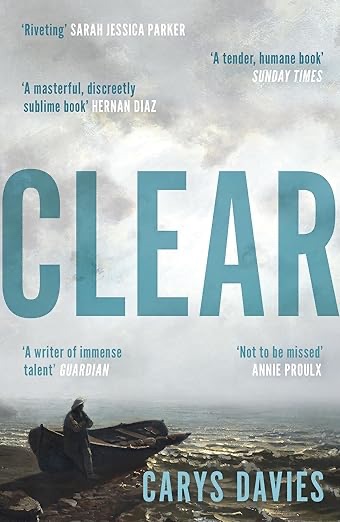
Clear by Carys Davies 

1843. On a remote Scottish island, Ivar, the sole occupant, leads a life of quiet isolation until the day he finds a man unconscious on the beach below the cliffs. The newcomer is John Ferguson, an impoverished church minister sent to evict Ivar and turn the island into grazing land for sheep. Unaware of the stranger’s intentions, Ivar takes him into his home, and in spite of the two men having no common language, a fragile bond begins to form between them. Meanwhile, on the mainland, John’s wife, Mary, anxiously awaits news of his mission.

Against the rugged backdrop of this faraway spot beyond Shetland, Carys Davies’s intimate drama unfolds with tension and tenderness: a touching and crystalline study of ordinary people buffeted by history and a powerful exploration of the distances and connections between us.

Clear is so beautifully set within some very significant events. In the 19th Century evangelical worshippers moved away from the Church of Scotland to form the Free Church of Scotland. Also, there was a second wave of Scottish landowners driving their tenants from the land, choosing to make a better profit grazing sheep, know as the Highland Clearances. Our characters are deeply involved with these events. John Ferguson has been a minister in the Church of Scotland, but his conscience draws him away towards the Free Church. This leaves him without an income since the new church isn’t yet established. John’s wife Mary may be the answer, because her brother-in-law asks a landowner if he could offer John a job. The job has one purpose, travelling to a remote island in the North Sea close to Norway. There he has to evict the landowner’s last remaining tenant, a man named Ivar who is barely scratching a living with a handful of livestock. However, Ivar doesn’t speak English, but an old dialect that’s a mix of Norwegian and Gaelic. John has just one month till the boat returns to take both of them back to Shetland. How will he convince Ivar to leave? 

The story is focused on the relationship these two men have to develop with each other and it starts in a way neither expect. The bailie’s house is empty as he’s already left the island so John plans to make it his base, but needs to find somewhere locally that he can wash. He finds a spring and decides to bathe, but he slips and falls down a cliff. Ivar finds the unconscious man and takes him to his own hut. As John slowly regains consciousness and begins his recovery, the two man have to work out a way of speaking to each other and eventually John has to explain what he’s there for. As we watch their relationship grow and how they work on communication, Mary has grown worried about John. She thinks he may have taken on the task without enough preparation and she decides to travel out there and join him. The narrative felt like being a fly on the wall to to these events. Once the three are together I had the strange feeling that this was really happening and I was simply watching history, bearing witness to the emotions flowing between them. 

This is such a gentle story that contains so much. Instead of pushing an agenda or viewpoint, the author just lets it play out naturally. Nature is so much more than just a setting, it’s life itself. The island is mercurial, with it’s changeable weather creating the mood. Ivar lives entirely off this land, his life a routine of hard work and at home he spins wool or knits. Even the regular agent who collects rent for the landowner is paid in wool, feathers or wrack. Ivar is part of this island, a bear of a man with only his animals for company. There’s a purity to his life that’s almost spiritual, an interesting contrast to John’s organised religion. There’s so much going on under the surface of the story, told in the tiny details of everyday life: their gestures, the intimacies they share and how those connections change as a language is formed between them. It’s interesting to see the established dynamic of John and Ivar affecting how Mary settles into the cottage. The men’s connection brings the three of them into a unit, so that they don’t feel like a married couple and a lone man any more. Each of them forms a strong connection with each other and the landscape. I found reading this an almost meditative experience, because it’s so slow and calm. The ending came suddenly and was a shock. 

Published by Granta 7th March 2025

Meet the Author

Carys Davies’s debut novel West (2018) was shortlisted for the Rathbones Folio Prize, runner up for the Society of Authors’ McKitterick Prize, and winner of the Wales Book of the Year for Fiction. Her second novel The Mission House was first published in the UK in 2020 where it was The Sunday Times 2020 Novel of the Year.

She is also the author of two collections of short stories, Some New Ambush and The Redemption of Galen Pike, which won the 2015 Frank O’Connor International Short Story Award and the 2015 Jerwood Fiction Uncovered Prize. She is the recipient of the Royal Society of Literature’s V.S. Pritchett Prize, the Society of Authors’ Olive Cook Short Story Award, a Northern Writers’ Award, a Cullman Fellowship at the New York Public Library, and is a member of the Folio Academy. Her fiction has been translated into nine languages.

Born in Wales, she grew up there and in the Midlands, lived and worked for twelve years in New York and Chicago, and now lives in Edinburgh.

Posted in Netgalley

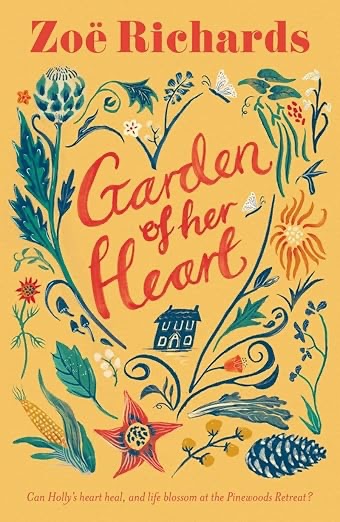
Garden of her Heart by Zoe Richards

I was immediately attracted to this book because of it’s themes of trauma and recovery, something I have personal and professional experience with. This is an ultimately uplifting story of healing that was the perfect antidote to the current news cycle and being pretty much housebound due to illness. The story is set on a well-being retreat and follows one loner, two secrets and three weeks at Pinewoods Retreat. When Holly Bush (yes, that’s her name ) is made redundant with gardening leave, after suffering a brutal attack. She decides to visit a retreat not far from home, finding friendship and a garden in need of love. She ends up doing literal gardening leave and journals her way through the holiday, working on both her mental and physical scars as well as discovering an inner strength and resilience.

I’d been looking forward to reading this, but the TBR and my health got in the way. Although, perhaps this was the perfect time to read it. Zoe is open about her own journey with mental health and it’s something that will resonate with a lot of people. I bonded with Holly very quickly and was rooting for immediately. I thought all of the characters were very real and the owners of the retreat, Dee and Lorraine, were incredibly authentic and seemed to truly care about their residents. They reminded me of people I’ve worked with and thank goodness for people like this! The other residents were an interesting mix and I loved watching Holly’s relationship with Bex, Ruth and San grow into friendship and mutual support. They all felt honest and real. Hunter, the odd-job guy, was a bit of a fox and almost made me want to pick up a trowel and get planting. I loved the journaling aspects of the retreat, because it’s something I’ve taught for some time in mental health settings and for people with acquired disabilities. It makes such a difference to people’s wellbeing and their acceptance of a huge life change. I loved facilitating these sessions and being unable to work at the moment it was lovely to be back in that atmosphere.

The story is moving and there are sad parts, these are people who are healing and they need to process their trauma in order to move on. There are characters who don’t behave very well, but they’re on their own healing journey and it really isn’t easy. I found it moving as people let go of all the fear, anger and frustration they were feeling. There’s something so beautiful about seeing someone blossom this way and the garden was obviously a great metaphor for that. It’s why I chose the lotus flower as my logo for counselling because of the quote about it growing from a muddy pod; beautiful and strong. There was just so much hope for the future, not to mention the enduring friendships that are made. I think Zoe captured the sense of peace that comes from being your authentic self. While there is a hint of romance, I loved the way it was kept in the background, with the friendship and trust between Holly and the new allies being the most important part. This is a great debut, creating a place of healing that readers could easily be inspired by. It’s not just a enjoyable story, I think a lot of people will identify with it and perhaps start their own recovery journey. It’s a book that will stay in my uplifting reads for those grey days when I need comfort from what I’m reading. 

Out now from UCLan Publishing

Meet the Author

Zoë Richards was inspired to write Garden of Her Heart by being a suicide survivor from which she learned the healing that worked best for her, which is not the same for everyone. Dog walks around the Formby pinewoods, not far from her home, gave her the location, in an area known locally as The Lost Resort, a town that never came into existence, close to the sea. In the woods there is a sole Victorian house, standing alone on a cinder track, and this is the inspiration for the location of Pinewoods Retreat. She lives in Southport, near Liverpool, has been married to Rob for 34 years, and they have a grown-up daughter and a cockapoo who will never grow up. She worked for the NHS as an improvement programme manager, reforming how children and young people with special educational needs and disabilities are supported in healthcare. Writing gives her an escape from the intensity of work and from caring for her elderly mother.

Zoë is an author and host of the podcast, Write, Damn It!. She has written for national magazines for many years. She is represented by Clare Coombes of The Liverpool Literary Agency and her debut novel, Garden of Her Heart, a novel about recovery, community and purpose, was published by UCLan Publishing in June 2024. Her second novel, Tell It To The Bees is a standalone sequel, and is out in August 2025.

With over 30 years of experience of working on mindset, and a teacher of coaching for over 25 years, Zoë hosts the Write, Damn It! podcast, where she has weekly conversations with authors, and offers doses of support to writers. She also coaches writers to overcome their demons and blocks, and helps them get the writing done. Much of what she uses on mindset comes from lived experience, as she is a suicide survivor who learned how to get through the darkest times using mindset and wellbeing support. 

Zoë lives on the Merseyside coast with her husband and MillyMoo the cockapoo. She has an adult daughter and a granddaughter – and best not forget Peanut the grandpup too.

Posted in Throwback Thursday

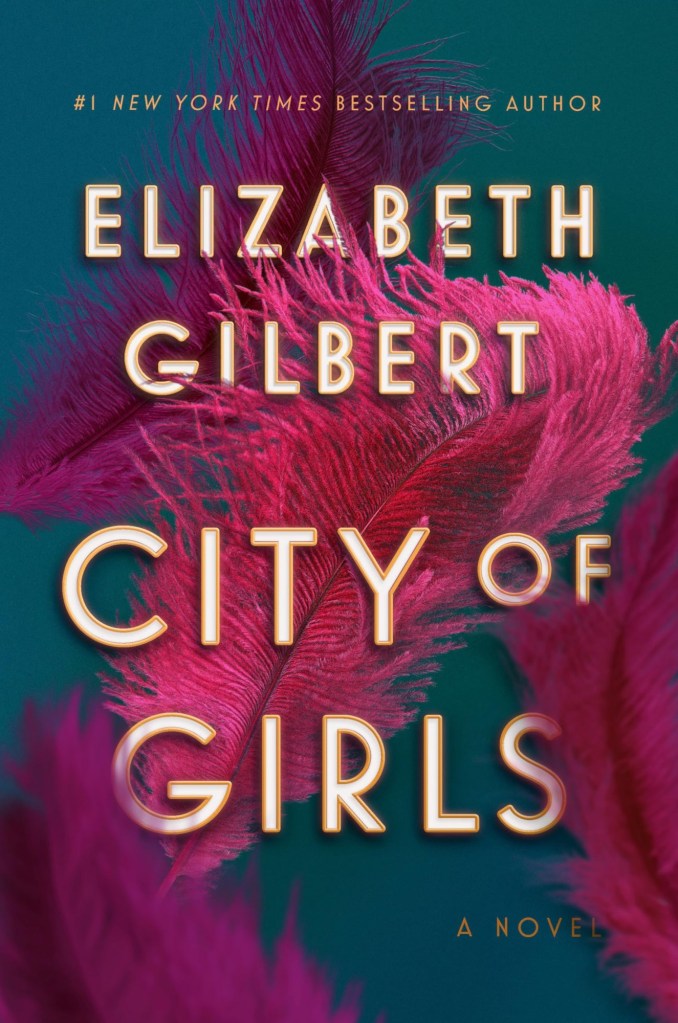
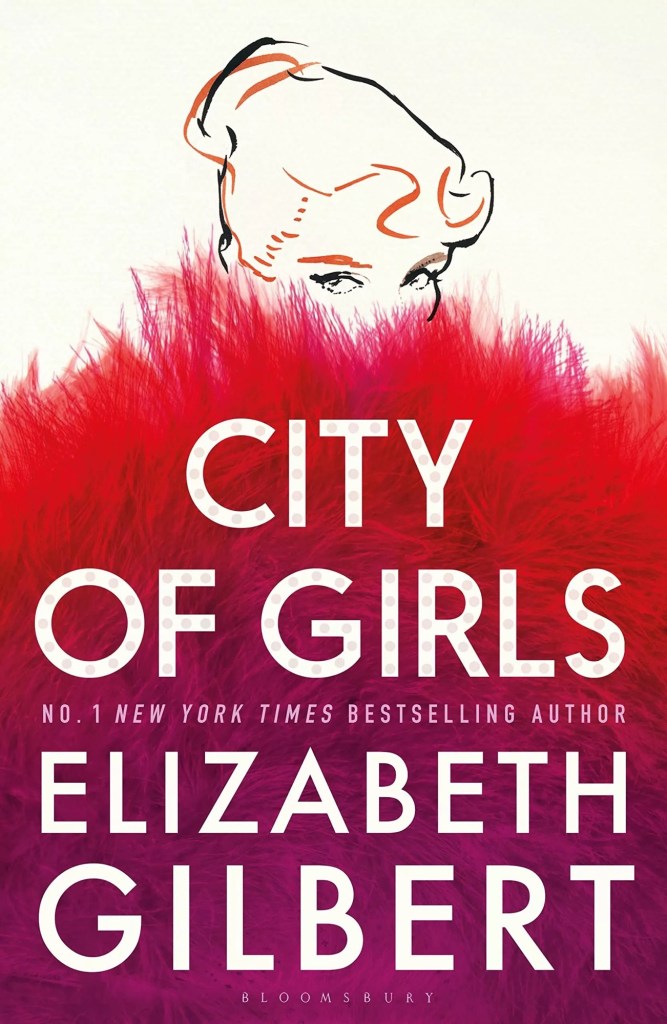
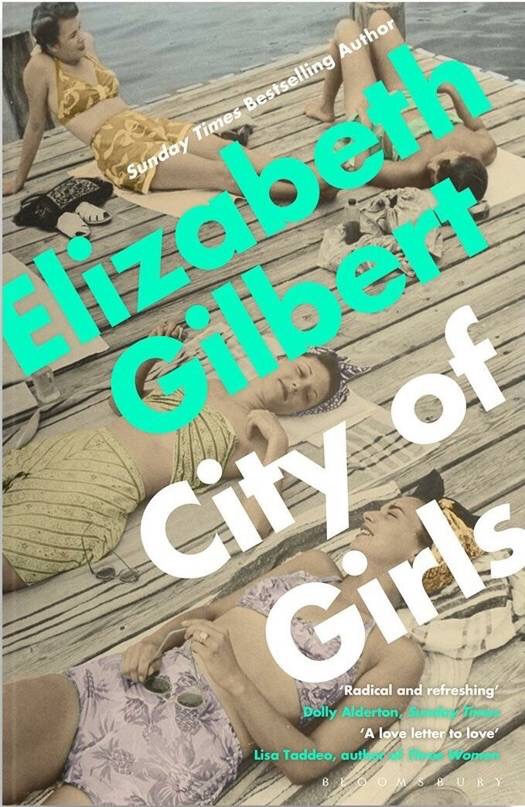
Throwback Thursday! City of Girls by Elizabeth Gilbert.

When one of my favourite authors writes a new book I always experience a confusing mix of emotions. Excitement and anticipation mix with fear; will I love it as much as I love their last book? I don’t want to be disappointed. Since there’s a new Liz Gilbert out this year I thought I’d share my review of her last novel, City of Girls. Like a lot of readers my first encounter with Gilbert’s writing was Eat, Pray, Love; a book that was nothing short of a cultural phenomenon, not to mention the following hit film. For me, it was her novel The Signature of All Things that caught the imagination. The combination of a sparky and intelligent heroine, the feminist theme and the historical detail came together in a beautifully woven story. So as the publication date approached for this new novel I desperately wanted it to live up to her first.

I shouldn’t have worried. City of Girls is a joyous, exhilarating riot of a book. Our narrator, Vivian, plunges us into 1940s Manhattan where she is sent by her parents after expulsion from Vassar. There she is placed in the care of her Aunt Peg who runs the, slightly ramshackle, Lily Theatre. I was suddenly immersed in the bohemian world of theatre people where Vivian soon finds her niche. At Vassar she made friends by creating outfits for the other girls on her trusty sewing machine. So, in her new rooms above the theatre she is soon surrounded by showgirls wanting costumes. I have an interest in fashion and sewing, so I really enjoyed the descriptions of Vivian’s creations, made on a shoestring with a lot of help from Lowtsky’s vintage clothing store downtown. Yet not everything is as it seems on the surface. Is her friendship with showgirl Celia as mutual as it appears? What influence does the matronly and doom laden Olive have over Aunt Peg? Where is Uncle Billy, whose rooms Vivian has been using since her arrival?

 Some of these questions are answered during the production of the brand new play City of Girls. Aunt Peg’s friend Edna Parker Watson comes to stay after losing her London home during the Blitz. Edna is a talented theatre actress who is petite, beautiful and impeccably dressed. She arrives at the Lily with her huge wardrobe and her very famous and much younger husband, Arthur. Every member of the theatre company does their very best to get this musical off the ground and make it a success. Vivian works hard on her costume designs, but also finds herself becoming an unofficial PA and friend to Edna. Determined to put on the best show they can to turn the Lily Theatre’s fortunes around, Aunt Peg agrees to audition for new actors. When Vivian meets Anthony, the new leading man, she falls in love for the very first time. But alongside the awakening of first love, Vivian will also have her eyes opened to how cruel showbiz and the wider world can be. Several revelations teach her that not everyone can be trusted, the most unexpected people can come to your aid, and Vivian realises she has been walking around with her eyes closed. As the Second World War moves ever closer to their shores Vivian is left with a reckoning of her own. Does she want the respectable, quiet life her family expects or does she want to make her own way in a city and a career that is anything but quiet?  

You will fall in love with Vivian as she takes you into her past and candidly shares her exploits in 1940s NYC. She takes you from theatre, to nightclub to a dingy apartment in Hell’s Kitchen where she conducts her first love affair. She holds nothing back and I felt her delight at encountering the bohemian characters of the theatre, her passion and ingenuity for costume work and her discovery of a city laid out before her like a playground. She allows us to experience her growing up with every triumph and mistake she makes along the way. Such an engaging central character is well matched with other beautifully drawn female characters from the dowdy killjoy Olive who has surprising depths, the enigmatic Edna Parker Watson, the brisk and sometimes foolhardy Aunt Peg to the glamorous showgirl Celia who leads our narrator into a world of nightclubs, make-up and disposable men. The women in this novel are strong, surprising and all teach Vivian something about the kind of woman she wants to be. The novel emphasises the importance of strong female role models or mentors in both our personal and working life. I found myself torn between bingeing on this book or savouring it slowly: I wanted to know what happened next but I didn’t want my adventures with Vivian to come to an end. 

Meet the Author


Elizabeth Gilbert is an award-winning writer of both fiction and non-fiction. Her short story collection Pilgrims was a finalist for the PEN/Hemingway award, and her novel Stern Men was a New York Times notable book. In 2002, she published The Last American Man, which was a finalist for both the National Book Award and the National Book Critics’ Circle Award. She is best known for her 2006 memoir Eat, Pray, Love, which was published in over thirty languages and sold more than seven million copies worldwide. The film, released in 2010, stars Julia Roberts and Javier Bardem. Committed: A Sceptic Makes Peace with Marriage, a follow-up to Eat, Pray, Love, was published in 2010. Elizabeth Gilbert lives in New Jersey, USA.