Posted in Netgalley

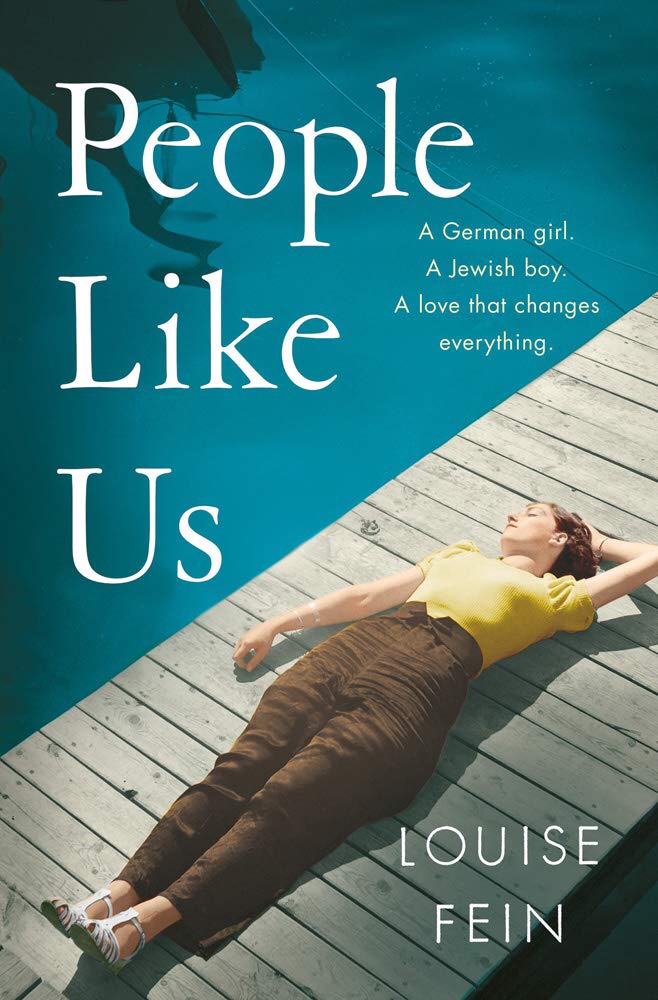
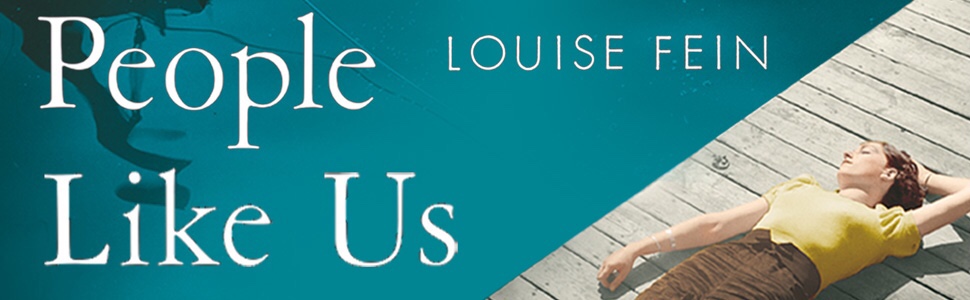
People Like Us by Louise Fein.

I was deeply affected by this novel about the rise of the Nazi Party in 1930s Germany, told from the perspective of a young girl living in Leipzig. The story opens as a young Herta is rescued from drowning by her brother Karl’s friend, Walter. It’s a powerful opener and a metaphor for the coming years, as Herta is slowly drowned by the tidal wave of nationalism, and fascism that overwhelms her country and changes her life altogether. Fein was inspired to write the novel after researching her family’s Jewish roots and eventual flight to London. During her research, she started to wonder how a country and it’s people could go from being a reasonable and tolerant society, to committing such atrocities against their fellow human beings. So, to explore that idea, she decided to write her novel from the perspective of an ordinary German child, slowly becoming brainwashed by the evil ideology. It’s the childhood innocence of Herta that makes this book work so well and allows us to have empathy, despite her allegiances.

Herta’s father has recently taken control of the city newspaper and his reward is their beautiful new family home, their servants and improved status in Leipzig society. He came from humble beginnings to marry Herta’s elegant French mother, but is now quickly rising through the SS ranks. Her elder brother Karl is in the Hitler-Jugend and she really wants to do her bit to make for Vati and Mutti proud of her too. So she pledges her life to the Fuhrer, to serve him and his purpose, totally unaware of its evil extent. Fein slowly shows us his plans, and along with some of our characters we’re like the proverbial frog in tepid water. Without our luxury of hindsight, we too wouldn’t have recognised how much danger we were in, until it was far too late and we boiled to death. There are those characters who truly embrace Hitler’s philosophy and purpose like Herta’s Vati, and below that are various levels of denial, collaboration and fear. Even Vati, has a jumbled mix of motivations: feelings of inferiority from his background and in his marriage; relishing the status and power; a certain amount of brainwashing.

Hitler’s propaganda machine was in full swing within Germany, aided by the country’s financial struggle since the Great War. The Weimar Republic, the post WWI government, signed the Treaty of Versailles in 1919. The treaty stated that Germany would take responsibility for the war, relinquish parts of its territory and pay reparations to the Allies. These policies caused huge social and economic hardship, a situation that the Nazis blamed on Jewish people and communists. A myth was even started that blamed the Jews for the signing of the treaty. Called the ‘stab-in-the-back’ legend, this story blamed Jewish infiltrators in government for the difficulties the German people were facing, despite the fact that many German Jews had served faithfully in the war. Now, the German people were worn down by hardship and poverty and were looking for someone to blame. Hitler exploited these conditions to devastating effect and ordinary Germans were taken in by it. So, when Jewish neighbours and friends started being restricted or sent to work camps, only very rare, brave individuals stood up for them.

The scene when Herta first realises something is very wrong is at school, and her teachers call on Jewish children to stand up in assembly. The shock is seeing her brother’s childhood friend Walter, singled out for abuse and ridicule. Walter can’t be a Jew. He’s the Aryan ideal, blonde and blue-eyed. Besides which, when she was very small Walter saved her from drowning. He had been a constant presence at the house when they were younger. Now here he was being called terrible names and sneered at by their new teacher. Herta is terribly confused, she has been told that Jews look a certain way, and act in a different way to her, but she feels that she and Walter are both the same. Bravely, she runs after him when he is expelled from school and triggers a friendship of her own. A friendship that as she grows-up, develops into love. What possible future can this relationship have under Nazi rule? Then, as it becomes ever clearer that Hitler will not rest until Germany is cleared of Jews, both Herta and Walter will have to make sacrifices and the legacy of these decisions will last until they are both very old.

I don’t want to say any more for fear of ruining the story, but there were many points where I was moved to tears by the situation these childhood friends and young lovers, found themselves in. The displacement of families during WW2 was extensive and with no way of tracing each other, there would have been people who never saw each other again. I married into a Polish family, my husband died several years ago and my father and brother-in-law more recently. My mother-in-law got out of Warsaw as a little girl, escaping through the sewers. Her mother stayed. Her father ended up in America. The family never reunited fully, with Hana finding out her father had ended up in the Boston area of the USA. He had searched but never found either of them. He assumed they had died and later remarried, never knowing that his wife and child did survive and were now in England together. Luckily when Hana found her other family, she embraced them and they in turn remained close to their English family. I felt that the author had really done her background research, possibly with families like mine. I believed in her world and characters immediately.

The background of Leipzig felt homely and friendly, but then developed into this menacing place where you didn’t speak or even spat at the old couple across the street. The night where Herta looks for Walter, knowing that violent confrontations will be taking place in the Jewish quarter, is so frightening and made me feel physically sick. It’s where the threats and rhetoric become real and deadly. Herta is only ever truly free in nature, walking her dog on a Sunday morning and sometimes seeing Walter. It’s harder for someone to conceal anything themselves in open fields and usually Herta can walk freely, enjoying the air and the birdsong. This place represents normality whereas the city is madness, chaos and murder. The ending broke my heart, as we contemplate with Herta on what the world will be like to a new generation. Will it be peaceful with the effects of war far behind, or will the ripples of this hatred and violence be felt for several generations more? I was so moved by this and the epilogue. Some books stay with you for life and I think this will be one of mine.

Published by Head of Zeus 7th May 2020.

Posted in Throwback Thursday

Throwback Thursday! The Illusionists and Daughter of the House by Rosie Thomas.


My experience of finding these two novels by Rosie Thomas shows that the old cliché ‘never judge a book by its’ cover’ does sometimes apply. I was browsing on my kindle (a lethal pastime) and looking through my recommendations when I came across Daughter of the House. The cover had a magical, ‘circus’ feel that I loved so I had to discover more. It had an historical setting pre- WWI onward; a period I’d been drawn to that year. It also promised a brave, enlightened woman at the centre of the story about growing up in an unconventional musical hall family. I bought it based on cover alone, then realised it was the second in a series of books.The first was The Illusionists and I knew from the cover of top hats, decks of cards and magic wands that this was the series for me. It’s rare for me to find a magical novel set in the late Victorian period that I haven’t read. The title seemed familiar though and it was only the next morning that I found (among the many piles of books that litter the corners of my house) I had a hardback copy of the same novel, but had never picked it up to read. The cover was very different, depicting a bridge over an almost impressionistic river scene, that told me nothing about the contents inside. A friend had bought me the book when it first came out, but due to that cover and the lack of a synopsis on the back it kept being recycled to the bottom of the TBR pile. It showed me a difference between buying physical books and kindle copies. I am often alerted to unusual and highly enjoyable novels via kindle store or apps like Goodreads that I wouldn’t necessarily pick up in a book shop due to the cover. Of course the bonus was that I now had two great novels to read back to back and I was not disappointed by either of them.

Set in 1885 the first novel follows the story of Eliza who is a young woman limited by lack of money whose only choices for the future seem to be the domesticity of an advantageous marriage (an idea she finds suffocating) or a degrading downward spiral towards life on the streets. Despite the massive social changes happening in fin de siècle London, women have less chance of making their fortune and living life on their own terms. Then she meets the charismatic and ambitious illusionist Devil Wix. Devil is haunted by traumatic events in his childhood, but is determined to become a household name and successful entrepreneur in the theatre world. We follow Devil’s mission as he puts together a band of quirky misfits to put on the greatest show London has ever seen in the run down Palmyra Theatre. During the 12 years covered by the novel Devil is by turns alluring, brilliant and often comical. However, from his friend’s and Eliza’s point of view he can be elusive, maddening and deceptive when he wants to be. Somehow though, the reader is able to forgive him anything. Perhaps this is because we are charmed by him in the same way Eliza is. Two friends work alongside Devil. His magician friend Carlos and set/props designer Jasper. Carlos is a dwarf in stature, but has mighty magical ambitions of his own and with Devil creates new and memorable illusions to stun audiences. Jasper is more of a scientist who tinkers away in his workshop creating the props for the illusions, but has also designed an automaton he names Lucy. As soon as Eliza comes into their world it is as if the circle of friends is complete and they work together to create a magical show. Although it seems inevitable that they will be together, Devil and Eliza’s courtship is a slow dance. Their budding relationship sees Eliza step outside what is thought to be respectable for a Victorian woman and embark upon an alternative life she never thought possible. For Devil the relationship brings him the stability he has never had and a partner in work and life who can match him for determination, ambition and creativity.

The magical and more supernatural elements of the novel are balanced beautifully with the historical period detail. Eliza chooses to live in a women’s hostel and work for a living even before she becomes involved with the theatre crowd. This is a bold, modern choice that tells us a lot about her character. The author uses Eliza’s sister as the contrasting Victorian ideal of ‘The Angel in the House’. Eliza’s visits to her sister’s home show us that traditional Victorian domestic life, but while Eliza loves her nieces and nephews she doesn’t envy her sister’s position in society and often seems relieved to return to her unconventional life. She treads a very fine line between what is and isn’t respectable by socialising in bars with Devil, Carlos and Jasper, staying alone with Devil in his flat, becoming a life model at the art school and performing on the stage. She is confounded by her need for Devil to be faithful and exclusive to her.


We also see economic change and social mobility throughout the novel. Devil promotes his shows in a way that has never been done before. First he utilises Eliza’s art student friends to create mysterious adverts across the city, that develop a buzz about his show. He then creates street illusions that are easy to transport and perform, then performs these ‘pop-up’ illusions in the street, handing out leaflets to stunned onlookers. By choosing his streets carefully he attracts wealthy audiences who are happy to spend money and this ensures the theatre is packed night after night. Due to this method of promoting his theatre, and the different audience he attracts, Devil changes what is acceptable as entertainment in upper class circles. Whereas music hall was thought to be low culture and only for the working classes, Devil exploits the human need to ‘keep up with the Joneses’ and makes his theatre the place to be seen.. His entrepreneurial skills result in an upward mobility for his family so they can live in a beautiful area of London and have more opportunities that he had. This is where the story develops into the second novel and into a background of even more turbulent times in the early 20th Century.

Daughter of the House centres on Devil and Eliza’s daughter Zenobia (known to the family as Nancy) against the backdrop of WWI, the Suffragette movement and the decline of music hall. The novel opens as the family embark upon a boat trip and tragedy strikes when the captain decides they must return to port because of a storm. The boat crashes into the marina and it is a fight for survival for Devil and Eliza and all of their children. Thomas creates a beautiful metaphor here in Nancy’s fight to stay above the water as her large Victorian skirts and petticoat become water-logged and start dragging her under. This foreshadows Nancy need to live a different life and break free of Victorian expectations of women, perhaps even more radically than her mother did. In the struggle Nancy not only saves herself, but her brother too and it is here we see the beginnings of her resilience and determination. It is also here that we see the first glimpse of what she calls her ‘Uncanny’ – the ability to see beyond the physical world. Nancy fights against this unique gift and doesn’t want anyone to know about her ability. Yet it is because of this accident that family friend Mr Feather does become aware of her abilities. As his beloved sister is lost in the accident, he begs Nancy to foresee where she is and this episode sets off an obsession that never goes away.


The Palmyra theatre is struggling and Devil has been hiding the true extent of their financial difficulties from his family. Eliza’s growing role as a mother has meant taking time away from managing the theatre and Devil does not have her administrative or financial skills. Eliza loves her children, but is frustrated in the very role she never really wanted. Meanwhile Devil flounders in his management of the Palmyra, making bad financial decisions and failing to provide what modern audiences want to see. As the crisis deepens Nancy becomes aware that her gift, hidden until now, might be the only answer to her family’s problems. The late Victorian appetite for mesmerism, hypnosis and spiritualism has continued into the 20th Century and Nancy’s gift soon begins to fill the theatre. So, as WWI draws to a close, the Palmyra is once again playing to packed houses as grieving families in their thousands want to find their lost sons, fathers and husbands still lying unfound in the battlefields of France. Thomas shows the social and historical change of three difficult decades so cleverly especially the wake of WWI as women become more in control of their lives and a country grieves a generation lost. For those who survived, the need for to forget the horrors of war can be seen at the raucous country house parties of Nancy’s theatre friends. The breakdown of class barriers becomes apparent as Nancy’s brother transcends his family’s social class, becoming an officer in the army and attracting a wife from an aristocratic family. Alternative ways of living are explored as the author shows us more women living alone, and Nancy’s gay best friends who have openly set up home together. Yet, we also see what post-war living could be like for the lower classes who acquired injuries, but can’t afford adequate care or rehabilitation. Nancy’s brother returns home with shell-shock and finds coping with the outside world beyond his capabilities, instead finding solace in his garden.

The book explores Nancy’s struggle with a rare and beautiful gift that can also be terrifying and unexpected. Her rivalry with Mr Feather highlights the darker side of clairvoyance and ultimately ends in unwanted confrontation. We see the need in people who desperately want to hear from their lost loved one only to be disappointed. A disappointment that can develop into an obsession and an inability to move forward in the grieving process. Nancy wrestles to maintain the purity and honesty of her gift; never pretending or creating hope where there is none. Audiences fail to realise that she is unable to control her gift. It isn’t like picking up a telephone, she doesn’t know who or what will come through. However, audiences want the reassurance that they were seeking, or the guarantee their loved one lives on somewhere in the afterlife and is waiting for them. Nancy tries to give no promises and does not want to offer false reassurance, if forced to give the exact promise they seek, she feels she has betrayed herself and her gift. This is the difference between true clairvoyance and show business and for Nancy they are uneasy bedfellows. What she sees is not always spectacular nor the happy ending an audience might be hoping for. This dilemma rang true for me as something all people with these gifts might face and it shows that making money from her ‘Uncanny’ is not as going to be as easy as her father’s magic tricks; if she is going to do it with integrity.


I would recommend reading both of these books, but they do stand-alone too. The Wix family are entertaining and intriguing, the historical backdrop is well researched, and even the smaller characters are well written and memorable. Carlos’s determination to overcome his disability is inspiring and his friendship with Devil, like all showbiz partnerships, is full of ups and downs. Eliza’s sister and brother-in-law are there to provide a contrast to the Wix’s unconventional relationship, but their characters are still well-rounded and the relationship between the sisters feels real. Eliza’s realisation that having children is all consuming and life-changing creates an unexpected affinity with her sister. She recognises that even if you want an alternative way of life, children always create a need for a strong family network and support around you. In the early 20th Century women’s lives are changing, but not that much. Eliza’s daughter, Nancy, realises that even though she is more accepted as a strong independent woman she is still hampered by her class and bohemian background. Despite feeling free to pursue her love for a married man, she finds that this freedom is not all she imagined it would be and yearns for more. If you want page turning story-telling with a supernatural and magical twist then these are the books for you.

Posted in Random Things Tours

A Beautiful Spy by Rachel Hore

Minnie Gray is an ordinary young woman.
She is also a spy for the British government.

It all began in the summer of 1928…

Minnie is supposed to find a nice man, get married and have children. The problem is it doesn’t appeal to her at all. She is working as a secretary, but longs to make a difference.

Then, one day, she gets her chance. She is recruited by the British government as a spy. Under strict instructions not to tell anyone, not even her family, she moves to London and begins her mission – to infiltrate the Communist movement.

She soon gains the trust of important leaders. But as she grows more and more entangled in the workings of the movement, her job becomes increasingly dangerous. Leading a double life is starting to take its toll on her relationships and, feeling more isolated than ever, she starts to wonder how this is all going to end. The Russians are notorious for ruthlessly disposing of people given the slightest suspicion.

What if they find out?

I became very fond of Minnie Gray as I started to read this interesting new novel by Rachel Hore. Based on the true story of Olga Gray, a young woman recruited by Maxwell Knight in the 1930s, to infiltrate The Friends of the Soviet Union, the author has cleverly blended fact and fiction to create an intriguing and interesting novel. I loved how Minnie felt a little like a square peg in a round hole – even at home in Edgbaston with her mother (where she feels most like she belongs) she’s restless and somehow a little different to the others. At a garden party, she gravitates towards a woman playing croquet; a woman of very individual and modern style. It’s as if she recognises a woman like this wouldn’t be afraid of shaking things up. They talk about the possibility of Minnie making a move to London, that maybe she could be recommended as someone to work for the government. Minnie is so excited, this might just be that direction and purpose in life she’s been looking for. She wants something for herself, not the stereotypical marriage to a nice middle class man to produce 2.4 children, that her mother expects. She’s fed up of being at parties, dangled before an ever dwindling pool of eligible gentlemen. Her excitement, turns to hope as she waits for a phone call and watches the letterbox, but nothing comes. It’s only when she’s lost hope that a call comes for her to interview and she meets her ‘handler’ Max.

I loved the eccentric ‘Britishness’ of the people Minnie meets in her new life. Most interesting is Max, who has a flat like a menagerie, full of various animals including a parrot. She goes to work at the communist organisation as someone interested in helping others, rather than the cause itself. In order to supplement her income, she takes another niche job, typing for a distressed gentlewomen’s charity. Here she makes friends with another typist and starts to have something like a social life. Minnie is thriving out there on her own, but we are privy to her inner thoughts. She’s plagued with self- doubt – ‘is she doing this right?’ It often seems to her that she’s achieving very little, not important enough within the party to make a difference or furnish Max with anything useful. However, espionage is a long game, and the more insignificant and innocuous someone seems the better. Eventually she seems so much a part of the furniture that she is chosen to do something she never imagined. Having never been further than London, Minnie will be undertaking a mission to India as her career in espionage really takes off.

I could see how much work had gone into research, as well as mixing fact and fiction in such a way that it becomes authentic. The author embedded Minnie into the 1930s from her clothes, to societal norms and mentions of world events such as the rise of Nazism. In snippets of chat at the communist organisation I could hear ideas and concerns about the working class and keeping them on board with a left leading political party. This disenfranchised class would be easy pickings for Oswald Moseley’s fascist party in a couple of years time. This is a time of political turmoil across Europe, as the tensions started in the aftermath of WW1 begin to boil over. The author really emphasises the fear and trepidation of choosing a double life, especially as a woman. I loved Minnie’s determination to be different and do something important, despite often feeling lonely and scared. I felt the author balanced this well with her need for adventure, as well as the excitement and thrill that keeps her going as the work gets more and more dangerous. I thoroughly enjoyed this fascinating book. Rachel Hore has created a wonderful heroine who I found inspiring and authentic, with just a hint of vulnerability that made her so sympathetic. I felt completely transported to the 1930s, due to the author’s knowledge of this time period and her deeply layered descriptions of Minnie’s world. I could close my eyes and picture every setting – Minnie’s home, Max’s flat full of animals, an overcrowded train in India and the wall of heat before the monsoon rain. This was an excellent read for anyone who likes their historical fiction and enjoys determined and original heroines whose courage takes them on amazing adventures.

Meet The Author

I came to writing quite late, after a career editing fiction at HarperCollins in London. My husband and I had moved out to Norwich with our three young sons and I’d had to give up my job and writing was something that I’d always wanted to try. I originally studied history, so it was wonderful finally to put my knowledge to good use and to write The Dream House, which is partly set in the 1920s in Suffolk and London.

Most of my novels are dual narrative, often called ‘time slip’, with a story in the present alternating with one set in the past. I love the freedom that they give me to escape into the past, but also the dramatic ways in which the stories interact. My characters are often trying to solve some mystery about the past and by doing so to resolve some difficulty or puzzle in their own lives.

The books often involve a lot of research and this takes me down all sorts of interesting paths. For The Glass Painter’s Daughter I took an evening class in working with coloured glass. My creations were not very amazing, but making them gave me insight into the processes so that my characters’ activities would feel authentic. For A Week in Paris I had to research Paris in World War II and the early 1960s through films and books and by visiting the city – that was a great deal of work for one novel. Last Letter Home involved me touring a lot of country houses with old walled kitchen gardens in search of atmosphere and to explore the different kinds of plants grown there.

Places often inspire my stories. The Memory Garden, my second novel, is set in one of my favourite places in the world – Lamorna Cove in Cornwall – which is accessed through a lovely hidden valley. A Place of Secrets is set in a remote part of North Norfolk near Holt, where past and present seem to meet. Southwold in Suffolk, a characterful old-fashioned seaside resort with a harbour and a lighthouse, has been a much loved destination for our family holidays and has made an appearance in fictional guise in several of my novels, including The Silent Tide and The Love Child. Until very recently I taught Publishing and Creative Writing part-time at the University of East Anglia, but I’ve just become a full-time writer.

I hope that you are able to find my books easily and enjoy them – I am always happy to hear from readers!

Happy reading!  

Visit Rachel at http://www.rachelhore.co.uk, or follow her on Twitter @rachelhore or Facebook

Posted in Personal Purchase

Throwback Thursday! Precious Bane by Mary Webb.

I was drawn to this novel because of my mum’s interest in Mary Webb’s novel Gone to Earth and the film adaptation starring Jennifer Jones. At the time I was writing my dissertation for my undergraduate degree in English Literature. I was writing about disability in 20th Century literature, but also developed an interest in disfigurement of female characters in literature such as Rosa Dartle in Dickens’s David Copperfield. I was interested in the way authors use it as an indicator of evil and/or sexual immorality. My mum suggested a more positive representation of disfigurement might be found in Precious Bane. Prudence is one of those characters it’s so easy to fall in love with. She’s so inextricably linked to the book’s setting, the wild country of Shropshire at the time of Waterloo. Prudence Sarn is a wild, passionate girl, cursed with a hare lip — her ‘precious bane’. Cursed for it, too, by the superstitious people amongst whom she lives. Prue loves two things: the remote countryside of her birth and, hopelessly, Kester Woodseaves, the weaver. The tale of how Woodseaves gradually discerns Prue’s true beauty is set against the tragic drama of Prue’s brother, Gideon, a driven man who is out of harmony with the natural world.

Prudence helps her mother and father on their farm, but is also deeply in tune with the wild countryside in which they live and grow crops. When her father dies suddenly, Prudence and her mother are under the protection of her brother Gideon who inherits the farm. Gideon was mistreated by their father, so now he sees the freedom to make changes at the farm and run it his way. This worries Prudence who knows her brother isn’t in tune with nature – at the funeral we see local superstition as the clergyman calls for the sin eater. Sin eaters were at funerals to take in the guilt and shame left over from sins that were not confessed before death. As Pru’s father died suddenly, they need someone to take on his sins so that he can enter heaven. The whole funeral party gasps as Gideon steps forward to take on his father’s sins. This will change his characters and peace of mind, as well as ruin his fledgling relationship with the beautiful Janice.

We see everything through Pru’s eyes and learn her innermost feelings about her life, family or about her looks. She refers to her lip as ‘hare-shotten’ – meaning that her pregnant mother was startled by a hare affecting her baby. Pru’s disability is what we know as a cleft palate; an opening in the lip that could extend to the nose or upper palate. This disability causes problems with eating, speaking and even hearing. These days it’s often corrected. Pru is philosophical about her lot and sees it as something that could have been much worse. It only starts to affect her when she falls in unrequited love. Each small holding would spin their own wool and employ a travelling weaver to create the fabric that they could use or trade. Pru is helping at Janice’s parents when the weaver arrives. Janice is the daughter of local wizard Beguildy, who has begrudgingly promised her to to Pru’s brother Gideon. All the women come together for a ‘love spinning’ to celebrate the wedding, but for Pru everything changes when Kester Woodseaves arrives. She explains it as a feeling that ‘the master has come’, but immediately knows there’s no future in it. Kester would not want a hare-shotten wife so she keeps her love close to her heart.

In the meantime, Gideon’s character has changed considerably since eating his father’s sins. He wants to run the farm his way after years of cruel treatment by his father. This means Pru and her mother working their fingers to the bone, for long hours and little thanks. He becomes obsessed with wanting a grand house in town and starts to neglect his relationship. He sees Janice less and when he does see her he is pressurising her to give up her virginity before their wedding. Janice will do anything for Gideon and when the consequences of his actions start to show, he has a choice. Will he forego material aspirations, marry Janice and claim their child? Or will he reject Janice’s plea for help and keep working towards the grand house? Even worse, if Janice is rejected by Gideon where will she go? Meanwhile Pru is strong as a workhorse, but life has had the joy sucked out of it and she worries about the long hours their elderly mother is working. She’s also concerned that Gideon has lost his soul.

Meanwhile, in a strange and comical turn of fate involving the mischievous Beguildy, Kester has seen Pru as a desireable woman. Aside from her face, Pru is aware that she’s not curvy and golden like Janice, but tall and willowy. Kester is transfixed by her figure when she poses as Venus, but he doesn’t see her face. However, he carries that vision in his mind as he moves to his next job far away and can’t forget her. For Pru, life takes a turn into tragedy that leaves her vulnerable. As the consequences of Gideon’s choices start to reverberate through the village, those who were friends and neighbours start to think differently. Crops fail and they’re looking for someone to blame. Superstition runs rampant as they suggest that witches can affect crops and livestock. Does a witch live in their midst? Does anyone have the mark of a witch? Pru is without protection and if the villagers turn who will save her?

I love this book because it depicts a woman with a disability in love, and being seen as desirable. Of course Mary Webb is writing back to the 18th century, from 1924. It has parallels with Daphne Du Maurier’s 1946 novel The King’s General, where the heroine, Honor, is a wheelchair user. It’s as though awareness at that time had changed towards disability – potentially due to two world wars creating veterans with impairments. I am emotionally invested as a disabled woman, because I want to see characters with impairments and illnesses being seen as sexual beings and potential life partners. Pru’s humbleness is so endearing. She doesn’t imagine for a second that Kester might see her or pick her out in a room full of women. That he might see her calmness, her intelligence, her modesty and think she’s the sort of woman he might want. I love the rural setting, the local superstition, and rituals like the love spinning or picking each other’s crops. Every time I read this, I fall in love with it over again. I can smell the warmth on the hay bales, the fresh picked apples and hear the buzz of dragonflies on the pond. This is one of my favourite love stories and it breaks my heart as Pru resigns herself to never being loved like Gideon loves Janice. Yet it warms my heart every time too. Pru calls her cleft palate her ‘precious bane’ and in truth it is a blessing. In a way it forces someone to look past her looks to her character and it brings her someone who is genuine, who loves her as she truly is and who gets her. That’s all we ever want.

Posted in Random Things Tours

The Other Daughter by Caroline Bishop.

You only get one life – but what if it isn’t the one you were meant to live?

‘When it finally arrived I was shocked to see it; to read the words Mum wrote about these women fighting for rights I know I take for granted. Mum was here. And while she was, something happened that changed the entire course of my life. Perhaps, if I can summon the courage, the next eight weeks will help me finally figure out what that was . . .’

When Jessica discovers a shocking secret about her birth, it affects every area of her life. Her grief leaves her struggling at work and home, and sadly affects her feelings about being a mother. She takes advice from her godmother to take a break and she leaves her London home to travel to Switzerland in search of answers. There she takes a job as a nanny while researching her mother. She knows her journalist mother spent time in the country forty years earlier, reporting on the Swiss women’s liberation movement. What she doesn’t know, is what happened to her while she was there. Can Jess summon the courage to face the truth about her family, or will her search only hurt herself and those around her even more?

The story is told across two timelines. Jess in 2016 is just separated from her husband and taking a sabbatical from work. She has discovered a secret about her birth and wants more information. She knows her mother travelled to Switzerland in 1976 to research their fight for women’s rights. Women only gained the right to vote in 1971 after a referendum and I have always found this surprising. Sylvie travels there on hard won expenses trip. Her boss fails to see the value in an article on women’s rights, but she wins him round. I understood Sylvie’s journalistic interest in how late this date was, so I was interested as she convinced her editor to send her out to Switzerland in pursuit of the story around women’s suffrage in the country.

There was a slow beginning to the book, and it took me a while to gel with the characters. I was so glad I stuck with it though, because this was a slow burner and I became really involved with this family’s story. I know from working as a therapist, how difficult it can be for people to cope with secrets from the past, or an absence of knowledge about where they’re from. It’s this knowledge that Jess is looking for, in order to feel grounded. However, I also know that revelations about our history and background can leave us feeling adrift. We build a narrative about who we are and where we’re from; if that is shattered our sense of self can be too. The author really shows psychological insight, weaving these personal histories into a historical narrative – how Switzerland has treated women, including their legal right to participate in the democratic process and even their rights over their own bodies. I think Jess is so well rounded. There are so many layers to her character, and the deeper historical background mean she felt so real to me. I felt so invested in her story.

The revelations that come through Jess’s digging, but also through Sylvia’s narrative, take us down a path towards the truth. However, truth and written history are often two very different things. I feel that the author is clearly making a point about how a country’s history is written with an agenda. Often minorities and their experiences are erased from history and we need to move beyond the official version of events. I was worried that the truth Jess so desperately needed might not be real and she would be shattered again. The author has so much skill at creating a sense of place, both at the Swiss end and in London. She slowly drew me in and I became so involved in these character’s lives. There were times when they brought a lump to my throat, my emotions were so invested. This is an incredible debut and I look forward to more from this talented writer.

Meet The Author

Caroline is a British freelance writer currently living in Switzerland.

​In the past 15 years or so she has written about travel, food and theatre for newspapers, magazines and websites including The Guardian, The Telegraph, The Independent, BBC Travel, Adventure Travel, France magazine and others. She was also the editor of anglophone Swiss news site TheLocal.ch for two years, during which time she became fascinated with aspects of Swiss history and culture, particularly the evolution of women’s rights, which forms the backdrop to The Other Daughter, her debut novel. 

Visit Caroline’s website at http://www.carolinebishop.co.uk or follow her on Twitter @calbish and Instagram/Facebook @carolinebishopauthor

Posted in Personal Purchase

Throwback Thursday! The Paying Guests by Sarah Waters.

It’s been too long since we had a Sarah Waters novel and although I love her Victorian era fiction, this novel really did stay with me. In 1922 a mother and daughter live in a villa in Camberwell. A house once filled with the sounds of men – husbands, brothers and servants – is now largely quiet. Only the widow, Mrs Wray, and her daughter Frances remain. Impoverished by war and a lack of men to bring home the money, they are forced to rent out rooms in their home. Frances is a spinster, resigned to looking after her mother for the rest of her life, but with the arrival of tenants Lillian and Leonard Barber their house routine changes considerably. The couple do not come from the same class as the Wrays, and are the new, upcoming clerk class. However, no one could foresee the profound change their presence will make to Frances’s life as passions and frustrations mount. The Wray’s lives will never be the same again.

As some regular readers will know I love this post WW1 period of history. London is a very tense and unsettled place to live. The war followed by Spanish Flu has left generations in mourning, but has also managed to level out the class system, liberate women. Sadly it has also birthed a whole new dependent generation of people with disabilities and PTSD. Ex-servicemen might find a woman doing their job, who is very reluctant to give it up and return to the home. Or their disability prevents them from working at all, in some cases forcing them to beg on the street. The aristocracy are in decline – often hit by double death duties some are forced to go abroad, particularly the US, to look for a bride with money in order to prop up the estate. Women have moved out of the domestic sphere and have enjoyed the sense of freedom they’ve had. It’s a period of flux in a societal hierarchy that’s been in place for half a century or more. It’s a huge upheaval, but in such upheaval, previously suppressed groups can find their freedom.

I feel so much for Frances. The opportunities war brought to her are gone, but then so is the safety of her pre-war days when her father and brother were there to support and protect the household. Now she looks after her elderly mother alone, and now they can’t afford servants all the household tasks have fallen to her as well. She is sure she will die a spinster. She is also haunted by a lapse in self-control she gave in to during the war, scandalously involving another woman. Frances is haunted by her actions and now she knows how easy it is to lapse, she is even more determined to avoid impropriety. Their income is so depleted that Frances has prepared some of their upstairs rooms for use as a bed sit. They will now have to share their homes with a couple who are of a much lower class. The Barbers are shocking to Frances, and her mother, who are used to an element of deference from the lower classes. They are very direct and unencumbered by the manners and etiquette the Wrays are used to. Frances is desperately embarrassed by her lapse and their weakened circumstances. Taking in lodgers, or ‘paying guests’, is a humiliation for the family but they have no choice. The Barbers will have to be endured.

Sarah Waters cleverly takes a domestic space and uses it to illustrate the greater societal shifts of post-war Britain. Just as the aristocracy are having to relax the rules on who they marry, the Wrays have to get used to people they would never previously have entertained living in their home. Thinking they can remain separate and self-contained is an idea that simply doesn’t work in reality. Once they’ve settled in, the Barbers seem to encroach on the Wray’s private spaces. Their boundaries blur as the couple pass through Frances’s kitchen to get to the outside toilet. They meet each other on the landing in dressing gowns. With every cough or creak of the floorboards, Frances feels her quiet life being impinged upon. She is also finding her sexuality challenged again; she considered her war time experience with a woman a ‘one off’ incident. Now she senses an awakening as she gets to know Lillian. She knows women friends who live openly in London with their same sex partner. They are co-habiting with each other and being discreet, but true to who they are. Frances had chosen to stifle her feelings for fear of falling in love again and instigating her own ruin. The proximity of another woman could be challenging this and her connection to Lillian leads to a terrible act with far reaching consequences.

As usual with Waters, it was the strong characters and sense of place, that I engaged with first. I saw a review that called this crime fiction and of course it is, in that we have a crime and a nail-biting court case. It’s certainly a great addition to the crime genre, but it wasn’t the first things that stood out to me about the book. I love Waters’s women characters – they’re intelligent, complex and trying to be themselves in a world that wants to suppress and control them. Her depth of description makes her chosen historical period burst into life: the fabrics used in clothing, the objects in the Barber’s room, and the touch of forbidden skin. Her characters have rich inner lives and complex psychology. I would recommend this – and her other novels for anyone who loves historical or crime fiction. The court scenes are so tense and I found myself wishing and hoping for a particular outcome. That’s how good this author is, she can make you root for a character like they’re a real person and feel emotion for them. That shows how talented Sarah Waters is and if you’ve only read her Victorian fiction, make room for this on your book shelves.

Publisher: Riverhead Books 16th September 2014

Meet The Author

Sarah Waters was born in Wales in 1966 and lives in London. Author of Tipping the Velvet, Affinity, Fingersmith and The Night Watch, her most recent book is The Little Stranger. All of her books have attracted prizes: she won a Betty Trask Award, the Somerset Maugham Award and was twice shortlisted for the Mail on Sunday/John Llewellyn Rhys Prize. Fingersmith and The Night Watch were both shortlisted for the Man Booker and Orange prizes, and Fingersmith won the CWA Ellis Peters Dagger Award for Historical Crime Fiction and the South Bank Show Award for Literature. Tipping the Velvet, Affinity and Fingersmith have all been adapted for television.

Posted in Random Things Tours

The Shape of Darkness by Laura Purcell.

I must admit to being a bit of a fan girl when it comes to Laura Purcell. The mix of historical and gothic fiction is probably my favourite genre, so I had been impatiently awaiting the publication of her latest novel anyway. I jumped at the chance to join the blog tour, because she’s one of my favourites – in fact I had already pre-ordered a signed edition of this two months ago. So I came to it full of anticipation. I was hooked by the end of the first chapter and didn’t put it down. Our narrator is Miss Agnes Darken, living in Bath with her invalid mother and nephew Cedric. Agnes earns her money cutting silhouettes or ‘shades’ for people, but her art is put under threat not just by newer inventions, but by a mysterious killer stalking the people who have sat for her. Desperate for answers, Agnes visits a spirit medium – an albino child named Pearl who lives with her sister Miss Myrtle West, and an invalid father. Agnes and Pearl try to conjure the spirit of one of her murdered sitters, so they can find the killer. Unfortunately, they have underestimated the power of what they have unleashed.

The story is full of little twists and turns that unsettled me and kept me guessing. When Agnes finds the shade she cut of her first sitter with a squashed face, she ends up with the police on her doorstep. She was his last appointment before he was killed and the murder weapon was a mallet, in fact his face is quite ruined. Agnes is shocked, but could perhaps write this off as a coincidence. Maybe she simply caught the silhouette as she closed the book? I thought the awkward relationship with Simon, who is there when the police come, was really interesting. He is Agnes’s friend, but also a doctor and was married to her sister Constance. Yet it is Agnes and her mother who have Cedric, her sister’s son, living with them. I kept wondering how this had happened and it was these awkward relationships and the whiff of scandal that really caught my attention just as much as the supernatural element. Simon is deeply protective of Agnes and her health since she’d had pneumonia a few years previously. Yet there’s another concern underneath, her mental health and whether certain things are ‘too much’ for her delicate nerves.

The horror in Pearl’s household comes from poverty and working in dangerous environments as much as it does the supernatural. Pearl’s father has worked in a match factory and has succumbed to the horrific disease of ‘phossy jaw’ where the phosphorus used for the match heads, eats into the mouth and slowly poisons the victim. The descriptions of being able to see the workings of his jaw and of Simon trying to clean the area and burst abscesses on the gums is visceral and left me far more horrified than the seances held by Pearl and her half-sister Myrtle. Myrtle has named Pearl The White Sylph, which only adds to the air of mystery created by her snowy white hair and skin and the wispy glow of ectoplasm that can be seen emanating from her body when the lights are off. Pearl is exhausted and drained afterwards, and her fear of the spirits who take control of her is obvious. She fears them sitting in her body or speaking through her mouth. It seems her gift is involuntary and all the more genuine for that. When Agnes visits they have no idea what they may summon up together, whether in terms of the spirits or a plan that may prove even more deadly.

Agnes is haunted by her sister whether she visits Pearl or not, but the pair do have something in common; sisters who try to control their lives. Agnes’s sister Constance has wronged her sister terribly in life, but continues to be there in death. I love the tiniest details that are placed by the author to echo the relationship:

‘Agnes scrubs at her eyes with the handkerchief. She has gone through so many of them lately that she’s been forced to use Constance’s old ones; she has picked the initials out but the ghost of the letter C still marks the corner’.

I saw an echo of Daphne Du Maurier’s Rebecca in this, they way her initials are all over the house, marking everything the new wife has to touch. Here it is a way for Constance to be ever present for Agnes. Constance is like Agnes’s shadow, and just like Myrtle and Pearl there is a yin and yang to these sisterhoods. One sister the innocent and other the dominant, rule breaking force. It’s as if they’re two halves making a whole. I enjoyed the description of Constance’s wardrobe towards the end of the book and the bright colours of her gowns contrast strongly with Agnes’s jet black, almost Puritan style of dress. Agnes is giving off that sense of grief and this uniform of mourning can mask who someone is as effectively as a disguise.

I also loved the period detail in the book, not just the clothing, but the etiquette and position of women. Although Agnes struggles financially she does have some measure of freedom and runs her own household. She has Simon, her brother in law, as her protector and because he is a doctor and a widower there is no impropriety in this. However, she does need him for certain things such as talking to the police and dealing with other men, who simply don’t consider a woman as an equal. I also loved the descriptions of Agnes’s craft, the cutting machine that she barely uses in order to keep cutting by hand alive. There is an alchemy in the descriptions of her work, the magical way she’s able put a person’s character into what seems like a very flat, characterless medium. There is a great description of a session with a young man, who admits he would prefer the new- fangled photograph, but his mother prefers the old ways. Photography is a threat to Agnes’s business, and there’s an interesting thought process around the belief that too many photographs could diminish you as each photograph takes a bit of your soul.

‘Part of your soul would remain forever imprisoned in the glass lens. Sit for too many and you might be depleted. More alive in the photograph than in real life.’

I thought that could be my thought process when I’m worrying about my niece or stepdaughter’s ‘addiction’ to social media. I like to take breaks from social media, but I sometimes worry that they’re so obsessed with their online personas that they miss out on what’s actually happening in real life. Social media is an edited or even purposely cultivated idea of who we are, not our real selves. It’s good to hear that each generations worries about the same things.

This is an excellent gothic mystery, that grabbed me from the start and didn’t let go. I thought the characters were well developed and fascinating – even the ones who are no longer there! I liked that were transgressive females who had their own agency and independence. I enjoyed the author’s sense of place, the evil portents like the magpies and the build up of tension. I also liked the contrast between those living in poverty and those with a more middle class lifestyle. The supernatural elements are always spooky with Purcell, so the seances and visitations are unsettling, but so are the real life people. As the mystery deepens you won’t be able to stop reading, because you’ll have to know what’s going on. There’s a saying we use about timid people – afraid of your own shadow – and that’s what this book does, it makes us afraid of what others might see in us, and who we can become in the dark. An utterly brilliant addition to Laura Purcell’s work.

Why not check out some of the reviews of my fellow bloggers?

Meet The Author

Laura Purcell is a former bookseller. She now lives in Colchester with her husband and their pet guinea pigs. Her first novel for Raven Books, The Silent Companions was a Radio 2 and Zoe Ball ITV book club choice. It was also the winner of the Thumping Good Read award. Her next novels The Corset and Bone China have cemented her reputation as the queen of the spooky but sophisticated page turner.

Posted in Personal Purchase

Throwback Thursday! The Crimson Petal and The White by Michael Faber.

Today is my first Throwback Thursday post where I tell you about a book that’s already in my collection. It can’t always be about brand new books. Especially at a time when people are struggling financially. All of my Thursday books should be available in your local library or might be found in a second hand book or charity shop. Hope you discover something new, but old at the same time 😊😊

Publisher: Canongate Books, 2014 – Paperback Edition

ISBN: 978-1782114413

Watch your step. Keep your wits about you; you will need them. This city I am bringing you to is vast and intricate, and you have not been here before. You may imagine, from other stories you’ve read, that you know it well, but those stories flattered you, welcoming you as a friend, treating you as if you belonged. The truth is that you are an alien from another time and place altogether.

This is a new feature for 2021 where I look back at a book that I’ve already read, possibly years ago, and bring it to reader’s attention. I was more than a little daunted by this brick of a novel by Michael Faber, but such is his incredible characterisation and ability to wrong foot you at every turn, that you’re left wishing you could stay in his world a little longer. This incredible work is the novel Dickens could gave written had not been constrained by the conventions and sensibilities of his age. In fact, this novel portrays a Victorian London slightly after Dickens time, where omnibuses take middle-class ladies to shop for fripperies, such as the soaps our hero William Rackham makes in the family factory. However, despite the period, it is not Rackham who occupies us or draws our attention. It’s the women in this novel who really hold the power. From poor Agnes, the long suffering wife of Rackham diagnosed with hysteria and confined to bed, to the alluring Sugar, a prostitute with a strange skin condition. I think it is Sugar who draws us into this tale, in much the same way she draws a man, the narrator beguilingly addresses us directly – perhaps in a parody of Jane Eyre’s ‘Reader I married him’. She makes it very clear that we may think we know London, we’ve read about it from other authors after all, but what she’s showing us is a London that was always there, but hidden from our eyes.

Sugar is just 19 years old, put on the game at a tender age, she is pale, and not even a beauty really. However, she has a reputation of mythic proportions, praised highly in More Sprees – the catalogue of London whores for those who are keen customers of brothels. Whilst the oft quoted estimate of a police magistrate was 50,000 prostitutes working in London in 1791, it’s likely this figure included unmarried women living with a partner, which was quite common in the working class communities. The British Library suggests a more accurate figure of 20,000, so for Sugar to be one of the best and even well-known is quite an achievement. Her entry in the book suggests that are acts she will perform that others don’t. William Rackham searches her out along with two friends who have the guide, although William seems more interested in drinking. Disillusioned with his job and married life, William has always wanted to be a writer, scribbling away at his desk in the big house, but has never finished anything publishable so his father drafts him in to to run the family business Rackham’s Soaps. His wife, Agnes, is rapidly turning into an invalid – spending much of her time in bed and only visited by the family doctor, convinced that the rest cure and his ‘treatments’ to correct potential hysteria will help. She doesn’t even remember she has a child.

When William does find Sugar, he is enamoured of her paleness, her compliance, and her keen brain. She is like no woman he’s ever met. He can talk about his business and she understands; perhaps the only woman who has truly understood him. However, there is one fly in the ointment. Agnes is still largely in bed, often distressed and resistant to the doctor’s visits, and unaware she is a mother. Their daughter needs to be kept quiet so that she doesn’t disturb her mother or William when he is working. As time goes on and keeping Sugar starts to become expensive, he has an idea. What if he were to move Sugar into the house as his daughter’s governess? There would be an answer to the problems posed by his child, and there would be no barrier to he and Sugar being together – even if he only has a short amount of time to spare. Anyone can see this is a disastrous idea, but ideas have never been William’s strong point. What will happen when every aspect of his life is under one roof?

These characters are so well drawn and our setting so painstakingly rendered with incredible detail, every time you pick up the novel it feels like you are there – with every smell and ribald comment of Sugar’s world. The lynch pin of the novel are the two women; Sugar and Agnes. With the two under one roof, William has the ideal situation for a man with a Madonna/Whore complex – one class of women for marrying and another for sex. Sugar has every sympathy for Agnes and soon has a shrewd idea of what is going on in this outwardly respectable home. Agnes is entirely an innocent, so much so she believes that demons ‘bleed’ her monthly. When she is subjected to sexual assault in the guise of examination by the doctor, Agnes is simply dosed with laudanum to keep her quiet. Every so often, even William visits his wife bed, taking what he can even when his wife is so drugged she can’t possibly consent or participate. For a young woman like Sugar who is used to women of bawdy conversation, who douche with vinegar next to each other and understand the mechanics of sex, Agnes is a complete innocent. In fact when she does see Sugar she thinks she is her Guardian Angel, something that Sugar is happy to cultivate. As William’s interest in Sugar wanes, she becomes furious and plots how she can help Agnes and Sophie. I also love that although William considers himself the literary figure, both women are writing daily. Sugar writes an erotic and bloody revenge novel on the men who have used and abused her. Meanwhile, Agnes keeps a daily diary, explaining what is happening to her and descending further into her ideas of angels and demons. Both women have a strength that William can only dream of.

I won’t ruin the end, because I recommend that you read it, especially those of you who love historical fiction. It’s really a race to find out whether our women will come out on top and how. If you’re used to historical fiction, you might expect things to be tied up neatly with a bow, but since this is a postmodern novel you won’t get that. In fact we !leave these people as abruptly as we came in with our all seeing narrator:

An abrupt parting I know but that’s the way it always is isn’t it?’


BBC Series The Crimson Petal and The White

The BBC series The Crimson Petal and the White was just as intriguing as the book and with an excellent cast. Romola Garai played Sugar, Gillian Anderson played her brothel madam and mother, and Chris O’Dowd took on his first drama role as William Rackham. The settings were authentic,the language of Sugar’s world and the lack of modesty in it’s women incredibly authentic. The series stayed very true to the book, was beautiful in terms of costume and sets, and even brought interest to lesser characters in the novel. Aside from the excellent main characters, Shirley Henderson memorably portrayed the religious reformer of prostitutes, Emmeline Fox. I always remember her tiny, hoarse voice and difficulties breathing which were a huge contrast to the conviction and fire within her. This was an excellent series, well worth searching out on DVD.

Posted in Netgalley, Random Things Tours

The Art of Dying by Ambrose Parry.

Today, I’m happy to be on the closing day of this blog tour for The Art of Dying. This interesting mix of murder mystery, historical/ medical drama and romance, creeps up on you slowly, until you’re determined to keep reading and see whether a killer is stalking the sick of Edinburgh. In fact at what point I couldn’t decide what I wanted to know more: would the killer face justice, would Raven reconcile with the woman he loved, who was stealing money from the surgery, would Sarah live and what the hell was Quinton up to? It’s hard to sleep with all that going round in your brain! I hadn’t read the first novel featuring Dr. Wilberforce Raven, but it was easy to catch up with this instalment set in Edinburgh in 1849. We really do hit the ground running as Raven is attacked in an alley way in Prague. In the dark and confusion one of the attackers draws a gun, Raven draws his knife and a shot rings out ricocheting off the narrow brick walls. Raven slashes his knife in the air from left to right. He thinks he made contact with an attackers throat, but he doesn’t know if he struck a fatal blow and doesn’t know who is shot.

This chaotic existence seems to be the way Raven lives, but will it follow him back to the streets of Edinburgh. He’s been offered a place under the prestigious obstetrician Dr. Simpson, who he trained under at medical school. He’s looking forward to being back in Edinburgh and in the hospitable, but slightly chaotic, family household. He’s also looking forward to getting away from the guilt that he may well have killed a man in Prague. The only downside involves women. He will be leaving Gabrielle behind – the woman he’s been seeing in Prague – but they’ve both known it was a short term relationship. More pressing than that, he’s wondering whether Sarah is still part of Dr. Simpson’s household. Sarah was originally the Simpson’s housemaid, but did assist the doctor in clinic at times. Raven was attracted to her intelligence and determination. They seemed drawn together by an invisible bond and the closer he gets to his old city, he can feel that bond tugging again. They way they’d been in the past, Sarah might have confidently expected a proposal and had it just been about love, Raven would have had no qualms. However, as a young doctor starting out in a profession where reputation is everything, could he risk marrying a house maid? What would Edinburgh society think and would he be risking his career?

I can’t say I warmed to Raven as a character. I found him arrogant and apt to jump to conclusions, especially where it would benefit him. More importantly, I found him cowardly. Especially in his dealings with Sarah. I had such a moment of satisfaction when he enquired after Sarah when arriving, using her maiden name. When the new house maid explains she is now Mrs Sarah Banks, I actually smiled. To find out that her new husband, Archie Banks, is also a doctor and has a comfortable lifestyle, is a huge life lesson for Raven. Here was a man with strength of his convictions. He had loved Sarah and married her, with no regard to his position or social standing. Of course, we find out later on, that Archie has a reason for not caring about such things but he’s still a man of honour. Sarah is an intelligent, but also perceptive woman, and this is her advantage as she and Raven come together to restore Dr Simpson’s reputation. During a difficult delivery, Simpson is rumoured to have missed a haemorrhage and the dead woman’s mattress was said to be so soaked with blood it had to be disposed of. Simpson expressly asks Raven not to look into the matter and certainly not to bother the grieving widower in his defence. Raven even has the odd worry about Simpson himself, especially his potential overuse of chloroform – Raven is served a drink laced with it on his first evening. Sarah, however, feels that Simpson is a good doctor and that there is something else underlying this need to discredit him.

This is not the only investigation going on in the household. A new employee, Mr. Quinton, is there to look after the admin and keep the books for the practice. Unofficially, he is trying to find the culprit for money going missing in the house. He wants to book drugs in and out too, and research patterns in the practice’s spending. There’s something about his persnickety nature and constant presence that’s very off putting. He doesn’t work in harmony with the house, but rather against it. He isn’t at the Uriah Heap level of obsequiousness, but that’s who I kept thinking of when he came into the story. I liked how the author brought in all these levels of surveillance. Quinton watches the household and practice, but he’s been under the steely eye of the butler since he arrived. Sarah is watching both Dr. Simpson, but also stumbles into another investigation while trying to clear his name. Raven is being watched, but is also watching others with Sarah. Their focus is split though: Sarah thinks Simpson’s name can be cleared and as the deaths pile up, the same name keeps cropping up, a nurse called Mary who has cared for people who seem to have lost their lives in suspicious circumstances. A sudden illness that involves seizures, unconsciousness, fatigue and weakness appears out of the blue, killing people in a matter of hours. Could this Angel of Mercy be an Angel of Death? Or could there be a rare new disease for Raven to discover? He daydreams about the acclaim it could bring if he has uncovered an unidentified disease. With the title Raven’s Malady running through his head, the two are on the look out for different things, but who will be proved right? More importantly will the investigators themselves be safe, as they trail all over Edinburgh to find answers?

If we add to this: a moneylender with a giant as his right hand man and some unexpected debtors on his books; a pregnancy; a bereavement; and a breakneck race to save someone’s life. The book is definitely jam packed with incident and tension, whether that be the tension of the race to find our culprit or the more ‘slow burn’ tension between Raven and Sarah. Our writers leave us with enough answers to feel satisfied and enough cliffhangers to look forward to the next book. This isn’t an easy balance to strike and I felt it was well – judged here. I was intrigued by the period detail when it came to surgery and obstetrics. I found myself won over by most of the characters. Sarah leapt off the page and when I read Mary’s chapters I was drawn into her upbringing and the terrible effect this had on her psychologically. This is a series I will look forward to revisiting and maybe even Raven might win me over next time.

Meet The Authors

This book is the second in the series featuring Dr Raven. This one is published by Canongate (Blackthorn) and will be available on March 2nd 2021. Ambrose Parry is a pseudonym for a collaboration between Chris Brookmyre and Marisa Haetzman. The couple are married and live in Glasgow.

Chris Brookmyre is the international bestselling and multi-award-winning author of over twenty novels, including Black Widow, winner of both the Theakston’s Old Peculier Crime Novel of the Year and the McIlvanney Prize for Scottish Crime Novel of the Year.

Dr Marisa Haetzman is a consultant anaesthetist of twenty years’ experience, whose research for her Master’s Degree in the History of Medicine uncovered the material upon which The Way of All Flesh was based.

Posted in Random Things Tours

Things That Bounded by Fiona Graph

Published: 30th October 2020

Publisher: Silverwood Books

ISBN: 1800420072

‘Over these things I could not see;
These were the things that bounded me;
And I could touch them with my hand,
Almost, I thought, from where I stand
’.

Renascence by Edna St Vincent Millay

Fiona Graph’s novel is an interesting and well- researched piece of historical fiction, set in a period of history that I’m particularly interested in. Graph’s story writes back, both to a different time but also to a different element of society, one that hasn’t been well represented in fiction of the time. In the same way that Sarah Waters has written lesbian experience back into the Victorian period, here we visit a brother and sister post WWI who both describe themselves as ‘queer’. Freddie fought in the war, but now runs a women’s fashion boutique in London with his sister Ellen. Freddie is a designer, whereas Ellen tends to work with the passing customers selling off the peg clothes and accessories. Ellen is a woman who was somewhat emancipated through the war, due to working in jobs previously the preserve of men and from her activism in the suffragette movement. Brother and sister live together above the shop and are at a point where they’re both single. Freddie was in love with a fellow soldier who was lost in the war, and his most recent relationship with a young solicitor called Alec broke down. Ellen is seeing a woman called Myra, one of a string of married women that have allowed her to keep real love at a distance. Fate is now going to bring people into their lives that may challenge the lives they’ve built, that’s if all concerned can shrug off the ties that bind them to the past.

I fell in love with Freddie. He’s a lovely brother and incredibly talented, very keen to create clothes that are beautiful but that real women can wear. He needs to live quietly since his experiences in the war and has bravely been ‘out’ for years. It’s amazing that in such recent history he finds that people spit at his feet in the street. While he’s made a brave choice to live openly, his relationships are not easy. We learn that he pushed Alec away by behaving badly, in much the same way that Ellen has pushed real relationships away with secret liaisons with women who will never be free. It’s the reappearance of Ellen’s friend Kate that is the catalyst bringing these four people together. At a suffragette funeral, Ellen spies Kate who has been living in Paris. They had an easy going friendship before she left, even though their activism took different paths. Ellen supported peaceful protest, leafleting and was even known to throw the odd brick through a shop window. However, Kate had favoured more direct action such as Emily Davison’s jump in front of the King’s horse at the Grand National. Kate has been in self-imposed exile, after burning down a church. To her horror, in the aftermath a body was found in the wreckage. Kate had scrupulously checked all of the pews and the vestry, but it appeared in a newspaper that police had found the body of a man, possibly a rough sleeper. In fear, Kate fled the country and has lived the last few years in Paris. Will the women be able to pick up the friendship that was in its infancy back then? Even more importantly, will Kate ever be able to forgive herself for what happened. Ellen has always thought this newspaper account of Kate’s direct action, was a little bit fishy. There’s never been any other account that mentions this man, so Ellen suggests they investigate, enlisting the help of Freddie’s ex-boyfriend Alec. The investigation, and what they discover, could change the course of all their lives and break the ties that bind them to the past.

I remember reading Sarah Waters’ book The Paying Guests, set at a similar point in history to this novel and also depicting women trying to break free of social constraints and live their authentic lives. I remember being astonished by the bravery of characters trying to live as openly gay women in the early 20th Century. I felt the same when reading this, but what it confirms is how far certain lifestyles have been erased from history. As a disabled woman, I feel the same way about experiences of disability and I get so excited when a character has a disability. It shows me how much we need books that write these histories, it gives us context, broadens our understanding and represents the true diversity of a society and time. This novel did that for me, but also showed the struggle of people trying to live in the aftermath of such a turbulent time. Post WWI everything changed and the ordered Edwardian society of the turn of the century had been turned on its head. Instead of being largely in the home, women had experienced the freedoms that men had been enjoying for decades. More women had to take up jobs to make up the labour shortfall, bringing them out of the home for the first time. Many didn’t want to go back to the domestic sphere. The aristocracy were crumbling, many had lost the heads of their family, and their heirs too. With estates crippled by multiple death duties many sold up, or sent their sons to America to find a rich heiress to change their fortunes. Different loyalties had been formed across class boundaries, between men who had fought side by side. After the horror of war, the collective grief and upheaval, I can understand people wanting to live their truth and stop hiding. That’s what our characters are doing here, simply trying to live as who they are – something a lot of people take for granted. That was why I found both love stories very moving. I was rooting for both relationships. All they wanted was the ordinary things heterosexual couples would take for granted – to walk down the street together, to hold hands or hug in public, to eat dinner together and come home to each other.

I’ve read a lot about the suffragettes, and some of the treatment they were subjected to. I still found myself shocked by how Ellen responded to sexual assault. When she walks home at night from Kate’s flat, two men accost her and one gropes her breasts. Thanks to her activism she is trained in martial arts, so is able to overcome both of them and run back to Piccadilly where there are lights and people. When she relates the story back to her brother she doesn’t mention the sexual aspect of the assault at all. However, when we flash back to her suffragette days we remember that this was a daily occurrence, an actual police tactic. We see the police hatred of the movement when the group track down the police officer who found the body in the church after Kate’s arson. He’s now older, more frail, but his hatred of suffragettes and women in general is strong. I found this whole scene horrifying, but hilarious too. The fact that this man who considers himself so strong and dominant over women, is in fact defied and controlled by his own wife, really did make me laugh. However, it’s also a pivotal scene because here Kate may find the truth of what happened years ago and Ellen is hoping that this truth will set them both free and allow them to move forward. I think this shows us that often the ties that bind us, and hold us in place are of our own making. We are as free as we perceive ourselves to be. Here I’d like to return to the poem that inspires the title of the novel – Edna St Vincent Millay’s Renascence.

The world stands out on either side
No wider than the heart is wide;
Above the world is stretched the sky,—
No higher than the soul is high.
The heart can push the sea and land
Farther away on either hand;
The soul can split the sky in two,
And let the face of God shine through.
But East and West will pinch the heart
That can not keep them pushed apart;
And he whose soul is flat—the sky
Will cave in on him by and by
.

I love the final stanza of this poem, because it says exactly what I have taken away from the book. The world can be as wide as our heart is willing to accept. The sky is as endless as our soul allows it to be, in fact we can see beyond the physicality of our world to imagine a God and have a strong faith in some thing we can’t even see. All of this is achievable through the power of the mind. Yet if our heart is not open to experience our world becomes narrow and pinched, and if our soul cannot dream or believe then our opportunities and achievements come to nothing. We have the strength to break those ties that bind us, no matter how strong they may be, we can break beyond them and move into a better future.

Meet The Author

Fiona Graph was born in Sydney. Once she had obtained a degree in Psychology and Ancient History, she travelled before settling in north London. She worked variously as a psychologist, for an LGBT organisation and as a librarian, before ending up at the Foreign Office. Her youthful interest in writing came back strongly about five years ago. ‘Things That Bounded’ is her first novel to be published. A second novel will come out in 2021. You can find Fiona on Twitter at: @fiona_graph