Posted in Random Things Tours

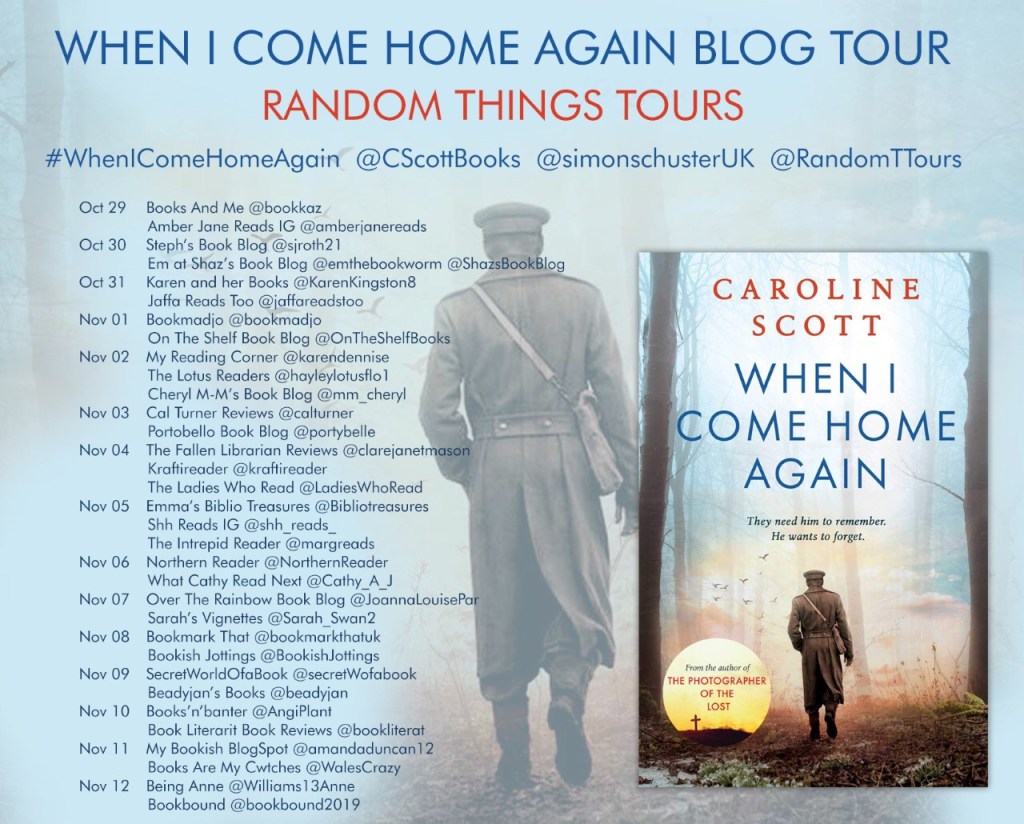
When I Come Home Again by Caroline Scott

Published: 29th October 2020

Publisher: Simon and Schuster

ISBN: 978-1471192173

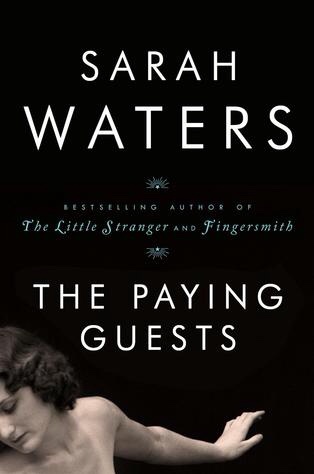
This was an exquisite, slow-paced, historical novel that moved me so much. It was a window on both individual, and collective, grief. It also explores the psychological rehabilitation process which is my day job, as a counsellor. Regular visitors to my blog will know that I am fascinated with this period of history depicted in novels as varied as Emma Donoghue’s recent novel The Pull of The Stars and in the last few years Sarah Water’s The Paying Guests, Adele Park’s Spare Brides and Kate Atkinson’s Life After Life. All deal with a different aspect of this period of huge social change. The nation is grieving, for lost sons, husbands and brothers but also for a time of innocence now lost to them. Young women struggle to find husbands as the policy of neighbours fighting together meant villages losing whole generations of men. Distinctions between the classes come tumbling down as men from all backgrounds fought together for a common purpose. Many estates were crippled by death duties, often for two generations at once, and men who never expected to shoulder the burden of a family estate were suddenly dukes, but without any means. Institutions like the debs ball seemed trivial and outdated, with many new heirs marrying money from abroad bringing Americans and their new money into the ranks. Others lost their estates altogether and had to consider working for the first time ever. Women who had held the fort, while the men went to Europe to fight, did not want to return to the home and wifely duties. Even men who had jobs held for them, faced a fight to get them back. Women were not the same, they’d been stretched and depended upon in wartime and wanted more equality at home, work and in the political system. The upheaval in our class system, in gender roles and working life is unimaginable. When set against the backdrop of national mourning and a worldwide flu pandemic we can perhaps imagine a little the seismic psychological shifts happening. On the plus side it’s a dynamic time, where the old order is overturned, people born in poverty or the wrong gender could change their lives because of the social mobility created.

We see these issues through the characters in Caroline Scott’s book and understand how some want to recover a lost past however unlikely it is, whereas others want to blank out their experiences and start again without memories or baggage. Scott starts her book with an epigraph from the tomb of the unknown soldier in Westminster Abbey. Also used as a focal point for Anna Hope’s wonderful post WWI novel Wake, the burial of this young man is full of symbolism. One man chosen from the many lost in France, to symbolise both those who died and those who would never be recovered or identified. His burial in the abbey would be broadcasted in cinemas and over 100,000 visited his grave to pay their respects in the next few weeks. In Durham, another anonymous young man is found using chalk to write on the flagstones in the cathedral. He is arrested and taken for treatment with Dr James Haworth who aims to slowly help his patient recall who he is and what has brought him to Durham. Named Adam Galilee by the police who found him, he is subject to many different methods, including covering the walls of his room with mirrors. They spend so much time talking and questioning, gently in case they force him into distressing memories. As Haworth observes ‘something strong within him is resisting recalling the pertinent parts’.

As a counsellor and writer I think a lot about the concept of ‘self’ and how it’s constructed, and I loved how Scott explores this in the chapters marked as belonging to Adam. He talks about how they ask him for a first memory and he knows they’re avoiding more recent times, despite there being a complete void where his time as a soldier is concerned. He knows they’re looking for a beginning to who he is and all he does know is that it doesn’t work like that.

‘It isn’t linear. That’s not the way it works. It doesn’t have momentum, or a narrative arc, and he doesn’t know where it starts. It surprises him, if they are doctors of minds, that they can’t understand that’.

I thought this was so clever, because it questions the very nature of the self. Are we ever one fixed set of characteristics or are we fluid and ever changing? If any of us are asked to describe who we are we tend to come up with a list of things we love to eat, listen to, wear and watch. As if the self can somehow be captured and solidified by these objects. When asked who we are, we refer back. So what happens when we cast our minds back and there is nothing there to hang on to. All Adam can do is ‘be’. To exist, try things and see what sticks. Rebuild from now. Maybe this is preferable to remembering before, the trauma and the hell of the battlefield? It was beautiful to see Adam gain a love of nature, whether rediscovered or a new appreciation it has a healing quality. He also has a talent for sketching and he captures the nature around Fellside, as well as the repeating a young woman’s face, which may be a clue to who he is. Supporting him through this self-discovery is James, himself a lost man due to his war experience and very much a wounded healer in these circumstances. His marriage to Caitlin is struggling under the weight of grief, I wanted him to share his war with his wife, but also understood his need to forget.

Just like the unknown soldier, Adam is a cipher for every young man lost in the war. When James puts his picture in a national newspaper, he hopes that someone will recognise him – what he didn’t expect was that three people claim that Adam is theirs; Mark, Robert or Ellis. Caroline weaves the women’s narratives into this tale so we see what war has done to the women left behind. My heart ached for them all and I wanted Adam to belong to each of them in turn; to be Celia’s son, to smooth away the rough edges of Lucy’s tough existence, to absolve Anna and bring resolution to her life. Of course he can’t be all things to all people. This is an intricate balance of viewpoints and Scott weaves a beautiful tapestry from them. Through these people we see a snapshot of post-WWI Britain that is truthful. Art is able to move beyond the patriotism and glory, to see the real cost of war. This is an incredible piece of work. Haunting and complex, a society laid bare emotionally through the tale of a warrior, unknown by name and rank.

Meet The Author


Caroline completed a PhD in History at the University of Durham. She has a particular interest in the experience of women during the First World War, in the challenges faced by the returning soldier, and in the development of tourism and pilgrimage in the former conflict zones. Caroline is originally from Lancashire, but now lives in south-west France.

Posted in Netgalley

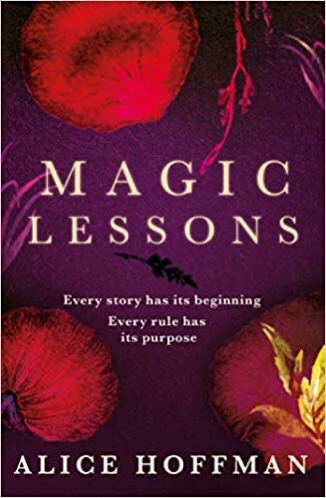
Halloween Reads: Magic Lessons by Alice Hoffman

This month I took some time off from blog tours and other commitments to spend a couple of weeks reading my own choices. Not only did this give me a lot of freedom, it allowed me to read one of my all time favourite authors followed by one of my most recent loves; Alice Hoffman and Alix E. Harrow. Even more of a coincidence is that both have written books based within the folklore of witches, healers, and wise women. In Hoffman’s case this is her third novel in the Practical Magic series, which delves back further than ever before to the origins of the Owens family and the formation of communities whose religion will not suffer a witch to live. Harrow also creates a world of sisters, three separated sisters who come together at the very beginning of the 20th Century and the suffragette movement.

In Magic Lessons, Maria is found as a baby by wise woman Hannah Owens, who brings her up with the old ways. Maria learns how to grow a healing garden, to use herbs for ailments of body and mind, and help women with problems caused by love. However, Maria’s power isn’t just learned. She has the mark of a blood witch from her birth mother, and has been chosen by her familiar Cadin who is a crow. Maria feels she must be the result of a woman being fooled by love and vows not to be taken in by a man. Tragically, Hannah is burned as a witch and Maria knows she must run to save her life. She meets her mother and birth father, and realising there is no room in their love for a third person she takes a gift of red boots and sails to the island of Curacao where she has been sold into servitude for a period of five years. Here, her vow against love will be tested. Taking us through the dangerous years of the 17th Century, where Puritanical communities like Salem in Massachusetts were whipped to hysteria, and would not suffer a witch to live. Hoffman’s prequel to Practical Magic takes us back to the beginnings of the Owens family and the complicated relationship between their power and the very human need to be loved.

I had been waiting for this prequel for a long time and I wasn’t disappointed. It only took me moments to be in Hoffman’s magical world thanks to the layers of description she uses to create an unusual atmosphere. In some senses she creates an instantly recognisable sense of place. Her descriptions of Massachusetts, and later, Brooklyn are full of local floral and fauna, the sense of wilderness and pioneering spirit within these early settlers of the Americas. It is dark, foggy, wet and often icily cold with dangerous animals and even more dangerous people. By contrast the time spent travelling to the West Indies and the beautiful island of Curacao are vivid. In the daytime full of colour, exotic flowers and birds and I could feel the sun on my face, the warm sand beneath my feet and the incredible animals such as the turtles and tiny hummingbirds. By night, when Maria and her friend explore the island, it is still warm, with a vast sky full of stars. On the other hand there are times when these places seem otherworldly as we see them through the eyes of a witch: the magical properties of plants, the incredible loyalty of an wild animal like Keeper the wolf, and the witches’ power to control these elements to their advantage. It’s our world but not quite. The difference is viewing it through the lens of history, but most unimportantly, by magic.

There were times I didn’t fully understand Maria, although she’s the more sympathetic character of the three generations. She protects herself against love after seeing what it did to her mother, but then later says she couldn’t protect herself against love. I think this is almost a push and pull between the human and more magical signs of her character. She tries to use her power to prevent love, but perhaps her heart truly longs for it. The tragedy is in protecting herself against the right man, while letting the wrong one in. I find her choice to go to Massachusetts with her daughter Faith inexplicable given that she has friends and support in Curacao. John Hathorne is a very dangerous man, to women in general and not just the witches he persecutes. He drags young girls into a battle he is constantly fighting between his appetites and his conscience. There is part of him that emerged in Curacao that wants to shed his responsibilities, to throw off inhibition and dive into the sea as well as give in to his passions for a woman he desires. In Massachusetts he is a pillar of the Puritan community, yet he marries his wife Ruth when she is just 14 and his ward. She describes crying as he takes her to the marital bed, but her fear and young age does not stop him. It’s worth mentioning that in a historical context this isn’t unusual, but to me it shows a lack of compassion and respect for women. He turns his back on his daughter, both when she’s a baby and when she returns as a young woman. Maria, his wife Ruth and his daughter Faith are all his victims. Samuel, or Gogo as Faith calls him, is a good man and I was desperate for him to win Maria over. He is not scared of Maria or her power. He loves her intelligence, her fortitude and her power. I could have cried for how much time is wasted as Maria fights him.

I enjoyed the way Hoffman weaves in the historical context for America in this period. These are early settlements, some first colonised by the Dutch then by the English. She doesn’t forget the indigenous tribes either, often completely massacred by these ‘Christian communities’ who hold themselves in such high regard. They hold women with healing knowledge in the same regard as these natives of USA, as if they are cleansing their area of magical and primitive beliefs. Hoffman doesn’t forget her Jewish heritage either, situating them as a persecuted race often moved on from areas they’ve settled and treated with suspicion. We see this in the characters of Samuel and his father, who have chosen a life on the sea instead, but still hold their heritage close to their hearts. There’s a sense in which Christianity is anti-magic whereas Judaism is closer to ancient magic and respectful of its power, especially in its capacity to do good. The only time Samuel stops Maria from practicing her magic is when it’s in a darker form, as she tries everything to keep his father alive. The Christian beliefs practised by the Dutch and English settlers has become corrupted and Hoffman presents their acts as the very evil they fear. When Maria is taken for the trial by drowning in Massachusetts, there is a frenzy and mob like mentality that is seen later in real life witch trials of Salem and the fictional arrest and trial endured by Faith. When Faith is taken by a Christian woman, confined and forced to live as her daughter we again see obsession and evil. Her captor never seems to doubt she is doing God’s work removing Faith from her mother, taking her far away and putting her in irons to remove her power. Yet this evil, begets more evil as Faith escapes and uses her freedom to practice blood magic steeped in anger and revenge. Yet she still has a conscience. Faith is haunted by the death of her captor, despite helping women to wreak revenge and enchantment by night.

I would have liked to see a more time between John Hathorne’s wife Ruth and Maria, because they were both exploited by the same man. I also think that there was perhaps too much complex detail in the women’s appearances such as Faith’s changing hair colour or the different colours of thread used for different purposes. I found myself becoming confused at times, but it’s a small issue in a magical story. I think this was a thoughtful and atmospheric origins story of a family many fans have come to love. I think the strength of this series is in that combination of the mystical and the very human elements of the story. Despite their powers Maria, her mother Rebecca and her daughter Faith experience the highs and lows of every woman’s life – the changes of adolescence, falling in love with the wrong man and the right one, motherhood, illness and ageing. I felt emotional as Maria saw her ‘mother figure’ Hannah murdered by men who feared her, as she realised the man she loved didn’t really exist, and as she lost Cadin her loyal companion. These women’s fight to be accepted and even acknowledged for their skills is a fight that continues today as we fight for women’s rights to equal pay, to save reproductive rights and to be seen as more than sexual objects. Their fight to stay alive is still echoed in our fight to stop child brides, exploitation of young girls and domestic abuse. It was a series coming full circle, as we see the formation of that mistrust of love that shapes Jet’s journey or that sees Gillian constantly pick the wrong man. I truly loved my time back with the Owens women again.

Meet The Author

Alice Hoffman is the author of thirty works of fiction, including Practical Magic, The Red Garden, The Dovekeepers and, most recently,The Museum of Extraordinary Things. She lives in Boston. This book is the prequel to Practical Magic and The Rules of Magic.

Visit her website: http://www.alicehoffman.com

Posted in Random Things Tours

Unto This Last by Rebecca Lipkin.

#RandomThingsTours #BlogTour #UntoThisLast

Publication Date: 28th August 2020

Publisher: Book Guild Publishing Ltd

ISBN: 1913208826

Background and Synopsis |John Ruskin was a complicated and controversial man, mostly with regards to his relationships with young women. However, he was also a brilliant artist, important patron and critic of art and architecture. He championed the painter J.M.W Turner and the Pre-Raphaelite Brotherhood whose progressive work had all but barred them from the Royal Academy and polite society. In 1860 he shifted focus from writing about art and architecture, towards social issues including inequality within society. In a series of essays published under the title ‘Unto This Last’ he wrote that the only true wealth is society is the happiness of its people.

‘That country is the richest which nourishes the greatest number of noble and happy human beings’.

Rebecca Lipkin’s novel focuses on Ruskin’s personal happiness, in the period after the disastrous annulment of his marriage to Effie Gray, followed swiftly by her marriage to Pre-Raphaelite painter John Everett Millais. Ruskin was asked by the Marchioness of Waterford if he would give art lessons to her friend’s two daughters. Maria La Touche was a poet and novelist, and her daughters Emily and Rose are interested in art. Rose is only ten years old but shows prodigious talent. Ruskin plans to politely refuse the job, but something about Rose touches him deeply and before he knows it he’s soon visiting their mansion three times a week to give art tuition and spend time with the girls. This novel focuses on that relationship, but within the wider context of their families, his previous marriage and the views of the wider Victorian society.

My Thoughts | Ruskin’s affections for Rose La Touche were a bewildering source of joy, but also anxiety and depression at times. He found that he looked forward to her company and suffered greatly when she was away. Her mother Maria, was astonished by the usually reserved Ruskin allowing Rose to tease him, draw him into childish games and even lure him into a snowball fight in the garden. It was rare to see such a fastidious and serious man, so out of breath and disheveled. However, it is only when Rose takes a three month trip to Europe and falls ill that he truly realises the depth of his feelings. Yet, Rose is still only an adolescent and Ruskin is just over forty years old. The author takes us deep into the mind of this brilliant but troubled man, as he wrestles with himself and feelings he’s deeply unsure about.

Having read Ruskin’s work at university, I was worried that the prose would be long-winded and laborious to read in order to establish it within the Victorian setting. Yet the author made Ruskin’s mind accessible and uncluttered, while still grounding us firmly in the 19th Century. I have always been very interested in the strange relationship between Ruskin and his parents and there was plenty to think about here. Ruskin has an increasingly fractious relationship with his father John James, especially arguing about the placing of the Turner paintings owned by the family. In the 2014 film Effie Gray, written by Emma Thompson, we see a very dysfunctional relationship between Ruskin and his mother; when Effie and Ruskin return from honeymoon he is whisked upstairs by his mother for a bath. This novel shows a more nuanced relationship, but still a stifling only child/over-involved mother dynamic. John has been the apple of their eyes and their entire lives have been devoted to ensuring he excels in his field. They do worry about his feelings for this young girl and whether his life’s work is being side-lined so he can teach a child to draw a still life. They are also sceptical about the teaching he does for working class men, but he is adamant that it helps them lead fuller and happier lives.

John Ruskin painted by John Everett Millais

There are times when it’s hard to reconcile the man who has this type of empathy for those in a more lowly position, with the man who has developed feelings for such a young child. There is no record made of when Ruskin’s feelings begin to change towards her. I kept wondering why Mrs La Touche allowed the developing friendship, knowing the rumours surrounding the collapse of his first marriage? In fact we know that Effie Gray did contact and warn Rose’s family. He had also known Effie from childhood, befriended the family and eventually married when she came of age. This troubled part of his life is covered in the third part of the book so we can make comparisons. His devotion seems to be known in society because he even reproduced some of Rose’s earliest letters in his writings to preserve them. The scandal resonates through the decades and is even alluded to in Nabokov’s Lolita. He is such an introspective man and seems so earnest in his feelings that I actually worried about his mental health – what would happen if this should go wrong? I was impressed with the author’s ability to take us so deep within the psyche of this complicated man, to the point where I started to feel as if I knew him.

Rose is presented so vividly that it’s easy to see why Ruskin might be innocently charmed by her. Ruskin write of her:

‘Sometimes she had a surprising understanding of adult attitudes: at the next moment she was once more completely a child. She had a pretty way of making herself engaging, even coquettish, but could also be rather solemn […] I don’t know what to make of her […] She wears her round hat in the sauciest way possible—and is a firm—fiery little thing.’

Rose La Touche

So in his mind she is a precocious young lady with a very definite character. It’s hard to know if this is how all adults viewed her or whether this is Ruskin’s mindset showing; the words ‘coquettish’ and ‘sauciest’ suggesting a sexual connotation. Is this what he perceives because he has a troubling attitude towards girls? Or is it his life’s quest to find a wife who will behave as he wants? If he is looking for the Victorian ideal of an ‘Angel in the House’ maybe he feels he can mould a younger girl into this image of saintly womanhood.The author brings Rose to life so we are not confined to Ruskin’s gaze. I felt for this ‘fiery’ girl because she is so controlled, by Victorian society, but also by her very religious and dominant father. Her mother often seems elusive, which may be why Rose has such an independent air about her. However, Mrs La Touche also controls – through manipulation. I enjoyed the scenes where Rose lets go and plays with Ruskin and her sister, she needs to let loose and she is teaching him to do the same. Because of this sense of release they get from each other I found myself looking forward to those scenes where they can do this, he allows her to tease him and seems to drop his rather pompous guard. Yet, if he does propose marriage, would he continue to let Rose be this free and determined? I found myself alternating between relief that Ruskin was able to get outside his own head and enjoy himself in the moment, and concern that marriage to Ruskin would confine and depress Rose.

The author really has produced an amazing piece of work here; as rich in historical research as it in imagination I enjoyed the way the book includes letters between them and the atmosphere created as Rose moves through different countries from France to Italy and Switzerland. The vivid descriptions of these places are very painterly and I could really see how it must look to Rose. I didn’t fully know the ending to the story and won’t reveal it here, but as we compare the older man with his younger counterpart in part 3 we can see that Ruskin has mellowed with age. Yes his inner world is full of angst but outwardly he seems less petulant and guarded. I found empathy for him, where previously I thought he was a dreadfully pompous and repressed individual with a strange mix of arrogance and lack of confidence. The depth this author has gone to in order to uncover the hidden aspects of Ruskin is admirable. He now has some sympathy from me, despite my concerns about his need to control and perhaps groom young girls whose personality is not yet fully formed. This book has been an incredible undertaking and is an intelligent, interesting and admirable piece of work.

Meet The Author | Rebecca Lipkin had a passion for Victorian art and literature from a young age. She first discovered John Ruskin through E.M. Forster’s novel, ‘A Room with a View’, and later joined the Ruskin Society at the age of seventeen to learn more about Ruskin’s work. Rebecca pursued a career in journalism, specialising in arts writing and theatre reviews, and has worked for a number of national publications.

Posted in Random Things Tours

The Second Marriage by Gill Paul.

#RandomThingsTours #TheSecondMarriage #BlogTour @gillpaulAUTHOR

Published in UK: 24th August 2020

Publisher: Avon Books

ASIN: B084WS53XZ

Synopsis: From the internationally bestselling author of The Secret Wife comes a tale of love, sacrifice and betrayal, available now.

Published in the US as Jackie and Maria.

JACKIE | When her first marriage ends in tragedy, Jackie Kennedy fears she’ll never love again. But all that changes when she encounters…

ARI | Successful and charming, Ari Onassis is a man who promises her the world. Yet soon after they marry, Jackie learns that his heart also belongs to another…

MARIA | A beautiful, famed singer, Maria Callas is in love with Jackie’s new husband – and she isn’t going to give up.

Little by little, Jackie and Maria’s lives begin to tangle in a dangerous web of secrets, scandal and lies. But with both women determined to make Ari theirs alone, the stakes are high. How far will they go for true love?

My Thoughts | I was drawn to this book because I’ve always had an interest in the Kennedys and have read a lot of fiction and biography around Jackie and JFK. However, I didn’t know a lot about her marriage to Aristotle Onassis or how their relationship started considering he was in a long term relationship with opera star Maria Callas. I was interested to read a story I knew, but from the perspective of the two women involved rather than the men. I was quickly drawn into the narrative told in alternate chapters from both women and starting when they were still in their first marriages. Jackie is trying to cope with marriage into the politically obsessed Kennedy clan as well as grieving over a lost child and Jack’s indiscretions. Maria is married to Battista Menighini who manages her career, but feels unfulfilled without a child and misrepresented as a diva by the press. Both women have met Onassis and been invited to his yacht, since he likes to entertain the most famous people in the world. I wondered if either woman ever imagined in only a few years they would be rivals.

Both women’s characters were well drawn and I felt I really did get to know the real them, although I felt more of an affinity with Maria – possibly because she was led more by her emotions than Jackie. Although not the diva she was often portrayed as in real life, Maria acts on her emotions and seems more in touch with what she needs. As soon as she falls in love with Ari (Onassis) she acts on it, breaks the news to her husband and risks her reputation to be true to her heart. I also felt a kinship in her grief over struggling to be a mother, something she does have in common with Jackie who has had a miscarriage and loses a daughter at the beginning of the novel. In fact the women have more in common in their backgrounds than I realised, mainly in their relationships with their mothers.

Litsa Callas was a cold and distant mother, in fact such was her disappointment that Maria wasn’t a girl she didn’t even look at her baby daughter for four days. Throughout the novel we see her engage in manipulation, abuse and betrayal of her daughter including selling details of her relationship with Onassis to the world’s press and eventually writing a ‘tell-all’ book about her daughter. In a radio interview Callas recalls the lack of confidence she had in her looks, especially her weight, compared to her mother who was very slim. Callas felt ‘ugly and unwanted’ as a girl, added to this her mother pressed her into relationships with occupying Italian and German soldiers in order to gain money and food during the Axis occupation. Some sources claim that Maria came to no harm, but she sees it as a form of prostitution and the author writes about Maria telling Onassis that she was manhandled by soldiers and on one occasion was almost raped. In a moving account Maria claims her mother had no warmth or sympathy for her daughter on her return from this assault, just continued to put them at risk to earn money.

I was saddened by the scene where Jackie’s daughter is stillborn, adding to her pain Jack is on a flight and she only has her mother for support. Janet Auchincloss was authoritarian and austere, believing in money, beautiful homes and status rather than love and insisting on this for her daughters, regardless of the man. Jackie adored her father ‘Blackjack’ Bouvier who showered her with affection and presents. After her parents divorce, her mother was left short of cash until her remarriage and this left a big impression on Jackie. It was impressed upon her that security was more important than love, but there was still a touch of idealism in Jackie who thought she’d found both love and security in Jack. The author does a great job of showing the reader the differences that open up between Jackie and her in-laws. Jackie is a big reader, intelligent and interested in culture whereas the Kennedys live and breathe politics. She’s more of an introvert, who wouldn’t normally court the limelight and often wishes that Jack’s ambition could be curbed. She worries about the type of First Lady she will be, feeling under constant scrutiny from the Kennedys who think Jack’s wife should appeal more to the average American woman. Jackie’s interest in fashion is shown as a way she expresses herself and I felt this was maybe her only means of expression. Her mother stifles any emotion and she’s encouraged to ignore Jack’s indiscretions too. She isn’t allowed to be honest with anyone about how heartbroken she truly feels. I felt for her so much in the scene where she takes a call from Marilyn Monroe who makes it quite clear she is involved with Jack. Jackie recognises that Marilyn is very fragile and could damage his career irreparably, even in her heartbreak she is thinking of him. Even worse is the part where Jackie overhears a conversation that brings his indiscretions closer to home than she ever imagined in a double betrayal.

This is an immersive piece of historical fiction that completely transported me to the 1960s and the rich elite of the period. Using fashion, interiors and an in-depth knowledge of her characters Gill Paul drew me into a world of privilege I could never have imagined. She drew parallels between these two extraordinary women, but also between families who were as cursed as they were wealthy and powerful. I felt that both women’s upbringings drew them to men who were rich and powerful, but also controlling and possessive. There was no question of Maria or Jackie enjoying the sort of affairs that Kennedy and Onassis conducted. The intense control of their mothers almost groomed them for the lives they chose as women. Although it might have appeared more respectable, it’s not hard to draw parallels between Janet pushing the Bouvier sister towards rich husbands and Litsa pushing her daughters towards occupying soldiers. There was also a connection between their dislike of the limelight, and the ability to have their voices heard – ironic in the case of Callas with her incredible sound. I found myself feeling sad for both of them throughout. This is a great read, with interesting supporting characters and a series of beautiful settings such as Venice, the Greek Islands and the Kennedy Bouvier estates. I felt like one of the jet set while reading and the author added to my knowledge of these women with newly discovered evidence, such as the revelation that Onassis and Callas may have had a son, Omero, who died at birth. Using a depth of background research, the author has created an accessible, enjoyable and enlightening novel about two of the most famous women in the 20th Century.

The Author

Gill Paul’s historical novels have reached the top of the USA Today, Toronto Globe & Mail and kindle charts, and been translated into twenty languages. They include THE SECOND MARRIAGE (titled JACKIE AND MARIA in the US), two bestselling novels about the Romanovs – THE SECRET WIFE and THE LOST DAUGHTER – as well as WOMEN AND CHILDREN FIRST, which was shortlisted for the 2013 RNA Epic Novel of the Year award, NO PLACE FOR A LADY, shortlisted for a Love Stories award, and ANOTHER WOMAN’S HUSBAND, about links you might not have suspected between Wallis Simpson and Princess Diana.

Gill is also an author of historical non-fiction, including A HISTORY OF MEDICINE IN 50 OBJECTS. As well as writing, she speaks at libraries and literary festivals on subjects ranging from the Titanic to the Romanovs. Gill lives in London, where she is working on her tenth novel, and she swims daily in an outdoor pond.

 Follow the Author: 

www.gillpaul.com

Twitter @GillPaulAUTHOR

Instagram @gill.paul1

Do have a look at the other stops on the blog tour.

Posted in Netgalley, Publisher Proof

Tsarina by Ellen Epstein.

Catherine Alexeyevna rose from peasant beginnings to become one of the most powerful women in Russia as the second wife of Peter the Great. Known as Marta to her family she was born in 1684 in the village of Livonia. Her meteoric rise from illiterate servitude to the Russian throne is one of chance, but also, as the author puts it ‘intellect, wit and sensuality’. Her parents sold her into the service of a man called Vasilly from the town of Walk. The author pulls us into the world of this nine year old girl as she experiences the town for the first time. She is overwhelmed by the number of people and all the chimneys she can see, each one representing a family. In her wonder, she loses the count and becomes mesmerised by the foods being sold by street vendors. This experience inspires her and she begins to work in the kitchen, soon able to prepare delicious meals of her own.

It’s very hard not to admire the way this incredible woman rose through the ranks of Russian high society, almost always by catching the attention of men. This was a dangerous and volatile period of history and it must have taken a great deal of resourcefulness and cunning to succeed. She was observant, able to read people and their interactions, successful at manipulation and doesn’t let herself be used by men – unless she wants to be of course. There are moments when she is struggling but the right advice or opportunity seems to come along. She takes to heart a lesson taught by Menshikov, the Tsar’s best friend:

Use life’s surprises to your advantage. See your power over men like a hand of cards; play them, to trump your life’.

I really enjoyed it when the focus was on Catherine (Marta) and her rise. When she reaches her position as Peter the Great’s wife and Empress of Russia, the story starts to open up and include others within the court. When we’re not concentrating on Catherine, I wasn’t as engaged with the book, but maybe that was just me. Her life becomes swallowed up by the demands of being a monarch’s wife – the demands on her to produce an heir resulted in twelve pregnancies! The cruelty of Peter starts to come to the fore as well as his contrary nature. He upholds religious and cultural custom to a stubborn degree and then when it suits him, simply discards custom for his own advantage. He’s a textbook narcissist. Even though Catherine is surrounded by riches, lavish banquets and incredible jewels I didn’t envy her position. She knows the dangers of being his wife, because his first wife ended up in a prison cell and her lover was impaled alive, on a spike in Red Square.

Despite this being more fiction than biography, I think the author researched her subject well and worked hard to bring Catherine to life. There are some really dark moments of rape and torture, but this is probably an accurate portrayal of very bloodthirsty time in history. Its also a very sensual book, not just the lusty moments, which I really enjoyed, but also the author’s focus on the senses. The taste of the incredible dishes she creates, the smell of the incense and incredible interiors of the Russian Orthodox Church, all the way down to the sweat and fear of the torture chambers. When Catherine’s trying to keep Peter’s death a secret in order to keep the crown, I was drawn back into the action. As he lies there, dying in the Winter Palace, Peter has to face the fact he is leaving his country without an heir. His only son Alexei, was killed under interrogation for conspiring against him. This is when Catherine undertakes her greatest political manoeuvre and becomes Queen, despite Alexei’s son being the heir apparent. I enjoyed reading from Catherine’s perspective, especially considering the way her male enemies spread misogynistic stories about her suppose voracious sexual appetite. The book did it’s work in making me want to know more about this time and place in history. I’ll be going to All4 and watching their series starring Helen Mirren to learn more about this fascinating character.

Next month I will be reviewing the author’s next novel

Meet The Author

Ellen Alpsten was born and raised in the Kenyan highlands, where she dressed up her many pets and forced them to listen to her stories. Upon graduating from the ‘Institut d’Etudes Politiques de Paris’, she worked as a news-anchor for Bloomberg TV London. While working gruesome night shifts on breakfast TV, she started to write in earnest, every day, after work, a nap and a run. So much for burning midnight oil!

Today, Ellen works as an author and as a journalist for international publications such as Vogue, Standpoint, and CN Traveller. She lives in London with her husband, three sons, and a moody fox red Labrador.

‘Tsarina’ is her debut novel. For more information about her literary life follow her on social media.

Coming Soon…