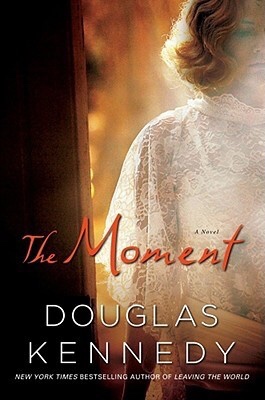
A secret from the past can change your life for ever. The Moment is a heart-breaking love story set in Cold War Berlin by the author of The Pursuit of Happiness and Five Days.
Thomas Nesbitt is a divorced American writer living a very private life in Maine. Until, one wintry morning, his solitude is disrupted by the arrival of a package postmarked Berlin.
But what is more unsettling is the name accompanying the return address on the package: Petra Dussmann. For she is the woman with whom Thomas had an intense love affair twenty-five years before in a divided Berlin, where people lived fearfully under the shadows of the Cold War.
And so Thomas is forced to grapple with a past he has always kept hidden. For Petra Dussman was a refugee from the police state of East Germany. And her tragic secrets were to re-write both their destinies.
I found myself strangely captivated by this tale of lost love in a divided Germany. I worked my way through all of Douglas Kennedy’s books around five years ago after enjoying A Special Relationship and while they’re all great reads something about this one stayed with me. Perhaps because I’ve lost someone I loved. Or because I once had a short, intense love affair that, given different timing, could have blossomed into a something beautiful. We have probably all had similar experiences, where the timing was just wrong. However, when added to this restrictive Cold War environment, love becomes so precious by contrast. Like a flower blooming through the cracks in a pavement.
This story unfolds like a set of Russian dolls. When the package arrives with Petra’s return address it sends Thomas back to the account he wrote of his time in West Germany. We read his narrative and are drawn into this impossible love story that left him with so many unanswered questions. When he opens the package, he finds Petra’s account of that time and we are lost in the same story, but from a different viewpoint. What he discovers is shocking and illuminating, but will it answer his questions? More importantly, will it confirm and deepen the love he felt for Petra and how will that change his life moving forward? There are so many things I love about Kennedy’s writing and this book showcases them beautifully. The historical research and detail feel genuine. He takes a period of history beyond the facts, to show how this world affected the people who lived through it’s events – not just physically, but emotionally too. The stark, grey, concrete world of East Germany and it’s citizen’s fear of the Stasi, become real through Petra’s story. There is so little to look forward to and an absence of joy here. I remembered back to my younger years and the pictures on the news as the Berlin Wall came down. Now I understood their euphoria and their need to physically take hold of this symbol of oppression and dash it to the ground with their bare hands.
Kennedy also has the uncanny ability to write convincingly from the viewpoint of both men and women. This was a skill first seen in his novel A Special Relationship, where he wrote from the viewpoint of a new mother whose husband thought she was suffering from post-natal depression. Here again he writes from the viewpoint of a woman and mother, torn between romantic and motherly love. Even, as we wonder which of these loves will win out in the end, we realise neither choice can ever truly fulfil Petra without the other. There are no winners, whichever choice is made. The only outcome here is betrayal.
As we come back to Thomas’s current circumstances, further enlightened by the stories we have experienced, we see how the psychological damage of childhood and our youth can colour the rest of our lives. It seems we spend the latter part of our adult lives trying to untangle, then heal these wounds, as we recognise how much damage these traumatic experiences have had on our choices – in Thomas’s case, during his failed relationship with his wife. I also think Kennedy is telling us something very important about stories. Thomas’s story would have made a novel all on it’s own, but by adding Petra’s version we start to see something of the ‘whole’ story. Our version of events, even factual ones, are just that; our version. It’s just one piece of a patchwork quilt of perspectives. Even our own version can change as we get older, gain experience and develop new ways of understanding. This novel is unusual, because it’s a love story for people who don’t read love stories. Or a novel about Cold War Germany, for people who understand the importance of love. For me, it’s that unusual, niche, mixture that made it stay with me.
Meet The Author
Douglas Kennedy is the author of ten novels, including the international bestseller Leaving the World and The Moment. His work has been translated into 22 languages, and in 2007 he received the French decoration of Chevalier de l’Ordre des Arts et des Lettres. Born in Manhattan, he now has homes in London, Paris, and Maine, and has two children.
As we turn into autumn, there’s less lounging in the garden with my book and a cold flask of squash and more snuggling by the log burner with a hot chocolate and a book. For some reason, that cosiness and the darker evenings draw me towards haunted or magical stories. So I was keen to read this time slip story full of ghostly goings on. In 1903 we visit All Hallows’ Asylum on Dartmoor and Nurse Emma Everdene has a new charge to look after, away from the usual inmates in an attic room. A mother and young daughter are found by a fisherman, the woman completely unconscious from a blow to the head. While she is transferred to one of the best private rooms and remains in a coma, her traumatised daughter is left in the care of Nurse Everdene. The little girl is clearly shocked and exhausted, so a room is made up with a single bed and a rocking chair near the fire so she can be monitored. She is completely mute, so the nurse doesn’t pressure her but makes sure she is warm, dry and fed. For comfort she gives her a small toy rabbit that once belonged to her son Herbert, who died when he was small.
In 1993 we meet two boys sent to All Hallows’, which is now a boarding school. Lewis is coping with grief after losing his mother and in an attempt to express himself has started dressing as a Goth. His Dad has quickly married again, and his stepmother clearly wants Lewis out of the way. She reports on how difficult he is and manipulates his father into thinking boarding school is his best option. Once there, Lewis is shorn of his Goth persona and is feeling very vulnerable, especially when he has to share room just under the attic with another boy, Isak. Isak, he finds out, is also an outcast and he gives Lewis some tips on surviving the school. They also share an interest in a nurse who was buried outside the consecrated ground of the churchyard ninety years before. What does this have to do with the abandoned room above them on the attic floor, containing only a rocking chair and a single bed? A rocking chair that the two boys can hear rocking in the middle of the night, thumping against the floorboard, as if someone is sitting in it.
It’s hard not to feel for Lewis, as he ends up with all his armour taken away from him. Without his Goth gear he’s just a boy with ears that stick out a bit too much. Luckily he finds another outsider to be with in Isak, although at first we don’t know why he is so ostracised. Emma Everdene is also fascinating and because I hate the practice of burying people outside of consecrated ground I really wanted to keep reading to find out why. The journey she takes in life is incredible, elevating herself to becoming a nurse, from very little in monetary and status terms. I also found her very resilient, having come through the deaths of both her husband and her son. I liked how her nursing manual showed working women supporting other women in their journey. When it is found in the library in 1993 the dedications show that it was passed from woman to woman, possibly because books were out of reach for women in poverty. The author also makes the point that many women were in the asylum for little more than thinking differently, or being in the way of their husband’s next conquest. Thalia is an example of a woman who has pushed the boundaries for someone of her class and gender. Staff talk about her cutting her hair short like a man and habitually wearing trousers, not to mention being a suffragette.
Emma sniffed. ‘And why shouldn’t she do those things if that’s what she wants to do? Because by doing so she causes embarrassment to her family? Because they’re hoping to marry her off to some chinless wonder with more money than manhood, some… some milksop who would be humiliated to stand beside a woman who shone more brightly than he?’
I found her father’s request that she be punished severely much more chilling than whatever was going on in the room upstairs. Emma talks about the asylum as a last resort for men who want to control and silence their women. The thought of all these people falling victim to early 20th Century asylum ‘treatments’ is terrible. It really hits home when Lewis finds iron fitments on the floor and wall in one of the classrooms in 1993. The manacles may be gone, but it still paints a picture of human misery. When Emma talks to the girl who brings their food, they talk about the treatments that are commonplace in the asylum such as the ice cold baths. Then there’s the less commonplace. When a new doctor arrives and is given the case of Mrs March, mother of Emma’s charge, he wants to try new European treatments. The staff gossip about the time he spends touching her, moving all of her limbs in turn and bending her spine in order to keep the flexibility while she’s in a coma. Emma can see that it would make sense to keep her supple, but when he moves his desk into her room so he can work there and spend more time in her company it starts to feel strangely voyeuristic. Her complete vulnerability becomes worrying.
The supernatural goings on are genuinely scary, Lewis finds the creaking rocking chair a bit unnerving but is able to be in the room and stop it moving. At first he thinks of obvious explanations like a draft setting it off, but after a few weeks he can’t brush it off any longer. The dark presence felt by both Lewis, and Emma ninety years earlier, seems to fill the room with its power. Lewis feels as if something huge is in the room and Emma feels it’s malevolence. The jumpier scares are unexpected and add to the mystery unfolding before the boys. The surrounding isolation creates a claustrophobic atmosphere and as Emma starts to feel more unnerved and more attached to the little girl we now know is called Harriet, I felt I was being rushed towards some terrible event. I thought the way both the asylum and the school were painted as places to dump inconvenient people was very apt. Even some of the techniques they used were the same, such as taking away the patient or pupil’s identity through removing their own clothing and shearing their hair off. There’s a strong feeling of trying to break individuals and make them conform. The author has created an interesting and unnerving tale, that has the tension of a thriller and creates a need to keep reading to find out all the building’s secrets. It has also reignited a childhood terror of looking into the bathroom mirror!
Published by Boldwood Books 12th October 2021.
Meet The Author
Louise Douglas lives in Somerset in South West England & writes contemporary Gothic mysteries mostly set in the countryside close to her home. She has won the RNA Jackie Collins Romantic Thriller award 2021 for The House by the Sea.
When She’s not writing, she loves to spend time with family, friends, and animals – especially dogs, birds and whales. She’s passionate about nature, being outside, drawing wildlife, walking, beaches, fictional drama and books. If you’d like to connect with Louise you can find her on Facebook Louise Amy Douglas or @LouiseDouglas3 on Twitter.
I slowly became more and more intrigued by Elizabeth Gifford’s new novel. Even the title whetted my appetite for more of the same beautiful writing that made The Lost Lights of St Kilda such a memorable book. We’re still in Scotland, this is the late 1940’s and our heroine Caro lives with her husband Alasdair and baby Felicity in the Laundry Cottage situated in the grounds of his ancestral home. They met at Cambridge University and married less than six months later much to his mother Martha’s surprise. She was expecting him to marry someone of their class, maybe even their family friend Diana who’s valuing heirlooms at the family’s castle. Caro’s mother-in-law wanted her and Alasdair to live at the castle with her, but Caro wanted a little bit of privacy and distance. At Laundry Cottage she can still be in her dressing down at lunchtime or having a sleep while baby Felicity has a nap. Yet, the past is about to make it’s way into the present both physically and mentally. Caro is asked to research the family archives for a mysterious, missing member of the family. A great-grandmother seems to have been scrubbed from the archives, along with a missing diary from her husband Oliver’s trip to the Arctic. When the Laundry Cottage floods suddenly and workers inspect the Victorian drainage system they find a body of a woman. Could this be the missing bride?
It seems formidable mothers are the norm at Castle Kelly, because when I read the second narrative it took me back to the late Victorian period and tension between Oliver and his mother. From early childhood Louisa and Charlotte Strachan have been summer visitors to the castle and Oliver’s playmates. However, as they get older it’s clear that feelings have developed between Oliver and Louisa. Could she be the missing grandmother from the archives and the body found in the grounds? How come Oliver ended up in the Arctic? What effect will Caro’s findings have on the family and her marriage? With so many questions I was compelled by the story and some of the characters caught up in these dramatic circumstances. Also the historical shifts behind these stories was fascinating too, showing how much the world changed over two world wars.
Caro is such a sympathetic character and I felt immediately on her side in this very difficult situation she finds herself in. She’s an intelligent woman and understands a lot about how the world is changing. Her expectation of life after the war is that she and Alasdair will live in London as lecturers at one of the city’s universities. She didn’t bank on having Felicity so quickly or for Alasdair’s only offer of employment coming from St Andrew’s university. She describes feeling ‘ambushed’ by her own fertility, but she loves Felicity and wants to be a good Mum. I understood her need to be separate from the castle – it’s a compromise between his obligations and the total freedom they expected in London. I also empathised with her feelings of struggling as a new mum and being isolated from everyone and everything she knows. It’s a huge leap from being organised, full of energy, totally independent and career minded, to living in a cottage with a new baby feeling tired and slightly inadequate. She can’t understand why looking after Felicity seems so arduous and exhausting, when she’s always been so lively and alert. She also finds her emotions difficult; she’s struggling to understand why she wants to keep mother-in-law Martha at bay, or why she feels threatened by the presence of Diana. Her interest in the missing grandmother is linked to these emotions, maybe they were both outsiders in this family. It’s painful to her when she hears Martha say she’d hoped Alasdair would marry someone of his own class, surely those barriers don’t exist any more?
When I started to compare it with the 1940’s I could see that there is change, but within the Gillan family it has been minimal compared to the rest of society. Early in the novel Caro remarks that ‘she was secretly rather proud of her ability to make good friends across the classes’ because ‘once the war was over, class was not going to mean anything after all the country had been through together’. This was probably true in more metropolitan areas, but it hasn’t reached the upper class residents of rural Scotland. Martha is trying, but her true feelings are old-fashioned. The mistress of Kelly Castle in the Victorian period is Sylvia and she resents her husband’s adherence to an old obligation. He invites the daughters of old family friends, Charlotte and Louisa Strachan, to the castle every summer. Whereas Louisa tries desperately to fit in, Charlotte is a more fiery and independent character and I fell in love with her. As soon as she cut her own hair off I knew I would enjoy her way of being in the world.
To Sylvia’s disgust, Charlotte brings a young girl called Mary into the children’s circle. They run wild in the grounds and don’t seem to notice the differences between them. This changes as they get older until one summer Mary’s aunt asks Charlotte not to run in and out of Laundry Cottage where they live, tempting Mary to play when this year she had to work. As far as Sylvia’s concerned the girl is lucky to be merely helping her aunt, because the true destiny of the poor girls of Dundee is in the jute mills that pay for Kelly Castle. When Charlotte defies her, bringing Mary along on an outing to see the family’s new whaling ship and dinner in the Castle Hotel. When Sylvia asks Charlotte to remove her beret at dinner, she sees her unseemly cropped hair. Charlotte knows a punishment is coming, but what her aunt does next makes her sick and heartbroken. Without any emotion she tells the driver to take them home via the jute mill. There, she ushers Mary into the office as a new mill girl for the foreman to set to work. Sylvia has wanted Mary in her proper place for some time, but the opportunity to put Charlotte in her place at the same time was too good to miss. Charlotte is devastated. Sylvia now has to find a way of dealing with the Strachan girls, she has her eye on a young lady for Oliver and she doesn’t want her plans scuppered by a crush on someone unsuitable.
I found it interesting how patterns seemed to have formed down the generations. Some brides were suitable to be the next mistress of Kelly Castle, and others were not. Caro’s mother-in-law kept her misgivings and disappointment over her son’s choice to private conversations. Sylvia had been so determined and cruel in her treatment of Charlotte and Louisa that I wondered what fate awaited Oliver’s unsuitable bride, whoever she was. Since there are family rumours surrounding the Arctic voyage with hints of cannibalism, I was worried for this unnamed woman.
This author always creates an incredible sense of place and the beautifully atmospheric opening is reminiscent of Daphne Du Maurier’s Rebecca and the ghostly walk up the drive of Manderley. A woman sees Caro and tries to call out to her from her place beneath the earth.
‘Wrapped in darkness beneath the trees I watch rain falling on the earth where I have slept for so long. Light from the Cottage windows stretches across the lawns, but it does not reach me. Find me, I whisper. Give me my name.’
Her need for Caro to hear her showed a spirit undimmed by death. I was really interested in this and the theme of women being controlled or even erased by forces or expectations beyond their control. As the unnamed woman sits beneath the earth, Caro feels removed from the life she wanted by motherhood. Mary is taken from a carefree childhood to the responsibilities and restrictions of adulthood overnight. It had been hoped that she might be given a maid’s position in the castle, but her destiny is at the jute mill. Charlotte isn’t even allowed to cut her hair, and she hates the prissy dresses she’s expected to wear as a guest of the Gillan family. She doesn’t understand why her friendship with Oliver has to change, just because she’s older.
‘Angry tears pricked her eyes.While they were away at school that year it seemed that someone had decreed that childhood was over, a closing down of what a girl may or may not do – and a forewarning of the hardening of roles to come that she saw in the lives of the adults around her. Well, Charlotte was not going to accept it. She would stay true to herself and true to the things she loved.’
I was sad for her, and her sister Louisa. It’s interesting to see how both girls react to the effects of being from a poorer and lower class background. I was compelled to read on and find out about these girls in adulthood, not just their relationship with Oliver, but how they were making their way in the world. I wanted Charlotte to have retained that fire and attitude and hoped that circumstances hadn’t tamed her. There is just so much to love about this novel: the well written characters; the intriguing mystery of the unnamed woman; the depth of research into the two time periods especially into societal changes, class difference and the lives of women. I heartily recommend it to all lovers of historical fiction, women’s lives and family secrets. This is one of those books that I loved so much, I will be buying a finished copy, despite having the proof. It’s so atmospheric, romantic, and deeply poignant.
Meet The Author.
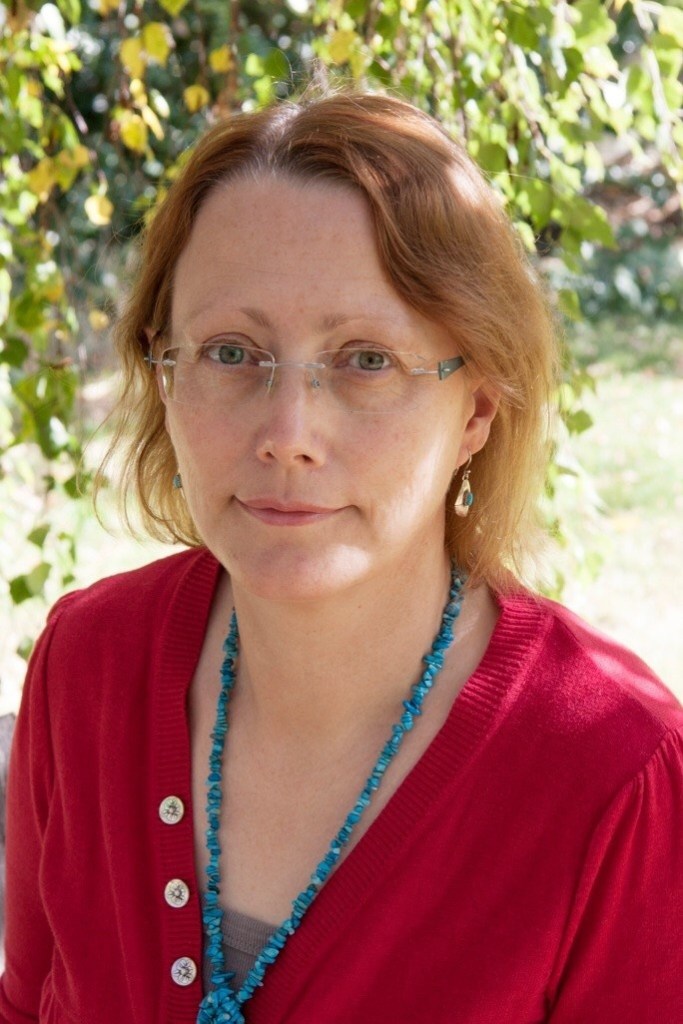
Elisabeth Gifford grew up in a vicarage in the industrial Midlands. She studied French literature and world religions at Leeds University. She has a Diploma in Creative Writing from Oxford OUDCE and an MA in Creative Writing from Royal Holloway. She is married with three children, and lives in Kingston upon Thames. A Woman Made of Snow is her fifth novel.
I’d anticipated this book for a couple of months having been told by my Squad Pod ladies that it was going to be a fantastic read. It certainly was, and even more than that, it was surprising too. Our setting is the city of Belfast, the Titanic sinking is still fresh in everyone’s minds. It’s especially fresh at Professor William Crawford’s house since his brother-in-law Arthur was on the ship. Crawford is our narrator and he introduces us to his happy, but chaotic household as the novel opens. He is a man of science, working at an institute both furthering scientific enquiry and teaching the next generation of engineers. He’s a sceptic, so when he finds out that his wife is visiting a medium and has been trying to contact her brother Arthur, he’s shocked and angry. There’s no question that this girl is a fraud, stringing his wife along with a show put on with the help of her shady family. Yet, the couple have lost their son Robert and Crawford’s grief is overwhelming. So when he hears Robert’s voice calling to him alongside an angry, vengeful Arthur who blames Crawford for his death, a small crack grows in his scepticism. What if he were to apply his scientific rigour to to this girl medium’s powers? If he could prove a link exists between this world and the next he could make a name for himself, not just in Ireland but all over the world.
I found the tone of the book quite unique and fresh. We see Crawford’s world through his eyes and this gives us a chance to really know him. I loved that he had the petty work grievances and rivalries that are familiar to us today. His pomposity and stuffiness could get him into scrapes with other people who don’t understand his Edwardian ‘Sheldon Cooper’ tendencies. At home his need for routine and things done a certain way is met with a certain amount of fond irritation. The children tend to break through the veneer of grumpiness and when a mysterious new maid appears, she seems to know him so well and has what he needs ready before he even misses it. I loved comic little scenes like the undignified moving of naked statues at the institute. When chosen for a special job before an important dinner, Crawford’s self-importance starts to show itself. His disgust when he finds out he’s just a removal man is so funny, a situation that’s made worse when family patron Aunt Adelia accuses him of manhandling a naked woman at an upstairs window. Sometimes it’s the author’s description of a character, as seen by Crawford, that raises a smile. Crawford’s colleague Stoupe is described as:
‘Damn it, there was no escape, and no creature on earth moves so quickly as an irritating man. He danced over the tiles towards me, grinning, all arms and sweat, dressed preposterously in a baggy velvet suit, pursing his lips like a kissing pig. He gave a courtly bow before standing far too near, smelling of lavender, whisky and damp, short tufts of blonde hair.’
There are other sections of the book where his privileged position as a white, middle-class man of some scientific standing, gives him so much power he starts to abuse it. One section that I found really disturbing was his insistence that the medium, Miss Goligher, prove her gift is genuine by submitting to different tests and examinations. He forces Rose, their maid, to cavity search the unfortunate girl in an enormous abuse of power. There is also the burning of his son Robert’s comfort blanket which felt particularly cruel. The seance scenes are intense and confusing. At one point attendees are tied up and blindfolded as per Crawford’s instructions, but he still finds it difficult to understand what exactly is going on. In America, a meeting with Arthur Conan Doyle and Harry Houdini show the circles he’s starting to travel in. They add authenticity to the period and subject matter, because even though William Crawford’s experiences were documented historically, the book fictionalises them. Similarly both Conan Doyle and Houdini were fascinated with phenomena like mesmerism and mediumship. As an aside, Conan Doyle was famously taken in by two small children who claim to have photographed fairies in their garden, so his eagerness to see proof of mediumship and his note of caution feel consistent with his known experiences. What I loved more than anything was the author’s ability to surprise, because as we neared the end I had no idea how the book and Crawford’s investigations would conclude. The theme of dishonesty is there right from the start, in Arthur’s reasons for being on Titanic, to the hidden note from their old maid who left in a hurry, and Elizabeth’s absence at weekly church meetings. By the end I felt triple bluffed, but couldn’t help smiling at how clever the author had been. As many of our characters find out, when it comes to being dishonest, the person we deceive most often is ourselves.
Published on 7th October 2021 by Duckworth Books
Meet The Author
A.J. West grew up in Buckinghamshire, before studying English Literature in Preston. He worked as an award-winning network television and radio news presenter and reporter before appearing on the legendary reality television programme Big Brother, where he became a household name, though the specific household is yet to be identified. He stumbled upon the troubling case of William Jackson Crawford and his paranormal investigations while working for the BBC in Northern Ireland. He has been spellbound ever since.
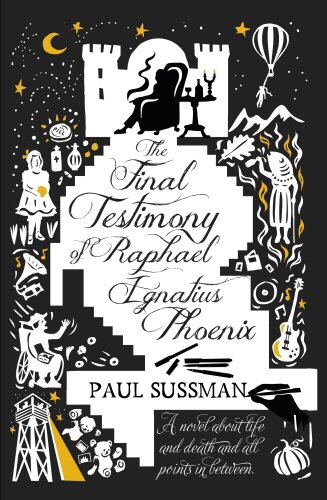
Something very strange happened while I was reading Paul Sussman’s book. I was up at night feeling unwell and made it half way without even taking a break. I had never read any of his books so as far as I knew this could have been a debut novel or one of hundreds. I launch straight into books without reading introductions, forewords or acknowledgements because I don’t like to be swayed by them. I don’t want someone else to tell me how to read a book, or in what context; I like to make up my own mind and read them later. I must admit on this occasion I was drawn in by the cover, but beyond that and the back cover blurb I knew nothing.
I realised half way through that I was reading with a smile on my face, despite feeling physically grotty! It made me smile because of the dark subject matter, the humour and sheer ingenuity of Raphael. I put it to one side and thought ‘I really wish my husband Jez had been around so I could read this to him’. He died 7 years before I found this novel and prior to his death he couldn’t read himself. He couldn’t hold a book and couldn’t see to read for himself. He could get listening books but there were certain, funny, books that we liked to share so we could fall about laughing together. They would usually be ingenious, darkly comic and just a little bit bad – rather like this. This was definitely one of those books. I then turned to the foreword and noticed it was written by Paul Sussman’s wife Alicky. I was so sad to read that she had been through the same loss I had, but amazed by the parallel. I contacted her and she was lovely, sharing about her loss and listening to mine.
The character of Raphael Phoenix is irresistible. A cantankerous old pensioner, living alone in a castle, he decides that 100 years of living is enough. He has a plan and he also has a pill. He has had the pill his whole life since his birthday party with his childhood friend Emily. Emily’s father is a chemist and in his poison cupboard, among the ribbed glass bottles, is an innocuous white pill with a simple nick in one side. It has very particular ingredients that ensure an almost instant and painless death and it is the only thing he wants for his birthday so the pair replace the pill with mint of the very same size, with a nick from the edge to match. Raphael keeps the pill with him through his incredible life either in his pocket, in a gold ring or in more difficult circumstances, sellotaped under his armpit. He trusts his pill and knows that it will deliver the death he wants as he sits in his observatory, with an expensive glass of red wine (over £30 a bottle) watching the millennium fireworks. However, before then he has a story to tell us, several stories in fact, which take us through some of the most important periods of the 20th Century and he has a very peculiar way of splitting these stories into sections. Raphael has had some very singular life experiences, and has a talent for getting into scrapes and challenges. Even more surprising are his ways of getting out of them.
I had no idea what to expect and so I was surprised and charmed by this magical piece of work. It manages to be both, earthy and funny, but also incredibly poignant. The only two things he can depend on through his life are the pill and his friend Emily. Emily isn’t always by his side, but just manages to be there at the right times and seems to set his various destinies in motion. Raphael works backwards with his tales until the reader is desperate to know how all of these incredible twists and turns are set in motion and also whether his trusty pill will work so he gets the end he has been working so hard towards. I would read this if you enjoy dark humour and tall tales and like your narrators to be, ever so slightly, morally ambiguous. It is darkly enchanting and I fell in love with it.
I was so blown away by Fein’s beautiful novel People Like Us earlier this year, that I immediately jumped at the chance to read her new novel early. I was ready to be immersed in her incredible characters, historical background and unique perspective. At first glance this novel seemed different to her last novel. Set in England in the 1920s we meet a pair of sisters, Eleanor and Rose. Their parents died young, and as a result of supporting each other from then on, they have been inseparable. The book opens as Eleanor and her daughter Mabel set off on their pony and cart to meet Rose at the railway station. She is returning from a period of time in Paris, to live with Eleanor and her husband Edward. However, before Rose arrives something very strange happens to Mabel, as she sits quietly on the grass outside the station. One of the train guards notices first and alerts Eleanor, who rushes over to sit by her daughter. Mabel is making repetitive jerky movements, her eyes have rolled back and she is oblivious to Eleanor’s attempts to rouse her. Once it’s passed, Mabel seems exhausted and she travels back to the house, wrapped in a blanket and looking very sleepy. Eleanor’s concern is twofold: firstly, will Mabel be ok? Secondly, how will husband Edward respond if it happens again, considering he’s one of the leading lights of the eugenicist movement?
Eugenics was a movement that emerged in the aftermath of Charles Darwin’s Origin of the Species. The idea was to improve the human species by actively encouraging breeding between people with certain desirable traits. Of course that also meant actively ‘breeding out’ invisible disabilities like epilepsy, as well as people thought to be the wrong colour, of low intelligence or mentally unwell. Even criminal tendencies and poverty were thought to be undesirable traits that could be ‘bred out’ of society. In the early 20th Century, eugenics was a legitimate area of scientific enquiry here in the U.K. but it was even more popular in the USA where it made its way into marriage legislation in Connecticut as early as 1896. It became illegal for those who were ‘feeble-minded’ or epileptic to marry. The Eugenics Record Office was then set up to track families and their genetic traits, concluding that those deemed unfit were a victim of negative genes not racism, economics or other social issues. This is the type of study that Eleanor’s husband Edward is undertaking. As a psychology professor he’s using eugenics to shape education policy. He’s studying children from poorer families to test their intelligence against those from middle-class families. He’s expecting the theory to hold and the poorer children to be genetically predisposed to be less intelligent. This will be the basis for streaming children into different educational programs and is the basis for our real life grammar school system; the top 25% of children are determined by the 11 plus exam and streamed into grammar school education, something that still happens in my home county of Lincolnshire. Yet eugenics took a very dark turn in America where there were thousands of forced sterilisations in mental institutions and for the Native American population right up till the 1970’s. So contrary to most people’s understanding, Germany were not the only proponents of eugenics theory, but their use of the theory to murder six million Jewish people, as well as members of the Roma community and disabled people, is the most horrific act of genocide the world has ever seen.
Edward isn’t just dabbling with eugenics. He’s a true believer. Eleanor changes considerably throughout the novel. At first she sees Edward as a saviour, looking after her and her sister Rose. We first see tension in the novel when Rose returns from Paris and announces she is in love with an artist. It feels as if Edward takes a more fatherly role, or saw his role as a old-fashioned protector of the sisters, especially since they have no parents. Eleanor agrees with her husband that Rose could make a far better match, someone with more money and prospects would be the ideal. As Edward denies Rose’s request to see Max or perhaps bring him to dinner, Eleanor is torn between them but trusts her husband’s judgement for now. She even allows him the final decision over Mabel’s care. These were the most difficult sections of the novel for me. They have to be there so that we understand the reality of epilepsy in the early 20th Century, but the treatments feel brutal and my heart broke for this little girl who is having all the spirit drained out of her. There’s some very impressive research behind this part of the story, not just into treatments, but into the theories and the superstition surrounding the illness. In my head I was screaming at Eleanor to follow her instincts and intervene, although even if she had, would she be listened to? I found the pompous and arrogant attitude of the doctors in the novel, sadly true to life. Neurology is a discipline I’m very used to and to some extent there is still a difference in the way some neurologists treat men and women. In fact, apart from Max, all the men in the novel are caught up in their own ego, and seem to want public credit for everything they’ve done, along with deference and respect from women and those lower than them on the social scale. They have full belief in their skills and methods, and will not be questioned on their decisions.
I wanted Eleanor to stand up and fight for her daughter, with both the institution and Edward. I was shocked at the lengths he was willing to go to, in order to prove his theories right. There needed to be a shift in his relationship with Eleanor where she starts to see him more as an equal, a fallible human being rather than a saviour. Only then could she decide whether she was willing to work on their relationship, where it felt to me he needed to be a husband rather than a father-figure. I felt so tense as we moved towards the ending, and I found it satisfying for these characters, but there was still that concern inside me, about how eugenics developed in horrifying ways. I knew I would be thinking about the novel for some time afterwards. I wondered what would Edward feel about eugenics a few years later with Nazism on the rise and Hitler’s dream of creating a master race in its first stages. I’d also thought of Max, Rose’s artist, and whether he stayed in England to be with Rose and missed out on the fate of many other Parisian Jews, who wrongly expected to be safe in France. As a person with a disability, the eugenics movement both terrifies and angers me. The thought of the suffering endured by people with disabilities, at the hands of scientists, fills me with rage. Even before WW2 the Nazi Party we’re starting their crusade for a master race. On July 14, 1933, the Germany passed the “Law for the Prevention of Progeny with Hereditary Diseases.” The law called for the sterilisation of all people with diseases considered hereditary, including mental illness, learning disabilities, physical deformity, epilepsy, blindness, deafness, and severe alcoholism.
When the law passed the Third Reich also stepped up its propaganda against the disabled, regularly labeling them “life unworthy of life” or “useless eaters” and highlighting their burden upon society. Many people in the disabled community feel there is a similarity to 21st Century rhetoric around benefit claimants and fraud, framing disabled people as dependent on the state and drains on resources. I must admit that it drifted into my mind as I was reading. There is a claim that the withdrawal of benefits and support from the disabled community since 2006, has led to a genocide of disabled people. The figure often quoted is 120,000 additional deaths caused by austerity. Even before the the Final Solution, the Nazis were using the term ‘’euthanasia” for the systematic killing of the institutionalized mentally and physically disabled, even children. Using the term euthanasia made it sound as if death was a kindness for those who were really suffering or terminally ill, but this was not the case. The secret operation, code-named T4, in reference to the street address (Tiergartenstrasse 4) of the program’s coordinating office in Berlin, followed systematic sterilisation of groups in society they wanted to reduce or eradicate. I studied eugenics as part of my dissertation on disability in fiction in 2004 and it is an insidious theory that still hasn’t fully lost it’s influence on the world.
This book stirred up so many thoughts and feelings for me as a disabled reader. Knowing you are one of those people who would have been eradicated is unsettling and leaves me feeling very sensitive to the language used by governments and their attitude towards the disabled community. If people with disabilities are veterans or Paralympians they are acceptable, but otherwise their existence is problematic and I often wonder what it would take for the tide to turn and history to repeat itself. So, I appreciated the depth of the author’s research and the care she took in telling Mabel’s story. The First World War veterans struggling to adjust and live back in society, were a really interesting thread too. Edward is supporting one of his men financially, for reasons that extend all the way back to the battlefield. I enjoyed the adjustment that has to take place in Eleanor and Edward’s marriage once all the secrets he’s been keeping are out in the open. If they stay together they will have to start from a basis of honesty with each other. If Edward is not a war hero or an academic with integrity, who is he? Can Eleanor love the real Edward, especially now that she’s grown up and become a stronger, more independent woman? I loved the way Louise Fein takes this volatile part of history and creates a story that is both personal to these characters, but global in it’s reach and influence. It affected me profoundly, not just because of the disability issues, but because of Mabel who I fell completely in love with. I kept reading because I wanted the best resolution for her, safe and looked after with her family around her.
Meet The Author.
Louise Fein was born and brought up in London. She harboured a secret love of writing from a young age, preferring to live in her imagination than the real world. After a law degree, Louise worked in Hong Kong and Australia, travelling for a while through Asia and North America before settling back to a working life in London. She finally gave in to the urge to write, taking an MA in creative writing, and embarking on her first novel, Daughter of the Reich (named People Like Us in the UK and Commonwealth edition). The novel was inspired by the experience of her father’s family, who escaped from the Nazis and arrived in England as refugees in the 1930’s. Daughter of the Reich/People Like Us is being translated into 11 foreign languages, has been shortlisted for the 2021 RNA Historical Novel of the year Award, and has been long listed for the Not The Booker Prize.
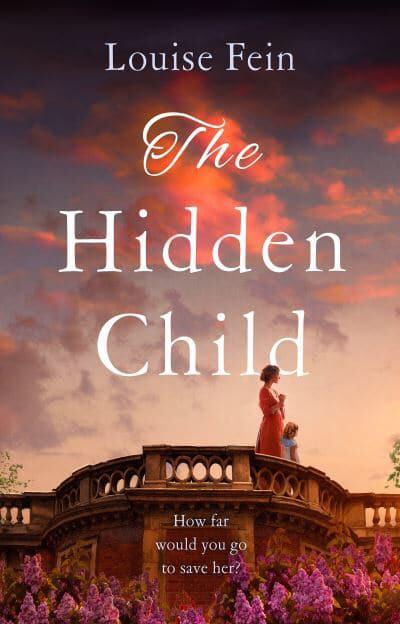
Louise’s second novel, The Hidden Child, will be published in the Autumn of 2021. Louise lives in the beautiful English countryside with her husband, three children, two cats, small dog and the local wildlife who like to make an occasional appearance in the house. Louise is currently working on her third novel.
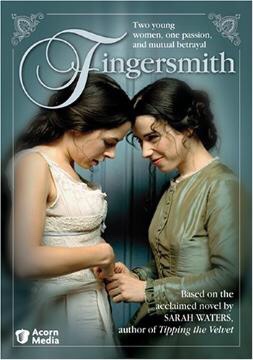
Sarah Waters is one of my favourite writers. Anything she writes is a pre-order in my house, so there may be some bias in my next statement. For me, she is one of the best writers of the 20th Century with, hopefully, more to come. More recently, she has dabbled into the early 20th Century and even WW2 for her novels The Night Watch and The Little Stranger, but she started back in the 19th Century and this is my favourite from that series. Amazon calls her genre Lesbian Victoriana, which made me giggle a little, but I think Waters is doing more than that; she is chronicling women’s experience. She includes lesbian encounters and women falling in love with women, but in this book that’s an aside rather than the main focus of the plot. I think to term these novels as lesbian novels is reductive and has a sense of prurience. I remember the fuss and excitement when Tipping the Velvet was serialised at the BBC, and male journalists practically salivating over Rachel Stirling and Keeley Hawes. I think they’re intended to be read as women’s experiences of living in Victorian England, with the women’s sexual relationships as part of an unspoken subculture only just emerging into the open. She is using the device of ‘writing back’ to the historical period and bringing a group into the limelight who were hidden at the time and never portrayed in fiction. It’s about seeing the Victorian era and women’s lives in totally new eyes, and accepting that the literary canon only shows us a small part of a vibrant and varied world. As with history being written by the victor, literature of the early to mid 19th Century tends to be written by white, straight, middle-class males. Waters is trying to redress the balance and give us a minority viewpoint which I love.
Orphan, Sue Trinder, lives in a family of petty thieves and is trained to become a ‘Fingersmith’. Based in London, the den is run by a motherly woman who has a hard and ruthless side. All the thieves congregate and bring their wares to ready them for sale, while a baby farm is run on the side. It is here that a man called ‘Gentleman’ recruits Sue for a scam to defraud a wealthy heiress. We also meet a young woman called Maud Lily, she’s an orphan too, but with a home in a gloomy mansion as the ward of an odd Uncle. She has a very comfortable life, helping him with his work as some sort of secretary, but his subject matter might raise an eyebrow or two. He is an avid collector of Victorian pornography. This makes Maud very uncomfortable, but it seems an unspoken agreement that her help is in return for his protection. This strange upbringing makes Maud very sheltered and naïve in one respect, but also strangely knowing in others. Gentleman has devised a long con that starts when Sue is placed within the mansion as Maud’s lady’s maid. She will then encounter the Gentleman who will try to court Maud. They hope, that with Sue’s encouragement, Lily will fall for his charms. His long term aim is to marry her, because according to 19th Century marriage law, all of her fortune will then become his property. Then it’s a simple case of claiming she’s mad, and as long as a doctor agrees, a man could sign his wife into an asylum leaving him free to use her money. If she helps, Sue will be entitled to some of the ‘shine’.
As always with Sarah Waters books, the depth of research is obvious and this feels so real. The sense of place is so strong, in the filthy detail of the London terrace streets and the silent unease in the mansion. These two places feel entirely opposite. Where Sue grew up there’s constant noise, people running in and out, babies wailing upstairs and other people’s belongings being appraised and sold on. There’s squalor and poverty, so for her, the change to being a lady’s maid is a massive leap. By contrast the mansion is quiet with the sound of ticking clocks, days without seeing another soul. There’s a feeling of being imprisoned somehow, it’s stifling and the scene where she works in the library with her Uncle feel so uncomfortable. The tension as the con slowly starts to work is terrible. Then, in what is probably my favourite twist in fiction, the pace picks up and the reader is left reeling as everything changes.
In the second section of the book we go back in time a little to Maud’s story, some of this overlaps with the first part and some of it is her history and how she ended up closed away with only a perverted Uncle for company. We follow Sue’s journey as Maud’s lady’s maid and see how a friendship develops between the two young women. Maud is living like a prisoner and has experienced years of coercive control leaving her timid and unsure. The con would only work if Sue stays focused and doesn’t get involved with her new mistress, but their friendship is deepening and Sue is starting to have doubts about the plan. There is an attraction between the two women that was unexpected, but is there anyway to back out of the plan or is it too late? There is something hypnotic about this book. It is a long read, but unlike the Victorian novels it emulates, it didn’t feel long-winded or become boring. I was engaged at every point of the story, absolutely fascinated with the twists and turns of the plot and never quite sure who is telling the truth. I was desperate to find out who has really been conned in the end. This is one book where BBC adaptation is very good too, with great casting and a definite feel of the book.
However, the novel is perfection. It’s a historical thriller, told through unexpected heroines and delving into the more deviant side of Victorian life: pornography, pick-pocketing, theft, fraud, confidence tricksters, and baby selling. Not to mention the lesbian aspects of the storyline that would have been unthinkable in fiction of the time. In fact I clearly remember a tutor at university telling me that all the focus on deviant sexual behaviour was focused on gay men and prostitution – intimating that the thought of two women having a relationship was so taboo that it didn’t even exist in most Victorian minds. I loved that we were seeing a totally different section of Victorian society and it had a voice. There is a feel of Dickens in the poverty and living conditions, and of course he had his own wife detained in an asylum. However, there’s none of that Victorian moralising that comes with fiction of the period. This is the underclass speaking for itself and the character of Maud’s Uncle hits home the idea that even the middle classes were not necessarily as respectable and God-fearing as they seemed. I would recommend this to anyone who enjoys Victorian fiction whether in the form of historical novels or of the period. It’s also a great thriller with enough double-crossing and revelations to keep any reader satisfied. This really is Sarah Waters at the height of her writing powers and should be on your TBR list immediately.
Meet The Author.
Sarah Waters OBE, was born in Wales. She is the author of six novels, Tipping the Velvet, Affinity, Fingersmith, The Night Watch and The Little Stranger, which have been adapted for stage, television and feature film in the UK and US. Her novels have been shortlisted for the Man Booker Prize and the Women’s Prize for Fiction and she has won the Betty Trask Award; the Somerset Maugham Award; The Sunday Times Young Writer of the Year Award; the South Bank Show Award for Literature and the CWA Historical Dagger. Sarah has been named Author of the Year four times: by the British Book Awards, the Booksellers’ Association, Waterstones Booksellers; Stonewall’s Writer of the Decade in 2015; Diva Magazine Author of the Year Award and The Sunday Times Award for Literary Excellence in 2017, which is given in recognition of a writer’s entire body of work. Sarah was awarded an OBE in 2019 for services to literature in the Queen’s Birthday Honours. Sarah Waters lives in London.
This is the first novel I’ve ever read by Lesley Glaister and when I finished, I couldn’t believe I’d never heard of her before. Set in one of my favourite historical periods, during and after WW1, this novel was evocative and moving. The author clearly has a deep understanding of the period and the rapidly shifting society her characters are living in. Her characters are fully rounded, with depths to get lost in and the effects of trauma to unravel and understand. This is an exploration of the effects of war and loss on our two main characters, Vincent and Clementine. The scars are both physical and mental, halting their progress as they try to move forward and making it very difficult to be who they truly are. When they, quite literally, bump into each other a strange relationship emerges that will have a haunting resolution. I could see these two people in my mind’s eye and I found myself thinking about them, even when the book was closed.
Clementine was a hands on during the war, volunteering as a Red Cross nurse close to the front. Her boyfriend Dennis had proposed and he didn’t want her to interrupt their lives. He didn’t fight, being a doctor he could claim to be needed by the patients in his area, so he wanted their lives together to start. Clem wanted to be part of the war effort, so along with her friend Gwen she ‘ran away’ (Dennis’s words) and became part of a medical unit. She wasn’t just taking temperatures either, her stomach is strong enough to be in the operating tent, helping to hold patients down during amputations and disposing of mangled limbs. The author’s depiction of working in the medical tents is vivid and gritty. I was able to imagine the struggle to keep wounds clean in the squalor and sick men comfortable on camp beds crawling with lice. The description of Clem’s hair stayed with me, tied up out of the way, but greasy and alive with lice. I could feel her desperate need to wash it, and the shock she feels when the doctor, Powell, finds hot water and washes it for her. I found that image so romantic, because he’d realised what she most wanted at that moment and provided it for her. He washes her hair with such kindness and a gentle touch, I almost fell in love with him myself. They have a deep and immediate connection, so Clem knows she must write to Dennis and explain what has happened.
However, before Clem can write two things happen. She realises she is pregnant and tragedy strikes, when the unit is bombed both Clem and Powell are injured in the blast. Clem has a picture in her brain, like a flashback, of a stove pipe from the boiler embedded in Powell’s back. She knows in that first second that she has lost him. Only days later she miscarries alone in the toilets, and this scene was so real and so emotive I cried. She’s lost the love of her life and now the last part of him has gone too. Numb and shocked she returns home and seems to sleepwalk into the same situation she left behind. In the next section of the book she is married to Dennis, who doesn’t know about her wartime experiences. They live above his doctor’s surgery and they have a child together, a little boy, but she grieves Powell and their little girl. I felt she was living behind a mask, being who she thinks she has to be rather than who she is. The ambivalence she feels towards her son is well represented, because she still grieves for that first child. There are physical signs, written on the body, that she has Edgar. The silvery stretch-marks mark the time she was pregnant, yet there are no signs of her daughter. It’s like she never existed.
Vincent meets Clem when she’s visiting her sister-in-law Harri. Feeling stifled, Clem goes out for some air and keeps walking, until she’s miles away and not sure of how to get back. She takes a quick breather at a bridge and steps into the road, just as a biker comes along. As he swerves to miss the crazy lady stood in the middle of the road, he loses control of his bike and crashes. Clem strangely sees something of Powell in him at that first glimpse. Actually, Vincent is a product of the same terrible war that left Clem bereft. For Vincent it left him wounded physically and emotionally. He has a facial disfigurement that means he wears a mask, literally and figuratively. Vincent has been left in a very reduced position by the war. His marriage has failed and the job he was assured would still be his when he returned from the front, has been taken away from him. How can a man who looks like him, be the face of an insurance company? He has nowhere to live, so he’s latched onto a woman called Doll, who runs a local pub. She’s easy with her favours, and Vincent takes advantage of this to lodge upstairs. He can’t cope with how much he’s lost and wants to replace it, with visions of marriage to Doll and being the welcoming host from behind the bar. He doesn’t love Doll, but they get on and there are worse places to be. Similarly, he notices how well dressed Clem is and thinks she might be manipulated into paying for his bike’s repairs. In the end, she visits him at the hospital and offers to pay, leaving her details and the possibility of a connection between them. They are both suffering the effects of trauma and might sense that shared perspective on the world. If Vincent is willing to settle with Doll, might this be another opportunity for him? What exactly can their relationship be?
I was worried for Clem, who is vulnerable. However, I was worried for Vincent too, he has lost so much and is vulnerable in his own way. He’s not one of the ‘glorious fallen’ heroes, and unlike Clem’s husband doesn’t have any status here at home either. He’s a reminder of exactly how ugly and terrible war can be, and nobody wants to remember. Dennis certainly doesn’t want to hear his wife’s tales of war. The author pitches him perfectly, a man who chose not to fight, but likes to remind everybody that he was fighting to keep the families of those soldiers fit and healthy. He represents the old order of things, with class barriers and men as head of the home. His need for control extends to his sister as well as his wife; there’s one right and respectable way to be in the world. When her friend Gwen visits for tea, he makes it quite clear that she’s not the right company. Not only did she get Clem to run away to war, but now she’s clearly having a lesbian relationship. His way of dealing with the world is on the wane though and he felt to me like a dinosaur that doesn’t know it’s extinct. He hasn’t been through the seismic change the others have and can’t identify with them. War has changed a whole generation of people around the world. I felt for Clem, who is part of this changed generation. She knows the future is different, but she’s chained herself to the past. Is it too late?
This was so beautifully written, with well-chosen words that create rhythm and take the reader on a journey through their senses. This explosion of sights, sounds and sensations bring an immediacy to the prose. This is not some long winded description of what a battlefield was like, it is the sounds and smells as they happen. I felt like I was there:
‘Where was the fear? She searched herself as she listened: sometimes the rat-tat-tat of gunfire, rapid and snippy like the keys of two vast, duelling typewriters battering out threats to each other on a paper sky; crumpings like oil drums being crushed by massive fists; a whistling followed by the soft whoomph of a missile striking, then virtual silence, then the battering of the typewriters again’.
The author truly does show us what’s happening and the contrast of passages like the one above and the quiet, clock-ticking, stillness of Clem’s home is so effective. No wonder Clem takes to walks; she needs to breathe. Every character is flawed, but no one is irredeemable. Through Clem she shows how women were restricted by society and I love that Gwen and her girlfriend had chosen a different path. Most poignantly, she shows how war interrupts lives and takes away people’s livelihoods, opportunities and in Clem’s case, even her creativity. I think this is one of the best books I’ve read on the aftermath of trauma. The author has so much compassion and empathy for her characters and because of that, so does the reader. I didn’t want this book to end and that’s the biggest compliment a reader can give.
Meet The Author.
Lesley Glaister is a fiction writer, poet, playwright and teacher of writing. She has published fourteen adult novels, the first of a YA trilogy and numerous short stories. She received both a Somerset Maugham and a Betty Trask award for Honour Thy Father (1990), and has won or been listed for several literary prizes for her other work. She has three adult sons and lives in Edinburgh (with frequent sojourns to Orkney) with husband Andrew Greig. She teaches creative writing at the University of St Andrews and is a Fellow of the Royal Society of Literature.
She misses him. Fraser. Here in the shrunken hours of the night. She misses him still so much. Who is there to share her thoughts with? They wither inside her. She cannot even write them to him as she used to, can’t take a cup of tea back to bed and sit with a candle in the blackoutand think of him, trying to imagine where he is, what he sees. She cannot imagine where he is, because he is nowhere, he is nothing. All of the many tiny things that he was – the way he turned his head towards her, the slow breaking of his smile, the laughter in him, the roll of his voice; the way that he eased her, eased her – these are all gone. These are all dead.
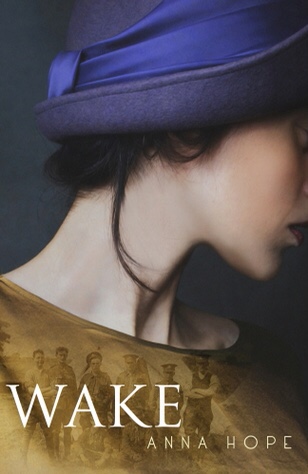
Last year I couldn’t move on Twitter without seeing that someone was reviewing and reading Anna Hope’s Expectation. I’ve had such a ridiculous TBR that my copy is still languishing on the pile, but I wasn’t surprised to see the book become a runaway hit. I’d already fallen in love with her writing in 2014, when I read her novel covering the aftermath of WW1. Wake is a brilliant piece of historical fiction based around the real historical event, the creation of the Tomb of the Unknown Soldier. As he is taken from the fields of France, on his journey towards London, three women are linked by a mystery that is starting to unravel. As the Unknown Soldier is meant to provide closure to the war for the British people, these three women can’t look into the future while they are still inextricably linked to the past. Hetty’s wounded brother won’t speak, Evelyn grieves for her lost lover and Ada waits for confirmation of her son’s death, every day that she doesn’t get a telegram is another day he feels alive. We follow these three women over five days, while the selection of the Unknown Soldier is made and his journey towards Westminster Abbey begins. Slowly, a tragic tale of war’s aftermath emerges and links them all.
Hetty lives with her mother still, and her mute, shell-shocked brother. He can no longer work so Hetty has taken a job as a dance instructor at the Palais. It is there she meets an educated, wealthy, man who she quickly falls for. Every indication she has, makes her think he feels the same. However, there’s something she can’t put her finger on, a distance or sense of being unreachable that he has. Where does he go in his mind, when he seems distracted? Evelyn comes from a wealthier background, but feels equally lost. She’s working at the Pensions Exchange, where men returning from the front pass through, claiming benefit for their physical or mental wounds. Evelyn’s own loss is still raw and she feels detached from her parents who can’t understand her experience. She starts to become closer to her brother instead, because he is of her generation, also altered forever by his experience at the front. Ada is haunted by visions of the son she’s lost. She still sees him on the street and for a few moments she’s convinced he is alive. She also feels like she’s struggling alone, because her husband is grieving in his own way, becoming increasingly withdrawn. A door to door salesman attracts her attention and it’s so clear he has suffered from his war experiences and has struggled to find work. He exhibits some worrying symptoms but Ada recognises shell-shock. During one of his disturbed episodes he says the name of Ada’s son. Can she find out what happened to him? The tension really builds as the public spectacle comes closer, the ceremonial internment of this unknown young man can be a catalyst, allowing people to grieve for those whose bodies are lost forever on the fields of France or Belgium.
This is a very interesting part of history for me, because of the tumultuous social change that took place, especially for women. This period is where we saw huge adjustments and change within the aristocratic class. Some families had lost two generations, father and son or the ‘heir and spare’. This led to an estate crippled by death duties and having to be sold, or the new heir forced into reducing costs and servants, or searching for a more advantageous match – marrying American heiresses was sometimes the answer. These changes often brought less formality to the family. Women had worked throughout the war, in jobs usually done by men. There was tension on their return to the workforce, some women didn’t want to return to the home and men who couldn’t find work were reduced to begging or selling door to door. Crime was on the up and families were coming apart at the seams. There was a sense of the old order being overturned and old values like manners, morality and knowing your place being lost.
Finally I loved the significance of the title ‘Wake’ and it’s several meanings: to rouse from sleep; a ritual for the dead; the consequence or aftermath. All of these meanings are apt to the women in the book and their circumstances. This is the moment that the 20th Century finally dawned on people, and society woke from the Victorian era. Victoria’s reign had been so long that some people had never known another monarch, now there would be change from that Victorian order. The ritual refers to the Unknown Soldier, a representative of every man lost, but also representative of that death of the old order, and it’s sensibilities. The consequences of WWI were seismic, we had just fought the first mechanised war and it was hell on earth. Society did not know how to cope with the wounded who returned, whether the ranks of the physically disabled using wooden legs or metal masks to cover burns, or the shell-shocked, constantly trembling and lashing out when feeling threatened. Many ended up in institutions, because they were constant reminders of something younger people wanted to forget. The following few generations would be changed, with the war hanging over them like a giant monolith casting a long shadow. Why couldn’t people be allowed to forget? As the Unknown Soldier passes by someone comments ‘is this supposed to make it all okay?’ This is such a moving read and captures it’s era so perfectly it felt like being there, which isn’t an easy thing to achieve. I felt for each woman, but Evelyn particularly moved me. This is an exceptional piece of writing and a great introduction to this author’s work.
‘I’ll remember you he thinks, and as the gun carriage with it’s coffin and it’s dented helmet passes him by, he closes his eyes. Nothing will bring them back. Not the words of comfortable men. Not the words of politicians. Or the platitudes of paid poets.’
Meet The Author.
ANNA HOPE studied at Oxford University and RADA. She is the internationally prizewinning and bestselling author of Wake and The Ballroom. Her contemporary fiction debut, Expectation, explores themes of love, lust, motherhood, and feminism, while asking the greater question of what defines a generation. She lives in Sussex with her husband and young daughter.
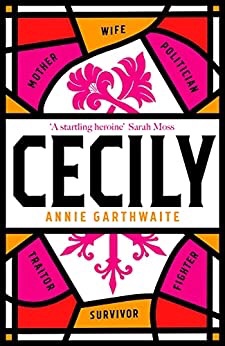
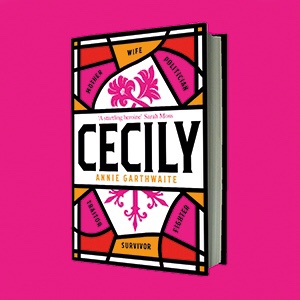
I hadn’t heard of Cecily Neville and wasn’t exactly sure where she was within the characters I already knew in the period just before the cousin’s wars better known as The Wars of the Roses. I was familiar with women like Jacquetta Rivers, Elizabeth Woodville and Warwick, The Kingmaker, from my reading of Philippa Gregory. I was also aware of Anne Neville and Isobel Neville, Warwick’s daughters, who married the Duke of Clarence and Duke of York, later to become Richard III. I hadn’t realised that Cecily Neville was the mother to both those boys and King Edward IV. I was only a few chapters in before I realised that Cecily and I share a grandmother (well to me a great-grandmother goodness knows how many generations ago) Katherine Swynford. In fact Katherine lived around five miles from me, at both Torksey Castle and Kettlethorpe Hall in Lincolnshire. She was mistress, then wife of John of Gaunt and for a short period was Queen of England. One of her daughters, Joan, is the mother of Cecily Neville. The pair, Katherine and Joan, are buried not ten minutes from where I write this, in Lincoln Cathedral. There is something very exciting in reading about your ancestor, so it did change the experience of the book for me.
The opening scene, at the burning of Joan of Arc, is one of the most powerful I have ever read. Cecily narrates in the first person:
‘It’s no easy thing, to watch a woman burn. A young woman, who has seen only three more summers than yourself and claims the voice of God compels her actions. But there it is; the day’s work. And she must harden herself to it.’
It sets the scene for the rest of the novel perfectly, it gives us a jolt and prepares us for how brutal this period of history was. It gives us a sense of how women are treated, especially those who explicitly disdain the rules of society. Joan of Arc didn’t play by the rules. Cecily is determined to shape her own future, but though words and ideas instead of action. Court is a deadly game of chess and Cecily is always on her guard. Make no mistake this is a woman’s side of court life. Where her ideas and beliefs are put across, whether at the King’s council or on the battlefield, only men are present. We hear about battles through messengers, and the men left standing afterwards. We hear about the King meeting his council through Cecily’s husband Richard. Yet the idea starts when both of them talk last thing at night or out hunting, just the two of them so no one else can hear. Cecily campaigns through letters, befriending influential women and petitioning the Queen – although in this case she believes the Queen is truly the one in charge anyway.
Without her husband Richard though, Cecily would have no avenue to pursue her plans. This is an arranged marriage, as we see in the book the family are already marrying off their eldest daughter at the age of 10. After the ceremony, the young bride and groom go back and live with their families until the age of fourteen or fifteen when the bride and groom go to live in their marital home together. So, Cecily would have had the same rules apply to her match. Luckily it appears to have been a good match, in business and pleasure. Most importantly for Cecily, Richard regards her as an equal and listens to her in courtly and political matters. His respect for her, which seems unusual for the time, means that the men of her household and her sons listen to her as well. They value her judgement and her ability read a situation and the people involved. However, being a courtier isn’t an easy life. I won’t reveal the plot, but I will say that when you’re at the beck and call of a King, you have to hope that King is of good judgement and sound mind.
One aspect that really stood out to me, was that all the women are deeply affected by their fertility, or lack of it. Cecily and Richard have been married for eight years at the start of the book, but still haven’t had a living child. In fact by the end of the book, I couldn’t keep up with how many times she had been pregnant. There is a period in the middle of the book where she realises she’s been pregnant for the majority of the last few years. I was also surprised by the breadth of the families, with mothers still being pregnant at the same time as their elder daughters. When any woman in the book delivers a son I could feel their relief. Everything must be inherited by a son, who continues that aristocratic line. These years of wrangling over who has the strongest claim to the throne, as well as the death of his own elder brother, make sense of Henry VIII’s obsession to produce an heir. I think the author captures beautifully the pressure these women feel. Their sense of loss, even though infant mortality rates must have been quite high, runs deep. Giving birth is very much women’s work, and the blame for what they do or don’t produce sits squarely with them. It’s hard to imagine not being able to control your fertility; to decide when to start or when to stop having children.
The story flowed well, and for me could have benefitted from being slightly longer. There were large time jumps in a couple of places and I did have to keep looking people up, checking family trees and names as opposed to titles. That was me trying to make complete sense of it, to fit this piece in to the larger jigsaw I was more familiar with. This was a fascinating piece of history, bringing to life another incredible woman from this time period. She sits with Joan of Arc, and her contemporaries Jacquetta Woodville and Margaret Beaufort, as women who know how to fight a war of words. Like present day spin doctors they weave the tale they want the court and the country to see – Cecily suspects the Queen of weaving the most audacious tale of all. I was left with the sense that courtly life is a living game of chess, with human pieces. Those close to the throne could be lucky enough to remain in favour, but more likely are only two moves away from ruin. As for the ending, those with historical knowledge will be aware that Cecily’s schemes are only successful to a point and there is even more turmoil beyond the book’s final pages.
She is remembered as the mother of two Kings of England and grandmother to a Queen, but the painful truth is she outlived all of her sons. Even worse, she had to witness their treachery and betrayals of each other, including the disappearance of her eldest grandsons (and heirs to the throne) from the Tower of London, never to be found. Six years before Cecily’s death, her granddaughter Elizabeth married Henry VII finally uniting the houses of York and Lancaster. She even lived to see the birth of her great-grandson Henry VIII. Annie Garthwaite has fictionalised the life of a very powerful and intelligent woman, who has a much bigger hand in history and my own ancestry than I’d realised. Her work is well-researched, creating a book that is horrifying in places, but ultimately a compelling piece of historical fiction.
Published by Penguin, 29th July 2021
As part of the blogger group The Squad Pod, Cecily has been our book club choice for August. You can see our read-along chat at @Squadpod3 on Twitter.
Meet The Author
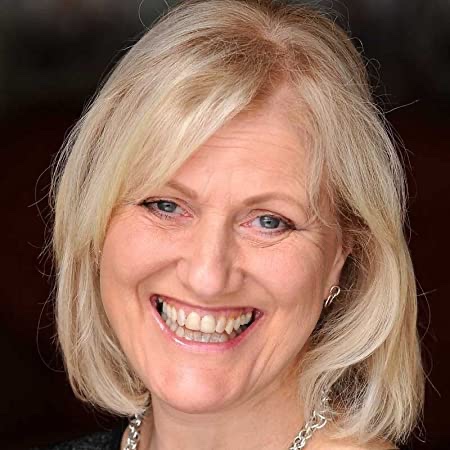
Annie Garthwaite turned to fiction after a 30-year international business career, fulfilling her lifelong ambition to write an account of Cecily Neville, matriarch of the House of York during the Wars of the Roses and mother of Edward IV and Richard III. Her obsession with Cecily and her family began in school and never left her. Setting off in the world of work, she promised herself that, at age 55, she would give up the day job and write. She did just that, completing her novel while studying for a creative writing MA at the University of Warwick. CECILY is her debut novel and, even before it’s publication, was named a ‘top pick’ by The Times and Sunday Times.