The great thing about having friends who are bloggers is that occasionally they have spare proofs lying around and are very generous in sharing them. I’m very lucky to be a member of the blogger’s group the Squad Pod Collective, they’re a great group of ladies and we all support each other so much. There are often spare, or unwanted, proofs trundling back and forth to each other through the post. However, this time I was lucky enough to receive a bundle of spares from a blogger more local to me and I’ve been sitting on them waiting for the New Year. I planned to take a lot less blog tours and read more by choice in 2022, because I’m back at university and didn’t want to become overwhelmed. Not that I’m finding it easy, especially when the siren song of blog tour organisers drifts into my inbox almost daily. I’m taking half the tours I did last year, which averages at about one a week. The bonus is that when I’m feeling frazzled with my uni reading I can read something really escapist or more gentle to offset the tension. Luckily for me, in my friend’s big box of books, was the latest crime novel featuring one of my all-time favourite fictional characters in books and television – Jane Tennison.
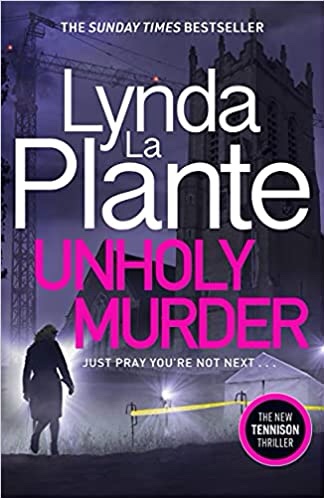
Starting with the eponymous Tennison back in 2015, Unholy Murder is the seventh novel in the Prime Suspect 1973 series. As prolific as ever, Lynda La Plante is delivering one of these novels per year and I’ve found it fascinating to watch the character we’re used to watching as a Detective Inspector, starting out in uniform and learning the ropes. This novel finds Jane as DS Tennison and embroiled in the case of a body found on a building society, in a coffin. The grounds where the developer is digging foundations used to belong to a convent that burned down a couple of decades earlier. The inhabitant of the strange metal coffin is dressed modestly, and her hands are entwined with both a crucifix and a rosary. So it would seem that the victim could be a nun. Who would kill a nun? The investigation will place Jane between developers keen to restart work and get the money rolling and a secretive Catholic diocese, desperate to sweep any evidence under the carpet. Not only is she concerned about finding the killer so many years later, but will she even be able to identify her?
I remember watching Prime Suspect as a very young teenager and I really admired Tennison.She was tough, clever and able to hold her own in a room full of men. I wanted to be a professional too, as good at my job as Tennison is. I even thought of being a police officer, but when it came to it I couldn’t meet the height restriction which was 5 feet and 5 inches back in the early 1990s. I loved her ability to read people, profile them psychologically and question them until they cracked. Of course if you asked my little brother why I used to love watching PrimeSuspect he’d say because we were both bossy, but often bossy is a term used to silence ambitious women who are only giving orders. I was interested in the gender politics of the series, the way male officers would deride and try to undermine Tennison was shocking. The old boys network was working overtime, to wrong foot her and get her removed, especially if she had been made their superior. To me she was the first feminist character I’d really noticed in a lead role in a prime time tv series and i was inspired by that. She was also sexy, not afraid of asking for what she wanted in a partner. I couldn’t remember seeing a woman who was open and unapologetic in this way, even about one night stands. It was relationships she struggled with, finding that men wanted to be more important than the job. She was constantly apologising for not working regular hours, for not being available for family events and not being the little woman at home.
The great thing about these prequel novels is that we go back even further, to when a policewoman’s uniform included a matching handbag – useful for filling with stones and hitting criminals I guess. Jane is trying to make her mark, studying for her inspector’s exam and impressing the right people. The problem is that when she tries to impress she often goes off alone, takes unnecessary risks and leaves colleagues feeling that she’s holding out on them, to keep the best information to herself. Here she takes risks by befriending the parish priest and passing on a little more information than she should. She also keeps back something she’s seen because it doesn’t fit the way the investigation is heading, she wants to check it out for herself first. This puts her in considerable danger, as do her dating choices. The story of what has transpired in the old convent is harrowing, but believable and the author explores what happens when an institution cares more about it’s reputation than the truth. This should be scandalous, but seems very realistic, as is the reaction of Jane’s superior officer who has come up against the Catholic Church before. I am a Catholic and there was one detail that confused me. The nun in the coffin is Sister Melissa, but nuns would usually take saints names. I was taught by Sister Joan, Sister Anne and Sister Stephen (which at seven years old was incredibly funny). It’s a small thing, but these things jar in an otherwise well put together tale. I truly enjoyed the plot and spending time with a character I’ve known for a very long time. I would definitely recommend all of the Tennison series, for great storylines and the fascination of watching such a successful woman taking her first steps into the police force.
Meet The Author
Lynda’s latest book, Tennison, was published on 24th September 2015 and is the prequel the highly acclaimed Prime Suspect. The story charts Jane Tennison’s entry into the police force as a 22 year old Probationary Officer at Hackney Police Station in 1973.
Lynda La Plante is published in the UK by Simon & Schuster.
Lynda La Plante is published in the US by HarperCollins Publishers.
Please visit http://www.lyndalaplante.com for further information. You can also follow Lynda on Facebook and Twitter.
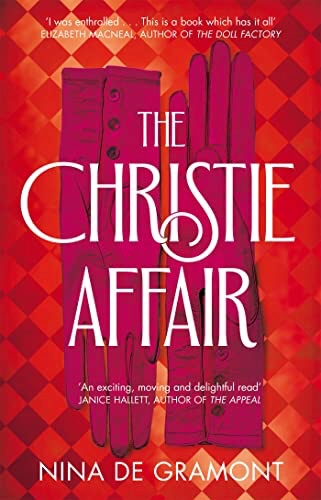
I enjoyed this fascinating novel that fictionalises the famous disappearance of Agatha Christie. On December 3rd 1926, after an argument with her husband Archie, Agatha Christie disappeared. Although there is still some mystery around her movements, it seems she crashed her car while driving down to London. Thousands of police officers and volunteers scoured the countryside near the crash site for Christie, but she was nowhere to be found. It was a huge news story with Arthur Conan Doyle becoming involved and famously hiring a spirit medium to find her whereabouts. She stayed missing for eleven days until she was found in a spa hotel in Harrogate, signed in under the surname of Archie’s lover. Contemporary theories were that this was a publicity stunt, even though Christie appeared to have been in a fugue state. She may have suffered a nervous breakdown after hearing the news that Archie was leaving her. Nina de Gramont weaves a complex tale around this incident, told through the eyes of Nan – Archie Christie’s mistress – an Irish woman whose pursuit of Archie had been so successful he decided to leave Agatha and divorce her, in order to marry Nan. This is only one part of the jigsaw that makes up the full story the author is telling, ranging back and forth and touching on various viewpoints, with the central figure never quite clear and the importance of peripheral figures more vital than I first realised.
We travel back to WW1 and it’s terrible effects on the years that follow. A time when the nation didn’t yet know that the peace they’d achieved was a mere interval of respite where recovery was barely possible. Nan is born of an Irish family, living in London, but is sent back to visit relatives in County Cork in summer since childhood. There she forms a friendship with Finnbarr, a dark Irish boy who has an affinity with animals, particularly his sheepdog Alby. Over the years their friendship grows into love and she is sure they will marry. A chance meeting on Armistice Day is a passionate interlude which leads to Nan being pregnant. Believing their marriage to be only a formality, Nan steals some money, laid aside by her Mum in case one of her daughters gets herself into trouble, and travels to Ireland and the farm. There she finds that Finn is delirious with fever from the Spanish Influenza brought back by returning soldiers. Denied by his family and with Finn thought to be at death’s door, she ends up in a Catholic Home for unmarried mothers. This place is really the genus of the story, because this isn’t Agatha’s tale, despite her being famous and the one who disappeared.
Meanwhile years later, as the Christie’s marriage implodes and Agatha disappears, we’re taken to a hotel in Yorkshire where Nan goes to stay and take a break before the transition of living with Archie. It’s a spa hotel with healing springs, two sets of newly wed couples and an Inspector Chiltern who has been sent to search for Mrs Christie. From these two time frames, the author cleverly weaves her story with the past gradually catching up with the present. I loved the historical detail of the story as the author uses everything from the decor to the women’s clothes to evoke the 1920s setting. There’s a sumptuousness to these descriptions that contrasts strongly with the earlier poverty, with the Magdalene Laundry section being particularly harrowing. I loved how playful the structure was, not quite revealing it’s genre. Is it a love story, an autobiography, or a detective novel? I also loved going back and forth in time, slowly picking up new threads of the story. I had no idea how they would all come together, but loved the way they did.
Meet The Author
Nina de Gramont’s latest novel, The Christie Affair, will be available In February, 2022. She is the author of a collection of short stories, Of Cats and Men, as well as the novels Gossip of the Starlings and The Last September. She has written several YA novels (Every Little Thing in the World, Meet Me at the River, The Boy I Love, and — under the pen name Marina Gessner — The Distance From Me to You). Nina teaches creative writing at the University of North Carolina Wilmington. She lives in coastal North Carolina with her daughter and her husband, the writer David Gessner.
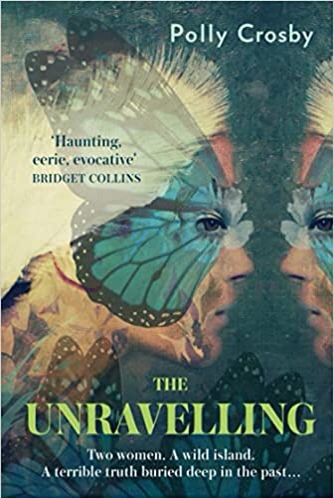
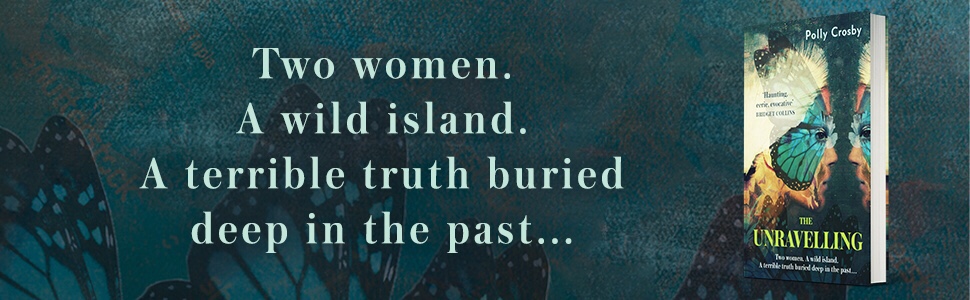
When Tartelin Brown accepts a job with the reclusive Marianne Stourbridge, she finds herself on a wild island with a mysterious history. Tartelin is tasked with hunting butterflies for Marianne’s research. But she quickly uncovers something far more intriguing than the curious creatures that inhabit the landscape. Because the island and Marianne share a remarkable history, and what happened all those years ago has left its scars, and some terrible secrets. As Tartelin pieces together Marianne’s connection to the island, she must confront her own reasons for being there. Can the two women finally face up to the painful memories that bind them so tightly to the past?
I found the last chapter of this new novel incredibly moving and I was smiling through tears as I closed the book.
Polly Crosby you ruined me for other books, for at least a couple of days!
Marianne’s memories of the island take us back to the years between WW1 and WW2, when she lived in the same family home with her mother and father. The Stourbridges were the guardians of the island, through her mother’s side of the family. However, it was Marianne’s father who had taken control of the island and it’s resources. Her family were rich, relying on herrings and pearls to keep their fortunes buoyant and providing work for the islanders. Under Mr Stourbridge’s control the businesses were losing money so he needed to diversify, and settled on silk-making as a way out of difficulty. Mulberry trees and silkworms arrived on the island and Marianne was researching to find out how to produce the best silk thread, but didn’t know that her father had hired a silk girl to come and start things. Nan came to live in their house and although the girls built a friendship, Marianne missed time with her father which was now being sacrificed for Nan and the silk worms. I had so many thoughts and questions in my head by this point. How had the family’s fortunes changed so drastically? How sad it must be for Marianne’s mother to watch her family businesses taken from her and mismanaged simply because she was a woman. Who was Nan and why was she dominating so much of Mr Stourbridge’s time? The author drip feeds these memories into the present day story, answering some questions but leaving others so I was always waiting for the next memory to know what happened next. There was a growing tension in the house that led me to believe an explosion was coming, something that would change Marianne”s life forever. Each section shed light on something in the present day, but I wanted the whole story of why Marianne was so alone in her old age, when did her family leave the island but most of all why was the island requisitioned?
I loved the sense of the uncanny that the author created; a feeling that life on the island was like real life, but not quite. There are strange, unfinished or half destroyed buildings, eroded cliffs and houses that have been literally swallowed up by the sea. Tartelin’s island has a feel of dilapidated grandeur in it’s buildings. They must have once been extravagant and beautiful, like the pavilion where Tartelin meets the peacock, but slowly being broken down and reclaimed by the sea. This is a strong theme throughout the novel, the idea that nature will always find a way, like a flower growing from a tiny crack in the pavement. I found Marianne a fascinating character with the manner of someone very intelligent and far too busy to be bothered with trifles. Her exterior as this grumpy old woman probably brushes most people off, but Tartelin is more persistent than most. Watching these two women slowly learning to trust and understand one another was a joy. Marianne’s story, as it is revealed, moved me beyond words. Even though there’s a fantastical, dream-like quality to her recollections the emotions ring true and are devastating to witness. However, I also felt an incredible sense of joy over the ending too. This novel is evocative and bittersweet, full of rich detail and interesting women. I have no hesitation in recommending all of Polly Crosby’s writing, but this is extraordinary and will stay with me forever.
Published by HQ on 6th Jan 2022
Meet The Author
Polly Crosby grew up on the Suffolk coast, and now lives with her husband and son in the heart of Norfolk. Her debut novel, The Illustrated Child (The Book of Hidden Wonders in the US and Australia) is out now. Polly’s second novel, The Unravelling will be published in January ‘22.
In 2018, Polly won Curtis Brown Creative’s Yesterday Scholarship, which enabled her to finish her novel. Later the same year, The Illustrated Child was awarded runner-up in the Bridport Prize’s Peggy Chapman Andrews Award for a First Novel. Polly received the Annabel Abbs Creative Writing Scholarship at the University of East Anglia, and is currently working on her third novel.
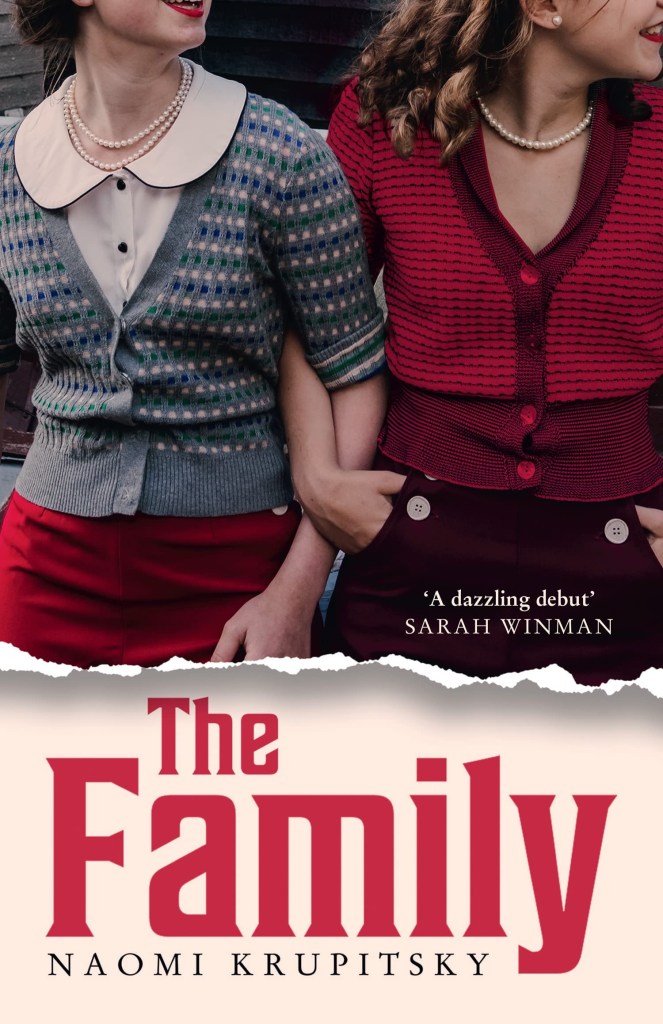
A captivating debut novel about the tangled fates of two best friends and daughters of the Italian mafia, and a coming-of-age story of twentieth-century Brooklyn itself.
Two daughters. Two families. One inescapable fate.
Sofia Colicchio is a free spirit, loud and untamed. Antonia Russo is thoughtful, ever observing the world around her. Best friends since birth, they live in the shadow of their fathers’ unspoken community: the Family. Sunday dinners gather them each week to feast, discuss business, and renew the intoxicating bond borne of blood and love. But the disappearance of Antonia’s father drives a whisper-thin wedge between the girls as they grow into women, wives, mothers, and leaders. And as they push against the boundaries of society’s expectations and fight to preserve their complex but life-sustaining friendship, one fateful night their loyalty to each other and the Family will be tested.
I loved the way Naomi Krupitsky embedded me emotionally into the heart of Sofia and Antonia’s world, two little girls belonging to two Italian immigrant families. However, the term ‘family’ has two meanings in this community: your immediate family, or that you are a family with connections. Sofia Colicchio and Antonia Russo, live in side by side apartments and are best friends. Of course it was pre-ordained that they’d be best friends, because their fathers work together and their mothers were pregnant together. We join them at an innocent time in their lives and they’re both oblivious about what their fathers do, even if they do notice their mother’s tension and even tears when their fathers work late. Sofia and Antonia are focused on playing together, making each other laugh by making up silly games. By bringing the reader into their lives at this age we feel their innocence, and I found myself thinking about my girls and other young family members. I felt bonded to these girls and immediately felt a strong sense of foreboding. What fate might their parents have wrought on these girls?
They have been enough for each other and haven’t needed a wider group of friends, but when they start school that they notice that they are treated differently. On the first day they make friends with two other little girls from the neighbourhood and run towards their mothers at the school gates holding hands with their new playmates. Next day they’re excited to see their new friends again and are surprised when they don’t reciprocate, pointedly joining different girls at lunchtime. It seems that mothers will warn their sons and daughters to stay away from Antonia and Sofia and gossip about their fathers. However, the girls are mostly innocent to the to the world they live in. They don’t know that in 1920s New York City ‘The Family’ and their influence spreads far and wide. They know that on Sundays they have to join other families for lunch with their father’s boss in his huge Manhattan apartment. These children play with them and they’re told to call the men ‘Uncle’, but these people are not blood family, no matter what they call them. The truth shatters their lives one day when Antonia’s father goes missing and his body is never found. Of course the girls don’t understand what the adults know; the reason for the sudden fracture between the Russos and the Colicchios. Of course the truth does come out over the following years, but will the two girls struggle to keep that friendship?
As she turns into a woman, Antonia becomes reserved and sees a different life for herself. She can’t live with the people she knows were responsible for her father’s death. Her mother doesn’t recover from the trauma and as a result Antonia lives a very lonely life. This absence of parental support allows Antonia to slip away from reality into the worlds of her books. She wants to go to university and be someone other than herself. However, not even the loss of her father and the warnings of her mother can stop her heart being won by a Family man. It is love that takes her back to where she comes from. As for Sofia, she never left. She is in awe of The Family and has grown up bold and ambitious. Sofia seems fated to make dangerous, reckless, decisions. Their friendship is distant at times, eroded by the past, but it never seems to break. Underneath the trauma and complicated history, inside these women are two little girls who swore friendship and loyalty to each other. What they have is like a marriage, a promise to always be there even when life’s at it’s toughest. Perhaps it’s an even stronger bond than that. I love how this is a family drama, with the tensions all families have, but the author concentrates on that very specific tension between mother and daughter. Then there’s that outer layer of family, applying yet more pressure and creating a massive fissure between these girls born into something they never asked for. The Mafia is not open to everyone, but once you’re in that’s it. This is family with extra power and benefits, but with a sense of fear that always keeps you looking over your shoulder. With power comes terrifying risks and the knowledge there’s only one way to leave.
This is unlike any other Mafia story I’ve ever read because it concentrates on what it’s like to be female in this most macho of worlds. Here the gender roles are predetermined due to the time period and the set rules of the organisation. It’s a coming-of-age novel where these two girls are always going to be chafing against the confines of the roles the Family will allow. As the story moves from the 1920’s into 1940’s and WW2, we can see how Antonia and Sofia change from young girls to women, but also how society’s expectations of women change in that time period. Krupitsky also writes a realistic portrait of how the Mafia changed during the war. This historical detail and the character of Saul made me think about people fleeing Europe who bring with them their own strong sense of identity. Can they identity survive in a new place, where the opportunities may not always be the escape they were looking for? This made me think of my late husband’s family who ended up displaced separately, affected by their loss and wanting to grow up honouring their heritage, but finding themselves shaped by the society they’ve joined too. I felt so involved in these girl’s lives and the organisation they’ve grown up in, schooled in the essentials of staying loyal and keeping secrets. It was strange to leave their world and I wonder if there will be more from Antonia and Sofia in the future. This is a great Mafia novel, one that sets the organisation in social and historical context, but also gives us a rare female perspective on growing up as a mob daughter.
Meet The Author
Naomi Krupitsky attended NYU’s Gallatin School of Individualized Study and is an assistant editor at the Vida Review and a bookseller at Black Bird Bookstore. She lives in San Francisco but calls many places home. The Family is her first novel.
On a windswept British coastline the tide bestows an unexpected gift…
It was the cry that she first noticed, the plaintive wail that called to her over the crash of winter waves. Wrapped only in a sealskin, the baby girl looks up at Effie and instantly captures her heart.
Effie has always been an outcast in her village, the only granddaughter of a woman people whisper is a witch, so she’s used to a solitary existence. But when Midsummer arrives so too does a man claiming to be the child’s father. Effie is surprised when he asks her to continue looking after his daughter, mysteriously refusing to explain why. When he returns six months hence she pushes him for answers. And Lachlan tells a story she never anticipated … one of selkies, legend, and the power of the sea…
I’ll be honest up front and say I don’t often read romance novels. I enjoy novels that look at relationships or contain a love story, but I often find novels categorised as ‘romance’ to be far too light or saccharin for my taste. However, this wonderfully romantic story drew me in thanks to the interesting female characters, historical detail and Scottish folklore. For those who do not know their Celtic and Nordic mythology, a Selkie is a seal which when it sheds its skin transforms into a human. For some reason, it’s a piece of folklore that’s always caught my attention, rather like mermaids. I love to imagine the freedom of the endless ocean and having a body that can swim gracefully and effortlessly through the waves. I’ve also thought of the two legs we see as essential for day to day life, being such a restriction to someone used to a powerful, streamlined tail.
I really loved how independent Effie is and the strength she has to stick to her principles, even when they go against those of the rest of her village. She’s very independent and modern in her thinking. She rejects the local church and only goes at Christmas. Her grandmother Alice provides herbal remedies for the people of the village, and this has kept Effie separate from others who think of Alice as a ‘wise woman’. In fact some of the most respectable women in the village rely on Alice for remedies that help with menopause or other hormonal symptoms, but only in private. In public they would deny all knowledge. Effie’s marriage to John, her son Jack’s father, seemed to happen rather quickly and caused gossip in the village too. Her friendship with Walter, who is from a very respectable family, raises the odd eyebrow, but has also helped her in many ways. Without him she might not have gained parish financial support for Morna – the child she finds floating in a wicker basket. It’s possible he expects more than friendship, but would he tolerate Effie’s wilder ways and allow her the freedom she craves? In a world that’s very restrictive for women, Effie’s widowhood and ability to support her children without a man leaves her in quite a lowly place in society, but free to live her own life, at least in the short term.
I was absorbed into this woman’s relationship with her children. Widowed on the same night she finds a baby girl floating in the sea, Effie raises the girl with Jack. She can’t find a name to suit her, but doesn’t worry about that. Jack is not the easiest child, with symptoms that in more modern times might have labelled him with an autistic spectrum disorder. The children get along well and seem to find ways of communicating together, despite Jack’s difficulties with speech. Effie loves both of them fiercely and is haunted by the worry that one day she may have to give up the little girl she rescued as a baby. So, when a mysterious man turns up and claims her, Effie is wary, but finds it hard to deny their likeness especially when they have exactly the same eyes. Lachlan calls his girl Morna and explains something that most women would find hard to accept. He and Morna carry seal skins, but they’re not just to keep them warm. The skin is as much a part of them as their dark, impenetrable eyes. Morna and her father Lachlan are Selkies. They are part human and part seal, from a tribe in Scotland. Effie is relieved to find he isn’t there to take Morna, because he recognises that she and Effie have a bond, but he leaves a perfect pearl to pay for her upkeep and promises to return in six months. However, can this arrangement continue indefinitely?
Even more complicated, is the fascination that Effie starts to feel about this dark eyed, handsome man. As for Lachlan, every time Effie touches seal skin, he feels a corresponding pull in his human body. I must admit I was rather enchanted by this wild, but noble and honourable man. I felt he would accept Effie as she was, rather than try to mould her into a respectability that would leave her so unhappy. To strengthen this romantic tale and give it historical context, there were other strong female characters such as Alice and Effie’s friend Mary. Alice is wise, funny and open to the more magical side of life. Effie is shocked that the very respectable Mary would have her as a friend. In fact she asks if Effie will help her set up a school for some of the poorer girls in the village. She gives Effie solid advice, based on the sensibilities of the time which gives us a contrast to Effie’s life choices – some of which would be seen as scandalous! It’s interesting to think that both Effie’s friends, Walter and Mary, are progressives in their time, whereas now their ideas can seem patronising or even horrifying. I felt that Mary shows us what Effie’s life could be should she decide to choose the life Walter might offer her.
The setting is exceptionally well drawn, capturing a rugged Yorkshire coastline so perfectly that I could imagine standing on a windswept cliff watching Lachlan and Morna slipping through the waves. I found myself browsing for holiday cottages as soon as I’d finished reading, because the author’s description of the sea was so evocative. Her romantic descriptions of eating freshly caught and fried mackerel on the beach, or sailing to a private cove in the sunset enchanted me just as much as any of the relationships. I was hankering after a sunshine stroll through the waves and I would look up from my book and be surprised to find myself in my bedroom looking out at Christmas lights. If you enjoy historical fiction, I highly recommend this book and it’s definitely worth a read if you have an interest in folklore or magic realism. I found myself taking long baths or having a lie-in so I could shut the world out and really relax into the story. I would definitely look at this author’s other work on the basis of this novel and it’s made me have a rethink about the romance genre as a whole. Thank you so much to HarperCollins UK-One More Chapter and Rachel’s Random Resources for giving me the chance to read the book. It’s been a pleasure.
Author Bio – Elisabeth’s writing career began when she finished in third place in Harlequin’s So You Think You Can Write contest in 2013. She was offered a two-book contract and consequently had to admit secret writing was why the house was such a tip. She is the author of numerous historical romances with Harlequin Mills & Boon covering the Medieval period to Victorian England, and a Second World War romantic historical with One More Chapter. She lives in Cheshire because the car broke down there in 1999 and she never left.
Giveaway – Win a signed copy of Daughter of the Sea (UK Only)
*Terms and Conditions –UK entries welcome. Please enter using the Rafflecopter box below. The winner will be selected at random via Rafflecopter from all valid entries and will be notified by Twitter and/or email. If no response is received within 7 days then Rachel’s Random Resources reserves the right to select an alternative winner. Open to all entrants aged 18 or over. Any personal data given as part of the competition entry is used for this purpose only and will not be shared with third parties, with the exception of the winners’ information. This will passed to the giveaway organiser and used only for fulfilment of the prize, after which time Rachel’s Random Resources will delete the data. I am not responsible for despatch or delivery of the prize.
Here’s the final instalment of my favourite reads of 2021. As I look back it’s been a brilliant reading year and I always think the past year can’t be topped but I have a huge list of anticipated reads for next year already! I’m spending the next fortnight doing the same things as everyone else – stuffing my face, drinking sherry, seeing family and watching far too much television. However, I’m also doing something that’s probably peculiar to book bloggers. I’m reading what I like for a fortnight. This might not sound like much, but it really is wonderful to read purely for pleasure. I enjoy what I do, but between blog tours and my NetGalley list (I’m greedy with both) I’m often reading to a schedule. So it’s nice to be able to go with my mood or my gut for a little while. I have reached a couple of milestones with the blog: I have reached ten thousand views this year and two hundred subscribers. I never imagined that I would have two readers of my writing, never mind two hundred. It’s amazing what a year’s hard work can do. Over the holiday I hope to evaluate how I’ve been working on the blog, maybe leading to some changes and hopefully time to share my personal writing too. I wish you all a very Happy Christmas with your loved ones and I look forward to writing for you all again in 2022.
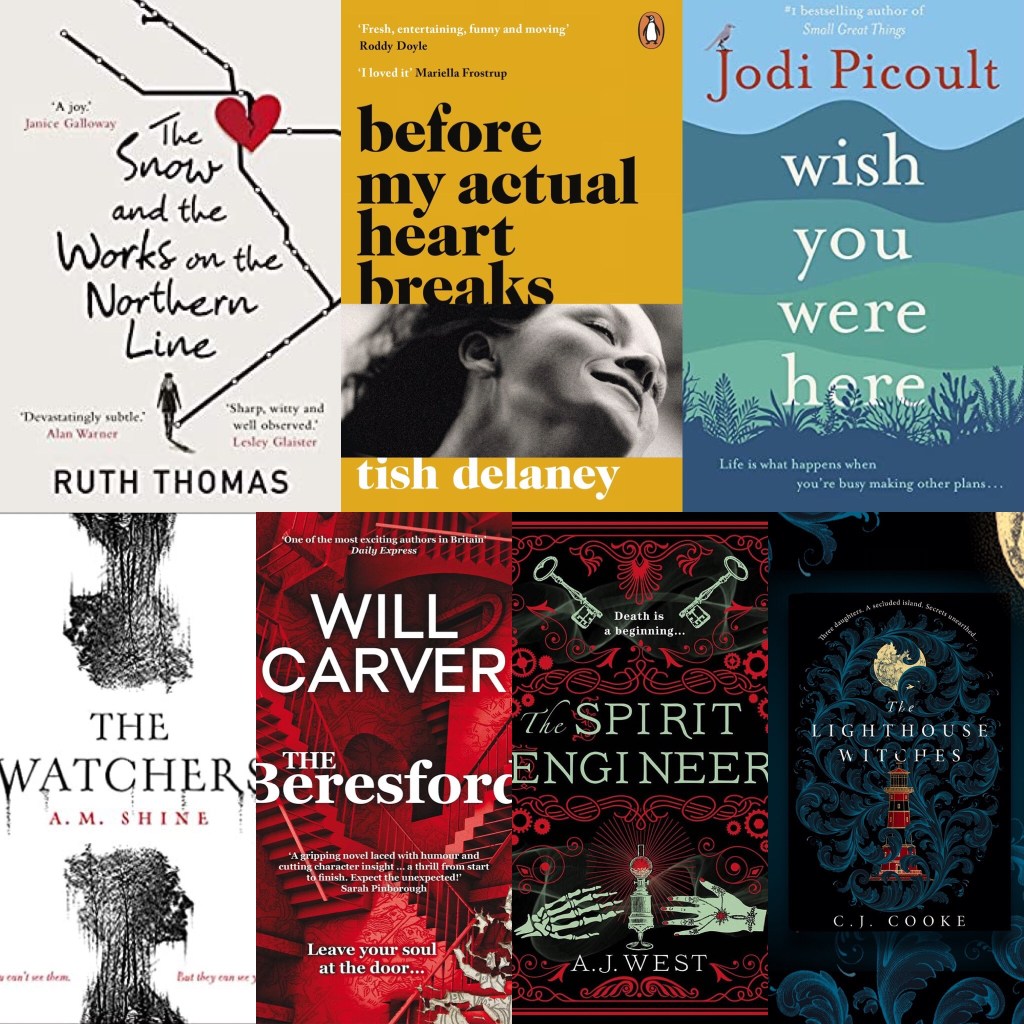
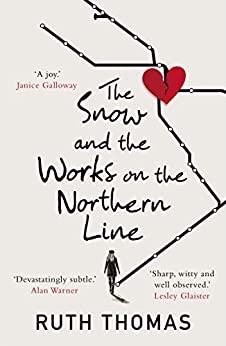
The Snow and the Works on the Northern Line by Ruth Thomas.
This is what I would call a quiet book; gentle, subtle even, but so charming and witty. I remember posting that only three weeks into January I was already in love with a new literary heroine. I absolutely adored Sybil and felt so at home in her company, that I just kept reading all day. I finished at 11pm and was bereft, because I wouldn’t be with Sybil any more. Yes, this is what happens to avid readers. We fall head over heels with a character, can’t put the book down, then suffer from withdrawal. All day I was grumpy and reluctant to start a new book. Sybil’s life is puttering along nicely. She has a job she enjoys at a London museum – Royal Institute of Prehistoric Studies (RIPS). She has Simon, her boyfriend and ardent baker of bread from obscure grains. Her quiet life is turned upside down when she, quite literally, bumps into an old nemesis from university, Helene Hanson. Sybil and Simon are ice skating, when they first spot Sybil’s old university lecturer. Sybil doesn’t want to say hello, after all Helene stole some ideas from her dissertation, then put them into her own research on the Beaker people. They’re very unsteady on ice and end up careering into Helene’s group, in Sybil’s case ending up in hospital from a head injury. Only weeks later, Helene has stolen Sybil’s boyfriend and taken a huge interest in Sybil’s workplace. Now RIPS will be selling her Beakerware (TM) in the gift shop and welcome her onto their committee. Sybil’s mum suggests a mature exchange of views, but Sybil hates confrontation. She’s not felt herself since her injury and we see how she thinks in the fragmentary structure the author uses. Sybil has to find a way to expose Helene Hanson as a fraud. I felt a deep connection with Sybil. She’s offbeat, quirky and has a dark sense of humour the comes through beautifully into the narration. A simply lovely read that I’ll happily pick up again and again.
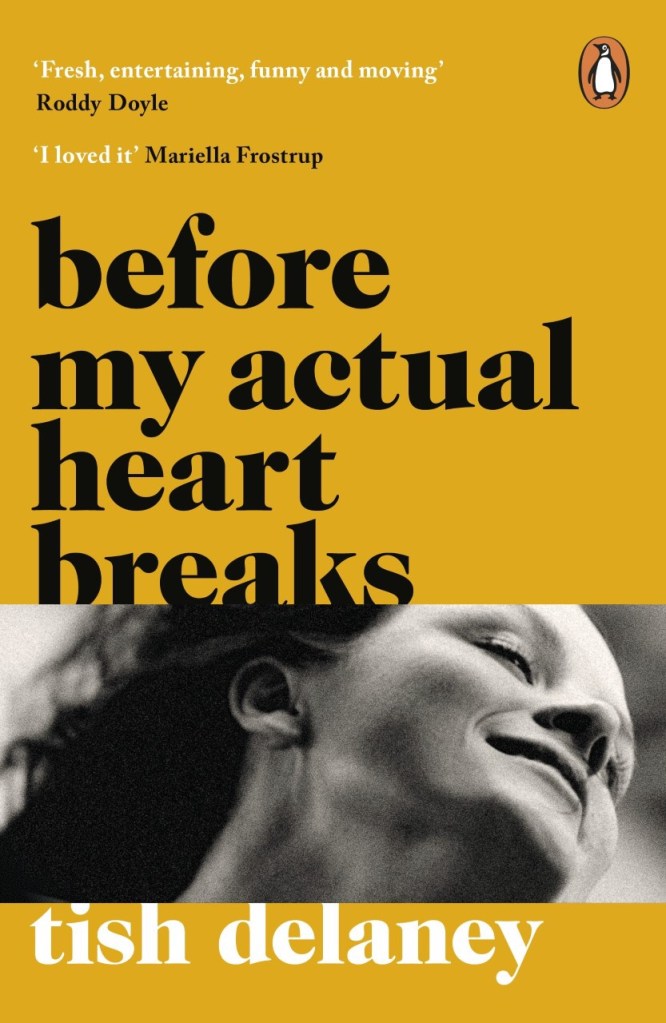
Before My Actual Heart Breaks by Tish Delaney
This was one of those novels that didn’t connect with me at first. In fact if it hadn’t been for a blog tour I might have stopped reading. Yet part way in I was suddenly won over by the intelligent, spirited and strangely beautiful Mary Rattigan. She is a character who will stay with me, especially the childhood Mary and her battles with Mammy – a woman who I hated so strongly it was as if she was a real person! Mammy is a hypocrite, playing the perfect Catholic matriarch on the surface – always loving or feeding her sons, cooking perfect chicken roasts and getting out the best china when the priest comes for tea. It broke my heart when she left Mary without tea, then next morning as the boys all lined up for their lunch boxes Mary was given an empty one. I felt so emotional for this girl, who doesn’t expect any better. The Rattigan’s life on her parent’s farm in Ireland is at odds with Mary’s romantic and wild nature. She wants to fly out of her dirty and dangerous surroundings, leaving ‘The Troubles’ behind her. However, life has a way of grounding us and Mary is no exception. In a life punctuated by marriage, five children, bombings, a long peace process and endless cups of tea Mary learns that a ten minute decision can change a whole life. These lessons are hard won and she’s missed a hundred chances to make a change. Can she ever find the courage to ask for the love she deserves, but has never had? Mary’s need to be loved is so raw she can’t even articulate it. How can she understand or recognise love when she’s never felt it? She has been told she’s nothing, so nothing is what she deserves. Delaney writes about love and the realities of marriage with such wisdom and tenderness that I was rooting for Mary Rattigan till the very last page.
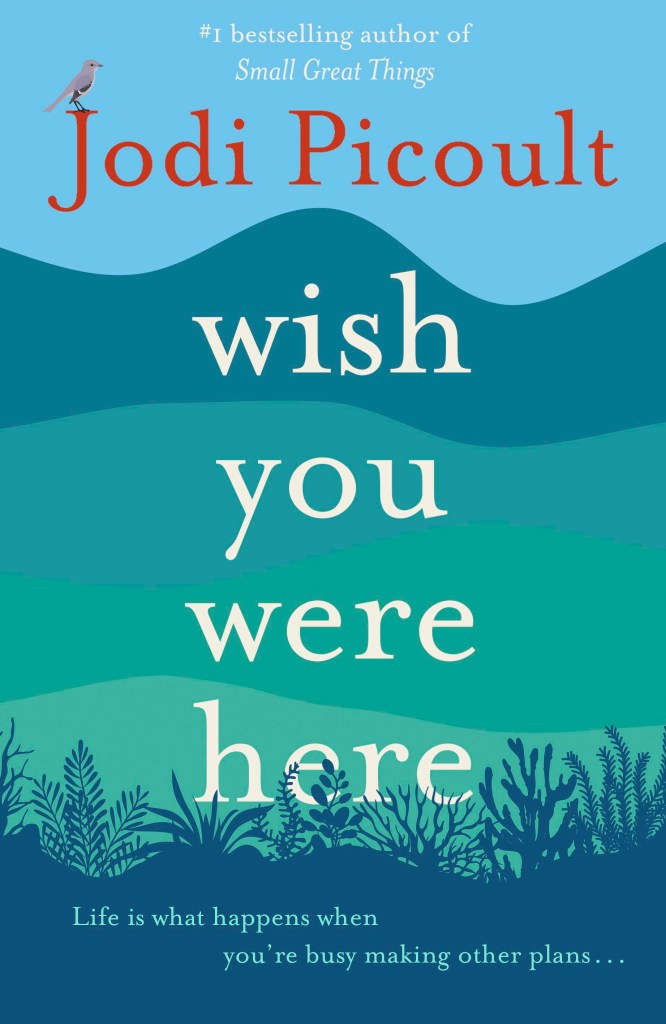
Wish You Were Here by Jodi Picoult.
Jodi Picoult has been one of my favourite writers since PlainTruth and I was so happy to see that this was a real return to form and is the first novel addressing the COVID pandemic I’ve read. Diana and her boyfriend Finn live in New York City, he is a doctor and she works at an auction house for fine art, on the verge of promotion to become an Art Specialist at Sotheby’s. She’s trying to acquire a Toulouse Lautrec painting that hangs in the bedroom of a Japanese artist -loosely based on Yoko Ono – when everything changes. Finn and Diana have a very set life plan and part of that was an upcoming visit to the Galápagos Islands. However there are rumours in the medical community of a strange new virus in Wuhan, China. It seems like SARS in that it’s a respiratory virus and requires huge amounts of resources to keep patients alive. Diana’s boyfriend feels torn, as a doctor he’s worried and thinks they should be preparing, but the president is on TV telling everyone it’s no worse than flu. What’s the truth? Finn tells Diana to go on holiday and she gets to the islands just as their borders are closed. She has to throw herself upon the kindness of strangers – a hotel cleaner called Abuela, her granddaughter Beatrice, and Gabriel her tour guide father. He is the perfect person to be stranded with because he knows every corner of the island and has no work, so he can show Diana some of the sights she would never have seen. The seals lazily basking on the jetty, the sea turtles and their nests buried in sand, lush vegetation and lizards lying around intertwined. I could see and taste the salt air. Everything is vivid and almost hyper-real. Then came the twist!! Oh my goodness I did not expect that at all. This was brilliantly done and shocked me. The world Diana has at the beginning, becomes subsumed by the pandemic. It’s a structure that echoes how our own lives have been interrupted and changed forever. There are people who went into the pandemic with a job that no longer exists. People have lost friends, family members and partners. The pandemic has changed people, they are looking at how they live and making changes. I could understand Diana’s decision at the end of the novel. When you’ve been through something momentous you change, and part of that is re-evaluating life and choosing what makes you happy. It’s trying to recapture hope. Why should things ‘go back to normal’; I want this pandemic to mean something and I want things to get better. Diana takes that decision for herself and I found that both brave and uplifting.
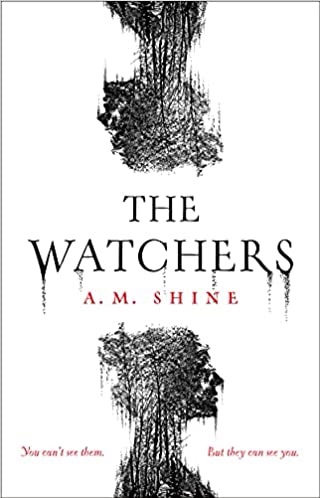
The Watchers by A.M. Shine.
I don’t often read horror novels, mainly sticking to Stephen King and gothic historical fiction, so this is a departure from my usual reading and it was exhilarating. Mina, is a young woman living alone in urban Ireland, and has lost her mother. Now without family – except one sister who appears to phone once a month or so, just to feel disappointed – she is largely a loner. Her loves are sketching, red wine and her friend Peter who is a buyer and seller of various things and often pays Mina cash to deliver his client’s purchases. On this occasion she’s to take a golden parrot to a remote part of Galway. Having broken down on the edge of a forest, Mina realises the likelihood of anyone passing by and helping are probably minimal. So, with the parrot in tow, she sets off walking in the hope of finding a remote farmhouse with a phone that works. Once in the forest Mina realises her mistake, it seems bigger than from outside and the light is fading fast. She feels unnerved, although she can’t say why, then she hears a scream that isn’t human, but isn’t like any animal she’s ever heard either. As the shadows gather she is beginning to panic, when suddenly she sees a woman beckoning her and urging her to hurry. She’s standing by a building and although it seems odd, Mina decides it’s better than staying out here to be found by whatever made that terrible noise. As they hurry inside and the door slams behind them, the screams grow in intensity and volume, almost as if they were right on her heels. As her eyes adjust to the light she finds herself in a room with a bright overhead light. One wall is made entirely of glass, but Mina can’t see beyond it and into the forest because it is now pitch dark. Yet she has the creeping sensation of being watched through the glass, almost like she is the parrot in a glass cage. A younger man and woman are huddled together in one space, so there are now four people in this room, captive and watched by many eyes. Their keepers are the Watchers, dreadful creatures that live in burrows by day, but come out at night to hunt and to watch these captive humans. If caught out after dark, the door will be locked, and you will be the Watcher’s unlucky prey. Who are these creatures and why do they keep watching? This was unsettling, because of the creatures and the dynamics of the small group trying to survive. The author has an uncanny ability to instil dread in his readers, all the way to an incredible and terrifying end.
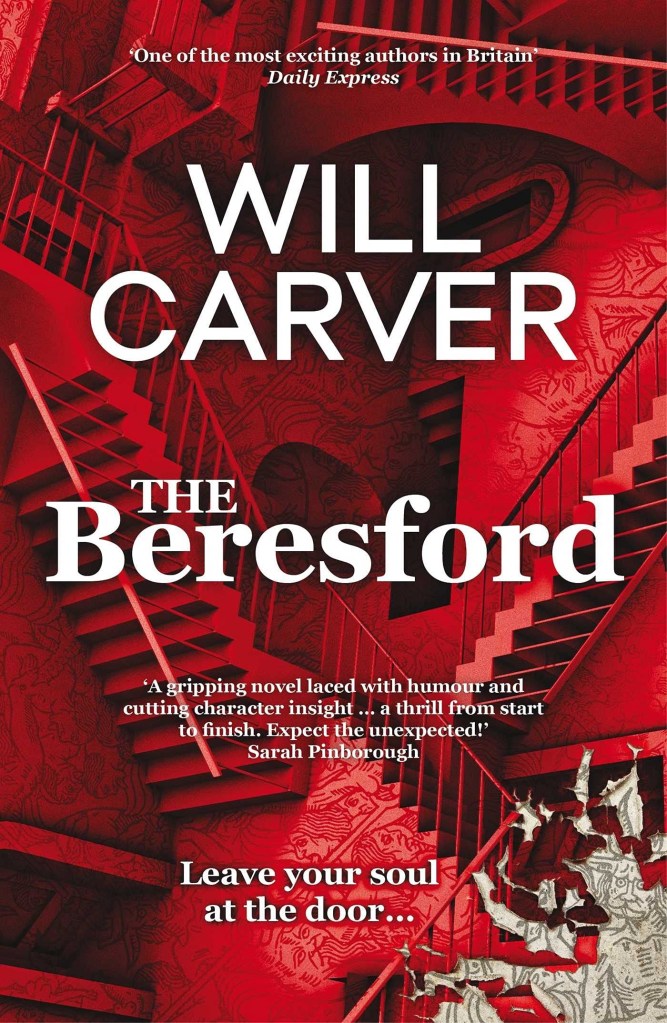
The Beresford by Will Carver.
This was a brilliantly funny and clever book that had me smiling from the first page at theaudacityof this clever and creative author. This was my very first Will Carver novel and I came away wondering where he’d been my whole life. This novel had such a darkly, delicious opening set at The Beresford, an old forbidding looking building in the city. In my imagination this conjured up the Gothic looking Dakota Building, where John Lennon lived and was killed back in 1981. Inside The Beresford are a number of apartments, bigger and better appointed than you would expect for the money. They even have large roll top baths that are the perfect size to dismember and dissolve a body. Resident Abe finds that as soon as one tenant ‘leaves’ another will ring the doorbell in sixty seconds. The building is presided over by a lovely old lady called Mrs May, who starts every day the same way. By brewing a coffee while the taps run, then enjoying a bath with bubbles, followed by eggs with her cold coffee. She has a routine, and is found at the same time every day pruning the roses in the front garden. As any fan of the film The Ladykiller’s knows, you should never underestimate sweet looking, little old ladies. She knows everything that happens at the Beresford because the same thing happens over again – some people leave and some people just disappear. Occasionally they stay. For a price. I loved the dark humour, the unexpected murders and the characters who pass through – sometimes in seconds! Maybe one day the author will venture further into the other side of The Beresford? The side Abe calls ‘the bad side’. If so, I’ll be waiting – but I’ll probably stick to reading in the daylight hours.
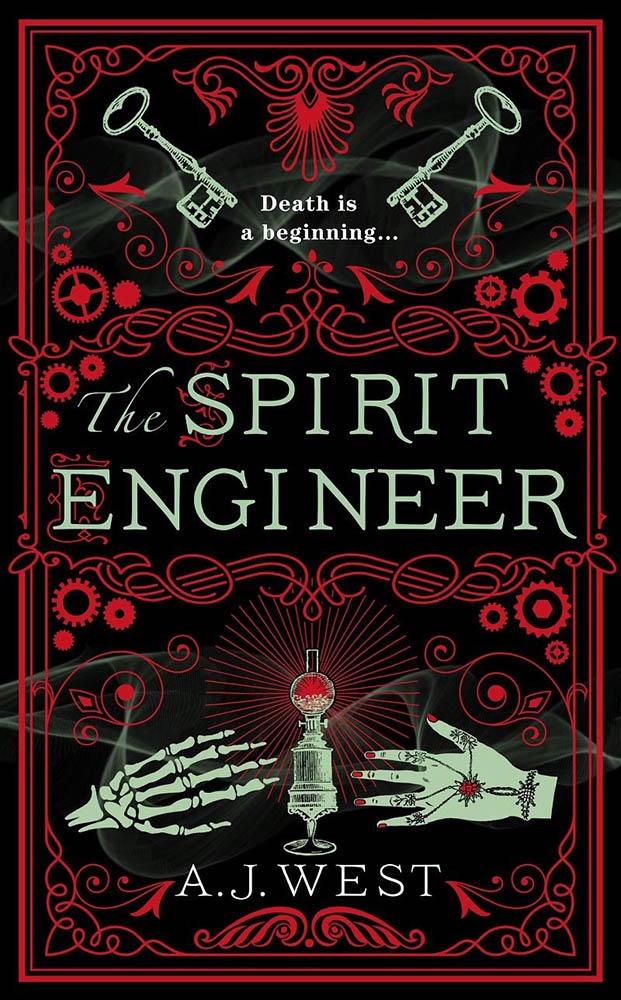
The Spirit Engineer by A.J. West
I’d anticipated this book for a couple of months having been told by my Squad Pod ladies that it was going to be a fantastic read. It certainly was, and even more than that, it was surprising too. Our setting is the city of Belfast, the Titanic sinking is still fresh in everyone’s minds. It’s especially fresh at Professor William Crawford’s house since his brother-in-law Arthur was on the ship. Crawford is our narrator and he introduces us to his happy, but chaotic household as the novel opens. He is a man of science, working at an institute both furthering scientific enquiry and teaching the next generation of engineers. He’s a sceptic, so when he finds out that his wife is visiting a medium and has been trying to contact her brother Arthur, he’s shocked and angry. There’s no question that this girl is a fraud, stringing his wife along with a show put on with the help of her shady family. Yet, the couple have lost their son Robert too and Crawford’s grief is overwhelming. So when he hears Robert’s voice calling to him alongside an angry, vengeful Arthur who blames Crawford for his death, a small crack grows in his scepticism. What if he were to apply his scientific rigour to to this girl medium’s powers? If he could prove a link exists between this world and the next he could make a name for himself, not just in Ireland but all over the world. What I loved more than anything was the author’s ability to surprise, because as we neared the end I had no idea how the book and Crawford’s investigations would conclude. The theme of dishonesty is there right from the start, in Arthur’s reasons for being on Titanic, to the hidden note from their old maid who left in a hurry, and Elizabeth’s absence at weekly church meetings. By the end I felt triple bluffed, but couldn’t help smiling at how clever the author had been. As many of our characters find out, when it comes to being dishonest, the person we deceive most often is ourselves.
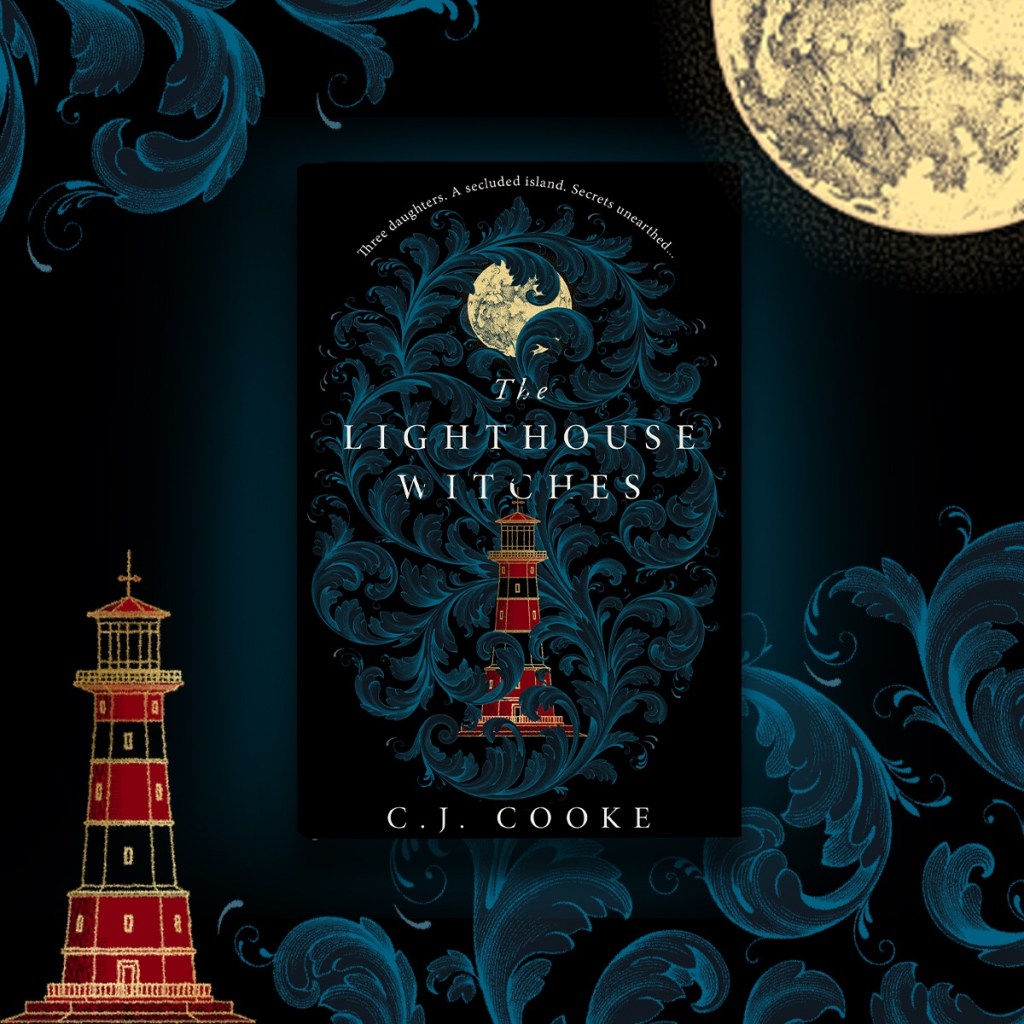
The Lighthouse Witches by C.J. Cooke
Just look at that stunning cover! Lighthouses have been a recurring motif in this year’s reading and this cover was particularly beautiful. This is a fascinating tale from the writer of last year’s The Nesting. Set on a remote Scottish Island, and with a hint of The Wicker Man about it, Liv and her three daughters arrive at a lighthouse named The Longing. We’re not sure what they’re driving away from, but Liv jumped at an opportunity to paint a mural in the lighthouse. An eccentric millionaire wants to use the lonely spot as a writing retreat. Liv and her three girls set up home in the bothy next door, but then some unusual happenings leave them wondering exactly what’s going on in this isolated place. There are some really unsettling scares for the family: a baby floating in flood water that turns out to be a doll; a child’s skinny arm creeping out from behind Liv’s paint supplies; a near naked and very dirty little boy appearing at the bothy, with no one on the island interested when he disappears again. Liv wonders why the lighthouse is named The Longing and finds a whole history involving the island’s women and the 16th – 17th Century witch hunts sanctioned by King James IV. Throw in some time travel and this is a brilliant combination of the supernatural and the historical. I enjoyed it immensely and would happily read it again.
So that’s my 21 favourite books and even now I’m wishing I could add a further three of four to the mix! Keep an eye on the blog over Christmas and New Year for some great recommendations for 2022 which is already looking like a bumper reading year. Happy Christmas and a peaceful, safe New Year. ❤️📚
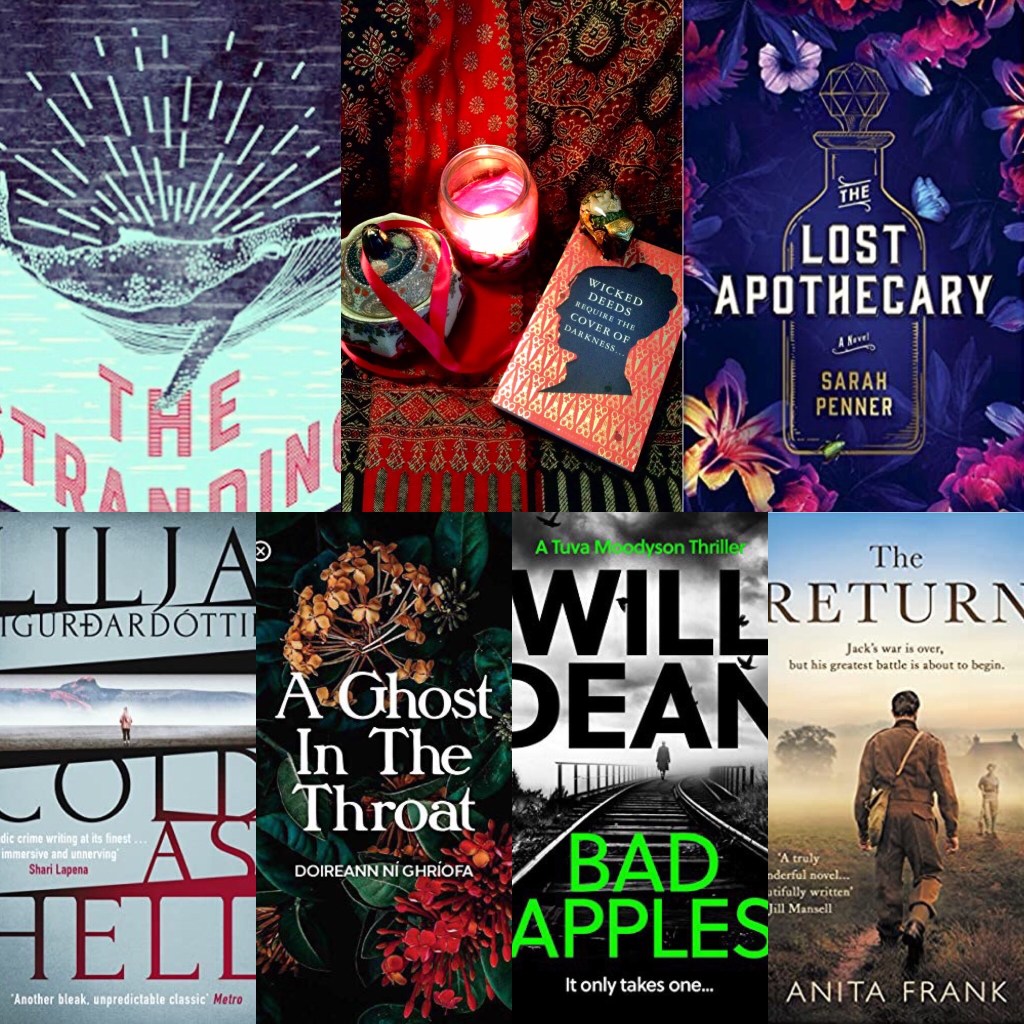
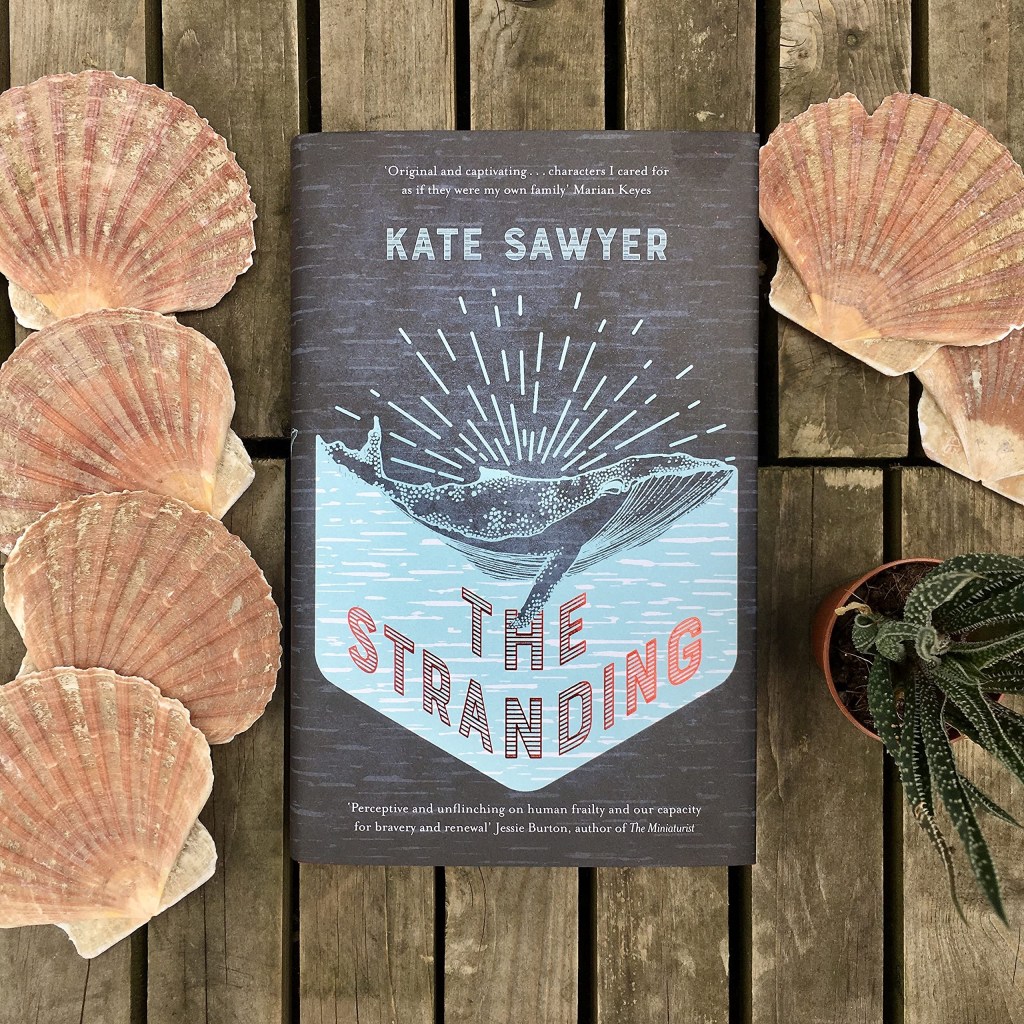
If I had to choose just one book that blew me away this year then it would be The Stranding. I was bewitched by it. It’s just so good it’s hard to believe it’s a debut novel. I know that a book is extraordinary when I finish it and feel changed in some way. I’m never sure what has happened, but there’s a tiny, imperceptible change, to the air around me, how I feel and even the way I perceive the world. The Stranding left me feeling calm, thoughtful and as if a lot of the small things worrying me didn’t really matter in the big scheme of things. I cared deeply for the characters and their grief, and strangely proud of them for what they managed to achieve. The author created an incredible sense of New Zealand and the whale that becomes Ruth’s saviour, and mother – birthing her and Nik into their new world and sustaining them. Her detailed descriptions left me fully immersed in this world, so much so that when I finished reading, it took a while to adjust back to being in Ruth’s ‘before’ and my 21st Century world. It has a unique narrative structure of two timelines: one represents ‘before’ and finishes where Ruth finds the whale; the second is ‘after’ and starts at the whale moving forwards. We don’t know what the apocalyptic event is, but it divides Ruth’s world into before and after. Nik is literally the last man on earth and their teamwork is vital if they are to survive. The Stranding might sound depressing, but it isn’t. It’s a post-apocalyptic landscape but the book celebrates the human spirit, our capacity for change, resilience and even love. It’s an incredible achievement.
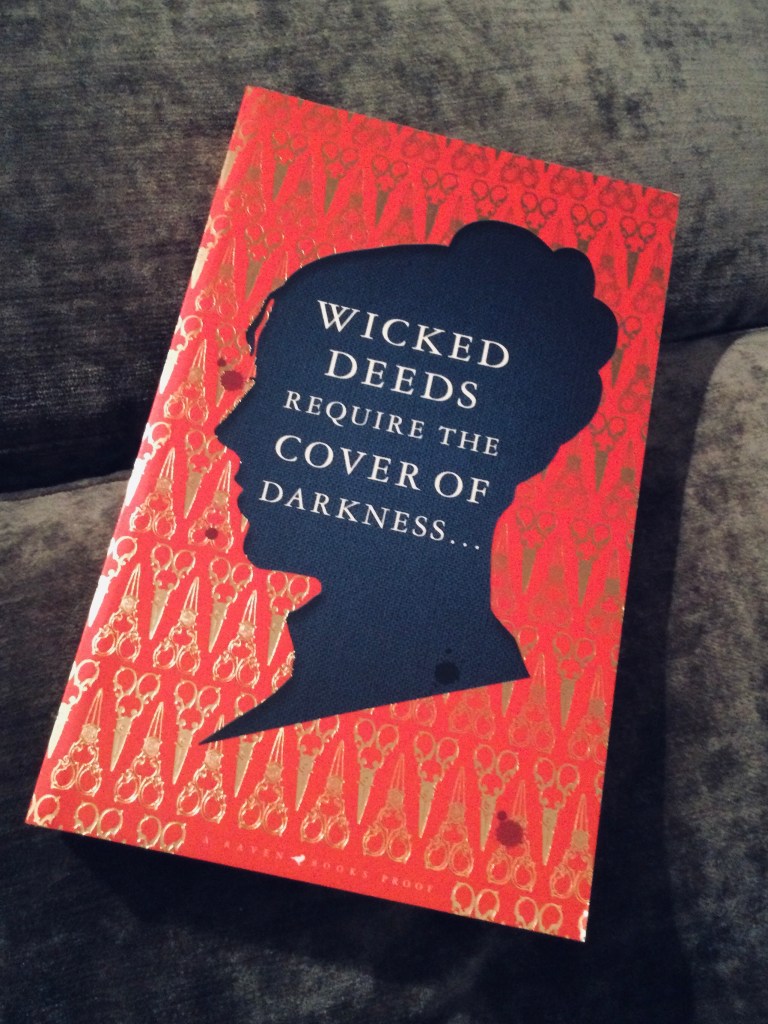
The Shape of Darkness by Laura Purcell.
I was so excited to receive a proof of this latest novel from one of my favourite authors. I love the mix of gothic horror and historical fiction that she excels in. So I came to it full of anticipation. I was hooked by the end of the first chapter and didn’t put it down. Our narrator is Miss Agnes Darken, living in Bath with her invalid mother and nephew Cedric. Agnes earns her money cutting silhouettes or ‘shades’ for people, but her art is put under threat not just by newer inventions, but by a mysterious killer stalking the people who have sat for her. Desperate for answers, Agnes visits a spirit medium – an albino child named Pearl who lives with her sister Miss Myrtle West, and an invalid father. Agnes and Pearl try to conjure the spirit of one of her murdered sitters, so they can find the killer. Unfortunately, they have underestimated the power of what they have unleashed. This is an excellent gothic mystery, that grabbed me from the start and didn’t let go. I thought the characters were well developed and fascinating – even the ones who are no longer there! I liked that were transgressive females who had their own agency and independence. I enjoyed the author’s sense of place, the evil portents like the magpies and the build up of tension. I also liked the contrast between those living in poverty and those with a more middle class lifestyle. The supernatural elements are always spooky with Purcell, so the seances and visitations are unsettling, but so are the real life people. As the mystery deepens you won’t be able to stop reading, because you’ll have to know what’s going on. There’s a saying we use about timid people – afraid of your own shadow – and that’s what this book does, it makes us afraid of what others might see in us, and who we can become in the dark. An utterly brilliant addition to Laura Purcell’s work.
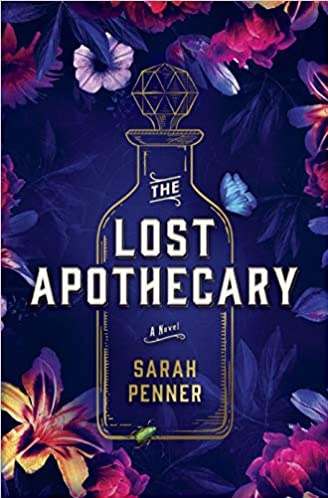
The Lost Apothecary by Sarah Penner.
Nearing her ten-year anniversary, Caroline stumbles on a secret that takes her to London on holiday and to explore. She stumbles across a man who takes tourists out mud larking and joins them, finding wandering the shoreline looking for objects in the mud, strangely relaxing. She follows their guide’s advice that she shouldn’t look for an object, but look at patterns in the mud for an absence of something. Not long after she finds a bottle, an apothecary bottle, with a crude etching of a bear. Our second narrative takes us to the depths of eighteenth-century London, where a secret apothecary shop caters to an unusual kind of clientele. Women across the city whisper of a mysterious figure named Nella who sells well-disguised poisons to use against the oppressive men in their lives. But the apothecary’s fate is jeopardized when her newest patron, a precocious twelve-year-old, makes a fatal mistake, sparking a string of consequences that echo forward through the centuries to Caroline. I thought the author conveyed both 18th and 21st Century London really well. I could imagine myself there with all the sights and smells she conjured up. I loved the description of the apothecary shop, back in its heyday and as it was when Caroline rediscovered it. The ending of Nella and Eliza’s story was unexpected, but showed the strength of female friendship and solidarity. I found myself hoping that Caroline would do the same – choose an unexpected and unknown future of her own making. This was a brilliant read, historical fiction at its best and an incredible debut from an author I’ll be watching in the future.
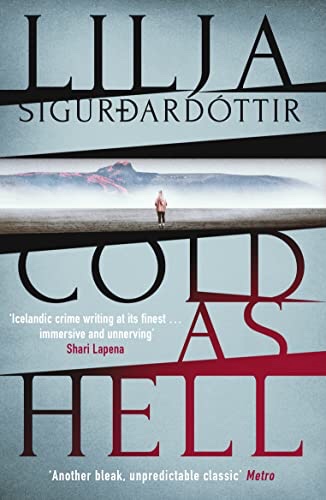
Cold as Hell by Lilja Sigurdardóttir.
I’ve had the pleasure of reading Lilja Sigurdardóttir before and this novel grabbed my attention very early on with it’s reluctant protagonist, quirky characters, and an almost lunar landscape lit up by twenty four hour daylight. Āróra is being pestered by her mother. She hasn’t heard from Āróra’s sister Īsafold for over two weeks now and she’s very worried. She wants Āróra to fly out to Iceland and find out what’s going on from Īsafold’s partner Björn and their family who are still based there. Āróra lives in the north east of England and rarely goes back to Iceland, despite being born there. She mainly travels there when Īsafold needs rescuing from Björn. The whole family have known for some time that she is suffering domestic violence, but despite several attempts to help and convince her to leave, Īsafold always returns to Björn. Āróra has given up trying to help her sister; you can’t help someone who doesn’t want to be helped. I loved the depiction of the relationship between these two sisters: the sibling rivalries; the roles of eldest and youngest; that push and pull between loving and resenting each other. Īsafold is continuously putting herself in the role of victim and even though it’s positive encouragement and support from Āróra, she will still say she’s being pushed and persecuted into leaving. I actually wondered whether this behaviour had lead to her death? Had someone become so tired of helping, only to hear her being beaten again the following week, that they’d snapped? Āróra remembers the last time Īsafold called her and she chose not to come. What if she’d said the right thing this time and her sister chose to return to England, safe and sound? In fearing her loss, Āróra stops seeing a problem and starts seeing her sister. The barrier between them melts away as she lists her regrets and acknowledges she hasn’t been the perfect sister either. But is it too late? This was a fascinating tale, from a clever author whose words can manipulate us into racing through the thrilling twists and turns, then stop us in our tracks with a moving tribute from one sister to another.
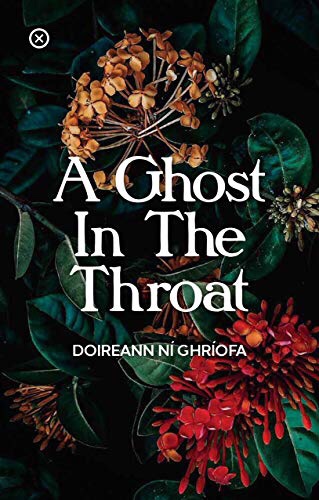
A Ghost in the Throat by Doireann Ní Ghríofa
This novel is exceptional. It’s beautiful, moving and speaks about women’s experience in such a unique, but brutally honest way. It’s an incredible piece of auto-fiction, which is half memoir and half novel but all poetry. Our narrator is a mother of three small children and she has a fascination with the Irish poem ‘Caoineadh Airt Ui Laoghaire’ where an Irish noblewoman laments the death of the her murdered husband. Such is her passionate grief, that on finding his body, she drinks handfuls of his blood and then composes the extraordinary poem. For our narrator, the poem has echoed down the centuries and is her constant companion. As she reads it aloud the poet’s voice comes to life. The author writes her own life to its rhythms and wants to discover the truth of the poem’s story. I loved how her recording of 21st Century motherhood is treated as an epic. I loved consciousness running through the book. As if her words join hundreds and thousands of others in a never ending stream of female consciousness. This isn’t just about putting your experience into the world, it’s about having a source of female wisdom to draw from whenever you need it. This is a female text and in it’s search for the meaning of women’s lives it is reassuring, it lets us know we’re not alone, but it also inspires us all to create meaning. To add our voice to the women’s wisdom, expanding that collective consciousness and making our mark.
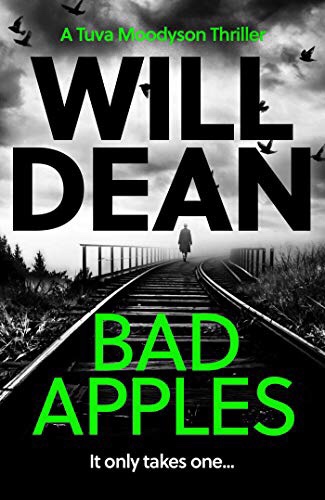
Bad Apples by Will Dean.
Wow! Will Dean does like to put his heroine in some terrifying situations. There is so much about this series that I love, then a good 20% that makes me feel a bit sick or unsettled. In the last book it was snakes that had me a bit on edge. This time? Well it’s saying something when a severed head is the most comfortable thing about one of Tuva’s investigations.We’re back in Gavrik, deep in the northern most part of Sweden and Tuva is back at the local newspaper, but has a more senior role and a new colleague to oversee in the shape of eager young newbie Sebastian. In fact, things are pretty good in Tuva’s world. This book picks you up and takes you on a fascinating and thrilling ride that builds in tension to a terrifying ending that I didn’t see coming at all. I had to stop reading at one point, because I realised I was so tense I was gritting my teeth! I’m sure the author has a hotline to my fears and this ending tapped into them perfectly. Needless to say, if I was Tuva, I’d be packing up the Hilux and leaving the hill folk to murder each other! I think the way the author depicts Tuva’s deafness is interesting. Usually Tuva uses it to her own advantage – taking her hearing aids out when she’s writing a piece means she can focus and taking them out at home means she can’t hear next door. However, it can also leave her vulnerable and the author uses it to intensify the horror element of the book, particularly towards the finale. There’s something about another person touching her hearing aids that feels so personal and also like a violation, depending on who it is. Every time I know a Tuva Moodyson book is coming, the excitement starts to build. By the time it’s in my hands I’m ready to drop all my other reading to dive in. Of course when something is so anticipated there’s also a fear about whether the book will live up to expectations. Bad Apples did not disappoint and is a fabulous addition to this excellent series.
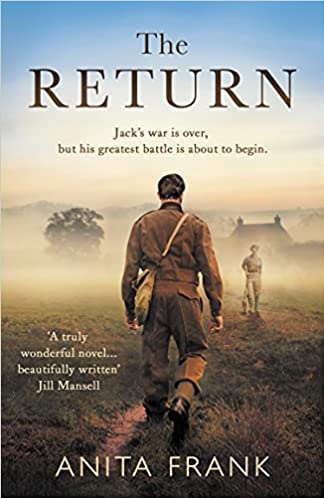
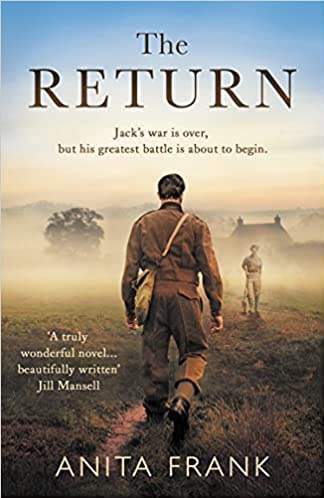
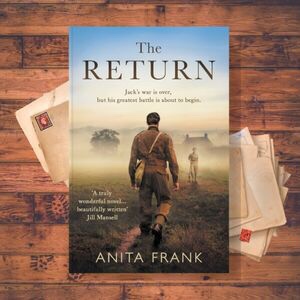
The Return by Anita Frank.
This beautiful historical love story just made it under the wire as I was compiling my Top 21 Books for 2021 and it truly deserves it’s place next to the others on the list. I was gripped by the story of Jack, who makes a very different promise to his new bride Gwen on the eve of WW2. Most soldiers are promising to see them again, to return, but Jack is quite clear. If he should survive the war, he won’t be back this way again. Gwen prays he keeps to his promise, but as they celebrate VE Day she does keep looking over her shoulder. What if he reneges on his promise? War has changed Jack and he is no longer the man who made that bargain. He wants to return and claim Gwen as his bride again, but little does he know that this could set in motion a chain of events that will leave he and Gwen fighting for what they love most. We go back and forth in time throughout the book, but begin with Jack fleeing his Newcastle on the night train, shielded by a friend who works on this south bound train. Jack is a riveter in the shipyards and lives in a terrace house with his Mum and sister Jenny, when a terrible twist of fate leads to a violent act of revenge. Stowing away on the night train, Jack plans to hop off somewhere where he can find work. So, as he walks down a country lane next morning, he finds a young woman who has fallen from her horse, but has her foot trapped in the stirrup. He hurries to help Gwen and takes her home to her family farm where she lives with her father. Jack is in luck, because it’s a busy time on the farm, and when he’s invited to stay for a home cooked meal he meets Gwen’s dad Jim. Jim asks if he would like to stay and work and Jack accepts. As Gwen talks about their daily routine and shows him his bed in the tack room, Jack thinks he may have fallen on his feet for the summer. What he doesn’t know is that Gwen is about to put him in a very difficult position and he won’t want to miss another opportunity to rescue a woman in distress. This book captures early 20th Century farming beautifully and you will be rooting for Jack all the way.
My final seven books of the year are coming on Sunday 19th December.
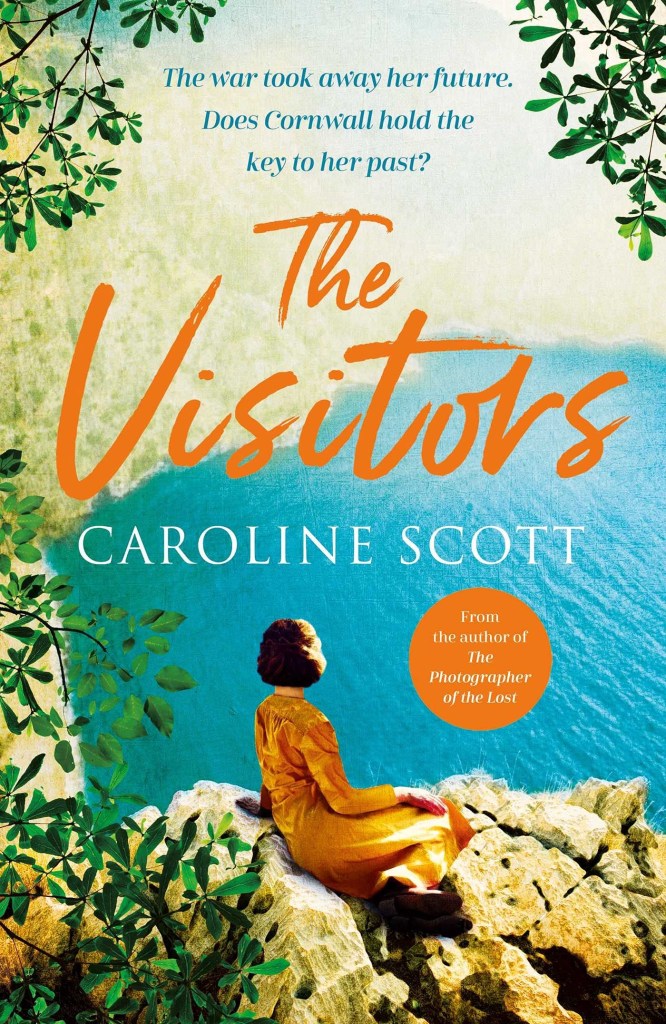
I’ve been a huge fan of Caroline Scott’s last two novels and share an interest with her in the historical period following WW1. This novel touches upon some of the most important issues of the period, while telling a story that touches the heart strings and holds some surprises for the reader. It shows just how chaotic relationships can become during and post wartime, as well as how much people change when faced with terrible and traumatic experiences. We follow one young war widow called Esme whose whole life changed after she received news that her husband Alec had been killed. No longer able to afford to live in their marital home and needing to find work, Esme finds herself in the employment of Mrs Pickering as companion and helper, while also writing nature columns for her local newspaper. As the summer of 1923 approaches Esme is packing her employer’s clothes for a trip down to Cornwall. Mrs Pickering’s brother Gilbert, has established an artist’s residence in his large country house, and the artists have all served together in the war. As Esme meets Gilbert, Rory and the others she hopes to get an insight into what Alec might have experienced and maybe feel closer to him. What she finds there is certainly transformative, but in a very different way.
Esme is a very likeable character. She’s intelligent, resourceful and has really struggled to pick herself up again from nothing. She’s had no support system to help in her grief or her financial difficulties, in fact this is something she and Alec had in common, they were each other’s family. The author tells us this story in three separate narratives and each gives us a new perspective on the characters. Alongside the main narrative in which we follow Esme to Cornwall, we read the nature column she writes and it’s sublime in its descriptions of this place she’s visiting for the first time. We can see what a talented writer Esme is and how much nature means to her. I kept thinking how lovely these passages will sound on audiobook, almost like poetry. The observations she makes made me feel Cornwall again and in quite an emotional way considering I first visited there almost fifteen years ago when I was newly widowed. I felt like Esme’s Cornwall and mine were the same. I remember consciously walking round thinking that this was the first new memory I was making without my husband and Cornwall’s beauty seemed to make that even more poignant. The third narrative is a book written by Rory, one of Gilbert’s residents and close friend, in which he describes his experience of fighting in France. I was interested in the way he also describes nature as a blighted landscape, ruined by the ravages of warfare. There are vivid descriptions that will stay with me, such as the corruption of the very soil from constantly being churned up, contaminated by mustard gas and almost viscous in it’s consistency. Rory ponders whether this land would recover and how long it would take nature to return. It shows us the utter destruction caused and creates a link between the land the war was fought on and the men who fought it; how long might it take them to recover from the terrible things they have seen and done?
The author depicts PTSD in all of the men who live together in Cornwall, they are each affected by their experiences, but show that in different ways. There’s a vulnerability to them and a need to be with others who have shared their experiences. How else can they be understood and allowed to heal without the pressures of having to find work and cope with the demands of returning to a family? They are each very lucky to have Gilbert and this idyllic setting to slowly recover in. Although each must have another life, one that they belonged to pre-war, potentially leaving behind people who needed or might have asked something of them. It places them in a slightly privileged position over those who had returned straight into full-time work or job seeking by necessity, either because they belong to a different class or have a family to support. The excerpts of Rory’s book are also beautifully written, but don’t hold back from the horrors these men have seen. His descriptions are both vivid and visceral, and through reading his book Esme gains more understanding of these men than perhaps a lot of women would have at the time. How many times do we hear of war veterans who have kept all of this bottled-up inside with family member’s noting they didn’t like to talk about it much? At least here the men have a therapeutic outlet, whether by painting or writing, through which to understand or process these memories, but also communicate them to others without having to say them outright.
All of this would have been enough for a great novel, but the author also places a huge surprise part way through that I hadn’t expected. Through this we see the strength and restraint of Esme, the way she thinks things through before acting and never puts her own needs first. She needs a therapeutic outlet too, showing how the initial effect of war on the person who served ripples outwards to effect their loved ones and even future generations. Just as the land needs time to recover from the physical effects of warfare, there is a shockwave created that blasts through society as a whole. We are shown: how rigid Edwardian class structures are broken down; how marriage as an institution and way of constructing society is outdated and broken; how gender roles become more fluid allowing women more freedom and choice. I really did enjoy seeing how Esme negotiates this new world and makes bold choices for her life moving forwards. This book is another triumph for the author, because it’s a beautiful piece of historical fiction that tries to capture a moment in time where everything’s in flux. These constantly shifting sands of time show us the formation of our 20th Century and the resilience of the human spirit. It gave this reader hope that, just as nature found a way and those battlefields are now meadows and farmland, humans do have the capacity to heal and be reborn.
Meet The Author.
Caroline completed a PhD in History at the University of Durham. She developed a particular interest in the impact of the First World War on thelandscape of Belgium and France, and in the experience of women during the conflict – fascinations that she was able to pursue while she spent several years working as a researcher for a Belgian company. Caroline is originally from Lancashire, but now lives in southwest France. The Photographer of the Lost was a BBC Radio 2 Book Club pick.
This beautiful story has just made it under the wire as I was compiling my Top 21 Books for 2021 and it truly deserves it’s place next to the others on the list. I was gripped by the story of Jack, who makes a very different promise to his new bride Gwen on the eve of WW2. Most soldiers are promising to see them again, to return, but Jack is quite clear. If he should survive the war, he won’t be back this way again. Gwen prays he keeps to his promise, but as they celebrate VE Day she does keep looking over her shoulder. What if he reneges on his promise? War has changed Jack and he is no longer the man who made that bargain. He wants to return and claim Gwen as his bride again, but little does he know that this could set in motion a chain of events that will leave he and Gwen fighting for what they love most.
We go back and forth in time throughout the book, but begins with Jack fleeing his home city on the night train, shielded by a friend who’s working on this nightly service down south from Newcastle. Jack is like many other young men in Newcastle, he’s a riveter in the shipyards and lives in a terrace house with his Mum and sister Jenny. One moment life is trundling along as normal, then the next a terrible twist of fate leads to a violent act of revenge. Stowing away on the night train, Jack plans to hop off somewhere far away where he can find work. So, as if from nowhere, he appears round the bend of a country lane to find a young woman who has fallen from her horse, but has her foot trapped in the stirrup. He hurries to help Gwen as her skittish horse takes off in the direction of the village. He takes her home to her family farm, where she helps her Dad with the dairy cattle and any other jobs that need doing. Lucky for Jack he’s arrived at a busy time on the farm, so while he stays for a home cooked meal to thank him for his service, Gwen’s dad Jim asked if he would like to stay and work. Jack accepts and as Gwen shows him his bed in the tack room, he thinks he may have fallen on his feet for the summer. What he doesn’t know is that Gwen is about to put him in a very difficult position. As he investigates a noise in the stack yard at night, he finds Gwen trying (and failing miserably) to quietly retrieve a ladder. She can’t pass her father’s door because the floor boards squeak. Reluctantly, he helps her climb up into her room, knowing that she must be meeting someone secretly and is surprised by how that bothers him.
I grew to like Jack, who is a young man of principles, only resorting to violence when someone he loves is hurt. He has an inbuilt moral compass, especially in his dealings with women and is very critical of anyone who doesn’t meet those standards of behaviour. He knows that in circumstances where young men lead women on and make false promises, it is the woman’s life and reputation that is ruined while the man just carries onto the next victim. He is a gentleman in his behaviour, even if he isn’t in position. I loved how he doesn’t have that family structure at home, but finds it with Jim and Gwen, and even housekeeper eventually. I didn’t always understand Gwen, although she is very young at the start of the novel and thanks to Jim’s overprotective nature, she’s quite naive. Something I did understand was her loyalty to the land and farm, it’s a way of life that’s in her blood and she isn’t afraid of hard work. She takes a very active part in the farm, from early morning milking, to driving tractors and locking the livestock up late at night. I thought the differences between gender and class were very pronounced in the novel. The women were far from passive in this rural community, with Gwen and Norah as great examples. It was interesting to see how the women from the hall were very separate from this industriousness – something that works against Gwen when it comes to being a mother.
The author creates a beautiful link between Gwen’s wholesomeness and the countryside – she’s miles away from the girls Jack has encountered in the city. She’s a young girl between places in society, she’s not in the lower classes but she’s not good enough for the landed gentry to consort with. At least not in public anyway. In the wartime sections of the book she’s well contrasted with land girl Norah, who has a cynical and knowing way about her. If they go the pub or an event, she soon disappears into a crowd of enthusiastic young men and seems completely at home flirting and telling stories that make them roar with laughter. Gwen is quieter, worried about how the farm will keep going with just her and Norah, wanting desperately to hold on to her father’s legacy. Besides, she knows the lies young men tell and the damage they can do. In those wartime sections, I felt the land and the countryside around it contrasted with the imagined battlefield far from here and the changes that farming had to come. Land was commandeered by the Ministry of Agriculture and fallow fields ploughed up for crops to feed the country. It was the beginning of the end for that quiet time when two ponies pulled the plough and two workers would weed the crop using a hoe. These passages of man working quietly within the countryside soon gives way to more modern farming methods which feel at odds with nature, rather than being harmonious. The author’s descriptions of animal and bird life are like a hymn to the old ways. I understood Jack’s need to return to this life, to feel at peace within it and allow the noise of battle, lodged in his head, to die down. However, I couldn’t see how he could stay either. I wondered constantly when the past would catch up with him and whether Gwen’s secrets could possibly remain hidden. This was a different slant on WW2, full of beautiful pastoral scenes and a relationship I was wishing would turn to love. A simply gorgeous read.
Meet the Author
Born in Shropshire, Anita studied English and American History at the University of East Anglia. She now lives in Berkshire with her husband and three children.
This was an incredibly charming book, so hopeful and uplifting. I’d read The Last of the Moon Girls so had some idea what to expect, but I actually preferred this tale of two women crossing paths in Paris. Soline works in the family’s bridal salon where a little bit of magic is sewn into the fabric. This magic gives each bride the promise of a long and happy relationship. However, there have been so many losses in WW2 that Soline’s hope has dampened and she has lost her faith in magic. She packs away her work in boxes, determined to forget the life she once enjoyed. We then join another woman, decades on from WW2. Rory has always wanted to open a gallery and she leases the same building that houses those pre-war wedding memories. Rory is also grieving, and knows the importance of remembrance, so when she finds a box with a vintage wedding dress and a pile of letters inside, she wants to return them to their rightful owner. The wedding dress looks unworn, but so much care and attention has gone into making it, Rory feels that the owner would want it returned. When she finds Soline, an unexpected friendship develops and the two women find a lot of parallels in their life stories. Is it possible that magic is still at work and these two women were destined to meet? Could Rory be the one to clarify and put right something that happened forty years ago?
I never seem to tire of these time slip novels and I really did enjoy this tale, with its little bit of magic thrown in. I am a believer that we shouldn’t fully lose that sense of magic we had as children, especially at this time of year. I think it’s only by keeping that childlike wonder and hope that we get to fully experience life. Here Soline has been closed off to magic, it’s been too painful to hope. However, when she and Rory cross paths and that faith is reignited, she starts to fully participate in life again and enjoy it. It was an easy read from the start so I looked forward to getting a mug of tea and my favourite chocolate slipping into their cozy world, even though there was some sadness in store for the our main characters. Soline and Rory do dominate and they are the most three-dimensional characters- none of the secondary characters have much depth. However, these were very personal stories and I don’t think the book would have felt as intimate if we’d had too many other viewpoints. Soline’s story follows her work in the bridal salon and her love for Anson, who has a difficult relationship with his father. As the Nazi’s start to infiltrate France, Soline escapes to America and it is her belief that Anson has died at their hands which knocks all the hope and joy out of Soline. She can’t continue with her work and watch others in love, fulfilling their destinies with each other.
Rory (short for Aurora) has a boyfriend called Hux. He’s a doctor and goes out to South Sudan to work with Doctors Without Borders, but is unfortunately captured. Rory doesn’t know where he is or even if he’s still alive. This is the experience that Rory and Soline have in common, they’re separated from their loves and have had to face up to the fact they may be dead – that might be preferable to thinking about what they could be going through instead. Both are very strong women, however, Rory is still entwined with her mother in a very unhealthy dynamic. She hasn’t realised she can simply walk away from her. The abuse is psychological and it is devastating to a young woman still growing up and finding out who she is. You might find that, like me, you’ll be mentally yelling at Rory to stand up to her mother. I just knew that if she finally did, it would be epic. It would be the catalyst to change her entire life. Rory might have the key to Soline’s wartime memories, but she has a lot to learn from Soline who has grown wise through loss and age. The book has a dusting of magic, but it’s subtle and more akin to perception than anything else. I often let people know how easy it can be to be manipulated into thinking someone’s a psychic by showing them how much I can intuit from them walking into a room and sitting down. As counsellors we do this all the time, reading people’s subtle cues in their body language and the words they choose to express themselves. It can be quite easy to work out why a client has come for counselling before they even open their mouths. So, the magic here isn’t overdone and is more about the sense of destiny and heightened perception we can get: in a house, when we walk into a party, or seeing a couple arguing in the DIY store. It’s also about that magical coincidence of these two women crossing paths, when they are perhaps the only person who could help and understand the other. I like this message that it’s not just romantic destiny that happens in lives. Soul mates are not always our romantic counterpart and I loved the friendship between these two. I think Soline helps Rory stand up and claim who she is.
Yes the ending is a bit schmaltzy, but I expected that and it didn’t ruin the book as some sugary endings can tip the book into being too saccharin and off-putting, I think this story has enough complication to keep the reader’s interest and something for everyone with the mix of historical period (although the 1980s doesn’t feel like history to me), dual narration, family strife and the mystery to solve. The tone of the novel is so relaxing and gentle, even when dealing with complex emotions. All in all, an intelligent story of love, loss, and friendship that I really enjoyed.
Published by Lake Union Publishing 1st October 2021
Meet the Author.
After twelve years in the jewelry business, Barbara Davis left the corporate world to pursue her lifelong dream of becoming a writer. She was born in Fair Lawn, New Jersey, but grew up and attended school in Florida. When she’s not writing she’s an avid reader, foodie, and lover of music, a rabid football fan, and a devoted Florida Gator. She also likes to travel with her husband/sweetheart, who over the years has learned much more about publishing and the craft of writing than he ever wanted to know.
Her most recent novel, THE KEEPER OF HAPPY ENDINGS, released October 1, 2021. She is currently working on her eighth novel, and professes to be just as delighted with her job as she was when she set her first word on the page!