Posted in Netgalley

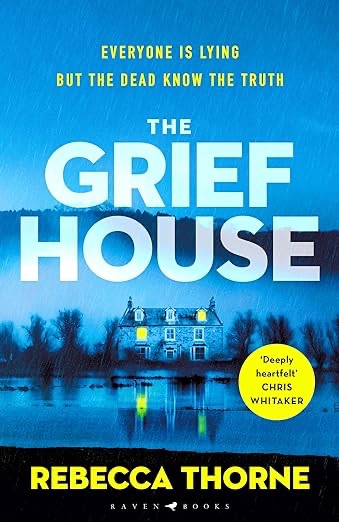
The Grief House by Rebecca Thorne

‘She searches for ways to stop feeling so lonely you fear your brain will melt and your heart will stop and your skin will never be touched again. She searches for ways to make herself feel better. The online forum has been a lifeline. A lifesaver. She can chat to counsellors when she needs to or other women who struggle with similar issues. Every week she receives a piece of advice to help her on the road to recovery or, as she calls it, the road to normality. The path to living a life.’

Blue makes a decision to deal with her unresolved grief and trauma with a residential course she sees advertised when she’s at a low ebb. At Hope Marsh House participants are offered counselling, art therapy and meditation with married couple Molly and Joshua Park. Blue has been struggling for a long time, culminating in the death of her mother with whom she had an uneasy relationship. However her grief journey begins with the loss of her stepfather Devlin, a rotund man with a fondness for kaftans and a talent with tarot. His own skills are based in clever observation, carefully worded open questions and more than average perception, but in Blue he recognises something he isn’t. A lonely child with strong, natural,psychic abilities. Prior to meeting Devlin, Blue’s mother has managed a rather haphazard upbringing at best with choices for Blue that are based in her own problems and inadequacies rather than what’s best for her child. Blue has been home-schooled but any learning was provided by magazines, television and whatever books Blue could lay her hands on. As a result she had no friends and was thought of as weird by the kids nearby. Her mother is equally isolated, not helped by the fact they move constantly. What exactly are they running from? So, Devlin’s attention is welcomed by both mother and daughter. Losing him to a heart attack was devastating and Blue became parent to her heartbroken mother, taking responsibility for her mum’s worsening mental health, the family’s income and single-handedly running Devlin’s mediumship business. Maybe it will take a place like Hope Marsh House to deal with the lonely and exhausting rut Blue finds herself in? It will be kill or cure….

‘And how long have you had your … talents?’ he said. Blue didn’t know what to say. Was hitting a saucepan with a wooden spoon a talent? Was babysitting a toddler in a dry bath whilst her mother cried herself to sleep a talent? She could wash her own clothes in the steel kitchen sink, she could heat soup and tins of beans, she could sing all the words to ‘May the Circle Be Open’. Is this what the strange man meant? She was five years old. She didn’t know.’

The author tells Blue’s story using different timelines: one gives us the present and focuses in on the retreat at Marsh House, while the others are in flashbacks to Blue’s life before her trip and further back in vignettes of her childhood. The flashbacks give us the building blocks of Blue’s personality and the strange abilities she has. She is a little girl simply longing for love and care, we can see this from the way she blossoms if praised by Devlin. Even more than that, the most powerful thing Devlin does is seemingly very simple – when Blue comes off stage, Devlin simply asks ‘are you ok, lass’? These four words mean more to her than anything else because they bypass the person she is on stage and the money her gift can make them and instead asks how she is. He knows and acknowledges what this gift costs her and how arduous a whole show can be, but mainly it’s just a dad checking in on his daughter. It means a lot to Blue, who has probably never been asked if she’s ok before. No one has ever cared enough. It is his care of her that she misses so deeply. I wondered if there were elements of personality disorder. Does Blue know who she is? When Devlin lives with them she’s at her happiest, but I was confused about her relationship with the other two children who live with them – Bodhi and the baby. They seem to be there, but she rarely relates to them. In fact she actively seems to avoid them and almost looks past them if they appear in her eye line.

Other short sections of the book include a story about a loving married couple who haven’t been able to have children, but look after a little girl who lives in a nearby flat with her elder brother. Unfortunately he is a drug addict and the couple, James and Marie, provide that stable family unit for Jessica. They dread something happening to Jessica’s brother because she could then be taken away from them. I knew that this couple related to Marsh House in some way, but I wasn’t sure how. Why does Blue keep hearing the same three girls names, Jessica, Eleanor and Lauren? Who is the strange long haired girl that appears in Sabrina’s room and opens the door when they’re not there. When she appears Blue starts to feel sick and a feeling of dread comes over her, a couple of times she comes close to passing out. The apparitions also have a way of spoiling her food, making it smell like rotten eggs or rubbish bins. They want to be noticed, but what are they trying to tell her?

The retreat itself is disturbed by a storm and the nearby river bursting it’s banks, threatening the house itself. Instead of the therapy they’re supposed to be receiving Blue and the other able bodied participant Sabina, help Mr Park with unblocking debris from the bridge to help the river flow on it’s normal path. The only other resident is Milton, an older man who uses a wheelchair and seems weakened by a lung disease that causes coughing fits. He’s been to the retreat several times, but seems incredibly grumpy with Molly and her husband. He also avoids any of the activities and even rebuffs Molly’s late night cocoa ritual. Is he just one of life’s misanthropes or is there more going on? Obviously, as a therapist, it’s Molly I’m fascinated with. I’ve been through a major bereavement and have run courses like the ones Molly advocates using a combination of meditation and group therapy using creative writing and art. I found her manner with the participants overwhelming at times. Even before the flood interrupted the normal flow of things there was a boundary issue that I couldn’t put my finger on. As time went on I realised the couple had no children, so who is the little girl in the picture that’s hidden in their own private sitting room? Who is the girl that Blue can see, if no children have lived there? Molly seems to mother her guests. It’s difficult to create clear boundaries when working in your own home and especially when participants are also eating with you and staying overnight. However, there’s something about the way Molly nurtures her clients that feels off. There’s a power imbalance at play, almost as if she is the parent and they are children. It’s this element in her personality and the care she gives that Milton seems to resist or even reject outright. Blue is particularly susceptible to her methods, because she has never had a nurturing mother figure. I felt protective towards Blue (my own maternal instinct at play) and my instinct was telling me she needed to keep her wits about her. The author created a sense of impending doom and as the worst of the storm hit it felt like a warning.

I don’t want to reveal any more, because I think the the story unfolds at the right pace and the truths are revealed slowly. The revelations come in both timelines, as Blue unearths the truths about her mother Bridget by looking through archived newspapers in the library. The secrets come out as if they’ve always been there in Blue’s mind, she just needed something to unlock the door. There will be moments at Hope Marsh House where you wonder what’s going on, placing you in exactly the same position as our main characters. The reader discovers the answers when the characters do so we feel their disorientation, confusion and fear. There were one or two moments that were genuinely terrifying! I enjoyed the growing bond between the three guests at Marsh House, something that Blue has never had before and exactly what she needs. I stayed up late to get to the end and I wasn’t disappointed, although it did lead to some disturbing dreams that night. This was a really great read with a perfect balance between psychological thriller and haunting, gothic tale.

Published Jan 18th by RAVEN Books

Meet the Author

Rebecca lives in the West Country with her family and their cat. She has written two best-selling novels under the name Rebecca Tinnelly: Never Go There and Don’t Say A Word, both published with Hodder.

Posted in Squad Pod

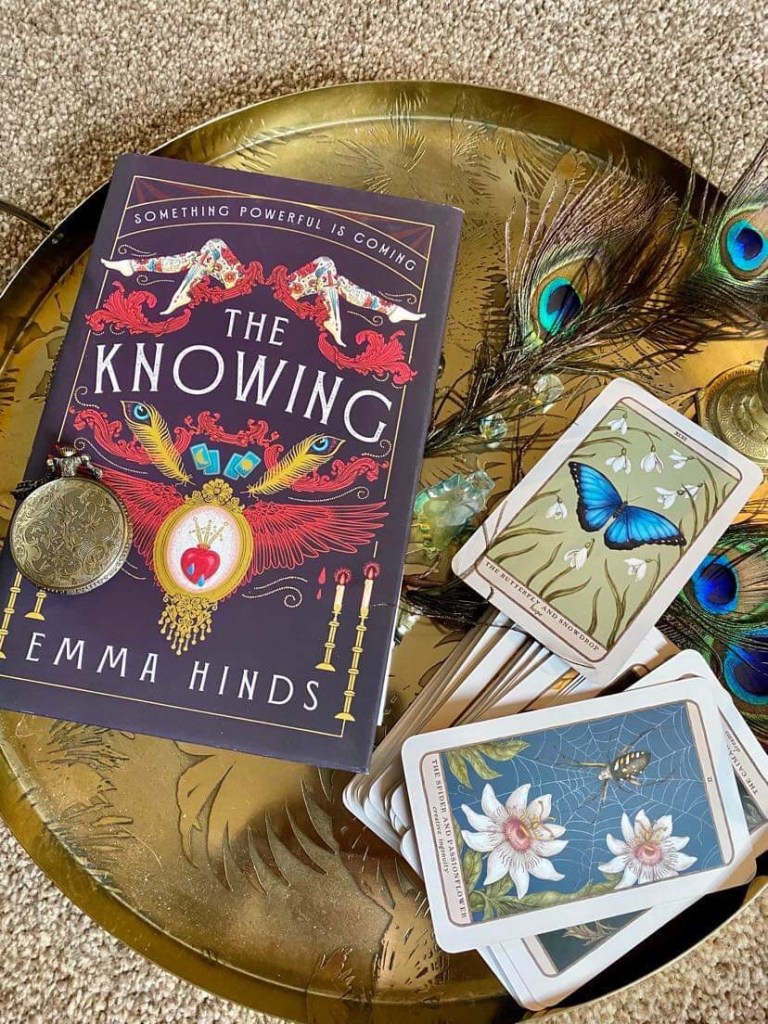
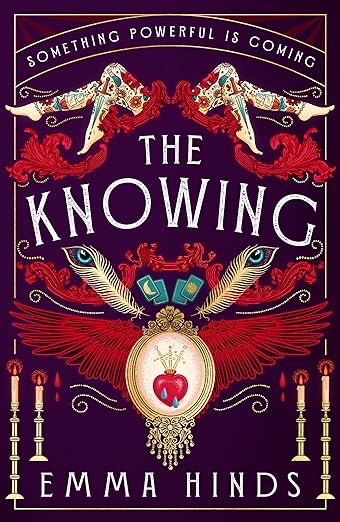
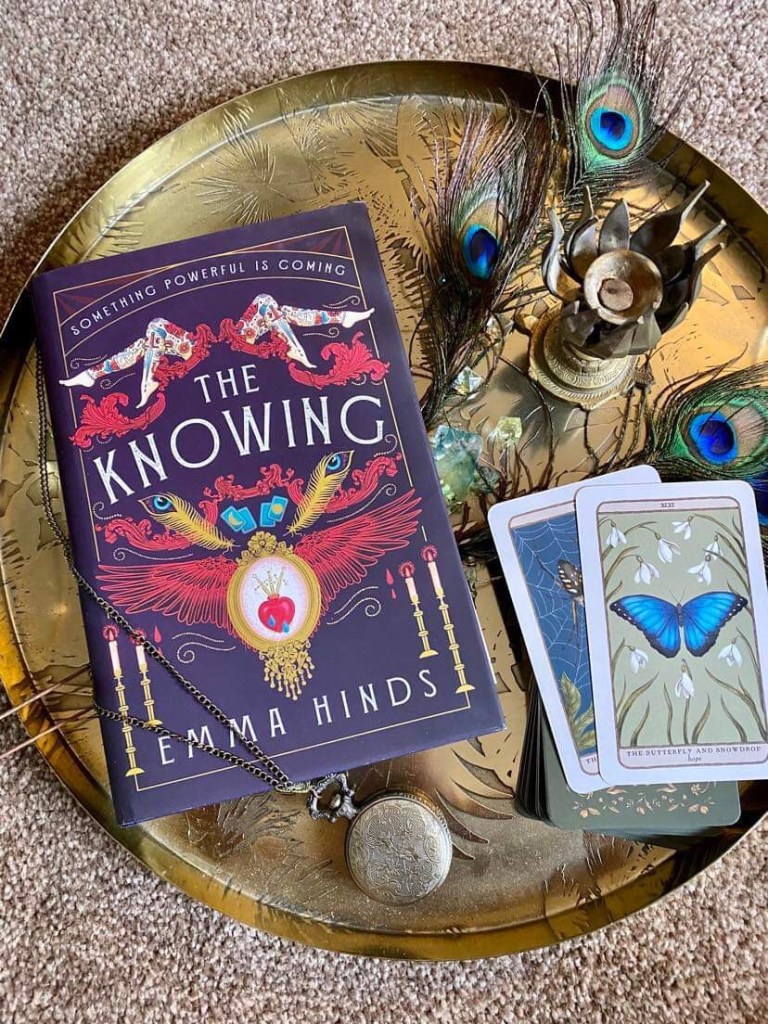
The Knowing by Emma Hinds

If this author had a certain readership in mind when writing this debut novel, she might as well have had a picture of me. I would have picked this book up on the strength of the cover alone. Three of my all time favourite books are: The Crimson Petal and the White set in the seedier areas of 19th Century London with a heroine is a prostitute called Sugar; The Night Circus that appears without warning, held together by real magic and the result of an epic battle between two magicians; The Museum of Extraordinary Things where our heroine is a mermaid, exhibited in a freak show at Coney Island. See what I mean? It’s perfect for me. The blurb promised me a tattooed mystic, a show run by a prostitute with dwarfism and real life New York gangs and Barnum as their contemporaries. It’s quite a heady mix and I was enthralled from page one. Flora is a tattoo artist and mystic, in an abusive relationship with a tattooist called Jordan, a member of an Irish gang the Dead Rabbits. She longs for escape from the slums of Five Points and the degrading relationship she’s been in since she was a teenager. Then she meets Minnie, a beautifully dressed woman whose dwarfism has led her to a career as a circus and freak show performer. Minnie promises Flora a career and life in an opulent town house uptown, not to mention her freedom. However, the freedom she’s promised comes with certain conditions.

Flora stays with Minnie, in her palatial bedroom and bathroom within the townhouse that belongs to her lover, Chester Moreton. Avoiding Chester’s advances seems to be one condition of Flora’s freedom, along with constant worry about being found by Jordan’s friends in the Dead Rabbits gang. She’s to earn her keep as a mystic, with her tattoos and tarot cards the centre of attention. Minnie knows that Flora’s skills run deeper, although she’s always been warned to hide them and ‘tell nuthin’. Flora’s gift is ‘the knowing’ an ability to summon the dead that’s always on the periphery of her performances, but kept at bay by Flora’s willpower. It’s when she’s pushed into allowing her spirit guide to break through that the trouble begins. At the Hotel du Woods she exposes the abuser and killer of a young boy, setting in motion a chain of events including suicide, murder and madness. Flora and Minnie escape and voyage to Manchester, where they try to survive on what they can earn from sex work and Flora’s tarot readings, but the past is never far behind and once again Flora finds herself at the centre of a love triangle where obsession and betrayal are medicated with drugs and alcohol and a tragic end seems inevitable.

I felt fully immersed in the novel immediately as the author creates an incredible sense of place. Five Points is grimy, deprived and controlled by gangs. I loved how the author used the grotesque throughout the novel and particularly where she’s describing the slums of New York and Manchester, filled with rats, unwashed bodies and an ever present grime that’s sticky on the skin. This took me straight back to university and Kristeva’s theory of abjection. The things that women’s bodies can do are magical or monstrous. Flora’s body is a conduit, allowing the dead to speak through her. Minnie’s body is seen as grotesque by others, but she wears angel’s wings and when she’s in bed with Flora it’s the softness of her skin that’s noticed first. All women have a transformative power to produce another life, when their pregnancy isn’t terminated by the men in their lives. The author doesn’t hold back when describing the reality of life for women, particularly women like Flora who haven’t had choices. Bodies seem divorced from minds when it comes to sex with men, as torsos become slabs of meat, breaths are whisky sour and skin is raw, red and broken. Sex is rarely consensual and always comes with violence. It’s a grim world so any chance to escape into a better future is welcome. The gentle and pleasurable attentions of Minnie are a promise of things to come, where Flora could have choices and sexual experiences that come from a loving place instead of a place of ownership.

No one here is perfect. Each character is morally grey and I loved that complexity in their personalities and the ambiguity it brought to their actions. I was also transfixed by the sheer power of Flora’s ‘knowing’. Mediumship has become something of a joke these days, a formulaic stage show where people are picked out of the audience and told that Grandad left the priceless clock in the attic or under the floorboards. It’s always benign and a little bit boring. Flora’s spirits are not there to guide her and they’re definitely not benign. They want to expose truths, tell the subject’s darkest secret and even mete out punishment where necessary. The first seance at Hotel du Woods is successful from one viewpoint – the spirits do come through – but a disaster from the other side when a vengeful spirit talks a man into killing himself. No one will be booking them again! Flora will have to learn how to control the spirit’s power and keep the vengeful ones at bay. Strangely, for a story where our main character is prevented from carrying children, this felt like a story about mothers too. It’s about the lack of a mother when growing up and how the lack of motherly love and protection feels, but it also shows the people who fill that void and become mother figures. This could be a difficult read for some, especially the sexual violence, but it would have been the daily reality for women living in 19th Century slums and for some women in upper Manhattan townhouses. I desperately wanted Flora to survive and have the right people around her, to give her the feeling of being loved and wanted. This is an addictive read of vengeance, betrayal and obsessive love and I couldn’t stop reading until I knew the truth of Flora’s fate.

Meet the Author

Emma Hinds is a queer novelist and playwright from Manchester. She focuses on untold historical Queer narratives and her debut novel, The Knowing, from Bedford Square Publishers is coming in January 2024.

Posted in Random Things Tours

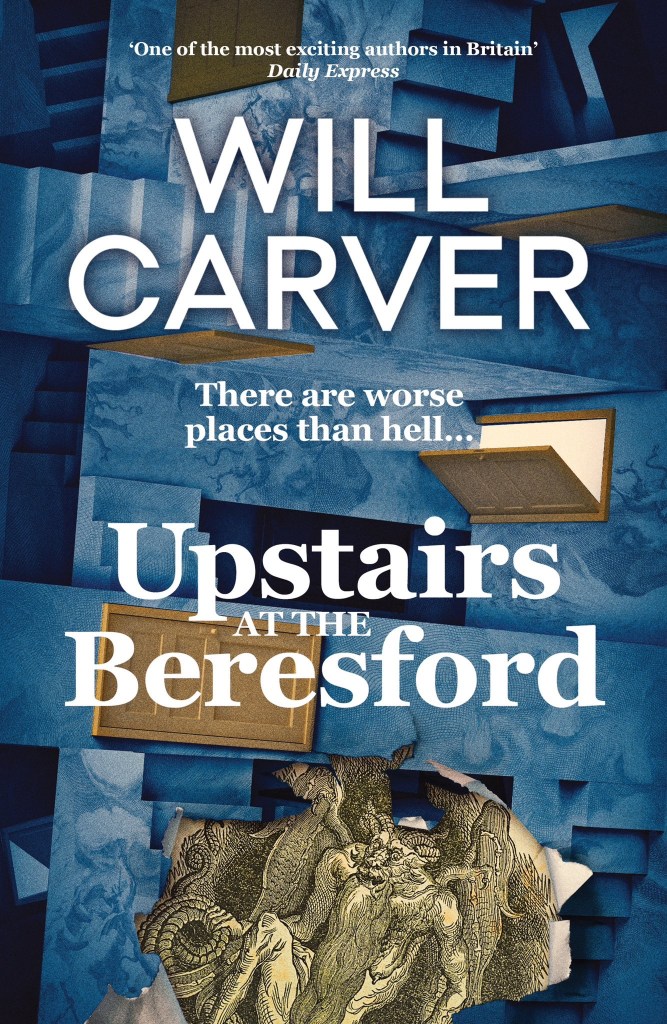
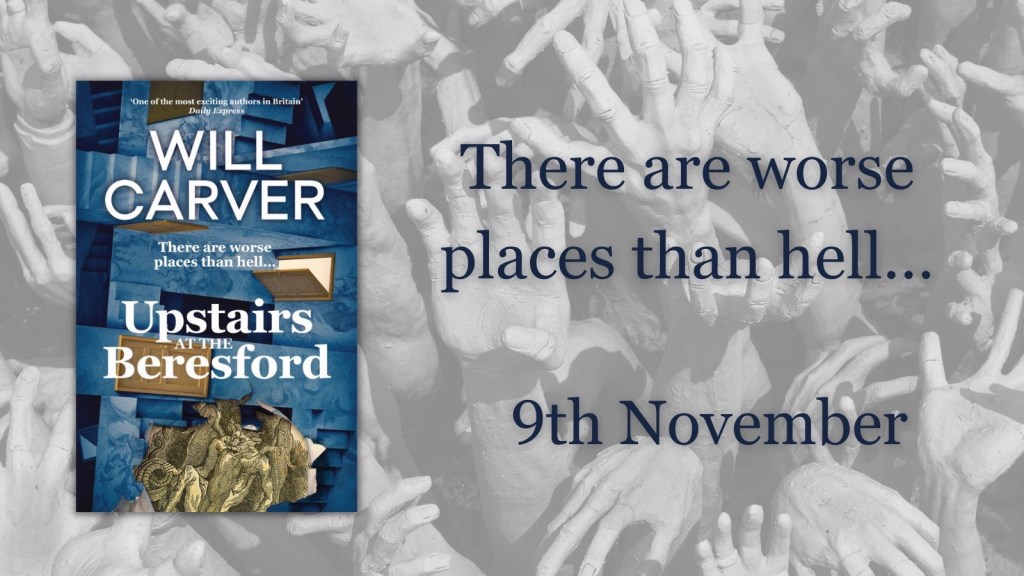
Upstairs at The Beresford by Will Carver

“The entrance to Hotel Beresford is art deco. Strict lines, geometry and arches showing cubist influence. The monochrome carpet screams elegance as it leads towards the desk that stretches the length of one wall, marble with chrome embellishments. Or, at least, it once looked that way. Back when writers and poets and dignitaries roamed the hallways and foyer. It still feels lavish. Glamorous, even. But faded. And a little old-fashioned.”

Ever since I read The Beresford I’ve been wondering what was going on through the other entrance. The entrance merely hinted at in one of it’s scenes. If what was going on up there was more weird or dangerous than the apartments at the front, I dreaded to think! In my review for the first book I wrote about the Dakota Building in New York City, because my mind kept drifting towards it while reading. It has just the atmosphere for this particular den of iniquity, it has a brooding sense of menace or presence of evil. Yet inside it reminds me of the Chelsea Hotel, a NYC landmark where in the mid Twentieth Century writers, musicals and artists lived. Arthur Miller, Bob Dylan, Arthur C. Clarke, Andy Warhol and Edie Sedgwick all inhabited the hotel in the 1960’s.

“Each floor looks the same yet somehow has its own unique landscape; it’s known for something particular. A celebrity affair. A mysterious death. A legendary party. Rumours that a serial killer crashed there between sprees. Rock stars smashing up rooms. Writers creating their masterpieces. Some is legend, much is true. All is talked about. With fondness, fascination and morbid curiosity.”

The author tells his story through a series of fascinating characters who live or work in the building. A young boy called Otis who lives on the seventh floor with his parents, who are constantly at war. Sam is an angry man who lets everyone feel his displeasure, often taking out his anger on wife Diane and son, Otis. Diane is turning tricks while Sam is at work in order to have an escape fund, often leaving Otis hanging round the building trying to avoid what’s going on. His favourite place to hang out is at their neighbours, but knows his mum would go crazy if she found out. Neighbour Danielle is a jazz singer with a voice so smokey it immediately conjures up exactly the kind of bar that would employ her. She likes to sit on her couch, under the window with one leg dangling out into the street. Along the corridor are the Zhaos, a sweet Chinese couple who also like to dangle out of their window, smoking something a little stronger than Danielle. Then, living in the penthouse on the top floor, is Mr Balliol. He owns the building and has the disconcerting ability to know everything that’s going on in the rooms he rents out and often sidles up to guests and his staff with no warning or sound. His unique staff are working on a business conference which will keep the hotel busy for a couple of days, but today is going to be an unusual day. Many different rumours swirl around the Beresford Hotel, some more fantastical and darker than others. It’s had more than it’s fair share of deaths, some accidental and some less so. Today is going to test the people who dismissed those darker rumours as impossible. Anything is possible at The Beresford Hotel.

“Peeling paint and faded hopes. Much like Carol. Carol seems to age with the building. For every strip of wallpaper that gets ripped or falls away, Carol gets another wrinkle. When the front facade gets uplifted with a new paint job or some detail on the masonry, Carol turns up with a Botoxed forehead or facelift. But not from a reputable surgeon. From somebody she saw advertising in the back of a magazine.”

Of all the characters I was absolutely transfixed by hotel manager Carol who seems like part of the building. She is that wonderful mix of unobtrusive, but yet ever present when needed, that all the best hotel employees have. No one notices the person who quietly sits in her office or on reception, but Carol has an uncanny way of knowing most things that go on in the hotel. She can probably guess at the rest, but doesn’t share Mr Balliol’s seemingly supernatural abilities. She has the world weariness of having seen it all before; most guest’s behaviour is not as unique as they would like to think. So she’s adept at covering up minor indiscretions all the way up to the accidentally dead: the husband who’s beaten his wife for years and finally gets his comeuppance, a solo sex game gone wrong or prostitutes- who end up accidentally dead more than most. Nothing much surprises Carol, even if a business conference does turn into a wild party or bacchanalian orgy. Yet behind the secret door to her inner office we see a softer Carol, perhaps the real woman beneath he hard nosed employee. It’s clear she’s suffered a loss. One guest who has spied Carol’s profile on a website has noticed this crack under the surface:

“He remembers Carol’s profile among the twenty that he settled on. He could see her former beauty, but this isn’t about going deeper than the surface, it isn’t some outreach programme. It isn’t benevolence or sensing someone’s spirit. Danny can see that Carol is broken. And he likes that. She had loved somebody so completely and then they died, and she has never recovered.”

Her soulmate and husband Jake is almost fatally injured in an accident and hasn’t come out of a coma since and as the weeks go on she begins to realise that the Jake she knew and loved was gone. His body was here, but not his mind, and the more time that passes the more it dawns on her that he is going to need help with his most basic human functions – he will have to be fed and piss into a bag for the rest of his life, if it can be called that. In desperation she calls on God, she will do anything if it will save the man she loves. God doesn’t answer. Yet bargaining is her only hope and if God won’t answer ……

Will Carver is one of the most unique writers I’ve ever read and this latest novel is no exception. He understands human nature. Not that all of us are checking into hotels and choking the life out of prostitutes, but he gets the smallest most innocuous and innocent thoughts as well as the darker side of our nature. His narrative voice is conspiratorial, it lets us into every corner of the hotel and also gives us curious little asides about the world we live in. Many of the speeches are recognisable as things we’ve thought and said about the absurdities and horrors of our world.

I loved his insight into writing through the character of I.P. Wyatt who also lives on the seventh floor and is struggling with that difficult second novel after a very successful first. His words are probably self-reflexive – where an author writes their own experience of writing the novel into their novel – although I do hope Carver isn’t applying Wyatt’s method.

“Some days he writes without breathing for hours, others he spits four perfectly formed words onto the page. And each evening, he deletes everything. He can’t stay in love with his words. He had it so perfect. Anything less than that and he will be chewed up by the press and readers and strangers online who just want to vomit vitriol with no personal consequence. Even if he can replicate the quality of that last book, it won’t be that book, that surprise success. And too much time has passed now. It will never live up to the hype. He should have just churned something out quickly. Something that could be torn apart that he wouldn’t care about.”

Carver has taken the age old tale of the Faustian pact and brought it up to date, into the 21st Century where despite all the advances in science and technology there are still terrible events we can’t control. As we all know, especially if we’ve watched Peter Cook and Dudley Moore’s film Bedazzled, making that sort of bargain or deal rarely benefits the desperate petitioner. The brilliance of Carver is that when we think we’ve worked out what’s going on, just like the twelve elite businessmen at their conference find out, a whole new level opens up before us. This is a daring novel, with a deep vein of human emotion at the centre. Yet it’s also playful, thrilling and dangerously dark indeed. If you’re not convinced by me then I’ll let Carver persuade you in his own words.

“When you watch a television soap opera, things are hyperreal. It’s unfathomable to have that many murderers and fraudsters and adulterers living on one street as part of one of three largely incestuous families. Life isn’t like that. Things don’t happen in that way. Hotel Beresford makes television soap operas look like a four-hour Scandinavian documentary about certified tax accountancy.”

Published 9th November 2023 by Orenda Books

Meet the Author

Will Carver is the international bestselling author of the January David series and the critically acclaimed, mind-blowingly original Detective Pace series, which includes Good Samaritans (2018), Nothing Important Happened Today (2019) and Hinton Hollow Death Trip (2020), all of which were ebook bestsellers and selected as books of the year in the mainstream international press. Nothing Important Happened Today was longlisted for both the Goldsboro Books Glass Bell Award 2020 and the Theakston Old Peculier Crime Novel of the Year Award. Hinton Hollow Death Trip was longlisted for Guardian’s Not the Booker Prize, and was followed by four standalone literary thrillers, The Beresford, Psychopaths Anonymous, The Daves Next Door and Suicide Thursday. Will spent his early years in Germany, but returned to the UK at age eleven, when his sporting career took off. He currently runs his own fitness and nutrition company, and lives in Reading with his children.

THE BERESFORD is currently in development for TV.

If you would like to get in contact, I can usually be found on TWITTER/X @will_carver but who knows how long that will last..?

You could always check out my website where you can join the MAILING LIST to stay updated with deals and competitions and which EVENTS I will be attending throughout the year. (There are also many hidden easter eggs within the site, just as there are in my books. Feel free to click around and see what you find.)

Recently, I have also become a podcaster and present the LET’S GET LIT podcast with fellow writer SJ Watson, where we discuss books and writing each week while sharing a drink. (Find us wherever you get your podcasts from.)

Oh, and just in case TWITTER implodes, I can also be found here…

FACEBOOK – @WillCarverAuthor

INSTAGRAM/THREADS – @will_carver

BLUE SKY – @willcarver

Posted in Sunday Spotlight

Book Scenes That Gave Me Nightmares

A Halloween surprise

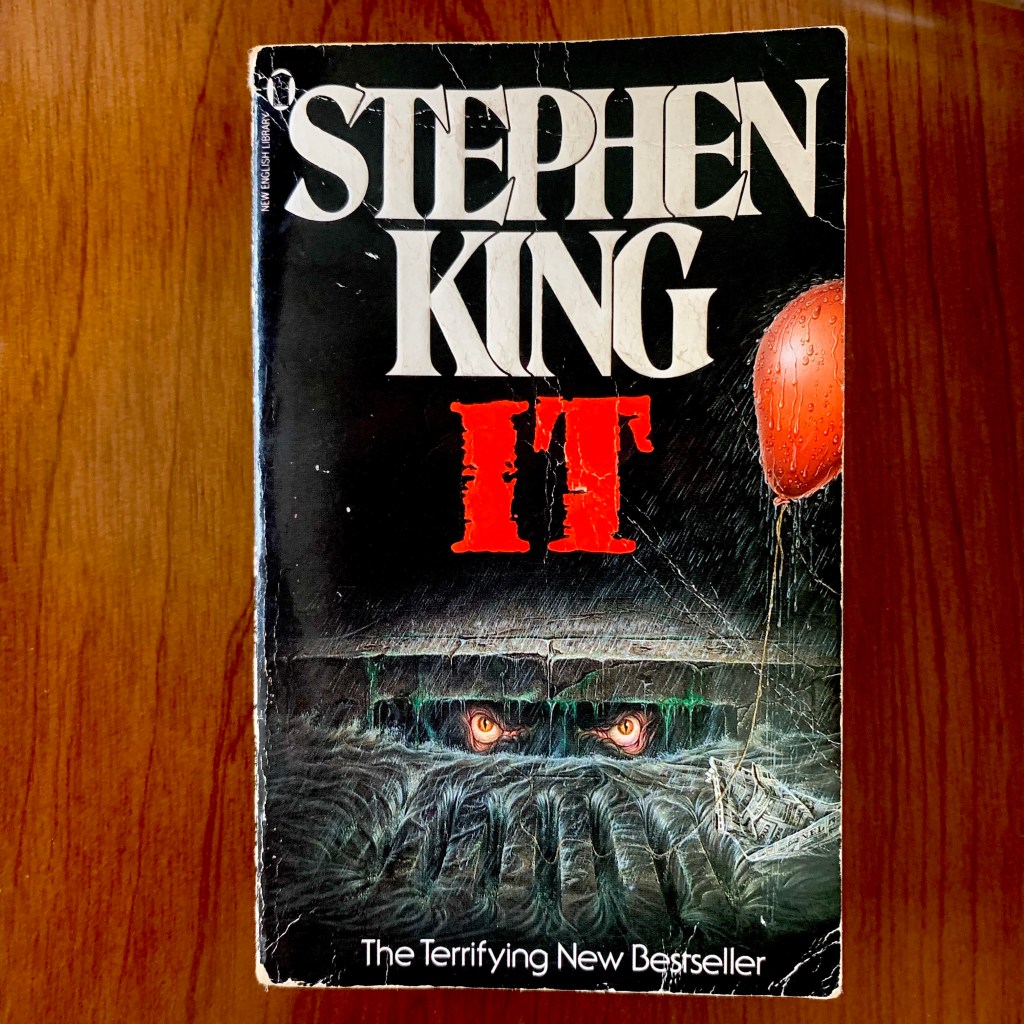
It by Stephen King. There are a lot of problems with this book, mostly the fact that his villain, Pennywise the Clown, is way more terrifying than the ‘It’ eventually encountered by the gang underground. I don’t think reading It started my clown phobia, but reading it as an impressionable teen certainly didn’t help. Now I’m terrified of anything that doesn’t show it’s real face, so masks, hoods, and make up always send a shiver up my spine. The scariest scene has to be when little Georgie Denborough, in his yellow Macintosh and hat, goes outside in the rain to play with his paper boat. The boat slips into the gutter and is washed into the storm drain. As Georgie approaches the drain he can see red tufted hair and floating balloons. They float, says Pennywise the clown. This clown has teeth and as Georgie reaches into the drain for a balloon he loses his arm. They all float down here.

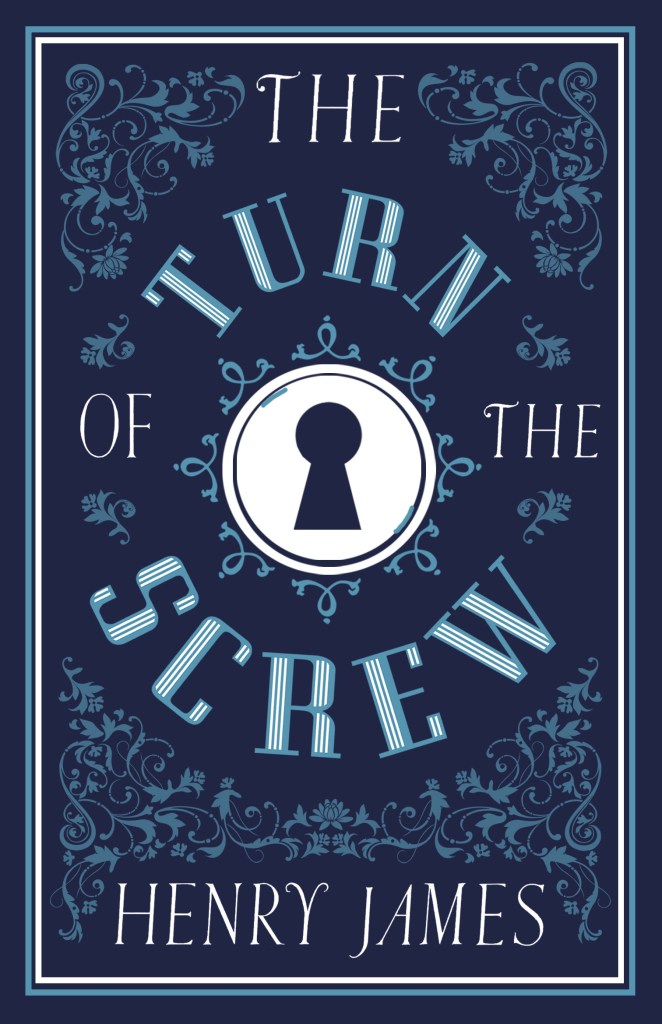
The Turn of the Screw by Henry James. This is a distinctly odd book, with no real answers or clarity about what is happening at Bly. Are there real ghosts at the house with malicious intent? Is it the children, Flora and Miles, who are possessed by demons or just evil and manipulative towards their governess? Is the governess mad, hallucinating the ghosts of Bly’s former employees and terrifying the children? I definitely err on the side of the children being the problem, they are far too knowing and precocious for their years. It may be that the children have been affected by their time with previous employees Peter Quint and the last governess. Whichever it is the two children make me shiver and the final scene where Peter Quint appears at the window to the governess is doubly scary because we don’t know if they can both see him, or just the governess. As Miles falls down dead I wondered whether their aim to send the governess mad has worked and backfired spectacularly. Henry James plays with the Victorian ideal of childhood innocence and that’s what makes it so creepy, the thought that we might be in danger from those we consider vulnerable and incapable of evil is incredibly subversive.

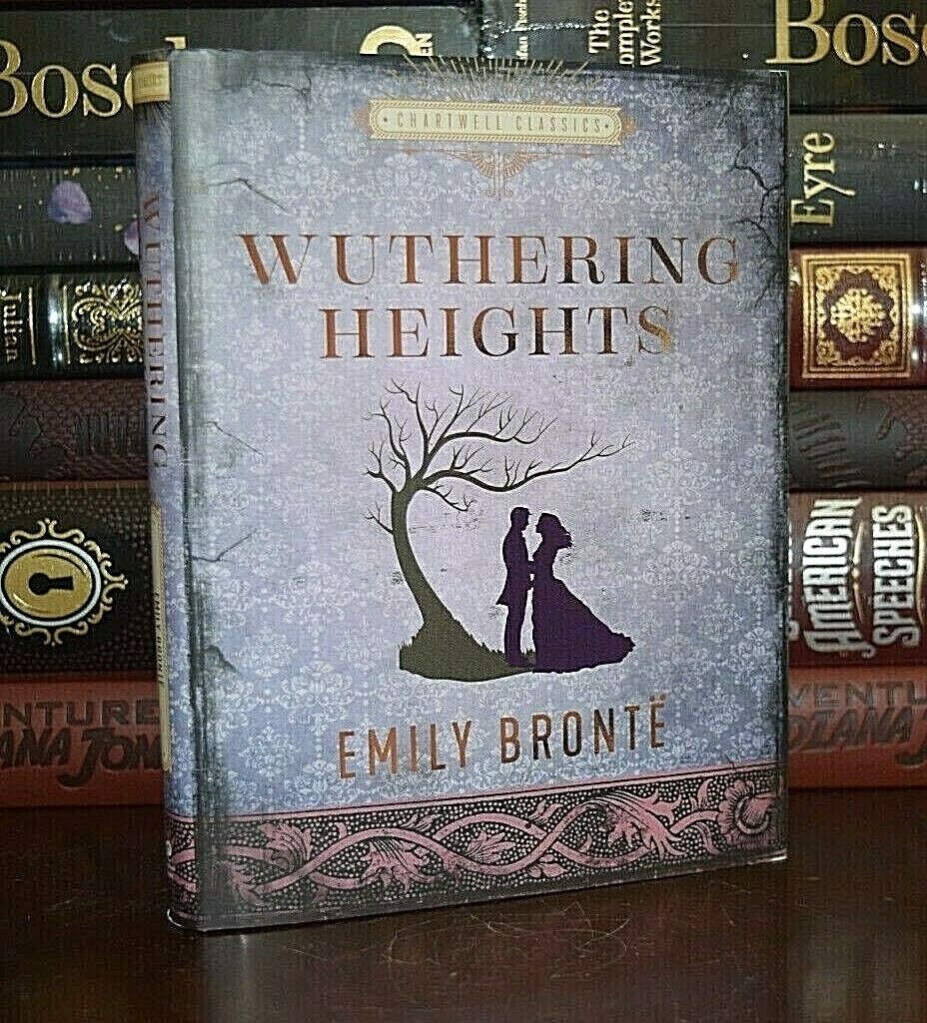
Wuthering Heights by Emily Brontë. Wuthering Heights is a story narrated by the family servant Nelly Dean, as told to a visitor to the farm, one of Heathcliff’s new tenants called Mr Lockwood. The weather worsens dramatically during his visit and as night falls it is clear that it’s unsafe to travel on horseback and he must stay. Heathcliff begrudgingly gives Lockwood a bed for the night, an old oak bed set under a window that overlooks the Moors. He wakes in the night, disoriented and disturbed by a tapping at the window. It is merely a branch and he concludes that he has been dreaming, influenced by Nelly’s tragic story of Catherine Earnshaw. He cannot unfasten the window, then resorts to breaking the glass to grasp the branch. The moment he reaches out to grab the branch but instead grabs an ‘ice-cold hand’ never fails to lift the hairs on the back of your neck. As he sees her white little face through the window he tries to pull his hand away but she won’t let go, begging him to let her in as she has lost her way on the moor. His solution is to grind the child’s wrist across the broken glass of the window until blood runs onto the bedclothes. This scene ensured that for my whole childhood I closed the curtains of any room I was in as soon as it was dark.

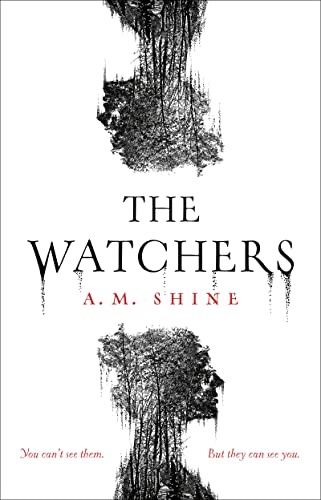
The Watchers by A.M. Shine. There’s so much to love in A.M.Shine’s debut novel, but one scene stands out for me, leaving me unsettled and unable to sleep. Set in rural Ireland, our heroine Mina is stranded in the middle of nowhere after her car breaks down as she does a strange favour for a friend. As sets off on a walk towards civilisation, she takes a wrong turn and ends up in the woods. The trees seem never ending and as afternoon starts to move towards dusk she has a strange sense of being watched. An unusual screeching noise unnerves her as she reaches a clearing and sees a woman shouting, urging Mina to run to a concrete bunker. As the door slams behind her, the building is besieged by screams. Mina finds herself in a room with a wall of glass, and an electric light that activates at nightfall, when the Watchers come above ground. These creatures emerge to observe their captive humans and terrible things will happen to anyone who doesn’t reach the bunker in time. This opening scene is so tense that when she reaches safety there’s a moment of relief, but only a moment. As the light comes on we realise that the glass window is full of creatures, staring in at their prey. I think the fact we never fully see a watcher makes it scarier as our imagination fills in the blanks. There is a twist to the ending that I can’t reveal, but I assure you it’s just as terrifying.

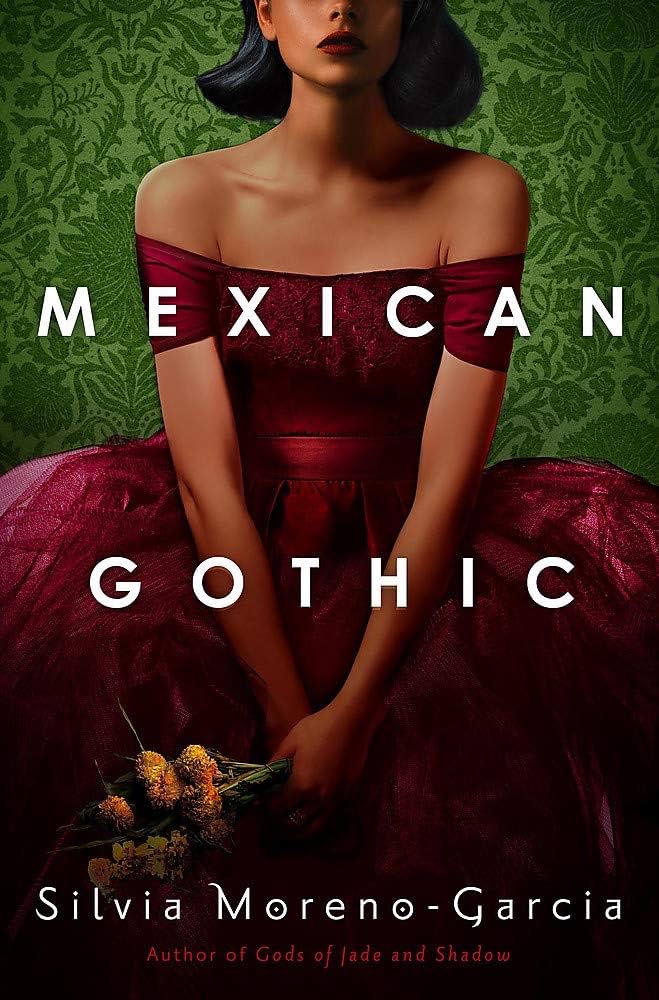
Mexican Gothic by Silvia Moreno-Garcia. I loved this brilliant horror novel that explores colonialism, feminism and eugenics as well as being downright scary. Noemi is a guest at High Place, wanting to spend time with her friend Catalina who has married into the wealthy Doyle family. Yet all is not well in the Doyle household. Noemi finds her time with her friend is very tightly controlled because Catalina has succumbed to a mystery illness. The family patriarch spouts his vile views on race and eugenics at the dinner table and what is going on with the mushroom wallpaper? It was Noemi’s strange dreams that I found most terrifying: she wanders the house covered with spores, has deeply sexual encounters with her friend’s husband and is haunted by a woman with a golden glow for a face who tries to communicate despite not having a mouth. However, nothing is more terrifying than coming face to face with the reality of the patriarch’s existence. Just as Noemi dreamed of the house becoming a mass of sores, his body is rotting to the touch. We are faced with blood, pus, bile and many other grotesque images, but even worse for Noemi there’s a threat of sexual violence culminating in the sort of kiss she really didn’t want. This made me physically retch! Oh, and you’ll be put off mushrooms for a little while.

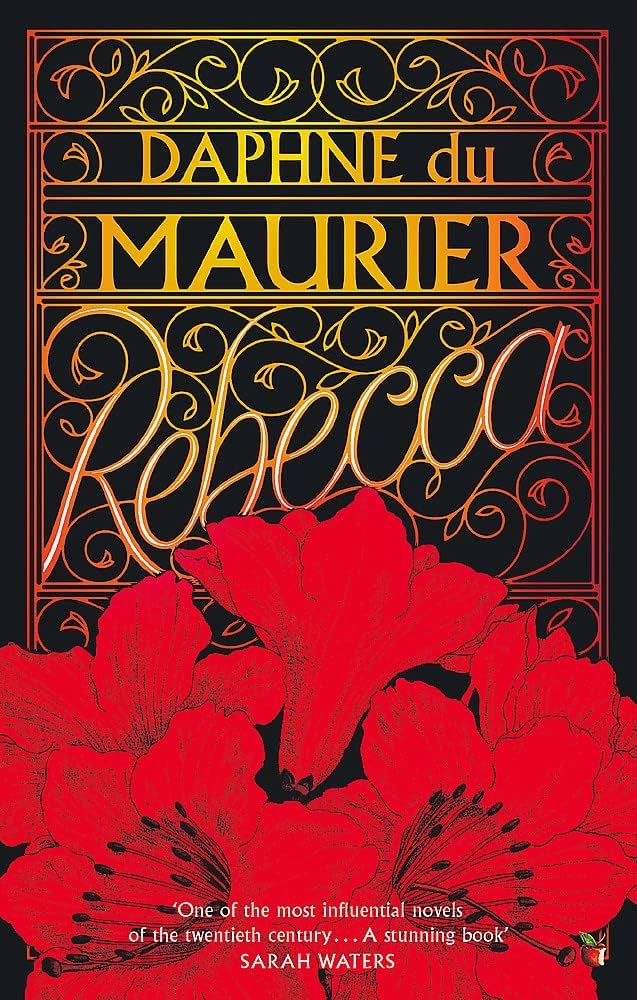
Rebecca by Daphne Du Maurier. I would argue that Daphne Du Maurier’s classic thriller is a ghost story, in fact in some ways both the women married to Maxim De Winter are haunting his home Manderley. Rebecca is dead, killed in a sailing accident, but her presence is still very much alive in the mansion: the west wing upstairs is off limits, still set up as her bedroom complete with her nightclothes laid out on the bed; her correspondence and address book is still out on her desk in the morning room with a huge ‘R’ on the cover; she even inhabits the cottage on the beach that her dog Jasper escapes whenever he can. The new Mrs De Winter is lost in this grand stately home and simply wanders to whichever room the servants direct her, servants who are still following the Rebecca’s routine. She doesn’t even have a name. However, the scariest part of Manderley is Rebecca’s servant Mrs Danvers installed as housekeeper after the to move to Maxim’s Cornish home. Described as wearing a long black dress, with gaunt features and deep set eyes that made her look like a skull she seems to slip between room silently, always seeing precisely the moments that the young Mrs De Winter would rather she didn’t. She encourages her new mistress to hold a costume ball like the old days and as an extra favour she suggests that she copies a costume from an ancestral painting on the stairs, not mentioning that Rebecca wore the same costume at the last ball. When Maxim first glimpses his wife on the stairs he thinks for a dreadful moment it is his dead wife and he is unnecessarily harsh. As she flees to the banned West Wing, Mrs Danvers torments her with Rebecca’s flimsy nightwear and the details of their routine. Her voice is hypnotic as she urges her new mistress to open the window to lean out for some air. The suspense as she tells her to jump, that she’s no use, she’s not loved and Maxim will always love Rebecca. A well timed shout and flare from a ship in distress are the only things that save her. This is the moment we know what this terrifyingly obsessed woman is capable of. Is Rebecca working through her, was she in love with her mistress, or was she simple unable to accept her death? Either way she is deadly dangerous and very creepy indeed.

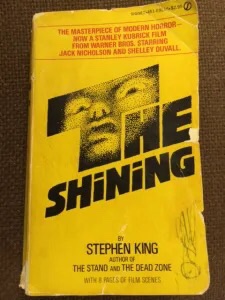
Shining by Stephen King. We’re back to King now, the ultimate horror writer and one of my favourite novels in his back catalogue. Everything about this book is creepy, from the wasp’s nest to the twins in the corridor, but there’s one scene that puts the fear into me and that’s the woman in room 217. Jack Torrance has been slowly sinking into his alcoholism ever since his family arrived at The Overlook Hotel and his son Danny has been exploring the place, often unchecked since they’re so isolated they know there’s no one else around. The problem is that Danny has the ability to see things his parents can’t and while they’re sure no people are around, they can’t say the same about dead people. In a scene that’s written so well I can feel Danny’s terror, he makes his way into room 217 and notices the curtain drawn around the bathtub. As he pulls the curtain back, hoping his parents have left a surprise for him, he is horrified to see the grey, lifeless flesh of a woman. Except she’s not so lifeless. As Danny desperately tries to exit the room he hears the sound of her body slipping and sucking over the side of the bath. Her squelching footsteps as she chases him. Obviously King writes so much better than me, so when I first read this scene my heart was hammering in my chest so hard! I felt sick. Ever since, if I enter a bathroom and the shower curtain is pulled across my mind immediately goes back to this scene and I do feel a little unnerved.

Frankenstein by Mary Shelley ‘It was already one in the morning; the rain pattered dismally against the panes, and my candle was nearly burnt out, when, by the glimmer of the half-extinguished light, I saw the dull yellow eye of the creature open; it breathed hard, and a convulsive motion agitated its limbs.’ The various film adaptations of Frankenstein rarely do justice to the true horror of Mary Shelley’s words. I must admit that the 1990’s Kenneth Branagh version made me vomit, quite literally, into my popcorn bucket! Not a great look for a date, but there we are. That was about the way the creature slipped out of the bath of fluid he’d been kept it. It’s hard to describe but I have a horrible revulsion towards snotty egg whites and this was like a bath full of them and a naked Robert de Niro was sliding about in them like Bambi on a frozen pond. The sound was enough to induce retching and I’ve never been able to watch it without that reaction. The original words though strike fear into me, the sheer horror of what he’s created and the realisation that he’s concentrated all his efforts into achieving life, without once thinking what would happen next. The dull yellow eye feels reptilian to me and that fear of what exactly this creature is swirls around the mind.

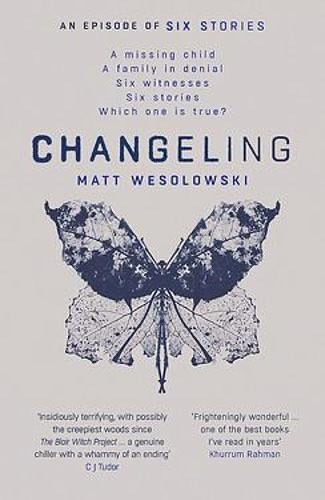
Changeling by Matt Wesolowski. This book really did get under my skin, possibly not helped by reading it in an unfamiliar and remote house where we were on holiday, not a million miles away from the forest in question. This starts as a missing child case, when Sorrel Marsden stops his car in a lay-by on the Wentshire Forest Pass on the Welsh Borders. As he investigates under the bonnet, hoping to find the cause of a strange knocking noise he has heard in the engine, he leaves son Alfie in his car seat. Minutes later, when he closes the bonnet, he glances up to see Alfie and finds him gone. He is never found. Scott King fronts a true crime podcast, a new one explored in each book of Wesolowski’s Six Stories series. Usually, the cases that Scott explores have a supernatural element and that’s definitely he case here, with the forest seemingly a hot spot for unusual unexplained noises, glitches in machinery and possible fairy sightings. However, room is also left for a more human explanation and it was the human aspects that really chilled here. A trainee teacher and her journals and reports form part of his investigation and her research into Child A takes on a sinister significance. She records a time when she was supervising the child alone and his lack of communication is a little unnerving. Then she starts to hear noises, strange knockings that she assumes are Child A banging under the desk. However, he isn’t moving. Then she hears muttering, as if he is talking under his breath to someone or taking instructions. Yet he is utterly still, eyes completely blank as if he has tuned out or is tuned in to something else. This scene did make me shiver. I didn’t know what scared me more: a child possessed or used as a conduit for something supernatural or a child that’s rather too knowing, deliberately setting out to unnerve their teacher.

The Ghost Woods by C.J. Cooke. We’re back in the gothic territory of monstrous births in this novel from C.J. Cooke and I loved the strange mix of the horrors of nature with the supernatural. In a room where he keeps his favourite specimens, Mr Whitlock has a wasp that’s been taken over by a fungus. The life cycle starts when the creature breathes in the spores, but then they slowly grow inside the insect until it bursts out of their body. It feels like there may be parallels here, especially for resident Mabel who is expecting a ghost baby. When our heroine Pearl arrives, this mini example of a parasitic fungus is overshadowed by the incredible fungal takeover in the west wing. Despite being closed off, she finds spores growing and multiplying on the outer stairs. Will it eventually take over the whole of Lichen Hall? There is a creeping sense of dread about the girl’s pregnancies because they do seem monstrous in their movements as seeing a tiny feet stretch out the skin of their abdomens. Mabel’s boy is beautiful, but its not long before she notices the strange lights appearing from under his skin. What do they signify? Is this the legacy of the ghosts? The atmosphere feels isolated and wild, but weirdly suffocating and claustrophobic at the same time. Everything builds slowly, keeping you on edge, but for sheer heart stopping terror it’s when walking outside in the woods that a shadowy figure awaits. I realised I was holding my breath when one of the girls fell trying to escape this creature and it grabbed her leg. In the seconds before she kicked it away she felt it’s purpose very clearly, a terrible intention to get ‘inside’ her skin.

New Spooky Recommendations

New releases to check out are Alix E. Harrow’s new novel Starling House from Tor Books out on November 1st and The Haunting in the Arctic by C.J.Cooke which is out now from Harper Collins.

Posted in Personal Purchase

Starling House by Alix E. Harrow

“When the house was complete, in February of 1870, Eleanor Starling took up residence and stayed there until her death in 1886. There is substantial evidence that she devoted the remaining years of her life to the study of the place she later called “Underland.” She believed, according to the notes and journals found by her successors, that there was another world beneath, or maybe beside, our own—a terrible, vicious world, populated by monstrous beings. She believed that there were cracks between that world and our own, places where things might leak through, and that one of these rifts lay underneath Eden, Kentucky.”

Starling House sits on Starling land and can’t be fully seen from the roadside, except for a pair of iron gates that are so intricate and sinuous it wouldn’t be a surprise if they started to move and become a living, writhing being. Opal passes the house daily as she takes a short cut from one of her jobs to another and she’s intrigued by the house, especially the one amber lit window, high up in the attic room. There she imagines Eleanor Starling, living the solitary life of an author trying to follow up their first extraordinary book. Opal loved Eleanor’s children’s book Underland described as a much darker Alice in Wonderland where a girl called Nell is under the ground with a weird array of beasts (all of which look like a member of the animal kingdom, but at the same time not at all). Opal’s life is a gruelling slog from the motel room she shares with brother Jasper, to her cleaning jobs then back to supervise homework and share their measly evening meal. It only takes one small difference in their routine to shake everything up and bring huge change to their lives. Opal pauses her route home and stops at the iron gates of Starling House. She holds on to the iron, but immediately finds her hand is slick with blood. More disturbingly, she feels the gates give, almost as if her blood is the key. She looks up to see that a tall, thin and rather bedraggled man has appeared in front of her. He looks her in the eye and says one word. Run!

[The town] “liked the Starlings even less. They’re considered eccentrics and misanthropes, a family of dubious origin that has refused for generations to participate in the most basic elements of Eden’s civil society (church, public school, bake sales for the volunteer fire department), choosing instead to stay holed up in that grand house. […] It’s generally hoped that both they and their house will fall into a sinkhole and rot at the bottom, neither mourned nor remembered, and—perhaps—release the town from its century-long curse.”

Arthur, the bedraggled man, is the current Starling living in the house and it isn’t long before Opal is drawn back into his presence. Arthur seems to be torn. He’s drawn to Opal, but so is the house. It seems unfair to strike up a friendship with her knowing that the house wants her and what that will mean for her life. Yet he asks her if she will clean for him and offers enough money that Opal can’t refuse. He is concerned about this flame haired waif that is now in his midst and he can’t help but offer her a winter coat, then his old truck. Are these genuine gifts, or is Arthur trying to assuage his guilt for doing the house’s bidding? The house almost seems to sigh and settle as Opal cares for it, like a cat stretching with pleasure when stroked. She does wonder about the crude symbols scratched into the wooden doors, that match Arthur’s tattoos. Every conceivable symbol to ward off evil is either scratched, painted or hung around the house. How do you ward off something that strikes from within? Opal is then approached by a woman in a suit, who seems to know a lot about Opal and the Starling House. She wants Opal to take photographs and pass on information from the inside of the house. Firstly she seems like any old local official, but becomes more sinister when Opal is reluctant to help, finally making threats against Jasper. Now she has no choice, but she’s surprised by her own emotions; it’s harder to betray Arthur Starling than she expected. Is it really the house she’s drawn to, or is it Arthur?

“Eleanor Starling left no record of why she built such a vast and strange house, but the oldest and best-loved book in her collection was a copy of Ovid’s Metamorphoses. It has been suggested by subsequent Starlings that she was not building a house but a labyrinth, for much the same reason the King of Crete once did: to protect the world from the thing that lived inside it.”

Opal isn’t easily afraid and I knew, just from that opening, she wasn’t done with Starling House. More to the point, the house isn’t done with her. I admired this plucky girl who is only just getting by in life and does everything for her brother Jasper. She desperately wants him to get away from Eden, Kentucky, because he has so much talent but also because nobody with any sense stays in Eden. She is saving for the fees of a private school she has seen, somewhere that would give him prospects and he would meet the right sort of people. She’s so set on this plan, she hasn’t bothered to ask what Jasper wants. Her heart is in the right place though. She doesn’t love many things, but when she does Opal loves like she does everything else – fiercely. Her existence is all work, striving just to survive but Opal is so intelligent, in fact one of the only places in town she visits religiously is the library. The librarian Charlotte is perhaps the closest thing to a friend she has. The truth is that Opal feels enormous guilt over the terrible car accident that killed their mother and what she sees as the decision she made to survive:

I’m fifteen and cold water is pouring through the windshield. The glove box is open, spewing pill bottles and plastic utensils. Mom is beside me, her limbs drifting gently, her hair tangling with the tacky dream catcher she pinned to the car roof. I’m reaching for her hand and her fingers are slick and limp as minnows and I might be screaming—Mom, come on, Mom—but the words can’t make it past the river? Then it goes very quiet and very dark. I don’t remember letting go of her hand, but I must have done it. I must have crossed her name off the list in my head and swum for the surface, abandoning her to the river bottom.”

I loved the psychological aspects of the story. The house has an identity and it knows who has the right stuff to live there and keep up the fight. I wondered whether the monsters were real or a manifestation of the occupant’s mental state. The thought of the monsters in our heads being able to run free in the world is definitely a terrifying one. The author builds the two worlds within the novel with contrasting techniques: short, blunt descriptions create Eden with it’s power plant and functional buildings, whereas Starling House and it’s labyrinthine tunnels are given long, descriptive passages that bring it to life. If something in Opal or Eleanor’s world is inexplicable she allows it to be unfinished or confused. Some of the monsters are beautifully described as ‘like a cat, but not quite’ or other strange combination that leaves gaps in the image for the reader to fill with their own imagination. This is an author that knows, the things we can’t see or comprehend are the most frightening.

When we finally get to Eleanor’s life story it is disturbing and sad, showing how unresolved trauma can project outwards into something monstrous. There’s a feminist thread here too in the truth about Eleanor’s life with the Gravely men and Opal recognition that her mother was shunned by the town, not just for liking sex but for not being sorry about it. In a reversal of the usual damsel in distress story, Opal is the architect of her own life and is determined to rid Starling House of it’s monsters and save Arthur. I was biting my nails in the final chapters, desperately wanting her to succeed! I’ve never doubted Alix E. Harrow’s talent or imagination. I’ve been a fan since her first novel, but this is her best yet. I’ve been reading that it’s a reimagining of Beauty and the Beast, and I can see that. However, Underland felt like the very darkest Alice in Wonderland to me. In both cases, all the ‘Disney-fied’ prettiness has been swept away. In it’s place are monsters that defy all description and a love story that’s more swords and thorns than hearts and flowers. It’s an absolute feast for the imagination and the perfect dark fantasy read for October.

Posted in Publisher Proof

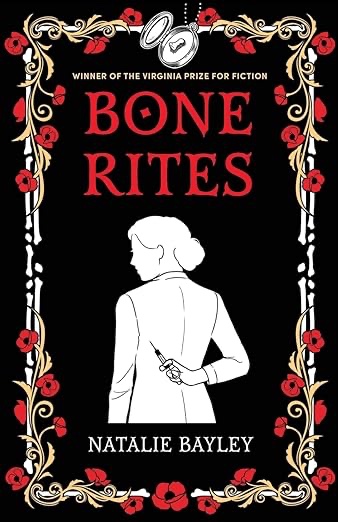
Bone Rites by Natalie Bailey

“I collected the first bone when I was twelve… Such a tiny little bone, more like a tooth. I only kept it to keep him safe.” Kathryn Darkling, imprisoned in Holloway, is facing death by hanging for her vengeance killing. Haunted by a spirit, she still hopes to perform the ancient black magic that will free her soul, or her struggle to punish the mighty will have been in vain. Will the love of her life come to her aid? Or can she find a way to escape her fate?

Bone Rites is a dual timeline story, split between the early 1900s and 1925 when Kathryn Darkling is in Holloway, the women’s prison, where she awaits the date of her own execution, by hanging. While waiting Kathryn starts to tell her story to a priest, assigned to hear her final words and offer solace as she awaits death. She begins with the first time she found a bone and performed a rite, then works her way through to her training as a doctor in Edinburgh. All the while she is developing her practice of performing bone rites, a black magic focused on freeing her soul. As she tells the stories of her bones, I started to wonder about her version of events. Clearly she’s an incredibly intelligent and determined woman and I admired that, but should I be taking the owned of a convicted murderer? Is she a reliable narrator? She seems to be slipping into madness as the tale goes, but does that mean everything she’s telling us is a lie? The thing I most enjoyed was getting inside Kathryn’s head and trying to work out what makes her tick, rather like holding a counselling session with this imaginary character. As we drifted back into her early childhood, I became won over by this obstinate little girl who won’t be deterred from her purpose. We learn about how tough her upbringing was, alongside her little brother Freddie. I love a dark story with a sense of foreboding and I thought this was perfectly pitched for a Halloween read. It’s not a traditional ghost story but Kathryn is certainly haunted, like many of us are by our pasts. I thought the book perfectly fitted it’s timelines, one before and one after WW1 considering how much change and trauma happened in-between. I also enjoyed the LGBTQ+ representation in the novel, it’s fascinating when authors ‘write back’ to a time where minority groups are under represented. All in all this was a well- written piece of historical fiction with a rather macabre edge and an admirable heroine.

Out on Nov 1st from Aurora Metro Books

Meet the Author

Natalie Bayley is author of ‘Bone Rites’, ‘Lolita’s Daughter’, ‘The Secret Life of Grandmothers’, ‘The Witch Who Saved Paris’ and ‘The Lady Lyttle Murder Mystery’ series. Her dark thriller ‘Bone Rites’ was selected for the 2019 Blue Pencil long list, went on to be shortlisted for the 2021 Blue Pencil First Novel Award and was long listed for the 2021 Caledonia prize before becoming the Winner of the Virginia Prize for Fiction. Natalie lives in NSW, Australia and enjoys ocean swimming and whispering to cats. Born in the UK, she’s been in sunny Australia since 2000. Her books are always about justice and how a seemingly powerless underdog can always find a way to fight back. My spooky historical fiction novel, BONE RITES, won the prestigious Virginia Prize for Fiction and is being published by Aurora Metro books October 2023. Enjoy!

Posted in Netgalley

The Haunting in the Arctic by C.J.Cooke

All I could say after reading the final sentence of the book was WOW! I couldn’t stop reading, the housework is completely neglected and I even forgot to eat lunch! Yes, I read this in 24 hours. This is the absolute best of her novels and I’ve enjoyed them all.

Dominique is making her way through Iceland to an old whaling ship called the Ormen. Stranded in a bay, the ship is going to be sunk out at sea and Dom wants to document it before it disappears from view together. Ormen was an unusual whaling ship being a sail and steam hybrid that became beached in the early days of the 20th Century near the small village of turf houses called Skúmaskot. When she reaches the ship she sets about turning the cabin into a base to explore from and puts up her tent. There’s one door in the ship that she wonders about, it’s made of carved oak and when she touched the handle it emitted such a feeling of evil she was taken aback. As she settles, she hears someone walking about on deck and she realises she’s not alone. Three more explorers join her – Jens, Samara and Leo. They have more up to date equipment and soon the four are documenting the ship and their discoveries as well as Leo’s parkour sessions. The questions start to mount though, is she wrong or are the other three suspicious or even slightly scared of her? What are the strange noises she can hear – banging could be gunfire or chains banging against the ship? There’s also a strange mix of footsteps and dragging something heavy in a steady rhythm. Who is the woman in the dress that she’s seen standing in the shallows? This is a strange place where light is limited, the village is deserted and there is a strange stone throne by the beach, said to be a Mermaid’s Throne. These are not Disney mermaids though, these mermaids have teeth and a song that will lure a man to his death.

There are different types of haunting in this tale. I could see examples of my own theory of hauntings in the woman seen by the edge of the sea. She feels like an imprint on the landscape. A place where heightened emotion and terrible events have left such a strong imprint that defies time. The sounds also seem to come from another place, a repetitive echo from time past. This is what I call a proper ghost story. It isn’t gory or a slasher’s tale, it’s old-fashioned creepy and blended beautifully with local folklore. The ship is from Scotland and this is where the folklore of selkies comes from, a race of seal women who have a dual nature. They can be nurturing and helpful, such as saving a child who’s in trouble in the sea. They can communicate with other aquatic creatures and assume a human form when on land. However, selkies can also be seductive luring men to her and often having hybrid children. At their worst Selkies can be violent and vengeful, but their need for revenge gives us a clue about why; people seeking revenge have usually been wronged in some way. Mermaids are also depicted as sirens, luring ships and men with their singing and often thought to lure ships onto the rocks. However, there is also a terrible element of coercion in their mythology, stories where a man steals an item from the mermaid and while he has that item in his possession she belongs to him and lives as his wife. If she finds the object the spell is broken and she can return to the sea. Of course in the fairy tale we have a mermaid who has to choose between her land and sea lives, she can have love but to have legs she must suffer excruciating pain and she can never use her voice. It’s a hard price to pay. Icelandic mermaids have all these qualities, but use their seductive charms to lure sailors to their deaths – a nice reversal of their capture by human men. The author describes Icelandic mermaids as having rows of pointed teeth too. There’s a sense of devouring their enemies, particularly those who have wronged them. Is this Nicky’s end?

I loved the tension between the group of four on the Ormen. Samara seems fine with Dom, but then she overhears a conversation with Leo where Samara seems terrified of her. She talks about ‘this time’ being different, but Dom can’t remember meeting them before. I loved this mix of psychological tension, the real dangers of the landscape around them and then the truth of what has happened to the previous crew of the ship and previous explorers who’ve also left their echoes here. I sensed a possible kinship between Jens and Dom, almost as if he already knew her. I was scared of Leo. There’s so much nervous energy in him, a rage running just under the surface that I feared might ignite at any point. Yet they’re also dependent on each other for their survival creating what feels like a truce between them, but how can a truce exist if they’ve never met? There are so many strange happenings, such as Dom’s dream of ponies running off a cliff followed by finding the skeletons of Icelandic ponies in a deep cave. I loved the bits of magic realism, such as Nicky’s leg. Everything about the voyage from Scotland is historically accurate and gives us such an incredible sense of place I can see it. However, Nicky’s broken ankle and wound start to heal in an usual way. She notices the grey colour of her newly healing skin and thinks she has an infection. The sensation is altered too, feeling rubbery and a little cold. As time goes on this patch of skin grows and she’s aware that the gap between her legs is becoming webbed. Could her legs be joining together? This could be a magical sort of protection against the assaults she suffers on a daily basis. It could also be a transformation. As the past starts to inform Dominique’s present I couldn’t leave the story and I was left with the worst kind of book hangover where I was stuck in the world and the feeling of the ending. It’s taken me two days to start another book but I can’t stop thinking about this one. In fact I’m already thinking about reading it again, a bit like watching The Sixth Sense again once you know the twist. This is a dark, disturbing ghost story of hauntings but also about the worst things human beings can do to one another, particularly men against women and the extraordinary ways they exact their revenge.

Out in Hardback now from Harper Collins

C J Cooke (Carolyn Jess-Cooke) lives in Glasgow with her husband and four children. C J Cooke’s works have been published in 23 languages and have won many awards. She holds a PhD in Literature from the Queen’s University of Belfast and is currently Senior Lecturer in Creative Writing at the University of Glasgow, where she researches creative writing interventions for mental health. Two of her books are currently optioned for film. Visit http://www.cjcookeauthor.com

Posted in Random Things Tours

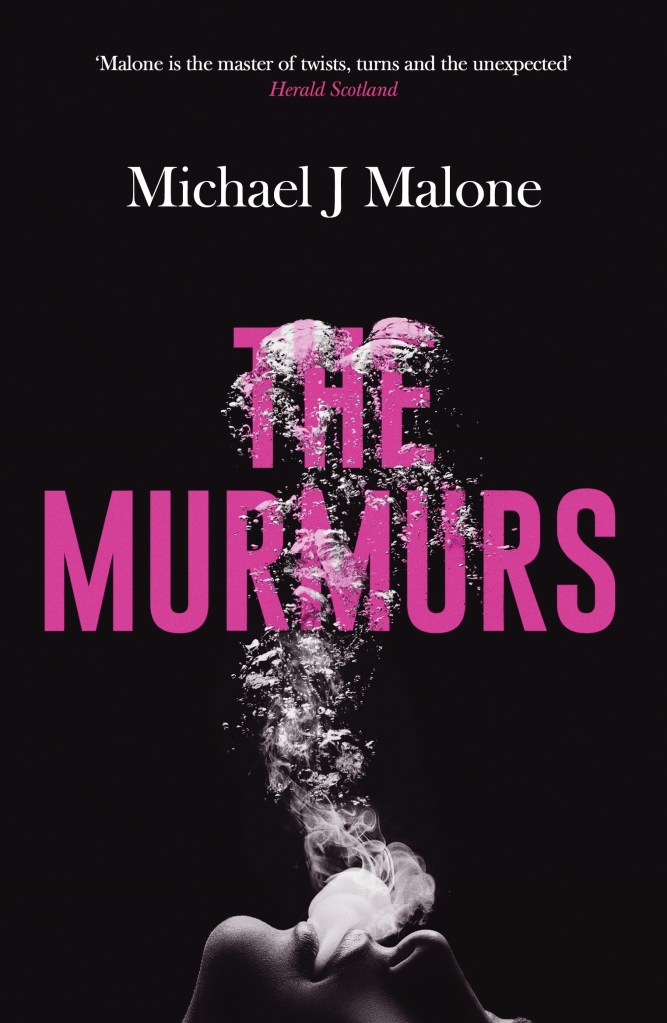
The Murmurs by Michael J Malone

I quickly became fascinated with this mix of historical fiction, psychological suspense and the paranormal. We meet Annie Jackson as she tentatively starts her new job in a nursing home in the West End of Glasgow, hoping to get her life back on track. Annie suffers with terrible nightmares where she’s stuck in a car underwater. She also has the sensation that someone is holding her head under water until her lungs feel ready to burst. She also has debilitating headaches and she can feel one threatening as her new manager introduces her to resident Steve. Then something very odd happens, as a blinding pain in Annie’s head is followed by Steve’s face starting to shake, then reform. A whispering sound begins in her head and she sees Steve as a skull, followed by a vision of him falling in his room and suffering a debilitating stroke. She desperately wants to tell him but how can she without seeming like a lunatic? He becomes agitated and upset, as Annie starts to describe the layout of Steve’s bathroom and he asks her to stop. As she’s sent home from another job she starts to think back to her childhood and the first manifestations of her debilitating problem. Annie survived the terrible car accident that wiped her childhood memories and killed her mother. This strange supernatural phenomenon is why Annie is alone and struggles to make friends. These are ‘the murmurs’.

I felt so much compassion for Annie, as the story splits into two different timelines: we are part of Annie’s inner world as a child, but also 0in the present as fragments of memory slowly start to emerge. We also go back even further to the childhood of Annie’s mother Eleanor and her two sisters Bridget and Sheila. We experience their lives through other people’s stories and written correspondence, especially that of a nun who also works in a residential home. I enjoyed how this gave me lots of different perspectives and how the drip feed of information slowly made sense of what was happening in the present day. Different revelations have a huge effect on the adult Annie and because her memories have been buried for so long she experiences the shock and surprise at exactly the same time as we do. This brings an immediacy to the narrative and I felt like I was really there alongside her, in the moment. With my counselling brain I could see a psyche shattered by trauma, desperately looking for answers, she is piecing herself back together as she goes.

Teenage Annie had a similar vision about a girl called Jenny Burn, who went missing never to return. The murmurs awakened when her mum’s sister Aunt Sheila came to visit them. She tried to openly discuss an Aunt Bridget who also had a ‘gift’ but has ended up in a home. Eleanor, Annie’s mother, asks Sheila to leave, but it’s too late because Annie has already seen that her aunt is dying of cancer. Annie evades her mum and makes her way to the hotel, the only place Sheila can be staying. Unfortunately, Jenny is working on reception. Annie can see her climbing into a red car and she desperately wants to warn her, but she knows she’ll come across as a crazy person. Eleanor is desperately looking for a way to deal with her daughter, she’s a person of importance in the church and she can’t be seen to have a daughter who has visions. Pastor Mosley has Eleanor exactly where he wants her. There’s a control and fanaticism in him that scared me much more than Annie’s murmurs. When Eleanor takes Annie to the pastor, he demonstrates his control by holding her head firmly under his head as he prays for her. When she almost faints, he’s convinced there’s a demon in her. Annie is scared of him, she gets a terrible feeling about him but doesn’t know why. Religion is portrayed as sinister and controlling, with fervent followers who never question, but live in the way they’ve been instructed is Christian? story takes an interesting turn when Annie’s brother Lewis, a financial advisor, becomes involved with the church once more and it’s new pastor Christopher Jenkins, the son of their childhood neighbour. He’s revolutionised the church and through the internet he’s turning it into a global concern. He’s not just interested in saving souls though, he’s also amassing money from his internet appeals. He also seems very interested in meeting Annie.

As the book draws to a close the revelations come thick and fast as both past and future collide. The search for Aunts Bridget and Sheila seems to unearth more questions than answers. Annie finds out that Jenny wasn’t the only woman who went missing in Mossgaw all those years ago. As she starts to have suspicions about her childhood home, Chris seems very keen to draw her back there. Might he be planning a huge surprise? I was a bit confused at first with all these disparate elements, but as all the pieces started to slot together I was stunned by the truths that are unearthed. Then as Annie’s childhood memories were finally triggered I felt strangely terrified but also relieved for her all at once. I hoped that once she’d regained that past part of herself she would feel more confident and free, despite the strange gift she seemed to have inherited. Maybe by facing the past and leaning in to her relationship with her brother, she might feel more grounded and strong enough to cope with her ‘gift’. I thought the author brought that compassion he’s shown in previous novels but combined it with a spooky edge and some intriguing secrets. I really loved the way he showed mistakes of the past still bleeding into the present, as well as the elements of spiritual abuse that were most disturbing. This book lures you in and never lets go, so be prepared to be hooked. Michael Malone is a natural storyteller and the fact this is billed as Annie Jackson Number One makes me think there may be others. I certainly hope so,

Out Now from Orenda Books.

Meet the Author

Michael Malone is a prize-winning poet and author who was born and brought up in the heart of Burns’ country. He has published over 200 poems in literary magazines throughout the UK, including New Writing Scotland, Poetry Scotland and Markings. Blood Tears, his bestselling debut novel won the Pitlochry Prize from the Scottish Association of Writers. Other published work includes: Carnegie’s Call; A Taste for Malice; The Guillotine Choice; Beyond the Rage; The Bad Samaritan; and Dog Fight. His psychological thriller, A Suitable Lie, was a number-one bestseller, and the critically acclaimed House of Spines and After He Died soon followed suit. Since then, he’s written two further thought-provoking, exquisitely written psychological thrillers In the Absence of Miracles and A Song of Isolation, cementing his position as a key proponent of Tartan Noir and an undeniable talent. A former Regional Sales Manager (Faber & Faber) he has also worked as an IFA and a bookseller. Michael lives in Ayr.

Posted in Netgalley, Publisher Proof

One For My Enemy by Olivie Blake

After being slowly enticed by the glowing reviews of Olivie Blake’s Atlas Six series, I finally decided to take the plunge with this one. I’m a huge fan of Alice Hoffman so magic, romance and witchery are right up my street. However, this was the same themes but with some added NYC grit and sass.

In New York City, two rival witch families fight for the upper hand.

The Antonova sisters are beautiful, cunning and ruthless, and their mother – known only as Baba Yaga – is the elusive supplier of premium intoxicants. Their adversaries, the influential Fedorov brothers, serve their crime boss father. Named Koschei the Deathless, his enterprise dominates the shadows of magical Manhattan.

For twelve years, the families have maintained a fraught stalemate. Then everything is thrown into disarray. Bad blood carries them to the brink of disaster, even as fate draws together a brother and sister from either side. Yet the siblings still struggle for power, and internal conflicts could destroy each family from within. That is, if the enmity between empires doesn’t destroy both sides first.

I found myself hurled straight into this vivid world. It is earth but harbours a secret; witch families are vying to supply humans with magical pharmaceuticals. I loved the idea that there might be another realm within our own, hiding in plain sight. Baba Yaga has a shop – like Lush but with extra ingredients – whereas the Federovs sell on the streets and in the bars and clubs of the city. The rivalry and language of their industry was very ‘gangster’, with specific territories and penalties for stepping out of line. The patriarchal Federovs and the the matriarchal Antonova sisters. The sisters, although doing the bidding of Baba Yaga, are kept in line by eldest daughter Marya, also known as Masha. The scene that grabbed me was Masha simply walking into the Federovs lair and demanding to see second brother Dima. There has been an issue with territory and Masha believes it is Dima’s fault, so she carries out a terrifying enchantment that leaves Dima totally incapacitated. I was fascinated that youngest brother Lev tries to stop her, but is held back by his brother. Is there an honour code between the families? Even more intriguing is the obvious and immediate chemistry between Dima and Masha. The atmosphere was electric, the air charged with feelings and I was drying to know what had happened before and if these two had historic feelings for each other. If so, Masha is ruthless when it comes to business, but must have been full of hidden emotion. Would she be just as ruthless when protecting her family?

This scene showed me that Masha was confident in her power and very likely the successor to her mother. Masha is overseeing the expansion of their business. I found the idea of pharmaceutical drugs touched by magic fascinating too, I wanted to know more about their effects and whether they were largely benign. Did the customers truly know the power of what they were buying? I wondered about the family’s ethics with regards to black or white magic and was intrigued by how both families used their magic differently. Lev is sent to check out the clubs and see if he can work out the Antonov family’s next move, but he is distracted from his job by a young beautiful woman being hassled by a college student. As soon as he sees her he wants to help her, but already his attraction to her is obvious. She is very assertive and assures him she can look after herself and as Lev follows them out of the club she breaks the student’s nose. Intrigued by her confidence and the way she handled the situation, Lev offers to walk her home. Every block she tells him she can manage, but Lev has fallen in too deep already and the attraction is mutual. They have a passionate encounter down a side street. What Lev doesn’t know is that this young woman is Sasha, youngest of the Antonova sisters. As the pair fall in love, Lev confides the task he’s been given by his brothers. I wondered how she would react and whether she’s think his feelings were genuine or entrapment. Lev’s feelings are genuine and I was already wondering whether this was a repeat of Masha and Dima’s story. More importantly, if it comes to a showdown between the two families, which side would Lev choose?

Considering the amount of characters, they do have depth and feel very real. I think their back stories helped and the Russian folklore woven into their backgrounds seemed to ground them. Koshchei the Deathless is a male protagonist in Russian folklore, usually cast as an evil father figure who imprisons the male hero’s lover. He is called the immortal because he keeps his soul hidden within inanimate objects. Often he would hide his soul inside a tiny object then place it inside another object, perhaps an animal, like a rather grotesque set of Russian dolls. Baba Yaga was originally a supernatural being who hides within the disguise of a grotesque old woman. In a bizarre version of her story, which I love, she lived in a kettle with chicken’s legs – rather like the archetypal witch we all know from fairy tales. She would often take a maternal role and use that to hinder a character from the story. How these archetypes work within this story I’ll leave for you to find out. Then there’s the Romeo and Juliet parallel which certainly gives us the basic plot line of two rival families, where the youngest members of each family are falling in love with each other. That’s really where the comparisons end, because this is a loose retelling so don’t expect specific characters or even the same plot lines. This is a tragedy and it’s genuinely heartbreaking, but with gritty, real violence and it’s bloody consequences, just don’t expect the same victims. I loved that the rivalries are decades old and I think there’s definitely scope for more novels in this setting.

Although I loved Blake’s descriptive prose and enjoyed her characters, I did feel that the central love story lacked a bit of depth. I could tell these characters were in lust because their scenes were hot, but I didn’t feel the love at first. Perhaps that’s because I’m an older reader though and why I was interested in the oldest sister’s story. Also there were so many twists towards the end I had to go back and re-read sections to keep up with what was going on. However, for such a big book, it really fly by and the heady mix of love, power, magic, revenge and tragedy is a winner for sure. The art both inside and on the cover is absolutely beautiful. I feel that I could easily come back to these rival families in the future and it has certainly made me want to check out the author’s previous novels. If you like your love stories dark and laced with magic, violent tragedy and witches this is the book for you. It was definitely the book for me.

Published on 20th April by Tor (Pan Macmillan)

Meet The Author

Olivie Blake is the pseudonym of Alexene Farol Follmuth, a lover and writer of stories, many of which involve the fantastic, the paranormal, or the supernatural, but not always. More often, her works revolve around what it means to be human (or not), and the endlessly interesting complexities of life and love.

​Olivie has penned several indie SFF projects, including the webtoon Clara and the Devil with illustrator Little Chmura and the viral Atlas series. As Follmuth, her young adult rom-com My Mechanical Romance releases May 2022.

Olivie lives in Los Angeles with her husband and baby, where she is generally tolerated by her rescue pit bull. More on Olivie can be found at http://www.olivieblake.com

Posted in Netgalley

The Company by J.M. Varese

I once began a masters in Victorian Studies and did a lot of work around literature, art and visual culture. Through it I developed a lifelong love of the Pre-Raphaelites and the design of the Arts and Crafts period, so the scandal of Victorian wallpaper poisonings was something I’d researched and written about before. I was very keen to see how the author had used this moment in history to inspire a Gothic story and I was utterly seduced by that divine green cover. As the 19th century progressed, more intricate and vibrant wallpapers were the fashion, in much the shame way that they’re having a moment now. In the early part of the century a rich, vibrant green named Scheele’s Green had pemerged. The colour was so incredibly popular that by the 1850’s it was being used in the production of household items from wallpapers, paints, and candles, to clothes and children’s toys. A vibrant green called Schiele’s Green emerged in the 1850’s, but was manufactured using large amounts of copper arsenite. Arsenic had a completely unique property that enhanced colour pigments and stopped them from fading, perfect for items like wallpaper that would be affected by sunlight over time. Manufacturers knew that arsenic was toxic, but chose to promote the line that it was only harmful if ingested – a dangerous lie that lasted decades. As wallpaper became ever more popular, reports began of people suffering slow and agonising deaths. Damp homes amplified the problem because of toxic fumes released by moisture on the walls. Rooms with large fires created the same problem meaning that many Victorian homes were veritable death traps. Alison Matthews David, who wrote about the problem in ‘Fashion Victims: The Dangers Of Dress Past And Present’, explains that “arsenic didn’t fade and looked bright under lights. It was stunning and became hugely popular in clothes. A ball gown would contain enough arsenic to kill 200 people and a hair wreath 50. The amounts used were lethal.’ This background knowledge had me champing at the bit for some horrifying deaths and characters terrified by intricate, poisonous wallpaper.

Examples of Victorian wallpaper patterns using Scheile’s Green

Braithwaite and Company are a Victorian wallpaper company caught up in the arsenic scandal and murky work practices at their copper mines in Devon, where the family are from. When our heroine Lucy Braithwaite, along with her brothers Tom and John were young and living at the family’s country home there was an accident in the copper mine. There were small children from the village sent into the most remote and claustrophobic points of the mine, because only they could fit. They were all killed. Mr Braithwaite died soon after and the family chose to move to their London home, nearer to the company’s offices. The company ran under the management of long running manager Mr Luckhurst, who had worked closely with Mr Braithwaite for many years. Mrs Braithwaite concentrated on the home front, filling their home with the latest wallpaper patterns from the company. Apart from Being I love oLucy who chose to have her room painted in the palest blush pink to be a calm and quiet space in contrast to the rest of the house. Yet the family’s luck was still on a downward turn after the death of Tom, who seemingly declined while being tortured by terrible hallucinations. Were these visions from within or without?

Their luck seems set to change completely when Lucy is a young woman and a new, young and dynamic manager takes over after the death of old retainer Mr Luckhurst. Mr Rivers is young, handsome, gallant and personable, immediately charming Lucy’s mother and brother John. John is the obvious successor to the company, but he has become frail since moving to London. Lucy decided to move his bedroom down to their father’s old study so he doesn’t have to contend with stairs. His room is a combination of workplace and bedroom, the desk enabling to go through company papers and keep abreast of matters. He and Mr Rivers hit it off immediately and it’s soon common for them to retire to John’s bedroom after dinner and talk about the company. Lucy finds it strange that despite coming from Devon and apparently working under Mr Luckhurst for years, she has never met Rivers before. However, his knowledge of the company and it’s history is entirely accurate. I found Rivers suspicious straight away and I loved how the author creates this uneasiness in the description of his expressions, his speech and the sense that he’s saying all the right things, but is he just saying what the family want to hear? His name in a Victorian novel seemed significant, because my brain went immediately to Jane Eyre and St.John Rivers. The author’s description of Rivers and his gleaming eyes reminded me of the Jane Eyre character whose own eyes betrayed his fanaticism, of a religious kind in his case. Jane didn’t accept his proposal because there was no love there, but also due to this steeliness and determination, which meant he would pursue his aims to the end. I sensed this same determination in Rivers here but his aim seemed more dangerous and liable to bring harm to the family.

I loved the tension the author heightened towards the end and as I was reading on NetGalley I didn’t expect it to stop where it did. It felt rather sudden. Rivers assures Lucy and her mother that the recipe for the wallpaper colours is not being altered and isn’t causing any harm. However, his endless industrious meetings with brother John would suggest some sort of changes were being made. Also, John’s health is in serious decline. Lucy is called to his room in the night by screams of terror, apparently he sees phantoms but are they caused by his green wallpaper and it’s writhing botanical pattern? He insists on how much Rivers means to him and I started to wonder if there was more than a working connection. Was the attachment one that was considered unnatural? I felt like Rivers was trying to romance every member of the Braithwaite family, using whatever weakness he could find. I found Lucy intelligent, perceptive and able to think differently from her mother. Mrs Braithwaite really did want someone to sweep in and look after everything for her, whereas Lucy has been actively looking for evidence, befriending the boy Rivers uses as a lookout and appealing to those in their circle that they can still trust. Is there a chink in her armour? It’s perhaps likely that Rivers expects the archetypal Victorian heroine who might swoon at a mention of romance, but I was desperately hoping he was wrong. As the reckoning approaches would she be able to remain clear headed and courageous enough to form a plan? I found the final part of the book perplexing. It was exciting and nail-biting, but still with a shroud of mystery over certain details. I came away wondering and I still find myself thinking about it three or four days later. I know sooner or later I will have to pick it up and read it again. Another novel that left me with this feeling was The Turn of the Screw by Henry James; it’s scary and unsettling but difficult to pinpoint exactly what happens. I think this author wanted to wrap the reader in those toxic fumes till we were unsure which parts are real and where the supernatural creeps in, rather like Charlotte Perkins Gilman’s The Yellow Wallpaper. It doesn’t ruin the book, in fact it enhances that sense of the uncanny that always terrifies. Mysterious, gothic and brimming with historical detail I definitely recommend it, but don’t expect a mystery where every loose end is neatly tied.

Published by Baskerville 16th March 2023

Meet the Author

Jon Michael Varese (J.M. Varese) is an American novelist and literary historian whose first novel, The Spirit Photographer (2018), was published to critical acclaim. He has also written widely on Victorian literature and culture, and has served in various capacities, most recently as Director of Outreach, for The Dickens Project at the University of California for over two decades.