Posted in Sunday Spotlight

Sunday Spotlight: Cornish Holidays in a Book

The Classics

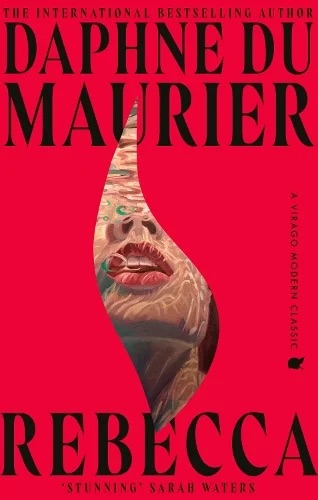
Rebecca is probably the reason I first visited Cornwall, but it’s also one of those books that I’ve changed my mind about when I reread it. I read the book as a teenager from mum’s bookshelf and I also watched the Hitchcock film at a similar age and both book and film are still favourites. I think I read it as a romance at first, rooting for the rather young and mousy heroine as she falls in love with brooding stranger Maxim de Winter as they meet in Monte Carlo. Now I read it as an altogether different story, probably emphasised by the above new Virago edition that’s billed as one of her ‘dark romance’ books. Maxim is dazzlingly and tragically romantic to our young heroine, mourning the wife who was known as a great beauty and unable to be in their Cornish stately home Manderlay. Perched on the cliffs near Fowey and based on de Maurier’s home Menabilly, this is one of the most beautiful and gothic settings. It’s impossible to see from the road, only from the sea and its private beach only accessible by boat or on treacherous steps from the grounds of the house. The heroine does seem to win it all – the man, the house, the money and love – but does she really? Immediately invisible next to the dark and sexy Rebecca of the title, the new Mrs de Winter doesn’t even warrant her own name. She’s scared of running the house having never done it, she’s not even the same class. She’s also scared of the servants, especially the creepy maid of his first wife, Mrs Danvers. At one point she breaks a statue in the morning room and hides the evidence. Maxim is no help. Instead of appointing a servant to help with decisions in the house, or at least to bring her up to speed, he just goes out first thing and leaves her to the brooding and obsessive Mrs Danvers, now the housekeeper. Max has no idea how privileged he is and can’t comprehend her hesitancy and fear of getting it wrong and when she does he flies into a temper or scolds her like a child. He gaslights, lies and yells at her. She may as well have been poured into a pit of vipers. This has never been a love story, it’s more a gothic retelling of Jane Eyre and origin of the domestic noir genre. This is an absolute Cornish classic from one of their most famous writers.
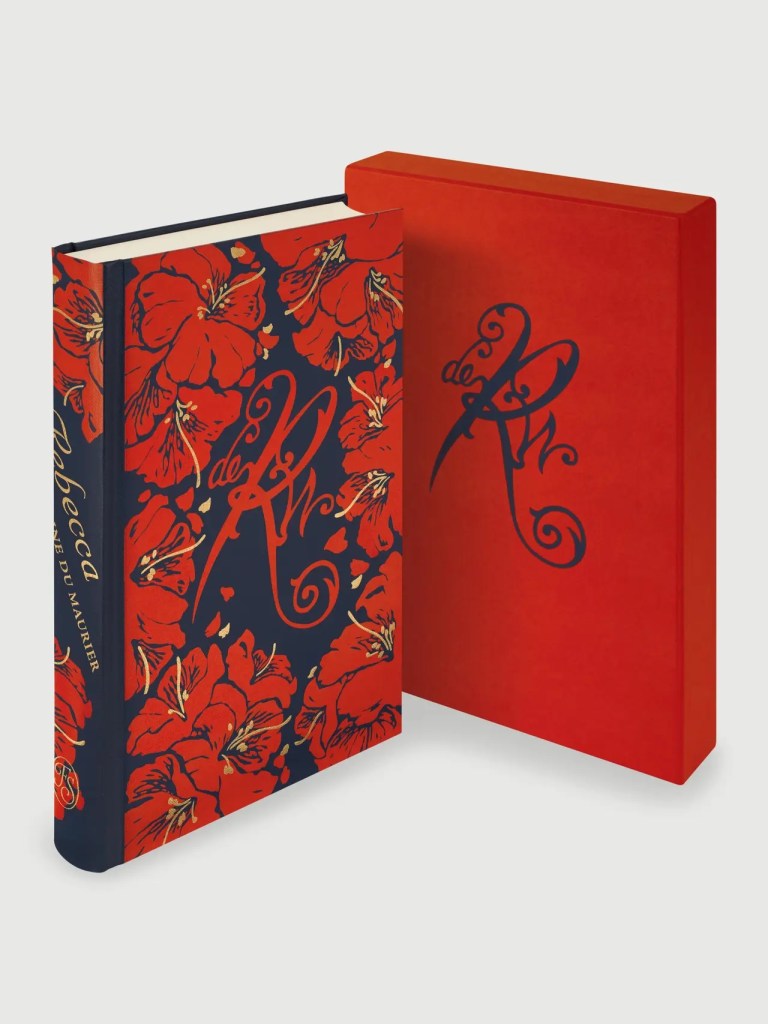
https://www.foliosociety.com/uk/rebecca

The Poldark Novels by Winston Graham
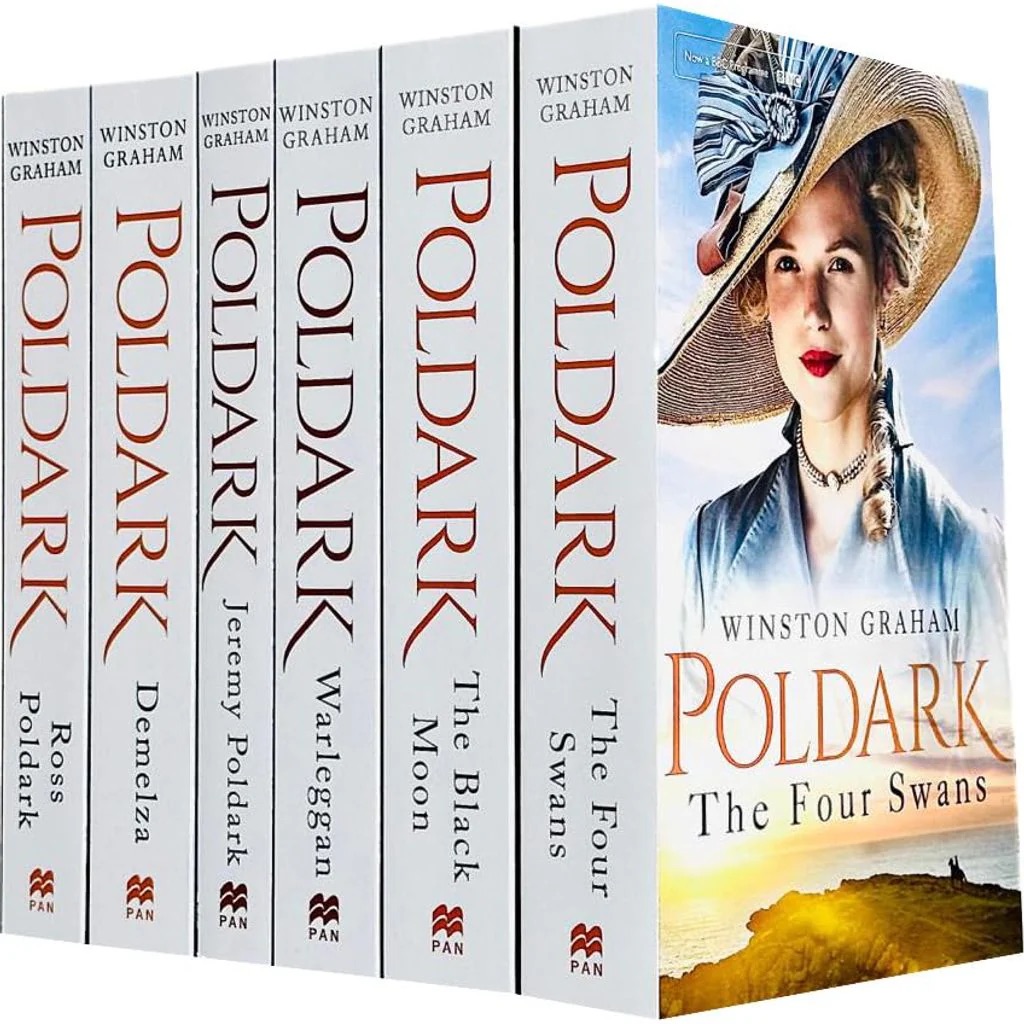
The Poldark novels had a resurgence and series of new editions thanks to the new BBC series which dominated Sunday nights and starred Aiden Turner as Ross Poldark and Eleanor Tomlinson as his wife Demelza. They begin in the late eighteenth century as Poldark returns from the American Revolutionary War to his home county of Cornwall and the Poldark house and land. Things have changed since he left. His father is dead and the copper mine is failing. His sweetheart Elizabeth has become engaged to Ross’s cousin George and they will be living at Trenwith with Ross’s grandmother. There are differences between the books and the TV series. Demelza is actually a child when Ross first meets her and he takes her to be one of the staff at the smaller farm estate of Nampara. There are ten years in age between them and it’s only when she’s an older teenager that their relationship changes – in the series he brings her as an adult and marries her very quickly, much to the disgust of his parish. I think the books are grittier than the tv series, with the main characters having more complexity and actually doing things we might not like. Ross particularly has more ambiguity, a good man when it comes to his workers and his politics but not such a great husband. The abuse and rape suffered by Morwenna in the marriage forced by Warleggan hits harder. The series really deviates after book three with no exploration of the children as they grow up and the terrible grief they go through as parents. I think the series wanted to paint Ross and Demelza as a love story with a happy ending after a tough period following infidelity, but in the books life goes and Ross’s rivalry with George Warleggan still continues, even when they’re older men. I think the books give more of that historical background, particularly with the backdrop of war and later the Industrial Revolution. It’s almost as if the series is the tourist’s view and the books place the characters more firmly in their time period.
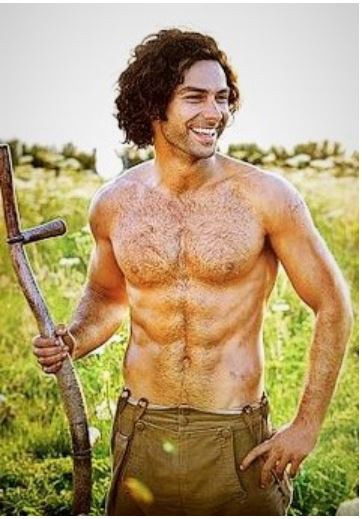
For those of you missing Aiden Turner as Ross.

Mysteries and Thrillers

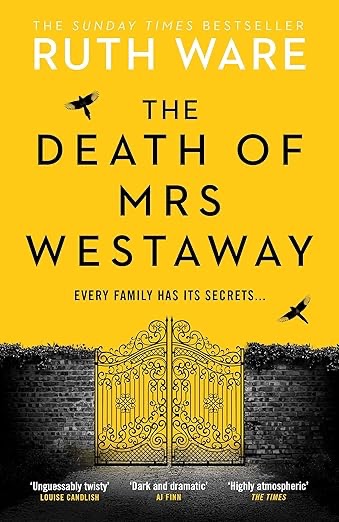
When I read a more recent Ruth Ware thriller I went back to some of her earlier books and I inhaled this in two sittings. We follow Harriet Westaway as she receives an unexpected letter telling her she’s inherited a substantial bequest from her Cornish grandmother. Could this be the answer to her prayers?

There’s just one problem – Hal’s real grandparents died more than twenty years ago. Hal considers her options, she desperately needs the cash and makes a choice that will change her life for ever. She knows that her skills as a seaside fortune teller could help her con her way to getting the money and once Hal embarks on her deception, there is no going back. This keeps you on tenterhooks from the minute Hal arrives at Trespassen House in Cornwall and there is that hint of Daphne du Maurier in the family estate and the mystery that plays out. Hal is also placing herself in a wholly different family and social class. Her upbringing may have been short on money, but it was never short on love. The tragic death of her mother Maggie was only three years ago and it catapulted Hal into adulthood but the Westaway family don’t hold the same values. They do have secrets though, ready to drop out of every closet. She is the outsider here, totally out of her depth and the wild coastline, storm porch and St Piran’s Church place this firmly in Cornwall. This family may have money and privilege but they don’t have the love or care for each other that Hal is used to, she will have to use her skills of perception and discernment honed by years of tarot reading. The remoteness of Trespassen and lack of internet signal add to the Gothic feel of this novel and there is even a Mrs Danvers mentioned. This is a great thriller with plenty of clues but a lot of red herrings, so you must be prepared for surprises.
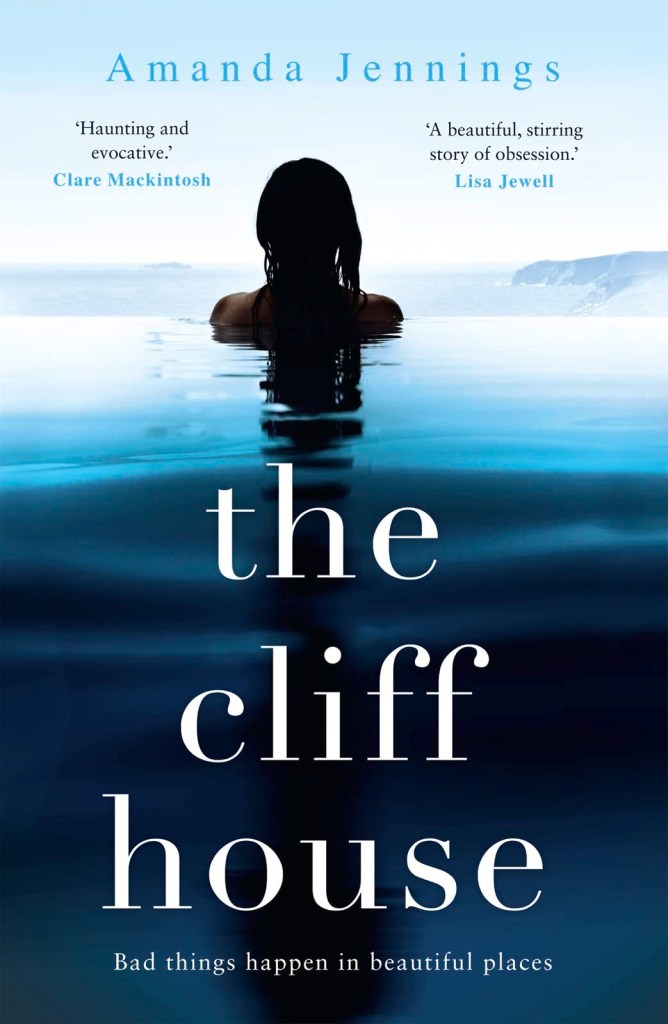
Tamsyn is as local as it getsin their Cornish village. Her grandfather worked the tin mines, her father was a lifeboat volunteer alongside his work, but her brother is struggling to find work that’s not seasonal. Tamsyn’s attachment to The Cliff House to a beautiful coastal property just outside her village comes to a head in the summer of 1986. To her, the house represents an escape, a lifestyle that’s completely out of range for her and represents the perfect life. It’s also her last link to her father, who brought her here to swim in the pool when he knew the owners were away. Her father felt rules were made to be broken and they both considered it madness to own such a slice of perfection overlooking the sea yet rarely visit except for a few weeks in the summer. Now he’s gone, Tamsyn watches the Cliff House alone and views it’s owners, the Davenports, as the height of sophistication. Their life is a world away from her cramped cottage, her Granfer’s coughing into red spattered handkerchiefs and their constant struggle for money.

Tamsyn’s family are firmly have nots. Her hero father died rescuing a drowning child and now she has to watch her mother’s burgeoning friendship with the man who owns the chip shop. Her brother is unable to find steady work, but finds odd jobs and shifts where he can, to put his contribution under the kettle in the kitchen. Mum works at the chip shop, but is also the Davenport’s cleaner. She keeps their key in the kitchen drawer, but every so often Tamsyn steals it and let’s herself in to admire Eleanor Davenport’s clothing and face creams and Max’s study with a view of the sea. Yet, the family’s real lives are only a figment of her imagination until she meets Edie. When Tamsyn finally becomes involved with the Davenports she gets to see the reality of a family bathed in privilege. As we try and work out Tamsyn’s motivations, she seems blind to the problems and ticking time bomb at the centre of the family. Or is she more perceptive than we think? This is a great thriller with disturbing family dynamics and an interesting tension between second homers and those who live in Cornwall all year round and struggle to own a home. The rugged cliffs and raging sea are a beautiful, dangerous and fitting backdrop to this tension.
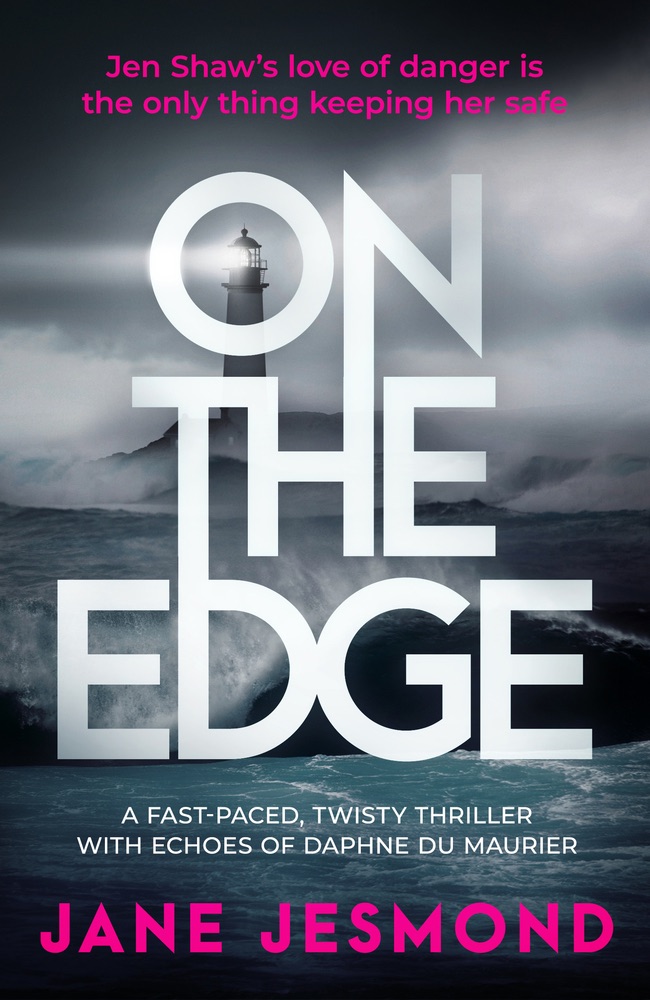
Another book highlighting the dangerous beauty of the Cornish coast is Jane Jesmond’s first thriller On The Edge. I was thoroughly gripped by this tense thriller set in Cornwall concerning Jenifry Shaw – an experienced free climber who is in rehabilitation at the start of the novel. She hasn’t finished her voluntary fortnight stay but is itching for an excuse to get away when her brother Kit calls and asks her to go home. Sure that she has the addiction under control, she drives her Aston down to her home village and since she isn’t expected, chooses to stay at the hotel rather than go straight to the family home. Feeling restless, she decides to try one of her distraction activities and goes for a bracing walk along the cliffs. Much later she wakes to darkness. She’s being lashed by wind and rain, seemingly hanging from somewhere on the cliff by a very fragile rope. Every gust of wind buffets her against the surface causing cuts and grazes. She gets her bearings and realises she’s hanging from the viewing platform of the lighthouse. Normally she could climb herself out of this, most natural surfaces have small imperfections and places to grab onto, but this man made structure is completely smooth. Her only chance is to use the rapidly fraying rope to climb back to the platform and pull herself over. She’s only got one go at this though, one jerk and her weight will probably snap the rope – the only thing keeping her from a certain death dashed on the rocks below. She has no choice. She has to try.

My heart was racing during the opening of this novel and I was so hooked I read it in one sitting. The sense of place was incredible. The author conjured up Cornwall immediately with her descriptions of the tin mine, the crashing sea on the cliffs and fog on the moors. I recognised the sea mist that seems to coat your car and your windows. The weather was hugely important, with storms amping up the tension in the opening chapters and the fog of the final chapters adding to the mystery. Will we find out who is behind the strange and dangerous events Jen has uncovered or will it remain obscured? Cornwall is the perfect place to hide criminal activity, hence the history of smuggling and piracy, so why would it be any different today? Has the cargo changed? I loved that the author wove modern events and concerns into the story, because it helped the story feel current and real. The concerns around development and tourism are all too real for a county, dependent on the money tourism brings, but trying to find a balance where it doesn’t erode the Cornish culture. Local young people are priced out of the property market completely. This is a great combination of setting and edge of your seat thriller, with a character as wild as the coastline.

Family Sagas
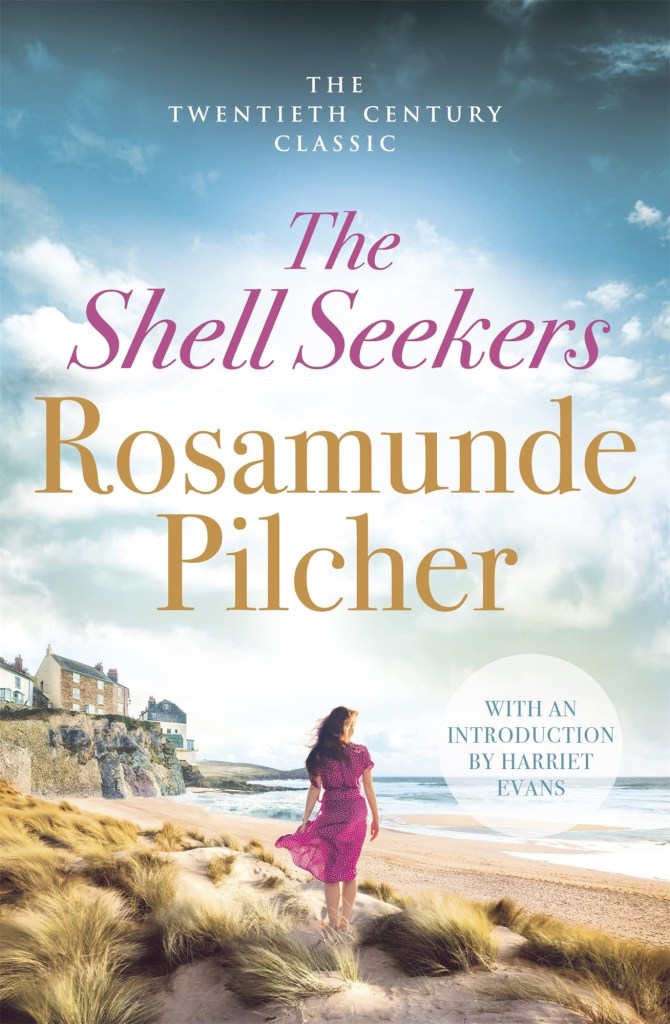
This book makes me nostalgic for the times I’ve spent in Cornwall. It also makes me want to go on RightMove and look for a little shop I can turn into a bookshop and writing therapy centre. Enough of my daydreams. I think this is one of those books that modern readers avoid because the covers have been too feminine and floral, marking it out as a romance when really it’s a family drama ( i want to use the word sweeping when I think about). Penelope is elderly and while she is recovering from a heart attack she thinks about the years she spent in Cornwall. What follows is the story of a family—mothers and daughters, husbands and lovers—and the many loves and heartbreaks that have held them together for three generations. It’s a magical novel, giving the kind of reading experience you can get swept away in for hours. Penelope prized possession is The Shell Seekers, painted by her father. It seems to symbolise her unconventional life, from her bohemian childhood to WWII romance. When her grown children learn their grandfather’s work is now worth a fortune, each has an idea as to what Penelope should do. But as she recalls the passions, tragedies, and secrets of her life, she knows there is only one answer…and it lies in her heart.

One of my favourite places in the world is Watergate Bay and I feel energised just by standing on that beach and feeling the sea spray hit my face. This book gave me the same feeling because you can feel Pilcher’s love for Cornwall throughout. It also made me grateful for a family who don’t care about money, just about love. This is a fabulous holiday read so don’t be put off by the cover.
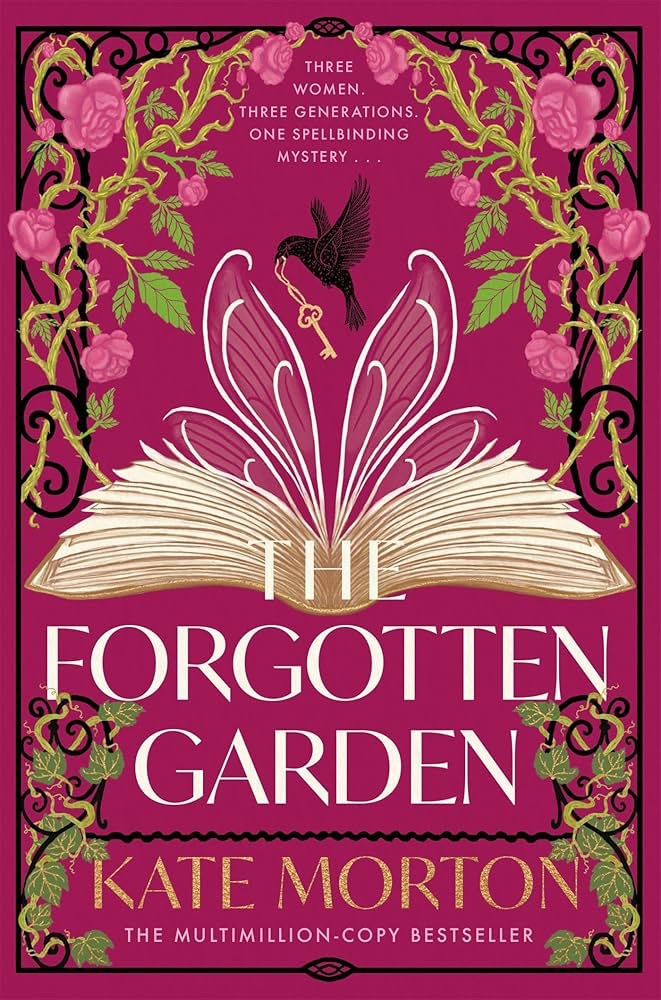
In Kate Morton’s second novel she takes us through a family’s history with Gothic undertones, contrasting the beautiful setting of Cornwall with 19th Century London. It covers three timelines over three generations of women, all caught up in one compelling mystery.

Once, a little girl was found abandoned after a gruelling sea voyage from England to Australia. She carried nothing with her but a small suitcase of clothes, an exquisite volume of fairy tales and the memory of a mysterious woman called the Authoress, who promised to look after her but then vanished. Years later, Nell returns to England to uncover the truth about her identity. Her quest leads her to the strange and beautiful Blackhurst Manor on the Cornish coast, but its long-forgotten gardens hide secrets of their own. Now, upon Nell’s death, her granddaughter, Cassandra, comes into a surprise inheritance: an old book of dark fairy tales and a ramshackle cottage in Cornwall. It is here that she must finally solve the puzzle that has haunted her family for a century, embarking on a journey that blends past and present, myth and mystery, fact and fable. I am lucky enough to have a new edition of this book to read with my Squad POD next month so look out for my review.

Historical Fiction
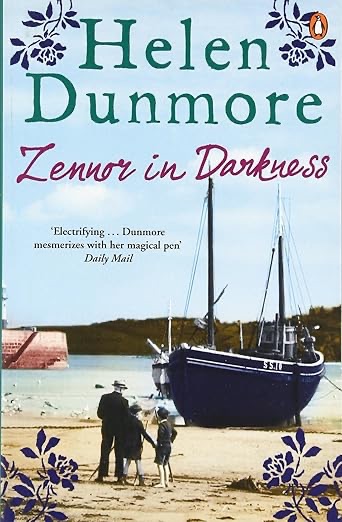
My mum was a huge fan of D.H.Lawrence’s books so this book jumped out at me in a second hand bookshop. It’s Helen Dunmore’s first novel published in 1993. Set in the coastal village of Zennor, this covers the time that D.H.Lawrence and his German wife, Freida, laid low during the First World War. In the spring of 1917, at a time when ships were being sunk be U-boats, coastal villages were full of superstition. The Lawrence’s were hoping to escape the war fever in London and chose Cornwall. There, they befriend Clare Coyne, a young artist struggling to console her beloved cousin, John William, who is on leave from the trenches and suffering from shell-shock.

Yet the dark tide of gossip and innuendo is also present in Cornwall, meaning Zennor neither a place of recovery nor of escape. Freida and Lawrence are minor characters, with the main story focused on Clare and suspicions about her relationship with her cousin. Helen is adept at bringing people from history back to life, filling them with emotions and preoccupations that are familiar to us. The Cornish coast is vividly described with its fishing industry, craggy inlets and secret beaches providing a wonderful backdrop to the atmosphere of suspicion especially with the their smuggling history. She captures the claustrophobic feel of a small village where everyone knows each other and incomers are kept at a distance. She also captures how lonely it can be to move into such a close knit community and how lives can be ruined by assumptions.
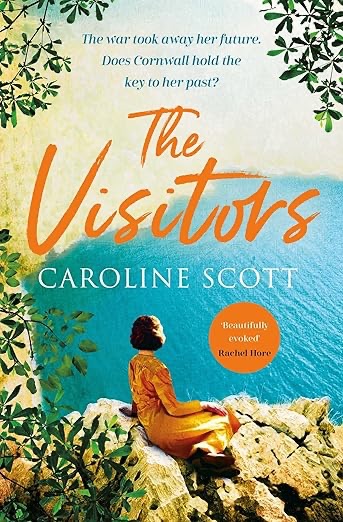
Caroline Scott’s book is set in the aftermath of WWI in the summer of 1923. Esme Nicholls is drawn into spending the summer in Cornwall, close to Penzance which was the birthplace of her husband. Alec died fighting in the war and she’s hoping to spend some time learning more about the man she fell in love with and lost too soon. She’s been invited to stay in the home of her friend Gilbert, as a potential retreat for the lady she works for, Mrs Pickering. He inherited the rambling seaside house and has turned it into a recovery centre of sorts. All residents are former soldiers, expressing themselves through art or writing. She is nervous to be the only woman, but soon gets to know the men and their stories. They give her insight into what Alec may have experienced and that’s exactly what she needs.

However, this summer retreat is about to change as a new arrival brings with him the ability to turn Esme’s world upside down. She will soon be questioning everything about her life and the people in it. Cornwall is an idyllic backdrop to the story and a huge factor in the recovery and the creative work of these men. Esme’s growing friendships are beautifully drawn and as always I was emotionally invested in her characters. I loved how her relationship with Mrs Pickering softened from being a professional companion to friendship. I also enjoyed her growing closeness to Rory and Hal. They all help with her grief and the shock of this new guest. But as always, holidays come to an end, leaving Esme with huge choices to make.

My Favourite
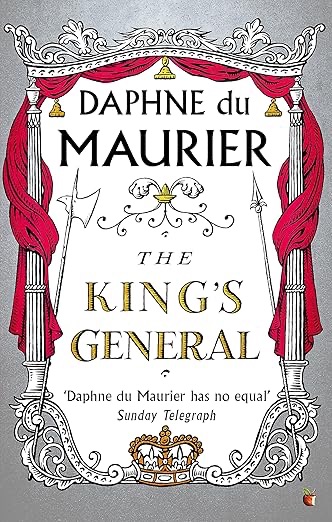
I first read this wonderful novel when I was a teenager, captured by the romance at the centre of the novel. Then the backdrop really started to sing out to me, especially when I started to regularly visit Cornwall around twenty years ago. Lastly it was the history aspects to the latter parts of the story with our characters caught up in English Civil War and Cornwall’s unique role, both geographically and as staunch Royalists. It’s fair to say that the book wasn’t well received at first, especially after the instant success of Rebecca and My Cousin Rachel. This takes a similar romantic narrative but weaves in the history of a Cornish house that would eventually become her home, Menabilly on the Gribben peninsula near Fowey. At the time of starting her new book it had been owned by the Rashleigh family for over 400 years. Daphne would visit and talk to them about using the house and they told her a story about building work they were having done when builders found a bricked up room housing the skeleton of a Cavalier. She decided to write this real life mystery into the novel wanted to write, when she finally and inevitably overcame their objections.

Her decision to record historical facts truthfully could have been the book’s undoing. The history of the Royalist cause in Cornwall is convoluted and confusing and there’s a large background cast of related Cornish families. I think she wanted to remain faithful to the Cornish cause and be seen to include real Cornish people, but the reader could be forgiven for struggling with them, many names are similar and the intricacies of intermarriage sometimes make the plot hard to follow. Cornwall did declare for the King and our hero Richard Grenvile is the grandson of Sir Richard Grenville who fought the Spaniards in the Azores. He is depicted as flamboyant, with an incredibly fiery temper, but he can be very charming and as time and experience show, he is incredibly loyal. Our heroine Honor Harris is the character I fell in love with possibly because of the fact she’s always reading and is a bit wild. She is absolutely swept off her feet by the man she meets in the family orchard, while sitting in her reading place up in an apple tree. Luckily her hiding place is just big enough for two. Richard is older, a seasoned soldier with wars on the Continent and Ireland under his belt. He is known as ruthless with a terrible reputation. However, he and Honor fall in love. Only a day before their wedding, Honor goes hunting with Richard and his sister. He calls back to warn her about a ravine but his call is lost on the wind and she falls down the precipice. She is then paralysed from the waist down. I think this is possibly why I fell in love with the book, having had my own accident when I was eleven. I had two fractures and a crushed disc, but luckily my spinal cord wasn’t affected. I didn’t finish primary school but returned to start secondary school in the autumn. It has given me problems ever since. It was wonderful to read a character who had a disability but whose fiancé still loved and wanted to marry her, at a time when I was starting to look at boys a little differently.

Despite Richard’s promises, Honor knows she can’t fulfil the role of an army officer’s wife. She decides to let Richard go and gives him her blessing to find someone else. She still follows Richard’s exploits as he moves through Cornwall trying to turn the Royalist sympathisers into an effective fighting force. The Cornish aristocracy have the hereditary right to become fellow commanders, although he finds them incompetent and at times cowardly. Honor has a wheelchair made by her brother, which allows her some movement and at times she manages to support and actually assist Richard. Their love for each other never seems to fade and I enjoyed the romantic aspects of the novel. Their relationship is the spark that lights up this novel, even more so now that I am a wheelchair user at times. I was impressed by how intrepid and determined Honor is and that Daphne wrote a disabled heroine in the 1940s. A couple of years ago, on my honeymoon, I went to Fowey and the Daphne du Maurier bookshop and bought a first edition of the novel for my collection. My old copy was falling apart from re-reading, but I also wanted to own such an important copy of my favourite Cornish novel.

Posted in Monthly Wrap Up

Best Reads June 2025

I’ve had a lovely reading month, with the subject of love and relationships being at the centre of most of my best reads in June. Possibly due to it being wedding season, romance seems to have been in the air and all my reads looked at it in a very different way. A couple are set in the present day but others range from the late 18th to the mid- 20th Century. Yet there was a sense of familiarity, with each book showing the difficulties in how women and men relate to each other and negotiate the rules of their relationship. Women seemed to wait an awful lot, trying to balance a career and a relationship not to mention children and home life. Some women were waiting for proposals, for a man to commit, to be faithful, or for life to begin. They bring up the age old question of women having it all and whether that’s ever possible. There’s also a lot of travel involved from the UK, to America, Italy, France, Switzerland, India and Australia. I hope you all have a great tbr lined up for July and I’ll see you on the other side.

Walnut Tree Island sits in a tributary of the Thames and back in the 1960s its part derelict became a sought after music venue, thanks to the work of its owner George. Based on Eel Pie Island, Walnut Tree is a harmonious combination of up and coming musicians, artists and picturesque riverboats and in 1965 is a weekly Mecca for young people. One of them is Mary Star, a young girl with a beautiful voice and a head full of dreams. It’s there one night when musician and up and coming front man Ossie Clark notices Mary in the crowd as she’s hoisted up on someone’s shoulders. Ossie is about to hit the big time, but he’s captivated by Mary and when he meets her he encourages her to sing with him. They are so in love and lay down in the grasses by the Wilderness – the most beautiful part of the island. When reality hits Mary knows she has to make a choice for both of them, although Ossie doesn’t reject the idea of becoming a father. He asks her to go to America with him, but the adults in her life, including George, make her realise how difficult that’s going to be. There will be compromises and although Ossie can’t see it now, what if he resents her and their baby? She’s left with her baby Ruby and a broken heart, but also a place to live on the island gifted by George. 

Years later her granddaughter Jo experiences first love on the island. Used to running wild between Mary’s cottage Willows and houseboats, she meets George’s grandson Oliver when he visits the island. He’s the island’s heir, but such things don’t matter to young people and they have a magical summer thinking their love is all they need to sustain them. Now Oliver has returned from NYC as the new owner of Walnut Tree Island which has become a thriving community of musicians and artists all supported by Mary who is the mother of the community. The whispers over what might happen to the island start fairly quickly, not least the ownership of Willows that has always been a verbal agreement with George. Jo now teaches art to children in one of the houseboats. Once an incredible artist she seems to lose her confidence in creating and her career never fully got off the ground. How will she cope with Oliver back on the island, as handsome as ever, but with a touch of New York sophistication? More to the point, how will Oliver feel seeing Jo again? It’s not long before the red-headed firebrand is at his door, fighting on behalf of Mary and the rest of the community. But does she really know what his plans are? Changes are coming to the island, but some things are as constant as the river flows. Could their love be one of them? This is a captivating and magical read, thanks to its romantic setting and relatable female characters. An excellent holiday read.

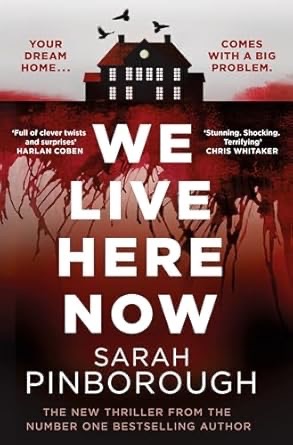
Emily and Freddie have been through the mill of late. After a terrible accident when they were on holiday, Freddie has surprised her with the home of their dreams. Emily fell from a cliff on a group holiday and not only did she break her leg in several places, she then developed sepsis and almost lost her life. Now she’s in recovery, still walking on a stick and has been thrust into a whole new life. Larkin Lodge sits just outside a village on the edge of the moors and could be their dream home, but Emily can’t believe Freddie made this huge decision without her. The house is gothic and in the mists and murk of winter it looks a little isolated and spooky. However, she can see that in spring the views will be incredible. As Freddie continues to work in London, Emily spends a lot of time alone and starts to feel uneasy. Sudden drafts and disgusting smells, then heavy footsteps moving across the second floor are unnerving. Freddie is convinced she’s struggling with post concussion syndrome and calls her ITU consultant for advice – much to Emily’s disgust for doing this behind her back. As she starts to look into the history of the house and questions some of the locals, all the different parts of her life start to fall apart. Secrets start to come to light and Emily wonders if the house is having an influence on her. 

Emily is a sympathetic narrator although she’s not entirely reliable. It must be so disorientating to wake from a coma and know that your body has been present but your mind has been somewhere else. Added to that is the risk of ICU psychosis – a common condition causing auditory hallucinations, nightmares, sleep disturbances and paranoia. The author cleverly creates tension between what we know about Freddie and Emily and what they know about each other. They’re both keeping secrets and Freddie projects all their problems on to her. Even when she’s quite measured and reasonable or accepts his apologies he becomes angrier. Just occasionally he pauses and wonders where these thoughts are coming from? Is it the shock of Emily’s fall still working on him or is something more insidious at work?  Of course it wouldn’t be a Sarah Pinborough novel without a supernatural element and this one is genuinely scary. It begins with the window on the landing, seemingly opening of it’s own accord. When she starts talking to older locals about the house there’s a moment that genuinely made the hair stand up on the back of my neck! The chapters from the raven’s perspective are very touching as well as creepy.  Was this an edge of the seat thriller or a ghost story? We’re never quite sure, but I felt compelled to keep reading and find out. Sarah Pinborough is the Queen of this type of gothic thriller and this was another brilliant read, keeping you guessing till the very end. 

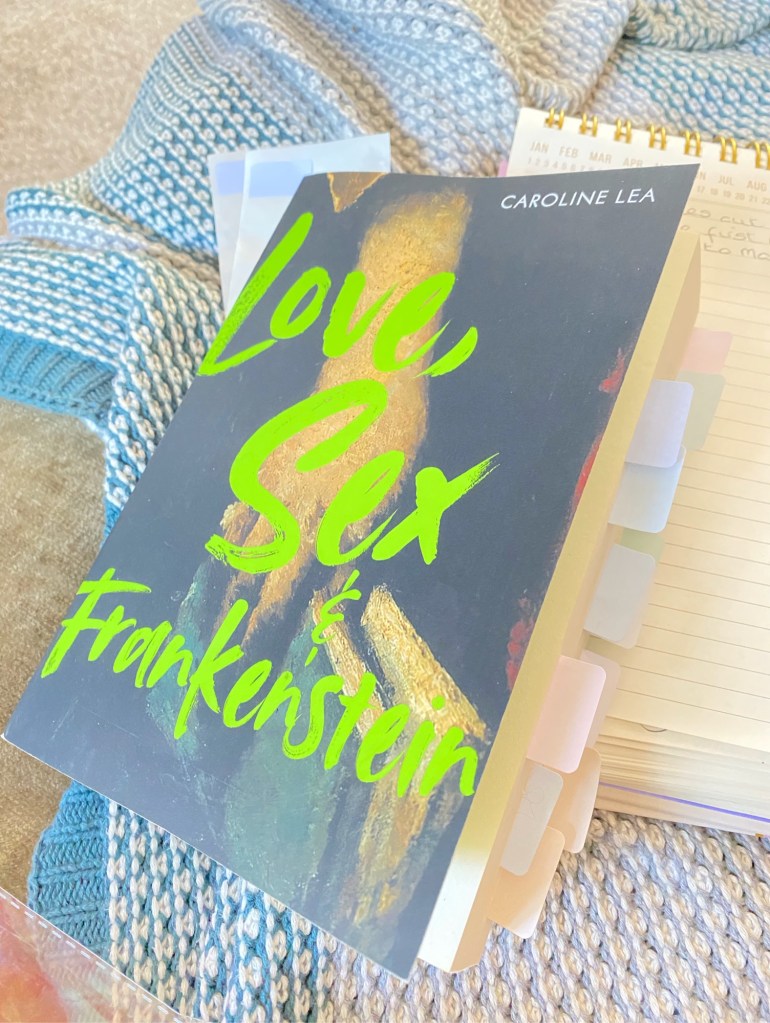
This book is definitely up there for my book of the year so far and it will take something momentous to knock it from that position. It’s the story of Mary Shelley and the origins of her novel Frankenstein which became a staple of the horror genre. I’d always known that it was a novel of monstrous birth, but the author has pulled all the ideas together so we can see the psychological background of the novel. I loved the idea that her story is stitched together by fragments, just like the monster himself. Her own emotions and thoughts feed into the emotions of the abandoned monster. She thinks of medical experiments and stories of medical students digging up bodies and stealing them for dissection. Frankenstein leaves his monster just as Shelley left Mary and their baby in squalor in London at the mercy of bailiffs. Frankenstein can be read as a criticism of men, creating with no thought for the thing they’ve created. Victor Frankenstein goes to sleep expecting his creature to die and feels nothing. The creature feels a combination of Mary’s grief and abandonment, having lost her mother at birth and then the losing of her father, as she runs away with Shelley, a married man. William Godwin brought Mary up to have a rebellious spirit and think for herself, but rejects her when she lives by these principles. Mary is this bewildered and angry creature and she gives her monster the equivalent of philosopher John Locke’s tabula rasa – the blank slate of a small child ready to experience nature, love and all that is beautiful. He embodies the nature/nurture debate in that the creature isn’t born evil, it’s other people’s cruel treatment of him that makes him monstrous. Her writing helps process all these feelings and. working through them makes her feel hopeful for the first time. She might return to London with her son and instead of being beholden to Shelley or her father, she could keep them both with her own writing. 

Typically, blinded by his own arrogance Shelley doesn’t see himself in Victor Frankenstein at all. The book, like the creature at its centre, will be sent out into the wilderness looking for a creator. She’s fairly sure it will find one because she knows it’s special. Caroline’s book is an absolute masterpiece and made me think about Frankenstein from so many different angles. Caroline Lea’s Mary take us through the psychological angles and brings to life her relationship with Shelley, often told in a rather salacious or romantic way without any thought to the inequality between them. It traces the genesis of this incredible novel. It is stitched together from so many different parts, but here we can see them all and understand the circumstances they come from. What she’s written is a Bildungsroman, a novel of Mary growing up from girl to womanhood. Frankenstein is the chronicle of that birth, as messy, terrifying, horrific and momentous it is, it is also the genesis of Mary Shelley the writer.                                                                                                                                                                                                                            

London 1990s – An up and coming French composer called Stan is invited to arrange music for a stage production of Dorian Gray. Although the play is never staged, he does meet Liv and she becomes the love of his life. They live together, joined by a daughter called Lisa. Their happiness fuels his senses with vibrant colours and melodious music. Paris, Present Day – Stan lives in France at the Rabbit Hole, a house left to him by his aunt. He now shares his life with Babette, a lifeguard and mother of a teenage boy of Lisa’s age. They also share their home with Laïvely, a machine built by Stan and given Liv’s voice. As Stan becomes more engrossed in his past Laïvely starts to take on a life of her own. His life is about to implode.

Stan presents his life in two narratives, the present in France and the past where he was at his most creative, happy and in love. His relationship with Liv is almost idyllic. Anything he relates of his present can only suffer in comparison. We learn that he and Babette are compatible, but there is none of the life and vivid colour that comes from his reminiscence. We are all nostalgic about the past, but no relationship can be perfect especially when cramped into the average London apartment with a small baby. While it is touching and romantic, the cynic in me wondered was this a true picture? As for Liv, she is in technicolour in Stan’s flashbacks with her vivid red hair. However, all that life is now reduced to a communication device and no matter how Stan cuddles Laïvely to him, she is inanimate, merely a machine. In what way is this a fitting representation of the love of his life? The author brings the truth to light brilliantly and I feared Stan’s mind was splitting. Stan seems to imagine that he and Liv would have lived in this harmonious way forever, but as the truth emerges Stan’s perception of himself starts to shatter. Babette finds him catatonic and soaking wet, having to place him in a hot bath and slowly bringing him back to himself. It’s the most nurturing, selfless and loving part of the book and it’s all the more sad that he hasn’t before recognised or rewarded her love and loyalty. He also realises that there were times he was too distant and distracted with Liv, that he stopped paying her attention. It was as if he had imagined them always walking towards a common goal but truthfully, he knows they were out of pace with one another. As the ‘tick, tock’ of the clock at the Rabbit Hole reminds us that the end is approaching we fully comprehend this heartbreaking story. This is no ordinary loss and it’s clear that Stan has never faced the truth of their final days until now. This is an emotional end that has one final twist to impart and it is devastating. It seems that Stan has always held on to Liv’s portrait, but is was a ‘painting turned against the wall’, keeping it’s secrets until that final terrible reveal.

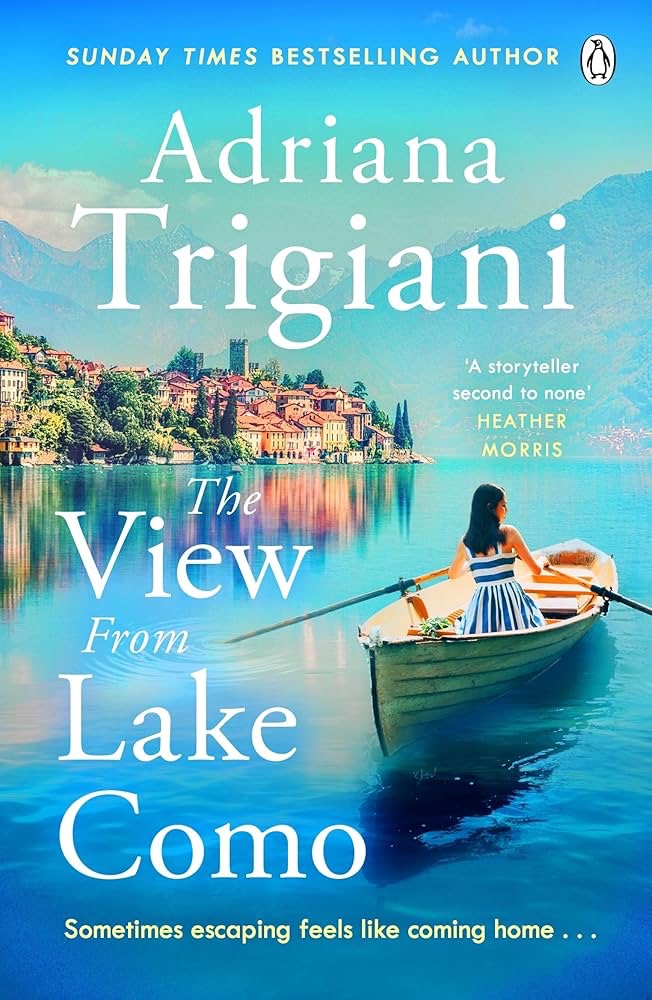
It was so lovely to be back in Adriana Trigiani’s world. It always feels like a hug in a book! Jess (short for Guiseppina Capidimonte Baratta) is an artist who designs pieces made with marble, everything from a garden fountain to a baptismal font. She lives with her family in the New Jersey town of Lake Como. Ever since she finished school Jess has worked with her uncle Luis at his marble business, shipping newly quarried Italian marble to the United States. Jess is at a stage in life when she’s longing for something new. After divorcing her childhood sweetheart and local heartthrob Bobby Bilancia she’s been living in her parent’s basement. Their mothers, who have a long held friendship, are openly praying for their reconciliation. Jess could see her whole life mapped out, in fact her namesake Aunt Guiseppina has given her the blueprint – the maiden aunt, chief baby sitter for her sibling’s kids, cook and bottle washer for family dinners, and eventually caring for their elderly parents. When the family experience an unexpected loss, coupled with financial worries, secrets come tumbling out of every closet. Jess decides to take the trip to Italy that had been planned for work. Now she’ll use it as a change of scene rather than just a work trip. Finally, she will see her ancestor’s homeland. Taking us to Lake Como via Milan, Jess falls in love with Italy and all it has to offer. 

This story is a common narrative in the author’s novels. A young, ambitious and talented woman is looking for a lucky break or a foothold in the family business and has an adventure. Jess is slightly different in that she’s older and has already found her Prince Charming once. Stressful situations usually floor Jess, who has suffered from anxiety all her life. The family carry brown paper bags wherever they go. Yet Jess has withstood the questions and judgement about her divorce and sticks with her decision, only confiding in her online counsellor and her journal. She sets out to her Uncle Louis’s hometown to visit the marble quarries that supply their marble but also meet with local stonemasons who use it. It should be useful for her work but also give her the head space she needs after the divorce, her loss and those family home truths that left her very angry with her parents. When she meets Angelo Strazzi, a talented local craftsman, there’s instant chemistry and future possibilities start to open up. As always Italy is a revelation and Trigiani writes about it in a way that only an Italian American can. There’s familiarity and nostalgia that comes from knowing her family are from here, but there’s also the wonder and magic of the tourist view too. It’s the best of both worlds. Mostly I loved that Italy seems to set Jess free, in her own right. She’s away from a community that claims to know her better than she knows herself, but also from the suffocating combination of her own family and that of her ex-husband. Free from a future that she and her family saw for her – that of the maiden aunt. Maybe it’s the mountains but Jess can breathe in Italy.  I came out of the novel feeling like I’d been on holiday. I won’t ruin the book by telling you what Jess’s choices are, but the ending isn’t the only important thing. I hope you enjoy the journey as much as I did. 

I was three quarters of the way through this novel before I found out it was based on a true story. Zara was a fashion designer, founding a dress shop called Magg with her best friend Betty in her twenties. Freeman’s novel follows Zara’s life from her meeting with Harry Holt and their relationship, which would dominate most of her life. The novel takes us on her travels, into her career as a fashion designer and businesswoman and the volatility of her relationship with Holt. Harry comes across as a selfish and ambitious man, who clearly loved Zara but was slow to commit and couldn’t curb his womanising ways. Zara is constantly waiting, whether it’s for him to propose marriage or to be faithful to her. She is torn between wanting a monogamous relationship or accepting both Harry’s love and the fact it comes with many compromises on her part. I’m not sure I could have made those compromises, but despite breaking off their relationship and even marrying an officer from the British Army and living in India, she finds it impossible to leave behind those feelings. Aside from her love life, Zara is a remarkable woman and one of those multi-tasking geniuses I envy. She managed to create an empire that paid for the couple’s holiday homes on different parts of the Australian coast and even when on political trips abroad, particularly as Harry was moving towards becoming prime minister, she used local fashions as inspiration and bought fabric to be shipped back. I had to remind myself I was reading a historical novel when frustrated with societal expectations and attitudes, because Zara was such a modern woman and seemed ahead of her time.

As always I have a loose tbr for July while I’m project managing our kitchen renovation. I’ll be frazzled by the time it’s done as I hate change and noise, but I’ll need to be at home so lots of reading time ❤️📚

Posted in Netgalley

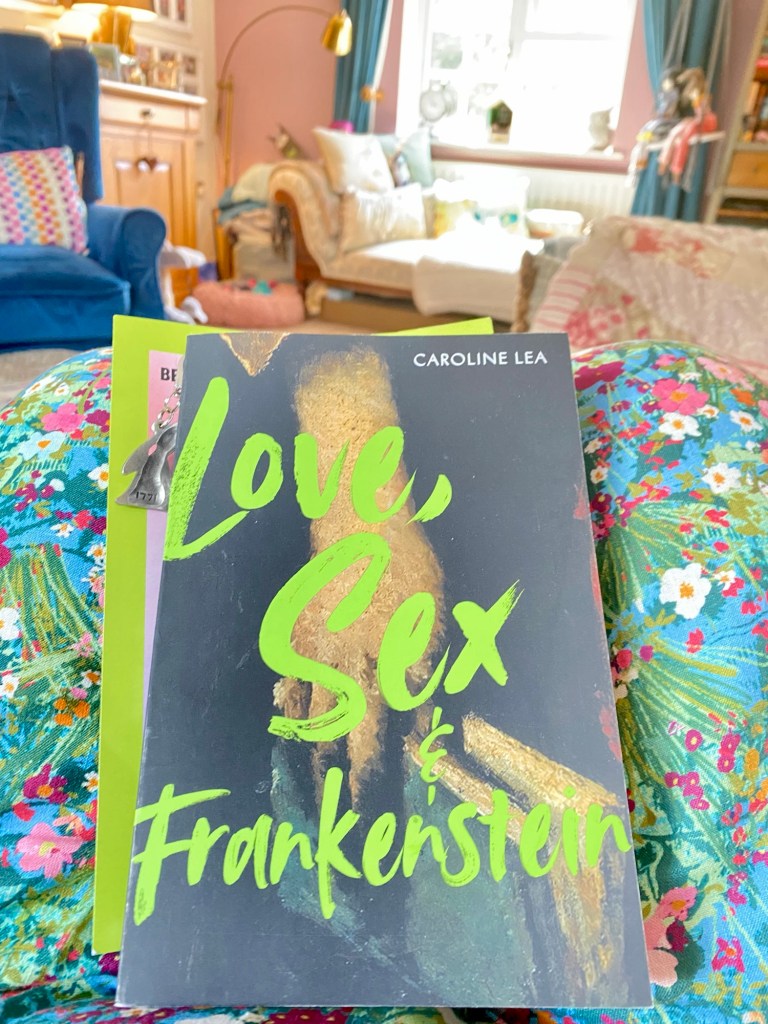
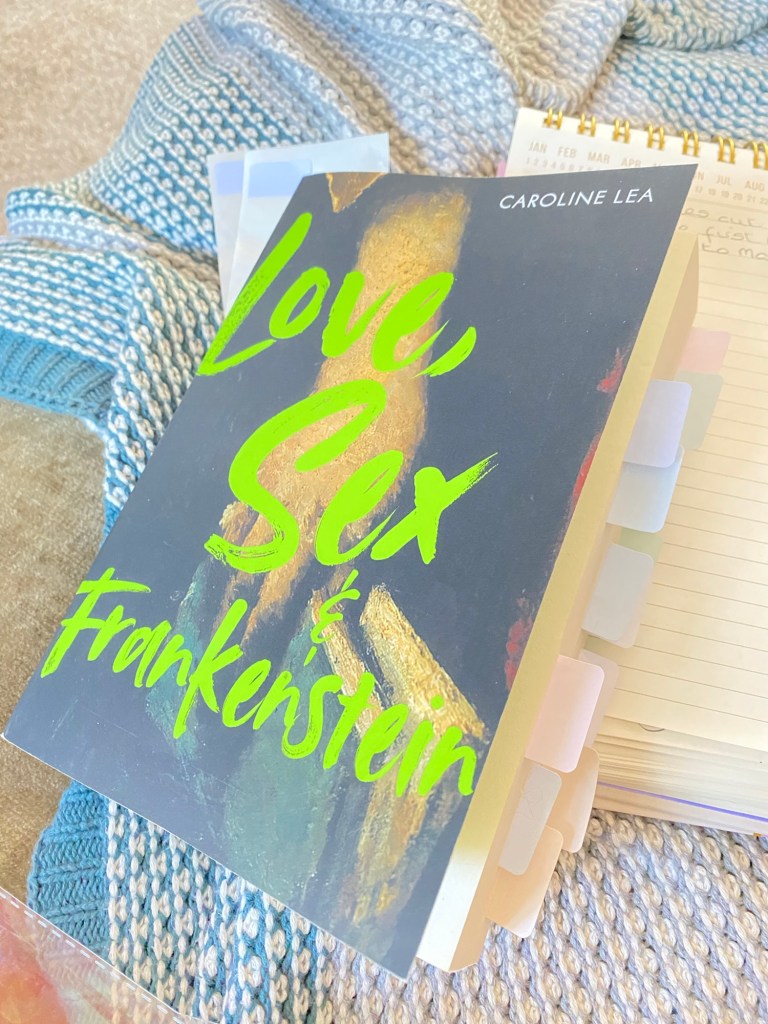
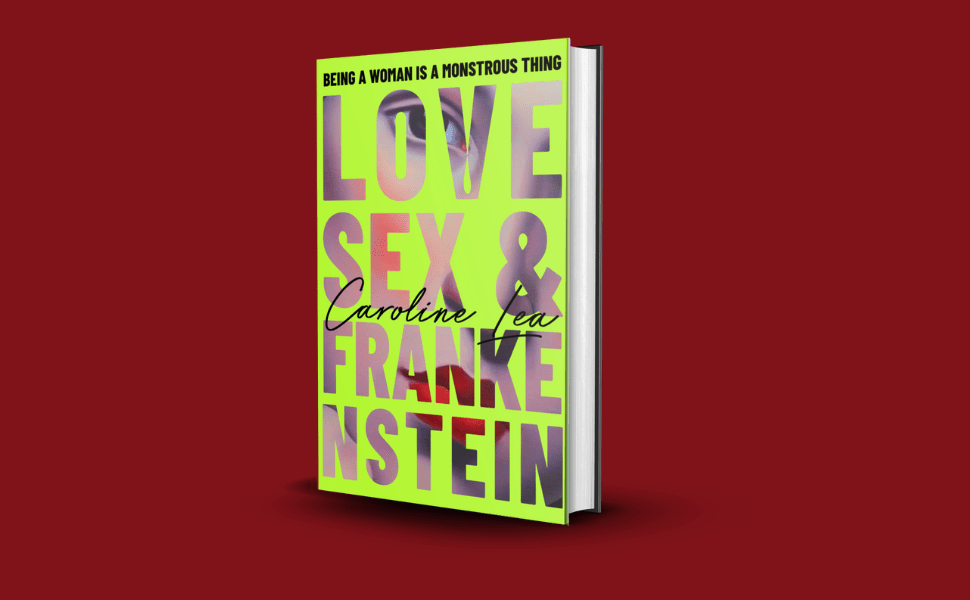
Love, Sex and Frankenstein by Caroline Lea

Mary Shelley, the author of Frankenstein, was born in 1797 to politician and writer William Godwin and his wife and fellow writer, Mary Wollstonecraft who wrote The Vindication of the Rights of Women. In her book she made, possibly the first, claim that women were not naturally inferior to men. It was a feminist manifesto centuries ahead of it’s time. Sadly Mary’s mother died only eleven days after she was born from puerperal fever, leaving Godwin to raise Mary as a single father. However, he remarried in 1801 to a widow with two children of her own, Clare being very near in age to her stepsister Mary. In 1841 Mary became connected to the poet Percy Bysshe Shelley, a well-known writer who was already married with three children. Shelley was 22 and Mary was 16. Facing nothing but criticism and social sanctions in London, the couple decided to escape to the continent along with Mary’s step-sister Clare. They then settled for a time on Lake Geneva, sharing a house with Lord Byron and his doctor Polidori. As the weather changed they become snowed in for a period of time and one of the diversions thought up by Byron was that each of them write a ghost story. Up until this point, Mary has only written in her journal but she can feel something stirring within her and in this strange place, Frankenstein’s monster is born. 

Probably every English Graduate who specialised in Gothic Fiction has fantasised about a stormy night, in a house on the edge of a lake near Geneva. That night was supposedly the genesis of the first vampire story – Polidori’s The Vampyre – and Mary Shelley’s classic horror, Frankenstein. It always seemed strange to me, how two iconic horror legends were conjured up in the same place on the same night. Of course it was a longer period of time and everything these writers experienced in their young lives so far was fuel for their creativity. The setting is definitely strange and unsettling. Caroline Lea paints a picture of the lake becoming monstrous, magical but evil too and no longer a place where children paddle and dive underwater. The sky is dark, trees look like ‘funeral lace’ and ash rains down from above. Local people have noticed that at times the lake throws up strange shadows and clouds, some that look like sky cities floating in the air. When they find a man called Karl Vogel drowned in the lake with his eyes turned from brown to blue – they are shocked, but this is a place of transformation. It’s as if nature is creating the perfect circumstances for monsters to be born. 

This incredible book. is a brilliant combination of historical and horror fiction, with a large side order of feminism – all of my favourite things. Every time I put the book down I would look at my husband and say ‘wow’ then try to write down everything that struck me. I ended up with ten pages of notes that I now need to build into coherent sentences and do this novel justice! Firstly the historical settings were incredible. When we first meet Mary and Clare, they are living in lowly lodgings in London. Mary’s baby is born and they are desperately trying to avoid the bailiffs that seem to follow Shelley wherever he goes. The author really captures 18th Century London with the girl’s filthy lodgings a bleak place to look after a baby. They’re also struggling to sleep, worried that any moment their flimsy door will be kicked down. This is the reality of being the mistress and illegitimate child of a well-known poet who does not pay his debts and has retreated back to his family home. I never imagined that Shelley left her in this position. I’d imagined them living on Lake Geneva complete with servants and all the excesses that Byron was famous for, then travelling around Europe, leaving their troubles behind them. Their relationship would probably be considered abusive now, not just because of their age difference but because of the way Shelley manipulates her. Something that only worsens when Byron and his peculiar brand of chaos are on the scene. When Mary tries to stick up for herself, all the qualities he supposedly loved about her – her independence, her spirit, her intelligence – are thrown back at her, in order to control, manipulate and punish her. He calls her a good mother, but also accuses her of fretting and becoming boring. It is her independent spirit that landed her in Shelley’s arms but he’d rather she didn’t have the independence to question him, refuse him or leave him. His threat is very clear:

‘Women who leave their children, will never see them again’. 

Of course Shelley wouldn’t give up his carefree life to look after his child. He would probably hire a string of nursemaids to seduce then discard, until his only option is to dump his son on his long suffering wife who is pregnant again. Mary starts to realise that although he professes to love her, once she has become a mother she is always expendable. My urge to slap Mary’s step-sister Clare started early in the book and flared up very frequently. She has absolutely no girl code. She had left with Mary in the hope of rekindling a brief liason with Byron. However, it’s clear she’s happy to switch affections if he isn’t there, even onto Shelley. She flirts and simpers, touching his arm and holding his hand to guide her outside. Byron’s treatment of Clare is utterly cruel, he manages to ghost her even when they’re finally face to face. He refuses to acknowledge she exists and then only picks her up again when the weather descends and there are no other prospects. Despite this it is hard to like her, especially when she gains snippets of information from Shelley only to drop them on Mary when they’ll hurt the most. The arrogance of both poets is endless! Byron isn’t just a seducer of women, he drinks and takes laudanum at every opportunity too. He abuses his supposed friend and doctor Polidori, considering him dull and mimicking his stutter in front of the women. His own disability is never mentioned by anyone – the limping stride he’s had since childhood is overlooked or even compensated for as Mary notices some people unconsciously falling into step next to him, slowing their stride to match his. His impulsivity is like that of a toddler, moving mid-week from a hotel to the house on the lake, determined not to pay for the weeklong stay he originally booked. It will cost more for the hotelier to clean up after his bizarre animals, including two eagles, a huge dog and a monkey. He sets his sights on Mary and despite his magnetism she can see what he truly is – a boy throwing mud at windows to detract from his own badness and shortcomings. 

The setting is glorious and it’s clear why frozen mountains, cavernous lakes and the arctic weather feature heavily in Frankenstein. It’s where Mary goes to have time to think, away from the chaos and hedonism indoors. The seemingly magical weather conditions are explicable, even though they feel supernatural. Lake Geneva is known for throwing up mirages called ‘Fata Morgana’. They take the form of distorted boats just above the horizon or even ‘castles in the air’, where a whole city seems projected into the clouds. Named after Morgan Le Fay the mirages are created by rays of light pass through air layers of different temperatures. The sheets of ice on a lake keep the surface air cooler than in the layers above. It’s easy to see why people might by unnerved by something that appears so otherworldly. A more psychological phenomenon that’s clearly takes hold within the house is cognitive dissonance, felt strongly by Mary in particular. The villa is starting to feel like a place she doesn’t belong because her emotions and reactions don’t seem to match anyone else’s in the group. 

‘She feels like a stranger in the foreign land of this room, unable to understand their bright chatter and loud laughter […] every moment takes her further away from these awful people who carry on as if she isn’t there at all’. 

Motherhood and the reality of being Shelley’s mistress has changed Mary and it’s so relatable. She wonders whether all women feel pulled in so many different directions at once. She also wonders if she ever had a true understanding with Shelley. A fire that lit up her heart and her mind is now glimpsed very rarely and she wonders if it ever truly existed. Has she fallen in love with her idea of Shelley – the one who creates the grand illusion of romance in his poems. He doesn’t love her, merely the idea of love itself. In disappointment with all men she turns to the wisdom of women, particularly her mother’s work. Mary Wollstonecraft was the first woman to write a feminist manifesto and she truly understood what needed to change for women – the problem of having to depend on a man. She realised that nurturing women’s learning was the first step: 

‘Strengthen then the female mind by enlarging it and there will be an end to blind obedience’. 

Women could only overcome their dependence on men if they were educated and could earn their own living. In Mary’s dark night of the soul she hears her mother’s voice encouraging and coaching her and the minute she does Mary’s able to breathe again and see a clear way to support herself – by selling her writing. Once she can do that, it no longer matters whether Shelley is inconstant or distant – she does not depend upon him for security and stability. She is ashamed that despite her intellect she has allowed this man to reduce her. Yet she has to tread a fine balance and think these things rather than say them outright. She fears that Polidori’s friendship with the two men, means they have convenient access to a doctor. If she fully expresses what she feels might Shelley think her mad and seek to have her committed? However, she is furious that she might be asked, yet again, to grant forgiveness to a man who is not sorry. She feels that both poets have taken and ruined promising young women, not caring that the consequences of their actions will rest solely on the girl’s shoulders. She wonders what it must be like to take up space in the world, to believe it is your birthright to dictate the temperature of every room they’re in. It is Byron’s arrogance that becomes her blueprint for a future self, allowing herself to be angry and consequences to be damned. She wants to be more like him, true to her emotions and principles and saying exactly what she thinks without worrying about the outcome. In fact it’s a dalliance with Byron where Mary seems to find more strength. It’s an uncomplicated exchange of desire, full of passion, but at no paint does he take anything from her. It gives her the strength to confront Shelley about returning to his wife and leaving both women at the mercy of debt collectors, out of sight and out of mind. She finds her voice and addresses Shelley as a man, rather than the great poet, making her feelings about his infidelity very clear, but also pointing out his cowardice and the times he hasn’t been there for her. 

I loved how the story of Frankenstein’s monster is psychological fragments stitched together, just like the monster himself. Through writing Mary processes her own emotions and thoughts which then feed into the emotions of the abandoned monster. She remembers stories of medical students digging up bodies and stealing them for dissection. Then she gives the creature an internal monologue, ripe with the emotions she has felt, but never expressed. Frankenstein leaves his monster just as Shelley left Mary and their baby in squalor. She’s writing a criticism of men who create with no thought for the thing they’ve created. Victor Frankenstein goes to sleep expecting his creature to die and feels nothing. The creature meanwhile feels a combination of Mary’s grief and abandonment, first losing her mother and then the loss of her father, a man who brought her up to have a rebellious spirit and think for herself, but rejected her when she lives by these principles. Mary is this bewildered and angry creature and that’s perhaps why she gives her monster the equivalent of philosopher John Locke’s tabula rasa – the blank slate of a small child ready to experience nature, love and all that is beautiful. Frankenstein’s monster embodies the nature/nurture debate in that the creature isn’t born evil, it’s other people’s cruel treatment of him that makes him monstrous. Her writing has processed all these feelings and working through them makes her feel hopeful for the first time. She might return to London with her son and instead of being beholden to Shelley or her father, she could keep them both with her own writing. 

Typically, blinded by his own arrogance Shelley doesn’t see himself in Victor Frankenstein at all. At first Mary thinks he’s feigning ignorance, but he genuinely can’t see his own reflection. He sees too much ambiguity in the story, thinking either the creature should make Victor look at his own shortcomings or she should make it so monstrous that no reasonable person would expect Victor to care for it. I loved the way she takes his criticism, because it shows us how much Mary has grown up. She realises that at every stage on the way to publication there will be a man who wants to shout his opinion. It doesn’t matter, because she knows they will all be mistaken. The book, like the creature at it’s centre, will be sent out into the wilderness looking for a creator. She’s fairly sure it will find one, because she knows her book is special. As for Caroline’s book, this is an absolute masterpiece and made me think about Frankenstein from so many different angles. Caroline Lea’s Mary take us through the psychological trauma and brings to life her relationship with Shelley, often told in a rather salacious or romantic way without any thought to the inequality between them. Through this experience she guides the reader through the genesis of this incredible novel. It is stitched together from so many different parts, but here we can see them all and understand the circumstances they come from. What Caroline has written is a Bildungsroman, a novel of Mary’s rebirth from girlhood to womanhood. Frankenstein is the chronicle of that birth, as messy, terrifying, horrific and momentous as it is. This birth being the genesis of Mary Shelley as a woman but also as a writer of one of the most important novels in literature.                                                                                                                                                                                                                                                                    

Meet the Author

Caroline Lea grew up in Jersey and gained a First in English Literature and Creative Writing from the University of Warwick, where she has also taught on the Creative Writing degree. Her fiction and poetry have been longlisted for the BBC Short Story Prize and Sunday Times Short Story Award, and shortlisted for the Bridport Prize, the Fish Short Story Competition and various flash fiction prizes. Her novel, THE GLASS WOMAN, was published to critical acclaim and shortlisted for the HWA Debut Crown. Her next novel, THE METAL HEART, was Scottish Waterstones Book of the Month. Her most recent novel, PRIZE WOMEN was featured and acclaimed on BBC Women’s Hour. Caroline is passionate about helping other writers to grow and succeed: she teaches creative writing both privately and, currently, for Writing West Midlands and is often recruited to give talks at literary festivals and events. She currently lives in Warwick with her partner and children and is working on her next novel about Mary Shelley writing Frankenstein. Her books often feature ordinary women in extraordinary circumstances.

Posted in Netgalley

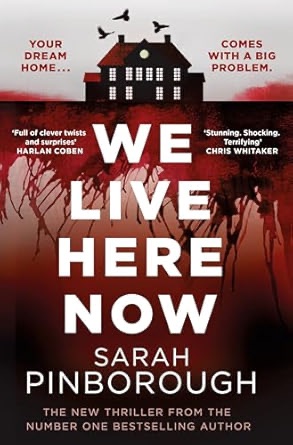
We Live Here Now by Sarah Pinborough

Emily and Freddie have been through the mill of late. After a terrible accident when they were on holiday, Freddie has surprised her with the home of their dreams. Emily fell from a cliff on a group holiday and not only did she break her leg in several places, she then developed sepsis and almost lost her life. Now she’s in recovery, still walking on a stick and has been thrust into a whole new life. Larkin Lodge sits just outside a village on the edge of the moors and could be their dream home, but Emily can’t believe Freddie made this huge decision without her. The house is gothic and in the mists and murk of winter it looks a little isolated and spooky. However, she can see that in spring the views will be incredible. As Freddie continues to work in London, Emily spends a lot of time alone and starts to feel uneasy. Sudden drafts and disgusting smells, then heavy footsteps moving across the second floor are unnerving. Freddie is convinced she’s struggling with post concussion syndrome and calls her ITU consultant for advice – much to Emily’s disgust for doing this behind her back. As she starts to look into the history of the house and questions some of the locals, all the different parts of her life start to fall apart. Secrets start to come to light and Emily wonders if the house is having an influence on her. 

Freddie made me angry and I couldn’t understand what had kept them together so long. We hear both his and Emily’s viewpoint in alternate chapters. We don’t know how he felt about the ‘pre-accident’ Emily, but here he seems irritable and edgy. He makes Emily doubt her own sanity and even when he has experience of the same things he keeps it to himself. He talks behind her back to the vicar and her consultant – but we can’t help but wonder if it could it all be in Emily’s head? Yet even when she tries to forgive him for his actions he seems strangely disappointed and even angry. He says he hates her superior tone and victim mentality. Is he determined to think the worst of her or is he just a concerned husband looking for answers? They meet a married couple who once lived at the lodge and now live elsewhere in the village. They seem unscathed by their years at the house. He is an artist and loves to paint young models, with his incredibly chilled wife seemingly happy with any potential dalliance. Emily can’t imagine being that accepting of the same with her own marriage. How do they fit in to this strange puzzle?

Emily is a sympathetic narrator although she’s not entirely reliable. It must be so disorientating to wake from a coma and know that your body has been present but your mind has been somewhere else. Added to that is the risk of ICU psychosis – a common condition causing auditory hallucinations, nightmares, sleep disturbances and paranoia. One in three ICU patients are affected after spending five days in the unit so one of her experiences could be explained away. However it’s important that those who love her, listen to her and believe her experience, otherwise it feels like a betrayal. She is desperately looking for answers, researching the archives and talking to locals. Being disturbed in her sleep means she’s up and about in the night and after they throw a party at the lodge she stumbles across another secret and doesn’t know who trust. Would she ever have had thoughts like this before the house? The author cleverly creates tension between what we know about Freddie and Emily and what they know about each other. They’re both keeping secrets and Freddie projects all their problems on to her. Even when she’s quite measured and reasonable or accepts his apologies he becomes angrier. Just occasionally he pauses and wonders where these thoughts are coming from? Is it the shock of Emily’s fall still working on him or is something more insidious at work? 

Of course it wouldn’t be a Sarah Pinborough novel without a supernatural element and this one is genuinely scary. It begins with the window on the landing, seemingly opening of it’s own accord. Then sounds on the stairs to the top floor where Emily can’t reach at the moment without severe pain. When she starts talking to older locals about the house there’s a moment that genuinely made the hair stand up on the back of my neck! The chapters from the raven’s perspective are very touching as well as creepy. He has lost his mate at the house and can’t seem to leave her, even with the promise of a new life with a beautiful young raven called Bright Wing. She can’t tempt him from the corpse of his mate, even though she’s no more than papery bones. His grief is so real and I was deeply sad for him. I was very keen to find out what link they both have to Larkin Lodge.  Was this an edge of the seat thriller or a ghost story? We’re never quite sure, but i felt compelled to keep reading and find out. Sarah Pinborough is the Queen of this type of gothic thriller and this was another brilliant read, keeping you guessing till the very end. 

Meet the Author

Sarah Pinborough is a New York Times bestselling and Sunday Times Number one and Internationally bestselling author who is published in over 25 territories worldwide. Having published more than 25 novels across various genres, her recent books include Behind Her Eyes which will air on Netflix in January 2021, Cross Her Heart, in development for UK television, and 13 Minutes in development with Netflix.

Sarah was the 2009 winner of the British Fantasy Award for Best Short Story and also the 2010 and 2014 winner of the British Fantasy Award for Best Novella, and she has four times been short-listed for Best Novel. She is also a screenwriter who has written for the BBC and is currently working on three TV projects and the film adaptation of her novel The Death House.

Her latest novel, DEAD TO HER and is a dark and twisty, sexy tale of hidden secrets and revenge in high society Savannah and has been sold for TV in the US.

Sarah lives in the historic town of Stony Stratford, the home of the Cock and Bull story, with her dog Ted.

You can follow her on Twitter @sarahpinborough

Posted in Netgalley

The Surgeon’s House by Jody Cooksley

London 1883

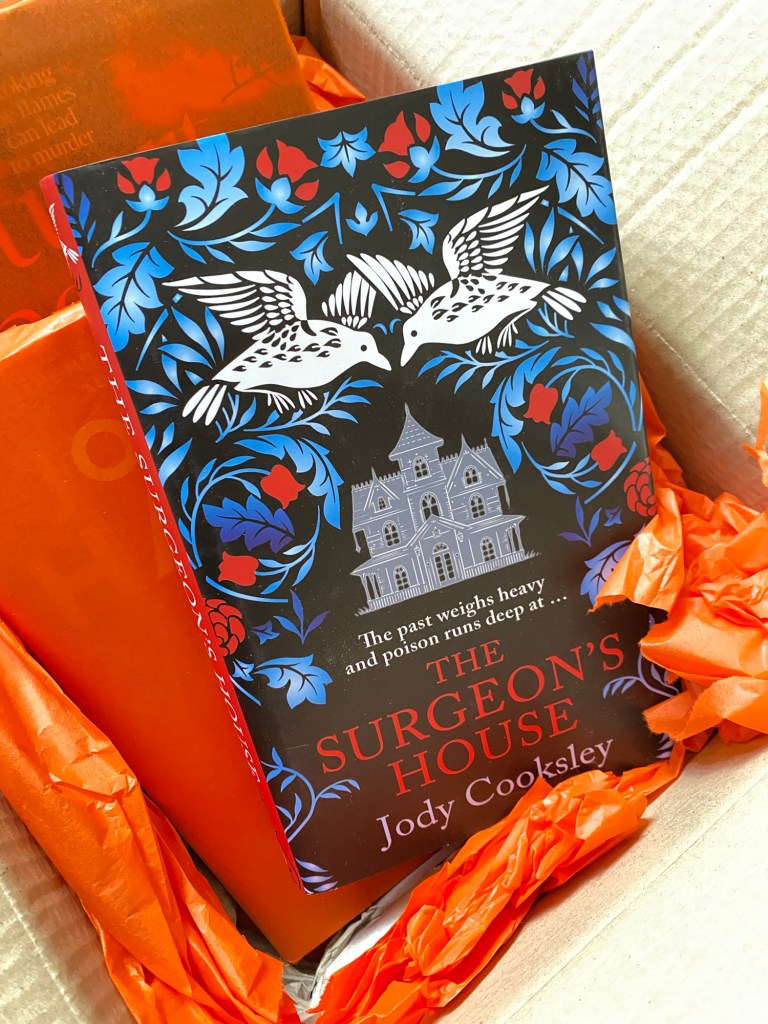
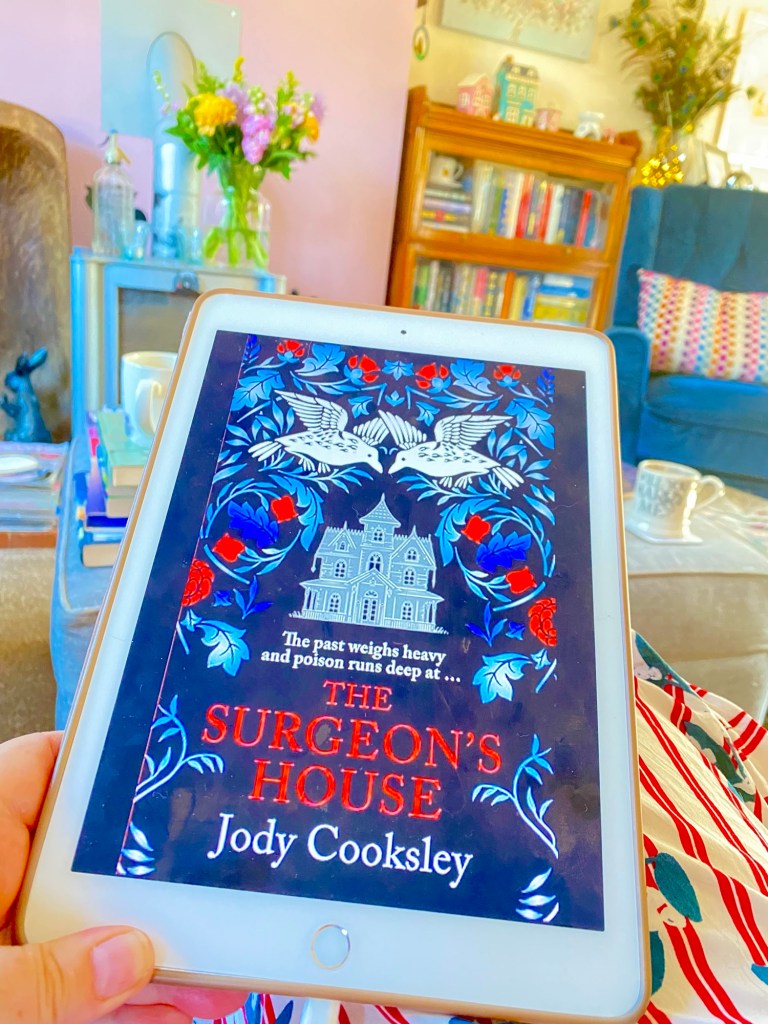
Rebecca and husband George run Evergreen House as a home for young girls and their illegitimate children, often called a house for ‘fallen women’. This has been a positive change. Previously, Rebecca’s sister Maddie was the woman of the house as the wife of Dr Everley. Maddie is recovering well after being on trial for the murder of her baby and the revelation that the Everley family had a tradition of hideous experimentation on the bodies of babies to create strange chimeras. Rebecca knows their tenure here is precarious. The Everley family still own the house, but with Dr Everley dead and his sister Grace in a prison asylum no one currently needs it. The small household are very close so all are devastated when the cook and centre of their household, Rose, is murdered. Rebecca is shocked by the death of her friend in what seems to be a random act. Rose’s death isn’t the end of the mysterious events at Evergreen. Rebecca fears the past is coming back to haunt them, the murderous and twisted legacy of the Everley family is hard to ignore. What was a sanctuary is becoming dangerous as the evil presence continues it’s work. With the charity board also tightening their grip on the house, Rebecca must draw out the murderer and discover their purpose.

This was a great companion novel to The Small Museum which told the story of Maddie’s marriage to Dr Everley. Rebecca was once one of Grace Everley’s fallen girls, but this was just a way of acquiring babies for her brother. It was great to see Maddie again especially so happy with her partner Tizzy. They are both regular visitors to Evergreen. There’s such a positive atmosphere and the residents are able to live alongside their babies, unlike the terrible Magdalen Laundries where babies were taken for adoption and their mothers were forced into heavy labour to repent their sin, repay their debt and make a profit for the church. The truth is that most of these girls have been manipulated, coerced or abused. Rebecca works on the premise that they shouldn’t be punished twice. There’s a lovely parallel with Maddie’s paintings of mythical women that she’s submitting to the Royal Academy Summer Exhibition. Helen of Troy is seen as the cause of the Trojan War, but she had no agency in the story. She’s desired by a man who abducts her by force. Medusa is raped in the temple of Athena, but the goddess chooses to punish her for desecrating the temple, giving her snakes for hair and a gaze that turns men to stone. Neither woman asked for what happened to them. Maddie has painted them on huge powerful canvasses, a monument to women mistreated by men.

The house is becoming a hive of activity in the lead up to Easter. The children are excited, painting eggs and helping their mums to weave colourful baskets. So it is a shock to them when Rose is gone. She was always helping the children to bake and had a listening ear for anyone in the household who needed it. It’s as if the heart has been taken from their home. Downstairs at Evergreen has always been a different matter. Psychologist, Dr Threlfall practises in the basement at the behest of Grace Everley. He ensured Maddie wasn’t wrongly convicted of the murder of her baby and Rebecca is grateful, but is slightly suspicious of what he’s researching. He has an interest in eugenics, measuring the girl’s heads, the placement of their features and notes any patterns. He’s trying to create a taxonomy of fallen women as if their sin might be predicted by physical characteristics. Rebecca worries he’s been inspired by old Dr Everley’s research into pain – especially when she hears one of the girl’s scream from his room. Then there’s the room next door where one of the servants is practising her taxidermy, in an unhygienic way! It’s as if the interests and hobbies of the Everley’s are ingrained in the fabric of the house.

In between Rebecca’s narrative, we have Grace Everley’s. She’s incarcerated and seems to be teetering on the brink of insanity. Used to manipulating people with her beauty, her finery is a thing of the past and her beautiful hair has been completely shaved off. She’s still incensed that Dr Threlfall testified for Maddie, sending her brother to the gallows. What she cares about most and the focus for her vengeful thoughts, is that her father’s work isn’t being continued. She takes us back to her teenage years and participating in her father’s pain research – now she is utterly stoic and she can completely separate mind from body, blocking out her pain receptors. I did feel a tiny bit of sympathy for her because she didn’t stand a chance growing up in that environment. Having been used by her father she could have been a submissive mouse, but instead she became powerful and used her feminine charms to control the men around her. Could she still have that influence?

The men in the novel are mainly concerned with controlling their environment and all the women in it. Dr Threlfall is the last link between the Everley family and Evergreen House. He may be an effective doctor but his interest in eugenics is concerning. It always leads to controlling people’s behaviour and persecuting those who don’t fit the rigid ideal. It lead to some of the biggest atrocities of the 20th Century. Looking to categorise a type of woman who ends up in trouble, lets men off the hook for what happens to them. Mr Lavell is equally discriminatory. He thinks that women who have children out of wedlock must be punished for their actions and only the Bible and physical work will remind them of the terrible choices they’ve made. He finds Rebecca’s methods too lenient and would like the children sent to the orphanage. Then he’d bring laundry in for the women, to keep them penitent and make a profit for the charity board. Only George is absolutely steadfast to his wife. When a woman turns up at the door asking for kitchen work, Rebecca goes her a chance even though her references will need chasing after the fact. Things start to deteriorate quickly once Angela is in charge in the kitchen and it’s definitely not the heart of the home any more. She could have a bedroom but chooses to bed down in the cupboard where Dr Everley kept his specimens. She doesn’t try to make connections and won’t have children baking in the kitchen. Rebecca is concerned and then incensed when she suspects her of selling one of the women’s stories to a Penny Dreadful. When one of the youngest children falls ill, Rebecca knows for sure that something evil lurks in the house. She feels assailed from all sides, evil from within and outside forces trying to force their own agenda. She has to solve the mystery before the charity board get wind of their problems and use it to close them down.

This was a tense and atmospheric read. I could feel the warmth and happiness slowly being sucked from Evergreen House. It did feel evil, like a creeping black mould slowly covering everything. This really showed the inequality in society and how the fates of these women are decided by men; especially ironic when men are complicit, if not to blame for their supposed fall. One man seeks a genetic reason for their loose morals. Another feels they haven’t atoned for their sin. While a third would take away their children and punish them with hard labour. Not a single one questions their own behaviour or even doubts their right to pass judgement. Yet there are admirable women calmly showing compassion, understanding and professionalism, while stuck in this patriarchal system. Grace Everley gives me the shivers, but she is a victim too. I was held in suspense over who was the murderer and whether Rebecca’s home could remain the loving and caring space women need. There were heart-stopping moments, especially towards the end. The scene in the garden had me holding my breath. This is the perfect gothic mystery, especially for fans of historical fiction who like a touch of feminism on the side. This is a must-buy, for the engrossing story and for the gorgeous cover too.

Out Now from Allison and Busby

Meet the Author

Jody Cooksley is an author represented by literary agent Charlotte Seymour at Johnson & Alcock.

In 2023 she won the Caledonia Novel Award with The Small Museum, a chilling Victorian thriller that was published in hardback, ebook and audio with Allison&Busby in May 2024. Paperback publication was February 2025 and the sequel, The Surgeon’s House will be published in hardback, e-book and audio in May 2025.

Previous novels include award-nominated The Glass House, a fictional account of Victorian pioneer photographer, Julia Margaret Cameron (Cinnamon Press, 2020), and How to Keep Well in Wartime (Cinnamon Press, 2022)

She is currently writing more Victorian gothic novels. She has previously published essays, short stories and flash fiction.

Jody works in communications and lives in Surrey with her husband, two sons, two forest cats and a dangerous mountain of books.

Posted in Throwback Thursday

The Thin Place by C.D.Major 

I have a fascination for the idea of ‘thin places’ – where there’s only a thin veil between our world and the spirit world, or possibly passages to another time or dimension. I am swayed towards the idea that it’s where something traumatic happened and left an imprint on a place, so that however much time passes, the events of that day can break through and be replayed almost like an echo of the original event through time. Ava Brent is a journalist who is investigating one such place. The Overtoun Estate is a strange and looming presence over town and no one seems to know it’s specific history, but it’s rumoured to be a thin place, steeped in myth. The legend is about a bridge where it’s claimed many dogs have thrown themselves to their deaths. The locals steer clear and when Ava begins to ask questions the warm welcome she received at first becomes a cold shoulder. When she discovers that a sick young girl lived there, the sadness that surrounds the building starts to make sense. Ava is expecting her first child so is maybe susceptible to this tale, but a message scratched into a windowsill  fills her with horror. What happened here and is she really prepared for what she may discover? What might her fascination with this place cost? As her life begins to unravel, she knows she should cut her losses and walk away. Then threats start to arise, but Ava can’t deny that despite the fear she is compelled to return. 

This was an excellent slow burn gothic novel from an author that was completely new to me. I am interested in tales of motherhood and the paranormal, brought to my attention at university where I was influenced by Frankenstein and Rosemary’s Baby on my Gothic, Grotesque and Monstrous course. There’s something about the extraordinary changes in the body and the idea of another person growing inside you that’s open to the world of monsters; rather like a human set of Russian nesting dolls. I think it’s also horrifying when a horror exploits that moment when both mother and baby are at their most vulnerable. Ava is drawn to the specific bridge on the property, despite the strange and eerie feelings that congregate there. Ava is taken in by it’s ’otherworldliness’ and slowly it takes over her life. The author lets us into Ava’s inner world by devoting some of the narrative to her journal entries where page after page is devoted to her ramblings about the place. Her home life starts to become disrupted, self-care goes out of the window and even her pregnancy can’t compete with her drive to discover the truth. 

In between Ava’s story we’re taken back to the historic occupants of the house. In the 1920s it’s Marion who lives there, a newly wed who feels lonely as her husband is away a lot for work. Then twenty years later it’s Constance, the sick little girl who is almost a prisoner, kept inside by her over anxious mother. Is she really the sick one in her family? Or is there some other motivation keeping her life so limited? We never know during these narratives whether what we’re being told is the truth. Are the women seeing events truthfully or skewed through the filter of their own experience? We all the view the world through our own learning, experience and emotional state so we have to question whether Ava’s state of mind is colouring her judgement? Is Marion’s loneliness affecting how she views the house? Could Constance’s illness and solitary existence have left her vulnerable to suggestion? All three could be unreliable narrators and the atmosphere can’t help, a sense of unease that settles over them and us. The darkness and mood seem to follow Ava like a miasma, created by every bad thing that’s happened there. It’s this that envelops her and draws her back again. Some historic events are appalling and I was affected by the scenes of animal abuse, as well as pregnancy trauma that’s also depicted. The scenes detailing pregnancy complications left me needing a few deep breaths and a cup of tea. That just underlines how well written the book is. I swear that as the book went on my blood pressure was climbing along with Ava’s. I was also left with a disoriented feeling sometimes and I think it’s a clever writer who can echo the character’s experiences with the feelings she evokes in the reader. 

The supernatural elements were very subtly and gently done, with the mere suggestion of the paranormal being enough. The way I felt while reading proved that this was the type of gothic horror I really enjoy. It felt like a classic horror that creeps up on you woven in with the sort of historical background that really grounds the characters in their time. The author uses the supernatural elements and the terrible story of the dogs, to tell us something about mothers and daughters – daughters being an echo of every woman who has come before them in the family line. It’s also about how the women fit into their world and I loved how the author explored the expectations on women and pressure placed on them by others and society in general. The author’s notes at the end are so interesting too, especially the elements of the book based on a true story. Overall this was a great combination of gothic storytelling and a compelling historical thriller. 

Out Now from Thomas and Mercer

Meet the Author

C. D. Major writes suspenseful books inspired by strange true stories. Alongside her thrillers she writes big love stories as Cesca Major, rom coms under the pseudonym Rosie Blake and emotional women’s fiction as Ruby Hummingbird. All information about her books, Book Club Questions and more are over on her website http://www.cescamajor.com. Cesca lives in Berkshire with her husband, son and twin daughters. She can be found on Twitter, Facebook and Instagram and enjoys connecting with readers.

Posted in Back of the Shelf, Throwback Thursday

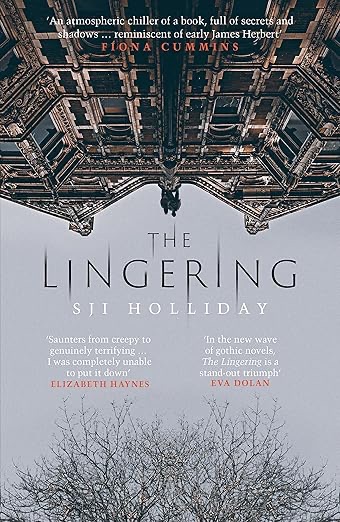
The Lingering by S.J. Holliday

In the free reading time I have towards the end of the year I’ve chosen to read the back catalogue of a few authors and S.J.Holliday happened to be someone I was really interested in. I love most of Orenda Books’s authors and I first came into contact with them through S.J. Holiday’s book Violet, which was one of my first ever blog tours. I loved the psychological aspects of the book and the way the author saw women as they really are – the heroes of their own stories, making autonomous decisions with the potential to be just as violent and chaotic as a male character. I’ve had The Lingering on the shelf for a while, but something made me take it down last week to read while soaking in the bath. Ali and her husband have made a huge decision. They’ve sold up almost everything they own and joined a commune of people living in what was an old psychiatric unit. At first they’re unsure of the group and their surroundings, but as her husband starts to settle in, his wife Ali seems less able to. Is it the strange house, with it’s abandoned wing full of old psychiatric equipment? Is it the sceptical locals? Or do Ali and husband Jack have dark secrets of their own?

The setting of this story is so gothic and atmospheric, with a dark history that slowly reveals itself both through local’s stories and the things left behind – physical and paranormal. Angela, the other narrator in our story, is the keeper of these stories and an amateur investigator of the paranormal. She has the house wired with sound equipment and cameras, particularly those areas where her sixth sense starts tingling. One of those areas is the bathroom adjoining Ali and Jack’s new bedroom, but also in the attic room above. I was slightly alarmed by the way she was watching the new couple, in a detached way almost like they were animals in an experiment. She seems like a new age, tree hugging, ethereal type of woman who has really bought into the ethos of the community. Ali notices her reverence in the rituals they share as a group and in the meditation sessions. Her name outlines her role within the group, she is the angelic and slightly naïve little sister to the others. Yet there is another side to her, the side that enjoys the stories told by locals like Mary in the shop about the house’s witches and the later rumours surrounding the asylum. She seems to enjoy the intrigue and proves to be quite the detective when it comes to Ali and Jack, showing a sneakier and unpleasant part to her character. The house itself is a labyrinth, with secret rooms and endless corridors. That strange juxtaposition of the natural and the man made felt wrong. All the hospital equipment and furniture just sitting there as if still being used, whilst the outside elements and nature are starting to encroach inside left me feeling uneasy. I felt as if any moment Ali or Angela might look in the mirror and see a busy ward behind them, like a glimpse through time.

In my closest city of Lincoln there is an old Victorian asylum on the outskirts, now slowly being developed into residential spaces. For years it remained deserted and derelict, with a strange aura around it. I wouldn’t have been surprised to see a 19th Century nurse at one of the broken windows, because it was untouched all that energy still seemed present. Local explorers did search around inside and take pictures of the iron bedsteads and old medical equipment just lying around as if someone had only just left the room. The mould, piles of rotted leaves, cobwebs and dirt added to the sense of abandonment. You certainly wouldn’t have found me in the there at night! This was exactly what was running through my mind as I was reading and it set me on edge. This house felt as if some parts were inhabited by the living and others by the dead. I won’t spoil the scary moments for other readers, but Ali’s first experience as she climbs into the bath after their long journey would have sent me running back up the drive. It has double impact because not only is it inexplicable, it’s an echo back to events that really happened in the house’s past, events that are haunting even without their ghostly context.

I didn’t trust anyone after a few chapters, despite at first happily reading Ali’s experience and trusting her account. As a reader I’m used to fictional communities like this being sinister under their surface mantras of love and light. Yet Angela makes discoveries that put the couple’s story in doubt and I began to wonder about Jack. What had forced these people to leave behind two respected professions and could it have something to do with a box of hidden news cuttings? One of the most tense sections of the book had nothing to do with the paranormal and involved some of the villagers. Late night Ali notices a 4X4 vehicle coming up the drive with a large lantern on the roof and several men inside, most of them holding a gun. As she goes outside to confront them they explain that they’re merely ‘lamping’ nearby and have an agreement to flash their late at the community leader’s bedroom window so he knows they’re nearby. Much as it seems ridiculous to flash a light in someone’s window so you don’t disturb them, their excuse is a plausible one and it’s something I often see in the fields surrounding us. Yet there is an undercurrent in their conversation with Ali and when explaining what happened she does reference Straw Dogs, a violent 1970’s film where an academic and his wife move to the country and are terrorised by the villagers. However, her reaction is excessive and made me wonder what had happened in the past to trigger her that way. The author flips us between Angela and Ali, building the tension towards some sort of confrontation. Will Ali find out that Angela has been watching them and explode or will Angela’s snooping reveal something dreadful about the new recruits? I loved the hauntings, especially the emotive little child’s wet footprints that dot around the place. Do these apparitions have a malign purpose or are they simply trapped in a place where traumatic events play over and over like a continuous cinema reel? This is a brilliantly tense and spooky read that seems perfect for autumnal evenings, but might put you off baths for a little while.

Out now from Orenda Books

Meet the Author

Susi (S.J.I.) Holliday is the bestselling Scottish author of 11 novels, a novella and many short stories. By day she works in pharmaceuticals. She lives in London (except when she’s in Edinburgh) and she loves to travel the world.

Posted in Personal Purchase

The Undoing of Violet Claybourne by Emily Critchley 

This was my read for over Christmas week and having started a couple of novels only to put them down again, I was beginning to think I’d lost my reading mojo. I was crying out for something that would draw me in quickly so I went for a tried and tested genre. A genre that maybe has a title, but I don’t know it. A preference I blame on reading Jane Eyre as a very imaginative ten year old. The formula is: huge rambling country house; time period from Victorian – 1930’s; young unsure girl/woman; aristocratic families with huge secrets. This fantastic novel from Emily Critchley fit the bill perfectly and was the only thing that drew me away from watching Black Doves all in one go! Our heroine is Gillian Larking, a rather invisible girl at boarding school who does her best to fit in but has no real friends. Gillian has lost her mother and with her dad working in Egypt feels very much alone. However, when she gets a new roommate that feeling starts to change. Violet is a bright, lively girl whose first goal is to break school rules and sneak up onto the school roof to check out the view. Despite her mischievous and seemingly confident nature, Violet is anxious and has a series of rituals to perform that help her cope: 

“She had to do certain things at certain times, like twirl around on the spot before she flushed the lavatory or touch a door handle twice before she opened a door. I often caught her whispering certain words to herself three times or counting to fifty on her fingers. When I asked her why she had to do these things, she struggled to tell me. For protection, was all she would say, or so that nothing bad will happen.”

She is also prone to emotional outbursts when things become overwhelming. Gillian is seemingly more aware that as young ladies of the middle and upper classes they must manage their emotions. She herself has had moments of despair and loneliness but has kept her tears for under the covers late at night. She also aware that girls in packs tend to sniff out weakness or odd behaviour and worries whether Violet’s rituals or ‘undoings’ as she calls them, could affect both their positions at school. Yet the other girls don’t seem to bother Violet and Gillian wonders whether that’s because she’s from a wealthy family. As Christmas approaches Gillian is delighted to receive an invitation from Violet to spend the holidays with her family at Thornleigh Hall. There she is dazzled by their slightly shabby country home, being waited on by the servants and Violet’s rather beautiful older sisters. Emmeline, the oldest and definitely in charge, wafts around in old Edwardian gowns whereas Laura is a rather more modern and fragile beauty. Both girls accept Gillian as one of their own, but their new friendship is tested by an incident on Boxing Day that will reverberate through the years. 

I have a soft spot for books set between the two World Wars and this had a lot of the themes pertinent to aristocratic families of the time. Thornleigh Hall is badly in need of repair but has a faded grandeur that is still impressive to Gillian. They’re a family living a way of life that ended twenty years before. They clearly don’t have the funds to maintain their estate, but Gillian notices the lavish breakfasts laid out every morning under silver dishes. Emmeline, the eldest sister, is the family’s great hope. She must find a suitor with money and secure the family’s fortunes with a sensible marriage. She has a candidate in mind, much older than her but definitely of the right class and enough money to save the hall for another generation. Gillian is enthralled by the sister’s unique style and confidence and realises that to some extent her friend Violet is the odd one out. Her nervous rituals, like her need to read Peter Pan over and over, suggest a deep insecurity in her character and even a fear of growing up. She warns Gillian that her sisters are not all they seem to be, but Gillian feels accepted for the first time in her life. There was an element of L.P. Hartley’s The Go-Between in her relationship with the sisters because she is naive and doesn’t realise when she’s being manipulated. On that fateful Boxing Day, Emmeline takes charge as always, instructing Gillian and Laura to lie or even pass blame onto a man who lives in the lodge house. Gillian feels obliged to go along with the plan because they’ve been kind to her. Again there are shades of another book here, Ian McEwan’s Atonement, where naivety and misunderstanding could lead to a terrible end for an innocent man of a lower social status. The full implications of these lies are utterly life changing for Violet, but almost no one escapes unscathed.

The novel is structured into four parts, taking us to different points in the life of Gillian and her relationship to the events of that Christmas in 1938. I’ve already mentioned L.P.Hartley’s The Go-Between and the first section has echoes of it’s opening page, from the naivety and social position of Gillian to the sense of delving into a past that’s long dead with it’s own social codes; “the past is a foreign country – they do things differently there’. We start the novel in 1999 when Gillian visits Thornleigh Hall, now under the guardianship of the National Trust. Over a slice of lemon and poppy seed cake, she ponders life from her time as a guest here to the recent death of her husband and the diary from 1938 that she’s come across while clearing out cupboards. This 1999 visit to Thornleigh is like travelling into the past as she strolls the rooms now on show and sees Lord and Lady Claybourne in the dining room complaining about their eggs and Laura in her stockinged feet reading a book on the library sofa. There is so much about this first chapter that draws us in: the suggested tragic circumstances of some members of the family; the emotional state of Gillian as a young girl who has lost her mother and is desperate for a role model; there’s also the hint of darker secrets lurking underneath the surface of this beautiful stately home. In the other three parts we’re taken to the aftermath of that fateful day in 1938 and then to London in 1942 where Gillian bumps into Laura’s husband Charlie. 

Finally part four brings us to the 1990s when Gillian and the Claybourne sisters are old women, taking us full circle to the beginning of the book. In each part there shocking revelations that leave Gillian in no doubt that the secrets from all those years ago are still having their effect. She has received a letter from Henry Cadwallander who has written to Gillian at his Aunt Violet’s request. Will she meet Violet and let her know that with the wisdom of experience she now understands her warning about the older sisters? I wondered if there would be closure or whether Gillian is always fated to be a horrified observer of the Claybourne’s family dynamics? This was an enthralling and fascinating look at a tumultuous time in history and it’s effects on one aristocratic family, observed through the eyes of a naive visitor. The author has created an incredible atmosphere that drew me in so strongly I felt like I was there. This is an amazing debut from Emily Critchley and I look forward to reading more of her work. 

Out now from Zaffre Books

Meet the Author

Emily Critchley has an MA in Creative Writing from Birkbeck, University of London. She currently lives in Hertfordshire in the UK. 

Posted in Netgalley

The Book of Witching by C.J.Cooke

On a small uninhabited island off Orkney, the body of a young man is found burned alongside a girl who is barely alive. She has suffered terrible burns to her arms and hands. When Clem receives the call that her daughter Erin is in the burns hospital in Glasgow, she races to her bedside and is horrified to find her in a coma with her damaged eyes stitched shut. Erin had been on a trip to Orkney with her boyfriend Arlo and a new friend Senna, leaving her daughter Freya with Clem. Arlo has been found dead, but Senna is missing. Erin desperately looks for clues as to how this has happened and is startled by a sudden vision of a strange book, with a bark cover and black pages that appear to be blank. Searching her daughter’s room she finds a note that reads ‘Arlo’s hands will need to be bound’. Could Erin have harmed her friends? We’re taken back to 16th Century Orkney as Alison Balfour wakes up and finds both of her children missing in the middle of the night. She tracks them to a clearing where masked and robed figures are holding a ceremony, initiating her children into the Triskele, just as she once was. Her own mother steps forward with the Book of Witching, inviting her grandchildren to ‘sign’ the book with a primal scream. Only a few weeks later she is approached by a nobleman when visiting her husband, who is working as a stone mason on the cathedral. He asks if Alison could create a powerful hex that would end the life of a powerful Earl. She refuses, so it’s a huge shock when she is arrested for practising witchcraft and thrown into a dungeon. Alison knows she has only ever used herbs and charms to help people with their ailments, particularly women. However, she knows what will follow; interrogation, violation and torture unless she confesses to something she didn’t do. Then she faces burning, with her only hope that she is strangled before the fire takes hold. Alison’s story is interwoven with Clem’s story, set in present day Glasgow where she lives with her daughter Erin. Clem is devastated when out of the blue she receives a call from the city’s burns unit. Erin has been admitted to the unit with serious burns and is in an induced coma. Clem is confused because Erin was on a trip to Orkney with her boyfriend Arlo and her friend Savannah. Now Arlo is dead, Savannah is missing and Erin has terrible burns to her arms and hands. She was found on the beach of Gunn, an uninhabited island off Orkney. Why were they in such a remote place and why is Clem had a vision of a blackened, bark covered book which opens to reveal a woman burning at the stake? 

C.J. Cooke combines these two stories into a narrative about Scottish heritage, the history of witchcraft and of women. She creates an eerie atmosphere where supernatural abilities abound, based within a breadth of research around the 17th Century moral panic about witches spearheaded by King James himself. These earlier sections are an unusual mix that ground us within the history of a place, but also creates a sense of unease. Alison renounced the Triskele years before and is angry with her mother for going behind her back, so when she’s arrested for witchcraft it’s a shock. The period where Alison is interrogated is incredibly accurate and hard to read in parts. She is entirely at the mercy of the powerful men who keep her in a filthy dungeon, restrict food and water, then use intimidation, violation and torture to elicit a confession. The historical background to the witch trials in Scotland has come up in a couple of novels this year and it might seem strange to the reader that such a belief in witchcraft existed. King James VI of Scotland had a marriage contract with a Danish princess, but her voyage to Scotland is threatened by fierce storms. Witch burnings had already swept across Germany and into Scandinavia and there are rumours that a witch had cursed the princess’s voyage. The North Berwick trials started a wave of panic over witches who might be accused of something as silly as causing a farmer’s cows to stop giving milk. King James voyaged across the North Sea to collect his bride, but does become obsessed with witchcraft using the Malleus Maleficarum as his witch finder’s bible. It includes the idea that witches will have a mark on their body where the devil has left his mark. One of the men interrogating Alison uses a pin to test marks on her naked body, looking for one that doesn’t produce pain when stabbed by the needle. He claims to have found the mark under Alison’s tongue, but also perceives the outline of a hare that turns into a shadowy figure. They are so sure of what they’ve seen that Alison almost thinks she’s seen it herself, but she’s starving, dehydrated, filthy and exhausted from being walked up and down all night to prevent her sleeping. Yet every time she denies their accusations, until they start hurting the people she loves. 

Clem meanwhile is horrified by the state of her daughter who is on a ventilator to protect her airway. She’s so vulnerable that she’s even grateful for the presence of her ex-husband at Erin’s bedside. She’s devastated for Arlo’s parents and for those waiting to hear news of Savannah. They’d only become friends very recently and there had been no red flags. Now the police are sniffing around the ICU, waiting for Erin to wake up and give them her account of what happened. When Clem pops home she goes into Erin’s room to feel her daughter. As she looks around she finds a slip of paper and written in Erin’s hand is he instruction that ‘Arlo’s hands must be bound ‘. That is exactly how Arlo was found. Instinctively, Clem pockets the evidence before the police ask to search their home. She must protect her daughter. Yet when Erin wakes up she claims to be someone else. Someone called Nyx. Clem only has to hear her voice to know that this is not her daughter. For me Alison’s narrative is more compelling, possibly because we’re in the midst of the action and everything is so immediate as we experience it through her eyes. By contrast we come into Clem’s story after the terrible event has happened. She’s in the dark, desperately trying to work out what has happened to her daughter. This only gets more complex as Erin wakes up different and she isn’t sure whether it is a case of ICU psychosis as her nurse suggests. This is a psychiatric response to the strange environment where sleep deprivation, being dependent on others and the sensory overload from the various machines and lights being on constantly. It’s also disorientating to wake up and find part of your life is missing. Yet there’s clearly a paralysing fear that something much worse is wrong. Erin has been through something so traumatic she’ll never recover or never be Erin again. The more Clem uncovers the more she feels something paranormal is at play. 

I was so impressed with the historical detail put into this novel and how real it made Alison’s experience. The punishments she and her family go through are more horrific than any of the paranormal stuff. We might fear the unexplained and the unknown but the things humans do to each other are far worse. I’ve loved this writer since her first novel and this one had me utterly gripped because she captures the fear of being labelled, noticed as different and blamed for things you haven’t done. Many witches served a purpose in their community, particularly for fellow women and I think she captured the complexity of that position. What’s the difference between giving a herbal remedy, a harmless charm or a spell and who makes that decision? Certainly not women and not those who are powerless or living in poverty. Even the most altruistic intention can be misconstrued or twisted by someone malicious. This was a dangerous time to be a wise woman. I also loved how the author based her story in a magic that was so powerful it could still wreak havoc today. This is another solid read from a fascinating author who has rapidly become a favourite of mine and a ‘must buy’ writer.

Published by Harper Collins 10th Oct 2024

Meet the Author

C J Cooke (Carolyn Jess-Cooke) lives in Glasgow with her husband and four children. C J Cooke’s works have been published in 23 languages and have won many awards. She holds a PhD in Literature from the Queen’s University of Belfast and is currently Senior Lecturer in Creative Writing at the University of Glasgow, where she researches creative writing interventions for mental health. Two of her books are currently optioned for film. Visit http://www.cjcookeauthor.com

Posted in Netgalley

House of Fever by Polly Crosby

On a trip abroad with her mother, Agnes Templeton meets a handsome young doctor called Christian Fairhaven. He seems completely besotted with her and a romance soon develops. Surely his swift proposal can only mean one thing,it must be love or this a relationship of convenience? Dr Fairhaven needs a wife and a stepmother for his daughter Isobel, while Agnes needs an expert in tuberculosis for to look after her mother who is now dying from the disease. Christian is researching a new cure, something he’s working on at the institute he runs called Hedoné. He lives in a cottage alongside the institute, which is split into an infirmary for very unwell patients and ‘spa’ type accommodation for TB patients who can benefit from the fresher air and rest that the institute provides. When Agnes arrives she finds that not everything is as she imagined. The guests are more glamorous and wealthy than she expected, with their part of the building adjoined by a swimming pool, beautiful grounds and many places for parties. Their access to alcohol and gourmet food gives the place a feel of a luxury hotel. Agnes’s mother is taken into isolation, to be monitored closely and have a period of quarantine. Agnes is allowed to visit her mother’s room as she seems to be immune to TB having nursed both her father and mother through the disease without succumbing herself. As she adjusts to the contrasts of lavish dinners and the sound of partying with the very authoritarian Matron and strict quarantine restrictions, Agnes starts to notice things. Isobel seems to flit around largely unmonitored and doesn’t live with them in the cottage. The beautiful actress Juno Harrington holds court here and seems to have unfettered access to Christian, even in his office. There’s nothing Agnes can put her finger on, but she feels uneasy. She senses there are secrets at Hedoné and perhaps in her marriage too. 

The book is largely narrated by Agnes, with small chapters every so often that seem to be narrated by a child. Through this we see the institute in two different ways; Agnes’s conflicting and unexpected impressions alongside those of a person who knows this place inside out and has explored every nook and cranny. I was very interested in the hare motif that repeats itself throughout the book as a symbol for the institute. It’s the keyring on which matron keeps her keys as well as the keys to the cottage, it’s on the signage and repeats throughout the building. I’m very interested in hares as a mystical symbol and a spirit animal, ever since my father found a leveret on the farm and let a four year old me touch it’s silky fur. For me it’s a symbol of huge leaps I have taken in life, some of which paid off and others that didn’t – something you have to accept if you are one of life’s ‘jump in with both feet’ people. I wondered if it had been chosen as a symbol of renewal, recovery and potentially the cure that Christian thinks he may be on the verge of discovering. However, it’s also a fertility symbol, having possible implications for his expectations of Agnes and their marriage. Agnes has jumped in to this marriage with a very short courtship away from the institute that dominates her husband’s life. There is a lot to learn about each other and where Agnes saw a competent and successful doctor, able to run an institute and bring up his daughter alone, the real picture is more complex. Isobel seems to be brought up by whoever is available, but spends a huge amount of time alone. Agnes wants to be a mother to her, but doesn’t want to impose and change what’s clearly a familiar routine. She hadn’t expected formal dinners with a new dress magically appearing each time. Who is choosing them? Christian courts investors for the institute, all drawn in by his claim of a cure. It starts to feel like the 

man she met and married was something of an illusion, incidentally that’s one of the risks of taking ‘hare leaps’. 

I thought the author cleverly placed doubts in the reader’s mind very slowly and strategically. I was immediately alert to a couple of characters: Juno Harrington who seems to run the social aspects of the institute and Matron, who at first gives off Mrs Danvers vibes and reprimands Agnes if she isn’t following the rules. I could see red flags popping up with Christian, who is clearly not as financially successful as the institute might suggest and the revelation that it is Juno Harrington’s family who are the largest investors answers one or two questions. Being very fond of fashion, I didn’t like the fact someone was choosing Agnes’s clothes, always placing just one new dress in her room as her only option for the evening. It showed a element of control that had my senses pinging straight away. Christian’s strange obsession with her colouring and complexion seemed odd too, constantly referring to her as his ‘English Rose’. When she finally sees a picture of Isobel’s mother, Agnes finds herself eerily similar. He’s also very quick to ask whether she could be pregnant. Agnes has been learning to enjoy their love-making and finds herself actively looking forward to it in their honeymoon period. Is his attention to her genuine or purely based on the potential outcome of having a child? He’s also very cagey about his claims of a potential cure and if the graveyard Agnes finds in the woods is a measure of his competence, it clearly isn’t working. 

I wasn’t surprised when the idea of eugenics started to come up, especially considering the period the book is set. It started as a theory in the late 19th Century and was the catalyst for horrific crimes against people deemed genetically inferior. In the USA it was used as the justification for sterilising huge numbers of Native American and young African-American women, especially those living in poverty in the southern states. In the UK it became a way of herding out those who were degenerate, linking criminality to certain facial features. Obviously, the Holocaust was the single biggest crime against humanity based in eugenicist theory. Hitler’s obsession with creating an Aryan master race, was used as a justification for mass murder of those he deemed as ‘life, unworthy of life’. This was mainly those of the Jewish faith, but also included Roma people, Catholics and people with disabilities. His program of sterilising those with disabilities and removing disabled children from their families started in the early 1930’s. In this novel, eugenics are linked to the institute and possibly Agnes’s particular traits – her immunity to tuberculosis and her English Rose colouring. I was becoming worried that the graveyard where Christian’s first wife is buried, alongside so many of his patients, might be the result of experimentation or simply weeding out those too far advanced for him to cure. I loved how these ideas unfolded. We only see what Agnes does so we might suspect, but we 

only discover the truth as she does which brings an immediacy to the revelations. 

I loved Agnes’s burgeoning relationship with Isobel who felt to me like an abandoned little soul, wandering the grounds and all the secret spaces within the institute, trying to to help sick people where she could and spending time at her mother’s grave. Christian seems to have no plan for her and doesn’t even discuss what his parenting strategy is, probably because he doesn’t have one. He leaves Agnes to get on with it and she does well, simply assuring Isobel that she is there for her and showing a willingness to share the memories she has of her mother and their life together. I think Agnes shows her more love than anyone else. Juno Harrington seems very interested in her but treats her almost as a little pet. I thought Sippy was interesting too, a nightclub singer and the institute’s only black patient. She is valued for her entertainment potential and her voice is incredible, but I didn’t feel she was included as part of the creative and bohemian crowd. She could be on display but not one of them, and I had the sense she was quite lonely day to day. Her friendship with Agnes is based on a real understanding and connection between the women. She’s also enough of a friend to warn Agnes that everything here is not as it seems. As the closing chapters began, secrets unravelled and the tension really did build. I loved how these women helped each other and how the most help came from a totally unexpected source. It is a timely reminder that people can surprise you, especially the ones you are most afraid of. One of the most interesting things for me was the subversion of the Romantic trope of the beautiful, frail and young artist wasting away from consumption. This quote from Byron sums it up beautifully: 

‘I look pale. I should like to die of a consumption’. ‘Why?’ asked his [Byron’s] guest. ‘Because the ladies would all say, Look at that poor Byron, how interesting he looks in dying.’

The pale complexion, the fatigue and the ‘rosy’ cheeks of advanced TB were a Romantic staple in fiction, whereas the truth of dying from this disease was different according to gender, race and most particularly, social status. The reality is often saved in literature for those in dire poverty and terrible living conditions. This excerpt from Liberty Hall gives a more accurate picture of the disease: 

‘Her body was bent forward on her knees; the joints of this body so thin, that it was almost deformed, were swelled and red and painful. She laboured and coughed for her breath; each time that she breathed she coughed up blood …’ 

Despite this, TB was a Romantic fashion and the figure of the beautiful, young woman slowly giving her soul up to God was a staple of 19th Century literature – just think of Dora in David Copperfield or Beth in Little Women. I felt like these two contrasting views of TB were embodied by the two types of patient; the free, bohemian and intellectual party-going patients and those locked down in the basement, having a very different experience of the same disease. The visible parts of Hedoné are based on the Romantic ideal and the illusory cure, while the locked and hidden parts contain secrets and patients whose outlook is at best poor and with only matron to tend to them in their final hours. One is an ideal and one is the truth, rather like Agnes’s expectations of her marriage and the strange reality. As the real horror starts to unfold, I was desperate for Agnes to escape and I was desperate for that she not leave Isobel behind, because a definite bond between them. Polly nails the historical background to her story and really emphasises the fate of women between two world wars. Agnes is of a social status where earning a living as a nightclub singer like Sippy or an actress like Juno isn’t possible. In fact she seems in that liminal space where becoming a governess or nurse like matron might be her only working options. I wanted her to be free though, to explore her authentic self and make the life she wants. I wasn’t sure, right up to the final chapters, what her fate would be. This is an entertaining and interesting novel from an author who understands the nuances of relationships and always creates fascinating characters within the most unusual settings. 

Meet the Author

Polly Crosby grew up on the Suffolk coast, and now lives with her husband and son in the heart of Norfolk.

Polly writes gothic historical mysteries for adults. Her first novel for young adults – This Tale is Forbidden – a dystopian fractured fairytale with hints of the Brother’s Grimm and The Handmaid’s Tale, came out in January with Scholastic.

In 2018, Polly won Curtis Brown Creative’s Yesterday Scholarship, which enabled her to finish her debut novel, The Illustrated Child.

Later the same year, she was awarded runner-up in the Bridport Prize’s Peggy Chapman Andrews Award for a First Novel. Polly received the Annabel Abbs Creative Writing Scholarship at the University of East Anglia.

Polly can be found on Twitter, Instagram & Tiktok as @WriterPolly