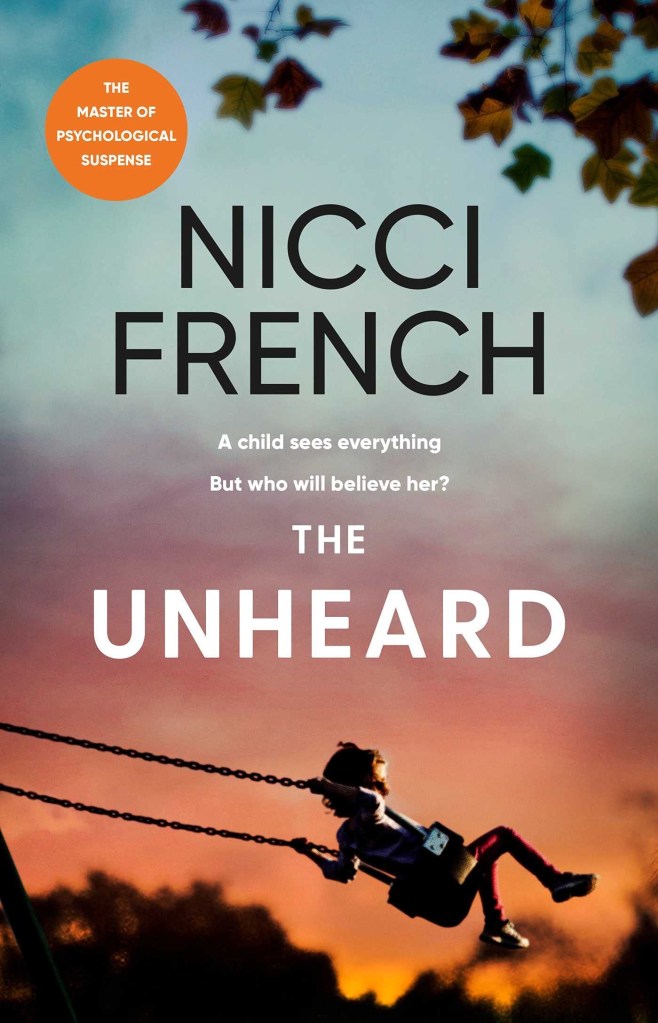
I read this novel on the four hour drive to North Wales and spent most of the first day of my holiday absolutely enthralled with the story. I was hooked immediately, intrigued by the mystery of what exactly Tess’s daughter Poppy had seen or heard. Tess is starting a new life in a garden flat with her daughter, after a divorce from husband Jason. Having a background as a child of divorce, Tess was determined that Poppy should be their number one priority. No matter how much animosity and hurt they feel, their interaction with each other must be civil and they prioritise time with both parents. Jason is already remarried to Emily, a much younger woman who seems very sweet and tries hard to have a relationship with Poppy. They have set times for Poppy to visit and stay over at her dad’s house and this has been going well, although every time Poppy’s belongings are put in a bag to transfer from one house to the other, Tess hopes she understands what is happening to her. Tess has started seeing a man called Aidan recently and she’s optimistic about their relationship so far. One Saturday, Poppy returns from an overnight at her father’s and displays signs of distress. These were classic symptoms, that any counsellor like me, would be concerned by. She’s clingy, she wets the bed and seems to be having nightmares. Over a week these symptoms worsen: she bites a girl at school, uses foul language to her teacher, and her mother is terrified for her. She has her attention drawn to a picture Poppy has drawn, all in black crayon which is a huge contrast from her normal rainbow creations. The picture shows a tower and a woman falling from the top to the ground below. ‘He killed her’ she tells her Mum ‘and killed and killed and killed’.
I was hooked and my partner claims I barely spoke to him for two days straight because I was so absorbed in Poppy’s world. Tess is scared for her daughter, but what can she actually do without traumatising her further? Jason insists it’s just a drawing and probably doesn’t mean anything. No one seemed as alarmed as Tess, so who can she go to? This sets in motion an enthralling story where my suspicions were first sent in one direction, then another. As well as suspecting every character at different points in the novel, I was also wondering whether it was about Tess. Was she an over concerned mother affected by her divorce and her ex-husband’s sudden remarriage? The writer excels at bringing tiny little clues into the narrative that create a doubt in the reader’s mind. Bernie, the upstairs neighbour, is a little odd and makes a couple of remarks to Tess that concerned me. Was he dangerous or just a little eccentric and inappropriate at times? Weird coincidences cropped up that couldn’t be explained by anything except foul play or malicious intent. However, the more this happened, Tess became even more anxious and started to give the impression of being unhinged. As the police became involved, they suspected an overprotective mother and couldn’t find anything to investigate. This spurred Tess on to carry out her own investigation, searching for women who’d died falling from a building and trying to forge links with people in their circle. One sympathetic officer does try to help, but ends up with a dressing down for wasting her time. It takes a long time, and some near misses, for Tess to sit back and realise what her behaviour must look like from the outside. However, just because someone appears over anxious, doesn’t mean there’s nothing to worry about.
I think one of these author’s many strengths is their ability to conjure up the ordinary everyday moments we all recognise in life, between the tension and scares. It helps the reader identify with these characters, to accept that they’re real and empathise even more with their predicament. I could feel the tension coming off Tess, and the hurt as well, because some of her discoveries are personally painful. Yet she still has to get Poppy up and to school, then go to work and come home to cook tea and do those domestic chores that we all do in a day. The mental load of being a single parent is enough without the extra suspicions about every new person who has come into their circle. Her fear that someone has invaded that safe, domestic space is one all readers can identify with. The tension is almost unbearable towards our final revelation and it wasn’t the ending I was expecting at all. It makes you think about how far you would go to protect your children. This was a fascinating, addictive read with a menacing atmosphere throughout. Be prepared to lose a couple of days if you pick up this book, you won’t regret it.
Published on 16th September 2021 by Simon and Schuster UK
Nicci French is the pseudonym of English husband-and-wife team Nicci Gerrard and Sean French, who write psychological thrillers together.
‘At the turn for the Northside quays, the bus missed the lights. A woman in front of Kate said to the person next to her, ‘There’s so much traffic we’re going backwards.’ The seatmate agreed and the conversation went relentlessly round, each of them talking over the other, saying the same things, until Kate felt that she might never get off the bus. The windows had fogged again and the vents at her feet piped sour heat up to her face. She popped a button on her coat, elbowing popped a button on her coat, elbowing the man beside her by mistake. ‘Sorry,’ she said. He ignored her and leaned forward for another bite of his breakfast bap. The yolk split, smearing the ketchup like pus into blood. Kate moved as far away from him as she could, which was not very far at all. Her right ear started to ring, a kind of static fuzzing inside her head. Across the aisle, a toddler screamed, his sharp little cries sucking the light right out of the sky.’
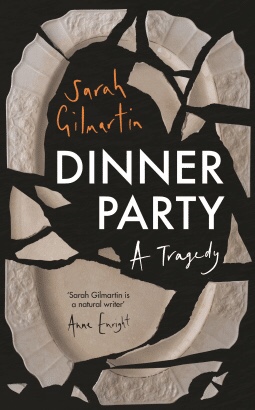
This book was one of those ‘slight’ novels but it really does pack an emotional punch. As I started to read Dinner Party, my brain meandered back to my university days and the first time I read Mrs Dalloway by Virginia Woolf, which was like nothing I’d ever read. The above quote, following Kate through the city as she shops for the dinner party she’ll be holding that evening, reminded me of the scene where Clarissa Dalloway takes the omnibus. The writing is simply beautiful, we’re on a bus ride so nothing much happens but everything happens all at once. We get such a sense of Kate from this short passage: her anxieties, her fears, the irritability with other passenger’s foibles, the disgust with food and how her senses become overloaded to the extent that a baby crying takes all the joy out of her.
Today Kate is cooking a meal for her siblings to mark the sixteenth anniversary of their sister Elaine’s death. Every year the Gleeson siblings gather, but this year is a little different. Elaine was Kate’s twin, and she still feels utterly bereft:
‘But a twin can never get over a twin. It was like someone asking you to forget yourself.’
Kate has decided to host the dinner party for her two brothers and her sister-in-law in the flat she plans to leave soon after. As the four settle round the table, to enjoy the food Kate has taken so much trouble over, they begin to talk about their mother. Peter defends her as he always does, but Ray and his wife Liz challenge his excuses for her cantankerous nature. When they leave, earlier than she expected, Kate performs the mental ritual of counting the number of bites she’s taken. Several life events seem to have plunged her into a crisis. She has just been rejected by the married man she’s been having an affair with, which somehow seems worse now she’s thirty-three. Her work holds no challenge and could be done by a junior colleague and she has fewer friends to support her. This is not her first mental crisis, they started in her third year at university when she was hospitalised for anorexia. Counting bites and controlling her food offered an escape from the pain of loss that never seems to go away, not to mention her mother’s anger and constant criticism. The author then takes us to a year later, as another dinner party marks the seventeenth anniversary of Elaine’s death but this time things are different for all three siblings.
This is a psychologically complex novel and I loved that, being a therapist. Kate is constantly over-thinking, re-evaluating and performing rituals in an exhausting monologue that seems constant for her. As the product of a critical parent, her self-talk is largely negative. She has internalised her mother’s criticism and now carries it with her wherever she goes. It stifles her ability to self-soothe, a vital skill for adult life that allows us to make ourselves feel better. Instead she needs constant input and encouragement from something outside herself, often a person who shows merely a hint of kindness or approval. However, another means of gaining approval is through achievement and Kate is definitely an over achiever, constantly setting herself standards and markers against which she can better herself and feel more valued:
‘She could never pin down the problem; it was a shifty kind of thing, something to do with routine. Shopping in the same supermarket, buying the same foods, wearing the same outfit in different colours, or even with things she enjoyed like music or exercise, running the same stretch of beach, having to reach the railing she’d reached the day before—all these arbitrary markers of success or failure that seemed to somehow captivate and imprison her. Devika said it was just the break-up blues making her feel inadequate, but the truth was, it had been going on for years, long before Liam, this impulse to do things to exhaustion. It was extreme living. Or it was living for two. Wringing the sponge, Kate felt the energy leave her body. She sat on a stool and began to count. Three. Then five—no four—it was only four. And a sprout. Less than ten bites in total, a miracle with all the food.’
The author has created incredible multi-dimensional characters here with all their flaws and imperfections on show. We spend a lot of time inside Kate’s head and it’s a very tiring place to be. Even shopping and cooking for this simple dinner becomes a marathon as she stretches her culinary abilities with a Baked Alaska for dessert that doesn’t make the table. However, don’t think this is a litany of misery. The author’s depiction of the sibling’s dreadful mother is almost comical in it’s awfulness. Yes it’s a very dark sense of humour, but I understand it. This is just one of the defensive strategies the siblings have; if they find her funny it doesn’t hurt so much. Despite Kate being our doorway into this world, it’s important to remember that Elaine’s death isn’t just Kate’s loss. This is a family tragedy and everyone grieves in their own way and at their own pace. Kate seems to know that their mother’s irascibility has been heightened by the loss of her daughter. All the remaining siblings know they can’t measure up to a ghost. The Elaine their mother misses probably isn’t a real person any more. A mother doesn’t just grieve her daughter, she grieves the life she’d imagined for that child: the achievements and milestones of life like her wedding day, or a first grandchild. Death has erased Elaine’s flaws, creating a saint-like girl that no living child could live up to. Perhaps this is why the siblings hold their anniversary dinner without their mother, or maybe because her criticism has subtly damaged each of them, just in different ways. Yet, their mother isn’t a two-dimensional monster, which she could have become in a lesser writer’s hands.
I liked the structure of bookending the story with each, very different, dinner party. I could imagine the book being turned into a play or screenplay very easily. I loved the forays back into the past, to see all the siblings but mainly how Kate and Elaine related to each other. The past sections truly do inform the present, either explaining a sibling’s present behaviour or simply showing us the depth of what this family have lost. With themes of mental ill health, anorexia and suicide this isn’t an easy read at times, but nor should it be. The author is showing us how tragedy can be a legacy, one event leading to inter generational pain and trauma. I found her depiction of this moving, but also helpful in a strange way. Some parts are painful, especially if you’ve lost someone very important to you like I have. However, it’s also enlightening and leaves you feeling that you’re not alone in the world. That there are other people who have once felt and thought like you. The trick is to stop the pain passing on to the next generation, to let the trauma end with you. This is a wise and beautifully written debut from an author I’ll be watching out for in the future.
Published by Pushkin Press, 16th Sept 2021.
Meet The Author
SARAH GILMARTIN is a critic who reviews fiction for the Irish Times. She is co-editor of the anthology Stinging Fly Stories and has an MFA from University College Dublin. She won Best Playwright at the inaugural Short+Sweet Dublin festival. Her short stories have been published in The Dublin Review, New Irish Writing and shortlisted for the RTÉ Francis MacManus Short Story Award. Her story ‘The Wife’ won the 2020 Máirtín Crawford Award at Belfast Book Festival.
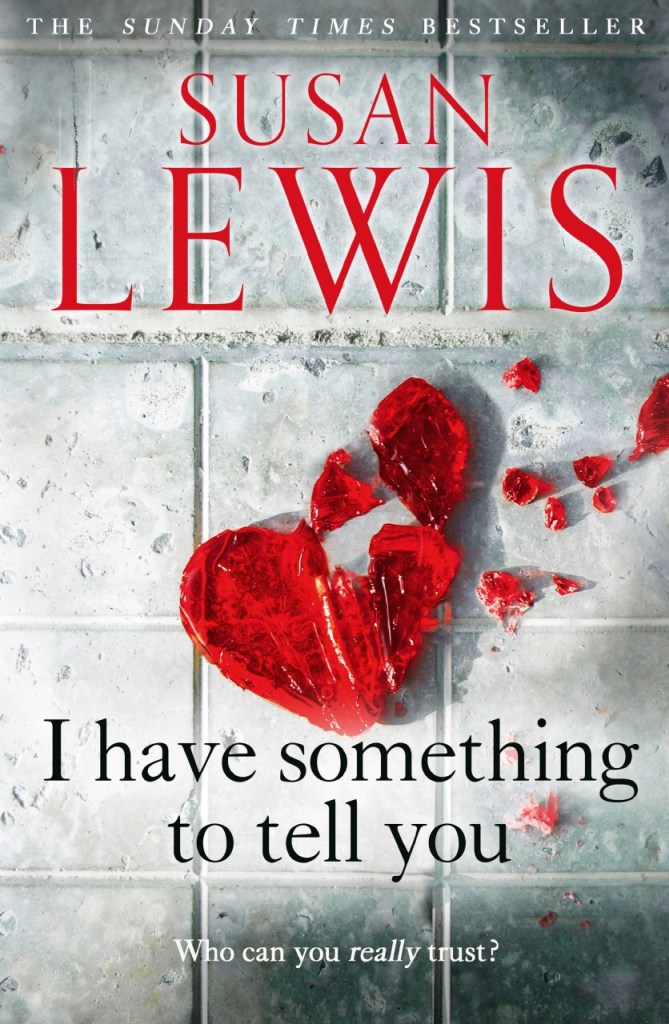
With her usual focus on families and relationships, this prolific author has turned her hand to crime fiction for new novel I Have Something To Tell You and she’s created a very competent murder mystery. Jay and her husband Tom work in the law; Jay is the senior solicitor in her father’s old law firm and Tom is a barrister in chambers across town. They live in Clifton, and have two teenage children who are very excited to be taking a gap year in their education and going travelling. When a new case comes to Jay, everything in her perfect world starts to shift. Edward Blake, local architect and property developer, has been arrested for the murder of his wife Vanessa. The details are perfect tabloid fodder, young beautiful wife is found strapped to her bed with stirrup straps, naked and it looks like she’s been strangled. Jay knows this is going to be an interesting case and immediately leaves for the police station, where she meet DI Ken Bright and his right hand woman DS Hamble. He’s quite clear that it does not look good for her client. Last night he had arrived home, realised his wife was not there but didn’t find that odd. Possibly because their house splits at the top of the stairs – to the right is a master bedroom suite where Edward Blake retires and to the left the guest bedrooms. It is only the next morning when Blake starts to become concerned for his wife’s welfare and when checking the guest bedrooms, just in case she came in late and didn’t want to disturb him, he finds his wife’s body. He now finds himself the prime suspect and he’s relying on Jay to keep him out of jail. Who has killed Vanessa and can Jay succeed in helping her client?
I enjoyed the double storyline, as time was split equally between the case and Jay’s personal life which hits rock bottom as she works with her client. With their children’s imminent departure on their travels, Jay and husband Tom have been looking forward to some quality time together. Both work long hours and this is their chance to slow down, maybe take some time off here and there, and start to enjoy their time together again. Daughter Liv has been struggling in an ‘on again – off again’ relationship with the son of one of their friends and Jay is there as a listening ear. However, it’s Tom who lobs an absolute bombshell into their lives and we get to see how Jay copes under the double pressure of a tough murder case, and trouble at home. At home Jay finds it difficult to sleep and to keep her head. At least work, tough as it is, gives her some respite from troubles at home. She finds an unlikely listener in her client, no matter what state his case is in, Blake notices if Jay is off colour or has things on her mind. He enquires whether she is ok and Jay admits to feeling emotional and being concerned for her marriage. However, this is only a moment of weakness, I was fascinated by the way Jay is usually able to put her game face on and lose herself in the case, undertaking investigations with her trusty P.I. Joe, and becoming embroiled in all the twists and turns.
I thought I’d identified the murderer at the halfway point, but I got it wrong which was a great surprise. Blake and Vanessa’s lives were complicated by another death in the family, and grief had eaten away at their lives and relationship. Vanessa is very troubled and vulnerable from that point on. I found myself a little uneasy with Blake and his position as ‘victim’ in their marital problems. Motives range from sexual jealousy to wrangling over money and potential inheritance. We meet a whole host of characters during the investigation, some of them real horrors that it must have been great fun to write. Vanessa’s stepmother sticks in my mind, because she’s a manipulative and vindictive old woman. She’s sitting on a fortune thanks to the ruined, Gothic, pile she insists on living in even though she can barely afford to heat it. This should be inherited by Vanessa, but could other members of the family have resented that? Especially since Blake and Vanessa already own three incredible properties where they live.
The author pitched her characters perfectly, whether it’s the professional, middle-classes or those who’ve had their money a bit longer. These characters all have beautiful, elegant, homes that sport giant kitchens/ family rooms where they can cook, dine and watch TV together. Blake’s a property developer so his own home is spectacular and very seductive. It’s real Country Homes and Interiors perfection, with it’s well placed riding boots in the hallway and bifold doors in the rear extension with incredible views of the Cotswolds. I wanted to live there. I’d have even taken the guest bedroom where the body was found! Each character had something that made the reader suspicious of them, and I looked forward to each new revelation in the case. I liked Jay’s relationship with her investigator Joe, ex police officer and friend of her father’s, he is a solid presence in her life when everything else is shifting. The author brings in themes of empty nest syndrome, infidelity, betrayal, and the impact of trauma. I thought her portrayal of long-term relationships was probably very realistic. She showed how we change as we get older, but also how life events change people and their priorities, creating the potential to derail even the strongest of marriages. The ending was unexpected, leaving one final twist for last which is always satisfying and not tying up every loose end neatly in a bow. This was an enjoyable read and a successful foray into crime fiction and domestic noir.
This was the book that first started my love affair with Lucy Atkins’s writing. I remember when I first read this novel for my book club, I was so impatient to find out what happened back in the 1970s to Elena and Susannah. A terrifying and traumatic event has linked these two women for over 30 years and it can’t stay a secret for ever. In the present is Elena’s daughter Kali, who has just lost her mother to breast cancer, a mother she could never make sense of or bond with as she wanted. In the aftermath of Elena’s death, Kali is trying to make sense of that difficult relationship when she finds a hidden pile of postcards from a woman called Susannah in her mother’s things. Thinking she has found the clue to her mother’s past she pursues this woman to find out about events leading up to her birth and a family history that has resolutely stayed hidden.
Driven forward by grief, and the constant worry that her husband is having an affair, Kali takes her son Finn on an odyssey to unearth her mother’s secrets and to find herself. She has many theories about what she might find: maybe her father had an affair; could Susannah have been his lover or her mother’s? Yet, what she finds is something she never suspected. Set against the backdrop of wild North America and Canada we learn about a woman’s quest to understand the Orca. Distressed by witnessing the killer whales at Seaworld in California while doing her PhD, a young Elena leaves everything to record killer whale pods in the, ocean. The Seaworld orca gave birth to a calf that was so disorientated by his tiny tank he kept banging himself against the glass trying to navigate through echolocation. His desperate mother keeps pushing him away from the sides to protect him from damage, but in her efforts to protect she forgets to nurture and the calf dies because she has forgotten to feed him. Kali was similarly starved of nurturing by her mother because she was so intent instead on protecting her from this awful secret.
The novel is an incredible insight into relations between mothers and daughters. Kali’s sister Alice has a great relationship with her mother that seems easy, whereas Kali and Elena clash over everything. Kali sees that her mother finds her hard to nurture and believes it is her fault. It takes putting herself in danger to find out why and in finding out she also discovers that essential piece of the jigsaw that tells her who she is and grounds her in a history. The novel shows how when you become a mother it becomes more importantu cc than ever to know where you are from and how you belong. It also shows how the secrets of one generation have a huge impact on the next, even if the secret is kept with the best of intentions. The book cleverly shows the difference between generations since we have now moved into a world where we put our own lives on show for fun. In a world where counselling and therapy are becoming the norm it is no longer seen as acceptable to keep such huge secrets and we know as post-Freudians what effect those early years of parenting have on the adult we become.
Aside from the complex human relationships are the family ties within the Orca families. We see how there are resident pods and transient pods with different feeding habits and rules to abide by. It is also clear that parallels can be drawn between the whale relationships and the human ones. Elena is so moved by their mothering instincts and the possibilities to map their language and understand their emotions. She gives up everything to spend as much time with them as she possibly can even going to sleep on her floathouse with the sounds of whales drifting up from a microphone in the water. I learned so much about these incredible creatures without losing the majesty of them and the awe a human being feels when a huge tail rises up out of the water next to their boat.
The book reads as a dissection of family relationships, a thriller, a study of whales and a study of grief. Grief causes Elena to suffer with depression throughout her life, grief traumatises Susannah to the extent that she is unbalanced by the things she has witnessed and it is grief that compels Kali to jump on a plane to Vancouver with nothing but a few postcards and the internet to go on. I struggled to put the novel down because of the thriller element. Like a good crime novel, you desperately want to know the truth of who- dunnit. Yet it is those final chapters I like best, after everything is resolved and each character is living in the aftermath of exposed secrets and recovery from physical and mental injury. The novel could have ended there and I am glad that it went further, back into Elena’s past so that we can see her happy on her floathouse making coffee and then hearing those whales come to greet her.
She would go back to that throughout her life, right to the very end. But the last time, when the world had shrunken to the contours of her skin and she leaned over the railings, it wasn’t the whales that she saw in the water. And so she jumped.
Meet The Author
Lucy Atkins is an award-winning British author and journalist. Her most recent novel, Magpie Lane, is a literary thriller set in an Oxford college. Her other novels are The Night Visitor (which has been optioned for TV), The Missing One, and The Other Child.
Lucy is a book critic for The Sunday Times and has written features for UK newspapers including The Guardian, The Telegraph, The Times, and many magazines. She was a Costa Novel Award judge in 2017, and teaches creative writing to Masters students at Oxford University.
She is mother of three and has also written several non-fiction books including the Amazon #1 parenting guide, First Time Parent (Collins). She has lived in Philadelphia, Boston and Seattle and now lives in Oxford, UK.
This was a complicated and fascinating book about art, but also how difficult the relationship can be between mothers and daughters.. I really believed in this story and it’s portrayal of the difficulties in making art. I was not surprised to read that the author had been an art writer, because of the detail and truth in the process of creating. Set in the art world of NYC, Lisa is a painter in the Abstract Expressionist era of the 1950s. She starts to be sidelined when she becomes pregnant, but truly believes she can be a mother and still create great art. Studying in NYC is a dream and I think she really felt she’d found her people, her tribe. Fellow artist and lover Hank, goes up against her for an exhibition and is surprised when it’s Lisa’s work that really gets noticed. We then jump to 1966.
When her daughter Rouge was born, Lisa found herself butting up against the male dominated art world, surprised to find it quite conventional after all. I loved the feminist take on what we imagine to be a fairly free and bohemian world. It was an area of life that I’d imagined had less barriers. I really felt for Lisa and understood her disillusionment when her ex-lover is suddenly a new darling of the movement. Especially considering how similar their work is. The psychological effects of this realisation include resentment building between mother and daughter. The resentment is felt, even where it isn’t knowingly expressed or acknowledged. Lisa ends up teaching in college to pay the bills, she also starts to drink more heavily and take risks. Years later, when her daughter Rouge takes an interest in art she chooses photography as her medium. She looks for a mentor and finds Ben Fuller, who happens to be one of Lisa’s old lovers. This acknowledgment, and from a male member of the art world, adds another layer of resentment between mother and daughter. If Rouge’s photography is going to be noticed, how will Lisa cope and what lengths will she go to in order to deal with these negative feelings? Would she consider sabotage?
When she was pregnant Lisa could have chosen another road, she could have walked through a door of her choosing and be living a different life. She hasn’t intentionally made Rouge feel unwanted, but the choice to stop creating art held within it so much self-sacrifice, that it’s some unconscious negativity and even anger has come through to her daughter. Now her daughter is going to take the acclaim that Lisa feels is rightfully hers. However, Rouge is also angry, about the drinking and the revolving door of lovers who come in and out. She is so dismissive of her mother’s choices that she’s very surprised to find one of these lovers had anything useful to teach her. If her photography is good enough, she can imagine doors opening for her. It could be an escape from home and her mother.
I loved that all those elements and difficulties of a woman creating are expressed through Lisa’s world and it’s likely the author has felt similar constraints herself – they haven’t really gone away half a century later. I still feel guilty if I’m writing instead of doing the housework, or doing something for the family. I even find it hard to tell friends I can’t see them because I’m writing. Writing isn’t seen as real work until you’re published, but if you can’t write that never happens. Everyone thinks it can just be moved to tomorrow, and I know I’m not alone in putting it off. Some of that could be imposter syndrome, but it’s also saying it out loud. If I tell people I’m writing, then it’s real with all it’s chance of failure. However, the difference between the 1950s and the 1960s is a huge one culturally, There’s the pill for a start, leaving women in developed countries in charge of their own fertility. Between that and the more permissive attitudes in society it’s clear to see why Lisa would feel there is a huge gap between her generation and her daughter’s. Rouge is free to network and really sell herself. She can curate her own image as an artist, whereas mothers already have one. The author depicts the artistic journey so well – that imposter syndrome, the dreams, the crushing reality and self-sabotage are all seen in these two women. The author shows, quite beautifully, how mothers and daughters misunderstand each other: not knowing the cultural differences between their generations; not even understanding, never mind appreciating, the sacrifices made and the love behind them. This book is about that distance between mothers and daughters, a distance that can only be bridged through openness and honesty, as well as space and time. This was a fascinating and psychologically complex read.
Meet The Author.
Lis Bensley is a writer living in Santa Cruz, CA. She has worked as a journalist at The New York Times and The International Herald Tribune, when she lived in Paris and studied cooking at the Cordon Bleu. Subsequently she wrote The Women’s Health Cookbook. To entertain her children, she wrote The Adventures of Milo & Flea about the antics of their cat and dog. She is currently hoping to publish her novel The Glimpse and is working on sequels to the Milo and Flea story.
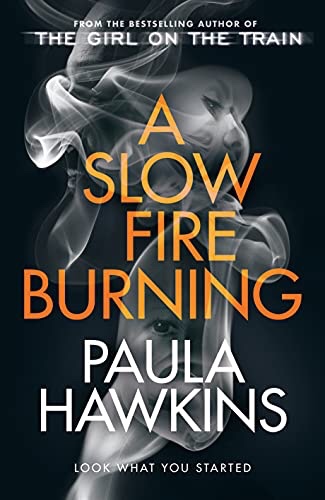
I’m a big fan of this author’s previous novels Into The Water and TheGirl on the Train. Incidentally, I didn’t like the latter’s film relocation to upstate New York, because I didn’t feel it had the necessary grit of the book’s London location and lost something in translation. I’ve been looking forward to her new novel and I spent the weekend on my chaise longue reading it with a bar of Green and Blacks Sea Salt. Pure bliss! The novel is set in London, on a stretch of the Regent’s Canal between Bethnal Green and Islington. We open with a body being found on one of the canals, the deceased is a young man his neighbour only knows as Daniel. When she boards his boat and finds his body covered in blood she knows she must ring the police. However, in typical Hawkins fashion, the author wishes to unsettle the reader and leave them unsure of who to trust. So, although his neighbour Miriam looks like a run of the mill, middle aged and overweight woman, used to being ignored, she does something unexpected. She notices a key next to the body, and as it doesn’t belong to the boat she picks it up and pockets it.
Our other characters are members of Daniel’s family, who live within walking distance of each other in this area. Daniel’s mother Angela is an alcoholic, in a very strained relationship with her only child until his death. Then there’s his Aunty Carla and Uncle Theo who live near the boat. Daniel appears to have a closer relationship with his Aunty Carla, than he did with his mother, but is it really what it seems? Miriam has noticed some odd comings and goings from the boat next door. This is a family with secrets, both old ones and current ones. Miriam noticed that the girl who works in the local launderette, Laura, was with Daniel on the night in question and they had a row. Laura could have killed him, but Miriam doesn’t think so. Then there’s Irene, an elderly lady who lives next door to Angela and has also noticed some strange behaviour next door too. She knows the family well although Angela has often been too distracted by her own life to form a friendship. Irene does have a soft spot for Laura who helps her out from time to time, by going shopping or running errands. Like Miriam, Irene is also wondering if everything is what it seems with this murder. Lonely people observe a lot and although the family won’t realise this, she’s in possession of a lot of information. Something seismic happened to this family years before, something that changed the lives of everyone involved. Might that have a bearing on their current loss? Could that be the small flame, burning slowly for many years, before erupting into life and destroying everything?
I absolutely fell in love with Laura. She has a disability that affects her mobility and, along with many other symptoms, she has problems keeping her temper. Her hot-headed temperament has led to a list of dealings with the police. This isn’t her normal character though, this rage seems to come from the accident she had as a child. She was knocked down by a car on a country road while riding her bike and broke her legs, as well as sustaining a head injury which has affected her ability to regulate her emotions. Further psychological trauma was caused when she found out the man who hit her, was not just driving along a country round, but driving quickly away from an illicit encounter. Who told him to drive away and why? Laura feels very betrayed and now when she feels threatened, or let down, that rage bubbles to the surface. She’s her own worst enemy, unable to stop her mouth running away with her, even with the police. She has a heart of gold, but very light fingers. She’s shown deftly whipping a tote bag from the hallway of Angela’s house, but in the next moment trying to help Irene when she can’t get out. I found myself rooting for her, probably because she’s an underdog, like Miriam. Miriam feels that because of her age, looks and influence she is completely invisible. She has been passed over in life so many times, it’s become the norm. However, there is one thing she is still angry about. She wrote a memoir several years ago and showed it to a writer; she believes he stole her story for his next book and she can’t let that go.
I love how the author writes her characters and how we learn a little bit different about them, depending on who they’re interacting with. They’re all interlinked in some way, and their relationships become more complex with time. As with her huge hit The Girl on the Train, the author plays with our perceptions and biases. She doesn’t just plump for one unreliable narrator, every character is flawed in some way and every character is misunderstood. We see that Miriam is not the stereotypical middle-aged woman others might think she is, as soon as she pockets that piece of evidence at the crime scene. Others take longer to unmask themselves, but when they do there’s something strangely satisfying about it. We even slip into the past to deepen our understanding of this complicated group of people, letting us into all their dirty little secrets, even those of our victim Daniel. When I’m counselling, something I’m aware of is that I’m only hearing one person’s perspective of an event. Sometimes, that’s all it needs, some good listening skills and letting the client hear it themselves. Yet, it is only one part of a much bigger story. Occasionally, I do get an inkling of what the other person in the story might have felt and I might ask ‘do you think your wife heard it like that or like this?’ If I say ‘if my partner did or said what you did, I might feel….’ it makes the client think and asks that they communicate more in their relationship. Sometimes the intention behind what we say becomes lost in the telling. That’s how it was reading this book, because we do hear nearly every perspective on an event, but also how each event or interaction affects the others. The tension rises and it was another late night as I had to keep reading to the end. Paula Hawkins has become one of those authors whose book I would pre-order unseen, knowing I’m going to enjoy it. In my eyes this book cements her position as the Duchess of Domestic Noir.
Meet The Author.
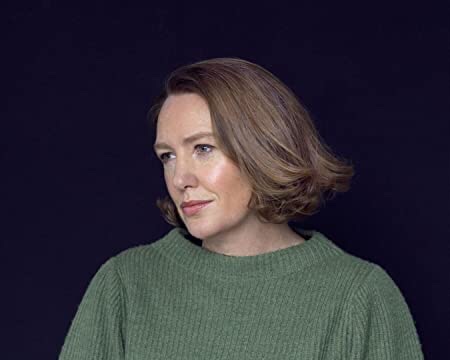
PAULA HAWKINS worked as a journalist for fifteen years before turning her hand to fiction. Born and brought up in Zimbabwe, Paula moved to London in 1989 and has lived there ever since. Her first thriller, The Girl on the Train, has been a global phenomenon, selling 23 million copies worldwide. Published in over forty languages, it has been a No.1 bestseller around the world and was a No.1 box office hit film starring Emily Blunt.
Into the Water, her second stand-alone thriller, has also been a global No.1 bestseller, spending twenty weeks in the Sunday Times hardback fiction Top 10 bestseller list, and six weeks at No.1.
A Slow Fire Burning was published on 31st August by Doubleday.
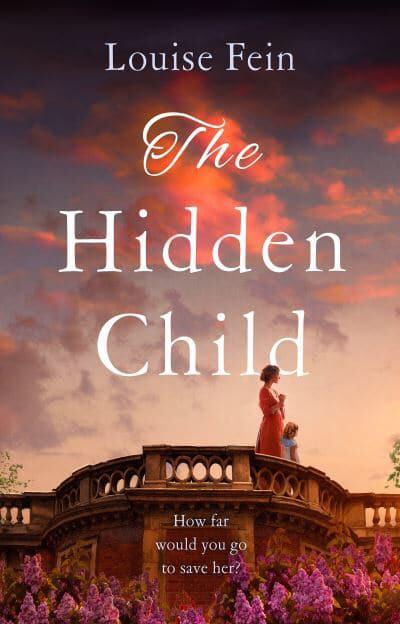
I was so blown away by Fein’s beautiful novel People Like Us earlier this year, that I immediately jumped at the chance to read her new novel early. I was ready to be immersed in her incredible characters, historical background and unique perspective. At first glance this novel seemed different to her last novel. Set in England in the 1920s we meet a pair of sisters, Eleanor and Rose. Their parents died young, and as a result of supporting each other from then on, they have been inseparable. The book opens as Eleanor and her daughter Mabel set off on their pony and cart to meet Rose at the railway station. She is returning from a period of time in Paris, to live with Eleanor and her husband Edward. However, before Rose arrives something very strange happens to Mabel, as she sits quietly on the grass outside the station. One of the train guards notices first and alerts Eleanor, who rushes over to sit by her daughter. Mabel is making repetitive jerky movements, her eyes have rolled back and she is oblivious to Eleanor’s attempts to rouse her. Once it’s passed, Mabel seems exhausted and she travels back to the house, wrapped in a blanket and looking very sleepy. Eleanor’s concern is twofold: firstly, will Mabel be ok? Secondly, how will husband Edward respond if it happens again, considering he’s one of the leading lights of the eugenicist movement?
Eugenics was a movement that emerged in the aftermath of Charles Darwin’s Origin of the Species. The idea was to improve the human species by actively encouraging breeding between people with certain desirable traits. Of course that also meant actively ‘breeding out’ invisible disabilities like epilepsy, as well as people thought to be the wrong colour, of low intelligence or mentally unwell. Even criminal tendencies and poverty were thought to be undesirable traits that could be ‘bred out’ of society. In the early 20th Century, eugenics was a legitimate area of scientific enquiry here in the U.K. but it was even more popular in the USA where it made its way into marriage legislation in Connecticut as early as 1896. It became illegal for those who were ‘feeble-minded’ or epileptic to marry. The Eugenics Record Office was then set up to track families and their genetic traits, concluding that those deemed unfit were a victim of negative genes not racism, economics or other social issues. This is the type of study that Eleanor’s husband Edward is undertaking. As a psychology professor he’s using eugenics to shape education policy. He’s studying children from poorer families to test their intelligence against those from middle-class families. He’s expecting the theory to hold and the poorer children to be genetically predisposed to be less intelligent. This will be the basis for streaming children into different educational programs and is the basis for our real life grammar school system; the top 25% of children are determined by the 11 plus exam and streamed into grammar school education, something that still happens in my home county of Lincolnshire. Yet eugenics took a very dark turn in America where there were thousands of forced sterilisations in mental institutions and for the Native American population right up till the 1970’s. So contrary to most people’s understanding, Germany were not the only proponents of eugenics theory, but their use of the theory to murder six million Jewish people, as well as members of the Roma community and disabled people, is the most horrific act of genocide the world has ever seen.
Edward isn’t just dabbling with eugenics. He’s a true believer. Eleanor changes considerably throughout the novel. At first she sees Edward as a saviour, looking after her and her sister Rose. We first see tension in the novel when Rose returns from Paris and announces she is in love with an artist. It feels as if Edward takes a more fatherly role, or saw his role as a old-fashioned protector of the sisters, especially since they have no parents. Eleanor agrees with her husband that Rose could make a far better match, someone with more money and prospects would be the ideal. As Edward denies Rose’s request to see Max or perhaps bring him to dinner, Eleanor is torn between them but trusts her husband’s judgement for now. She even allows him the final decision over Mabel’s care. These were the most difficult sections of the novel for me. They have to be there so that we understand the reality of epilepsy in the early 20th Century, but the treatments feel brutal and my heart broke for this little girl who is having all the spirit drained out of her. There’s some very impressive research behind this part of the story, not just into treatments, but into the theories and the superstition surrounding the illness. In my head I was screaming at Eleanor to follow her instincts and intervene, although even if she had, would she be listened to? I found the pompous and arrogant attitude of the doctors in the novel, sadly true to life. Neurology is a discipline I’m very used to and to some extent there is still a difference in the way some neurologists treat men and women. In fact, apart from Max, all the men in the novel are caught up in their own ego, and seem to want public credit for everything they’ve done, along with deference and respect from women and those lower than them on the social scale. They have full belief in their skills and methods, and will not be questioned on their decisions.
I wanted Eleanor to stand up and fight for her daughter, with both the institution and Edward. I was shocked at the lengths he was willing to go to, in order to prove his theories right. There needed to be a shift in his relationship with Eleanor where she starts to see him more as an equal, a fallible human being rather than a saviour. Only then could she decide whether she was willing to work on their relationship, where it felt to me he needed to be a husband rather than a father-figure. I felt so tense as we moved towards the ending, and I found it satisfying for these characters, but there was still that concern inside me, about how eugenics developed in horrifying ways. I knew I would be thinking about the novel for some time afterwards. I wondered what would Edward feel about eugenics a few years later with Nazism on the rise and Hitler’s dream of creating a master race in its first stages. I’d also thought of Max, Rose’s artist, and whether he stayed in England to be with Rose and missed out on the fate of many other Parisian Jews, who wrongly expected to be safe in France. As a person with a disability, the eugenics movement both terrifies and angers me. The thought of the suffering endured by people with disabilities, at the hands of scientists, fills me with rage. Even before WW2 the Nazi Party we’re starting their crusade for a master race. On July 14, 1933, the Germany passed the “Law for the Prevention of Progeny with Hereditary Diseases.” The law called for the sterilisation of all people with diseases considered hereditary, including mental illness, learning disabilities, physical deformity, epilepsy, blindness, deafness, and severe alcoholism.
When the law passed the Third Reich also stepped up its propaganda against the disabled, regularly labeling them “life unworthy of life” or “useless eaters” and highlighting their burden upon society. Many people in the disabled community feel there is a similarity to 21st Century rhetoric around benefit claimants and fraud, framing disabled people as dependent on the state and drains on resources. I must admit that it drifted into my mind as I was reading. There is a claim that the withdrawal of benefits and support from the disabled community since 2006, has led to a genocide of disabled people. The figure often quoted is 120,000 additional deaths caused by austerity. Even before the the Final Solution, the Nazis were using the term ‘’euthanasia” for the systematic killing of the institutionalized mentally and physically disabled, even children. Using the term euthanasia made it sound as if death was a kindness for those who were really suffering or terminally ill, but this was not the case. The secret operation, code-named T4, in reference to the street address (Tiergartenstrasse 4) of the program’s coordinating office in Berlin, followed systematic sterilisation of groups in society they wanted to reduce or eradicate. I studied eugenics as part of my dissertation on disability in fiction in 2004 and it is an insidious theory that still hasn’t fully lost it’s influence on the world.
This book stirred up so many thoughts and feelings for me as a disabled reader. Knowing you are one of those people who would have been eradicated is unsettling and leaves me feeling very sensitive to the language used by governments and their attitude towards the disabled community. If people with disabilities are veterans or Paralympians they are acceptable, but otherwise their existence is problematic and I often wonder what it would take for the tide to turn and history to repeat itself. So, I appreciated the depth of the author’s research and the care she took in telling Mabel’s story. The First World War veterans struggling to adjust and live back in society, were a really interesting thread too. Edward is supporting one of his men financially, for reasons that extend all the way back to the battlefield. I enjoyed the adjustment that has to take place in Eleanor and Edward’s marriage once all the secrets he’s been keeping are out in the open. If they stay together they will have to start from a basis of honesty with each other. If Edward is not a war hero or an academic with integrity, who is he? Can Eleanor love the real Edward, especially now that she’s grown up and become a stronger, more independent woman? I loved the way Louise Fein takes this volatile part of history and creates a story that is both personal to these characters, but global in it’s reach and influence. It affected me profoundly, not just because of the disability issues, but because of Mabel who I fell completely in love with. I kept reading because I wanted the best resolution for her, safe and looked after with her family around her.
Meet The Author.
Louise Fein was born and brought up in London. She harboured a secret love of writing from a young age, preferring to live in her imagination than the real world. After a law degree, Louise worked in Hong Kong and Australia, travelling for a while through Asia and North America before settling back to a working life in London. She finally gave in to the urge to write, taking an MA in creative writing, and embarking on her first novel, Daughter of the Reich (named People Like Us in the UK and Commonwealth edition). The novel was inspired by the experience of her father’s family, who escaped from the Nazis and arrived in England as refugees in the 1930’s. Daughter of the Reich/People Like Us is being translated into 11 foreign languages, has been shortlisted for the 2021 RNA Historical Novel of the year Award, and has been long listed for the Not The Booker Prize.
Louise’s second novel, The Hidden Child, will be published in the Autumn of 2021. Louise lives in the beautiful English countryside with her husband, three children, two cats, small dog and the local wildlife who like to make an occasional appearance in the house. Louise is currently working on her third novel.
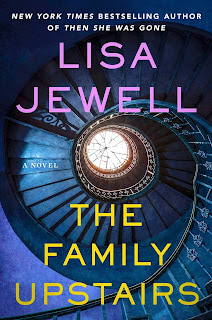
As some of you may know, reviews can get very personal for me. Probably because I’m a therapist and used to lots of self-reflection. When a book hits me emotionally I really think about why and this book had me scurrying to my journal. Lisa Jewell is a master of these domestic thrillers and the psychological suspense created when groups of people are in conflict. Here the conflict is controlled within one house 16 Cheyne Walk in Chelsea, overlooking the river. That is until it’s secrets explode and the truth of the mystery is scattered across the world.
Three narratives weave in and out of each other to tell the story. We meet twenty five year old Libby with her little garden flat and her job at the kitchen design company where she’s worked for five years. Everything about Libby says organised, professional and quiet. That is until a bombshell is dropped on her life. Woven with this is the story of Lucy – if that is her real name. She is living in France but at the moment we meet her is homeless along with her two children and the dog. The family are reduced to sneaking in to the beach club to get showered but that doesn’t happen everyday. Lucy is at rock bottom. She can’t husk for money but needs money to collect her violin. They have nothing left to sell. Does she go and ask her violent but rich ex-husband for help? Or does she let the children stay with their grandparents? Either way she needs her violin and once she sees the date, she develops an urgent need to make her way back to London and a certain house in Chelsea.
Our third narrator is Henry, relating what happened at the house back in the early 1990s. Henry just about remembers family life when things were normal and it was just the four of them: mum, dad, Henry and his sister. He has vivid memories of going to private school in his brown knickerbockers and sitting drinking lemonade while his Dad read the newspaper at his club. The house was filled with curiosities such as animal heads, ceremonial swords and red thrones. It’s so distinctive in style that when the money starts to run out the house is scouted as a location for a music video. The fiddle player in the band is Birdie and she loves the house. So much so that when she needs a roof over their head, she and her partner, Justin, come to stay in the upstairs room. Henry’s father has had a stroke and doesn’t have the same strength and power he used to have. He seems to sit by and watch as Birdie and Justin take up residence. Later another couple join the group. David Thomsen is a man Henry dislikes almost instantly because he seems to sense what his Dad and Justin fail to see. David has charisma and seems to have an effect on every woman in the house. His wife Sally and two children, Phin and Clemency, also join them. It starts to feel like they’re living in a commune but the only consolation is Phin. To Henry, Phin is beautiful with floppy hair, cheekbones and a distinctive style. When Phin takes him shopping, Henry develops a crush and trails after him, wanting to be like him. When it is suddenly announced at the dinner table that David and Birdie are now a couple Henry senses this is the start of something evil. They bring out the worst elements of each other and start to assume a power in the house that goes unchallenged by his parents or the other adults. They are told what they will eat, do and even wear. Henry knows this is out of control and this is only the beginning of the damage this man will inflict in the house. Libby has been set a letter by a group of solicitors telling her she has been left a house. When the solicitor walks her round to the house she realises she is rich. The house is abandoned, but huge and in prime position. It could be worth millions. The solicitor also gives her a newspaper cutting describing the strange events that took place there exactly twenty five years before. Libby has always known she was adopted, but this tells her she was the lone survivor in the house, tucked in her cot with a lucky rabbits foot under the mattress. Downstairs were three people, dressed all in black and dead from poisoning themselves with belladonna. One was David Thomsen. The news story talks of a cult forming within the house and aside from Libby, whose real name is Serenity, all the children living at the house were missing. Libby feels there is more to this story and wants to meet the journalist who wrote the article. What is the answer to how this happened? And who is sneaking in and out of the attic space at the house?
There are so many questions that I won’t answer for fear of ruining the book, but I will tell you about the effect it had on me. When I was 12, the same age as Henry, my parents joined an evangelical church that became all-consuming and took over our lives for a few years. Up until then we’d been part-time Catholic’s and I’d gone to Catholic school for a while through my first confession and communion. These new people felt weird. They were so fervent and all that speaking in tongues was odd. But it got worse. My parents started to have no other social life from church. We were forced into church activities for kids. My dad lit a bonfire and they burned their secular music and all of my mum’s ‘inappropriate ‘ books like the Judith Krantz and Jackie Collins novels. I was scared by this. I started to wonder who my parents were as I was more restricted on what I wore, listened to and read. I couldn’t go to anything where there was a sniff of boys and from what I could see there was a lot of coercive control over women and girls particularly. I felt Henry’s fear when reading this book. I know what it feels to be a kid, looking at your parents and thinking they’ve been taken in by something dangerous. That beliefs are being forced on you and you can’t live like other kids. To feel like all of your security is being taken away.
Of course my solution wasn’t as dramatic as Henry’s but I did have to create coping mechanisms. There are times now when we can laugh about it, because as my brother and I have grown older we have become one of those families that openly discuss everything. However, I still occasionally have dreams where my parents can’t see or hear me and I think it has also bred a lifelong mistrust of authority. So I can understand the seismic effect the arrival of Dave Thomsen had on these children, with repercussions way into adult life. Whether it’s changing who you are to escape, or bouncing from one failed relationship to another or being unable to move on, even geographically, they are all responses to trauma. With a brief nod to the future at the end of the book the author does leave a tiny seed of hope that in future generations a type of healing can be reached. This is a dark, disturbing, look at how sometimes home is the most dangerous place to be.
I’ve been reading Hill’s Simon Serrailler novels for many years now. I read the very first one, The Various Haunts of Men, when it first came out and every one since. In this 11th outing for the detective he’s investigating a death above a Chinese Medicine shop in the distinctly hippy village of Starly. A strange anomaly in the area, Starly seems to attract shop owners selling incense, tarot cards, and new age paraphernalia. The young man in front of Simon has been dead a few hours and has a needle in the vein of his arm. It seems to be a run of the mill overdose – sadly all too common now that county lines operators had been plying their trade locally for a while. County lines drug dealing bothers Simon and he wants to eradicate it, but catching the person distributing in the village won’t yield any further results. The local man rarely knows the men above him, he just picks up a packet from a given location and gets his on foot distributors to do the next stage. Sadly, those at the bottom of the ladder are often children coerced or groomed into helping out, whether or not they even know what’s in the package they’re carrying. However there’s something about this overdose that doesn’t add up and it is going eat away at Simon until he solves the puzzle.
There are always family issues in Hill’s novels because they are as much about the family as they are the case. I’ve still after all these years, not got to grips with Simon as a character. I know him, but don’t necessarily understand him. I find it easier to understand his sister Cat, and bonded with the character when she lost her husband at a similar time to me. Here Hill concentrates on Cat’s youngest son Sam, who has unexpectedly turned up at home from university. Cat has suspected there have been some issues in his long relationship with girlfriend Rosie, but hasn’t wanted to interfere. Sam was fairly ambivalent about university anyway, so Cat isn’t too surprised when he says he doesn’t want to carry on. He quickly gets his old job back, portering at the hospital, until he decides on something more permanent. Rosie is training to be a doctor and they’re now likely to pass each other every day, but when he first sees her outside the hospital she’s with another man – was this just a hug after a long shift or was there more to it? Other family threads felt a little odd. Kieron is both Cat’s second husband and Simon’s boss, but there’s a strangely detached feeling to his presence. At the farmhouse he disappears into his study to watch TV without interruption, while Simon and Cat share a drink and talk. He doesn’t interact much with the children, particularly Sam. Any interactions he and Simon have at work, are left at work so they don’t chat over old cases or just the difficulties of policing the area. It’s as if he’s absent in his own life and if he walked away he would leave no impression behind.
The chapters that focus on the family or the police station seem to recede into the background, while the intervening chapters are full of life. A young lad called Brookie is the subject of one thread. One of four boys, brought up by Dad, their house is depicted as chaotic and noisy, but seems to be more demonstrative and affectionate than the Serrailler family. Brookie only has a plastic bag for his school books and is the subject of bullying by other kids. One day, as he’s gathering his stuff after it being emptied into a puddle, a stranger appears and starts to help him. They chat and Brookie never expects to see him again, but he drops by the following week with a new rucksack for him. Is this just a Good Samaritan or is something more sinister going on? With Dad working nights as door security on a nightclub the boys have plenty of time on their own and could be easy prey. We also meet a young girl called Olivia, from a more affluent background but her parents have recently divorced. Her father had an affair with a much younger woman and while Olivia’s mum knows that he’s become a dad again in his fifties, she hasn’t told her daughter. So, when Olivia rings her dad for some help, it is a huge shock to be told she has twin half-brothers screaming in the background. Now is not a good time to ask for help. Once a month, a man called Fats gets her to deposit an envelope to a derelict farm while pretending to be out for a run. She hates what she’s doing and it’s only shame and fear of her family finding out that keeps her going. Scared and emotionally manipulated, Olivia is looking for a way out. If her Dad won’t help she’s running out of options.
You always know you are in the hands of a great storyteller here, as it always feels as if the threads come together effortlessly. Of course that takes skill and hard work, but Hill makes it look easy. This is the first time in a while that I’ve felt a restlessness in Serrailler. Usually his large modern flat soothes him, it has the proximity to the cathedral so he also has the incredible views of its architecture. His job can be all encompassing, barely leaving room for other thoughts, never mind people. For some reason he finds himself viewing a large cottage in need of renovating, deep in the countryside. With this case he can feel his patch changing, the tendrils of drugs creeping into smaller towns with criminals who are willing to kill to keep their line of supply running. His behaviour with women has always kept me from truly liking him; he’s a ‘commitmentphobe’ who either never tells the object of his affections what he feels, or who carries on dating someone he has no future with for far too long. It may be something to do with his father’s lack of emotion or the way he has treated women in the past; his second wife had to ask Cat for help when Richard had physically attacked her. However, as a face from the past crosses his path, I did wonder whether this restlessness might mean he’s ready for change? This had that strangely comforting feeling that comes when you know your characters well and can settle into the story. It’s often the same with crime series, that even if your characters are in the midst of a bloody murder investigation, you feel happy to be amongst friends again.
Susan Hill‘s novels and short stories have won the Whitbread Book, Somerset Maugham, and John Llewellyn Rhys awards, received the Yorkshire Post Book of the Year, and have been shortlisted for the Man Booker Prize. The play adapted from her famous ghost novel, The Woman in Black, has been running in the West End since 1989. The eleven books in her Simon Serrailer series are all available from Overlook.
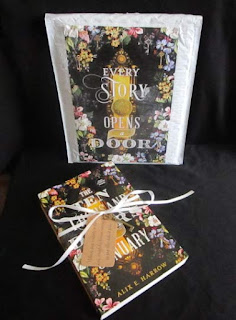
January is a young girl with a great imagination. She lives with her guardian Mr Locke and her nurse/governess Mrs Wilde, while her father travels the world. Her father is an adventurer, travelling far and wide to find treasures for Mr. Locke’s collection. She misses him and sits in her room wrapped in the pink and gold bedspread he sent her from India. January is just becoming a teenager and starts to learn that her freedom and imagination are a threat. One day she writes about a door to another world and soon after she discovers the very door she has written. Stepping through, she sees a different land with a white shimmering city in the distance. She now sees she can have her own adventures without ever leaving the hall and the protection of Mr Locke. But her creativity is not seemly for young ladies and Mr Locke determines she is overstimulated and needs the rest cure. This involves lying in a plain room with nothing to occupy her mind. At first she runs wild and tears the curtains and bedspread in defiance, but then realises this simply plays into Mr Locke’s hands. Instead she chooses to comply on the surface and become the nice young lady he wants. Yet, all the time a sense of adventures grows within and we realise January is not going to be a nice young lady for long.
Harrow intersperses January’s story with a different narrative from a book that comes from her father. The story tells of a young girl named Adelaide or Ade to her family and the age old tale of a haunted house that all the local children stay away from because of the ‘boo hags’. Ade is more curious than she is scared, but in the cornfield outside meets a type of boy she has never seen before, called Yule Ian.We don’t know where these people fit into January’s story but their story hints at worlds as yet unseen and legends from every country in the world. It’s as if January’s restrictions of Victorian womanhood is the smallest Russian doll in a set, she is enclosed by bigger worlds than her own. Her existence is restricted by our modern standards, but what if our own existence is similarly restricted? I started to think of other worlds beyond this one where the rules of existence are totally different or without limit.
I truly loved this wonderful book. It took a few chapters for everything to click into place, but I was intrigued enough to keep going till the story made sense. January is a great central character and her need to break free from the constraints placed upon her by Mr Locke would be understood by every teenage girl. I think this is partly the novels success – Harrow has taken a familiar feeling from any teenage girl, but placed it within a magical world where there are no limits to existence. When January realises she can write doors into other worlds and follow them, more freedom than she ever imagined is hers for the taking. However, this freedom depends entirely on pleasing Mr. Locke and we learn later in the book that his guardianship of January is even more far reaching than even she thought. He has schooled and packaged January in a way that is acceptable to Victorian society. He has polished and locked her away like one of the many treasures in his collection.
The novel is full of characters who move beyond their bounds in one world, while finding themselves completely at home in another. Jane is sent as a companion for January, paid for by her traveller father who comes and goes plundering worlds for Mr Locke’s collections. Jane finds that in one world her fearlessness and hunting skills are integral to her culture and survival, but in January’s world she is expected to keep her eyes down and not challenge people who are her betters. In this world Jane is problematic because she is a woman with no breeding or class and because she is black. January’s friend Samuel has slightly more freedom than Jane because he is a man even though his class and skin colour are the same. Just as Locke categorises and catalogues his collections, it seems there is an unspoken taxonomy of people. January has side-stepped disapproval, despite being poor and mixed race, thanks to Locke’s fortune which keeps her in dresses, pearls and first- class travel. January is kept in a gilded cage, but it is still a cage. I couldn’t see at first where Ade and Yule Ian fit into the narrative, but soon I realised how crucial they both are to January and the world she sees as she discovers her writing power. It takes huge courage to use that power, but increasingly January finds it is the only way she can protect herself and the freedoms she believes in. She wants to find her father or at least the last place connected to him and she will keep wrenching doors open until she finds the right one. A shadowy organisation is not far behind her though, run by The Founder. They want this world to stay on one course; a rigid world following a set pattern of Empire, industrial revolution and exploitation of other country’s resources. The magical worlds January visits are too unpredictable, because they signify endless change. What will The Founder do to keep the doors closed and how can January throw them wide open again in order to see her family?
For me this novel is so successful because even when we are in the most alien of worlds the author never forgets this is a human story. The family bonds and the aching loss of bereavement feel real and honest. These may be extraordinary characters but their emotions are very human and relatable. I found myself aching for January to be reconciled with her father and for his heartbreak to heal. The novel also has something important to say about love: it’s many forms from familial to friendship and romantic love; the compromises of successful relationships and the need to give the one we love freedom and space to grow. I was so sad to finish this story and almost resented the next book I picked up. It is inventive, extraordinary and touching in equal measure. It is my book of the year so far and I’m now ordering my hardback copy to keep.
Meet The Author
Alix E. Harrow has been a student and a teacher, a farm-worker and a cashier, an ice-cream-scooper and a 9-to-5 office-dweller. She’s lived in tents and cars, cramped city apartments and lonely cabins, and spent a summer in a really sweet ’79 VW Vanagon. She has library cards in at least five states.
Now she’s a full-time writer living in with her husband and two semi-feral kids in Kentucky. Her short fiction has appeared in Shimmer, Strange Horizons, Tor.com, Apex, and other venues, and The Ten Thousand Doors of January is her debut novel. Find her wasting time and having opinions at @AlixEHarrow on Twitter.