Posted in Netgalley

A Change of Circumstances by Susan Hill.

I’ve been reading Hill’s Simon Serrailler novels for many years now. I read the very first one, The Various Haunts of Men, when it first came out and every one since. In this 11th outing for the detective he’s investigating a death above a Chinese Medicine shop in the distinctly hippy village of Starly. A strange anomaly in the area, Starly seems to attract shop owners selling incense, tarot cards, and new age paraphernalia. The young man in front of Simon has been dead a few hours and has a needle in the vein of his arm. It seems to be a run of the mill overdose – sadly all too common now that county lines operators had been plying their trade locally for a while. County lines drug dealing bothers Simon and he wants to eradicate it, but catching the person distributing in the village won’t yield any further results. The local man rarely knows the men above him, he just picks up a packet from a given location and gets his on foot distributors to do the next stage. Sadly, those at the bottom of the ladder are often children coerced or groomed into helping out, whether or not they even know what’s in the package they’re carrying. However there’s something about this overdose that doesn’t add up and it is going eat away at Simon until he solves the puzzle.

There are always family issues in Hill’s novels because they are as much about the family as they are the case. I’ve still after all these years, not got to grips with Simon as a character. I know him, but don’t necessarily understand him. I find it easier to understand his sister Cat, and bonded with the character when she lost her husband at a similar time to me. Here Hill concentrates on Cat’s youngest son Sam, who has unexpectedly turned up at home from university. Cat has suspected there have been some issues in his long relationship with girlfriend Rosie, but hasn’t wanted to interfere. Sam was fairly ambivalent about university anyway, so Cat isn’t too surprised when he says he doesn’t want to carry on. He quickly gets his old job back, portering at the hospital, until he decides on something more permanent. Rosie is training to be a doctor and they’re now likely to pass each other every day, but when he first sees her outside the hospital she’s with another man – was this just a hug after a long shift or was there more to it? Other family threads felt a little odd. Kieron is both Cat’s second husband and Simon’s boss, but there’s a strangely detached feeling to his presence. At the farmhouse he disappears into his study to watch TV without interruption, while Simon and Cat share a drink and talk. He doesn’t interact much with the children, particularly Sam. Any interactions he and Simon have at work, are left at work so they don’t chat over old cases or just the difficulties of policing the area. It’s as if he’s absent in his own life and if he walked away he would leave no impression behind.

The chapters that focus on the family or the police station seem to recede into the background, while the intervening chapters are full of life. A young lad called Brookie is the subject of one thread. One of four boys, brought up by Dad, their house is depicted as chaotic and noisy, but seems to be more demonstrative and affectionate than the Serrailler family. Brookie only has a plastic bag for his school books and is the subject of bullying by other kids. One day, as he’s gathering his stuff after it being emptied into a puddle, a stranger appears and starts to help him. They chat and Brookie never expects to see him again, but he drops by the following week with a new rucksack for him. Is this just a Good Samaritan or is something more sinister going on? With Dad working nights as door security on a nightclub the boys have plenty of time on their own and could be easy prey. We also meet a young girl called Olivia, from a more affluent background but her parents have recently divorced. Her father had an affair with a much younger woman and while Olivia’s mum knows that he’s become a dad again in his fifties, she hasn’t told her daughter. So, when Olivia rings her dad for some help, it is a huge shock to be told she has twin half-brothers screaming in the background. Now is not a good time to ask for help. Once a month, a man called Fats gets her to deposit an envelope to a derelict farm while pretending to be out for a run. She hates what she’s doing and it’s only shame and fear of her family finding out that keeps her going. Scared and emotionally manipulated, Olivia is looking for a way out. If her Dad won’t help she’s running out of options.

You always know you are in the hands of a great storyteller here, as it always feels as if the threads come together effortlessly. Of course that takes skill and hard work, but Hill makes it look easy. This is the first time in a while that I’ve felt a restlessness in Serrailler. Usually his large modern flat soothes him, it has the proximity to the cathedral so he also has the incredible views of its architecture. His job can be all encompassing, barely leaving room for other thoughts, never mind people. For some reason he finds himself viewing a large cottage in need of renovating, deep in the countryside. With this case he can feel his patch changing, the tendrils of drugs creeping into smaller towns with criminals who are willing to kill to keep their line of supply running. His behaviour with women has always kept me from truly liking him; he’s a ‘commitmentphobe’ who either never tells the object of his affections what he feels, or who carries on dating someone he has no future with for far too long. It may be something to do with his father’s lack of emotion or the way he has treated women in the past; his second wife had to ask Cat for help when Richard had physically attacked her. However, as a face from the past crosses his path, I did wonder whether this restlessness might mean he’s ready for change? This had that strangely comforting feeling that comes when you know your characters well and can settle into the story. It’s often the same with crime series, that even if your characters are in the midst of a bloody murder investigation, you feel happy to be amongst friends again.

Susan Hill‘s novels and short stories have won the Whitbread Book, Somerset Maugham, and John Llewellyn Rhys awards, received the Yorkshire Post Book of the Year, and have been shortlisted for the Man Booker Prize. The play adapted from her famous ghost novel, The Woman in Black, has been running in the West End since 1989. The eleven books in her Simon Serrailer series are all available from Overlook.

Posted in Throwback Thursday

The Ten Thousand Doors of January by Alix E. Harrow.

January is a young girl with a great imagination. She lives with her guardian Mr Locke and her nurse/governess Mrs Wilde, while her father travels the world. Her father is an adventurer, travelling far and wide to find treasures for Mr. Locke’s collection. She misses him and sits in her room wrapped in the pink and gold bedspread he sent her from India. January is just becoming a teenager and starts to learn that her freedom and imagination are a threat. One day she writes about a door to another world and soon after she discovers the very door she has written. Stepping through, she sees a different land with a white shimmering city in the distance. She now sees she can have her own adventures without ever leaving the hall and the protection of Mr Locke. But her creativity is not seemly for young ladies and Mr Locke determines she is overstimulated and needs the rest cure. This involves lying in a plain room with nothing to occupy her mind. At first she runs wild and tears the curtains and bedspread in defiance, but then realises this simply plays into Mr Locke’s hands. Instead she chooses to comply on the surface and become the nice young lady he wants. Yet, all the time a sense of adventures grows within and we realise January is not going to be a nice young lady for long.


Harrow intersperses January’s story with a different narrative from a book that comes from her father. The story tells of a young girl named Adelaide or Ade to her family and the age old tale of a haunted house that all the local children stay away from because of the ‘boo hags’. Ade is more curious than she is scared, but in the cornfield outside meets a type of boy she has never seen before, called Yule Ian.We don’t know where these people fit into January’s story but their story hints at worlds as yet unseen and legends from every country in the world. It’s as if January’s restrictions of Victorian womanhood is the smallest Russian doll in a set, she is enclosed by bigger worlds than her own. Her existence is restricted by our modern standards, but what if our own existence is similarly restricted? I started to think of other worlds beyond this one where the rules of existence are totally different or without limit.


I truly loved this wonderful book. It took a few chapters for everything to click into place, but I was intrigued enough to keep going till the story made sense. January is a great central character and her need to break free from the constraints placed upon her by Mr Locke would be understood by every teenage girl. I think this is partly the novels success – Harrow has taken a familiar feeling from any teenage girl, but placed it within a magical world where there are no limits to existence. When January realises she can write doors into other worlds and follow them, more freedom than she ever imagined is hers for the taking. However, this freedom depends entirely on pleasing Mr. Locke and we learn later in the book that his guardianship of January is even more far reaching than even she thought. He has schooled and packaged January in a way that is acceptable to Victorian society. He has polished and locked her away like one of the many treasures in his collection.


The novel is full of characters who move beyond their bounds in one world, while finding themselves completely at home in another. Jane is sent as a companion for January, paid for by her traveller father who comes and goes plundering worlds for Mr Locke’s collections. Jane finds that in one world her fearlessness and hunting skills are integral to her culture and survival, but in January’s world she is expected to keep her eyes down and not challenge people who are her betters. In this world Jane is problematic because she is a woman with no breeding or class and because she is black. January’s friend Samuel has slightly more freedom than Jane because he is a man even though his class and skin colour are the same. Just as Locke categorises and catalogues his collections, it seems there is an unspoken taxonomy of people. January has side-stepped disapproval, despite being poor and mixed race, thanks to Locke’s fortune which keeps her in dresses, pearls and first- class travel. January is kept in a gilded cage, but it is still a cage.
I couldn’t see at first where Ade and Yule Ian fit into the narrative, but soon I realised how crucial they both are to January and the world she sees as she discovers her writing power. It takes huge courage to use that power, but increasingly January finds it is the only way she can protect herself and the freedoms she believes in. She wants to find her father or at least the last place connected to him and she will keep wrenching doors open until she finds the right one. A shadowy organisation is not far behind her though, run by The Founder. They want this world to stay on one course; a rigid world following a set pattern of Empire, industrial revolution and exploitation of other country’s resources. The magical worlds January visits are too unpredictable, because they signify endless change. What will The Founder do to keep the doors closed and how can January throw them wide open again in order to see her family?


For me this novel is so successful because even when we are in the most alien of worlds the author never forgets this is a human story. The family bonds and the aching loss of bereavement feel real and honest. These may be extraordinary characters but their emotions are very human and relatable. I found myself aching for January to be reconciled with her father and for his heartbreak to heal. The novel also has something important to say about love: it’s many forms from familial to friendship and romantic love; the compromises of successful relationships and the need to give the one we love freedom and space to grow. I was so sad to finish this story and almost resented the next book I picked up. It is inventive, extraordinary and touching in equal measure. It is my book of the year so far and I’m now ordering my hardback copy to keep.

Meet The Author

Alix E. Harrow has been a student and a teacher, a farm-worker and a cashier, an ice-cream-scooper and a 9-to-5 office-dweller. She’s lived in tents and cars, cramped city apartments and lonely cabins, and spent a summer in a really sweet ’79 VW Vanagon. She has library cards in at least five states.

Now she’s a full-time writer living in with her husband and two semi-feral kids in Kentucky. Her short fiction has appeared in Shimmer, Strange Horizons, Tor.com, Apex, and other venues, and The Ten Thousand Doors of January is her debut novel. Find her wasting time and having opinions at @AlixEHarrow on Twitter.

Posted in Random Things Tours

No Honour by Awais Khan.

Last year I was profoundly affected by the ITV series Honour. It was a dramatisation of the murder of a young Kurdish woman, carried out by the male members of her family and ordered by her father. Bahnaz Mahmod reported her fears to the police on five separate occasions, pleading with them to help her as she believed her family would kill her. Instead of fully investigating, she was dismissed as hysterical and over over-reacting. So instead of having their protection, she was raped and murdered by distant cousins who fled back to Iraq straight afterwards. Their reasoning was that she had besmirched the honour of her family, after divorcing her arranged husband and falling in love with another man. Real life police officer DI Caroline Goode was assigned the case and this was the story of her dogged determination to hunt down those responsible. I found myself moved, but also disturbed by the case. Days later I was still thinking about it, desperately trying to understand why her actions were so offensive to her family, but the men’s actions of raping and killing their own family member were not. I simply couldn’t get into the mindset of these men, and while on one hand I could see the point of view that it is simply murder, I wanted to understand more about what made Bahnaz Mahmod’s actions condemn her to death, and how such a dishonourable act on the men’s part could be seen to restore the family honour.

So, when I had the chance to read Khan’s book I started to read more about honour killing and it’s place in the culture of Pakistan. Pakistan is a collective, patriarchal society and family groups are policed by the male members of a family, a village or area. A woman’s honour is dependent on their modesty and a man’s honour is dependent on his masculinity. So, if a young woman refuses an arranged marriage or commits adultery she has behaved immodestly and has lost her honour. Her male family members are responsible for her and if they do nothing, their masculinity is in question and their honour is lost. So, by killing the immodest woman in their midst, they are seen to assert their masculinity and regain their honour. I was very shocked to read that at least a fifth of the world’s honour killings are carried out in Pakistan, bringing their figure to just over 1000 per year. However, this is often a rural practice and has widespread support in Pakistan, so killings are not always reported and the figures may well underrepresent the problem. Awais Khan takes these figures and ideas, and weaves the tale of a bright and ambitious sixteen year old village girl, with incredible insight and compassion.

The opening scene is a brutal look at the reality of rural village ‘justice’. A young woman is dragged to the river after giving birth to an illegitimate child. The pir, who is a village elder, lists the girl’s crimes against her family and demands that the villagers carry out her punishment. I was shocked at the punishment, especially that it extends to her baby who is drowned in a bucket of milk. Make no mistake, this is hard hitting and it needs to be, for readers to understand the reality of what is still happening in Pakistan and around the world. In the wake of this horror, is a feisty young woman called Abida and despite the horrific example in front of her, she’s headstrong and believes it would never happen to her. She can already see the unfairness of the society she’s been born into – a patriarchal system where her entire life is mapped out before her and she doesn’t have any agency. She will have a husband chosen for her, he will then decide where they live, how they live and the children they’ll have. The problem is Abida has already fallen in love. Her father Jamil has already worked this out and is desperately worried for his daughter. He’s noticed she sneaks out after everyone has retired for the night, he hasn’t followed her, but does listen for her return. He knows it’s likely she’s meeting a boy and he hopes that he’s wrong, but he has a terrible feeling the worst has already happened. What will he do if the pir comes for his daughter?

I don’t want to ruin the plot, so will keep details to a minimum, but although Abida escapes her home village she doesn’t have the happy ending she expects. In an interview with Eastern Eye, Khan explains that he chose fiction to shed light on the subject of honour killing, because it ‘allows for more creative freedom, and for more heightened emotions.’ This was true for me as I fell in love with Abida’s spirit and the hope she has for her life. Amazingly, that hope follows her to Lahore and through her whole experience. She keeps thinking that beyond the situation she’s in, she will survive. The relationship between Abida and her father was so familiar to me from my own Dad. Whatever I’ve gone through in life he’s been there and I have no doubt that he’d search for me in the way Jamil does. It’s the only pure love in the whole novel, unchanged by circumstance and completely unconditional. I found it very moving and for me he’s the most honourable man in the story. He’s decided that his own moral code is dependent on how he treats his children, rather than being dependent on the opinion of the men in his village. Although this doesn’t mean Abida will be safe. In his publicity for the book, Khan has mentioned the social media celebrity Qandeel Baloch. After appearing on Pakistan Idol, she created many video clips addressing controversial topics and women’s rights. In 2016, she was drugged and strangled by her brother Wazeem Aseem who felt she was disrespecting her family. If someone as high profile as Qandeel could be killed this way, what chance does a girl have if she’s from a conservative village, mired in poverty with income and status dependent on maintaining the honour system?

I found the book shocking and I think it will probably stay with me for a while. I’m considering looking for charities to support that help women in these dreadful situations. Khan’s writing pulls no punches, but it’s also incredibly compassionate. I loved some of the more complex female characters such as the servant Salma who has kept Abida locked up, but then helps Jamil. Rana Hameed’s first wife Nigaar is fascinating, she’s broken down physically and mentally, but desperate for a new wife with the will to destroy him, even if she has to die in the process. The complicity of women is needed to keep the status quo, whether they turn a blind eye through fear or because they’ve been beaten into thinking this is the norm and it won’t ever change. I’m glad I read this, to raise my awareness and help me grasp the cultural and historical background in Pakistan. It might also inspire people to be aware of this crime globally, because it isn’t restricted to Pakistan. I hope many more people read Abida’s story and that Khan achieves his aim of showing people ‘love is never a crime’. If he achieves that the whole world will be a better place.

You can read Awais Khan’s interview with Eastern Eye at:

https://www.easterneye.biz/hope-in-the-face-of-honour-killings/

Meet The Author

Awais Khan was born in Lahore, Pakistan. ‘In the Company of Strangers’ is his first novel published by Simon & Schuster and Isis Audio. His second novel ‘No Honour’ is published by Orenda Books and Isis Audio. He is a graduate of The University of Western Ontario and Durham University. He studied Creative Writing at Faber Academy. His work has appeared in The Aleph Review, The Missing Slate, MODE, Daily Times and The News International. He has appeared for Interviews on BBC World Service, Dubai Eye, Voice of America, Cambridge Radio, Samaa TV, City42, Maverix Media and PTV Home. He is represented by Annette Crossland (A for Authors Agency Ltd, London).

In his free time, he likes to read all types of fiction, especially historical fiction and psychological thrillers. He is hard at work on his forthcoming novels.

Posted in Random Things Tours

The Wedding Party by Tammy Cohen.

This was a real turn up for the books as they say. I’ve been ill for a few days with a virus – not that one – so I’ve been bundled up in bed, not really able to bear much noise or fuss. Yesterday morning I picked up this book, I’ve never read the author but had decided to give her a try for this tour. I’m so glad I did because once I’d started, that was me engrossed for the whole day. I read it in four hours straight and enjoyed it immensely. The action all takes place at a wedding venue hotel on the island of Kefalonia. Lucy has been planning her wedding to Jase for a very long time and she’ll be okay as long as everything she’s planned is perfect, down to the last napkin. However, she’s about to find out that once you bring other people into the equation, plans can veer off course. There’s her alternative sister Jess who has promised to behave but turns up with a stranger in tow and a psychedelic dress instead of the tasteful dusky pink they’d agreed on — not to mention her dyed pink hair will turn a straggly peach colour once she hits the sea. There’s a strange old lady who they met washing her breasts in the airport toilets, but who now seems to be everywhere. Best man Gil, who used to be Jess’s boyfriend, is here with his wife Zoe, with all the tension that could cause. Surely Lucy can rely on the older generation to behave? Her mum Hazel and Dad Dom are solid, and although they’re irritatingly close, Jase’s mum Cora is lovely. Thank God though for her best friend Shelley, who is an absolute rock and would have been a better maid of honour than her sister. There’s also wedding planner Nina, who has everything in hand, except perhaps the small matter of money. What could go wrong?
The setting was wonderful, with beautiful descriptions of stunning sunsets over the beach – Lucy has chosen this hotel specifically because although it might be a bit shabbier than some of its counterparts on the other side of the island, they can’t create a wedding at sunset. A perfect photograph for Instagram of course (I loved how even on her wedding day Lucy is itching to update her status). The author’s descriptions of olive trees, swaying grasses full of poppies, the scent of honeysuckle on the breeze, all made me want to fly out there tomorrow. I was fascinated with the idea of illusion, what’s real and what isn’t and which we present to the world. This applied to the people present as well as the online content Lucy keeps imagining in her head. When Jase said he would have married her in a registry office with none of the fuss, it really makes her think. Who was all this expense and stress for? Even wedding planner Nina has been seduced by an illusion, that of the island as an idyllic place to set down roots, but also in destination weddings themselves. She’s placed her entire financial future into a house she doesn’t fully own (thanks to local land laws) and the certainty that people will always want to buy into the dream of a destination wedding. It seems like she must have a wonderful lifestyle, but actually the island is deserted and bleak out of season and she’s literally one pay cheque from going bust. Especially when the people who buy into this illusion can’t always afford it. Almost everyone in the wedding party is hiding something. Jess, although irritating to her sister, is actually the most open and authentic person there. She just needs some self-awareness and discretion. Gil is possibly the only other member of the group with no secrets and is seemingly devoted to wife Zoé and seems to understand her, despite her brittle exterior. I enjoyed some of the evening dinner, when a lot of the smaller secrets are out in the open and people can really get to know each other, on a deeper level.
If you simply want a good thriller read, this book really delivers. We know something goes drastically wrong because in-between the story are transcripts of police interviews with members of the wedding party. The author is very skilled in giving away snippets of information, enough to get your brain whirring, but not enough to work it out. This keeps you reading just one more chapter. There are also therapy journal entries – which I loved because it’s something I ask my clients to do – but we don’t know which member of the wedding party they belong too. Every so often there’s a delicious red herring thrown in, like the groom disappearing during a dare on the fishing trip. There’s also the rising tension and suspicions of each other, even the married couple are keeping some secrets close to their chests. Watching them try to avoid being exposed, made me cringe. There are also some comedic moments, in the descriptions and behaviour of old lady Vivienne particularly, but also I the eccentricities and foibles of those in the wedding party. The author is adept at showing us aspects of human behaviour that feel totally authentic – such as the shopping day the women have, where almost everyone rejects their purchases as something they’ll never wear as soon as they return to the hotel. She also nails that feeling of loneliness, and how having no family leaves you rootless and free-floating. There’s nothing to ground you. It’s this understanding of human behaviour that made me feel there’s something subtly different going on. Underneath the thriller there’s an underlying message that I felt really elevated this above the ordinary and said something about the times we’re currently living in. It’s the old cliché of walking a mile in someone else’s shoes, because some suspicions that arise in the novel, say more about that character’s prejudices than the person under suspicion. Once the secrets are in the open and disagreements are resolved, there are a lot of deep conversations and apologies to be made. We can never know what another person has gone through and while our brain may well go into overdrive when we’re unsure about someone, I felt the author was telling us to hang back a bit, find out more and be kind.

Published by Black Swan, 19th August 2021.

Meet The Author

Tammy Cohen is the author of six psychological thrillers, the latest of which is Stop At Nothing. She is fascinated by the darker side of human psychology. Her books explore how ‘ordinary’ people react when pushed into a corner, the parts of ourselves we hide from the world – and from ourselves. Previously she also wrote three commercial women’s fiction novels as Tamar Cohen debuting with The Mistress’s Revenge which was translated all round the world. In addition, she has written three historical novels under the pseudonym of Rachel Rhys. The first, Dangerous Crossing, was a Richard & Judy book club pick in Autumn 2017. She is a member of the Killer Women crime writing collective and lives in North London with her partner and three (allegedly) grown up children and her highly neurotic rescue dog. 

Visit http://www.tammycohen.co.uk to find out more, or find her on facebook or twitter as @MsTamarCohen or on Instagram as @tammycohenwriter

Posted in Random Things Tours

The Great Silence by Doug Johnstone.

Why is it always so difficult to write blog posts for books that I absolutely love?? I have already created two new hashtags for this third novel in the Skelf family series. The first was #bookbereavement, because when I finished it I wanted to turn straight back to the first page and start again. The second was #Skelfaholic and I am a fully paid up member. It is agreed that if this series ends (please no!) then we Skelfaholics will be holding a wake by drinking whiskey in a funeral home, followed by star-gazing at the observatory. It’s hard to put across how much I love the Skelf women, their cases, and the way they manage to conduct their funeral business with such dignity, and their investigation business with more balls than most men. I read this book almost as soon as I received it, and I’ve been sitting on it excitedly ever since, desperately trying not to say anything until the blog tour. Now I can happily say Doug Johnstone has done it again. This is a fantastic read.

For those who are new to the series, the Skelf women are three generations living under the same roof: Dorothy the grandmother, Jenny the mother, and Hannah the granddaughter. They ‘live above the shop’; their businesses being a strange mix of funeral directors and private investigators. Oh and Dorothy is a music teacher too, so there are often teenagers wandering in and out and playing the drums. In fact there are often waifs and strays under the Skelf’s roof. Hannah’s girlfriend Indy was one of their waifs, brought into the fold when her parents died and the Skelfs organised their funeral. She now looks after the funeral business with the same calm and dignity she brings to Hannah’s life. Einstein the dog arrived when a police chase ended with a van crashing nose first into one of their graves, during the funeral. The dog was in the van and with his owner now dead, he became part of the Skelf household and a companion of Schroedinger, the cat. Jenny mainly works on the private investigation side, but has a lot of her time taken up by her ex and Hannah’s father, Craig. He escaped prison and is possibly closer than they think. Finally, there’s Hannah, starting her PhD with the astrophysics department and pondering the question of why other life in the universe has never tried to contact us – the ‘Great Silence’ of the title.

As usual the book begins with a strange event. Dorothy takes Einstein for a walk in the park and he fetches a human foot, even more strange is that it appears to be embalmed. This embroils Dorothy in a very unusual case that could be deadly. Jenny is dealing with the aftermath of her ex-husband’s actions in the last book, she’s still healing emotionally and potentially regretting the end of her relationship with painter, Liam. She misses him, and wonders if perhaps they could rekindle something. Then the other daughter of her ex-husband disappears. Jenny wonders if her life will ever be free of this man, as she joins forces with the other woman in Craig’s life to find her daughter. Finally, Hannah is facing massive changes in her academic and personal life. In a sense she’s being pulled between past and future. Her graduation becomes a double celebration when Indy proposes, but then she’s pulled into the past when their flat is broken into and someone makes it clear they still want to be part of her life. Her academic supervisor José asks her if she’ll look into one of the central questions of astrophysics, if there is extraterrestrial life, why haven’t they replied to our messages? He has had a reply, but doesn’t know where it’s come from. Is it really from another life form or is someone playing game with him?

There’s so much packed into this novel, but Doug Johnstone never loses a thread. Each storyline is given equal time and care. As I was reading the novel and writing this review, my partner saw my search history on my iPad and looked confused. I had tabs open for SETI (an institute set up to search for possible extraterrestrial life), the embalming process, numbers of big cats kept in domestic homes in the U.K, and Hindu funeral rites. Yes, the author does go to all these different places in the novel, not to mention the Italian gigolo and elderly lady, and they all interweave harmoniously. I love the unexpected situations they find themselves in, such as Indy and Hannah taking a walk in the park and encountering a black panther. I also love how these women throw off expectations and be themselves. Dorothy is an elderly lady, but she goes to clubs when one of her students is playing a gig, and has a healthy sex life with her long time friend and police contact, Thomas. She’s investigating the ‘foot’ incident, which becomes more urgent once another foot turns up, this timbelonging to someone different. She’s also investigating the panther incident and visits experts keeping wildcats at their homes. In between she’s supporting Abi, now living with the Skelfs, who gets a huge shock when a man claiming to be her birth father shows up.

Jenny has to face her ex- husband and there is a sense that this might be their final showdown. They had originally thought he’d be far away in another country, but with huge estates covering thousands of acres in Scotland, it’s not inconceivable that he’s been hiding close by all along. The strength of both Hannah and Jenny in facing him again, is amazing. They’re scared – so much so that Hannah and Indy move back in to the family home – but know that the only way to stop this man ruling their lives is to find him and have him locked away again. I felt for Jenny, who had just turned a corner emotionally and was considering her life moving forward, and whether she wanted to remain alone. She’s also investigating on behalf of a brother and sister who are concerned their elderly mother is being misled by an Italian playboy. As usual Jenny is professional with her investigation, but uneasy about her clients and their motives. Meanwhile, behind all these fireworks, the kind and loyal Indy is having a crisis about her grandparents. They are traditional, but to Hannah’s surprise they want to fly over from India for their wedding. They don’t mind their granddaughter marrying a woman it seems, but they do have a huge request relating to the death of Indy’s parents. Leading to some very hard choices for Indy, who I’m especially fond of.

Doug Johnstone is so many things at once: a gritty crime writer; a poet; a philosopher; a lover of the city where he bases this series; and an incredible writer of women. Johnstone writes real women, women who are intelligent, ballsy and true to themselves which is why I love them so much. One philosophical idea that stood out to me was ‘sonder’. It’s a word I’ve become aware of because it’s the title of my work in progress – where there are people in a difficult situation desperately trying to understand each other. Sonder is the sense I often get in a very busy train station when I look around at all the people and realise that every one of them has a complex and unique life just like mine. It’s the name of a cafe that Hannah visits near the university campus and as she sits there after her graduation, with Indy, Jenny and Dorothy she realises something. These three women come into people’s lives at a terrible moment, but have the ability to treat each person’s grief as if it was the most important thing to them. It reminded me of bringing a client into my counselling room, creating a safe space where, for an hour, the most important thing in the room is this person and whatever they bring to talk about. I think this is possibly why I feel such a strong kinship with these women. Jenny will take a drink with a homeless person and pass the time of day and Dorothy will connect with a young person fifty years her junior and make them feel welcome. I hope a little of the Skelfs rubs off on all of us. If you’ve never read the series, then do yourself a favour and buy all three. You won’t regret it. There was something about this book that felt like a finale, but I’m hoping against hope there’s more to come from these characters who I love. I’ll miss them, till next time.

Published by Orenda Books, 19th June 2021

Meet The Author.

Doug Johnstone is the author of eleven novels, most recently The Big Chill, the second in the Skelfs series, which has just been optioned for TV. In 2020, A Dark Matter, the first in the series, was shortlisted for the McIlvanney Prize for Scottish Crime Novel of the Year and the Capital Crime Amazon Publishing Independent Voice Book of the Year award. In 2019, his thriller Breakers was also shortlisted for the prize. Several of his books have been bestsellers and award winners, and his work has been praised by the likes of Val McDermid, Irvine Welsh and Ian Rankin. He’s taught creative writing and been writer in residence at various institutions, and has been an arts journalist for twenty years. Doug is a songwriter and musician with five albums and three EPs released, and he plays drums for the Fun Lovin’ Crime Writers, a band of crime writers. He’s also player-manager of the Scotland Writers Football Club. He lives in Edinburgh. –This text refers to the paperback edition.

Posted in Throwback Thursday

Throwback Thursday! I Capture the Castle by Dodie Smith.

“I write this sitting in the kitchen sink. That is, my feet are in it. The rest of me is on the draining board, which I have padded with our dog’s blanket and the tea-cosy.”

I’m going a long way back in time for Throwback Thursday this week. I read this book in my early teens, but still hold it close to my heart. I’d read 101 Dalmations much earlier and hadn’t realised that the author had written anything other than children’s books. The truth is I’d been waiting my whole life for a heroine like Cassandra Mortmain. There are a lot of different influences to blame for turning me into the adolescent I was. Years trawling round stately homes had given me a yearning for a house I could hide in. We lived in a 1960’s bungalow with just enough rooms to live in, but I longed to hear lines like ‘ Hayley? No I haven’t seen her since breakfast. Could she be in the pink drawing room?’ Period dramas, particularly 1970s productions of D.H. Lawrence novels and L.P. Hartley’s The Go-Between , both loved by my mum, had left me hankering after a wardrobe of full, floaty skirts and the sort of accessories that looked out of place. Like tramping down to the village shop wearing a feather boa, ten layers of petticoats, whilst dragging a grumpy spaniel. I would constantly imagine I was in a book or a film, walking the poor dog’s legs off while hoping to meet a man who looked like Mr. Rochester and lived in a Gothic mansion, minus the mad wife.

I also developed a fascination with Edith Holden thanks to the TV series of Country Diary of an Edwardian Lady and I even wrote off for a pack about the series. We already had the book, so I bought a sketchbook and some watercolour pencils with my pocket money. My brother and I would go out early, him with his fishing gear, and me with my books and paints. There was an old track down to the woods with a drainage dyke running alongside. About halfway down there were two willow trees that had bent so far over the water it was possible to climb up and lay down along the trunk. My brother would fish from his tree, and in mine I would paint flowers and butterflies and read my book. It was the closest thing I had to room of my own. So, in finding Cassandra Mortmain I felt like I’d found exactly who I was supposed to be. I wasn’t meant to be Hayley Baxter, lives in a sixties bungalow, with a working class family and no money. I was meant to be the broken down castle, bohemian sort of poor. Where parents were trying to make money from art, roof leaks dripped into buckets instead of being fixed and they were invited to tea by the landed gentry or their new American millionaire estate owners.

I loved Cassandra Mortmain’s confidence. She was determined she was going to be a writer and nobody told her she couldn’t be, so she was always curled up in some unlikely place, writing in her journal. If I said I wanted to write novels, my close family were supportive – my mum had always wanted to write. Wider family and friends would say ‘well, as long as you do well at school and have something to fall back on.’ There were aunts and uncles who would have been bemused if I walked constantly around with a journal and pen. Writing was seen as something you had to do – you wrote a letter, or a postcard – but not something pleasurable that you devote time to. That came much later, when I had my own home and my own wardrobe of floaty skirts. When I first read her story I was much like Cassandra herself, there were parts of life that she was recording without really knowing their importance or meaning. Although she narrates her own story, as an older reader there were things I understood that Cassandra didn’t as yet. This is a story of growing up and leaving some of that innocence of youth behind.

I thought on first reading that her sister Rose was incredibly beautiful, but grumpy and not very nice to be around. However, reading her years later I could see that because Rose was older, she understood more about the realities of life. For her, the broken roof and the lack of income were not romantic, but a real problem that needed fixing. Their father’s only published book can’t keep them forever and his writer’s block makes him a very difficult man to live with. Rather comically the women lock him in his study, in the hope that inspiration will strike when he’s forced to stare at his typewriter. It’s very clear to Rose that they are in dire financial straits. This is where the book takes on some Austen-like romantic tropes, as the Cotton family come to visit the estate where they are the rightful heirs and the Mortmains are their tenants. Mrs Cotton brings her two sons, the eldest Simon being the rightful heir, and Neil, the younger son. Simon is ‘detestably bearded’ but the most eligible and able to rescue the Mortmains from their current circumstances. Cassandra’s father and stepmother Topaz are seen as delightfully eccentric by the Cottons and the whole family are invited for dinner. This is where the romantic problems begin, as Simon is besotted with the beautiful Rose, and as Cassandra develops a crush on Simon, she is in turn adored by the Mortmain’s servant and helper, Stephen. Stephen is incredible handsome, but the Mortmain girls are about to find out that the heart is an unruly organ and wants what it wants. Despite this, it isn’t long before Rose announces her engagement to Simon. This solves so many of the Mortmain’s problems – it’s as if one of the Bennett sisters actually accepted Mr Collins. As the preparations for the wedding gather pace, Rose and Cassandra spend more time with the Cotton brothers.

Simon finds that he gets on well with Cassandra. He is the more cerebral of the brothers and while Rose is beautiful, she is not blessed with brains. Yet, Cassandra is too young for romance, and a very touching friendship starts to develop. The younger brother, Neil, is more stereotypically American, loud, brash and very active. He and Rose are usually swimming or messing around in boats, with Neil often play fighting or indulging in horse play. Cassandra has never seen her sister so lively, actually forgetting to be lady like and being in the moment. Everyone is touched to see Rose so happy, and assume it is her approaching wedding. To an adult reader the attraction between these two beautiful people is obvious, but Cassandra is stunned to find out they have run away together. If we hark back to Austen, her sister has turned out to be more of a Lydia than a Jane. How can the Mortmain’s fortunes be improved by their daughter’s marriage to the second son?

This is a novel drenched in charm and nostalgia. Interestingly, it was written by Smith when she was living in America, and that may explain it’s rose-spectacled view of England. There is something slightly melancholy in that we’re watching a young girl lose the charming innocence that makes her narration a delight to read. She falls in love, but not with the person who adores her and sees the devastation that can be caused by betrayal and jealousy. We realise, as Cassandra grows up in front of us, the chaos of a household run by adults who have no money and no rules, the embarrassment of having a stepmother who will happily walk around in the nude and that moment when you find your own sister inexplicable, because you understand storybook romance, but not adult desire. Cassandra is mostly in love with life. One character describes her as ‘the insidious type–Jane Eyre with of touch of Becky Sharp. A thoroughly dangerous girl.” Her narration makes even minor characters jump off the page and straight into your heart. Finally, I loved how Cassandra leaves us with an open ending. We shouldn’t be surprised that some loose ends are left dangling, because she has told us how much she hates ‘a brick wall happy ending.’ I think it’s true to say that in me, she found a reader as romantic about life as she is. This is one of those books I’ll re-read again and again, so I’m on the look-out for a very special copy to put on my forever shelves.

Posted in Netgalley, Personal Purchase

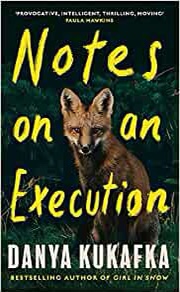
The Illustrated Child by Polly Crosby.

This beautiful and original book hit me straight in the heart and I was reading the last few pages with a massive lump in my throat. Romilly Kemp lives in the run down Bräer House with her father Tobias, an artist who is both inventive and eccentric in equal measure. This situation reminded me of a classic favourite I Capture the Castle, but Romilly’s story is much more than a coming of age tale. Romilly and her father live alone and are struggling for money, when Tobias has an idea for a children’s book based on his daughter. Featuring his original illustrations, the books follow Romilly and her Siamese cat Monty through a series of adventures at the circus, in a windmill and at Christmas. She is preserved forever as a 9 year old in her patchwork dress and her red hair flying behind her. Romilly loves looking for the tiny little additions to his main illustrations – a tiny mouse holding a forget-me- not, two miniature hares boxing, and sometimes Romilly herself being chased by a animal. The public fall in love with the books and the idea grows that there is some sort of treasure hunt contained in the pages leading to trespassers at Bräer and some horrible encounters with reporters and photographers.

Romilly can see secrets of a different kind in the pages her father has drawn, but she’s used to secrets. She hasn’t seen her mum for so long she’s largely forgotten her and they have no other family. Where does her friend Stacey go when she is missing for weeks? Who is the beautiful, pink costumed circus lady she meets who knows her father? She notices differences in the way she’s drawn in the book and also a very faintly painted lady in the background often with her head in her hands. Her dad gives her a puzzle box he’s made, which starts to tick when it’s her birthday releasing a memento or object that’s important to her – Monty’s silver bell, a pink feather. When her dad’s memory starts to fail, Romilly wonders if all these clues are for her, or are they triggers for her dad’s memory? More importantly, I was starting to wonder who would look after Romilly and what had torn this close family apart?

is meant to be home schooled, but has no real curriculum or structure. There are times when heat and food are scarce, and set mealtimes never seem to happen unless someone is visiting. As Tobias declines, Romilly is having to cope alone with no family to help. I wanted to swoop in and look after her and Monty. There’s no doubt that she’s independent, resourceful and intelligent, but is that innate or something she’s had to develop having been left to fend for herself so often? There’s a deep understanding of the psychology of a child in this position underlying Romilly’s story. Even her name means ‘strength’ and she has so much, using it to defend her tiny family and her home.

Underlying all of this is an understanding of trauma and how grief can tear apart the strongest families. In one part of the book Tobias explains to his daughter that people grieve in different ways and sometimes that means doing it apart. I know grief well, and at different stages in my journey I’ve done things differently, avoided certain places and people. At first I struggled to talk to anyone who was as shattered by my husband’s death as I was. I couldn’t deal with anyone else’s needs, only my own. I was very angry with people who turned out for the funeral claiming a relationship with my husband, who I had never met in the seven years we’d been married, the last four of I’d been caring for him 24/7. Later I wanted to seek out people who grieved as strongly as I did because we could reminisce and understand each other’s profound sadness. When reading the book I found myself both very angry with Romilly’s mother because I felt she was selfish, but I also sympathised and understood her decision that she shouldn’t be a parent. There were parts of the novel where I felt nobody understood or fully cared how much their decisions impacted on this little girl. I was so profoundly sad for her and at that point where she realised she needed help, she allowed herself to be vulnerable which must have been so difficult for her.

This is a beautiful book: it’s invocation of childhood and play; the magical atmosphere of Bräer and it’s surroundings; the stunning artworks done by Tobias and the complex history he’s trying to convey. I loved how the author showed objects sparking memories, for Romilly, but also for Tobias who, befuddled by dementia, recognises his daughter through Monty’s silver bell. I hadn’t unravelled the mystery so I could sit back and enjoy it as it played out and when the truth was finally revealed everything made sense, even if I did think Tobias could have handled it so differently. I have a particular affinity with hares, so his drawing under the book’s dust jacket of the two hares was particularly moving. What I loved most was the way the author showed a difficult childhood still being magical and full of memories. I think we can probably all look back and remember times that feel golden to us, but might be very different from our parent’s perspective. Romilly’s freedom, her ability to invent and imagine, to follow her own interests when mixed in with the magical circus, the panther stalking the area round the village and buried treasure seem magical. How much of this would she be willing to trade for security, routine and someone to care for her? This book will stay with me for a long time and is a definite candidate for my ‘forever shelves’.

Meet The Author


Polly Crosby grew up on the Suffolk coast, and now lives with her husband and son in the heart of Norfolk.

Her debut novel, The Illustrated Child (The Book of Hidden Wonders in the US and Australia) is out now.

In 2018, Polly won Curtis Brown Creative’s Yesterday Scholarship, which enabled her to finish her novel. Later the same year, The Illustrated Child was awarded runner-up in the Bridport Prize’s Peggy Chapman Andrews Award for a First Novel. Polly received the Annabel Abbs Creative Writing Scholarship at the University of East Anglia, and is currently working on her second novel.

Twitter: @WriterPolly
Instagram: @polly_crosby
Website: pollycrosby.com

Posted in Throwback Thursday

Throwback Thursday! A God In Ruins by Kate Atkinson.

Following on from last week, I wanted to feature this novel which is one of my favourites from the last twenty years and shows that Kate Atkinson is truly one of our best British novelists. It follows another wonderful novel about the Todd family, Life after Life, which focused on the many possible lives of Ted’s older sister Ursula. This is written as a standalone novel, rather than a sequel and has the honour of being one of the few books that genuinely made me cry towards the end. We meet Ted as he’s a pensioner, living in York, and dealing with living his life alone after the death of his wife. However, we don’t stay there, because as with Life After Life, Atkinson mixes past, present and future with great impact. The novel is also told from Teddy’s point of view, although he does seem slightly omniscient at times, knowing things he wasn’t present for. It is such a poignant history of a man who has lived through a world war, and it feels so authentic. In true Atkinson style, it cleverly manages to be a book about fiction itself.

In Life After Life when the focus was on Ursula, Teddy seemed to be set on course to marry childhood sweetheart Nancy and their life was portrayed as idyllic. Yet in this novel we see that their relationship was far from perfect. Despite this we do follow the lives of their daughter and granddaughter too, to great effect, because it opens up all the changes Ted has seen over his long life. Teddy’s mind often wanders back to his time as part of Bomber Command – something I’ve grown up with because I live in Lincolnshire which is known as Bomber County. In fact in the course of his work as a land drainage engineer, my Dad has accidentally dug up a whole Lancaster Bomber, probably trying to limp home to RAF Blyton, only a mile and a half away. Here the bomber raids were described so authentically, they were harrowing in parts and I could imagine the anxiety of waiting back at base to count the planes back in, knowing some would be missing.

Atkinson manages to combine the personal story of Teddy’s family, with societal shifts that occurred between the wartime generation and those who came of age in the second half of the 20th Century. Teddy is an old school gentleman, often showing acts of kindness and chivalry that make him very loveable. His values are challenged by his daughter Viola, the voice of her generation, who is always looking for the next cause to adopt. She campaigned for nuclear disarmament and supported the women protesting at Greenham Common. She’s a feminist and a vegan, something very unusual until fairly recently in the 21st Century. We are shown how the generation gap creates arguments in a family, where one generation fought in a war and later generations don’t appreciate or fully comprehend the sacrifices that were made for them. Viola could be seen as an unsympathetic character, especially when compared with Teddy’s service. However I wondered if her character developed as a reaction against Teddy’s courage and heroism. Such perfection is hard to live up to. In fact, when Viola tries to reconnect with friends from her travelling days she finds one of them has died and one works in finance – far from the ideals they held before. Unlike Teddy’s generation they have had a chance to regret behaviour and change outlook. Teddy’s friends will always be the same age.

I enjoyed the interesting structure of the novel where we float back and forth in time, between characters and settings. At times Atkinson lets slip a future plot, while still in the past. All of this felt very Virginia Woolf-esque and it suited the narrative. She is such a skilled writer that this never feels overtly literary or highbrow, it remains a light easy read. There is a huge twist at the end that has a bearing on everything you’ve read so far, but it’s not there just for the sake of it. Yes, it’s an excellent example of the post-modern novel, in a similar vein to Ian McEwan’s Atonement, but that’s not all. It’s impact of the twist was devastating to me and this is where tears emerged. This unexpected direction is truly a tribute to the men of Bomber Command, especially those who didn’t come home, like the men in the Lancaster my Dad dug up who were only a couple of miles from safety. This novel is simply one way Teddy’s life could have played out and it’s all the more powerful for it. This was an intelligent, well-researched and poignant novel that I think should be viewed as a modern classic.

Meet The Author

Kate Atkinson won the Whitbread (now Costa) Book of the Year prize with her first novel, Behind the Scenes at the Museum.

Her four bestselling novels featuring former detective Jackson Brodie became the BBC television series Case Histories, starring Jason Isaacs.Her 2013 novel Life After Life won the South Bank Sky Arts Literature Prize, was shortlisted for the Women’s Prize, and voted Book of the Year for the independent booksellers associations on both sides of the Atlantic. It also won the Costa Novel Award, as did her subsequent novel A God in Ruins (2015).

Posted in Throwback Thursday

Throwback Thursday! Life After Life by Kate Atkinson.

Have you ever wished that you had a chance to do something all over again? To iron out the mistakes or maybe create a different outcome. To maybe get a second chance at life, right from the start; a life with a blank slate again. What if you had the chance to live your life again and again, until you finally got it right? What if there were second chances? And third chances? In fact an infinite number of chances to live your life? Would you eventually be able to save the world from its own inevitable destiny? And would you even want to?

Life After Life is one of my favourite novels of all time, alongside its sequel A God in Ruins. I loved her Jackson Brodie novels and Behind the Scenes at the Museum, but this novel is something extra special. I’d never read anything like it outside of sci-fi novels.

During a snowstorm in England in 1910, a baby is born and dies before she can take her first breath.

During a snowstorm in England in 1910, the same baby is born and lives to tell the tale.

Life After Life follows Ursula Todd as she lives through the turbulent events of the last century again and again. With wit and compassion, Kate Atkinson finds warmth even in life’s bleakest moments, and shows an extraordinary ability to evoke the past. Here she is at her most profound and inventive, in a novel that celebrates the best and worst of ourselves.

Atkinson does something profoundly special with this novel. It could have been a perfectly acceptable novel if it simply explored this baby girl’s lives from a personal and family perspective. However, Atkinson weaves Ursula’s personal story in with the state of flux in the early Twentieth Century. She takes in the demise of such upper middle class family’s like the Todd’s, from changes to social mobility, women’s roles becoming more prominent, and the loss of male members of the family due to WW1 and WW2. She explores the descent into WW2 and women’s roles in places like the war office and the secret services. In the multiple lives Ursula lives she can explore whether or not war could have been avoided, and what role she could have played in that mission. There’s so much going on that I can understand some reviewers finding it complicated to follow. The trick is to simply go with it. Eventually Ursula has longer lives where these issues can be explored in depth.

I fell in love with the Todd family and their genteel English way of life that can be summed up in a single phrase; ‘one does as one must, and then has tea’. All the female characters, including Sylvie and Pamela, are well fleshed out and it’s interesting to see what different paths their own lives took because of Ursula. I also had an incredible soft spot for Teddy – and loved that he got his own story in her follow up novel A God In Ruins. However, it is Ursula who holds our attention most and the endlessly inventive ways she dies in childbirth, from Spanish Flu, from drowning or by murder. She always has very strong perceptions, and experiences strong episodes of déja vu – although she doesn’t know she’s been here before, it seems she has gained some gifts from her other lives. There must be some residual wisdom from times when she’s been a mother or not, a wife or a mistress, someone who leads a quiet life in the country or goes to Germany and changes the course of history.

Atkinson’s sense of place is incredible. There are the lazy summers at the Todd family home, lounging in the garden or the kids exploring freely, climbing trees in the idyllic countryside. Her scenes in London are incredibly evocative, especially her descriptions based in historical fact. In one section their maid goes to a huge gathering in the capital to celebrate the end of WW1 and brings Spanish Flu back to the house. Her description of the London Blitz brings home how devastating and terrifying it must have been. We have a unique perspective as readers, we have an overview of every life Ursula lives, while she only knows the one she’s living in. Of course there are some events that repeat in every life – her birthday in 1910 is replayed twelve times – but these are important moments, where even the most subtle difference can send Ursula hurtling towards a different path in life. The novel evoked several other novels for me. The scenes at home with family in the early Twentieth Century reminded me of the long, languid summer of L.P.Hartley’s The Go-Between. Scenes in London during WW2, and the concept of written lives versus the truth, reminded me of Atonement by Ian McEwan. I never became bored of going back to the beginning, but the other characters in Ursula’s life are so strong and well-written, it seems odd that once she dies, they no longer exist either. The author explores the dynamics of family, class, and how that changes so much at this point in history. There’s also grief – for other people, a way of life, a loss of innocence – and how that affects characters differently. I think this is an astonishing novel, beautifully written and managing to be both playful in structure but profoundly moving at the same time.

Next week for Throwback Thursday I will be looking at Kate Atkinson’s sequel to Life After Life. A God in Ruins overlaps with Ursula’s story in places, but is more focused on her little brother Teddy.

Meet The Author

Kate Atkinson won the Whitbread (now Costa) Book of the Year prize with her first novel, Behind the Scenes at the Museum.

Her four bestselling novels featuring former detective Jackson Brodie became the BBC television series Case Histories, starring Jason Isaacs.Her 2013 novel Life After Life won the South Bank Sky Arts Literature Prize, was shortlisted for the Women’s Prize, and voted Book of the Year for the independent booksellers associations on both sides of the Atlantic. It also won the Costa Novel Award, as did her subsequent novel A God in Ruins (2015).

Posted in Publisher Proof

Tsarina’s Daughter by Ellen Alpsten.

Today I get to share with you an extract from this brilliant sequel to Ellen Alpsten’s novel Tsarina.

When they took everything from her, they didn’t count on her fighting to get it back…

Born into the House of Romanov to the all-powerful Peter the Great and Catherine I, beautiful Tsarevna Elizabeth is the world’s loveliest Princess and the envy of the Russian empire. Insulated by luxury and as a woman free from the burden of statecraft, Elizabeth is seemingly born to pursue her passions. 

However, a dark prophecy predicts her fate as inexorably twined with Russia. When her mother dies, Russia is torn, masks fall, and friends become foes. Elizabeth’s idyllic world is upended. By her twenties she is penniless and powerless, living under constant threat. As times change like quicksand, an all-consuming passion emboldens Elizabeth: she must decide whether to take up her role as Russia’s ruler, and what she’s willing to do for her country – and for love.

Prologue


THE TSARINA’S DAUGHTER

In the Winter Palace, St Nicholas’ Day 6 december 1741

My little cousin Ivan is innocent – he is a baby, and as pure as only a one-year-old can be. But tonight, at my order, the infant Tsar will be declared guilty as charged.
I fight the urge to pick him up and kiss him; it would only make things worse. Beyond his nursery door there is a low buzzing sound, like that of angry bees ready to swarm the Winter Palace. Soldiers’ boots scrape and shuffle. Spurs clink like stubby vodka glasses and bayonets are being fixed to muskets. These are the sounds of things to come. The thought spikes my heart with dread.
There is no other choice. It is Ivan or me. Only one of us can rule Russia, the other one condemned to a living death. Reigning Russia is a right that has to be earned as much as inherited: he and my cousin, the Regent, doom the country to an eternity under the foreign yoke. Under their rule the realm will be lost; the invisible holy bond between Tsar and people irretrievably severed.
I, Elizabeth, am the only surviving child of Peter the Great’s fifteen sons and daughters. Tonight, if I hesitate too long, I might become the last of the siblings to die.
Curse the Romanovs! In vain I try to bar from my thoughts the prophecy that has blighted my life. Puddles form on the parquet floor as slush drips from my boots; their worn thigh-high leather is soaked from my dash across St Petersburg.

Despite my being an Imperial Princess – the Tsarevna Elizabeth Petrovna Romanova – no footman had hooked a bearskin across my lap to protect me against the icy wind and driving snow while I sat snug in a sled; I had no muff to raise to my face in that special graceful gesture of the St Petersburg ladies, the damy. My dash towards my date with destiny had been clandestine: snowfall veiled the flickering lights of the lanterns and shrouded the city. Mortal fear drove me on, hurry- ing over bridges, dodging patrolled barriers – the shlagbaumy – and furtively crossing the empty prospects, where my hasty passage left a momentary trace of warmth in the frosty air.
This was a night of momentous decision-making that I would have to live with forever. An anointed and crowned Tsar may not be killed, even once he is deposed, as it sets a dangerous prece- dent. Yet he may not live either – at least not in the minds of the Russian people or according to the diplomatic dispatches sent all over Europe.
What then is to become of the boy?
I feel for Ivan’s limp little hand. I simply cannot resist – never could – nuzzling his chubby, rosy fingers, which are still too small to bear the Imperial seal. We call this game a butterfly’s kiss; it makes him giggle and squeal, and me dissolve with tenderness. I drink in his scent, the talcum powder blended for his sole use in Grasse – vanilla and bergamot, the Tsar’s perfume – carefully recording it to last me a lifetime. The men outside fall quiet. They are waiting for the decision that will both save and damn me. The thought sears my soul.
In Ivan’s nursery, the lined French damask drapes are drawn. Thick, pot-bellied clouds hide the December new moon and stars, giving this hour a dense and dreadful darkness. During the day, the seagulls’ cries freeze on their beaks; the chill of night grates skin raw. Any light is as scarce and dear as everything else in St Petersburg. The candle-sellers’ shops, which smell of beeswax, flax and sulphur, do brisk business with both Yuletide and Epiphany approaching. On the opposite quay, the shutters on the flat façades of the city’s palaces and houses are closed, the windows behind them dark. They are swathed in the same brooding silence as the Winter Palace. I am in my father’s house, but this does not mean that I am safe. Far from it – it means quite the opposite.

The Winter Palace’s myriad corridors, hundreds of rooms and dozens of staircases can be as welcoming as a lover’s embrace or as danger- ous as a snake pit.
It is Ivan or me: fate has mercilessly driven us towards this moment. The courtiers shun me: no one would bet a kopeck on my future. Will I be sent to a remote convent, even though I do not have an ounce of nun’s flesh about me, as the Spanish envoy, the Duke of Liria, so memorably recorded? I had once been forced to see such an unfortunate woman in her cell; as intended, the sight instilled a terror that would last me a lifetime. Her shorn head was covered in chilblains and her eyes shone with madness. A hunchbacked dwarf, whose tongue had been torn out, was her sole companion, both of them shuffling about in rotten straw like pigs in their sties. Or perhaps there is a sled waiting for me, destination Siberia? I know about this voyage of no return; I have heard the cries, seen the dread and smelled the fear of the banished culprits, be they simple peasants or even the Tsar’s best friend. By the first anniversary of their sentence, all had succumbed to the harsh conditions of the East. Maybe a dark cell in the Trubetzkoi Bastion, the place nobody ever leaves in one piece, will swallow me; or things will be simpler, and I am fated to end up face down in the Neva, drifting between the thick floes of ice, my body crushed and shredded by their sheer force.
The soldiers’ impatience is palpable. Just one more breath! Ivan’s wet-nurse is asleep, slumped on her stool, resting amidst his toys: the scattered pieces of a Matryoshka doll, wooden boats, a mechan- ical silver bear that opens its jaws and raises its paws when wound up, and a globe inlaid with Indian ivory and Belgian émaillé. One of the nurse’s pale breasts is still bare from the last feed; she was chosen for her ample alabaster bosom in Moscow’s raucous German Quarter. Ivan is well cared for: Romanov men are of weaker stock than Romanov women, even if no one ever dares to say so. I cele- brated his first year as a time of wonder, offering my little cousin a cross studded with rubies and emeralds for his christening, a gift fit for a Tsar, and put myself in debt to raise an ebony colt in my stables as his Yuletide present.

Ivan’s breathing is growing heavier. The regiment outside his door weighs on his dreams. As I touch his sides, his warmth sends a jolt through my fingers, hitting a Gold in my heart. Oh, to hold him one more time and feel his delightful weight in my arms. I pull my hands back, folding them, though the time for prayers has passed. No pilgrimage can ever absolve me from this sin, even if I slide across the whole of Russia on my knees. Ivan’s lashes flutter, his chin wobbles, he smacks his pink and shiny lips. I cannot bear to see him cry, despite the saying of Russian serfs: ‘Another man’s tears are only water.’
The lightest load will be your greatest burden. The last prophecy is coming to pass. Spare me, I inwardly plead – but I know this is my path, and I will have to walk it to the end, over the pieces of my broken heart. Ivan slides back into slumber; long, dark lashes cast shadows on his round cheeks and his tiny fists open, showing pink, unlined palms. The sight stabs me. Not even the most adept fortune-teller could imagine what the future has in store for Ivan. It is a thought that I refrain from following to its conclusion.
Beyond the door utter silence reigns. Is this the calm before the storm my father taught me to fear when we sailed the slate- coloured waters of the Bay of Finland? His fleet had been rolling at anchor in the far distance, masts rising like a marine forest. ‘This is forever Russia,’ he had proudly announced. ‘No Romanov must ever surrender what has been gained by spilling Russian blood.’ In order to strengthen Russia, Father had spared no one. My elder half-brother Alexey, his son and heir, had paid the ultimate price for doubting Russia’s path to progress.
Steps approach. My time with Ivan, and life as we know it, is over. I wish this were not necessary. There is a knock on the nursery door, a token rasp of knuckles; so light, it belies its true purpose. It is time to act. Russia will tolerate no further excuses. The soldiers’ nerves are as taut as the springs in a bear trap. I have promised them the world: on a night like this, destinies are forged, fortunes made and lost.


‘Elizabeth Petrovna Romanova?’ I hear the captain of the Imperial Preobrazhensky Regiment addressing me. His son is my godchild, but can I trust him completely for all that? I feel as if I am drowning and shield Ivan’s cradle with my body. In the gilt- framed mirrors I see my face floating ghostly pale above the dark green uniform jacket; my ash-blonde curly hair has slid down from beneath a fur cap. On a simple leather thong around my neck hangs the diamond-studded icon of St Nicholas that is priceless to me. They will have to prise it from my dead body to take it from me.
I am almost thirty-two years old. Tonight, I shall not betray my blood.
‘I am ready,’ I say, my voice trembling, bracing myself, as the door bursts open and the soldiers swarm in.
Everything comes at a price.


Meet The Author

Ellen Alpsten was born and raised in the Kenyan highlands, where she dressed up her many pets and forced them to listen to her stories. 

Upon graduating from the ‘Institut d’Etudes Politiques de Paris’, she worked as a news-anchor for Bloomberg TV London. While working gruesome night shifts on breakfast TV, she started to write in earnest, every day, after work, a nap and a run. So much for burning midnight oil! 

Today, Ellen works as an author and as a journalist for international publications such as Vogue, Standpoint, and CN Traveller. She lives in London with her husband, three sons, and a moody fox red Labrador.