List three books that have had an impact on you. Why?
Wow it’s so hard to come up with only three but I’ll give it a try. The biggest impact books can have is an emotional one and since I love books that are complex psychologically with deep, realistic characters that’s why I’m struggling to restrict myself. So I’ll do three of the most recent ones.
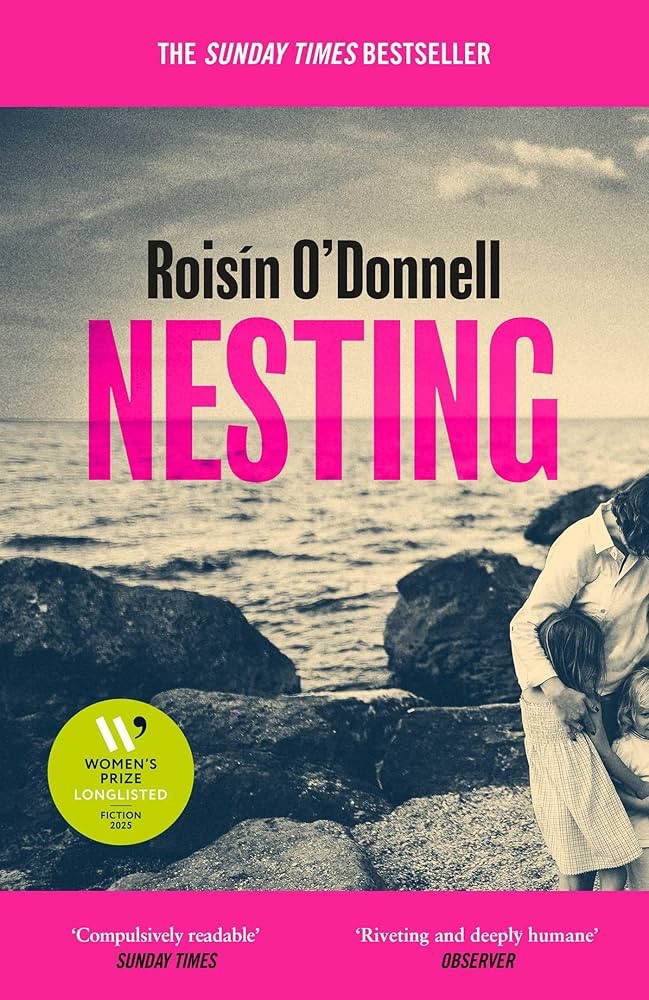
Ciara has recognised she needs to leave her husband due to his coercive control. Here in Ireland, she has no real support. Her family is Irish but live in London and despite her yearning to see her mum and sister the law states that she can’t take the children out of Ireland without the written permission of their father. Her only option is the housing office, present as homeless and hopefully get some emergency accommodation. As she meets other women in the same situation, she founds out that emergency and temporary have a very different meaning to the housing department. They offer her a temporary hotel room, but some women on the floor have lived there for a year so it’s going to be a long slog. This small double room with one bed and no view is the first place they’ve felt even remotely safe, even if they do have to go down a separate staircase so they don’t bump into tourists. Will Ciara have the strength to stay away and build a new life for herself?
This book blew me away last year. I was so engrossed in Ciara’s story that when I was at 50% of the way through I decided to sit for an afternoon and finish. No distractions like music or telly, just total silence and when I finished I sat in that silence and I could feel, bodily, every step of her emotional journey. My chest was tight, my breaths were shallow and I was holding myself so tightly I was sore. When I put it down I had to sit in silence for a while and just digest it all. It’s the story of a woman trying to leave a relationship that is tying her down and eating her alive. Everything she was before – bright, intelligent and full of life – has been worn away. Enduring her husband’s treatment, as well as having two children in four years, mean Ciara has had enough. She can see his behaviour as a pattern and despite being absolutely terrified she needs to find the strength to go.
I was in a relationship like Ciara’s for four years, vulnerable from the death of my husband, I reached for what felt like safety, but was really control. I weathered the silences, withdrawals, rages, punishments and rare moments of calm that I didn’t realise was a cycle of abuse. The gradual withdrawal of friends and family, the breakages of things most precious to me, the arguments with his family I couldn’t understand, all started to wear me down. He told me I was overweight, undesirable when I was ill, nagging, controlling, not a team player. If I tried to be more desirable he rejected me because I was making a show of myself. I tried to get involved with his business, but had to be careful not to outshine him. He liked me to organise parties and BBQs but then raged that I’d taken the limelight. He even used my disability against me, saying he wasn’t attracted to me when my MS relapsed and questioning my symptoms, my need to use a blue badge. I’d never experienced a relationship so unsettling, swooping from happiness to despair in the space of a few hours. He kept telling me this is what a long term relationship was like, luckily I knew different. Then he did something that, if I accepted it, would have separated me from my family and left me utterly alone and exactly where he wanted me. Thankfully I had enough strength and family support to leave. I’m telling you this so you can understand how this book had such an emotional effect on me. When you’ve gone through an experience of abuse and coercive control it’s so hard to explain because like my disability it can’t be seen. The unexplained injuries and bruises of physical abuse are their own testament, but how do you describe being terrified of someone who doesn’t physically leave any sign of their abuse? When someone articulates your experience in this way, you feel seen and accepted. Ciara’s experience did that for me and I can’t thank Roisin O’Donnell enough for that.
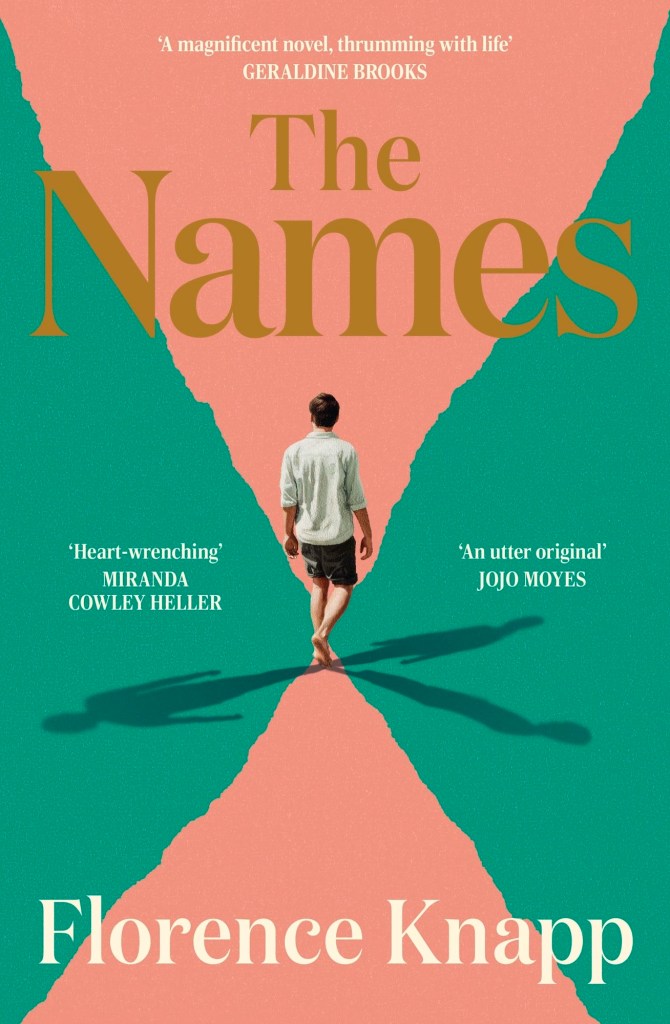
In 1987 Cora is going to register the birth of her baby boy. His name has been settled on for some time. Cora’s husband has chosen his own name for his son, Gordon. But it wouldn’t be Cora’s choice. Cora’s choice would be something that doesn’t tie him so obviously to his father. She thinks Julian would suit him. Little sister Maia looks in the pram at her brother and decides he looks like a he should be called Bear. All of these options swirl around in Cora’s head. In this moment, Cora has the power to make a choice and it’s done. It can’t be changed. What would happen if she went with Julian or even Bear? In the short term Gordon would be furious. How bad would it be this time? Long term, would it change her baby’s character or path in life? That’s exactly what Florence Knapp does. The book splits into three narratives and we discover what happens to this whole family, depending on Cora’s baby boy’s name. We then move on seven years and meet Bear, a name that proves to be a catalyst for change. Or we meet Cora’s choice, Julian – the choice she hoped would break him free from domineering generations of Gordons. Although, what if he is called Gordon? Brought up by a cruel father to continue in the same mould perhaps? Or he might just break free from the shackles of his name. Each life is sparked by this one decision and it isn’t just Cora’s son’s story. This is the life of the whole family with all its ups and downs. It’s about how trauma shapes lives and whether love brings healing and hope to every version of who we are.
One of our family narratives is that mum wanted to call me Little Green after the Joni Mitchell song. Mum is definitely a hippy and Dad is definitely not. My whole life I’ve said ‘thank goodness for Dad’, as I ended up with Hayley Marsha Ann which felt unusual enough. However, when I read the lyrics of the Joni Mitchell song, it was just so beautiful. Written for a child she had when she was very young. She felt she was too young to be a mum and gave her up for adoption. The song is so full of the hopes a mother would have for their daughter:
“Just a little Green
Like thе color when the spring is born
There’ll be crocuses to bring to school tomorrow
Just a little Green
Like the nights when the Northern lights perform
There’ll be icicles and birthday clothes
And sometimes there’ll be sorrow.”
The book made me wonder whether I’d be a different person now had I been Little Green. Would I have been more confident? Perhaps I’d have been more comfortable in my creativity. Might I have written my book by now? How could I have failed with a name imbued with such hope? Each of the book’s three arcs has its share of joy and heartache as Cora’s potential children cope with the aftermath of that day in 1987. For Gordon the legacy of his father is perhaps the most damaging as Cora feared. Growing up in his father’s presence means he could pass on the misogyny passed down through all the Gordons in his ancestry. It damages his relationship with his mother as he can be used as a tool for his father to oppress Cora further or to spy on her behaviour. It will also affect his own relationships with women, both his sister and potential partners – his teenage crush on Lily becomes something that’s very hard to read, but it’s right to include it. The author depicts inter-generational trauma and how it can damage the next generation in different ways. Abusers can’t always break patterns and sometimes I was compelled to read on in sheer hope. Each narrative has its moments of emotion where you have to look up from the book and breathe for a moment. Just to take it in. However, one narrative broke me. I was reading quietly in the same room as my husband and I actually responded out loud. He had to give me a cuddle because I did have tears coming and I’m astonished by the writer’s ability to absorb to that degree. To make words into a flesh and blood person I can shed tears over and another who has the potential to become a monster.
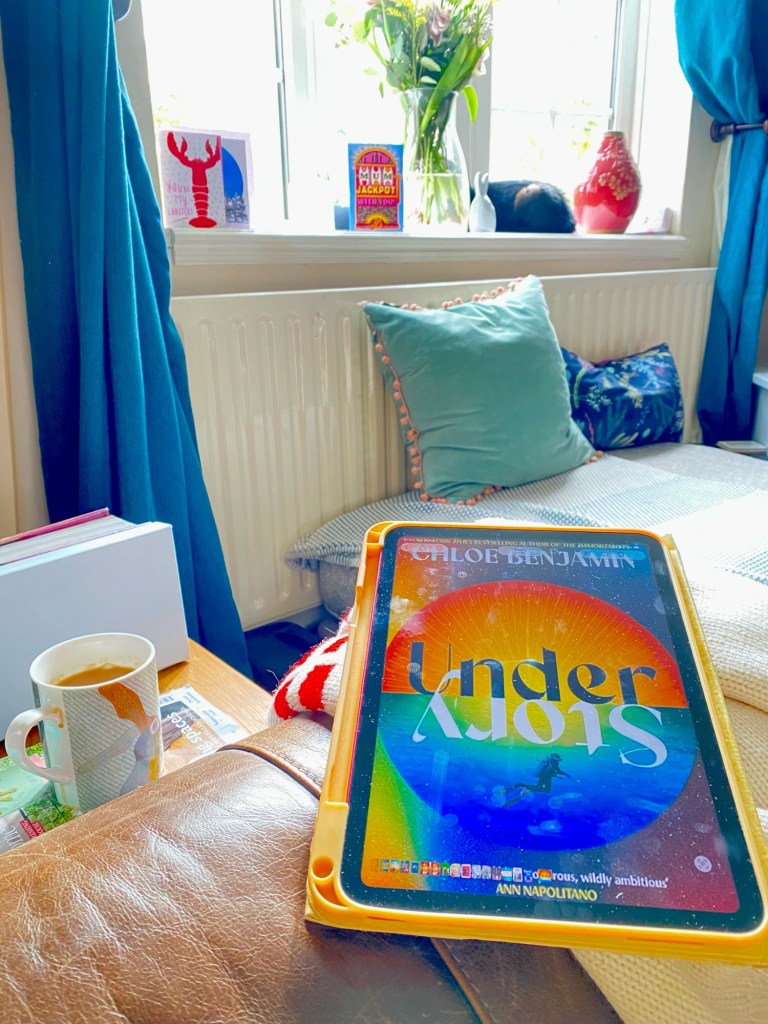
At an isolated research station in Antarctica, biologist Laurel Salter washes dishes for a living ten hours a day, six days a week. She tells no one why she left her career, or why her marriage ended.
But even in this remote outpost, Laurel can’t outrun her past. When a strange light appears across the ice and draws a group of physicists to McMurdo, her former husband, Eli, won’t be far behind.
Laurel is captivated by the Arc: its surreal glow; the way it seems almost alive. And though Eli is reluctant to test her wildest theory, Laurel is convinced that the Arc leads down a rabbit hole, and into a world they can barely imagine. Can she persuade him to risk everything to fix the burden that hangs between them – to turn back the clock and live their story a second time?
And this time, live it differently.
Once read, never forgotten, Under Story is a genre-defying exploration of the promise of this life, what might lie beyond it, and how far we would go for more time with the people we love.
I can’t reveal too much about this one as it’s not published yet but I am constantly praising it because it’s the most extraordinary book I’ve read in years. I was quite simply blown away by this complex and beautiful story of science, loss and second chances. Our heroine Laurel is a scientist, studying fungus and how it grows but for some reason that isn’t clear at first, she’s on a research station in the Antarctic, away from her former husband Eli and without any fungus in sight. When she develops a fascination in the Arc that appears she thinks about its significance. When she becomes aware there is a matching basin underneath the water, her imagination is fired. Could this possibly be a portal? A gateway to a different world? She knows Eli won’t be far behind because she remembers his theory of the ‘duoverse’, the idea that at the moment of the big bang time and space was formed in two directions: our universe, the planets and the development of the world we know and in the other direction it’s complete opposite. I am not a scientist, in fact I barely have GCSE Biology, so I wasn’t aware of any background to this idea so could drift with it and enjoy two incredible minds exploring ideas.
Our characters are fascinating, Eli and Laurel are a couple who were made for each other but their relationship is real and particularly devastating events crash into their lives but I never doubted their love for each other. It’s fascinating to watch their characters face the concept of the duoverse, not just whether it is a portal, but if it is what will their relationship look like there and will going backwards fix whatever tore them apart. I felt both were analytical and might even appear cold at times, but in the moments of heightened emotion we really see who these characters are and the deep wells of love they hold. Every world the author presents to us feels absolutely real even though it’s impossible. I was on tenterhooks wondering about the duoverse under the ice and if Lauren is right whether they’ll ever be able to return? I found myself wondering how this world would look as time scrolled backwards. I was genuinely scared for them but also full of admiration for their bravery. The mirroring is so cleverly done, showing how life always comes full circle and we’re often helpless at the end and the beginning, if we’re lucky enough to lead a full life. It might seem like science has sent them on this potential journey, but it isn’t. The totally unscientific emotion of love is what pushes them on, but also guilt, hope and desperation. Loss is a huge theme in the novel, something that always hits me in the heart due to my own losses: losing my late husband and three pregnancies I was deeply moved by how the author dealt with loss across the novel and how the scientific concept of a duoverse changes this experience. This novel was moving, profound, invigorating, deeply intelligent and so full of life. I kept thinking about the symbols of the cover, the circle and the tree, the same under the ground as they are over it. As Laurel observes:
“A line implies before and after; a circle says And then, and then…”

