Posted in Netgalley

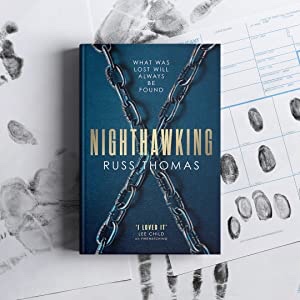
Nighthawking by Russ Thomas

Sheffield’s beautiful Botanical Gardens – an oasis of peace in a world filled with sorrow, confusion and pain. And then, one morning, a body is found in the Gardens. A young woman, dead from a stab wound, buried in a quiet corner. Police quickly determine that the body’s been there for months. It would have gone undiscovered for years – but someone just sneaked into the Gardens and dug it up.

Who is the victim? Who killed her and hid her body? Who dug her up? And who left a macabre marker on the body?

In his quest to find her murderer, DS Adam Tyler will find himself drawn into the secretive world of nighthawkers: treasure-hunters who operate under cover of darkness, seeking the lost and valuable . . . and willing to kill to keep what they find.

I live not too far from Sheffield and it’s a great city. As a family we’ve often popped on the train for a theatre matinee at The Crucible or The Lyceum. It’s my main gig venue too and in my younger days the City Hall and The Leadmill were regular haunts. I like the buzz of the city, the friendliness of the people and the chance to grab a bit of culture so close to home. So, when I was offered a proof of Russ Thomas’s new novel Nighthawking I jumped at the chance to read crime fiction based in the city. I hadn’t read his first Adam Tyler novel, so wasn’t sure what to expect, but I loved being shown this darker, criminal, underbelly of one of my favourite cities. There was a familiarity to the term ‘nighthawking’ too, because I’d recently read Elly Griffith’s latest Ruth Galloway novel The Nighthawks. The term refers to the practice of stealing archaeological artefacts, usually found by metal detector, under the cover of night. As someone who lives in a very rural area, I must admit I was a little creeped out by the concept of groups of men stumbling about in muddy fields in the dark. The archaeological aspect is at the centre of DS Tyler’s latest murder case. As the lead of the CCRU team, he selects cold cases for investigation. However, this case is reopened because the body of a young Chinese student is found buried within the Botanical Gardens. Curiously, she is found with two Roman coins over her eyes. Once she is identified as missing Sheffield University student Li Qiang – known as Chi- DS Taylor is tasked with finding her killer by reviewing the original missing person’s case closed months ago, just two weeks after her disappearance. At his side is DC Mina Rabbanni, a one woman powerhouse of intuition and initiative, but not above taking risks when it might lead to the truth.

In the background are a fascinating mix of possible suspects, from Chi’s own family, to other workers at the gardens, to university contacts and whoever had access to the very rare Roman coins found with her body. Interestingly, one man is both a volunteer at the gardens, but is also part of an amateur metal detecting group. The group’s leader encourages the detectorists in good practice, but a small group have been out detecting late at night and have stumbled on the find of a lifetime. A cache of gold Roman coins, potentially worth six figures if they could sell them on. However, usual practice is for the find to be declared, then the landowner would be due a share of any profits. The men decide to sell, but where would they find someone with the right contacts, knowledge of the black market, and who they could trust? The men split the coins for safekeeping, until they can find a way forward, so how did two of them end up buried with Chi. The team’s digging into Chi’s life uncovers some interesting potential leads. Her sister Juju lives in the city, with a new baby and her fiancé Rob. Ju is grief stricken by her death when they visit to inform her, but her fiancé had been in a relationship with Chi too, suggesting some animosity or tension between the sisters. I was keeping my eye on the fiancé too, because he seemed to pop up far too often and wasn’t always giving the full story. Chi had a complicated love life, including several sexual relationships, but no permanent partner. Also far from the model student, she seemed to be struggling at the university in her study of orchids, but yet religiously volunteered with the Botanic Gardens, suggesting a keen interest. Add to this a father who’s a Chinese diplomat and the pressures start to build.

I enjoyed that Tyler also had a lot going on in his personal life and seemed distracted, much to the concern of DI Jordan, his superior. CCRU is under scrutiny by Chief Constable Stevens – known as the Eel behind his back – and is in the firing line as cutbacks threaten the force. Tyler is still quietly investigating the apparent suicide of his father, and wonders if a local gangster might hold the key. There’s also his own brother’s disappearance weighing heavy on his mind. He’s stuffing up his relationship with Paul, who feels he simply can’t get his attention, even to tell him their relationship is over. Added to this Tyler takes a homeless teenager under his wing and goes out of his way to help him get a roof over his head. Tyler keeps his emotions and worries to himself and isn’t really one to share, but with everything bottled up is his eye on the case as much as it should be? Mina is the stand out character for me, so full of life and enthusiasm for her job, she leaps off the page. With her superior officer often AWOL, she gets her teeth into this case and won’t let go. Her intuition is telling her there’s something wrong with the original missing person’s case. There are barely any notes in the file, normal checks weren’t carried out and many people were not even interviewed. The original investigating officer is on long-term sick leave, but Mina has to ask the question; why was it assumed Chi had run off with a secret boyfriend and with what evidence? It looks like they simply didn’t care, but Mina suspects there may be more to this than a single officer not doing her job.

Somehow, Thomas weaves all these disparate threads and characters together beautifully. Drip feeding the reader information a little at a time and dropping the odd red herring along the way. The pace was perfect, even the minor characters felt interesting and fully rounded ( the new pathologist, Emma, is a real highlight) I would never have guessed what was going on or who was behind the murder, so it was a surprise. I thought Thomas was so clever in keeping those longer narratives bubbling along underneath the surface of the primary case. Tyler’s unexpected meeting with an old gangster – the Ronnie Kray of 1960’s Sheffield – moves the story of his father’s death along a little, ready for the next book. The hints at Mina’s background and it’s possible clash with her work as a police officer is touched upon, but I would be interested to see how that develops. I would also love to see more of her double act with Emma the pathologist. Then there’s the politics of policing, the potential fireworks over Mina’s findings and CCRU’s future going forward. Thomas took me to familiar places but placed them in a completely different light. He showed me the difference between a city as I would see it and as a police officer sees it, and that gap in perception is often what makes personal relationships so difficult. I’m really looking forward to getting to know Tyler better and to enjoying more of such well-paced crime fiction; rich in character, setting and storyline.

Published by Simon and Schuster 29th April 2021.

Meet The Author

RUSS THOMAS was born in Essex, raised in Berkshire and now lives in Sheffield. After a few ‘proper’ jobs (among them: pot-washer, optician’s receptionist, supermarket warehouse operative, call-centre telephonist, and storage salesman) he discovered the joys of bookselling, where he could talk to people about books all day. Firewatching is his debut novel.

Posted in Random Things Tours

The April Dead by Alan Parks.

NO ONE WILL FORGET . . .

In a grimy flat in Glasgow, a homemade bomb explodes, leaving few remains to identify its maker.

Detective Harry McCoy knows in his gut that there’ll be more to follow. The hunt for a missing sailor from the local US naval base leads him to the secretive group behind the bomb, and their disturbing, dominating leader.

On top of that, McCoy thinks he’s doing an old friend a favour when he passes on a warning, but instead he’s pulled into a vicious gang feud. And in the meantime, there’s word another bigger explosion is coming Glasgow’s way – so if the city is to survive, it’ll take everything McCoy’s got . .

I was lucky enough to be on the blog tour for the third book in Alan Parks’s Harry McCoy series, so it was a real treat to be able to read this one straight away, back to back. This is real Sottish Noir at its best as we follow a new case for Harry, in the crime ridden streets of 1970s Glasgow. I visit Glasgow a lot, and love its galleries, architecture and museums but this isn’t touristy, post-City of Culture, Glasgow. This city is grimy and dangerous, plagued by violence from criminal and sectarian gangs. Harry grew up in these rough, tenement areas of the city and it’s where his friendship with Steve Cooper started; back in their childhoods way before Harry became a police officer, and Stevie went in a very different direction. Harry’s loyalty to his old friend, means that he’s there at the prison gates when Steve gets out after a six-month stretch inside. Steve’s position as the boss of a criminal enterprise means he has to pick up where he left off – looking for whoever betrayed him. Loyalty is vital to an organisation like Steve’s and he won’t rest till he knows where the leak is. No matter how much he still feels like the big crime boss he always was, things have changed. Harry drops him at his old council flat knowing that even his own loyalty may be called into question.

The case Harry investigates is one of a bombing, not that unusual in the 1970s as the sectarian troubles in Ireland spread over to the mainland. However, the IRA’s targets are usually more illustrious than a flat in Woodlands. The only casualty seems to be the bomber with his remains scattered around the property. This is usually a job for Special Branch, so Harry is shocked to find it falls to him, and his sleep deprived colleague Wattie, to investigate. Wattie has become a father and is an easy target for DCI Murray. Murray thinks Wattie isn’t up to the job and Wattie begs McCoy for support, especially when the DCI piles a murder investigation on top of his other work. To make things worse for Harry, the prime suspect in the murder is Steve Cooper. Harry is well and truly in the middle, trying to keep the peace and his loyalty to many different people at once. His main concern is that there will be a bigger bomb, a more public target, and a long list of casualties. When this happens, Harry finds his loyalties called into question again, this time from a Special Branch officer who thinks McCoy may have connections to the IRA.

This investigation will lead Harry into the past, and a history of British military atrocities committed as the empire collapsed and beyond. The bomber follows an old army leader with murderous loyalty, and Harry stumbles across terrible hidden truths. The dark, atmospheric house in the country will stay with me, it’s terrible secrets never known until now as Harry uncovers evidence of torture and killing. Have these horrible acts ended though? Or is someone still carrying out killings in this terrible place? As if Harry doesn’t have enough to do, he’s also charged with finding a missing son of an ex- naval captain. Donnie Stewart was based in Scotland following in his father’s footsteps in the navy, but now he’s gone AWOL. His father travels to Scotland from retirement in America, keeping the pressure on Harry to leave no stone unturned looking for Donnie.

There is so much going on here, and so many loose ends to chase. However, one of the things I love about this series is that the author doesn’t just focus on the plot. He puts the characters and the intricacies of their relationships front and centre too. The relationship between Steve and McCoy is particularly interesting, especially in this instalment where pressure is placed on them both. It’s very interesting to see how Harry balances his job upholding the law, with his loyalty to his friend. Steve drags him into the fight with another crime boss, trying to use Steve’s recent time in prison as a chance to muscle in on his patch. This stretches Harry to his limits and place some edge into their relationship. Yet there is still that sense of a long held friendship that allows some black humour to creep in, even when the stakes are high. McCoy has a similar rapport with his colleague Wattie, but also some sensitivity too. He empathises with Wattie’s position as a new dad, and shows his concern. This is a sensitivity that spills over into his dealings with Donnie Stewart’s father too. I had the sense this wasn’t just being a good police officer, it was a softer side to Harry that maybe had something to do with getting older. What I loved most though is the author’s love of the wonderful city of Glasgow, in all its dark and dirty 1970s glory. He highlights the social injustices of the city, and the wry humour of its people. I would highly recommend this series to anyone who loves crime fiction and I look forward to May in the series.

Check out the other bloggers on the tour and their thoughts on The April Dead.

Meet The Author

Before beginning his writing career, Alan Parks was Creative Director at London Records and Warner Music, where he marketed and managed artists including All Saints, New Order, The Streets, Gnarls Barkley, and Cee Lo Green. His love of music, musician lore, and even the industry, comes through in his prize-winning mysteries, which are saturated with the atmosphere of the 1970s music scene, grubby and drug-addled as it often was. Parks’ debut novel, Bloody January, propelled him onto the international literary crime fiction circuit and won him praise, prizes, and success with readers. The second book in the Harry McCoy series, February’s Son, was a finalist for a MWA Edgar Award. Parks was born in Scotland, earned an M.A. in Moral Philosophy from the University of Glasgow, and still lives and works in the city he so vividly depicts in his Harry McCoy thrillers.

Posted in Damp Pebbles Tour

A Mirror Murder by Helen Hollick.

Today, as part of the Damp Pebbles blog tour, I’m sharing an extract from A Mirror Murder by Helen Hollick.

CHAPTER ONE

Life After School

Murder, when I was a naïve sixteen-year-old, was very firmly in my uncle and guardian, DCI Toby Christopher’s domain, not mine. But two years after leaving school, in the summer of 1971, a brutal murder was to change my life. For a second time.

    It is not the amount of blood pooling over the black and white linoleum, nor its copper-tang smell that clings, these many years later, to my mind or occasionally haunts a restless dream. The other smells are also there – but I’ll not dwell on those for the sake of the victim’s dignity. It is the hollow emptiness of the house that I remember. That stilled quietness, as if the place was suspended on pause, holding its breath – waiting. Waiting for the lonely coldness of death to be discovered, for the stunned silence to be disturbed by those who, by necessity, must intrude…

* * *

As a shy schoolgirl, I knew little of the world, my priority being to not make a fool of myself. Insecurities matter when you are an awkward teenager about to be let loose from the sanctimonious boredom of a girls’ school into the unknown of the grown-up world. My careers talk, in that final term of 1969, did little to boost my fragile confidence:

“What do you want to do when you leave school, January?” 

I had sat, staring blankly at the two prim schoolmistresses. No one except those in ‘authority’, or girls who didn’t like me (the feeling was mutual), called me ‘January’. To my family and friends I was Jan. Jan Christopher. I frequently cursed the day I was born because that was why I had been lumbered with such a stupid Christian name. My identical twin and I came several weeks too early, on the last day of January 1953, so we were named for the months we were conceived and born. I got January because I arrived first, my twin got June. I guess it could have been worse: hard to shorten February into a respectable-sounding nickname. 

June had died when we were three years old. I can only remember hearing incessant crying in a darkened room. She – we – had been ill. I don’t know what with, we never talked about it. I survived. She didn’t.

So, there I was, a gawky lass who hid behind her curtain of long, non-descript brown hair, trying my best not to be noticed by the girls who had confidence (the bullies), being asked by two teachers what I wanted to do with my life after I finally escaped the long, tortuous, horrid, lonely, hell years at school. (I’m paraphrasing.) I had no idea. My only ambition was to write. I was always writing, but real authors, I thought, were clever, intellectual people who went to university and got degrees and things. I had three minor exam credits: even obtaining those had been a miracle.

Reading was my other passion. Characters in books were more reliable than so-called friends who sashayed arm-in-arm with you around the playground one day, then stabbed you in the back the next. I preferred to retreat into fictional worlds. Even the ‘baddies’ of fiction were better friends than the spiteful two-faced trash of the ‘frilly-knicker brigade’.

As for that unhelpful careers talk: “I want to write,” I had mumbled to the two teachers.

“But you like reading, don’t you, January? I think a library is the best place for you.”

Which is why I found myself shelving books at the Branch Library in South Chingford, a north London suburb on the edge of Essex, where I was born and raised. And two years after leaving school I was still there, shelving books at the same library. (Although I had soon discovered not to be quite so quick about it.)

“Old Mrs Norris is in again, I see.” I said as I gave the empty book trolley a shove with my hip to roll it into its parking bay behind the counter. “I wonder what coupons she’ll cut from the paper today?”

Mrs Norris was a regular. She tottered in on the dot of a quarter past six every evening that we were open, a faded pink beret perched atop her grey hair, a red, string shopping bag always containing a small packet of McVitie’s digestive biscuits in her left hand, and an old black, plastic handbag, that was meant to look like leather, dangling from the crook of her right elbow. She looked about ninety, but from her library registration card, was only in her early seventies. She would heave her way through the wood and glass entrance door – a wretched thing on the inside of a small, square, lobby. Even us younger ones had a job to push that monster open and get through without it snapping at our heels as it swung back.

The old dear would smile at us, wave hello, and shuffle off to the carpeted reading area over in the upper left-hand corner of the single storey library. There, she would settle herself on one of the comfortable armchairs, nibble at her biscuits, (Caretaker Bert always moaned, because they left crumbs everywhere), and peruse the newspapers. She always left again at five minutes to eight, just before closing. The only thing different to when she had arrived, the packet of biscuits would be empty and all the supermarket discount food coupons would be neatly cut from the tabloid papers.

We knew that Mrs Norris was pilfering the coupons, but did it matter? She was obviously poor, and came into the library each evening to eat her biscuits in the warm, using our lighting and heating rather than her own. 

Approaching closing time was often a strain, depending on how busy we were. Inevitably, someone rushed in during the last ten minutes, determined to choose the right book to read, and taking ages about it. 

I glanced again at the clock. Was it moving? It didn’t look like it! 

Seven-forty. I heaved a few more returned books on to the trolley and looked up to see Mrs Norris leaving in a flustered hurry. How odd. She never left early. 

“Are you all right?” I called, but I don’t think she heard, because she merely muttered, “Oh dear, oh dear,” as she hauled her way through the equally as obnoxious ‘Out’ door. I noticed that she still had the packet of biscuits in her bag, along with the entire Daily Mirror newspaper, which annoyed me a little as it had an article about one of the ex-Beatles, which I’d wanted to read all day, but hadn’t found the chance.

It was Friday evening, looked like it was about to pour with rain, and I had a twenty-five-minute walk home, or a wait, equally as long, for the bus. But tomorrow was Saturday, my one-in-three weekends off. A whole two days to myself. 

Or so I thought.

A Mirror Murder © Helen Hollick

Helen Hollick.
Posted in Random Things Tours

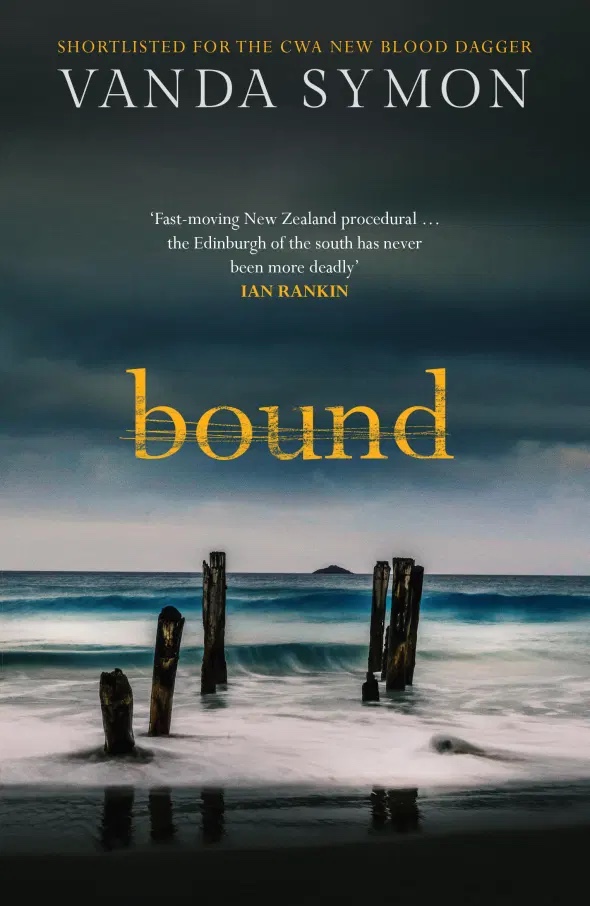
Bound by Vanda Symon.

When the official investigation into the murder of a respectable local businessman fails to add up, and personal problems start to play havoc with her state of mind, New Zealand’s favourite young detective Sam Shephard turns vigilante..

The New Zealand city of Dunedin is rocked when a wealthy and apparently respectable businessman is murdered in his luxurious home while his wife is bound and gagged, and forced to watch. But when Detective Sam Shephard and her team start investigating the case, they discover that the victim had links with some dubious characters.

The case seems cut and dried, but Sam has other ideas. Weighed down by her dad’s terminal cancer diagnosis, and by complications in her relationship with Paul, she needs a distraction, and launches her own investigation.

And when another murder throws the official case into chaos, it’s up to Sam to prove that the killer is someone no one could ever suspect.

I really enjoyed this crime novel with an interesting lead character, a case with so many twists and turns, and an array of background issues to get my teeth into. Our detective Sam Shephard is a strong woman, adept at her job and extremely dedicated too. She lives with a friend, but is in a relationship with Paul, another detective in the squad. When they get the job investigating the murder of reputable local businessman John Henderson, they soon find a link to a previous case. Two well-known criminals are implicated in the brutal shooting, both of them suspected in the murder of their fellow officer Reihana, and attempted murder of Smithy, who is still struggling physically despite being back at work. They need to find the link between regular business and the less ethically sound dealings that has brought the business into the criminal underworld. However, they also need to make sure that all of their dealings with the case, including forensics and other evidence collecting, are squeaky clean. Smithy, and to some extent Sam, will have to be seen to take a back seat on this one. Besides, once the link is found, between the gangsters and Henderson, it should be cut and dried, but is it? Why did they leave his wife Jill bound to a chair, alive? It is possible that someone else in Henderson’s life have reason to kill him?

Sam finds herself impressed by their teenage son, who has had the presence of mind to film the crime scene on his phone before freeing his mother. She creates a good rapport with him and manages to get important evidence about their potential suspects and their business dealings with his father. Sam works with a lot of integrity and will not accept the easy answer, until she’s uncovered everything. She would love to find their suspects guilty, but has her own idea about the motive for this crime that goes against what they know so far. This puts her in contention with the DI and he is not happy, they’ve been butting heads a lot and he’s not going to back her theory. Sam may have to go it alone here and do enough to prove her theory, without him.

I really enjoyed Symon’s mix of the professional and personal in Sam’s life, it felt like a good balance between the two. Sam is trying to keep her relationship with Paul on the down low, but circumstances may be taking that decision out of her control. There was also an interesting family dynamic, as Sam’s father is brought to the hospital and will be discharged to a hospice. These are possibly the final weeks of his life, but it’s clear that her unpleasant boss DI Johns will be less than sympathetic. Even sending her out of state on an errand. Her Mum seems less than impressed with her dedication to her job. There’s clearly history between Sam and her Mum, who accuses her of not being there for her Dad. Sam protests that she will, but her Mum rejects her promise. Sam manages not to snap back knowing that her Mum is angry and scared about her husband and the future, it how long will she able to stay silent. The moment when she sits quietly with her father and whispers to him the one secret she hasn’t told anyone, was so moving.

The pace of the novel is great – one of those where the short chapters create that ‘I can fit in one more chapter before bed’ feeling. Developments come at us thick and fast, both in the case and in her personal life. What I loved is Sam’s absolute dedication to her job, and determination to uphold New Zealand’s laws. Often when female characters have struggles in their personal life, things start to fall apart at work. Not so for Sam, she is good at separating her work life from home life, despite her mother’s digs about her loyalties. I felt I was getting a fully rounded character, not the usual stereotype about strong, working, women who have a messy love life, divorces, a drinking habit. Although we get personal with her, I came out of the novel admiring a good detective, with a full professional and personal life. The fact that this stood out to me is worrying and says a lot about how professional women are still portrayed in fiction. The story kept my attention because it was full of small surprises, such as Henderson’s assistant Astrid, whose previous CV was unexpected. This led me to expect bigger twists and I kept on reading. The author left us a few loose ends too, and I’m a sucker for the unresolved bits. Plus now I’m already hooked into the next book!

Meet The Author

Vanda Symon is a crime writer, TV presenter and radio host from Dunedin, New Zealand, and the chair of the Otago Southland branch of the New Zealand Society of Authors. The Sam Shephard series has climbed to number one on the New Zealand bestseller list, and also been shortlisted for the Ngaio Marsh Award for best crime novel. She currently lives in Dunedin, with her husband and two sons. –This text refers to an alternate kindle_edition edition.

Posted in Publisher Proof

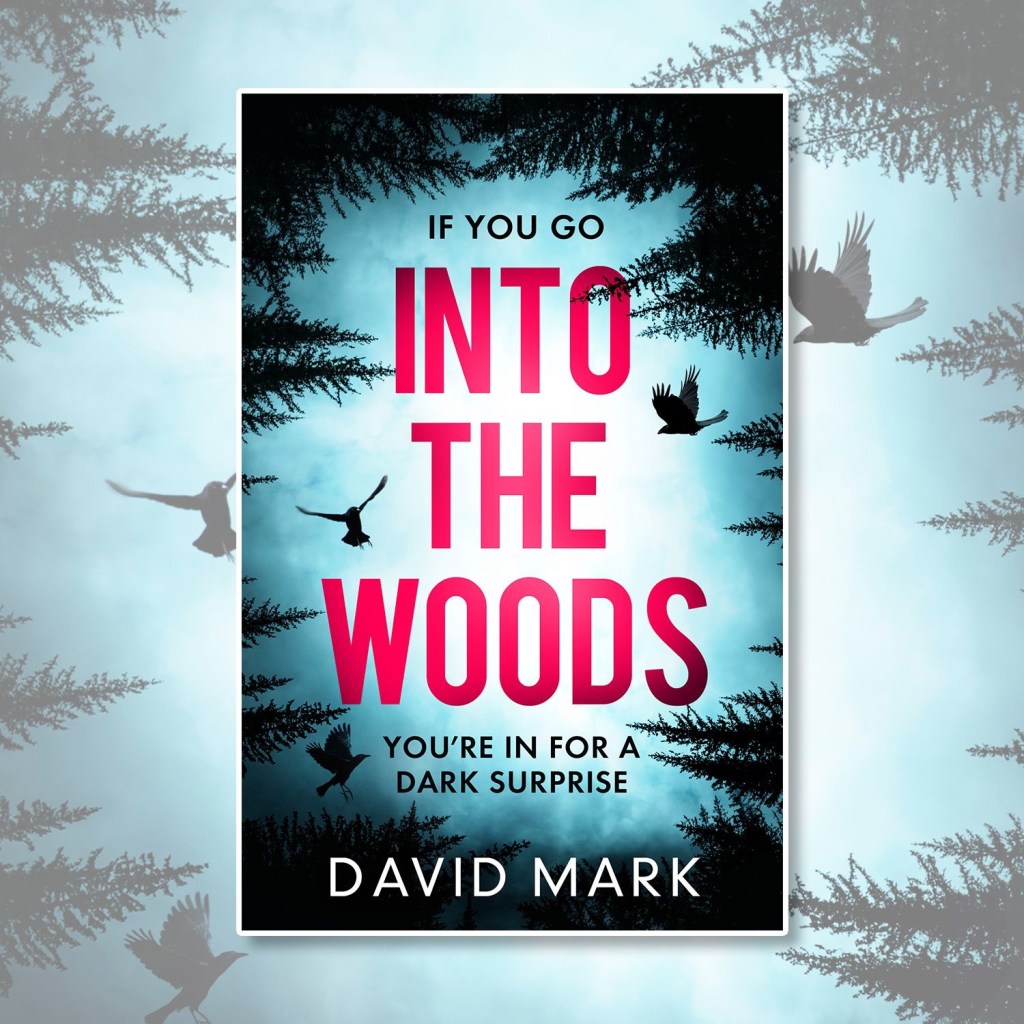
Into The Woods by David Marks.

The Wasdale Valley is the beautiful setting for this unusual crime novel from David Marks, the first in a trilogy set in the Lakes. It is unusual, mainly in its use of language and the mix of crime, social commentary and a touch of the supernatural. My first impression as I started to read was that it reminded me of Tana French’s Dublin Murder Squad novels. The opening is almost hallucinatory as a young girl comes to consciousness:

‘There had been a drink. A cold, brown soup slopped from an earthen bowl. It had plants in. Some wormy tuber had touched her lip as she lapped at the brew like a cat with a saucer. Memory again. Music. A guitar on a strap.’

I had an almost visceral reaction to this first passage, a feeling of disgust. The girl comes to realise her consciousness is inside this meat body described as a ‘pig-fat candle’. The sentences are stilted, only growing longer as she wakes more. It sets the reader on edge because it’s synaesthesic – she can taste and feel the heavy air, see her thoughts, and experiences her body through pain and unpleasant sensations. I had to read this opening a few times to fully understand what was happening, but the horror of the earthy face rushing towards her smelling of bad meat definitely stayed with me.

This is a story of a thirty year old mystery as three girls followed a stranger into the woods and only two returned. There were local whispers of drugs, cults and strange rituals but no one really knows what happened and the two who returned remembered nothing. Their memories are shattered into pieces and thy still suffer traumatic flashbacks and hallucinations. This is just the type of story that investigative journalist Rowan Blake needs to revive his career. He has retreated to the Lake District in order to write. Whatever he unearths in the woods will have stayed buried for thirty years, but when he chooses this mystery is he prepared for the evil that awaits him? Rowan is our narrator in the present day timeline and he starts his investigations by using his local contacts, his sister Serendipity and her daughter Snowdrop. All three girls were at the same private school, the Silver Birch Academy, and there are local stories about the school’s unorthodox teaching methods. The girls are rumoured to have followed a stranger into the woods to visit a Shaman, which could explain the strange hallucinatory drink and amnesia.

Our narrator in the past is Violet, explaining her experiences in such detail with layers and layers of disturbing description. Despite Rowan being our protagonist I did find myself waiting for Violet’s chapters. I was both disgusted and fascinated in equal measure and I felt compelled to keep reading to find out what happened. Violet isn’t the easiest person to empathise with; she’s an angry, tempestuous teenager with a tendency to bully others. The fact that she’s not in the present day narrative, due to being away travelling, is a clever choice. It concentrates the reader on her teenage self, but also reinforces the tension as the reader becomes even more determined to find out her fate. Violet has reportedly been trying to come to terms with her experience of late, whereas best friend Catherine is more reticent. I didn’t feel a bond with Rowan and he too has obvious faults. He’s quite selfish, and isn’t really grateful for the help of his sister, even though she’s bailed him out before. It’s a brave thing to have two narrators without any sympathetic qualities, because it could easily turn the reader off, but here it works. As Rowan uncovers more he starts to worry about Violet. Is she really travelling or has she gone missing again?

This is not the sort of thriller you bolt your way through in an afternoon. It needs a longer time, so you can actually savour the language and the horror of what has happened here. It’s complex and black as night. It’s a reading experience that bears a second or third glance; like viewing a large painting, at first we only see the main subject, but as we look closer there is so much more to take in. Here there are quirky secondary characters to enjoy, a wonderful sense of place and very ominous weather that foreshadows Rowan’s findings. It all adds to the conclusion that nothing good happened here.

If you go into the woods, you’re in for a dark surprise….

Meet The Author

David spent more than fifteen years as a journalist, including seven years as a crime reporter with the Yorkshire Post – walking the Hull streets that would later become the setting for the Detective Sergeant Aector McAvoy novels. His writing is heavily influenced by real life and have been universally praised for their originality, authenticity and heart. Industry bible Kirkus Reviews said that ‘to call David Mark’s novels police procedurals is like calling the Mona Lisa a pretty painting’. He has been championed by such industry luminaries as Val McDermid, Peter James, Mick Herron and Martina Cole. He has written eight novels in the McAvoy series: Dark Winter, Original Skin, Sorrow Bound, Taking Pity, Dead Pretty, Cruel Mercy, Scorched Earth and Cold Bones as well as two McAvoy novellas, A Bad Death and Fire of Lies, which are available as ebooks. His first historical thriller, The Zealot’s Bones, was a Sunday Times Book of the Year. With publishers Severn House, he has written the critically-acclaimed The Mausoleum, A Rush of Blood, Borrowed Time and Suspicious Minds.

Dark Winter was selected for the Harrogate New Blood panel (where he was Reader in Residence) and was a Richard & Judy pick and a Sunday Times bestseller. Dead Pretty was long-listed for the Crime Writers Association Gold Dagger in 2016, as was Cold Bones in 2019. David’s Radio 4 drama, A Marriage of Inconvenience, aired last year. His first novel was adapted for the stage and was twice a sell-out smash in Hull. He has also written for the stage and has contributed articles and reviews to several national and international publications. He is a regular performer at literary festivals and is a sought-after public speaker. He also teaches creative writing.

Posted in Uncategorized

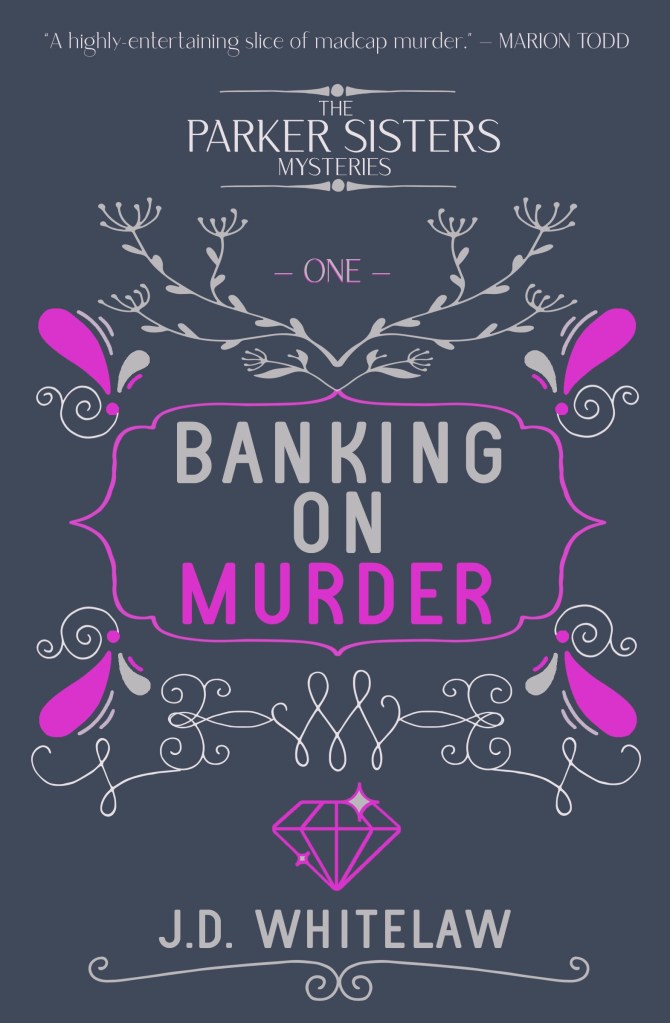
Banking on Murder by J.D.Whitelaw.

Publisher: Red Dog Press (29 Nov. 2020). ISBN: 978-1913331962

Well this book was a great surprise. I absolutely loved it. Three quirky sisters, a detective agency, a troublesome client and the backdrop of Glasgow just to finish it off. What’s not to love? I read it in two days, because it was just so much fun I couldn’t put it down. Now all I need is for someone to turn it into a Sunday evening series starring Kelly McDonald, Laura Fraser and Jessie Buckley and I’ll be content.

Martha is the eldest sister, slightly frumpy and very much a mother figure for her two younger sisters, Helen and Geri. She is dependable and the real business-like sister who keeps the agency ticking over. Helen is more of a mystery, but certainly has brains as the academic of the outfit. It turns out she’s also a very able dancer when she’s had enough to drink. Geri brings youth knowledge to the team as she’s the student of the trio. She may lurch in like she’s had no sleep, but she’s very sharp and knows how to use social media to the agency’s advantage. They’ve been requested at the home of Tracey Coulthard, who lives in a very smart home in a wealthy suburb of Glasgow. They arrive to find a maid, May, who is very worried about her employer who seems to be overwrought. They can hear screams and smashes coming from the bedroom. Mrs Coulthard is in bed crying, naked from the waist up and the fact that people are in her bedroom doesn’t seem to faze her at all. She offers the sisters £20,000 to find out the truth about her husband Gordon and his ‘extracurricular’ activities. This is the Parker sister’s meat and drink, most of their work is detecting whether partners are being unfaithful. However, the level of distress from this particular client is worrying Martha particularly. What might she do if they find out something she doesn’t want to hear? Martha senses a whole lot of trouble packaged alongside that cold hard cash.

The sisters manage to get themselves invited to a party for Gordon Coulthard’s company. Helen throws herself into the fray and Geri starts getting to know Gordon’s right hand man. As usual though, the sister’s don’t investigate quietly. Helen proceeds to get blind drunk and get a little over familiar with guests. In trying to find out more about Gordon, Martha ends up in a brawl with a statuesque blonde called Estelle who seems to be claiming that Gordon is her fiancé. She does indeed have a huge diamond on her finger and Martha is horrified, especially when Estelle starts dragging her round by her hair. As she fends her off, Martha tries to fathom why he would get engaged when he’s still married and be so open about it? This will mean the girls having to break the news to Tracey, setting in motion a chain of events that will end in murder.

I loved how the sisters worked in conflict, but somehow in unison. As Martha feels responsible for Tracey and what’s happened, Helen and Geri point out that they’ve done what they were paid for and can withdraw from what is becoming a media circus. Martha struggles a bit with the physical aspects of the job, leading to some amusingly clumsy moments. When chasing a suspect she falls through the fence they’ve just jumped over and when listening at a skylight she manages to fall straight through! More seriously, she runs up several flights of stairs to Coulthard’s penthouse and ends up in hospital with chest pain. I loved how Martha berates Geri for being ‘friends’ with Gordon’s colleague, but has to take it back when she realises how thoroughly she’s been stalking him on social media. I also enjoyed the introduction of Detective Pope, a stern Glasgow cop whose wheezing can be heard from the next room. Despite the asthma, she’s a tough customer and seems to be the sensible figure, there as a counterpoint to the sister’s madcap romp through this case. Yet, I could see an affinity growing between them, particularly Pope and Martha whose scenes are filled with sarcasm and wit. I’ll be interested to see how this develops.

Despite a few twists and turns, I did solve the case before the end, but I’m not sure it was meant to be a complex puzzle. This was an introduction to the sisters and their dynamic, and I will certainly be looking forward to their next adventure. This was was a wild ride that didn’t let up as the sisters were pulled from one side of Glasgow to the other. There’s no time to breathe, with the wheezing Pope almost collapsing in their wake. There’s just enough of a sprinkle of Christmas in the background too. I think there’s much more to come from Helen, and so much more about the Parker’s lives outside the agency. I thought this was a thoroughly enjoyable read, with incredibly engaging characters and so much promise for the series to come.

Meet The Author

J.D. Whitelaw is an author, journalist and broadcaster. After working on the frontline of Scottish politics, he moved into journalism. Subjects he has covered have varied from breaking news, the arts, culture and sport to fashion, music and even radioactive waste – with everything in between. He’s also a regular reviewer and talking head on shows for the BBC. Banking on Murder is the first of three Parker sister novels. They follow his hugely successful HellCorp series. His debut in 2015 was the critically acclaimed Morbid Relations.