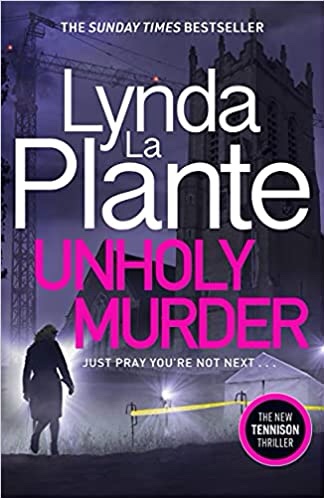
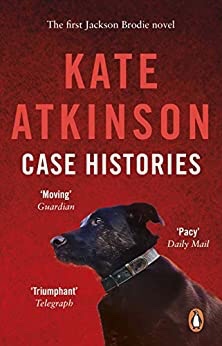
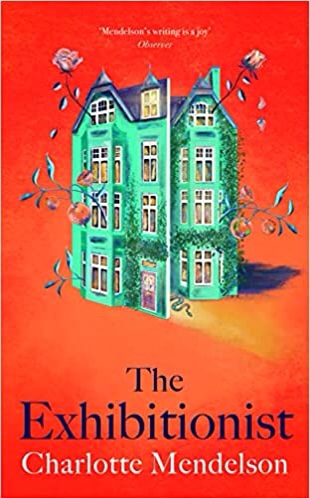
The great thing about having friends who are bloggers is that occasionally they have spare proofs lying around and are very generous in sharing them. I’m very lucky to be a member of the blogger’s group the Squad Pod Collective, they’re a great group of ladies and we all support each other so much. There are often spare, or unwanted, proofs trundling back and forth to each other through the post. However, this time I was lucky enough to receive a bundle of spares from a blogger more local to me and I’ve been sitting on them waiting for the New Year. I planned to take a lot less blog tours and read more by choice in 2022, because I’m back at university and didn’t want to become overwhelmed. Not that I’m finding it easy, especially when the siren song of blog tour organisers drifts into my inbox almost daily. I’m taking half the tours I did last year, which averages at about one a week. The bonus is that when I’m feeling frazzled with my uni reading I can read something really escapist or more gentle to offset the tension. Luckily for me, in my friend’s big box of books, was the latest crime novel featuring one of my all-time favourite fictional characters in books and television – Jane Tennison.
Starting with the eponymous Tennison back in 2015, Unholy Murder is the seventh novel in the Prime Suspect 1973 series. As prolific as ever, Lynda La Plante is delivering one of these novels per year and I’ve found it fascinating to watch the character we’re used to watching as a Detective Inspector, starting out in uniform and learning the ropes. This novel finds Jane as DS Tennison and embroiled in the case of a body found on a building society, in a coffin. The grounds where the developer is digging foundations used to belong to a convent that burned down a couple of decades earlier. The inhabitant of the strange metal coffin is dressed modestly, and her hands are entwined with both a crucifix and a rosary. So it would seem that the victim could be a nun. Who would kill a nun? The investigation will place Jane between developers keen to restart work and get the money rolling and a secretive Catholic diocese, desperate to sweep any evidence under the carpet. Not only is she concerned about finding the killer so many years later, but will she even be able to identify her?
I remember watching Prime Suspect as a very young teenager and I really admired Tennison.She was tough, clever and able to hold her own in a room full of men. I wanted to be a professional too, as good at my job as Tennison is. I even thought of being a police officer, but when it came to it I couldn’t meet the height restriction which was 5 feet and 5 inches back in the early 1990s. I loved her ability to read people, profile them psychologically and question them until they cracked. Of course if you asked my little brother why I used to love watching PrimeSuspect he’d say because we were both bossy, but often bossy is a term used to silence ambitious women who are only giving orders. I was interested in the gender politics of the series, the way male officers would deride and try to undermine Tennison was shocking. The old boys network was working overtime, to wrong foot her and get her removed, especially if she had been made their superior. To me she was the first feminist character I’d really noticed in a lead role in a prime time tv series and i was inspired by that. She was also sexy, not afraid of asking for what she wanted in a partner. I couldn’t remember seeing a woman who was open and unapologetic in this way, even about one night stands. It was relationships she struggled with, finding that men wanted to be more important than the job. She was constantly apologising for not working regular hours, for not being available for family events and not being the little woman at home.
The great thing about these prequel novels is that we go back even further, to when a policewoman’s uniform included a matching handbag – useful for filling with stones and hitting criminals I guess. Jane is trying to make her mark, studying for her inspector’s exam and impressing the right people. The problem is that when she tries to impress she often goes off alone, takes unnecessary risks and leaves colleagues feeling that she’s holding out on them, to keep the best information to herself. Here she takes risks by befriending the parish priest and passing on a little more information than she should. She also keeps back something she’s seen because it doesn’t fit the way the investigation is heading, she wants to check it out for herself first. This puts her in considerable danger, as do her dating choices. The story of what has transpired in the old convent is harrowing, but believable and the author explores what happens when an institution cares more about it’s reputation than the truth. This should be scandalous, but seems very realistic, as is the reaction of Jane’s superior officer who has come up against the Catholic Church before. I am a Catholic and there was one detail that confused me. The nun in the coffin is Sister Melissa, but nuns would usually take saints names. I was taught by Sister Joan, Sister Anne and Sister Stephen (which at seven years old was incredibly funny). It’s a small thing, but these things jar in an otherwise well put together tale. I truly enjoyed the plot and spending time with a character I’ve known for a very long time. I would definitely recommend all of the Tennison series, for great storylines and the fascination of watching such a successful woman taking her first steps into the police force.
Meet The Author
Lynda’s latest book, Tennison, was published on 24th September 2015 and is the prequel the highly acclaimed Prime Suspect. The story charts Jane Tennison’s entry into the police force as a 22 year old Probationary Officer at Hackney Police Station in 1973.
Lynda La Plante is published in the UK by Simon & Schuster.
Lynda La Plante is published in the US by HarperCollins Publishers.
Please visit http://www.lyndalaplante.com for further information. You can also follow Lynda on Facebook and Twitter.
‘An astonishingly complex and moving literary detective story that made me sob but also snort with laughter. It’s the sort of novel you have to start rereading the minute you’ve finished it’ Guardian
In Case Histories we’re in a Cambridge that’s sweltering, during an unusually hot summer. To Jackson Brodie, former police inspector turned private investigator, the world consists of one accounting sheet – Lost on the left, Found on the right – and the two never seem to balance. Surrounded by death, intrigue and misfortune, his own life haunted by a family tragedy, Jackson attempts to unravel three disparate case histories and begins to realise that in spite of apparent diversity, everything is connected…
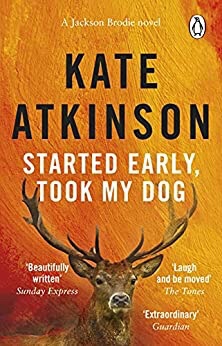
The Jackson Brodie novels were the first Kate Atkinson books I bought, one at a time as they were published. I was in love straight away. From the first novel Case Histories to her long awaited fifth in the series Big Sky, we are let into the world of this slightly world weary PI. Each time he collects cases that seem so disparate, but eventually overlap and connect. Atkinson has a unique way of blending very dark subject matter – missing persons, sex trafficking, modern slavery – with a sarcastic sense of humour and love of literature. Of course the investigations are serious and their subject matter is treated with care and diligence. However, some of the scrapes Jackson gets into and his frustrations with the women in his life are funny, acting as light relief. Atkinson has a very clever way of ending her novels without all the loose ends tied up – an issue that mentioned in a negative light in a lot of her reviews. I prefer that. Life isn’t tied up all neatly with a bow on top and I would imagine it’s quite rare when investigating crime. Often what we want to know, and rarely do, is why someone carries out a crime.
It’s maybe in an attempt to answer this question, that the author takes us deeply into the lives of all the characters involved, including their inner worlds. There’s an empathy and humanity to the writing that isn’t always present in crime fiction, in fact it does remind me a little of J.K. Rowling writing as Robert Galbraith for the Cormoran Strike series. There are critics of this style, with reviews commenting that there’s a focus on character above plot. I like that. I want to be invested in a character, otherwise I’m unmoved when things start happening to them. Atkinson also delves into areas of life that I’m interested in. Jackson has a penchant for finding life’s underdogs and more often than not, trying to rescue them. He finds those struggling after divorce, or with massive changes in life, the homeless and the destitute. They’re inbetween people who need help. It could be Jackson’s training as a police officer or his just in his DNA, but he wants to help people.
So If I’m asked what it is that grabbed me at the first novel and still hasn’t let go all these years later? I’d have to say it’s Jackson himself – and that’s before Jason Isaacs was on board for the TV series. Jackson is one of those men that could have the house burning down around him and I’d still feel safe. There’s an honour code about him, almost like a charter of correct behaviour. Yet on the other hand, there are rules he’s willing to break. He almost always gets too close to the client or a witness, showing a dedication to them that might explain his divorced state when we first meet him. There are times when he struggles to let go too, ending up with a dog to mention just one incident. If there’s a rule, such as keeping work and home separate, Jackson will break it for clients. As a result he doesn’t protect his own space, time or even safety. It is that dedication that endears him to me. I understand it, because I’m not great with boundaries myself. I read the book imagining an abrupt manner with a gruff Yorkshire accent. There’s something a bit Sean Bean in his manner. He has an undefinable something, that draws women to him.
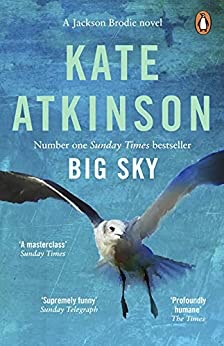
The settings are interesting too, with the second novel set during the Edinburgh Festival, the third in Devon and the fourth and fifth in his home county of Yorkshire. Jackson is settled in North Yorkshire in the final novel Big Sky, divorced again but in a routine seeing his teenage son Nathan and their shared Labrador when his ex-wife Julia allows. This is the most settled Jackson has ever been and it’s nice to see him grounded in life. We waited a long time for a continuation in the series and Atkinson didn’t disappoint. In her inimitable style she presents several, seemingly disconnected, characters with various different problems. Jackson meets a man on a cliff top that leads him to a sinister network. He gains a client who claims she’s being watched and followed, which Jackson is starting to think is a paranoid delusion, until he follows her and witnesses her children being abducted. Only Atkinson can bring these strands together, not in a tidy way, but like a rough tapestry overlapping strands to make a beautiful whole.
It was great to see returning characters, like the sparky protégée Reggie who is now a police officer investigating a paedophile ring. I was hoping for DI Louise Munro because I know she and Jackson have unfinished business and lots of chemistry. The whole tale is bookended by a personal mission; Jackson helping his daughter be a runaway bride. It’s good to see a slightly more responsible Jackson, forging relationships with both of his children and staying in one place. I would recommend this series to readers who enjoy a combination of dark secrets and crimes, a wonderfully sardonic sense of humour and characters that get under your skin. I don’t know if there will be another novel in the series, but I do love the existing stories and re-read them from time to time. Atkinson is an incredibly skilled writer and if you pick up her Jackson Brodie series you won’t be disappointed.
Meet the Author
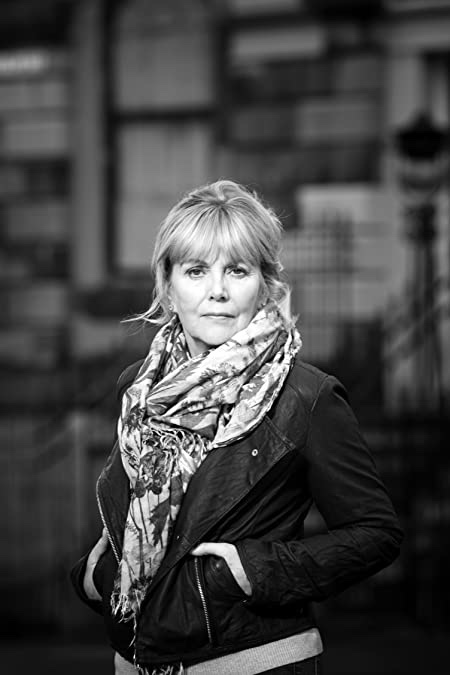
Kate Atkinson is one of the world’s foremost novelists. She won the Costa Book of the Year prize with her first novel, Behind the Scenes at the Museum. Her three critically lauded and prizewinning novels set around World War II are Life After Life, A God in Ruins (both winners of the Costa Novel Award), and Transcription. She was appointed MBE for services to literature in 2011.
Her bestselling literary crime novels featuring former detective Jackson Brodie, Case Histories, One Good Turn, When Will There Be Good News? and Started Early, Took My Dog became a BBC television series starring Jason Isaacs. Jackson Brodie returns in her new novel Big Sky.
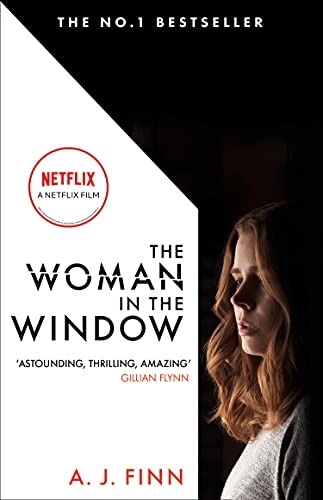
I reached to the back of the shelf for this 2018 paperback copy of The Woman in the Window. There’s a strong Rear Window vibe to this thriller, as our lead character Anna Fox, is trapped within her house, only living through the lives of her neighbours, who she watches through her binoculars. Instead Rear Window’s physical disability, she is restricted by her mental health, which has suffered a response to extreme trauma. Some unknown traumatic incident has resulted in agoraphobia and she has spent ten months inside her large New York house, like a ghost. Before this, Anna was a successful psychologist and the fact that her affliction is a mental health issue really muddies the waters here. How far can we trust what she sees and experiences? Does her training mean we trust her more, or less?
No longer living with her own husband and daughter, she becomes obsessed with the Russell family across the road. A mother, father and teenage son. She is especially interested in the son, and his mother who she meets and names Jane Russell because of her likeness to the beautiful movie star. Her world is filtered through binoculars and her only interest seems to be the black and white movies she watches religiously most evenings. Then one night, as she surveys the neighbourhood, she sees something horrifying at the Russell’s. A scream rips through the evening air and alerts Anna to the Russell’s windows and all she can do is watch in horror. She can’t go out, so rings the police. What follows has everyone questioning Anna’s judgement, including herself. As she starts to suspect someone is getting into her house, her fears increase and she continually talks to her husband and daughter to assuage her anxiety. As she does we start to wonder, where exactly are her family? Why did they leave and will they ever return?
This is one of those thrillers that I can devour in one sitting. It has an elegance and old-fashioned feel that Hitchcock would have optioned on the spot. Incidentally, there is a Netflix series that I’m now dying to watch. Anna is intriguing. I wanted to trust her, but my head was constantly full of questions. I was instantly suspicious of her charming and handsome downstairs lodger too, as well as Mr. Russell. The depiction of Anna’s panic attacks was so realistic and had me holding my breath. The severity of her symptoms, on the few occasions she does try to go beyond the front door, had me fearing the revelations about her past. The pacing was perfect, the tension never let up and I found myself taking it everywhere so I could squeeze in a few more pages whenever I got the chance. I was so impressed when I found out this was a debut, because it feels like a classic. I also made the assumption it was written by a woman, which showed up my reading prejudice about men writing women characters. In all this was an enjoyable and enthralling tale, with a nod to film noir that was very satisfying for this black and white movie lover. I can’t believe that this has been at the back of my shelf until now and I’m glad I decided to give it a go.
Meet The Author
A.J.Finn
THE WOMAN IN THE WINDOW has been sold in 43 territories around the globe. The film adaptation, starring Amy Adams, Gary Oldman, and Julianne Moore, will be released worldwide in autumn 2019. The movie directed by Joe Wright, written by Tracy Letts, and produced by Scott Rudin.
I spent a decade working in publishing in both New York and London, with a particular emphasis on thrillers and mysteries. Now I write full-time, to the relief of my former colleagues. THE WOMAN IN THE WINDOW was inspired by a range of experiences: my lifelong love affair with suspense fiction, from the Sherlock Holmes stories I devoured as a kid to the work of Patricia Highsmith, whom I studied at the graduate level at Oxford; my passion for classic cinema, especially the films of Alfred Hitchcock; and my struggles with depression and mental health. The result, I hope, is a psychological thriller in the vein of Gillian Flynn, Tana French, and Kate Atkinson, among others.
Stuff I love: reading; swimming; cooking; dogs; ice cream; travel. (Note that third semicolon. It’s crucial. I do not love cooking dogs.) I collect first-edition books and enjoy spending time with my French bulldog, Ike.
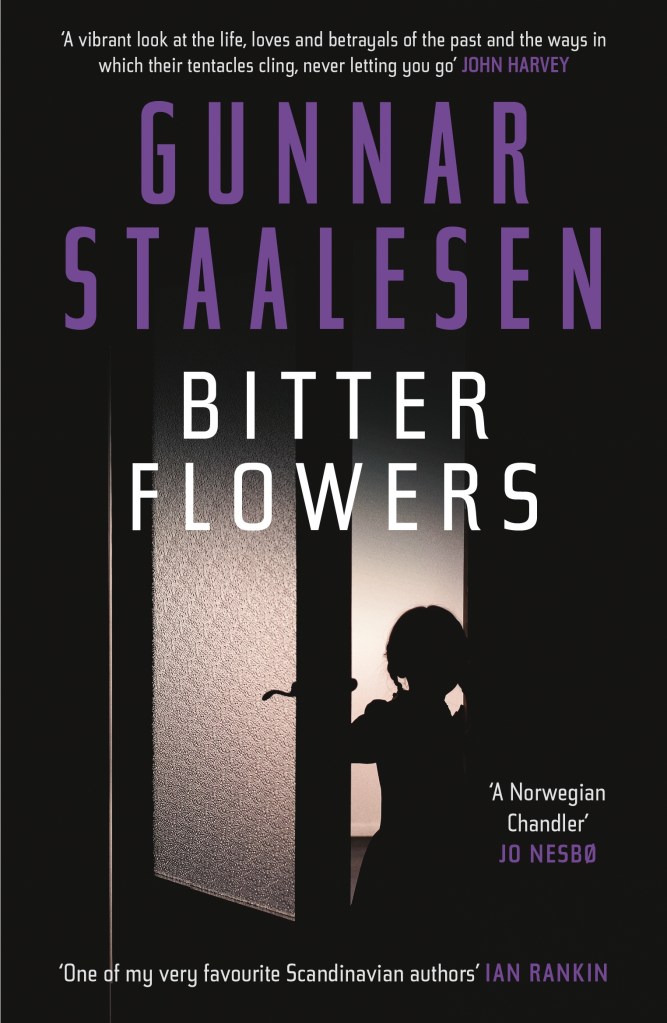
PI Varg Veum has returned to duty following a stint in rehab, but his new composure and resolution are soon threatened when a challenging assignment arrives on his desk. He is offered a job by his physical therapist Lisbeth, with whom he has built a friendship during treatment. She has a friend who needs a house sitter and she drives Varg out there to look around, only to find a man dead, floating in the elite swimming pool. As Varg leaps in to check for signs of life, Lisbeth goes missing. Most chillingly, Varg Veum is asked to investigate the ‘Camilla Case’: an eight-year-old cold case involving the disappearance of a little girl, who was never found. As the threads of these apparently unrelated crimes come together, against the backdrop of a series of shocking environmental crimes, Varg Veum faces the most challenging, traumatic investigation of his career.
This is one of those slow burn thrillers and we find Veum at a pivotal moment in his life, just out of rehab and fighting a reliance on Aquavit. Whilst not fully back to his investigative peak, Lisbeth’s idea of a simple house sitting would have suited him perfectly, with no pressure. The circumstances he then finds himself in are really not going to help his recovery, it’s enough to find himself embroiled in a murder investigation, but even worse, could he actually be a suspect? Instinct takes over though and Varg can’t help looking into the victim’s life, once he is identified as Tor Aslaksen. He is also very concerned about the disappearance of Lisbeth, as he battled to save the dead man’s life. Needless to say he faces some very awkward questions from Inspector Hamre about how he ended up there, alone in a strange house with a dead man. His digging reveals a connection to a case from some years before, that of a missing child. As if that wasn’t enough, when he looks into the victim’s employer, his company is under suspicion for environmental crimes, namely the alleged improper disposal of toxic waste. There are noisy protestors demonstrating on site and within the conflict there are two brothers, who were childhood friends of Aslaksen and stand on opposing sides of the demonstration. These strands seem so disparate, but the author cleverly threads them back to the murder victim with so much care, taking his time to unwind the truth. Yet, he also keeps a steady tension and occasionally surprises the reader as Varg’s curiosity takes him into dangerous and threatening places. is enough to heighten Veum’s interest. Nobody’s fool and uncompromisingly persistent, Veum is intrigued enough to take a closer look, thereby uncovering a connection to the unsolved disappearance of a seven-year-old girl nearly a decade earlier in the dead of night. Casting his net wider and following the threads back to their fruition, Veum tries to make sense of the past and it’s significance on current events, specifically the murder of Tor Aslaksen and all that follows.
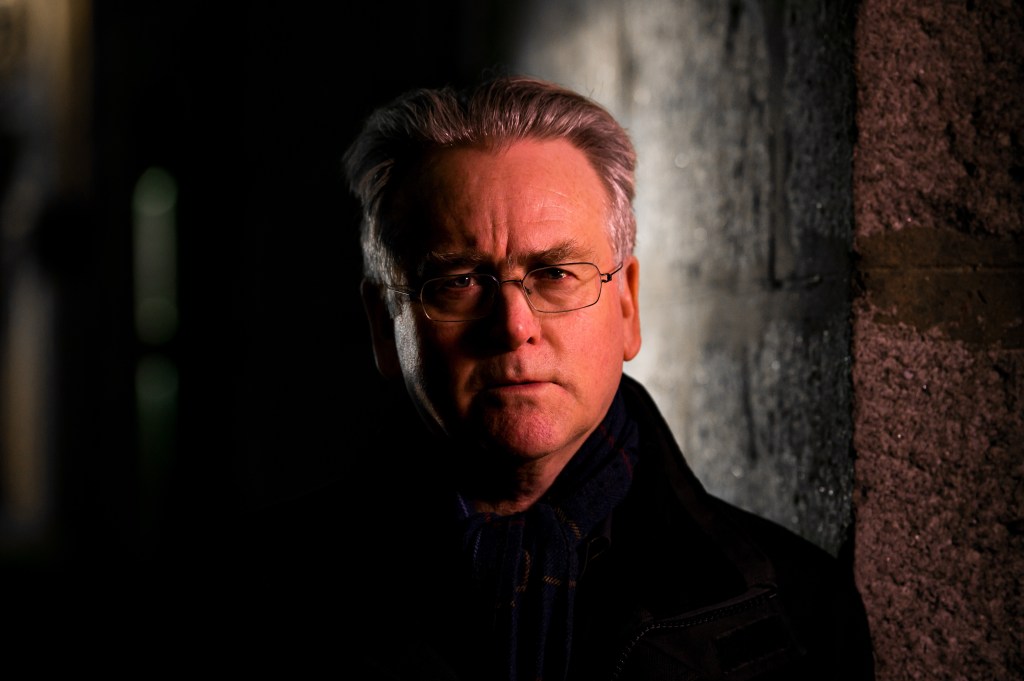
Gunnar Staalesen
I gradually started to bond with Varg, possibly due to the first person narrative; we’re with him all the way because we make discoveries at exactly the same time he does. His narrative can be abrupt at times, but always questioning and challenging those around him. As we experience his inner voice, unedited and raw, we can feel his struggles and the way his personal demons affect his life and his investigations. Yes, he has weaknesses, but his intelligence and determination are undimmed. I felt that, despite these struggles, I was safe with him as a narrator. I was firmly on his side throughout and didn’t doubt his innocence once. I didn’t work out the reasons for the murder, nor the tragic events which followed, but I did feel a constant sense of foreboding even from the first chapter. The author has a good grasp of human nature and how trauma affects people in very different ways. The psychology of addiction was also well observed and I enjoyed seeing Varg’s progress as he tries to recover while investigating a complex and emotional case. His developing relationship with Karen and friendship with Siv are handled with care and a gentleness I didn’t expect.
The case itself is emotive, allowing the reader to learn about Varg’s fragility, as he faces the horror of a child missing for eight years. By taking us back into Varg’s past, we can really see progression in his character; how did he get from there to his current stint in rehab? His previous career in child welfare has left him cynical, but he isn’t completely jaded yet. Everything he has experienced makes him more humane with an automatic reflex to fight for the underdog. I loved his underlying thirst for social justice too, something that could remain hidden from others, behind that calm and focused exterior. Staalesen provides the reader with a steady drip feed of Varg’s discoveries and this pace helps us understand the key characters better, especially where he becomes a nuisance by popping up to question certain people time and again. Even threats and constant police pressure can’t stop him from interfering and he is dogged in his determination to discover the truth. This is not a high octane thriller, but it’s more thorough and compelling because of that. Varg is not one of those showy, ‘on the edge’ investigators either, but the gradual opening up of his character allows us to trust him and truly know him. This felt like to me like a real PI might have worked back in the 1980’s, investing the time and noting the small details that crack a case. We never get the sense, as with other, flashier, P.I. characters, that he is more important than the case. There’s only a hint of fast action and real danger, but it has more impact and authenticity because of that restraint. This is complex, intelligent and authentic storytelling with a hero I enjoyed getting to know.
Just look at the colour and variety of my first anticipated reads collection. Aren’t they beautiful? I’ll be posting a few of these over the next couple of weeks because there are just so many great novels coming in the New Year. These are the books on my wish list and my NetGalley planner for next year. I still can’t believe how lucky I am to get early access to books and every year I say I’m not going to read, or buy, as much. Yet I always do. Enjoy the recommendations and I apologise in advance if your TBR list gets longer. ❤️📚
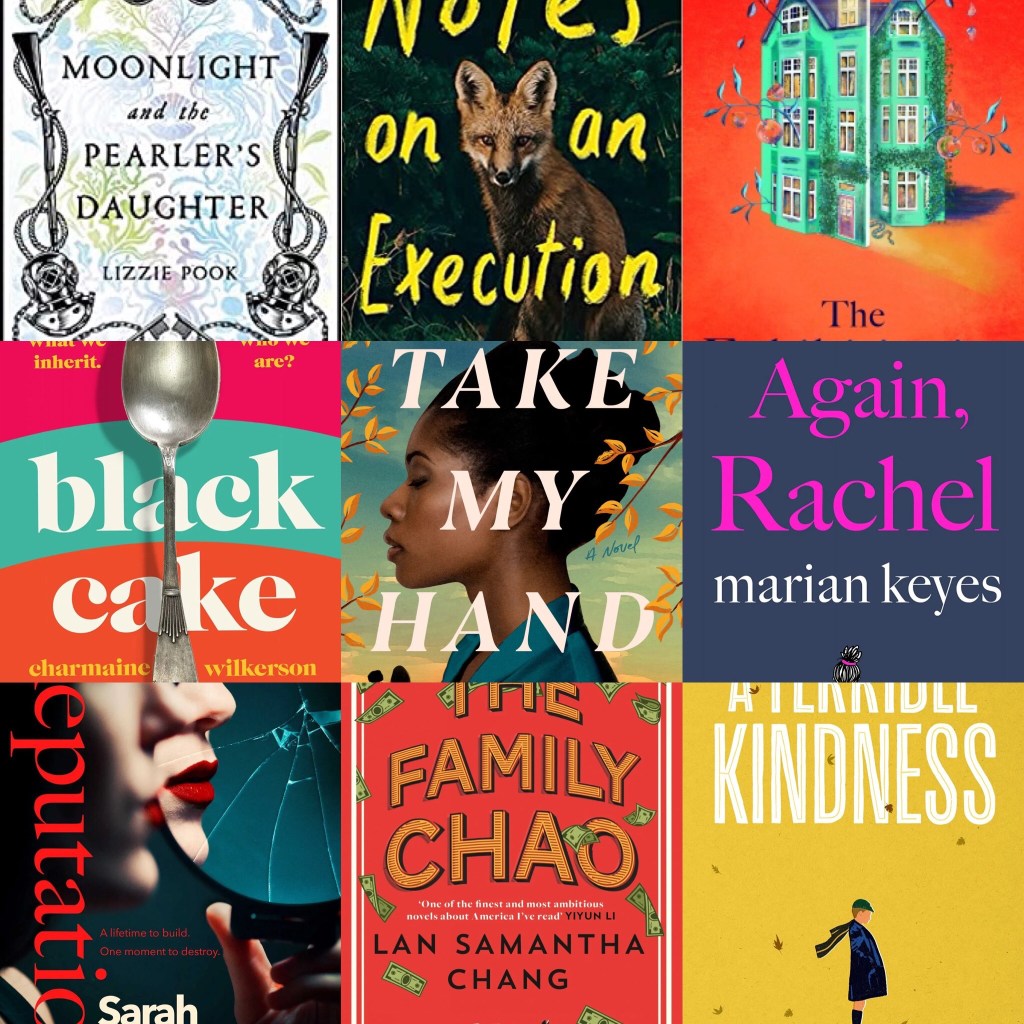
Moonlight and the Pearler’s Daughter by Lily Pook.
I was lucky enough to be sent a beautiful proof copy of this book so I’m looking forward to reading this before it’s debut in March. Set in 1886, at Bannin Bay, we meet the Brightwell family who have sailed from England to make their new home in Western Australia. Ten-year-old Eliza knows little of what awaits them on these shores beyond shining pearls and shells like soup plates – the things her father has promised will make their fortune. Ten years later and Charles Brightwell, now the bay’s most prolific pearler, goes missing from his ship while out at sea. Whispers from the townsfolk suggest mutiny and murder, but headstrong Eliza, convinced there is more to the story, refuses to believe her father is dead, and it falls to her to ask the questions no one else dares consider. But in a town teeming with corruption, prejudice and blackmail, Eliza soon learns that the truth can cost more than pearls, and she must decide just how much she is willing to pay – and how far she is willing to go – to find it. I love reading about women who step beyond the expectations of their society so Eliza sounds like my sort of character. The early reviews promise adventure and ambition, but also grief and loss. Sometimes, personal tragedy is a huge motivator and Eliza sounds both determined and willing to put herself in danger to discover the truth. There’s also that fascinating backdrop of empire and whether British settlers are pioneers or invaders.
Coming in March 2022 from Mantle.
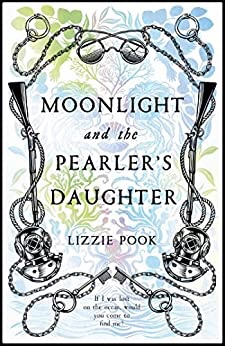
Notes on an Execution by Dayna Kukafka.
Ansel Packer is scheduled to die in twelve hours. He knows what he’s done, and now awaits the same fate he forced on those girls, years ago. Ansel doesn’t want to die; he wants to be celebrated, understood.
But this is not his story.
As the clock ticks down, three women uncover the history of a tragedy and the long shadow it casts. Lavender, Ansel’s mother, is a seventeen-year-old girl pushed to desperation. Hazel, twin sister to his wife, is forced to watch helplessly as the relationship threatens to devour them all. And Saffy, the detective hot on his trail, is devoted to bringing bad men to justice but struggling to see her own life clearly. This is the story of the women left behind. Blending breathtaking suspense with astonishing empathy, Notes On An Execution presents a chilling portrait of womanhood as it unravels the familiar narrative of the American serial killer, interrogating our cultural obsession with crime stories, and asking readers to consider the false promise of looking for meaning in the minds of violent men. I am interested in this concept, because it is the driving force behind why we are fascinated with true crime stories and dramas about serial killers. The question in all of our minds is ‘why’ and often crime fiction helps us with those questions – maybe it’s soothing to have that narrative played out in a world where the killer is always stopped, whether by capture or being killed himself. It helps us make sense of murder, when in real life we often never find out why and the crime seems so pointless.
Published in March by Phoenix Publishing.
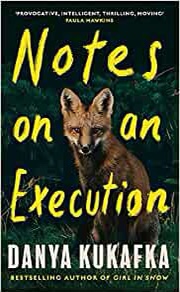
The Exhibitionist by Charlotte Mendelson.
The longer the marriage, the harder truth becomes . . .
When a book has glowing reviews from novelists like Marian Keyes and Sarah Waters you have to take notice and this looks like a cracker. Meet the Hanrahan family, gathering for a momentous weekend as famous artist and notorious egoist Ray Hanrahan prepares for a new exhibition of his art – the first in many decades – and one he is sure will burnish his reputation for good. His three children will be there: beautiful Leah, always her father’s biggest champion; sensitive Patrick, who has finally decided to strike out on his own; and insecure Jess, the youngest, who has her own momentous decision to make. And what of Lucia, Ray’s steadfast and selfless wife? She is an artist, too, but has always had to put her roles as wife and mother first. What will happen if she decides to change? For Lucia is hiding secrets of her own, and as the weekend unfolds and the exhibition approaches, she must finally make a choice. The Exhibitionist is the extraordinary fifth novel from Charlotte Mendelson, a dazzling exploration of art, sacrifice, toxic family politics, queer desire, and personal freedom. This sounds like a must read to me, since the relationship dynamics in families are fascinating from a counsellor’s perspective. I’ve just been granted early access to this title from NetGalley so keep an eye out for my review coming soon.
Published 17th March by Mantle.
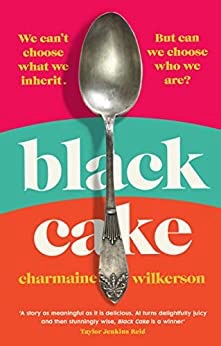
Black Cake by Charmaine Wilkerson.
‘We can’t go to the island, Bryon. We don’t really know what we’re getting into . . .’
Eleanor Bennett won’t let her own death get in the way of the truth. So when her estranged children – Byron and Benny – reunite for her funeral in California, they discover a puzzling inheritance. This debut novel already has the backing of Oprah Winfrey who is turning it into a series right now. First, comes a voice recording in which everything Byron and Benny ever knew about their family is upended. Their mother narrates a tumultuous story about a headstrong young woman who escapes her island home under suspicion of murder, a story which cuts right to the heart of the rift that’s separated Byron and Benny. Second, a traditional Caribbean black cake made from a family recipe with a long history that Eleanor hopes will heal the wounds of the past. Can Byron and Benny fulfil their mother’s final request to ‘share the black cake when the time is right’? Will Eleanor’s revelations bring them back together or leave them feeling more lost than ever? I’m looking forward to introducing this book to my own book group and making a black cake to try when we meet again.
Published Penguin 3rd Feb 2022
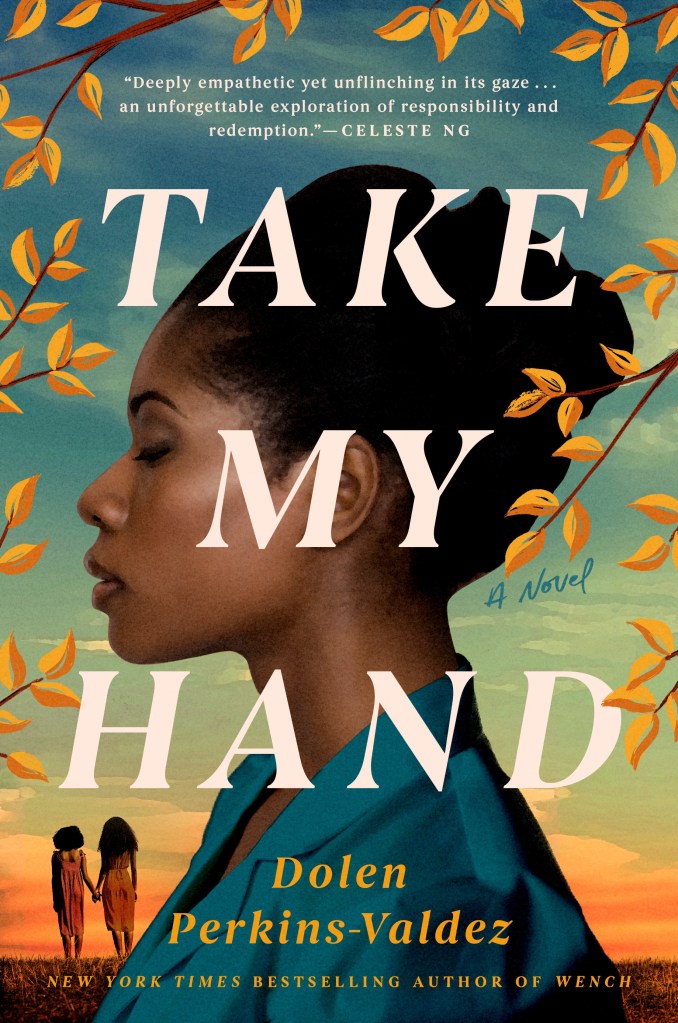
Take My Hand by Dolen Perkins-Valdez
I had to share a huge photo of this stunning cover art for Dolen Perkins-Valdez’s novel Take My Hand. I had my request in for a review copy very early on this one, before the cover was available. A nurse at the Family Planning Clinic in Montgomery Alabama, Civil Townsend is passionate about putting choice into women’s hands. She brings the option of birth control to their doorsteps, and with it the right to determine their own destinies. Or so she believes. When she is assigned to administer birth control to two school-age Black girls, the Williams sisters, who live off an old unpaved road in a shack without running water, Civil can’t help but feel uneasy. She grows close to the family and becomes fiercely invested in their well-being. And then she makes a shocking discovery: the girls have been involuntarily sterilized. Civil is horrified that such a terrible mistake could have taken place, and vows to get to the bottom of it. She soon learns that this is no isolated event but a pattern, far more serious than she could ever have imagined, targeting poor Black women. Could her clinic be responsible? Had she and her fellow Black nurses been complicit? No matter how ugly, Civil is determined for the truth to be brought to light. Based on true events, Take My Hand brims with hope, compassion, and the burning pursuit of justice. I picked this so early because, for those who don’t know, I have a disability and have researched the eugenics movement for both my undergraduate and now my masters degree. This movement, with its origins in the late Victorian period, gathered pace in the early twentieth century both in Europe and the USA. It developed fully into the horrors of the Holocaust, but very few people know of it’s extent in this country and the USA, as a reason to institutionalise and sterilise people with disabilities and those from minority ethnic backgrounds. Literature that explores this dark moment in history is very important to me and I’ll be begging people to read this over the next few months.
Published by Phoenix May 2022.
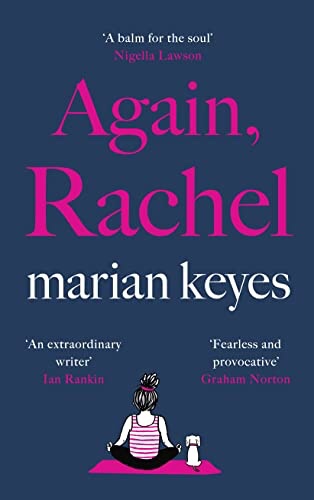
Again Rachel by Marian Keyes.
Every blogger I know loves Marian Keyes and the Walsh family are clearly characters who thousands of readers have taken to their hearts.
Back in the long ago nineties, Rachel Walsh was a mess. But a spell in rehab transformed everything. Life became very good, very quickly. These days, Rachel has love, family, a great job as an addiction counsellor, she even gardens. Her only bad habit is a fondness for expensive trainers.But with the sudden reappearance of a man she’d once loved, her life wobbles.She’d thought she was settled. Fixed forever. Is she about to discover that no matter what our age, everything can change? Is it time to think again, Rachel? What I love about Marian Keyes is her ability to write what seems like a light, humorous book, that’s actually full of meaning and true life experience. Yes, the Walsh family are witty and fun to be around, but their relationships with each other are deep, complex and full of love. It takes an incredible writer to have this lightness of touch coupled with an incredible understanding of human nature. Keyes writes with such emotional intelligence that I pre-order all her books these days. This one is close to my heart, because after leaving an abusive relationship I spent six years as a single woman. I did counselling, meditation and felt settled and sorted in life when someone came along and convinced me to make big changes for love. We’ve now been together for three years and I’m stepmom to two girls I love with all my heart. Life doesn’t stand still for long and it sounds like I might really resonate with Rachel’s place in life. Can’t wait!
Published Michael Joseph Feb 2022.
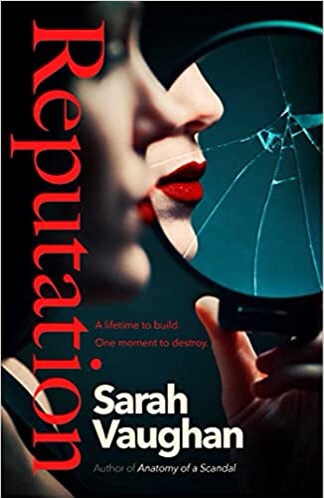
Reputation by Sarah Vaughan.
Reputation: it takes a lifetime to build and just one moment to destroy.
I devour thrillers, especially if I’m struggling with my multiple sclerosis and end up laid in bed or on the chaise langue in the living room. I find them easy to read and incredible addictive and I’ve been known to read two and start a third in one weekend. I’ve read Vaughan before so had an eye on this coming out months ago. Emma Webster is a respectable MP. Emma Webster is a devoted mother. Emma Webster is innocent of the murder of a tabloid journalist. Emma Webster is a liar. The early buzz on this one is great, as you can see below, and it’s already been optioned for a Netflix series so I’m going to make sure I read it before that airs.
#Reputation: The story you tell about yourself. And the lies others choose to believe…
‘A terrifically entertaining legal drama and an unsettling cautionary tale for any woman considering entering politics’ Louise Candlish
‘Tense. Gripping. And bang up to date. This is a rollercoaster of a book’ Imran Mahmood
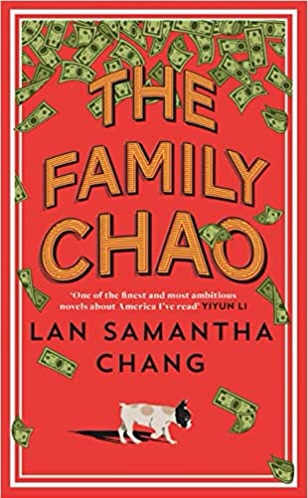
The Family Chao by Lan Samantha Chang.
‘A gorgeous and gripping literary mystery. . . reflecting themes of family, betrayal, passion, race, culture and the American Dream. . . A masterpiece’ JEAN KWOK
I have to say again that I love the cover of this book. It looks like something from the 1930’s and has all the cute appeal of a Mabel Lucy Atwell print which often featured dogs. For years, the residents of Lake Haven, Wisconsin ignored the whispered troubles about the Chao family, if only to keep eating at the best restaurant in town. But when tyrannical patriarch Big Chao is found frozen to death in the family’s meat freezer, scandalous events force the community to turn its attention to the three Chao sons.Dagou is the presupposed heir to the business, did he want to inherit sooner rather than later? Ming is an accomplished city lawyer, determined to sever ties with Haven’s Asian community once and for all. For years, the residents of Lake Haven, Wisconsin ignored the whispered troubles about the Chao family, if only to keep eating at the best restaurant in town. But when tyrannical patriarch Big Chao is found frozen to death in the family’s meat freezer, scandalous events force the community to turn its attention to the three Chao sons.Dagou is the presupposed heir to the business, did he want to inherit sooner rather than later? Ming is an accomplished city lawyer, was he determined to sever ties with Haven’s Asian community once and for all? James is the young, naive college student, who is only just learning of his family’s past, surely he can’t be to blame? When the family’s dog mysteriously disappears, and Dagou ‘Dog Eater’ Chao is held on trial for his father’s murder, the Chaos’ turbulent history spills into the public eye, while a small town looks on in disbelief. This is an inventive comic mystery about the undercurrents of an unfortunate death and a timeless tale of distrust, judgement and condemnation.I have a wickedly dark sense of humour and love reading about dysfunctional families so this novel caught my eye for more reasons than the cover, but I will admit that I love it so much I’d frame it and put it on the wall.
Published by One, Feb 2022.
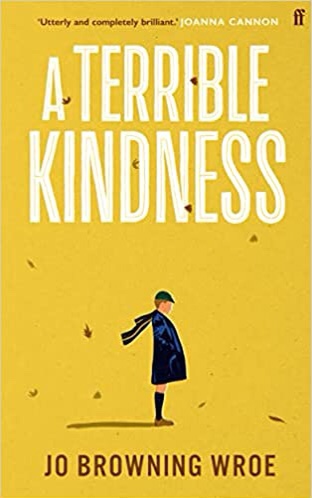
A Terrible Kindness by Joe Browning Wroe.
When we go through something impossible, someone, or something, will help us, if we let them . . .
When Joanna Cannon, Sophie Hannah and Marian Keyes are telling you to read a book, it’s at least worth a look. I’m lucky and have a proof of this to read over the next few weeks so look out for my review. I didn’t know a lot about the Aberfan disaster, because it happened before I was born. It was one of the first huge news stories that my mum remembers taking notice of when she was 13. My understanding of what happened came from The Crown where we saw the children heading off to school like any other morning, only to end up buried beneath a massive landslide from the coal mine that employed most of them heir fathers. It was utilised to show the Queen’s inability to feel empathy. Her reaction was contrasted with that of Princess Margaret’s husband Lord Snowden, who was moved to go straight to Aberfan and help, much like our main character in the novel. It is October 1966 and William Lavery is having the night of his life at his first black-tie do. But, as the evening unfolds, news hits of a landslide at a coal mine. It has buried a school: Aberfan. William decides he must act, so he stands and volunteers to attend. It will be his first job as an embalmer, and it will be one he never forgets. His work that night will force him to think about the little boy he was, and the losses he has worked so hard to forget. But compassion can have surprising consequences, because – as William discovers – giving so much to others can sometimes help us heal ourselves. I absolutely love the sound of this book and personal journey this character must go on as he attends to those who have died, mostly children. It won’t be an easy read, but is apparently very hopeful and uplifting too.
Published by Faber and Faber Jan 2022.
Look out for Part 2 of my preview list on Thursday.
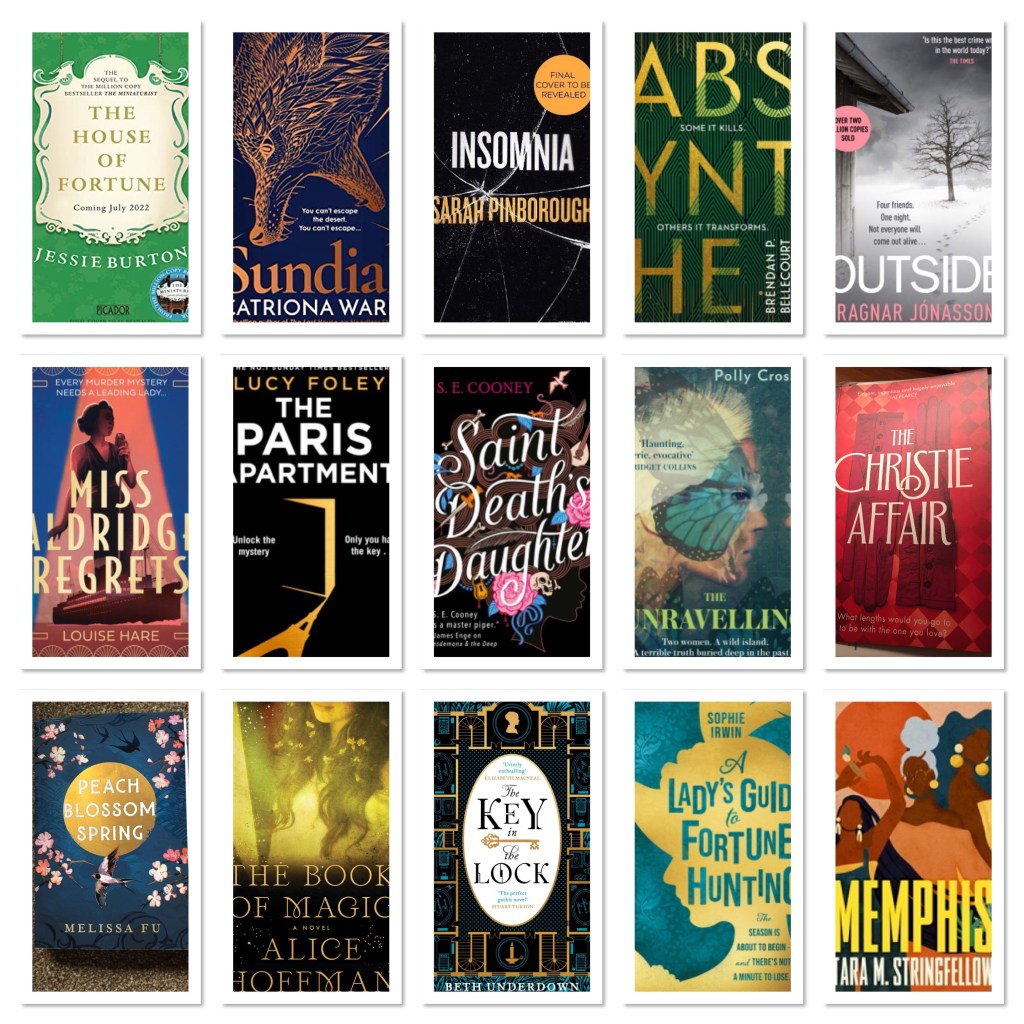
There are just so many books coming out next year that I’m really looking forward to reading, with some really gorgeous cover designs too. I. Lucky enough to have early access to all of these bar two, so I’ll be reading and reviewing in the coming weeks. Keep your eyes peeled and get some of these crackers on your TBR list.
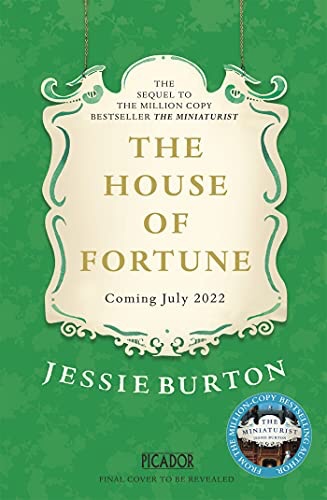
House of Fortune by Jessie Burton.
I fell in love with Burton’s debut novel The Miniaturist at first page and I am in awe of her imagination and skill. As other readers of the novel will know, many questions remained unanswered at the end of the story, and while I don’t mind books having loose ends, when I heard a sequel was coming I let out a little squeal. We are still in the golden city of Amsterdam, but now it is 1705. Thea Brandt is turning eighteen, and she is ready to welcome adulthood with open arms. At the city’s theatre, Walter, the love of her life, awaits her, but at home in the house on the Herengracht, all is not well – her father Otto and Aunt Nella argue endlessly, and the Brandt family are selling their furniture in order to eat. On Thea’s birthday, also the day that her mother Marin died, the secrets from the past begin to overwhelm the present.
Nella is desperate to save the family and maintain appearances, to find Thea a husband who will guarantee her future, and when they receive an invitation to Amsterdam’s most exclusive ball, she is overjoyed – perhaps this will set their fortunes straight. And indeed, the ball does set things spinning: new figures enter their life, promising new futures. But their fates are still unclear, and when Nella feels a strange prickling sensation on the back of her neck, she remembers the miniaturist who entered her life and toyed with her fortunes eighteen years ago. Perhaps, now, she has returned for her . . . I can’t tell you how excited I am to find out how Nella is getting on. Maybe the mystery of who the miniaturist is, and what they want, might be solved?
Published by Picador 7th July 2022
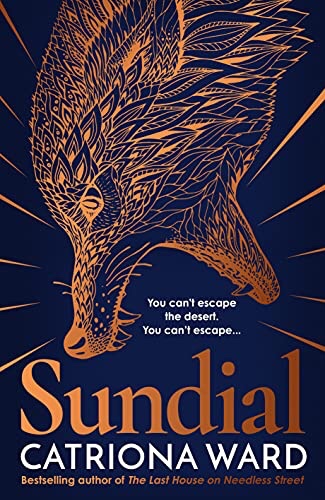
Sundial by Catriona Ward
When writers like Alex Michaelides and Emma Stonex are giving rave reviews of a book, it’s always worth a look. Last year’s novel, The Last House on Needless Street, was incredibly unusual and original. That alone would make me want to look at Ward’s second novel.
You can’t escape the desert. You can’t escape Sundial.
Rob fears for her daughters. For Callie, who collects tiny bones and whispers to imaginary friends. For Annie, because she fears what Callie might do to her. Rob sees a darkness in Callie, one that reminds her of the family she left behind. She decides to take Callie back to her childhood home, to Sundial, deep in the Mojave Desert. And there she will have to make a terrible choice.
Callie is afraid of her mother. Rob has begun to look at her strangely. To tell her secrets about her past that both disturb and excite her. And Callie is beginning to wonder if only one of them will leave Sundial alive…
Published by Viper 10th March 2022.
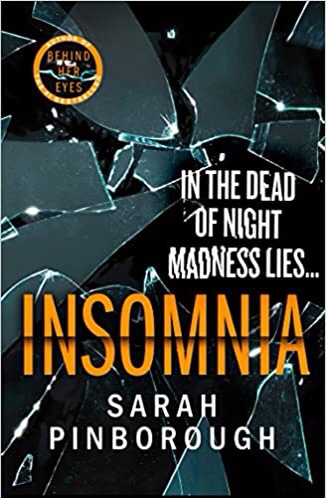
Insomnia by Sarah Pinborough.
In the dead of night, madness lies…
Emma can’t sleep. CHECK THE WINDOWS. It’s been like this since her big 4-0 started getting closer. LOCK THE DOORS. Her mother stopped sleeping just before her 40th birthday too. She went mad and did the unthinkable because of it. LOOK IN ON THE CHILDREN. Is that what’s happening to Emma?
WHY CAN’T SHE SLEEP?
This is an absolutely brilliant domestic noir that keeps you on the edge of your seat to the very end.
Published by Harper Collins March 31st 2022.
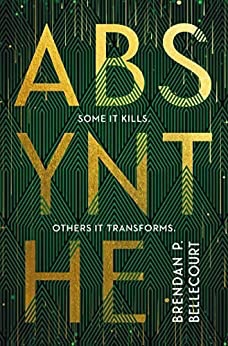
Absynthe by Brendan P. BelleCourt.
The Great War has been over for years, and a brave new world forged. Technology has delivered the future promised at the turn of the century: automata provide, monorail trains flash between mega-cities, medicine is nothing short of magical.
Liam grew up poor, but now working for one of the richest families in Chicago, he reaps the benefits of his friendship with the family’s son and heir. That’s why he’s at Club Artemis. It’s a palace of art-deco delights and debauchery, filled to bursting with the rich and beautiful – and tonight they’re all drinking one thing. Absynthe. The green liquor rumoured to cause hallucinations, madness, even death.
While the gilded youth sip the viridescent liquid, their brave new world is crumbling beneath its perfect surface. Their absynthe is no mere folly. Some it kills, others it transforms. But in Liam something different has taken place. A veil has lifted and he can see the world without its illusion – and it isn’t the perfect world the government want the people to believe. As soon as I read the premise of this novel I was hooked and I’ve just been accepted on NetGalley I’m itching to get to it.
Published – Head of Zeus 9th Dec 2021
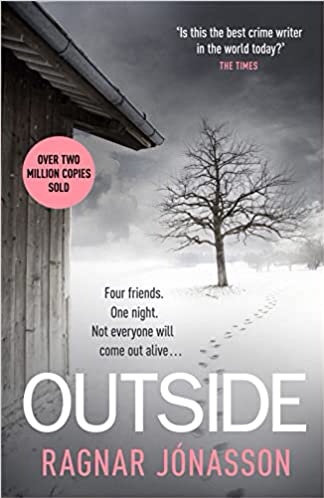
Outside by Ragnar Jónasson.
Four friends. One night. Not everyone will come out alive . . .
In the swirling snow of a deadly Icelandic storm, four friends seek shelter in a small abandoned hunting lodge. Miles from help, and knowing they will die outside in the cold, they break open the lock and make their way inside, hoping to wait out the storm until morning.
But nothing can prepare them for what they find behind the door . . .
Inside the cabin lurks a dangerous presence that chills them to their core. Outside, certain death from exposure awaits. So with no other option, they find themselves forced to spend a long, terrifying night in the cabin, watching as intently and silently as they are being watched themselves.But as the evening darkens, old secrets are beginning to find their way to the light. And as the tension escalates between the four friends, it soon becomes clear that the danger they discovered lurking in the cabin is far from the only mystery that will be uncovered tonight. Nor the only thing to be afraid of . . .
I love Nordic Noir and this author builds his literary worlds so carefully and his characters are multi-dimensional, complex and real. Once I’m a few chapters in it feels so real to me that I’m utterly immersed. This appeals to my psychologist brain. I’m dying to dissect these characters and their dynamic as they are trapped together.
Published by Michael Joseph 28th April 2022.
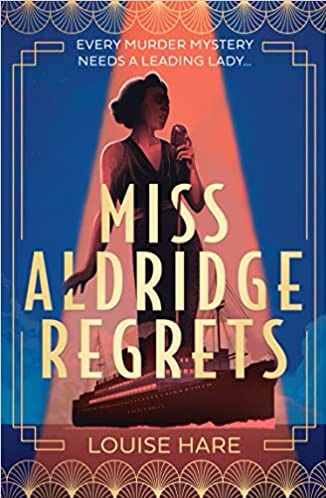
Miss Aldridge Regrets by Louise Hare.
I’ve been waiting to see what Louise Hare would write next after loving her novel The Lovely City. This looks like a fantastic second novel and I adore that cover too. Opening in London in 1936, Lena Aldridge is wondering if life has passed her by. The dazzling theatre career she hoped for hasn’t worked out. Instead, she’s stuck singing in a sticky-floored basement club in Soho and her married lover has just left her. She has nothing to look forward to until a stranger offers her the chance of a lifetime: a starring role on Broadway and a first-class ticket on the Queen Mary bound for New York. After a murder at the club, the timing couldn’t be better and Lena jumps at the chance to escape England. Until death follows her onto the ship and she realises that her greatest performance has already begun. Because someone is making manoeuvres behind the scenes, and there’s only one thing on their mind…Murder.
Miss Aldridge Regrets is the exquisite new novel from Louise Hare, the author of This Lovely City. A brilliant murder mystery, it also explores class, race and pre-WWII politics, and will leave readers reeling from the beauty and power of it.It’s next on my TBR so I’ll be reviewing soon.
Published by HQ 28th April 2022.
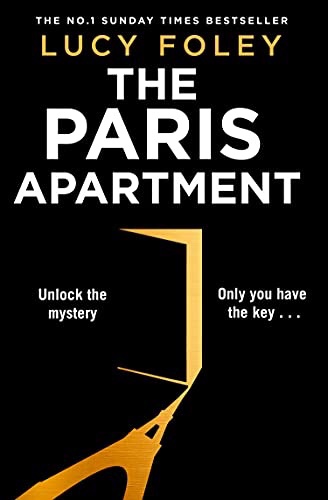
The Paris Apartment by Lucy Foley.
Welcome to No. 12 Rue des Amants. This book has been popping up all over #BookTwitter and I feel very privileged to have an early copy. I love a good thriller, it tends to be the genre I go to when I’m very busy with my MA or just have a lot on at home. For some reason, that I’m not prepared to look at too closely, I find thrillers relaxing. This one is set in a beautiful old apartment block, far from the glittering lights of the Eiffel Tower and the bustling banks of the Seine. Where nothing goes unseen. And everyone has a story to unlock. Our characters are the watchful concierge, the scorned lover, the prying journalist and the naïve student. But there’s also an unwanted guest. Something terrible happened here last night. A mystery lies behind the door of apartment three.Only you – and the killer – hold the key . . . I’m sure I’m going to be bleary eyed one morning from reading this till 2am.
Published by Harper Collins 3rd March 2022.
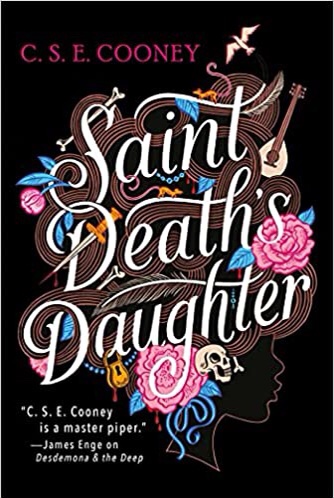
Saint Death’s Daughter by C.S.E Cooney
Nothing complicates life like Death. I noticed this book about two months ago and begged the publisher for a proof! Sometimes I have no shame. As soon as I read the short blurb I knew I wanted to read it and I’m excited at the thought that this is only the first in a new series. Lanie Stones, the daughter of the Royal Assassin and Chief Executioner of Liriat, has never led a normal life. Born with a gift for necromancy and a literal allergy to violence, she was raised in isolation in the family’s crumbling mansion by her oldest friend, the ancient revenant Goody Graves. When her parents are murdered, it falls on Lanie and her cheerfully psychotic sister Nita to settle their extensive debts or lose their ancestral home―and Goody with it. Appeals to Liriat’s ruler to protect them fall on indifferent ears… until she, too, is murdered, throwing the nation’s future into doubt. Hunted by Liriat’s enemies, hounded by her family’s creditors and terrorised by the ghost of her great-grandfather, Lanie will need more than luck to get through the next few months―but when the goddess of Death is on your side, anything is possible. I am always surprised by the amount of fantasy I read and while I don’t consider myself an expert on the genre, out of the books I love, a good third are fantasy novels. I’m hoping this one might join them.
Published by Solaris 14th April 2022.
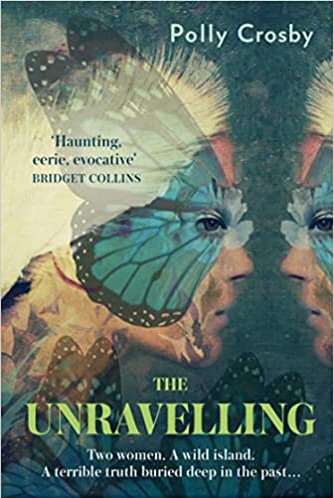
The Unravelling by Polly Crosby.
This one is coming very soon, in early January in fact, since the publication date was pushed back from this year. I fell completely in love with her writing when I finally read The Illustrated Child a few months ago. The only reason it didn’t make my books of the year was because I was so late reading it; it was published in 2020. My anticipation for this one has been building and I hope to get to read it over the Christmas holidays. Also when the author of The Binding gives a book a great review, I know I’m going to love it.
’Like a surreal cabinet of curiosities – haunting, eerie, evocative’ Bridget Collins, Sunday Times bestselling author of The Binding
When Tartelin Brown accepts a job with the reclusive Marianne Stourbridge, she finds herself on a wild island with a mysterious history. Tartelin is tasked with hunting butterflies for Marianne’s research. But she quickly uncovers something far more intriguing than the curious creatures that inhabit the landscape. Because the island and Marianne share a remarkable history, and what happened all those years ago has left its scars, and some terrible secrets.As Tartelin pieces together Marianne’s connection to the island, she must confront her own reasons for being there. Can the two women finally face up to the painful memories that bind them so tightly to the past?
Published by HQ 6th Jan 2022.
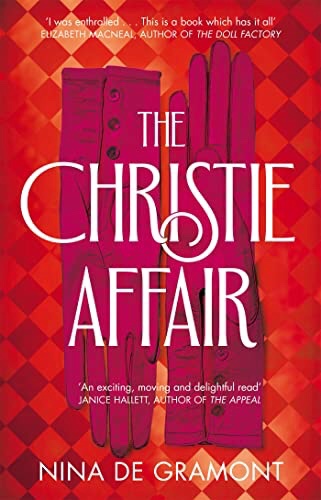
The Christie Affair by Nina de Gramont.
I’m currently writing a review for this interesting novel and I can honestly say it’s a cracker. I loved the mix of factual events and fictional story, as well as the way the novel veered from historical, to romance and to murder mystery. You won’t want to put it down.
In 1926, Agatha Christie disappeared for 11 days. Only I know the truth of her disappearance. I’m no Hercule Poirot. I’m her husband’s mistress.
Agatha Christie’s world is one of glamorous society parties, country house weekends, and growing literary fame. Nan O’Dea’s world is something very different. Her attempts to escape a tough London upbringing during the Great War led to a life in Ireland marred by a hidden tragedy. After fighting her way back to England, she’s set her sights on Agatha. Because Agatha Christie has something Nan wants. And it’s not just her husband. Despite their differences, the two women will become the most unlikely of allies. And during the mysterious eleven days that Agatha goes missing, they will unravel a dark secret that only Nan holds the key to . . .The Christie Affair is a stunning novel which reimagines the unexplained eleven-day disappearance of Agatha Christie in 1926 that captivated the world.
Published by Mantle, 20th Jan 2022.
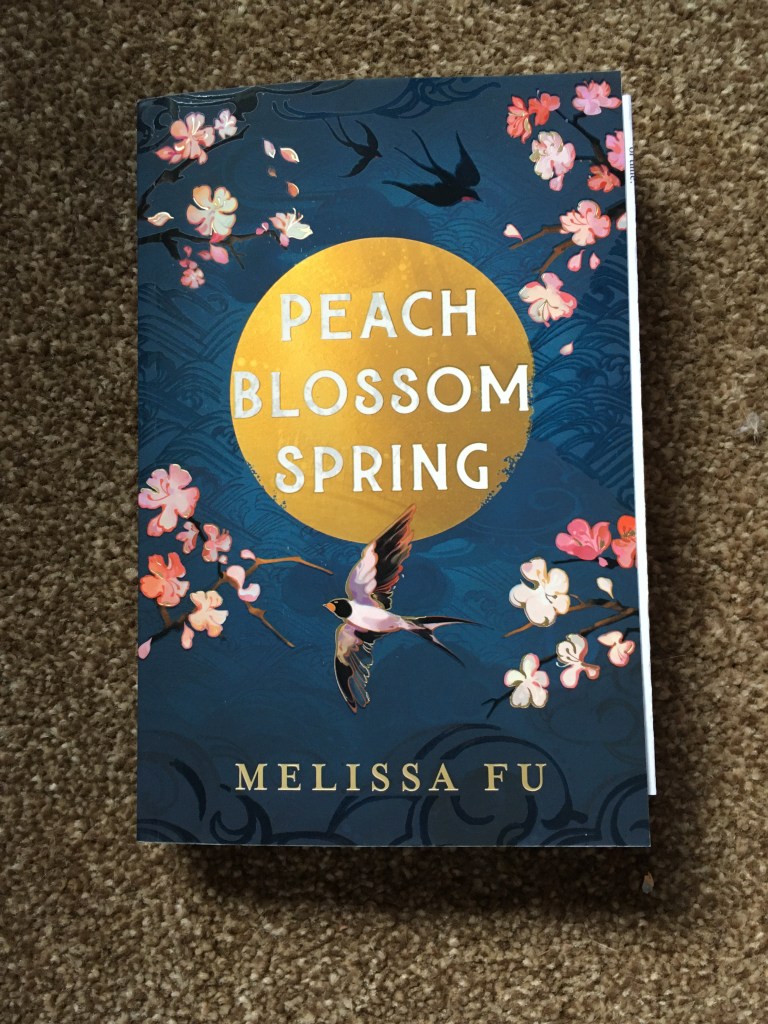
Peach Blossom Spring by Melissa Fu.
I have to say that the cover of this beautiful proof sung out to me when it dropped through my letterbox. This is one of those novels where I’ve already pre-ordered the finished copy even though I have this one. It’s quite simply stunning.
With every misfortune there is a blessing and within every blessing, the seeds of misfortune, and so it goes, until the end of time.
It is 1938 in China, and the Japanese are advancing. A young mother, Meilin, is forced to flee her burning city with her four-year-old son, Renshu, and embark on an epic journey across China. For comfort, they turn to their most treasured possession – a beautifully illustrated hand scroll. Its ancient fables offer solace and wisdom as they travel through their ravaged country, seeking refuge. Years later, Renshu has settled in America as Henry Dao. His daughter is desperate to understand her heritage, but he refuses to talk about his childhood. How can he keep his family safe in this new land when the weight of his history threatens to drag them down? Spanning continents and generations, Peach Blossom Spring is a bold and moving look at the history of modern China, told through the story of one family. It’s about the power of our past, the hope for a better future, and the search for a place to call home.
Published by Wildfire 17th March 2022.
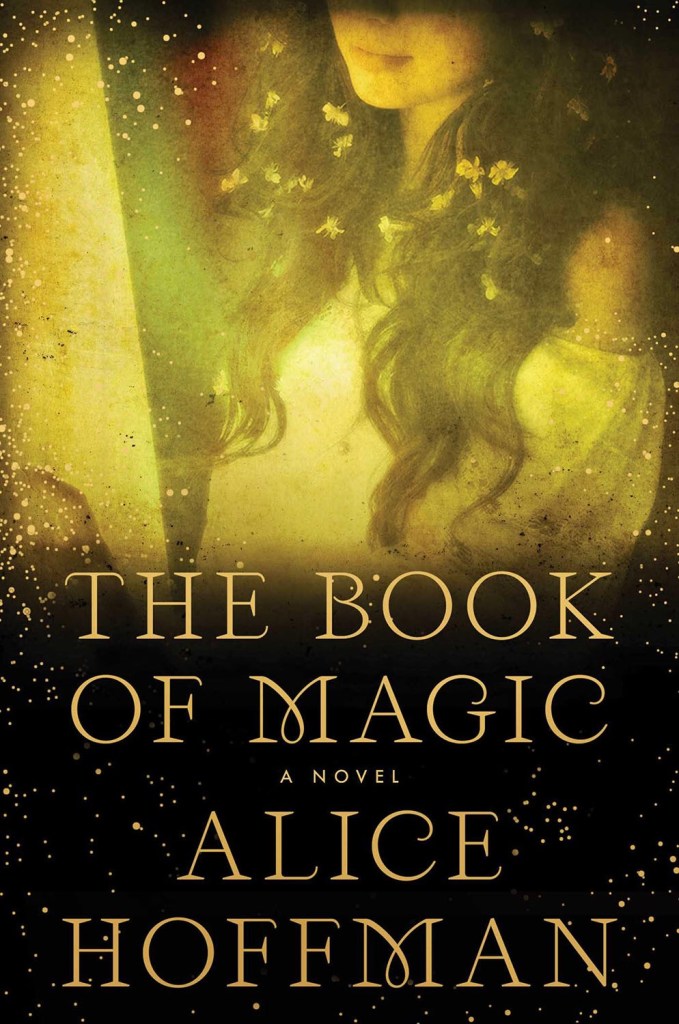
The Book of Magic by Alice Hoffman.
This is my current read and it’s not surprising that I’m enjoying it, since Hoffman is one of my favourite authors. The Owens family started their literary lives in Practical Magic as we followed orphaned sisters Sally and Gillian as they are sent to live with their eccentric aunts Jet and Franny. There are rumours about the aunts. They live in a crooked house on the edge of town, with a well-stocked herb garden and a light above the door that alerts local women to when they are available for consultation. This might be for women’s health problems, but more often for reasons of love. This is ironic since the Owens women are born in a genetic line that’s cursed in the pursuit of love. Every woman in the family has tried a way round the curse, but if ever love is found, it can just as easily be lost. In this fourth and final book in the series we move forward, after two prequel novels, to Jet and Franny’s old age. When the deathwatch beetle starts clicking in the family home, one of the Owens women knows that their time is up. As the generations gather, Sally’s daughters have to face the truth of the family curse. So a quest begins to change this generation’s luck in love, but do the girls have the power within them or will they venture into darker magic?
Published by Scribner 6th January 2022.
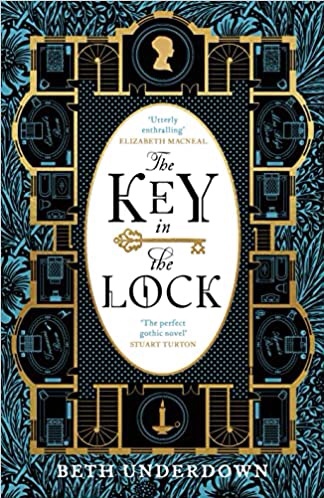
The Key in the Lock by Beth Underdown.
I was a little bit giddy to open my book mail a couple of days ago and find an unexpected copy of this book. I’ve been talking about it since Halloween so it’s definitely time I read it.
I still dream, every night, of Polneath on fire. Smoke unravelling from an upper window, and the terrace bathed in a hectic orange light . . . Now I see that the decision I made at Polneath was the only decision of my life. Everything marred in that one dark minute.
By day, Ivy Boscawen mourns the loss of her son Tim in the Great War. But by night she mourns another boy – one whose death decades ago haunts her still. For Ivy is sure that there is more to what happened all those years ago: the fire at the Great House, and the terrible events that came after. A truth she must uncover, if she is ever to be free. But once you open a door to the past, can you ever truly close it again?From the award-winning author of The Witchfinder’s Sister comes a captivating story of burning secrets and buried shame, and of the loyalty and love that rises from the ashes.
Published by Viking 13th January 2022.
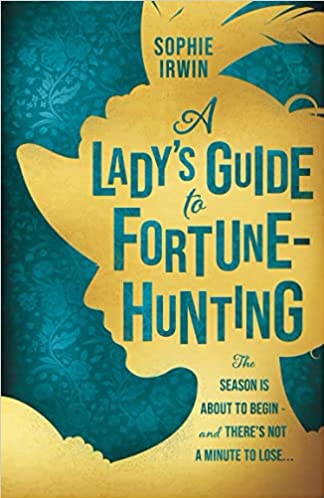
A Lady’s Guide to Fortune Hunting by Sophie Irwin.
This novel has quite recently appeared on the radar but looks like a really enjoyable read. I’ve just had NetGalley approval and it’s taking all my willpower to read my January blog tours first! The season is about to begin and there’s not a second to lose. Kitty Talbot needs a fortune. Or rather, she needs a husband who has a fortune. This is 1818 after all, and only men have the privilege of seeking their own riches. With only twelve weeks until the bailiffs call, launching herself into London society is the only avenue open to her, and Kitty must use every ounce of cunning and ingenuity she possesses to climb the ranks. The only one to see through her plans is the worldly Lord Radcliffe and he is determined to thwart her at any cost, especially when it comes to his own brother falling for her charms. Can Kitty secure a fortune and save her sisters from poverty? There is not a day to lose and no one – not even a lord – will stand in her way…
Published by Harper Collins 12th May 2022
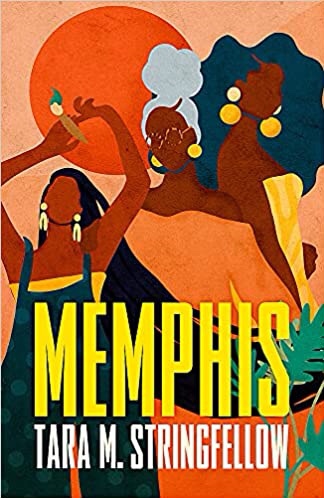
Memphis by Tara M. Stringfellow.
Joan can’t change her family’s past. But she can create her future.
Joan was only a child the last time she visited Memphis. She doesn’t remember the bustle of Beale Street on a summer’s night. She doesn’t know she’s as likely to hear a gunshot ring out as the sound of children playing. How the smell of honeysuckle is almost overwhelming as she climbs the porch steps to the house where her mother grew up. But when the front door opens, she does remember Derek. This house full of history is home to the women of the North family. They are no strangers to adversity; resilience runs in their blood. Fifty years ago, Hazel’s husband was lynched by his all-white police squad, yet she made a life for herself and her daughters in the majestic house he built for them. August lives there still, running a salon where the neighbourhood women gather. And now this house is the only place Joan has left. It is in sketching portraits of the women in her life, her aunt and her mother, the women who come to have their hair done, the women who come to chat and gossip, that Joan begins laughing again, begins living. Memphis is a celebration of the enduring strength of female bonds, of what we pass down, from mother to daughter. Epic in scope yet intimate in detail, it is a vivid portrait of three generations of a Southern black family, as well as an ode to the city they call home.
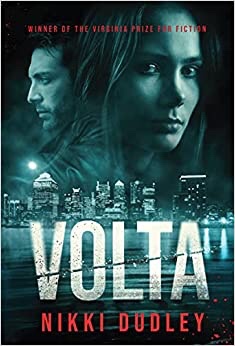
When Briony Campbell confesses to killing her boyfriend, a straightforward crime of passion soon turns into a baffling mystery. Haunted by demons from his past, lawyer S.J. Robin is assigned to the case. But as confusion – and the body count – rises, he’s forced to question who is guilty and who is innocent. Can he see justice served and hold on to the woman he loves?
I’ve been slightly daunted by writing the review for this thriller, because I’m desperate not to give anything away. Volta really is a fast paced read, with a plot full of twists and turns and an engaging central character. Even more unusual, is the distinct thread of romance throughout. From the moment Briony wakes up covered in blood, I was drawn into the story. There’s an almost cinematic quality to the writing, because we’re totally in the moment as Briony wakes up and as her senses take in the terrifying situation she’s in so do ours. It’s a moment of of stillness that’s rare in the book. Then we pan out and see our other character’s reaction to the crime. Briony makes an statement to lawyer S. J. Robin that seems clear cut, but he soon realises the case is not that simple and as it becomes ever more entangled, it even brings his own demons to the surface.
The novel has three narrators: S.J, Briony and Mari. Mari is both Briony’s therapist and possible love interest to S.J, in a complicated coincidence. From the first time we see them together, it’s clear that S.J and Mari have history. Even more complexity comes in, when we realise that the investigator, Aris, is Mari’s brother – and they are a really convincing pair of siblings. It’s a small interrelated group of characters, and it creates a slightly claustrophobic feel. S.J relates his tale in the first person, and for some reason that makes me think he’s giving a true version of events. It’s an unconscious bias that I think comes from being a counsellor and ‘prizing’ the client’s account, never showing judgement or disbelief. However, I do love it when a novel’s narrator proves to be untrustworthy and as the story unfolded I started to feel a little unsettled by some aspects of the story – specifically S.J and Briony’s narratives. They each had an experience of trauma in their respective childhoods; from this it is easy to draw parallels between them. However, when a narrative’s in the third person we can see others interacting with our character, having inner thoughts about them and possibly being aware of their back story. A first-person narrative has no corroboration and though the difference in narrative perspective seems subtle it does have a large impact. S.J is intriguing. We learn very early in the novel, that he’s dealing with past trauma and his positioning as a victim also elicits sympathy from the reader – that is until doubts start to creep in. We learn that his psychological trauma could be permanent or at least difficult to heal, and this could create a further bond between him and Briony that is possibly unhelpful, both personally and in the investigation. I was left questioning what exactly had happened in Briony and S.J’s pasts? Did what happened with Briony relate to those circumstances? Can the victim have justice if S.J wins justice for Briony – are they the same thing? In between is the push and pull of S.J and Mari, whose attraction gave the book more of a light-hearted feel
Although the novel moves along at an incredible pace, I could identify certain threads or themes running throughout, always at the back of my mind like a constant nagging voice. I seemed to be thinking constantly, even when I wasn’t reading the book! Make no mistake these are complicated characters, with psychological damage that’s affecting their everyday lives and their work. Their relationships are difficult, or even broken. The author’s grasp of the consequences of trauma are nicely nuanced and I felt safe in the hands of a writer who understood psychological trauma well. In fact the reader works as a fourth character, bringing their own bias and assumptions to their assessment of Briony. The word ‘Volta’ is defined as a literary device, used in poetry. It’s a rhetorical shift, or a dramatic change in mood, emotion and tone. That’s how this book feels as a reading experience, I found myself shifting constantly in my assessment of Briony based on how one of the other characters viewed her or when a twist in the narrative turned everything on it’s head. This would be a great book club choice, because I imagine every reader has a different perspective. This is a strong, intense and clever thriller with characters to match.
Meet The Author
Nikki is a novelist and poet who grew up in London. She attended state school in Camden and spent her time hiding in the library. She is managing editor of streetcake magazine, which publishes innovative writing. She also runs the streetcake writing prize and MumWrite, a development programme for mums. Her novel, ‘Ellipsis’ was published by Sparkling Books in 2010. Additionally, she has been published in magazines and online. Her chapbook ‘exits/origins’ and collection ‘Hope Alt Delete’ are published by The Knives, Forks and Spoons Press. She won the Virginia Prize for fiction 2020 and her novel, Volta, was published by Aurora Metro Books in 2021. Her pamphlet, ‘I’d Better Let You Go’ was published by Beir Bua Press in 2021.
Nikki loves mysteries, thrillers and things that make her think. Some of her favourite books are Catch-22, the Raymond Chandler books, How to Life Safely in a Science Fictional Universe and anything by Yoko Ogawa.
Her other interests include watching many genres of films and attending events such as poetry readings, sport, and gigs. You can start conversations with her by discussing your favourite type of cake, your favourite Avenger or telling her a fun fact. She loves travelling and trying local cuisines.
This was a great opener in a new Scandi noir series, that left me looking forward to getting to know these characters a lot better. Jensen is a journalist living in Copenhagen after spending several years in London as the British correspondent for a Danish newspaper. She still hasn’t quite found her feet in the city, and knows that she’s very lucky to still have a job considering the cuts at work. Her editor Margrethe has faith in her ability to sniff out a story and one morning, while cycling to work.Jensen stumbles across the body of a young man with a large placard saying guilty on his chest. His eyes are covered with new fallen snow and it’s clear that he has several stab wounds to the abdomen. He’s also homeless, Jensen calls her ex-lover Detective Henrik Jungerson to report the murder, even though she’s been trying to avoid him since her return. Jensen doesn’t want to exploit such a sad death for newspaper headlines. Nor will she sensationalise it, However as more bodies are found it’s clear a serial killer is on the loose. Why would someone choose the homeless as their victims? Jensen has to investigate further.
I really enjoyed Jensen’s character. She’s rather mysterious and I think the author was clever to drop clues and hints about her in this first book of the series. It left me wanting to discover more and delve into her past, not least her relationship with Henrik. It certainly isn’t over. She’s determined and dogged once the story has piqued her journalistic interest and it’s probably true to use the word ‘obsessed’ when describing how she investigates. She feels very real because of the way she’s written – it’s like slowly getting to know a new acquaintance rather than having a fully formed person. She’s also a bit prickly and is very used to navigating a rather male dominated workplace. Her tension with Henrik leaps off the page and I’m very interested to see where their relationship goes next, as well as unearthing a bit more about their past.
“clues and hints about her in this first book of the series. It left me wanting to discover more and delve into her past, not least her relationship with Henrik. It certainly isn’t over. She’s determined and dogged once the story has piqued her journalistic interest and it’s probably true to use the word ‘obsessed’ when describing how she investigates. She feels very real because of the way she’s written – it’s like slowly getting to know a new acquaintance rather than having a fully formed person. She’s also a bit prickly and is very used to navigating a rather male dominated workplace. Her tension with Henrik leaps off the page and I’m very interested to see where their relationship goes next, as well as unearthing a bit more about their past.
The fact that Jensen focuses on finding out about the killer’s victim rather than the killer suggests a lot of empathy and a keen sense of social justice underneath the spikiness. She leaves Henrik to look for the killer and he’s soon connecting it to a previous suspicious death. They are a good team in this way, each with their own methods, but sharing information along the way. I think the book touches on a lot of current problems in our society, particularly how the world’s economic structure is creating horrendous poverty. Issues such as mental health, drug abuse and of course, homelessness are featured in the book and I thought the author wrote about this with understanding borne out of real life experience and conviction. The story was fast paced and very compulsive reading. There are twists and turns along the way in the investigation and moments where Jensen feels inundated with information, but none of it is making any sense. The tension builds towards the conclusion and these are the really addictive parts that I found myself reading in the car, the hospital waiting room and till 2am while on holiday! This was a fantastic opener to, what is now, a much anticipated series and I have to mention that gorgeous cover. It’s so beautiful I want to put in a frame and hang it on the wall.
Published by Muswell Press 31st August 2021.
Heidi Amsinck, a writer and journalist born in Copenhagen, spent many years covering Britain for the Danish press, including a spell as London Correspondent for the broadsheet daily Jyllands-Posten. She has written numerous short stories for radio, including the three-story sets Danish Noir, Copenhagen Confidential and Copenhagen Curios, all produced by Sweet Talk for BBC Radio 4. A graduate of the MA in Creative Writing at Birkbeck, University of London, Heidi lives in London. She was previously shortlisted for the VS Pritchett Memorial Prize. Last Train to Helsingør is her first published collection of stories. Her crime novel My Name is Jensen, set in Copenhagen, will be published in August 2021
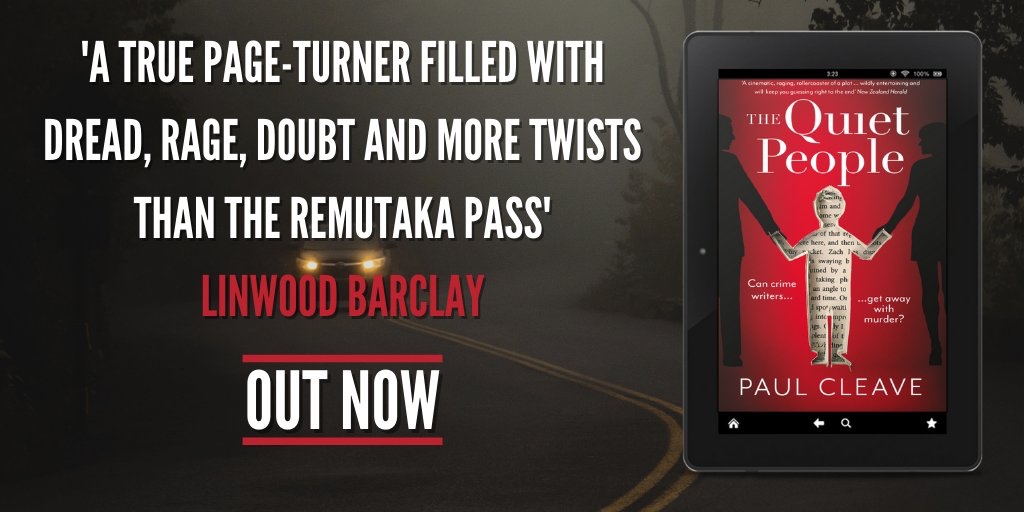
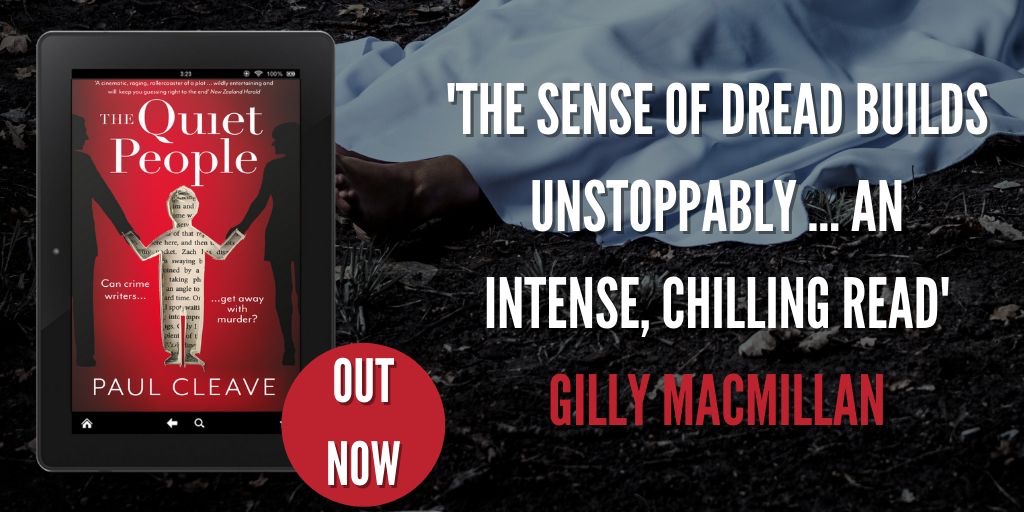
Whenever I go to literature festival or author events through my local bookshop, people always ask where the writer gets their ideas from. In the case of crime writers we really want to know, because we’re thinking: is this what real life crime is like? Are there people who commit these terrible (and usually highly creative) crimes? How does the writer know this much about the crimes they depict? We want to know if they have ever been tempted to commit a crime and if anybody could commit the perfect crime, surely it’s people who’ve been writing and researching it for years? They know the pitfalls and have the forensic know-how to get away with it. So,could a crime writer commit the perfect crime? This is the corner that Cam and Lisa Murdoch find themselves in, when their son Zach goes missing one night. As a crime writing duo the two are well known, but live a quiet family life with their son in Christchurch, NZ. In a meltdown the night before, Zach has told his father he wants to run away and in an exasperated moment Cam tells him to go ahead. Could he really have climbed out of the window and gone? Cam and Lisa don’t think so, then when a footprint is found outside his bedroom window their fears are confirmed – this must be an abduction. Yet everyone knows, in child disappearances, the first suspects are always the parents. But will they be the last?
This is my first Paul Cleave novel, and I was drawn in by the premise. We read the story through the narration of Cam and one of the investigating officers DI Rebecca Kent. The chapters are short and alternate between the two perspectives, creating an interesting narrative where one moment I was on the Murdoch’s side and the next moment I could understand the police’s outlook. The first half of the book was really slow, with a drip feed of information. The second half was like a car with no brakes, careering towards an inevitable explosion. I thought DI Kent was a decent, honest officer, with great instincts and a lot of compassion for the Murdochs. I loved being inside her professional mindset, seeing how she kept a polite demeanour with suspects, while questioning or even disbelieving everything they’re telling her. The author shows how every action can have multiple interpretations. Early on in the book, when Zach is playing on a bouncy castle, Cam’s attention wanders for a moment and he can’t see his son anywhere. Frantically looking for him, he goes onto the bouncy castle looking for him, accidentally knocking a girl over in his hurry. He then grabs hold of another boy and tries to show him a picture of Zach on his phone, an actions that’s completely misinterpreted by the boy’s father. Is Cam just an anxious, frantic parent who isn’t thinking clearly or is he a deliberate abuser of children? It depends on who you are in the scenario. Kent keeps an open mind – suspect everyone, expect anything and don’t take one person’s word. She’s always calculating in her head, checking and balancing actions and behaviour.
Cam is an interesting character who goes through an enormous amount of change in the novel. We see how his son’s disappearance slowly alters his personality and he’s hard to root for. It’s as if he’s woken up inside one of his own books, fully experiencing what he might put one of his characters through. He depends on Lisa, his writing mate and wife, but are they going to be made stronger by this tragedy or does it have the power to tear them apart? They certainly have different temperaments, with Lisa being the calmer one, but I was fascinated to see how she would respond when Cam tells her about Zach’s threat to leave and his answer. The author creates such a tense atmosphere building both inside and outside their home. He depicts the frenzied attention around the case of a missing child, that reminded me of the public’s interest in the Madeleine McCann or the Shannon Matthew’s cases. It was horrible to see how the general public congregated outside the family’s homes, shouting for justice and piling pressure on the family and police alike. This chaos was so well depicted in the novel and ended up spawning one of the most explosive and memorable scenes.
This was a compulsive page turner, especially once you reach the half way point. The short, snappy chapters help with this, there’s always that temptation of just one more. There were also brilliant cliff hangers, places where it felt the book was about to end, but didn’t, and then took things in another direction entirely. I loathed the journalist Lockwood who starts out with a vendetta against the Murdochs for apparently stealing a book idea from him. Could he be taking the ultimate revenge? Could the Murdochs really be the villains after all? The truth, when it is finally laid bare, is a massive shock for the reader. I couldn’t have suspected and even DI Kent is completely taken by surprise. This is the sort of case that would never leave the investigating officer and I felt that so much about her would change from this point. I loved the way that Cleave showed the influence of the press and social media on cases that catch the public imagination. No one is innocent until proven guilty any more. Worryingly, it felt like there was no privacy either with devices like mobiles, spy cameras and our addiction to social media placing so much of our private sphere into the world. It also makes things more difficult for Cam and Lisa, who have been recorded at festivals and on TV for a number of years. It’s so easy to watch them and to discredit the couple with a well chosen statement taken totally out of context. It’s also scary to see the influence and tragic consequences that the media circus can have. Although, I did laugh at the pyramid of nuns and priests that turn up in the mob, it’s the image from the book that will stay with me. This was a fascinating thriller, with a complex investigation at it’s centre. Prepare for a twisty tale, full of red herrings and tiny clues, where you’ll struggle to trust anyone.
Meet The Author
Paul Cleave is currently dividing his time between his home city of Christchurch, New Zealand, where all of his novels are set, and Europe, where none of his novels are set. His eight novels have so far been translated into over a dozen languages and nearly 20 territories. He has won the Saint-Maur book festival’s crime novel of the year in France, has been shortlisted for the Ned Kelly award, the Edgar Award, the Barry Award, and has won the Ngaio Marsh award for NZ crime fiction three times.
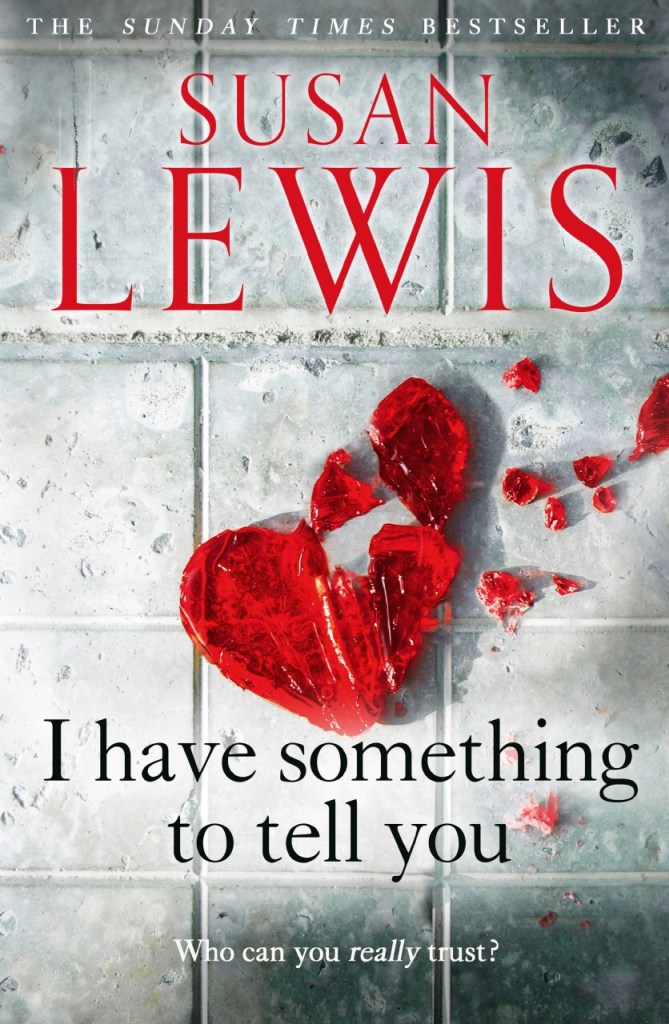
With her usual focus on families and relationships, this prolific author has turned her hand to crime fiction for new novel I Have Something To Tell You and she’s created a very competent murder mystery. Jay and her husband Tom work in the law; Jay is the senior solicitor in her father’s old law firm and Tom is a barrister in chambers across town. They live in Clifton, and have two teenage children who are very excited to be taking a gap year in their education and going travelling. When a new case comes to Jay, everything in her perfect world starts to shift. Edward Blake, local architect and property developer, has been arrested for the murder of his wife Vanessa. The details are perfect tabloid fodder, young beautiful wife is found strapped to her bed with stirrup straps, naked and it looks like she’s been strangled. Jay knows this is going to be an interesting case and immediately leaves for the police station, where she meet DI Ken Bright and his right hand woman DS Hamble. He’s quite clear that it does not look good for her client. Last night he had arrived home, realised his wife was not there but didn’t find that odd. Possibly because their house splits at the top of the stairs – to the right is a master bedroom suite where Edward Blake retires and to the left the guest bedrooms. It is only the next morning when Blake starts to become concerned for his wife’s welfare and when checking the guest bedrooms, just in case she came in late and didn’t want to disturb him, he finds his wife’s body. He now finds himself the prime suspect and he’s relying on Jay to keep him out of jail. Who has killed Vanessa and can Jay succeed in helping her client?
I enjoyed the double storyline, as time was split equally between the case and Jay’s personal life which hits rock bottom as she works with her client. With their children’s imminent departure on their travels, Jay and husband Tom have been looking forward to some quality time together. Both work long hours and this is their chance to slow down, maybe take some time off here and there, and start to enjoy their time together again. Daughter Liv has been struggling in an ‘on again – off again’ relationship with the son of one of their friends and Jay is there as a listening ear. However, it’s Tom who lobs an absolute bombshell into their lives and we get to see how Jay copes under the double pressure of a tough murder case, and trouble at home. At home Jay finds it difficult to sleep and to keep her head. At least work, tough as it is, gives her some respite from troubles at home. She finds an unlikely listener in her client, no matter what state his case is in, Blake notices if Jay is off colour or has things on her mind. He enquires whether she is ok and Jay admits to feeling emotional and being concerned for her marriage. However, this is only a moment of weakness, I was fascinated by the way Jay is usually able to put her game face on and lose herself in the case, undertaking investigations with her trusty P.I. Joe, and becoming embroiled in all the twists and turns.
I thought I’d identified the murderer at the halfway point, but I got it wrong which was a great surprise. Blake and Vanessa’s lives were complicated by another death in the family, and grief had eaten away at their lives and relationship. Vanessa is very troubled and vulnerable from that point on. I found myself a little uneasy with Blake and his position as ‘victim’ in their marital problems. Motives range from sexual jealousy to wrangling over money and potential inheritance. We meet a whole host of characters during the investigation, some of them real horrors that it must have been great fun to write. Vanessa’s stepmother sticks in my mind, because she’s a manipulative and vindictive old woman. She’s sitting on a fortune thanks to the ruined, Gothic, pile she insists on living in even though she can barely afford to heat it. This should be inherited by Vanessa, but could other members of the family have resented that? Especially since Blake and Vanessa already own three incredible properties where they live.
The author pitched her characters perfectly, whether it’s the professional, middle-classes or those who’ve had their money a bit longer. These characters all have beautiful, elegant, homes that sport giant kitchens/ family rooms where they can cook, dine and watch TV together. Blake’s a property developer so his own home is spectacular and very seductive. It’s real Country Homes and Interiors perfection, with it’s well placed riding boots in the hallway and bifold doors in the rear extension with incredible views of the Cotswolds. I wanted to live there. I’d have even taken the guest bedroom where the body was found! Each character had something that made the reader suspicious of them, and I looked forward to each new revelation in the case. I liked Jay’s relationship with her investigator Joe, ex police officer and friend of her father’s, he is a solid presence in her life when everything else is shifting. The author brings in themes of empty nest syndrome, infidelity, betrayal, and the impact of trauma. I thought her portrayal of long-term relationships was probably very realistic. She showed how we change as we get older, but also how life events change people and their priorities, creating the potential to derail even the strongest of marriages. The ending was unexpected, leaving one final twist for last which is always satisfying and not tying up every loose end neatly in a bow. This was an enjoyable read and a successful foray into crime fiction and domestic noir.