On a cold night in a remote Irish village, a girl goes missing.
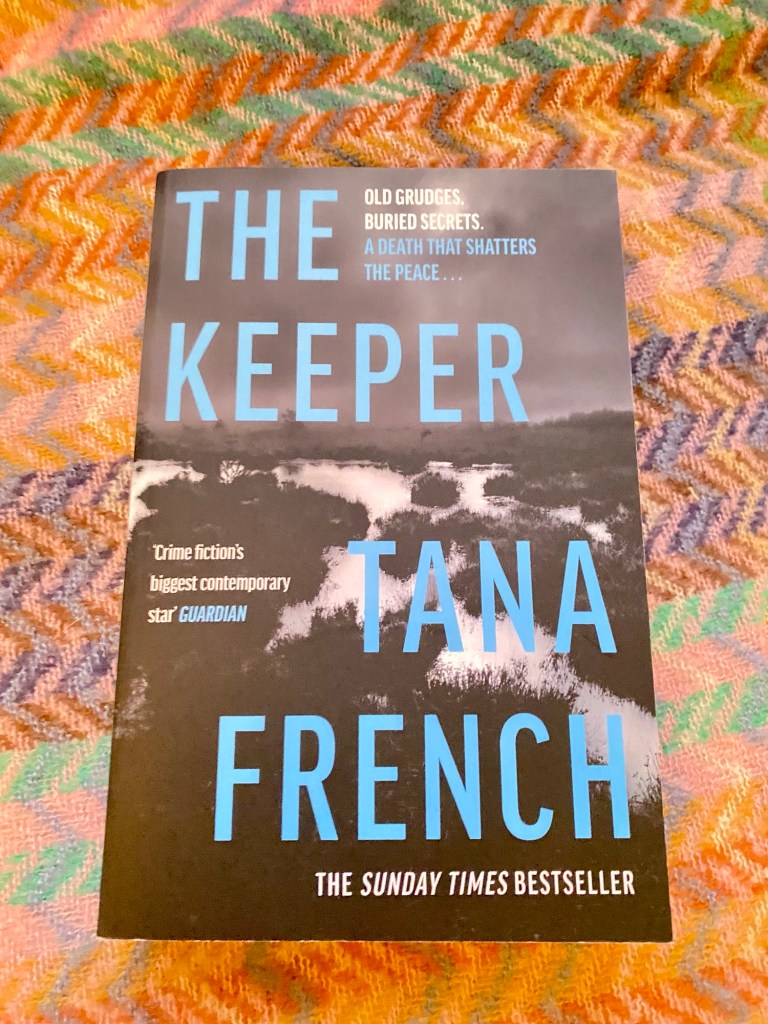
Sweet, loving Rachel Holohan was about to be engaged to the son of the local big shot. Instead, she’s dead in the river.
In a place like this, her death isn’t simple. It comes wrapped in generations-old grudges and power struggles, and it splits the townland in two. Retired Chicago detective Cal Hooper has friends here now and he owes them loyalty, but his fiancée Lena wants nothing to do with Ardnakelty’s tangles. As the feud becomes more vicious, their settled peace starts to crack apart. And when they uncover a scheme that casts a new light on Rachel’s death and threatens the whole village, they find themselves in the firing line.
This was a new series to me, but having read some of Tana French’s earlier novels such as In The Woods I knew it would be something I’d enjoy. I love her writing and here it is such a beautiful balancing act. This is a slow burn novel that’s beautifully atmospheric and manages to convey both moments of high humour and menacing evil. The small village of Ardnakelty is a quagmire. It’s described as gloomy, misty and wet most of the time. There’s something about the weather that’s oppressive and any walk outdoors is liable to leave you muddy and wet. It seems like a harmless place, but it’s full of pitfalls and weeds that can drag you under. The emotional quagmire is impossible to avoid if we look at it through Lena’s eyes. It is so remote, but anyone like Cal thinking they’ve come here for quiet and to avoid other people is in for a shock. He already has Trey, a teenage girl from a difficult family who is like an adopted daughter to him. How much more tied to this place might he become? Villages like this have one shop and one pub and everyone frequents them so eventually there’s a passing acquaintance with everyone. This is a place where neighbours are more like family. They’ve known each other forever, and their mothers knew your mother too. This could be seen as a bonus, but the author depicts it as spider’s web that once you’re stuck it’s impossible to escape. The only question is, who is the spider?
“The cloud is high tonight, letting through a haze of moonlight here and there so that streaks of fields rise ghostly out of the darkness and the air has an icy bite that burrows to the bone.”
The plot reveals itself slowly and once Cal and Trey find the body of local teenager Rachel in the river, the tension starts to build in this small community, until it’s pushed to breaking point. It made me feel angry and utterly powerless in parts. Rachel had been going out with Eugene Moynihan for years and it was apparently Eugene she had been out to meet on that night. Was this a tragic accident or is something more insidious going on? Rachel’s family are devastated and Lena is shocked to find out she was the last person to see her that night. The village gossip is in overdrive with different theories, but the narrative that seems to be emerging is that Rachel might have committed suicide. Cal doesn’t think so, but most people daren’t think anything different. The Moynihans are a big deal in Ardnakelty, living in a huge house with all mod cons and Eugene’s dad Tommy has a finger in every lucrative pie. Cal is told no one is going up against the Moynihans, because Tommy has all the right friends in very high up places. There was part of me that could see this story as an allegory for what’s happening in the world – a money-hungry bully, who is always looking for the next chance and has such a hold over people he could get away with almost anything.
Underneath this main mystery is the narrative of Cal and Lena’s relationship, in fact very early on we get a conversation about their wedding. Despite being engaged, Cal and Lena are still in two separate houses and have made no wedding plans. This suits them, but Lena’s sister Noreen who runs the shop is forever warning them. If they don’t book something round here they’ll lose the only venue. There’s Cal’s worries about Trey who is hoping to gain an apprenticeship as a joiner, has exams to get through and trouble at home where the landlord seems to want them out of their house. All of these things weave in and out of each other, seemingly unconnected but as with everything here patterns and connection exist under the surface. Tommy and Eugene pay Cal a visit, as an outsider maybe he’s the best person to investigate this? Cal refuses but is left with the feeling that will count against him. If he’s to ask any questions he’d rather do it alone, with no one controlling the narrative. What he doesn’t know is that Lena is already asking questions and because she’s from this place she knows who to ask. It’s clear sides are forming, even in the way people arrange themselves at the wake. Cal is with Trey but also his neighbour Mart, the only locals he feels any allegiance to. While Lena is drawn to a women’s table, containing everyone she went to school with and usually avoids. She doesn’t want to join sides, but with Cal increasingly pulled into Mart’s group she knows there’ll be pressure from the Moynihans. Maybe there’s a positive to being part of Ardnakelty, but she can’t see it as yet.
I loved the build up of tension in this small village and the wonderful way the author balances that with humour. There’s a scene with Mart and a squirrel that’s comedy gold and made me laugh out loud then read it to my husband. Mostly it’s the juxtaposition of things; a gang of masked men is menacing, but has a more comical touch when some are Wolverine and other varied superheroes. As the situation escalated I felt angry and powerless to stop what was happening. It wasn’t so much the brawls, it was the quiet threats and controlling nature of what was happening, particularly to the women involved. Tommy Moynihan made my skin crawl but so did Noreen’s mother-in-law Mrs Duggan, the perfect example of someone who appears powerless but actually controls the household and watches the to and fro of the village from her armchair. This fight could knit Cal, Lena and Trey into this place’s history. They could commit to being lifelong Ardnakelty people but if they are, they must find out what’s behind Rachel’s death and end Tommy’s dominance over the place. I became so drawn into this world that I was genuinely upset by the loss and how far apart Lena and Cal become. I loved that he didn’t crowd her and gave her the space to be her own person. I also loved the way he parented Trey and responded to her new relationship. This is an intricate and carefully balanced thriller that’s perfectly grounded in its rural Irish setting. Cal learns that the villager’s allegiance to their land runs deep and they are willing to put absolutely everything on the line for it, even their lives;
“Their tie to their land is different, not in its intensity but in its nature: rooted thousands of years deep, through strata of dispossession, famine, bloody rebellion. This land has been reclaimed and that changes things.”
Out 2nd April from Penguin
Tana French is the author of In the Woods, The Likeness, Faithful Place, Broken Harbor, The Secret Place, and The Trespasser. Her books have won awards including the Edgar, Anthony, Macavity, and Barry awards, the Los Angeles Times Award for Best Mystery/Thriller, and the Irish Book Award for Crime Fiction. She lives in Dublin with her family.
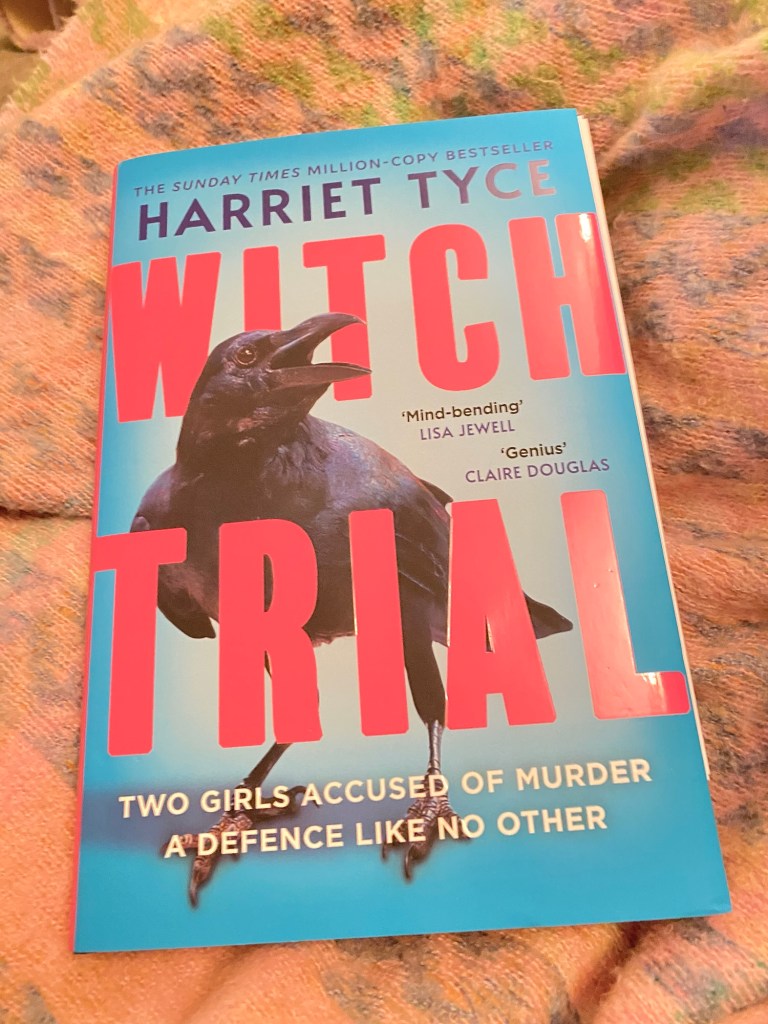
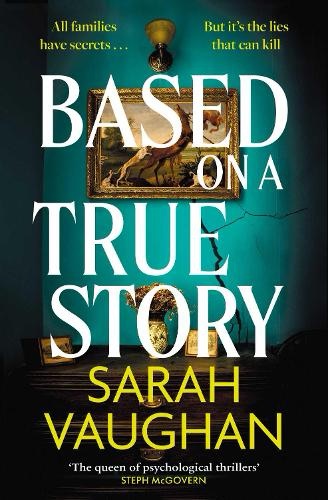
When 18-year-old Christian Shaw is found dead in an Edinburgh park, the city reels – and the shock only deepens when police charge her best friends, Eliza Lawson and Isobel Smyth, with her murder.
As social media explodes and headlines scream for justice, rumours of bullying spiral into something darker: whispers of rituals, obsession, and a teenage pact gone wrong.
Matthew Phillips, a respected heart surgeon, is called for jury duty on the case. But as the trial unfolds – and the girls reveal a chilling defence no one saw coming – he begins to question everything: the motives, the evidence, even his own judgement.
Who’s telling the truth? Who can be trusted?
And what really happened to Christian Shaw?
Let the Witch Trial begin . . .
I finished this book and had to give my head a little shake wondering what I’d just read. Harriet’s one of those writers where I end up devouring the book in a couple of sittings and then wish I’d taken my time because it’s come to an end! This grabs you from the very start as we follow Matthew, an esteemed heart surgeon, for jury duty. He is without question the perfect juror – intelligent, used to making life and death decisions and level headed. However, due to his job he could have easily been excused from jury duty so why does he stay? His colleagues seem incredibly annoyed that he has disappeared and is uncontactable for the foreseeable, because it turns out this is a complex murder case. Although Matthew seems an upstanding character he does seem remarkably keen on having a murder case and with this one he’s truly found the most intriguing. This is one of the most complicated and unlikely cases threaded with fanciful notions of devil worship and witchery. Matthew is our eyes so we view the case at the same time he does, as each witness takes the stand for cross examination. What they must prove is this point of Scottish law:
“Murder is constituted by any wilful act causing the destruction of life, whether wickedly intended to kill, or displaying such wicked recklessness as to imply a disposition depraved enough to be regardless of consequences.”
Put simply, the prosecution must prove that the defendants Isobel and Eliza knew that their friend Christian had a heart condition but were reckless enough to bully and fill her with such fear it killed her. Because of the immediacy of the narrative, the reader drinks in each gasp from the gallery and every revelation from the witness box, so much so that it was halfway through the book before I stopped to wonder how such a case could have made it’s way to court? Can someone deliberately frighten someone to death?
Matthew is observant, he has weighed up his fellow jurors and which ones might be trouble. He has checked out the defendants and wonders whether their appearance might prejudice the witnesses and jurors. Eliza is dressed well, whereas Isobel’s demeanour is surly and uncooperative. She looks down at the floor mostly and has a gothic appearance. She is being painted as the ringleader, but is she or are people being swayed by how she looks? The author adds small details that you barely notice at first such as Matthew’s own appearance. Fully suited and booted on his first few days, he is soon without a tie and then in jeans. His hygiene slips too and a rash starts to affect his hands, itching so badly during the evidence he struggles not to move. He drinks more and avoids his family, staying in his small apartment in the city. There’s also the strange journalist who catches his eye, then seems to disappear. One night she appears at his flat with a bottle and an ouija board, wishing to discuss the more gothic aspects of the case. The suggestion that the girls are practising witches is salacious enough to gain the headlines, but Matthew knows he shouldn’t be talking about the case at all. However, we as the reader are compelled to enjoy the suggestions of animal sacrifice, tarot cards and trying to summon the devil. It’s easy to forget that at the heart of this case are two young girls, who may have been unpleasant and even wicked but surely not criminal? We believe our narrator still, but should we? There are multiple layers to the books final chapters, something that this writer excels at. The occult elements are truly vivid and I found myself engrossed and even believing them in part. This is one of those books, where, like The Sixth Sense, you’ll be going back to see how you missed certain things. The final twists left me awe struck. This is a belting thriller, utterly addictive and compelling to the final page.
Out now from Wildfire Books
Meet the Author
Harriet Tyce was born and grew up in Edinburgh. She graduated from Oxford in 1994 with a degree in English Literature before gaining legal qualifications. She worked as a criminal barrister for ten years, leaving after having children. She completed an MA in Creative Writing – Crime Fiction at UEA where she wrote Blood Orange, the Sunday Times bestselling novel, winner of a gold Nielsen Bestseller Award in 2021. It was followed by The Lies You Told and It Ends At Midnight, both also Sunday Times bestsellers. A Lesson in Cruelty was published in 2022 and met with great critical acclaim and her fifth novel Witch Trial will be published on 26 February 2026. She is a contestant on series 4 of The Traitors. Follow Harriet on Instagram @harriet_tyce and find her Facebook page @harriettyceauthor.
Hello all. Welcome to my February favourite reads. It’s been a busy reading month and thankfully I’ve been feeling less foggy and able to read a lot more. I’ve also found more balance in my reading so I’ve been able to read by choice a lot more too. These are the best ones I’ve read this month, a couple still have full reviews outstanding but I’ll tell you a little bit about why I enjoyed them so much.
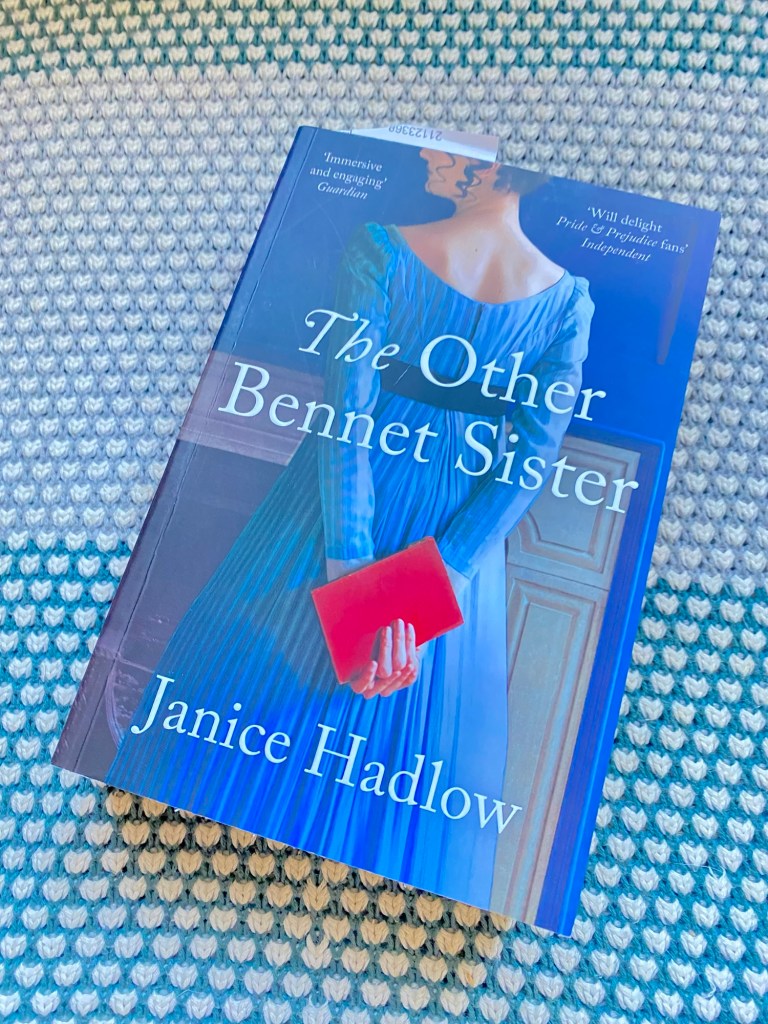
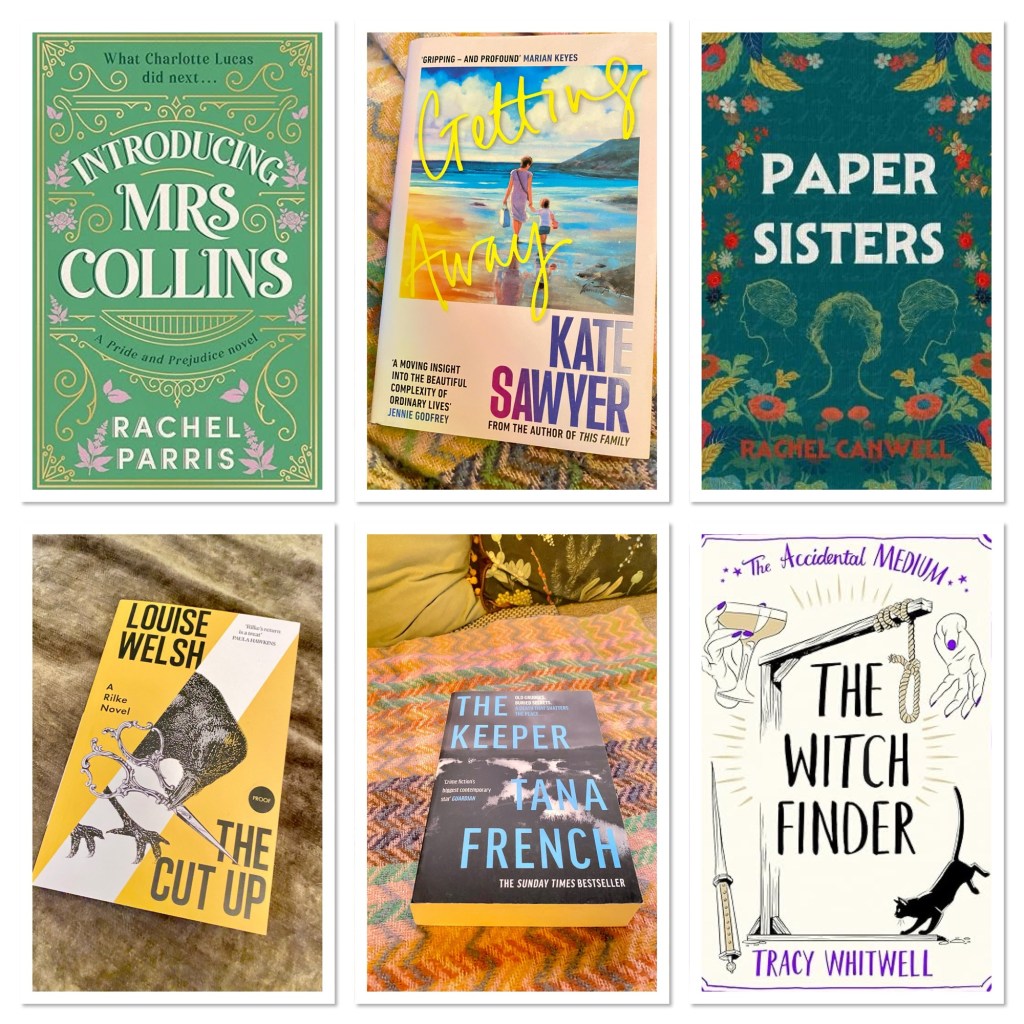
This beautiful Pride and Prejudice inspired book is an absolute dream to read and felt like being back with old friends. I had always felt that Elizabeth Bennett underestimated her friend Charlotte Lucas and clearly she was a character whose possibilities played on author and comedian Rachel Parris’s mind too. Taken from the point Lizzie rejects Mr Collins’s proposal, the book takes in events from the rest of Austen’s romance and carries on beyond giving us glimpses into events we don’t get to see, such as the Darcy wedding at Pemberley. It’s told from Charlotte’s perspective but with letters from other characters and glimpses into Mr Collins’s past. These give us an insight into his manner and behaviour, while the letters give us a new slant on other characters too. I felt that Charlotte was pragmatic in her choice of husband and found ways to grow within it – sometimes in spite of Mr Collins and other times because of him, rather surprisingly. She has purpose, status and time to educate herself. Even Mr Collins has to admit she has blossomed, but when a spark is lit with a visitor to Rosings will Charlotte pursue the one thing she doesn’t have – romantic love and passion? I loved this and I’m sure many of you will too. It is pitch perfect, funny, sad and incredibly entertaining.
I have raved about Tracy Whitwell’s series following the adventures of Tanzy, actor and reluctant medium. This is the fifth and final instalment so I wanted to savour it. After her eventful trip to Iceland Tanz is back on home soil and soon makes her way back to her childhood home of Newcastle. Both she and her ‘little mam’ have been experiencing dreams about hangings, in Tanz’s case very alarming ones where she has a bag over her head and a noose round her neck. Her visions are powerful and are accompanied by sudden and torrential storms. Knowing she needs some help here, she asks Sheila to come and join her. They’re soon at the very spot where a travelling witch finder condemned several women to death by hanging. Even more alarming than usual, he seems to be able to see Tanz too, coming at her with his ‘pricker’ – the implement he uses to prod his prisoners to see if they bleed. This is toxic masculinity 17th Century style and Tanz is going to know her new Icelandic guides and all her power to defeat it. There’s the usual eccentric characters, including an Amazon woman dressed ‘like a Valkyrie’ who is also researching local history of witches and a ghostly lady called Mags who is full of mischief when it comes to putting men in their place. This is genuinely scary in parts and is based on historical research of the area. It was great to see Tanz back home again and with a case to solve, a love story to wrap up and a surprise that might determine her future, it’s a great finale to this funny and fierce series.
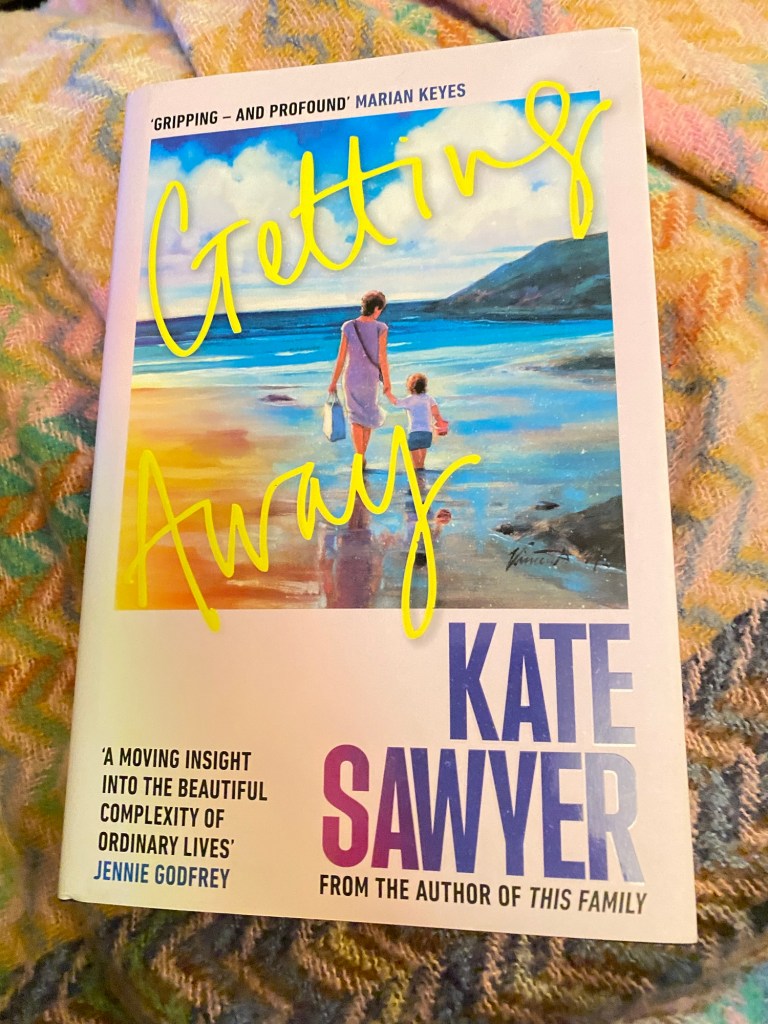
I’ve been able to catch up on some reading this month and I’ve been dying to get to the latest Kate Sawyer. She is now one of my ‘must buy’ authors and this novel just confirms her status on my shelves. Using the structure of family holidays, this book follows four generations of one family and the secrets they carry. Starting post-war with Betty who is at the seaside with her little girl Margaret and husband Jim, but Margaret doesn’t know the secret romance her mother had with the son of a local factory owner. Jim was a pragmatic choice and he’s a good husband despite the facial injuries and terrible memories he carries. Jim is doing well in his job and a few years later they visit the beach with his American colleagues and a teenage Margaret. There something happens that changes the course of this family. The author takes us through the 20th Century, showing how the changing world shapes the experiences of this family. From a beach on the east coast of England, we see holidays in Cornwall, then abroad as Maggie embraces the opportunities of a her husband’s job as a travelling buyer, and when her brother Tommy invests in and up and coming area of Europe. We see howchangesinlaw and culture make some relationships and break others. The womenin this novel are exceptionally well-written and the issues they face from infidelity, domestic violence, infertility and the consequences of a more permissive society opening the door for a more open generation than the one before. Throughout, this is a family that tries its hardest to stay together, even when some members are on the other side of the world. I love complex relationship dynamics so this was an absolute joy to read.
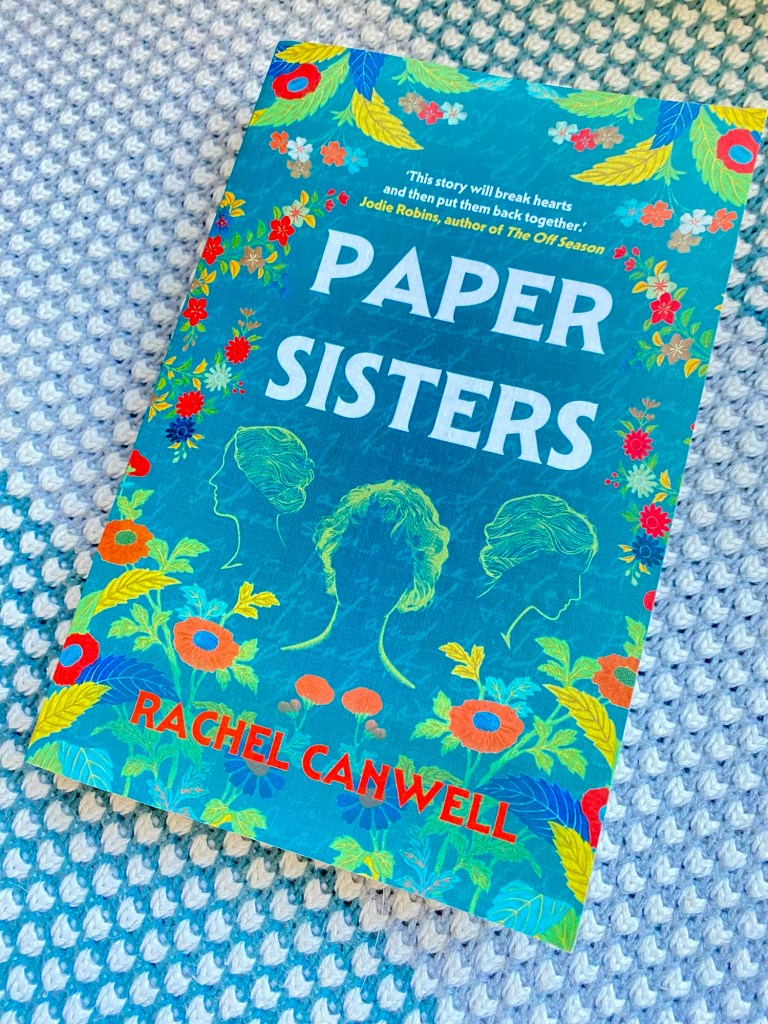
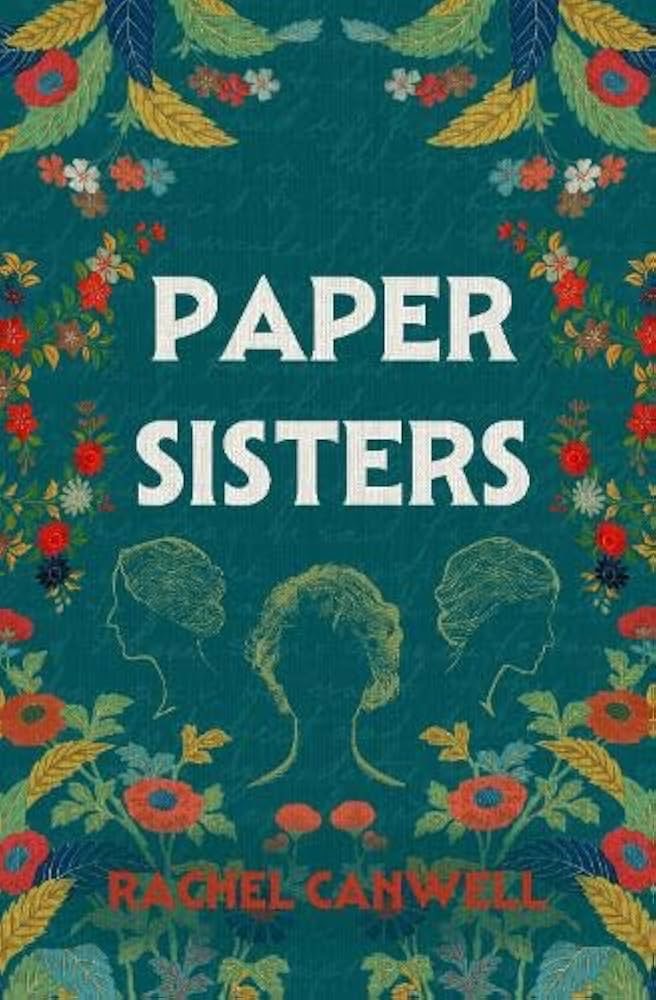
This incredible debut by Rachel Canwell deserves all the praise it’s receiving online. In fact she had a books signing at my local bookshop in Lincoln and had sold out within an hour! Her book is set in the south of Lincolnshire, in the fens and a family who live on the banks of the River Nene at Sutton Bridge. The new swing bridge allows them to visit the village and on the opposite bank a port is being built. Next to their home is a small hospital, readied by their father to serve port workers when everything is finished. One dark and disorienting night the family are woken by a rumbling sound and the splash of things hitting the water, but it’s only in the morning that the full devastation can be seen. The bank has collapsed underneath the new port, the family has lost their occupation and one of its sons, who drowned trying to rescue workers. We meet the three women who tell our story in the 1910s, Eleanor and her sister Lily are the last family members living in the house adjacent to the hospital – still empty and unused. Eleanor has fallen in love with John, the local blacksmith but can’t make plans because of her sister Lily. Lily will not leave the family house, in fact she rarely leaves her bedroom. The loss of her twin brother in the port disaster still affects her daily and she will not allow Eleanor to leave her alone in the house. Eleanor’s best friend Clara is married to their older brother Frank and they live in the village with their children. Clara is married to a bully and she sees one in Lily, who passive aggressively controls her sister. War is looming and as a prisoner of war camp is suggested for the old port site tensions within the community rise. With grief joining domestic violence, manipulation and alcohol issues this family is set for an explosive reckoning. I became so attached to these women and their family’s tragic history that I read it so quickly. I will go back and read it again though. Every element – character, setting, plot – is beautifully done and the historical background took me back to a time when my own grandparents would have been working the land and living next to the River Trent further North in the county. This is an excellent debut that had me absorbed completely.
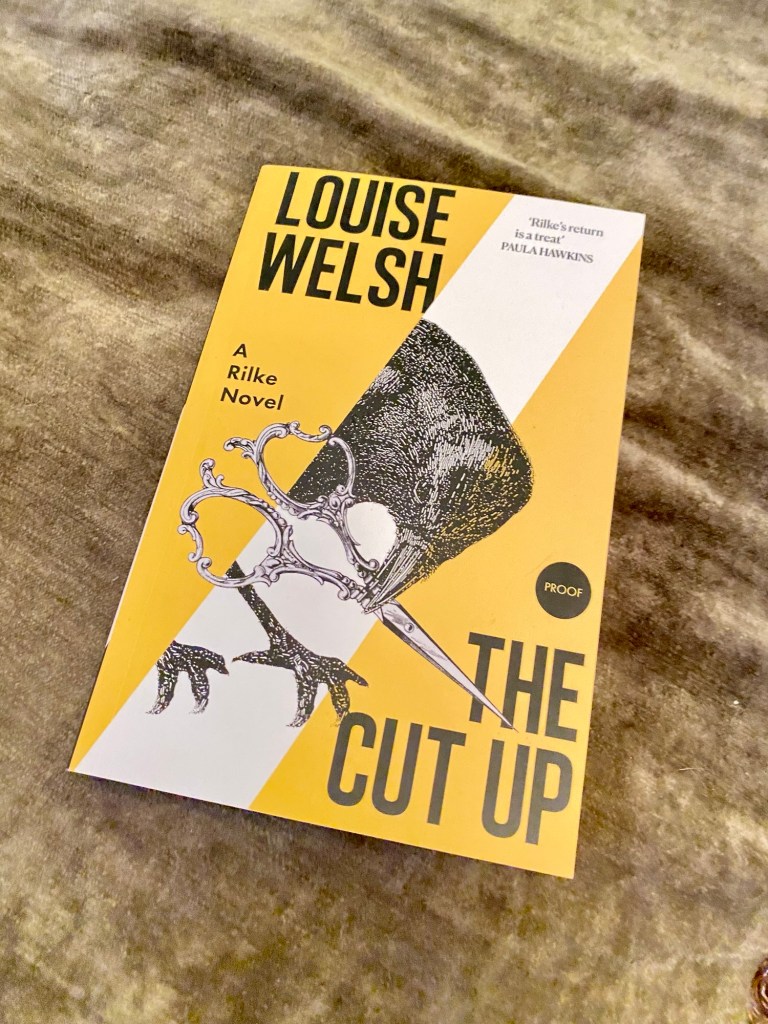
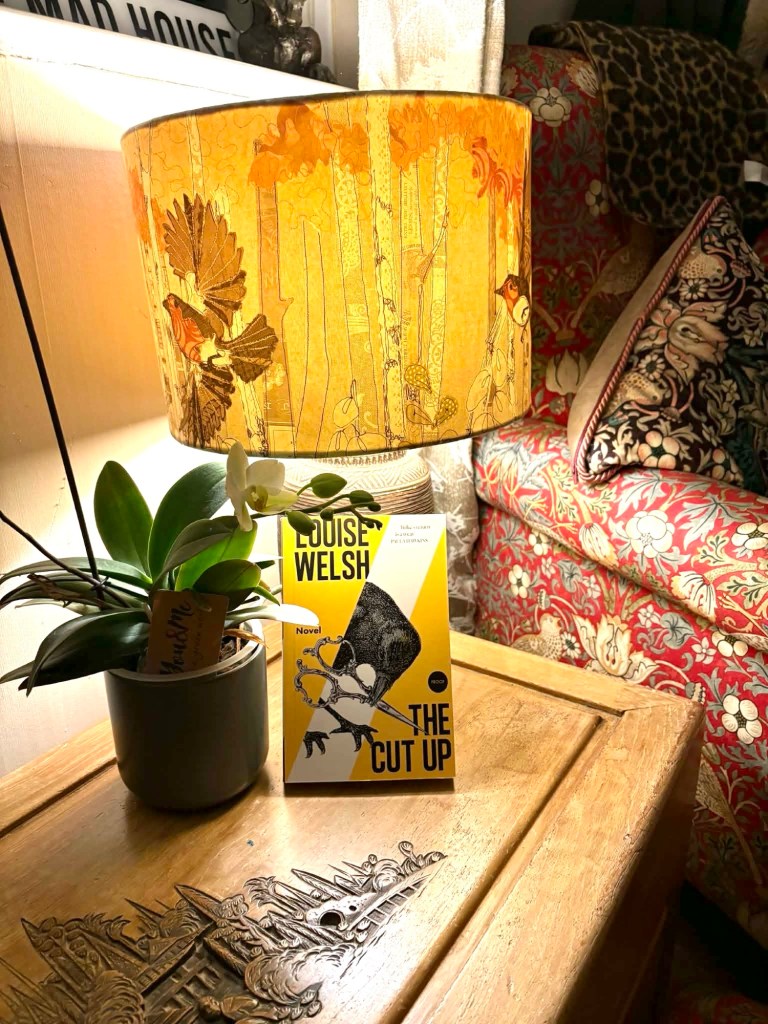
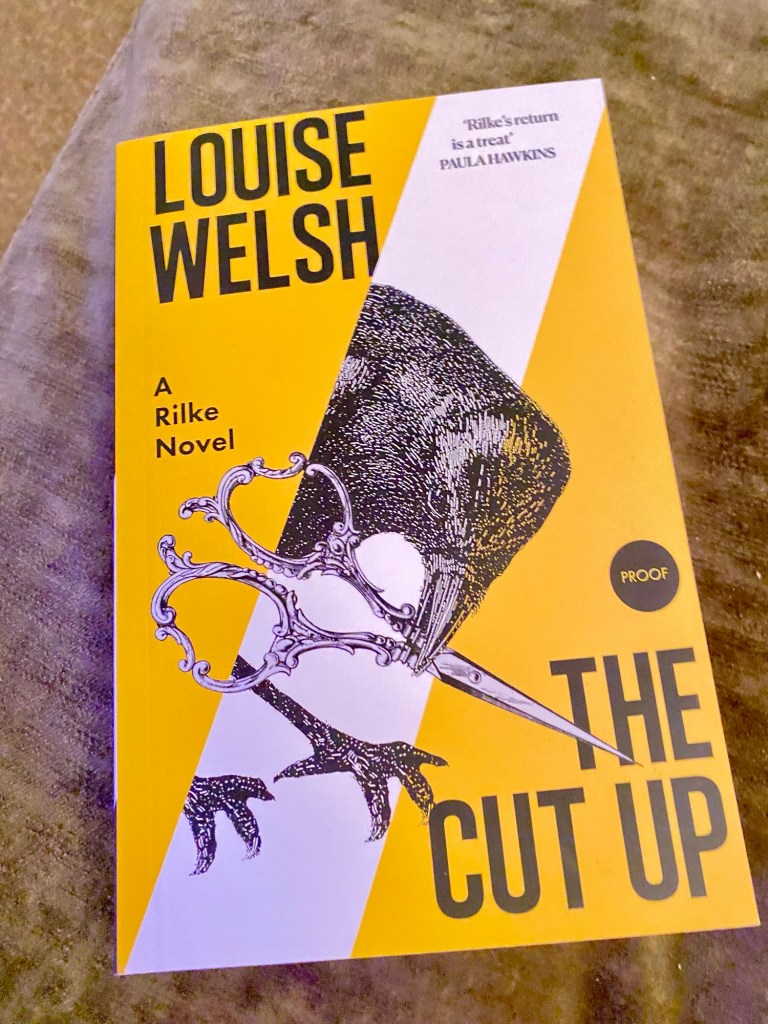
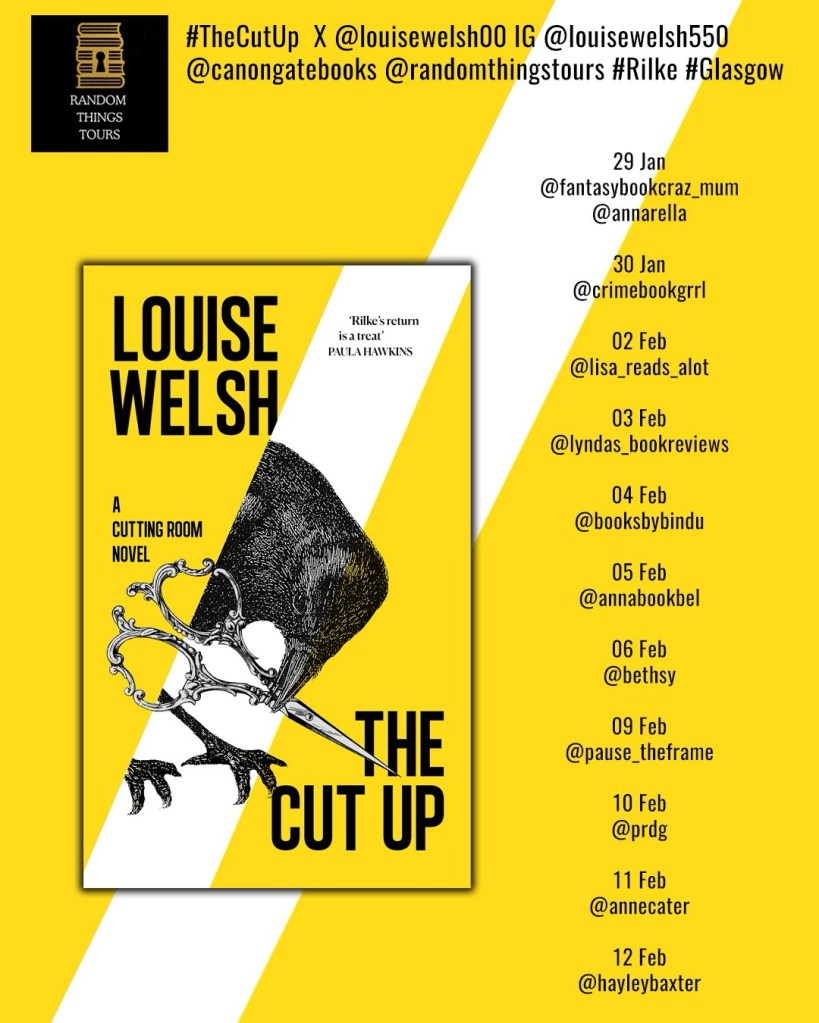
This was an unexpectedly great crime novel set around an auction rooms in Glasgow, a venue where criminal elements mix with rich collectors and eccentric dealers. Rilke is pulled into a difficult situation after his friend Les finishes his prison sentence. When one of the Bowery Auctions regulars, the creepy and questionable Manderson, is killed on the premises it’s only 24 hours till their next auction. In fact Manderson has been stabbed in the eye with one of the antique hat pins they had out for the viewing afternoon. An Edwardian amethyst pin would have had to make its way through a huge hat and into a woman’s long, piled up hair, to keep it secure. Now it’s made its way through Manderson’s eye into his brain and it’s going to take a lot of strength to remove it. Knowing the police will be involved and that Bowery’s will be implicated, perhaps it would be better if it wasn’t obvious that he’s been killed with one of their auction lots. Things get worse when a gangster turns up at Bowery Auctions with Rilke’s mate Les in tow. Ray has a way with a razor and he focuses Rilke with a swipe to Les’s face. Rilke must now investigate who killed Manderson in just ten days or Les will pay the consequences. His investigations will take him to an old school where many ex-pupils have reported sexual abuse, to a brothel named after a questionable film and a girl called Chloe who may or may not be controlled by her boyfriend, Dickie Bird. Will he find the answers that will save Les? More to the point, are the answers to be found outside Glasgow or a lot closer to home? Glasgow is a city that doesn’t hide its darker quarters or episodes in its history and we see them here from pubs to brothels and a particularly creepy old school. The author brings in modern concerns around women using Only Fans and other internet sex work to make ends meet. Can it ever be a feminist thing? There are also issues around coercive control and manipulation, but as Rilke learns it’s easy to get the wrong end of the stick. There’s a familiar jaded feeling around these issues and a knowledge that no matter what’s brought to light, some people will always get away with it. This is a gritty thriller with a streak of humour and some fantastic characters. I’m looking forward to the rest of the series.


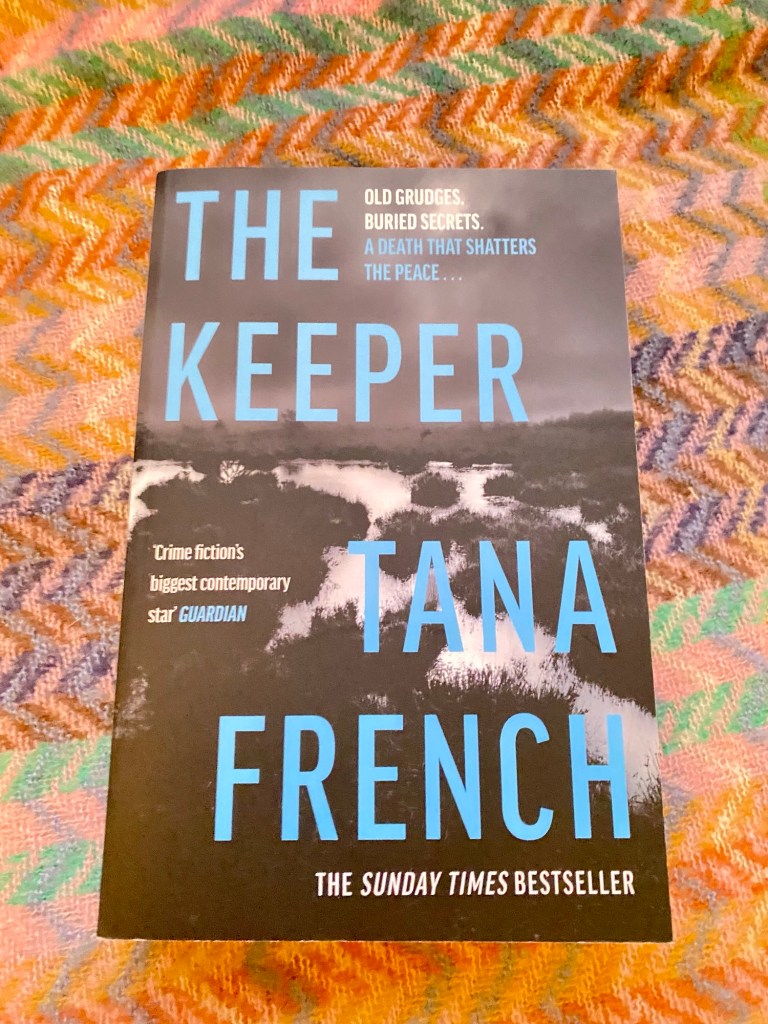
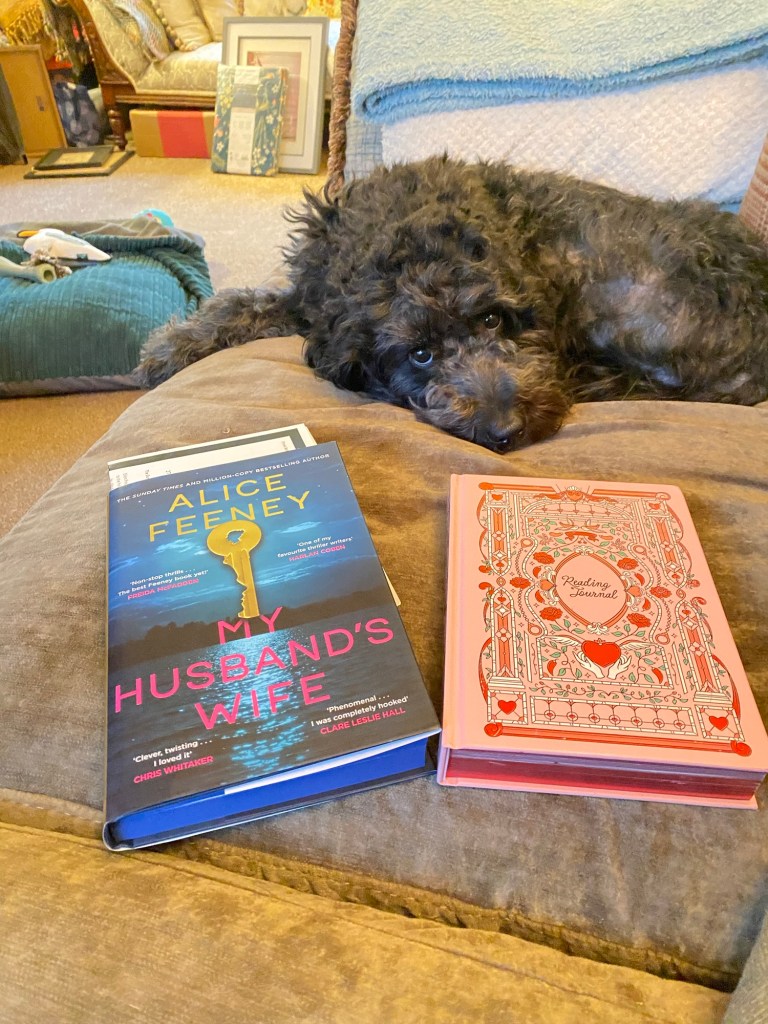
Finally this month I’m recommending this brilliant thriller from Tana French, the third in a series featuring ex- Chicago cop Cal and his new life in the small Irish village of Ardnakelty. This is such an atmospheric read that manages to feel isolated, but suffocating at the same time. Cal and his fiancée Lena, who was born here, try to keep out of any local gossip or feuding. However, when young teenager Rachel goes missing one night in a storm both Cal and his woodworking protoge Trey go looking for her. She’s found in the river, after setting out to meet her boyfriend Eugene Moynihan at the bridge. She appears to have drowned but Eugene claims not to have made the arrangement to meet in such terrible weather and when the autopsy comes back it reports that Rachel had swallowed anti-freeze. Is this an accident or suicide. Cal and Lena suspect foul play and with Lena being the last person to see Rachel, staying out of this might not be possible. When Cal appears to side with his neighbour Mart against the Moynihan family tensions rise and Tommy Moynihan, family patriarch, starts to show just how much of Ardnakelty he holds in his power. This is a complex mystery, with risky allegiances and terrible consequences. The Irish dialogue is so beautifully written and there are moments of laugh out loud humour to dispel the tension. This was an incredibly good thriller with plenty of twists and a fascinating central character too.
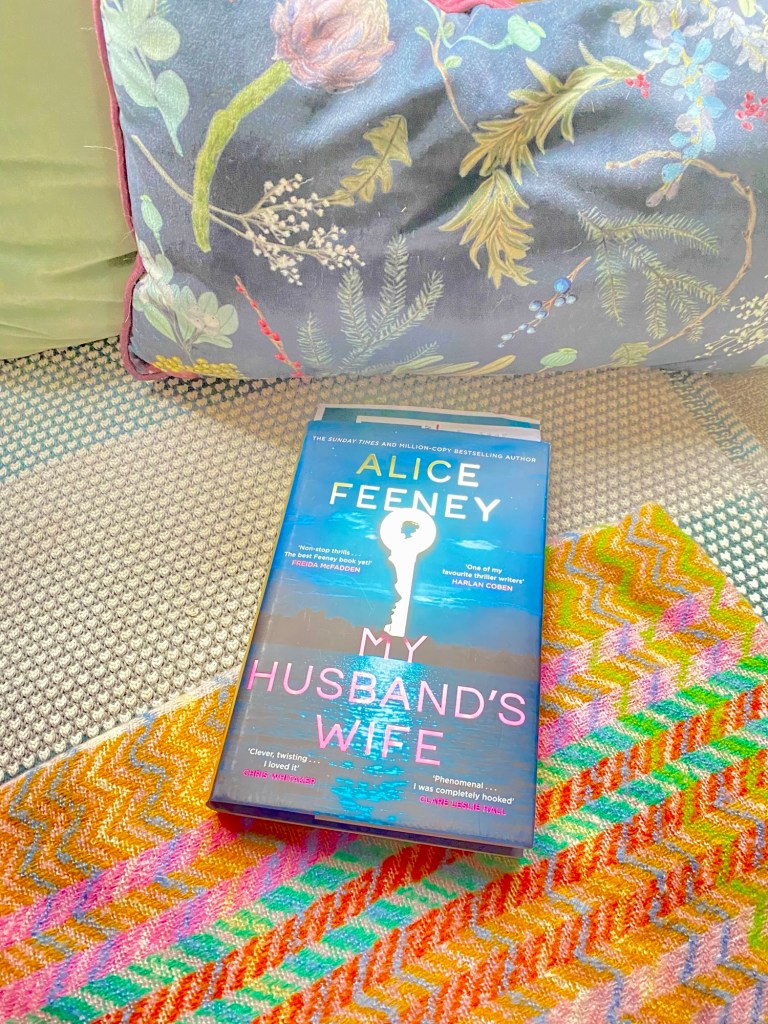
Eden Fox, an artist on the brink of her big break, sets off for a run before her first exhibition. When she returns to the home she recently moved into – Spyglass, an enchanting old house in the pretty seaside village of Hope Falls – nothing is as it should be. Her key doesn’t fit. A woman, eerily similar to her, answers the door. And her husband insists that this stranger is his wife.
One house. One husband. Two women. Someone is lying.
Six months earlier, a reclusive Londoner named Birdy, reeling from a life-changing diagnosis, inherits Spyglass. This unexpected gift from a long-lost grandmother brings her to Hope Falls. But then Birdy stumbles upon a shadowy London clinic that claims to be able to predict a person’s date of death, including her own. Secrets start to unravel and, as the line between truth and lies blurs, Birdy feels compelled to right some old wrongs.
My Husband’s Wife weaves a tangled web of deception, obsession and mystery that will keep you guessing until the last page. Prepare yourself for the ultimate mind-bending marriage thriller and step inside Spyglass – if you dare – to experience a story where nothing is as it seems.
My goodness this thriller messed with my head! From the very first time Eden Fox returns from her run, puts her key in the door and finds it doesn’t fit, I was utterly hooked. I couldn’t imagine how this had happened and what the hell was going on. Even her own art exhibition has been hijacked by a woman who looks exactly like her and as the village’s police officer Sergeant Carter is brought into the mystery, he’s also at a loss. He goes to meet Harrison Wolf at his home, a beautiful house called Spyglass set on the cliffs with a panoramic view of the sea. Harrison is Eden Fox’s husband and he insists that the woman at home with him is his wife. So who is the woman left at the police station? We’re then taken six months earlier and introduced to Birdy, a young woman living in an apartment above a bookshop in London. She receives a strange letter addressed to her recently deceased grandmother, it’s so strange Birdy is fascinated and wants to investigate further. It’s from a company called Thanatos who claim to be able to predict your death day. Birdy decides to become a client of the company, run by Harrison Wolf. Birdy is interested to see if they are as accurate as they suggest. She wants to know what the company told her grandmother, before she died. Her grandmother lived in a house looking out to sea, in a small village in Cornwall and Birdy has inherited it. How are all these people connected? I had so many questions I didn’t know where to begin, but the short chapters and their drip feed of information kept me reading. I just had to find out what was going on!
I loved Birdy as a character and was surprised by the part she played in the investigation around Eden Fox. Her dynamic with Sergeant Carter is comical and brings light relief to the complications of the plot. She is so very sure of who she is and has a specific look from her plaited hair to her brogues. She also loves reading with always endears a character to me and enjoyed her dog companion too. She’s very ballsy and soon has the measure of Carter who really doesn’t stand a chance against this intelligent and forthright older woman. Carter is our representative of this sleepy village in Cornwall and through his family we see the difficulties facing villagers as more and more housing is being turned into holiday accommodation. They have lost their home and livelihood at the Smuggler’s Inn. Young people have very little chance of settling where they’ve grown up which affects the passing down of traditions and social history. Our book is set around the time of All Soul’s Day and the village tradition is like a Day of the Dead parade with everyone dressed up as skeletons, or dead pirates and mermaids. This touch of folklore lets us know we’re somewhere unique, with a long history and old loyalties. Could this be an explanation for what’s going on here? Something magical or something more sinister and human?
I’m in awe of people who can write like this and keep track of all the threads. I imagine a room with one of those see through boards covered with pictures, lists and cross-referencing. Spyglass is a brilliant backdrop for all these odd goings on and reminded me a little of the home in the first Knives Out film that one detective refers to as a life size game of Cluedo. There’s something mesmeric about its view that inspires both Eden Fox and her stepdaughter Gabrielle who still paints nothing but the house and it’s surrounding despite living elsewhere, in a home for dependent young adults. Ever since an accident when she was a child Gabrielle hasn’t spoken and only communicates through her art, which sounds very eerie. Spyglass’s library sounds incredible and it’s no surprise to know that Birdy’s grandmother had a love of classic crime fiction. Like me, I’m sure other thriller readers will devour this addictive thriller that delivers great characters, a seemingly unsolvable mystery and twist after twist.
Out now from Pan MacMillan
Meet the Author
Alice Feeney is the New York Times and Sunday Times multi-million-copy bestselling author of novels including HIS & HERS, SOMETIMES I LIE, ROCK PAPER SCISSORS, DAISY DARKER, BEAUTIFUL UGLY and MY HUSBAND’S WIFE. Her books have been translated into forty languages, and have been optioned for major screen adaptations. HIS & HERS was an instant Global #1 Netflix show in 2026, starring Tessa Thompson and Jon Bernthal.
Alice was a BBC journalist for fifteen years before becoming an author. MY HUSBAND’S WIFE is her eighth novel.
You can follow Alice on Instagram or Facebook. To be the first to know about her tours, TV shows, and books, visit her website: alicefeeney dot com.
There are so many books billed as having killer twists these days that this should be an easy list to produce. What I wanted to do was focus on books that genuinely made me do a double take, where I went back a couple of pages to make sure I’d read it correctly. These are twists I absolutely didn’t see coming and made my jaw drop or conjured up huge emotions. They’re the sort of twists that have you recommending the book to everyone and it’s no surprise that quite a few have been adapted for film or television streaming services. As the ‘twist’ is usually reserved for crime fiction and thrillers I’ve added some that are historical fiction, love stories and sci-fi to mix things up a little. There are no spoilers here, just a synopsis and why you should read it if you haven’t already. Enjoy.
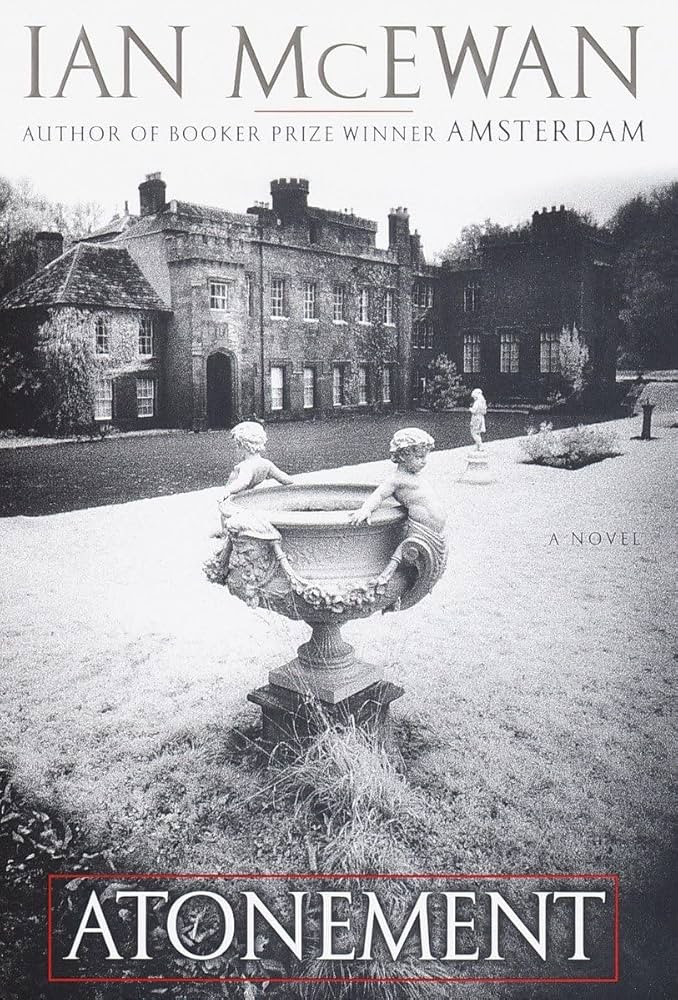
On the hottest day of the summer of 1934, thirteen-year-old Briony Tallis sees her sister Cecilia strip off her clothes and plunge into the fountain in the garden of their country house. Watching her is Robbie Turner, her childhood friend who, like Cecilia, has recently come down from Cambridge. By the end of that day, the lives of all three will have been changed for ever. Robbie and Cecilia will have crossed a boundary they had not even imagined at its start, and will have become victims of the younger girl’s imagination. Briony will have witnessed mysteries, and committed a crime for which she will spend the rest of her life trying to atone. I remember going to see this at the cinema and people standing up and clapping at the end. It’s a rare thing to see in the cinema but it was so spontaneous. Similarly, if you’ve read the book I don’t think you can be anything but devastated by the twist. I first read this at university as part of my post-modern literature course and I loved the characters as well as Briony’s innocent but life-altering mistake. It’s amazing how differently we interpret things as children, especially the complexities of human relationships. Robbie and Celia will have their lives turned upside down as Briony tells us about that day that altered the course of all their histories. We follow their lives and how the consequences continue to affect all of them. This twist is not of the usual kind, it is emotional and devastating.
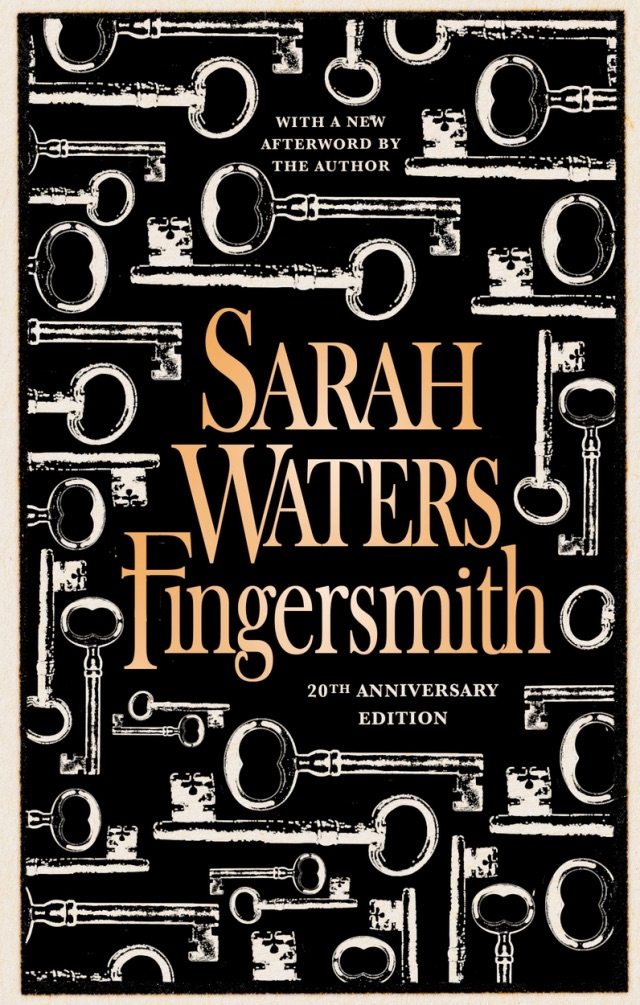
Sue has grown up among petty thieves in the dark underbelly of Victorian London, with her adopted mother, Mrs Sucksby, who is a “baby farmer”. One day they are visited by a confidence trickster known simply as “Gentleman” who has a devious plan for their consideration: he is trying to romance Maud Lily, a young naive lady who is heir to a fortune on the condition that she marries. She lives in a large house in the country and works as a secretary of sorts for her uncle. He is protective and keeps her close, so to be successful they must infiltrate the house. He proposes that Sue becomes Maud’s personal maid and once she is settled, gain the young woman’s trust. She must then convince Maud to take up an offer of marriage from a suitor named Richard Rivers, the ‘Gentleman.’ Once they have eloped he will declare Maud as mentally incompetent and commit her to an asylum taking charge of her inheritance. For her part in this plot, Gentleman promises Sue a reward.
At first their plans work well, but it isn’t long before Sue begins to have doubts. She is growing fond of Maud and realises she is not in love with Rivers at all. Actually Maud is terrified of him. Sue begins to fall in love with Maud herself, charmed by her innocence and lack of guile. It seems her feelings are returned, but as the girls consummate their relationship on the eve of Maud’s secret wedding, Sue doesn’t known how to stop the plan. The author splits the story between the two girls and there’s absolutely no warning of the huge twist that’s about to come. This is a brilliant novel from Sarah Waters with an audacious twist that’s one of the best in literary fiction.
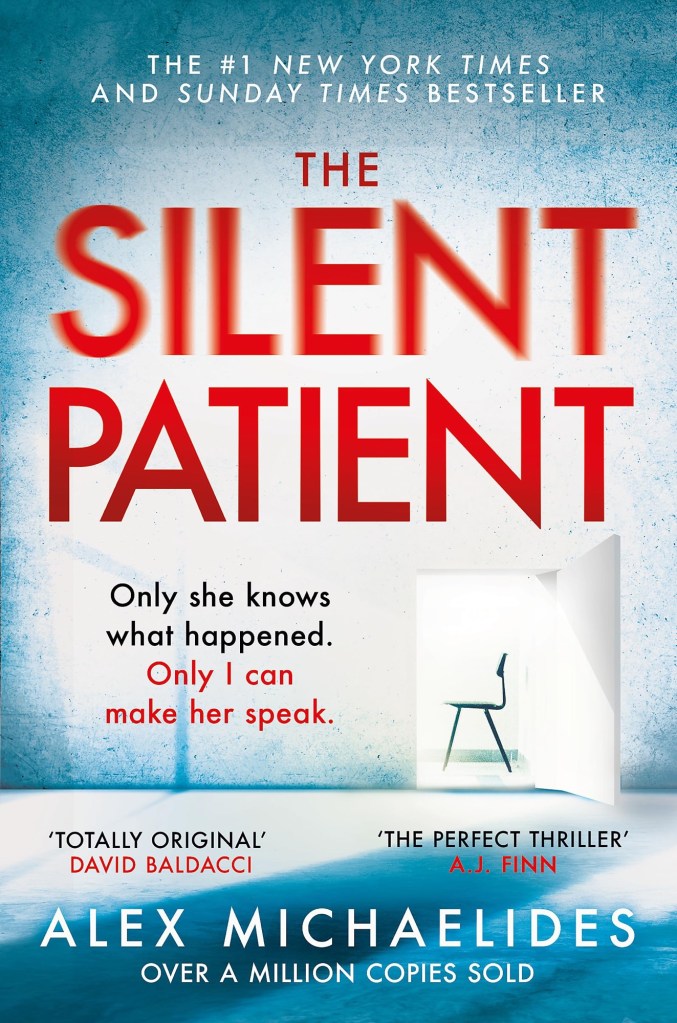
Alicia Berenson seems to lead a charmed life. She’s a famous painter and her husband is an in-demand fashion photographer. The couple live in a smart house overlooking the park in a desirable area of London. Yet, one evening, when her husband Gabriel returns home late from a fashion campaign, Alicia shoots him five times in the face. Since that day she has never spoken another word.
Alicia’s refusal or inability to talk turns this domestic tragedy into public property and casts Alicia into notoriety. Her art prices go through the roof, and she is known as the silent patient, hidden away from the tabloids at the Grove, a secure forensic unit. Theo Faber is a criminal psychotherapist and he has waited a long time for an opportunity to work with Alicia. He is determined to get her talking again and unravel the mystery of why she murdered her husband becomes an all consuming search for the truth…. I still love this book years on and I’m very excited to see the film when it comes out. This twist was so good I actually swore out loud! I know that a book has me in its grip when I respond out loud. The author plays on the readers’ expectations of the characters in a clever way. If you haven’t read this yet where have you been?
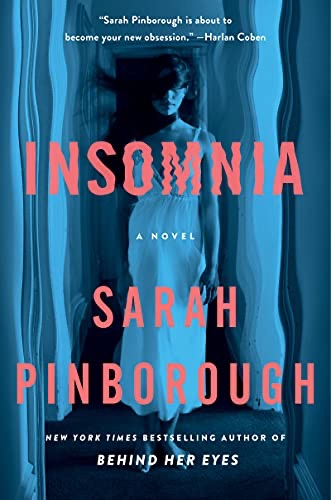
From the outside, Emma has the dream life – a loving husband, a beautiful house, two gorgeous children.
But something is keeping Emma awake.
Scratching at her sanity at 1am.
She’s tried so hard to bury the past, to protect her family. But witching hour loves a secret – and Emma’s is the stuff of nightmares …
This is such a great read and I remember shouting about it a lot. I wasn’t surprised when it was adapted for television. The way Emma disintegrates over the course of a few days is shocking, but believable. Until now Emma has prided herself on being a competent solicitor, very organised and together. I was desperate to find out what happened in their childhood and why her sister Phoebe popped up at this moment. I did feel there was an element of her not processing her childhood trauma. She’s locked it away in the back of her mind, but Phoebe’s appearance and advice that she should visit their mother seems like the trigger that unlocks these memories. What the author does, very cleverly, is muddy the waters; just as I was starting to think Emma was having a breakdown, other things start happening. Her young son keeps creating a strange macabre drawing of a terrible memory that haunts Emma. How could he know? Who has told him this happened? Her dictated letters have turned into a mumbled series of numbers when her secretary plays back the dictaphone. Added to these seemingly inexplicable events the author throws in a number of outside stresses At work she is trying to avoid the advances of a client, his ex-wife confronts Emma over losing custody of their boys. It becomes hard for the reader to see which events can be explained away, which are normal daily obstacles made worse by Emma’s severe sleep deprivation and which are incredibly strange. I was never fully sure what was real and what was imagined or who was to blame. This twist is so clever because the author uses our psychological knowledge and our expectations of thrillers to keep us looking elsewhere. Very clever indeed.
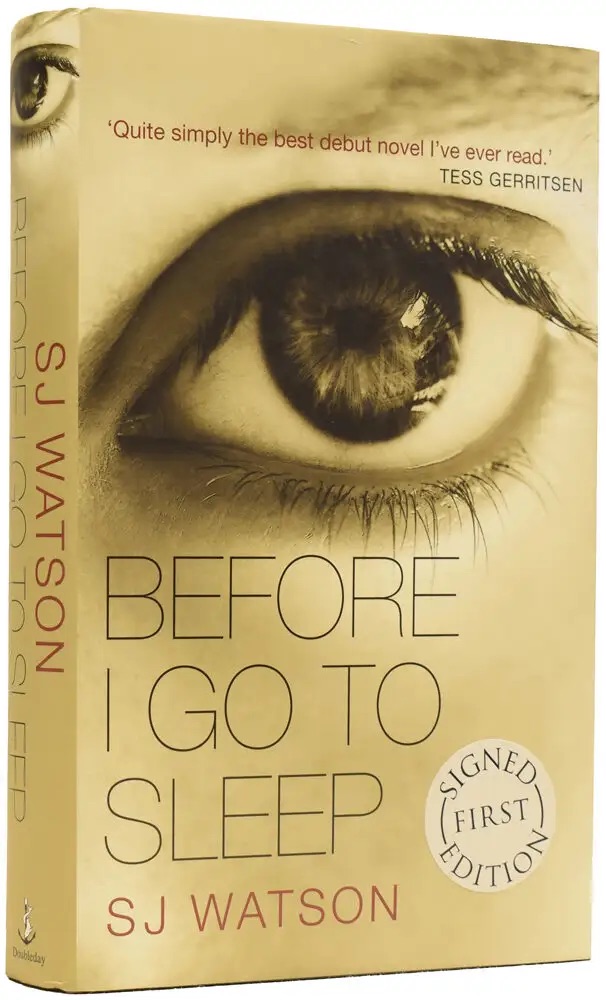
Memories define us.
So what if you lost yours every time you went to sleep? Your name, your identity, your past, even the people you love – all forgotten overnight. And the one person you trust may only be telling you half the story.
Welcome to Christine’s life.
I can’t believe this book is 12 years old this year! It was also S.J. Watson’s debut novel. Christine wakes up every morning with no memory of her life, helped by the notes her husband leaves for her to find she tries to navigate life where every day is finite and nothing is retained. One day a strange doctor visits with what he says is a private journal she has been writing while they work together. It is the first sign we have that not everything is at it seems and for Christine, the terrifying thought that she cannot trust the person she’s supposed to feel safe with. This is a very creepy and unsettling novel and the tension is stretched to breaking point because we know that as night draw in Christine will soon go back to sleep and lose everything she has learned. I felt like this was more of a slow release twist, but the horror definitely builds towards the end and I was completely engrossed. Again it was no surprise that this was picked up by a film company and the film is pretty good too.
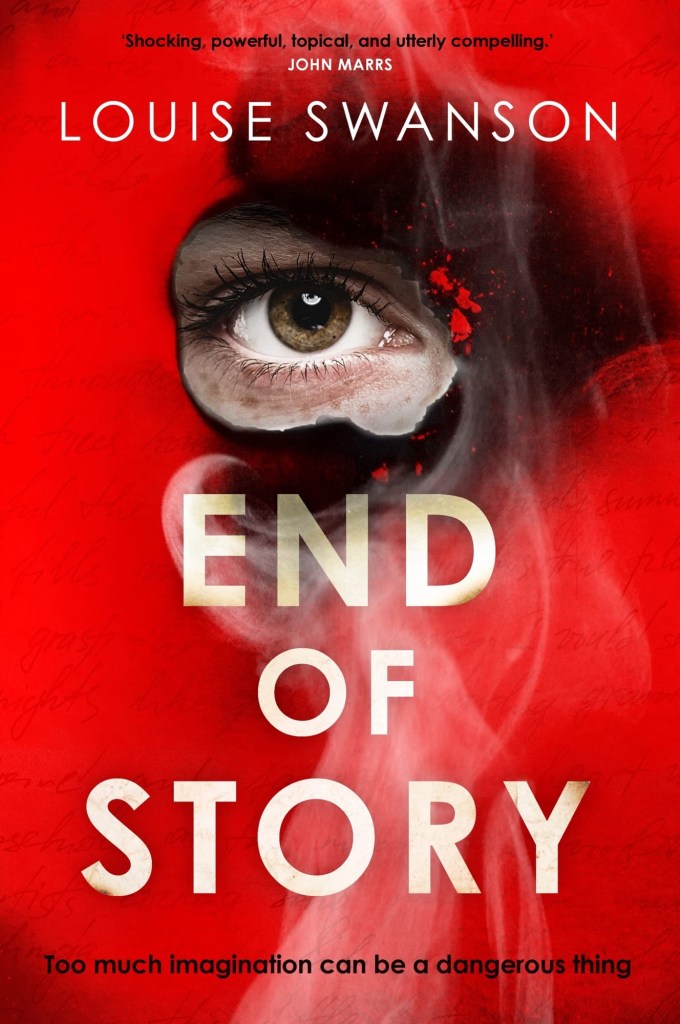
Our narrator Fern Dostoy is a writer, one of the ‘big four’ novelists of the not too distant future. This is a future where the Anti-Fiction Movement’s campaign to have all fiction banned has been successful. It was Fern’s third novel, Technological Amazingness, that was cited as a dangerous fiction likely to mislead and possibly incite dissent in it’s readers. She had created a dystopian future where two major policies were being adopted as standard practice. To avoid poor surgical outcomes, only patients who are dead can have an operation. Secondly, every so often, families would be called upon to nominate one family member for euthanasia – leading to the deaths of thousands of elderly and disabled people. All fiction authors, including Fern, are banned from writing and the only books on sale are non-fiction. The message is that fiction is bad for you. It lies to the reader giving them misleading ideas about the world and how it’s run. Facts are safe, but of course that view is limited to those supplying the facts. AllBooks dominated the market for books until it became the only bookshop left, state sanctioned of course and only selling non-fiction. From time to time they hold a book amnesty where people can take their old, hidden novels to be pulped. Fern now cleans at a hospital and receives unannounced home visits from compliance officers who question her and search her house to ensure she’s not writing. Added to this dystopian nightmare are a door to door tea salesman, an underground bedtime story organisation, a mysterious appearing and disappearing blue and white trainer, re-education camps for non-compliant writers and a boy called Hunter. All the time I was reading about this terrible new world, I was taking in the details. and trying to imagine living in it. I also had an underlying sense that something wasn’t quite right with this story. When this twist comes it is astonishing, gut wrenching and reduced me to tears. An incredibly well written book about facts that is all about feelings.
Cole is the perfect husband: a romantic, supportive of his wife, Mel’s career, keen to be a hands-on dad, not a big drinker. A good guy.
So when Mel leaves him, he’s floored. She was lucky to be with a man like him.Craving solitude, he accepts a job on the coast and quickly settles into his new life where he meets reclusive artist Lennie.
Lennie has made the same move for similar reasons. She is living in a crumbling cottage on the edge of a nearby cliff. It’s an undeniably scary location, but sometimes you have to face your fears to get past them.
As their relationship develops, two young women go missing while on a walk protesting gendered violence, right by where Cole and Lennie live. Finding themselves at the heart of a police investigation and media frenzy, it soon becomes clear that they don’t know each other very well at all.
Wow! This blows your eyes wide open. I warn you not to start reading at night, unless like me you have a total disregard for the next morning. If I wasn’t reading this, I was thinking about it. I loved the way the author put her story together, using fragments from lots of different stories and different narrators. Just when we get used to one and start to see their point of view, the perspective shifts. I thought this added to the immediacy of the novel, but also reflected the constant bombardment of information and misinformation we sift through every day, with transcripts of radio shows and podcasts, Twitter threads and TV interviews. All give a perspective or commentary on the casual misogyny and violence against women that almost seems like the norm these days. It felt like a merry-go-ground of opinion, counter argument and trolling. Sometimes you’re left so twisted around you’re not sure what you think any more. I would believe one narrator, but then later revelations would blow what I thought right out of the water. It made me ask questions: about the nature of art and its ethics; about whether all men truly hate women; to what lengths do we go to protest; when is enough, enough? This controversial story was one of my reads of 2024 and I still think about it.
I didn’t expect a twist in a love story, but this is part love story and part mystery. Imagine you meet a man, spend seven glorious days together, and fall in love. And it’s mutual: you’ve never been so certain of anything. But after this whirlwind romance, he doesn’t call. You’ve been ghosted.
Your friends tell you to forget him, but you know they’re wrong – something must have happened, there must be a reason for his silence. What do you do when you finally discover you’re right?
Sarah met Eddie by chance on a country road while she was visiting her parents. She still thinks Eddie just might be the one. Could the Eddie she met really be a heartless playboy who never intended to call? Did Sarah do something wrong? Or has something terrible happened to him? Instead of listening to friends and writing this off as a one night stand, Sarah begins to obsess and is determined to find the answer. Every clue she has comes to a dead end and she is in danger of completely losing her dignity. As her time back home in the UK starts to run out, Sarah looks for clues to track Eddie down. What she hears is confusing her further. His friend doesn’t give the simple answer, that Eddie has moved on, but gives her a warning; if she knows what’s best for her, she needs to stop looking for Eddie. I never expected the twist in this story and all the time I was convinced of Sarah’s sense of ‘rightness’ to their meeting. As the months pass though, will she have to move on with her life? This novel is fully of emotion and the different ways life’s troubles affect us. It has everything you would expect from a romantic novel but with a healthy dose of realism and a smidgen of hope.
Marissa and Mathew Bishop seem like the golden couple – until Marissa cheats. She wants to repair things, both because she loves her husband and for the sake of their eight-year-old son. After a friend forwards an article about Avery, Marissa takes a chance on this maverick therapist who lost her licence due to her controversial methods.
If Avery Chambers can’t fix you in ten sessions, she won’t take you on as a client. She helps people overcome everything, from anxiety to domineering parents. Her successes almost help her absorb the emptiness she feels since her husband’s death.
When the Bishops glide through Avery’s door, all three are immediately set on a collision course. Because the biggest secrets in the room are still hidden, and it’s no longer simply a marriage that’s in danger.
The authors use alternate perspectives to drip feed details of this couple’s relationship and the events leading up to Marissa’s infidelity. It is compelling and really captures the intricacies of counselling a couple and the need to read body language and expression, not only of the person who’s speaking but their partner. I loved how therapy progressed the issues within the marriage, which are always somewhat different to the presenting issue. This was a clever thriller that showed just how complex we are psychologically.
If you feel like delving into a classic this could be for you. The Woman in White famously opens with Walter Hartright’s eerie encounter on a moonlit London road. He’s been engaged as a drawing master for the beautiful Laura Fairlie, Sir Percival Glyde’s new wife and they’re often accompanied by her sister Marian. Walter slowly becomes drawn into the sinister intrigues of Sir Percival and his ‘charming’ and rather eccentric friend Count Fosco, who keeps white mice in his waistcoat pocket and enjoys both vanilla bonbons and poison. The novel pursues questions of identity and insanity along the paths and corridors of English country houses and the madhouse, The Woman in White is the first and most influential of the Victorian genre that combined Gothic horror with psychological realism, known as sensation fiction. This book is the Victorian equivalent of our psychological thrillers, but could just as easily be described as crime or mystery fiction and even has a feminist slant. Be sure to take note of every small occurrence because the novel is plotted so precisely that everything has a meaning. Again we’re dealing with men’s attitudes and behaviour towards women, but Marian is more than a match for any man and is one of fiction’s first female detectives. I love a gothic novel and this has everything from ghostly encounters, to stately homes and damsels in distress. I believe this book is the inspiration for so many detective novels and its category of ‘sensation fiction’ is very apt because it employs a twist I’ve read variations on ever since.
It’s hard to be good when living is expensive. And times are tough on the streets these days. Luckily for Rilke at Bowery Auctions the demand for no-questions-asked cash is at an all-time high, and business is booming.
When Rilke hears his old acquaintance Les is fresh out of prison, his inclination is to stay well out of his way. Letting sleeping dogs lie is one thing – but when one of Bowery’s customers winds up dead on their tarmac, Rilke needs a bit of help from his friends to tidy things up. If only his friends didn’t have such a habit of making things worse.
This is such a brief synopsis for a novel that’s full of character, atmosphere and set in one of the best cities I’ve ever spent time in. The novel is book-ended with someone coming out of prison and this is the world that valuer and auctioneer Rilke operates in. This is a world of second hand goods, murky dealers and eccentric characters who love collecting. Bowery Auctions is run by Rose Bowery and Rilke is part of the furniture. When one of their regulars, the creepy and questionable Manderson, is killed on the premises it’s only 24 hours till their next auction. In fact Manderson has been stabbed in the eye with one of the antique hat pins they had out for the viewing afternoon. An Edwardian amethyst pin would have had to make its way through a huge hat and into a woman’s long, piled up hair, to keep it secure. Now it’s made its way through Manderson’s eye into his brain and it’s going to take a lot of strength to remove it. Knowing the police will be involved and that Bowery’s will be implicated, perhaps it would be better if it wasn’t obvious that he’s been killed with one of their auction lots. Things get worse when a gangster turns up at Bowery Auctions with Rilke’s mate Les in tow. Ray has a way with a razor and he focuses Rilke with a swipe to Les’s face, he must now investigate who killed Manderson in just ten days or Les will pay the consequences. His investigations will take him to an old school where many ex-pupils have reported sexual abuse, to a brothel named after a questionable film and a girl called Chloe who may or may not be controlled by her boyfriend, Dickie Bird. Will he find the answers that will save Les? More to the point, are the answers to be found outside Glasgow or a lot closer to home?
The plot takes a few winding roads but we never forget that Rilke has a time scale for this investigation and he knows that a man like Ray isn’t joking. His best friend Les’s life is in his hands and the pressure and danger builds as we go along. I enjoyed the characters in this novel and I did grow to love them. I have to say thank you to the author here because one of my best friends was an antique dealer so I spent a lot of time visiting auctions and antique fairs with him. He also had an alcoholic cleaner and an ex-prisoner doing his garden. He died eight years ago and I’ve missed that part of my world. It is a world where any eccentric, misfit or miscreant can find a home and for the duration of the novel I was back there with Nigel, in his customary smoking jacket adorned with vintage brooches. So I wasn’t surprised to find characters like Manderson, Les and Rilke rubbing shoulders. Rilke’s vintage style was perfect and he struck me as a decent man who can’t get out of the circle he frequents. He’s also a deeply loyal man, especially to his newly released friend Les. I have to admit to falling in love with Les. I knew I’d love him as soon as he emerged from the Arlington Baths after a stretch in prison wearing ‘ a black kilt, tartan Doc Martens and a t-shirt bearing the slogan Get Your Rosaries Off My Ovaries.’ He’s an absolute imp, a mischief and so impulsive that he makes very bad choices. The author brings humour in with this character so when he’s in genuine danger from gangster Ray it hits even harder. It’s no surprise when Rilke immediately takes on Ray’s ultimatum in order to save him, but Rilke’s also thinking about getting the police out of Bowery Auctions and away from where Manderson was killed. The female crew aren’t remotely bothered that he’s met a sticky end, in fact one of the younger girls describes him as ‘handsy’ – an old man who wears trainers because he doesn’t want to be heard creeping up on them. So far, apart from Ray, nobody seems to missing him.
The city of Glasgow is the main character in the book and I loved seeing the underbelly of a place I’ve only visited as a tourist over several years. The author builds the history of the city beautifully, until we get a sense of it as a multi-layered place, where we only see the tip of the iceberg when it comes to it’s residents:
“The earliest sections of Glasgow’s West End, built on the site of old mines and quarries, for city merchants who had grown rich on the products of Caribbean plantations and compensation for freeing enslaved people who received no reward”.
It’s a city that doesn’t hide it’s darker corners and it is sobering to think that the beautiful Georgian buildings in the best parts of the city could only be so grand due to these inflated profits and the subjugation of African people. There are dark and forbidding areas, pubs where you watch your step and streets where the old mines underneath threaten to drag buildings back into the depths. However, the creepiest setting has to be found on an investigative trip outside Glasgow to the site of an isolated school. Rilke makes the journey with a journalist who has been investigating the history of the school and ex-pupils claims of sexual abuse. It’s abandoned, but with evidence left behind of its original purpose. It reminded me of those videos found online of urban explorers in abandoned hospitals. It’s clearly been a hell for these pupils at the mercy of sadistic staff, but what Rilke needs to know is whether it’s linked to what happened to Manderson. Here the author brings in modern concerns around women using Only Fans and other internet sex work to make ends meet. Can it ever be a feminist thing? There are also issues around coercive control and manipulation, but as Rilke learns it’s easy to get the wrong end of the stick. There’s a familiar jaded feeling around these issues and a knowledge that no matter what’s brought to light, some people will always get away with it.
The author absolutely captures the grubbiness of a sale room’s viewing day. Sale rooms are invariably freezing cold, filled with weird and wonderful items and often very dusty. I often came away from rifling through boxes with absolutely black hands. On sale day I’d wear thermals, a solid overcoat and gloves. There are people of every class too, from those who look like they’re homeless to fur coated women. I definitely felt that mix in the book and the little mentions of particular artists and makers made it authentic. Both Rilke and his boss Rose Bowery notice people’s interiors, often bringing humour into very dangerous situations. I loved Rose’s opinion of a particular setting and it’s purpose:
‘Rose looked […] then realisation dawned. The low lighting, the plush carpet, satin upholstery and Japanese prints. “Ah, I thought you just had ghastly taste”.
It’s also Rose who comments that everyone at Bowery’s is so familiar with employee Ina’s womb it should have its own Facebook page. Each character’s language is peppered with Scottish turns of phrase, such as ‘he was a sleekit wee liar as a laddie’. This just adds to all the other layers to convince me I was in a real world. I felt that if I took another trip to Glasgow I’d be able to walk in to Bowery auctions and see Rilke in his Crombie. Now, I can’t wait to read the others in the series.
Meet the Author
Louise Welsh is an award-winning author of ten novels. The Cutting Room, her debut novel, won the Crime Writers’ Association John Creasey (New Blood) Dagger Award and the Saltire First Book of The Year Award. In 2018, she was named the Most Inspiring Saltire First Book Award winner by public vote. She is Professor of Creative Writing at the University of Glasgow. In 2022 she published The Second Cut, which was shortlisted for the Bloody Scotland McIlvanney Prize for Crime Book of the Year and named by The Times as their Crime Book of the Year.
Adelaide Hills, 1959. At the end of a scorching hot day, in the grounds of a grand country house, a local man makes a terrible discovery. Police are called, and the small town of Tambilla becomes embroiled in one of the most mystifying murder investigations in the history of Australia.
London, 2018. Jess is a journalist in search of a story. Having lived and worked in London for nearly two decades, a phone call summons her back to Sydney, where her beloved grandmother, Nora, has suffered a fall and is seriously ill in hospital.
Seeking comfort in her past, Jess discovers a true crime book at Nora’s house chronicling a long-buried police case: the Turner Family Tragedy of 1959. And within its pages she finds a shocking personal connection to this notorious event – a crime that has never truly been solved . . .
I’ve always picked up Kate Morton’s novels and I don’t really know why this one has sat on my shelves for so long. I made it one of the novels to catch up on in December, when I take a break from blog tours and read what I feel like. It’s a chunky novel and it took some time to get to grips with everyone and their timelines but there’s no mistaking the power of the central image as new mum Izzy and her children are found on their picnic blanket by the creek. The man who makes the discovery assumes they’re asleep, until he sees a line of ants crawling over Matilda’s wrist. It’s such a striking image that it inspires the title of journalist Daniel Miller’s book ‘As If They Were Asleep’. The only person missing is baby Thea and it’s assumed she’s been carried away by wild dogs. The conclusion is that Izzy has poisoned herself and her children, in the grip of post-natal depression and unable to leave them behind. Back at their home, Halcyon, Izzy’s heavily pregnant sister-in-law Nora is waiting for her brother’s family to return. Possibly due to the shock and in a powerful storm, Nora gives birth to her own daughter Polly. Once she leaves for her own home, no one will ever return to Halcyon. Nora’s brother stays in the USA seemingly unable to face what happened to the woman he loved and the children whose voices once filled the house he fell in love with as soon as he saw it. Now, with Nora seriously ill in hospital, her granddaughter Jessie will be drawn into the cold case through Nora’s rambling words and Daniel’s book. What follows is a not just a complex murder case but a tale of mothers and daughters and how intergenerational trauma has an impact, even when it’s a closely guarded secret.
We’re given various viewpoints through the book and outside sources such as letters, documents and excerpts from Daniel’s book. We travel back to 1959 and Nora’s time at Halcyon and the accounts of various Turners, to Polly’s years growing up with mother Nora at their home near Sydney and Jess brings everything together in the present day. We dip in and out of these timelines and viewpoints and they are layered perfectly by Morton where they will make the most impact. Through this careful placement we build up a picture of characters and their motivations, only to have that impression change when we see a different viewpoint or Jess makes a discovery. My view of some characters changed radically, especially towards the end of the book when we hear more from Polly who has been an absent mother for most of Jess’s life. Nora and Jess have a solid relationship, perhaps closer than most grandchildren have with their grandmother since Jess grew up in Nora’s house until she left for England. She is distraught to arrive and realise her grandmother is more unwell than she imagined. For Jess, Nora has been the perfect example of a formidable woman. She gets things done and Jess has inherited her organisational talents and business-like manner. She feels she has little in common with Polly who is seen by both women as rather unreliable or flaky, a pregnant teenager who left the job of mothering Jess to Nora. I really liked the Nora I saw through Jess’s eyes and I was intrigued to know whether that would track back to 1959 and the young Nora who is pregnant with Polly and staying with Izzy and the children for Christmas.
I loved how Morton used the landscape, particularly regarding Halcyon – a veritable house of dreams. Michael fell in love with it straight away but it’s interesting how it echoes with his choice of wife and how it sits within the wider Aussie landscape. Described as a Georgian manor complete with its own English country garden strangely situated within the heat of southern Australia. It has a backdrop of boiling heat, ghostly silver gum trees on the horizon and its lush green garden stands out against the parched landscape. There’s something unnatural about it, as if a tornado had picked it up in England and dropped it on the other side of the world. This same description applies to Izzy, her pale and freckled beauty out of place in the brutal heat of that last summer. Michael Turner knew this was the right home for his family because it is the embodiment of his wife. Without tending and daily care, the garden and house would be taken over, becoming yellowed and dry and home to native plats and animals. Does Izzy also need such gentle tending? It is Nora who supplies the most compelling piece of evidence that she was struggling and feeling unable to cope. Jess needs to read the book about the case and have a search round the house before her grandmother comes home. It is only by chance that she gets to read Izzy’s thoughts first hand. Then when Polly arrives there’s a real chance for them to connect and discuss their family history openly and this is where the novel became really gripping. Up to this point we’ve only seen Nora through Jess’s eyes but now we see her through Polly’s eyes and there are so many more layers to this elderly lady, now unconscious in her hospital bed. I started to see her controlling side and her ability to manipulate with her money and status. I began to see Polly in a different light too and felt a huge amount of empathy for her situation and the things she lost.
It was only towards the end of the book when I realised that there aren’t many men in this family. In fact the only person who has no voice in the novel is Michael Turner. Why did he buy Halcyon, the dream family home and then live in a separate country from them? Polly doesn’t have a man in her life and nor does Jess. Morton keeps the twists and turns coming right up to the end of the novel, some expected and others a complete surprise. She never leaves even the tiniest loose end and that isn’t easy when we see just how far the ripples of this tragedy spread in the community. In the midst of that Christmas and all that comes after, Izzy really has an impact with her beauty and vitality. It is unthinkable that only hours later all that sparkle is simply snuffed out. If you love Kate Morton, this has all the aspects that make her novels so popular – the family saga, the big house and the secrets kept behind closed doors. However, this had the added element of an unsolved crime giving it an addictive quality. Added to that is the length of the book, allowing the story and characters to fully develop, showing fascinating and complex psychological dynamics between each mother and daughter. I can’t believe it took me so long to finally read it.
Meet the Author
KATE MORTON is an award-winning, Sunday Times and New York Times bestselling author. Her novels – The House at Riverton, The Forgotten Garden, The Distant Hours, The Secret Keeper, The Lake House, The Clockmaker’s Daughter and Homecoming – are published in over 45 countries, in 38 languages, and have all been number one bestsellers around the world.
Kate Morton grew up in the mountains of southeast Queensland and now lives with her family in London and Australia. She has degrees in dramatic art and English literature, and harboured dreams of joining the Royal Shakespeare Company until she realised that it was words she loved more than performing. Kate still feels a pang of longing each time she goes to the theatre and the house lights dim.
“I fell deeply in love with books as a child and believe that reading is freedom; that to read is to live a thousand lives in one; that fiction is a magical conversation between two people – you and me – in which our minds meet across time and space. I love books that conjure a world around me, bringing their characters and settings to life, so that the real world disappears and all that matters, from beginning to end, is turning one more page.”
In the heat of summer, the past can become hazy. . .
For twenty years, Nina Drayton has told herself that she must have seen her sister, Tamara, being murdered by the family babysitter – Josie Jackson. That she doesn’t remember it because she was five, and amnesia is a normal trauma response.
But now, with the anniversary of Tamara’s death approaching and true crime investigators revisiting the case, Nina finds it harder to suppress her doubts.
Returning to her family’s sparkling villa on the Cote d’Azur for the first time since the murder, she wants to uncover more about the summer that changed so many lives.
Because if she was wrong, then she sent an innocent woman to jail – and the real killer is still walking free.
I really enjoyed Katie’s debut novel The Girls of Summer so this was a definite must buy for me. The setting was so evocative and I loved the tension between the two different versions of this small town on the Cote d’Azure. There’s the statement holiday home of the Drayton’s, architect designed and jutting out over the sea as if imposing itself on nature. This house and the parties held there in the summer season are all about the rich heiress impressing her friends and other society families holidaying in the area. From it’s viewpoint on the cliff top, the beach shack and the local dive school seem rather shabby but these belong to the families who live here all year round and are simply trying to make a living. They work hard, long hours in the summer season so that they can make the money for the rest of the year, when the everything closes and people like the Draytons return to London or go skiing in the Alps. Through two timelines we’re shown what happens when these two sets of people collide, sparking an event that changes lives and still affects those involved in the present day. Nina Drayton has returned to sort out her mother’s affairs and decide what to do with the crumbling property they never use. However, her visit has stirred up memories of that summer when her sister Tamara died and she gave evidence that put a young local woman called Josie in prison. Now released, Josie has returned to the dive shop her family owned, now run by her brother and his girlfriend. She will be moving in with them until she can get her life on track, but in the meantime Tamara’s murder has become a social media sensation and a podcaster is in town researching the case. Will Josie be able to build a life for herself with this much publicity surrounding the case and will Nina be able to shake off the uneasy feeling she has about what she saw the night her sister died?
There were shades of Atonement in this story that explores memory, identity and how we view events at different points in life. As a child Nina gave her evidence, but even after years of psychology training she’s unsure about exactly what she saw. Her husband Ryan asks her outright:
“How do you know you weren’t making it up? Kids make things up all the time right?”
It’s the first time anyone has ever had the guts to ask her the very thing she has always wondered. It’s something she has tried to cover up, shove to the back of her mind and starve out of her body. She’s tormented by the elusive nature of her memories, as one summer becomes conflated with several others, just a stream of partying adults and often forgotten children. Josie was in and out of the Drayton’s house that summer, either earning money with her friend Hannah for keeping an eye on Nina and the guests smaller children or by invite when Blake Drayton started to take an interest in her. The author takes us back in time between that summer and the present when Josie has been released from prison. Josie has always claimed to be innocent and her yearning for an ordinary life is very endearing. I felt for her as she struggles to keep hold of her sense of self in a world where other people will only see an ex-prisoner. She may have served her sentence but to others she will always be a murderer, so she’s not expecting to be given a chance. She’s surprised when Nic stops to pass the time of day and asks if she would like to go out. We’re shown exactly who Josie is when she feels uncomfortable in the posh restaurant he takes her to and they ditch their booking for lobster rolls at the beach shack instead. When we see her with her brother or out in the water we can see how at home she is here, in tune with nature and the simple things in life.
The author uses transcripts from TikTok videos and the true crime podcast to show us how human lives are no more than a commodity to be packaged in sensational one minute reels to keep the conversation going. Engagement is the goal and there’s plenty, showing us exactly what happens when people become gripped by a puzzle to solve forgetting that behind the headlines are real people trying to live their lives. Here the truth is especially elusive. Josie is fixated on the person who is destroying her second chance, just throwing out wild theories and ludicrous cliffhangers for her followers to pass judgement on. Josie has been judged and served her time, so she didn’t expect to be tried in the court of social media opinion once again. We never truly know who is behind the anonymous profile picture, it could be someone next door or it could be someone on the other side of the world. When we go back to that summer we can see that both Tamara Drayton and her brother Blake are damaged by their upbringing. When he shows an interest in Josie she’s unbelievably flattered. She knows there is a gulf between their lifestyles and for a teenage girl attention from the wealthy, good looking Blake Drayton gives her a sense of acceptance. This, much younger Josie, would stay in the posh restaurant because she’s not comfortable enough to say ‘this isn’t me.’ It’s this uncertainty and inadequacy that Blake has noticed, he sees the local girls as expendable but he assures Josie that it’s over with his rich girlfriend and he really likes her. Meanwhile, Josie’s friend Hannah has struck up a friendship with the rich and popular Tamara Drayton. However assured she seems, under the expensive clothes and air of sophistication, Tamara is still a teenage girl struggling with her own identity and lack of support from her mother. As the days become hotter, the tension between these young people is certain to boil over.
I found the final third of this book impossible to put down. I was waiting desperately for a confrontation between Nina and Josie, something that could help both of them. I wasn’t sure whether these tentative connections would spark another terrible event or whether as adults there could be reconciliation. Would Nina be able to voice her uncertainty and guilt? Would Hannah reach out to her friend, now released and needing to hear about what happened between her and Tamara? At the very least I was rooting for Josie to find a peace within herself. As their present lives threaten to move out of control, Josie starts to have a dream she’s had all her life at times of pressure. A dream of falling..
“The future seems to gape in front of Josie, vast and undefined […] a fall from a very high cliff”.
I really wanted her to think about the times she dives, with all the confidence of someone who’s done this since they were a child. Underneath the water she is both at home and awed by the wonder of what’s living just underneath the surface, especially when she dives for the first time since her release. I wanted her to remember how comfortable she is in the water and realise that it never mattered if she fell: she knows how to swim.
Meet the Author
Katie Bishop is a writer and journalist based in the UK. Her debut novel, The Girls of Summer published in 2023 with Transworld, UK and St. Martin’s Press, US. Her second novel, High Season, was published in August 2025.
In Norway’s far north, something unspeakable is surfacing…
When a mutilated body rises from the icy waters off the jetty in Kjerringøy, it shocks the quiet coastal village – and stirs something darker beneath. Not long after, a young woman is found dead in a drab Bodø apartment. Suicide, perhaps. Or something far more sinister. Detective Jakob Weber and former national investigator Noora Yun Sande are drawn into both cases. Then a hiker reports a terrifying encounter in the nearby wilderness: a solitary cabin … and a man without a face.
As the investigation deepens, the clues grow more disturbing – and the wild, wintry landscape closes in. Jakob is certain of one thing: if they don’t find the killer soon, he’ll strike again.
This was a genuinely terrifying thriller from Orjan Karlssen, the second in his Arctic Mysteries series featuring investigators Jakob Weber and Noora Yun Sande. I read one section out loud to my other half who said ‘no wonder you have weird dreams”. This referred to a recurring figure seen by people in the novel and variously described as having completely dark eyes, a face like liquid, and a face it’s impossible to truly describe as it seemed indistinct. The team find themselves with two cases that could potentially be linked, with Noora newly back at work after injury. This case is very dark and I love that Scandi Noir is never scared of taking its readers to the darkest places, in a way a lot of other crime novels shy away from. This maybe crime, but it’s certainly not cozy! The author uses the surroundings of Kerringjay to create a dark and dangerous atmosphere. Here it isn’t just weather, it can and does kill. There is something mystical about this place, isolated and surrounded by mountains inland and the coast. There’s a sense of being alone and also enclosed, when they encounter an artist as part of the case, his girlfriend Britt describes his obsession with one particular mountain that he seemed to be painting over and over. It’s beautiful but bleak here. Noora only has to look out of the window to see:
“a display of the northern lights played out across the sky in shades of purple and turquoise. The atmospheric glow made the water below sparkle like tiny pieces of silver. It was a phosphorescence that arose and vanished in the blink of an eye.”
But the days are short and dark, the sea is bitingly cold and the wind will rip a scream away from your mouth before it can be heard. It all adds to the tension and also the sense of danger. It’s horrifying for Tuva, who is undertaking her naked swim with best friends Britt and Katja. She’s needed some time with her friends after her lover Emilio simply disappeared from her life, leaving no trace. Firstly the women spot an unusual figure, standing and watching them from the sidelines. He’s hard to describe but the women are unnerved and make sure he moves away. Then they’re hit by an unbelievable smell coming from the water, leaving them thinking a sewage pipe may have discharged. As a yellow anorak floats to the surface Tuva is transfixed. She knows this coat and its usual smell very well. It’s Emilio’s clothing. As the figure turns over in the water the women realise he’s been in the water for some time and his eyes are missing.
“She didn’t want to gaze into that abyss but was unable to look away. The once full lips had been eaten away by fish […] leaving only grimacing teeth.”
I enjoyed Noora and Jakob as characters and it’s definitely a good idea to read the first Arctic Mysteries book to get a sense of where their journeys started. Jakob comes across as very measured, he thinks of the different angles before acting. I loved the way he dealt with being called into his brother’s school as his guardian. While he remained respectful he was also well aware of certain teachers and their attitude, so made sure he got his brother alone to get to the bottom of what’s happened. Even the teacher who remembers Jakob is unable to get under his skin. He treats his work in a similar way, his only deviation from his customary caution is journalist Sigrid who he has a fledgling relationship with, but even then he’s constantly defining the boundaries of what he can and won’t share with her. Noora is more instinctive and that’s a voluble tool to have, however she’s vulnerable at the moment, just back at work after injury. The author’s description of the referred nerve pain Noora feels was painfully accurate and reminded me of days when I push myself too far. Jakob checks in all the time and at one point makes it clear that if she’s not being straight with him about her limitations they could both end up in trouble. I have complex pain so I understood her reticence about being open, she doesn’t want to be relegated to a desk or lose her job when she’s good at it. She does start to push it a little, taking a few more painkillers than she should here and there. She asks Jakob to trust her, but I was scared for both of them.
It’s Noora who feels most angry about some aspects of the case because she’s a woman and from that perspective Kjerschow’s techniques are hard to accept. Their investigation after Emilio was found took them to the nearby Miele Foundation, run by financier and Gestalt Therapist called Kjerschow. Jakob finds him evasive when they question him about his centre and the clients who stay there. He feels like the man is deflecting questions back as if he is a mirror, which makes sense if you understand his training. Gestalt Therapy is a humanistic approach which asks the client to use the here and now to resolve long term problems, using techniques like the Empty Chair where they can talk to someone as if they’re present to resolve conflict. There’s an element of acting out or role play in these techniques and Kjerschow shows them the basement at the foundation, usually known as the Expurgation Room. It has a dirt floor and a strange, tree like structure with branches that show traces of blood. Is Kjerschow so arrogant that he believes the police won’t notice or that he can manipulate them to dig no further. He describes his usual clients as wealthy bankers and the like, who use activity based techniques in the room to expurgate their tendencies. I love that Jakob is one step ahead of him and won’t let money stand in the way of getting their man.
As the killer takes out another victim, close to home, it becomes genuinely terrifying. The man without a face appears again and there’s something hypnotic about him, almost as if you couldn’t look away even if you wanted to. It doesn’t take long to find another body on the shoreline, with their eyes gouged and beautifully cut circle of skin taken from around the naval. Jakob starts to suggest potential suspects stay in a hotel together, where they can have an eye kept on them. At this point you’ll want to read on to the end and it’s totally worth it. The tension is incredible as Noora and Jakob get ever closer. Noora witnesses something despicable at the Miele Foundation while Jakob follows a lead up onto those mountains Emilio was so fond of painting. I was torn between whether something mystical was going on, or whether someone with great influence was orchestrating it all. My heart was hammering as Noora and Jakob put themselves on the line to prevent another murder. Will Jakob’s promised trust in Noora hold out? Who is the strange man in the parka and is he responsible for the murders? As the truth of Kjerschow’s therapy comes to light and the police surround a cabin in the woods, with ravens in cages as warning signals, they know this is no ordinary killer. I heartily recommend this series to fans of Scandi Noir because it really is a fantastic addition to the genre. Although I’ll have to read something a bit less nightmare inducing for a couple of days.
Meet the Author
Ørjan Karlsson (b. 1970) grew up in Bodø, in the far north of Norway. A sociologist by education, he received officer training in the army and has taken part in many missions overseas. He has worked at the Ministry of Defence and is now head of department in the Norwegian Directorate for Civil Protection. He has written a wide range of thrillers, sci-fi novels and crime fiction, and been shortlisted for or won numerous awards, with a number of his books currently in production for the screen. He lives in Nordland, where the Jakob Weber crime series is set.
I thought it was probably time to introduce myself to my new subscribers and what better way to do it than by sharing some of my all time favourite novels. First of all I’d like to say welcome to you all and thank you for subscribing. This year there will still be book reviews and blog tour posts, but I’m also going to be sharing my favourite novel and authors with my Sunday Spotlight and my new Tens on Tuesday posts, starting with this one. I think this post lets you know a bit about me and my interests: historical novels, crime and mystery, the Gothic, trauma and psychology, disability and finally a little sprinkle of magic. I hope you enjoy hearing about what I’m currently reading but also older books, authors and themes I love too. Wishing you all a Happy New Year and a great year reading what you love.
I think this novel is the one that explains a lot about my reading tastes ever since I first read it when I was ten years old and the BBC series with Timothy Dalton as Mr Rochester was on Sunday afternoons. I loved how this little girl tried to stand up for herself with her horrible aunt and cousin, being labelled wilful and passionate and in need of correction. Being locked in the Red Room and then sent to boarding school at Lowood were meant to soften her, to make her grateful for the roof over her head. All it does is strengthen her sense of justice and although she learns to keep her opinions in check, those emotions are still simmering underneath. When she takes a position as governess to a French girl called Adele at Thornfield Hall, the book becomes more than a Bildungsroman and develops into a Gothic mystery, a genre I love to this day. The scenes where Jane hears noises in the passageway at night, she hears a maniacal laugh and finds a half burned candle left behind, then when a dark, demonic woman enters Jane’s bedroom and tears her wedding veil in two, are truly frightening. Added to this is the dark and mysterious Mr Rochester who appears out of the mist on a black horse and finds solace in the quiet Jane who can keep up with his intellect and doesn’t bow to his demands. Now if a book has a stately home, a mystery to solve, the paranormal and a feminist heroine it’s in my basket straight away.
I bought this novel for the cover alone when I saw it in Lindum Books. I now have six copies in different styles and I love them all. I’ve seen the novel described as phantasmagorical and I could apply this word to a whole raft of books I’ve read since. Outside London, in an undefined historical setting, a wandering and magical circus appears where many of the attractions defy explanation. As well as disappearing and reappearing at will, the circus is the focus of a competition played by two powerful magicians through their protégés Marcus and Celia. The great magician Prospero and his rival Mr A.H. have chosen their players and proceed to create magical challenges for the younger pair, but this is a secret competition and neither one knows they are rivals. Celia is Prospero’s daughter and he has trained her as an illusionist, using cruel and manipulative methods. Marcus is trained to create fantastical scenes for the circus that he must pluck out of his mind. As soon as they’re both of age they are linked to the circus, not knowing their competitor but becoming increasingly suspicious that they’re present at the Circus of Dreams. Meanwhile, other performers start to question the circus and its magical powers – they are forever young and unable to leave. The beauty of the circus seems to mask sinister intent and as Celia resolves to end this game, she and Marco fall in love. Is this love doomed or can they escape without causing further harm. This book inspires artists and creatives all over the world and it captures my imagination every time I pick it up for a re-read.
As someone with a disability, a heroine with a ‘hare’ or cleft lip was a real find in a book that had really passed me by until around twenty years ago. The author Mary Webb was writing in the early 20th Century but her heroine Pru Sarn lives in rural Shropshire at the beginning of the 19th Century. Local suspicion is that Pru’s mother was scared by a hare during pregnancy, causing the disfigurement she calls her ‘precious bane’. Bad luck starts to dog the family when Pru’s father dies and there is no ‘sin eater’ at the funeral. Superstition states that someone must take on the deceased’s sins so that they’re ensured a place in heaven. Despite all his family’s please not to, Pru’s brother steps forward to take on those sins and from that point on their luck changes. Gideon goes from an affable young man, in love with the prettiest local girl Janis Beguildy and set to take on the family farm, to a bitter and avaricious individual who drives his own family into exhaustion in the pursuit of money. Meanwhile, Pru falls in love with Kester Woodseaves, the weaver at Jancis’s bridal celebration but there’s nothing that would make him look at her twice with her lip and the ill luck that goes with it. This is a story rich with local folklore and old skills that are slowly dying out in rural communities. It’s also about how those superstitions can drive people to look for blame and how women like Pru can become scapegoats for a bad wheat crop. Billed as a writer of romance there’s a lot more to Mary Webb’s work and her challenge to the stereotype of facial disfigurement representing evil is definitely ahead of his time.
I loved this book from Alice Hoffman so much, because it has all the Hoffman magic but is set within the Coney Island freak shows at the turn of the 20th Century, something I researched while writing my dissertation on disability and literature. I’d watched the film Freaks and was fascinated with the complexities of displaying your extraordinary body for money. It’s exploitative yet on the other hand it pays well and is perhaps the performer’s only way of being independent, these contradictions are shown in this novel following Coralie Sardie the daughter of the Barnum- like impresario of the museum. Coralie is an incredible swimmer and performs as the museum’s mermaid, enduring punishing all year round training in the East River every morning. It’s after one of these sessions goes wrong that Coralie is washed far upstream into the outskirts of NYC where development suddenly gives way to wild forests. There she meets Eddie Cohen who is taking pictures of the trees and hiding out from his own community, where his father’s expectation is for him to train as a tailor in the family business. Alice Hoffman weaves Eddie and Coralie’s story with real historic events like the Triangle Shirtwaist Factory fire, the other wonders who populate Coney Island and her particular blend of magic.
This must appear on so many ‘best of’ lists and there’s a good reason why. I was introduced to Daphne Du Maurier very early in life through my mum who showed me the Hitchcock adaptation of the novel starring Laurence Olivier as Maxim de Wjinter and Joan Fontaine as the second Mrs de Winter. This was an incredible film and no adaptation since has come close to emulating it, although I still hold out hope for a Carey Mulligan Mrs de Winter someday. This has one of the best openings of any book with its dream of the winding drive at the Cornish home of the de Winters, Manderley setting the atmosphere perfectly. This is where ghosts and secrets lurk beneath the outwardly perfect life led by Max and his beautiful first wife Rebecca. Our unnamed narrator is in Monte Carlo as a paid companion to an obnoxious rich woman who sees the infamous widower and an opportunity to hear some first hand gossip to take with them to their next destination. Her companion is young, quiet and under confident. She has no family and is vulnerable in a way that I’d didn’t see when I first read the book and the disparity between them is more obvious the older I get. One thing that really angers me is that Maxim doesn’t bother to remove traces of his ex-wife whose extravagant signature is emblazoned on the stationery in the morning room and her pillowcases in the untouched bedroom she occupied overlooking the sea. Also he doesn’t even consider that her upbringing is from such a different class, she has no concept of how to run a stately home and falls victim to the ghoulish Mrs Danvers, Rebecca’s old maid and now the housekeeper of Manderley. This is most definitely not a love story, it’s a mystery with a hero who is controlling and manipulative to his new wife. This is a book to re-read over and over.
A spiteful spirit rules the roost at the home runaway slave Sethe shares with her elderly mother-in-low and daughter Denver, a ghost that haunts with a ‘baby’s venom’. It’s a million miles away from her years in slavery at Sweet Home, but she carries the damage of those years in the whip marks on her back that look like a gnarled tree. The atmosphere of this little house is set to change though as two visitors come calling; one is Paul D who was also at Sweet Home and shares so many experiences with Sethe she will have to talk about them. The second is a naked young woman who seems almost non-verbal, like a toddler in the body of a young woman. Sethe is entranced by their guest, who demands more and more of her attention pushing out Denver and trying to create a wedge between her and Paul D who has to sleep in the outhouse. Sethe believes that this girl is the embodiment of that restless spirit in the house, who has gone remarkably quiet. While Sethe becomes drained and exhausted trying to care for her new charge. What is her purpose with Sethe and why does she take the treatment meted out to her? The answers lie in a grave marked with one word – Beloved – and the unthinkable price of freedom.
This book was the first of two featuring the Todd family and their lives across the 20th Century. Here we see the world through the eyes of the Todd’s youngest daughter Ursula, born on a snowy night in 1910. As her mother Sylvia gives birth, the cord becomes wrapped around Ursula’s neck and she dies before the doctor can even reach their home. We then loop back and Ursula survives her birth but dies from a fall as she leans from a window to retrieve her doll, or she dies by drowning as a little girl. In 1918 their maid joins the Victory Day celebrations post WWI and brings Spanish Flu to the Todd house killing Ursula at eight years old. Each loop of Ursula’s life is longer and we see more of the family’s rather upper middle class life in Chalfont St. Peter in Buckinghamshire. We notice that Ursula becomes more knowing, taking experiences from her extinguished lives to avoid that fate the next time round – at one point she remembers her death at the hands of a rapist and next time is aggressively rude to avoid his company so she lives a little longer. Later lives take Ursula into womanhood and WW2, working for the war office in London and experiencing the terrors of the Blitz, sometimes rescuing others and other times perishing underneath the rubble. Eventually she works her way close to Hitler through Eva Braun and determines to end the war by killing him. What we never know is how these lives turn out for others, as each narrative ends definitively with Ursula’s death. I loved Kate Atkinson’s bravery and playfulness in using such a complex structure and inventing a character like Ursula who is able to carry the novel on her shoulders. I’ve enjoyed other novels from the author, especially A God in Ruins where we follow the life of her brother Teddy, but there’s no question that this book is her masterpiece.
I’ve read a few of Thomas Hardy’s novels, but something about Far From The Madding Crowd stays with me. At heart it’s a love story, with all the obstacles and diversions you’d expect from the moment shepherd Gabriel Oak turns up at Bathsheba Everdene’s door with a lamb for her to hand rear and a proposal. A proposal she refuses on the basis that she has a lot of other things she wants to do. After this a terrible misfortune befalls Gabriel as he loses his whole flock to a young sheepdog who drives them off the cliffs. However this does force him to cross paths with Bathsheba a second time when he goes for a job where the new farm owner is a woman. Bathsheba makes so many rash decisions, especially where men are concerned, but Gabriel becomes her trusted and loyal friend. As always with Hardy it’s the misfortunes that tug hard on the heartstrings: a pregnant servant girl who goes to marry her soldier lover at the wrong church, the tragic and lonely Mr. Boldwood who takes a poorly timed Valentine joke to heart and Gabriel’s faithfulness to his friend, always putting her first even when she doesn’t appreciate it. Hardy captures the headstrong and impulsive young girl beautifully and as always the rural setting is so wonderfully drawn and strangely restful to read. Having grown up on farms my whole life I understand the character’s connection to the land and the animals they care for, plus I always long for a happier ending than Hardy’s other women.
It’s hard to pick one favourite from Jodi Picoult’s back catalogue and I have about four that I love and read again, including her most recent novel about the works of Shakespeare By Any Other Name, Small Great Things and Plain Truth. This one stayed with me, perhaps because of my late in-laws WW2 experiences and the realisation that the generation who went through the invasion of Poland first hand will one day be gone. Recording their stories is vital and although this is fiction it still has a purpose, in educating readers about the Holocaust. Ironically, it has been banned in several school districts in the US despite its message on fascism and antisemitism. It makes it all the more important to read it as well as Picoult’s other banned novels. Sage Singer is something of a recluse, working nights in her local bakery to avoid people. She wears her hair to cover a large scar across her cheek, caused by a car accident that killed her mother. Sage sees her scar as a reminder she was responsible for her mother’s death and struggles terribly with survivor’s guilt and the resulting lack of self worth. When she attends a grief therapy group she meets an elderly local man called Josef Weber, a resident of Westerbrook for forty years with his wife who has recently died. He’s known for kind acts around town, but as he and Page become friends he tells her a terrible secret. In WW2 he was a guard at Auschwitz and is responsible for the deaths of many people. He asks Sage to help him commit suicide, leaving her with a dilemma. Sage describes her self as an atheist despite coming from a religious Jewish family. Can she be friend with this man? Should she report her discovery? Should Josef be able to cheat the death God has planned for him when so many others had no choice? Picoult structures this narrative like a set of Russian dolls and the very centre is the story of Minka, Sage’s grandmother who managed to survive a concentration camp. This is the heart of the story, a survivor’s account that describes how an SS Guard allowed her rewards of food and warmth because of her incredible talent as a storyteller. This is a hard but vital read with huge dilemmas around forgiveness, the degree of bad deeds and whether all sin is the same. Are some people simply unforgivable despite their attempts to change? Is accepting earthly punishment part of forgiveness? Is killing ever justified? It is absolutely spellbinding.
I adore the playful opening of this historical novel as our heroine addresses us and draws us in to her world, a version of London rarely examined at the time. Published in 2002, Michael Faber introduces us to Sugar who has worked in a brothel since she was thirteen. She’s creative and intelligent, scribbling down her story in the time she has between working. She’s also streetwise and determined to create a new life for herself. She meets the rather clumsy and awkward William Rackham as a client. He’s married but his wife Agnes is delicate, a fragile Victorian ideal of a wife who’s disturbed by her own bodily functions. She’s sent further into decline after the birth of their daughter, Sophie and now has no idea she is a mother. She is kept drugged in her room, with visits from the creepy Dr. Curlew whose treatment is sexual assault. The two women couldn’t be more of a contrast. Sugar believes that William might be her ticket to a new life, not that she’s in love with him of course. William is a selfish man, inadequate and under pressure to continue the success of the family soap factory, a business built by his overbearing father. He’s obsessed with Sugar and thinks he could have the object of his affections closer to home. What if he engaged Sugar as Sophie’s governess? This is an incredibly well written novel, full of detail on a grubby and exploitative part of London that Sugar navigates with practised skill, utterly reliant on her own wits. She’s a beguiling character who knows that the gentlemanly ideal is a facade and that all men are disappointing or dangerous. Watching her encroach onto William’s carefully constructed home life is fascinating and you’ll be desperately hoping that all of his women will find a way of escaping their fates.