Posted in Throwback Thursday

Throwback Thursday! Blue Diary by Alice Hoffman.

When Ethan Ford fails to show up for work on a brilliant summer morning, none of his neighbors would guess that for more than thirteen years, he has been running from his past. His true nature has been locked away, as hidden as his real identity. But sometimes locks spring open, and the devastating truths of Ethan Ford’s history shatter the small-town peace of Monroe, affecting family and friends alike.

As regular readers know, Alice Hoffman is one of my favourite authors and while Blue Diary isn’t the first of her books I read, it’s definitely one of the best. Ethan and Jorie are one of those golden couples that probably annoy the hell out of everyone around them. They are a beautiful pair, with a lovely son, Collie. Jorie is the girl next door, the girl you’d ring if you needed advice or a shoulder to cry on, and the parent to ring if you need muffins baking for the school’s Christmas fair. Ethan is the neighbour you ring if you need help putting up a shelf, or if you wake up in the night and think someone is prowling in your garden. They are the cornerstone of this community.

Now, the police are at the door. Ethan Ford’s life as an irreproachable family man and heroic volunteer fireman has come to an end—and Jorie Ford’s life is coming apart. Some of the residents of Monroe are rallying behind Ethan. But others, including his wife and son, are wondering what remains true when so much is shown to be false—and how capable we really are of change.

Hoffman writes small towns and the dynamics of the people in them, so well. If Jorie and Ethan were in the Instagram age every photo would have #relationshipgoals in the replies underneath. Jorie’s world falls apart when Ethan is arrested and she is sure it must be a mistake. She knows this man, down to his bones. Surely she would know if he was hiding a dark secret? The novel invites us to ask the question: how well can we really know the person who’s head is on the pillow next to ours at night? Another thing that occurred to me as I was re-reading the novel, was how much the internet has changed our daily lives, into something we use like a daily diary. Originally published in 2001, when many people I knew didn’t have an internet connection in their home, my re-read of the book made me think about cancel culture and how much of people’s lives are now documented for all to see. Now, a long forgotten tasteless joke, inappropriate comment, or photographed drunken escapade, can be found years after the fact and be commented upon and criticised by millions. Applying the standards of today’s society, no matter how important and hard won they may be, to yesterday’s behaviour can be devastating for the individual involved. Even if their own views have now changed for the better, an individual can lose their livelihood, relationships, and potentially their whole life over one incident. It is an incredible power we hold in our hands when joining an internet ‘pile-on’.

Jorie only experiences this on a small town scale, but it’s effect is no less devastating. As it becomes known that Ethan has been arrested, to be interviewed on charges of the rape and murder of a young girl, neighbours and friends are shocked, but have to consider their response. Obviously the first question on everyone’s lips is whether Ethan is guilty or not, but beyond that: did Jorie know about this? Is she guilty by association? Is this his only crime? Can they still be friends with Jorie? Jorie has so many questions for Ethan, but other issues are swirling around in her mind. How will they cope financially? Will she lose her support network? Most importantly she wonders how to protect Collie from knowing about the accusations. This doesn’t just affect her and Ethan, this could blight Collie’s whole life too. With all this in mind, as well as needing to hear the truth, Jorie is wondering whether her marriage can survive this? Should it? When Ethan confesses to the crime, her world and her trust in her husband is shattered.

Ethan’s only defence is that he had no intention to rape or kill the young girl. His claim is that during consensual sex, he accidentally choked her and then decided to run, worrying that no one would believe his innocence. I wasn’t sure I did. He packed up and set up a new life for himself in Massachusetts where he met Jorie. Even if we believe his story, the injustice that he could choose to rebuild his life while his victim couldn’t really stayed with me. He had covered his tracks very well, until Collie’s 13 year old friend Kat, sees an e-fit of a suspect on television and rings the hotline to turn Ethan in. On one hand she feels it’s the right thing to do, but is sad about the effect this will have on Collie. I found it very surprising how many townsfolk were still willing to support and help Ethan, even after his confession. Jorie becomes more and more conflicted, then makes a decision to gain more information in an attempt to make peace with what has happened. She asks the victim’s brother if she can visit with him in Maryland. She needs to hear the context of the crime and the impact it had on the family involved.

There, Jorie gets a feel for the town and how this terrible act of violence was felt by all the residents. The victim’s name is Rachael and James takes Jorie up to Rachael’s room which has never been changed since her death. With Jorie the reader takes in the cuddly toys, the posters, and the framed photos of Rachael riding and with friends. This is a little girl’s room and when James talks about trying to scrub the bloodstain from the wall behind the bed, Ethan’s crime really comes home to the reader and to Jorie. The break also gives her some much needed breathing space, away from the pressure of the court case and the well-meaning supporters of Ethan, but also from Ethan himself. When she’s near him the love she has felt for him this past 13 years threatens to overwhelm her and the reality of Ethan’s crime. Here she has time to think clearly about what it is she has to forgive, before deciding whether she can. It isn’t just the crime itself, but the years of lies, as well as committing his life to her and starting a family knowing this was lurking in his past. He chose to have Collie with her, knowing that, if exposed, his crime would alter Collie’s life irreparably and leave him without a father. I found myself seeing a selfishness in these acts, but also in accepting help from the town seeking his acquittal and expecting Jorie to stand by him. Could the same selfishness, the wanting something and simply taking it, signal the real motive for his crime?

This is not a book about Ethan, nor is it a crime novel in the sense that we’re waiting for a murderer to be unmasked. This is more about the aftermath of violent crime for the family of the victim and the perpetrator. I think Hoffman does this very well. Her use of the victim’s diary as our way into her character is clever. We feel, alongside Jorie, for this sensitive girl falling in love for the first time. Her innocence in how she thinks of a relationship with Ethan is heartbreaking since we know the outcome. I loved the way Hoffman aligns her innocence with nature and gives us layers of description using flowers, trees, seasons and food to help us understand these characters and embed them within a place. We root for these people, drawn into a web of lies that is still being spun to protect Ethan. When we finally reach the section where the rape and murder takes place, it has a huge impact and made me cry on first reading, for all the victims of this crime. Ultimately, our ending hinges on Jorie’s ability to forgive and even if does, does forgiving mean we have to forget?

Meet The Author


Alice Hoffman is the author of thirty works of fiction, including Practical Magic, The Red Garden, The Dovekeepers and, most recently,The Museum of Extraordinary Things. She lives in Boston. Her latest novel The Book of Magic will be the fourth in the Practical Magic series abs will be released on 5th October 2021. Visit her website: http://www.alicehoffman.com

Posted in Netgalley

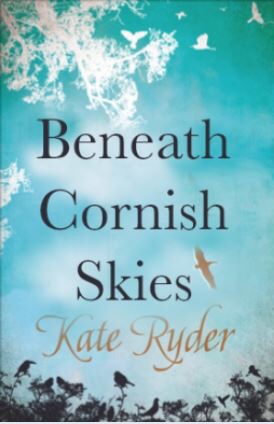
Beneath Cornish Skies by Kate Ryder.

Published: 7th Jan 2021 Aria and Aries ISBN: 978-1800245983

I felt like I’d stepped into a little oasis when I picked up this ARC. I had been reading a very bloody crime novel just before so this was like a balm for the soul! Cassandra appears to have everything she could want in life. She lives in an incredible refurbished farmhouse on the South Downs with attached stables. Her long term partner, David, is a successful businessman who just happens to be charming and good looking. They have money and she can spend her time schooling horses then dressing for dinner from her beautiful walk-in wardrobe. David calls her Sandie and they’ve been together over ten years – in fact ever since she was involved in a car crash that killed both of her parents. David was first on scene and helped her out of the wreckage. They’ve never been apart since. He was attentive in the days following the accident, there for her therapies and as she was wheeled out of the hospital it seemed only sensible to stay with him – there being nowhere else to go. So why is she feeling dissatisfied and as if she’s drifting?

He catalyst comes as she’s out riding one morning and stops for a breather in one of the top fields behind the house. As she looks down to the farmhouse she sees David, who is working from home, and their cleaner Melanie coming to sit outside with a cup of coffee. She wonders to herself about the last time David paused his day to have a moment with her. Then she sees Melanie rest her hand on his arm, in a familiar way and she starts to sense that there’s more going on she realised. The incident brings to the forefront of her mind many things about her life that she’s unhappy with. David is all about appearances, so the house must be kept tidy at all times. She’s almost trained to wash a cup or plate immediately after she’s used it. He likes to come in and find the house immaculate. He calls her Sandie or Sandra when her full name is Cassandra and he likes her to dress well especially if they’re going to a party or function for work. Even then she can’t let loose, no dancing or drinking excessively, nothing that might show him or the business in a bad light. Yet, that very evening at a barbecue, she sees him exiting a private bit of the house, again with Melanie in tow. When she finds an earring in their bedroom, she can’t ignore things any longer. It’s not just the obvious infidelity. She needs something different.

On impulse she picks up The Lady magazine, drawn in by the cover photo of a man walking from a tunnel of trees. The man is a writer, Hunter Harcourt, and his article about ancient byways and the magic they possess. Within the adverts though she finds an advert that catches her eye; a family in a Manor House in Cornwall need help with the stable yard and a growing family for six months. This might be just the breathing space she needs. With David seemingly unrepentant about his affair, Cassandra finally asks him the one thing she has always wanted to know – will he ever be willing to have the children she has always wanted? David is adamant, children are not in his future. So, early one morning Cass hitches the horse box to her Range Rover and takes a leap of faith. She drives to Cornwall, only stopping at Melanie’s home to return the earring. What she finds in Cornwall is space enough to think, but activity enough not to dwell on what has happened. She falls in with the Kinsman family and their gorgeous children very easily. The Manor House and grounds are beautiful and Caspian soon finds his feet with the other horses. Cass finds solace in the rugged Atlantic coastline and the time spent with the children. She is shocked when, on her day off, she is looking for something to fill the hours when she happens on a talk on local history by a local author, Hunter Harcourt, otherwise known as Luke. Their meeting begins a friendship that seems so natural, almost as if they’d met before.

There was so much to like about this book. I love Cornwall and I felt as though I was there, with the descriptions of the villages, the beaches and those ancient places that seem to hold magic. I loved watching Cass unfurl in her new environment as she fits in so beautifully with the Kinsman family, the landscape and the new friends she makes such as surfer Robin. This is about someone awakening and finding their authentic self, something she’s never been able to do before, having been so busy fitting around David’s standards and timetable. Cass went straight from her parent’s household to David’s with no gap between. This is the first time she has stood on her own two feet and her confidence grows. The relationship with Luke seems so predestined that it was a huge disappointment to find out he’s married to the feisty Amanda. We soon see the cracks in their marriage though, not just her infidelity, but their differing views on where to live seem insurmountable. The natural way Luke and Cass seem to fit together seems to be pre-ordained – this is where I felt more could have been made of the supernatural aspect of the story.

Soon after arriving Cass finds that the manor is haunted by several ghosts, but the one she seems to see most is the young girl who had fallen in love with the gamekeeper. Cass feels that, just like the ancient byways, there are spaces within the fabric of time at the manor, where ghosts may appear. Cass has an affinity with the the young woman in her peacock blue dress, but could it be more than that. It felt like the author was flirting with the idea of Cass and Luke being a reincarnation of the couple – the references to her gypsy soul, the sense they have of meeting before, the apparition Cass sees and hears. I think this could have been explored even more than it was. Cass clearly has some psychic ability; she experiences the ghost of a maid, has vivid dreams about places and people from another time, and at one point hears a ghost ship. I found myself wanting more of this and would have loved to know more about the daughter of the house and the gamekeeper, possibly in another time frame. Luke is a dream of a man, gentle, intelligent, loves the outdoors and animals and seems to know himself very well. His marriage seems to be one made when young, when differences in outlook seem to matter less and we think love can overcome anything. Sadly, Luke finds as he gets older, the more he needs the pace of life in the country whereas Amanda is a city girl who needs the bustle and the noise.

Of course I wanted David to get some sort of comeuppance for his awful behaviour. Even in absence he tries to push Cass’s buttons by ordering her home, then pleading that he loves and misses her while mentioning someone he’s having casual sex with in the next breath. He is arrogant, fussy and I couldn’t think of a single reason Cass should return to him at the end – other than habit and conditioning. I won’t ruin the end, but it does keep you hooked to the final pages when a terrible secret emerges. This was a gentle romance, set in a beautiful part of the world and is as much about Cass falling back in love with herself as it is anyone else. It’s a voyage of self-discovery, where slowly she heals and finds her authentic self. I found it thoroughly enjoyable and a little oasis of calm in a busy month.

Meet The Author

Kate Ryder

Kate Ryder is an Amazon Kindle international best seller who writes timeslip and romantic suspense in a ‘true to life’ narrative. On leaving school she studied drama but soon discovered her preference for writing rather than performing. Since then, she has worked in the publishing, tour operating and property industries, and has travelled widely.

A member of the Romantic Novelists’ Association and The Society of Authors, in 2017 Kate signed a 4-book contract with Aria (digital imprint of award-winning independent publisher, Head of Zeus). Originally from the South East of England, today Kate lives on the Cornish side of the beautiful Tamar Valley with her husband and a collection of animals.

Keep in touch with Kate:
http://www.kateryder.me
Twitter: https://twitter.com/KateRyder_Books
Facebook: https://www.facebook.com/kateryder.author
Instagram: @kateryder_author

Posted in Netgalley, Uncategorized

Madam by Phoebe Wynne

Publisher: Quercus (18 Feb. 2021) ISBN: 978-1529408720

Why is it always so hard to write a review when the book is so good? It’s as if I have to wrestle with it for ages, in the hope of doing it justice! All I can do is try and put across all of the reasons I liked it. In fact, I loved everything about this feminist gothic novel from start to finish. First the setting – the eerie, almost otherworldly atmosphere around Caldonbrae School, the strange weather conditions suggesting it’s own micro-climate, and the school’s position as an English outpost (or invader) in Scotland. It’s appearance is like a hulking beast on the coastline, something that shouldn’t be disturbed lest it swallow you up. Secondly, there’s our main character Rose, addressed at all times as ‘Madam’ and finally the dark secret her predecessor tried to uncover at the heart of Caldonbrae, before it was Rose’s turn to fight it’s terrible tradition.

For 150 years, Caldonbrae Hall has sat as a beacon of excellence in the ancestral castle of Lord William Hope. A boarding school for girls, it promises a future where its pupils will emerge ‘resilient and ready to serve society’. Rose Christie, a 26-year-old Classics teacher, is the first new hire for the school in over a decade. At first, Rose feels overwhelmed in the face of this elite establishment, but soon after her arrival she begins to understand that she may have more to fear than her own imposter syndrome. When Rose stumbles across the secret circumstances surrounding the abrupt departure of her predecessor – a woman whose ghost lingers over everything and who no one will discuss – she realises that there is much more to this institution than she has been led to believe. As she uncovers the darkness that beats at the heart of Caldonbrae, Rose becomes embroiled in a battle that will threaten her sanity as well as her safety.

This novel was incredible from start to finish. I loved it. Straight away I noticed echoes of two of my favourite books; Jane Eyre by Charlotte Bronte and Rebecca by Daphne Du Maurier. The younger girls school uniforms reminded me of the aprons of Lowood School. The constant references to the previous classics teacher, and the mystery surrounding what happened to her had definite echoes of Rochester’s wife – hidden from view in the attic for being other than the perfect, meek and gentle wife he wanted. What exactly does this school expect of the teachers and how did Madam fall from grace so spectacularly? The training at the school starts to feel more sinister as time goes on. It begins to feel as if they’re trying to shape young women in a very old fashioned image; teaching them how to stay it in their place and be the 19th Century ideal of the ‘Angel in the House’. Although there’s something a lot more knowing about these girls, they put on this ideal as if its a disguise, designed to please but very aware it’s a conceit sure to reap the rewards of wealth and privilege. The previous ‘Madam’, whose name is Jane, is like the ghostly presence of Rebecca, still holding sway over the girls – especially Bethany who seems to have developed an obsession with her teacher. Jane seems to be everywhere Rose turns, but tantalisingly just out of reach. The author creates an edgy and eerie atmosphere where you feel she might be just ahead of Rose, her gown swishing round the corner.

Rose tries to understand the place she’s come to teach. There is a sense in which this school is a complete culture shock – like a child affected by poverty or a tough inner city environment being expected to thrive at Oxford or Cambridge where there’s an etiquette and language that’s alien to most outsiders. She has to muddle through this aspect of life at Caldonbrae and it makes sense to her if the purpose is to educate and prepare the girls for further education and professions like the law and politics. Yet, alongside this traditional, classical education there are hints of the old ‘finishing school’ where attributes like poise, social etiquette and deportment are deemed equally important. What exactly is she preparing these girls for?

As the secret starts to come to the surface so the tension of the novel rises. Is Rose being trained too? An outsider brought in to see if new teachers can be moulded to the school’s purpose. As Bethany’s attachment to Madam becomes clearer she seems to stalk Rose. and the reader isn’t sure whether she resents Rose being in the place of her former favourite or whether she has simply transferred her affections. When she makes allegations about Rose she threatens her whole future at the school, but is Bethany trying to harm her or warn her? A strange hierarchy operates amongst the girls who know themselves to be the elite performers and those who don’t make the grade are offered inducements to improve, but these inducements can be threats as well as rewards. The horror of a young woman having her head shaved for performing badly is enshrined in patriarchal systems and is designed both to shame the woman and act as a warning to others. Rose guesses what might be happening, before the secret is fully revealed but it’s such an alien and deviant concept in modern society that she can’t believe it could be true. Could she ever be complicit in such a scheme? I found myself wondering how far the girls are ‘groomed’ into accepting this future or how many are knowingly acquiescing to it for the rewards of wealth, status and family honour. Rose is backed into a corner, by fear of what may have happened to her predecessor certainly, but also the knowledge that the school can reward her far beyond what she’s imagined. Her mother, severely disabled by multiple sclerosis, is placed within a state of the art care facility. Can Rose be bought, or will she try and walk away? However, does anyone walk away from Caldonbrae unscathed? Could Rose, as quiet as she seems, finds a way to walk away, but also bring down the whole system in her wake. This was an incredible, unputdownable, novel full of gothic atmosphere, and dark, patriarchal, purpose. However, there is also a feminist heroine ready to shine a light on long held secrets, even at the risk of that light becoming a burning flame.

Posted in Uncategorized

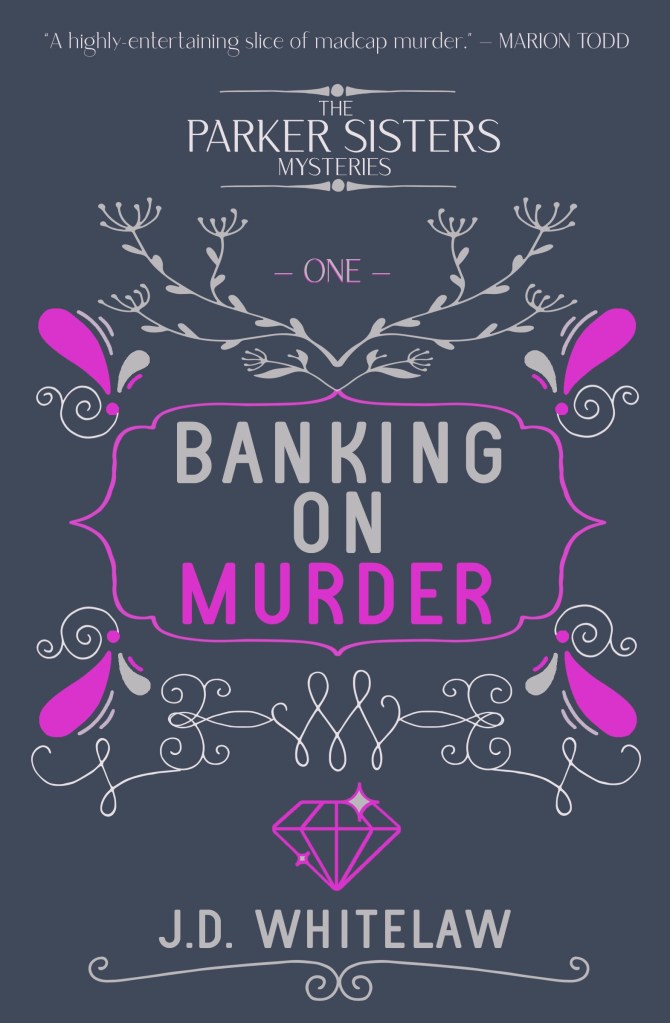
Banking on Murder by J.D.Whitelaw.

Publisher: Red Dog Press (29 Nov. 2020). ISBN: 978-1913331962

Well this book was a great surprise. I absolutely loved it. Three quirky sisters, a detective agency, a troublesome client and the backdrop of Glasgow just to finish it off. What’s not to love? I read it in two days, because it was just so much fun I couldn’t put it down. Now all I need is for someone to turn it into a Sunday evening series starring Kelly McDonald, Laura Fraser and Jessie Buckley and I’ll be content.

Martha is the eldest sister, slightly frumpy and very much a mother figure for her two younger sisters, Helen and Geri. She is dependable and the real business-like sister who keeps the agency ticking over. Helen is more of a mystery, but certainly has brains as the academic of the outfit. It turns out she’s also a very able dancer when she’s had enough to drink. Geri brings youth knowledge to the team as she’s the student of the trio. She may lurch in like she’s had no sleep, but she’s very sharp and knows how to use social media to the agency’s advantage. They’ve been requested at the home of Tracey Coulthard, who lives in a very smart home in a wealthy suburb of Glasgow. They arrive to find a maid, May, who is very worried about her employer who seems to be overwrought. They can hear screams and smashes coming from the bedroom. Mrs Coulthard is in bed crying, naked from the waist up and the fact that people are in her bedroom doesn’t seem to faze her at all. She offers the sisters £20,000 to find out the truth about her husband Gordon and his ‘extracurricular’ activities. This is the Parker sister’s meat and drink, most of their work is detecting whether partners are being unfaithful. However, the level of distress from this particular client is worrying Martha particularly. What might she do if they find out something she doesn’t want to hear? Martha senses a whole lot of trouble packaged alongside that cold hard cash.

The sisters manage to get themselves invited to a party for Gordon Coulthard’s company. Helen throws herself into the fray and Geri starts getting to know Gordon’s right hand man. As usual though, the sister’s don’t investigate quietly. Helen proceeds to get blind drunk and get a little over familiar with guests. In trying to find out more about Gordon, Martha ends up in a brawl with a statuesque blonde called Estelle who seems to be claiming that Gordon is her fiancé. She does indeed have a huge diamond on her finger and Martha is horrified, especially when Estelle starts dragging her round by her hair. As she fends her off, Martha tries to fathom why he would get engaged when he’s still married and be so open about it? This will mean the girls having to break the news to Tracey, setting in motion a chain of events that will end in murder.

I loved how the sisters worked in conflict, but somehow in unison. As Martha feels responsible for Tracey and what’s happened, Helen and Geri point out that they’ve done what they were paid for and can withdraw from what is becoming a media circus. Martha struggles a bit with the physical aspects of the job, leading to some amusingly clumsy moments. When chasing a suspect she falls through the fence they’ve just jumped over and when listening at a skylight she manages to fall straight through! More seriously, she runs up several flights of stairs to Coulthard’s penthouse and ends up in hospital with chest pain. I loved how Martha berates Geri for being ‘friends’ with Gordon’s colleague, but has to take it back when she realises how thoroughly she’s been stalking him on social media. I also enjoyed the introduction of Detective Pope, a stern Glasgow cop whose wheezing can be heard from the next room. Despite the asthma, she’s a tough customer and seems to be the sensible figure, there as a counterpoint to the sister’s madcap romp through this case. Yet, I could see an affinity growing between them, particularly Pope and Martha whose scenes are filled with sarcasm and wit. I’ll be interested to see how this develops.

Despite a few twists and turns, I did solve the case before the end, but I’m not sure it was meant to be a complex puzzle. This was an introduction to the sisters and their dynamic, and I will certainly be looking forward to their next adventure. This was was a wild ride that didn’t let up as the sisters were pulled from one side of Glasgow to the other. There’s no time to breathe, with the wheezing Pope almost collapsing in their wake. There’s just enough of a sprinkle of Christmas in the background too. I think there’s much more to come from Helen, and so much more about the Parker’s lives outside the agency. I thought this was a thoroughly enjoyable read, with incredibly engaging characters and so much promise for the series to come.

Meet The Author

J.D. Whitelaw is an author, journalist and broadcaster. After working on the frontline of Scottish politics, he moved into journalism. Subjects he has covered have varied from breaking news, the arts, culture and sport to fashion, music and even radioactive waste – with everything in between. He’s also a regular reviewer and talking head on shows for the BBC. Banking on Murder is the first of three Parker sister novels. They follow his hugely successful HellCorp series. His debut in 2015 was the critically acclaimed Morbid Relations.

Posted in Random Things Tours

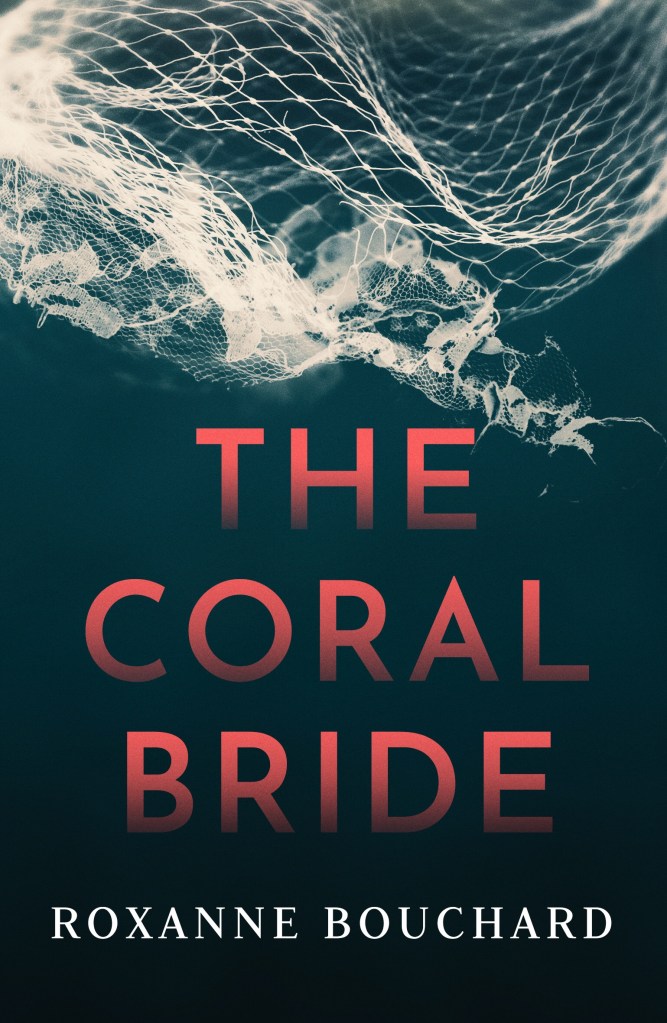
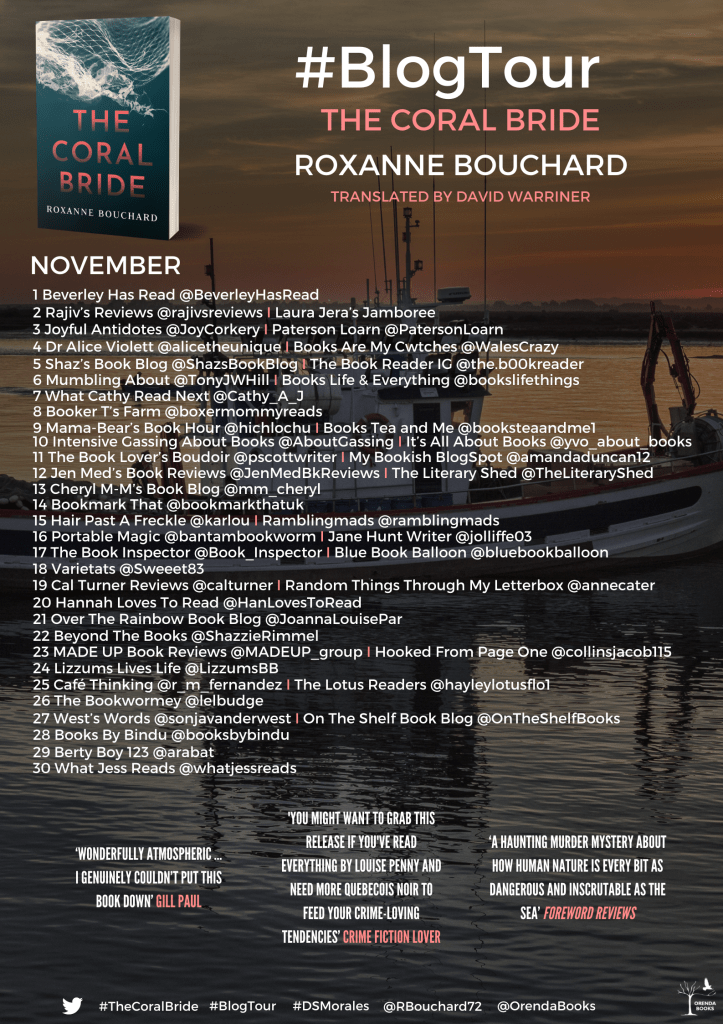
The Coral Bride by Roxanne Bouchard.

Publisher: Orenda

Published:

ISBN:

The Coral Bride is the second novel in Roxanne Bouchard’s D.S Morales series, the first being We Are The Salt Of The Sea. I think this easily read as a stand alone novel, but I enjoyed it so much that I’m going to read the first one. I’m not surprised, because I’ve never met an Orenda book I didn’t like!

The opening to the novel is haunting as a woman lies on the deck of a fishing boat. Somehow she has been rigged up so that she will eventually be dragged from the trawler and under the freezing cold water. She knows these are her final moments. As an opening it is very effective and sets up the main character in the novel: the sea. The sea is the life’s blood of people in this region – a small fishing village in Quebec. Angel Roberts is a very rare thing in this community, a woman with her own trawler who fishes for lobster. She’s named her boat Close Call II showing a good sense of humour too. The sea is her livelihood and there’s definitely an affinity with it. She is treated with suspicion by the rest of the trawlermen, because fishing here has always been a male dominated industry. However, the sea doesn’t just separate, it also brings people together, even Detective Morales and his son Sebastien.

Another recurring character is the moon, depicted as a silvery path reflecting off the water. Angel has always been told the moon is a liar and not to be trusted. However, it seems there may be another character in Angel’s life who isn’t what they seem. Morales finds out that every year Angel and her husband would dress up in their wedding finery and have a celebration on their anniversary. If her husband is to be believed he drove his wife home when she was tired and then returned to the bar. Then after 1am, it seems that Angel drove herself down to the harbour and took the boat out, still in her wedding dress? Detective Morales is a quiet and thoughtful man, who doesn’t jump to conclusions and I loved the way the author let the mystery breathe in the same way. You have chance to really think about peope’s stories alongside Morales, and I liked that the pace seemed to fit with the landscape and community. This is much more than a ‘whodunnit’. It explores the spirit of this community, and I especially enjoyed the loyalty and bravery of the fisherman. They really respect the sea and I respect them because it is such a tough way to earn a living. We get to explore the tribal aspects of this community, how relationships between people develop and change over the years. But as always, where there are old relationships there are old resentments.

Familial relationships are explored too as Morales’ son Sebastien has turned up unexpectedly with his car full of pots and pans. He’s a chef and he’s had a fall out with his girlfriend. I got a sense that Morales doesn’t really know his son, or Sebastien is acting out of character. Sebastien flirts with a female constable on his team; Morales has only seen her buttoned up, but ten minutes in Sebastien’s company and her hair is down and she’s doing salsa. There was sense that Sebastian will bring chaos to his life. Yet they have a shared experience, Morales is currently living alone and away from his wife. Maybe this is where father and son could understand each other better. These relationships gave the book depth and elevated it above the average thriller. I enjoyed the police team, the conflicts and allegiances. I loved the section where Morales was shown to his temporary office and it’s packed to the rafters with files stacked everywhere. It’s like this quiet, thoughtful, man has escaped to an out of the way place and people are challenging him on all sides. The space he has enjoyed is being encroached upon – Sebastien inviting him to salsa and let his hair down, the chaos of police files surrounding him, his son sleeping on his couch. It’s not long before, in his life and the investigation, he feels blocked in on all sides. I found this novel had a great sense of place and a thoughtful, intelligent hero. It was atmospheric, lyrical in parts and emotionally literate. The image of a woman being slowly pulled into the water, with her wedding dress glowing in the moonlight until she is swallowed up by the dark will stay with me for some time.

Meet the Author

Ten years or so ago, Roxanne Bouchard decided it was time she found her sea legs. So she learned to sail, first on the St Lawrence River, before taking to the open waters off the Gaspé Peninsula. The local fishermen soon invited her aboard to reel in their lobster nets, and Roxanne saw for herself that the sunrise over Bonaventure never lies. We Were the Salt of the Sea is her fifth novel, and her first to be translated into English. She lives in Quebec.
Follow Roxanne on Twitter @RBouchard72 and on her website: roxannebouchard.com

Posted in Random Things Tours

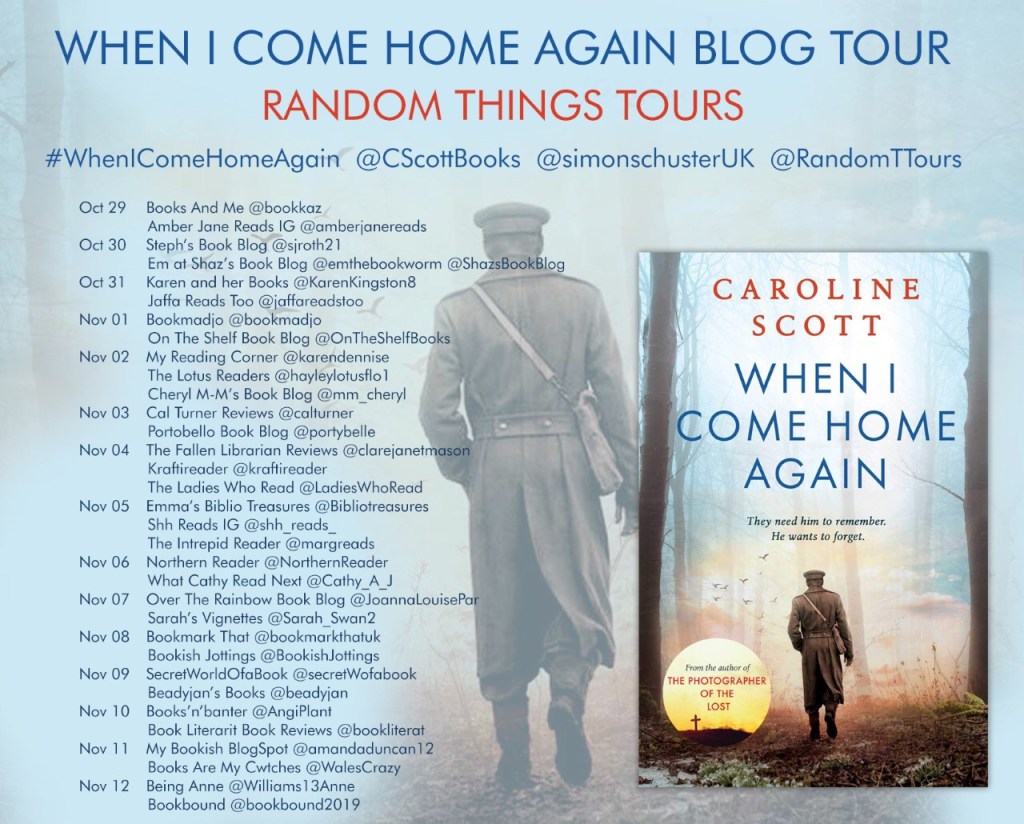
When I Come Home Again by Caroline Scott

Published: 29th October 2020

Publisher: Simon and Schuster

ISBN: 978-1471192173

This was an exquisite, slow-paced, historical novel that moved me so much. It was a window on both individual, and collective, grief. It also explores the psychological rehabilitation process which is my day job, as a counsellor. Regular visitors to my blog will know that I am fascinated with this period of history depicted in novels as varied as Emma Donoghue’s recent novel The Pull of The Stars and in the last few years Sarah Water’s The Paying Guests, Adele Park’s Spare Brides and Kate Atkinson’s Life After Life. All deal with a different aspect of this period of huge social change. The nation is grieving, for lost sons, husbands and brothers but also for a time of innocence now lost to them. Young women struggle to find husbands as the policy of neighbours fighting together meant villages losing whole generations of men. Distinctions between the classes come tumbling down as men from all backgrounds fought together for a common purpose. Many estates were crippled by death duties, often for two generations at once, and men who never expected to shoulder the burden of a family estate were suddenly dukes, but without any means. Institutions like the debs ball seemed trivial and outdated, with many new heirs marrying money from abroad bringing Americans and their new money into the ranks. Others lost their estates altogether and had to consider working for the first time ever. Women who had held the fort, while the men went to Europe to fight, did not want to return to the home and wifely duties. Even men who had jobs held for them, faced a fight to get them back. Women were not the same, they’d been stretched and depended upon in wartime and wanted more equality at home, work and in the political system. The upheaval in our class system, in gender roles and working life is unimaginable. When set against the backdrop of national mourning and a worldwide flu pandemic we can perhaps imagine a little the seismic psychological shifts happening. On the plus side it’s a dynamic time, where the old order is overturned, people born in poverty or the wrong gender could change their lives because of the social mobility created.

We see these issues through the characters in Caroline Scott’s book and understand how some want to recover a lost past however unlikely it is, whereas others want to blank out their experiences and start again without memories or baggage. Scott starts her book with an epigraph from the tomb of the unknown soldier in Westminster Abbey. Also used as a focal point for Anna Hope’s wonderful post WWI novel Wake, the burial of this young man is full of symbolism. One man chosen from the many lost in France, to symbolise both those who died and those who would never be recovered or identified. His burial in the abbey would be broadcasted in cinemas and over 100,000 visited his grave to pay their respects in the next few weeks. In Durham, another anonymous young man is found using chalk to write on the flagstones in the cathedral. He is arrested and taken for treatment with Dr James Haworth who aims to slowly help his patient recall who he is and what has brought him to Durham. Named Adam Galilee by the police who found him, he is subject to many different methods, including covering the walls of his room with mirrors. They spend so much time talking and questioning, gently in case they force him into distressing memories. As Haworth observes ‘something strong within him is resisting recalling the pertinent parts’.

As a counsellor and writer I think a lot about the concept of ‘self’ and how it’s constructed, and I loved how Scott explores this in the chapters marked as belonging to Adam. He talks about how they ask him for a first memory and he knows they’re avoiding more recent times, despite there being a complete void where his time as a soldier is concerned. He knows they’re looking for a beginning to who he is and all he does know is that it doesn’t work like that.

‘It isn’t linear. That’s not the way it works. It doesn’t have momentum, or a narrative arc, and he doesn’t know where it starts. It surprises him, if they are doctors of minds, that they can’t understand that’.

I thought this was so clever, because it questions the very nature of the self. Are we ever one fixed set of characteristics or are we fluid and ever changing? If any of us are asked to describe who we are we tend to come up with a list of things we love to eat, listen to, wear and watch. As if the self can somehow be captured and solidified by these objects. When asked who we are, we refer back. So what happens when we cast our minds back and there is nothing there to hang on to. All Adam can do is ‘be’. To exist, try things and see what sticks. Rebuild from now. Maybe this is preferable to remembering before, the trauma and the hell of the battlefield? It was beautiful to see Adam gain a love of nature, whether rediscovered or a new appreciation it has a healing quality. He also has a talent for sketching and he captures the nature around Fellside, as well as the repeating a young woman’s face, which may be a clue to who he is. Supporting him through this self-discovery is James, himself a lost man due to his war experience and very much a wounded healer in these circumstances. His marriage to Caitlin is struggling under the weight of grief, I wanted him to share his war with his wife, but also understood his need to forget.

Just like the unknown soldier, Adam is a cipher for every young man lost in the war. When James puts his picture in a national newspaper, he hopes that someone will recognise him – what he didn’t expect was that three people claim that Adam is theirs; Mark, Robert or Ellis. Caroline weaves the women’s narratives into this tale so we see what war has done to the women left behind. My heart ached for them all and I wanted Adam to belong to each of them in turn; to be Celia’s son, to smooth away the rough edges of Lucy’s tough existence, to absolve Anna and bring resolution to her life. Of course he can’t be all things to all people. This is an intricate balance of viewpoints and Scott weaves a beautiful tapestry from them. Through these people we see a snapshot of post-WWI Britain that is truthful. Art is able to move beyond the patriotism and glory, to see the real cost of war. This is an incredible piece of work. Haunting and complex, a society laid bare emotionally through the tale of a warrior, unknown by name and rank.

Meet The Author


Caroline completed a PhD in History at the University of Durham. She has a particular interest in the experience of women during the First World War, in the challenges faced by the returning soldier, and in the development of tourism and pilgrimage in the former conflict zones. Caroline is originally from Lancashire, but now lives in south-west France.

Posted in Personal Purchase

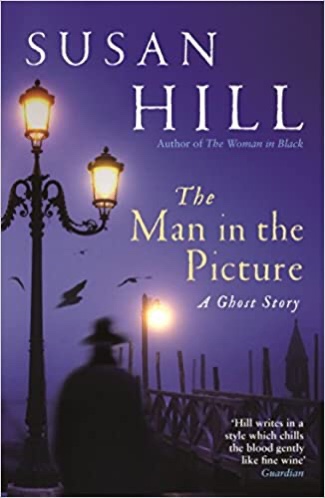
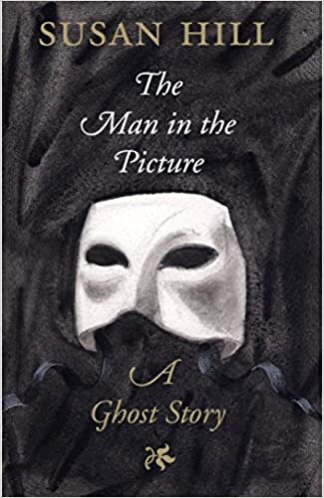
Halloween Reads: The Man In The Picture by Susan Hill.

Published:11 Oct. 2007

Publisher:Profile; Main Edition

ISBN: 1846680751

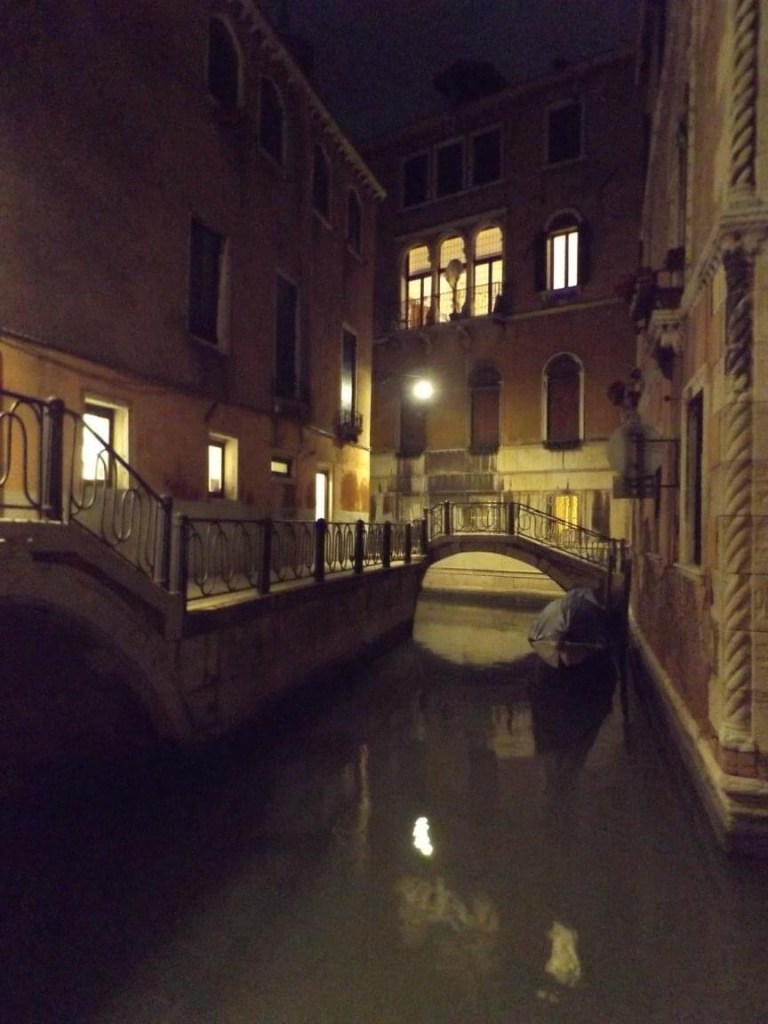
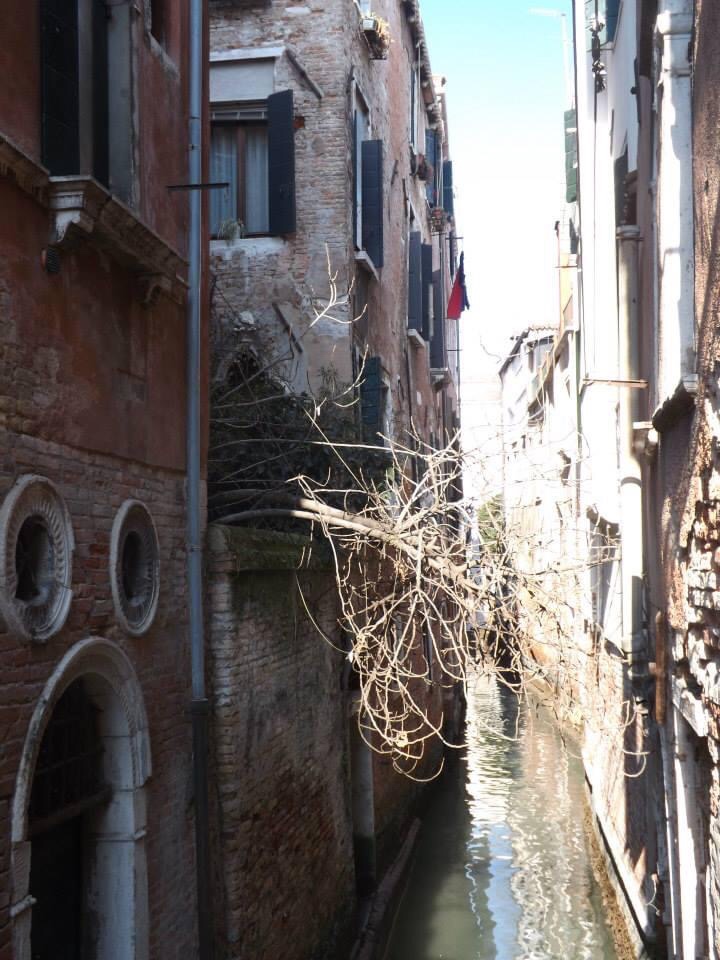
There are two reasons I was drawn to Susan Hill’s book The Man in the Picture. Firstly it was set in Venice, a place I love with all my heart and a great setting for spooky stories such as Daphne Du Maurier’s Don’t Look Now. I’m cheekily sharing some of those spooky corners I captured in photographs when I was last there. Secondly, when I started reading and our hero is in the rooms of his professor it reminded me so much of my friend Nigel, whose home was festooned with art, Venetian chandeliers and antique clocks. I feel that with all of Susan Hill’s books she raises the tension so slowly that you barely notice rather like the proverbial frog placed in a pan of cold water – the temperature changes so subtly the frog doesn’t jump out and is boiled to death. I often find myself reading one of her novellas thinking it isn’t really scary until I hear an unexpected noise and jump out of my skin! That’s a real skill.

Behind La Fenice is a very creepy spot indeed!

Our hero visits his professor on a cold winter’s night and notices a beautiful painting of the Venice carnival. For the first time he is told a macabre story about the painting. It doesn’t just imitate a Venetian scene, it can entrap someone within it. Whoever stares into the painting finds it exerts a power over their life and as Theo talks to others who’ve crossed paths with it, he unearths a profound sense of foreboding and unease. Within the painting is a young man, watching the festivities but instead of happiness there’s a look of horror on his face. Everyone else is masked, covering their identity. The professor is so attached to the painting that he has turned down lucrative offers for it. The narrator becomes interested in tracing the man in the picture, but finds much more than he bargains for as his professor dies and the painting passes into his hands. This obsession is compounded when his he gets married and his new wife Anne wants a honeymoon in Venice. Will they go and if they do what will happen to the picture?

A derelict corner in Santa Croce

This is a great novella that’s easy to read in an evening or afternoon. Best read in front of a roaring fire on a wintry night. Having been to Venice, I can vouch for how creepy it can be at night. There’s a creeping fog over the canals and many areas that become deserted at night leaving only the sound of water and boats creaking at their moorings. If you get lost at night, it can feel like an endless maze where you wouldn’t be surprised to see a masked and cloaked figure on a balcony. Hill brings that menace and mystery to the book, as well as a sense of evil. It made me think twice about buying any paintings when I was in Venice.

My favourite spot in San Polo

Meet The Author

Susan Hill has been a professional writer for over fifty years. Her books have won awards and prizes including the Whitbread, the John Llewellyn Rhys and the Somerset Maugham; and have been shortlisted for the Booker. She was awarded a CBE in the Queen’s Diamond Jubilee Honours. Her novels include Strange Meeting, I’m the King of the Castle, In the Springtime of the Year and A Kind Man. She has also published autobiographical works and collections of short stories as well as the Simon Serrailler series of crime novels. The play of her ghost story The Woman in Black has been running in London’s West End since 1988. She has two adult daughters and lives in North Norfolk.

Posted in most Anticipated 2021

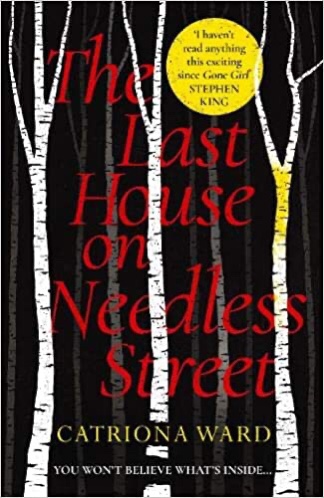
Most Anticipated Reads! The Last House on Needless Street by Catriona Ward

#TheLastHouseOnNeedlessStreet

Publisher : Viper; Main Edition (18 Mar. 2021)

ISBN-10 : 1788166167

When Stephen King recommends a book, we all have to listen! ‘It’s a true nerve shredder that keeps its mind-blowing secrets to the very end’.

‘Books like this don’t come around too often. I would say I inhaled this in one, but I think I was too busy holding my breath throughout. Bravo’ – JOANNE HARRIS

‘A chilling and beautiful masterpiece of suspense. I was completely enthralled’ – JOE HILL

This is the story of a serial killer. A stolen child. Revenge. Death. And an ordinary house at the end of an ordinary street.

All these things are true. And yet they are all lies…

You think you know what’s inside the last house on Needless Street. You think you’ve read this story before. That’s where you’re wrong.

In the dark forest at the end of Needless Street, lies something buried. But it’s not what you think…

This book was already on my radar, but now I’m dying to read it! Early reviews describe it as ‘deeply disturbing’ and an ‘atmospheric gothic thriller’. All of the elements seem familiar, I feel like I’ve read books like this before but I’m promised something completely different, raw, visceral and terrifying. There simply isn’t a bad review about this book. I suppose I shouldn’t have expected anything less from the Shirley Jackson and August Derleth award at the 2019 British Fantasy Awards. This made her the only woman to have won the prize twice. Reviewers praise the structure, the multiple narrative voices, and the satisfying, unexpected ending.

Biography

CATRIONA WARD was born in Washington, DC and grew up in the United States, Kenya, Madagascar, Yemen, and Morocco. She read English at St Edmund Hall, Oxford and is a graduate of the Creative Writing MA at the University of East Anglia. Her gothic thriller, The Last House on Needless Street, will be published March 2021 by Viper (Serpents Tail).

She was a Guardian best book of 2018 and her debut Rawblood (W&N, 2015) won Best Horror Novel at the 2016 British Fantasy Awards, was shortlisted for the Author’s Club Best First Novel Award and a WHSmith Fresh Talent title. Her short stories have appeared in numerous anthologies. She lives in London and Devon.

Posted in Random Things Tours

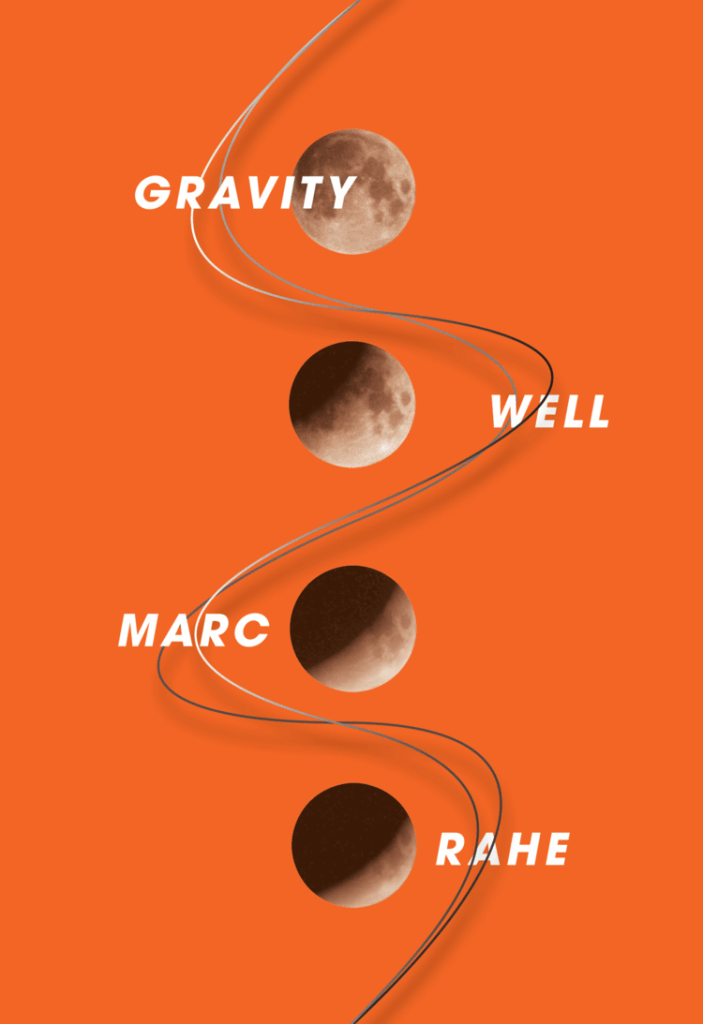
Gravity Well by Marc Rahe

#RandomThingsTours #GravityWell #Poetry #BlogTour

My Thoughts | I haven’t read any new poetry for a long time so I jumped at the chance to read this new collection. For me, poetry is very emotional. It’s about whether a poem connects with my feelings in some way; is the poet describing something I recognise, something I’ve felt or seen? There tend to be certain images that make me stop and think and Marc Rahe’s new collection Gravity Well did all of these things and resurrected my interest in poetry.

Some images made me smile because of how clever they were or because of the beautiful combination of words. In Writer Friend the narrator describes an unsettled afternoon as a ‘forecast-come-true afternoon of cloudy and scattered’. I also loved the Schroedinger reference in Our Shared Life of ‘The bee trapped with you inside/ your helmet in traffic, will or will not’. It made me think of that moment before something happens. In that moment, playing simultaneously in the biker’s mind, are the bee that stings and the bee he successfully releases back into the world unharmed. We get another sense of the in-between reading his poem Stellar, as if moments in time are simply Russian dolls with each possibility stacked within each other – touching but separate:

‘This tree was my favorite the day it rained during my walk. Uncanny when it’s raining and it’s sunny at the same time. As if being in someone’s presence and feeling the presence of their ghost’.

Another line I loved was ‘the air was as wet as dog’s breath’ because it made me feel the humidity of a wet day in August, that moisture hangs like warm misted breath in the air.

There were also themes running through the work that interest me greatly, because of my own writing work which is focused on how the body, particularly a faulty or malfunctioning body, interacts with the world. Rahe has a way of describing age and the changes of the body that are surprising and moving. In his poem Appetite I loved the following section:

‘I’ve been reopened along the same incision

and though metal plates and wires, metal screws,

can only be said to ache, I say

it is the metal in this leg that tells me

the sky is so full of mountains and trenches

as the ocean, metal that warns me

of my own weight held past a certain angle from the center.’

I love how he describes the constant ache of the structure that holds the speaker’s leg together, but it isn’t a negative statement, it’s just something that’s there. Also it’s a way of gauging the world, like I know if my joints ache it’s going to be wet or if my muscles seize it’s going to be cold. The unnatural pins and wires he needs for his limb to work naturally, actually link him to the natural world too – to the heights and lows of the lands, and even how the force of gravity can be sensed as he finds the balance of walking with these metal supports.

In Fable of the Cephalopod he uses humour to describe a sense of coughing up a foreign body, something that feels like ‘an octopus that was trying to wear a sweater’ giving the reader a sense of how stuck it feels, trying to force eight woollen legs from the ‘wrong bronchial tree’. Later he describes the moment of having a blood test, very routine for me and others who are ill, but tense all the same. He perfectly describes that moment when you almost hate yourself for trying to make the medics life easier. When you feel guilty for being difficult, as if you could control the way your veins and body work:

‘at a blood draw my vein resisted the needle. The needle

slipped aside inside my arm, despite repeated attempts. I made,

for the phlebotomist, a joke I hoped would defuse her growing anxiety.’

I felt a connection with parts of the work, and as always with poetry, I know that re-reading will bring further meaning and interpretation, depending on my mood. Poetry’s meaning lies with the readers once it has left the author’s pen. It may well have had an original meaning, but really the beauty of poetry comes out when the reader brings their ‘stuff’ to the poem. I’m sure there are other bloggers who have had totally different experiences with the images and themes but that’s the beauty of it, it can touch a multitude of people very differently. I thought this was an imaginative and thoughtful collection from a poet I’d never read before. It sparked my interest in poetry again and I am looking forward to reading more for the blog and for my own enjoyment.

Other Reviews | Marc Rahe’s luminous poems find grace in acts of intentional remembrance, in turning back to sing ‘what can be seen / looking behind.’ The speaker’s world resembles our own fraught moment–fallen, divided–but never numb. These poems hum with moments of transcendence, between body and weather, air and breath, between today’s pain and the deep wounds of the past. In precise, lucid lyrics, this voice insists that our capacity to feel is what binds us, ecstatically, to our planet and to one another.–Kiki Petrosino

Ever since his first book, THE SMALLER HALF, was published, I’ve kept my eyes open for new work by Marc Rahe, and whenever new work has come, I’ve celebrated, actually celebrated. No poet writing in English today is better at making poems stuffed full of being and of things seen, things heard, things touched, things tasted, and things thought hard about nonetheless quiet. And yet, though they approach silence, these poems resonate, and, like Rahe’s previous work, they will resonate for years.–Shane McCrae

Biography | Marc Rahe is the author of THE SMALLER HALF (Rescue Press, 2010), ON HOURS (Rescue Press, 2015), and GRAVITY WELL (Rescue Press, 2020). His poems have appeared in The Iowa Review, jubilat, MAKE Literary Magazine, PEN Poetry Series, Sixth Finch, and other literary journals. He lives in Iowa City.

Posted in Random Things Tours

The Peacock Room by Anna Sayburn-Lane.

#RandomThingsTours #BlogTour #ThePeacockRoom

Literary sleuth Helen Oddfellow has started her new job as a lecturer in an English Literature department of the university and is hoping for a quiet life. What she gets is anything but. When she is asked to cover a module for Professor Petrarch Greenwood she expected the students to be a little underwhelmed. He is something of a literary celebrity, having followed his lifelong love of William Blake into TV opportunities and book deals. Yet his students behaviour seems strange to Helen. They are subdued and one is genuinely emotional about him, which rings alarm bells to Helen. Petrarch is flamboyant, holds swish parties at his London flat and has very little time for new feminist theories regarding his hero. On the dark web, a strange literary obsession is being used to stir unrest in its largely male following, and an underground police officer is trying to break into the online community by sharing a love of Blake. Their focus is a an artist who produces a graphic novel based on a Blake character, with a disrespectful and violent attitude towards women. How many of his followers even know or understand Blake? As this unrest grows will Helen be able to come between the innocent and a disturbed gunman bent on making his point with bloodshed?

This is one of those times when I really didn’t need to have read the first novel to enjoy this second instalment in the Helen Oddfellow series. The start was slow but I was intrigued with the larger than life and potentially dangerous Petrarch Greenwood. He’s clearly living a rather decadent lifestyle of bedding young students, and stretching his professional ethics. Officially Helen is covering his classes as he has a book deadline to meet, but we get the sense that really he’s being removed to cover up a scandal. The university can’t afford to lose him as he’s their celebrity professor but they also can’t be seen to do nothing. I sensed a really unpleasant character underneath the charm and wondered if he or his assistant was behind the Blake website.

Running through the book is the treatment of women, from the misogyny on the dark web to gender politics within the university. Helen recounts her own reading on Blake and his wife. The question of how involved his wife was in his work is one that’s been at the forefront of feminist theory, something Professor Greenwood is very dismissive about. He’s dismissive about women in general, in fact one is being physically dismissed from his office when we meet him. The behaviour of the female students in his class is worrying too, some are very subdued and don’t want to meet Helen’s eyes. There’s an unpleasant atmosphere, and an undercurrent that I feared didn’t bode well for some of these women. The story started to focus around the events of Professor Greenwood’s party and this is where the book gripped me.

I’m clearly very dark, because when the truth of the party was revealed I was pleased the author had pushed the story to such a disturbing place. It was a great contrast to the tamer beginning of the book and I think it needed it. I didn’t manage to guess all that had happened so I was able to enjoy all the twists and turns to the end. I enjoyed guessing who had the talent and knowledge to be behind the artwork, but the mind to plan such a terrible act of mass murder. However, this wasn’t the only person with secrets and it seemed only Helen was who she professed to be. She is like the calm centre to the novel, but everything around her felt chaotic and changeable. I worried early on that this would be a novel where women were victims, but actually the ending was quite empowering. The women took control, which was a great way to end. I would have liked to know more about some of the characters so maybe some differing perspectives on events would have been interesting. However, I think it was deliciously dark and turned a light on the type of misogyny that seems to be a constant undercurrent on the internet these days. This was intelligent, surprising and as a literary mystery, quite unique.

Meet The Author

Anna Sayburn Lane is a novelist, short story writer and storyteller, inspired by the history and contemporary life of London. Her first two novels introduce the literary sleuth Helen Oddfellow.
Anna shares Helen’s love of literature – mysteries surrounding the Elizabethan playwright Christopher Marlowe and the Romantic poet William Blake feature in the books. She’s pleased her History and English Literature degree finally came in handy!
Anna has published award-winning short stories in magazines including Mslexia, Scribble and One Eye Grey.