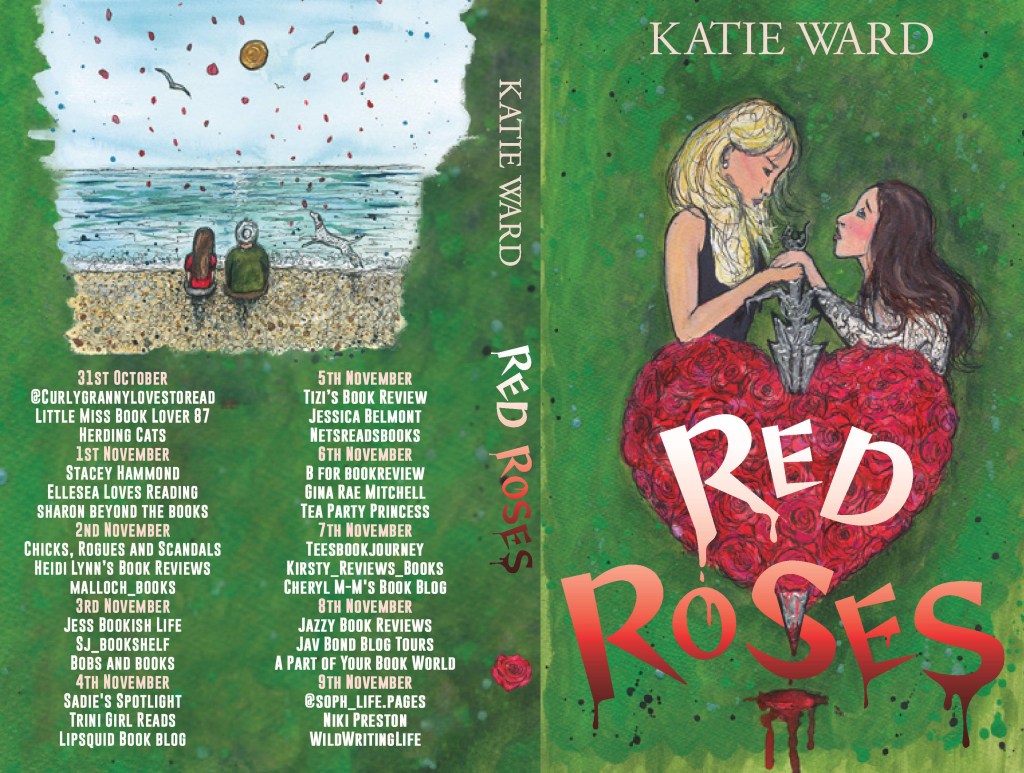
Today I’m sharing some thoughts on a book about friendship, love, and following your dreams.
Autumn is stuck in a rut and desperate to escape the fears that bind her to the life she’s outgrown. Back home and living with her parents after university, with a degree that seems to count for nothing, she knows something has to change. After a chance meeting with a stranger at the beach, she makes the spontaneous decision to move to Dublin and chase her dreams. However, what Autumn doesn’t realise is that she has just made the decision that will lead to her death. But does a short life have to mean an unsuccessful life? Will she be able to make it count?
Red Roses is a great book for grabbing a cuppa or a glass of wine (tea and chocolate for me) and settling in for an afternoon read. It’s a simple story of a young woman called Autumn who wants a different life for herself and has the bravery to up sticks and move to another country to make her life goals happen. I felt that the most successful parts of the novel were based around female friendship, especially with Amelia who is also travelling to Dublin before going around the world. I also loved Maggie, an older lady who Autumn meets on the beach, where Maggie is throwing rose petals out to sea in memory of her late husband. There was so much more that I wanted to know about Maggie and I felt she could be a rich and wise source of advice for the younger woman.
Red Roses is an uplifting story that shows the beauty of life, love and friendship.
Katie Ward always knew she wanted to write for a living. However, she was told by her careers advisor that “it might be more appropriate for you to work in a shop”. When Katie didn’t get the grades she needed to get into college, she negotiated a three month trial. After successfully completing the course she secured a place at her first choice university to study Journalism.
After realising she wanted to be an author, Katie moved to Dublin where she worked her way up from receptionist to Executive Assistant at Merrill Lynch. Katie continued to write in her spare time, submitting her short story into the “Do the Write Thing” competition being run by Irish TV show ‘Seoigeand O’Shea’. This story was originally written when Katie was 14 after she was inspired by an article in her favourite teen magazine. Katie was the only non-Irish author selected to have her story published in an anthology of the same name which reached 19 in the Irish Best sellers List. Katie was also shortlisted for a competition judged by MAN Booker Prize winning author Roddy Doyle which was run by Metro Eireann newspaper.
Katie currently lives in Devon with her cat (aka ‘Her Royal Fluffiness’) where she sings in a community choir and has recently taken up Archery. Katie’s favourite author has been Roald Dahl since she was a child as she loves the dark edge he brings to his books. On the flip side though, Katie loves Disney, magic, unicorns and a good rom com film at the cinema with her friends.
Whenever I go to literature festival or author events through my local bookshop, people always ask where the writer gets their ideas from. In the case of crime writers we really want to know, because we’re thinking: is this what real life crime is like? Are there people who commit these terrible (and usually highly creative) crimes? How does the writer know this much about the crimes they depict? We want to know if they have ever been tempted to commit a crime and if anybody could commit the perfect crime, surely it’s people who’ve been writing and researching it for years? They know the pitfalls and have the forensic know-how to get away with it. So,could a crime writer commit the perfect crime? This is the corner that Cam and Lisa Murdoch find themselves in, when their son Zach goes missing one night. As a crime writing duo the two are well known, but live a quiet family life with their son in Christchurch, NZ. In a meltdown the night before, Zach has told his father he wants to run away and in an exasperated moment Cam tells him to go ahead. Could he really have climbed out of the window and gone? Cam and Lisa don’t think so, then when a footprint is found outside his bedroom window their fears are confirmed – this must be an abduction. Yet everyone knows, in child disappearances, the first suspects are always the parents. But will they be the last?
This is my first Paul Cleave novel, and I was drawn in by the premise. We read the story through the narration of Cam and one of the investigating officers DI Rebecca Kent. The chapters are short and alternate between the two perspectives, creating an interesting narrative where one moment I was on the Murdoch’s side and the next moment I could understand the police’s outlook. The first half of the book was really slow, with a drip feed of information. The second half was like a car with no brakes, careering towards an inevitable explosion. I thought DI Kent was a decent, honest officer, with great instincts and a lot of compassion for the Murdochs. I loved being inside her professional mindset, seeing how she kept a polite demeanour with suspects, while questioning or even disbelieving everything they’re telling her. The author shows how every action can have multiple interpretations. Early on in the book, when Zach is playing on a bouncy castle, Cam’s attention wanders for a moment and he can’t see his son anywhere. Frantically looking for him, he goes onto the bouncy castle looking for him, accidentally knocking a girl over in his hurry. He then grabs hold of another boy and tries to show him a picture of Zach on his phone, an actions that’s completely misinterpreted by the boy’s father. Is Cam just an anxious, frantic parent who isn’t thinking clearly or is he a deliberate abuser of children? It depends on who you are in the scenario. Kent keeps an open mind – suspect everyone, expect anything and don’t take one person’s word. She’s always calculating in her head, checking and balancing actions and behaviour.
Cam is an interesting character who goes through an enormous amount of change in the novel. We see how his son’s disappearance slowly alters his personality and he’s hard to root for. It’s as if he’s woken up inside one of his own books, fully experiencing what he might put one of his characters through. He depends on Lisa, his writing mate and wife, but are they going to be made stronger by this tragedy or does it have the power to tear them apart? They certainly have different temperaments, with Lisa being the calmer one, but I was fascinated to see how she would respond when Cam tells her about Zach’s threat to leave and his answer. The author creates such a tense atmosphere building both inside and outside their home. He depicts the frenzied attention around the case of a missing child, that reminded me of the public’s interest in the Madeleine McCann or the Shannon Matthew’s cases. It was horrible to see how the general public congregated outside the family’s homes, shouting for justice and piling pressure on the family and police alike. This chaos was so well depicted in the novel and ended up spawning one of the most explosive and memorable scenes.
This was a compulsive page turner, especially once you reach the half way point. The short, snappy chapters help with this, there’s always that temptation of just one more. There were also brilliant cliff hangers, places where it felt the book was about to end, but didn’t, and then took things in another direction entirely. I loathed the journalist Lockwood who starts out with a vendetta against the Murdochs for apparently stealing a book idea from him. Could he be taking the ultimate revenge? Could the Murdochs really be the villains after all? The truth, when it is finally laid bare, is a massive shock for the reader. I couldn’t have suspected and even DI Kent is completely taken by surprise. This is the sort of case that would never leave the investigating officer and I felt that so much about her would change from this point. I loved the way that Cleave showed the influence of the press and social media on cases that catch the public imagination. No one is innocent until proven guilty any more. Worryingly, it felt like there was no privacy either with devices like mobiles, spy cameras and our addiction to social media placing so much of our private sphere into the world. It also makes things more difficult for Cam and Lisa, who have been recorded at festivals and on TV for a number of years. It’s so easy to watch them and to discredit the couple with a well chosen statement taken totally out of context. It’s also scary to see the influence and tragic consequences that the media circus can have. Although, I did laugh at the pyramid of nuns and priests that turn up in the mob, it’s the image from the book that will stay with me. This was a fascinating thriller, with a complex investigation at it’s centre. Prepare for a twisty tale, full of red herrings and tiny clues, where you’ll struggle to trust anyone.
Meet The Author
Paul Cleave is currently dividing his time between his home city of Christchurch, New Zealand, where all of his novels are set, and Europe, where none of his novels are set. His eight novels have so far been translated into over a dozen languages and nearly 20 territories. He has won the Saint-Maur book festival’s crime novel of the year in France, has been shortlisted for the Ned Kelly award, the Edgar Award, the Barry Award, and has won the Ngaio Marsh award for NZ crime fiction three times.
When I looked back over my list of book’s read in October I couldn’t believe what an incredible month it’s been. I’ve been very lucky to read some incredible books. With blog tours whittled down to a minimum, I’ve been able to read from the shelves based on mood alone. I’ve also picked from my NetGalley list which, if it was a stack of books, would have fallen over and buried me by now. I’ve read within my favourite genres really, from the gothic to the historical with a brief sojourn into crime. Then I’ve topped it all off with a lovely, uplifting book that I absolutely adored. Some of my reading occurred on holiday in Wales by a roaring log fire, some of it has been in bed while I tried to control an epic bout of vertigo. It’s been my birthday month too, so finally I’m sharing my brilliant book pressies with you all.
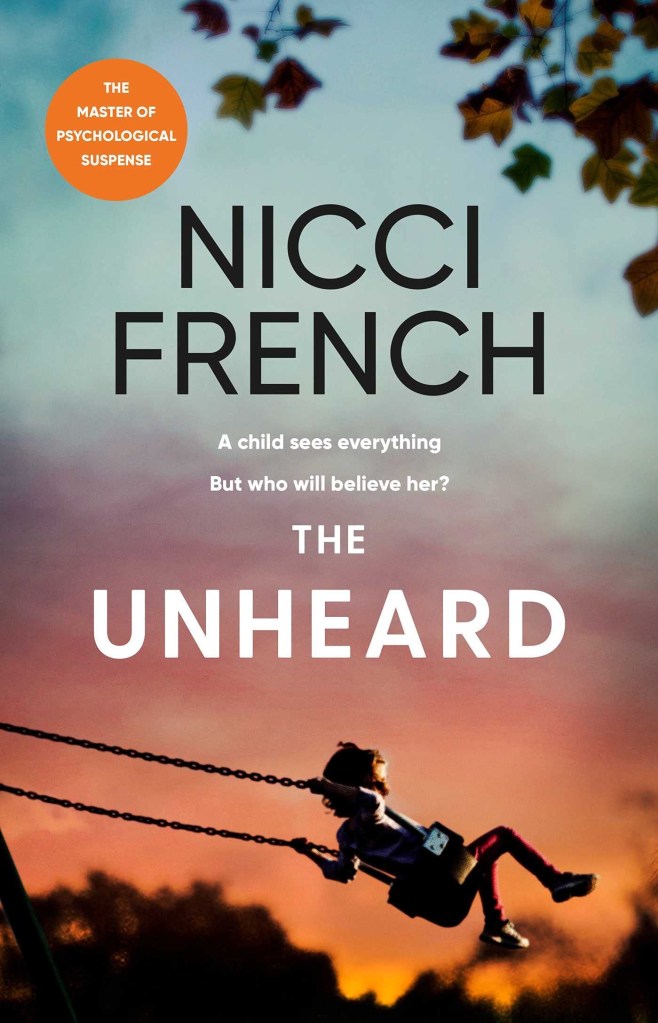
I was gripped by this brilliant thriller from the get go and really was unable to put it down, choosing to read above anything else until I finished. I was hooked and my partner claims I barely spoke to him for two days straight because I was so absorbed in Poppy’s world. Tess is starting a new life in a garden flat with her daughter Poppy, after a divorce from husband Jason. Having a background as a child of divorce, Tess has been determined that Poppy is their number one priority. No matter how much animosity and hurt they feel, their interaction with each other must be civil and they prioritise time with each parent. Yet, every time Poppy’s belongings are put in a bag to transfer from one house to the other, Tess hopes she understands what is happening to her. Tess has started seeing a man called Aidan recently and she’s optimistic about their relationship so far. One Saturday, Poppy returns from an overnight at her father’s and displays signs of distress. These were classic symptoms, that any counsellor like me, would be concerned by. She’s clingy, she wets the bed and seems to be having nightmares. Over a week these symptoms worsen: she bites a girl at school, uses foul language to her teacher, and her mother is terrified for her. She has her attention drawn to a picture Poppy has drawn, all in black crayon which is a huge contrast from her normal rainbow creations. The picture shows a tower and a woman falling from the top to the ground below. ‘He killed her’ she tells her Mum ‘and killed and killed and killed’.
Tess is scared for her daughter, but what can she actually do without traumatising her further? Jason insists it’s just a drawing and probably doesn’t mean anything. No one seemed as alarmed as Tess so who can she go to? My suspicions were first sent in one direction, then another, leaving me suspecting every character at different points in the novel, I was also wondering whether it was Tess. Was she an over concerned mother affected by her divorce and her ex-husband’s sudden remarriage? The tension is almost unbearable towards our final revelation and it wasn’t the ending I was expecting at all. It makes you think about how far you would go to protect your children. This was a fascinating, addictive read with a menacing atmosphere throughout. Be prepared to lose a couple of days if you pick up this book, you won’t regret it.
I’d anticipated this book for a couple of months having been told by my Squad Pod ladies that it was going to be a fantastic read. It certainly was, and even more than that, it was surprising too. Our setting is the city of Belfast, the Titanic sinking is still fresh in everyone’s minds. It’s especially fresh at Professor William Crawford’s house since his brother-in-law Arthur was on the ship. Crawford is our narrator and he introduces us to his happy, but chaotic household as the novel opens. He is a man of science, working at an institute both furthering scientific enquiry and teaching the next generation of engineers. He’s a sceptic, so when he finds out that his wife is visiting a medium and has been trying to contact her brother Arthur, he’s shocked and angry. There’s no question that this girl is a fraud, stringing his wife along with a show put on with the help of her shady family. Yet, the couple have lost their son Robert and Crawford’s grief is overwhelming. So when he hears Robert’s voice calling to him alongside an angry, vengeful Arthur who blames Crawford for his death, a small crack grows in his scepticism. What if he were to apply his scientific rigour to to this girl medium’s powers? If he could prove a link exists between this world and the next he could make a name for himself, not just in Ireland but all over the world. What I loved more than anything was the author’s ability to surprise, because as we neared the end I had no idea how the book and Crawford’s investigations would conclude. The theme of dishonesty is there right from the start, in Arthur’s reasons for being on Titanic, to the hidden note from their old maid who left in a hurry, and Elizabeth’s absence at weekly church meetings. By the end I felt triple bluffed, but couldn’t help smiling at how clever the author had been. As many of our characters find out, when it comes to being dishonest, the person we deceive most often is ourselves.
Wow! Will Dean does like to put his heroine in some terrifying situations. There is so much about this series that I love, then a good 20% that makes me feel a bit sick or unsettled. In the last book it was snakes that had me a bit on edge. This time? Well it’s saying something when a severed head is the most comfortable thing about Tuva’s investigation.We’re back in Gavrik, deep in the northern most part of Sweden and Tuva is back at the local newspaper, but has a more senior role and a new colleague to oversee in the shape of eager young newbie Sebastian. In fact, things are pretty good in Tuva’s world. This book picks you up and takes you on a fascinating and thrilling ride that builds in tension to a terrifying ending that I didn’t see coming at all. I had to stop reading at one point, because I realised I was so tense I was gritting my teeth! I’m sure the author has a hotline to my fears and this ending tapped into them perfectly. Needless to say, if I was Tuva, I’d be packing up the Hilux and leaving the hill folk to murder each other! I think the way the author depicts Tuva’s deafness is interesting. Usually Tuva uses it to her own advantage – taking her hearing aids out when she’s writing a piece means she can focus and taking them out at home means she can’t hear next door. However, it can also leave her vulnerable and the author uses it to intensify the horror element of the book, particularly towards the finale. There’s something about another person touching her hearing aids that feels so personal and also like a violation, depending on who it is. Every time I know a Tuva Moodyson book is coming, the excitement starts to build. By the time it’s in my hands I’m ready to drop all my other reading to dive in. Of course when something is so anticipated there’s also a fear about whether the book will live up to expectations. Bad Apples did not disappoint and is a fabulous addition to this excellent series.
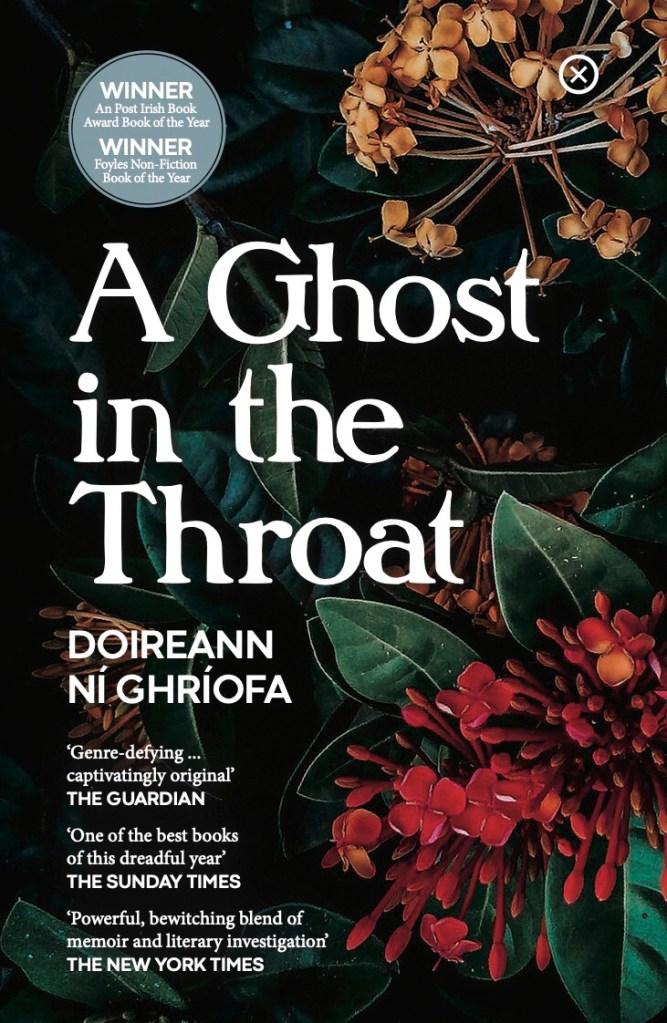
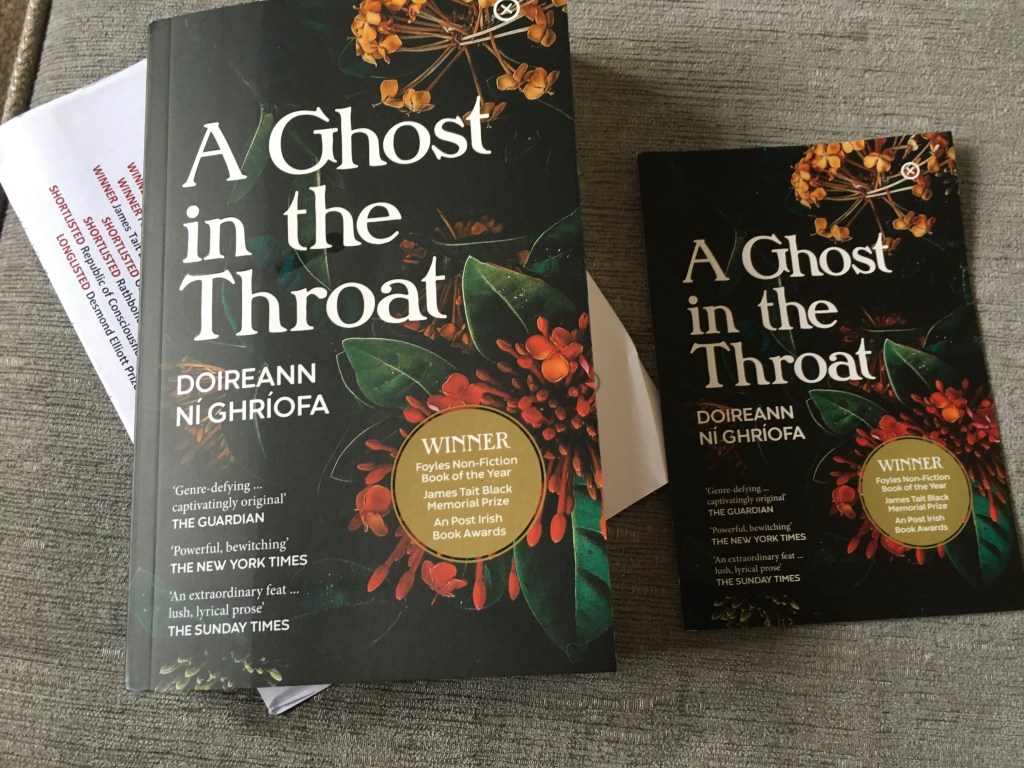
This novel is exceptional. It’s beautiful, moving and speaks about women’s experience in such a unique, but brutally honest way. The author has written an incredible piece of auto-fiction, which is half memoir and half novel but all poetry. While I can’t claim to be anything like the writer, I know this is the way I’m currently writing at the moment – as close to poetry as prose can get. I have always referred to it in my notes as a patchwork quilt of different images stitched together to make the whole. Our narrator is a mother of three small children and she has a fascination with the Irish poem ‘Caoineadh Airt Ui Laoghaire’ where an Irish noblewoman laments the death of the her murdered husband. Such is her passionate grief, that on finding his body, she drinks handfuls of his blood and then composes this extraordinary poem. For our narrator, the poem has echoed down the centuries and is her constant companion. As she reads it aloud the poet’s voice comes to life. The author writes her own life to its rhythms and wants to discover the truth of the poem’s story. I loved how her recording of 21st Century motherhood is treated as an epic. I loved consciousness running through the book. As if her words join hundreds and thousands of others in a never ending stream of female consciousness. This isn’t just about putting your experience into the world, it’s about having a source of female wisdom to draw from whenever you need it. This is a female text and in it’s search for the meaning of women’s lives it is reassuring, it lets us know we’re not alone, but it also inspires us all to create meaning. To add our voice to the women’s wisdom, expanding that collective consciousness and making our mark.
I slowly became more and more intrigued by Elizabeth Gifford’s new novel. Even the title whetted my appetite for more of the same beautiful writing that made The Lost Lights of St Kilda such a memorable book. We’re still in Scotland, this is the late 1940’s and our heroine Caro lives with her husband Alasdair and baby Felicity in the Laundry Cottage situated in the grounds of his ancestral home. They met at Cambridge University and married less than six months later much to his mother Martha’s surprise. She was expecting him to marry someone of their class, maybe even their family friend Diana who’s valuing heirlooms at the family’s castle. Caro’s mother-in-law wanted her and Alasdair to live at the castle with her, but Caro wanted a little bit of privacy and distance. At Laundry Cottage she can still be in her dressing down at lunchtime or having a sleep while baby Felicity has a nap. Yet, the past is about to make it’s way into the present both physically and mentally. Caro is asked to research the family archives for a mysterious, missing member of the family. A great-grandmother seems to have been scrubbed from the archives, along with a missing diary from her husband Oliver’s trip to the Arctic. When the Laundry Cottage floods suddenly and workers inspect the Victorian drainage system they find a body of a woman. Could this be the missing bride? There is just so much to love about this novel: the well written characters; the intriguing mystery of the unnamed woman; the depth of research into the two time periods especially into societal changes, class difference and the lives of women. I heartily recommend it to all lovers of historical fiction, women’s lives and family secrets. This is one of those books that I loved so much, I will be buying a finished copy, despite having the proof. It’s so atmospheric, romantic, and deeply poignant.
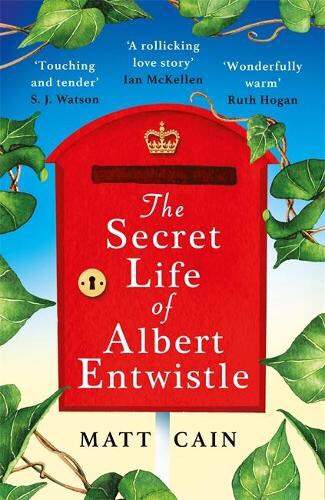
I don’t know how many of you are Strictly Come Dancing fans, but I hope there are a few out there. Last night we watched the third episode this series and the professional dancers did one of their group numbers at the top of the show. Johannes was a handsome Prince and a ball was being held in his honour. As he entered the ballroom he saw the couples dancing on the floor, but seemed isolated and alone. Until a male dancer, Kai, stepped forward and asked him to dance. As they started to move round the floor his face lit up and so did mine. The other couples on the floor reformed until the ballroom was full of same sex couples. The books sits perfectly next to this Strictly dance, not just because of the subject matter but because both are simply little parcels of joy! I felt uplifted every time I sat to read a few pages. There’s a little link to Strictly too, as Albert reminisces about a trip to Blackpool when he was a young man with his friend George. They visit the iconic tower ballroom and George is taken with the dancers whirling round the floor. He asks Albert to think of a world where they could take a turn round the floor like every other couple there. George exclaims how romantic it is and Albert agrees. It would be romantic, but it’s inconceivable for two men to partner up and take to the floor. In fact it seems so taboo that Arthur imagines there’s a written rule against it. The author reminds the reader that there are years of prejudice behind stories like Albert’s. The tears of emotion behind Strictly’s same sex dance routine are there because what’s now accepted enough to be on family television prime time on Saturday night, used to elicit abuse, rejection and even criminal charges. So I found this book moving and I really did fall utterly in love with Albert. The story was heartfelt and uplifting. I would really recommend it to anyone looking for beautiful characters to engage with and story full of human emotion.
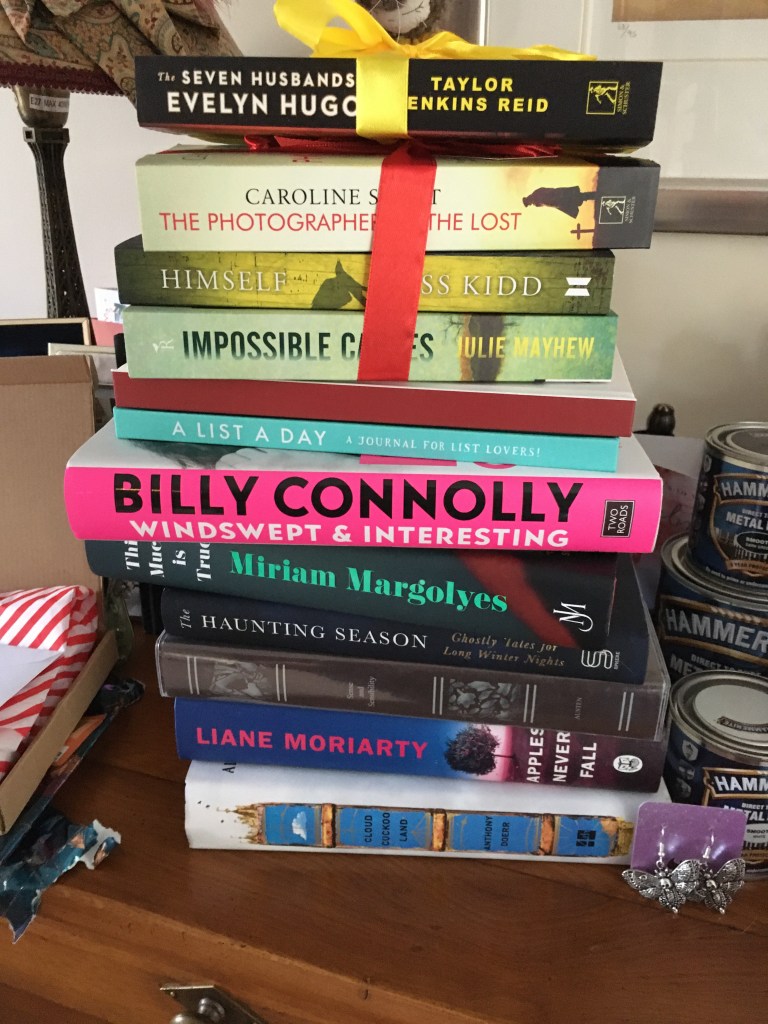
I’ve been very lucky to receive a pile of books for my birthday and some of them very special indeed. My partner and stepdaughters bought me Anthony Doerr’s Cloud Cuckoo Land, Miriam Margoyle’s This Much Is True and Liane Moriarty’s Apples Never Fall. Friends brought me some Moomin notebooks as well as The Haunting Season and a signed city of Billy Connolly’s new autobiography Windswept and Interesting which is signed on the spredges.
Added to this I had an anonymous present of a beautiful paper cut copy of Sense and Sensibility. I also had some Bert’s Books vouchers from my wonderful Squad Pod ladies so my beribboned purchases can be see on the pile, mainly paperback copies of books I’ve missed, because I can’t read every book. I’m so thoroughly spoiled that I feel very lucky.
Next month I’m hoping to catch up on some spooky reads and I have an Orenda blog tour that I’m really looking forward to. Mostly I’m just looking for some extra time to do some more mood reading and work on my own writing for a while. See you next month.
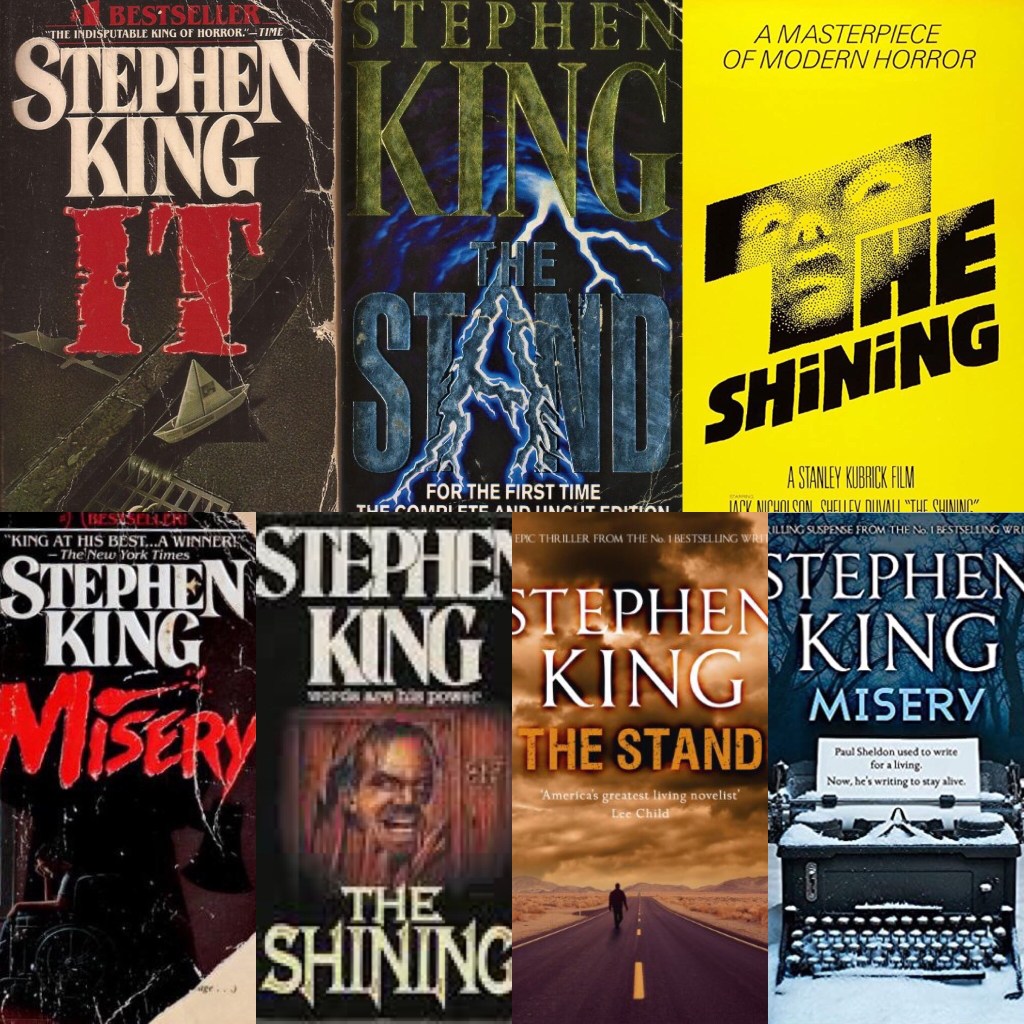
I couldn’t have introduced my Sunday Spotlight feature in the month of October, without spotlighting the King of Horror himself, Stephen King. I’ve been reading King since my teenage years and I was horrified to learn that my first was at least 22 years ago.
I first encountered Stephen King when I borrowed my mum’s copy of Salem’s Lot, but when I started to look back I was shocked to see how many copies of his books I’d ‘acquired’ from other people. I remember when I was 18 begging, borrowing or ‘acquiring’ most of his back catalogue and I’ve bought most of his novels since. This month though, I was very happy to receive my first ever hardback copy of a King book on publication day. I haven’t read Billy Summers yet, but I know it will always be special because I bought it brand new. I have many well-loved and well-thumbed copies of his back catalogue, because I’ve read most of them more than once, so I picked out the ones where I can talk about my relationship with the book.
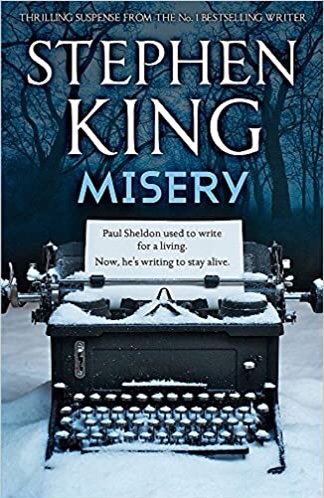
Well this is quite a colourful story. I’d read a bit of Stephen King before Misery arrived, and I was 17 when it did. Every summer, my friend would take me up to the Yorkshire Dales when she spent some of the summer holidays with her Dad. He always lived in quite remote villages, but this particular summer he was living in a small village called East Witton. It was a long village green with a row of cottages lined up on either side, facing each other. There was a tiny shop and at the bottom of the village a large pub with rooms. One night my friend and I went to the pub for a couple of drinks. My friend hit it off with the barman straight away and after a few freebie drinks, he introduced me to his friend who worked in the kitchens. I can’t for the life of me remember his name, which is awful, but he was a really quiet, sensitive guy, who read a lot so we had plenty to talk about. For some unknown reason we went to fetch our waterproofs and a torch and climbed a hill?! The view as the sun started to come up was beautiful. On the way back down we talked Stephen King and his favourite King novel was Misery. I hadn’t read it. So he was kind enough to lend me his copy and gave me his address to keep in touch (and return his book no doubt). I still have it. Misery is an incredible book, because of the tension and fear it creates in the reader, but also because it was weirdly prescient. In the novel Paul Sheldon is driving through ice and snow to post off his manuscript – the final book in the Misery Chastain series. He’s elated, because despite Misery’s popularity and the financial security she represents, he had started to hate her. Unfortunately for Paul, his manuscript will not end up in the hands of his editor. The terrible ice proves treacherous and Paul remembers nothing about the accident, but when he wakes he’s about to meet his number one fan, Annie Wilkes. The positive thing is that Annie is a nurse, capable of looking after his shattered bones and dosing the pain with some very potent painkillers. The negative is that Annie’s not a fan of all Paul’s writing, she’s the number one fan of the Misery Chastain series and now his provocative manuscript is in the hands of the person who might take Misery’s end badly. He has no idea just how badly. The tension is unbearable, the horror is visceral and the book is impossible to put down.
I found this old film tie-in copy of The Shining in a second hand bookshop and I had to be very brave to get it. This particular bookshop is a unit of our local Antiques and Collectibles Centre and the owner is always in residence, reading in a huge Windsor chair by the till. I didn’t know this the first time I went in and was stuck for forty minutes listening to him promoting the genius of L.Ron Hubbard. Forever afterwards known as ‘Fat Scientology Guy’ I used to try and avoid his eye and only browse around the back shelves, but he seemed to have eyes everywhere. Now I never shop there, but I do have this odd yellow copy of The Shining to remind me of my escape from Scientology. This is one of the most terrifying books I have ever read. It’s the combination of the supernatural horror like the creepy twins and whatever lurks in one of the rooms, and the horror of the person you love most becoming a monster. King brilliantly depicts a man on the edge in Jack Torrance and I love the little clues that show us his breakdown is looming. He starts to chew dry painkillers, his drinking increases, and once they reach The Overlook he starts to have hallucinations, or converses with ghosts depending on your perspective. Then there are the signs, like the wasps nest -a fascinating labyrinth of chambers and pathways, but with a nasty sting in its tail when Danny finds it’s still got the odd resident. I felt so sad for this little boy with his ‘shining’, it’s hard enough to have good perception and empathy in the moment, without seeing into the future. This book really did affect my sleep and made me feel a bit jumpy. I must have been 15 when I read it for the first time and at that point you’re breaking away from your parents a bit more. We start to see them differently, as people with their own personalities and faults. They’re like everyone else with the ability to make mistakes. Jack is a heightened version of that realisation, the family man who becomes killer. Aside from the supernatural elements, the fear is that anyone could boil over and become a monster.
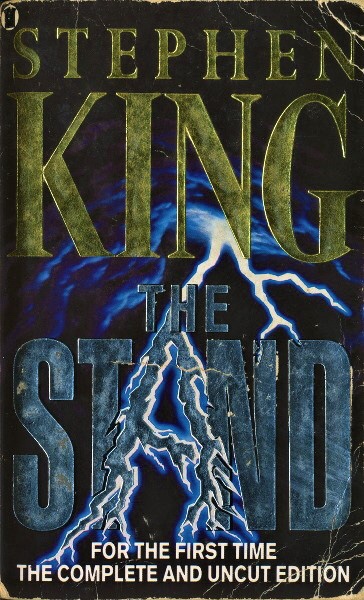
This is one of those huge bricks of a book that can be a daunting prospect and I definitely felt that for several years. My mum’s friend, who’s like an honorary godmother to me, knew I read King’s novels and recommended this as her favourite. It was one of those books that sat on the shelves for years, and I tried to read it several times before giving up. How interesting could it be, to read about people catching a cold? I’m aware of the irony. I finally picked this up three years ago and for some reason it just clicked with me. I now think it’s one of his best, not just because he captures perfectly the terror of a pandemic, but because of the strange supernatural elements behind the disaster. A bio-engineered virus escapes from a lab and spreads across the world with fierce speed. It acts like a ‘souped-up’ flu and most of humanity succumbs to it, except for a mysterious few who seem immune. However, they get something else, a legacy of nightmares. Their dreams focus around a strange old woman named Mother Abigail, who beckons them to follow her. Worse though are the nightmares of a figure called Randall Flagg also known as the Dark Man. Survivors start to amass around these two strange people: Flagg is in Las Vegas (of course) and his survivors pledge to annihilate anyone who doesn’t follow him, whilst Mother Abigail is in Boulder, Colorado, advocating the old ways and telling followers they’re chosen by God. I was fascinated with Flagg, who is a devilish figure and has seen the plague as an opportunity to cause more chaos and division. We even get God, but a scary Old Testament one who isn’t afraid of zapping his detractors. This is an epic novel, and feels almost Biblical in it’s theology and it’s incredible push and pull between good and evil.
Meet The Author.
Stephen Edwin King is an American author of horror, supernatural fiction, suspense, crime, science-fiction, and fantasy novels. His books have sold more than 350 million copies, and many have been adapted into films, television series, miniseries, and comic books
The other seven books in my top ten would be It, On Writing, Insomnia, The Green Mile, Salem’s Lot, The Outsider and The Institute
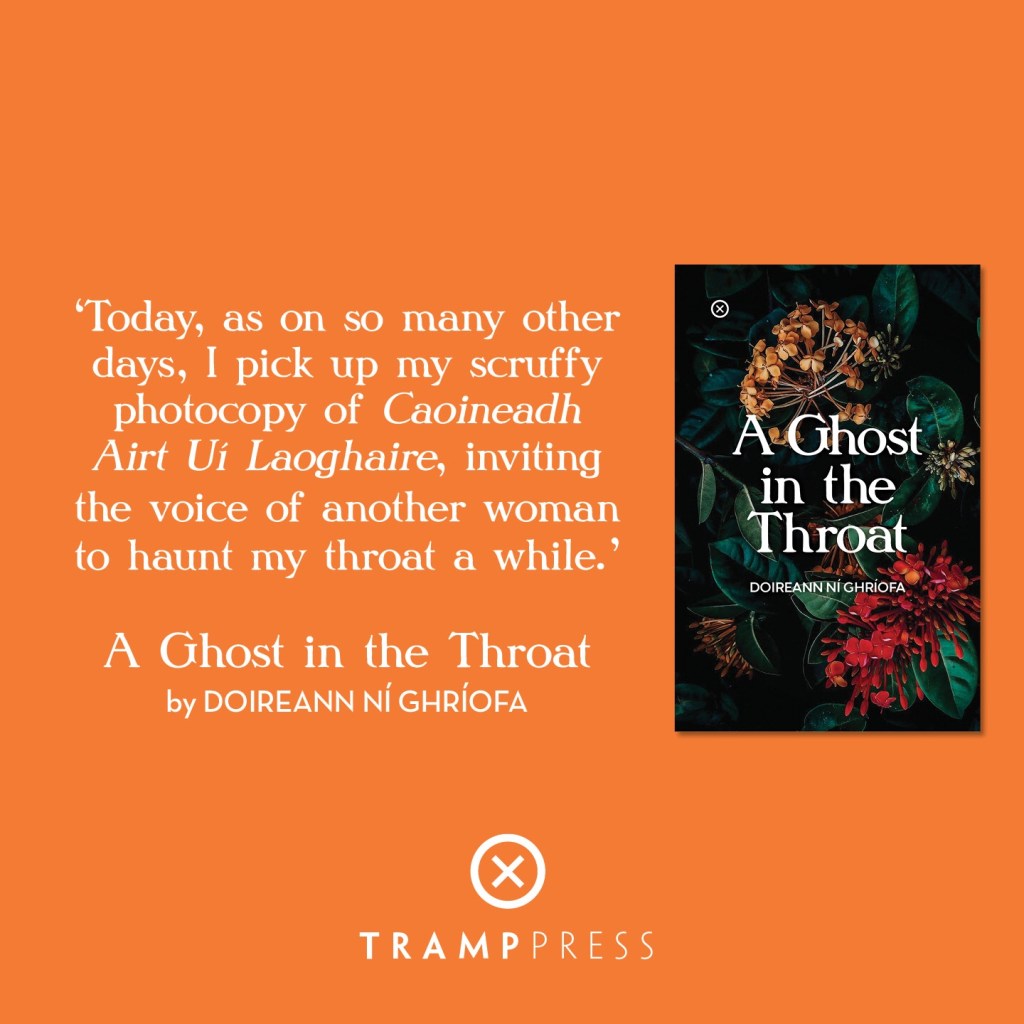
“This is a female text, composed while folding someone else’s clothes. My mind holds it close, and it grows tender and slow, while my hands perform innumerable chores.”
This novel is exceptional. It’s beautiful, moving and speaks about women’s experience in such a unique, but brutally honest way. The author has written an incredible piece of auto-fiction, which is half memoir and half novel but all poetry. While I can’t claim to be anything like the writer, I know this is the way I’m currently writing at the moment – as close to poetry as prose can get. I have always referred to it in my notes as a patchwork quilt of different images stitched together to make the whole. Our narrator is a mother of three small children and she has a fascination with the Irish poem ‘Caoineadh Airt Ui Laoghaire’ where an Irish noblewoman laments the death of the her murdered husband. Such is her passionate grief, that on finding his body, she drinks handfuls of his blood and then composes this extraordinary poem. For our narrator, the poem has echoed down the centuries and is her constant companion. As she reads it aloud the poet’s voice comes to life. The author writes her own life to its rhythms and wants to discover the truth of the poem’s story.
Entitled a ‘dirge and a drudge song’ the author details that drudgery, the minutiae of her day and her boredom and satisfaction in the endless tasks she ticks off the list. Repeating ‘this is a female text’ creates a refrain throughout the list, emphasising not just the physical but the mental load. She comments on it gaining importance through the written page, an importance that’s usually reserved for male stories. Women’s skills and stories have previously lacked importance because they are passed down orally, from mother to daughter along with home making skills like recipes and patterns. I loved this context because it’s inspiring. It tells us that our stories are important too. Just because they’re domestic doesn’t mean they’re less than. They are simply a social history rather than a military or political one. This is shown in the fact that, despite the poem being described as ‘the greatest poem written in these islands in the whole of the eighteenth century’ the history of the poet herself is hard to uncover. In the family, a tragedy almost occurs, and in the aftermath the author’s interest in the poet grows. However, it’s a very broken and hidden trail to find her.
I loved how her recording of 21st Century motherhood is treated as an epic. I loved the sense of a collective consciousness running through the book. As if her words join hundreds and thousands of others in a never ending stream of female consciousness. This isn’t just about putting your experience into the world, it’s about having a source of female wisdom to draw from whenever you need it. The poem is part of that consciousness, but so are many other papers we don’t think about as historical documents. In my work I’ve used the care sheets that I kept every day for my late husband, because they show what I was doing and I loved connecting them to more lyrical documents like my journal. The author adds to these collective documents, with her ‘family calendar scrawled with biro and pencil marks, each in the same hand – this is a female text. Month after month after month of appointments, swim lessons, half-days, bake sales, fundraisers, library returns, a baby’s due-date, birthday parties, and school holidays. Tick. Tick. Tick.’ They are not accounts of battles or elections won, but there are a thousand small victories here. If we think about how we leave our mark on this world we should think about all the ways we record our lives on this earth, from our Spotify playlist, our status updates, our Instagram photos, our Pinterest boards. All of these are a form of journal, the quiet way we express who we are and what’s happening in our worlds. We write ourselves into the cross stitch we do, the crocheted blankets, and the patchwork quilt we made for a new baby. We stitch ourselves into the tapestry of life, and the author emphasises this, with words so descriptive I could picture her and the family she works so hard for. This is a female text and in it’s search for the meaning of women’s lives it is reassuring, it lets us know we’re not alone, but it also inspires us all to create meaning. To add our voice to the women’s wisdom, expanding that collective consciousness and making our mark.
Meet The Author.
DOIREANN NÍ GHRÍOFA is a bilingual writer whose books explore birth, death, desire, and domesticity. Doireann’s awards include a Lannan Literary Fellowship, a Seamus Heaney Fellowship, the Ostana Prize and the Rooney Prize for Irish Literature. She is a member of Aosdána. A Ghost in the Throat is her prose debut.
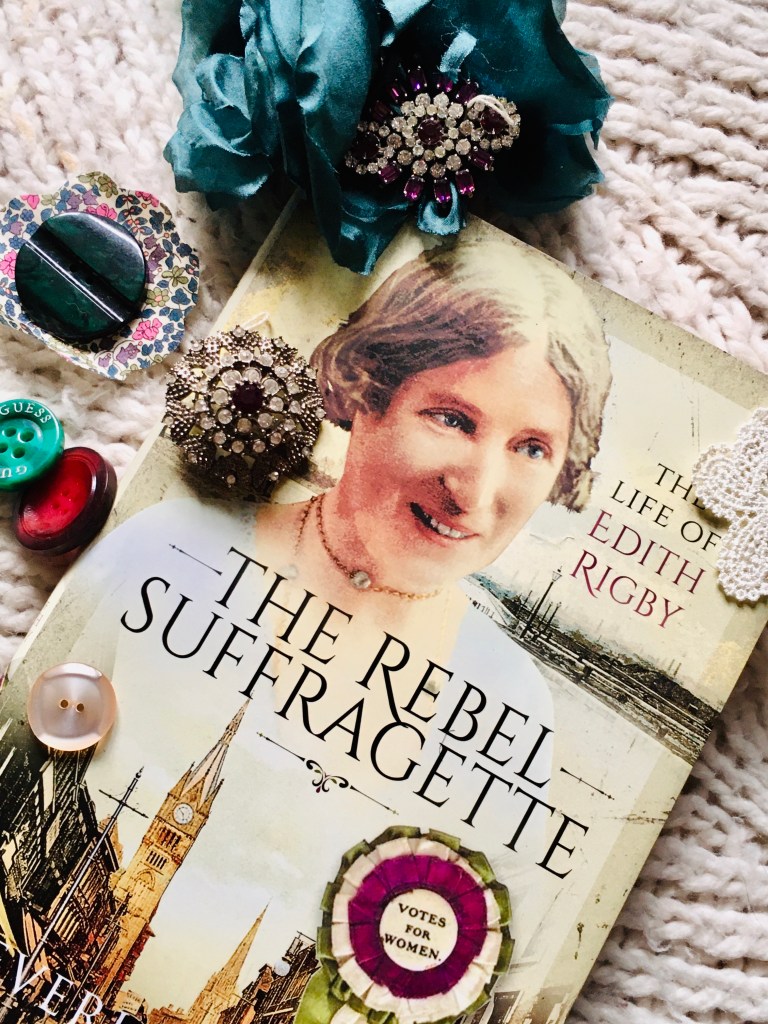
When I was asked if I’d like to join the blog tour for a book about a suffragette I thought I pretty much knew what to expect. When I received my copy and I read the blurb on the inside cover I was really excited. First of all she was a Northerner like me and even better, she threw a black pudding at an MP. That’s about as Northern as it gets. Everything we’re taught about the movement focuses on the Pankhurst’s and the rallies based in London. What this author does is reframe the movement to the North West, where Edith Rigby founded the Preston branch of the Women’s Social and Political Union. In doing this, the author reminds us that this was a nationwide movement, but also introduces us to a fascinating woman who was ahead of her time.
This is a well written and well researched autobiography about a fascinating woman who wouldn’t be told what her place was. Born to a lower middle class family in Preston, Lancashire, they lived in a dual purpose house which was part home and part doctor’s surgery where her father was doctor to the local mill working community. I enjoyed learning about how Edith grew up, because it was possibly this stable and happy environment that influenced her thirst for knowledge, individuality and equality. She saw how gender, and particularly class, affected children’s future circumstances and because she was so caring she went out of her way to help – even saving up her pennies to give gifts to local children on Christmas morning. While her actions within the Suffragette movement were fascinating reading, I really found the other aspects of her life interesting too. She was the first woman in her area to ride a bicycle and persisted in riding it, despite being heckled and pelted with vegetables, and even preached against by the local vicar. She liked the freedom her own transport gave her. Luckily, she found a man who enjoyed her vivacious and free spirit because she set out her stall from the wedding day. She was also adamant she was keeping her Christian name, so that instead of being named Dr and Mrs Charles Rigby they became Dr Charles and Mrs Edith Rigby. Having kept my own surname when married I felt a kinship with Edith and I also share her love of North Wales. Her determination to live by her principles was inspiring and it’s clearly this that informed her work with the school for young women that she founded. It also inspired the lengths she went to for the suffragette cause including arson, planning a bombing in Liverpool and going on hunger strike in prison. I applaud the author for bringing this incredibly strong woman to our attention and I recommend the book highly.
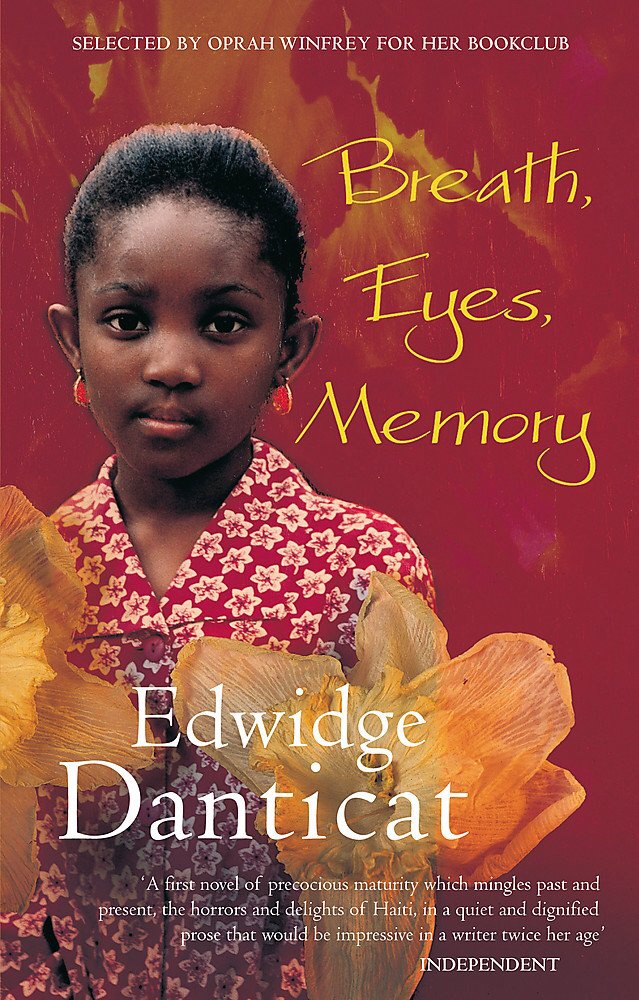
I come from a place where breath, eyes and memory are one, a place from which you carry your past like the hair on your head.
I was first introduced to Danticat’s writing by the tutor of my American Literature module at university. This was her debut novel and it sparked a fascination with Haiti, somewhere that always seemed tragic, but also strangely magical. This book took those childhood impressions and put flesh on their bones. It showed the human cost of such a chequered history, particularly for women and it’s characters have stayed with me for a long time. I think it’s also a wonderful depiction of generational trauma, emotional healing and counselling’s place in that difficult process.
We follow a young woman called Sophie Caco, who lives in Haiti as a child with her Tante Attie. Then at the age of twelve is relocated to New York to live with her mother, with whom she needs to forge a relationship. Sophie doesn’t want to go, but has no choice. Up till this point Tante Attie has been the only mother she knows. Her mother left Haiti long ago with the ghosts of the past at her heels. Sophie doesn’t know what life will be like when she gets there, but she is anxious about the journey, immigration and what it will be like going to school with children who speak a different language. Sophie will need to think on her feet and adapt to the new way of life quickly. What she finds though, is that it’s hard to escape Haiti. It does not let go of its daughters and her mother suffers mood swings and nightmares linked to her past there. Generational pain and trauma are played out in this relationship until Sophie realises they must face Haiti together -aunts, mothers and daughters – if they are ever to break the cycle .
I loved Danticat’s way of comparing these two very different places and their contrast with what’s going on deep inside these characters. Haiti is a place of deep sadness, particularly for Sophie’s mum. For those who don’t know it’s political and social history, Haiti covers half of the island it shares with the Dominican Republic. For many years both countries were colonised by the Spanish, but in 1697 after disputing territory the Western side of the island was ceded to the French. However, unlike the Dominican, Haiti was stripped of all it’s natural resources, even down to the island’s trees which were cut down for logging and to make way for planting sugar cane, leaving the island prone to landslides and unprotected against tropical storms. All this left a rather bare country, peopled by slaves, harvesting the cane that would ship to Britain as the final part of the ‘slave triangle’. During the French Revolution, the slaves revolted under the leadership of Toussaint Louverture, and freed themselves. They were the first of the colonies to successfully liberate themselves and become a state on 1st January 1804. Whilst it was always politically turbulent, Haiti entered a reign of terror in 1956 under the autocratic government of Papa ‘Doc’ Duvalier and then his son until 1986; the period was characterized by state-sanctioned violence against the opposition and civilians, corruption, and economic stagnation. After 1986, Haiti began attempting to establish a more democratic political system. Yet the violence of the past thirty years left a legacy of pain in the people of Haiti, especially it’s women, for whom a history of sexual violence carried out by Papa Doc’s henchmen the ‘tonton macoutes’ had left them controlled and terrified.
Such a history leaves a legacy of rage and deep, deep sadness in the people. Yet Danticat depicts a vibrant culture filled colour, music, and incredible food. Tante Attie is an absolute rock of a woman. She’s a storyteller, passing down women’s stories and history to other woman. When we are without power, education and means we have to find other ways of recording our history – in the clothes we wear, the food we cook and the songs we sing. Attie is the keeper of her family’s history, but there are secrets she has kept, only because it is not her story to tell. It takes a departure from all that she knows for Sophie to truly know her family history and a practice past down through the generations which is horrifying to read. When women are mere commodities, to be owned by men, there are certain things that affect their value. Controlling the ways women behave is always set out by men, but often policed by other women.
True healing can only begin when we stop running from our past, instead we must confront it and begin to process any trauma we have experienced. Sophie’s mum must return to Haiti to do this. Meanwhile Sophie’s demons come calling when she gives birth to her daughter and actively chooses change. She must confide in her husband and seeks therapy to come to terms with her trauma. Only then can mother and daughter truly get to know one another. Despite it’s difficult subject matter I always feel that it’s a hopeful book. It seems to explore a psychological outlook I have held for a long time; anyone can create change in their life. Think how powerful and freeing that statement is. It’s up to us. This is a powerful look at a country that’s often seen as unlucky. Here we can see why and how that history has been constructed, largely by men and colonisers. Through this family of women we see a different Haiti. The violence and pain are real, but so is the beauty, the healing and the love.
There is always a place where, if you listen closely in the night, you will hear a mother telling a story and at the end of the tale she will ask you this question: “Ou libéré? Are you free my daughter?” My grandmother quickly pressed her fingers over my lips, “Now” she said “you will know how to answer.”
Meet The Author.
Edwidge Danticat is the author of several books, including Breath, Eyes, Memory, an Oprah Book Club selection, Krik? Krak!, a National Book Award finalist, The Farming of Bones, The Dew Breaker, Create Dangerously, Claire of the Sea Light, and Everything Inside. She is also the editor of The Butterfly’s Way: Voices from the Haitian Dyaspora in the United States, Best American Essays 2011, Haiti Noir and Haiti Noir 2. She has written seven books for children and young adults, Anacaona, Behind the Mountains, Eight Days, The Last Mapou, Mama’s Nightingale, Untwine,MyMommy Medicine, as well as a travel narrative, After the Dance. Her memoir, Brother, I’m Dying, was a 2007 finalist for the National Book Award and a 2008 winner of the National Book Critics Circle Award for autobiography. She is a 2009 MacArthur fellow, a 2018 Ford Foundation “The Art of Change” fellow, and the winner of the 2018 Neustadt International Prize and the 2019 St. Louis Literary Award.
As we turn into autumn, there’s less lounging in the garden with my book and a cold flask of squash and more snuggling by the log burner with a hot chocolate and a book. For some reason, that cosiness and the darker evenings draw me towards haunted or magical stories. So I was keen to read this time slip story full of ghostly goings on. In 1903 we visit All Hallows’ Asylum on Dartmoor and Nurse Emma Everdene has a new charge to look after, away from the usual inmates in an attic room. A mother and young daughter are found by a fisherman, the woman completely unconscious from a blow to the head. While she is transferred to one of the best private rooms and remains in a coma, her traumatised daughter is left in the care of Nurse Everdene. The little girl is clearly shocked and exhausted, so a room is made up with a single bed and a rocking chair near the fire so she can be monitored. She is completely mute, so the nurse doesn’t pressure her but makes sure she is warm, dry and fed. For comfort she gives her a small toy rabbit that once belonged to her son Herbert, who died when he was small.
In 1993 we meet two boys sent to All Hallows’, which is now a boarding school. Lewis is coping with grief after losing his mother and in an attempt to express himself has started dressing as a Goth. His Dad has quickly married again, and his stepmother clearly wants Lewis out of the way. She reports on how difficult he is and manipulates his father into thinking boarding school is his best option. Once there, Lewis is shorn of his Goth persona and is feeling very vulnerable, especially when he has to share room just under the attic with another boy, Isak. Isak, he finds out, is also an outcast and he gives Lewis some tips on surviving the school. They also share an interest in a nurse who was buried outside the consecrated ground of the churchyard ninety years before. What does this have to do with the abandoned room above them on the attic floor, containing only a rocking chair and a single bed? A rocking chair that the two boys can hear rocking in the middle of the night, thumping against the floorboard, as if someone is sitting in it.
It’s hard not to feel for Lewis, as he ends up with all his armour taken away from him. Without his Goth gear he’s just a boy with ears that stick out a bit too much. Luckily he finds another outsider to be with in Isak, although at first we don’t know why he is so ostracised. Emma Everdene is also fascinating and because I hate the practice of burying people outside of consecrated ground I really wanted to keep reading to find out why. The journey she takes in life is incredible, elevating herself to becoming a nurse, from very little in monetary and status terms. I also found her very resilient, having come through the deaths of both her husband and her son. I liked how her nursing manual showed working women supporting other women in their journey. When it is found in the library in 1993 the dedications show that it was passed from woman to woman, possibly because books were out of reach for women in poverty. The author also makes the point that many women were in the asylum for little more than thinking differently, or being in the way of their husband’s next conquest. Thalia is an example of a woman who has pushed the boundaries for someone of her class and gender. Staff talk about her cutting her hair short like a man and habitually wearing trousers, not to mention being a suffragette.
Emma sniffed. ‘And why shouldn’t she do those things if that’s what she wants to do? Because by doing so she causes embarrassment to her family? Because they’re hoping to marry her off to some chinless wonder with more money than manhood, some… some milksop who would be humiliated to stand beside a woman who shone more brightly than he?’
I found her father’s request that she be punished severely much more chilling than whatever was going on in the room upstairs. Emma talks about the asylum as a last resort for men who want to control and silence their women. The thought of all these people falling victim to early 20th Century asylum ‘treatments’ is terrible. It really hits home when Lewis finds iron fitments on the floor and wall in one of the classrooms in 1993. The manacles may be gone, but it still paints a picture of human misery. When Emma talks to the girl who brings their food, they talk about the treatments that are commonplace in the asylum such as the ice cold baths. Then there’s the less commonplace. When a new doctor arrives and is given the case of Mrs March, mother of Emma’s charge, he wants to try new European treatments. The staff gossip about the time he spends touching her, moving all of her limbs in turn and bending her spine in order to keep the flexibility while she’s in a coma. Emma can see that it would make sense to keep her supple, but when he moves his desk into her room so he can work there and spend more time in her company it starts to feel strangely voyeuristic. Her complete vulnerability becomes worrying.
The supernatural goings on are genuinely scary, Lewis finds the creaking rocking chair a bit unnerving but is able to be in the room and stop it moving. At first he thinks of obvious explanations like a draft setting it off, but after a few weeks he can’t brush it off any longer. The dark presence felt by both Lewis, and Emma ninety years earlier, seems to fill the room with its power. Lewis feels as if something huge is in the room and Emma feels it’s malevolence. The jumpier scares are unexpected and add to the mystery unfolding before the boys. The surrounding isolation creates a claustrophobic atmosphere and as Emma starts to feel more unnerved and more attached to the little girl we now know is called Harriet, I felt I was being rushed towards some terrible event. I thought the way both the asylum and the school were painted as places to dump inconvenient people was very apt. Even some of the techniques they used were the same, such as taking away the patient or pupil’s identity through removing their own clothing and shearing their hair off. There’s a strong feeling of trying to break individuals and make them conform. The author has created an interesting and unnerving tale, that has the tension of a thriller and creates a need to keep reading to find out all the building’s secrets. It has also reignited a childhood terror of looking into the bathroom mirror!
Published by Boldwood Books 12th October 2021.
Meet The Author
Louise Douglas lives in Somerset in South West England & writes contemporary Gothic mysteries mostly set in the countryside close to her home. She has won the RNA Jackie Collins Romantic Thriller award 2021 for The House by the Sea.
When She’s not writing, she loves to spend time with family, friends, and animals – especially dogs, birds and whales. She’s passionate about nature, being outside, drawing wildlife, walking, beaches, fictional drama and books. If you’d like to connect with Louise you can find her on Facebook Louise Amy Douglas or @LouiseDouglas3 on Twitter.
I don’t know how many of you are Strictly Come Dancing fans, but I hope there are a few of you out there. Last weekend we watched the third episode of this series and the professional dancers did one of their group numbers at the top of the show. Johannes was a handsome Prince and a ball was being held in his honour. As he entered the ballroom he saw the couples dancing on the floor, but seemed isolated and alone. Until a male dancer, Kai, stepped forward and asked him to dance. As they started to move round the floor his face lit up and so did mine. The other couples on the floor reformed until the ballroom was full of same sex couples. It was a joyous dance about acceptance for who we are and the ability to be open about our sexuality. It really brought tears to my eyes to see how happy Johannes was to do this dance. So, for me this was exactly the right week to read a book I’ve seen doing the rounds of BookTwitter for since January. I know I’m seriously behind most people in reading this little gem from Matt Cain, but I couldn’t miss a chance to talk about it- just in case there are other people living under a rock like me who haven’t encountered Albert Entwhistle yet.
The books sits perfectly next to the Strictly dance I mentioned, not just because of the subject matter, but because both are simply little parcels of joy! I felt uplifted every time I sat to read a few pages of this wonderful story. There’s a further little link to Strictly too, as Albert reminisces about a trip to Blackpool with his friend George. They were both young men at the time and they visit the iconic tower ballroom, where George is taken with the dancers whirling round the floor. He asks Albert to think of a world where they could take a turn round the floor like every other couple there. George exclaims how romantic it is and Albert agrees. It would be romantic, but it’s inconceivable for two men to partner up and take to the floor. In fact it seems so taboo that Arthur imagines there’s a written rule against it. Years later, when he’s 64, he revisits the ballroom to show his friend Nicole and sees a couple of men his own age, waltzing round the floor with no one batting an eyelid. A realisation follows; how can anything change while gay men remain hidden? It takes trailblazers, people willing to be uncomfortable and face public displeasure, to make things change. This gives him the courage he needs to face his fears and perhaps even alter the lonely future he imagines. Maybe he could find his friend George and talk again? He doesn’t dare to hope that the feelings could still be there, but there is a small nugget of longing for that dream. Why not? After all, he still feels the same way about George.
Until now Albert has lived very closed off from the rest of society. He’s a postman, and has a routine of arriving at the sorting office at the same time each morning, organising and sorting his load for that day. He doesn’t really interact much with his colleagues, beyond normal pleasantries. We see his lonely life at home, with rare moments of joy when he puts on a show tune and dances with his cat Gracie. So, I loved how Albert’s search for George opened him up to other experiences, particularly his friendship with single mother Nicole. He’s never been to a soft play centre before or even been this close to children. Yet she doesn’t let him hesitate or worry, and just places her daughter on Albert’s knee before he can argue. He’s never been to a pub quiz before either, but once he takes the plunge, he’s surprised how much he enjoys these new experiences. It also makes him more aware of other people’s loneliness and he starts to make little changes to try and make their lives better. His dread about revealing his sexuality to people seems disproportionate, because we live in more tolerant times. Yet, when we think back to Albert’s teenage years, homosexuality was still a crime. It’s amazing to think it was as recent as Sam Gyhima’s stint as justice minister in 2017 for a government pardon to be made to everyone jailed for their sexuality. This followed a royal posthumous pardon in 2013, for the mathematician Alan Turing. The writer’s trips back into Albert’s past, remind the reader that there are years of prejudice behind these uplifting stories. Strictly’s same sex dance routine elicited tears of emotion, because what’s now accepted enough to be on family television at prime time on Saturday night, used to elicit abuse, rejection and even criminal charges. So I found this book moving and I really did fall utterly in love with Albert. The story was heartfelt and uplifting. I would really recommend it to anyone looking for beautiful characters to engage with and story full of human emotion.
Published 27th May 2021 by Headline Review
Meet The Author
Matt Cain is an author, a leading commentator on LGBT+ issues, and a former journalist. He was Channel 4’s first Culture Editor, Editor-In-Chief of Attitude magazine, and has judged the Costa Prize, the Polari Prize and the South Bank Sky Arts Awards. He won Diversity in Media’s Journalist Of the Year award in 2017 and is an ambassador for Manchester Pride and the Albert Kennedy Trust, plus a patron of LGBT+ History Month. Born in Bury and brought up in Bolton, he now lives in London.
I read this novel on the four hour drive to North Wales and spent most of the first day of my holiday absolutely enthralled with the story. I was hooked immediately, intrigued by the mystery of what exactly Tess’s daughter Poppy had seen or heard. Tess is starting a new life in a garden flat with her daughter, after a divorce from husband Jason. Having a background as a child of divorce, Tess was determined that Poppy should be their number one priority. No matter how much animosity and hurt they feel, their interaction with each other must be civil and they prioritise time with both parents. Jason is already remarried to Emily, a much younger woman who seems very sweet and tries hard to have a relationship with Poppy. They have set times for Poppy to visit and stay over at her dad’s house and this has been going well, although every time Poppy’s belongings are put in a bag to transfer from one house to the other, Tess hopes she understands what is happening to her. Tess has started seeing a man called Aidan recently and she’s optimistic about their relationship so far. One Saturday, Poppy returns from an overnight at her father’s and displays signs of distress. These were classic symptoms, that any counsellor like me, would be concerned by. She’s clingy, she wets the bed and seems to be having nightmares. Over a week these symptoms worsen: she bites a girl at school, uses foul language to her teacher, and her mother is terrified for her. She has her attention drawn to a picture Poppy has drawn, all in black crayon which is a huge contrast from her normal rainbow creations. The picture shows a tower and a woman falling from the top to the ground below. ‘He killed her’ she tells her Mum ‘and killed and killed and killed’.
I was hooked and my partner claims I barely spoke to him for two days straight because I was so absorbed in Poppy’s world. Tess is scared for her daughter, but what can she actually do without traumatising her further? Jason insists it’s just a drawing and probably doesn’t mean anything. No one seemed as alarmed as Tess, so who can she go to? This sets in motion an enthralling story where my suspicions were first sent in one direction, then another. As well as suspecting every character at different points in the novel, I was also wondering whether it was about Tess. Was she an over concerned mother affected by her divorce and her ex-husband’s sudden remarriage? The writer excels at bringing tiny little clues into the narrative that create a doubt in the reader’s mind. Bernie, the upstairs neighbour, is a little odd and makes a couple of remarks to Tess that concerned me. Was he dangerous or just a little eccentric and inappropriate at times? Weird coincidences cropped up that couldn’t be explained by anything except foul play or malicious intent. However, the more this happened, Tess became even more anxious and started to give the impression of being unhinged. As the police became involved, they suspected an overprotective mother and couldn’t find anything to investigate. This spurred Tess on to carry out her own investigation, searching for women who’d died falling from a building and trying to forge links with people in their circle. One sympathetic officer does try to help, but ends up with a dressing down for wasting her time. It takes a long time, and some near misses, for Tess to sit back and realise what her behaviour must look like from the outside. However, just because someone appears over anxious, doesn’t mean there’s nothing to worry about.
I think one of these author’s many strengths is their ability to conjure up the ordinary everyday moments we all recognise in life, between the tension and scares. It helps the reader identify with these characters, to accept that they’re real and empathise even more with their predicament. I could feel the tension coming off Tess, and the hurt as well, because some of her discoveries are personally painful. Yet she still has to get Poppy up and to school, then go to work and come home to cook tea and do those domestic chores that we all do in a day. The mental load of being a single parent is enough without the extra suspicions about every new person who has come into their circle. Her fear that someone has invaded that safe, domestic space is one all readers can identify with. The tension is almost unbearable towards our final revelation and it wasn’t the ending I was expecting at all. It makes you think about how far you would go to protect your children. This was a fascinating, addictive read with a menacing atmosphere throughout. Be prepared to lose a couple of days if you pick up this book, you won’t regret it.
Published on 16th September 2021 by Simon and Schuster UK
Nicci French is the pseudonym of English husband-and-wife team Nicci Gerrard and Sean French, who write psychological thrillers together.
















 The Lotus Readers